𝗙𝗨𝗟𝗟 𝗦𝗧𝗢𝗥𝗬 Vanessa Built Her Dream Resort on My Family’s Island Before She Learned Why My Father Kept It Empty
𝗙𝗨𝗟𝗟 𝗦𝗧𝗢𝗥𝗬
A concrete pump started somewhere behind us with a deep mechanical thump.
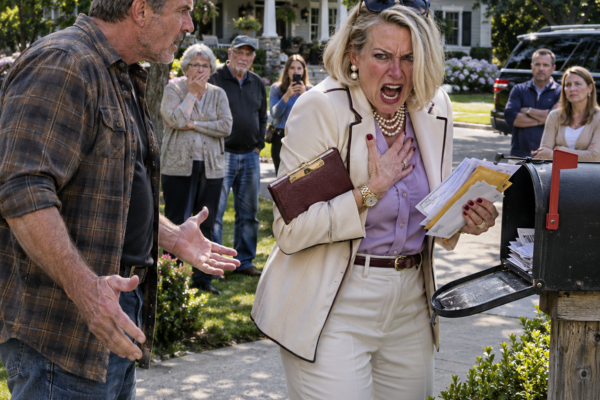
Vanessa folded her arms.
“Every project was denied. We’re aware of the history.”
“Did anybody ask why?”
“Cole, people have been using that island as an excuse to say no for thirty years.”
She pointed toward the new villas.
“We decided to say yes.”
I turned toward the construction site. Beyond the crane, I could still see the other two low channels shining in the sunlight.
Open for now.
My father’s voice came back so clearly I could almost hear him beside me.
Don’t stop water. Give it somewhere safer to go.
I faced Vanessa.
“Shut the site down until you understand what you’re building on.”
Her smile disappeared.
“No.”
Behind her, the excavator lowered its bucket, bit into another section of sand, and turned toward the second door.
I watched the machine turn, but it was my father I saw standing there, not as a ghost, just as memory. Sunburned forearms. Muddy boots. Yellow folding ruler tucked into his back pocket.
When I was twelve, he brought me to Pelican Key three days after Hurricane Hugo had pushed through the coast. The sky was blue again. Birds were back in the grass. From the mainland, nothing looked damaged.
Dad tied our skiff to an old piling and handed me the ruler.
“Find the mark.”
I found a dark line almost five feet above the normal tide stain.
“Water got that high here?”
“Yeah.”
I looked toward Seabrook Landing across the sound, though back then it was mostly old houses, docks, and scrub lots.
“Why didn’t it get that high over there?”
He pointed at the channels cutting through our island.
“Because it had somewhere else to go.”
I had not thought about that conversation in years.
That afternoon, after Vanessa refused to stop construction, I took my skiff around the southern edge instead of going home. The tide was rising. At the first channel, the one they had filled, water pressed against the compacted earth and curled around both ends. The grass there was already flattened.
At the second door, the current moved cleanly through the island, dark water sliding between oyster shells and cord grass.
I killed the engine and drifted.
That difference told me more than Vanessa’s entire construction site.
My phone rang.
Vanessa.
“You need to remove your boat from the work perimeter.”
“I’m three hundred yards from your equipment.”
“The contractor says you’re interfering.”
“I’m floating.”
Her voice hardened.
“This resort is happening.”
I watched a piece of marsh grass spin through the open channel.
“You said every previous project was denied.”
“Correct.”
“Hotel proposal in ’98 denied. Marina complex denied. Private villas denied.”
A pause.
“And none of that bothered you?”
“It told me nobody before us had the resources to solve the site.”
There it was again.
Solve the site.
“My father turned down developers for thirty years.”
“Your father also left millions of dollars sitting under weeds.”
I looked toward the island. From the water, the new villas rose above the grass like white boxes balanced on stilts.
“Those weeds kept your neighborhood dry more than once.”
Vanessa laughed once without humor.
“You’re telling me your empty island is flood control?”
“I’m telling you to stop changing something you don’t understand.”
“Then explain it at the board meeting tomorrow.”
She hung up.
The meeting was held in Seabrook Landing’s clubhouse. All cold air conditioning, polished wood, and wide glass windows overlooking the marina. Vanessa stood at the front in the same red pantsuit while renderings of the finished resort filled a large screen behind her.
White villas.
Palms.
An infinity pool.
Private docks.
Sunset over still water.
Around forty homeowners sat facing us.
I explained the channels. I explained overwash. I explained what I had watched since childhood. No technical speech. I used a water glass and the edge of a serving tray.
“If water can cross here,” I said, tipping the glass slowly, “it spreads.”
I blocked the edge with my hand.
Water ran sideways across the tray.
“If you stop it here, you haven’t removed it. You’ve changed where it goes.”
A man in the second row frowned.
Vanessa stepped beside me.
“And our engineers have designed elevated pads, reinforced drainage, and shoreline protection specifically to manage that.”
Applause started somewhere behind me.
Not much.
Enough.
I looked around the room and realized the mistake I was making.
I was asking people to fear water they could not see.
Vanessa was showing them a resort they could.
She changed the rendering to a sunset view of the completed property.
“Pelican Key has been denied development repeatedly because previous proposals could not meet the standards of their time. We can.”
More applause.
When I left the clubhouse, the evening tide was coming in. Across the sound, construction lights burned on my island. An excavator moved beneath them. Its bucket dropped.
Even from half a mile away, I knew exactly where it was working.
The second door.
By sunrise, the second door was gone.
I crossed to Pelican Key before the crews arrived and found a twelve-foot-wide ridge of compacted fill where tidal water had moved the night before. Crushed stone sat on top, still damp and dark.
The only open channel left was the southern cut, narrow enough that I could step across it at low tide. I stood there with my boots in the mud and watched water pull through it fast enough to bend cord grass flat.
Behind me, a barge horn sounded.
Vanessa arrived with another load of fill.
By eight, the island shook under dump trucks. Workers built the villa pads higher while a crew along the western edge drove sheet piling into the sand. Every steel section landed with a deep metallic boom I could feel through my soles.
I found Vanessa beside the future pool studying elevations with the superintendent. Red pantsuit. Brown ponytail pulled tight. Not a grain of sand seemed allowed to touch her.
“You closed another channel.”
She looked up.
“We improved the construction access.”
“You blocked two of three.”
“Temporary.”
I pointed toward the sheet piling.
“And that shoreline protection. You’re building a wall around a place water is supposed to cross.”
The superintendent lowered his plans and looked between us.
Vanessa did not.
“We’re raising finished grade six feet. The villas are elevated. Drainage will be engineered.”
“Drainage to where?”
“The engineers have addressed it.”
“Where?”
Her jaw tightened.
“You are not the engineer on this project.”
“No. I’m the guy who owns the ground under your shoes.”
That finally drew the superintendent’s attention.
Vanessa stepped closer, stopping several feet from me.
“Ownership is being handled separately. Construction is proceeding.”
That was the shield she kept hiding behind.
Seabrook Landing’s attorneys were claiming an old recorded access agreement gave the HOA development rights beyond the shoreline, while my deed said the island itself was mine. Until that dispute was formally resolved, every agency I had called treated it as a civil property fight, not something they could shut down on my word alone.
Vanessa knew exactly how much time that bought her.
“Then tell me where the water goes,” I said.
She pointed toward the sound.
“Back where it came from.”
I shook my head.
“Water doesn’t read your plans.”
For the first time, irritation broke through her polished expression.
She turned to the superintendent.
“Continue the berm.”
A dozer pushed forward behind us. Its blade caught a mound of pale sand and rolled it toward the western edge.
That was Vanessa’s answer.
More height.
More material.
More control.
I spent the next hour walking the perimeter. Near the first closed door, water had already carved a shallow groove around the end of the fill.
On the mainland side, Seabrook Landing sat less than a mile across the sound. Rows of expensive houses. Private docks. A marina basin tucked behind its seawall.
From Pelican Key, it looked protected.
I knew better than to confuse protected with untouchable.
That afternoon, Vanessa called while I was replacing storm-damaged pilings at a customer’s dock. My impact driver rattled in my hand. I shut it off.
“What?”
“Your presence is disrupting my contractors.”
“Your contractors are on my island.”
“You’ve made that position clear.”
“Apparently not clear enough.”
“Cole, we’re past debating whether the resort gets built.”
I looked down at the tide moving around the piling beside my boot.
“That’s the problem. You think construction is the decision.”
“Construction is what happens after it.”
“Meaning?”
“Meaning you’re making decisions about where water can go.”
She sighed.
“Again with the water.”
“Yeah. Again with the water.”
Three days later, barges brought prefabricated retaining sections. By the end of the week, the resort platform stood visibly higher than the remaining marsh. Vanessa invited board members across for a construction tour.
I watched from my skiff as they walked between the rising villas in clean shoes, pointing toward ocean views. From where they stood, everything probably looked impressive.
From where I floated, I could see something they could not.
The tide was halfway in, and water had reached the two blocked channels. Instead of crossing Pelican Key, it split around them, curling north and south along the island’s edge. I followed the southern current with my eyes. It joined another flow beside the last open door, squeezing through a space that had once carried only a third of the island’s overwash.
The water there moved faster now.
Darker.
Louder.
I eased my skiff closer and watched bits of shell tumble through the current.
Vanessa appeared on the raised bank above me.
“Admiring the progress?” she called.
I looked up.
“Actually, yeah.”
She smiled.
“Finally.”
“You’ve done something I couldn’t explain at the clubhouse.”
Her smile faded.
I pointed at the racing water beneath me.
“You made it visible.”
I made my first real mistake two nights later.
Vanessa’s crews had gone home and the island was quiet except for wind pushing through cord grass and the steady slap of water against the temporary dock. I had spent all day watching the tide squeeze through that last southern channel. By sunset, I had convinced myself that waiting was the same thing as letting her win.
So I brought over one of my compact excavators on a work barge.
No crew.
No audience.
Just me, headlights, diesel fumes, and a bucket cutting into the first filled channel.
I peeled back crushed stone until dark seawater pushed through the opening. Within minutes, the current widened it on its own.
I should have stopped there.
Instead, I kept digging.
I wanted the door open the way I remembered it.
By midnight, water was moving cleanly across Pelican Key again. I shut down the machine and sat in the cab with my hands on the controls, listening to the engine tick as it cooled.
For the first time in days, I felt like I had done something.
By seven the next morning, Vanessa had turned it against me.
When I arrived by skiff, two dump trucks were already backing toward the cut. A contractor stood beside them photographing my excavator tracks. Vanessa waited on the temporary boardwalk in her red pantsuit, arms folded.
“Thank you,” she said.
“For what?”
“For making this simple.”
She held up her phone.
On the screen was a photograph of the channel I had reopened.
“Unauthorized excavation inside an active construction zone. Damage to installed site work.”
“Interference with contractors on my land.”
“That question is being handled separately.”
“You keep saying that like it makes the island yours.”
“No, Cole. You’re doing that for me.”
She turned toward the waiting trucks.
“Phillip.”
I stepped forward.
“Vanessa.”
She raised one hand.
“You wanted everyone to believe you were protecting Seabrook Landing. Last night, you brought heavy equipment onto an active site and tore out completed work without warning anyone.”
Workers were watching.
So were three HOA board members who had come over with her.
She had invited them for this.
The first truck lifted its bed.
Stone rattled down in a hard gray avalanche.
Water disappeared beneath it.
I could have shouted.
I almost did.
Instead, I looked at the tracks my excavator had left across the sand.
She was right about one thing.
I had given her exactly the picture she needed.
By lunchtime, homeowners were sharing photographs of the excavation. One man I had helped rebuild a dock after a tropical storm called me.
“Cole, tell me you didn’t sneak onto the site with an excavator.”
I tightened a bolt on a trailer hitch outside my shop.
“I did.”
“Why?”
“To reopen a tidal cut.”
“At midnight?”
I stopped turning the wrench.
“Yeah.”
Silence.
“Man, that doesn’t help you.”
“I know.”
Saying it out loud hurt worse than hearing it from Vanessa.
That afternoon, I drove through Seabrook Landing instead of going back to the island. I stopped at an older house near the marina where the owner, Frank Dorsey, was replacing warped boards on a low dock.
His place sat barely four feet above normal high tide. Two streets behind him were lower. I looked at garage doors, electrical boxes, propane tanks, landscaping walls—things I had ignored because I had been staring across the sound at Pelican Key.
Frank rested his drill against his thigh.
“You checking my dock?”
“No.”
“Then what?”
I looked toward the island. The white villas were visible beyond the marina entrance.
“I’ve been trying to save the wrong thing.”
He frowned.
I pointed toward his seawall.
“Next high tide, mark the water for me.”
“Why?”
“Because I’m done chasing her bulldozers.”
The next morning, I loaded my excavator onto its trailer and hauled it away from the waterfront.
Vanessa watched from across the marina parking lot.
She probably thought I was retreating.
Maybe part of me was.
But my father had never told me to fight water. He had told me to give it somewhere safer to go.
I had spent a week fighting Vanessa for the island.
From that day forward, I started watching what was behind it.
The first storm arrived on a Tuesday and spent most of the morning pretending it was not one.
Gray clouds sat low over the sound. Wind pushed twenty knots from the southeast, enough to rattle dock lines but not enough to empty the marina. By noon, rain came sideways against my shop windows.
I drove to Frank Dorsey’s place before high tide with a grease pencil in my pocket.
He was standing under his porch roof watching the water.
“You expecting Noah?” he asked.
“Not yet.”
We walked down to his dock. The sound had turned brown and rough. Waves slapped beneath the boards, spraying salt across my jeans. I marked the piling at the highest wash and wrote the time beside it.
Then I waited.
Pelican Key was barely visible through the rain. The new villas stood pale against the storm, high above the marsh. Vanessa’s berm held. So did the raised pads.
I kept waiting for water to cut through something.
It did not.
At four that afternoon, Vanessa sent photographs to the HOA homeowners. Frank showed me on his phone.
The resort was dry.
Workers in rain jackets walked between the villas. The pool deck had puddles, nothing more.
“Looks like she built it right,” Frank said.
I stared at the picture longer than I wanted to.
“Maybe.”
That word stayed with me all night.
Maybe I had made the island into something bigger in my head because my father had. Maybe engineering had changed. Maybe six feet of fill and enough money really could solve what thirty years of rejected projects had not.
Wednesday morning broke clear and painfully bright.
I crossed to Pelican Key alone.
The storm had scrubbed the sky blue. Vanessa was already there with four board members and a photographer, walking them through the nearly finished resort. Glass railings shone around the infinity pool. White villas stood untouched. Fresh palms leaned in the wet sand but remained upright.
Vanessa saw me and smiled.
“Still standing.”
I looked at the berm.
“I see that.”
“Yesterday’s tide was twenty-eight inches above normal.”
“I know.”
“And no flooding.”
One board member gave me a look that said the argument was over.
Vanessa spread one hand toward the resort.
“Sometimes the answer really is better engineering.”
I walked away before I said something stupid.
At the southern end of the island, the last open door had carried hard water during the storm. Grass lay flat for fifty yards. Shell fragments were scattered across the sand, but the resort had survived.
I took my skiff back to the mainland.
Frank was waiting beside his dock.
“Come look at this.”
He pointed at the piling I had marked the day before.
The grease pencil line sat six inches below a dark band of debris wrapped around the wood.
“Wasn’t there when we marked it,” he said.
I crouched. Pine needles, marsh grass, a strip of plastic. The old storm marks on that piling were faint but visible. Yesterday’s debris line sat above all the recent ones.
I walked to the marina.
Two floating docks had climbed high enough to bend their guide brackets. One aluminum gangway had shifted sideways. At the lowest street, saltwater had backed through a storm drain and left a brown stain across the curb.
Nothing catastrophic.
Nothing anybody would put on the news.
But Seabrook Landing had taken more water from a weak storm than I remembered seeing from stronger ones.
I called Frank.
“Do you still have pictures from after the storm three years ago?”
“Probably.”
“Find the dock piling.”
An hour later, he sent them.
Same piling.
Similar tide.
Lower water.
I did not need ten more measurements.
I needed to understand what had changed.
Across the sound, Vanessa’s resort glittered in the afternoon sun.
Dry and expensive.
That was when it finally clicked.
I had been waiting for her walls to fail.
They had not.
They had worked.
The raised pads kept the resort dry. The berms held the surge out. The blocked channels stopped water crossing the island.
Vanessa had not failed to control the water.
She had redirected it.
I stood at the marina entrance and watched the current run along the seawall.
My phone buzzed with an HOA announcement about a private resort preview that weekend.
Vanessa had won the storm.
Everyone could see it.
I looked down at the fresh debris line wrapped around Frank’s piling.
What nobody understood yet was where she had sent the water she defeated.
The morning after the storm, I stopped trying to prove Vanessa wrong. I started getting Seabrook Landing ready for what would happen if I was right.
Frank and I began at his house. His electrical panel sat forty inches above the garage floor. We moved the vulnerable controls higher, shifted tools and storage bins onto steel shelving, and rolled his generator onto a raised concrete pad behind the house.
By noon, two neighbors were watching from the driveway.
One of them, a retired teacher named Linda Mercer, pointed toward the sound.
“You think another storm’s coming?”
“Another storm always comes.”
“That’s not what I asked.”
I tightened the last anchor bolt.
“I think the next one doesn’t need to be stronger to cause more trouble.”
I showed them Frank’s piling. Not as proof of conspiracy. Just a mark they could touch.
Six inches.
That was enough.
By Friday, I had seven homeowners asking me to look at low garages, dock hardware, propane tanks, and electrical equipment. I charged nobody. That cost me. I pushed two paying dock jobs into the following month and gave my crew three days of wages for work that was not bringing money in.
But I had spent too much time fighting over who controlled Pelican Key.
These were the people standing behind it.
Vanessa noticed.
She drove up while we were raising an outdoor disconnect at Linda’s place. Her red pantsuit stood out against the white siding.
“You’re frightening residents.”
I kept my wrench on the conduit fitting.
“I’m moving electrical equipment.”
“You’re implying Seabrook Landing is unsafe.”
“I’m showing people where their shutoffs are.”
“After one elevated tide.”
I looked at her.
“How’s the resort?”
“Excellent.”
“Then why are you here?”
Her mouth tightened. She glanced at the neighbors watching from Linda’s porch.
“Grand opening is in three weeks. I suggest you stop trying to undermine it.”
“I’m not touching your resort for once.”
She walked back to her SUV.
That was the part she misunderstood.
Leaving her project alone felt unnatural to me. Every morning I could see construction barges crossing the sound. Every evening the resort looked more finished—glass railings, landscaping, dock lights, a long raised causeway connecting the service side to the main buildings.
I wanted to cross over and stop it.
I did not.
Then nine days later, Frank called before breakfast.
“You need to see this.”
I met him at the marina.
Across the water, an excavator was working at the southern end of Pelican Key.
The last open door.
Bucket after bucket of fill dropped into the channel.
“Why would they close that now?” Frank asked.
I already knew.
The resort entrance road crossed near it. Keeping the cut open meant bridging it or accepting periodic flooding. Filling it was cheaper and cleaner.
I took my skiff across.
Vanessa stood beside the superintendent as a compactor rolled over fresh stone.
“That one stays open,” I said.
Vanessa turned.
“Not anymore.”
“It’s the last path across the island.”
“It’s a drainage ditch running through our primary access route.”
“Your first storm already raised water on the mainland.”
“Your theory.”
“Your water.”
The compactor reversed with a shrill backup alarm.
I stepped closer to the foreman, not Vanessa.
“You have an evacuation plan for your crew?”
He glanced at her.
“We have procedures.”
“Know the route yourself.”
Vanessa gave a short laugh.
“Is that supposed to scare him?”
“No.”
I looked at the channel disappearing beneath crushed stone.
“It’s supposed to keep him from waiting for permission if he needs to leave.”
I turned and walked back to my skiff.
Vanessa called after me.
“That’s it?”
I stopped but did not turn around.
“What were you expecting?”
“Another midnight excavation.”
“I learned something.”
Behind me, the compactor rolled forward again.
The last strip of dark water vanished under pale gravel.
By sunset, Pelican Key had no doors left.
Two days later, the HOA announced that the grand opening had been moved forward by a week. Vanessa wanted the resort operating before peak storm season.
That night, I checked the National Hurricane Center forecast before bed. A tropical system was organizing southeast of the Bahamas.
Too far away to predict our weather.
Close enough that I left my work truck loaded with pumps, ropes, fuel cans, and life jackets.
Then I put Frank’s yellow grease pencil in the cup holder beside my father’s old folding ruler.
The hurricane never came ashore.
It did not have to.
By Thursday morning, the center was more than a hundred miles offshore, but its wind had been pushing Atlantic water toward us for almost eighteen hours.
At 6:10, Frank called.
“The drains are running backward.”
I was already dressed.
I pulled on my navy shirt, jeans, boots, and brown hat, grabbed my keys, and drove toward Seabrook Landing. Rain hammered the windshield hard enough to erase the road every few seconds.
When I reached Frank’s street, brown water was bubbling through the storm drains.
The marina basin had climbed almost level with the seawall. Dock lines groaned against cleats.
Across the sound, Pelican Key looked almost peaceful.
The resort sat high and white above the water. Every villa intact. Its berms were holding. Its raised causeway was dry.
Vanessa had built exactly what she promised.
And Seabrook Landing was taking the water instead.
I pulled my work truck beside Linda Mercer’s house.
“Kill the main breaker before water reaches the garage,” I told her.
She nodded and went inside.
Frank came through knee-deep water carrying a dry bag.
“It’s up three inches in twenty minutes.”
“Get your truck to Harbor Road.”
“What about you?”
“I’m staying until this street’s clear.”
Two of my crew arrived with our shallow-draft skiff on a trailer. We launched from the marina parking lot because the ramp was already underwater.
For the next hour, there was no argument about resorts or property lines.
We moved adults from the lowest homes, carried medication and dry bags, and checked doors where cars were still in driveways. Nobody panicked. That made it worse somehow. People were quiet, focused, watching water climb their porch steps.
At 8:32, my phone rang.
Vanessa.
Wind snapped against the microphone when I answered.
“Where are you?” she demanded.
“Mainland.”
“We need your excavator on Pelican Key.”
I looked across the sound.
“For what?”
“The service causeway is taking wave action. We need additional fill along the southern berm.”
No silence.
No hesitation.
Just more control.
“Open the southern cut.”
“Absolutely not.”
“Then the water keeps coming here.”
“The resort is stable.”
“That’s the problem.”
A floating trash can bumped past my knee.
“Your walls are working, Vanessa. You closed every place the surge used to cross.”
“We are not intentionally flooding a multimillion-dollar property based on your theory.”
“Look out your window.”
“I am looking at a resort that is still standing.”
I watched Frank help Linda into the skiff.
“I’m looking at the people behind it.”
Her voice sharpened.
“Bring the excavator.”
“Open the cut.”
“No.”
The call ended.
Twenty minutes later, the marina siren sounded. Water had begun overtopping the lowest section of seawall in sheets. We moved everyone from the first two streets to higher ground. My crew tied the skiff to a street sign while I walked through thigh-deep water toward the marina office.
Inside, six HOA board members stood around a conference table with phones pressed to their ears. Vanessa was on speaker.
“The resort remains secure,” she said. “Our priority is protecting the causeway so emergency access remains available.”
I put both hands on the wet table.
“Emergency access for who?”
Nobody answered.
I took my father’s folding ruler from my pocket and set it beside a printed tide chart.
“Your first little storm gave you six extra inches here. This one is giving you feet. You want that pressure down? Reopen a path across Pelican Key.”
One board member, Richard Hail, stared through the window at water rolling over the marina pavement.
“What happens to the resort?”
“Ground level floods. Landscaping gets torn up. Maybe part of the service road goes.”
Vanessa cut in.
“Which is exactly why we are not doing it.”
Richard looked at the speaker.
“And if we don’t?”
Another wave washed over the seawall outside.
I did not answer immediately.
I did not need to.
“Cole,” Vanessa said, “your excavator can reinforce the berm.”
I picked up the ruler.
“I spent my whole life building things to survive water. My father taught me the part I was too stubborn to understand.”
I looked through the rain toward the island.
“Sometimes the safest structure is an opening.”
Richard leaned toward the phone.
“Vanessa, open the southern corridor.”
“No.”
One word.
Clean and immediate.
That was the moment the room changed.
The board members stopped looking at me.
They looked at each other.
Vanessa was not fighting me anymore.
She was fighting the people whose homes were filling with water.
Outside, another dock line snapped loose from its cleat and whipped into the rain.
Richard reached for the speakerphone.
“Then we have a bigger problem.”
Richard did not raise his voice.
He did not need to.
“Vanessa, as of this moment, you no longer have unilateral control of emergency operations.”
The speakerphone went silent for half a second.
Then her voice came back sharp.
“You do not have the authority to do that.”
“Five board members are standing here.”
Richard looked around the table.
One by one, hands went up.
“We just did.”
I was already moving.
“Where’s the island superintendent?”
One of the board members called him. He answered from Pelican Key, wind roaring behind his voice. Vanessa had ordered crews to place portable barriers and additional fill across the southern low ground beside the causeway.
The last door was not just closed anymore.
She was making it higher.
“Stop placing material,” Richard said.
The superintendent hesitated.
“Ms. Whitmore instructed us to protect the access road.”
“Her emergency authority has been suspended. Stop work.”
Another pause.
“Understood.”
I grabbed my truck keys.
Richard caught my arm.
“Can you open it?”
“Not from here.”
Ten minutes later, my excavator was rolling down Harbor Road on its trailer while rain blew sideways across the windshield. We could not safely barge my machine across in that wind, but the resort contractor already had a tracked excavator on Pelican Key.
I crossed in my shallow-draft skiff with one of my crewmen. The sound was rough enough to turn white. We wore life jackets and kept the bow quartered into the chop.
When my boots hit the island, water was already running along the outside of the berm like a river searching for a crack.
Vanessa stood near the service building in a rain shell thrown over her red pantsuit, brown ponytail whipping behind her.
“You’re not cutting through that road.”
“Move your people uphill.”
“That berm protects the resort.”
“And your neighborhood is underwater.”
“The board panicked.”
“The board looked out a window.”
The superintendent approached us.
“Mr. Barrett, show me where.”
I pointed toward the buried southern channel.
“Start shallow. Take the fill in layers. Once water starts moving, back the machine away and let it cut.”
Vanessa stepped between us without touching either of us.
“If you do this, you will flood the entire lower property.”
The superintendent looked at Richard’s authorization on his phone, then at me.
“Everybody clear?”
I checked the workers.
All accounted for.
All moving toward raised ground.
“Clear.”
The excavator crawled forward. Its bucket dropped into the compacted berm. The first scoop came up heavy with gravel and wet sand.
Then another.
And another.
Vanessa stood twenty yards away, both hands clenched at her sides.
“Stop!” she shouted.
Nobody did.
On the sixth pass, a thin brown stream appeared beneath the bucket.
It looked almost harmless.
Then the opening widened.
Water punched through.
The operator reversed immediately. The stream became a rushing channel, ripping loose gravel from the cut and carrying it across the low side of Pelican Key. Landscaping fabric lifted. Mulch spun away. Water spread across a service lane and curled around the base of the raised villa pads.
The buildings stayed above it.
The pretty ground around them did not.
Vanessa stared as sections of fresh landscaping disappeared beneath brown water.
“Close it,” she said. “Close it now.”
I shook my head.
“That’s the island working.”
For twenty minutes, the channel widened under its own current. The sound changed first—a deep rushing hiss replacing the slap of water against the berm.
Then my phone buzzed.
Frank.
“Cole?”
“Yeah.”
Wind cracked through his microphone.
“It stopped climbing.”
I looked across the gray water toward Seabrook Landing.
“Mark it already did.”
Another call came from Richard. Water at the marina seawall had begun dropping back below the top edge. Not fast. Not magically. But enough that the overtopping slowed. Enough that the streets stopped getting deeper.
Vanessa heard me repeat it to the superintendent.
Her face went still.
Behind her, one of the portable barriers she had ordered shifted loose and floated sideways across the flooded service lane. She watched it drift toward the reopened channel.
Every decision she had made to keep water away from the resort was moving past her in reverse.
Richard arrived later aboard the marina’s larger workboat after conditions eased enough for the crossing. He stepped onto the dock, looked at the flooded lower grounds, then at the mainland across the sound.
Vanessa walked toward him.
“You destroyed the opening.”
“No,” Richard said. “We prevented you from closing it again.”
She started to answer, but he held up a hand.
“The resort stays closed. No grand opening. No guests. No additional shoreline work until the board reviews every commitment you made under emergency authority.”
Vanessa looked at me as if I had taken something from her.
I had not.
I was soaked through, my hat dripping, boots buried in the same wet sand she had spent millions trying to control. Behind us, water poured through the southern door exactly where it had crossed Pelican Key when I was twelve years old.
My father had been right about one thing I had needed forty-five years to understand.
Sometimes winning means knowing what not to stop.
Three days after the storm, the sun came back hard and white, making every wet surface on Pelican Key shine. I walked the southern channel in rubber boots while seawater moved quietly around my ankles.
The resort was still standing.
That surprised people when they first saw it. The villas had not collapsed. The glass railings were intact. The infinity pool still held blue water.
What had failed was everything built around the idea that the island could be made permanent.
The service road was cut in two. Mulch and decorative stone had washed into the marsh. Sections of the lower pool deck had shifted. Fresh landscaping lay flattened beneath lines of dried sea grass.
The resort looked expensive, beautiful, and impossible to operate.
Vanessa arrived on the afternoon ferry with two board members. She still wore her red pantsuit, but this time she had rubber overshoes pulled over her clean shoes. She stopped at the reopened channel and stared at the water.
“The insurer suspended coverage on the current site configuration,” Richard told me. “And the investors froze the next funding release.”
Vanessa stared at the channel.
“Then we rebuild the berm correctly.”
Richard looked at her for a long second.
“No.”
The board had reviewed the emergency decisions and construction commitments she had pushed through. The resort would remain closed. The flood corridors would stay open. Vanessa Whitmore was removed as president effective immediately.
Vanessa looked past him at me.
“This is what you wanted.”
I shook my head.
“I wanted you to stop before the storm.”
She glanced toward the damaged service road.
There was nothing left to say.
Over the next two months, barges came back to Pelican Key, but this time they carried material away. Sections of lower service infrastructure were removed. Fill came out of the natural flow corridors. The raised villas remained temporarily while ownership, financing, and removal costs were resolved, but nobody checked in. Nobody sat beside that infinity pool.
Nobody called the island tamed anymore.
I lost plenty too.
Saltwater killed stretches of vegetation where construction had changed drainage. Heavy equipment left scars across ground my father had kept untouched for decades. I spent weekends with Frank, Linda, my crew, and a handful of other Seabrook residents pulling construction debris from marsh grass and rebuilding the three channels.
I did not charge them.
They brought coffee, sandwiches, fuel, and more opinions than I needed.
One Saturday, I brought my compact excavator back to the island. Same machine I had used at midnight when I thought anger and a bucket were enough to solve the problem.
This time, Frank stood beside me with my father’s old yellow folding ruler.
I cut the final strip of compacted fill from the northern door, then backed the excavator away.
We waited.
The tide did the rest.
Water entered slowly at first, spreading through the shallow channel, lifting bits of dry grass and carrying them toward the sound.
Frank unfolded the ruler and pushed it into the moving water.
“Your dad really measured this stuff?”
“Everything.”
“Sounds exhausting.”
I laughed.
“It was.”
By late afternoon, all three doors were moving water again.
Months later, I stood on Pelican Key during an ordinary high tide. Most of the resort construction was gone or waiting for removal. Grass had started reclaiming the disturbed edges. Across the sound, Seabrook Landing sat behind its marina under a clean blue sky.
Frank had come over in his skiff.
He walked beside me until we reached the southern channel.
“So that’s really why nobody ever built here?” he asked.
Water slipped across the sand between our boots.
I thought about all those developers my father had turned away. All those rejected plans Vanessa had treated as failures of money or nerve.
The island had looked empty because people kept asking the wrong question.
They asked what could be built on it.
My father had asked what happened if you did.
“Yeah,” I said.
Frank watched the tide move through the grass.
I took off my hat and wiped the sweat from my forehead.
For years, I thought my father had left me an empty island.
Vanessa thought the same thing.
She saw unused land and believed enough concrete could turn it into something valuable.
But standing there with seawater moving freely through those three old doors, I finally understood what he had actually left me.
Not empty land.
Open space.
And when the water came, that difference was everything.
𝗧𝗛𝗘 𝗘𝗡𝗗
Vanessa Built Her Dream Resort on My Family’s Island Before She Learned Why My Father Kept It Empty
The first thing I saw was my father’s oak tree hanging from the teeth of an excavator. Behind it, three white villas were already standing on concrete pads where sea grass had been growing two weeks earlier. By the time Vanessa Whitmore smiled at me from the temporary boardwalk, I understood she had not just trespassed on my island—she had started closing the doors that kept the mainland alive.
My name is Cole Barrett, and Pelican Key had belonged to my family since before I was born.
It was not a grand island in the way developers use that word. There were no cliffs, no dramatic beaches, no deep-water marina carved naturally into the shore. It was a low strip of sand, marsh grass, oyster shell, scrub oak, and tidal channels sitting across the sound from Seabrook Landing. From a distance, it looked empty enough for rich people to misunderstand.
My father never did.
Warren Barrett knew that island the way some men know scripture. He knew where cord grass bent after a northeast blow. He knew which mud flats swallowed boots at low tide and which shell banks could hold the weight of a skiff. He knew where storm water crossed when the sound got mean, where debris collected after a surge, and where the island looked weakest because it was doing the hardest work.
He called the three low channels “the doors.”
I used to think that sounded dramatic.
They were not impressive to a child. Just shallow cuts through grass and sand, maybe twenty feet wide in places, three feet deep at high water, sometimes nearly dry at low tide. You could step across the smallest one if you did not mind getting mud on your boots. Tourists would have walked past them without turning their heads.
But after storms, those channels carried water across Pelican Key instead of letting it hammer straight into Seabrook Landing’s marina basin.
My father understood that.
Developers did not.
For thirty years, men came with drawings. Hotel proposals. Marina plans. Private villas. Boardwalks. Pools. Service roads. “Eco-sensitive lodging.” “Exclusive shoreline retreats.” “Waterfront value.” They all said different versions of the same thing.
Pelican Key was underused.
Pelican Key had potential.
Pelican Key could become something.
My father always said no.
At the time, I thought he was protecting family land because it was family land. That would have been enough. But he was protecting more than ownership. He was protecting open space with a job to do.
I forgot that for a while.
Not completely. Not in a way that would have made him ashamed. But enough that I let silence become habit. Pelican Key stayed empty so long that I started treating its emptiness like inheritance instead of infrastructure.
Then Vanessa Whitmore arrived with machines.
I was forty-five when it happened, old enough to know better and still somehow unprepared. I ran a marine construction business along the coast—docks, pilings, seawalls, bulkheads, storm repairs. I knew what moving water did to bad decisions. I had rebuilt enough broken dreams after hurricanes to understand that water did not hate people. It simply took the path people left for it.
That morning, I was crossing the sound to check a piling repair when I saw equipment on Pelican Key.
At first, I thought my eyes had made a mistake.
Then the crane swung.
A white wall section moved over the dunes.
Diesel engines hammered across the island.
I cut the throttle halfway across the channel and stared.
Where Pelican Key had been nothing but sea grass and wind two weeks earlier, three white villas stood on concrete pads six feet above the sand. Construction mats crossed the eastern flats. Dump trucks rolled across fill. Orange stakes marked a future pool. Workers in white hard hats stood around drinking coffee like they had every right to be there.
Then I saw the excavator.
Its bucket rose out of the ground with my father’s oak tree caught in its teeth.
Roots, sand, and wet black soil spilled from the bucket.
For one second, I could not move.
That oak had leaned near the center of the island longer than I had been alive. My father used to tie a strip of yellow ribbon around one branch after hurricane season so he could tell from the mainland whether the tree had survived another year.
Now it hung dead from steel teeth while strangers poured concrete around it.
I pushed the throttle forward and ran my skiff onto the sand.
A worker raised both hands.
“Sir, you can’t land here.”
I stepped over the gunwale into ankle-deep water.
“Watch me.”
My boots sank into wet sand as I climbed the beach. I had my navy work shirt rolled at the forearms, faded jeans, and my brown cowboy hat pulled low against the glare. Two security men started toward me, but a woman’s voice stopped them.
“It’s fine.”
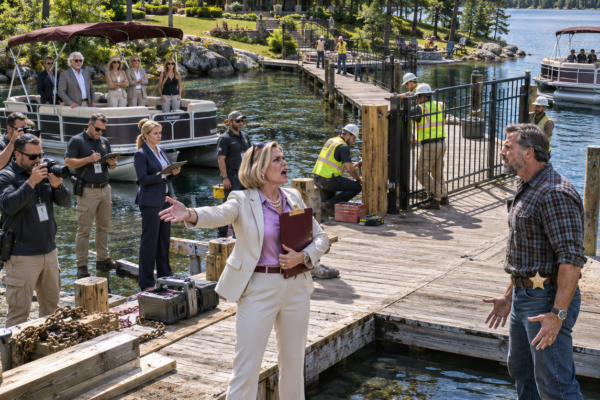
Vanessa Whitmore walked down a temporary boardwalk toward me in a bright red pantsuit that looked almost unreal against all that pale sand. Brown hair pulled into a high ponytail. Clean shoes. Straight shoulders. She carried herself like the island had been waiting for her.
“Mr. Barrett,” she said. “I wondered when you’d show up.”
“Turn the machines off.”
She gave me a small smile.
“We’re in the middle of a concrete schedule.”
“You’re in the middle of my property.”
A few workers looked over. The excavator kept idling behind her, its bucket suspended above torn ground.
Vanessa glanced toward the construction site.
“Seabrook Landing has maintained access to Pelican Key for decades. The board approved redevelopment after determining the parcel had been left functionally unused.”
“Functionally unused by who?”
“By everyone.”
I looked past her.
The phrase should have sounded ridiculous. Instead, it sounded practiced.
They had driven mats over marsh grass, spread fill across the center of the island, and laid foundations where my father used to measure storm marks. But the villas were not the first thing that tightened my chest.
Fifty yards south, a strip of compacted earth crossed one of the low channels.
One of the doors.
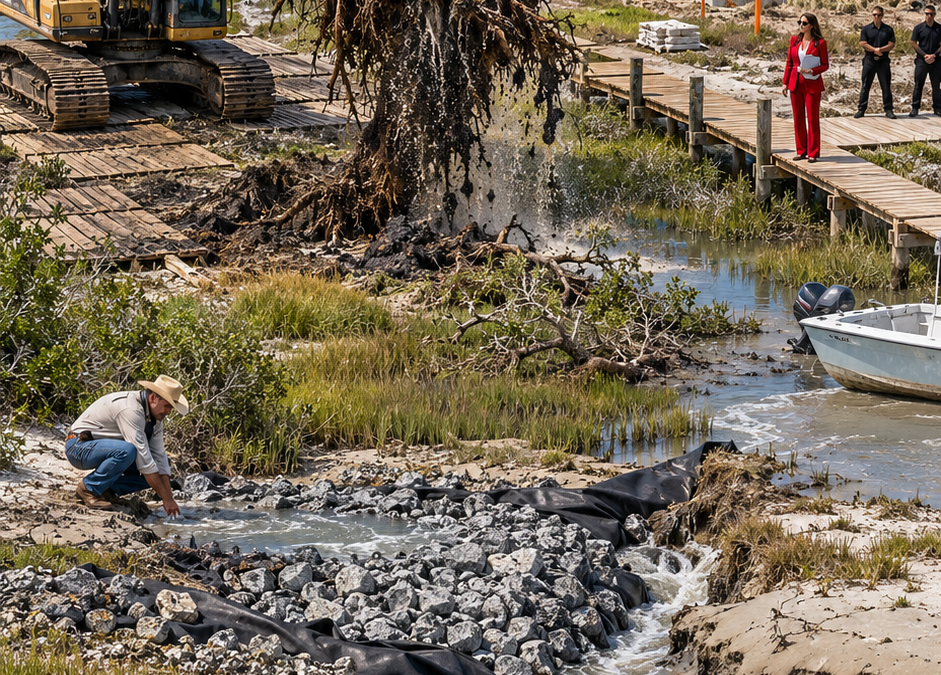
The cut was not dramatic enough for Vanessa to notice. Just a shallow channel where ordinary tidewater moved across the island. Fresh crushed stone had been packed over geotextile fabric. A trickle of seawater worked along one side, already searching for another route.
I walked past Vanessa.
“Who filled that?”
She followed my eyes.
“That drainage depression?”
“Who filled it?”
“The site contractor. We needed stable equipment access.”
I kept walking.
One of the security men shifted into my path. Vanessa lifted two fingers, and he stopped.
I reached the edge of the fill and crouched. The crushed stone was damp and still settling. A thin stream of water ran around one side, cutting into soft sand. I pushed two fingers into the mud.
My father used to bring me out here after hurricanes with a yellow folding ruler. He would measure water marks on old pilings and make me write the numbers in a notebook while mosquitoes ate my neck.
I thought he was obsessive.
Standing there, I wished I had listened harder.
Vanessa’s heels clicked behind me.
“This project will increase property values throughout Seabrook Landing.”
I stood.
“How many projects did you find in the island records?”
Her expression changed just enough for me to notice.
“Several proposals.”
“And how many got built?”
“Previous developers lacked the resources to execute properly.”
“That wasn’t my question.”
A concrete pump started somewhere behind us with a deep mechanical thump.
Vanessa folded her arms.
“Every project was denied. We’re aware of the history.”
“Did anybody ask why?”
“Cole, people have been using that island as an excuse to say no for thirty years.”
She pointed toward the new villas.
“We decided to say yes.”
I turned toward the construction site. Beyond the crane, I could still see the other two low channels shining in the sunlight.
Open for now.
My father’s voice came back so clearly I could almost hear him beside me.
Don’t stop water. Give it somewhere safer to go.
I faced Vanessa.
“Shut the site down until you understand what you’re building on.”
Her smile disappeared.
“No.”
Behind her, the excavator lowered its bucket, bit into another section of sand, and turned toward the second door.
I watched the machine turn, but it was my father I saw standing there, not as a ghost, just as memory. Sunburned forearms. Muddy boots. Yellow folding ruler tucked into his back pocket.
When I was twelve, he brought me to Pelican Key three days after Hurricane Hugo had pushed through the coast. The sky was blue again. Birds were back in the grass. From the mainland, nothing looked damaged.
Dad tied our skiff to an old piling and handed me the ruler.
“Find the mark.”
I found a dark line almost five feet above the normal tide stain.
“Water got that high here?”
“Yeah.”
I looked toward Seabrook Landing across the sound, though back then it was mostly old houses, docks, and scrub lots.
“Why didn’t it get that high over there?”
He pointed at the channels cutting through our island.
“Because it had somewhere else to go.”
I had not thought about that conversation in years.
That afternoon, after Vanessa refused to stop construction, I took my skiff around the southern edge instead of going home. The tide was rising. At the first channel, the one they had filled, water pressed against the compacted earth and curled around both ends. The grass there was already flattened.
At the second door, the current moved cleanly through the island, dark water sliding between oyster shells and cord grass.
I killed the engine and drifted.
That difference told me more than Vanessa’s entire construction site.
My phone rang.
Vanessa.
“You need to remove your boat from the work perimeter.”
“I’m three hundred yards from your equipment.”
“The contractor says you’re interfering.”
“I’m floating.”
Her voice hardened.
“This resort is happening.”
I watched a piece of marsh grass spin through the open channel.
“You said every previous project was denied.”
“Correct.”
“Hotel proposal in ’98 denied. Marina complex denied. Private villas denied.”
A pause.
“And none of that bothered you?”
“It told me nobody before us had the resources to solve the site.”
There it was again.
Solve the site.
“My father turned down developers for thirty years.”
“Your father also left millions of dollars sitting under weeds.”
I looked toward the island. From the water, the new villas rose above the grass like white boxes balanced on stilts.
“Those weeds kept your neighborhood dry more than once.”
Vanessa laughed once without humor.
“You’re telling me your empty island is flood control?”
“I’m telling you to stop changing something you don’t understand.”
“Then explain it at the board meeting tomorrow.”
She hung up.
The meeting was held in Seabrook Landing’s clubhouse. All cold air conditioning, polished wood, and wide glass windows overlooking the marina. Vanessa stood at the front in the same red pantsuit while renderings of the finished resort filled a large screen behind her.
White villas.
Palms.
An infinity pool.
Private docks.
Sunset over still water.
Around forty homeowners sat facing us.
I explained the channels. I explained overwash. I explained what I had watched since childhood. No technical speech. I used a water glass and the edge of a serving tray.
“If water can cross here,” I said, tipping the glass slowly, “it spreads.”
I blocked the edge with my hand.
Water ran sideways across the tray.
“If you stop it here, you haven’t removed it. You’ve changed where it goes.”
A man in the second row frowned.
Vanessa stepped beside me.
“And our engineers have designed elevated pads, reinforced drainage, and shoreline protection specifically to manage that.”
Applause started somewhere behind me.
Not much.
Enough.
I looked around the room and realized the mistake I was making.
I was asking people to fear water they could not see.
Vanessa was showing them a resort they could.
She changed the rendering to a sunset view of the completed property.
“Pelican Key has been denied development repeatedly because previous proposals could not meet the standards of their time. We can.”
More applause.
When I left the clubhouse, the evening tide was coming in. Across the sound, construction lights burned on my island. An excavator moved beneath them. Its bucket dropped.
Even from half a mile away, I knew exactly where it was working.
The second door.
By sunrise, the second door was gone.
I crossed to Pelican Key before the crews arrived and found a twelve-foot-wide ridge of compacted fill where tidal water had moved the night before. Crushed stone sat on top, still damp and dark.
The only open channel left was the southern cut, narrow enough that I could step across it at low tide. I stood there with my boots in the mud and watched water pull through it fast enough to bend cord grass flat.
Behind me, a barge horn sounded.
Vanessa arrived with another load of fill.
By eight, the island shook under dump trucks. Workers built the villa pads higher while a crew along the western edge drove sheet piling into the sand. Every steel section landed with a deep metallic boom I could feel through my soles.
I found Vanessa beside the future pool studying elevations with the superintendent. Red pantsuit. Brown ponytail pulled tight. Not a grain of sand seemed allowed to touch her.
“You closed another channel.”
She looked up.
“We improved the construction access.”
“You blocked two of three.”
“Temporary.”
I pointed toward the sheet piling.
“And that shoreline protection. You’re building a wall around a place water is supposed to cross.”
The superintendent lowered his plans and looked between us.
Vanessa did not.
“We’re raising finished grade six feet. The villas are elevated. Drainage will be engineered.”
“Drainage to where?”
“The engineers have addressed it.”
“Where?”
Her jaw tightened.
“You are not the engineer on this project.”
“No. I’m the guy who owns the ground under your shoes.”
That finally drew the superintendent’s attention.
Vanessa stepped closer, stopping several feet from me.
“Ownership is being handled separately. Construction is proceeding.”
That was the shield she kept hiding behind.
Seabrook Landing’s attorneys were claiming an old recorded access agreement gave the HOA development rights beyond the shoreline, while my deed said the island itself was mine. Until that dispute was formally resolved, every agency I had called treated it as a civil property fight, not something they could shut down on my word alone.
Vanessa knew exactly how much time that bought her.
“Then tell me where the water goes,” I said.
She pointed toward the sound.
“Back where it came from.”
I shook my head.
“Water doesn’t read your plans.”
For the first time, irritation broke through her polished expression.
She turned to the superintendent.
“Continue the berm.”
A dozer pushed forward behind us. Its blade caught a mound of pale sand and rolled it toward the western edge.
That was Vanessa’s answer.
More height.
More material.
More control.
I spent the next hour walking the perimeter. Near the first closed door, water had already carved a shallow groove around the end of the fill.
On the mainland side, Seabrook Landing sat less than a mile across the sound. Rows of expensive houses. Private docks. A marina basin tucked behind its seawall.
From Pelican Key, it looked protected.
I knew better than to confuse protected with untouchable.
That afternoon, Vanessa called while I was replacing storm-damaged pilings at a customer’s dock. My impact driver rattled in my hand. I shut it off.
“What?”
“Your presence is disrupting my contractors.”
“Your contractors are on my island.”
“You’ve made that position clear.”
“Apparently not clear enough.”
“Cole, we’re past debating whether the resort gets built.”
I looked down at the tide moving around the piling beside my boot.
“That’s the problem. You think construction is the decision.”
“Construction is what happens after it.”
“Meaning?”
“Meaning you’re making decisions about where water can go.”
She sighed.
“Again with the water.”
“Yeah. Again with the water.”
Three days later, barges brought prefabricated retaining sections. By the end of the week, the resort platform stood visibly higher than the remaining marsh. Vanessa invited board members across for a construction tour.
I watched from my skiff as they walked between the rising villas in clean shoes, pointing toward ocean views. From where they stood, everything probably looked impressive.
From where I floated, I could see something they could not.
The tide was halfway in, and water had reached the two blocked channels. Instead of crossing Pelican Key, it split around them, curling north and south along the island’s edge. I followed the southern current with my eyes. It joined another flow beside the last open door, squeezing through a space that had once carried only a third of the island’s overwash.
The water there moved faster now.
Darker.
Louder.
I eased my skiff closer and watched bits of shell tumble through the current.
Vanessa appeared on the raised bank above me.
“Admiring the progress?” she called.
I looked up.
“Actually, yeah.”
She smiled.
“Finally.”
“You’ve done something I couldn’t explain at the clubhouse.”
Her smile faded.
I pointed at the racing water beneath me.
“You made it visible.”
I made my first real mistake two nights later.
Vanessa’s crews had gone home and the island was quiet except for wind pushing through cord grass and the steady slap of water against the temporary dock. I had spent all day watching the tide squeeze through that last southern channel. By sunset, I had convinced myself that waiting was the same thing as letting her win.
So I brought over one of my compact excavators on a work barge.
No crew.
No audience.
Just me, headlights, diesel fumes, and a bucket cutting into the first filled channel.
I peeled back crushed stone until dark seawater pushed through the opening. Within minutes, the current widened it on its own.
I should have stopped there.
Instead, I kept digging.
I wanted the door open the way I remembered it.
By midnight, water was moving cleanly across Pelican Key again. I shut down the machine and sat in the cab with my hands on the controls, listening to the engine tick as it cooled.
For the first time in days, I felt like I had done something.
By seven the next morning, Vanessa had turned it against me.
When I arrived by skiff, two dump trucks were already backing toward the cut. A contractor stood beside them photographing my excavator tracks. Vanessa waited on the temporary boardwalk in her red pantsuit, arms folded.
“Thank you,” she said.
“For what?”
“For making this simple.”
She held up her phone.
On the screen was a photograph of the channel I had reopened.
“Unauthorized excavation inside an active construction zone. Damage to installed site work.”
“Interference with contractors on my land.”
“That question is being handled separately.”
“You keep saying that like it makes the island yours.”
“No, Cole. You’re doing that for me.”
She turned toward the waiting trucks.
“Phillip.”
I stepped forward.
“Vanessa.”
She raised one hand.
“You wanted everyone to believe you were protecting Seabrook Landing. Last night, you brought heavy equipment onto an active site and tore out completed work without warning anyone.”
Workers were watching.
So were three HOA board members who had come over with her.
She had invited them for this.
The first truck lifted its bed.
Stone rattled down in a hard gray avalanche.
Water disappeared beneath it.
I could have shouted.
I almost did.
Instead, I looked at the tracks my excavator had left across the sand.
She was right about one thing.
I had given her exactly the picture she needed.
By lunchtime, homeowners were sharing photographs of the excavation. One man I had helped rebuild a dock after a tropical storm called me.
“Cole, tell me you didn’t sneak onto the site with an excavator.”
I tightened a bolt on a trailer hitch outside my shop.
“I did.”
“Why?”
“To reopen a tidal cut.”
“At midnight?”
I stopped turning the wrench.
“Yeah.”
Silence.
“Man, that doesn’t help you.”
“I know.”
Saying it out loud hurt worse than hearing it from Vanessa.
That afternoon, I drove through Seabrook Landing instead of going back to the island. I stopped at an older house near the marina where the owner, Frank Dorsey, was replacing warped boards on a low dock.
His place sat barely four feet above normal high tide. Two streets behind him were lower. I looked at garage doors, electrical boxes, propane tanks, landscaping walls—things I had ignored because I had been staring across the sound at Pelican Key.
Frank rested his drill against his thigh.
“You checking my dock?”
“No.”
“Then what?”
I looked toward the island. The white villas were visible beyond the marina entrance.
“I’ve been trying to save the wrong thing.”
He frowned.
I pointed toward his seawall.
“Next high tide, mark the water for me.”
“Why?”
“Because I’m done chasing her bulldozers.”
The next morning, I loaded my excavator onto its trailer and hauled it away from the waterfront.
Vanessa watched from across the marina parking lot.
She probably thought I was retreating.
Maybe part of me was.
But my father had never told me to fight water. He had told me to give it somewhere safer to go.
I had spent a week fighting Vanessa for the island.
From that day forward, I started watching what was behind it.
The first storm arrived on a Tuesday and spent most of the morning pretending it was not one.
Gray clouds sat low over the sound. Wind pushed twenty knots from the southeast, enough to rattle dock lines but not enough to empty the marina. By noon, rain came sideways against my shop windows.
I drove to Frank Dorsey’s place before high tide with a grease pencil in my pocket.
He was standing under his porch roof watching the water.
“You expecting Noah?” he asked.
“Not yet.”
We walked down to his dock. The sound had turned brown and rough. Waves slapped beneath the boards, spraying salt across my jeans. I marked the piling at the highest wash and wrote the time beside it.
Then I waited.
Pelican Key was barely visible through the rain. The new villas stood pale against the storm, high above the marsh. Vanessa’s berm held. So did the raised pads.
I kept waiting for water to cut through something.
It did not.
At four that afternoon, Vanessa sent photographs to the HOA homeowners. Frank showed me on his phone.
The resort was dry.
Workers in rain jackets walked between the villas. The pool deck had puddles, nothing more.
“Looks like she built it right,” Frank said.
I stared at the picture longer than I wanted to.
“Maybe.”
That word stayed with me all night.
Maybe I had made the island into something bigger in my head because my father had. Maybe engineering had changed. Maybe six feet of fill and enough money really could solve what thirty years of rejected projects had not.
Wednesday morning broke clear and painfully bright.
I crossed to Pelican Key alone.
The storm had scrubbed the sky blue. Vanessa was already there with four board members and a photographer, walking them through the nearly finished resort. Glass railings shone around the infinity pool. White villas stood untouched. Fresh palms leaned in the wet sand but remained upright.
Vanessa saw me and smiled.
“Still standing.”
I looked at the berm.
“I see that.”
“Yesterday’s tide was twenty-eight inches above normal.”
“I know.”
“And no flooding.”
One board member gave me a look that said the argument was over.
Vanessa spread one hand toward the resort.
“Sometimes the answer really is better engineering.”
I walked away before I said something stupid.
At the southern end of the island, the last open door had carried hard water during the storm. Grass lay flat for fifty yards. Shell fragments were scattered across the sand, but the resort had survived.
I took my skiff back to the mainland.
Frank was waiting beside his dock.
“Come look at this.”
He pointed at the piling I had marked the day before.
The grease pencil line sat six inches below a dark band of debris wrapped around the wood.
“Wasn’t there when we marked it,” he said.
I crouched. Pine needles, marsh grass, a strip of plastic. The old storm marks on that piling were faint but visible. Yesterday’s debris line sat above all the recent ones.
I walked to the marina.
Two floating docks had climbed high enough to bend their guide brackets. One aluminum gangway had shifted sideways. At the lowest street, saltwater had backed through a storm drain and left a brown stain across the curb.
Nothing catastrophic.
Nothing anybody would put on the news.
But Seabrook Landing had taken more water from a weak storm than I remembered seeing from stronger ones.
I called Frank.
“Do you still have pictures from after the storm three years ago?”
“Probably.”
“Find the dock piling.”
An hour later, he sent them.
Same piling.
Similar tide.
Lower water.
I did not need ten more measurements.
I needed to understand what had changed.
Across the sound, Vanessa’s resort glittered in the afternoon sun.
Dry and expensive.
That was when it finally clicked.
I had been waiting for her walls to fail.
They had not.
They had worked.
The raised pads kept the resort dry. The berms held the surge out. The blocked channels stopped water crossing the island.
Vanessa had not failed to control the water.
She had redirected it.
I stood at the marina entrance and watched the current run along the seawall.
My phone buzzed with an HOA announcement about a private resort preview that weekend.
Vanessa had won the storm.
Everyone could see it.
I looked down at the fresh debris line wrapped around Frank’s piling.
What nobody understood yet was where she had sent the water she defeated.
The morning after the storm, I stopped trying to prove Vanessa wrong. I started getting Seabrook Landing ready for what would happen if I was right.
Frank and I began at his house. His electrical panel sat forty inches above the garage floor. We moved the vulnerable controls higher, shifted tools and storage bins onto steel shelving, and rolled his generator onto a raised concrete pad behind the house.
By noon, two neighbors were watching from the driveway.
One of them, a retired teacher named Linda Mercer, pointed toward the sound.
“You think another storm’s coming?”
“Another storm always comes.”
“That’s not what I asked.”
I tightened the last anchor bolt.
“I think the next one doesn’t need to be stronger to cause more trouble.”
I showed them Frank’s piling. Not as proof of conspiracy. Just a mark they could touch.
Six inches.
That was enough.
By Friday, I had seven homeowners asking me to look at low garages, dock hardware, propane tanks, and electrical equipment. I charged nobody. That cost me. I pushed two paying dock jobs into the following month and gave my crew three days of wages for work that was not bringing money in.
But I had spent too much time fighting over who controlled Pelican Key.
These were the people standing behind it.
Vanessa noticed.
She drove up while we were raising an outdoor disconnect at Linda’s place. Her red pantsuit stood out against the white siding.
“You’re frightening residents.”
I kept my wrench on the conduit fitting.
“I’m moving electrical equipment.”
“You’re implying Seabrook Landing is unsafe.”
“I’m showing people where their shutoffs are.”
“After one elevated tide.”
I looked at her.
“How’s the resort?”
“Excellent.”
“Then why are you here?”
Her mouth tightened. She glanced at the neighbors watching from Linda’s porch.
“Grand opening is in three weeks. I suggest you stop trying to undermine it.”
“I’m not touching your resort for once.”
She walked back to her SUV.
That was the part she misunderstood.
Leaving her project alone felt unnatural to me. Every morning I could see construction barges crossing the sound. Every evening the resort looked more finished—glass railings, landscaping, dock lights, a long raised causeway connecting the service side to the main buildings.
I wanted to cross over and stop it.
I did not.
Then nine days later, Frank called before breakfast.
“You need to see this.”
I met him at the marina.
Across the water, an excavator was working at the southern end of Pelican Key.
The last open door.
Bucket after bucket of fill dropped into the channel.
“Why would they close that now?” Frank asked.
I already knew.
The resort entrance road crossed near it. Keeping the cut open meant bridging it or accepting periodic flooding. Filling it was cheaper and cleaner.
I took my skiff across.
Vanessa stood beside the superintendent as a compactor rolled over fresh stone.
“That one stays open,” I said.
Vanessa turned.
“Not anymore.”
“It’s the last path across the island.”
“It’s a drainage ditch running through our primary access route.”
“Your first storm already raised water on the mainland.”
“Your theory.”
“Your water.”
The compactor reversed with a shrill backup alarm.
I stepped closer to the foreman, not Vanessa.
“You have an evacuation plan for your crew?”
He glanced at her.
“We have procedures.”
“Know the route yourself.”
Vanessa gave a short laugh.
“Is that supposed to scare him?”
“No.”
I looked at the channel disappearing beneath crushed stone.
“It’s supposed to keep him from waiting for permission if he needs to leave.”
I turned and walked back to my skiff.
Vanessa called after me.
“That’s it?”
I stopped but did not turn around.
“What were you expecting?”
“Another midnight excavation.”
“I learned something.”
Behind me, the compactor rolled forward again.
The last strip of dark water vanished under pale gravel.
By sunset, Pelican Key had no doors left.
Two days later, the HOA announced that the grand opening had been moved forward by a week. Vanessa wanted the resort operating before peak storm season.
That night, I checked the National Hurricane Center forecast before bed. A tropical system was organizing southeast of the Bahamas.
Too far away to predict our weather.
Close enough that I left my work truck loaded with pumps, ropes, fuel cans, and life jackets.
Then I put Frank’s yellow grease pencil in the cup holder beside my father’s old folding ruler.
The hurricane never came ashore.
It did not have to.
By Thursday morning, the center was more than a hundred miles offshore, but its wind had been pushing Atlantic water toward us for almost eighteen hours.
At 6:10, Frank called.
“The drains are running backward.”
I was already dressed.
I pulled on my navy shirt, jeans, boots, and brown hat, grabbed my keys, and drove toward Seabrook Landing. Rain hammered the windshield hard enough to erase the road every few seconds.
When I reached Frank’s street, brown water was bubbling through the storm drains.
The marina basin had climbed almost level with the seawall. Dock lines groaned against cleats.
Across the sound, Pelican Key looked almost peaceful.
The resort sat high and white above the water. Every villa intact. Its berms were holding. Its raised causeway was dry.
Vanessa had built exactly what she promised.
And Seabrook Landing was taking the water instead.
I pulled my work truck beside Linda Mercer’s house.
“Kill the main breaker before water reaches the garage,” I told her.
She nodded and went inside.
Frank came through knee-deep water carrying a dry bag.
“It’s up three inches in twenty minutes.”
“Get your truck to Harbor Road.”
“What about you?”
“I’m staying until this street’s clear.”
Two of my crew arrived with our shallow-draft skiff on a trailer. We launched from the marina parking lot because the ramp was already underwater.
For the next hour, there was no argument about resorts or property lines.
We moved adults from the lowest homes, carried medication and dry bags, and checked doors where cars were still in driveways. Nobody panicked. That made it worse somehow. People were quiet, focused, watching water climb their porch steps.
At 8:32, my phone rang.
Vanessa.
Wind snapped against the microphone when I answered.
“Where are you?” she demanded.
“Mainland.”
“We need your excavator on Pelican Key.”
I looked across the sound.
“For what?”
“The service causeway is taking wave action. We need additional fill along the southern berm.”
No silence.
No hesitation.
Just more control.
“Open the southern cut.”
“Absolutely not.”
“Then the water keeps coming here.”
“The resort is stable.”
“That’s the problem.”
A floating trash can bumped past my knee.
“Your walls are working, Vanessa. You closed every place the surge used to cross.”
“We are not intentionally flooding a multimillion-dollar property based on your theory.”
“Look out your window.”
“I am looking at a resort that is still standing.”
I watched Frank help Linda into the skiff.
“I’m looking at the people behind it.”
Her voice sharpened.
“Bring the excavator.”
“Open the cut.”
“No.”
The call ended.
Twenty minutes later, the marina siren sounded. Water had begun overtopping the lowest section of seawall in sheets. We moved everyone from the first two streets to higher ground. My crew tied the skiff to a street sign while I walked through thigh-deep water toward the marina office.
Inside, six HOA board members stood around a conference table with phones pressed to their ears. Vanessa was on speaker.
“The resort remains secure,” she said. “Our priority is protecting the causeway so emergency access remains available.”
I put both hands on the wet table.
“Emergency access for who?”
Nobody answered.
I took my father’s folding ruler from my pocket and set it beside a printed tide chart.
“Your first little storm gave you six extra inches here. This one is giving you feet. You want that pressure down? Reopen a path across Pelican Key.”
One board member, Richard Hail, stared through the window at water rolling over the marina pavement.
“What happens to the resort?”
“Ground level floods. Landscaping gets torn up. Maybe part of the service road goes.”
Vanessa cut in.
“Which is exactly why we are not doing it.”
Richard looked at the speaker.
“And if we don’t?”
Another wave washed over the seawall outside.
I did not answer immediately.
I did not need to.
“Cole,” Vanessa said, “your excavator can reinforce the berm.”
I picked up the ruler.
“I spent my whole life building things to survive water. My father taught me the part I was too stubborn to understand.”
I looked through the rain toward the island.
“Sometimes the safest structure is an opening.”
Richard leaned toward the phone.
“Vanessa, open the southern corridor.”
“No.”
One word.
Clean and immediate.
That was the moment the room changed.
The board members stopped looking at me.
They looked at each other.
Vanessa was not fighting me anymore.
She was fighting the people whose homes were filling with water.
Outside, another dock line snapped loose from its cleat and whipped into the rain.
Richard reached for the speakerphone.
“Then we have a bigger problem.”
Richard did not raise his voice.
He did not need to.
“Vanessa, as of this moment, you no longer have unilateral control of emergency operations.”
The speakerphone went silent for half a second.
Then her voice came back sharp.
“You do not have the authority to do that.”
“Five board members are standing here.”
Richard looked around the table.
One by one, hands went up.
“We just did.”
I was already moving.
“Where’s the island superintendent?”
One of the board members called him. He answered from Pelican Key, wind roaring behind his voice. Vanessa had ordered crews to place portable barriers and additional fill across the southern low ground beside the causeway.
The last door was not just closed anymore.
She was making it higher.
“Stop placing material,” Richard said.
The superintendent hesitated.
“Ms. Whitmore instructed us to protect the access road.”
“Her emergency authority has been suspended. Stop work.”
Another pause.
“Understood.”
I grabbed my truck keys.
Richard caught my arm.
“Can you open it?”
“Not from here.”
Ten minutes later, my excavator was rolling down Harbor Road on its trailer while rain blew sideways across the windshield. We could not safely barge my machine across in that wind, but the resort contractor already had a tracked excavator on Pelican Key.
I crossed in my shallow-draft skiff with one of my crewmen. The sound was rough enough to turn white. We wore life jackets and kept the bow quartered into the chop.
When my boots hit the island, water was already running along the outside of the berm like a river searching for a crack.
Vanessa stood near the service building in a rain shell thrown over her red pantsuit, brown ponytail whipping behind her.
“You’re not cutting through that road.”
“Move your people uphill.”
“That berm protects the resort.”
“And your neighborhood is underwater.”
“The board panicked.”
“The board looked out a window.”
The superintendent approached us.
“Mr. Barrett, show me where.”
I pointed toward the buried southern channel.
“Start shallow. Take the fill in layers. Once water starts moving, back the machine away and let it cut.”
Vanessa stepped between us without touching either of us.
“If you do this, you will flood the entire lower property.”
The superintendent looked at Richard’s authorization on his phone, then at me.
“Everybody clear?”
I checked the workers.
All accounted for.
All moving toward raised ground.
“Clear.”
The excavator crawled forward. Its bucket dropped into the compacted berm. The first scoop came up heavy with gravel and wet sand.
Then another.
And another.
Vanessa stood twenty yards away, both hands clenched at her sides.
“Stop!” she shouted.
Nobody did.
On the sixth pass, a thin brown stream appeared beneath the bucket.
It looked almost harmless.
Then the opening widened.
Water punched through.
The operator reversed immediately. The stream became a rushing channel, ripping loose gravel from the cut and carrying it across the low side of Pelican Key. Landscaping fabric lifted. Mulch spun away. Water spread across a service lane and curled around the base of the raised villa pads.
The buildings stayed above it.
The pretty ground around them did not.
Vanessa stared as sections of fresh landscaping disappeared beneath brown water.
“Close it,” she said. “Close it now.”
I shook my head.
“That’s the island working.”
For twenty minutes, the channel widened under its own current. The sound changed first—a deep rushing hiss replacing the slap of water against the berm.
Then my phone buzzed.
Frank.
“Cole?”
“Yeah.”
Wind cracked through his microphone.
“It stopped climbing.”
I looked across the gray water toward Seabrook Landing.
“Mark it already did.”
Another call came from Richard. Water at the marina seawall had begun dropping back below the top edge. Not fast. Not magically. But enough that the overtopping slowed. Enough that the streets stopped getting deeper.
Vanessa heard me repeat it to the superintendent.
Her face went still.
Behind her, one of the portable barriers she had ordered shifted loose and floated sideways across the flooded service lane. She watched it drift toward the reopened channel.
Every decision she had made to keep water away from the resort was moving past her in reverse.
Richard arrived later aboard the marina’s larger workboat after conditions eased enough for the crossing. He stepped onto the dock, looked at the flooded lower grounds, then at the mainland across the sound.
Vanessa walked toward him.
“You destroyed the opening.”
“No,” Richard said. “We prevented you from closing it again.”
She started to answer, but he held up a hand.
“The resort stays closed. No grand opening. No guests. No additional shoreline work until the board reviews every commitment you made under emergency authority.”
Vanessa looked at me as if I had taken something from her.
I had not.
I was soaked through, my hat dripping, boots buried in the same wet sand she had spent millions trying to control. Behind us, water poured through the southern door exactly where it had crossed Pelican Key when I was twelve years old.
My father had been right about one thing I had needed forty-five years to understand.
Sometimes winning means knowing what not to stop.
Three days after the storm, the sun came back hard and white, making every wet surface on Pelican Key shine. I walked the southern channel in rubber boots while seawater moved quietly around my ankles.
The resort was still standing.
That surprised people when they first saw it. The villas had not collapsed. The glass railings were intact. The infinity pool still held blue water.
What had failed was everything built around the idea that the island could be made permanent.
The service road was cut in two. Mulch and decorative stone had washed into the marsh. Sections of the lower pool deck had shifted. Fresh landscaping lay flattened beneath lines of dried sea grass.
The resort looked expensive, beautiful, and impossible to operate.
Vanessa arrived on the afternoon ferry with two board members. She still wore her red pantsuit, but this time she had rubber overshoes pulled over her clean shoes. She stopped at the reopened channel and stared at the water.
“The insurer suspended coverage on the current site configuration,” Richard told me. “And the investors froze the next funding release.”
Vanessa stared at the channel.
“Then we rebuild the berm correctly.”
Richard looked at her for a long second.
“No.”
The board had reviewed the emergency decisions and construction commitments she had pushed through. The resort would remain closed. The flood corridors would stay open. Vanessa Whitmore was removed as president effective immediately.
Vanessa looked past him at me.
“This is what you wanted.”
I shook my head.
“I wanted you to stop before the storm.”
She glanced toward the damaged service road.
There was nothing left to say.
Over the next two months, barges came back to Pelican Key, but this time they carried material away. Sections of lower service infrastructure were removed. Fill came out of the natural flow corridors. The raised villas remained temporarily while ownership, financing, and removal costs were resolved, but nobody checked in. Nobody sat beside that infinity pool.
Nobody called the island tamed anymore.
I lost plenty too.
Saltwater killed stretches of vegetation where construction had changed drainage. Heavy equipment left scars across ground my father had kept untouched for decades. I spent weekends with Frank, Linda, my crew, and a handful of other Seabrook residents pulling construction debris from marsh grass and rebuilding the three channels.
I did not charge them.
They brought coffee, sandwiches, fuel, and more opinions than I needed.
One Saturday, I brought my compact excavator back to the island. Same machine I had used at midnight when I thought anger and a bucket were enough to solve the problem.
This time, Frank stood beside me with my father’s old yellow folding ruler.
I cut the final strip of compacted fill from the northern door, then backed the excavator away.
We waited.
The tide did the rest.
Water entered slowly at first, spreading through the shallow channel, lifting bits of dry grass and carrying them toward the sound.
Frank unfolded the ruler and pushed it into the moving water.
“Your dad really measured this stuff?”
“Everything.”
“Sounds exhausting.”
I laughed.
“It was.”
By late afternoon, all three doors were moving water again.
Months later, I stood on Pelican Key during an ordinary high tide. Most of the resort construction was gone or waiting for removal. Grass had started reclaiming the disturbed edges. Across the sound, Seabrook Landing sat behind its marina under a clean blue sky.
Frank had come over in his skiff.
He walked beside me until we reached the southern channel.
“So that’s really why nobody ever built here?” he asked.
Water slipped across the sand between our boots.
I thought about all those developers my father had turned away. All those rejected plans Vanessa had treated as failures of money or nerve.
The island had looked empty because people kept asking the wrong question.
They asked what could be built on it.
My father had asked what happened if you did.
“Yeah,” I said.
Frank watched the tide move through the grass.
I took off my hat and wiped the sweat from my forehead.
For years, I thought my father had left me an empty island.
Vanessa thought the same thing.
She saw unused land and believed enough concrete could turn it into something valuable.
But standing there with seawater moving freely through those three old doors, I finally understood what he had actually left me.
Not empty land.
Open space.
And when the water came, that difference was everything.