PART 2: HOA Karen Kept Stealing My Mail—Then She Reached Into My Mailbox One Last Time and Ended Up in the Hospital
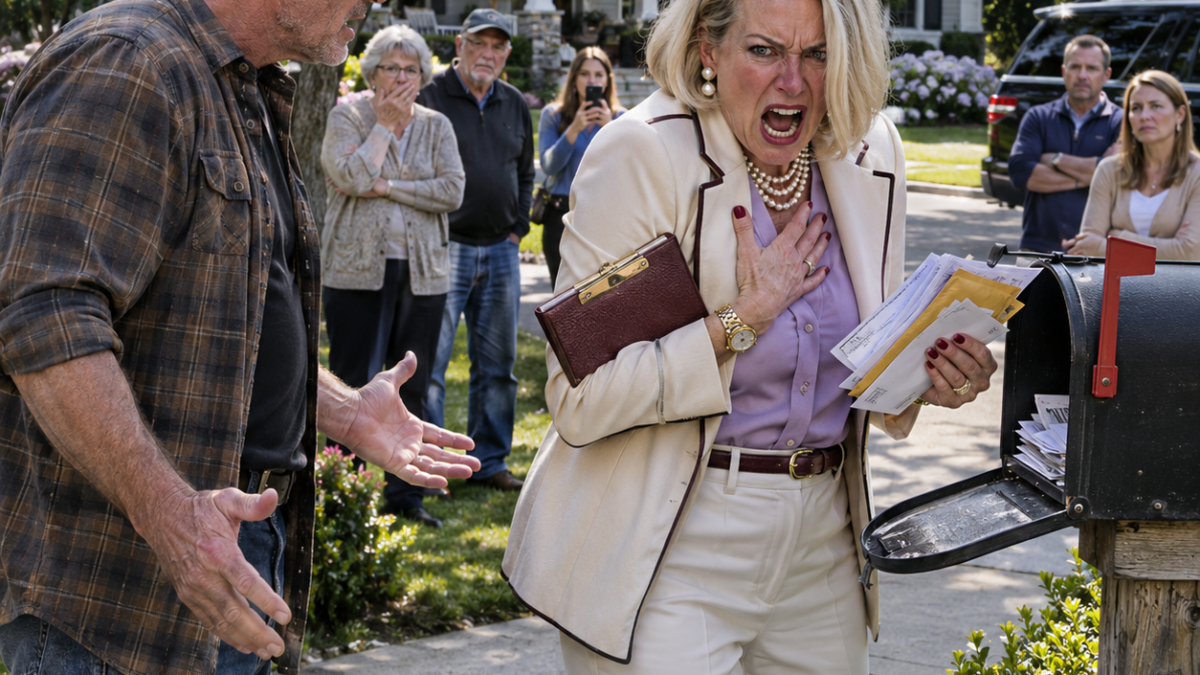
A scream ripped through Maplewood Heights so violently that front doors started flying open before I even had time to set down my coffee.
At the end of my driveway, our HOA president was clutching one hand against her chest, staring at my mailbox like it had personally betrayed her.
What none of my neighbors knew yet was that this moment had been building for weeks—and the woman screaming in the street had made one mistake she could no longer explain away.
My name is Steven Edwards.
I was fifty-six years old, recently retired, and after twenty-five years as a federal postal inspector, I had promised my wife Linda that the investigative part of my life was over.
No more surveillance.
No more midnight phone calls.
No more evidence bags on the kitchen table.
No more sitting across from thieves while they told me lies both of us knew were ridiculous.
Linda and I had earned something quieter.
That was why we moved to Maplewood Heights.
On paper, it looked perfect.
Tree-lined streets. Freshly painted fences. Small front gardens. Children riding bicycles until their parents called them in for dinner.
The neighborhood entrance had a stone monument with MAPLEWOOD HEIGHTS carved across it in oversized letters, surrounded by flowers that changed with the season.
People waved when they drove past.
Neighbors borrowed ladders from one another.
Sunday mornings smelled like coffee, cut grass, and somebody’s bacon drifting through an open kitchen window.
After decades of federal work, I thought I had finally landed in the most wonderfully boring place in America.
Then I met Bella Turner.
Bella was the president of the Maplewood Heights Homeowners Association.
She was also, depending on which neighbor you asked, the unofficial mayor, police chief, zoning officer, landscape inspector, morality committee, and queen.
Usually all before breakfast.
Bella loved bright blazers.
Pink.
Red.
Orange.
The louder the color, the more authority she seemed to believe it gave her.
She carried a clipboard everywhere.
The first morning she introduced herself, she didn’t even bother with welcome to the neighborhood.
She stared at the edge of my lawn.
“You’ll want to clean that up.”
I looked down.
“Clean what up?”
She pointed.
“The grass along the sidewalk. It’s slightly uneven.”
I waited for her to smile.
She didn’t.
The lawn had been professionally cut two days earlier.
I looked back at her.
“I’ll notify the governor immediately.”
Her eyes narrowed.
Linda, who had been standing behind me, dug her fingers into my arm before I could say anything else.
Bella smiled thinly.
“You’ll learn how seriously we take community standards.”
Then she marched away.
That should have warned me.
Within a month, I had watched her fine George Miller fifty dollars because his garbage can remained visible from the street for several hours after collection.
She ordered Mrs. Jacobs to repaint her mailbox because the cream color was apparently the wrong cream color.
She sent a warning to a young family because their children’s bicycles had been left in their driveway overnight.
Everyone complained about her.
Nobody challenged her.
Whenever Bella walked past, people smiled.
Whenever she disappeared, people cursed.
Linda told me not to get involved.
“You’re retired,” she reminded me.
“I know.”
“No investigations.”
“I know.”
“No neighborhood sting operations.”
I laughed.
“Why would I run a neighborhood sting operation?”
She gave me the look of a woman who had been married to me for twenty-seven years.
“Because you’re you.”
For the first few months, I ignored Bella.
I planted roses.
I repaired the fence.
I drank coffee on my porch.
I called my son in Denver more often.
And for the first time in years, my mornings belonged to me.
Then my mail started disappearing.
The first missing envelope didn’t bother me.
The second one did.
By the fourth, I knew something was wrong.
A utility statement vanished.
Then a bank notice.
Then a package from my son.
Every tracking record showed the same thing.
Delivered.
My mailbox.
Gone afterward.
I visited the local post office and spoke to Eddie Morales, an old colleague who had become postmaster.
He checked the delivery records.
Then he looked at me.
“Steven, these weren’t lost.”
“I know.”
“They were delivered.”
“I know that too.”
Eddie leaned back.
“You think somebody is taking your mail?”
I stared at him.
“I’m about to find out.”
That evening, Linda saw me placing a small motion camera where it could watch the mailbox.
She closed her eyes.
“No.”
“What?”
“You have the face.”
“What face?”
“The one you used to have whenever you said, ‘This should only take an hour,’ and then disappeared for three days.”
“This isn’t an investigation.”
“Steven.”
“It’s observation.”
“That is literally an investigation.”
Three nights passed.
Nothing.
Then at 2:47 on Wednesday morning, the camera recorded movement.
I watched the footage the next day.
A woman appeared beneath the streetlight.
Bright pink blazer.
White sneakers.
Clipboard tucked under one arm.
Bella Turner.
She looked toward my house.
Then toward the street.
She opened my mailbox.
And she began taking out my mail.
One envelope.
Then another.
Then another.
She tucked all three beneath her clipboard.
Before walking away, she leaned toward the box and whispered four words.
“Community inspection complete.”
I replayed the clip.
Once.
Twice.
Three times.
For twenty-five years, I had investigated people who stole mail for money, checks, credit cards, identities, and secrets.
Now the person stealing mine lived a few houses away.
And worse—
she genuinely seemed to believe she had the right.
That was the moment my peaceful retirement ended.
PART 2
The next morning, I took the recording to Deputy Mark Collins.
Mark was in his early fifties, calm, practical, and almost impossible to provoke.
He watched the clip in silence.
When Bella whispered “community inspection complete,” he paused the video.
“She actually said that?”
“Turn the volume up.”
He did.
Bella’s voice came through again.
Mark leaned back.
“You weren’t exaggerating.”
“I usually save that for fishing stories.”
He watched another few seconds.
“She’s definitely taking envelopes.”
“Which have my name on them.”
“I see that.”
“That’s mail theft.”
“Maybe.”
I stared at him.
“Maybe?”
“Steven, you know how this works.”
Unfortunately, I did.
Mark pointed toward the screen.
“She’ll say she removed something because she believed the mailbox was damaged. She’ll say she was conducting a safety inspection. She’ll say she intended to return whatever she removed.”
“At three in the morning?”
“I’m telling you what her lawyer will say.”
“I spent twenty-five years enforcing postal law.”
“And I’m trying to make sure you don’t spend your retirement becoming the world’s angriest witness.”
That shut me up.
Mark interviewed Bella later that afternoon.
She denied stealing anything.
Of course she did.
She claimed the HOA had received complaints about mailbox vandalism.
She claimed she was checking whether mine was secure.
She claimed she removed several envelopes because they were “improperly positioned.”
When Mark asked where those envelopes were now, Bella said she couldn’t remember.
By sunset, she was back home.
No arrest.
No charges.
Not yet.
I was watering my roses when Bella walked down the sidewalk.
She slowed outside my property.
“Steven.”
“Bella.”
She smiled.
“Deputy Collins stopped by.”
“I heard.”
“I think there’s been a misunderstanding.”
“You were in my mailbox at 2:47 in the morning.”
“I was performing an inspection.”
“My electric bill needed inspecting?”
Her eyes changed for half a second.
That was when I knew she had looked at the envelopes.
“I don’t know what you’re talking about.”
“Of course you don’t.”
She adjusted the clipboard beneath her arm.
“I understand you worked for the government.”
“Twenty-five years.”
“Then you should understand how regulatory authority works.”
I turned off the hose.
“Bella.”
“Yes?”
“You regulate paint colors.”
She stiffened.
“You regulate garbage cans.”
Her jaw tightened.
“You regulate lawn height.”
I took one step toward the sidewalk.
“You do not regulate the United States mail.”
Bella’s smile disappeared.
“I don’t appreciate being threatened.”
“That wasn’t a threat.”
“Then what was it?”
“A boundary.”
She stared at me.
Then she said something that told me exactly how this conflict was going to end.
“You’ll eventually understand that things are easier here when people cooperate with me.”
Not with the HOA.
With me.
Bella didn’t think she represented power.
She thought she owned it.
“Get off my lawn.”
Her expression went cold.
“I am on the sidewalk.”
“Then keep moving.”
She did.
Linda had been watching from the living-room window.
When I went inside, she handed me a glass of water.
“I hate her.”
“You don’t hate anyone.”
“I’ve decided to grow as a person.”
I laughed.
But I wasn’t amused for long.
The theft continued.
I kept records.
Dates.
Delivery notifications.
Missing items.
Camera timestamps.
I started asking neighbors whether their mail had disappeared.
Mrs. Jacobs mentioned an insurance card she’d never received.
George Miller had lost a mortgage statement.
Dylan Brooks, the high-school teacher who lived across from the community park, remembered seeing Bella near several mailboxes after midnight.
He had assumed she was doing one of her bizarre HOA patrols.
A pattern was forming.
But what finally pushed me over the edge wasn’t a bank statement.
It wasn’t a bill.
It was a package from my granddaughter Emily.
My son Michael had called me two weeks earlier.
“Dad, Emily made you something.”
“What?”
“Can’t tell you.”
“Is it expensive?”
“She’s eight.”
“That doesn’t answer the question. Eight-year-olds have access to the internet.”
Michael laughed.
A few days later, he texted me a photograph.
Emily had made a wooden frame.
It was painted blue.
She had glued crooked little stars around the edges.
Across the top, in uneven white letters, she had written:
GRANDPA’S GARDEN.
Michael told me she wanted me to put a photograph of my roses inside it.
The package was supposed to arrive Friday.
Tracking showed delivered at 11:17 a.m.
At 11:30, my mailbox was empty.
I immediately checked the camera.
Bella appeared at 11:21.
She opened the box.
Saw the package.
Read the label.
Then took it.
I watched that part three times.
Linda stood behind me.
“Steven.”
“She took Emily’s present.”
“I know.”
“She saw who sent it.”
“I know.”
I pushed back from the desk.
Linda moved in front of me.
“No.”
“Move.”
“No.”
“Linda.”
“You are angry.”
“Damn right I’m angry.”
“And that’s exactly why you’re not going to Bella’s house.”
“She stole something our granddaughter made.”
“And if you go over there furious, what happens?”
“I get it back.”
“Or she calls the police and says the crazy retired federal agent threatened her.”
I stopped.
Linda pointed toward the laptop.
“You have evidence.”
“She’ll deny it.”
“Then get more.”
Her voice softened.
“You spent twenty-five years telling other people to trust evidence. Do it yourself.”
I hated how right she was.
So I called Mark.
Bella denied taking the package.
Mark couldn’t search her home without sufficient cause.
That evening I sat on the porch watching the mailbox.
The street was quiet.
Everything looked normal.
That was what bothered me most.
Nothing about Bella’s behavior looked criminal from the outside.
She still attended meetings.
Still handed out notices.
Still waved at neighbors.
Still posted messages about “community harmony.”
And every few nights, she slipped her hand into people’s private lives.
I thought about boundaries.
About consequences.
About my father’s farm.
Years earlier, we had used spring-loaded farm deterrents against pests that destroyed his vegetable beds.
I still had several old pieces of equipment in my shed.
I shouldn’t have been thinking about them.
But I was angry.
And anger has a way of making bad ideas sound reasonable.
I placed a limited physical deterrent inside my mailbox.
Nothing intended to cause serious injury.
Nothing lethal.
But enough, I hoped, to stop an unauthorized hand from coming back.
I documented what I’d done.
I photographed the setup.
I recorded my reasoning.
That didn’t necessarily make it wise.
It simply meant I was still an investigator even when I was angry.
Linda saw me returning from the driveway.
She narrowed her eyes.
“What did you do?”
“Improved mailbox security.”
“Steven.”
“It’s fine.”
“That sentence has never made anything fine.”
“It’s designed to stop someone, not seriously hurt them.”
She stared at me.
“You know what bothers me?”
“What?”
“You sound exactly like one of the people you used to complain about at work.”
That hit harder than I wanted to admit.
I looked toward the mailbox.
“I just want her to stop.”
“Then don’t let revenge become the goal.”
“It isn’t.”
“Make sure.”
The next morning, I brewed coffee and sat on the porch.
8:15.
Nothing.
8:19.
A delivery truck passed.
8:21.
George walked his beagle.
Then Bella appeared.
Pink blazer.
Clipboard.
White shoes.
Same confident stride.
She slowed at my driveway.
Pretended to examine something on her clipboard.
Looked toward the house.
I raised my coffee cup.
She looked away.
Then walked to my mailbox.
She opened it.
Her hand disappeared inside.
The sound was sharp.
Bella screamed.
Not shouted.
Not yelled.
Screamed.
“Oh my GOD!”
My coffee hit the table.
I ran toward her.
Doors opened everywhere.
Bella staggered backward, clutching her hand.
“You!”
“Hold still.”
“WHAT DID YOU DO TO ME?”
“Stop pulling.”
“You tried to kill me!”
“No.”
“DON’T TOUCH ME!”
“If you want me to release it, stop moving.”
George was standing in his driveway wearing pajama pants.
Mrs. Jacobs emerged in a robe.
Carol Pierce, Bella’s closest board ally, came running from across the street.
“What happened?”
Bella pointed at me with her free hand.
“He booby-trapped the mailbox!”
Carol gasped.
I carefully freed Bella.
Her hand was red and swelling, but there was no catastrophic injury.
Bella stared at it.
Then at me.
“You’re going to prison.”
“Why was your hand inside my mailbox?”
Her mouth opened.
No answer came.
Carol stepped forward.
“She was inspecting HOA property.”
“My mailbox isn’t HOA property.”
“All exterior fixtures fall under community standards.”
“Not the mail inside them.”
Bella clutched her hand dramatically.
“Call an ambulance.”
Someone already had.
The ambulance arrived with Deputy Mark Collins right behind it.
Mark stepped from his cruiser.
He saw Bella.
Then me.
Then the mailbox.
His shoulders dropped.
“Steven.”
“Morning.”
He closed his eyes.
“I don’t even want to ask.”
Bella shouted, “He attacked me!”
Mark looked at her.
“Mrs. Turner, I’m going to talk to everyone.”
“He should be in handcuffs!”
Mark turned to me.
“What happened?”
“She reached into my mailbox.”
“And?”
“She encountered a deterrent.”
Mark stared.
“A deterrent.”
“Yes.”
“You realize that word does not magically make this better?”
“I documented everything.”
“Of course you did.”
Bella shouted again.
“He wanted to maim me!”
One of the paramedics looked at her hand.
“Nothing appears broken.”
Bella looked offended.
“My hand is destroyed.”
The paramedic blinked.
“Ma’am, I’m saying we don’t see signs of a fracture.”
“I need a hospital.”
They loaded her into the ambulance.
Before the doors closed, Bella pointed at me.
“I will destroy you!”
The whole street heard it.
I answered quietly.
“You still haven’t explained why your hand was in my mailbox.”
The doors slammed shut.
The ambulance pulled away.
Mark stood beside me.
For several seconds, neither of us spoke.
Then he said, “You know she is going to sue you.”
“Yes.”
“You know she’s going to claim assault.”
“Yes.”
“You know you’re making my morning extremely complicated.”
“Yes.”
“Any chance you’d like to say something surprising?”
“I have more video.”
He sighed.
“There it is.”
Back inside, Linda waited at the kitchen table.
“Well?”
“Hospital.”
She closed her eyes.
“Police?”
“Mark.”
“Charges?”
“Not yet.”
She looked at me.
“Are you happy?”
The question landed harder than I expected.
“No.”
“Good.”
I sat opposite her.
“But I’m not sorry she got caught.”
“Those are different things.”
“I know.”
“Do you?”
I didn’t answer.
That afternoon, I turned my kitchen table into what Linda called Federal Investigation: Retirement Edition.
Laptop.
External drive.
Printed tracking logs.
Witness statements.
Camera records.
Dates.
Times.
I built the sequence.
Every delivery notification showed mail arriving.
Every camera clip showed Bella appearing afterward.
Some nights she only looked.
Other nights she removed things.
I contacted George.
Mrs. Jacobs.
Dylan.
Each agreed to provide statements.
Then I showed Mark something I hadn’t mentioned before.
A padded decoy envelope had been taken several days earlier.
The camera recorded Bella removing it.
Another recording showed her later discarding it near the HOA office.
Mark watched the footage.
His expression changed completely.
“You had this?”
“Yes.”
“Before the mailbox incident?”
“Yes.”
“Steven.”
“What?”
“You could have led with this.”
“I wanted the full sequence.”
“You wanted the full sequence?”
“Yes.”
He rubbed his forehead.
“You know what retirement is supposed to mean?”
“More flexible working hours?”
He stared at me.
I almost smiled.
Then Mark looked back at the screen.
“This is different.”
“Exactly.”
“She’s not inspecting anything.”
“No.”
“She’s taking material and disposing of it.”
“Yes.”
He leaned forward.
“I’m contacting the Postal Inspection Service.”
For the first time in weeks, something inside me loosened.
“Good.”
“From this point forward, no more improvising.”
“I don’t improvise.”
He pointed toward the photograph of my mailbox.
“That would be Exhibit A in the argument against that statement.”
When I returned home, an HOA notice had been placed in my door.
EMERGENCY BOARD MEETING.
MAILBOX SAFETY.
RESIDENT CONDUCT.
7:00 P.M.
Linda read it.
“You’re going.”
“Absolutely.”
“Without starting a riot?”
“I’ll do my best.”
“Steven.”
“I’ll bring evidence.”
She groaned.
“That wasn’t what I asked.”
At seven, the community center was packed.
Bella was still recovering, so Carol Pierce sat at the board table.
A wooden gavel rested in front of her.
I whispered to Linda, “Has she always had that?”
“No.”
“She bought a gavel?”
“Apparently dictatorship comes with accessories.”
Carol slammed it down.
“We are here tonight because a member of this community deliberately created a dangerous condition resulting in serious injury to our respected president.”
George coughed loudly.
It sounded suspiciously like laughter.
Carol glared.
I waited until she finished describing me as reckless.
Then I stood.
“Two corrections.”
Carol pointed the gavel.
“You’ll have your opportunity.”
“I have it now.”
The room stirred.
I continued.
“First, the HOA did not have permission to open my mailbox.”
“Exterior structures—”
“Are not the same thing as private correspondence.”
She opened her mouth.
I raised my hand.
“Second, I have video.”
The room became silent.
I connected my laptop to the projector.
Linda leaned toward me.
“You actually brought the projector.”
“I told you.”
“You weren’t supposed to sound proud.”
The first video played.
2:47 a.m.
Bella in the pink blazer.
Mailbox.
Envelopes.
Clipboard.
“Community inspection complete.”
Nobody laughed.
I played another.
Another.
Then the decoy envelope.
Then the dumpster.
Greg Turner, Bella’s husband, stood near the back.
His face went pale.
“I didn’t know.”
People turned toward him.
“She told me she was checking for vandalism.”
George shook his head.
“At two in the morning?”
Greg didn’t answer.
Mrs. Jacobs slowly stood.
“My insurance card went missing.”
A man beside her raised his hand.
“My replacement debit card never came.”
Another woman said, “I lost letters from my daughter.”
Voices started rising.
Not at me.
At the board.
Carol slammed the gavel.
“ORDER!”
Nobody cared.
That was the moment Bella’s power actually broke.
Not beside the ambulance.
Not at the sheriff’s office.
Here.
Because people were finally comparing notes.
For years, Bella had kept everyone isolated.
One fine here.
One warning there.
One missing letter.
One private embarrassment.
Each resident thought their problem belonged only to them.
Once they began talking, they saw the pattern.
I looked around the room.
“This is bigger than my mailbox.”
Carol stood.
“You are using this meeting to humiliate an injured woman.”
“No.”
I pointed toward the screen.
“She did this.”
“You set a trap!”
“And she repeatedly removed my mail.”
“You could have handled this privately.”
“I tried.”
She stared at me.
I continued.
“You know what people like Bella depend on?”
Carol’s face hardened.
“People staying quiet because speaking up is inconvenient.”
Several heads nodded.
I lowered my voice.
“That ends tonight.”
The room erupted in applause.
Carol sat down.
For once, she had nothing to say.
The next morning, I was reviewing the video again when something caught my eye.
A flash of metal in Bella’s hand.
I froze the image.
Zoomed in.
My stomach tightened.
I recognized the shape.
A specialized postal access key.
I called Eddie Morales.
“I need you to look at something.”
“Good morning to you too.”
I emailed him the image.
Silence.
Then—
“Steven.”
“Yeah.”
“Where did she get that?”
“That was my question.”
“That isn’t something she should have.”
“I know.”
“This just became federal.”
“It already was.”
“No.”
Eddie’s voice dropped.
“I mean really federal.”
He forwarded the footage to the Postal Inspection Service.
Two mornings later, a black sedan pulled into my driveway.
Agent Daniel Price stepped out.
His partner, Nora Fields, followed.
Price shook my hand.
“Mr. Edwards.”
“Steven.”
“We reviewed the materials.”
“And?”
“Mrs. Turner appears to possess unauthorized postal access.”
Linda stood behind me.
“What does that mean?”
Nora answered.
“It means we’re no longer dealing with a neighborhood dispute.”
The federal investigation moved quickly after that.
The agents gathered delivery records.
Statements.
Video.
Evidence from the discarded envelope.
They examined the access-key issue.
And Bella, despite knowing she was under scrutiny, remained convinced she could outsmart everyone.
That became her fatal mistake.
She returned to the behavior.
Another camera captured her accessing correspondence she had no legitimate reason to touch.
Investigators followed the trail.
The evidence led back to the HOA office.
Then Agent Price called me.
“We have enough for a warrant.”
That evening, an unmarked car stopped outside Bella’s house.
Mark’s cruiser pulled up behind it.
Two federal inspectors walked toward her door.
Neighbors watched through curtains.
Nobody came outside.
Ten minutes later, Bella appeared.
Her hand was still wrapped.
The other wrist was secured in a handcuff.
She stopped halfway to the car.
Then looked across the street.
Straight at me.
I stood behind my living-room window.
She didn’t look ashamed.
She looked furious.
As if I had violated some unwritten agreement by refusing to remain her victim.
I didn’t smile.
Didn’t wave.
Didn’t celebrate.
I simply watched.
The woman who had spent years using rules as weapons was finally facing rules she didn’t control.
The next morning, Maplewood Heights exploded.
The neighborhood app became a battlefield.
Some residents defended me.
Others said the mailbox deterrent had gone too far.
Carol posted an official statement condemning “dangerous vigilantism.”
Linda showed me one message asking whether residents should feel safe around me.
The post included a photograph of me watering flowers.
I stared at it.
“This is their threatening picture?”
Linda laughed.
“You look terrifying.”
“I’m holding a garden hose.”
“Menacingly.”
The doorbell rang.
Greg Turner stood outside.
He held a casserole covered in foil.
“Linda likes enchiladas.”
Linda appeared.
“I do.”
Greg handed it to her.
Then looked at me.
“Can we talk?”
We sat at the dining table.
He looked exhausted.
“I didn’t know.”
I said nothing.
Greg rubbed his palms together.
“She told me she was protecting people.”
“Did you ever ask how?”
“No.”
“Why?”
His answer came quietly.
“Because it was easier not to.”
That sentence explained Maplewood Heights better than anything else.
Bella’s greatest weapon hadn’t been the HOA bylaws.
It had been exhaustion.
Challenging her meant meetings.
Letters.
Arguments.
Appeals.
Neighbors had surrendered a little peace at a time because fighting back seemed like too much work.
Greg looked at me.
“She’ll come after you.”
“I know.”
“She already called lawyers.”
“I know.”
“She’s saying you ruined her life.”
“She stole my mail.”
“I know.”
He swallowed hard.
“If you need me to testify, I will.”
“Against your wife?”
“About the truth.”
I studied him.
He looked close to tears.
“I spent years telling myself that supporting her meant never questioning her.”
He stared at the table.
“I think I confused loyalty with cowardice.”
I didn’t know what to say to that.
So I simply nodded.
“Tell the truth.”
He looked up.
“That’s enough.”
Bella’s civil lawsuit arrived the same afternoon.
Assault.
Battery.
Reckless endangerment.
Emotional distress.
Her attorney described her as a respected community leader attacked while performing official duties.
I hired Rachel Kohl.
Rachel read the complaint in silence.
Then my evidence log.
Then the photographs.
Then the videos.
Finally she looked at me.
“You documented everything you did?”
“Yes.”
“Before the incident?”
“Yes.”
“You are either the easiest client I’ve ever had or the most exhausting.”
“Linda votes exhausting.”
From the living room, Linda said, “Correct.”
Rachel smiled.
Then became serious.
“Steven, the physical deterrent is our difficult issue.”
“I know.”
“Bella repeatedly accessing your mail helps explain context. It does not automatically make every response reasonable.”
“I understand.”
“Good.”
She closed the folder.
“Because we’re not going into court pretending you were perfect.”
“I don’t need to be perfect.”
“Exactly.”
“What do I need to be?”
“Credible.”
While Rachel prepared the civil case, the federal investigation uncovered something far worse than any of us expected.
Agent Price and Nora returned to my house.
Price placed photographs across my kitchen table.
Opened envelopes.
Bank statements.
Insurance notices.
Medical documents.
Christmas cards.
All taken from Maplewood Heights residents.
Linda covered her mouth.
“What is this?”
Nora answered.
“We executed a warrant at the HOA office.”
Price added another photograph.
A locked filing cabinet.
Resident names were written on folders.
Inside were private details.
Mortgage information.
Family disputes.
Medical expenses.
Late payments.
Relationships.
Bella hadn’t been stealing mail simply because she was curious.
She had been building dossiers.
“She wanted leverage,” I said.
Price nodded.
One email recovered from the HOA system said exactly that.
WE NEED LEVERAGE.
PEOPLE COMPLY WHEN THEY KNOW WE KNOW.
I read the sentence twice.
Then a third time.
For the first time since the entire mess began, I felt something other than anger.
I felt sick.
Mrs. Jacobs had spent weeks wondering why her insurance card never arrived.
George thought he’d misplaced financial paperwork.
A widow down the block believed her grandson had stopped writing.
Bella had treated their private lives like tools.
Price slid another folder toward me.
My name was written across it.
STEVEN EDWARDS.
Inside were notes about my former career.
My cameras.
My relationship with Eddie.
My mail.
One handwritten line had been underlined twice.
FORMER FEDERAL. WATCH CLOSELY.
Linda read it.
“She was investigating you.”
I shook my head.
“No.”
“What?”
“She was scared of me.”
Price nodded.
“You were one resident she couldn’t easily intimidate.”
“And that made her more interested.”
“Exactly.”
The federal case expanded.
Several board members claimed ignorance.
Some genuinely seemed to know nothing.
Others were less convincing.
Paige Holloway, the HOA secretary, eventually cooperated.
She provided internal emails.
Meeting notes.
Monitoring lists.
Carol Pierce appeared repeatedly in them.
Then, after investigators served additional warrants, Carol started deleting records.
George saw her shredding documents.
Another resident photographed boxes being moved.
By then, the HOA wasn’t a neighborhood organization anymore.
It looked like a sinking ship with everyone fighting over the last life jacket.
Susan Bennett became interim president.
She called an emergency meeting.
This time there was no gavel.
I appreciated that immediately.
Susan stood at the front.
“We failed residents.”
No excuses.
No corporate language.
No nonsense.
“We allowed one person’s authority to grow without enough oversight. Effective immediately, all HOA records will be audited. All questionable enforcement actions will be reviewed. And the board will cooperate with investigators.”
People applauded.
Then Susan looked at me.
“Steven, would you like to say something?”
I hadn’t planned to.
But I looked around.
George.
Mrs. Jacobs.
Dylan.
Greg sitting alone.
Linda beside me.
I stood.
“This started because my mail disappeared.”
The room quieted.
“At first I thought we had one bad actor.”
I looked around.
“But Bella didn’t create this situation alone.”
A few faces tightened.
“We helped.”
Silence.
“We laughed when she fined people for garbage cans.”
I paused.
“We rolled our eyes when she bullied families about bicycles.”
Mrs. Jacobs looked down.
“We complained privately and obeyed publicly.”
Nobody interrupted.
“Every time someone abused a little authority, we told ourselves challenging them wasn’t worth the trouble.”
I looked toward the empty chair where Bella once sat.
“That was how she learned nobody would stop her.”
George nodded.
From the back, someone asked, “So what do we do now?”
“We stop being afraid of paperwork.”
A few people laughed.
I smiled.
“I’m serious.”
I continued.
“Read the rules. Ask questions. Demand records. Don’t assume somebody has authority just because they speak confidently.”
Susan nodded.
“No more secrets.”
“No more kingdoms,” George said.
The room applauded again.
This time, it felt different.
Less like revenge.
More like waking up.
The civil hearing arrived several weeks later.
Linda straightened my tie outside the courtroom.
“You nervous?”
“Yes.”
“Good.”
“Why does everyone keep saying that?”
“Because scared Steven thinks before he speaks.”
“And confident Steven?”
“Needs supervision.”
Rachel laughed.
Bella was already inside.
She wore a conservative suit.
No pink blazer.
Her attorney, Martin Hale, sat beside her.
When the judge entered, everyone rose.
Hale presented Bella first.
He described her as a volunteer community leader.
A grandmother.
A woman committed to safety.
He described me as a retired federal officer unable to leave enforcement behind.
Then Bella testified.
“I was conducting a routine inspection.”
Rachel didn’t react.
Bella continued.
“We’d had concerns about vandalism. Mr. Edwards’ mailbox appeared unsafe.”
Hale showed photographs of her bruised hand.
“I opened it to inspect the structure, and suddenly something snapped.”
She pressed her lips together.
“I thought I’d lose my fingers.”
Rachel waited.
When it was her turn, she stood.
“Mrs. Turner.”
“Yes?”
“Did Mr. Edwards give you permission to open his mailbox?”
“I had authority through the HOA.”
“That wasn’t my question.”
Bella shifted.
“No.”
“Did the United States Postal Service give you permission to remove his correspondence?”
“I didn’t remove correspondence.”
Rachel pressed a button.
The monitor lit up.
Bella appeared.
2:47 a.m.
Pink blazer.
Flashlight.
Mailbox.
Envelope.
The courtroom went silent.
Rachel played another clip.
Another night.
Another envelope.
Then the discarded mail.
Rachel looked at Bella.
“Is that you?”
Bella’s jaw tightened.
“The video is unclear.”
Rachel paused on Bella’s face.
“Unclear?”
Silence.
Another exhibit appeared.
The unauthorized access key.
“Is this yours?”
“I don’t know.”
“It was recovered from your office.”
“I didn’t put it there.”
Rachel nodded.
Then she displayed the resident files.
“Did you create these?”
Bella looked toward Hale.
He objected.
The judge allowed Rachel to continue within limits.
Rachel produced authenticated emails.
One appeared on screen.
WE NEED LEVERAGE.
PEOPLE COMPLY WHEN THEY KNOW WE KNOW.
Rachel read it aloud.
“Did you write this?”
Bella’s face changed.
“I don’t remember.”
Rachel waited.
“Mrs. Turner, was accessing residents’ private correspondence part of your definition of community safety?”
“I was trying to protect Maplewood Heights.”
“From whom?”
Bella looked at me.
“That man, for one.”
There it was.
Not safety.
Not rules.
Control.
Rachel called Eddie.
He testified about delivery records.
Mark testified about the reports and video evidence.
Agent Price explained the federal investigation.
Nora described the files recovered from the HOA office.
Paige Holloway testified about internal monitoring.
Then Rachel called me.
I took the stand.
She asked about my career.
Retirement.
The missing mail.
Emily’s gift.
The recordings.
The deterrent.
Finally she asked the question I knew was coming.
“Mr. Edwards, knowing what you know now, would you handle every part of this situation exactly the same way?”
I looked at her.
“No.”
Bella’s attorney immediately looked interested.
Rachel remained calm.
“What would you change?”
I took a breath.
“I’d let the evidence move faster than my anger.”
The room was silent.
“I was furious.”
My voice tightened.
“My granddaughter had made me something with her own hands.”
I looked toward Bella.
“She took it.”
For the first time, Bella looked away.
“I spent my career telling victims not to let anger make decisions for them.”
I swallowed.
“Then it happened to me.”
Rachel nodded.
“Do you regret stopping the theft?”
“No.”
“Do you regret reporting Mrs. Turner?”
“No.”
“Do you regret gathering evidence?”
“No.”
“And the mailbox deterrent?”
I hesitated.
“Yes.”
Hale almost smiled.
Rachel asked, “Why?”
“Because for a little while, Bella convinced me that hurting back was the same thing as taking control back.”
I looked toward the judge.
“It wasn’t.”
Linda’s eyes filled with tears.
“I wanted her stopped.”
I continued.
“I still do.”
“But I should have trusted the evidence to do what I spent twenty-five years telling everyone else it could do.”
Rachel nodded.
“Nothing further.”
Hale approached.
“Mr. Edwards, you deliberately placed something inside your mailbox knowing Mrs. Turner might reach inside.”
“Yes.”
“You expected her to.”
“Yes.”
“You wanted a consequence.”
“Yes.”
He held up photographs of Bella’s bruised hand.
“And there it is.”
I looked at them.
“Yes.”
“You’re proud of that?”
“No.”
That stopped him.
He stared at me.
“You aren’t?”
“No.”
“Yet you called what happened justice.”
“I called stopping the theft justice.”
He stepped closer.
“You wanted revenge.”
“I wanted my mail left alone.”
“You hated Mrs. Turner.”
“I didn’t know her well enough to hate her.”
A few people in the gallery shifted.
Hale tried another direction.
“You enjoyed watching her lose power.”
I thought about it.
“At first?”
“Yes.”
He smiled.
Then I continued.
“Later, no.”
His smile disappeared.
“Why not?”
“Because once investigators found all those resident files, this stopped being entertaining.”
I looked toward Bella.
“It became sad.”
Hale frowned.
“Sad?”
“Yes.”
“Why?”
“Because nobody builds that kind of system unless something inside them has gone badly wrong.”
Rachel stood.
“Your Honor, we’re getting far beyond the question.”
The judge nodded.
Hale moved on.
Medical testimony followed.
Bella had suffered pain, swelling, and bruising.
But the injury was far less severe than her lawsuit implied.
The court also heard evidence showing that some photographs submitted to dramatize her condition did not match the medical description from the hospital.
By closing arguments, the story Bella had brought into court had collapsed.
Hale still tried.
He spoke emotionally about danger.
About neighbors taking justice into their own hands.
About the risks of retaliation.
Then Rachel stood.
She didn’t raise her voice.
“This case does not require this court to celebrate Mr. Edwards’ decision.”
She paused.
“He himself has told you he wishes he had chosen differently.”
Rachel turned toward Bella.
“But regret does not transform Mrs. Turner’s repeated misconduct into lawful behavior.”
She described the videos.
The missing mail.
The unauthorized key.
The discarded correspondence.
The dossiers.
The false explanations.
“She entered this courtroom claiming authority she never possessed.”
Rachel looked at the judge.
“And when that authority failed, she attempted to redefine herself as the only victim.”
Then she sat down.
Judge Reynolds removed her glasses.
For a long moment, she studied the file.
“This entire dispute grew from a principle so simple that it should never have required federal investigators, lawsuits, or this courtroom.”
She looked toward Bella.
“Do not take what does not belong to you.”
Bella stared ahead.
“The evidence establishes repeated unauthorized interference with correspondence.”
The judge continued.
“The HOA’s authority did not extend to removing residents’ mail, reviewing it, discarding it, or using its contents to gather leverage.”
She turned toward me.
“Mr. Edwards.”
“Yes, Your Honor.”
“Your response introduced unnecessary risk.”
“Yes.”
“Your former profession should have made you particularly aware of that.”
“Yes, Your Honor.”
I didn’t argue.
She nodded slightly.
“Your acknowledgment carries more credibility than pretending otherwise.”
Then she returned to the case.
“Mrs. Turner’s civil claims rely heavily on a portrayal of herself as an innocent party engaged in lawful inspection. That portrayal is contradicted by extensive evidence.”
Bella closed her eyes.
The judge dismissed the major claims against me.
She issued protective relief prohibiting the HOA and its representatives from interfering with residents’ mail.
She awarded appropriate legal costs.
And concerns about evidence manipulation and false statements were referred for further review.
The gavel came down.
Linda exhaled beside me.
I turned.
“You okay?”
She nodded.
“Ask me again in ten minutes.”
We stepped into the courthouse corridor.
George grabbed my hand.
Mrs. Jacobs hugged Linda.
Paige thanked Rachel.
Then everyone suddenly became quiet.
Agent Price was walking toward Carol Pierce.
Two officers were behind him.
Carol backed away.
“What is this?”
Price remained calm.
“Carol Pierce, we need you to come with us regarding destruction and concealment of records.”
“I didn’t destroy anything!”
He lifted an evidence bag containing shredded documents.
Carol’s face collapsed.
Then she looked toward Bella.
Even now.
After everything.
She expected Bella to rescue her.
Bella couldn’t.
Another court officer approached Bella’s attorney.
The federal criminal proceedings were moving forward.
Bella stood.
For a moment, she looked across the corridor at me.
Then she walked toward me.
Mark shifted closer.
Bella stopped several feet away.
Her voice was low.
“You happy?”
I looked at her.
“No.”
That wasn’t what she expected.
“You ruined my life.”
“No.”
“You started all this.”
“No, Bella.”
I kept my voice calm.
“You did.”
Her jaw trembled.
“You could have let it go.”
I shook my head.
“That’s exactly what everybody did for years.”
She stared at me.
“We let the garbage-can fines go.”
I continued.
“We let the ridiculous inspections go.”
Her face tightened.
“We let the intimidation go.”
People nearby listened.
“And every time we did, you learned you could take one more step.”
Bella whispered, “I was protecting this neighborhood.”
“No.”
I shook my head.
“You were protecting your position in it.”
Her eyes filled.
“I lost everything.”
“You lost power.”
I stepped closer.
“Those aren’t the same thing.”
For once, Bella didn’t have an answer.
She turned.
Walked away.
Linda slipped her hand into mine.
“Ready to go home?”
I looked around the courthouse.
“At last.”
The federal criminal case concluded later.
Bella accepted responsibility for multiple offenses connected to the stolen mail and unauthorized access.
Because she had no major prior criminal record and resolved the case without a full trial, the sentence wasn’t as long as some neighbors expected.
Six months in federal custody.
Probation afterward.
Restrictions.
A criminal conviction.
When Agent Price called me with the result, I sat silently.
“Six months?”
“Six.”
“That doesn’t sound like much.”
“Justice isn’t measured only in months.”
I knew that.
I had said the same thing to victims for twenty-five years.
It felt different from their side.
“People wanted more.”
“People usually do.”
I looked down the street.
Children were riding bicycles again.
George was washing his truck.
Mrs. Jacobs was gardening.
The HOA office no longer felt like enemy territory.
Price continued.
“She lost the position.”
“I know.”
“She lost access.”
“I know.”
“She has a federal conviction.”
“I know.”
“And the neighborhood isn’t afraid of her anymore.”
That mattered.
Maybe most of all.
“Thanks, Daniel.”
“You planning any more federal investigations during retirement?”
“Not intentionally.”
“That is not reassuring.”
He hung up.
The neighborhood began rebuilding.
Susan Bennett was elected HOA president.
The first thing she did was throw away the old gavel.
I liked her more immediately.
The board opened its records.
Old fines were reviewed.
Some were reversed.
Residents were given clearer appeal procedures.
The HOA stopped behaving like a private police force.
And slowly, something returned to Maplewood Heights.
Trust.
The neighborhood held a barbecue that summer.
Not an HOA barbecue.
A neighborhood barbecue.
No registration.
No clipboard.
No violation notices.
Just food.
Music.
Children racing bicycles.
George stood over the grill wearing an apron that said KISS THE COOK.
I told him nobody wanted to take that risk.
He threatened me with a hamburger spatula.
Mrs. Jacobs brought peach cobbler.
Susan raised her glass after sunset.
“I know Steven hates speeches.”
“I hate unnecessary speeches.”
Everyone laughed.
“So I’ll make this necessary.”
I groaned.
Linda elbowed me.
Susan continued.
“A few months ago, most of us believed peace meant avoiding conflict.”
The crowd grew quiet.
“We learned the hard way that peace built on fear isn’t peace.”
I looked toward Linda.
Her hand found mine.
Susan raised her glass.
“To Steven and Linda.”
People applauded.
I stood.
“I don’t deserve all of that.”
George yelled, “Sit down, federal boy.”
More laughter.
I shook my head.
“When this started, I thought victory meant catching Bella.”
I paused.
“It didn’t.”
People listened.
“Catching one person doesn’t fix a neighborhood if everyone keeps believing they have no voice.”
Mrs. Jacobs nodded.
“We stopped whispering.”
I said.
“We started talking.”
I looked at Susan.
“We started asking questions.”
Then at George.
“And we finally learned that a clipboard isn’t a badge.”
George raised his beer.
“Amen.”
Everyone laughed.
“But I learned something too.”
I looked toward Linda.
“Being right doesn’t make every choice you make while angry right.”
The laughter faded.
“I wanted Bella stopped.”
I said.
“I don’t regret that.”
I looked down.
“But for a while, I confused consequences with revenge.”
I lifted my glass.
“So here’s what I’m actually celebrating.”
Everyone waited.
“Not that Bella lost.”
I looked around Maplewood Heights.
“That we got ourselves back.”
The applause this time felt different.
Not triumphant.
Warm.
Later that night, Linda and I sat on the porch.
The mailbox stood beneath the streetlight.
I had repaired it.
Sanded it.
Painted it.
There was nothing inside except mail.
Exactly as it should be.
Linda rested her head against my shoulder.
“Do you regret any of it?”
“Yes.”
She lifted her head.
I smiled faintly.
“You expected me to say no?”
“A little.”
“I regret getting angry enough to think fear would solve the problem.”
“And the rest?”
“I’d report her again.”
“Gather evidence?”
“Absolutely.”
“Stand up to her?”
“In a heartbeat.”
Linda smiled.
“So you’re only slightly wiser.”
“Retirement has been educational.”
She leaned against me again.
“Do you think Bella will change?”
I looked toward her dark house.
“I don’t know.”
“Do you care?”
I thought about that.
“Yes.”
Linda looked surprised.
“Really?”
“I never wanted her destroyed.”
“She stole from you.”
“I wanted her stopped.”
I looked at Linda.
“There’s a difference.”
Two weeks later, a letter arrived.
Handwritten.
Federal return address.
Linda placed it on the table.
“Bella?”
“Yes.”
“You opening it?”
I stared at the envelope for several seconds.
Then nodded.
The letter read:
Steven,
You won.
For weeks, I told myself that you destroyed my life.
I told myself the neighborhood betrayed me.
I told myself the investigators misunderstood what I was doing.
Being here has given me more time than I wanted to think.
I still believe what you put in the mailbox was wrong.
Maybe you believe that now too.
But I also understand something I refused to understand before.
Your mail was yours.
Not mine.
Not the HOA’s.
Not the neighborhood’s.
I thought information gave me the ability to protect people.
The truth is, information gave me power.
Eventually, I cared more about the power than the people.
You once said boundaries only matter if people respect them.
I didn’t respect anyone’s.
I don’t expect forgiveness.
But you were right about one thing.
Mail isn’t just paper.
It’s trust.
I broke that.
Bella.
I read it twice.
Then folded it.
Linda watched me.
“What do you think?”
I placed the letter on the table.
“She almost apologized.”
“Almost?”
“She’s still Bella.”
Linda laughed softly.
“Progress.”
I didn’t put Bella’s letter in the evidence folder.
I put it in a desk drawer.
That mattered to me.
By autumn, Maplewood Heights barely resembled the place Bella had controlled.
HOA meetings lasted forty minutes instead of three hours.
Older residents who struggled with yard work were offered help instead of fines.
Children left bicycles in driveways.
Nobody died.
George occasionally left his garbage can visible.
Society survived.
Mrs. Jacobs painted her mailbox bright blue.
One afternoon, I walked past while she was working.
She looked at me.
“Approved color?”
I examined it carefully.
“Absolutely not.”
She froze.
I continued.
“You missed a spot.”
She threw the paintbrush at me.
I ducked.
For the first time in years, she laughed about an HOA rule instead of fearing one.
A month later, Michael visited with Emily.
She jumped out of the car holding a box.
“Grandpa!”
I hugged her.
“What have you got?”
“Something for you.”
Michael stood behind her.
His eyes told me before she opened it.
Another picture frame.
Blue paint.
Crooked wooden stars.
GRANDPA’S GARDEN.
My throat closed.
Emily frowned.
“What’s wrong?”
“Nothing.”
“You look sad.”
I knelt in front of her.
“I’m not sad.”
“Do you like it?”
“I love it.”
She smiled.
“The first one got lost.”
Behind her, Michael looked at me.
I knew what he was asking.
How much did she know?
Apparently not much.
Emily continued.
“Mom said sometimes mail disappears.”
“Sometimes.”
“Did the mailman lose it?”
I paused.
“No.”
“What happened?”
I chose my words carefully.
“Someone made a bad decision.”
She thought about that.
“Did they get in trouble?”
“Yes.”
“Did they say sorry?”
I looked toward the house.
“Almost.”
That answer satisfied her.
She hugged me.
I held her longer than usual.
That night, I placed the new frame above my desk.
Above my old federal commendations.
Above the photographs from twenty-five years of investigations.
Above everything.
Because that crooked blue frame represented the thing Bella almost made me forget.
Not everything has to become evidence.
Some things are simply worth protecting because you love them.
Bella returned to Maplewood Heights several months later.
Her car appeared in the driveway on a gray afternoon.
Nobody held a protest.
Nobody welcomed her.
She simply came home.
For three days, I didn’t see her.
On the fourth, I was trimming roses when footsteps stopped nearby.
“Steven.”
I recognized the voice immediately.
I turned.
Bella stood on the sidewalk.
No pink blazer.
No clipboard.
Jeans.
Gray sweater.
She looked older.
Not dramatically.
Just tired.
“Bella.”
She looked toward my mailbox.
“So that’s the famous one.”
“Still standing.”
“I’ve heard people take pictures of it.”
“Apparently I’m operating a tourist attraction.”
For the smallest moment, she almost smiled.
Then she became serious.
“I meant the letter.”
“I know.”
“I still think what you did was wrong.”
“I know.”
She looked surprised.
“You agree?”
“Yes.”
She stared at me.
“I expected you to defend it.”
“I defended it enough.”
I set the pruning shears down.
“I don’t need to anymore.”
Bella looked toward the surrounding houses.
“They hate me.”
“Some probably do.”
“I don’t know how I’m supposed to live here.”
I shrugged.
“The same way everybody else does.”
Her eyes narrowed slightly.
“What does that mean?”
“Live here.”
I pointed toward her house.
“Don’t run it.”
She let out a breath that was almost a laugh.
“That’s all?”
“No.”
I shook my head.
“That’s just where you start.”
Bella looked down.
“I lost friends.”
“Yes.”
“Greg almost left.”
“I know.”
“My reputation is gone.”
“Yes.”
Her voice broke.
“And you think I deserved all of it.”
I considered the question.
“I think you deserved consequences.”
She looked at me.
“I don’t think anybody deserves to spend the rest of their life being only the worst thing they’ve done.”
Bella stared at me.
Tears formed in her eyes.
She quickly wiped them.
“Why are you being nice to me?”
“I’m not.”
That surprised her.
“I’m being honest.”
She looked toward the mailbox again.
“What do you want from me?”
“Nothing.”
“Nothing?”
“No apology speech.”
“No public confession?”
“No.”
I shook my head.
“If you understand what you did, live differently.”
She swallowed.
“What if people never forgive me?”
“Then live differently anyway.”
For a long moment, neither of us spoke.
Finally she nodded.
Then walked home.
We never became friends.
I want to make that clear.
There wasn’t some magical ending where Bella and Linda started having coffee together.
Life doesn’t work like that.
Trust doesn’t grow back because somebody writes one decent letter.
But something changed.
Bella attended an HOA meeting three months later.
She sat in the back.
Quiet.
Susan was discussing a proposed rule about outdoor holiday decorations.
A board member suggested establishing new limitations.
Bella slowly raised her hand.
The entire room went silent.
Susan looked nervous.
“Yes, Bella?”
Bella cleared her throat.
“Maybe…”
She hesitated.
“Maybe we don’t need another rule.”
George nearly fell out of his chair.
I covered my mouth.
Linda kicked me under the table.
Susan smiled.
“I think that’s worth considering.”
The rule died.
Bella didn’t speak again.
On the first anniversary of the morning she screamed beside my mailbox, Linda and I sat on the porch.
She handed me iced tea.
“You know what today is?”
“Yes.”
“Any plans?”
“No.”
“No commemorative mailbox ceremony?”
“Linda.”
“No spring-loaded anniversary cake?”
I stared at her.
She burst out laughing.
“You’re terrible.”
“So I’ve been told.”
Across the street, George had left his garbage can beside the curb.
I pointed.
“Look at that.”
Linda followed my finger.
“No.”
“Twenty-four hours.”
“Steven.”
“Community standards.”
“If you walk over there with a clipboard, I’m leaving you.”
“I don’t own a clipboard.”
“You absolutely own a clipboard.”
“Professional equipment.”
I stood.
Linda groaned.
“Steven!”
George saw me coming.
Then followed my eyes toward the garbage can.
“No.”
I pointed.
“You know that’s been out since yesterday.”
“Go home.”
“Unacceptable community behavior.”
He picked up his garden hose.
“Take one more step.”
I stopped.
We stared at each other.
Then both started laughing.
Hard.
The kind of laughter where neither person can remember who started it.
George dragged the garbage can behind his fence.
“Happy?”
“Much.”
“Go bother somebody else.”
I turned toward home.
Bella was standing on her porch.
She had heard us.
For a second, I wondered how she’d react.
Then she smiled.
Not Bella’s old smile.
Not the thin, superior one.
Just a smile.
I nodded.
She nodded back.
That was enough.
The next afternoon, the mail truck stopped.
The carrier placed three envelopes inside my mailbox.
I watched him drive away.
Then walked down the driveway.
For months, every trip to that mailbox had carried tension.
Was something missing?
Had Bella been there?
Was a camera running?
Would this become evidence?
Not anymore.
I opened the box.
Electric bill.
Advertisement.
Letter from Emily.
A crooked heart was drawn beside my name.
I carried it back to the porch.
Linda sat beside me.
I opened the envelope.
Inside was a photograph of Emily standing beside enormous sunflowers.
On the back she had written:
Grandpa,
Mom says your neighborhood is peaceful now.
I hope your flowers are growing.
Love,
Emily.
I smiled.
Linda read it over my shoulder.
Then looked toward the garden.
“Your roses are terrible.”
“That’s because I spent last year fighting an HOA.”
“What about this year?”
I thought about it.
“Trauma.”
She laughed.
I looked across Maplewood Heights.
Kids rode bicycles down the street.
George’s garbage can was safely hidden.
Mrs. Jacobs’ blue mailbox practically glowed in the afternoon sun.
Susan was helping an elderly neighbor carry grocery bags.
Bella was outside watering flowers.
No clipboard.
No inspection.
No power struggle.
Just a woman watering flowers.
For twenty-five years, I believed justice was something you built with evidence.
I still believe that.
But retirement taught me something else.
Justice isn’t the same thing as revenge.
Revenge asks whether the other person hurt enough.
Justice asks whether the harm stopped.
Bella stopped stealing mail.
The HOA stopped treating residents like subjects.
People learned to question authority.
People started speaking to each other.
And I learned that defending a boundary doesn’t require letting anger choose every weapon.
Bella Turner managed to steal my bills.
My notices.
My privacy.
My granddaughter’s first handmade gift.
She stole weeks of sleep.
Months of peace.
For a while, she even managed to make me behave like a version of myself I didn’t particularly like.
But she never got the one thing she wanted most.
Control.
Because eventually the people of Maplewood Heights stopped giving it to her.
That was the real ending.
Not the hospital.
Not the handcuffs.
Not the courtroom.
Not the sentence.
The ending was an ordinary afternoon when I walked to my mailbox, opened it, and found everything exactly where it belonged.
No fear.
No anger.
No evidence tags.
Just a letter from someone I loved.
I sat beside Linda as the evening sun disappeared behind the maple trees.
She rested her head on my shoulder.
“Peaceful enough?”
I listened.
A dog barking.
A basketball bouncing.
George arguing with his grill.
Children laughing.
Nothing dramatic.
Nothing dangerous.
Nothing worth investigating.
I smiled.
“Yeah.”
And for the first time since Bella Turner put her hand into my mailbox, I didn’t need to add anything else.
It was enough.