PART 2: HOA Karen Called My Beach Cabin “Abandoned” and Moved In—She Forgot My Cameras Were Still Recording
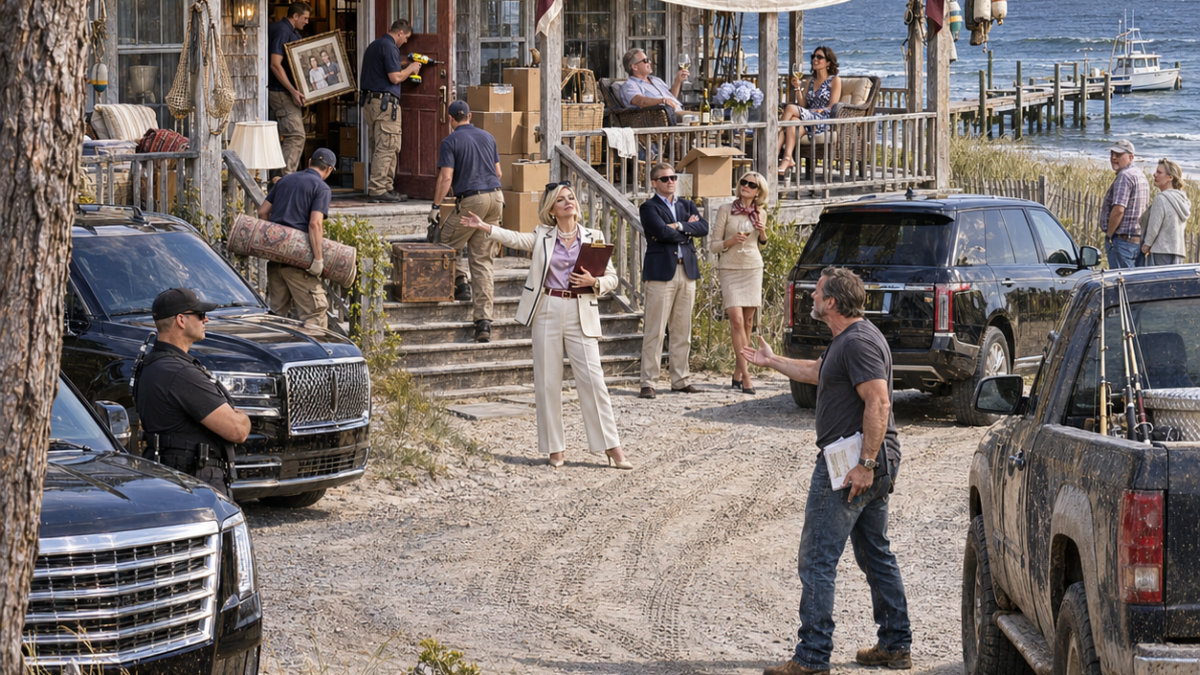
When I turned onto the sandy road leading to the beach cabin my father and I had built with our own hands twenty-five years earlier, I expected to find storm shutters, salt-stained cedar, and maybe a few branches scattered across the yard—but instead I found three polished SUVs in my driveway, an HOA banner hanging across my porch, strangers carrying boxes through my front door, and a woman in a bright pink blazer calmly holding one of my family photographs like she had inherited my life.
She smiled when I told her I owned the cabin, explained that the HOA had declared it “abandoned,” and then informed me—with the confidence of someone who had repeated the lie enough times to start believing it—that they had changed my locks, taken “temporary custody,” and were already moving people into the house because an empty home near the ocean was apparently community property whenever Karen Whitfield decided it was.
What she didn’t know was that a trail camera I had installed months earlier to watch raccoons was still recording every box they carried inside, every lock they changed, every glass of wine they drank on my porch, and eventually one mistake so arrogant that it would turn a fight over my father’s cabin into something much bigger than either of us could have imagined.
My name is Robert Hayes.
And long before Karen Whitfield tried to erase my name from that cabin, my father and I had hammered it into the place one nail at a time.
I was seventeen when we started building.
Dad wasn’t wealthy.
Neither were we.
He worked maintenance at a marina, repaired fishing boats on weekends, and seemed to own exactly three shirts that didn’t have grease on them.
But he understood wood.
He understood weather.
And more than anything, he understood patience.
The little piece of coastal land had belonged to my grandfather before him, but there had never been much on it except scrub grass, wind-bent palms, and a view of the Atlantic that made you forget every problem waiting inland.
Dad wanted a cabin.
Nothing fancy.
Two bedrooms.
One bathroom.
A porch.
A fireplace.
Enough room for fishing gear and family dinners.
We built most of it ourselves.
That meant mistakes.
Crooked cuts.
Arguments.
Rain delays.
A roof that leaked the first winter because I had insisted I understood flashing better than I actually did.
Dad never let me forget that.
Whenever I got frustrated, he would say the same thing.
“Step back. Look at what you’ve got. Then pull.”
He originally meant fishing line.
Later I realized he meant almost everything.
When the cabin was finished, he screwed a small brass plate under the porch rail.
**HAYES CABIN**
Nothing more.
No fancy family crest.
No date.
No slogan.
Just our name.
For twenty-five years, that little place held nearly every memory of my father I cared about keeping.
Fishing at sunrise.
Coffee so strong it could strip paint.
Storm nights listening to rain pound the roof.
Christmas dinners when the heat failed and everybody wore jackets inside.
The year my marriage ended and Dad sat beside me on the porch without asking a single question until I was ready to talk.
His last healthy summer.
His last fishing trip.
The last photograph I ever took of him standing beside the porch with a redfish in one hand and a ridiculous grin on his face.
After he died, the cabin became even more important.
Not because of what it was worth.
Because when I stood on that porch, I could still hear him.
That was why I kept it even after moving several hours inland for work.
I visited whenever I could.
Sometimes every few weeks.
Sometimes months apart.
But I maintained it.
Paid the taxes.
Insured it.
Repaired storm damage.
Kept the utilities properly managed.
The cabin was never abandoned.
Then hurricane season hit particularly hard.
An insurance inspector told me to keep the storm shutters closed while the claim was being processed.
The electric company placed the account on an approved seasonal hold.
The county recommended shutting off the water until damaged exterior plumbing could be checked.
I visited in June, cleaned the property, checked the roof, polished the brass nameplate, then drove home believing I would return once the insurance paperwork cleared.
By the time I came back, Karen Whitfield had apparently decided eighty-three days was long enough to steal a house.
I pulled into the driveway and stared at the SUVs.
For one confused second, I honestly wondered whether I had taken the wrong road.
Then I saw the cabin.
My cedar siding had been painted beige.
An enormous banner hung across the porch.
**SEA VIEW SHORES HOA — COMMUNITY PROPERTY RESTORATION**
My stomach dropped.
A woman stepped through my front door.
Pink blazer.
White pants.
Pearls.
Oversized sunglasses.
Clipboard.
She smiled.
“Can I help you?”
I looked past her.
A man was carrying a cardboard box into my kitchen.
Another woman stood inside holding a vase.
I pointed toward the cabin.
“You can start by telling me why strangers are moving into my house.”
Her smile remained perfectly intact.
“Your house?”
“Yes.”
She tilted her head.
“Oh, honey.”
There was something about that word that instantly made me dislike her.
“This property was abandoned.”
I stared at her.
“What?”
“The HOA took protective custody.”
Then she lifted something from her clipboard.
A photograph.
My photograph.
My father and me standing beside the cabin almost twenty years earlier.
She had taken it from inside.
My hands went cold.
“Where did you get that?”
She looked at the picture.
“This?”
“That was inside my house.”
Karen smiled again.
“Not anymore.”
That was the moment the argument stopped being about property.
It became about memory.
About history.
About a woman standing on my porch holding my father’s face in her hands as though she had the right.
I reached slowly for my phone.
And pressed record.
PART 2
“Say your name again.”
Karen’s smile changed slightly.
“Excuse me?”
I held the phone higher.
“Your name. And explain why you’re inside my house.”
She adjusted her sunglasses.
“I’m Karen Whitfield, president of the Sea View Shores Homeowners Association.”
“And?”
“This is official board business.”
“Meaning?”
She sighed.
The kind of sigh people use when they believe stupidity is happening around them instead of inside them.
“Under Article Nine, Section B, structures considered neglected or unoccupied for an unreasonable period may be stabilized for community protection.”
“Define unreasonable.”
“It’s determined by the board.”
“And the board decided my house was abandoned?”
“Yes.”
“When?”
“After review.”
“What review?”
“Visual inspection.”
I looked toward my cabin.
Storm shutters.
Grass slightly high.
No structural damage.
No broken windows.
No collapsed roof.
No trash.
Nothing that remotely looked abandoned.
“You mean you drove by.”
“We conducted multiple site assessments.”
“You trespassed multiple times.”
Her jaw tightened.
Behind her, a broad man with thick shoulders walked through my front door carrying a box marked **KITCHEN**.
He didn’t acknowledge me.
“Who is that?”
“My husband.”
“What’s his name?”
“Bob.”
“Bob.”
He stopped.
“Put that box down.”
Bob looked toward Karen.
Not me.
Karen gave him the smallest nod.
He carried the box inside.
Something hot crawled up my neck.
I kept filming.
“Karen, I’m telling you directly that you do not have permission to be on this property.”
Her voice became sweeter.
“We don’t need your permission.”
“You absolutely do.”
“This is HOA-controlled property.”
“No, it isn’t.”
“We’ve taken temporary custodianship.”
“You changed my locks?”
“For security.”
“And moved your furniture in?”
“For stabilization.”
I laughed once.
Sharp.
Disbelieving.
“Are you hearing yourself?”
A second SUV door slammed.
A woman with helmet-shaped bangs walked toward us carrying drawer liners and a decorative vase.
Karen gestured toward her.
“Our secretary, Cheryl Whitfield.”
“Whitfield?”
“My cousin.”
Of course.
Cheryl lifted her phone.
She was recording me too.
Karen looked at my phone.
“Recording is prohibited on HOA-controlled property without consent.”
I stared at her.
“You are standing on my porch.”
“Not legally anymore.”
That was when I called the county non-emergency number.
Karen watched me dial.
Her smile faded.
“Calling the police is a mistake.”
I put the phone on speaker.
“Good.”
The dispatcher answered.
“County communications. What’s your situation?”
“My name is Robert Hayes. I’m at my private beach cabin in Sea View Shores. I have multiple people inside the residence who changed the locks and are claiming an HOA has taken custody because the property was abandoned.”
There was a pause.
“Are you the recorded owner?”
“Yes.”
“Do you have documentation?”
“In my truck.”
“Are any weapons involved?”
“Not that I can see.”
“Any threats?”
“Not yet.”
Karen raised her eyebrows.
I added, “But they are currently moving belongings into my home while I’m standing here telling them to leave.”
The dispatcher took the address.
“A deputy is en route.”
I hung up.
Karen crossed her arms.
“You’re about to embarrass yourself.”
“Maybe.”
I smiled.
“But I’ll do it with a deed in my hand.”
***
While we waited, she presented her case.
Unpaid storm-debris assessment.
Vegetation encroachment.
Non-standard exterior color.
Temporary utility suspension.
Failure to respond to HOA notices.
I listened.
Then asked one question.
“Am I a member of your HOA?”
Karen hesitated.
“The property falls within Sea View Shores.”
“That wasn’t my question.”
“It’s surrounded by community jurisdiction.”
“That wasn’t my question either.”
Her mouth tightened.
“My property predates the HOA.”
“That doesn’t exempt you from community standards.”
“It does when I never signed into the association.”
“You benefit from the neighborhood.”
“I benefit from an ocean that existed before your board.”
Cheryl snorted.
Karen ignored her.
“We posted notices.”
“Where?”
“On your door.”
“You mean the door facing the Atlantic wind?”
“That’s where legal notices belong.”
“Certified mail?”
Silence.
“Did you send anything certified?”
“We emailed you.”
“To which address?”
“The address on file.”
“Which one?”
She looked at Cheryl.
Cheryl stared at her phone.
I laughed.
“You mean the outdated email I tried to change last year?”
Karen’s eyes narrowed.
“That submission was incomplete.”
“Because Cheryl rejected the form over the font.”
Cheryl looked up.
“It was Comic Sans.”
I stared at her.
“It was my email address.”
“Presentation standards matter.”
I almost forgot I was angry.
Almost.
The patrol car arrived five minutes later.
Two officers stepped out.
An older deputy with gray at his temples and a younger officer who looked like he had already learned to regret HOA calls.
I met them halfway.
“Robert Hayes.”
I handed over my license.
Then the folder from my truck.
Deed.
Property-tax receipts.
Insurance correspondence.
Utility records.
Hurricane inspection report.
The older deputy reviewed them.
Karen marched over with her own stack.
“Officers, thank you. We are stabilizing an abandoned structure pursuant to Article Nine.”
The younger officer looked toward the cabin.
“People are living inside?”
“Temporarily.”
I laughed.
Karen glanced at me.
“Community stewards.”
The officer looked at her.
“You changed the locks?”
“For safety.”
“Did Mr. Hayes authorize that?”
“The property was abandoned.”
The older deputy looked at my documents.
“Mr. Hayes appears to be the recorded owner.”
“Ownership is under review,” Karen said.
“By whom?”
“The HOA.”
The deputy paused.
I could practically see him counting backward from ten.
He looked at me.
“Do you consent to these people occupying the residence?”
“No.”
“Do you consent to their belongings being inside?”
“No.”
“Do you consent to the lock change?”
“No.”
Karen spoke quickly.
“We have board authority.”
The deputy raised a hand.
“Ma’am.”
She stopped.
“This is where it gets complicated.”
I felt my stomach sink.
“What’s complicated?”
He looked uncomfortable.
“She’s presenting what she claims is an HOA custodial process. You’re presenting ownership documents. We can prevent violence and further escalation, but we may not be able to resolve a disputed property claim roadside.”
I stared at him.
“She changed my locks.”
“I understand.”
“She is literally inside my house.”
“I understand that too.”
“And you’re telling me I need a judge?”
“I’m telling both parties not to remove, destroy, or add property until this gets clarified.”
Karen clasped her hands.
“Of course.”
I turned toward her.
“Don’t.”
She smiled.
“Don’t what?”
“Enjoy this too much.”
The younger deputy spoke quietly.
“We are not saying the HOA’s claim is valid, sir.”
Karen added, “We brought fresh linens, if that helps.”
I laughed.
Not because it was funny.
Because the alternative was putting my fist through something.
“Fresh linens.”
Bob emerged from the cabin.
He was carrying a dented green metal tackle box.
My father’s tackle box.
I stopped laughing.
“Put that down.”
Bob froze.
“Now.”
Karen stepped between us.
“Mr. Hayes—”
“That belonged to my father.”
Bob looked toward her.
She said nothing.
He turned and carried it inside.
The older deputy shifted closer.
“Mr. Hayes.”
I took one slow breath.
Then another.
Dad’s voice came back to me.
Step back.
Look at what you’ve got.
Then pull.
I lowered my hands.
“Fine.”
Karen smiled.
I looked directly at her.
“You think you won something today.”
Her smile widened slightly.
“No.”
“You bought yourself time.”
I turned toward the officers.
“Thank you.”
Then back to Karen.
“And I’m going to use every minute of it.”
***
I drove straight to the marina.
Not because I needed a boat.
Because I needed distance.
I parked near a row of charter boats, sat behind the wheel, and called Miguel Santos.
Miguel had repaired the cabin after storms for almost fifteen years.
Contractor.
Friend.
Occasionally terrible influence.
He answered.
“Please tell me you need drywall.”
“I need a drone.”
Silence.
“That sounds more expensive.”
I told him everything.
He stopped joking.
“She moved into your cabin?”
“Yes.”
“Your dad’s place?”
“Yes.”
“I’ll bring the drone.”
“Thank you.”
“And coffee.”
“That too.”
Next, I called Lydia Morgan.
Lydia lived three houses down.
Retired paralegal.
Professional skeptic.
Unofficial keeper of every receipt Sea View Shores had ever generated.
When I told her what happened, she shouted so loudly I moved the phone away from my ear.
“I knew that woman would try this.”
“You knew she’d move into my house?”
“No. I thought she’d fine you into the grave. This is much more entertaining.”
“Lydia.”
“Sorry.”
She lowered her voice.
“Listen. I have screenshots.”
“Of what?”
“The HOA has been talking about creating community guest properties.”
My hand tightened around the phone.
“What?”
“Karen floated the idea at a meeting last year. Empty seasonal homes. Temporary stewardship. Short-term rentals.”
“Rentals?”
“Yes.”
“She’s renting homes?”
“I don’t know yet.”
Pause.
“But I’m going to know.”
I almost smiled.
“Thank you.”
“Don’t thank me. Bring printer toner.”
***
By late afternoon, my phone buzzed.
Motion alert.
I had forgotten about the trail camera.
I installed it in June because raccoons kept getting under the porch.
The camera pointed toward the side entrance.
I opened the feed.
Karen walked across the frame carrying a box marked **LINENS**.
Cheryl followed.
Then Bob.
Timestamp.
Location.
Video.
Clear faces.
I downloaded the file.
Named it:
**EXHIBIT A**
For the first time all day, I smiled.
Not because I had won.
Because now I had something Karen could not rewrite.
***
At sunrise the next morning, Miguel and I parked behind the dunes.
He launched the drone.
“You sure?”
“No.”
“That wasn’t the question.”
“I’m doing it anyway.”
The drone climbed.
Palm tops dropped beneath us.
The Atlantic appeared.
Then the cabin.
And there they were.
Karen and Bob sitting on my porch drinking coffee.
My porch.
My chairs.
My sunrise.
Miguel zoomed in.
“They’re living there.”
“I can see that.”
Karen stood.
Picked up a paintbrush.
Then began painting the porch rail white.
I leaned forward.
“What is she doing?”
Miguel didn’t answer.
The brush moved across the cedar.
Then across the brass plate.
**HAYES CABIN** vanished beneath white paint.
For a second, I couldn’t breathe.
Miguel looked at me.
“Robert.”
“She painted over his name.”
“I know.”
“My father put that there.”
“I know.”
Karen stepped back.
Bob handed her a wooden sign.
They hung it over the porch.
**COMMUNITY GUEST HOUSE**
Something changed inside me.
The anger stopped being hot.
Hot anger makes you reckless.
This became cold.
Measured.
Useful.
“Record everything.”
Miguel nodded.
“Every angle?”
“Every angle.”
We watched them bring in furniture.
Christmas lights.
Kitchen boxes.
Bathroom supplies.
Cheryl filmed promotional videos.
Then Lydia sent me a link.
I opened it.
An online rental listing.
My cabin.
My living room.
My father’s handmade coffee table.
My fireplace.
My bedroom.
**SERENE OCEANFRONT COMMUNITY GUEST HOUSE**
Hosted by **Cheryl W.**
One hundred eighty dollars per night.
I stared at the screen.
Miguel leaned closer.
“Oh, they are unbelievably stupid.”
“They’re renting my house.”
Lydia called immediately.
“Did you see it?”
“Yes.”
“I saved everything.”
“Good.”
“There are other listings.”
“What?”
“Three.”
A cold feeling settled in my stomach.
“Other houses?”
“Yes.”
“Abandoned?”
“That’s what they’re calling them.”
Suddenly, my cabin didn’t feel like an isolated act of arrogance.
It felt like a system.
***
That night, I returned to the property.
Not inside.
I stayed on the path.
Phone recording.
Karen opened the door holding a wine glass.
She had changed clothes.
Barefoot.
Comfortable.
Like she belonged there.
Her expression hardened.
“You again.”
“Nice place.”
“You’re trespassing.”
I almost admired her commitment.
“You’re standing inside my house telling me I’m trespassing.”
“It’s under protective HOA custody.”
“For how long?”
“Until the board determines the property has been restored.”
“Restored for what?”
She hesitated.
I smiled.
“Guests?”
Her face changed.
Barely.
But enough.
“You’ve been absent for more than ninety days.”
“Eighty-three.”
“That’s irrelevant.”
“Not legally.”
Bob appeared behind her with the wine bottle.
“You need to leave.”
I angled the phone.
“Could you stand a little farther left? I want the box marked ‘Guest Towels’ in frame.”
Karen’s eyes narrowed.
“You think recording makes you powerful?”
“No.”
I looked past her at my father’s mantel.
“Evidence does.”
She crossed her arms.
“You abandoned this neighborhood.”
“I don’t belong to your HOA.”
“You benefit from it.”
“There it is again.”
“What?”
“You keep saying community when you mean control.”
Her jaw tightened.
I looked inside.
My father’s framed fishing license was gone.
A cheap lighthouse print hung in its place.
I swallowed.
“Where’s the license?”
“What?”
“The frame over the fireplace.”
“I don’t know what you’re talking about.”
I stared at her.
“You’re going to.”
Then I left.
***
The county recorder confirmed there was no abandonment filing.
No property transfer.
No lien authorizing possession.
No court order.
No county custodianship.
Nothing.
The clerk actually laughed when I showed her Karen’s banner.
“They can’t just declare a house theirs.”
“Apparently nobody told Karen.”
She stamped certified copies.
“Take these to law enforcement.”
I did.
The investigator’s name was Benton.
He watched the footage in silence.
Boxes.
Locks.
Paint.
Wine.
Rental listing.
Karen holding my family photograph.
When the video ended, he rubbed his chin.
“We’ve had complaints about Sea View Shores.”
“What kind?”
“Overreach.”
“Anything like this?”
“No.”
“So?”
He looked at the folder.
“You’ve got potential criminal trespass, fraud issues, possibly theft depending on property removed.”
“They took my father’s things.”
“Document every missing item.”
“I will.”
“Do not confront them alone.”
“I’ve already confronted them.”
“Then stop.”
I didn’t like that answer.
But he was right.
So I installed more cameras.
Birdhouse cameras.
Solar-light cameras.
Trail cameras.
Motion sensors.
All on property I owned.
Then I watched.
And Karen kept giving me evidence.
***
One camera caught Cheryl preparing the cabin for a rental.
Another recorded Bob carrying in a small safe.
Another captured Karen flipping through my father’s photo album while drinking wine.
That one hurt.
I sat alone watching her turn pages containing moments she had no right to touch.
My mother on the porch.
Dad holding my first fishing rod.
My son as a toddler sleeping on the sofa.
My father during his final summer.
Karen paused on that photo.
Looked at it.
Then turned the page.
Like it meant nothing.
I closed the laptop.
For the first time, the anger almost escaped control.
Not because she stole a room.
Because she treated memory as inventory.
That night I stood outside Lydia’s house staring toward the ocean.
“I want her gone.”
“She will be.”
“I want her gone tonight.”
Lydia studied me.
“That’s not the same thing.”
“No.”
“And you know it.”
I looked at her.
She crossed her arms.
“Robert, Karen’s biggest mistake is believing procedures belong to whoever uses the most paper.”
I almost smiled.
“She thinks she can out-paperwork me.”
“Exactly.”
Lydia pointed toward her office.
“Unfortunately for her, I spent thirty-two years doing paperwork for real-estate lawyers.”
***
We built a case.
Timeline.
Photographs.
Utility notices.
Insurance correspondence.
Deed.
Tax receipts.
Drone footage.
Trail-camera footage.
Screenshots of the rental listing.
HOA invoices.
Meeting minutes.
Lydia found payments labeled:
**COMMUNITY RESTORATION**
**TEMPORARY OCCUPANCY STAGING**
**GUEST HOUSE PREPARATION**
Several payments went to Cheryl.
Others went to a company connected to Karen’s relatives.
“This isn’t random,” Lydia said.
“No.”
“They’re getting paid.”
“Yes.”
Miguel leaned over the table.
“Do you guys realize this wall looks like we’re hunting a serial killer?”
Red string connected documents.
Photos.
Addresses.
Three other homes.
I looked at him.
“We might be hunting a property scam.”
He stopped smiling.
***
Then Miguel did something I had not approved.
He sent some drone footage to his cousin at Channel 8.
I found out when he casually mentioned it over breakfast.
“You did what?”
“He works investigative news.”
“Miguel.”
“They’re interested.”
“Miguel.”
“He said this is insane.”
“He’s correct, but that doesn’t mean you send my case to television.”
Lydia nearly choked on tea.
“You told Channel 8?”
Miguel shrugged.
“The public deserves to know.”
I rubbed my forehead.
“This is how lawsuits happen.”
Lydia waved a hand.
“Not if everything is true and documented.”
“That sentence terrifies me coming from a retired paralegal.”
But the story was already moving.
Channel 8 called me.
I agreed to speak only after sending the updated evidence to Benton.
Then Karen discovered the news crew was coming.
Which meant, naturally, she made everything worse.
***
The van arrived at eight thirty.
Neighbors appeared on porches pretending to drink coffee.
Karen emerged in a red blazer.
Pearls.
Sunglasses.
She positioned herself directly in front of my cabin.
When the reporter asked about the property, Karen smiled for the camera.
“We’re proud of our community stewardship initiative. Sea View Shores has taken responsible action to maintain abandoned and neglected homes that threaten neighborhood values.”
The reporter nodded.
“You’re saying this residence was abandoned?”
“Yes.”
“And the HOA legally took possession?”
“Temporary custodianship.”
“Do you have county authorization?”
Karen’s smile flickered.
“The board has authority under our governing documents.”
Then the reporter turned toward me.
“Mr. Hayes?”
I held up my folder.
“That’s my house.”
Karen’s face froze.
“I have the deed, current tax records, insurance documentation, utility correspondence, police reports, and hours of video showing Mrs. Whitfield moving into the property.”
The reporter looked toward Karen.
I continued.
“I also have screenshots showing the cabin listed online for one hundred eighty dollars per night.”
The microphone swung back toward her.
“Is the HOA renting the home?”
Karen swallowed.
“We are recovering maintenance expenses.”
“Through rentals?”
“It’s a community guest initiative.”
The reporter looked at me.
I smiled.
“She just admitted it.”
Karen snapped.
“That’s taken out of context.”
“We’re standing in the context.”
The segment aired that evening.
Then everything exploded.
***
Former residents contacted the station.
Current residents began asking questions.
People posted old fines.
Old threats.
Stories about vacant properties targeted after owners died or moved into assisted living.
Karen went online and accused me of harassment.
Lydia responded with county property records.
Karen claimed the county had authorized her actions.
The county clerk publicly confirmed it had not.
Cheryl deleted the rental listing.
Too late.
We had copies.
By the next morning, Benton called.
“County compliance is visiting the property tomorrow.”
“I’ll be there.”
“Do not interfere.”
“I won’t.”
“Robert.”
“Yes?”
“I mean it.”
“I said I won’t.”
***
Benton arrived with two compliance officers.
Karen was already waiting.
Of course she was.
Red blazer.
Clipboard.
Bob beside her.
I watched from down the road with Miguel.
“You think she knew?”
“She always knows when there’s a clipboard within five miles.”
Miguel laughed.
We approached once Benton began the inspection.
“Good morning,” he said to Karen.
“We received complaints regarding unauthorized occupancy and unfiled modifications.”
Karen smiled.
“This must be a misunderstanding.”
“You’re occupying the property?”
“No.”
I nearly laughed.
Benton pulled out a photograph.
Karen on my porch.
Wine glass.
Christmas lights.
“Then who is this?”
Her face reddened.
“We were performing maintenance.”
“With overnight luggage?”
“Temporary stewardship.”
Benton looked toward the sign.
**COMMUNITY GUEST HOUSE**
“Who installed that?”
Karen hesitated.
“The board.”
“Under what recorded authority?”
“Our bylaws.”
“This property is not enrolled in your association.”
“That’s disputed.”
“No.”
Benton’s voice changed.
“We checked.”
Silence.
“No abandonment filing. No transfer. No court order. No county action. No lien authorizing possession.”
Karen’s lips parted.
“You may have incomplete records.”
“We don’t.”
Bob shifted.
Benton continued.
“Are you personally staying here?”
“No.”
He held up another still.
Karen in pajamas.
Coffee cup.
Bare feet.
She looked at me.
“You set this up.”
I smiled.
“No.”
Miguel whispered behind me, “She did.”
Karen heard him.
Her face twisted.
Benton handed her a citation.
“Effective immediately, you and all HOA representatives are ordered to vacate and cease unauthorized occupancy pending investigation.”
“You can’t do that.”
“I just did.”
“The HOA—”
“The law outranks your HOA.”
For once, Karen had no response ready.
***
Compliance officers entered the cabin.
They documented the new locks.
Electrical changes.
Paint.
Furniture.
Opened bottles.
Removed belongings.
When they came out, Benton’s clipboard was full.
“Multiple unpermitted alterations.”
Karen threw up her hands.
“We improved the property!”
I finally spoke.
“You painted over my father’s name.”
She looked at me.
“That brass plate was outdated.”
For several seconds, nobody said anything.
Even Benton stared at her.
I stepped closer.
“That sentence right there is why you will never understand what you did.”
Her face changed.
But only briefly.
Then anger returned.
“You’re sentimental over a piece of metal.”
“No.”
I pointed toward the cabin.
“I’m sentimental about a man who built that house while you’re trying to turn it into weekend rental income.”
Neighbors had gathered near the road.
Phones were recording.
Karen looked around.
For the first time, the audience was no longer hers.
***
I thought the inspection would finally make her stop.
I underestimated her.
At 5:17 that evening, a camera alert appeared.
Karen entered through the side door.
She carried a thick envelope.
Looked around.
Opened a kitchen drawer.
Placed something inside.
Then left.
I replayed the footage.
Called Benton.
He told me not to touch anything until the temporary lock arrangement allowed legal owner access.
Later, accompanied and documented, we opened the drawer.
Inside the envelope were forms.
Fake abandonment forms.
County logos.
Signatures.
Dates.
They looked official from six feet away.
Up close, Lydia noticed immediately.
“Wrong seal.”
“What?”
“The county changed this design three years ago.”
Another page.
“Wrong font.”
Another.
Then she stopped.
“Oh, my God.”
“What?”
“This signature.”
She pointed.
“I know that name.”
“Who is it?”
“County clerk employee. Harold Simms.”
“So?”
“He died in 2019.”
I stared at the paper.
The form was dated last month.
Miguel let out a low whistle.
“She forged paperwork with a dead guy’s signature?”
I photographed everything.
Then handed it directly to Benton.
He looked at the forms.
His expression changed.
“This is no longer an HOA dispute.”
“What is it?”
“Potential criminal forgery.”
***
The state attorney accepted the case.
Our civil hearing was scheduled first.
The courthouse filled with neighbors, reporters, and people who apparently had nothing better to do on a Wednesday morning.
Karen wore black.
No pearls.
Bob sat behind her.
Cheryl was nowhere near the front.
My attorney, Daniel Doyle, arrived carrying Lydia’s binders.
The judge was Rebecca Harper.
Silver hair.
Sharp eyes.
Zero patience.
She looked over the case file.
“I have handled fence disputes, parking disputes, architectural disputes, mailbox disputes, and one unforgettable disagreement involving a twelve-foot inflatable Santa Claus.”
The courtroom chuckled.
She continued.
“I have never had an HOA claim it acquired a privately owned residence by declaring it abandoned.”
Karen’s lawyer stood.
“Your Honor, that characterization is unfair.”
Judge Harper looked at him.
“Then improve it.”
He cleared his throat.
“My client acted in good faith to preserve community value.”
“Did she file an abandonment action?”
“Not formally.”
“Did she hold title?”
“No.”
“Lien?”
“Not exactly.”
“Court order?”
“No.”
“Government authorization?”
“No.”
The judge leaned back.
“This good faith appears remarkably unsupported.”
Doyle stood.
“May I?”
“Please.”
The first image appeared on the courtroom monitor.
Karen.
Wine glass.
My porch.
Community Guest House sign.
Murmurs.
Next image.
Bob carrying boxes.
Next.
Cheryl preparing the rental.
Then video.
Karen’s voice filled the courtroom.
**This house was abandoned. The HOA took custody.**
Judge Harper looked at her.
“Mrs. Whitfield?”
Karen stared at the screen.
“That was taken out of context.”
The judge glanced toward the cabin visible behind her in the footage.
“I’m struggling to imagine a favorable context.”
A few people laughed.
Her attorney objected.
The judge silenced the room.
Then Doyle showed the Airbnb listing.
One hundred eighty dollars per night.
“Who received the revenue?”
Karen’s lawyer shifted.
“Maintenance funds.”
“Who?”
Doyle displayed HOA transactions.
Payments to Cheryl.
Related companies.
Community restoration expenses.
Then came the forged forms.
The courtroom became completely silent.
Doyle enlarged the signature.
“County records confirm this purported authorization was signed by Harold Simms.”
Judge Harper looked toward the county representative.
“Mr. Simms?”
The representative stood.
“Deceased, Your Honor.”
“When?”
“2019.”
The form was dated four weeks earlier.
Judge Harper removed her glasses.
Karen’s face lost color.
“Mrs. Whitfield.”
Karen swallowed.
“Yes?”
“How did a dead county employee approve your takeover of Mr. Hayes’s home?”
“I—I don’t know.”
Bob said behind her:
“Oh, come on, Karen.”
Every head turned.
Judge Harper raised an eyebrow.
“Mr. Whitfield, would you like to elaborate?”
Bob froze.
“No, Your Honor.”
“Excellent choice.”
***
Then Karen broke.
She stood.
“This man left the property empty!”
Her attorney grabbed her arm.
She pulled away.
“He disappeared for months. The yard was neglected. The shutters were closed. Nobody cared about that house until we fixed it.”
Judge Harper struck the gavel.
“Sit down.”
Karen kept talking.
“Everybody here knows what happens when seasonal owners abandon properties!”
“Mrs. Whitfield.”
“They destroy values!”
“Sit.”
“I protected this neighborhood!”
Doyle looked toward me.
Judge Harper sighed.
“Mr. Hayes, do you wish to respond?”
I stood.
My hands were shaking.
Not from fear.
From everything I had been holding back.
“That cabin isn’t an investment property to me.”
Karen stared ahead.
“My father and I built it when I was seventeen.”
I looked toward the monitor.
The image of the porch was still there.
“He taught me to cut rafters there. He taught me to fish there. He sat beside me there during the worst year of my life.”
My voice tightened.
“When he died, that cabin became one of the few places where I could still walk into a room and remember exactly how his voice sounded.”
Nobody moved.
“Karen didn’t preserve it.”
I looked at her.
“She painted over his name.”
Her expression flickered.
“She removed his things. She rented out his living room. She held our family pictures like props.”
I turned toward the judge.
“That isn’t community stewardship.”
I paused.
“It’s greed with a clipboard.”
Silence.
Judge Harper looked at Karen for a long moment.
Then she issued the injunction.
Immediate restoration of possession to me.
HOA barred from entering.
All related financial records preserved.
Forged documents referred to prosecutors.
Sea View Shores enforcement activities involving alleged abandoned homes suspended pending investigation.
The gavel came down.
For the first time in months, the cabin was legally mine again in a way nobody could pretend not to understand.
***
I returned that afternoon.
The first thing I did was remove the Community Guest House sign.
I didn’t smash it.
I didn’t burn it.
I carried it into the workshop and leaned it against the wall.
Then I found sandpaper.
The white paint over the brass plate came off slowly.
Layer by layer.
My hands shook when the first letters appeared.
H.
Then A.
Then Y.
Miguel stood beside me without speaking.
Finally:
**HAYES CABIN**
I polished the plate.
Put it back.
And sat on the porch.
The ocean rolled beyond the dunes.
For a few minutes, Dad felt close enough to answer.
“I’m sorry,” I whispered.
Miguel looked away, giving me privacy.
I touched the brass.
“I should’ve come sooner.”
Then I remembered what Dad would have said.
Step back.
Look at what you’ve got.
Then pull.
So I did.
***
The HOA board began collapsing within days.
Members resigned.
Cheryl deleted accounts.
Residents demanded audits.
The HOA attorney withdrew.
Karen blamed me.
Then blamed the board.
Then blamed the county.
Then the media.
Then “anti-HOA activists.”
Eventually there was nobody left to blame except herself.
An emergency HOA meeting was called.
I didn’t attend.
Lydia did.
She later told me Karen arrived expecting support.
Instead, residents were holding copies of financial records.
Bob carried boxes of documents.
Cheryl looked terrified.
Marjorie Bell, a retired nurse who had been fined twice for flowerpots, stood and demanded Karen’s removal.
Karen shouted.
“You people have no idea what I’ve done for this community!”
Someone answered:
“That’s exactly what we’re trying to figure out.”
The vote was overwhelming.
Karen was removed as president.
Outside, she saw me sitting in my truck across the road.
She marched over.
“You planned this.”
I lowered the window.
“No.”
“You destroyed the HOA.”
“No.”
“You turned everyone against me.”
“No.”
Her voice shook.
“Then what did you do?”
“I turned on a camera.”
That stopped her.
For several seconds, she stared at me.
Then I added:
“The rest was you.”
***
The county audit uncovered more.
Homes identified as “neglected.”
Fines.
Maintenance charges.
Temporary custody claims.
Rental income.
Payments routed through HOA-related accounts.
Cheryl had managed listings.
Karen approved expenses.
Other board members claimed they knew only pieces.
Then the Sea View Shores HOA was dissolved.
Karen’s kingdom vanished.
No president title.
No board authority.
No enforcement committees.
No neighborhood seal.
Nothing.
A month earlier, she had told me my family cabin was no longer mine.
Now she had no office from which to issue a single violation.
That should have felt like revenge.
Instead, I felt relief.
Until she returned one night.
***
My motion alert buzzed after midnight.
Karen stood barefoot in the sand.
Gray sweats.
Hair loose.
No makeup.
No clipboard.
No sunglasses.
For the first time, she didn’t look like an HOA president.
She looked like a tired woman who had run out of people to command.
I called the sheriff before stepping outside.
“Karen.”
She turned.
“There is no Karen anymore.”
I frowned.
“What?”
“No president. No board. Bob left.”
I stayed near the porch.
“You need to leave.”
She looked at the cabin.
“You ruined everything.”
“No.”
“You did.”
“You think this is freedom?”
“What?”
She pointed toward the neighborhood.
“People painting houses whatever color they want. Flags everywhere. Boats. Trash cans visible from the street.”
Despite everything, I almost laughed.
“Sounds terrifying.”
Her eyes filled.
“You don’t understand.”
“No.”
I stepped closer.
“I understand perfectly.”
She looked at me.
“You thought order meant everybody living according to your preferences.”
“They need rules.”
“People need rules.”
I nodded.
“But rules need limits.”
She shook her head.
“Without structure, everything falls apart.”
“No, Karen.”
I looked toward my restored nameplate.
“Without decency, structure becomes a cage.”
Her face changed.
For one brief second, I saw regret.
Real regret.
Then pride closed over it.
“You’ll see.”
“Maybe.”
“You’ll all see.”
She turned.
Walked down the beach.
The deputies found her nearly a mile away sitting near the water.
They took her safely into custody for evaluation.
I didn’t celebrate.
Watching someone collapse isn’t victory.
Even when they built the cliff themselves.
***
Three months later, the cabin felt like mine again.
Not because of the deed.
Because the smell came back.
Cedar.
Coffee.
Salt.
Sawdust.
I rehung Dad’s fishing license.
Found his tackle box.
Restored the porch.
Repainted the cedar.
Replaced the things Karen’s group damaged.
Neighbors helped.
People I barely knew showed up with brushes.
Tools.
Food.
One veteran named Frank brought a ladder.
Karen had once fined him because his American flag pole was one inch above the HOA-approved height.
He looked at my porch.
“You mind if I put something up?”
“What?”
He produced a small American flag.
I smiled.
“Make it two inches too high.”
He laughed.
For the first time, Sea View Shores felt like a neighborhood instead of an administration.
***
Then a black SUV came down the driveway.
My stomach tightened.
A man stepped out wearing a navy windbreaker.
He showed identification.
“Robert Hayes?”
“Depends.”
He smiled.
“Special Agent Turner.”
Federal investigator.
He explained that my case had triggered connections to similar property schemes in neighboring counties.
“Karen?”
“Her cousin Cheryl appears connected to several comparable listings.”
I frowned.
“How comparable?”
“Vacant seasonal homes. Elderly owners. Estate disputes. Storm-damaged properties.”
He sat across from me on the porch.
“In several cases, HOA officials filed questionable notices, claimed temporary maintenance authority, then generated rental revenue.”
I stared at him.
“You’re saying this wasn’t just Karen?”
“No.”
“How big?”
“We’re determining that.”
He opened a folder.
Addresses.
Different counties.
Different HOAs.
Same patterns.
My stomach turned.
“What do you need from me?”
“Your original footage.”
“You already have copies.”
“We need authenticated files and a formal statement.”
He looked toward the brass plate.
“Your case may be what connects everything.”
I thought of that first trail-camera alert.
Karen carrying linens.
A camera installed for raccoons.
One forgotten device.
One timestamp.
One decision to press record.
“All right.”
I nodded.
“What do you need?”
***
The investigation widened.
Subpoenas.
Bank accounts.
Rental-platform records.
Emails.
Shared document templates.
Forged county seals.
Eventually, prosecutors announced federal charges against Karen, Cheryl, and several people connected to similar schemes.
Wire fraud.
Falsification of records.
Illegal property seizure.
Financial conspiracy.
The story spread far beyond Sea View Shores.
Reporters called.
I stopped answering most of them.
I didn’t want fame.
I wanted my father’s cabin.
That was all I had ever wanted.
***
Karen eventually went to trial.
When I testified, she didn’t look at me.
The prosecutor showed the footage.
Karen repainting the porch.
Moving boxes.
Drinking wine.
Calling the house abandoned.
Then the moment she painted over **HAYES CABIN**.
I watched the jury.
Something about that image affected them more than spreadsheets ever could.
Maybe because fraud can feel abstract.
Money moves through accounts.
Forms get forged.
Rules get manipulated.
But everyone understands the violence of erasing someone’s name from their own home.
Karen’s attorney argued she had believed she was acting for community benefit.
The prosecution showed rental income.
Forgery.
Payments.
Messages.
Cheryl cooperated.
Bob testified.
Other HOA officers made deals.
The story Karen had built collapsed piece by piece.
Two weeks later, she was sentenced to prison for fraud and ordered to pay restitution.
Cheryl received a shorter sentence.
Others received probation, fines, or reduced terms for cooperation.
When the sentence was read, I looked at Karen.
She finally looked back.
No hatred.
No smugness.
Just exhaustion.
For a moment, I remembered the woman standing barefoot in the sand.
Then the bailiff led her away.
I didn’t smile.
I didn’t raise a fist.
I simply breathed.
Because Dad’s cabin was safe.
And other families might get theirs back too.
***
Outside the courthouse, Turner found me.
“You did good.”
“I hit record.”
“That’s sometimes enough.”
He handed me his card.
“We could use people who understand how these schemes hide behind local rules.”
“You offering me a job?”
“More like consulting.”
I laughed.
“I’ve had enough HOAs for one lifetime.”
“You’d be surprised.”
“I’m sure I would.”
He smiled.
“Think about it.”
I put the card in my pocket.
But my mind was already somewhere else.
Back at the beach.
***
Sea View Shores changed.
Without Karen controlling every decision, people discovered something remarkable.
The neighborhood did not collapse.
Lawns still got cut.
Trash still got collected.
Houses did not spontaneously catch fire because somebody painted a door blue.
Children rode bicycles.
Neighbors talked.
Someone painted a house turquoise.
Frank raised his flag higher.
Nobody measured it.
Lydia celebrated by putting a purple mailbox in front of her house.
I told her it looked terrible.
“That’s the point.”
Miguel made shirts saying:
**ABANDONED? NOT TODAY, KAREN.**
I refused to wear one.
I kept one anyway.
***
One morning, I carried a new wooden plaque onto the porch.
I had made it myself.
Not beautiful.
Dad would have criticized the spacing.
I knelt beneath the original brass plate and fastened it to the post.
**HAYES CABIN
BUILT BY FAMILY
KEPT BY FAMILY**
I stepped back.
Looked at it.
Then laughed quietly.
“Spacing’s wrong, Dad.”
The ocean moved beyond the dunes.
No answer.
But I could imagine one.
Told you.
***
That evening, Lydia came over.
Miguel too.
We made a small fire behind the dunes.
Nothing fancy.
Coffee.
Beer.
Food.
Stars.
The same kind of evening Dad had loved.
Lydia looked toward the cabin.
“You know somebody wants to make a documentary about this.”
“No.”
“That wasn’t a question.”
“No.”
Miguel laughed.
“You could play yourself.”
“Absolutely not.”
“I could play you.”
“You’re fifteen years younger.”
“And better looking.”
Lydia nearly spit out her coffee.
For a while, we laughed.
Not at Karen.
Not at the HOA.
Just because the fight was finally far enough behind us that laughter didn’t feel like defiance anymore.
It felt normal.
Eventually Miguel left.
Lydia stood.
Before walking home, she touched my shoulder.
“You did right by your father.”
That hit me harder than anything said in court.
I looked toward the porch.
“I hope so.”
“You did.”
She left.
***
I stayed by the fire.
The waves rolled in.
Then out.
In.
Out.
Patient.
Constant.
The same rhythm they had when I was seventeen.
I thought about Dad.
About the first joist.
The leaking roof.
The tackle box.
The brass plate.
His voice.
Step back.
Look at what you’ve got.
Then pull.
For months, I had thought I was fighting Karen.
I wasn’t.
Not really.
I was fighting the idea that someone could erase history simply because nobody stopped them.
Karen believed absence meant surrender.
That silence meant permission.
That an empty house had no one protecting it.
She was wrong.
Sometimes love leaves cameras behind.
Receipts.
Deeds.
Photographs.
Neighbors.
Memories.
Sometimes a person can be hundreds of miles away and still be holding onto a place with everything they have.
The cabin had never been abandoned.
Not while Dad’s name was under the paint.
Not while his fishing license hung above the fireplace.
Not while I remembered the sound of his laugh.
Not while the boards we nailed together were still standing against the salt wind.
Karen looked at an empty porch and saw opportunity.
I looked at that porch and saw a man who had been gone for years.
That difference was everything.
***
For a long time, I believed the ending I wanted was seeing Karen lose.
Lose the HOA.
Lose her title.
Lose the fake guest house.
Lose in court.
Lose her freedom.
But sitting there under the stars, I realized none of those things were the ending.
The ending was quieter.
It was my father’s tackle box back where it belonged.
It was the brass plate shining beneath the porch rail.
It was Frank’s flag moving in the ocean wind.
It was Lydia’s ugly purple mailbox.
It was children riding bicycles without somebody photographing them for violations.
It was a turquoise house Karen would have hated.
It was people discovering that community and control were not the same thing.
That was the victory.
Not her punishment.
Our restoration.
***
The fire had almost burned out when I stood.
I walked to the waterline.
Cold foam rolled over my feet.
The moon reflected across the Atlantic.
For years after Dad died, I sometimes worried that every memory would fade.
His voice first.
Then his laugh.
Then the exact shape of his hands.
Grief does that.
It steals slowly.
Karen’s attempt to take the cabin had terrified me because it felt like somebody helping grief finish the job.
Painting over his name.
Moving his tackle box.
Removing his photograph.
Replacing his fishing license.
Turning our memories into rental décor.
But she failed.
The strange thing was, the fight made me remember more.
The smell of sawdust on Dad’s shirt.
The way he squinted when measuring boards.
The terrible songs he sang while working.
The afternoon we finished the porch and he sat down, exhausted, looked at the ocean, and said:
“Not bad for two idiots.”
I laughed out loud remembering it.
The waves carried the sound away.
***
I walked back toward the cabin.
The porch light glowed.
Warm.
Familiar.
Mine.
At the door, I stopped beside the brass plate.
Ran my thumb across the letters.
HAYES CABIN.
No HOA seal.
No guest-house sign.
No white paint.
Just our name.
I whispered:
“Built it right the first time, Dad.”
The wind moved through the palms.
Somewhere down the beach, a gull screamed.
Not exactly the spiritual response I had hoped for.
I laughed anyway.
Then I went inside.
***
Months later, Agent Turner called with the final update.
Restitution claims were being processed for several victims.
Properties taken through questionable HOA actions had been returned or placed back into legitimate probate proceedings.
Rental revenue had been seized.
More local boards adopted transparency rules after the scandal.
I listened.
Then he said:
“You understand your camera footage started this.”
“I understand Karen started it.”
Turner laughed.
“Fair distinction.”
Before hanging up, he asked again about consulting.
I told him I might help occasionally.
Not because I wanted another war.
Because I remembered something Lydia said.
Most people couldn’t fight the way I had.
I had documents.
Friends.
Time.
Cameras.
A retired paralegal.
A contractor with a drone.
A reporter.
Investigators willing to listen.
Somebody else might have only an old cabin and a frightened voice saying:
That’s mine.
So occasionally, when Turner called about a property case that felt too familiar, I answered.
But I always came home.
To the beach.
To the cabin.
To the place Karen once called abandoned.
***
Years from now, the paint will fade again.
Salt will eat the hinges.
The porch will need rebuilding.
Storms will come.
Maybe someday my son will inherit the place.
Maybe his children will sleep in the room Dad built.
Maybe they’ll ask why there’s an ugly broken sign hanging in the workshop.
The sign that says:
**COMMUNITY GUEST HOUSE**
And I’ll tell them.
Not because Karen deserves to be remembered.
But because the lesson does.
Your home is more than the paperwork proving you own it.
But paperwork matters.
Your memories matter.
Your boundaries matter.
And authority should always be questioned when it cannot explain where that authority came from.
Karen arrived with bylaws.
I had a deed.
She had a clipboard.
I had cameras.
She had confidence.
I had evidence.
For a while, confidence looked stronger.
It often does.
Until somebody checks.
***
The last time I stood on the porch that summer, the sunset turned the ocean copper.
I had Dad’s old mug in my hand.
The restored cedar smelled warm beneath the evening air.
Children laughed somewhere down the beach.
A fishing boat moved along the horizon.
No HOA patrol came by.
No notices appeared.
No strangers carried boxes through my door.
I sat in Dad’s old chair.
Closed my eyes.
And listened.
The ocean.
The wind.
The porch boards creaking.
Peace.
Earned peace.
The kind you appreciate only after somebody tries to take it.
I thought of Karen standing in my doorway the first morning.
“Oh, honey. This house was abandoned.”
I smiled.
She had been wrong about nearly everything.
But she had been most wrong about that.
A place is not abandoned simply because nobody is standing on the porch.
Not when somebody still pays the taxes.
Maintains the insurance.
Repairs the roof.
Keeps the photographs.
Remembers the stories.
Loves the place enough to come back.
My father was gone.
But his cabin had never been empty.
His hands were in the beams.
His patience was in the walls.
His name was on the porch.
And part of him would always be there.
Karen tried to paint over that.
All she managed to do was make me restore it.
I raised Dad’s mug toward the ocean.
“You were right.”
A wave broke against the shore.
I smiled.
“Step back. Look at what you’ve got. Then pull.”
Twenty-five years earlier, he had taught me that lesson while untangling a fishing line.
It took an HOA president stealing my beach cabin for me to finally understand what he meant.
Some things are worth fighting for.
Not because they’re expensive.
Not because winning feels good.
But because once somebody decides your silence means they can take what matters to you, standing your ground becomes about more than property.
It becomes about refusing to let somebody else rewrite your life.
I looked once more at the brass plate beneath the rail.
**HAYES CABIN.**
Still there.
Still ours.
Still standing.
And after everything Karen had done to claim it, rename it, rent it, and erase the family that built it, that simple little plate was the only ending I needed.