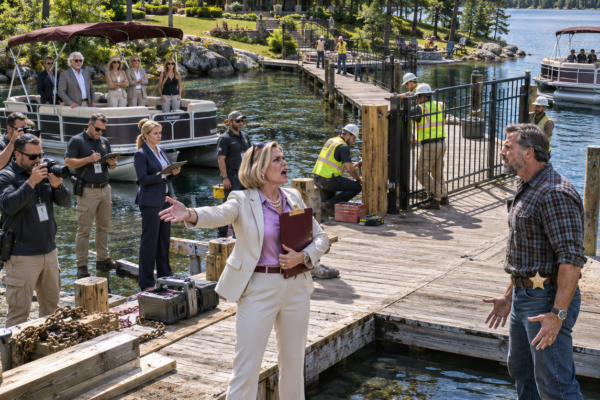
𝗙𝗨𝗟𝗟 𝗦𝗧𝗢𝗥𝗬 The Summer Celeste Tried to Make My Pasture Safe by Erasing Everything That Kept It Alive
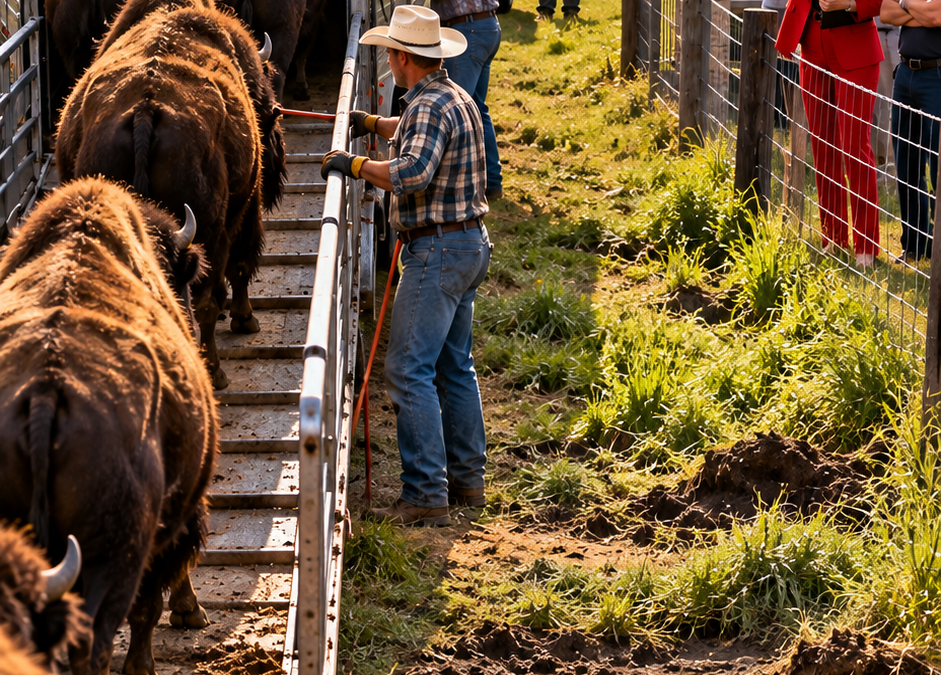
𝗙𝗨𝗟𝗟 𝗦𝗧𝗢𝗥𝗬
Earl Hollister believed most problems on land announced themselves early if you paid attention. Loose wire. Mud where there should not be mud. Animals changing a trail they had used for years.
He also believed healthy ground was not supposed to look tidy.
The bison made that obvious. They clipped one patch close, ignored another, rolled bare circles into dusty soil, pushed crooked paths around rocks, then came back weeks later and changed everything again.
Celeste saw disorder.
I saw work being done.
Tuesday around ten, I drove fourteen miles north to the leased pasture where I had moved the herd. The extra ground was costing me twenty-eight hundred dollars a month before fuel. I checked the perimeter, filled a mineral feeder, then spent twenty minutes replacing a gate hinge the bull had decided to test.
He stood fifty yards away watching me, dark head lowered, flies working around his shoulders.
“Yeah,” I said. “I’m enjoying this too.”
On the drive home, I passed the subdivision entrance. Fresh landscaping. Stone columns. Sprinklers ticking across grass greener than anything nature intended in July.
Fifteen years earlier, there had not been a subdivision there. Just the Hollister south pasture and an old county road. When the houses came, I moved my working pens farther west. Then I installed a second fence near the property line. Then a wider setback.
I did it because families live there now, and pretending they did not was not ranching.
But every time somebody complained, I gave them the same answer.
My ranch was here first.
I had said it to Melissa Crane when her youngest boy got scared seeing the herd run during a thunderstorm. I had said it at two HOA meetings. I had said it to Celeste.
It was true every time.
It also had not convinced anybody.
When I reached the south pasture, the mowing crew was halfway through the flat ground behind the houses. Three machines moved in straight lines, throwing pale dust behind them. The difference was immediate. The grass lay short and even. The old hoof trails disappeared beneath parallel tire marks.
A couple of homeowners stood on their patios watching. One man lifted a coffee mug toward the crew like they had finally cleaned up the neighborhood.
I parked outside the gate and rested my forearms on the top rail.
For a second, I could understand what they saw.
Order.
Distance.
Control.
No thousand-pound animals leaning into the wind fifty yards from their kitchens.
The mower turned before a shallow rocky draw and made another pass along the flat. I watched the operator skip the depression completely. Then another. Near the outer fence, a strip of taller grass remained where the tractor could not comfortably turn.
None of it looked important yet.
The crew was doing exactly what they had been hired to do.
I reached through the fence and rubbed one of the old bison trails with the toe of my boot. Packed dirt showed beneath the clipped grass. Beyond it, the mower engine climbed in pitch and moved away.
That was when something finally shifted in my head.
I had spent weeks trying to prove Celeste had no right to tell me how to manage my herd.
But the herd was gone now.
She had gotten what she wanted.
Standing there in the smell of cut grass and diesel, I realized the argument had changed without me.
Celeste had promised these people she could manage what came next.
Maybe instead of telling her she could not, I needed to let her try.
Celeste chose Saturday morning for the demonstration.
By nine, twenty homeowners were lined along the boundary in sunglasses and clean shoes while three commercial mowers worked the south pasture behind them. Diesel hung in the warm air. Cut grass stuck to the tractor tires in green clumps.
Celeste stood near the double fence in that red pantsuit, one hand resting on a temporary boundary marker while she talked to the group like she had built the ground herself.
“Predictable safety instead of unpredictable animals,” she said.
A few people nodded.
Melissa Crane had brought both her kids. Her youngest watched one mower make a clean pass less than a hundred yards from their backyard.
I stayed beside my pickup until Celeste noticed me.
“Wade.” She smiled without warmth. “Good timing. You can see the improvement.”
I looked across the pasture.
From where everyone stood, she had a point. The machines had turned rough grass into broad, even lanes. No dark backs moving behind the fence. No wallows. No crooked trails. Everything looked controlled.
“How often are they cutting?” I asked.
“According to the professional schedule, which is—”
Her smile tightened because the crew foreman saved her from answering.
He was a lean guy named Ray Dobbins with sunburn across his neck.
“Depends on growth and contract cycle,” Ray said. “Usually three to four weeks this time of year.”
I pointed toward a shallow draw fifty yards west. The grass there still reached almost to my knee.
“You’re skipping that.”
Ray followed my hand.
“Can’t put the big deck through those rocks.”
“What about the swale below it?”
“Too soft. Different equipment.”
Another mower turned early at the fence corner, leaving a narrow strip untouched.
I pointed again.
“And that?”
Celeste stepped between us.
“Wade. Nobody claimed every blade of grass would be identical.”
“That’s not what I’m asking.”
“Then what are you asking?”
I walked through the gate and crouched beside one of the old herd trails. The mower had clipped the grass above it, but under my boot, the soil was still hard-packed from years of hooves. Ten feet farther out, the trail divided around a patch of exposed rock, then crossed the shallow draw the tractor had avoided.
I stood.
“Your machines work where machines can work.”
Celeste folded her arms.
“Yes, that is generally how machines operate.”
A couple of people laughed.
I should have let it go.
Instead, I felt the last month sitting behind my ribs. The lease payments. The extra fuel. The fourteen-mile drive. The empty pasture. Strangers explaining my own ground to me.
“You don’t understand this land.”
The laughter stopped.
Celeste’s chin lifted slightly.
“There it is.”
“There what?”
“The real problem. This isn’t about safety for you. It’s about control.”
“You’re standing on my ranch telling me that.”
“I’m standing inside the agreed safety buffer watching professionals do what you insisted only your animals could do.”
Melissa looked down.
Ray suddenly became interested in his mower.
I heard my own breathing and knew I had handed Celeste exactly what she wanted.
Angry rancher. Resistant to change.
My ranch was here first.
My land. My herd.
Every true sentence that had already failed me was lined up behind my teeth.
I swallowed them.
Celeste turned back toward the homeowners.
“This is what responsible management looks like.”
The mower passed behind her, laying another clean stripe through the grass.
People could see that.
They could not see what the machine had left beyond the rise.
Later, after everyone drove home, I walked the entire buffer alone. The afternoon heat had hardened the soil. Grasshoppers snapped away from my boots. I followed the mower lines until they stopped at the first rocky draw. Tall stems remained there, then continued into the drainage swale, then appeared again along the fence where the tractor could not turn.
Separate patches for now.
I stepped into an old bison trail and followed it straight through all three.
Hooves had never cared about rocks, mower decks, soft ground, or clean lines.
At sunset, I reached the stock gate and rested Dad’s old fencing pliers on the top rail. Celeste thought she had proved she could replace the herd.
Maybe arguing with her was the wrong move.
I looked back at the clipped pasture, the untouched pockets, and the neat roofs beyond them.
If she wanted responsibility for managing that ground, I was done trying to take the promise away from her.
I was going to make her own every inch of it.
Three nights later, I walked into the HOA meeting carrying nothing but Dad’s fencing pliers in my back pocket.
No photographs.
No maps.
No stack of papers thick enough to make everybody stop listening before I opened my mouth.
Celeste sat at the center of the table beneath cold white ceiling lights, red jacket buttoned, brown ponytail pulled tight. Melissa Crane and maybe thirty other homeowners filled the folding chairs behind me. Celeste looked almost disappointed when I took the microphone.
“I’m not asking for the herd back,” I said.
That changed the room.
Celeste leaned back.
“Then what are you asking for?”
“Nothing.”
Her eyes narrowed.
“You said professional management can replace what the herd was doing. I’m willing to let you prove it.”
“We already are.”
“Then manage the whole buffer.”
I pointed through the meeting room windows toward the dark pasture outside.
“The rocky draws. Drainage swales. Fence corners. Low ground. Everything inside the area you claimed needed professional management.”
One board member, a retired accountant named Martin Shaw, turned toward Celeste.
“Isn’t that already included?”
Celeste answered too quickly.
“The contractor maintains the safety zone.”
“Mowable acreage,” I said.
Ray Dobbins was sitting near the back because Celeste had invited him to answer landscaping questions. He shifted in his chair.
Celeste looked at him.
“Ray?”
He rubbed his jaw.
“Current contract covers tractor-accessible acreage. Hand work, specialty equipment, wet drainage areas—that’s separate.”
A low murmur moved through the room.
Celeste’s expression barely changed.
“Then we expand the scope.”
Martin looked at her.
“At what cost?”
“We’ll get a revised estimate.”
I stepped away from the microphone.
Celeste watched me like she expected another argument.
I did not give her one.
That was the first time I saw uncertainty reach her face.
Two days later, she came to the ranch with Martin and Ray.
We walked the boundary under a hard blue sky. Heat shimmered above the gravel. I showed them every place the big mower had avoided. Not because I wanted Celeste to understand bison. Because if she wanted the job, I wanted the job defined.
At the western draw, Ray kicked a rock half-buried in the soil.
“We need a smaller unit through here.”
At the swale, he shook his head.
“Not after rain.”
Near the double fence, he measured the turning clearance and wrote something in a notebook.
Celeste kept moving.
“Fine.”
We reached the old stock gate. I stopped there.
“And frequency changes with conditions.”
“Meaning?”
“Three weeks in May isn’t three weeks in August.”
“You’re trying to make this impossible.”
“No. I’m telling you land doesn’t follow a calendar because somebody approved one at a meeting.”
Martin looked from me to the pasture.
“What happens if the schedule isn’t enough?”
“Then you adjust.”
Celeste folded her arms.
“And if we accept responsibility for this buffer, you stop using livestock in it.”
There it was.
The trade.
I could keep fighting and spend another summer paying attorneys while my herd lived fourteen miles away. Or I could let Celeste carry the promise she had built her authority on.
I looked through the gate at the old trails fading beneath new growth.
“As long as the restriction stands,” I said, “I keep the bison out. You manage what replaces them.”
Martin glanced at his notes.
“Within the authority of the recorded buffer agreement.”
Celeste barely looked at him.
“Of course.”
She held my eyes.
“Agreed.”
The word came clean and confident.
Martin wrote it down.
Ray stared toward the rocky draw.
I reached into my pocket and closed my hand around Dad’s pliers.
By the following week, the revised crews were working sections they had skipped before.
Smaller mower. String trimmers near the fence. Men cutting around rocks under the July sun. The invoices climbed with every acre.
So did my own costs.
The north lease took another payment. Diesel ate another chunk. Every morning added twenty-eight miles before my actual workday began.
One evening, I returned after dark, killed the truck beside the barn, and sat listening to the engine tick itself cool. Across the south pasture, landscaping lights from the subdivision made a clean yellow line beneath the houses.
Celeste had wanted control because control looked simple from there.
I stepped out, smelled fresh-cut grass on the warm night air, and looked toward the places her crews had spent all day trying to make uniform.
I was not fighting to prove she could not do it anymore.
I had changed the terms.
Now every skipped acre, every extra machine, every hotter week, and every dollar belonged to the promise she had chosen to make.
By the second week of August, Celeste’s clean solution had started making expensive noises.
The first was a metallic crack from the western draw. I was replacing a hinge on the calving shed when Ray’s big mower stopped dead across the pasture. Ten minutes later, he was underneath it with both boots sticking out from under the deck.
A buried rock had bent part of the assembly and damaged an axle.
The machine left that afternoon on a flatbed.
The smaller unit came back two days later.
Then the drainage swale softened after a thunderstorm and swallowed one tire almost to the hub. By Friday, three men were finishing sections with handheld equipment in ninety-two-degree heat.
I watched from my side of the gate while Ray pulled off his gloves and drank half a bottle of water without stopping.
“This is getting stupid expensive,” he said.
“Talk to Celeste.”
He laughed once.
“I have.”
The revised invoices reached the board before the next meeting. Martin caught me outside the feed store and told me the vegetation budget had nearly doubled.
I did not celebrate.
My own north lease payment had cleared that morning, and the truck odometer reminded me I had added almost nine hundred miles in a month just checking animals that used to stand behind my house.
Then the crews changed.
At first, I thought they had fallen behind. The rocky draw went untouched for a week. So did the swale. But the fifty-foot strip directly behind the subdivision stayed clipped short and green. Every backyard still faced something neat. Everything beyond that line was becoming somebody else’s problem.
I found Celeste near the boundary one afternoon supervising a crew.
“You’re narrowing the buffer.”
“We’re prioritizing the residential edge.”
“You agreed to manage all of it.”
“We’re managing according to risk.”
I pointed past her. Tall seed heads moved above the draw.
“Then let me put four cows in the outer section for forty-eight hours. Portable panels. Double gate. They never get within two hundred feet of a backyard.”
Her eyes hardened.
“No.”
“It handles the ground. Your equipment can’t.”
“We removed the animals for safety.”
“You removed them because you said you could replace what they were doing.”
“And we have.”
I looked at the tall grass behind the freshly cut strip.
“Then everything we did was pointless.”
She said it before I could answer.
The sentence hung there.
She heard it too.
This was not about whether my proposal worked. Letting even four bison return would mean admitting removal had not solved everything.
I stopped arguing.
The next morning, I hired two ranch hands and rented a compact brush cutter. We stayed entirely on Hollister ground outside the shared buffer, working a rough strip that connected the western draw to my service road.
Dust coated my teeth.
Dry stems slapped against my jeans.
By noon, my shirt was dark between the shoulders. I killed the machine and crushed a handful of grass between my fingers. It bent, but less than it had in June.
Two days later, an HOA maintenance truck blocked the access lane leading toward the boundary. A notice had been fastened to the temporary barrier.
I did not need to read much.
No equipment crossing into the HOA-controlled vegetation buffer without contractor authorization.
Celeste arrived while I was standing there.
“You’re interfering with the management plan.”
“I’m trying to keep your management plan from becoming my problem.”
“Then stay on your side.”
I looked at the barrier, then at the ground beyond it.
The clipped strip behind the houses was bright and orderly. Farther out, grass had filled the rocky pockets the big machines avoided. Some of those pockets were beginning to touch.
I could have called a lawyer.
I could have dragged the barrier aside and handed Celeste exactly the confrontation she wanted.
Instead, I backed my machine away.
That evening, I drove north to check the herd. The bull stood in belly-high grass near the fence, dust along his shoulders. Behind him, trails broke the pasture into crooked pieces. Bare wallows interrupted the vegetation. Short patches met tall ones, then dirt, then grass again.
Nothing was uniform.
On the drive home, I stopped on the ridge above the subdivision.
Below me, Celeste’s fifty-foot strip looked perfect in the fading light.
Beyond it, the rest of the pasture was beginning to look very different.
For the first time, I was not worried about how tall the grass was.
I was watching the spaces between it disappear.
Celeste called it the summer safety walk.
She scheduled it for the last Saturday in August when the sky was hard blue and the temperature hit eighty-seven before noon. By ten, homeowners were strolling along the back boundary with bottled water while Celeste led them beside the freshly cut strip. Her red pantsuit looked almost unnatural against all that green.
“This is what consistent management gives us,” she said. “Visibility. Separation. Predictability.”
I stood near my truck outside the group.
From their angle, she was right.
Fifty feet of grass behind the homes had been cut almost perfectly. Sprinklers from the subdivision had thrown enough moisture over the fence to keep parts of it green. Kids could look across it without seeing a bison.
No bent rails.
No dark shapes moving through dust.
Melissa Crane stopped beside me.
“It does look safer.”
I watched her youngest boy run his hand along their side of the fence.
“From here.”
She looked at me.
“What does that mean?”
“Come up the ridge sometime.”
Celeste heard me.
“Or,” she said, turning toward the group, “people can enjoy their homes without being told they need a rancher’s interpretation of their own backyard.”
Nobody laughed this time.
But nobody challenged her either.
She had given them something they could see.
I could not blame them for trusting their eyes.
By noon, the walk was over. Celeste left smiling. Ray’s crew loaded their equipment.
I waited until the last landscaping truck disappeared, then drove my pickup west along the ranch road and climbed the ridge on foot.
Wind pushed hot against my face.
From the top, the subdivision looked small enough to cover with my hand. The safety strip ran behind the houses in one smooth green ribbon.
Then I looked beyond it.
The rocky draw was yellow.
The swale was yellow.
The fence corners were yellow.
All those patches I had been watching separately had filled in until they touched one another. From the ridge, I could trace dry vegetation almost continuously from the open prairie toward the manicured strip.
I walked down into it.
Seed heads brushed my thighs. Grasshoppers clicked away from my boots. I pulled a handful of stems, twisted them once, and felt them snap instead of bend.
The pieces broke dry across my palm.
I let them fall.
A gust came over the ridge. Hundreds of yards of grass leaned together.
That was the part I had missed.
I had spent weeks measuring height because that was what Celeste’s crews measured. Tall versus short. Cut versus uncut.
But Dad had never managed this place for uniformity.
Neither had the herd.
I crouched beside an old bison wallow, barely visible beneath new growth, and scraped away the stems with my boot. Dry soil appeared underneath. Twenty yards away, one of the old trails crossed the draw. A narrow line of packed earth where vegetation still had not fully returned. Another trail branched from it farther uphill.
Then another bare patch.
Before the herd left, those breaks had been everywhere. Random. Crooked. Small enough that nobody standing behind a backyard fence would notice them.
I climbed back to the ridge and looked north. The leased pasture was too far away to see, but I could picture it.
Short grass beside tall.
Trails through rocks.
Bare wallows.
Hoof marks around water.
A landscape broken into pieces instead of one continuous surface.
My phone buzzed.
A message from Martin.
Celeste’s presentation had gone well. The board was considering renewing the vegetation contract through fall.
I looked down at her perfect green ribbon.
She had won the summer.
Maybe I had even helped her do it by forcing the program to become more thorough before the cost drove it back toward appearances.
Another gust flattened the yellow grass beyond the strip.
This time, I watched the movement travel without interruption from the ridge almost to the houses.
I put Dad’s pliers back in my pocket and started downhill.
The question was not whether Celeste could keep the grass short anymore.
She could.
The question was whether she understood what happened when everything behind that short grass became connected.
The weather alert hit my phone at 5:42 Monday morning.
Four days above ninety.
Humidity dropping into the teens by afternoon.
Southwest winds building toward thirty miles an hour by Wednesday.
I read it twice beside the barn while coffee steamed from the mug in my hand.
Then I looked south.
The sky was pale and clean.
Nothing dramatic.
That was what bothered me.
By seven, I was walking the outer buffer with Dad’s pliers against my hip. The grass cracked under my boots. I stopped at the western draw, pulled several stems, and crushed them in my fist. They broke into dry pieces. When I opened my hand, the wind took half of them.
I called Martin first.
By nine, Celeste, Martin, Ray, and I were standing beside the old stock gate.
“Seventy-two hours,” I said. “For cows. Outer section only. Portable panels here and here. Double gate stays locked. They don’t get within two hundred feet of the homes.”
Ray looked across the draw.
“They’d reach what my equipment can’t.”
Celeste stared at him.
“You’re the contractor.”
“I’m telling you what the ground looks like.”
Martin wiped sweat from his forehead.
“What’s the downside?”
Celeste answered before I could.
“We declared livestock inside this buffer a safety risk.”
“Then amend it temporarily,” I said. “Conditions changed.”
Her eyes came back to mine.
“Convenient.”
“Weather doesn’t care whether it’s convenient.”
I showed them the route. No speeches. No claims that bison were harmless. I explained the portable panels, the secondary fence, the handling distance. I even offered to keep the bull north.
Celeste walked to the gate and studied the pasture.
For a moment, I thought she might say yes.
Martin did too.
“Celeste,” he said quietly. “This seems reasonable.”
She looked toward the subdivision.
Two homeowners were watching from a patio.
That was enough.
Her shoulders straightened.
“No livestock in the safety zone.”
Ray exhaled through his nose.
“Then I need another pass before Wednesday.”
“Do it.”
I looked at him.
“With what?”
“The mower.”
“In this?”
I kicked the grass. Dry stems snapped around my boot.
Ray glanced at Celeste.
“I prefer early morning. Cooler temperatures, less wind. And I want the rocky sections handled separately.”
“Fine,” she said. “Get it finished.”
By Tuesday afternoon, the machinery was back.
I heard it from the north fence while replacing a broken insulator. The big mower moved across the flatter sections. A smaller machine followed near the draw. Dust boiled behind both of them. Celeste stood beside the service lane with her phone in one hand, directing crews toward patches that had been missed.
I stayed on my side.
I had made the offer.
She had made the choice.
Around four, Ray walked over to my fence. His shirt was gray with dust.
“We’re stopping at six,” he said.
“Good.”
“She wants the western strip done tomorrow.”
I looked toward the rocks.
“Forecast says wind by noon.”
“I know.”
“Then don’t be out there at noon.”
His jaw tightened.
“I’m not planning to.”
Wednesday morning came hot before breakfast.
At 8:30, I drove up the ridge. The machines were already working below. The manicured strip behind the houses looked almost fluorescent against the dry grass beyond it. Ray had one operator moving slowly through the western section while another cleared debris. Celeste’s SUV sat near the gate.
I started downhill.
Halfway there, the mower deck hit something.
The sound was quick. A hard metallic crack buried beneath the engine noise. I saw one bright spark under the machine.
Then nothing.
The mower stopped.
Ray walked over, crouched, checked beneath the deck, and waved the operator backward.
I reached the fence as Celeste came down the lane.
“That’s enough for today,” I said.
She barely looked at me.
“They’re almost finished.”
Ray stood and brushed dust from his knees.
“I want to shut it down.”
“Why?” she asked.
“Rock strike. Winds coming up.”
Celeste looked at the unfinished strip.
Maybe thirty yards remained.
“How long?”
“Tomorrow morning would be better.”
“How long today?”
Ray did not answer immediately.
The wind pushed Celeste’s ponytail sideways. Behind her, dry seed heads bent in the same direction, thousands of them moving together.
“Twenty minutes,” he finally said.
Celeste pointed toward the remaining strip.
“Finish it.”
Ray stared at her.
Then at me.
I shook my head once.
There was not anything left to explain.
I had offered the animals, the distance, and the time.
She chose the machine because the machine preserved the story she had already told everyone.
Ray turned back toward his crew.
I climbed into my truck and drove toward the barn, but I kept the windows down.
The wind was stronger now.
Dry grass hissed along the roadside.
In my mirror, the mower started again.
I smelled the smoke before I saw it.
I was behind the barn, greasing the disc harrow, when the wind carried something bitter across the yard. Thin at first. Then unmistakable.
I dropped the grease gun and climbed onto the tractor step.
A gray thread was rising beyond the western draw.
Then the thread leaned hard toward the subdivision.
I was moving before I had time to think.
By the time I reached the ridge, Ray’s mower was stopped in the dry grass and his crew was pulling extinguishers from the service truck.
The flame itself was not tall.
That was not what scared me.
It was moving.
Every gust pushed orange through the connected grass from one dry pocket into the next, exactly where the old trails and wallows used to break it apart.
Ray saw me at the fence.
“We hit another rock!” he shouted.
Celeste stood twenty yards behind him with her phone against her ear.
“Get the machines onto the residential strip,” she called.
Ray turned on her.
“I’m not putting equipment in front of that.”
A gust flattened the grass, and the fire jumped forward.
Behind the manicured strip, homeowners were already outside. Melissa had both children beside her. Somebody was dragging a garden hose across a patio. I could hear sirens somewhere east, but the wind was faster than the sound.
Celeste pointed toward the mowers.
“That equipment is under contract. Use it.”
Ray shook his head and walked away from her.
That was the moment her authority ended, even if she did not know it yet.
I ran back to my tractor.
The disc harrow was still attached.
Dad had spent more than twenty years bringing the native grass back on the section between the western draw and the service road. He had reseeded it after drought, kept cattle off it when the roots were weak, and cursed weeds there every spring.
I knew exactly what the discs would do.
I also knew where the old bison wallows still lay beneath the grass.
I climbed into the cab and drove.
The tractor bucked over the rough ground as I headed for the old stock gate. I jumped down, pulled Dad’s fencing pliers from my pocket, cut the temporary wire Celeste’s crew had added across the access, and swung the gate wide.
The same gate I had closed behind the last bison weeks earlier.
I dropped the harrow into the soil.
The tractor strained.
Steel discs bit through grass and roots, turning dark earth into daylight. I drove toward the first old wallow, then angled across the pasture toward the next bare patch.
I was not making a pretty line.
I was connecting breaks.
Dirt.
Wallow.
Old trail.
Another strip of dirt.
Behind me, twenty years of restored grass folded under steel.
I did not look back.
Ray understood before anyone else did. He moved his crew away from the fire and sent one smaller machine to clear loose cuttings from the already short residential strip. Martin and several homeowners opened access points for the arriving fire crews. Melissa stayed behind her fence with the kids while two neighbors soaked the wooden posts and the dry landscaping nearest their yards.
The sirens grew louder.
Smoke pressed low across the pasture.
When I reached the last wallow, the fire was close enough that I could hear it snapping through the grass. I turned the tractor and widened the bare strip. The wind drove smoke across the windshield.
Then the flame reached the broken ground.
It ran into the first dark strip and weakened. A narrow tongue found grass between two sections and pushed through, but the next bare wallow stopped its clean run. Fire crews reached that edge moments later and worked along the gaps I had opened.
Within minutes, the movement changed.
The fire was not racing anymore.
It was being contained in pieces.
I shut down the tractor near the service road. My hands were shaking when I climbed out.
Celeste stood on the green strip behind the houses, her red jacket streaked with dust. Beyond her, the grass she had shown everybody during the safety walk was still short, neat, almost untouched.
Behind it, smoke drifted over blackened patches and the raw brown line I had cut through my own pasture.
She looked from the mower to the torn ground to me.
I did not say anything.
There was nothing left to argue about.
Her system had made the land look safe from a backyard.
Mine had just cost me a piece of the ranch to keep those backyards standing.
The pasture smelled like wet charcoal the next morning.
Smoke still lifted from a few black patches where the fire crews had soaked the ground, and my tractor sat beside the service road with dirt packed between the discs. I walked the line I had cut before sunrise.
Twenty years of native grass was gone in places, turned into a rough brown scar nearly thirty feet wide.
I stopped where Dad had spent one spring reseeding after a bad drought and pushed my boot into the loose soil.
That part hurt more in daylight.
The houses beyond the fence were still there.
So were the people inside them.
Three days later, Martin called an emergency board meeting.
I did not ask for one.
Ray did.
The temporary wire I had cut during the fire never became an issue. The incident report showed the open gate had given crews faster access to the western edge. Ray brought his work logs, including the time he had recommended stopping because of the heat, wind, and rock strike. Martin brought the vegetation agreement. The board already had the invoices showing how the original full-buffer program had been reduced as costs climbed.
Celeste arrived in her red pantsuit and sat at the same center seat she had occupied all summer.
This time, nobody waited for her to control the room.
“You were warned to stop the equipment,” Martin said.
“The work needed to be completed.”
“Ray recommended postponing it.”
“He was a contractor. I was responsible for the safety plan.”
Ray leaned forward.
“You told me to finish after I told you I wanted the mower shut down.”
Celeste’s mouth tightened.
Melissa Crane stood from the second row.
She did not raise her voice.
“Wade offered another option.”
Celeste looked at me for the first time.
I stayed seated.
I did not need to rescue the room from what it already knew.
The board voted that night to remove Celeste as president and revoke the authority she had been using to direct vegetation operations along my boundary. The vegetation contract was suspended while the board and Ray’s company reviewed what had happened.
His work logs mattered more than anything I could have said.
They showed the weather warning, the first rock strike, his recommendation to shut the mower down, and Celeste’s instruction to finish anyway.
For most of the summer, she had been able to turn every disagreement into my word against hers.
This one had a time beside it.
The HOA still had damaged pasture, emergency response costs, and a management plan nobody trusted anymore. Ray’s company had its own questions to answer about why the machine went back into that grass after he wanted it stopped.
I let their insurers and attorneys sort out who owed what.
I did not need another meeting to tell me who had won the argument.
I cared about the gate.
By October, the temporary livestock restriction was gone.
The replacement was not a return to the old days. I did not want that either. We built a new management plan with a wider residential setback, reinforced fencing, locked buffer access, rotational grazing in the outer sections, and mechanical mowing where it actually made sense.
Melissa asked me something while we were installing the last brace.
“Were the bison keeping fires away?”
I tightened the bolt before answering.
“No.”
She waited.
“They were keeping the ground from becoming the same everywhere.”
I pointed toward the surviving pasture.
“Short grass meets tall grass. An old trail crosses a bare wallow, then disappears into another grazed patch. Fire can move through grass. It has a harder time moving through nothing.”
In early November, I brought the herd home.
Frost silvered the fence rails that morning. The livestock trailer backed through the old stock gate, the same one I had closed behind them months earlier. I stood beside it with Dad’s fencing pliers in my jacket pocket and released the latch.
The first cow stepped down slowly.
Then another.
The bull came last, heavy and deliberate, his breath white in the cold air.
Nobody cheered.
I was glad they did not.
Melissa and her kids watched from well behind the new setback. Martin stood near the service road with his hands in his coat pockets. The herd moved into the south pasture and began doing what it had always done.
One cow lowered her head and tore at the grass.
Another followed an old trail that had almost disappeared.
The bull walked thirty yards, pawed at the soil, then rolled his shoulder into a dusty patch beneath the frost.
Behind them, the ground changed with every step.
Crooked trails.
Flattened stems.
Bare dirt.
Uneven patches.
Nothing about it looked professionally managed.
I walked to the edge of the strip I had destroyed with the disc harrow. New growth was beginning to show there. Thin and fragile. It would take years to look like it had before.
I pulled Dad’s pliers from my pocket and rested them against my palm.
Across the pasture, the subdivision roofs caught the cold morning light.
Every one of them was still standing.
The bison kept moving between me and those houses, leaving broken lines through the grass.
All summer, Celeste had tried to make this land safer by making it clean, uniform, and predictable. She never asked what those ugly trails were doing. She never asked why my father had allowed bare wallows to remain bare, or why the herd was rotated across ground machines could not reach. She saw twelve hundred pounds of animal and called it the danger.
I watched the bull cross an old trail and crush another strip of grass beneath his hooves.
The prairie behind him was not neat anymore.
That was the point.
And for the first time since the herd had left, the south pasture looked alive again.
𝗧𝗛𝗘 𝗘𝗡𝗗
The Summer Celeste Tried to Make My Pasture Safe by Erasing Everything That Kept It Alive
The last bison stepped into the trailer at 6:14 in the morning, and the whole south pasture seemed to hold its breath. Celeste Marrow stood behind the HOA fence in a red pantsuit, watching like she had just solved a danger she did not understand. What she never saw were the broken trails, bare wallows, and ugly little scars in the grass that had been protecting her neighborhood all along.
My name is Wade Hollister, and my father taught me early that healthy land rarely looks polite.
It does not grow in straight lines. It does not behave like a lawn. It does not keep every blade the same height just because somebody wants to look out a kitchen window and see order. Healthy land has bare spots, hoof trails, short grass, tall grass, dust wallows, broken stems, and places where animals choose one path for reasons a person might not notice until the wrong season proves it.
My father, Earl Hollister, understood that.
He ran cattle on our south pasture before there was an HOA fence within sight. Before stone subdivision entrances. Before sprinkler systems. Before people with clean shoes stood behind property lines and described working land as a visual problem.
He carried one pair of fencing pliers for nearly forty years. The handles were worn smooth by his hands. He kept them on his belt when he checked wire, fixed gates, pulled staples, cut old strands, and leaned on fence posts while explaining things to me I was too young to fully understand.
“Ground talks before it fails,” he used to say. “Loose wire. Mud where it shouldn’t be. Animals changing a trail. Grass growing the same everywhere. Pay attention when land stops breaking itself up.”
At the time, I thought he meant cattle.
Years later, with a wall of smoke bending toward a row of expensive houses, I understood he had been talking about everything.
The steel latch slammed shut behind the last bison at 6:14 on a July morning. The sound carried across my south pasture, sharp enough to turn three heads behind the HOA fence. I stood beside the livestock trailer with one hand wrapped around the gate chain while twelve hundred pounds of irritated bull shifted inside.
The trailer rocked once.
Dust rolled around my boots.
Across the gravel lane, Celeste Marrow did not flinch.
She stood beside a man in a fluorescent safety vest, red pantsuit bright against the pale Wyoming grass, brown ponytail pulled high and tight. Six homeowners watched from behind her. Two had phones out.
“That’s exactly what people are afraid of, Wade,” she said.
I hooked the chain and pulled it tight.
“He’s standing in a trailer. He’s moving the trailer because you parked twelve strangers beside his loading chute.”
The bull shifted again. Metal springs groaned under his weight.
Celeste pointed toward the eastern fence where one steel post leaned maybe six inches out of line.
Three weeks earlier, an HOA landscaping truck had come around the service road too fast. The herd spooked. One cow hit the inner rail before turning back. Nobody got hurt. No animal escaped. I replaced the rail that afternoon and added a second brace.
Celeste had photographed the bent post before I finished.
That photograph had done more traveling than any bison I owned.
“People shouldn’t have to wonder whether twelve hundred pounds is coming through that fence,” she said.
A woman behind her nodded.
I knew her.
Melissa Crane. Two kids. Backyard facing my pasture.
She would not meet my eyes.
That bothered me more than Celeste’s pointing finger.
“There’s forty feet between my inner fence and your property line,” I said. “Double fencing. Locked access. I’ve run this herd here for fourteen years.”
“And the board has adopted an emergency livestock restriction for the residential boundary.”
“Your board doesn’t own this pasture.”
“No,” Celeste said. “But the recorded buffer agreement attached to the subdivision plat gives us authority over safety conditions inside the shared buffer.”
There it was.
Not ownership.
Pressure.
Insurance calls. Letters. A temporary restriction. A board vote wrapped around fear and presented as responsibility.
I could spend months fighting while paying lawyers and keeping twelve bison in a pasture nobody wanted them near. Or I could move them before the argument swallowed the entire summer.
I looked past Celeste at the ground.
The herd had worked that strip all spring. Short grass. Bare hoof marks. Dust wallows. Narrow trails cutting through the vegetation at crooked angles. Ugly if you wanted a lawn. Useful if you understood what you were looking at.
“You think moving them fixes this?” I asked.
Celeste glanced toward the emptying pasture.
“We’ve contracted professional vegetation management.”
“That’s not what I asked.”
“Commercial mowing begins Monday.”
The safety contractor beside her gave a small nod.
That was when I understood why she looked so comfortable.
She had not simply convinced the neighborhood that my animals were dangerous.
She had promised them she could replace what they did.
I bent, tore a handful of grass from beside my boot, and rolled it between my fingers. Still green underneath. Moist enough to bend before it broke. My father had taught me that trick before I was tall enough to see over this fence.
Celeste watched me drop it.
“You aren’t removing the problem,” I said. “You’re taking over the job.”
She gave me the patient expression people use when they have already won the room.
“That’s why we’re using professionals.”
I climbed into my truck without answering.
The trailer hitch pulled tight with a heavy knock. Inside, the bull shifted his feet. I eased forward. Behind me, the south pasture opened wide and strangely still. The bison trails crossed it like faded seams. Near the subdivision, little patches of bare earth interrupted the grass every few yards where hooves had worked the ground for years.
I drove through the old stock gate and stopped long enough to climb down and swing it closed.
My hand stayed on the weathered steel longer than it needed to.
Celeste and the homeowners were still watching from across the boundary.
I looked at the empty pasture.
Then at the clean roofs beyond it.
Monday morning, her machines would come through that gate.
For the first time since my father had put animals on this ground, somebody else had decided they understood its job better than the person living on it.
I locked the gate, climbed back into the truck, and hauled my herd north.
By Monday morning, the south pasture sounded wrong.
I noticed it before I reached the barn.
No low grunts rolling through the grass. No hooves knocking dry dirt from the trail beside the water tank. No bull pressing his shoulder into a wallow until dust rose around him like smoke.
Just meadowlarks, wind against the corrugated roof, and the diesel rattle of a commercial mower somewhere beyond the cottonwoods.
I pulled on my gloves and went back to work.
There was a cracked float valve in the north trough, two fence staples working loose along the creek, and a hydraulic hose sweating oil on my loader. Ranches do not care whether you are angry. They hand you the next job by eight.
I was under the loader with a wrench when my father’s old fencing pliers slid off the fender and landed beside my shoulder. The handles were polished almost smooth from forty years of use.
Dad had carried them everywhere.
Earl Hollister believed most problems on land announced themselves early if you paid attention. Loose wire. Mud where there should not be mud. Animals changing a trail they had used for years.
He also believed healthy ground was not supposed to look tidy.
The bison made that obvious. They clipped one patch close, ignored another, rolled bare circles into dusty soil, pushed crooked paths around rocks, then came back weeks later and changed everything again.
Celeste saw disorder.
I saw work being done.
Tuesday around ten, I drove fourteen miles north to the leased pasture where I had moved the herd. The extra ground was costing me twenty-eight hundred dollars a month before fuel. I checked the perimeter, filled a mineral feeder, then spent twenty minutes replacing a gate hinge the bull had decided to test.
He stood fifty yards away watching me, dark head lowered, flies working around his shoulders.
“Yeah,” I said. “I’m enjoying this too.”
On the drive home, I passed the subdivision entrance. Fresh landscaping. Stone columns. Sprinklers ticking across grass greener than anything nature intended in July.
Fifteen years earlier, there had not been a subdivision there. Just the Hollister south pasture and an old county road. When the houses came, I moved my working pens farther west. Then I installed a second fence near the property line. Then a wider setback.
I did it because families live there now, and pretending they did not was not ranching.
But every time somebody complained, I gave them the same answer.
My ranch was here first.
I had said it to Melissa Crane when her youngest boy got scared seeing the herd run during a thunderstorm. I had said it at two HOA meetings. I had said it to Celeste.
It was true every time.
It also had not convinced anybody.
When I reached the south pasture, the mowing crew was halfway through the flat ground behind the houses. Three machines moved in straight lines, throwing pale dust behind them. The difference was immediate. The grass lay short and even. The old hoof trails disappeared beneath parallel tire marks.
A couple of homeowners stood on their patios watching. One man lifted a coffee mug toward the crew like they had finally cleaned up the neighborhood.
I parked outside the gate and rested my forearms on the top rail.
For a second, I could understand what they saw.
Order.
Distance.
Control.
No thousand-pound animals leaning into the wind fifty yards from their kitchens.
The mower turned before a shallow rocky draw and made another pass along the flat. I watched the operator skip the depression completely. Then another. Near the outer fence, a strip of taller grass remained where the tractor could not comfortably turn.
None of it looked important yet.
The crew was doing exactly what they had been hired to do.
I reached through the fence and rubbed one of the old bison trails with the toe of my boot. Packed dirt showed beneath the clipped grass. Beyond it, the mower engine climbed in pitch and moved away.
That was when something finally shifted in my head.
I had spent weeks trying to prove Celeste had no right to tell me how to manage my herd.
But the herd was gone now.
She had gotten what she wanted.
Standing there in the smell of cut grass and diesel, I realized the argument had changed without me.
Celeste had promised these people she could manage what came next.
Maybe instead of telling her she could not, I needed to let her try.
Celeste chose Saturday morning for the demonstration.
By nine, twenty homeowners were lined along the boundary in sunglasses and clean shoes while three commercial mowers worked the south pasture behind them. Diesel hung in the warm air. Cut grass stuck to the tractor tires in green clumps.
Celeste stood near the double fence in that red pantsuit, one hand resting on a temporary boundary marker while she talked to the group like she had built the ground herself.
“Predictable safety instead of unpredictable animals,” she said.
A few people nodded.
Melissa Crane had brought both her kids. Her youngest watched one mower make a clean pass less than a hundred yards from their backyard.
I stayed beside my pickup until Celeste noticed me.
“Wade.” She smiled without warmth. “Good timing. You can see the improvement.”
I looked across the pasture.
From where everyone stood, she had a point. The machines had turned rough grass into broad, even lanes. No dark backs moving behind the fence. No wallows. No crooked trails. Everything looked controlled.
“How often are they cutting?” I asked.
“According to the professional schedule, which is—”
Her smile tightened because the crew foreman saved her from answering.
He was a lean guy named Ray Dobbins with sunburn across his neck.
“Depends on growth and contract cycle,” Ray said. “Usually three to four weeks this time of year.”
I pointed toward a shallow draw fifty yards west. The grass there still reached almost to my knee.
“You’re skipping that.”
Ray followed my hand.
“Can’t put the big deck through those rocks.”
“What about the swale below it?”
“Too soft. Different equipment.”
Another mower turned early at the fence corner, leaving a narrow strip untouched.
I pointed again.
“And that?”
Celeste stepped between us.
“Wade. Nobody claimed every blade of grass would be identical.”
“That’s not what I’m asking.”
“Then what are you asking?”
I walked through the gate and crouched beside one of the old herd trails. The mower had clipped the grass above it, but under my boot, the soil was still hard-packed from years of hooves. Ten feet farther out, the trail divided around a patch of exposed rock, then crossed the shallow draw the tractor had avoided.
I stood.
“Your machines work where machines can work.”
Celeste folded her arms.
“Yes, that is generally how machines operate.”
A couple of people laughed.
I should have let it go.
Instead, I felt the last month sitting behind my ribs. The lease payments. The extra fuel. The fourteen-mile drive. The empty pasture. Strangers explaining my own ground to me.
“You don’t understand this land.”
The laughter stopped.
Celeste’s chin lifted slightly.
“There it is.”
“There what?”
“The real problem. This isn’t about safety for you. It’s about control.”
“You’re standing on my ranch telling me that.”
“I’m standing inside the agreed safety buffer watching professionals do what you insisted only your animals could do.”
Melissa looked down.
Ray suddenly became interested in his mower.
I heard my own breathing and knew I had handed Celeste exactly what she wanted.
Angry rancher. Resistant to change.
My ranch was here first.
My land. My herd.
Every true sentence that had already failed me was lined up behind my teeth.
I swallowed them.
Celeste turned back toward the homeowners.
“This is what responsible management looks like.”
The mower passed behind her, laying another clean stripe through the grass.
People could see that.
They could not see what the machine had left beyond the rise.
Later, after everyone drove home, I walked the entire buffer alone. The afternoon heat had hardened the soil. Grasshoppers snapped away from my boots. I followed the mower lines until they stopped at the first rocky draw. Tall stems remained there, then continued into the drainage swale, then appeared again along the fence where the tractor could not turn.
Separate patches for now.
I stepped into an old bison trail and followed it straight through all three.
Hooves had never cared about rocks, mower decks, soft ground, or clean lines.
At sunset, I reached the stock gate and rested Dad’s old fencing pliers on the top rail. Celeste thought she had proved she could replace the herd.
Maybe arguing with her was the wrong move.
I looked back at the clipped pasture, the untouched pockets, and the neat roofs beyond them.
If she wanted responsibility for managing that ground, I was done trying to take the promise away from her.
I was going to make her own every inch of it.
Three nights later, I walked into the HOA meeting carrying nothing but Dad’s fencing pliers in my back pocket.
No photographs.
No maps.
No stack of papers thick enough to make everybody stop listening before I opened my mouth.
Celeste sat at the center of the table beneath cold white ceiling lights, red jacket buttoned, brown ponytail pulled tight. Melissa Crane and maybe thirty other homeowners filled the folding chairs behind me. Celeste looked almost disappointed when I took the microphone.
“I’m not asking for the herd back,” I said.
That changed the room.
Celeste leaned back.
“Then what are you asking for?”
“Nothing.”
Her eyes narrowed.
“You said professional management can replace what the herd was doing. I’m willing to let you prove it.”
“We already are.”
“Then manage the whole buffer.”
I pointed through the meeting room windows toward the dark pasture outside.
“The rocky draws. Drainage swales. Fence corners. Low ground. Everything inside the area you claimed needed professional management.”
One board member, a retired accountant named Martin Shaw, turned toward Celeste.
“Isn’t that already included?”
Celeste answered too quickly.
“The contractor maintains the safety zone.”
“Mowable acreage,” I said.
Ray Dobbins was sitting near the back because Celeste had invited him to answer landscaping questions. He shifted in his chair.
Celeste looked at him.
“Ray?”
He rubbed his jaw.
“Current contract covers tractor-accessible acreage. Hand work, specialty equipment, wet drainage areas—that’s separate.”
A low murmur moved through the room.
Celeste’s expression barely changed.
“Then we expand the scope.”
Martin looked at her.
“At what cost?”
“We’ll get a revised estimate.”
I stepped away from the microphone.
Celeste watched me like she expected another argument.
I did not give her one.
That was the first time I saw uncertainty reach her face.
Two days later, she came to the ranch with Martin and Ray.
We walked the boundary under a hard blue sky. Heat shimmered above the gravel. I showed them every place the big mower had avoided. Not because I wanted Celeste to understand bison. Because if she wanted the job, I wanted the job defined.
At the western draw, Ray kicked a rock half-buried in the soil.
“We need a smaller unit through here.”
At the swale, he shook his head.
“Not after rain.”
Near the double fence, he measured the turning clearance and wrote something in a notebook.
Celeste kept moving.
“Fine.”
We reached the old stock gate. I stopped there.
“And frequency changes with conditions.”
“Meaning?”
“Three weeks in May isn’t three weeks in August.”
“You’re trying to make this impossible.”
“No. I’m telling you land doesn’t follow a calendar because somebody approved one at a meeting.”
Martin looked from me to the pasture.
“What happens if the schedule isn’t enough?”
“Then you adjust.”
Celeste folded her arms.
“And if we accept responsibility for this buffer, you stop using livestock in it.”
There it was.
The trade.
I could keep fighting and spend another summer paying attorneys while my herd lived fourteen miles away. Or I could let Celeste carry the promise she had built her authority on.
I looked through the gate at the old trails fading beneath new growth.
“As long as the restriction stands,” I said, “I keep the bison out. You manage what replaces them.”
Martin glanced at his notes.
“Within the authority of the recorded buffer agreement.”
Celeste barely looked at him.
“Of course.”
She held my eyes.
“Agreed.”
The word came clean and confident.
Martin wrote it down.
Ray stared toward the rocky draw.
I reached into my pocket and closed my hand around Dad’s pliers.
By the following week, the revised crews were working sections they had skipped before.
Smaller mower. String trimmers near the fence. Men cutting around rocks under the July sun. The invoices climbed with every acre.
So did my own costs.
The north lease took another payment. Diesel ate another chunk. Every morning added twenty-eight miles before my actual workday began.
One evening, I returned after dark, killed the truck beside the barn, and sat listening to the engine tick itself cool. Across the south pasture, landscaping lights from the subdivision made a clean yellow line beneath the houses.
Celeste had wanted control because control looked simple from there.
I stepped out, smelled fresh-cut grass on the warm night air, and looked toward the places her crews had spent all day trying to make uniform.
I was not fighting to prove she could not do it anymore.
I had changed the terms.
Now every skipped acre, every extra machine, every hotter week, and every dollar belonged to the promise she had chosen to make.
By the second week of August, Celeste’s clean solution had started making expensive noises.
The first was a metallic crack from the western draw. I was replacing a hinge on the calving shed when Ray’s big mower stopped dead across the pasture. Ten minutes later, he was underneath it with both boots sticking out from under the deck.
A buried rock had bent part of the assembly and damaged an axle.
The machine left that afternoon on a flatbed.
The smaller unit came back two days later.
Then the drainage swale softened after a thunderstorm and swallowed one tire almost to the hub. By Friday, three men were finishing sections with handheld equipment in ninety-two-degree heat.
I watched from my side of the gate while Ray pulled off his gloves and drank half a bottle of water without stopping.
“This is getting stupid expensive,” he said.
“Talk to Celeste.”
He laughed once.
“I have.”
The revised invoices reached the board before the next meeting. Martin caught me outside the feed store and told me the vegetation budget had nearly doubled.
I did not celebrate.
My own north lease payment had cleared that morning, and the truck odometer reminded me I had added almost nine hundred miles in a month just checking animals that used to stand behind my house.
Then the crews changed.
At first, I thought they had fallen behind. The rocky draw went untouched for a week. So did the swale. But the fifty-foot strip directly behind the subdivision stayed clipped short and green. Every backyard still faced something neat. Everything beyond that line was becoming somebody else’s problem.
I found Celeste near the boundary one afternoon supervising a crew.
“You’re narrowing the buffer.”
“We’re prioritizing the residential edge.”
“You agreed to manage all of it.”
“We’re managing according to risk.”
I pointed past her. Tall seed heads moved above the draw.
“Then let me put four cows in the outer section for forty-eight hours. Portable panels. Double gate. They never get within two hundred feet of a backyard.”
Her eyes hardened.
“No.”
“It handles the ground. Your equipment can’t.”
“We removed the animals for safety.”
“You removed them because you said you could replace what they were doing.”
“And we have.”
I looked at the tall grass behind the freshly cut strip.
“Then everything we did was pointless.”
She said it before I could answer.
The sentence hung there.
She heard it too.
This was not about whether my proposal worked. Letting even four bison return would mean admitting removal had not solved everything.
I stopped arguing.
The next morning, I hired two ranch hands and rented a compact brush cutter. We stayed entirely on Hollister ground outside the shared buffer, working a rough strip that connected the western draw to my service road.
Dust coated my teeth.
Dry stems slapped against my jeans.
By noon, my shirt was dark between the shoulders. I killed the machine and crushed a handful of grass between my fingers. It bent, but less than it had in June.
Two days later, an HOA maintenance truck blocked the access lane leading toward the boundary. A notice had been fastened to the temporary barrier.
I did not need to read much.
No equipment crossing into the HOA-controlled vegetation buffer without contractor authorization.
Celeste arrived while I was standing there.
“You’re interfering with the management plan.”
“I’m trying to keep your management plan from becoming my problem.”
“Then stay on your side.”
I looked at the barrier, then at the ground beyond it.
The clipped strip behind the houses was bright and orderly. Farther out, grass had filled the rocky pockets the big machines avoided. Some of those pockets were beginning to touch.
I could have called a lawyer.
I could have dragged the barrier aside and handed Celeste exactly the confrontation she wanted.
Instead, I backed my machine away.
That evening, I drove north to check the herd. The bull stood in belly-high grass near the fence, dust along his shoulders. Behind him, trails broke the pasture into crooked pieces. Bare wallows interrupted the vegetation. Short patches met tall ones, then dirt, then grass again.
Nothing was uniform.
On the drive home, I stopped on the ridge above the subdivision.
Below me, Celeste’s fifty-foot strip looked perfect in the fading light.
Beyond it, the rest of the pasture was beginning to look very different.
For the first time, I was not worried about how tall the grass was.
I was watching the spaces between it disappear.
Celeste called it the summer safety walk.
She scheduled it for the last Saturday in August when the sky was hard blue and the temperature hit eighty-seven before noon. By ten, homeowners were strolling along the back boundary with bottled water while Celeste led them beside the freshly cut strip. Her red pantsuit looked almost unnatural against all that green.
“This is what consistent management gives us,” she said. “Visibility. Separation. Predictability.”
I stood near my truck outside the group.
From their angle, she was right.
Fifty feet of grass behind the homes had been cut almost perfectly. Sprinklers from the subdivision had thrown enough moisture over the fence to keep parts of it green. Kids could look across it without seeing a bison.
No bent rails.
No dark shapes moving through dust.
Melissa Crane stopped beside me.
“It does look safer.”
I watched her youngest boy run his hand along their side of the fence.
“From here.”
She looked at me.
“What does that mean?”
“Come up the ridge sometime.”
Celeste heard me.
“Or,” she said, turning toward the group, “people can enjoy their homes without being told they need a rancher’s interpretation of their own backyard.”
Nobody laughed this time.
But nobody challenged her either.
She had given them something they could see.
I could not blame them for trusting their eyes.
By noon, the walk was over. Celeste left smiling. Ray’s crew loaded their equipment.
I waited until the last landscaping truck disappeared, then drove my pickup west along the ranch road and climbed the ridge on foot.
Wind pushed hot against my face.
From the top, the subdivision looked small enough to cover with my hand. The safety strip ran behind the houses in one smooth green ribbon.
Then I looked beyond it.
The rocky draw was yellow.
The swale was yellow.
The fence corners were yellow.
All those patches I had been watching separately had filled in until they touched one another. From the ridge, I could trace dry vegetation almost continuously from the open prairie toward the manicured strip.
I walked down into it.
Seed heads brushed my thighs. Grasshoppers clicked away from my boots. I pulled a handful of stems, twisted them once, and felt them snap instead of bend.
The pieces broke dry across my palm.
I let them fall.
A gust came over the ridge. Hundreds of yards of grass leaned together.
That was the part I had missed.
I had spent weeks measuring height because that was what Celeste’s crews measured. Tall versus short. Cut versus uncut.
But Dad had never managed this place for uniformity.
Neither had the herd.
I crouched beside an old bison wallow, barely visible beneath new growth, and scraped away the stems with my boot. Dry soil appeared underneath. Twenty yards away, one of the old trails crossed the draw. A narrow line of packed earth where vegetation still had not fully returned. Another trail branched from it farther uphill.
Then another bare patch.
Before the herd left, those breaks had been everywhere. Random. Crooked. Small enough that nobody standing behind a backyard fence would notice them.
I climbed back to the ridge and looked north. The leased pasture was too far away to see, but I could picture it.
Short grass beside tall.
Trails through rocks.
Bare wallows.
Hoof marks around water.
A landscape broken into pieces instead of one continuous surface.
My phone buzzed.
A message from Martin.
Celeste’s presentation had gone well. The board was considering renewing the vegetation contract through fall.
I looked down at her perfect green ribbon.
She had won the summer.
Maybe I had even helped her do it by forcing the program to become more thorough before the cost drove it back toward appearances.
Another gust flattened the yellow grass beyond the strip.
This time, I watched the movement travel without interruption from the ridge almost to the houses.
I put Dad’s pliers back in my pocket and started downhill.
The question was not whether Celeste could keep the grass short anymore.
She could.
The question was whether she understood what happened when everything behind that short grass became connected.
The weather alert hit my phone at 5:42 Monday morning.
Four days above ninety.
Humidity dropping into the teens by afternoon.
Southwest winds building toward thirty miles an hour by Wednesday.
I read it twice beside the barn while coffee steamed from the mug in my hand.
Then I looked south.
The sky was pale and clean.
Nothing dramatic.
That was what bothered me.
By seven, I was walking the outer buffer with Dad’s pliers against my hip. The grass cracked under my boots. I stopped at the western draw, pulled several stems, and crushed them in my fist. They broke into dry pieces. When I opened my hand, the wind took half of them.
I called Martin first.
By nine, Celeste, Martin, Ray, and I were standing beside the old stock gate.
“Seventy-two hours,” I said. “For cows. Outer section only. Portable panels here and here. Double gate stays locked. They don’t get within two hundred feet of the homes.”
Ray looked across the draw.
“They’d reach what my equipment can’t.”
Celeste stared at him.
“You’re the contractor.”
“I’m telling you what the ground looks like.”
Martin wiped sweat from his forehead.
“What’s the downside?”
Celeste answered before I could.
“We declared livestock inside this buffer a safety risk.”
“Then amend it temporarily,” I said. “Conditions changed.”
Her eyes came back to mine.
“Convenient.”
“Weather doesn’t care whether it’s convenient.”
I showed them the route. No speeches. No claims that bison were harmless. I explained the portable panels, the secondary fence, the handling distance. I even offered to keep the bull north.
Celeste walked to the gate and studied the pasture.
For a moment, I thought she might say yes.
Martin did too.
“Celeste,” he said quietly. “This seems reasonable.”
She looked toward the subdivision.
Two homeowners were watching from a patio.
That was enough.
Her shoulders straightened.
“No livestock in the safety zone.”
Ray exhaled through his nose.
“Then I need another pass before Wednesday.”
“Do it.”
I looked at him.
“With what?”
“The mower.”
“In this?”
I kicked the grass. Dry stems snapped around my boot.
Ray glanced at Celeste.
“I prefer early morning. Cooler temperatures, less wind. And I want the rocky sections handled separately.”
“Fine,” she said. “Get it finished.”
By Tuesday afternoon, the machinery was back.
I heard it from the north fence while replacing a broken insulator. The big mower moved across the flatter sections. A smaller machine followed near the draw. Dust boiled behind both of them. Celeste stood beside the service lane with her phone in one hand, directing crews toward patches that had been missed.
I stayed on my side.
I had made the offer.
She had made the choice.
Around four, Ray walked over to my fence. His shirt was gray with dust.
“We’re stopping at six,” he said.
“Good.”
“She wants the western strip done tomorrow.”
I looked toward the rocks.
“Forecast says wind by noon.”
“I know.”
“Then don’t be out there at noon.”
His jaw tightened.
“I’m not planning to.”
Wednesday morning came hot before breakfast.
At 8:30, I drove up the ridge. The machines were already working below. The manicured strip behind the houses looked almost fluorescent against the dry grass beyond it. Ray had one operator moving slowly through the western section while another cleared debris. Celeste’s SUV sat near the gate.
I started downhill.
Halfway there, the mower deck hit something.
The sound was quick. A hard metallic crack buried beneath the engine noise. I saw one bright spark under the machine.
Then nothing.
The mower stopped.
Ray walked over, crouched, checked beneath the deck, and waved the operator backward.
I reached the fence as Celeste came down the lane.
“That’s enough for today,” I said.
She barely looked at me.
“They’re almost finished.”
Ray stood and brushed dust from his knees.
“I want to shut it down.”
“Why?” she asked.
“Rock strike. Winds coming up.”
Celeste looked at the unfinished strip.
Maybe thirty yards remained.
“How long?”
“Tomorrow morning would be better.”
“How long today?”
Ray did not answer immediately.
The wind pushed Celeste’s ponytail sideways. Behind her, dry seed heads bent in the same direction, thousands of them moving together.
“Twenty minutes,” he finally said.
Celeste pointed toward the remaining strip.
“Finish it.”
Ray stared at her.
Then at me.
I shook my head once.
There was not anything left to explain.
I had offered the animals, the distance, and the time.
She chose the machine because the machine preserved the story she had already told everyone.
Ray turned back toward his crew.
I climbed into my truck and drove toward the barn, but I kept the windows down.
The wind was stronger now.
Dry grass hissed along the roadside.
In my mirror, the mower started again.
I smelled the smoke before I saw it.
I was behind the barn, greasing the disc harrow, when the wind carried something bitter across the yard. Thin at first. Then unmistakable.
I dropped the grease gun and climbed onto the tractor step.
A gray thread was rising beyond the western draw.
Then the thread leaned hard toward the subdivision.
I was moving before I had time to think.
By the time I reached the ridge, Ray’s mower was stopped in the dry grass and his crew was pulling extinguishers from the service truck.
The flame itself was not tall.
That was not what scared me.
It was moving.
Every gust pushed orange through the connected grass from one dry pocket into the next, exactly where the old trails and wallows used to break it apart.
Ray saw me at the fence.
“We hit another rock!” he shouted.
Celeste stood twenty yards behind him with her phone against her ear.
“Get the machines onto the residential strip,” she called.
Ray turned on her.
“I’m not putting equipment in front of that.”
A gust flattened the grass, and the fire jumped forward.
Behind the manicured strip, homeowners were already outside. Melissa had both children beside her. Somebody was dragging a garden hose across a patio. I could hear sirens somewhere east, but the wind was faster than the sound.
Celeste pointed toward the mowers.
“That equipment is under contract. Use it.”
Ray shook his head and walked away from her.
That was the moment her authority ended, even if she did not know it yet.
I ran back to my tractor.
The disc harrow was still attached.
Dad had spent more than twenty years bringing the native grass back on the section between the western draw and the service road. He had reseeded it after drought, kept cattle off it when the roots were weak, and cursed weeds there every spring.
I knew exactly what the discs would do.
I also knew where the old bison wallows still lay beneath the grass.
I climbed into the cab and drove.
The tractor bucked over the rough ground as I headed for the old stock gate. I jumped down, pulled Dad’s fencing pliers from my pocket, cut the temporary wire Celeste’s crew had added across the access, and swung the gate wide.
The same gate I had closed behind the last bison weeks earlier.
I dropped the harrow into the soil.
The tractor strained.
Steel discs bit through grass and roots, turning dark earth into daylight. I drove toward the first old wallow, then angled across the pasture toward the next bare patch.
I was not making a pretty line.
I was connecting breaks.
Dirt.
Wallow.
Old trail.
Another strip of dirt.
Behind me, twenty years of restored grass folded under steel.
I did not look back.
Ray understood before anyone else did. He moved his crew away from the fire and sent one smaller machine to clear loose cuttings from the already short residential strip. Martin and several homeowners opened access points for the arriving fire crews. Melissa stayed behind her fence with the kids while two neighbors soaked the wooden posts and the dry landscaping nearest their yards.
The sirens grew louder.
Smoke pressed low across the pasture.
When I reached the last wallow, the fire was close enough that I could hear it snapping through the grass. I turned the tractor and widened the bare strip. The wind drove smoke across the windshield.
Then the flame reached the broken ground.
It ran into the first dark strip and weakened. A narrow tongue found grass between two sections and pushed through, but the next bare wallow stopped its clean run. Fire crews reached that edge moments later and worked along the gaps I had opened.
Within minutes, the movement changed.
The fire was not racing anymore.
It was being contained in pieces.
I shut down the tractor near the service road. My hands were shaking when I climbed out.
Celeste stood on the green strip behind the houses, her red jacket streaked with dust. Beyond her, the grass she had shown everybody during the safety walk was still short, neat, almost untouched.
Behind it, smoke drifted over blackened patches and the raw brown line I had cut through my own pasture.
She looked from the mower to the torn ground to me.
I did not say anything.
There was nothing left to argue about.
Her system had made the land look safe from a backyard.
Mine had just cost me a piece of the ranch to keep those backyards standing.
The pasture smelled like wet charcoal the next morning.
Smoke still lifted from a few black patches where the fire crews had soaked the ground, and my tractor sat beside the service road with dirt packed between the discs. I walked the line I had cut before sunrise.
Twenty years of native grass was gone in places, turned into a rough brown scar nearly thirty feet wide.
I stopped where Dad had spent one spring reseeding after a bad drought and pushed my boot into the loose soil.
That part hurt more in daylight.
The houses beyond the fence were still there.
So were the people inside them.
Three days later, Martin called an emergency board meeting.
I did not ask for one.
Ray did.
The temporary wire I had cut during the fire never became an issue. The incident report showed the open gate had given crews faster access to the western edge. Ray brought his work logs, including the time he had recommended stopping because of the heat, wind, and rock strike. Martin brought the vegetation agreement. The board already had the invoices showing how the original full-buffer program had been reduced as costs climbed.
Celeste arrived in her red pantsuit and sat at the same center seat she had occupied all summer.
This time, nobody waited for her to control the room.
“You were warned to stop the equipment,” Martin said.
“The work needed to be completed.”
“Ray recommended postponing it.”
“He was a contractor. I was responsible for the safety plan.”
Ray leaned forward.
“You told me to finish after I told you I wanted the mower shut down.”
Celeste’s mouth tightened.
Melissa Crane stood from the second row.
She did not raise her voice.
“Wade offered another option.”
Celeste looked at me for the first time.
I stayed seated.
I did not need to rescue the room from what it already knew.
The board voted that night to remove Celeste as president and revoke the authority she had been using to direct vegetation operations along my boundary. The vegetation contract was suspended while the board and Ray’s company reviewed what had happened.
His work logs mattered more than anything I could have said.
They showed the weather warning, the first rock strike, his recommendation to shut the mower down, and Celeste’s instruction to finish anyway.
For most of the summer, she had been able to turn every disagreement into my word against hers.
This one had a time beside it.
The HOA still had damaged pasture, emergency response costs, and a management plan nobody trusted anymore. Ray’s company had its own questions to answer about why the machine went back into that grass after he wanted it stopped.
I let their insurers and attorneys sort out who owed what.
I did not need another meeting to tell me who had won the argument.
I cared about the gate.
By October, the temporary livestock restriction was gone.
The replacement was not a return to the old days. I did not want that either. We built a new management plan with a wider residential setback, reinforced fencing, locked buffer access, rotational grazing in the outer sections, and mechanical mowing where it actually made sense.
Melissa asked me something while we were installing the last brace.
“Were the bison keeping fires away?”
I tightened the bolt before answering.
“No.”
She waited.
“They were keeping the ground from becoming the same everywhere.”
I pointed toward the surviving pasture.
“Short grass meets tall grass. An old trail crosses a bare wallow, then disappears into another grazed patch. Fire can move through grass. It has a harder time moving through nothing.”
In early November, I brought the herd home.
Frost silvered the fence rails that morning. The livestock trailer backed through the old stock gate, the same one I had closed behind them months earlier. I stood beside it with Dad’s fencing pliers in my jacket pocket and released the latch.
The first cow stepped down slowly.
Then another.
The bull came last, heavy and deliberate, his breath white in the cold air.
Nobody cheered.
I was glad they did not.
Melissa and her kids watched from well behind the new setback. Martin stood near the service road with his hands in his coat pockets. The herd moved into the south pasture and began doing what it had always done.
One cow lowered her head and tore at the grass.
Another followed an old trail that had almost disappeared.
The bull walked thirty yards, pawed at the soil, then rolled his shoulder into a dusty patch beneath the frost.
Behind them, the ground changed with every step.
Crooked trails.
Flattened stems.
Bare dirt.
Uneven patches.
Nothing about it looked professionally managed.
I walked to the edge of the strip I had destroyed with the disc harrow. New growth was beginning to show there. Thin and fragile. It would take years to look like it had before.
I pulled Dad’s pliers from my pocket and rested them against my palm.
Across the pasture, the subdivision roofs caught the cold morning light.
Every one of them was still standing.
The bison kept moving between me and those houses, leaving broken lines through the grass.
All summer, Celeste had tried to make this land safer by making it clean, uniform, and predictable. She never asked what those ugly trails were doing. She never asked why my father had allowed bare wallows to remain bare, or why the herd was rotated across ground machines could not reach. She saw twelve hundred pounds of animal and called it the danger.
I watched the bull cross an old trail and crush another strip of grass beneath his hooves.
The prairie behind him was not neat anymore.
That was the point.
And for the first time since the herd had left, the south pasture looked alive again.