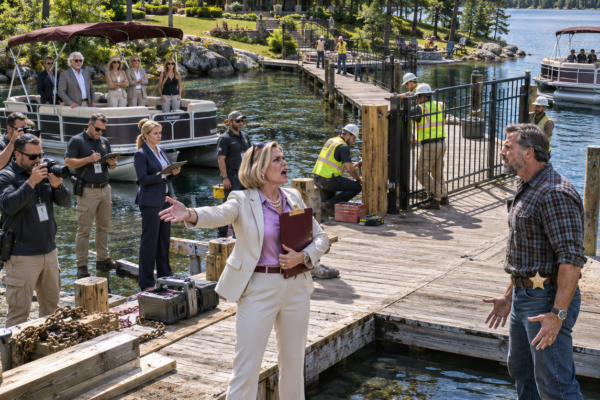
𝗙𝗨𝗟𝗟 𝗦𝗧𝗢𝗥𝗬 The Gate She Built to Keep Me Out Was Sitting on Ground She Never Owned
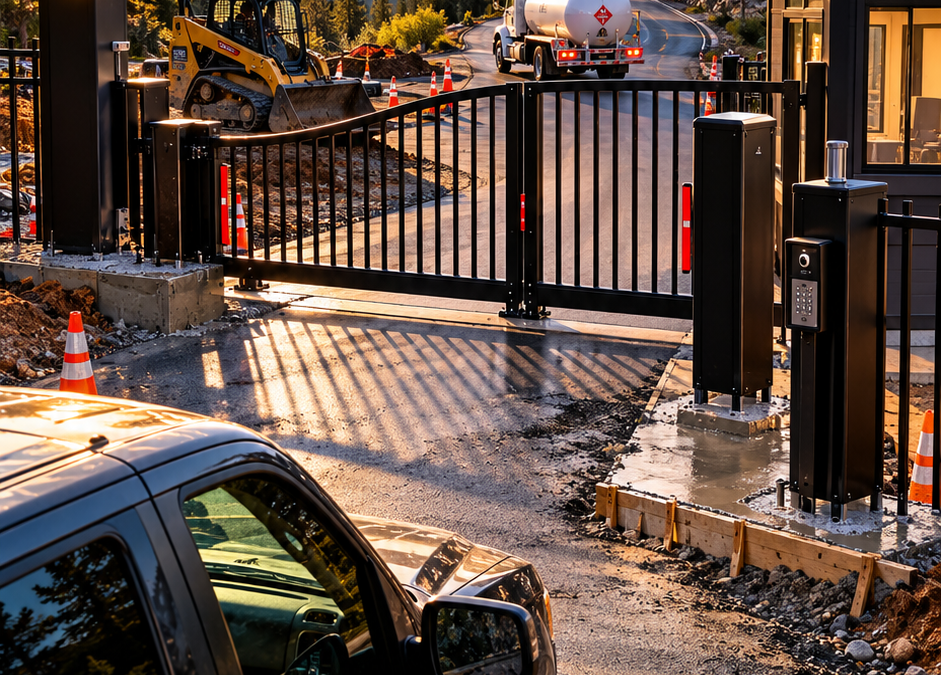
𝗙𝗨𝗟𝗟 𝗦𝗧𝗢𝗥𝗬
The west logging trail started behind an abandoned cattle scale three miles below my house. By 7:15, my tires were grinding over frozen ruts instead of pavement. The truck rocked hard enough to splash coffee across the console. Lodgepole branches scraped the passenger mirror, and every shaded patch held a skin of white frost.
Seventeen extra miles turned a twenty-minute drive into almost an hour and a half.
By the time I reached the north meadow, sunlight had cleared the ridge.
I parked beside an old equipment shed, pulled on work gloves, and started checking water troughs before moving uphill to inspect a timber thinning site.
That was what most people in Aspen Crest never understood about me.
I did not own eighteen hundred acres so I could stare at them from a porch.
The mountain was work.
Timber on the western slope.
Two grazing leases lower down.
Four hunting cabins near the north drainage.
Miles of service road that needed culverts cleared, deadfall cut, gravel moved, and snow pushed before winter closed in.
Every season had a list. Every mile of road had a problem waiting for weather to reveal it. Every access point mattered because trucks, tools, livestock, firewood, propane, water, and repairs had to move if the mountain was going to function.
My father, Ray Mercer, taught me most of it from the passenger seat of that old Ford.
He also taught me something that never appeared on a map.
Keep the mountain moving.
If a propane driver needed room to turn around, he used our gravel pad.
If the utility crew needed to reach a transformer, they crossed our service road.
If a septic truck had to get to one of the upper cabins, nobody stopped him to discuss boundary language.
Dad would just wave him through.
If the mountain works, everybody gets home.
I had kept doing it after he died.
For twelve years, I never thought much about it.
That afternoon, I did.
I was replacing a broken hinge on Cabin Three when my phone buzzed against the workbench.
It was Mason Pike, the propane driver I had seen that morning.
“Cole, you changed something up here?”
“Not me.”
“Aspen Crest says they’ve got new access rules. Security made me log my truck going in.”
I tightened the hinge bolt.
“Where are you delivering?”
“Two HOA houses. Then the Brenner cabin and yours.”
The Brenner cabin sat beyond Aspen Crest on my north parcel. Mason had crossed the subdivision, then several miles of road and turnaround space I maintained.
“They charge you anything?” I asked.
“Not yet.”
“All right.”
I hung up and stood there with the wrench in my hand.
Through the open cabin door, I could see Mountain Crest Road cutting between the pines below, neat and black and easy. My road home was down there. So were trucks using my gravel, my turnouts, my culverts, and my service lanes because nobody had ever made their lives harder.
I had mistaken cooperation for something permanent.
Maybe Marissa had too.
On the drive back, I stopped at the ridge turnout my father had built twenty years earlier. Tire marks covered the gravel. Propane duals. A septic truck. Snow equipment from last winter. I crouched and rubbed the edge of one track with my thumb.
Nobody was stealing anything.
That was not the point.
They had simply gotten used to the mountain working.
I had helped make it invisible.
Near sunset, I finally reached home by the logging trail. Mud covered both doors of my truck. One running board had picked up a fresh dent, and I had burned most of a working day getting around a gate installed by people who still expected everything beyond that gate to function exactly as before.
I set the old brass key on my kitchen counter and looked at it for a long moment.
Then I pulled out my phone.
I was not going to fight Marissa over seventeen extra miles.
I was going to stop pretending those seventeen miles were the only thing that had changed.
By eight the next morning, I had called every contractor whose trucks regularly crossed my ground.
I kept the message short.
Emergency access stayed open.
Utility repair crews stayed open.
Residents who needed to reach their homes were not my problem with Marissa, and I was not going to make them one.
But commercial traffic using my private service roads, turnouts, staging pads, or cabin lanes would need permission from me again.
Just like it should have all along.
Mason Pike went quiet when I told him.
“So you’re closing the mountain?”
“No,” I said.
I stood beside the gravel turnout with cold wind pushing against my shirt.
“I’m just not providing the HOA free commercial access while they tell me I need permission to reach my own property.”
By noon, the consequences had started moving downhill.
The trash contractor called first. Their normal truck used my upper turnaround because there was not enough room to reverse safely near the last row of homes. Without it, they would have to send a smaller truck and make two runs.
Then the snow contractor called about the equipment pad my father had graded near West Ridge. He had staged plows there every winter for eleven years.
“We can work around it,” he said. “But the price won’t be the same.”
“That’s between you and Aspen Crest.”
At 2:15, Marissa’s black SUV came up my driveway fast enough to throw gravel against the fence posts. She stepped out before the engine had fully stopped, red pantsuit sharp against the brown grass, phone clenched in one hand.
“What exactly are you doing?”
I wiped grease from my fingers with a shop rag.
“I’ve been servicing the hydraulic lines on my tractor.”
“Cole.”
“Working.”
“You contacted our vendors.”
“I contacted people using my property.”
“Residents are already being threatened with higher service fees.”
“I haven’t charged a resident a dime.”
She took three quick steps toward me.
“You’re retaliating because we secured our entrance.”
“Your entrance?”
I looked past her toward the mountain.
“That’s an interesting way to put it.”
Her jaw tightened.
“You know what I mean.”
“I do.”
I tossed the rag onto the tractor seat.
“You decided access matters when it’s yours. I’m agreeing with you.”
She stared at me for a moment.
The wind snapped a loose strand of brown hair across her cheek.
“You can’t disrupt essential services.”
“I’m not.”
I pointed uphill.
“Emergency vehicles come through. Utility repairs come through. Residents come through.”
“But your contractors don’t get to use my land as a free loading dock while your security guard decides whether I’m allowed to drive to my north parcel.”
She looked toward the gravel pad behind the barn.
Fresh tire grooves from years of service trucks crossed it in overlapping arcs.
For the first time since she had installed that gate, Marissa was not looking at me.
She was looking at the ground.
At what had always been there.
Her phone rang.
She glanced at the screen and rejected the call.
“This will make you very unpopular.”
“Maybe.”
“People will blame you.”
“Probably.”
That one bothered me more than I let show.
Most of the families up there had not put up that gate. They had jobs, kids, mortgages, propane tanks that did not care who was right. My father would have hated seeing neighbors caught between two stubborn people.
But he had also taught me that favors stopped being favors when somebody decided they were entitled to them.
Marissa opened her SUV door.
“We’ll find alternatives.”
I nodded.
“You should.”
She paused.
“Aspen Crest does not depend on you, Mr. Mercer.”
Then she drove away.
I watched dust settle across the driveway until the mountain went quiet again.
Twenty minutes later, Mason texted me a photograph from his route sheet. His company had already rerouted upper deliveries around the east side.
Twenty-four additional miles.
I looked at the number.
Then up at the ridge.
Marissa had wanted a mountain where she controlled who came through.
Now she was going to find out what that mountain actually cost.
The first real crack appeared three days later, and it was not in Marissa’s gate.
It was in the mountain’s routine.
I heard the backup alarms before sunrise, sharp electronic beeps carrying through the cold air from the switchback above my barn. When I drove up in my pickup, a propane truck sat crooked on the narrow county approach with its hazards flashing.
The driver, Earl Bennett, stood beside it rubbing both hands together.
Beyond him, Marissa’s new gate gleamed black across the road.
“Can’t make the turn,” Earl said. “Not without your lower turnout.”
For fifteen years, delivery trucks had entered through the mountain road, crossed my gravel turnout, and climbed Aspen Crest from the gentler western grade.
Marissa had treated that arrangement like geography instead of permission.
Now her gate had cut me off, and my refusal to keep donating commercial access had exposed how much of their system depended on land they did not control.
I looked at the homes scattered along the ridge.
Thin chimney smoke drifted into a pale sky.
“Anybody low enough to lose heat?”
“Two tanks under twenty percent. Cold front tonight.”
That changed things.
I called both homeowners myself and told them Earl could cross my turnout.
I was not going to use somebody’s furnace as leverage.
By nine, the propane truck was climbing through my property.
By ten, Marissa was standing beside the road watching it happen.
She waited until Earl disappeared around the bend.
“So your little blockade is over.”
“There was never a blockade.”
“You just allowed our delivery truck through.”
“Because two families needed heat.”
Her mouth tightened.
“Then you’ll continue allowing vendors through.”
“No. I’ll handle genuine needs case by case until you restore my access.”
She folded her arms.
“That’s extortion.”
“No, Marissa. It’s me refusing to punish your residents for what you did.”
A white utility pickup came slowly down from Aspen Crest. The driver stopped beside us and lowered his window.
“You two need to figure this out before the weather turns. That east detour isn’t built for heavy traffic.”
Marissa answered before I could.
“The HOA has the situation under control.”
He looked at the steep road behind her.
Then at me.
Then drove on without saying another word.
That afternoon, orange survey stakes appeared along the eastern shoulder.
Marissa had hired a grading crew.
By the next morning, an excavator was cutting into the slope to widen the detour. I stood below it and watched dark soil spill from the bucket.
That slope had always bothered my father.
He used to stop there after hard rain and check the drainage ditch with the toe of his boot. Water came off the granite shelf fast, and the old road survived because runoff crossed beneath it through two buried culverts before spreading into the meadow on my side.
Marissa’s crew was pushing fill directly across one of those drainage paths.
I walked up to the foreman.
“You planning to leave that culvert open?”
He killed the excavator.
The sudden silence made the creek below sound louder.
“Plans say compact this shoulder.”
“Water comes through there.”
He glanced toward Marissa, who stood beside her SUV with her phone raised.
“Take it up with the HOA.”
I did.
“You’re covering a drainage outlet.”
She lowered the phone.
“We’re improving our road because you’ve made normal access impossible.”
“That isn’t your road all the way down.”
“We’ve already discussed ownership.”
“I’m not talking about ownership. I’m talking about water.”
She gave me that small controlled smile she used whenever she thought patience made her look powerful.
“You’re a rancher, not an engineer.”
I looked at the fresh dirt packed against the hillside.
Dampness already darkened the bottom six inches.
“No,” I said. “I’m the man who’s watched that slope through twenty-seven winters.”
She turned away.
The excavator started again.
I could have called somebody immediately. I could have tried to stop the work with another argument, another letter, another round of people telling each other what they were allowed to do.
Instead, I drove home and opened the steel cabinet in my father’s workshop.
Behind old tax folders and equipment manuals was a rolled topographic map he had kept since I was a teenager. I spread it across his scarred workbench and followed the blue pencil marks he had drawn along the mountain runoff.
One line passed beneath the exact shoulder Marissa was filling.
Beside it, in my father’s block handwriting, were four words.
Keep this channel clear.
Outside, the wind shifted north.
The temperature dropped six degrees before dark.
Then the weather radio announced rain on frozen ground before the cold front arrived.
I stood in the doorway, listening to the first drops tick against the metal roof.
Marissa thought she was building a road around me.
The mountain was about to tell her what she had actually built.
The rain started as a whisper and turned hard before midnight.
I woke to water hammering the bedroom window and the low metallic rattle of the barn gutter overflowing. By 4:30, my yard lights were shining across sheets of runoff moving downhill where I had never seen water move before.
I pulled on my boots, grabbed a flashlight, and drove toward the eastern switchback.
Halfway up, mud streaked the pavement.
At the new widened section, brown water had pooled behind Marissa’s fresh fill like somebody had built a shallow dam across the mountain. The buried culvert was taking almost nothing. Water curled around the shoulder instead, chewing a channel through loose soil.
I called the grading foreman first.
No answer.
Then Marissa.
She picked up on the fifth ring.
“It’s 4:47 in the morning.”
“Your fill is holding runoff above the east road.”
Silence.
Rain drummed against my truck roof.
“Remove it before the shoulder lets go.”
“You are not authorized to interfere with HOA construction.”
“I’m not touching it. I’m warning you.”
“Then don’t.”
She hung up.
Twenty minutes later, headlights appeared above me. A resident named Paul Harlan eased his SUV downhill, saw the water, and stopped. He lowered his window.
“Can I get through?”
I swept my flashlight across the outside edge. A fresh crack ran through the wet gravel.
“Back up. Use your garage and stay home until daylight.”
“My wife has an appointment in town.”
“Cancel it.”
His face changed when he saw the crack.
He nodded and reversed carefully uphill.
By sunrise, six residents were standing behind a line of parked vehicles, watching the shoulder sag.
Marissa arrived in her red SUV with the same contractor she had hired to widen the road. She stepped into the rain wearing a waterproof coat over her clothes and immediately pointed toward the excavator.
“Open one lane.”
The foreman stared at the crack.
“I’m not putting my machine on that edge.”
“I hired you to make this road usable.”
“And I’m telling you it isn’t safe right now.”
That word landed harder than anything I could have said.
Safe.
The same word she had used to justify locking me out.
I walked toward the drainage side and stopped clear of the unstable shoulder. Water was spilling across the fill now, carrying fist-sized stones downhill.
“You blocked the outlet,” I said.
Marissa turned on me.
“This happened because you withdrew access.”
“No. You chose to rebuild a mountain road in two days without understanding where the water went.”
She looked past me at the residents gathering in the rain.
Her voice dropped.
“Open your turnout.”
I knew what she was asking.
If I opened my land completely, Aspen Crest could bypass the damaged section and the immediate pressure on her would disappear.
Part of me wanted to say no.
I remembered the black gate closing in front of my truck. The security guard’s hand raised like I was trespassing on my own mountain. The way she had smiled while telling me where I could and could not go.
Then I saw Paul helping his elderly neighbor into a pickup because she needed medication from town.
I unlocked my lower ranch gate.
“Residents and essential vehicles only. No construction traffic.”
Marissa’s jaw tightened.
“You don’t get to dictate on my land.”
“I do on mine.”
For the next six hours, I stood in the rain directing cars across my gravel turnout while my own work sat untouched. Tires cut deep tracks through the softened surface. One delivery clipped a drainage marker. By noon, the pasture entrance looked like a muddy staging yard.
It was costing me money every hour.
But nobody on that ridge was going to be trapped just so I could prove a point.
Then the rain stopped.
The clouds lifted enough to expose the upper slope, and I saw something that made me climb onto the truck’s running board for a better look.
The washout had stripped several feet of fresh fill away.
Beneath it sat an old stone headwall around the original culvert.
And beside that headwall was a weathered steel survey monument set into the ground.
I knew the shape immediately.
My father had shown me identical markers along our western boundary.
Marissa saw me staring.
“What is that?”
I wiped rain from my face.
“A boundary monument.”
She looked from the marker to the road above it.
“Whose boundary?”
I did not answer until I had walked close enough to read the stamped number through the mud.
Then I looked uphill at the gate, the damaged detour, and the mountain road winding through timber above us.
“Mine,” I said.
For the first time since this started, Marissa had nothing to say.
I crouched beside the exposed marker while muddy water whispered through the old stone culvert. The brass-colored cap was scarred green around the edges, but the stamp number was still clean enough to read.
I photographed it.
Then I photographed the headwall, the washed-out fill, and the road climbing toward Aspen Crest.
Marissa stayed twenty feet uphill with her arms folded.
“A marker doesn’t prove you own the road,” she said.
“No,” I said. “It tells me where to start.”
That afternoon, I drove into town with mud dried white along my jeans and spent three hours with the survey map my father had kept rolled inside a cardboard tube for as long as I could remember.
The lines were old, but they were clear.
My family parcel did not stop at the ranch fence.
It climbed the eastern face in a long, irregular wedge, crossed the road, then widened toward the timbered ridge.
The HOA owned the developed lots and several common areas, but portions of the mountain road crossed ground that still belonged to me.
The road itself existed under an access easement granted decades earlier.
That distinction mattered.
The easement allowed passage.
It did not give Aspen Crest ownership of the land.
It did not give them unlimited authority to widen, gate, excavate, reroute, or pour new concrete wherever they pleased.
I called a licensed surveyor named Dean Holloway and paid for an expedited field check.
It hurt.
Between the damaged turnout, lost work, and survey fee, the week had already cost me several thousand dollars.
Dean arrived the next morning carrying a receiver pole and wearing orange mud over both boots. We walked the slope for five hours. By noon, he had located two more monuments.
One sat thirty-six inches from the new gate footing.
Another was buried beneath pine needles above the second switchback.
Dean studied his screen, then looked at me.
“They’ve got improvements outside the easement.”
“How far?”
“Enough that I wouldn’t pour another yard of concrete if I were them.”
I did not celebrate.
I called Marissa.
“Stop the road work until the boundaries are verified.”
She laughed once.
“We’re restoring access you deliberately disrupted.”
“You’re excavating my property.”
“Your interpretation.”
“The surveyor is standing beside me.”
That bought three seconds of silence.
Then she said, “Send everything through counsel.”
By sunset, machinery was moving again.
That was when my strategy changed.
I stopped trying to convince her.
I walked the permitted easement with Dean’s preliminary stakes visible along the edge, then opened my lower turnout wider for residents. I posted no threats and blocked nobody. I simply refused construction access across the portions of my ranch that were not covered by the easement.
Marissa responded by ordering the contractor to squeeze all equipment through the narrow mountain approach.
The decision slowed them to a crawl.
Trucks had to reverse between switchbacks. Gravel deliveries stacked up below the ridge. Residents who had once watched from porches began asking why an HOA that claimed to own the road was suddenly afraid to move six inches beyond a line of survey stakes.
Then Marissa made the mistake I could not have planned.
On Friday morning, I heard an engine above the barn and saw a compact excavator crossing the stake boundary toward the washed-out drainage.
I drove up and found Marissa beside the machine, pointing toward the old stone headwall.
“That needs to come out,” she told the operator.
“Stop.”
The operator killed the engine before I reached them. The mountain went quiet except for water dripping from pine branches.
Marissa turned.
“This culvert caused the failure.”
I looked at the eighty-year-old stonework, then at the fresh fill packed over its inlet.
“Your fill caused the failure.”
“Move your stakes.”
“No.”
Her face tightened.
Behind us, three residents had stopped along the road. Paul was one of them.
Marissa pointed toward the excavator.
“Proceed.”
The operator did not move.
“Ma’am,” he said carefully. “I’m not crossing a surveyed property line without written authorization.”
She stared at him.
Then at me.
The confidence was still there, but now it had nowhere clean to go.
I stepped beside the exposed marker and brushed mud from its cap with my thumb.
“You wanted a gate to decide who belonged on this mountain,” I said. “Now the mountain has a line of its own.”
She walked back to her SUV without answering.
Ten minutes later, the excavator backed down the road.
I watched it disappear around the switchback, thinking we had finally stopped her.
I was wrong.
That evening, an email reached every Aspen Crest homeowner.
Marissa announced an emergency assessment to fund road stabilization and legal defense against an adjoining landowner. My name was not printed anywhere. It did not need to be.
The amount was twelve thousand dollars per household.
By eight, headlights were coming down the mountain toward my ranch.
The first truck stopped beside my barn at 8:14.
Paul climbed out, followed by his wife, Denise. Two more vehicles rolled in behind them, then another. Within fifteen minutes, nine Aspen Crest homeowners were standing under the barn overhang while rainwater ticked from the metal roof.
Nobody looked angry at me.
That worried me more than shouting would have.
Paul held up his phone.
“Twelve thousand due in thirty days.”
Denise folded her arms against the cold.
“She says you’re threatening to close our only road.”
I wiped my hands on a shop towel.
“I’m keeping my turnout open for residents. I haven’t closed the easement.”
“Then why are we paying for legal defense?” somebody asked.
“Ask Marissa.”
The room went still.
I could have shown them every survey photograph and turned the whole crowd against her right there.
Instead, I pulled Dean’s preliminary map from the workbench and flattened it beneath a coffee mug and a socket set.
“This is what I know. My family owns the ground under several sections of that road. Aspen Crest has an easement to cross it. That is different from owning it.”
Paul leaned over the map.
“So the gate—”
“Built beside my boundary.”
“And part of the work?”
“Appears outside the easement.”
Denise asked, “And the washout?”
“Their new fill blocked drainage that had been working for decades.”
Nobody spoke for several seconds.
Then an older homeowner named Walter Quinn tapped the map with one finger.
“Can the HOA lose the road?”
That was the question underneath everything.
I looked around the barn.
“I’m not trying to take your access.”
Shoulders loosened.
“But I’m done letting Marissa use your access as permission to control my property.”
The next morning, residents packed the clubhouse for an emergency board meeting.
I stayed outside until Paul came through the doors and waved me in.
Marissa stood behind a folding table in her red pantsuit, perfectly composed, with the association attorney seated beside her. She saw me and stopped mid-sentence.
“This is a members-only meeting.”
“He owns the land we’re discussing,” Paul said. “He stays.”
A murmur rolled through the room.
Marissa’s attorney leaned toward her and whispered something.
She sat down.
For forty minutes, homeowners questioned the assessment.
Marissa kept returning to the same phrase.
Protecting community access.
Then Walter asked whether the board had commissioned a boundary survey before installing the gate.
Marissa’s fingers tightened around her pen.
“The road has been maintained by this association for years.”
“That’s not what he asked,” Denise said.
The attorney finally cleared his throat.
“At this time, I would recommend postponing further construction until title and easement boundaries are confirmed.”
That felt like a win.
A real one.
The assessment vote was suspended.
The contractor was told to stop.
By afternoon, the mountain was quiet for the first time in days.
I went home, repaired the damaged turnout, and slept six straight hours.
At 6:20 the next morning, Dean called.
“You need to come up here.”
His voice had none of its usual patience.
I found him above the second switchback beside a fresh trench cut through the shoulder. Two survey stakes were lying in the weeds. Tire tracks crossed the soft dirt.
“Someone moved them,” he said.
I crouched and picked up one stake. The orange ribbon was wet with dew.
“Can you prove where they were?”
Dean lifted his receiver.
“Every point is recorded.”
Then I noticed the new gravel beyond the trench.
It extended toward a flat bench on my side of the boundary, creating enough room for vehicles to turn around near the gate.
Someone had not waited for the survey.
Overnight, the ground itself had been changed.
My phone rang before I could call her.
Paul.
“You’d better check your email.”
Marissa had sent another notice. It described the overnight grading as emergency stabilization authorized by the association. The emergency assessment was back, reduced to eight thousand dollars, and she claimed overnight stabilization work had been necessary because of an immediate slope hazard.
I looked at Dean.
“Was there an immediate hazard here?”
He stared at the fresh gravel.
“Not one that required this.”
A cold breeze moved through the pines.
Downhill, the gate stood open, its steel frame shining in the morning light.
I had spent days protecting the residents from becoming collateral damage.
Marissa had just gambled that I would not risk inconveniencing them to stop her.
That was her mistake.
I called Paul back.
“Tell everyone the turnout stays open.”
“What are you going to do?”
I looked at the displaced stakes in my hand.
“Stop fighting over the gate.”
I dropped them into the truck bed.
“I’m going after the ground beneath it.”
By eight that morning, Dean had reset every disturbed stake and marked the easement edges with tall orange flags that could be seen from fifty yards away.
I did not touch the gate.
I did not block the road.
I called the grading contractor instead and told him calmly that any machine leaving the recorded easement onto my parcel would be operating without my permission.
He asked me to send Dean’s survey.
I did.
Forty minutes later, his equipment was parked.
Marissa arrived just before ten, her red SUV throwing dust across the fresh gravel. She stepped out in a red pantsuit and pointed at the idle excavator.
“Why isn’t that moving?”
The foreman held up his phone.
“Because this turnaround is on private property.”
“It’s HOA common infrastructure.”
“Not according to the survey I just received.”
Marissa looked at me.
“You sent him that.”
“I sent him the boundary.”
“You are obstructing emergency stabilization.”
“Then stabilize what your easement actually covers.”
Her eyes narrowed.
“You know the equipment can’t make that turn inside the old road width.”
“I know.”
That was the change.
I was not trying to remove their access anymore.
I was making Marissa live inside the rights she actually had.
Residents could still travel through. My lower turnout remained open. But the oversized equipment she had brought in to reshape the mountain could no longer use my land as free workspace.
By noon, three gravel trucks were backed down the switchback because they could not turn around. The contractor pulled his crew rather than risk crossing the stakes. Marissa stood beside the gate making calls while homeowners watched from their porches.
Then Dean walked toward me holding his tablet.
“There’s something else.”
He showed me the recorded easement dimensions overlaid on the new survey.
I followed the line with my finger.
The original road curved around the slope.
Marissa’s new gate did not.
One concrete footing sat beyond the easement.
So did part of the widened approach.
“How much?” I asked.
“Enough that the gate can’t stay where it is without your permission.”
I looked at the black steel frame that had started all of this.
I was still looking at it when Paul arrived twenty minutes later carrying a copy of the HOA’s construction invoice.
“Homeowners finally got this from the management company,” he said.
I scanned the work description.
Gate installation.
Road widening.
Drainage modification.
Emergency turnaround.
Then I saw the authorization date.
It was signed three days after the contractor had first started cutting into the slope.
Marissa’s signature was at the bottom.
Paul pointed at it.
“She started the project before the board approved the spending.”
I handed it back.
“Then the homeowners need to deal with that.”
“You’re not using it?”
“I don’t need it to prove where my land is.”
Marissa heard me.
She crossed the gravel fast, heels biting into the soft surface.
“That document is internal association material.”
Paul did not move.
“It’s my association too.”
“You’re undermining a safety project.”
“You charged my family eight thousand dollars for fixing damage your project helped create.”
Her face tightened.
Behind her, the contractor’s foreman climbed into his pickup.
“We’re done until ownership is resolved,” he called.
The truck rolled away.
Marissa watched it disappear.
Then turned toward the gate.
For the first time, the thing looked less like a barrier than an expensive mistake bolted into somebody else’s mountain.
She stepped closer to me.
“What do you want?”
“Remove everything outside the easement. Restore the drainage. Cancel the assessment tied to unauthorized work.”
“And if I refuse?”
I looked toward the line of orange stakes climbing through the pines.
“Then nothing gets wider. Nothing gets excavated. Nothing gets another inch of my ground.”
She gave me a thin smile.
“You think you’ve won because a contractor got nervous?”
Before I could answer, Dean’s receiver chirped behind us.
He had moved farther uphill, checking the last corner of my parcel. He stopped beside an old granite outcrop and stared at his screen.
Then he looked down at the road, tracing its path with his eyes.
“You might want to come see this.”
I climbed the slope after him.
From that height, Aspen Crest spread across the opposite ridge, roofs shining between the pines. Dean pointed to the boundary on his tablet, then to the land beneath our boots.
The line did not merely touch the road near the gate.
It followed the mountain farther than either of us had expected.
Switchback after switchback crossed my parcel before reaching the subdivision.
Dean zoomed out until the whole eastern slope filled the screen.
Nearly half the approach beneath Aspen Crest sat inside my boundary.
I stood there listening to the wind move through the trees.
Marissa had gated the road to keep me out.
She had never asked who owned half the mountain.
The final survey arrived Monday morning in a white envelope thick enough to bend when I picked it up. I opened it on the hood of my truck while the engine ticked cool beneath me.
Dean’s stamped map confirmed what we had seen from the ridge.
My parcel crossed the mountain road at four separate sections and covered nearly half the slope beneath Aspen Crest’s approach.
The association had a recorded right of passage through those sections.
Nothing more.
By nine, the contractor had the same survey.
By ten, his insurance carrier had instructed him not to perform additional work outside the easement.
Marissa called at 10:17.
“We need to resolve this.”
“I’ve been saying that since you put up the gate.”
That afternoon, the HOA board met beside the gate because the clubhouse parking lot could not hold the crowd. Homeowners lined both shoulders. Paul stood with Denise near my truck.
Dean placed survey flags along the road while the contractor measured the concrete footing that crossed onto my property.
Marissa arrived last.
Her red pantsuit looked almost unnaturally bright against the gray stone and dark pines. She walked straight to the board table.
“This meeting is unnecessary. We have counsel reviewing the survey.”
Walter Quinn answered before anyone else could.
“The board already reviewed the invoices.”
Marissa stopped.
Paul handed copies to the other directors.
Nobody raised their voice.
That made the silence heavier.
The vice president looked down at the authorization date, then at Marissa.
“You ordered construction before the vote.”
“I acted under emergency authority.”
“There wasn’t an emergency when the gate was installed.”
She turned toward me.
“This entire situation exists because he refused to cooperate.”
I leaned against my truck.
“You locked me out first.”
The contractor’s foreman stepped forward and pointed toward the drainage cut.
“For the record, our original scope didn’t include filling that inlet. The field change came from the association.”
Marissa looked at him sharply.
“You approved the work.”
“We performed what we were directed to perform. We won’t perform anymore without proper access authorization.”
The board recessed for twenty minutes.
I walked down to the old stone culvert.
Clear water ran through it again now that the loose fill had been pulled away by hand from the inlet. I could smell wet granite and pine needles warming in the afternoon sun.
When the board called everyone back, the vice president stood instead of Marissa.
The emergency assessment was rescinded.
All unauthorized work was suspended.
Marissa’s authority to approve contractors or expenditures on behalf of the HOA was revoked pending a formal membership vote.
Then came the part that mattered to me.
The HOA agreed to remove the gate footing from my parcel, restore the disturbed ground, rebuild the damaged drainage without widening beyond the recorded easement, and reimburse the repair costs to my turnout caused by emergency resident traffic.
Marissa stared at the table.
“You can’t operate this association by surrendering every time someone threatens litigation.”
“Nobody threatened litigation today,” Walter said.
Two weeks later, the membership removed her from the board.
The association’s insurer refused coverage for portions of the unauthorized construction, leaving the HOA to pursue reimbursement from the people who had approved work outside its rights. After the board’s counsel reviewed the authorization records, the HOA reached a separate reimbursement agreement with Marissa covering a substantial share of the unauthorized change costs tied directly to work she had ordered without approval.
The gate came down on a bright Thursday morning.
I stood beside the road while the contractor lifted the black steel frame from its hinges and loaded it onto a flatbed.
No cheering.
No speeches.
Just hydraulic lines whining, chains clinking, and tires grinding over gravel.
Paul drove through ten minutes later and lifted two fingers from his steering wheel.
I did the same.
The residents kept their road.
I kept my land.
The old drainage stayed open.
The widened sections were pulled back inside the easement, and my lower turnout returned to being a quiet ranch entrance instead of an emergency detour.
Before winter, I replaced the damaged boundary stakes with permanent survey monuments. On the last afternoon, I walked to the highest one with a post driver over my shoulder. Cold air smelled like snow. Far below, the mountain road curved through the trees exactly where it had for decades.
I drove the marker home, brushed dirt from its cap, and looked toward the empty space where Marissa’s gate had stood.
She had wanted one piece of steel to tell me where I was allowed to go.
In the end, all I needed was the ground beneath her.
𝗧𝗛𝗘 𝗘𝗡𝗗
The Gate She Built to Keep Me Out Was Sitting on Ground She Never Owned
The gate was not there when I drove down the mountain the night before.
By sunrise, black steel bars blocked the road my father had used for decades, and the woman in the red pantsuit was smiling like my key had become worthless overnight.
What she did not know was that the ground beneath her new gate remembered more than her HOA ever bothered to learn.
My name is Cole Mercer, and I had known Mountain Crest Road longer than anyone in Aspen Crest had known the word “community.”
Before there were stone entrance signs, private security guards, holiday lighting rules, architectural committees, and emails about acceptable mailbox colors, there was a narrow mountain road that climbed through pine, granite, and weather toward the parcels my family had worked for generations. My father drove it before me. His father had hauled timber down parts of it before the county ever paved the lower section. I learned to steer on that road with both hands clenched around the wheel of an old Ford while my father sat in the passenger seat, one hand resting on the cracked dashboard, telling me to feel the grade through the tires.
“You don’t drive a mountain road like a highway,” he used to say. “A highway forgives arrogance. A mountain road doesn’t.”
He was right about that.
He was right about most things involving the mountain.
My family owned nearly eighteen hundred acres above Aspen Crest. Not one clean square of land like people imagine when they look at maps. The property climbed and folded across the ridge in irregular sections shaped by old deeds, timber boundaries, grazing leases, and practical use older than the houses below. It crossed slopes, drainages, meadows, service roads, and timber benches. Parts of the mountain road crossed our land under old access easements. Other parts ran beside it. Some turnouts and service pads were ours entirely, built by my father because mountain life required cooperation long before lawyers started naming every inch of it.
For years, nobody cared.
That was the strange thing.
No one cared who owned the gravel turnout when a propane truck needed room to swing uphill. No one cared whose service lane a septic contractor used to reach the upper cabins. No one cared that snowplow operators parked equipment on our old grading pad every winter because it saved them twenty minutes and probably saved residents from being trapped after storms.
My father never charged anyone.
He never stood beside a gate with a clipboard and asked a delivery driver whether he had authority to exist.
“If the mountain works,” he told me once, “everybody gets home.”
I kept that rule after he died.
For twelve years, I kept the mountain moving.
That was my mistake.
Not the kindness itself.
The assumption that everyone understood it was kindness.
The first thing I heard that morning was not traffic.
It was the hydraulic hammer biting into fresh concrete.
I rounded the last bend at 6:40 and hit the brakes hard enough to send my thermos rolling across the passenger floor. Fifty yards ahead, a black steel gate stretched across Mountain Crest Road where there had been nothing but open pavement the night before.
Fresh concrete darkened the shoulders around two new posts. A security booth sat beside them, still smelling of cut lumber and paint. Two guards in gray jackets watched me through the windshield.
And beside the gate stood Marissa Vain.
Red pantsuit.
One hand on her hip.
Perfect hair.
The posture of someone who had waited for this exact moment.
I stepped out into thirty-eight-degree air. Pine resin mixed with diesel exhaust from the contractor’s skid steer parked beyond the gate. The machine sat quiet now, but its tracks were pressed into the road shoulder, and the wet concrete told me the work had been done before dawn.
Marissa lifted her chin.
“Morning, Cole.”
I looked at the steel bars.
Then at her.
“Since when?”
“Since five this morning.”
One of the guards approached.
“Residents and authorized guests only, sir.”
I almost laughed.
Not because it was funny.
Because the alternative was saying something I could not take back.
Instead, I reached into my truck and pulled an old brass key from the ring hanging beneath the ignition.
My father had carried that key before me.
It fit the old access box mounted beside the road before Aspen Crest existed. It had opened weathered padlocks, maintenance chains, fuel sheds, and gates people forgot were there until winter storms made them important. That key was not just metal. It was a reminder that the mountain had functioned for decades because people respected practical access, even when the paperwork was older than half the residents.
I walked to the lockbox beside the new gate and tried it.
The key stopped halfway.
Wrong cylinder.
Behind Marissa, a propane truck crawled uphill through Aspen Crest, its tank flashing white between the pines. Farther up, orange utility markers followed the shoulder toward the ridge.
Both routes eventually crossed land with my name on the deed.
I pulled the key out slowly.
“You changed the lock.”
Marissa folded her arms.
“The HOA changed the access system.”
“My north parcels are up there.”
“Then you’ll need resident authorization when you pass through Aspen Crest.”
A couple walking a golden retriever had stopped twenty feet away. A landscaper leaned against his pickup. Nobody said anything.
Marissa seemed to enjoy the audience.
“You can’t have private landowners driving through whenever they feel like it,” she said.
I looked past her toward the fork about a mile uphill. Right went deeper into Aspen Crest. Left climbed toward the acreage my family had worked since before the first subdivision road was paved.
“You know this road crosses my mountain, right?”
Her mouth tightened into a small smile.
“It crosses our community first.”
That sentence stayed with me.
I slipped the brass key back into my pocket.
“Open it.”
“I can’t do that without authorization.”
“Marissa, I’m going to work.”
“Then use another entrance.”
There was another entrance.
A logging trail on the west side.
Seventeen extra miles around the ridge, rough enough that I normally used it only during timber season. She knew that. So did I.
The guard shifted his weight and glanced at her.
I could have made a scene. I could have parked my truck across the entrance and given everybody on that mountain something to film before breakfast. I could have shouted that she was blocking me from my own land, that the HOA had built its new gate before checking who owned what beyond it, that a security booth did not turn old easements into private kingdom walls.
Instead, I picked up my thermos, climbed back into the cab, and backed away.
Marissa watched me turn downhill.
In my mirror, the new gate grew smaller, black against the pale morning road.
Then the propane truck appeared beyond it again, climbing toward the upper cabins.
I slowed.
That truck was not headed to an HOA facility.
It was headed through Aspen Crest, past the fork, toward customers farther up the mountain.
Customers whose delivery route crossed my ground.
I looked at the utility markers beside the road.
Then at the brass key lying in my cup holder.
Marissa had spent thousands of dollars making sure I understood exactly where her authority began.
What she had not bothered to ask was where it ended.
The west logging trail started behind an abandoned cattle scale three miles below my house. By 7:15, my tires were grinding over frozen ruts instead of pavement. The truck rocked hard enough to splash coffee across the console. Lodgepole branches scraped the passenger mirror, and every shaded patch held a skin of white frost.
Seventeen extra miles turned a twenty-minute drive into almost an hour and a half.
By the time I reached the north meadow, sunlight had cleared the ridge.
I parked beside an old equipment shed, pulled on work gloves, and started checking water troughs before moving uphill to inspect a timber thinning site.
That was what most people in Aspen Crest never understood about me.
I did not own eighteen hundred acres so I could stare at them from a porch.
The mountain was work.
Timber on the western slope.
Two grazing leases lower down.
Four hunting cabins near the north drainage.
Miles of service road that needed culverts cleared, deadfall cut, gravel moved, and snow pushed before winter closed in.
Every season had a list. Every mile of road had a problem waiting for weather to reveal it. Every access point mattered because trucks, tools, livestock, firewood, propane, water, and repairs had to move if the mountain was going to function.
My father, Ray Mercer, taught me most of it from the passenger seat of that old Ford.
He also taught me something that never appeared on a map.
Keep the mountain moving.
If a propane driver needed room to turn around, he used our gravel pad.
If the utility crew needed to reach a transformer, they crossed our service road.
If a septic truck had to get to one of the upper cabins, nobody stopped him to discuss boundary language.
Dad would just wave him through.
If the mountain works, everybody gets home.
I had kept doing it after he died.
For twelve years, I never thought much about it.
That afternoon, I did.
I was replacing a broken hinge on Cabin Three when my phone buzzed against the workbench.
It was Mason Pike, the propane driver I had seen that morning.
“Cole, you changed something up here?”
“Not me.”
“Aspen Crest says they’ve got new access rules. Security made me log my truck going in.”
I tightened the hinge bolt.
“Where are you delivering?”
“Two HOA houses. Then the Brenner cabin and yours.”
The Brenner cabin sat beyond Aspen Crest on my north parcel. Mason had crossed the subdivision, then several miles of road and turnaround space I maintained.
“They charge you anything?” I asked.
“Not yet.”
“All right.”
I hung up and stood there with the wrench in my hand.
Through the open cabin door, I could see Mountain Crest Road cutting between the pines below, neat and black and easy. My road home was down there. So were trucks using my gravel, my turnouts, my culverts, and my service lanes because nobody had ever made their lives harder.
I had mistaken cooperation for something permanent.
Maybe Marissa had too.
On the drive back, I stopped at the ridge turnout my father had built twenty years earlier. Tire marks covered the gravel. Propane duals. A septic truck. Snow equipment from last winter. I crouched and rubbed the edge of one track with my thumb.
Nobody was stealing anything.
That was not the point.
They had simply gotten used to the mountain working.
I had helped make it invisible.
Near sunset, I finally reached home by the logging trail. Mud covered both doors of my truck. One running board had picked up a fresh dent, and I had burned most of a working day getting around a gate installed by people who still expected everything beyond that gate to function exactly as before.
I set the old brass key on my kitchen counter and looked at it for a long moment.
Then I pulled out my phone.
I was not going to fight Marissa over seventeen extra miles.
I was going to stop pretending those seventeen miles were the only thing that had changed.
By eight the next morning, I had called every contractor whose trucks regularly crossed my ground.
I kept the message short.
Emergency access stayed open.
Utility repair crews stayed open.
Residents who needed to reach their homes were not my problem with Marissa, and I was not going to make them one.
But commercial traffic using my private service roads, turnouts, staging pads, or cabin lanes would need permission from me again.
Just like it should have all along.
Mason Pike went quiet when I told him.
“So you’re closing the mountain?”
“No,” I said.
I stood beside the gravel turnout with cold wind pushing against my shirt.
“I’m just not providing the HOA free commercial access while they tell me I need permission to reach my own property.”
By noon, the consequences had started moving downhill.
The trash contractor called first. Their normal truck used my upper turnaround because there was not enough room to reverse safely near the last row of homes. Without it, they would have to send a smaller truck and make two runs.
Then the snow contractor called about the equipment pad my father had graded near West Ridge. He had staged plows there every winter for eleven years.
“We can work around it,” he said. “But the price won’t be the same.”
“That’s between you and Aspen Crest.”
At 2:15, Marissa’s black SUV came up my driveway fast enough to throw gravel against the fence posts. She stepped out before the engine had fully stopped, red pantsuit sharp against the brown grass, phone clenched in one hand.
“What exactly are you doing?”
I wiped grease from my fingers with a shop rag.
“I’ve been servicing the hydraulic lines on my tractor.”
“Cole.”
“Working.”
“You contacted our vendors.”
“I contacted people using my property.”
“Residents are already being threatened with higher service fees.”
“I haven’t charged a resident a dime.”
She took three quick steps toward me.
“You’re retaliating because we secured our entrance.”
“Your entrance?”
I looked past her toward the mountain.
“That’s an interesting way to put it.”
Her jaw tightened.
“You know what I mean.”
“I do.”
I tossed the rag onto the tractor seat.
“You decided access matters when it’s yours. I’m agreeing with you.”
She stared at me for a moment.
The wind snapped a loose strand of brown hair across her cheek.
“You can’t disrupt essential services.”
“I’m not.”
I pointed uphill.
“Emergency vehicles come through. Utility repairs come through. Residents come through.”
“But your contractors don’t get to use my land as a free loading dock while your security guard decides whether I’m allowed to drive to my north parcel.”
She looked toward the gravel pad behind the barn.
Fresh tire grooves from years of service trucks crossed it in overlapping arcs.
For the first time since she had installed that gate, Marissa was not looking at me.
She was looking at the ground.
At what had always been there.
Her phone rang.
She glanced at the screen and rejected the call.
“This will make you very unpopular.”
“Maybe.”
“People will blame you.”
“Probably.”
That one bothered me more than I let show.
Most of the families up there had not put up that gate. They had jobs, kids, mortgages, propane tanks that did not care who was right. My father would have hated seeing neighbors caught between two stubborn people.
But he had also taught me that favors stopped being favors when somebody decided they were entitled to them.
Marissa opened her SUV door.
“We’ll find alternatives.”
I nodded.
“You should.”
She paused.
“Aspen Crest does not depend on you, Mr. Mercer.”
Then she drove away.
I watched dust settle across the driveway until the mountain went quiet again.
Twenty minutes later, Mason texted me a photograph from his route sheet. His company had already rerouted upper deliveries around the east side.
Twenty-four additional miles.
I looked at the number.
Then up at the ridge.
Marissa had wanted a mountain where she controlled who came through.
Now she was going to find out what that mountain actually cost.
The first real crack appeared three days later, and it was not in Marissa’s gate.
It was in the mountain’s routine.
I heard the backup alarms before sunrise, sharp electronic beeps carrying through the cold air from the switchback above my barn. When I drove up in my pickup, a propane truck sat crooked on the narrow county approach with its hazards flashing.
The driver, Earl Bennett, stood beside it rubbing both hands together.
Beyond him, Marissa’s new gate gleamed black across the road.
“Can’t make the turn,” Earl said. “Not without your lower turnout.”
For fifteen years, delivery trucks had entered through the mountain road, crossed my gravel turnout, and climbed Aspen Crest from the gentler western grade.
Marissa had treated that arrangement like geography instead of permission.
Now her gate had cut me off, and my refusal to keep donating commercial access had exposed how much of their system depended on land they did not control.
I looked at the homes scattered along the ridge.
Thin chimney smoke drifted into a pale sky.
“Anybody low enough to lose heat?”
“Two tanks under twenty percent. Cold front tonight.”
That changed things.
I called both homeowners myself and told them Earl could cross my turnout.
I was not going to use somebody’s furnace as leverage.
By nine, the propane truck was climbing through my property.
By ten, Marissa was standing beside the road watching it happen.
She waited until Earl disappeared around the bend.
“So your little blockade is over.”
“There was never a blockade.”
“You just allowed our delivery truck through.”
“Because two families needed heat.”
Her mouth tightened.
“Then you’ll continue allowing vendors through.”
“No. I’ll handle genuine needs case by case until you restore my access.”
She folded her arms.
“That’s extortion.”
“No, Marissa. It’s me refusing to punish your residents for what you did.”
A white utility pickup came slowly down from Aspen Crest. The driver stopped beside us and lowered his window.
“You two need to figure this out before the weather turns. That east detour isn’t built for heavy traffic.”
Marissa answered before I could.
“The HOA has the situation under control.”
He looked at the steep road behind her.
Then at me.
Then drove on without saying another word.
That afternoon, orange survey stakes appeared along the eastern shoulder.
Marissa had hired a grading crew.
By the next morning, an excavator was cutting into the slope to widen the detour. I stood below it and watched dark soil spill from the bucket.
That slope had always bothered my father.
He used to stop there after hard rain and check the drainage ditch with the toe of his boot. Water came off the granite shelf fast, and the old road survived because runoff crossed beneath it through two buried culverts before spreading into the meadow on my side.
Marissa’s crew was pushing fill directly across one of those drainage paths.
I walked up to the foreman.
“You planning to leave that culvert open?”
He killed the excavator.
The sudden silence made the creek below sound louder.
“Plans say compact this shoulder.”
“Water comes through there.”
He glanced toward Marissa, who stood beside her SUV with her phone raised.
“Take it up with the HOA.”
I did.
“You’re covering a drainage outlet.”
She lowered the phone.
“We’re improving our road because you’ve made normal access impossible.”
“That isn’t your road all the way down.”
“We’ve already discussed ownership.”
“I’m not talking about ownership. I’m talking about water.”
She gave me that small controlled smile she used whenever she thought patience made her look powerful.
“You’re a rancher, not an engineer.”
I looked at the fresh dirt packed against the hillside.
Dampness already darkened the bottom six inches.
“No,” I said. “I’m the man who’s watched that slope through twenty-seven winters.”
She turned away.
The excavator started again.
I could have called somebody immediately. I could have tried to stop the work with another argument, another letter, another round of people telling each other what they were allowed to do.
Instead, I drove home and opened the steel cabinet in my father’s workshop.
Behind old tax folders and equipment manuals was a rolled topographic map he had kept since I was a teenager. I spread it across his scarred workbench and followed the blue pencil marks he had drawn along the mountain runoff.
One line passed beneath the exact shoulder Marissa was filling.
Beside it, in my father’s block handwriting, were four words.
Keep this channel clear.
Outside, the wind shifted north.
The temperature dropped six degrees before dark.
Then the weather radio announced rain on frozen ground before the cold front arrived.
I stood in the doorway, listening to the first drops tick against the metal roof.
Marissa thought she was building a road around me.
The mountain was about to tell her what she had actually built.
The rain started as a whisper and turned hard before midnight.
I woke to water hammering the bedroom window and the low metallic rattle of the barn gutter overflowing. By 4:30, my yard lights were shining across sheets of runoff moving downhill where I had never seen water move before.
I pulled on my boots, grabbed a flashlight, and drove toward the eastern switchback.
Halfway up, mud streaked the pavement.
At the new widened section, brown water had pooled behind Marissa’s fresh fill like somebody had built a shallow dam across the mountain. The buried culvert was taking almost nothing. Water curled around the shoulder instead, chewing a channel through loose soil.
I called the grading foreman first.
No answer.
Then Marissa.
She picked up on the fifth ring.
“It’s 4:47 in the morning.”
“Your fill is holding runoff above the east road.”
Silence.
Rain drummed against my truck roof.
“Remove it before the shoulder lets go.”
“You are not authorized to interfere with HOA construction.”
“I’m not touching it. I’m warning you.”
“Then don’t.”
She hung up.
Twenty minutes later, headlights appeared above me. A resident named Paul Harlan eased his SUV downhill, saw the water, and stopped. He lowered his window.
“Can I get through?”
I swept my flashlight across the outside edge. A fresh crack ran through the wet gravel.
“Back up. Use your garage and stay home until daylight.”
“My wife has an appointment in town.”
“Cancel it.”
His face changed when he saw the crack.
He nodded and reversed carefully uphill.
By sunrise, six residents were standing behind a line of parked vehicles, watching the shoulder sag.
Marissa arrived in her red SUV with the same contractor she had hired to widen the road. She stepped into the rain wearing a waterproof coat over her clothes and immediately pointed toward the excavator.
“Open one lane.”
The foreman stared at the crack.
“I’m not putting my machine on that edge.”
“I hired you to make this road usable.”
“And I’m telling you it isn’t safe right now.”
That word landed harder than anything I could have said.
Safe.
The same word she had used to justify locking me out.
I walked toward the drainage side and stopped clear of the unstable shoulder. Water was spilling across the fill now, carrying fist-sized stones downhill.
“You blocked the outlet,” I said.
Marissa turned on me.
“This happened because you withdrew access.”
“No. You chose to rebuild a mountain road in two days without understanding where the water went.”
She looked past me at the residents gathering in the rain.
Her voice dropped.
“Open your turnout.”
I knew what she was asking.
If I opened my land completely, Aspen Crest could bypass the damaged section and the immediate pressure on her would disappear.
Part of me wanted to say no.
I remembered the black gate closing in front of my truck. The security guard’s hand raised like I was trespassing on my own mountain. The way she had smiled while telling me where I could and could not go.
Then I saw Paul helping his elderly neighbor into a pickup because she needed medication from town.
I unlocked my lower ranch gate.
“Residents and essential vehicles only. No construction traffic.”
Marissa’s jaw tightened.
“You don’t get to dictate on my land.”
“I do on mine.”
For the next six hours, I stood in the rain directing cars across my gravel turnout while my own work sat untouched. Tires cut deep tracks through the softened surface. One delivery clipped a drainage marker. By noon, the pasture entrance looked like a muddy staging yard.
It was costing me money every hour.
But nobody on that ridge was going to be trapped just so I could prove a point.
Then the rain stopped.
The clouds lifted enough to expose the upper slope, and I saw something that made me climb onto the truck’s running board for a better look.
The washout had stripped several feet of fresh fill away.
Beneath it sat an old stone headwall around the original culvert.
And beside that headwall was a weathered steel survey monument set into the ground.
I knew the shape immediately.
My father had shown me identical markers along our western boundary.
Marissa saw me staring.
“What is that?”
I wiped rain from my face.
“A boundary monument.”
She looked from the marker to the road above it.
“Whose boundary?”
I did not answer until I had walked close enough to read the stamped number through the mud.
Then I looked uphill at the gate, the damaged detour, and the mountain road winding through timber above us.
“Mine,” I said.
For the first time since this started, Marissa had nothing to say.
I crouched beside the exposed marker while muddy water whispered through the old stone culvert. The brass-colored cap was scarred green around the edges, but the stamp number was still clean enough to read.
I photographed it.
Then I photographed the headwall, the washed-out fill, and the road climbing toward Aspen Crest.
Marissa stayed twenty feet uphill with her arms folded.
“A marker doesn’t prove you own the road,” she said.
“No,” I said. “It tells me where to start.”
That afternoon, I drove into town with mud dried white along my jeans and spent three hours with the survey map my father had kept rolled inside a cardboard tube for as long as I could remember.
The lines were old, but they were clear.
My family parcel did not stop at the ranch fence.
It climbed the eastern face in a long, irregular wedge, crossed the road, then widened toward the timbered ridge.
The HOA owned the developed lots and several common areas, but portions of the mountain road crossed ground that still belonged to me.
The road itself existed under an access easement granted decades earlier.
That distinction mattered.
The easement allowed passage.
It did not give Aspen Crest ownership of the land.
It did not give them unlimited authority to widen, gate, excavate, reroute, or pour new concrete wherever they pleased.
I called a licensed surveyor named Dean Holloway and paid for an expedited field check.
It hurt.
Between the damaged turnout, lost work, and survey fee, the week had already cost me several thousand dollars.
Dean arrived the next morning carrying a receiver pole and wearing orange mud over both boots. We walked the slope for five hours. By noon, he had located two more monuments.
One sat thirty-six inches from the new gate footing.
Another was buried beneath pine needles above the second switchback.
Dean studied his screen, then looked at me.
“They’ve got improvements outside the easement.”
“How far?”
“Enough that I wouldn’t pour another yard of concrete if I were them.”
I did not celebrate.
I called Marissa.
“Stop the road work until the boundaries are verified.”
She laughed once.
“We’re restoring access you deliberately disrupted.”
“You’re excavating my property.”
“Your interpretation.”
“The surveyor is standing beside me.”
That bought three seconds of silence.
Then she said, “Send everything through counsel.”
By sunset, machinery was moving again.
That was when my strategy changed.
I stopped trying to convince her.
I walked the permitted easement with Dean’s preliminary stakes visible along the edge, then opened my lower turnout wider for residents. I posted no threats and blocked nobody. I simply refused construction access across the portions of my ranch that were not covered by the easement.
Marissa responded by ordering the contractor to squeeze all equipment through the narrow mountain approach.
The decision slowed them to a crawl.
Trucks had to reverse between switchbacks. Gravel deliveries stacked up below the ridge. Residents who had once watched from porches began asking why an HOA that claimed to own the road was suddenly afraid to move six inches beyond a line of survey stakes.
Then Marissa made the mistake I could not have planned.
On Friday morning, I heard an engine above the barn and saw a compact excavator crossing the stake boundary toward the washed-out drainage.
I drove up and found Marissa beside the machine, pointing toward the old stone headwall.
“That needs to come out,” she told the operator.
“Stop.”
The operator killed the engine before I reached them. The mountain went quiet except for water dripping from pine branches.
Marissa turned.
“This culvert caused the failure.”
I looked at the eighty-year-old stonework, then at the fresh fill packed over its inlet.
“Your fill caused the failure.”
“Move your stakes.”
“No.”
Her face tightened.
Behind us, three residents had stopped along the road. Paul was one of them.
Marissa pointed toward the excavator.
“Proceed.”
The operator did not move.
“Ma’am,” he said carefully. “I’m not crossing a surveyed property line without written authorization.”
She stared at him.
Then at me.
The confidence was still there, but now it had nowhere clean to go.
I stepped beside the exposed marker and brushed mud from its cap with my thumb.
“You wanted a gate to decide who belonged on this mountain,” I said. “Now the mountain has a line of its own.”
She walked back to her SUV without answering.
Ten minutes later, the excavator backed down the road.
I watched it disappear around the switchback, thinking we had finally stopped her.
I was wrong.
That evening, an email reached every Aspen Crest homeowner.
Marissa announced an emergency assessment to fund road stabilization and legal defense against an adjoining landowner. My name was not printed anywhere. It did not need to be.
The amount was twelve thousand dollars per household.
By eight, headlights were coming down the mountain toward my ranch.
The first truck stopped beside my barn at 8:14.
Paul climbed out, followed by his wife, Denise. Two more vehicles rolled in behind them, then another. Within fifteen minutes, nine Aspen Crest homeowners were standing under the barn overhang while rainwater ticked from the metal roof.
Nobody looked angry at me.
That worried me more than shouting would have.
Paul held up his phone.
“Twelve thousand due in thirty days.”
Denise folded her arms against the cold.
“She says you’re threatening to close our only road.”
I wiped my hands on a shop towel.
“I’m keeping my turnout open for residents. I haven’t closed the easement.”
“Then why are we paying for legal defense?” somebody asked.
“Ask Marissa.”
The room went still.
I could have shown them every survey photograph and turned the whole crowd against her right there.
Instead, I pulled Dean’s preliminary map from the workbench and flattened it beneath a coffee mug and a socket set.
“This is what I know. My family owns the ground under several sections of that road. Aspen Crest has an easement to cross it. That is different from owning it.”
Paul leaned over the map.
“So the gate—”
“Built beside my boundary.”
“And part of the work?”
“Appears outside the easement.”
Denise asked, “And the washout?”
“Their new fill blocked drainage that had been working for decades.”
Nobody spoke for several seconds.
Then an older homeowner named Walter Quinn tapped the map with one finger.
“Can the HOA lose the road?”
That was the question underneath everything.
I looked around the barn.
“I’m not trying to take your access.”
Shoulders loosened.
“But I’m done letting Marissa use your access as permission to control my property.”
The next morning, residents packed the clubhouse for an emergency board meeting.
I stayed outside until Paul came through the doors and waved me in.
Marissa stood behind a folding table in her red pantsuit, perfectly composed, with the association attorney seated beside her. She saw me and stopped mid-sentence.
“This is a members-only meeting.”
“He owns the land we’re discussing,” Paul said. “He stays.”
A murmur rolled through the room.
Marissa’s attorney leaned toward her and whispered something.
She sat down.
For forty minutes, homeowners questioned the assessment.
Marissa kept returning to the same phrase.
Protecting community access.
Then Walter asked whether the board had commissioned a boundary survey before installing the gate.
Marissa’s fingers tightened around her pen.
“The road has been maintained by this association for years.”
“That’s not what he asked,” Denise said.
The attorney finally cleared his throat.
“At this time, I would recommend postponing further construction until title and easement boundaries are confirmed.”
That felt like a win.
A real one.
The assessment vote was suspended.
The contractor was told to stop.
By afternoon, the mountain was quiet for the first time in days.
I went home, repaired the damaged turnout, and slept six straight hours.
At 6:20 the next morning, Dean called.
“You need to come up here.”
His voice had none of its usual patience.
I found him above the second switchback beside a fresh trench cut through the shoulder. Two survey stakes were lying in the weeds. Tire tracks crossed the soft dirt.
“Someone moved them,” he said.
I crouched and picked up one stake. The orange ribbon was wet with dew.
“Can you prove where they were?”
Dean lifted his receiver.
“Every point is recorded.”
Then I noticed the new gravel beyond the trench.
It extended toward a flat bench on my side of the boundary, creating enough room for vehicles to turn around near the gate.
Someone had not waited for the survey.
Overnight, the ground itself had been changed.
My phone rang before I could call her.
Paul.
“You’d better check your email.”
Marissa had sent another notice. It described the overnight grading as emergency stabilization authorized by the association. The emergency assessment was back, reduced to eight thousand dollars, and she claimed overnight stabilization work had been necessary because of an immediate slope hazard.
I looked at Dean.
“Was there an immediate hazard here?”
He stared at the fresh gravel.
“Not one that required this.”
A cold breeze moved through the pines.
Downhill, the gate stood open, its steel frame shining in the morning light.
I had spent days protecting the residents from becoming collateral damage.
Marissa had just gambled that I would not risk inconveniencing them to stop her.
That was her mistake.
I called Paul back.
“Tell everyone the turnout stays open.”
“What are you going to do?”
I looked at the displaced stakes in my hand.
“Stop fighting over the gate.”
I dropped them into the truck bed.
“I’m going after the ground beneath it.”
By eight that morning, Dean had reset every disturbed stake and marked the easement edges with tall orange flags that could be seen from fifty yards away.
I did not touch the gate.
I did not block the road.
I called the grading contractor instead and told him calmly that any machine leaving the recorded easement onto my parcel would be operating without my permission.
He asked me to send Dean’s survey.
I did.
Forty minutes later, his equipment was parked.
Marissa arrived just before ten, her red SUV throwing dust across the fresh gravel. She stepped out in a red pantsuit and pointed at the idle excavator.
“Why isn’t that moving?”
The foreman held up his phone.
“Because this turnaround is on private property.”
“It’s HOA common infrastructure.”
“Not according to the survey I just received.”
Marissa looked at me.
“You sent him that.”
“I sent him the boundary.”
“You are obstructing emergency stabilization.”
“Then stabilize what your easement actually covers.”
Her eyes narrowed.
“You know the equipment can’t make that turn inside the old road width.”
“I know.”
That was the change.
I was not trying to remove their access anymore.
I was making Marissa live inside the rights she actually had.
Residents could still travel through. My lower turnout remained open. But the oversized equipment she had brought in to reshape the mountain could no longer use my land as free workspace.
By noon, three gravel trucks were backed down the switchback because they could not turn around. The contractor pulled his crew rather than risk crossing the stakes. Marissa stood beside the gate making calls while homeowners watched from their porches.
Then Dean walked toward me holding his tablet.
“There’s something else.”
He showed me the recorded easement dimensions overlaid on the new survey.
I followed the line with my finger.
The original road curved around the slope.
Marissa’s new gate did not.
One concrete footing sat beyond the easement.
So did part of the widened approach.
“How much?” I asked.
“Enough that the gate can’t stay where it is without your permission.”
I looked at the black steel frame that had started all of this.
I was still looking at it when Paul arrived twenty minutes later carrying a copy of the HOA’s construction invoice.
“Homeowners finally got this from the management company,” he said.
I scanned the work description.
Gate installation.
Road widening.
Drainage modification.
Emergency turnaround.
Then I saw the authorization date.
It was signed three days after the contractor had first started cutting into the slope.
Marissa’s signature was at the bottom.
Paul pointed at it.
“She started the project before the board approved the spending.”
I handed it back.
“Then the homeowners need to deal with that.”
“You’re not using it?”
“I don’t need it to prove where my land is.”
Marissa heard me.
She crossed the gravel fast, heels biting into the soft surface.
“That document is internal association material.”
Paul did not move.
“It’s my association too.”
“You’re undermining a safety project.”
“You charged my family eight thousand dollars for fixing damage your project helped create.”
Her face tightened.
Behind her, the contractor’s foreman climbed into his pickup.
“We’re done until ownership is resolved,” he called.
The truck rolled away.
Marissa watched it disappear.
Then turned toward the gate.
For the first time, the thing looked less like a barrier than an expensive mistake bolted into somebody else’s mountain.
She stepped closer to me.
“What do you want?”
“Remove everything outside the easement. Restore the drainage. Cancel the assessment tied to unauthorized work.”
“And if I refuse?”
I looked toward the line of orange stakes climbing through the pines.
“Then nothing gets wider. Nothing gets excavated. Nothing gets another inch of my ground.”
She gave me a thin smile.
“You think you’ve won because a contractor got nervous?”
Before I could answer, Dean’s receiver chirped behind us.
He had moved farther uphill, checking the last corner of my parcel. He stopped beside an old granite outcrop and stared at his screen.
Then he looked down at the road, tracing its path with his eyes.
“You might want to come see this.”
I climbed the slope after him.
From that height, Aspen Crest spread across the opposite ridge, roofs shining between the pines. Dean pointed to the boundary on his tablet, then to the land beneath our boots.
The line did not merely touch the road near the gate.
It followed the mountain farther than either of us had expected.
Switchback after switchback crossed my parcel before reaching the subdivision.
Dean zoomed out until the whole eastern slope filled the screen.
Nearly half the approach beneath Aspen Crest sat inside my boundary.
I stood there listening to the wind move through the trees.
Marissa had gated the road to keep me out.
She had never asked who owned half the mountain.
The final survey arrived Monday morning in a white envelope thick enough to bend when I picked it up. I opened it on the hood of my truck while the engine ticked cool beneath me.
Dean’s stamped map confirmed what we had seen from the ridge.
My parcel crossed the mountain road at four separate sections and covered nearly half the slope beneath Aspen Crest’s approach.
The association had a recorded right of passage through those sections.
Nothing more.
By nine, the contractor had the same survey.
By ten, his insurance carrier had instructed him not to perform additional work outside the easement.
Marissa called at 10:17.
“We need to resolve this.”
“I’ve been saying that since you put up the gate.”
That afternoon, the HOA board met beside the gate because the clubhouse parking lot could not hold the crowd. Homeowners lined both shoulders. Paul stood with Denise near my truck.
Dean placed survey flags along the road while the contractor measured the concrete footing that crossed onto my property.
Marissa arrived last.
Her red pantsuit looked almost unnaturally bright against the gray stone and dark pines. She walked straight to the board table.
“This meeting is unnecessary. We have counsel reviewing the survey.”
Walter Quinn answered before anyone else could.
“The board already reviewed the invoices.”
Marissa stopped.
Paul handed copies to the other directors.
Nobody raised their voice.
That made the silence heavier.
The vice president looked down at the authorization date, then at Marissa.
“You ordered construction before the vote.”
“I acted under emergency authority.”
“There wasn’t an emergency when the gate was installed.”
She turned toward me.
“This entire situation exists because he refused to cooperate.”
I leaned against my truck.
“You locked me out first.”
The contractor’s foreman stepped forward and pointed toward the drainage cut.
“For the record, our original scope didn’t include filling that inlet. The field change came from the association.”
Marissa looked at him sharply.
“You approved the work.”
“We performed what we were directed to perform. We won’t perform anymore without proper access authorization.”
The board recessed for twenty minutes.
I walked down to the old stone culvert.
Clear water ran through it again now that the loose fill had been pulled away by hand from the inlet. I could smell wet granite and pine needles warming in the afternoon sun.
When the board called everyone back, the vice president stood instead of Marissa.
The emergency assessment was rescinded.
All unauthorized work was suspended.
Marissa’s authority to approve contractors or expenditures on behalf of the HOA was revoked pending a formal membership vote.
Then came the part that mattered to me.
The HOA agreed to remove the gate footing from my parcel, restore the disturbed ground, rebuild the damaged drainage without widening beyond the recorded easement, and reimburse the repair costs to my turnout caused by emergency resident traffic.
Marissa stared at the table.
“You can’t operate this association by surrendering every time someone threatens litigation.”
“Nobody threatened litigation today,” Walter said.
Two weeks later, the membership removed her from the board.
The association’s insurer refused coverage for portions of the unauthorized construction, leaving the HOA to pursue reimbursement from the people who had approved work outside its rights. After the board’s counsel reviewed the authorization records, the HOA reached a separate reimbursement agreement with Marissa covering a substantial share of the unauthorized change costs tied directly to work she had ordered without approval.
The gate came down on a bright Thursday morning.
I stood beside the road while the contractor lifted the black steel frame from its hinges and loaded it onto a flatbed.
No cheering.
No speeches.
Just hydraulic lines whining, chains clinking, and tires grinding over gravel.
Paul drove through ten minutes later and lifted two fingers from his steering wheel.
I did the same.
The residents kept their road.
I kept my land.
The old drainage stayed open.
The widened sections were pulled back inside the easement, and my lower turnout returned to being a quiet ranch entrance instead of an emergency detour.
Before winter, I replaced the damaged boundary stakes with permanent survey monuments. On the last afternoon, I walked to the highest one with a post driver over my shoulder. Cold air smelled like snow. Far below, the mountain road curved through the trees exactly where it had for decades.
I drove the marker home, brushed dirt from its cap, and looked toward the empty space where Marissa’s gate had stood.
She had wanted one piece of steel to tell me where I was allowed to go.
In the end, all I needed was the ground beneath her.