Two Months After I Divorced My Wife, I Found Her Alone in a Hospital Hallway—Then She Told Me What I’d Never Known
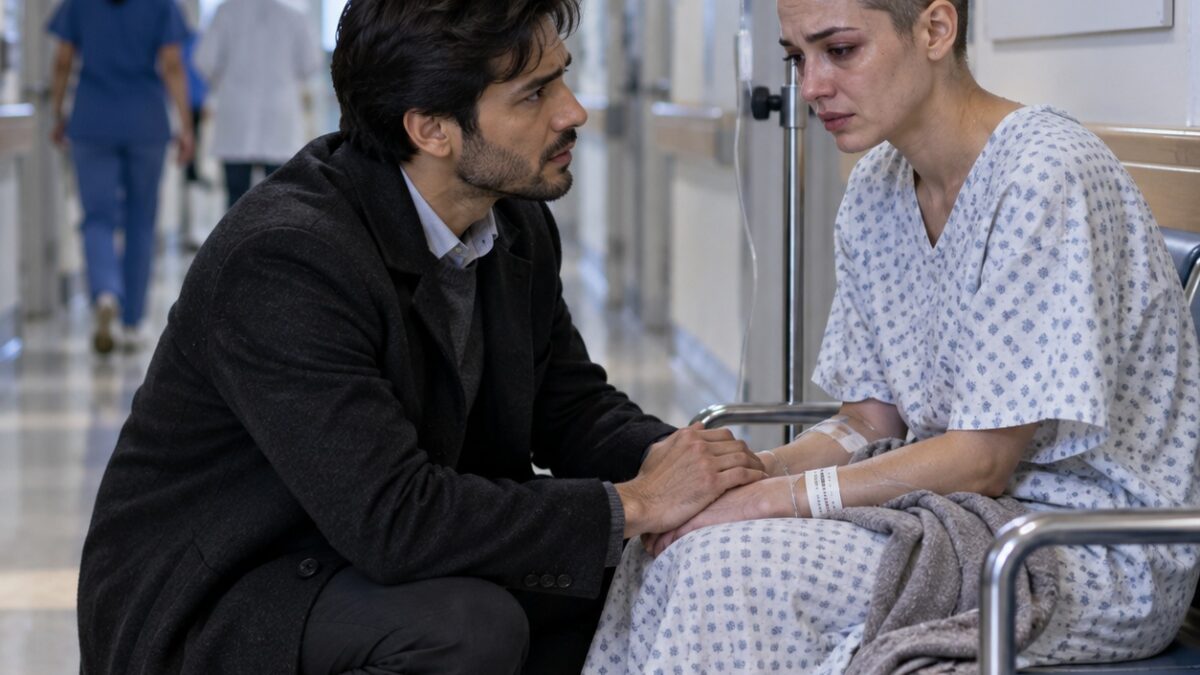
For several seconds, Maya didn’t answer.
People moved around us.
Nurses pushed carts through the hallway.
A child cried somewhere beyond a set of double doors.
An elderly man shuffled past holding his wife’s arm.
A phone rang at the nurses’ station.
Ordinary hospital sounds.
The kind that usually disappear into the background.
That afternoon, I heard every one of them.
Because Maya’s silence had become unbearable.
“What did you find out?”
My voice barely sounded like mine.
She stared at our hands.
More specifically, she stared at my hand around hers.
We hadn’t touched since the morning we signed the divorce documents.
Even then, accidentally.
My fingers had brushed hers when we both reached for the same pen.
We had pulled away immediately.
Now she didn’t.
“There was something wrong with my bloodwork.”
“What bloodwork?”
She swallowed.
“The doctor ordered tests because I was tired all the time.”
I stared.
“When?”
“Before.”
“Before what?”
“Before the divorce.”
“How long before?”
Maya looked toward the opposite wall.
“About six weeks before.”
Six weeks.
I searched backward.
Six weeks before I asked for a divorce was when she had started sleeping in the afternoon.
I remembered coming home one Saturday and finding her asleep on the couch at four o’clock.
I had joked:
“Planning to be awake all night again?”
She had smiled faintly.
“Maybe.”
I remembered bruises on her thigh.
“What happened?”
“Probably hit the table.”
I remembered her losing weight.
I thought grief had done it.
I remembered her saying food tasted strange.
I told myself she was depressed.
Every piece had been in front of me.
I had simply built the wrong explanation around them.
“What did the tests show?”
She closed her eyes.
“They sent me to hematology.”
My chest tightened.
“No.”
Maya said nothing.
“No.”
I don’t know why I said it again.
As though refusing the shape of the answer might change it.
“What did they find?”
She looked at me.
“Lymphoma.”
The hallway disappeared.
Not literally.
People remained.
Lights remained.
The IV stand remained beside her.
But everything moved far away.
I stared at her face.
“Maya.”
She tried to smile.
It failed.
“It’s aggressive.”
I couldn’t swallow.
“But treatable.”
That last word arrived quickly.
Like she had learned to offer it before people panicked.
“Treatable.”
I repeated it.
She nodded.
“I’ve already started chemotherapy.”
My eyes moved toward her hair.
She noticed.
A hand rose automatically toward the short strands.
“I cut it before it started falling badly.”
My throat closed.
“When?”
“Three weeks ago.”
“Three weeks?”
“Yes.”
“You’ve been doing chemotherapy for three weeks?”
“Yes.”
“Alone?”
She hesitated.
That hesitation was an answer.
“Maya.”
“I’m fine.”
“Stop saying that.”
My voice rose enough that a nurse glanced toward us.
I lowered it.
“Please stop telling me you’re fine.”
Maya looked away.
“I didn’t know what else to say.”
“Who comes with you?”
“No one usually needs to.”
“That isn’t what I asked.”
“My cousin came the first time.”
“Anika?”
“Yes.”
“Where is she?”
“She has two children. She can’t keep coming.”
“What about your parents?”
“My mother knows.”
“Your father?”
“They both know.”
“They’re in India.”
“Yes.”
“Did they offer to come?”
“Of course.”
“Then why aren’t they here?”
Maya’s eyes tightened.
“Because my father’s heart isn’t good enough for the flight and my mother won’t leave him alone.”
I sat back.
My mind kept searching for a version of reality that didn’t hurt.
None existed.
I looked at her gown.
Her IV.
The deep shadows under her eyes.
Then the sentence returned.
I found out three days before you asked me for the divorce.
I turned toward her.
“You knew.”
“Yes.”
“You knew you might have cancer.”
“Yes.”
“And when I said we should get divorced…”
She looked down.
“…you said all right.”
“Yes.”
Anger rose.
Not at her.
Not exactly.
At the impossibility.
“Why?”
Maya’s face went still.
“Because you wanted to leave.”
“You didn’t know that.”
“I did.”
“No.”
“You said it.”
“I said maybe.”
“You nodded when I asked if you had already decided.”
I remembered.
That nod.
God.
I had given her certainty when I barely had any myself.
“I was angry.”
“You weren’t angry.”
“I was exhausted.”
“So was I.”
“You should have told me.”
There.
The accusation escaped.
The second it did, I hated myself.
Maya’s face changed.
Not defensive.
Tired.
“I know.”
I rubbed both hands over my face.
“No. I’m sorry.”
She said nothing.
“I’m not blaming you.”
“You are a little.”
“No.”
“It’s okay.”
“It isn’t.”
I turned toward her fully.
“Maya, why didn’t you tell me?”
Her lips trembled.
Then she asked:
“What would you have done?”
“Stayed.”
She nodded slowly.
“Exactly.”
The word cut deeper than anything else she could have said.
I stared.
“You didn’t want me to stay?”
“I didn’t want you to stay because I was sick.”
“What difference does that make?”
“A huge difference.”
“How?”
She pulled her hand gently from mine.
“Because you were already gone, Arjun.”
I felt as though she had slapped me.
Not because it was cruel.
Because it was true.
“You were sleeping beside me.”
Her voice remained soft.
“But you were gone.”
I looked at the floor.
“You stayed late at work even when there was no work.”
I said nothing.
“You stopped telling me about your day.”
She twisted the hospital bracelet around her wrist.
“You stopped asking about mine.”
I closed my eyes.
“I knew you were unhappy.”
“So you let me leave?”
She looked at me.
“I loved you enough not to trap you with my diagnosis.”
“That isn’t love.”
“What should I have done?”
“Tell me.”
“And then?”
“I don’t know.”
“Exactly.”
Her voice cracked.
“You would have stayed because leaving a woman with cancer would have made you hate yourself.”
I couldn’t answer.
“You would have sat beside me during treatment.”
She continued.
“You would have brought food and medication and told everyone you were doing what a husband should do.”
“Maya—”
“And every day I would have wondered whether you were holding my hand because you still loved me or because you felt guilty.”
Tears filled her eyes.
“I couldn’t survive that on top of everything else.”
My chest hurt.
I wanted to tell her she was wrong.
But was she?
If she had told me the night I asked for divorce—
Cancer.
Could I have left?
No.
Absolutely not.
Would that have meant our marriage was repaired?
No.
Would I have stayed out of love?
Yes.
Would guilt have been part of it?
Yes.
And Maya would have known.
That was the cruelty.
She had seen the trap before I did.
I whispered:
“You should have given me the choice.”
Her face softened.
“Yes.”
I looked up.
She surprised me by agreeing.
“I know.”
“Then why didn’t you?”
“I was scared.”
Finally.
Not noble.
Not self-sacrificing.
Scared.
That I could understand.
“Of me leaving anyway?”
“No.”
She shook her head.
“Of you staying.”
I looked at her.
Maya wiped one tear.
“I had already lost two babies.”
Her voice nearly disappeared.
“I couldn’t bear feeling like I had taken your life too.”
My breathing stopped.
“Maya.”
“We wanted children.”
“So?”
“You wanted a family.”
“With you.”
She looked at me.
“Did you?”
“Yes.”
“By the end?”
I opened my mouth.
Nothing came.
Because the honest answer was complicated.
I had loved her.
I had also begun associating our home with grief.
Every pregnancy announcement from friends hurt.
Every baby stroller on the street felt like accusation.
After the second miscarriage, I could barely look at the small room we had planned to turn into a nursery.
I started using it as storage.
Maya noticed.
She never mentioned it.
“I thought you blamed me.”
She whispered.
“I never blamed you.”
“You didn’t say that.”
“I thought you knew.”
“I didn’t.”
That sentence should be carved onto half the failed marriages in the world.
I thought you knew.
I stared at my ex-wife.
The woman I once believed I knew better than anyone.
We had lived inside the same rooms, carried the same grief, and built entirely different stories about what the other person felt.
I thought Maya wanted space.
She thought I blamed her.
I thought her silence meant she no longer wanted me near.
She thought my distance meant I regretted marrying her.
I thought divorce was mercy.
She thought accepting divorce was mercy.
Two people trying not to hurt each other had quietly destroyed their marriage by refusing to speak.
A nurse approached.
“Maya?”
Maya looked up.
“Yes?”
“They’re ready for you.”
The nurse noticed me.
“Family?”
The word landed between us.
Maya hesitated.
I said:
“I’m her—”
Ex-husband.
The word refused to come.
Maya saved me.
“He’s a friend.”
Friend.
I deserved that.
The nurse nodded.
“Treatment room six.”
Maya stood.
Her knees wobbled.
I reached automatically.
She accepted my arm.
“How long?”
I asked the nurse.
“Several hours.”
Maya looked at me.
“You don’t need to stay.”
“Yes.”
“Arjun.”
“I’m staying.”
Her expression changed.
Not grateful.
Concerned.
“I don’t want this to confuse things.”
“It already confused everything.”
She almost smiled.
I helped her walk toward the treatment room.
The nurse stopped me outside.
“You can wait here unless she asks for you.”
I looked at Maya.
She hesitated.
Then:
“You can come.”
The treatment room was quieter than the hallway.
Reclining chairs.
IV poles.
Blankets.
People reading.
Sleeping.
Watching phones.
Trying to behave as if poison entering their veins was an ordinary Tuesday activity.
The nurse helped Maya settle.
I sat beside her.
The infusion began.
For the first twenty minutes, neither of us spoke.
I watched clear fluid move through the tubing.
Maya stared at the window.
Finally, I asked:
“Does it hurt?”
“Not exactly.”
“Nausea?”
“Later.”
“Every time?”
“Usually.”
“What do you do when you get home?”
“Sleep.”
“Eat?”
“If I can.”
“Who gets groceries?”
“I do.”
“After treatment?”
“Usually before.”
I felt anger again.
Not at Maya.
At the entire situation.
“Why didn’t Anika tell me?”
Maya turned.
“She didn’t know if she should.”
“She knew?”
“After the divorce.”
“And she never called.”
“I asked her not to.”
“Of course.”
Maya looked faintly amused.
“You always disliked when people followed my instructions.”
“I disliked when your instructions were unreasonable.”
“You liked control.”
“So did you.”
“Maybe that’s why we got along.”
For one second, we smiled.
It hurt.
Because the rhythm felt familiar.
The old us.
Before grief had turned every conversation into a minefield.
I leaned back.
“When did you get the official diagnosis?”
“Eight days after I moved out.”
I frowned.
“You said you found out three days before the divorce conversation.”
“I found out something was seriously wrong.”
“What?”
“My doctor said the scan showed enlarged lymph nodes.”
“Where?”
“Chest and abdomen.”
“And you didn’t tell me.”
“No.”
“Then biopsy?”
“After I moved.”
“Were you alone?”
“Anika came.”
I looked away.
That should have been me.
Then I corrected myself.
I had made sure it couldn’t be.
“What did they say?”
“Aggressive lymphoma.”
Her voice became clinical.
Practiced.
“Several months of treatment. They think it responds well in many cases.”
Hope without promises.
Hospitals teach that language.
“Stage?”
She hesitated.
“Three.”
My stomach dropped.
Maya immediately said:
“Stage isn’t exactly the same with lymphoma as with some other cancers.”
The fact that she had learned to reassure people while sick made me want to scream.
I nodded.
“Okay.”
“We won’t know how well treatment is working until the next scan.”
“When?”
“After another cycle.”
“How many have you done?”
“Two.”
“And you’re living where?”
“Still in the flat in Újbuda.”
The flat.
I knew it.
We had viewed it together years earlier for one of Maya’s friends.
Small.
Fourth floor.
No elevator.
“You’re climbing four flights after chemotherapy?”
She shrugged.
“Slowly.”
I stared.
“Maya.”
“It’s affordable.”
“You got half the savings.”
“I’m not talking about money.”
“You’re doing the voice.”
“What voice?”
“The one where you think I’m incompetent.”
“I don’t think you’re incompetent.”
“Then don’t.”
I took a breath.
Old pattern.
Push.
Defend.
Withdraw.
We were sliding into it instantly.
“Sorry.”
She looked surprised.
I tried again.
“I’m worried.”
“Okay.”
“Not controlling.”
“Okay.”
“Mostly.”
That got another tiny smile.
Her eyes closed.
Within an hour, she fell asleep.
I sat there.
Watched.
The room around me changed shifts.
Nurses checked lines.
A man across from us watched a football match with headphones.
An older woman knitted something red.
Maya slept with her mouth slightly open.
She had always done that when exhausted.
A small crease formed between her eyebrows.
I remembered smoothing it with my thumb during our first year of marriage.
“You’re frowning in your sleep.”
“Then stop annoying me in my dreams.”
She used to say that.
I looked at the hand resting on the blanket.
No wedding ring.
Of course.
Mine was in a drawer too.
For the first time, the divorce felt physically real.
Not because she was no longer my wife.
Because I had no legal right to be there.
If she asked me to leave, I had to leave.
If doctors needed family, I wasn’t family.
If something happened—
I stood abruptly.
Walked to the hallway.
I needed air.
There was none.
Hospitals recycle sadness.
I found a vending area.
Bought terrible coffee.
Stared at it.
Then called Rohit.
I had forgotten why I was at the hospital.
He answered:
“You alive?”
“Sorry.”
“You disappear?”
“I found Maya.”
Silence.
“What?”
“She’s here.”
“At Semmelweis?”
“Yes.”
“Why?”
I couldn’t say the word.
Rohit’s voice changed.
“Arjun.”
“Cancer.”
Long silence.
“Oh God.”
I pressed my hand against the wall.
“She knew before the divorce.”
“What?”
“She didn’t tell me.”
Rohit said nothing.
“She’s been doing chemotherapy alone.”
“That doesn’t sound like Maya.”
“It sounds exactly like Maya.”
Soft-spoken.
Self-contained.
Terrified of becoming a burden.
Rohit exhaled.
“What are you going to do?”
“I don’t know.”
“Yes, you do.”
“No.”
“You’re going to stay.”
I looked through the window toward the treatment room.
“She doesn’t want pity.”
“So don’t pity her.”
“She thinks I’ll confuse guilt with love.”
“Will you?”
I closed my eyes.
“I don’t know.”
Rohit was quiet.
Then:
“Good.”
“What?”
“That’s honest.”
I leaned against the wall.
“You loved her.”
“Yes.”
“Do you?”
I stared at nothing.
“Yes.”
The answer came immediately.
That scared me.
Rohit said:
“Then don’t decide what that means today.”
I listened.
“Just be useful.”
Simple.
Be useful.
Not husband.
Not savior.
Not penitent.
Useful.
“What do I do?”
“Ask her.”
Rohit had always been annoyingly sensible.
I returned to Maya.
She woke near the end of treatment.
Looked disoriented.
Then saw me.
“You stayed.”
The words were neutral.
But I heard something underneath.
“Yes.”
I handed her water.
“Thank you.”
When the nurse disconnected the IV, Maya stood.
Nearly fell.
I caught her.
“I’m fine.”
“You’re leaning on me.”
“I’m temporarily less fine.”
“Better.”
I carried her bag.
Outside, rain had started.
Budapest blurred silver around us.
“Taxi?”
“I was going to take the tram.”
I stopped walking.
Maya looked at me.
“Don’t.”
“Don’t what?”
“Make the face.”
“What face?”
“The face where you think I’ve lost my mind.”
“You had chemotherapy.”
“Yes.”
“You want to stand on a tram.”
“I do it every time.”
I stared.
She lifted one eyebrow.
There she was.
My wife.
Ex-wife.
Maya.
I said:
“Would you let me drive you?”
She hesitated.
Not order.
Question.
Finally:
“Yes.”
My car smelled like old coffee and the air freshener Rohit had mocked for months.
Maya sat quietly.
I drove toward Újbuda.
The city passed in wet gray.
We crossed the Danube.
For years, we had walked beside that river together.
During our engagement, Maya once asked:
“Do you think we’ll still like each other when we’re old?”
I said:
“No.”
She hit my arm.
I continued:
“I’ll love you. Liking is optional.”
She laughed.
I had forgotten that memory until crossing the bridge.
“What?”
Maya asked.
“Nothing.”
I kept driving.
Her apartment building was worse than I remembered.
Old stone stairs.
Four floors.
No elevator.
I looked upward.
Maya sighed.
“Do not start.”
“I didn’t say anything.”
“Your face did.”
“Can I carry you?”
She stared at me.
“I have cancer, Arjun. I have not become royalty.”
“You were always high-maintenance.”
She almost laughed.
“Liar.”
I carried the bag.
She took the stairs slowly.
Second floor, she stopped.
Breathed.
Third, again.
By the fourth, her face had gone white.
I wanted to pick her up.
I didn’t.
She unlocked the flat.
Small entry.
One bedroom.
Kitchen barely large enough for two people.
I stepped inside.
Then stopped.
The place was almost empty.
No decorations except one framed photograph on a shelf.
Our wedding.
I stared.
Maya noticed.
“I forgot to pack it away.”
Two months.
Forgot.
I said nothing.
There were medications arranged beside the sink.
A thermos.
Crackers.
A basin near the couch.
My stomach tightened.
“You vomit a lot?”
“Sometimes.”
“Why is this here?”
“So I don’t have to reach the bathroom.”
I looked at the distance.
Maybe twelve feet.
She saw my face.
“Some days twelve feet is far.”
I nodded.
Useful.
Be useful.
“What do you need right now?”
The question surprised her.
“What?”
“Food? Medicine? Silence?”
Maya stared.
Then:
“Tea.”
“Tea I can do.”
“You used to make terrible tea.”
“I’ve had two months to improve.”
“Have you?”
“No.”
That tiny smile again.
I made tea.
Poorly.
Maya drank half.
Then fell asleep on the couch.
I covered her.
Sat in the single chair.
I should have left.
I knew that.
But every time I stood, I saw the basin.
The medications.
The fourth-floor stairs.
So I stayed.
At seven, Maya woke suddenly and vomited.
I held the basin.
Pulled her hair back before remembering there was barely enough hair to hold.
The realization stabbed.
She shook afterward.
“I’m sorry.”
“Stop.”
“It’s disgusting.”
“No.”
“Arjun—”
“You watched me have food poisoning in Prague.”
“That was different.”
“You cleaned vomit off a hotel bathroom wall.”
“You were aiming badly.”
“Exactly.”
I washed the basin.
Brought water.
Maya sat wrapped in a blanket.
When I returned, she was crying.
Quietly.
Maya always cried quietly.
I hated it.
I sat across from her.
“What?”
She shook her head.
“Tell me.”
“I don’t want you to see me like this.”
My chest tightened.
“Why?”
“Because.”
“Because why?”
“I don’t want this to be what you remember.”
I leaned forward.
“Maya.”
She looked up.
“I remember you dancing barefoot in our kitchen because the radio played that terrible song you liked.”
Her mouth trembled.
“I remember you making me walk thirty minutes back to a restaurant because you thought the waiter accidentally gave us too much change.”
“He did.”
“I remember you falling asleep during every movie you chose.”
“I didn’t.”
“You did.”
“I rested my eyes.”
“You snored.”
She laughed through tears.
“I remember you making chai for my mother before she even asked.”
I swallowed.
“I remember you holding my hand in the hospital after the first miscarriage.”
Her smile vanished.
I continued.
“I remember you holding me after the second even though you were the one bleeding.”
Tears moved down her face.
“So no.”
I shook my head.
“This isn’t what I’ll remember.”
She whispered:
“You left.”
The words were not accusation.
That made them worse.
“Yes.”
“You can’t rewrite that because I got sick.”
“I’m not trying to.”
“Then what are you doing?”
I had no good answer.
“I don’t know yet.”
Maya nodded.
That honesty seemed to calm her more than promises would have.
I left at ten.
Before leaving, I placed my number on the kitchen table even though she already had it.
“Call me.”
“I have your number.”
“I know.”
“Why did you write it?”
“I panicked.”
She looked at the paper.
“Arjun.”
“Yes?”
“You don’t owe me this.”
I stood in the doorway.
“That’s not why I’m doing it.”
“Are you sure?”
“No.”
She looked at me.
I continued.
“But I’m going to figure that out.”
Then I left.
I barely slept.
At two in the morning, I sat on the floor of my rented apartment looking through old photographs.
Wedding.
Vacation.
Maya asleep on a train.
Maya holding a burnt cake.
Maya standing beside the Danube with snow in her hair.
Then hospital photographs from the miscarriages.
I had never deleted them.
Why had we taken photographs?
We hadn’t.
They were accidental.
Screenshots.
A picture of a medical bracelet I sent insurance.
Maya’s hand.
My hand.
Our rings.
I stared at them until dawn.
At work the next morning, I accomplished nothing.
My manager, Gábor, called me into his office.
“You look terrible.”
“Thank you.”
“You sick?”
“No.”
“Then?”
I told him.
Not everything.
“My ex-wife has cancer.”
He sat back.
“Oh.”
“I need some flexibility.”
“Of course.”
That simple answer nearly broke me.
No judgment.
No question about why I cared for an ex-wife.
Just of course.
I reduced hours temporarily.
Used vacation days on treatment days.
But I did not tell Maya.
Not immediately.
I knew she would object.
The next morning, I texted:
Do you need groceries?
No response for an hour.
Then:
No.
I sent:
That sounds suspiciously like a lie.
Five minutes.
Maybe bananas.
I bought bananas.
And rice.
Soup.
Crackers.
Yogurt.
Tea.
Ginger.
Bread.
Eggs.
She opened the door.
Looked at the bags.
“I said bananas.”
“The bananas needed friends.”
She let me in.
That became the beginning.
Not reconciliation.
Routine.
Treatment every third Thursday.
Blood tests.
Appointments.
Groceries.
Some evenings, I cooked.
Badly.
Maya corrected from the couch.
“Less salt.”
“You can’t even taste properly.”
“I can taste that disaster.”
Other days, she wanted nobody.
I learned to leave.
That was harder.
One afternoon I arrived with soup.
She opened the door.
“I need to be alone.”
Every instinct wanted to argue.
“You haven’t eaten.”
“I know.”
“You look weak.”
“I know.”
“Then—”
She looked at me.
I stopped.
Old Arjun would have pushed.
I handed her the bag.
“Okay.”
Her expression softened.
“Thank you.”
I walked away.
That evening, she texted:
I ate.
I replied:
Good.
Nothing else.
Trust returned strangely.
Not through romance.
Through respecting small requests.
Come.
Leave.
Sit.
Don’t ask.
Bring oranges.
No oranges.
Stop treating me like glass.
Drive slower.
Open the window.
Close it.
Every time I listened, something repaired.
Not marriage.
Maybe us.
After the next chemotherapy cycle, Maya’s hair began falling more.
She had cut it short already.
One morning, I found her in the bathroom holding a clump.
She stared at it.
I stood in the doorway.
She laughed.
A terrible little laugh.
“I thought cutting it would make this easier.”
I said nothing.
“It didn’t.”
She touched the uneven hair.
“I look sick.”
“You are sick.”
She glared.
“Very romantic.”
“I’m not trying to be romantic.”
“Obviously.”
Then her face crumpled.
“I don’t want to go outside.”
I sat on the edge of the bathtub.
“Okay.”
“I hate people looking.”
“Okay.”
“I hate mirrors.”
“Okay.”
She looked at me.
“Stop saying okay.”
“What should I say?”
“I don’t know.”
I considered.
“Do you want me to shave it?”
Her eyes widened.
“No.”
“Okay.”
She almost smiled.
Then:
“Maybe.”
So we sat in her kitchen.
I watched a tutorial because neither of us knew what we were doing.
Maya wrapped a towel around her shoulders.
I held the clippers.
My hands shook.
“You’re more nervous than me.”
“I’m holding machinery near your skull.”
“It’s hair clippers.”
“You say that now.”
“Arjun.”
“Fine.”
The clippers buzzed.
I started at the back.
Dark strands fell onto the towel.
Then the floor.
Maya stared straight ahead.
Halfway through, tears began running down her face.
She didn’t make a sound.
I stopped.
“Should I stop?”
“No.”
I continued.
When I finished, Maya touched her head.
I waited.
She looked at herself in the small mirror.
Then she whispered:
“I don’t recognize myself.”
I wanted to say you’re beautiful.
It sounded too easy.
So I said:
“I do.”
She looked at me.
“I recognize you.”
Her eyes filled.
I continued.
“You’re still the woman who hates coriander.”
“I don’t hate coriander.”
“You absolutely hate coriander.”
“It tastes like soap.”
“Exactly.”
“You hate raisins.”
“Because they’re deceptive grapes.”
She laughed.
Actually laughed.
Then cried harder.
I knelt beside her.
Maya rested her forehead against my shoulder.
I did not hug until she moved closer.
Then I wrapped my arms around her.
For the first time since our divorce, we held each other.
Not because we were married.
Not because we were getting back together.
Because she was afraid.
Because I loved her.
The distinction mattered.
Afterward, Maya pulled away.
“Don’t misunderstand this.”
“I won’t.”
“Promise?”
“Yes.”
I meant it.
I had already misunderstood enough.
The next scan happened six weeks later.
We sat in the waiting room together.
Maya bounced one knee.
I reached toward her hand.
Stopped.
She noticed.
Then placed her hand in mine herself.
The doctor entered.
Dr. Kovács.
Kind eyes.
Always direct.
“The scan looks encouraging.”
Maya stopped breathing.
“What does encouraging mean?”
“Significant reduction.”
I squeezed her hand.
The doctor continued.
“We continue treatment as planned, but this is the response we wanted to see.”
Maya nodded.
Once.
Twice.
Then:
“So it’s working?”
“Yes.”
She closed her eyes.
I looked away because I was crying.
The doctor gave us a moment.
When we stepped outside, Maya stood beside the vending machines.
Then suddenly started laughing.
Not graceful laughter.
The kind that bends you in half.
“What?”
I asked.
She covered her mouth.
“I don’t know.”
I began laughing too.
People stared.
Neither of us cared.
We bought two awful coffees.
Sat outside.
Maya looked toward the sky.
“I thought I was going to die.”
The sentence stopped my laughter.
She continued.
“When they told me the diagnosis.”
I listened.
“I thought the miscarriages had been some warning that my body was broken.”
“Maya.”
“I know that doesn’t make medical sense.”
“That’s not what I meant.”
She looked at me.
I said:
“Your body isn’t a moral system.”
She smiled faintly.
“I know.”
“Miscarriages weren’t punishment.”
“I know.”
“Cancer isn’t punishment.”
“I know.”
“You’re not broken.”
She looked away.
“I don’t know that one yet.”
Fair.
I said:
“Then I’ll stop saying it like I can decide for you.”
She looked back.
“Thank you.”
We sat.
After a while, Maya said:
“Did you ever blame me?”
“For the miscarriages?”
“Yes.”
“No.”
“Not even once?”
“No.”
She nodded.
“I blamed myself.”
“I know.”
“How?”
“Because I knew you.”
She frowned.
“Not well enough.”
That landed.
I nodded.
“Not well enough at the end.”
The wind moved across the courtyard.
Maya pulled her scarf tighter.
“I thought you wanted children more than you wanted me.”
I stared.
“What?”
“You changed after the second miscarriage.”
“So did you.”
“I thought you were grieving the baby.”
“I was.”
“And the future.”
“Yes.”
“And me?”
I swallowed.
“I was terrified.”
“Of what?”
“That I couldn’t fix it.”
Maya looked confused.
“I know.”
I stared at my coffee.
“That sounds stupid.”
“No.”
“Yes.”
I continued.
“I thought being your husband meant knowing what to do.”
Her face softened.
“You cried in the bathroom after the second miscarriage.”
I looked up.
“How did you know?”
“I heard.”
I remembered locking the bathroom door.
Turning on the shower.
Sitting on the floor.
“I didn’t want you to see.”
“Why?”
“Because you were already hurting.”
“So you hid.”
“Yes.”
“I did too.”
There it was.
The architecture of our collapse.
Two people hiding pain to protect each other.
Each interpreting the other’s silence as distance.
Maya said:
“What if we had just talked?”
“We didn’t.”
“I know.”
“I’m sorry.”
She looked at me.
“Me too.”
Not reconciliation.
Acknowledgment.
We started seeing a counselor.
Maya suggested it.
That surprised me.
“Why?”
I asked.
“Not marriage counseling.”
“We’re divorced.”
“I’m aware.”
“Then?”
“I don’t want treatment to turn you into my entire support system.”
That was wise.
“And I don’t want us repeating the same patterns because cancer made us sentimental.”
Also wise.
Her therapist recommended joint sessions with a psycho-oncology counselor.
Dr. Farkas.
She asked difficult questions.
“Why are you here, Arjun?”
“To support Maya.”
“That’s a role. Why are you here?”
I thought.
“Because I love her.”
Maya stared at the floor.
Dr. Farkas asked:
“What does that love require from her?”
“Nothing.”
“Impossible.”
I frowned.
“It requires something.”
I looked at Maya.
“Honesty.”
Maya nodded.
Dr. Farkas asked her:
“What do you require from Arjun?”
“Honesty too.”
“Anything else?”
Maya was quiet.
Then:
“Permission to not make decisions about our future while I’m sick.”
That hurt.
But I understood.
I said:
“Yes.”
She looked at me.
“You mean that?”
“Yes.”
Dr. Farkas asked:
“Arjun, what happens if Maya recovers and still does not want to resume the marriage?”
My stomach dropped.
I knew that possibility existed.
Hearing it spoken changed everything.
I took a breath.
“Then I’ll still be glad she recovered.”
Maya started crying.
Dr. Farkas watched me.
“And if she dates someone else?”
That felt unnecessarily violent.
I almost laughed.
Then answered:
“I’ll hate it.”
Maya laughed through tears.
I continued.
“But I’ll survive.”
Dr. Farkas nodded.
“Good. That’s more believable than sainthood.”
We returned every other week.
The sessions exposed things cancer hadn’t caused.
Anthony? No, wrong story. Arjun. Need no crossover.
My tendency to solve.
Maya’s tendency to disappear into silence.
My avoidance when I felt helpless.
Her belief that asking for care made her burdensome.
Our families’ expectations around children.
Cultural pressure.
Comments from relatives after the miscarriages.
“When are you trying again?”
“Don’t wait too long.”
“Maybe you were working too much.”
“Have you tried prayer?”
Everyone meant well.
Some words still cut.
Maya admitted that after the second miscarriage, one aunt told her:
“You need to keep your husband happy. Men want families.”
She never told me.
“I would have been furious.”
“That’s why I didn’t tell you.”
“Why?”
“You would’ve confronted everyone.”
“Yes.”
“And then I’d become the reason for family conflict.”
I stared at her.
“You were already carrying enough.”
She nodded.
Dr. Farkas asked:
“What would support have looked like?”
Maya thought.
“Arjun telling people to stop asking without making me explain.”
I wrote that down.
Too late.
Still useful.
The fourth chemotherapy cycle hit harder.
Fever.
Low blood counts.
Hospital admission.
Three nights.
I slept in a chair one night until a nurse told me to go home.
Maya woke at two in the morning.
“You’re still here?”
“Yes.”
“You have work.”
“Not tomorrow.”
“You keep taking leave.”
“I have leave.”
“You’ll use all of it.”
“Then I’ll start faking my death.”
She smiled weakly.
“Difficult after this.”
“True.”
She looked toward the window.
“I’m scared.”
That was the first time she said it plainly.
I leaned forward.
“Of what?”
“Dying.”
I did not say you won’t.
That would have been a lie.
Instead:
“I’m scared too.”
Her eyes filled.
“What if this doesn’t work?”
“I don’t know.”
“I don’t want my mother to lose me.”
“I know.”
“My father…”
“I know.”
“I don’t want you to spend the rest of your life thinking you left me when I was dying.”
That broke something.
“Maya.”
“No.”
She looked at me.
“If I die, you cannot turn our divorce into a crime you committed.”
My eyes burned.
“I already feel like I committed one.”
“You didn’t.”
“I left.”
“You didn’t know.”
“I should’ve known something.”
“You should’ve asked more.”
“Yes.”
“I should’ve told you.”
“Yes.”
“We both failed.”
She reached for my hand.
“That isn’t murder.”
I lowered my head.
Maya continued.
“If I die—”
“Stop.”
“Arjun.”
I looked up.
“If I die, I need you to remember we were already broken before cancer.”
“I don’t want that to be the last truth.”
“It doesn’t have to be.”
She squeezed my hand.
“We loved each other too.”
I cried.
Quietly.
The way Maya always did.
She smiled faintly.
“Now you’re stealing my style.”
I laughed through tears.
The fever passed.
Her counts recovered.
Treatment resumed.
We found a rhythm.
I started cooking properly.
Not because cancer transformed me into a chef.
Because Maya became brutally honest.
“This is terrible.”
“I followed the recipe.”
“You followed it badly.”
“Helpful.”
Eventually, I learned dal the way her mother made it.
Not perfectly.
Close.
I video-called Mrs. Sharma in Jaipur.
She corrected everything.
“No, Arjun, fry the cumin first.”
“I did.”
“You burned it.”
“How can you tell through video?”
“I know you.”
Maya listened from the couch, laughing.
Her mother cried afterward.
She tried to hide it.
Maya noticed.
Everyone was learning to stop hiding badly.
Her father spoke with me too.
Mr. Sharma had never disliked me.
After the divorce, he stopped calling.
Fair.
During one video call, after Maya went to sleep, he remained.
“Arjun.”
“Yes, Uncle?”
“We were angry.”
“I know.”
“When she told us.”
“I understand.”
“We thought you left because of the miscarriages.”
My chest tightened.
“Did Maya say that?”
“No.”
“Then why?”
“We needed an explanation.”
There it was again.
People build stories when conversation stops.
“I didn’t leave because she couldn’t have children.”
“I know now.”
He coughed.
His health was worse than Maya had admitted.
“I also know my daughter hides everything.”
I smiled sadly.
“Yes.”
“She learned from her mother.”
Mrs. Sharma shouted from somewhere off camera:
“I can hear you.”
He smiled.
Then became serious.
“If she gets well…”
I waited.
“Do not remarry because we want you to.”
“I won’t.”
“Do not leave because you think we want that either.”
I nodded.
“Let her choose.”
“Yes.”
He pointed toward the camera.
“And you choose too.”
That mattered.
Everyone kept treating me as though my only morally acceptable choice was devotion.
Mr. Sharma reminded me that choice mattered for both of us.
By late autumn, Maya’s final planned chemotherapy session approached.
She was thinner.
Hair almost completely gone.
But stronger emotionally.
She joined an online support group.
Started painting small watercolor postcards.
Terrible paintings.
I told her so.
“You’re supposed to encourage cancer patients.”
“I encourage honesty.”
One showed the Danube in purple.
“The river is not purple.”
“It was sunset.”
“The sky is green.”
“Art.”
“Crime.”
She gave me the painting anyway.
I kept it.
On her final infusion day, the nurses brought a small bell.
Maya stared.
“What’s that?”
“One of the nurses said some patients like to ring it when they finish this phase.”
Maya looked uncomfortable.
“I don’t want to.”
“Then don’t.”
“You don’t think it’s rude?”
“No.”
“It feels like tempting fate.”
I understood.
Completion did not mean cure.
Treatment ending was not the same as certainty.
Maya watched another patient ring the bell.
People clapped.
She smiled.
Then shook her head.
“I’ll skip.”
We left quietly.
Outside, snow had begun falling.
First snow of the season.
Maya stood beneath the hospital awning.
Tiny flakes landed on her scarf.
“What?”
I asked.
“Nothing.”
“You’re smiling.”
“I’m allowed.”
“Yes.”
She looked at me.
“I want hot chocolate.”
“That seems medically questionable.”
“Arjun.”
“Fine.”
We went to a café.
Maya drank three sips.
Couldn’t finish.
Still worth it.
The final scan was scheduled three weeks later.
Those three weeks were worse than treatment in a strange way.
Nothing to do.
No infusion to survive.
Just wait.
Maya became irritable.
I became obsessive.
I searched symptoms online until she took my phone.
“No.”
“I’m researching.”
“You’re spiraling.”
“Same thing.”
“No.”
She hid my phone inside a kitchen cabinet.
I found it.
She moved it to the refrigerator.
“Why would you put a phone in the refrigerator?”
“Because you think everything is a problem to solve.”
Fair.
Scan day.
Hospital.
Same corridor where I found her months earlier.
We sat in nearly the same place.
I noticed first.
“So.”
Maya looked around.
“Oh.”
The corner.
Same wall.
Same vending machine.
This time, she wore jeans and a wool hat.
No hospital gown.
No IV.
I sat beside her.
“Do you remember?”
“Yes.”
“I almost kept walking.”
She turned.
“What?”
“I saw you from far away.”
“You didn’t recognize me?”
“Not immediately.”
She smiled sadly.
“I didn’t recognize me either.”
The doctor called us in.
Dr. Kovács had the scan results on screen.
He spoke carefully.
“The response is excellent.”
I grabbed Maya’s hand.
He continued.
“No metabolically active disease is visible on this scan.”
Maya stared.
“What does that mean?”
“It means we call this complete remission.”
Silence.
I heard the clock.
The air vent.
Someone in the hall.
Maya said:
“Remission.”
“Yes.”
“Not cured.”
“We’ll monitor closely.”
“Could it come back?”
“Yes.”
Honest.
“But today?”
The doctor smiled.
“Today is very good news.”
Maya covered her face.
I cried openly.
The doctor gave us tissues.
“I keep those for husbands.”
I started laughing.
Then stopped.
“Ex-husband.”
Dr. Kovács looked between us.
“Ah.”
Maya laughed.
“Complicated.”
He smiled.
“I am a hematologist. Complicated relationships are outside my specialty.”
Fair.
Outside, Maya walked quickly.
Then stopped in the middle of the corridor.
Turned toward me.
“We did it.”
We.
The word froze me.
Maya noticed.
“I mean—”
“No.”
I smiled.
“We did.”
She hugged me.
I held her.
Then she pulled away.
Our faces were close.
For one dangerous second, I thought she might kiss me.
I wanted her to.
She didn’t.
I was grateful.
Not because I didn’t want her.
Because neither of us wanted remission to become emotional blackmail.
That evening, Anika organized dinner.
Small.
Maya.
Me.
Anika.
Her husband.
Two friends.
No dramatic celebration.
Maya ate actual food.
Laughed.
Later, I drove her home.
At the building entrance, she turned.
“You don’t have to come up.”
“I know.”
“Thank you.”
“For what?”
“All of it.”
The words frightened me.
They sounded final.
“Maya.”
She looked at me.
“Now what?”
There it was.
The question we had postponed.
Treatment was over.
Crisis loosening.
Who were we without illness?
“I don’t know.”
She nodded.
“Me neither.”
I took a breath.
“Do you want space?”
“Yes.”
Pain.
Immediate.
I nodded.
“How much?”
“I don’t know.”
“Okay.”
“I need to find out who I am when I’m not sick and not married.”
That hurt because it was fair.
“And I need to know whether I miss you…”
She swallowed.
“…or I miss being taken care of.”
I looked away.
“You deserve to know.”
“So do you.”
She touched my arm.
“You need to know whether you want me…”
I looked back.
“…or whether saving me became a way to forgive yourself.”
There it was.
The question I feared.
I nodded.
“Okay.”
Maya whispered:
“I love you.”
My chest tightened.
“But?”
“But love wasn’t enough before.”
“No.”
“If we ever try again…”
She looked at me.
“…I want it to be because we learned something.”
“Not because cancer scared us.”
“Yes.”
I stepped closer.
Did not touch her.
“How long do we stop seeing each other?”
Maya smiled faintly.
“You’re trying to schedule emotional clarity.”
“I work in operations.”
“You work in an office.”
“Still.”
“Three months.”
My stomach dropped.
“Three?”
“Too long?”
“Yes.”
She laughed.
“Good.”
“Why good?”
“Because maybe you’ll actually have to live your own life.”
Cruel.
Accurate.
We agreed.
No regular visits.
No daily texts.
Emergency contact remained.
Doctor updates only if Maya wanted.
Therapy separately.
Three months.
The first week was worse than divorce.
Because now I knew what I was losing.
Not the old marriage.
The new closeness.
I reached for my phone constantly.
Didn’t text.
I walked.
Worked.
Saw Rohit.
He had recovered fully from the surgery I originally went to the hospital to visit.
“You forgot me that day.”
“Yes.”
“I could’ve died.”
“You had your gallbladder removed.”
“It was dramatic.”
“No.”
He drank beer.
“How’s Maya?”
“Fine.”
“You don’t know.”
“I know she had a blood test Tuesday.”
“How?”
“She told you?”
“No.”
“Then?”
I stared.
“Calendar.”
Rohit looked disgusted.
“You memorized her appointments?”
“Yes.”
“You need hobbies.”
He was right.
I joined a climbing gym.
Hated it.
Kept going.
Started cooking for myself.
Not just survival.
Called my parents more.
They had remained mostly outside our divorce.
My mother liked Maya.
She never said “I told you so.”
Bless her.
When I told her about the three-month break, she said:
“Good.”
“You too?”
“You two were married five years and forgot how to talk. Maybe stop trying to repair everything in ten minutes.”
Annoyingly wise.
My father asked:
“If she doesn’t come back?”
“I don’t know.”
He nodded.
“Then learn to be a whole man anyway.”
I wrote that down too.
The second month of separation, I realized something uncomfortable.
I had been using caretaking to avoid examining my own loneliness.
During Maya’s treatment, every day had purpose.
Appointments.
Food.
Medication.
Transport.
When crisis ended, I felt empty.
That emptiness was mine.
Not Maya’s responsibility.
Therapy helped.
My therapist, Péter, asked:
“Why did you work late during your marriage?”
“To avoid grief.”
“Why?”
“Because I couldn’t fix it.”
“Why did not fixing it feel intolerable?”
I stared.
“My father fixed things.”
“What things?”
“Everything.”
“Really?”
“No.”
“Then?”
“He acted like it.”
I grew up believing men were useful when solving.
Money problem?
Solve.
Car?
Solve.
School?
Solve.
Sadness?
No tool.
Miscarriage?
No tool.
Maya’s grief made me feel useless.
Instead of sitting beside uselessness, I ran toward tasks where competence worked.
I had called it work ethic.
It was fear.
That realization changed me.
I wrote Maya a letter.
Did not send it.
Maya,
I thought I left because we were unhappy.
I think part of me left because I couldn’t tolerate being unable to repair what hurt you.
I treated your sadness like evidence that I had failed.
Then I made your pain about me and escaped into work.
I’m sorry.
I put the letter away.
Two weeks later, I wrote another.
Still did not send it.
Three months passed.
Exactly.
Of course I knew the date.
At 9:04 a.m., my phone rang.
Maya.
I stared at it.
Then answered.
“Hi.”
“Hi.”
My voice sounded ridiculous.
She laughed softly.
“You survived?”
“Barely.”
“Dramatic.”
“You?”
“Better.”
“How better?”
“I have hair.”
I smiled.
“Show-off.”
She said:
“Coffee?”
“Yes.”
“When?”
“Now.”
“Arjun.”
“Tomorrow?”
“Saturday.”
Three days.
Cruel.
“Fine.”
We met at a café near the Danube.
I arrived twenty minutes early.
Maya arrived exactly on time.
I stood.
She had hair.
Short.
Soft.
Dark curls barely covering her head.
She looked healthier.
Still thinner than before.
Beautiful.
Not because cancer had made her spiritually luminous or any nonsense like that.
She looked like Maya.
That was enough.
“Hi.”
“Hi.”
We sat.
For the first ten minutes, small talk.
Work.
Anika.
Rohit.
Weather.
Absurd.
Then Maya said:
“I missed you.”
I exhaled.
“I missed you too.”
“But.”
“There’s always a but.”
“Yes.”
She smiled.
“I liked being alone.”
That hurt less than expected.
“Good.”
“You mean that?”
“Yes.”
“I learned I can do things without asking whether you approve.”
“I didn’t know you asked.”
“You did.”
“No, I—”
I stopped.
Old reflex.
Defend.
“Tell me.”
Maya noticed.
“I used to check your face before making decisions.”
I frowned.
“Why?”
“You had opinions about everything.”
“That is slander.”
She raised an eyebrow.
“Fine.”
I smiled.
“Continue.”
“I shaped things around your reactions.”
“Did I ask you to?”
“Not directly.”
“Then that’s partly yours.”
“Yes.”
She nodded.
“That’s what therapy told me.”
Good.
We were both arriving with ownership instead of accusations.
I said:
“I learned I used work to avoid feeling useless.”
Maya listened.
“I thought if I couldn’t fix grief, I had no role.”
Her face softened.
“You could’ve just held me.”
“I know.”
“I didn’t know how to ask.”
“I know.”
We sat.
The river moved beyond the window.
I asked:
“Do you want to try again?”
Maya did not answer immediately.
Good.
I needed a real answer.
Finally:
“Not marriage.”
My chest tightened.
“Okay.”
“I want to date you.”
I blinked.
“What?”
She smiled.
“From the beginning.”
“Like strangers?”
“No. Unfortunately I know too much.”
I laughed.
“I want us to go to dinner.”
“Okay.”
“You ask me questions.”
“Terrifying.”
“I answer them.”
“Even worse.”
“And if it becomes bad again…”
“We stop.”
“Yes.”
“No guilt.”
“Yes.”
“No staying because cancer.”
“Yes.”
“No family pressure.”
“Yes.”
I looked at her.
“No children pressure.”
Maya’s eyes filled slightly.
“Yes.”
I reached across the table.
“Then yes.”
She took my hand.
We dated.
It felt ridiculous.
Wonderful.
Hard.
First date:
A restaurant we had never visited during marriage.
I asked:
“What do you want your life to look like in five years?”
Maya laughed.
“People ask that on first dates?”
“I’ve been out of practice.”
She thought.
“Alive.”
I winced.
“Sorry.”
“No.”
She smiled.
“It’s okay.”
Then:
“I want to teach again.”
Maya had stopped working during treatment.
She had taught English at a secondary school before.
“I want a home with plants.”
“You killed every plant we owned.”
“One cactus.”
“Three.”
“Those were emotionally fragile cacti.”
I laughed.
She continued.
“I want friends I actually call when I’m hurting.”
Good.
“And you?”
I thought.
“I want to stop treating work like an emergency shelter.”
She smiled.
“Good.”
“I want a kitchen big enough for two people.”
“Why?”
“So you can supervise my terrible cooking.”
“Acceptable.”
“Children?”
The question landed gently.
Maya stared at the table.
“I don’t know.”
“Okay.”
“You?”
“I don’t know either.”
And for the first time, not knowing did not feel like failure.
Second date:
Museum.
Maya became tired after an hour.
She tried to hide it.
I noticed.
I did not say:
You need to rest.
I asked:
“Do you want to sit?”
She said:
“Yes.”
Progress.
Third date:
Walk beside the Danube.
Our old territory.
We passed the bench where I proposed.
Maya stopped.
“That was a terrible proposal.”
“It was romantic.”
“It started raining.”
“Atmosphere.”
“You dropped the ring.”
“I recovered it.”
“After a cyclist almost ran over it.”
“Drama.”
She smiled.
“I said yes anyway.”
“Your first major mistake.”
She looked at me.
“Not first.”
I laughed.
Then she leaned against my shoulder.
Dating your ex-wife is strange.
You know the scars before the favorite color question.
You know how she sounds when sick.
How she fights.
Where she keeps spare keys.
But the person has changed.
So have you.
Familiarity becomes dangerous if you assume knowledge instead of asking.
I had to learn Maya again.
She liked painting now.
Still bad.
She had stopped eating meat during treatment and never resumed.
She listened to podcasts about history.
She hated being called brave.
Everyone called cancer patients brave.
She said:
“I was scared the entire time.”
I answered:
“Maybe brave people are.”
She rolled her eyes.
“Greeting-card nonsense.”
Fair.
Maya learned me again too.
I liked cooking now.
Still average.
I had become obsessed with climbing.
She hated climbing.
I stopped drinking much because I discovered I slept better.
I had learned to say:
“I’m sad.”
“I’m scared.”
“I don’t know.”
Those three sentences did more for us than any grand romantic speech.
Six months after we started dating, Maya’s surveillance scan remained clear.
We celebrated with Indian food.
No bell.
No party.
Just dinner.
She raised a glass of sparkling water.
“To boring scans.”
“May they become extremely boring.”
“Yes.”
One year after I found her in the hospital corridor, we returned to Semmelweis Clinic for another appointment.
Same wing.
Same hallway.
Maya stopped at the corner where I had first seen her.
The chair was occupied by an older woman.
We stood nearby.
“That day.”
Maya whispered.
“Yes.”
“You looked terrible.”
I stared.
“You were in a hospital gown.”
“Still.”
“You had no hair.”
“You had a divorce beard.”
“It was fashionable.”
“It was depression.”
“Also fashionable.”
She laughed.
Then looked at me.
“Do you ever wish you hadn’t seen me?”
“No.”
“Even if we had never gotten back together?”
“No.”
She nodded.
“Me neither.”
The doctor gave another good report.
We walked outside.
Maya said:
“I want to move.”
“From the fourth-floor death staircase?”
“Yes.”
“Finally.”
“I’m not moving in with you.”
“I didn’t ask.”
“You were thinking.”
“I was celebrating elevators.”
She found a small apartment near her school when she returned to teaching.
Second floor.
Elevator.
Plants.
Too many.
I helped move boxes.
When we unpacked, she pulled out the old wedding photograph.
The same one from her chemotherapy flat.
She looked at it.
“What do we do with this?”
I stared.
Young Maya.
Young me.
Wedding clothes.
Certain.
Naive.
Happy.
I said:
“Keep it.”
She looked surprised.
“Why?”
“They were real.”
Our marriage failed.
That didn’t mean every moment inside it had been false.
Maya placed the photograph inside a drawer.
Not display.
Not trash.
Memory.
Our relationship continued.
Slow.
There were arguments.
Real ones.
One happened because I canceled dinner for work.
Exactly the old pattern.
Maya went quiet.
I almost said:
It’s one dinner.
Then I stopped.
“Are you angry?”
“Yes.”
“Tell me.”
“You said work wouldn’t automatically come first.”
“It was an emergency.”
“Was it?”
I thought.
No.
Not really.
A senior manager could have handled it.
“I wanted to handle it.”
“Why?”
Because competence still soothed me.
I canceled the work call.
Not because Maya demanded.
Because I saw the pattern.
Another argument came when Maya had a headache.
I panicked.
Cancer recurrence.
I asked fifteen questions.
She snapped:
“I am allowed to have a normal headache.”
“I know.”
“You’re monitoring me.”
“I’m scared.”
She stopped.
Old me would have defended.
New me named it.
“I’m scared.”
Maya sat beside me.
“I am too.”
We made a rule.
Symptoms lasting more than a reasonable time?
Call doctor.
Ordinary discomfort?
No catastrophe language.
Cancer had not left our relationship.
It had become background weather.
Sometimes distant.
Sometimes thunder.
But not the whole sky.
At eighteen months remission, Maya’s doctor used the phrase:
“Everything remains reassuring.”
We liked reassuring.
At two years, another clear scan.
That evening, I brought Maya to our old proposal bench.
She saw the small box.
Her face changed.
“Arjun.”
“Wait.”
“No.”
“Not what you think.”
“It’s literally a ring box.”
“Technically.”
She stared.
I opened it.
Inside was not an engagement ring.
It was her old wedding ring.
She had returned it during divorce.
I kept it.
Maya looked at me.
“I don’t understand.”
“I’m not proposing.”
“Good.”
“Rude.”
She smiled.
I held the ring between two fingers.
“I kept this because I thought someday I might understand what happened.”
Maya’s eyes filled.
“I do now.”
I looked at the ring.
“We loved each other.”
“Yes.”
“We hurt each other.”
“Yes.”
“We left.”
“Yes.”
“We came back differently.”
“Yes.”
I closed the box.
“I don’t want you to wear this again.”
She exhaled.
“I want us to stop treating our old marriage like something we have to restore.”
Maya’s face softened.
“Then why bring it?”
“To bury it.”
She laughed.
“What?”
“Metaphorically.”
“Good.”
“I’m not getting arrested beside the Danube.”
I handed her the box.
“What do you want to do?”
Maya thought.
Then:
“Sell it.”
I blinked.
“Our wedding ring?”
“Yes.”
“What do we do with the money?”
She smiled.
“Something useful.”
We sold both old rings.
Mine too.
The money went to a patient-support foundation that helped people travel to treatment and pay for practical expenses.
Maya insisted we remain anonymous.
I liked that.
Three months later, I bought another ring.
This time I actually proposed.
Not at the old bench.
Not at a hospital.
Not on an anniversary.
Tuesday evening.
Maya’s apartment.
She was wearing sweatpants.
Painting something unrecognizable.
I walked in.
“What is that?”
“A mountain.”
“It looks like cabbage.”
“Leave.”
“Before I leave…”
I knelt.
Maya stared.
“Arjun.”
“No speech.”
“Thank God.”
“One question.”
She put down the brush.
I opened the box.
Simple ring.
Not expensive.
Not symbolic of restoration.
New.
“I don’t want our old marriage back.”
Maya’s eyes filled.
“Neither do I.”
“I want whatever comes next.”
She covered her mouth.
“Will you marry me again?”
She laughed and cried simultaneously.
“Are we insane?”
“Yes.”
“Probably.”
“Yes?”
“Yes.”
I stood.
She kissed me.
Not like a cancer survivor.
Not like my ex-wife.
Not like somebody I had rescued.
Maya.
The woman I loved.
Again.
Differently.
We did not have a big wedding.
City hall.
Rohit.
Anika.
My parents on video.
Maya’s parents on video because her father still couldn’t travel.
Maya wore a cream dress.
Short hair now reaching her jaw.
I wore the same suit I had worn to our first wedding.
Mostly because I was cheap.
Maya called that growth failure.
When the clerk asked whether we entered the marriage freely, Maya looked at me.
“Are you sure?”
I whispered:
“You’re ruining the ceremony.”
“Answer.”
“Yes.”
She smiled.
“Me too.”
We signed.
Second marriage.
Same people.
Not the same relationship.
People asked whether we planned children.
At first, we answered politely.
Then we stopped.
“Our family plans are private.”
Sometimes:
“We’re happy.”
Eventually, that became enough.
Doctors told Maya future pregnancy would be complicated and needed specialist discussion.
We considered.
Talked.
Cried.
Then decided not to make our marriage another waiting room for a child who might or might not arrive.
That choice took grief too.
But this time, we grieved together.
We lit candles on the anniversaries of the pregnancies we lost.
Not because we were trapped in the past.
Because they had been part of us.
Two small futures that didn’t happen.
Maya once said:
“I used to think if I stopped being sad, it meant they hadn’t mattered.”
I answered:
“Maybe loving them and living are allowed to happen at the same time.”
She rested her head on my shoulder.
“Yes.”
Three years after remission, Maya began volunteering one afternoon a month at the hospital.
Not as some inspirational speaker.
She hated those.
She sat with patients who came alone.
Brought tea.
Helped people find departments.
Sometimes simply occupied the chair next to someone.
One evening, I picked her up.
She walked toward me carrying two paper cups.
“Coffee.”
“You hate hospital coffee.”
“I know.”
“Why buy it?”
“You complain if I don’t bring you anything.”
“Correct.”
We walked through the internal medicine wing.
Then Maya stopped.
A young woman sat alone in the corridor.
Hospital gown.
IV stand.
Eyes staring at nothing.
The sight knocked the air from me.
Maya looked at her.
Then at me.
“I’ll be a minute.”
I nodded.
Maya walked over.
She did not ask what was wrong immediately.
She sat.
Same distance I had sat from her years earlier.
The young woman looked surprised.
Maya handed her one coffee.
They spoke quietly.
I stood at the far end of the hall.
Watching.
A strange thought came.
Maybe some moments are not meant to be erased.
Maybe they are meant to become instructions.
I had found Maya sitting alone.
Years later, she recognized loneliness in someone else.
Pain traveling forward as kindness instead of damage.
That was healing.
We went home later.
Our home.
Not the apartment from our first marriage.
Not Maya’s treatment flat.
A new place in Buda.
Two bedrooms.
One became my office.
The other became Maya’s painting room.
Plants everywhere.
Some actually alive.
We had a small balcony.
Maya grew herbs.
Poorly.
One evening, she found me looking through an old box.
Divorce judgment.
Hospital appointment cards.
Her first watercolor.
Purple Danube.
“What are you doing?”
“Research.”
“For?”
“How bad your art used to be.”
She hit my shoulder.
Then saw the divorce papers.
Her smile faded.
“Why do you keep those?”
I thought.
“Because they happened.”
She sat beside me.
“You don’t want to throw them away?”
“No.”
“Why?”
“I spent years thinking painful things had to be erased to heal.”
I looked at her.
“They don’t.”
Maya touched the edge of the judgment.
“Two months.”
“What?”
“We were divorced two months before the hospital.”
“Yes.”
“Feels impossible.”
“I know.”
She smiled.
“You looked so terrified.”
“I was.”
“I almost didn’t tell you.”
“What would you have said?”
“Tests.”
“You did say tests.”
“Oh.”
“You were terrible at lying.”
“You believed me for three minutes.”
“Worst three minutes of my life.”
She leaned against me.
“Do you remember what I said?”
“Yes.”
I found out three days before you asked me for the divorce.
That sentence had rebuilt the map of our entire marriage.
But Maya said:
“No.”
“What?”
“The other thing.”
I looked at her.
“I said I didn’t tell you because you would stay.”
“Yes.”
“I thought that was love.”
I frowned.
“What?”
“Letting you go so you didn’t have to stay.”
She looked at her hands.
“I thought love meant making the decision that hurt me instead of burdening you.”
I listened.
“That was arrogant.”
“Maya.”
“It was.”
She looked at me.
“I decided what you could handle.”
“Yes.”
“And you decided what I needed without asking.”
“Yes.”
“We were terrible.”
“Spectacularly.”
She laughed.
Then became serious.
“What do you think love is now?”
Big question.
I took my time.
“Not deciding for the other person.”
She nodded.
“Anything else?”
“Staying when you choose to stay.”
She looked at me.
“And leaving?”
“If staying requires disappearing.”
Maya smiled faintly.
“Better.”
“You?”
She thought.
“Love is telling the truth before you know whether the truth helps you.”
That was better than mine.
I told her so.
She accepted the victory graciously.
Meaning she reminded me for years.
At four years remission, her appointments became less frequent.
Every good result mattered.
We never said cured casually.
We respected uncertainty.
But life expanded around it.
Maya taught full-time again.
I changed jobs.
Less money.
Better hours.
My old manager called me insane.
Maybe.
I no longer wanted success defined by how unavailable I could become.
Rohit had a daughter.
He named her Tara.
The first time I held her, grief surprised me.
Tiny fingers.
Warm head.
For a moment, I saw the children Maya and I had imagined.
I handed Tara back too quickly.
Rohit noticed.
Later, outside:
“You okay?”
“No.”
“Want to talk?”
“Yes.”
That was growth.
I cried in front of my best friend.
No shower running.
No locked bathroom.
I told Maya that night.
She cried too.
Not because we regretted our choice.
Because old grief does not ask permission before visiting.
We let it stay for dinner.
Then it left.
Five years after remission, Dr. Kovács smiled before sitting down.
That was unusual.
“Everything looks good.”
Maya squeezed my hand.
He continued.
“At this point, your long-term outlook is very encouraging.”
Maya nodded.
I asked the question she refused to ask.
“Can we celebrate more aggressively now?”
Dr. Kovács laughed.
“Yes.”
Maya glared.
He added:
“Within reason.”
I booked a trip.
Not immediately.
Not as a “cancer victory” trip.
Maya hated framing her life as a battle she had somehow morally won.
We went to Italy because she wanted to eat.
That was enough.
Rome.
Florence.
A tiny town where we got lost.
Maya bought terrible art from a street painter.
“Support artists.”
“You’re projecting.”
We laughed.
One evening, sitting outside a small restaurant, she said:
“I used to think we were supposed to get back the life we lost.”
I looked at her.
“But?”
“I don’t want it.”
“Good.”
“I want this one.”
I reached across the table.
“Me too.”
Our story never became perfect.
I want to be clear about that.
Cancer did not transform us into flawless communicators.
Divorce did not permanently eliminate our bad habits.
Second marriage did not arrive with spiritual enlightenment.
I still worked too much during stressful periods.
Maya still withdrew when overwhelmed.
Sometimes I became overprotective before scans.
Sometimes she minimized symptoms to avoid worrying me.
We caught ourselves earlier.
That was the difference.
One winter, Maya developed a persistent cough.
I panicked.
Asked:
“How long?”
“Three days.”
“Fever?”
“No.”
“Night sweats?”
“No.”
“Weight loss?”
“Arjun.”
“Fatigue?”
“Arjun.”
I stopped.
“I’m scared.”
She softened.
“I know.”
“Can we call?”
“Yes.”
It was a respiratory infection.
Antibiotics.
Fine.
That night Maya said:
“Thank you for saying scared instead of turning into Dr. Google.”
“I still googled.”
She stared.
“Only a little.”
“Phone.”
“No.”
“Arjun.”
I surrendered it.
Progress is not perfection.
The older we got, the more I understood what happened during our first marriage.
We had believed love should make difficult conversations unnecessary.
If she loved me, she should know.
If I loved her, I should know.
That is nonsense.
Love does not create telepathy.
It creates reasons to ask better questions.
We had stopped asking.
That was the beginning of the end.
The second time around, we asked.
Not always elegantly.
But we asked.
Are you angry?
Did that hurt?
Do you want advice?
Do you want company?
Are you scared?
Should I stay?
Should I leave?
Do you want me to fix something or just listen?
Those questions saved us more often than any declaration.
One night, years later, I woke because Maya was standing on the balcony.
Winter.
No coat.
I followed.
“What are you doing?”
“Couldn’t sleep.”
I wrapped a blanket around her shoulders.
She leaned against me.
“Do you ever think about the night you asked for divorce?”
“Yes.”
“Still regret it?”
I thought.
“Yes.”
Maya nodded.
Then:
“I don’t.”
That surprised me.
“What?”
“I hate what happened.”
She looked at the dark city.
“But I think we needed the marriage to end.”
I stared.
“Cancer didn’t make us healthy.”
“No.”
“It interrupted us.”
“Yes.”
“We had to choose each other later.”
She looked at me.
“I don’t know if we would’ve learned if everything stayed comfortable enough to avoid.”
I understood.
The divorce hurt.
But pretending it never should have happened would simplify us again.
I said:
“I still wish I had stayed long enough to ask one more question.”
“What?”
“Why you looked relieved when I said divorce.”
Maya smiled sadly.
“I wasn’t relieved.”
“What were you?”
“Terrified.”
“I know now.”
She reached for my hand.
“Maybe ask me now.”
“What?”
“Anything.”
I smiled.
“Have you eaten?”
Maya laughed so loudly our neighbor’s light came on.
That had been her old question.
Every evening.
Have you eaten?
A small expression of care I once stopped hearing.
Now I asked it.
She shook her head.
“No.”
“It’s midnight.”
“I want toast.”
“Very ambitious.”
“Make it.”
“Yes, ma’am.”
We went inside.
Ordinary night.
Toast.
Tea.
Kitchen light.
No hospital.
No divorce attorney.
No chemotherapy.
Ordinary became precious because we knew it wasn’t guaranteed.
Years later, one of Maya’s students interviewed her for a school project about resilience.
I listened from another room.
The girl asked:
“What was the hardest part of cancer?”
I expected Maya to say chemotherapy.
Fear.
Hair loss.
Instead:
“Being seen only as sick.”
The student paused.
“What do you mean?”
“People stop asking what you think.”
Maya explained.
“They ask how you feel physically.”
“They tell you to rest.”
“They call you brave.”
“They make plans around you.”
“Sometimes you become a diagnosis instead of a person.”
The girl asked:
“What helped?”
Maya said:
“People who let me remain annoying.”
I laughed from the kitchen.
She shouted:
“Especially my husband.”
The student asked:
“Were you married then?”
Maya was quiet.
Then laughed.
“That story is too long.”
Correct.
Our story was long.
Longer than the dramatic version.
The dramatic version is easy.
Man divorces wife.
Finds her sick two months later.
Learns she hid cancer.
Regrets everything.
Gets her back.
But that version lies through omission.
I did not get Maya back because I found her sick.
She did not forgive me because I took her to chemotherapy.
Cancer did not magically prove we belonged together.
I had to learn to listen.
Maya had to learn to speak before reaching the point of disappearing.
We had to rebuild trust outside crisis.
We had to accept the possibility that love might still not lead to marriage.
We had to forgive without erasing accountability.
We had to mourn children who never came.
We had to make room for fear without allowing it to control every decision.
We had to become adults who could choose each other instead of frightened people clinging because hospitals make loneliness terrifying.
That took years.
The hospital corridor was not our reunion.
It was the place where the truth finally interrupted the stories we had been telling ourselves.
I had told myself:
We were simply incompatible.
Maya told herself:
Arjun deserved a healthier wife and a family I couldn’t give him.
Both stories protected us from harder truths.
I had abandoned conversations because I felt helpless.
She had hidden pain because she felt burdensome.
We had loved each other and still failed each other.
That is harder to accept than simply deciding the marriage was wrong.
Love does not guarantee skill.
You can love someone deeply and still communicate badly.
Still hurt them.
Still leave.
Still make choices based on fear.
The good news?
Skills can change.
If both people want them to.
Not always.
Sometimes relationships end because ending is healthiest.
Our first marriage did.
Our second existed because neither of us tried to resurrect the first.
One spring afternoon, almost eight years after that hospital corridor, Maya and I returned to Semmelweis for a routine follow-up.
Dr. Kovács had more gray hair.
He looked at her chart.
“You are becoming boring.”
Maya smiled.
“My greatest achievement.”
“Come back next year.”
“That’s it?”
“That’s it.”
Outside, Maya suggested coffee.
We walked through the corridor.
At the same corner, another woman sat alone.
Young.
Hospital bracelet.
Tears in her eyes.
Maya slowed.
I knew.
“You want me to wait?”
“Yes.”
She walked over.
I stood farther down the hall.
She sat beside the woman.
No dramatic gesture.
No speech.
Just presence.
After a few minutes, the woman started talking.
Maya listened.
I watched and remembered the first day.
Pale gown.
Short hair.
Blank eyes.
My ex-wife looking almost invisible while hundreds of people walked past.
I had nearly walked past too.
That is the detail that still scares me.
Not because I would have ignored her intentionally.
Because I wasn’t looking for Maya anymore.
Divorce had taught my brain she belonged to the past.
One turn of my head changed the rest of my life.
But I don’t believe fate rewarded me.
That would make the story too comfortable.
Seeing Maya gave me a second opportunity.
What mattered was what we did with it.
I could have turned guilt into control.
She could have turned illness into obligation.
We could have remarried immediately and rebuilt the same broken house.
We didn’t.
That is what I am proud of.
Not that I stayed during chemotherapy.
Any decent person who loved her might have.
I’m proud that when treatment ended, I let Maya walk away again.
That might have been the hardest thing I did.
Three months of no contact felt cruel.
But it proved something.
When she came back, she wasn’t choosing a caretaker.
When I came back, I wasn’t choosing a patient.
We chose each other.
Maya returned fifteen minutes later.
“Ready?”
“Yes.”
We bought coffee.
Sat by the window.
I asked:
“What did she say?”
Maya shook her head.
“Private.”
“Fair.”
She stirred sugar.
Then looked at me.
“You know what I remembered?”
“What?”
“That day.”
“I know.”
“I thought you looked angry when I told you.”
“I was.”
“At me?”
“At everything.”
“I couldn’t tell.”
“I know.”
She touched my hand.
“That’s why I’m glad we learned words.”
I smiled.
“Words are useful.”
“Revolutionary.”
We sat quietly.
Then Maya asked:
“Do you remember the first thing you said when you recognized me?”
“Yes.”
“What happened to you?”
She nodded.
“You sounded terrified.”
“I was.”
“You didn’t say hello.”
“You looked like hell.”
She kicked me under the table.
“Still rude.”
“Still true.”
We laughed.
I looked at my wife.
Not ex-wife.
Not cancer survivor.
Not woman I abandoned.
Not woman I rescued.
Maya.
Every label tells one part of a person and risks swallowing the rest.
I had learned that too.
On our tenth anniversary—the anniversary of our second marriage, because Maya refused to count the first without “an accounting disclaimer”—we invited a few friends for dinner.
Rohit raised a glass.
“To the only couple I know who needed two weddings, one divorce, two therapists, chemotherapy, and eight years to learn that speaking is easier than mind reading.”
Maya laughed.
I said:
“You forgot gallbladder surgery.”
Rohit pointed.
“Correct. My gallbladder started everything.”
“That is not how causality works.”
“Without my surgery, you aren’t at the hospital.”
He looked triumphantly around.
“I saved their marriage.”
Anika threw bread at him.
The room filled with laughter.
I looked around.
Friends.
Food.
Plants.
Maya beside me.
No children.
That fact once would have felt like absence.
Now it was simply part of our life.
We had considered adoption.
Met with an agency.
Attended information sessions.
Then paused.
Not because we were afraid.
Because we realized we were not sure we wanted to parent anymore.
For years, children had been the assumed destination of marriage.
When that path closed, grief convinced us we had failed.
Eventually, we discovered a family can contain two people and still be complete.
That does not mean everyone should choose the same.
It means we stopped measuring our life against the blueprint we had made at twenty-nine.
Maya taught.
I worked.
We traveled.
We became emergency contacts for Rohit’s daughter.
Maya volunteered.
I learned to bake bread badly.
She painted less badly.
Our home was noisy with friends.
Sometimes quiet.
Both good.
After dinner that anniversary, everyone left.
Maya and I cleaned.
I washed.
She dried.
Old married people choreography.
She said:
“Do you ever think about what would’ve happened if you hadn’t gone to see Rohit that day?”
“Yes.”
“What?”
“I hate the question.”
“Me too.”
We stood.
Water running.
“What do you think?”
she asked.
I shut off the tap.
“I think you would’ve finished treatment.”
“Maybe.”
“I think Anika would’ve helped more.”
“Yes.”
“Your parents would’ve found a way.”
“Probably.”
“And us?”
I took a breath.
“I don’t know.”
Maya nodded.
“Neither do I.”
That was enough.
We no longer needed to turn chance into destiny.
We were grateful without pretending the universe had guaranteed us.
Some people do everything right and still lose.
Some marriages don’t recover.
Some cancers return.
Some patients die.
I knew that now.
Gratitude felt more respectful when it acknowledged randomness instead of claiming special purpose.
Maya dried one plate.
Then said:
“I’m glad you turned your head.”
My eyes filled unexpectedly.
“So am I.”
She kissed my cheek.
“Have you eaten?”
I laughed.
“We just had dinner.”
“Checking.”
I held her.
Ordinary.
That word again.
Years earlier, ordinary sounded boring.
Now ordinary meant Maya complaining about my socks.
Me turning off lights she left on.
Her stealing my side of the blanket.
Scans becoming annual.
Arguments ending in conversation instead of silence.
Ordinary meant time.
And time was the gift we had nearly thrown away before understanding how rare it was.
Sometimes, when people hear our story, they call it romantic.
I understand why.
Divorced husband finds sick ex-wife.
Stays.
They remarry.
It sounds like a movie.
But the part I think matters most happened before any reunion.
It happened in the hospital corridor when Maya said:
“I didn’t tell you because you would have stayed.”
And I realized staying is not always love.
Not if the other person has no choice.
Not if guilt makes the decision.
Not if silence replaces truth.
Love needed choice.
Again.
And again.
Every day.
During treatment, I chose to show up.
Maya chose whether to let me in.
After remission, she chose distance.
I chose to respect it.
Later, we chose coffee.
Then dinner.
Then another chance.
Then marriage.
The second time, nobody stayed by default.
That made all the difference.
I still keep the small piece of paper where I wrote my phone number in Maya’s treatment flat.
Ridiculous.
She already had my number.
But I keep it inside a drawer.
Alongside the purple Danube painting.
A photograph from our second wedding.
And one hospital bracelet Maya somehow forgot to throw away.
Not because I worship painful memories.
Because they remind me that certainty is overrated.
I thought I was certain divorce was right.
Maya was certain hiding cancer was merciful.
We were both wrong in important ways.
Now, when certainty arrives too quickly, I ask more questions.
What am I afraid of?
What story am I telling myself?
What does Maya actually say?
What have I assumed?
One more question can save years.
Maybe not always.
But sometimes.
If I could go back to the April night when I asked for divorce, I know exactly what I would change.
Not the sentence.
Maybe we still needed the divorce.
I would change what came before it.
I would sit beside Maya.
I would say:
“I am scared.”
“I feel useless.”
“I miss you.”
“I don’t know how to help.”
“Do you blame me?”
“Do you think I blame you?”
“What are you not telling me?”
Maybe she would tell me about the blood tests.
Maybe not.
Maybe we would still separate.
But at least the decision would belong to truth instead of assumptions.
We never got that night back.
Nobody does.
That is why the nights after mattered.
Years later, I sometimes wake before dawn and find Maya asleep beside me.
Hair long again.
One hand beneath the pillow.
Frowning slightly.
I still smooth the crease between her eyebrows.
Sometimes she wakes.
“What?”
“Nothing.”
“You’re staring.”
“Go back to sleep.”
“Creepy.”
“Marriage.”
She closes her eyes.
I lie there listening to her breathe.
Not because I’m checking whether she is alive.
At least, not usually.
Because for a long time, I thought peace meant not having difficult conversations.
Now I know peace is being able to survive them.
Peace is not silence.
We had silence before.
It nearly destroyed us.
Peace is hearing the truth and staying present long enough to understand what it asks.
That was what I failed to do in our first marriage.
That was what Maya failed to do too.
And that was what we learned in a hospital corridor neither of us expected to share again.
Two months after our divorce, I found my ex-wife sitting alone in a faded blue gown.
I thought the worst thing I would learn that day was that she had cancer.
It wasn’t.
The worst thing was realizing she had been terrified and had believed being alone was kinder than asking me to stay.
Then came the second truth.
I had loved her and still made her feel that way.
That knowledge shattered me.
But it also forced me to become someone different.
Not immediately.
Not perfectly.
Slowly.
Through grocery bags.
Terrible tea.
Chemotherapy chairs.
Therapy sessions.
Three months apart.
First dates after divorce.
Clear scans.
Arguments handled differently.
Truth spoken earlier.
Years.
The cancer went into remission.
Our old marriage did not.
We let it stay gone.
What came afterward was something new.
And whenever I pass that hospital corridor now, I remember the woman sitting against the wall with her eyes fixed on nothing.
I remember how close I came to seeing only my ex-wife.
Instead, for one second, I saw Maya.
And I sat down beside her.
Sometimes that is where a second chance begins.
Not with a grand apology.
Not with a promise.
Not even with forgiveness.
Sometimes it begins with one person finally stopping long enough to ask:
“What happened to you?”
And this time, staying long enough to hear the answer.








