Every Time I Asked the HOA for Records, a Patrol Car Appeared at My Door—So I Compared the Dates
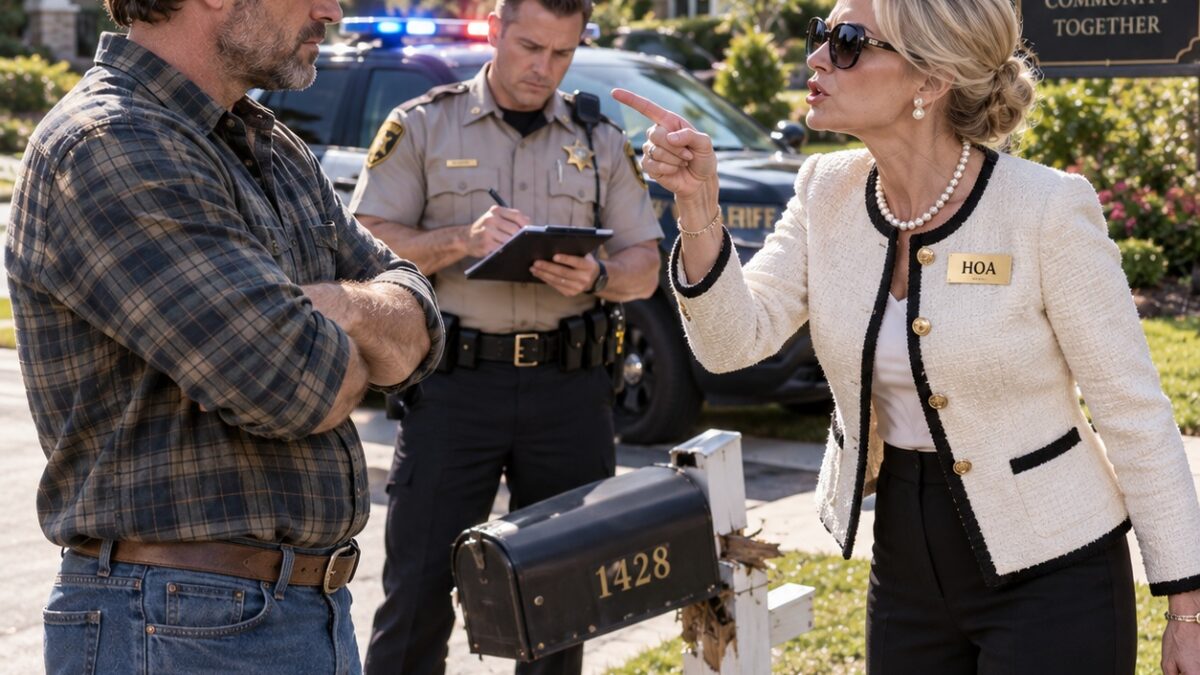
Every Time I Asked the HOA for Records, a Patrol Car Appeared at My Door—So I Compared the Dates
The first time I questioned an HOA contractor, a deputy showed up at my house because someone claimed I was photographing women through their windows.
The second time I requested financial records, another patrol car arrived after an anonymous caller accused me of pretending to be an undercover officer.
By the third complaint, I stopped asking why Cordelia Whitmore wanted to intimidate a retired cop and started asking what was buried inside the records she was so desperate to keep me from seeing.
My name is Daniel Reeves.
I was fifty-two when I moved into Hawthorne Glen, a gated neighborhood outside Knoxville, Tennessee, after eighteen years in law enforcement and another six working corporate security.
I didn’t move there because I wanted prestige.
I wanted quiet.
My wife, Rebecca, had died two years earlier after a fourteen-month fight with pancreatic cancer, and the house we’d shared for twenty-three years had become unbearable in ways I hadn’t expected.
It wasn’t sadness alone.
It was repetition.
Her coffee mug still in the same cabinet.
Her gardening gloves under the utility sink.
The indentation in the sofa cushion where she sat every evening.
Grief can turn a familiar house into a building that remembers more than you want it to.
So I sold.
Hawthorne Glen looked harmless.
Brick homes.
Mature trees.
Walking trails.
A small lake with a gazebo.
The HOA packet was thick but ordinary: lawn standards, exterior paint restrictions, parking rules, pool regulations, architectural review.
I read all of it before closing.
Old habit.
Nothing seemed unreasonable enough to scare me away.
Then I met Cordelia Whitmore.
She was sixty-one, impeccably dressed, and had been president of the Hawthorne Glen Homeowners Association for seven years.
People lowered their voices when they said her name.
I noticed that before I understood why.
Our first real interaction happened at my second monthly board meeting.
I attended because I was new and because eighteen years of police work had taught me that when people say, “Nobody goes to those meetings,” that’s usually exactly where somebody should go.
Cordelia was discussing security patrols when she noticed me near the back.
“And Mr. Reeves,” she said, smiling across the room, “I understand you used to be a police officer.”
“Detective lieutenant,” someone beside me offered.
I hadn’t.
Cordelia’s smile widened.
“Well, perhaps you can help us appreciate how difficult neighborhood compliance can be.”
“I’m happy to answer a question if I can.”
She leaned back.
“No question.”
A few people chuckled politely.
Then she added:
“Men who once had a little authority often struggle when nobody has to listen to them anymore.”
The room became very still.
I didn’t answer.
I had spent too many years interviewing angry people to mistake provocation for an invitation.
Cordelia moved to the next agenda item.
Afterward, a man named Arthur Keene caught me near the door.
“Don’t take it personally.”
“I didn’t.”
“She likes reminding people who’s in charge.”
“That sounds personal.”
Arthur laughed nervously.
Then left before Cordelia could see us talking.
I drove home, sat in my truck for several minutes, and told myself she was simply a difficult woman testing a new neighbor.
Three days later, a county deputy knocked on my door.
Someone had reported a man matching my description walking through the neighborhood, photographing houses, and writing down license plates.
The complaint was half true.
The day before, a landscaping contractor had clipped my mailbox with his trailer and driven away.
I photographed the truck from my own driveway.
Its plate happened to be visible.
My porch camera captured the entire thing.
Deputy Mark Ellis watched the recording with me.
“Well,” he said, “that answers that.”
“I never left the property.”
“No.”
“Who complained?”
“Anonymous.”
“Can I get the incident number?”
He looked at me differently after that.
Most people ask who called.
Former cops ask for numbers.
He gave it to me.
As his cruiser pulled away, I noticed Cordelia standing on the opposite sidewalk.
She raised one hand.
“Having some kind of trouble?”
“Nothing serious.”
She smiled.
“Glad to hear it.”
The anonymous complaint had described my dark green field jacket, including the leather patch on the left shoulder.
Cordelia had commented on that jacket at the board meeting.
Something inside me went quiet.
I recognized that feeling.
It was the moment coincidence stopped feeling accidental.
The following morning, an HOA violation appeared in my email.
HARASSMENT OF AUTHORIZED CONTRACTOR.
Fine: $250.
I requested the contractor’s insurance information, the damage report, the vendor agreement, and the board minutes approving the contract.
Cordelia denied the request.
So I searched public business records myself.
The landscaping contractor led me nowhere.
But while checking the HOA’s vendor list, I noticed something else.
Hawthorne Glen Security Services and Whitmore Valley Towing shared the same registered business address.
Both traced to a holding company controlled by Cordelia’s younger brother, Preston Whitmore.
That was the first thread.
Thin.
Easy to dismiss.
But when I mailed a formal request for the HOA’s financial records, another patrol car arrived at my house less than four hours later.
This time, someone claimed I had stood outside a woman’s home pretending to be an undercover officer.
My cameras proved I had never left my property.
That night, I opened a black notebook and began building a timeline.
Every letter I sent.
Every record I requested.
Every fine that followed.
Every anonymous police call.
Every company connected to the HOA.
By midnight, the pattern was no longer subtle.
Cordelia wasn’t trying to punish me for breaking rules.
She was trying to teach me what happened to people who asked questions.
FULL STORY CONTINUATION 👇👇
The next morning, I made coffee at 5:40 and sat at the kitchen table with the notebook open.
For the first time since leaving police work, the old part of my brain felt fully awake.
I didn’t like that.
People romanticize investigative instinct as if it’s some mysterious gift.
Mostly it’s an inability to let mismatched facts remain mismatched.
The second anonymous complaint said I had stood outside a residence on Bellflower Court at approximately 8:15 p.m. and told a woman I was “working a plainclothes investigation.”
At 8:15 p.m., I had been in my garage cleaning a carburetor on an old Triumph motorcycle.
Three cameras showed it.
The complaint described me as:
White male, early fifties, approximately six feet, short gray hair, dark green jacket, retired law-enforcement type.
Retired law-enforcement type.
That phrase bothered me.
Not because it identified me.
Because ordinary anonymous callers don’t usually describe somebody that way unless they already know the person’s history.
I requested the incident report through normal channels.
I did not call former colleagues.
I did not ask favors.
That mattered to me.
Cordelia’s first insult had been about authority.
The last thing I wanted was to prove her right by using an old badge as a shortcut.
When the report arrived, I placed it beside the first one.
Different anonymous complainants.
Same phrasing in three places.
“Suspicious surveillance behavior.”
“Potentially intimidating residents.”
“Possibly leveraging former law-enforcement status.”
The first complaint had used almost identical language.
Coincidence?
Maybe.
Then I pulled the HOA fine.
HARASSMENT OF AUTHORIZED CONTRACTOR THROUGH SURVEILLANCE AND INTIMIDATING PHOTOGRAPHY.
Same words.
Surveillance.
Intimidating.
My pen stopped.
I wrote:
COMMON SOURCE?
Then circled it.
That afternoon, Arthur Keene stopped by.
He did not park in my driveway.
He parked two houses down and walked.
That told me more than his face did.
“Coffee?”
“No.”
“You look nervous.”
“I am.”
He glanced across the street before stepping inside.
Arthur was seventy-four, retired from an insurance company, and had lived in Hawthorne Glen for sixteen years.
His wife had died the previous spring.
We had that much in common.
He sat at my kitchen table.
“You requested the financials.”
“Yes.”
“Cordelia knows.”
“I assumed.”
“You need to stop.”
I leaned back.
“Why?”
He rubbed his hands together.
“Because this place has a way of making people sorry.”
“That sounds dramatic.”
“It isn’t.”
“Has she done this before?”
Arthur looked toward the window.
I waited.
Silence works if you let it.
Finally:
“Three years ago, I challenged a roofing assessment.”
“What happened?”
“The board said every house needed to contribute three thousand dollars because the clubhouse roof had emergency storm damage.”
“Did it?”
“Some.”
“How much?”
“I worked insurance claims for thirty-seven years. The numbers didn’t make sense.”
“What did you do?”
“Asked for invoices.”
“And?”
“My guest parking privileges were suspended.”
“For what?”
“Repeated violations.”
“What violations?”
“A car my nephew used.”
“Was it improperly parked?”
“Once. For twenty minutes.”
He swallowed.
“Then my wife’s car got towed from the community center during her cancer-support group.”
I stared.
“Why?”
“Expired visitor sticker.”
“Her car?”
“She had stopped driving. Our niece brought her.”
He looked ashamed that he was still angry.
“She had chemo the next morning. We had to pay six hundred thirty dollars to get the car back.”
“Whitmore Valley Towing?”
His eyes lifted.
“You know about Preston?”
“I know he owns it.”
Arthur leaned back slowly.
“Most people don’t.”
“Security too.”
He stared.
I continued.
“They share a registered address.”
Arthur looked genuinely frightened.
“Daniel.”
“Yes?”
“Don’t say that in a board meeting yet.”
“Why?”
“Because the last woman who started asking about Preston moved.”
That sounded too convenient.
“Who?”
“Miriam Bell.”
“Where?”
“Arizona.”
“What happened?”
Arthur told me.
Miriam had served on the landscape committee.
Two years earlier, she noticed three separate invoices for tree trimming that appeared to overlap.
She asked for backup.
Cordelia removed her from the committee.
Then violation notices started.
Her trash cans visible from road.
Holiday lights up one day late.
Bird feeder outside approved color palette.
I actually laughed at that.
Arthur didn’t.
“Her son’s truck was towed twice.”
“Did Miriam file anything?”
“She hired a lawyer.”
“What happened?”
“Settlement.”
“Confidential?”
“Yes.”
“Then how do you know?”
“She told my wife before she moved.”
“Why move?”
“She was exhausted.”
I wrote Miriam Bell.
Arizona.
Then looked at Arthur.
“Anyone else?”
He hesitated.
“Yes.”
That afternoon became six names.
José Alvarez.
Schoolteacher.
Challenged pool-maintenance spending.
Suddenly received repeated noise violations.
Lena Park.
Nurse.
Asked why security costs had doubled.
Her gate access malfunctioned three weekends in a row.
Mark Gillespie.
Retired accountant.
Requested towing records.
His daughter’s car was towed from his own driveway during Thanksgiving.
Arthur himself.
Miriam.
And now me.
“Any police complaints?” I asked.
Arthur’s face changed.
“Miriam.”
“What?”
“Someone reported her son for drug dealing.”
“Was he?”
“No. He was a pharmacy student.”
I closed my eyes.
“José?”
“Police came once because somebody said he threatened a pool employee.”
“Did he?”
“No idea.”
Arthur whispered:
“Everybody stops asking eventually.”
There it was.
Not punishment.
Conditioning.
Make inquiry expensive.
Make dissent socially dangerous.
Make people associate asking questions with police, fines, towing, embarrassment.
Then nobody asks.
I said:
“I need Miriam’s contact information.”
“I don’t have it.”
“You know anyone who does?”
“Her old neighbor.”
“Ask if she’s willing to pass my number.”
Arthur stood.
At the door he stopped.
“You really were a cop eighteen years?”
“Yes.”
“What kind?”
“Mostly investigations. Fraud unit at the end.”
He laughed once.
Not happily.
“Cordelia picked the wrong retiree.”
I didn’t answer.
That phrase makes good stories.
Reality is less cinematic.
I wasn’t invincible.
I had been retired long enough that procedures changed.
I had no subpoena power.
No badge.
No access to protected databases.
No authority beyond any other homeowner.
What I had was patience.
And eighteen years of learning that bad schemes often collapse because the people running them eventually start believing nobody will compare the paperwork.
Miriam Bell called two nights later.
Arizona number.
“Mr. Reeves?”
“Daniel.”
“Arthur says you’re asking about Cordelia.”
“If you’d rather not—”
“No.”
Her voice sharpened.
“I have been waiting three years for somebody to ask correctly.”
That sentence stayed with me.
Miriam was sixty-eight.
Former hospital administrator.
Widowed.
She had kept everything.
Every fine.
Every email.
Towing receipt.
Letter.
Photograph.
Board minutes.
Settlement correspondence, except protected sections she couldn’t share.
Most important, she had a spreadsheet.
“I was an administrator,” she said. “We document suffering professionally.”
I liked her immediately.
She sent what she could legally disclose.
The pattern was obvious.
On March 4, she requested landscaping invoices.
March 5, violation for decorative planter.
March 8, security warning regarding her son’s guest parking.
March 11, anonymous complaint claiming her son was conducting “suspicious hand-to-hand exchanges.”
Police found nothing.
March 18, towing.
March 22, second records request.
March 22, another violation.
The timing looked familiar.
I added her dates beside mine.
Then José.
Then Mark.
Within a week, I had four partial timelines.
Different years.
Different complaints.
Same structure.
Question.
Retaliation.
Escalation.
Silence.
Cordelia had not invented intimidation for me.
She had operationalized it.
But suspicion is not proof.
That line matters.
I could not accuse her of filing false police reports because timing looked bad.
I needed source.
Opportunity.
Records.
I started with vendors.
Public filings showed Preston Whitmore owned Whitmore Valley Holdings LLC.
Under that umbrella:
Whitmore Valley Towing.
Hawthorne Glen Security Services.
P&R Property Enforcement.
A company called Blue Ridge Compliance Solutions.
Same mailing address.
A commercial building fifteen miles away.
Cordelia’s name did not appear as owner.
Her husband’s name did not appear.
On paper, she was separate.
That was not illegal.
HOAs hire relatives sometimes.
The problem is disclosure and fair contracting.
I checked the HOA’s annual budgets.
Security spending:
Five years earlier: $118,000.
Four years: $164,000.
Three years: $241,000.
Two years: $319,000.
Last year: $386,000.
Neighborhood size had barely changed.
Towing income wasn’t listed because towing fees were collected from owners, not paid by HOA directly, though there were administrative charges.
Compliance consulting:
Five years earlier: none.
Last year: $142,000.
Payee not listed in summary.
I wrote:
BLUE RIDGE?
Landscaping:
Up 62 percent.
Clubhouse services:
Up 48.
Reserve contributions:
Down.
Dues:
Up.
Special assessments:
Three in four years.
Something was wrong.
Maybe simple mismanagement.
Maybe inflation.
Maybe expanded services.
Numbers don’t confess by themselves.
I needed contracts.
The HOA denied my second request, citing “attorney review” and “resident privacy.”
My attorney, Caroline Mason, laughed when I showed her.
I had hired her after the second police complaint.
She specialized in HOA and nonprofit governance.
Mid-forties.
Short dark hair.
No patience for performance.
“Financial contracts are not protected because residents exist,” she said.
“I thought so.”
“You are entitled to certain association records under the governing documents and applicable law.”
“Certain?”
“Don’t turn me into your free law professor.”
“You charge hourly.”
“Then stop interrupting.”
I liked her.
She sent a narrower request.
Vendor contracts.
Competitive bids.
Board approvals.
Invoices over ten thousand dollars.
Conflict-of-interest disclosures.
Records sufficient to show related-party transactions.
Cordelia responded personally.
Mr. Reeves appears to be using his former law-enforcement background to conduct an unauthorized investigation into private residents and vendors.
Caroline read the sentence twice.
Then looked at me.
“You told her you’re investigating?”
“No.”
“Threatened her?”
“No.”
“Shown a badge?”
“I don’t own one anymore.”
“Good.”
“Why?”
“Because she’s laying groundwork.”
“For what?”
“To portray your requests as harassment rather than member governance.”
That night, another violation notice arrived.
UNAUTHORIZED COMMERCIAL ACTIVITY.
I stared.
Apparently my old Triumph motorcycle, which I occasionally restored in my garage, constituted a repair business because a neighbor had brought his carburetor over once.
Fine: $500.
I laughed.
Then photographed the notice and added it to the binder.
Rebecca used to tell me my laugh changed when I was angry.
Less sound.
More breath.
I heard it then.
Two mornings later, Deputies Ellis and Carter came to my door.
Third police complaint.
This one wasn’t funny.
Anonymous caller alleged I had threatened an HOA maintenance worker with a firearm after confronting him near my property.
My entire body went cold.
“Do you own firearms?” Ellis asked.
“Yes.”
“Where?”
“Secured.”
“Did you speak to an HOA worker yesterday?”
“No.”
“Any worker?”
“No.”
Carter looked uncomfortable.
“Mind if we ask where you were around three?”
“At my dentist.”
I produced the appointment record.
Then camera logs.
Car left at 2:18.
Returned 4:07.
The alleged threat occurred 3:12.
Dentist’s office was thirty-five minutes away.
Ellis exhaled.
“Okay.”
I looked at both men.
“Three anonymous complaints in less than a month.”
“I know,” Ellis said.
“You know?”
“I responded to first.”
“Same dispatch origin?”
He became careful.
“I can’t discuss protected caller information.”
“Understood.”
Former cop brain wanted more.
Civilian rights stopped me.
I nodded.
“Can you document that I raised a concern about repeated false reports?”
“Yes.”
“I want the incident numbers for all three attached to my statement.”
“We can note them.”
“Thank you.”
Carter asked:
“You planning to confront anybody?”
“No.”
“Good.”
“I have counsel.”
“Better.”
When they left, Cordelia wasn’t standing on the sidewalk this time.
That would have been too obvious.
But at 4:30, I received an HOA email.
Due to concerns regarding threatening behavior toward community vendors, Mr. Reeves is directed to cease direct contact with HOA employees and contractors.
The timing was almost insulting.
I forwarded it to Caroline.
She called immediately.
“Do nothing.”
“I wasn’t going to.”
“Don’t attend board meeting alone.”
“I wasn’t planning to.”
“Do not contact Preston.”
“I haven’t.”
“Good.”
Then:
“And Daniel?”
“Yes?”
“This is now beyond annoying.”
“I know.”
“A false gun allegation can get someone killed.”
That was the part I hadn’t allowed myself to say.
Police encounters are not stage props.
Even when officers act professionally, introducing a firearm allegation changes the risk.
If I had stepped outside holding something in my hand.
If an officer had been told I was unstable.
If I had been angry.
Cordelia—if it was Cordelia—was playing with something she did not control.
That made me more careful, not less.
I installed additional cameras.
Not because I was afraid of police.
Because I wanted truth to exist independently of memory.
Miriam sent another box of digital records.
This time, something stood out.
An email she had received from Hawthorne Glen Security Services three years earlier after complaining about tow practices.
Ms. Bell, continued surveillance, photography, or recordkeeping concerning authorized vendors may be interpreted as harassment.
Surveillance.
Photography.
Recordkeeping.
Same language.
I searched my correspondence.
Cordelia’s fine.
Same phrase.
Police complaint.
Same phrase.
Three years apart.
I highlighted every match.
Caroline looked.
“Interesting.”
“Not proof.”
“No.”
“Pattern.”
“Yes.”
We subpoena nothing ourselves.
But patterns help justify proper complaints.
She advised me to file a formal governance complaint with the board and request an independent investigation into related-party vendors and retaliatory enforcement.
I did.
Certified mail.
Email.
Hand delivery through counsel.
Seven days later, the board scheduled an executive session.
I wasn’t invited.
Then a public meeting.
That one I attended.
The clubhouse was packed.
Word had spread.
Not from me alone.
Arthur had talked.
Wesley? No—different story. Need new names. Let’s keep existing ones. José had talked. Lena had talked.
People who had been quietly angry realized they weren’t individually unlucky.
That’s one of the most powerful shifts in any abusive system.
Private shame becomes shared data.
Cordelia sat at the center of the board table.
Five directors.
Treasurer Glenn Porter.
Secretary Elise Monroe.
Two at-large members: Sandra Kim and Robert Daugherty.
Preston stood along the side wall wearing a navy security polo.
That was unusual.
Vendors normally did not attend board deliberations.
Cordelia opened.
“We have received what can only be described as a campaign of intimidation by a small group of dissatisfied residents.”
Murmurs.
I sat beside Caroline.
She whispered:
“Don’t react.”
“I know.”
Cordelia continued.
“One recently arrived homeowner has used his previous employment in law enforcement to imply investigatory authority he no longer possesses.”
There it was.
She looked directly at me.
“In front of the entire room, I want to make something clear: Hawthorne Glen will not be bullied by anyone who misses wearing a badge.”
A few people clapped.
Not many.
I stood when resident comments opened.
Cordelia said:
“Three minutes.”
“I’ll need five.”
“No.”
Caroline stood.
“Mr. Reeves has submitted a governance complaint concerning vendor conflicts and retaliatory enforcement. Five minutes is reasonable.”
Cordelia smiled.
“This is not a courtroom.”
Caroline smiled back.
“I know. Courtrooms generally have better records.”
A few laughs.
Cordelia hated that.
She gave me five.
I walked to the microphone carrying one folder.
Not the binder.
Too theatrical.
I started:
“My name is Daniel Reeves. I moved here four months ago.”
Cordelia looked bored.
“I am not here as a former police officer.”
I paused.
“I am here as a homeowner who pays the same dues everyone else pays.”
That quieted the room.
“I received a $250 fine after photographing a contractor who damaged my mailbox.”
I held up the photograph.
Truck against mailbox.
Timestamp.
“My porch camera confirmed the event.”
Then:
“After I requested the contractor’s insurance information and vendor authorization, an anonymous complaint was made to law enforcement alleging I was photographing houses and license plates.”
I held the incident report.
“The complaint resulted in no action.”
Second.
“After I requested financial records, another anonymous complaint alleged I was impersonating an undercover officer.”
Third.
“After counsel requested vendor contracts and conflict disclosures, an anonymous caller claimed I threatened an HOA worker with a firearm at a time when I was at a documented dental appointment.”
The room shifted.
Cordelia interrupted.
“Anonymous police reports have nothing to do with this board.”
I looked at her.
“Maybe.”
That word.
Maybe is powerful when evidence isn’t finished.
I continued.
“I have not accused the board of making those calls.”
True.
“What I am asking is why the timing repeatedly overlaps with legitimate records requests.”
Then vendor filings.
I projected public corporate records.
Hawthorne Glen Security Services.
Whitmore Valley Towing.
Blue Ridge Compliance Solutions.
All owned through Preston’s holding company.
Same address.
Preston’s face tightened.
I said:
“Mr. Whitmore is President Colton—sorry, Whitmore’s brother.”
A murmur swept the room.
Someone shouted:
“Is that true?”
Cordelia said:
“Everyone knows Preston is my brother.”
Half the room laughed.
Arthur called:
“I didn’t.”
José:
“Neither did I.”
Lena:
“It’s not disclosed in the annual report.”
Cordelia raised the gavel.
“Order.”
I continued.
“Hiring a relative is not automatically improper.”
Caroline had drilled that sentence into me.
“What matters is whether the relationship was disclosed, whether bids were legitimate, whether prices were reasonable, and whether approvals followed the governing documents.”
I displayed security spending.
Five-year rise.
Cordelia interrupted again.
“Crime increased.”
I nodded.
“Then records should support that.”
Towing complaints.
Compliance consulting.
Blue Ridge payments.
I asked:
“Who owns Blue Ridge Compliance Solutions?”
Preston said nothing.
Public record answered.
His holding company.
The room erupted.
Cordelia hammered the gavel.
“You are done.”
“I have thirty-six seconds.”
“You are done.”
Caroline stood.
“Let him finish.”
Cordelia pointed toward security.
“Remove Mr. Reeves if necessary.”
Preston did not move.
Interesting.
He looked at me.
Then at the crowd.
He understood optics.
I said:
“My request is simple.”
The room quieted on its own.
“Independent audit. Independent review of vendor contracts. Preservation of enforcement records. And a temporary suspension of related-party contracting until residents know what they’re paying for.”
Applause.
Cordelia’s face hardened.
She leaned toward the microphone.
“No.”
Just that.
Then:
“This board will not waste association resources satisfying the obsession of a man who has been here four months.”
That was her mistake.
Not legally.
Politically.
Arthur stood.
“I’ve been here sixteen years.”
José stood.
“Twelve.”
Lena.
“Nine.”
Then Mark.
“Eleven.”
One by one.
People who had been quiet.
“I want the audit.”
“So do I.”
“Me too.”
Cordelia adjourned the meeting.
People kept talking.
That night, I received four emails from strangers.
By morning, seventeen.
Within three days, forty-one residents had stories.
Not all serious.
Some legitimate violations.
Important.
I separated them.
A bad HOA can still issue a valid grass-height notice.
If I treated every unhappy owner as evidence, I’d become what Cordelia accused me of being.
So I categorized.
Documented retaliation after records requests.
Towing after board criticism.
Police complaints.
Gate-access problems.
Selective fines.
Unverified grievances.
Some were nothing.
Some were disturbing.
One resident, Priya Shah, had asked why the HOA spent $72,000 replacing pool furniture when comparable sets cost less than half.
Within two weeks, her home received six violations.
One for a garden hose visible for forty-three minutes.
She had camera footage of the compliance inspector photographing through her side gate.
Another resident, Marcus Dean, challenged security patrol hours.
His teenage son’s car was towed from a legal street spot after a security officer claimed it blocked emergency access.
County fire inspector later said it did not.
Another, Elaine Warner, had run for the board against Cordelia.
During the election, anonymous police calls accused her husband of drunkenly threatening a neighbor.
Body-camera footage showed him sober and confused.
No charges.
Pattern.
But still no direct link to Cordelia on police calls.
Then Preston made a mistake.
Or maybe someone under him did.
Caroline requested invoices through formal legal process.
The HOA finally produced a partial vendor file.
Among the security invoices were monthly “incident coordination reports.”
Most boring.
Gate alarms.
Pool incidents.
Suspicious vehicles.
Noise complaints.
Then I saw my name.
REEVES, DANIEL.
Three entries.
The dates matched the three police reports.
Each incident coordination report contained a note:
Escalated to county non-emergency per HOA executive direction.
I stopped breathing for a second.
“Executive direction.”
Caroline read.
Then looked at me.
“That is better.”
“Better?”
“For proving association involvement.”
“Not necessarily Cordelia.”
“No.”
Another entry:
Per CW request, document former LE subject behavior and ensure law enforcement awareness.
CW.
Cordelia Whitmore.
Maybe.
Could be someone else.
But there was no other CW in the staff list.
Caroline said:
“Now we stop handling this only as HOA governance.”
She sent copies to the sheriff’s department and district attorney through proper channels.
I did not call Deputy Ellis.
I did not tell him we had solved anything.
Let investigators investigate.
The sheriff’s office opened a review into false reporting.
They interviewed me.
Arthur.
Miriam remotely.
Security employees.
Preston.
Cordelia.
I learned almost nothing while it happened.
Good investigations are quiet.
Meanwhile, the financial side exploded.
The partial contracts produced something I had not expected.
Three bids existed for the security contract.
Hawthorne Glen Security: $348,000 annually.
Volunteer Protective Solutions: $361,000.
Knox Valley Residential Patrol: $389,000.
On paper, Preston’s company was lowest.
Fine.
Then I checked the PDFs.
Old habit from corporate security.
File metadata.
All three bid documents had been created within eleven minutes of each other.
Same PDF producer.
Same author field:
PWH-Admin.
Preston Whitmore Holdings.
I stared at the screen.
“Caroline.”
She looked.
“That’s ugly.”
“Fake bids.”
“Likely.”
We checked the supposed competitors.
Volunteer Protective Solutions existed.
But its owner, when contacted formally, said the company had never bid on Hawthorne Glen.
Knox Valley Residential Patrol had dissolved fourteen months before the bid date.
Yet somehow submitted a proposal.
The security contract was not competitively bid.
It was staged to look competitively bid.
Then towing.
Same pattern.
Three quotes.
One vendor denied submitting.
Another phone number belonged to a mailbox service.
Then compliance consulting.
Blue Ridge had no competitors at all because Cordelia labeled it “specialized sole-source governance technology.”
What technology?
A violation-tracking spreadsheet and two tablets.
Annual contract:
$142,000.
I laughed when I read scope.
Caroline did not.
“Why is that funny?”
“I built more complicated systems in Excel in 2003.”
“Focus.”
Payments to Whitmore-linked entities over four years totaled approximately $2.1 million.
That did not mean $2.1 million stolen.
Services were provided.
Security guards existed.
Cars were towed.
Compliance inspections happened.
The issue was whether prices were inflated, bids fake, conflicts hidden, and money returned privately to Cordelia.
The audit would decide.
Residents now had enough signatures to demand a special membership meeting under the HOA bylaws.
Cordelia challenged signatures.
Then eligibility.
Then notice.
Every delay created more anger.
The board secretary, Elise Monroe, finally broke.
She resigned publicly.
Her letter stated:
I no longer have confidence that the board’s procurement and enforcement practices can be defended as fair, transparent, or consistent with our governing obligations.
That was polite devastation.
She also gave the association’s independent counsel access to emails she had preserved.
One became famous inside Hawthorne Glen.
Cordelia to Preston:
Daniel Reeves is not Miriam. He needs stronger discouragement before this turns into a hobby.
Preston:
Police again?
Cordelia:
Only if he gives us a reason.
Preston:
He won’t.
Cordelia:
Then document one.
I read it three times.
There are moments when suspicion becoming proof does not feel satisfying.
It feels sickening.
“Then document one.”
She had been willing to manufacture a reason.
Investigators found other messages.
Not all sent exactly as people later quoted.
But enough.
After my first records request:
Cordelia: Need a community incident on file. He is taking plate photos and asking vendor questions.
Security supervisor: Did he enter common property?
Cordelia: Doesn’t matter. Call non-emergency and let them decide.
Second:
Cordelia: Resident says he referenced police background.
Supervisor: Which resident?
No answer recorded.
Third—the gun complaint—was worse.
Security employee Evan Briggs told investigators Cordelia called him directly.
She said an unnamed maintenance worker was frightened because I had “probably displayed a weapon.”
Evan asked for the worker’s name.
Cordelia said she would provide later.
She never did.
Evan placed the call anyway.
He later admitted he should not have.
No actual maintenance worker claimed I threatened him.
The complaint was built from nothing.
That became criminal territory.
Evan cooperated.
Preston said he had warned Cordelia not to make the third call.
Messages partly supported that.
He had benefited financially from the contracts.
But intimidation appeared to be hers more than his.
Then the independent forensic audit began.
The board had no choice by then.
Residents voted at the special meeting.
Cordelia tried to preside.
Association counsel stopped her because the agenda included her removal.
I’ve seen tense felony interviews calmer than that clubhouse.
Nearly five hundred homeowners attended in person or by proxy.
Cordelia wore a red suit.
She looked flawless.
Defiant.
Before the vote, she demanded fifteen minutes to speak.
She received ten.
She blamed disgruntled residents.
A “retired officer with unresolved authority issues.”
Political hostility.
Misunderstood vendor relationships.
Rising security needs.
Administrative oversights.
Then she said something that told me she still did not understand.
“Everything I did was to protect the value of your homes.”
A woman in the front row shouted:
“From us?”
Applause.
Cordelia raised her voice.
“You have no idea how difficult it is managing people who complain about everything but refuse to serve.”
Arthur stood.
“I served on finance committee.”
She ignored him.
Priya:
“I offered.”
Ignored.
Then Cordelia pointed at me.
“He arrived four months ago and turned neighbor against neighbor.”
I stood only because my name had been invoked.
The moderator said:
“Mr. Reeves, one minute.”
I walked to the microphone.
Cordelia stared.
I looked at the room.
“I did not create these records.”
Silence.
“I did not choose Preston Whitmore’s companies.”
“I did not create fake competitor bids.”
“I did not tow anyone’s car.”
“I did not issue your violations.”
“I did not call the police on Miriam Bell.”
Cordelia’s jaw tightened.
“I did not call the police on myself.”
Laughter.
Then quiet.
“I compared dates.”
That’s all.
I returned to my seat.
The removal vote was 78 percent in favor.
Cordelia lost the presidency.
Glenn Porter, the treasurer, resigned within forty-eight hours.
Robert Daugherty stayed temporarily to help transition records.
Sandra Kim became interim president because nobody else wanted the job.
She called me.
“You’re joining the board.”
“No.”
“That’s not a question.”
“Then the answer is still no.”
“Why?”
“Because Cordelia’s first insult was accidentally useful.”
Sandra went quiet.
I explained:
“I don’t need another title to tell people what to do.”
She laughed.
“Fine.”
I agreed to serve on a temporary procurement-reform committee.
Limited term.
No executive authority.
That suited me.
The forensic audit took five months.
The result was worse than expected in some ways, better in others.
Better:
There was no evidence that every Whitmore contract was fraudulent.
Security guards actually worked.
Towing services operated.
Some pricing was within upper market ranges.
Preston had real employees.
Real insurance.
Real expenses.
Worse:
The competitive bidding process had been manipulated repeatedly.
At least fourteen purported competitor bids were unsupported or fabricated.
Related-party relationships were omitted from annual disclosures.
Blue Ridge Compliance Solutions charged fees significantly above comparable market services.
Some towing administrative charges collected from homeowners were routed through an HOA account and then paid back to Preston’s company without clear authorization.
Several security-contract amendments were approved without full-board votes.
Cordelia received indirect financial benefits too.
Not bags of cash.
More sophisticated.
Whitmore Valley Holdings paid “consulting fees” to a company called CMW Strategic Services.
Owner:
Charles M. Whitmore.
Cordelia’s husband.
CMW then paid household expenses.
Travel.
Vehicle lease.
A home renovation invoice.
The auditor could not declare every dollar a kickback without more evidence.
But investigators could follow bank records.
They did.
Over five years, approximately $486,000 flowed from Preston-controlled companies to Cordelia’s husband’s consulting company.
What consulting had Charles provided?
Almost none documented.
Preston’s attorney called it legitimate business advice.
Prosecutors called it something else.
Then there were towing commissions.
Security “referral bonuses.”
Compliance revenue sharing.
The total questionable benefit to the Whitmore family eventually alleged by prosecutors exceeded $700,000.
Not $2.1 million.
Again, distinction mattered.
The HOA had spent millions.
Not all stolen.
The alleged improper benefit was smaller.
Still enormous.
The false police reports became separate charges.
Cordelia surrendered through counsel.
No dramatic raid.
No handcuffs at a board meeting.
She walked into the county justice center on a Tuesday morning with her attorney.
Booking photo hit local news by lunch.
I did not share it.
People sent it to me anyway.
Arthur printed it.
I told him to throw it away.
He said:
“You’re no fun.”
“No.”
Miriam called from Arizona.
“Is it wrong that I feel relieved?”
“No.”
“Happy?”
“Depends.”
“I am a little happy.”
“You’re allowed.”
She cried.
Not because Cordelia was arrested.
Because someone had finally treated what happened to her as real.
That’s different.
People who endure institutional retaliation often start doubting their own scale.
Maybe it wasn’t that bad.
Maybe I’m sensitive.
Maybe everybody gets fines.
Maybe the tow was coincidence.
Maybe the police call was unrelated.
Then evidence puts weight back where it belongs.
Miriam returned to Tennessee for the civil mediation.
Not to move back.
She wanted closure.
I met her in person for the first time at a coffee shop.
She was smaller than I imagined.
Sharp eyes.
Perfect posture.
She hugged me without warning.
“You’re taller than I thought.”
“You’re meaner than you sounded.”
“Good.”
We laughed.
She had settled privately years earlier under terms that limited what she could discuss.
The new investigation reopened certain issues through official channels.
Her old settlement remained valid.
She didn’t chase more money.
She wanted her violation history corrected.
The new board did it.
Every unsupported fine removed from association records.
Her son’s towing incident formally acknowledged as improperly handled.
A letter of apology.
She read it once.
Then folded it.
“That’s all?”
I asked.
“What do you mean?”
“You spent three years angry.”
“No.”
She looked at me.
“I spent three years believing nobody would ever put in writing that I wasn’t crazy.”
That sentence hit harder than the charges.
The HOA reforms became my real project.
Not revenge.
Systems.
We created mandatory conflict-of-interest disclosures.
No vendor controlled by a board member’s family could be hired without full disclosure, independent legal review, competitive bidding, and member notice above certain thresholds.
Bids had to be submitted directly through a third-party portal.
No PDF packets assembled by one person.
Vendor ownership verified annually.
Towing contracts required published fee schedules.
Security officers could not initiate law-enforcement calls based solely on board instructions without documenting the underlying incident.
Anonymous complaints could still be made—sometimes anonymity protects people—but HOA staff had to distinguish firsthand reports from hearsay.
Violation appeals moved to a three-person rotating panel rather than the president.
Financial records were placed in a secure homeowner portal.
Monthly expenses.
Contracts.
Board votes.
No more “trust us.”
Sandra Kim complained it was too much work.
I agreed.
“Then hire proper management.”
We did.
Fees increased slightly.
Funny.
Transparency costs money.
Still cheaper than fraud.
The old security contract ended.
Not because every guard was bad.
The relationship was too compromised.
Several guards were hired by the replacement company after new background checks.
Evan Briggs, the employee who made the gun call, wasn’t.
He met me once before leaving.
Parking lot outside clubhouse.
“Mr. Reeves.”
“Daniel.”
He looked miserable.
“I owe you an apology.”
“Yes.”
That surprised him.
People often expect victims to rescue them from guilt.
I had learned not to.
He swallowed.
“I should’ve refused.”
“Yes.”
“Cordelia said a worker was scared.”
“There was no worker.”
“I know now.”
“You asked for a name.”
He looked up.
“How do you know?”
“Investigation records.”
“Yeah.”
“That mattered.”
“Not enough.”
“No.”
He nodded.
“I could’ve gotten you hurt.”
There it was.
“Yes.”
His eyes filled.
I didn’t want that.
But I wasn’t going to tell him it was fine.
It wasn’t.
After a moment I said:
“You cooperated afterward.”
“I did.”
“That matters too.”
He breathed out.
“Thank you.”
We shook hands.
He left.
Accountability isn’t erasure.
It’s accurate accounting.
Debit.
Credit.
Both.
Preston’s role was harder to understand.
He had profited.
He had participated in sham bidding.
But evidence suggested Cordelia drove most of the retaliation.
He eventually pleaded to procurement-fraud-related charges and agreed to substantial restitution.
His companies lost HOA contracts across the region once the story became public.
Whitmore Valley Towing survived under a sale to another operator.
Hawthorne Glen Security dissolved.
Blue Ridge Compliance disappeared entirely.
Good.
No one needed a $142,000 spreadsheet.
Charles Whitmore, Cordelia’s husband, claimed he believed consulting payments were legitimate.
Prosecutors disputed portions.
His case resolved through civil repayment and tax corrections rather than the same criminal path.
People wanted a cleaner ending.
Entire family in prison.
Millions recovered.
Not reality.
Cases separate.
Evidence varies.
Intent matters.
Records matter.
The state has to prove things, not satisfy neighborhood anger.
My old career made me appreciate that even when residents didn’t.
At one meeting, Mark Gillespie shouted:
“They all knew!”
I said:
“Knowing morally isn’t the same as proving legally.”
He snapped:
“Whose side are you on?”
“Facts.”
He stormed out.
Came back the next month.
We’re friends now.
Mostly.
Cordelia fought longer.
She blamed Preston.
Then Charles.
Then management staff.
Then me.
Her defense argued that anonymous complaints reflected genuine safety concerns.
The gun allegation was hardest to explain.
No witness.
No worker.
No contact.
Her messages to Evan undermined her.
So did the earlier pattern.
She eventually accepted a plea agreement covering financial fraud, conspiracy-related procurement misconduct, and false-reporting offenses.
I won’t pretend the exact statutory labels mattered to me.
The conduct did.
She received a period of incarceration, probation afterward, restitution, and restrictions related to association fiduciary roles.
Not life.
Not ruin beyond recovery.
Enough.
At sentencing, the prosecutor asked if I wanted to speak.
I almost said no.
Then Rebecca came into my mind.
My wife.
Not part of the case.
Why her?
Because she used to tell me that retirement would be hardest when I no longer had a role telling me who I was.
“You’re going to have to learn how to be Daniel instead of Lieutenant Reeves,” she’d said.
Cordelia’s first insult had hit that wound.
Men who once had a little authority often struggle when nobody has to listen to them anymore.
She meant humiliation.
Rebecca had meant freedom.
I stood in court.
Cordelia sat at the defense table.
I said:
“When I moved to Hawthorne Glen, Mrs. Whitmore made a comment about my old career.”
She looked at me.
“She suggested I might struggle because nobody had to listen to me anymore.”
A slight movement in the room.
“She was partly right.”
Cordelia looked surprised.
“I had spent eighteen years in a job where authority was formally defined. Laws. Policies. Chain of command. Warrants. Reports. Then I retired.”
I looked toward the judge.
“What I learned in Hawthorne Glen is that legitimate authority is not the same as control.”
I paused.
“Mrs. Whitmore had a title. She had votes. She had access to vendors, security personnel, homeowner records, and association money.”
“She used those tools to make questions expensive.”
“Ask for an invoice, get a fine.”
“Challenge a tow, lose access.”
“Request records, receive police attention.”
I looked at Cordelia again.
“The worst part was not money.”
“It was teaching people that asking a lawful question would make their lives harder.”
Miriam sat behind me.
Arthur too.
“That kind of system works only while everyone believes they are suffering alone.”
I placed one hand on the podium.
“I did not uncover this because I used to be a police officer.”
“I uncovered it because homeowners compared dates.”
I heard someone behind me exhale.
“One timeline became four.”
“Four became forty.”
“Then contracts met corporate records.”
“Complaints met camera footage.”
“Bids met metadata.”
“Authority met evidence.”
I stopped.
“I do not want revenge.”
That phrase is easy to say.
Harder to mean.
“I want the court to understand that false police reports are not neighborhood politics.”
“They can put people at risk.”
“And I want associations everywhere to understand that homeowners asking for records are not enemies.”
“They are often the reason institutions stay honest.”
Then I sat.
Cordelia did not look at me again.
After sentencing, reporters waited outside.
I used a side exit.
Arthur found that cowardly.
I called it experienced.
I went home.
Made coffee.
Sat in the same kitchen where I had built the first timeline.
The black notebook was still in a drawer.
I took it out.
Page one:
BOARD MEETING — C. WHITMORE COMMENT.
Page two:
MAILBOX / CONTRACTOR.
Then police report.
Fine.
Request.
Police report.
Request.
Police report.
On the last page, I wrote:
CASE CLOSED?
Then crossed out the question mark.
Not because every legal matter was finished.
Because my part was.
I put the notebook away.
For several months, life became boring.
Best possible outcome.
No patrol cars.
No violation emails.
No mysterious gate failures.
My mailbox got replaced.
The HOA reimbursed me for the original damage because the contractor’s insurance eventually admitted liability.
That amused me.
The $250 harassment fine was voided.
So was the $500 motorcycle-business fine.
I framed neither.
I’m less petty than Callum Greer from some imaginary other HOA story would be. Sorry—no cross-story contamination. Better: I put them in the shredder.
The sound was satisfying.
Arthur started walking with me in the mornings.
Hawthorne Glen had a three-mile loop around the lake.
For years, he had avoided walking near Cordelia’s street because he worried someone would photograph him and invent a violation.
Think about that.
A seventy-four-year-old man afraid to walk through the neighborhood he paid dues to maintain.
The first time we passed her former house after she had moved, Arthur slowed.
“Feels strange.”
“What?”
“Nothing happened.”
“That’s generally the goal of walking.”
He laughed.
Then we kept going.
Miriam visited once.
She stood outside her old house.
New owners.
Young family.
She didn’t knock.
Didn’t need to.
We walked to the community center.
The parking lot where her niece’s car had been towed looked ordinary.
She stood there.
Then said:
“I thought coming back would feel bigger.”
“Usually doesn’t.”
“You miss police work?”
“Sometimes.”
“Why?”
“Clearer enemies.”
She laughed.
“Were they?”
“No.”
Exactly.
Retirement had forced me to admit something.
Law enforcement had not given me certainty.
It had given me process.
Cordelia’s system imitated process cosmetically.
Violation numbers.
Incident reports.
Contracts.
Board votes.
Policies.
But process without independence becomes decoration.
That was what made her difficult to challenge.
Everything had a form.
A reason.
A section number.
A vendor invoice.
One complaint never looked absurd.
One tow wasn’t tyranny.
One fine wasn’t corruption.
One anonymous police call could be a concerned resident.
Only the sequence revealed design.
That became the story I told afterward.
Not publicly often.
But when neighboring HOAs invited me to speak about governance, I said:
“Don’t only audit dollars.”
People looked confused.
“Audit timing.”
I would put up a blank timeline.
“Who asks questions?”
“What happens next?”
“Who gets fined?”
“Who gets waived?”
“Which vendors grow?”
“Which directors benefit?”
“Which complaints appear after dissent?”
“Money leaves trails.”
“So does retaliation.”
That line spread.
I wish I could claim it was brilliant.
It’s common sense once you’ve lived it.
Hawthorne Glen’s new board asked me twice to run for president.
I refused twice.
Third time, Sandra Kim brought cookies.
“That feels like bribery.”
“It is.”
“No.”
“Vice president?”
“No.”
“Compliance committee?”
“Absolutely not.”
She laughed.
I eventually agreed to chair a one-year records modernization project.
No enforcement power.
Perfect.
We scanned twenty years of board minutes.
That was how we discovered earlier warning signs.
Cordelia hadn’t begun corrupt.
At least not obviously.
Her first two years as president were competent.
Budgets balanced.
Vendor bids real.
Meetings orderly.
Residents liked her.
Then her brother’s security company got a small contract after a rash of vehicle break-ins.
The relationship was disclosed in the minutes.
The board approved it unanimously.
Legitimate.
Next year, contract expanded.
Disclosure became a footnote.
Then disappeared.
Towing was added.
Then compliance.
Then no-bid emergency amendments.
Then family payments.
Then retaliation.
Corruption rarely arrives wearing a sign saying CORRUPTION.
It often begins as convenience.
Preston already has guards.
Use him.
He’s reliable.
Why rebid?
We need towing too.
Bundle it.
Residents are complaining.
Give compliance more authority.
Someone wants invoices.
They’re difficult.
Fine them.
Someone keeps pushing.
Call security.
Security says document.
Police report creates documentation.
Every step small enough to explain.
Until you look backward.
That’s why institutions need limits before people become villains.
Not because everyone is evil.
Because incentives are creative.
Cordelia’s first years taught me more than her final ones.
She had probably believed herself when she said she protected property values.
Maybe that belief survived even at sentencing.
People can do terrible things while narrating themselves as guardians.
That’s why outcomes and processes matter more than self-image.
A year after everything, I received a letter.
No return address I recognized.
Inside was a single page from Cordelia.
I almost threw it away.
Then read.
Mr. Reeves,
I have had a great deal of time to think about the first meeting where I made a joke about your former profession.
I thought you were another man who would try to dominate a room by reminding everyone what you used to be.
I was wrong about you.
I was also wrong about myself.
I told residents that every decision I made was necessary because nobody else understood how hard managing the association was.
Eventually, I began treating disagreement as sabotage.
Once I did that, almost anything could be justified as protection.
I do not expect your forgiveness.
I am sorry for the false complaints and for the danger created by the firearms allegation.
Cordelia Whitmore
No explanation of money.
No blaming Preston.
No “but.”
I sat with the letter for a long time.
Then wrote:
Ms. Whitmore,
I received your letter.
Thank you for acknowledging the false reports.
Daniel Reeves.
Caroline laughed when I showed her.
“Warm.”
“Accurate.”
“You could have said more.”
“I didn’t have more.”
That’s fine.
Forgiveness is not a mandatory essay.
Sometimes acknowledgment closes a file.
I no longer wanted Cordelia punished beyond what law and restitution required.
I also did not want a relationship.
Both can be true.
Preston contacted me years later for a stranger reason.
His new employer was bidding on a corporate security contract where I consulted.
The procurement team discovered our history and asked whether I had a conflict.
I disclosed everything and stepped out of scoring.
Preston called.
“You didn’t have to recuse.”
“Yes, I did.”
“You could’ve killed our bid.”
“That would be exactly why I recused.”
He went quiet.
Then:
“For what it’s worth, I’m sorry.”
“Which part?”
“Fake bids.”
“Good place to start.”
“I told myself everybody did it.”
“They don’t.”
“I know.”
“And the police calls?”
“That was Cordelia.”
“You knew about some.”
“Yes.”
“That matters.”
He exhaled.
“I know.”
His company did not win that contract.
Not because of me.
Their price was high.
I found that funny.
Life occasionally has restraint.
Arthur died at seventy-nine.
Stroke.
His daughter called me.
At the funeral, she gave me a folder.
“Dad wanted you to have this.”
Inside was the original towing receipt from his wife’s cancer-support meeting.
$630.
Across it Arthur had written:
THE MOST EXPENSIVE PARKING LESSON OF MY LIFE.
I smiled.
Then saw another note.
Daniel taught us that a receipt can be a witness if you keep it long enough.
That almost broke me.
Arthur had been scared when he first entered my kitchen.
Years later, he was the loudest person demanding open records.
People change when fear becomes collective.
His daughter asked if I wanted the towing receipt.
“No.”
“What should I do?”
“Keep it if it means something. Throw it away if it doesn’t.”
Objects shouldn’t become obligations.
She folded it.
Probably kept it.
Miriam moved back to Tennessee eventually.
Not Hawthorne Glen.
A smaller condo near her grandchildren.
We had lunch once a year.
She never stopped asking about board politics.
“Any scandals?”
“Pool pump broke.”
“Corruption?”
“Calcium.”
“Boring.”
“Beautifully.”
José Alvarez ran for the board.
Won.
Then complained constantly about meetings.
I reminded him he volunteered.
He told me to shut up.
Healthy governance.
Lena Park became treasurer.
First thing she did was publish the monthly check register.
Residents mostly ignored it.
That was success.
Transparency should be boring enough that people forget to be suspicious.
The HOA’s financial recovery took time.
Restitution didn’t magically replace every dollar.
Insurance claims covered some losses.
Civil settlements recovered more.
Dues did not fall immediately.
That angered people.
“Why are we still paying for Cordelia?”
Because roofs still leak.
Pools still need chemicals.
Security still costs money.
Mismanagement creates bills that innocence inherits.
Unfair.
Real.
The new board resisted the temptation to hide that.
They published every number.
Residents complained.
Then approved a two-year recovery plan.
No secret assessments.
No fake emergencies.
At the end of year two, reserves returned to target.
That meeting received twelve attendees.
The fraud meeting had five hundred.
Again: success is boring.
My own life changed more quietly.
I started dating.
That surprised me.
Her name was Laura Jensen.
She taught history at a community college.
We met because she nearly backed into my Triumph in a bookstore parking lot.
Romantic.
She learned about the HOA story on our fourth date.
A waiter recognized me.
“Hey, you’re the guy who busted that HOA president.”
I wanted the floor to open.
Laura looked delighted.
“Excuse me?”
I said:
“No.”
The waiter said:
“Yeah! Police cars and fake contracts.”
Laura stared.
“You said retirement was quiet.”
“I lied.”
She made me tell the story.
Afterward she said:
“Were you really a cop?”
“Yes.”
“You somehow made that the least interesting part.”
Good.
We married four years later.
Small ceremony at the Hawthorne Glen gazebo.








