They Left My Pregnant Daughter to Die at a Bus Stop—They Had No Idea Who Her Mother Used to Be
They Left My Pregnant Daughter to Die at a Bus Stop—They Had No Idea Who Her Mother Used to Be
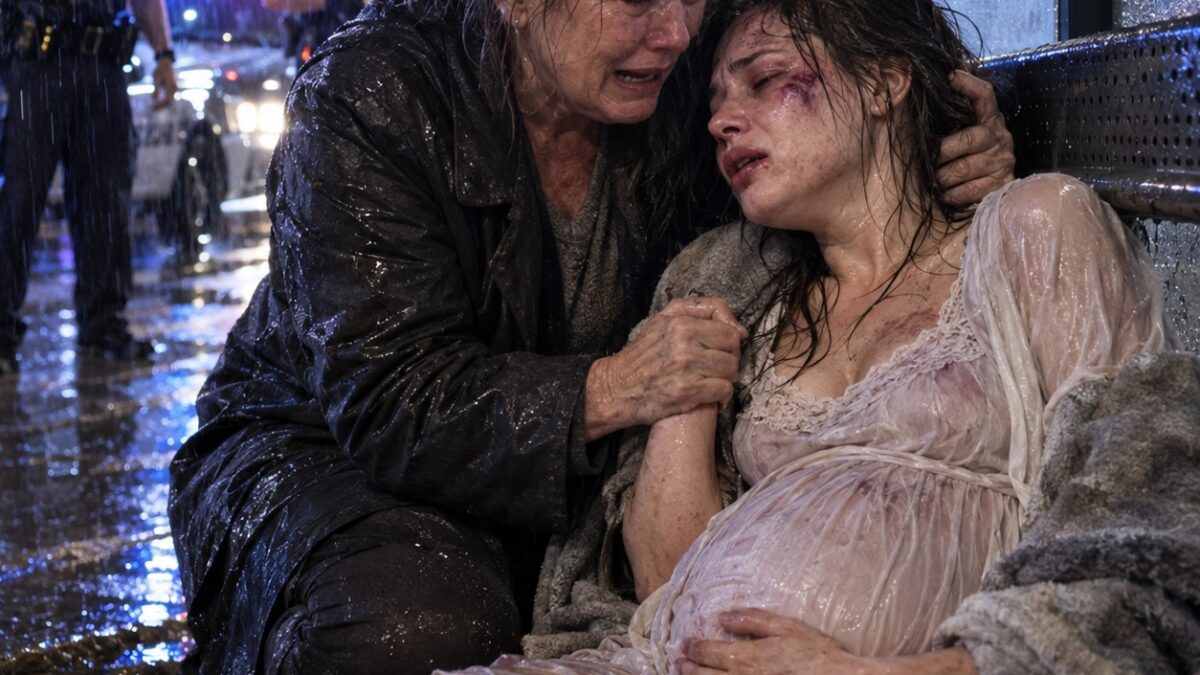
At five in the morning, the police found my pregnant daughter half-conscious at a freezing bus stop, and before sunrise I learned that the people who had promised to love her were the ones she feared most.
The Whitmores had money, lawyers, political connections, and the kind of family name that made ordinary people lower their voices—but there was one thing they had never bothered to learn about me.
By the time I discovered what had really happened inside their beautiful mansion, I was already standing one heartbeat away from doing something none of us could ever take back.
My name is Anna Mercer, and the worst phone call of my life came at 5:07 on a Thursday morning.
I remember the exact time because the glowing red numbers on my bedside clock were the last ordinary thing I saw before my world split in two.
“Mrs. Mercer?”
The voice belonged to a police officer.
My daughter Emma had been found alone at a bus stop on the north side of town.
She was twenty-four years old.
Five months pregnant.
Barefoot.
Soaked by freezing rain.
And barely responsive.
I don’t remember getting dressed.
I don’t remember locking my front door.
I remember driving.
Rain hammered my windshield so hard the wipers could barely keep up, and every red light felt like someone physically holding me back while my child needed me.
Emma had married Carter Whitmore three years earlier.
The Whitmores were the kind of family whose last name appeared on hospital wings, charity galas, scholarship funds, and expensive brass plaques downtown. Carter’s father had died years earlier, leaving behind commercial property, investment accounts, and a fortune large enough that nobody in the family had needed to hear the word “no” for decades.
Carter’s mother, Victoria, wore elegance like armor.
She never raised her voice in public.
She never forgot a birthday.
She donated to women’s shelters every Christmas.
And from the first day I met her, something about the way she looked at my daughter made my stomach tighten.
Not hatred.
Something colder.
Ownership.
When I reached the bus stop, red and blue lights were spinning across the wet pavement.
Then I saw Emma.
She was curled beneath the shelter, wrapped in a paramedic’s thermal blanket, one arm protectively across her stomach.
“Emma!”
I ran toward her.
A paramedic caught me before I dropped to my knees.
“Ma’am, please—”
“That’s my daughter.”
Emma’s eyes fluttered.
“Mom?”
I leaned close.
“I’m here, sweetheart.”
Her fingers found my wrist.
They were ice-cold.
“Who did this?”
Her lips trembled.
For several seconds, I thought she wouldn’t answer.
Then she whispered, “The silver.”
I leaned closer.
“What?”
“I didn’t polish it right.”
My stomach turned.
“Emma, who hurt you?”
Her eyes filled with tears.
“Victoria held me down.”
My breathing stopped.
“And Carter?”
Emma squeezed her eyes shut.
When she spoke again, her voice was barely audible.
“I told him I was pregnant.”
Then came the words that would follow me for the rest of my life.
“He said the baby was a mistake.”
At St. Catherine’s Hospital, surgeons took Emma away from me before I could ask anything else.
Hours later, Dr. Nathan Reed finally came through the double doors.
His expression told me everything before his mouth did.
“Your daughter has suffered severe trauma,” he said carefully. “There’s significant swelling around her brain, and we’re watching several internal injuries very closely.”
“And my grandbaby?”
“We still have cardiac activity.”
Still.
Such a tiny word.
Such a terrifying word.
“Will Emma wake up?”
He hesitated.
“I can’t promise you that.”
I entered the ICU and sat beside my daughter while machines breathed and beeped around us.
For almost an hour, I said nothing.
I imagined Carter sleeping in his enormous bed.
I imagined Victoria sipping tea beneath the chandelier Emma had once told me she hated.
I imagined them believing money could make this disappear.
Something inside me broke.
I left the hospital.
Drove home.
Opened the old steel cabinet in my garage.
And stared at the life I had buried twenty-five years earlier.
By late afternoon, I was standing across the road from the Whitmore mansion with rain running down my face and a decision in front of me that could destroy every person involved—including me.
Then my phone vibrated.
ST. CATHERINE’S HOSPITAL.
I froze.
And for the first time since dawn, I became afraid of what I might hear.
FULL STORY CONTINUATION 👇👇
I answered on the first ring.
“Hello?”
“Mrs. Mercer?”
It was Dr. Reed.
My knees nearly gave out.
“Is she gone?”
“No.”
The single word struck me harder than anything else that day.
“No,” he repeated. “Emma is still with us.”
I closed my eyes.
Rain slid down my cheeks and mixed with tears I hadn’t realized were falling.
“What happened?”
“We saw a change in her neurological response.”
I gripped the phone tighter.
“What kind of change?”
“When one of the nurses was repositioning her, Emma reacted to a painful stimulus. It was small, but it was purposeful enough that we’re repeating several evaluations.”
“Does that mean she’ll wake up?”
“I don’t want to give you false hope.”
“I didn’t ask for hope. I asked what it means.”
There was a pause.
“It means I would not tell you to say goodbye tonight.”
I looked across the street at the Whitmore mansion.
Warm yellow light glowed behind enormous windows.
A black SUV was parked beneath the covered entrance.
Someone moved behind an upstairs curtain.
For the previous twenty minutes, I had imagined that house disappearing.
Now I saw something else.
Evidence.
Rooms.
Phones.
Cameras.
Clothes.
Computers.
People who could testify.
Truth that would vanish if I surrendered to rage.
I lowered my hand.
“Doctor, I’m coming back.”
I turned away from the mansion.
That was when I heard a car door close behind me.
I spun around.
A dark sedan sat thirty feet away.
The driver stepped out slowly.
Gray hair.
Long tan coat.
Same slight limp he’d had twenty-five years earlier.
“Anna.”
I stared at him.
“Daniel.”
Daniel Ruiz had once been the best investigator I knew.
Back when I had been someone else.
Back when people called me Special Agent Mercer.
He looked at what I was holding, then looked toward the Whitmore house.
“You called me at nine thirteen this morning,” he said.
“I remember.”
“You told me your daughter had been attacked.”
“Yes.”
“You asked me whether I still knew people in the state attorney general’s office.”
“Yes.”
“And then you stopped answering your phone.”
I looked away.
Daniel’s voice softened.
“You were going to do something stupid.”
“I was going to do something understandable.”
“That’s not the same as something survivable.”
“They left my daughter on the street.”
“I know.”
“She is five months pregnant.”
“I know.”
“They thought she would die.”
Daniel stepped closer.
“And if you throw away your life tonight, they win twice.”
I hated him for saying it.
Mostly because he was right.
Twenty-five years earlier, I had worked financial crimes and organized fraud for a federal task force.
I wasn’t some assassin.
I wasn’t a vigilante.
I had spent eleven years building cases against men who thought money could place them outside the law.
Then my husband Michael died.
Emma was only six.
I left.
I became a mother who ran a small bookkeeping business from home, coached soccer, packed lunches, and attended parent-teacher conferences.
I never told Emma much about my former career.
I certainly never told Carter.
The Whitmores knew me as the quiet widow from a modest neighborhood.
Victoria once asked whether bookkeeping was “something you did for entertainment.”
I had smiled.
Let her underestimate me.
Until that morning, it hadn’t mattered.
Daniel reached out his hand.
“Give it to me.”
I stood motionless.
“Anna.”
My fingers finally released.
He took the object from my hand and placed it safely out of reach.
Neither of us spoke about what might have happened.
We didn’t need to.
“I want them arrested,” I said.
“So do I.”
“Tonight.”
“That may not happen tonight.”
“Then make it happen faster.”
His face hardened.
“This is exactly why you shouldn’t be running this yourself.”
“I’m not asking to run anything.”
“You’re standing outside their house in the rain after disappearing from a hospital.”
“I said I’m not asking.”
Daniel watched me for a long moment.
Then he nodded toward his car.
“Get in.”
“I’m going to the hospital.”
“I’ll drive.”
On the way, he told me what he had already learned.
The police had gone to the Whitmore estate that morning.
Carter claimed Emma had become “emotionally unstable” because of the pregnancy.
Victoria claimed Emma had left the house voluntarily after a family disagreement.
According to them, nobody knew how she had been injured.
I stared through the windshield.
“They’re saying she did this to herself?”
“Not exactly.”
“They’re planting the idea.”
“Yes.”
“Of course they are.”
“Anna, listen to me. Your daughter made statements to the paramedics and to you. That matters.”
“She was barely conscious.”
“It still matters.”
“What else?”
Daniel hesitated.
“There’s a problem.”
I turned toward him.
“What problem?”
“The Whitmore family attorney arrived before detectives finished the initial interviews.”
“Who?”
“Lawrence Pike.”
I knew the name.
Everyone did.
Pike had built his career defending corporations, politicians, executives, and wealthy families whose problems were usually solved before they ever saw a courtroom.
“How did he get there so quickly?”
“That’s one of the things bothering me.”
I looked at the dashboard clock.
“Police found Emma shortly before five.”
“Yes.”
“When did Pike arrive?”
“Six twenty-eight.”
I felt a chill that had nothing to do with my wet clothes.
“That means someone called him before they called an ambulance.”
Daniel glanced at me.
“That possibility has occurred to me.”
At the hospital, Emma looked even smaller than before.
Her dark hair had been cleaned.
A white bandage disappeared beneath it near her temple.
Machines surrounded her.
The steady monitor beside her bed became the only sound I trusted.
I sat down.
“I almost left you today,” I whispered.
Daniel stayed near the door.
“I almost became someone you wouldn’t recognize.”
Emma didn’t move.
I touched the back of her hand.
“I’m sorry.”
A nurse entered several minutes later.
Her name badge read HANNAH BROOKS.
“Mrs. Mercer?”
“Yes?”
“I’m Hannah. I’ve been with Emma since she came upstairs.”
“Thank you.”
She adjusted one of the lines carefully.
“She has a fighter’s heart.”
I tried to smile.
Hannah looked at Daniel, then at me.
“Are you immediate family?”
“I’m her mother.”
“And he’s—”
“An old friend.”
Daniel showed her identification from the state investigative unit he now consulted with.
Hannah nodded.
“There’s something you should know.”
My body went rigid.
“What?”
“When we changed Emma out of the gown she arrived in, we found something taped inside the hem.”
She reached into a plastic patient-belongings bag.
“What?”
Hannah held up a small object sealed in an evidence pouch.
A microSD card.
I stared at it.
“What is that?”
“We don’t know what’s on it.”
Daniel stepped forward.
“Who has handled this?”
“Me, Dr. Reed, and the charge nurse. Nobody else.”
“Has local law enforcement been notified?”
“Not yet. We discovered it about twenty minutes ago.”
Daniel looked at me.
Emma’s whisper echoed in my mind.
The silver.
I stared at the tiny memory card.
“She hid it.”
Daniel’s eyes sharpened.
“You think so?”
“I know my daughter.”
He took a slow breath.
“Then we need to document chain of custody before anyone opens it.”
I looked toward Emma.
“What were you trying to tell me, baby?”
The answer came three hours later.
Not in Emma’s voice.
In Victoria Whitmore’s.
Daniel arranged for the card to be copied under evidence protocol.
A detective named Maya Foster joined us in a small consultation room inside the hospital.
She was younger than I expected, perhaps thirty-five, with tired eyes and a calm way of speaking.
“We have eleven video files,” she said.
“Video?”
“And audio.”
She set a laptop on the table.
“The timestamps cover approximately six weeks.”
My stomach tightened.
“Play it.”
“Mrs. Mercer, some of this may be difficult—”
“Play it.”
Daniel gave me a warning look.
I ignored him.
The first recording appeared to come from a fixed position.
A dining room.
I recognized it immediately.
The Whitmore dining room.
Long mahogany table.
Crystal chandelier.
Cabinet full of antique silver.
Victoria stood beside Emma.
My daughter wore a pale blue dress.
Her pregnancy was only beginning to show.
Victoria held a silver serving spoon.
“Again,” she said.
Emma’s voice was quiet.
“I already cleaned the entire set.”
“I didn’t say cleaned.”
Victoria held the spoon toward the light.
“I said polished.”
“It looks polished.”
“Then perhaps pregnancy has damaged your eyesight.”
I felt my jaw tighten.
On screen, Emma looked exhausted.
“Victoria, I have a doctor’s appointment in forty minutes.”
“Carter’s driver can take you afterward.”
“Carter said he was coming with me.”
Victoria smiled.
“Oh, sweetheart.”
That smile.
I had seen it at Christmas dinners.
At Emma’s wedding shower.
At charity events.
Kind from a distance.
Cruel when you stood close enough.
“My son runs companies,” Victoria continued. “He cannot spend every afternoon listening to a doctor explain basic female biology.”
Emma lowered her eyes.
The next video showed Carter.
He was pacing in the kitchen.
Emma stood near the refrigerator.
“You called your mother?”
“Yes.”
“Why?”
“She’s my mother.”
“You know what I mean.”
“No, Carter. I don’t.”
“You told her we argued.”
“I told her I was tired.”
“She hates us.”
“My mother doesn’t hate you.”
“She thinks we’re rich monsters.”
I nearly laughed.
Apparently Carter had been more perceptive than I gave him credit for.
Then he stepped close to Emma.
Too close.
“You live in my house.”
“Our house.”
His expression changed.
It was subtle.
Ugly.
“No, Emma.”
He pointed downward.
“My house.”
Daniel stopped the video.
“Enough for tonight.”
“No.”
“Anna.”
“Keep going.”
File after file revealed a life my daughter had hidden from me.
Not because she trusted the Whitmores.
Because she was ashamed.
That realization hurt almost as much as seeing the abuse.
Victoria controlled the household staff and frequently dismissed them before humiliating Emma.
Carter monitored her spending despite being worth millions.
They criticized what she ate.
How she dressed.
How she sat.
How she spoke.
When she became pregnant, things worsened.
Carter accused her of “trapping” him.
Victoria complained that the pregnancy had come at an inconvenient time for Carter’s political ambitions.
Political ambitions.
That was new.
Detective Foster paused the footage.
“What ambitions?”
Daniel answered.
“State senate.”
I looked at him.
“He’s running?”
“Exploratory committee. Announcement expected next month.”
Everything suddenly made more sense.
Emma’s pregnancy.
Their image.
Their panic.
Their need to control the story.
“How long have you known?” I asked Daniel.
“Since this afternoon.”
“You didn’t tell me.”
“You were carrying enough.”
I turned back to the screen.
“Show me the last recording.”
Foster hesitated.
“The final file is from last night.”
My throat closed.
“Play it.”
The camera angle was lower this time.
Hidden.
The silver cabinet filled most of the frame.
Emma must have placed a phone or small camera between the decorative pieces.
Victoria entered first.
Then Emma.
Victoria held a cloth.
“You embarrassed me.”
“I said I was sorry.”
“You served Senator Bell with fingerprints on his fork.”
“It was one fingerprint.”
“He noticed.”
“No, you noticed.”
Silence.
Even through the recording, I felt the temperature change.
Victoria stepped closer.
“Excuse me?”
Emma looked frightened.
But she didn’t back away.
“I’m tired of this.”
“Tired of what?”
“Being treated like an employee.”
“You contribute nothing to this family.”
“I’m carrying your grandchild.”
Victoria’s mouth tightened.
“A circumstance I have not yet decided to celebrate.”
My fists clenched.
Emma stared at her.
Then she said something I had never expected.
“I’m leaving.”
Victoria’s expression changed.
Not shock.
Fear.
Only for a second.
But I saw it.
Emma continued.
“I’ve already spoken to an attorney.”
Daniel leaned toward the screen.
I looked at him.
“You knew?”
He shook his head.
“I didn’t.”
Emma said, “I’m taking the baby, and I’m leaving Carter.”
Victoria walked to the dining room door.
Closed it.
Locked it.
Then she turned.
“What attorney?”
“That’s none of your business.”
“It becomes my business when you threaten my son.”
“I’m not threatening him.”
“You’re threatening his future.”
“He did that himself.”
Another voice came from outside the camera frame.
Carter.
“What did you say?”
He entered.
Emma went pale.
“I’m leaving.”
Carter laughed once.
A sharp, humorless sound.
“No, you’re not.”
“I am.”
“You’re emotional.”
“I’ve never been more certain.”
“You’re pregnant.”
“That doesn’t make me stupid.”
“You think you can take my child?”
“Our child.”
“My child.”
Emma shook her head.
“No.”
The argument escalated.
I won’t repeat every word.
Some sentences became permanently carved into me.
Others I spent years trying to forget.
What mattered was that Emma refused to surrender.
For the first time in the recordings, my daughter stopped trying to please them.
She told Carter she had documented months of threats.
She told Victoria she knew about financial transactions connected to Carter’s campaign.
That changed everything.
Daniel paused the recording.
“What transactions?”
I stared at the screen.
“I don’t know.”
Detective Foster wrote something down.
“Keep going.”
Carter’s voice became lower.
“What did you find?”
Emma answered, “Payments from the foundation.”
Victoria stepped toward her.
“You’ve been looking through private documents?”
“They were on the office printer.”
“What documents?”
“Transfers.”
Carter looked at his mother.
Victoria looked back.
For the first time, both of them appeared genuinely frightened.
Then the recording shook.
Someone had hit the cabinet.
Emma cried out.
The picture blurred.
There were voices.
Movement.
The sound of something falling.
I pushed my chair away from the table.
“I’m done.”
Daniel closed the laptop immediately.
My hands were trembling.
Detective Foster said quietly, “Mrs. Mercer, the recording continues for another eleven minutes.”
“I said I’m done.”
Nobody argued.
I walked into the hallway.
For several minutes, I stood beside a vending machine staring at a bag of potato chips as though it contained the answer to why human beings could become monsters.
Then Daniel joined me.
“She had evidence,” I said.
“Yes.”
“That’s why they panicked.”
“Possibly.”
“Not because of silver.”
“No.”
“The silver was where she hid the camera.”
Daniel nodded.
Emma’s broken whisper finally made sense.
The silver.
She hadn’t been explaining why they hurt her.
She had been telling me where the truth was.
“I thought she meant they attacked her over silverware.”
“So did I.”
“She was trying to protect the evidence.”
“Yes.”
I covered my mouth.
Even injured, freezing, and terrified for her baby, my daughter had been thinking.
Planning.
Fighting.
I had never been more proud of her.
Or more ashamed that she believed she had to fight alone.
“Anna.”
I looked at Daniel.
“There’s more.”
I almost laughed.
“Of course there is.”
“Those financial transfers Emma mentioned may be important.”
“How important?”
“Potentially very.”
“Tell me.”
“Carter’s mother runs the Whitmore Family Foundation.”
“I know.”
“Last year, the foundation reported almost nine million dollars in charitable distributions.”
“So?”
“So several organizations listed as recipients appear not to exist.”
I stared at him.
“You checked already?”
“I made calls.”
“You’ve had less than twelve hours.”
“I drink too much coffee.”
Despite everything, a small laugh escaped me.
It disappeared just as quickly.
“You think they were stealing from their own charity.”
“I think I don’t know yet.”
“Daniel.”
“I think somebody was moving money.”
“Campaign money?”
“Possibly.”
“Laundering?”
“Possibly.”
“Bribes?”
“Anna.”
“Say it.”
He sighed.
“All of those possibilities are being examined.”
I looked through the ICU windows toward my daughter’s room.
“So Emma found something much bigger than abuse.”
“That may be why the response became so extreme.”
“And they thought if she died…”
“The evidence might disappear.”
My stomach turned cold.
That was the moment the case changed for me.
Until then, I had seen Carter and Victoria as cruel people who had lost control.
Now another possibility stood before me.
What if they hadn’t lost control?
What if leaving Emma at that bus stop had not been panic?
What if it had been a decision?
I returned to Emma’s bedside shortly before midnight.
Dr. Reed was cautiously encouraged.
Her intracranial pressure had stabilized.
The baby’s heartbeat remained steady.
Nothing was safe.
Nothing was promised.
But they were alive.
Both of them.
I leaned close to Emma.
“I found the card.”
Her face remained still.
“You did it, sweetheart.”
I touched her fingers.
“You protected yourself.”
A tear rolled down my cheek.
“Now let me protect you.”
I paused.
“No. That’s not right.”
I looked at her sleeping face.
“You don’t need me to rescue you. You already started rescuing yourself.”
The next morning, Carter Whitmore appeared on television.
I was sitting in the hospital cafeteria with Daniel when his face filled the screen mounted above the coffee station.
He wore a navy suit.
Perfect tie.
Perfect hair.
His eyes looked tired enough to seem sympathetic but not guilty.
Lawrence Pike stood beside him.
Reporters crowded outside the Whitmore estate.
Carter began reading from a statement.
“My family is devastated by the tragic medical emergency involving my beloved wife, Emma.”
I stood so quickly my chair scraped backward.
Daniel grabbed my arm.
“Sit.”
“That son of a—”
“Anna.”
On television, Carter continued.
“Emma has struggled emotionally during what has been a complicated pregnancy. My mother and I love her deeply and are praying for her complete recovery.”
I felt physically sick.
Then he said the sentence that made the entire cafeteria disappear around me.
“We respectfully ask the public not to spread false accusations during this painful family crisis.”
False accusations.
He was doing it.
Exactly what Daniel predicted.
Turning Emma’s injuries into instability.
Replacing violence with concern.
Turning himself into the grieving husband.
A reporter shouted, “Mr. Whitmore, did your wife accuse you of assault?”
Pike stepped toward the microphones.
“No further questions.”
Carter walked away.
I stared at the screen.
“He knows she’s alive.”
Daniel nodded.
“He also knows police spoke with paramedics.”
“He’s afraid.”
“Yes.”
“Good.”
Daniel looked at me carefully.
“That word worries me when you say it like that.”
“I’m not going back to his house.”
“Glad to hear it.”
“I’m going to destroy his lie.”
“That I can help with.”
By noon, detectives obtained warrants.
The existence of Emma’s recordings changed everything.
Police searched the Whitmore estate.
The media helicopters arrived before the first evidence van.
Carter and Victoria were not arrested immediately.
That infuriated me.
Detective Foster explained why.
“We build this correctly.”
“You have video.”
“We have video of threats and portions of the confrontation.”
“You have Emma’s statement.”
“Yes.”
“You have her injuries.”
“Yes.”
“Then arrest them.”
“We need to prove who caused which injuries, what happened after the recording ended, who transported her, whether anyone attempted to obtain medical help, and whether other crimes occurred.”
“They’re buying time.”
“No,” Foster said. “We’re taking theirs away.”
I didn’t like it.
But I understood it.
That afternoon, investigators found something in the Whitmore garage.
Emma’s blood.
Not much.
Enough.
They also found her torn robe in a trash bag.
Carter’s golf clubs had recently been cleaned.
One club was missing.
Victoria claimed the missing club had been lost months earlier.
A household employee disagreed.
Her name was Rosa Delgado.
She had worked for the Whitmores for eleven years.
The police found her after discovering that Victoria had fired her two days before Emma was hospitalized.
When Rosa entered the hospital conference room, she looked terrified.
She was in her late fifties, with graying hair pulled into a bun and hands that twisted together constantly.
“You are Emma’s mother?” she asked.
“Yes.”
Her eyes filled immediately.
“I am sorry.”
I stood.
“For what?”
“I should have called you.”
My heart began pounding.
“What did you know?”
Rosa looked toward Detective Foster.
Foster nodded gently.
“Tell her.”
Rosa took a breath.
“Mrs. Whitmore was cruel to Emma for long time.”
“How long?”
“After wedding. Small things first.”
“What small things?”
“She make her change clothes. Tell her how to speak. Make kitchen cook special meals but then tell Emma she eat too much.”
I closed my eyes.
Rosa continued.
“Mr. Carter check her phone.”
“I knew that.”
“You knew?”
“I know now.”
Rosa wiped her eyes.
“I tell Emma she can use my phone if she need.”
“Did she?”
“Once.”
“When?”
“Maybe two months ago.”
“Who did she call?”
“A lawyer.”
Daniel and Foster exchanged looks.
“Do you know the lawyer’s name?” Foster asked.
Rosa nodded.
“Rachel Kim.”
Within twenty minutes, Detective Foster was on the phone.
Rachel Kim arrived at the hospital just before four.
She was a family-law attorney.
Emma had contacted her about divorce.
But divorce wasn’t the only reason.
Rachel carried a sealed envelope.
“Emma gave me instructions,” she said.
“What instructions?” I asked.
“If anything happened to her, I was supposed to deliver copies of certain documents to law enforcement and to you.”
My skin prickled.
“To me?”
“Yes.”
“Why didn’t you contact me this morning?”
“I didn’t know what had happened until I saw Carter’s press conference.”
She placed the envelope on the table.
“I called immediately.”
Inside were bank statements.
Foundation records.
Campaign planning documents.
Copies of emails.
And a handwritten letter addressed to me.
Mom,
If you’re reading this because something happened to me, please don’t blame yourself.
I stared at the sentence until the words blurred.
I had to stop.
Daniel rested his hand on my shoulder.
“Want me to read it?”
“No.”
I continued.
I should have told you sooner.
I kept thinking I could fix this without hurting you. After Dad died, you gave me everything. You rebuilt our life from nothing, and I promised myself I would never become another burden you had to carry.
I know now how foolish that sounds.
You always told me love should make a person more themselves, not less.
Somewhere along the way, I stopped recognizing myself.
Carter wasn’t like this when we met. Or maybe he was, and I only saw what he wanted me to see.
His mother frightens me more than he does.
Not because she shouts.
She almost never shouts.
She simply decides what reality is supposed to be and punishes anyone who refuses to live inside it.
I found financial documents accidentally. They involve the Whitmore Foundation, Carter’s campaign, and companies I don’t recognize.
When I told Carter I wanted a divorce, he said I would never take his child away.
When I told Victoria I had copies of the transfers, she became very calm.
That scared me.
Rachel has copies.
There are also recordings hidden where Victoria keeps the silver service.
If I’m alive, come find me.
If I’m not, make sure they don’t rewrite who I was.
Please don’t do anything reckless.
That line broke me.
Please don’t do anything reckless.
Even before the bus stop.
Before the hospital.
Before I stood across from their mansion imagining revenge.
My daughter knew me better than I knew myself.
The final paragraph was only three sentences.
I love you.
I am trying to be brave.
If this goes badly, tell my baby that I tried to get us both home.
I pressed the letter against my chest and wept.
Not quietly.
Not gracefully.
Everything I had held inside since 5:07 that morning came out.
Anger.
Fear.
Guilt.
Relief.
Grief for a daughter who was still technically alive but whose voice I missed desperately.
When I finally stopped shaking, Detective Foster said, “Anna, these records are significant.”
“How significant?”
“Enough that this is no longer just a domestic violence investigation.”
Daniel looked grim.
“State investigators are bringing in financial crimes.”
I wiped my eyes.
“And federal?”
“Probably soon.”
“What did Emma find?”
Foster turned one bank statement toward me.
My old instincts woke immediately.
The transfer pattern was familiar.
Multiple payments.
Just below internal review thresholds.
Shell consulting companies.
Round amounts broken into smaller transfers.
Foundation accounts feeding vendors that appeared unrelated to charity.
“Layering,” I whispered.
Daniel looked at me.
“You still see it.”
“You don’t forget.”
I traced one company name with my finger.
Redwood Civic Strategies LLC.
“Who owns this?”
“We’re checking.”
I looked at another.
North Harbor Communications.
Another.
Belltower Advisory.
Same addresses?
Different states.
Similar incorporation dates.
The structure felt deliberate.
“They’re washing foundation money through vendors.”
“That’s one theory,” Daniel said.
“And feeding Carter’s campaign.”
“Possibly.”
Rachel spoke quietly.
“Emma believed Victoria was using charitable funds to finance Carter’s political network.”
“Why?”
“She saw invoices.”
“For what?”
“Polling. Consultants. Travel. Opposition research.”
My eyes narrowed.
“Paid through a charity.”
“Yes.”
Daniel leaned back.
“If true, that’s bad.”
“No,” I said.
Everyone looked at me.
“That’s arrogant.”
I knew criminals who were clever.
I knew criminals who were cautious.
The dangerous ones were often neither.
They simply spent so many years getting away with smaller things that eventually they stopped believing consequences applied to them.
Victoria Whitmore had probably spent decades bending people.
Staff.
Boards.
Donors.
Her own son.
My daughter.
She had confused obedience with invincibility.
And now she had made the oldest mistake in the world.
She had underestimated someone she considered unimportant.
Emma.
By evening, reporters were camped outside the hospital.
Carter’s attorneys released another statement.
They suggested Emma’s recordings were “selectively edited.”
They claimed the financial documents had been “misinterpreted.”
They announced that Carter was cooperating fully with investigators.
Victoria said nothing.
That worried me more.
Carter performed innocence.
Victoria planned.
At nine thirty that night, Rosa called Detective Foster.
Someone had entered her apartment.
Nothing valuable had been taken.
Only a folder containing old employment records.
Foster immediately arranged protection.
At ten fifteen, Rachel reported that someone had tried unsuccessfully to access her office cloud account.
At eleven, a black SUV circled my house twice.
Daniel sent a patrol unit.
“They’re scared,” I said.
He was sitting beside me in the ICU waiting room.
“Maybe.”
“You keep saying maybe.”
“Investigators survive by respecting maybe.”
“I hated that about you twenty-five years ago.”
“You hated everything about me twenty-five years ago.”
“No. Your coffee was good.”
“It still is.”
“It was terrible.”
“Then why did you drink it?”
“Because federal buildings are cruel places.”
For a moment, we smiled.
Then a nurse ran toward Emma’s room.
My smile disappeared.
I stood.
Another nurse followed.
Then Dr. Reed.
“What happened?”
Nobody answered.
The doors closed.
I pressed my hands against the glass.
“Emma?”
Daniel came beside me.
Ten minutes felt like ten years.
Finally Dr. Reed stepped out.
“What happened?”
“Her heart rate changed suddenly.”
“Why?”
“We believe she may have experienced a seizure.”
My knees weakened.
“And the baby?”
“Stable for now.”
“For now.”
He looked exhausted.
“Anna, her condition remains extremely serious.”
“I know.”
“We’re managing the swelling. The next twenty-four to forty-eight hours matter.”
“Is she dying?”
He did not answer quickly.
That was answer enough.
I sat beside her until dawn.
At some point, I fell asleep with my head near her hand.
I dreamed of Emma at six years old.
She was standing in our old kitchen wearing dinosaur pajamas.
Michael had died only three months earlier.
I had been trying to make pancakes.
I burned them.
Emma ate one anyway.
“These are crunchy,” she told me.
“They’re terrible.”
“No.”
“They’re objectively terrible.”
“What’s objectively?”
“It means even science agrees.”
She thought for a moment.
Then poured syrup over the black pancake.
“Science doesn’t know everything.”
When I opened my eyes, morning light filled the ICU.
And Emma’s finger moved beneath mine.
I froze.
“Emma?”
Nothing.
I leaned closer.
“Baby?”
Her index finger moved again.
Tiny.
Barely visible.
But I saw it.
“Nurse!”
Hannah rushed inside.
“What happened?”
“She moved.”
“Where?”
“Her finger.”
Hannah leaned over Emma.
“Emma? Can you hear me?”
No response.
She called Dr. Reed.
They tested her.
Voice.
Pressure.
Commands.
At first nothing happened.
Then Reed said, “Emma, if you can hear me, squeeze your mother’s hand.”
Nothing.
My hope began collapsing.
“Come on, sweetheart.”
I bent close.
“It’s Mom.”
A pause.
Then pressure.
Weak.
Almost imaginary.
But unmistakable.
Emma squeezed my hand.
I broke.
I laughed and cried at the same time.
“That’s it.”
Dr. Reed smiled for the first time since I met him.
“Again, Emma.”
Her fingers tightened.
Hannah covered her mouth.
Daniel, standing near the door, lowered his head.
“Emma,” Reed continued, “can you open your eyes?”
For several seconds, nothing happened.
Then one eyelid fluttered.
Not fully.
Just enough.
I kissed her hand.
“You came back.”
Her lips moved.
I leaned close.
“What?”
No sound.
“Don’t try to talk.”
She tried anyway.
One breath.
One word.
“Baby?”
I cried harder.
“The baby’s here.”
Her brow tightened.
“Alive?”
“Yes.”
Her entire body seemed to relax.
“Yes, sweetheart. Alive.”
A tear slipped from the corner of her eye.
Then she drifted back under.
But this time the doctors called it sleep.
Not coma.
By noon, the news had spread through the investigative team.
Emma might eventually be able to testify.
That changed Carter’s behavior immediately.
At 1:18 p.m., he arrived at the hospital.
He brought flowers.
White roses.
Emma hated white roses.
Our security officer stopped him before he reached the ICU.
I saw him from the hallway.
He looked smaller than he did on television.
He spotted me.
“Anna.”
I walked toward him.
Daniel followed.
Carter opened his hands.
“I came to see my wife.”
“No.”
“She’s my wife.”
“She’s a patient.”
“I have legal rights.”
“Not today.”
His jaw tightened.
“This is ridiculous.”
I stared at him.
It was remarkable.
He genuinely believed he was the injured party.
“You left her at a bus stop.”
His eyes flicked toward the security cameras.
“I did no such thing.”
“She named you.”
“She was confused.”
“We have recordings.”
For the first time, his confidence faltered.
Only a fraction.
But enough.
“What recordings?”
I almost smiled.
“Interesting question.”
Pike appeared from behind him.
“Carter.”
One word.
Warning.
Carter stopped speaking.
Pike faced me.
“Mrs. Mercer, emotions are understandably high.”
“Don’t.”
“Excuse me?”
“Don’t speak to me like I’m a hysterical relative you can calm down with polished sentences.”
His expression changed.
Daniel stepped beside me.
Pike recognized him.
“Mr. Ruiz.”
“Lawrence.”
The attorney looked between us.
“You two know each other?”
Daniel smiled without warmth.
“Long time.”
Carter looked confused.
“Who is he?”
I finally understood something powerful.
Carter had never researched me.
Why would he?
In his world, mothers like me existed around the edges of important people.
We brought casseroles.
Sent birthday cards.
Helped choose curtains.
We did not have histories.
We did not have contacts.
We did not have teeth.
Pike, however, had.
His face told me that.
“What exactly did you do before bookkeeping?” Carter asked.
I looked at him.
“Nothing you need to worry about.”
Daniel almost laughed.
Pike didn’t.
Security escorted them out.
An hour later, police arrested Carter Whitmore.
The charges were preliminary.
Aggravated assault.
Domestic battery.
Reckless endangerment.
Tampering with evidence.
Victoria was arrested forty-three minutes later.
She walked out of the Whitmore estate wearing sunglasses despite the cloudy sky.
She did not look frightened.
She looked offended.
That image appeared on every news channel in the state.
But the story was only beginning.
Because Carter and Victoria made bail.
Money still worked.
For a while.
They were ordered to stay away from Emma and all witnesses.
Their passports were surrendered.
Their attorneys attacked every element of the investigation.
Then the federal subpoenas arrived.
The Whitmore Family Foundation’s offices were searched.
So was Carter’s campaign headquarters.
Computers disappeared into evidence trucks.
Accountants began talking.
An assistant named Brett Harmon admitted that campaign invoices had been routed through nonprofit vendors.
A former foundation controller produced emails.
Board members claimed Victoria had personally approved payments without normal review.
Every day revealed another thread.
Every thread led back toward the mansion.
Emma improved slowly.
She opened her eyes for longer periods.
Then she began answering yes-or-no questions.
Speech took more time.
Her voice was fragile.
Memory came in fragments.
She remembered arguing.
She remembered the dining room.
She remembered Carter grabbing her phone.
She remembered Victoria pulling her hair.
Then darkness.
“What about the bus stop?” Detective Foster asked gently one afternoon.
I sat beside Emma.
She stared at the ceiling.
“Car.”
“What car?”
“Carter’s.”
“Who drove?”
Her face tightened.
“I don’t know.”
“That’s okay.”
“Back seat.”
“You were in the back seat?”
Emma nodded.
“Could you hear anyone?”
She swallowed.
“Victoria.”
“What did she say?”
Emma closed her eyes.
I took her hand.
“You don’t have to do this today.”
“Yes.”
Her voice was weak.
But determined.
“She said…”
Emma stopped.
Tears formed.
Detective Foster waited.
Nobody rushed her.
Finally Emma whispered, “She said nobody would believe me.”
My fingers tightened around hers.
“Anything else?”
Emma nodded.
“She told Carter to take my ring.”
“Why?”
“So it looked like…”
She struggled.
“Robbery?”
Foster asked.
Emma nodded.
My skin went cold.
“Did Carter take it?”
“Yes.”
“Where is the ring now?”
“I don’t know.”
Investigators searched again.
Three days later, Emma’s wedding ring was found.
Not at the bus stop.
Not lost in the rain.
It was inside Carter’s locked desk drawer.
That single piece of evidence demolished half of his story.
Then came the driver.
His name was Marcus Bell.
He had worked for the Whitmores for six years.
He disappeared the morning Emma was found.
Police located him in a motel two states away.
At first, he denied everything.
Then investigators showed him the recordings.
The blood evidence.
The ring.
Phone location data.
And financial transfers proving Victoria had wired him $75,000 the morning after Emma was hospitalized.
Marcus asked for a lawyer.
Then he asked for a deal.
His testimony changed the entire case.
He said Carter called him shortly after midnight.
When Marcus arrived, Emma was unconscious on the floor.
He wanted to call 911.
Victoria refused.
“She said hospitals ask questions,” Marcus told investigators.
Carter was panicking.
He kept saying, “She wasn’t supposed to fall like that.”
Victoria remained calm.
She instructed Marcus to bring the SUV around to the side entrance.
They placed Emma in the back seat.
Marcus claimed he believed they were taking her to a private medical clinic.
Instead, Victoria ordered him toward the north side.
Near the bus station.
Marcus protested.
Carter told him to keep driving.
When they reached the bus stop, Carter and Marcus carried Emma out.
Victoria placed Emma’s purse nearby.
Carter removed her wedding ring.
Marcus asked again whether they should call an ambulance.
Victoria answered, “Someone will find her.”
It was winter.
After midnight.
Freezing rain.
They left.
Marcus drove them home.
Then Victoria paid him.
He fled.
When Detective Foster told me, I didn’t speak for nearly a minute.
Finally I asked, “Did they know she was alive?”
“Yes.”
“They knew she was pregnant.”
“Yes.”
“They knew she needed a hospital.”
“Yes.”
Daniel was standing near the window.
I looked at him.
For one horrible second, I was back outside that mansion.
Rain.
Darkness.
Rage.
I understood why human beings destroy themselves chasing revenge.
There is a kind of anger so pure it feels righteous.
That is what makes it dangerous.
You stop thinking about tomorrow.
You stop thinking about consequences.
You want the pain outside you.
You want someone else to carry it.
I walked out of the room.
Daniel followed.
“Anna.”
“Not now.”
“Anna.”
I spun around.
“They knew.”
“I know.”
“They put her in the rain.”
“I know.”
“They knew my grandbaby was inside her.”
“I know.”
“And you expect me to sit here?”
“No.”
“What do you expect?”
“I expect you to remember the letter.”
That stopped me.
Please don’t do anything reckless.
I looked away.
Daniel’s voice softened.
“She survived long enough to expose them.”
My throat tightened.
“Don’t make her survival become the reason you lose yourself.”
I leaned against the wall.
“I hate them.”
“You’re allowed.”
“I want them afraid.”
“They are.”
“I want them to hurt.”
Daniel looked directly at me.
“They will.”
“How do you know?”
“Because people like Carter fear irrelevance more than prison.”
I frowned.
“And Victoria?”
“She fears losing control.”
He nodded toward the investigation room.
“She already has.”
The Whitmore empire began collapsing publicly two weeks later.
Carter’s political committee dissolved.
Major donors demanded refunds.
Three foundation board members resigned.
A bank froze several accounts after federal authorities alleged fraud.
Corporate partners distanced themselves.
A university removed Victoria’s name from a donor reception.
Reporters dug through twenty years of family history.
Former employees spoke.
One woman described Victoria throwing a crystal glass at her.
A former girlfriend of Carter’s said he had controlled her finances and threatened to destroy her career if she left.
Another woman came forward.
Then another.
Patterns emerged.
Not all were criminal.
All were ugly.
The polished family portrait cracked.
Emma watched almost none of it.
I kept the television off.
She had enough to rebuild.
Physical therapy began after three weeks.
The first time therapists helped her stand, her legs shook violently.
She lasted six seconds.
Then she collapsed into the harness.
“I can’t.”
“Yes, you can,” the therapist said.
“No.”
Emma started crying.
I stepped forward.
The therapist raised a hand.
“Give her a second.”
I hated that.
Every instinct in me wanted to catch my daughter.
Fix things.
Remove pain.
But recovery couldn’t be done for her.
Emma wiped her face.
“Again.”
The therapist smiled.
“Okay.”
Seven seconds.
Then nine.
Then twelve.
Progress became measured in absurdly small victories.
Holding a spoon.
Walking ten feet.
Remembering a word.
Sleeping four hours without nightmares.
The baby kept growing.
Against every prediction.
Every fear.
Every terrible possibility.
His heartbeat remained strong.
Yes.
His.
Emma found out during an ultrasound.
She looked at the screen for several seconds.
“A boy?”
The technician smiled.
“A boy.”
Emma turned toward me.
Her face was thinner than before.
A faint scar disappeared into her hairline.
“Mom.”
I kissed her forehead.
“A grandson.”
She started laughing.
Then crying.
Then laughing again.
“What am I going to name him?”
“You have time.”
“No Carter.”
The room became quiet.
Emma stared at the monitor.
“No Whitmore name.”
I nodded.
“You choose.”
She thought for several moments.
“Michael.”
My breath caught.
My late husband.
Her father.
“You sure?”
She nodded.
“Michael Reed Mercer.”
“Reed?”
She smiled.
“For Dr. Reed.”
When we told him later, Dr. Reed pretended he had something in his eye.
The criminal case moved toward trial.
Carter’s attorneys offered negotiations.
He would plead guilty to lesser assault charges if prosecutors dropped attempted homicide theories and financial charges.
Prosecutors refused.
Victoria offered nothing.
She insisted on innocence.
Through her lawyers, she claimed Marcus Bell was lying to reduce his sentence.
She claimed Emma had staged recordings because she wanted leverage in a divorce.
She claimed I had manipulated my injured daughter.
Then she made one mistake.
She contacted me.
Not directly.
That would violate the court order.
Instead, an envelope arrived with no return address.
Inside was a handwritten note.
Anna,
We are both mothers.
Surely you understand that parents sometimes act desperately when protecting their children.
This tragedy has gone too far.
Emma has survived.
Her child has survived.
Must every life be ruined?
Encourage her to end this before there is nothing left for either family.
V.W.
I read it twice.
Then I handed it to Detective Foster.
“She thinks this helps her?”
Foster actually smiled.
“No.”
The note became evidence.
Victoria’s lawyer called it a forgery.
Handwriting experts disagreed.
Three months after the attack, Emma came home with me.
My house was small.
Two bedrooms.
One bathroom.
The kitchen cabinets needed repainting.
The porch leaned slightly to the left.
Emma cried when she walked through the door.
“I forgot how small it is.”
I pretended to be offended.
“This house is enormous.”
“Mom, the Whitmore pantry was bigger than your kitchen.”
“The Whitmore pantry never made you pancakes.”
Emma looked at me.
“You still burn them?”
“Tradition matters.”
She laughed.
The sound stopped me.
I hadn’t heard my daughter laugh naturally since before the attack.
For one second, she was twenty-four again.
Not a victim.
Not evidence.
Not a headline.
Just Emma.
That mattered more to me than any verdict ever could.
We prepared the spare room for Michael.
Rosa visited and brought a handmade blanket.
Rachel came with divorce papers.
Emma signed them at my kitchen table.
Her hand shook.
I held the paper steady.
“You don’t have to do this today.”
“Yes.”
She looked at the signature.
“I want my name back.”
“What do you mean?”
She crossed out Emma Whitmore.
Then wrote Emma Mercer.
“That name.”
I hugged her.
The trial began eight months after the attack.
By then, baby Michael was six weeks old.
He had arrived early but healthy.
When the nurse placed him against Emma’s chest, she looked at him with an expression I will never forget.
Wonder.
Fear.
Love.
And grief for everything it had cost to bring him there.
“He’s here,” she whispered.
“You got him home.”
Emma looked at me.
“We did.”
“No.”
I shook my head.
“You did.”
The courthouse was surrounded by media on opening day.
Carter wore a dark suit.
Victoria wore pearl earrings.
For months, photographs had shown them entering hearings.
They always looked controlled.
That morning was different.
Carter looked exhausted.
Victoria looked older.
Not fragile.
Just human.
That might have been the greatest punishment of all.
For decades she had constructed herself as something above ordinary weakness.
Now she sat beneath fluorescent courtroom lights while strangers decided whether she was guilty.
The prosecution presented the case patiently.
Not dramatically.
That surprised me.
I had imagined thunder.
Accusations.
Shouting.
Instead, truth arrived in pieces.
The paramedic who found Emma.
Dr. Reed.
Hannah.
Rosa.
Rachel.
The forensic technician.
The digital analyst.
Marcus Bell.
Each added one brick.
Together they built a wall no amount of money could climb.
Then the videos played.
The courtroom heard Victoria’s voice.
Again.
I said polished.
The courtroom heard Carter.
My house.
The courtroom heard Emma announce that she was leaving.
Then came the final recording.
I did not look at Carter.
I watched the jury.
One juror covered her mouth.
Another stared down at his hands.
Victoria remained perfectly still.
Carter blinked rapidly.
The recording ended.
Silence filled the courtroom.
Then Emma testified.
That was the hardest day.
She walked slowly to the witness stand.
A slight limp remained.
Her hair had grown enough to hide most of the scar.
I sat behind the prosecution table.
Michael was with Daniel outside the courtroom.
Emma raised her right hand.
Swore to tell the truth.
And looked directly at Carter for the first time since the night he nearly killed her.
The prosecutor began gently.
“Ms. Mercer, do you recognize the defendant Carter Whitmore?”
“Yes.”
“How?”
“He was my husband.”
Was.
Carter flinched.
“And Victoria Whitmore?”
“My former mother-in-law.”
The prosecutor walked her through the marriage.
The control.
The pregnancy.
The financial documents.
The decision to leave.
Then the final night.
“What happened after you told Carter you intended to divorce him?”
Emma took a breath.
“He told me I wasn’t taking his baby.”
“What did you say?”
“I said our child wasn’t property.”
“What happened next?”
Emma looked toward the jury.
“His mother locked the door.”
The courtroom became completely still.
Emma described what she remembered.
She didn’t exaggerate.
Didn’t perform.
Didn’t cry often.
That made it worse.
She spoke like someone explaining a storm after surviving it.
Then the prosecutor asked, “Why did you hide recordings?”
“Because I was afraid nobody would believe me.”
“Why?”
Emma looked at Carter.
“Because everybody always believed him.”
Carter lowered his eyes.
The prosecutor paused.
“Ms. Mercer, why didn’t you tell your mother?”
That question hit me unexpectedly.
Emma looked toward me.
Her eyes filled.
“Because she had already lost my father.”
My chest tightened.
“She spent my whole childhood protecting me. She worked all the time. She gave up her career. She rebuilt our life.”
Emma wiped a tear.
“I thought being an adult meant not needing her.”
I covered my mouth.
The prosecutor waited.
Emma continued.
“I was wrong.”
There was no sound in the courtroom except the hum of ventilation.
Defense cross-examination began after lunch.
Carter’s attorney was careful.
Polite.
Dangerous.
“Ms. Mercer, you loved my client once?”
“Yes.”
“You married him voluntarily?”
“Yes.”
“You lived comfortably?”
“Financially?”
“Yes.”
“Yes.”
“You had household staff?”
“Yes.”
“Luxury vehicles?”
“Yes.”
“International vacations?”
“Yes.”
“Expensive jewelry?”
“Yes.”
He paced.
“Yet you describe yourself as trapped.”
Emma looked at him.
“A nice prison is still a prison.”
Someone in the gallery shifted.
The attorney changed direction.
“You were angry about your marriage.”
“I was afraid.”
“You wanted custody of your unborn child.”
“I wanted my child safe.”
“You collected private financial documents.”
“I copied documents left in a shared office.”
“You secretly recorded members of your family.”
“Yes.”
“Without telling them.”
“Yes.”
“Because you were building a divorce case.”
“Because I was building an exit.”
The attorney hesitated.
Then made his mistake.
“You wanted leverage.”
Emma’s face changed.
Not angry.
Clear.
“If I wanted leverage, I would have threatened them with the recordings.”
“Didn’t you?”
“No.”
“You told them you had evidence.”
“I told them because Carter blocked the door and demanded to know why I thought I could leave.”
The attorney stepped closer.
“So you provoked an argument.”
The prosecutor stood.
“Objection.”
Before the judge ruled, Emma answered.
“No.”
The judge looked at her.
“Ms. Mercer—”
“I’m sorry.”
Her voice shook.
Then she looked straight at the defense lawyer.
“I told my husband I was leaving him.”
She swallowed.
“That is not provocation.”
Even the judge waited a moment before continuing.
The financial trial ran alongside the violent-crime case because prosecutors argued that the fraud evidence established motive.
Experts explained millions in charitable funds diverted into political consultants and private businesses.
Carter blamed Victoria.
Victoria blamed accountants.
Accountants produced emails.
Emails produced signatures.
Signatures produced lies.
The family turned on itself.
That was something money couldn’t stop.
When people live by loyalty purchased through fear, loyalty disappears the moment fear changes sides.
Carter eventually took the stand against his attorney’s advice.
He tried to explain.
That was his final mistake.
He spoke about pressure.
His father’s legacy.
His mother’s expectations.
Campaign deadlines.
Marriage problems.
He described himself as a man overwhelmed by circumstances.
The prosecutor listened.
Then asked one question.
“When your unconscious pregnant wife was lying in the back seat of your SUV, what prevented you from driving to a hospital?”
Carter stared at him.
“I wasn’t thinking clearly.”
“The hospital was twelve minutes away.”
“I know.”
“You drove twenty-six minutes in the opposite direction.”
“My mother was giving instructions.”
“You were thirty-one years old.”
Carter’s face reddened.
“I was in shock.”
“You removed your wife’s wedding ring.”
No answer.
“You placed it in your desk.”
“I don’t remember doing that.”
“You cleaned your golf clubs.”
“I clean them regularly.”
“One club disappeared.”
“I don’t know what happened to it.”
“You called your lawyer before anyone called emergency services.”
Carter stopped breathing normally.
The prosecutor approached the witness stand.
“You weren’t in shock, Mr. Whitmore.”
“Objection.”
“You were cleaning up.”
“Objection!”
“Sustained.”
But the jury had heard it.
Victoria never testified.
Her silence felt appropriate.
She had spent a lifetime making others speak for her.
The jury deliberated for two days.
I spent those forty-eight hours at home with Emma and Michael.
We refused to watch television.
Daniel came over.
Rosa cooked.
Rachel brought ice cream.
At 3:42 on the second afternoon, Detective Foster called.
“Verdict.”
The courthouse seemed colder when we returned.
Carter entered first.
Victoria followed.
The jury filed in.
I watched their faces and learned nothing.
The clerk stood.
Carter was found guilty on multiple counts connected to the attack, abandonment, conspiracy, and evidence tampering.
His shoulders collapsed.
Victoria remained upright.
Then her verdicts came.
Guilty.
Guilty.
Guilty.
Not every charge.
Enough.
Financial convictions followed later in federal court.
Fraud.
Conspiracy.
Misuse of charitable funds.
Illegal campaign expenditures.
The foundation was dissolved.
Assets were seized.
Donors sued.
The mansion was eventually sold.
I never went back there.
Not once.
People sometimes asked whether I wanted to see it empty.
I didn’t.
That house had already taken enough from us.
At sentencing, Victoria finally looked at Emma.
Not me.
Emma.
She spoke for less than a minute.
“I loved my son,” Victoria said. “Everything I did was for my family.”
Emma didn’t react.
Later, outside the courtroom, I asked her how she felt.
She adjusted Michael’s blanket.
“Tired.”
“That’s all?”
She looked at me.
“What am I supposed to feel?”
“I don’t know.”
“For a long time, I thought I needed her to understand what she did.”
“And now?”
Emma looked toward the courthouse.
“I don’t care if she understands.”
That sentence showed me how far my daughter had come.
Hatred still binds you to people.
Indifference can be freedom.
Carter received a lengthy prison sentence.
Victoria received one even longer because of the financial conspiracy and her role in directing the cover-up.
Marcus Bell received reduced time in exchange for cooperation.
I had complicated feelings about that.
He helped abandon Emma.
He also became one of the reasons her attackers were convicted.
Life rarely gives you clean moral equations.
Some people are cowards before they become witnesses.
Some witnesses are guilty too.
Some victims survive without ever feeling victorious.
The world after a nightmare does not arrange itself neatly.
Emma spent nearly two years in therapy.
So did I.
Yes.
Me.
At first I resisted.
I told the therapist I wasn’t the victim.
She said, “Trauma doesn’t ask permission before entering a family.”
I disliked her immediately.
Which meant she was probably good.
Eventually I told her about the Whitmore house.
The rain.
The rage.
How close I came to making a decision that would have separated me from Emma forever.
I never told Emma every detail.
She knew enough.
One evening, almost three years after the attack, she found me sitting on the porch after Michael had fallen asleep upstairs.
He was nearly three.
Wild brown hair.
His grandfather’s smile.
A habit of asking “why?” until reality itself grew exhausted.
Emma handed me a mug of coffee.
“You thinking again?”
“I’m seventy percent thinking, thirty percent judging the neighbor’s lawn.”
“You don’t even care about lawns.”
“I’m evolving.”
She sat beside me.
For a while, we listened to crickets.
Then she said, “Daniel told me.”
My body went still.
“Daniel talks too much.”
“He said you almost did something stupid that day.”
I stared at my coffee.
“How stupid?”
She waited.
I sighed.
“Very.”
“At their house?”
“Yes.”
Emma looked toward the street.
“Why didn’t you?”
“Dr. Reed called.”
“That’s it?”
“No.”
“What else?”
I looked at her.
“You.”
“Me?”
“You told me not to.”
“I was unconscious.”
“You wrote a letter.”
Her expression softened.
Please don’t do anything reckless.
She remembered.
“I was worried about you.”
“You were planning to escape an abusive marriage while uncovering financial fraud, but you were worried about me?”
“You’re impulsive.”
“I am not.”
She stared at me.
“Mom.”
“Fine.”
She laughed.
Then became serious.
“Would you have done it?”
I thought about lying.
I had lied to Emma very little in her life.
This wasn’t the moment to begin.
“I don’t know.”
She nodded slowly.
“I’m glad you didn’t.”
“So am I.”
“If you had…”
“I know.”
“You would have missed everything.”
I looked through the living-room window.
Michael’s toy fire truck lay on the rug.
A tiny pair of sneakers sat beside the door.
Photographs covered the wall.
Emma holding her son.
Emma finishing physical therapy.
Emma graduating from a nonprofit management program she enrolled in after recovery.
Emma standing with Rosa at the opening of a new advocacy center for women escaping financially controlling relationships.
A life.
Messy.
Imperfect.
Beautiful.
“I almost traded all of that for one moment of anger,” I said.
Emma rested her head on my shoulder.
“But you didn’t.”
“No.”
The advocacy center had been Emma’s idea.
She named it Harbor House.
Not after herself.
Never after herself.
It provided temporary housing, attorneys, financial counseling, childcare assistance, and discreet technology support for people documenting abuse safely.
Rachel served on the board.
Rosa volunteered twice a week.
Dr. Reed attended the opening ceremony.
Daniel complained about the coffee.
Some things remain constant.
The Whitmore case became nationally known for reasons I never wanted.
Journalists requested interviews.
Producers called.
Publishers sent letters.
Emma refused most of them.
“This isn’t a revenge story,” she told one reporter.
“What is it then?”
Emma thought.
“A survival story.”
I liked that.
Because revenge had almost become the center of mine.
For years, I believed strength meant fighting back harder than the person who hurt you.
My old career taught me to hunt evidence.
Widowhood taught me endurance.
Motherhood taught me fear.
Emma taught me something harder.
Strength can mean refusing to become what pain invites you to become.
The last time I saw the Whitmore mansion was by accident.
Michael was seven.
Emma and I were driving back from a school event when construction forced us onto another road.
We turned a corner.
There it was.
Except it wasn’t theirs anymore.
The iron gates were gone.
The hedges had been cut lower.
Someone had painted the front door blue.
Children’s bicycles lay near the porch.
A golden retriever ran across the lawn.
Emma noticed it at the same moment I did.
Neither of us spoke.
At the traffic light, she looked back once.
“You okay?”
I considered the question.
“Yes.”
And I meant it.
The house had become just a house.
Brick.
Glass.
Wood.
No ghosts.
No power.
We drove on.
That evening, Michael asked me to tell him a story before bed.
“What kind?”
“A scary one.”
“No.”
“Why?”
“Because your mother will blame me when you climb into her bed at two in the morning.”
“I’m brave.”
“So was your mother.”
He smiled.
“Mom is super brave.”
“Yes.”
He had begun asking questions about the thin scar near Emma’s hairline.
We told him age-appropriate truths.
His mother had once been hurt.
Bad people made terrible choices.
Doctors helped her.
Police helped her.
Friends helped her.
And she survived.
One day he would learn the rest.
But not from headlines.
Not from strangers.
From us.
I tucked his blanket around him.
“Grandma?”
“Yes?”
“Were you brave too?”
I thought about that rain-soaked afternoon.
About standing across from a mansion and believing destruction would heal me.
About the phone ringing.
About turning around.
“Sometimes.”
“Were you scared?”
“Very.”
He frowned.
“But brave means not scared.”
“No.”
I smiled.
“That’s not what brave means.”
“What does it mean?”
I looked toward the hallway where Emma stood listening.
“Brave means being scared, angry, hurt, or lost—and still choosing what kind of person you want to be next.”
Michael considered this with the seriousness only a seven-year-old can summon.
Then he nodded.
“Okay.”
Apparently my definition passed inspection.
I kissed his forehead.
When I stepped into the hallway, Emma was crying.
“Why are you crying?”
“I’m not.”
“You definitely are.”
“Allergies.”
“In November?”
“Very aggressive allergies.”
I hugged her.
She hugged me back.
For a long moment neither of us moved.
Then Emma whispered, “Thank you for answering the phone that day.”
I understood what she meant.
Not the first call.
The second one.
The call that stopped me outside the Whitmore mansion.
I closed my eyes.
“Thank God it rang.”
Years have passed since that morning.
I still wake before dawn sometimes.
For several seconds, I see flashing police lights.
Wet pavement.
My daughter curled beneath a bus shelter.
Then I remember where I am.
I hear Michael laughing downstairs.
I smell coffee.
I hear Emma telling him to put his shoes on for the third time.
Life returns.
People sometimes imagine justice feels like celebration.
It didn’t.
When Carter and Victoria were convicted, I didn’t cheer.
When their fortune began disappearing into legal judgments and restitution, I didn’t feel rich.
When their mansion was sold, I didn’t feel victorious.
Justice did not erase Emma’s scars.
It did not return the months she lost.
It did not give her back the innocence she carried into that marriage.
What it did was smaller.
And more important.
It stopped them from rewriting the truth.
That was what Emma asked for.
If I’m not, make sure they don’t rewrite who I was.
She lived.
So eventually she told the world herself.
My daughter was never the weak woman Carter described.
She was never the unstable wife Victoria tried to invent.
She was a frightened young woman who realized she was trapped, quietly gathered evidence, found an attorney, planned an escape, protected her unborn child, hid proof where her abusers would not notice it, and—while barely conscious in freezing rain—used the last strength she had to tell her mother where to find the truth.
The silver.
Two words.
That was all she could give me.
It was enough.
And as for me?
The Whitmores eventually discovered exactly what kind of woman Emma’s mother used to be.
But that was not why they lost.
They lost because of the woman my daughter had become.
For a long time, I thought that night was the story of how close I came to destroying the people who hurt my child.
I understand it differently now.
It was the story of how my child, without even knowing it, saved me from destroying myself.
And every morning when I hear her son running through my house, when I see Emma standing in my kitchen with sunlight across the scar she no longer tries to hide, I think about that vibrating phone in my hand, the rain falling around me, and the single decision that separated one future from another.
I turned away from the mansion.
I went back to my daughter.
And that choice gave me something revenge never could.
It gave us a life after the nightmare.
A real one.
One they could never take from us again.








