My mother-in-law had spent years teaching everyone around her that humiliating me came without consequences.
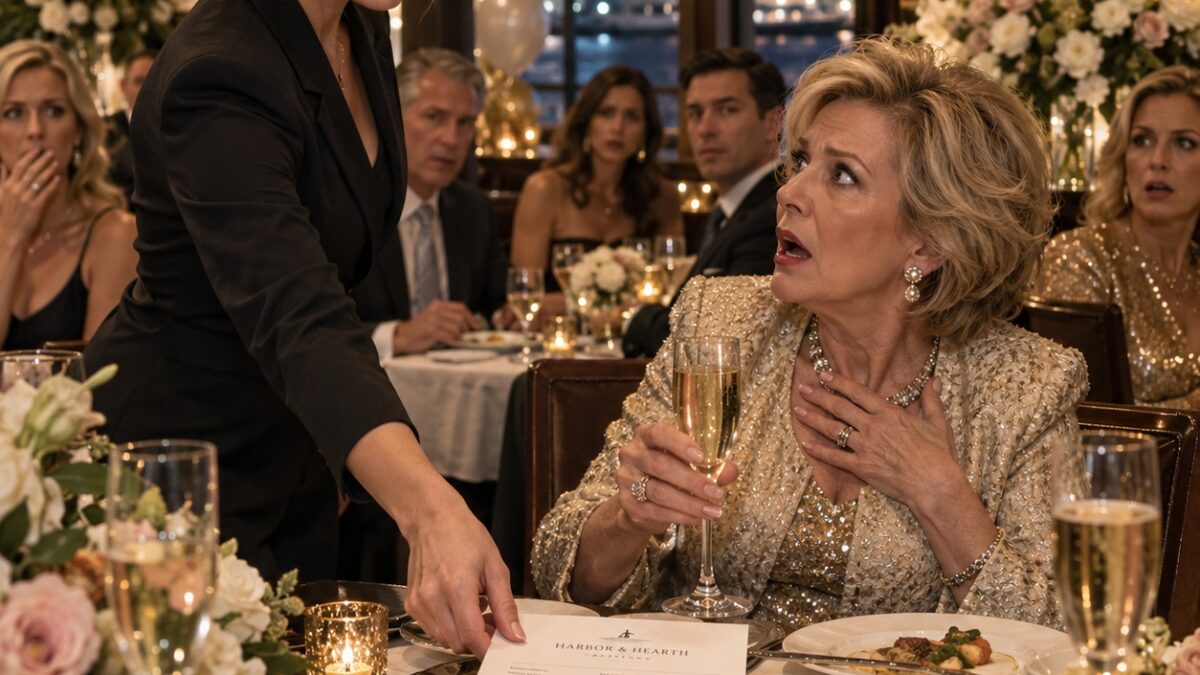
I waited until dessert.
That was deliberate.
Evelyn loved an audience, and I had spent too many years making the mistake of confronting her privately.
Private conversations were where Evelyn was strongest.
She could rewrite a sentence before it had finished leaving your mouth.
She could cry without tears.
She could turn an accusation into an injury.
If I said, “You owe my restaurant twelve thousand dollars,” she would somehow leave the conversation telling Ethan that I had insulted her motherhood.
If Ethan questioned her, she would remind him of sacrifices she had made when he was six.
If he persisted, she would stop speaking to him for three days.
By the fourth day, he would be apologizing.
It was a system.
And systems survive because everyone inside them keeps performing the role assigned to them.
Ethan’s role was peacemaker.
Mine was difficult daughter-in-law.
Evelyn’s role was queen.
Tonight I had decided to resign.
I spent the next forty minutes walking the dining room.
I greeted regulars.
I checked plates.
I spoke to the kitchen.
I asked our pastry chef whether the lemon tarts were holding properly beneath the heat lamps.
I acted like a restaurant owner during service because that was exactly what I was.
But every few minutes, I caught another fragment of Evelyn’s performance drifting from the private room.
“My son always said I should have gone into hospitality.”
Laughter.
“Oh, I practically designed the atmosphere.”
Laughter.
“Claire is wonderful with details. Some people are just born to execute.”
That one nearly made me laugh.
Execute.
As if I were an employee carrying out her vision.
At eight forty-three, Maya appeared beside me with a black leather bill folder.
“Final total for tonight is forty-eight thousand, one hundred and seventeen dollars.”
“Service included?”
“Yes.”
“Tax?”
“Yes.”
“Everything?”
“Everything.”
“And the old invoice?”
“Separate.”
I nodded.
“Good.”
Maya didn’t move.
“What?”
She looked toward the private dining room.
“You sure?”
“No.”
That surprised her.
I smiled without humor.
“I’m terrified.”
“Then we don’t have to—”
“Yes, we do.”
I put my hand on the folder.
“Being afraid of somebody doesn’t mean they’re right.”
Maya watched me for another second.
Then she released the bill.
I walked toward the private room.
I still remember the sound of my heels.
Soft.
Measured.
Almost swallowed by the carpet.
No dramatic music played.
No one turned immediately.
There was only the clinking of glasses, the soft scrape of silverware against porcelain, and the murmur of forty wealthy people who had spent several hours being entertained by a woman pretending she owned something she had never built.
Evelyn sat at the center table.
Beside her were two women I recognized from Boston charity circles, a real estate developer named Harrison Cole, an orthopedic surgeon, two investment executives, and Evelyn’s oldest friend, Diane Mercer.
Diane saw me first.
She smiled.
“Claire! There she is.”
Conversations softened.
Evelyn turned.
For half a second, I saw something move across her face.
Concern.
Then the smile returned.
“Darling.”
Darling.
Evelyn called people darling when she wanted witnesses to believe she loved them.
She held out one hand.
“Come here. Everyone has been saying wonderful things.”
I walked toward her.
“I’m glad everyone enjoyed dinner.”
“Oh, spectacular.”
She gestured at the room.
“I told them you always take care of family.”
There it was.
I placed the black folder beside her champagne.
“I do.”
She glanced at it.
Her smile remained.
“What’s this?”
“The bill.”
Silence arrived strangely.
Not instantly.
It moved outward from the table like a ripple.
People closest to us stopped talking first.
Then the next table.
Then the next.
Within seconds, the only noise came from the kitchen beyond the closed doors.
Evelyn stared at the folder.
Then at me.
“Oh.”
She laughed.
Actually laughed.
“Claire, don’t be ridiculous.”
“No one’s being ridiculous.”
She lowered her voice.
“We’ll discuss this later.”
“We already discussed the last bill later.”
Her eyes sharpened.
“This isn’t appropriate.”
I looked around the room.
“I agree.”
A few guests shifted in their chairs.
Evelyn’s cheeks flushed.
“Claire.”
“Yes?”
“You’re embarrassing yourself.”
“No. I’m giving the host her invoice.”
Diane looked between us.
“Evelyn, I thought you said this was being hosted by the restaurant.”
“It is.”
I answered before Evelyn could.
“No, it isn’t.”
Evelyn snapped her head toward me.
“Excuse me?”
I looked at Diane.
“Mrs. Whitmore booked the room, selected the menu, approved the wine package, requested the floral installation, confirmed the guest count, and authorized additional service.”
Evelyn gave a small disbelieving smile.
“Authorized?”
“Yes.”
“You make me sound like a client.”
“You are a client.”
The room became so quiet I could hear someone near the back set down a fork.
Evelyn’s hand tightened around the stem of her glass.
“Claire, enough.”
I remained still.
“Forty-eight thousand one hundred and seventeen dollars for tonight.”
Someone gasped softly.
“And there’s also the unpaid balance from Tuesday.”
Diane’s eyebrows rose.
“What unpaid balance?”
“Twelve thousand.”
Evelyn stood.
“Stop.”
Her chair legs scraped against the floor.
She looked smaller standing than I remembered.
Not physically.
Socially.
The room had always made her bigger.
People listened when she spoke.
Waiters hurried.
Relatives adjusted themselves around her.
Tonight, for the first time, everyone was looking at her instead of following her.
There was a difference.
She pointed one manicured finger at me.
“You have no right to discuss a private family matter in front of my guests.”
I glanced at the forty people surrounding us.
“You brought the family matter into my restaurant.”
“This restaurant exists because of my family.”
“No.”
Her mouth closed.
I continued.
“This restaurant existed before I met Ethan.”
Her eyes flicked toward several guests.
She hated facts most when other people heard them.
“I meant the support—”
“Ethan has supported me as my husband. Emotionally. Not financially.”
Harrison Cole leaned slightly forward.
He was watching the exchange with the expression of a man realizing the evening’s entertainment had changed.
Evelyn laughed again, but the sound had become thin.
“Claire, sweetheart, surely you aren’t going to stand here pretending Ethan has no ownership.”
“I don’t have to pretend.”
I folded my hands in front of me.
“Harbor & Hearth Hospitality LLC is solely owned by me.”
Evelyn’s smile disappeared.
I don’t think she had known that.
She knew Ethan hadn’t purchased the restaurant.
But Evelyn lived in a world where marriage blurred ownership whenever doing so benefited her.
If her son married me, then my restaurant became his.
If it became his, then it became family property.
And if it was family property, Evelyn believed she had access.
That was the logic.
Not legal logic.
Evelyn logic.
“You’re married,” she said finally.
“Yes.”
“So don’t stand here acting like some stranger.”
“I’m not.”
I tapped the bill.
“I’m acting like the owner.”
A few people looked down.
One woman near the champagne wall suddenly found her phone fascinating.
Evelyn opened the folder.
Her eyes landed on the total.
Her face changed.
“You cannot possibly be serious.”
“I am.”
“Forty-eight thousand dollars?”
“You approved Dom Pérignon for forty guests.”
“I was told there was a preferred family rate.”
“By whom?”
She hesitated.
“Your manager.”
Maya had been standing near the doorway.
She stepped forward.
“No, ma’am.”
Evelyn turned.
Maya continued calmly.
“I told you three times that we required a deposit and signed event agreement.”
“You said Claire would handle it.”
“No. You said Claire would handle it.”
A few guests exchanged glances.
Evelyn’s voice sharpened.
“Are you calling me a liar?”
Maya didn’t blink.
“I’m saying I have the emails.”
That landed.
I saw it.
Evelyn’s shoulders stiffened.
The great advantage of controlling conversations through implication was that written records were dangerous.
She looked back at me.
“You allowed the event to proceed.”
“Because by the time I arrived, my staff had already ordered the product, scheduled the labor, rented the linens, installed your flowers, prepared the food, and begun serving your guests.”
“Then that was your decision.”
“No. It was yours when you falsely told my employees I had approved it.”
Her lips parted.
Before she could answer, a phone vibrated against the table.
Not mine.
Hers.
The screen lit up beside the untouched bill.
ETHAN CALLING.
For one second, no one moved.
I looked at the name.
So did Evelyn.
And something cold traveled through my stomach.
Because Ethan didn’t know.
At least, he hadn’t known when I arrived.
Evelyn reached for the phone.
She declined the call.
It rang again almost immediately.
ETHAN CALLING.
Her face changed.
That was the first moment I became genuinely afraid.
Not because Evelyn looked angry.
Because she looked worried.
I had known this woman for seven years.
I had watched her survive charity scandals, ugly family fights, public embarrassment, and an incident involving a country club board that would have made most people disappear for six months.
Evelyn did not scare easily.
But she was afraid to answer her son.
Diane noticed too.
“Shouldn’t you get that?”
Evelyn picked up the phone.
“It can wait.”
The phone stopped.
Three seconds later, mine rang.
Ethan.
I stared at the screen.
Then I looked at Evelyn.
Her face had gone pale.
I answered.
“Hi.”
Ethan didn’t say hello.
“Are you at the restaurant?”
My heart began beating harder.
“Yes.”
“Is my mother there?”
I looked directly at her.
“Yes.”
There was a pause.
Then Ethan said something I had never heard from him before.
Not about Evelyn.
Not once in our marriage.
“Do not let her leave without paying.”
I said nothing.
Across from me, Evelyn watched my face.
“Ethan?”
“I’m on my way.”
“What happened?”
Another pause.
Then he exhaled.
“I found something.”
The room suddenly felt too warm.
“What?”
“I’ll tell you when I get there.”
“Tell me now.”
“Claire.”
His voice cracked slightly.
“I think my mother has been using my name—and yours—to pay for a lot more than restaurant dinners.”
Every nerve in my body went cold.
I looked at Evelyn.
Her expression told me she knew exactly what he was talking about.
“What did you do?” I asked.
She heard me.
Everyone did.
Evelyn lifted her chin.
“I have no idea what you’re talking about.”
Ethan heard her through the phone.
“Put me on speaker.”
I hesitated.
“Ethan—”
“Please.”
I pressed the speaker button.
His voice filled the quiet room.
“Mom.”
Evelyn’s mouth tightened.
“Ethan, darling, Claire is having some kind of episode.”
I almost laughed.
He didn’t.
“I’m looking at three charges made through the Whitmore Foundation account.”
Her eyes moved.
Subtle.
Quick.
But I saw it.
“So?”
“So you told accounting they were authorized event expenses for Harbor & Hearth.”
My throat tightened.
“What?”
Evelyn spoke quickly.
“That is an internal family accounting matter.”
“No,” Ethan said. “It isn’t.”
People around us were no longer pretending not to listen.
Diane slowly lowered her champagne.
Ethan continued.
“Tuesday’s dinner was submitted as donor cultivation.”
Evelyn said nothing.
“And tonight’s event was submitted this afternoon as a community hospitality partnership.”
I stared at her.
She had not simply planned to walk away from my bill.
She had planned to make someone else pay it.
Using my restaurant’s name.
Using Ethan’s foundation.
Using false descriptions that made private parties look like charitable expenses.
Suddenly the twelve thousand dollars from Tuesday looked less like entitlement and more like evidence.
“Ethan,” I said carefully, “how much?”
“Claire—”
“How much has she submitted?”
He was silent.
Then:
“In the past fourteen months? Just under two hundred and eighty thousand dollars.”
The air left my lungs.
Evelyn moved first.
“This is absurd.”
She grabbed her purse.
“I’m leaving.”
I stepped out of her way.
That surprised her.
I wasn’t going to block a seventy-year-old woman in my dining room.
I didn’t need to.
“You’re free to leave.”
She stopped.
“But the bill leaves with you.”
She stared at me.
“And if you don’t settle it tonight, our attorney will handle collection tomorrow morning.”
“You would send a lawyer after your husband’s mother?”
“No.”
I shook my head.
“My company would send a lawyer after a client who owes sixty thousand dollars.”
Her face twisted.
“You ungrateful little—”
“Mom.”
Ethan’s voice cut through the room.
Evelyn froze.
He continued.
“Don’t.”
She looked at the phone as if it had betrayed her.
“You don’t understand what she’s doing.”
“I understand exactly what she’s doing.”
“No, you don’t.”
Her voice rose.
“She has hated me from the beginning.”
I stared at her.
There it was.
The old escape route.
Victimhood.
“She has tried to isolate you. She resents this family. She resents the life we gave you. She has never understood how things work among people like us.”
A strange smile touched Harrison Cole’s face.
People like us.
Evelyn heard herself too late.
Ethan’s voice became quiet.
“What life did you give me, Mom?”
She blinked.
“What?”
“You said the life we gave you.”
“Your father and I—”
“Dad left me the trust. You didn’t.”
Her expression hardened.
“This is not the place.”
“No. Apparently Claire’s restaurant is exactly the place, because you keep using it like your private clubhouse.”
Evelyn looked around.
For the first time that evening, she seemed to remember there were witnesses.
She lowered her voice.
“We will discuss this as a family.”
Ethan answered immediately.
“We are discussing it as a family.”
I felt something break inside me.
Not in a painful way.
More like a locked door finally opening.
For years I had wanted Ethan to say one simple thing.
No.
Not maybe.
Not later.
Not “she’s just being Mom.”
No.
He had always believed boundaries had to be negotiated until everyone felt comfortable.
Evelyn had spent his entire life teaching him that her discomfort was an emergency.
Now, for the first time, he was letting her be uncomfortable.
And surviving it.
“I’m ten minutes away,” he said.
Then the line disconnected.
Nobody spoke.
Evelyn slowly lowered herself into her chair.
Her hand trembled once as she reached for the champagne.
She noticed.
So did I.
She put the glass down without drinking.
Diane cleared her throat.
“Evelyn.”
“What?”
“You told us this was your event.”
“It is.”
“You said the restaurant was providing everything.”
“They are.”
“Providing doesn’t mean free.”
Evelyn looked at her.
Diane’s face had changed.
They had been friends for more than twenty years, but wealthy social circles have their own rules.
You can be rude.
You can be eccentric.
You can be cruel in ways polished enough to resemble honesty.
But making your friends unknowingly participate in what looked like misuse of charitable funds?
That was different.
“I would never have attended if I thought the Whitmore Foundation was paying for my dinner,” Diane said.
“It isn’t.”
“You just heard Ethan.”
“He is confused.”
Harrison Cole gave a quiet laugh.
Evelyn snapped her eyes toward him.
“Something funny?”
“A little.”
He placed his napkin on the table.
“You told me the foundation was sponsoring tonight as part of a restaurant partnership.”
My stomach tightened.
Evelyn’s face emptied.
Harrison continued.
“I asked you specifically because my company has business before two nonprofit boards connected to your family. I didn’t want to accept anything that could be interpreted as improper.”
Evelyn swallowed.
“You misunderstood.”
“No.”
He leaned back.
“I didn’t.”
Diane looked at Evelyn again.
“What exactly was tonight supposed to be?”
“A dinner.”
“For what?”
“For friends.”
“Paid for by whom?”
Silence.
That question destroyed more than anything I could have said.
Because there was no elegant answer.
If she said herself, she owed me.
If she said my restaurant, she had lied about my authorization.
If she said the foundation, she had lied about the purpose.
Evelyn looked around the room.
Forty people.
Forty witnesses.
The same audience she had gathered to admire her had become the one thing she couldn’t control.
I almost felt sorry for her.
Almost.
Then she looked at me and said, very quietly,
“You planned this.”
The accusation was so ridiculous that for a second I couldn’t respond.
“You think I planned your party?”
“You could have stopped it.”
“Yes.”
That surprised her.
I nodded.
“I could have walked in and shut down service.”
“Exactly.”
“But then forty guests who had no idea what you’d done would have been humiliated because of you. My staff would have lost hours. Thousands of dollars in prepared food would have been wasted. Vendors would still need to be paid.”
I stepped closer.
“So I made another choice.”
Her eyes narrowed.
“I let you finish what you started.”
She stared at me.
“And now,” I said, “you get to pay for it.”
The front door opened somewhere beyond the dining room.
A minute later, Ethan appeared.
He wasn’t dressed for dinner.
Dark trousers.
White shirt.
No tie.
His coat was unbuttoned, and his hair had been pushed back by the wind outside.
He looked exhausted.
More than exhausted.
He looked like a man who had discovered part of his childhood was built on a lie.
The room turned toward him.
Evelyn stood quickly.
“Ethan.”
He didn’t go to her.
He came to me.
That mattered.
He stopped beside me.
“Are you okay?”
I looked at him.
“Ask me tomorrow.”
Pain crossed his face.
Fair.
He nodded.
Then he turned to his mother.
“Sit down.”
Her eyes widened.
“Do not speak to me that way.”
“Please sit down.”
“I’m your mother.”
“And Claire is my wife.”
The words sounded simple.
They should have been simple.
But in seven years, I had never heard him place those two truths beside each other like a boundary.
Evelyn sat.
Ethan remained standing.
“I spent the last hour with David and accounting.”
David was the Whitmore Foundation’s chief financial officer.
Evelyn waved a hand.
“Then David has overreacted.”
“No.”
“He has always been nervous.”
“He found seventeen expenses submitted under my authorization that I never authorized.”
Her face tightened.
“Your assistant handles half your approvals.”
“Not anymore.”
“And frankly, you should be grateful I help manage things when you’re unavailable.”
“You forged my electronic approval.”
A murmur moved through the room.
Evelyn looked at him sharply.
“Lower your voice.”
“No.”
The word echoed.
Ethan almost seemed surprised by himself.
Then something shifted in his posture.
He repeated it.
“No.”
Evelyn stared.
“You used my credentials.”
“I had access.”
“You had access eight years ago when Dad was alive.”
“He trusted me.”
“I trusted you too.”
That hurt her.
I saw it.
For one brief second, the socialite disappeared.
A mother sat in front of her son.
But whatever genuine pain existed there was immediately covered by anger.
“So this is what marriage has done to you.”
Ethan closed his eyes.
I knew that sentence.
He had heard versions of it his entire adult life.
Whenever he moved away, someone was influencing him.
Whenever he disagreed, someone had changed him.
Whenever he set a boundary, he was betraying his family.
He opened his eyes.
“No, Mom.”
His voice was softer now.
“Marriage didn’t do this.”
He looked at me briefly.
“My cowardice did.”
I didn’t expect that.
Neither did Evelyn.
He continued.
“I kept asking Claire to tolerate things because confronting you made me uncomfortable.”
“Ethan—”
“I told myself I was protecting the family.”
He laughed once.
There was no humor in it.
“I was protecting myself.”
His eyes were wet.
“I knew you were disrespecting her.”
My chest tightened.
“I knew.”
He looked at me.
“And every time I told you, ‘She’s just being Mom,’ what I really meant was, ‘Please absorb this so I don’t have to deal with her.’”
I had imagined him apologizing dozens of times.
In arguments.
In showers.
Driving alone.
Lying awake at two in the morning.
I had imagined perfect words.
Now that they were here, they didn’t feel victorious.
They hurt.
Because acknowledgment doesn’t erase what happened.
It only proves you weren’t imagining it.
Evelyn stood again.
“I will not sit here while my son humiliates me to impress his wife.”
Ethan turned.
“This isn’t about impressing Claire.”
“Oh, please.”
“You stole from our foundation.”
“I borrowed.”
“The foundation isn’t your checking account.”
“I have raised millions for that organization.”
“That doesn’t make the money yours.”
She stared at him.
Then she pointed at me.
“She put you up to this.”
I almost answered.
Ethan beat me.
“Claire didn’t even know.”
Evelyn stopped.
“I discovered it because accounting flagged the expense you submitted for tonight.”
His voice shook with anger.
“You tried to make my wife’s company invoice a charitable expense.”
“I was going to correct the paperwork.”
“When?”
She didn’t answer.
“After the audit?”
Her face went pale.
Audit.
That word changed the temperature again.
“What audit?” she asked.
Ethan stared at her.
“The one David started when he found duplicate hospitality charges.”
Evelyn said nothing.
“The board has already been notified.”
Her hand went to the table.
Diane whispered,
“Oh my God.”
Evelyn looked around as though searching for a friendly face.
None came.
She turned back to Ethan.
“You notified the board without speaking to me?”
“David notified them.”
“You could have stopped him.”
“Yes.”
His jaw tightened.
“I could have.”
The parallel was impossible to miss.
Minutes earlier, Evelyn had accused me of being cruel because I could have stopped dinner.
Now she stared at her son because he could have stopped consequences.
Neither of us had.
For Evelyn Whitmore, that was betrayal.
“Do you have any idea what this will do to my reputation?”
Ethan’s expression changed.
“Your reputation?”
“Yes.”
“Mom, did you hear anything I just said?”
“You’re talking about accounting.”
“I’m talking about fraud.”
Her face hardened instantly.
“Do not use that word.”
“I’m not accusing you legally. I’m telling you what the documents look like.”
“You’re my son.”
“I know.”
“Then act like it.”
Something in me hurt for him.
Because that sentence carried fifty years of training.
Act like my son.
Meaning protect me.
Excuse me.
Fear disappointing me more than you fear disappointing yourself.
Ethan pulled out a chair and sat opposite her.
When he spoke again, he was calm.
“I am acting like your son.”
She looked almost hopeful.
Then he continued.
“I’m telling you to get an attorney.”
The hope disappeared.
“And I’m telling you to cooperate with the board.”
Her lips parted.
“And tonight,” Ethan said, “you’re paying Claire.”
Evelyn laughed in disbelief.
“You cannot be serious.”
“I am.”
“Sixty thousand dollars?”
“You spent it.”
“On your wife’s restaurant.”
“No.”
He leaned forward.
“You spent it on yourself.”
That was the sentence that finally broke her composure.
She grabbed the black folder, opened it, and pulled out the invoice.
“This is extortion.”
“No,” I said.
She turned toward me.
“This is forty-eight thousand dollars.”
“Yes.”
“For dinner.”
“For forty guests, premium alcohol, imported flowers, additional service staff, room exclusivity, rentals, seafood, wagyu, caviar, custom desserts, security, overtime, and three days of preparation.”
Her eyes flashed.
“You enjoyed humiliating me.”
“No.”
I meant it.
“I enjoyed none of this.”
“Liar.”
“I wanted a mother-in-law who respected me.”
The anger on her face faltered.
Just slightly.
“I wanted my husband to be able to have dinner with his mother without spending the next two days recovering from it. I wanted holidays that didn’t require strategy meetings. I wanted to stop wondering whether every favor from you would become a debt six months later.”
Ethan looked down.
I continued.
“I wanted you to walk into this restaurant and see something I built instead of something you could use.”
My throat tightened.
“But I don’t control what you choose.”
I pushed the bill gently toward her.
“I control whether I keep paying for it.”
For several seconds, nobody moved.
Then Evelyn reached into her purse.
She pulled out a black credit card.
“Fine.”
She held it toward me.
I didn’t take it.
“Maya will process it.”
Evelyn gave a bitter laugh.
“Of course.”
Maya approached.
Evelyn handed her the card.
“And the previous balance?” Maya asked.
Evelyn’s head snapped toward her.
“You’ve got nerve.”
Maya’s face remained professional.
“Twelve thousand dollars.”
“Put it together.”
Maya nodded.
The room slowly began breathing again.
A few guests whispered.
Someone asked for coffee.
Another person signaled for a coat.
The show was ending.
Or so I thought.
Three minutes later, Maya returned.
She walked directly toward me.
Not Evelyn.
That told me everything.
“Claire.”
I looked at her.
“What?”
She lowered her voice.
“The card was declined.”
Evelyn heard.
“So did everyone else.
Her face turned scarlet.
“That’s impossible.”
Maya held the card discreetly.
“I’m sorry.”
“Run it again.”
“We did.”
“Then your machine is malfunctioning.”
“No, ma’am.”
Evelyn snatched the card.
She pulled another from her purse.
“Use this.”
Maya took it.
Evelyn looked around the room.
“Bank security. Large purchase.”
No one answered.
She smiled too brightly.
“It happens constantly.”
Maya returned again.
Declined.
The silence that followed felt cruel even to me.
Evelyn stared at the second card.
Then at Ethan.
“What did you do?”
His expression hardened.
“Nothing.”
“You froze my accounts.”
“No.”
“You did.”
“I don’t have authority over your personal accounts.”
“Then David did.”
“He doesn’t either.”
Evelyn’s breathing changed.
For the first time that evening, she seemed genuinely confused.
Not performing.
Not redirecting.
Confused.
She pulled out her phone.
Her fingers moved rapidly.
Then stopped.
The color drained from her face.
“What?”
Ethan leaned forward.
“Mom?”
She stared at the screen.
“My account.”
“What about it?”
She didn’t answer.
“Mom.”
Her voice dropped.
“There’s a hold.”
Ethan frowned.
“From who?”
“I don’t know.”
She stood abruptly and walked away from the table.
We could hear her speaking to someone.
Then arguing.
Then lowering her voice.
Then saying,
“No, that isn’t acceptable.”
A minute later, she returned.
Her composure had shattered.
“The bank placed a temporary review on two accounts.”
Ethan stared.
“Why?”
Her eyes flashed toward him.
“Because of foundation transfers.”
There it was.
Nobody said anything.
Ethan slowly leaned back.
“How much?”
“Don’t.”
“How much, Mom?”
“I said don’t.”
“Did foundation money move into your personal account?”
“No.”
The answer came too fast.
Ethan looked at her.
She closed her eyes.
“Not directly.”
My stomach turned.
“Not directly?” he repeated.
“It went through reimbursement.”
“For what?”
“Expenses.”
“What expenses?”
“Events.”
“What events?”
She slapped one hand on the table.
“Enough!”
Several people flinched.
Evelyn’s chest rose and fell.
Her mascara remained perfect.
Her hair remained perfect.
Her dress probably cost more than my first car.
But she no longer looked powerful.
She looked cornered.
And cornered people tell truths accidentally.
“I have spent twenty years maintaining this family’s position,” she snapped. “Do you have any idea what that costs?”
Ethan stared at her.
She gestured around the room.
“These people expect generosity. Boards expect dinners. Donors expect access. Women like Diane expect tables and galas and weekends and introductions.”
Diane’s mouth fell open.
“Women like Diane?”
Evelyn ignored her.
“You think your father built everything through handshakes in an office? Relationships cost money.”
“Then submit legitimate expenses.”
“I did.”
“You submitted your birthday dinner.”
“It was attended by donors.”
“You submitted a spa weekend.”
“With board wives.”
“You submitted jewelry.”
Evelyn stopped.
The room stopped with her.
Ethan’s voice became quieter.
“You submitted eighty-four thousand dollars from Bellard Jewelers as donor gifts.”
Her eyes widened.
I felt cold.
“How do you know that?”
Ethan’s face changed.
He hadn’t mentioned the amount earlier.
Apparently he had learned more while driving.
“David texted me.”
Evelyn looked toward the exit.
The instinct was unmistakable.
Run.
This time Ethan stood.
Not to block her.
To speak before she escaped the conversation.
“You need to tell the truth.”
“I owe you nothing.”
“You owe the foundation the truth.”
“That foundation exists because of this family.”
“It exists to fund pediatric rehabilitation programs.”
The words struck me strangely.
I had attended Whitmore Foundation events.
I knew the brochures.
Children learning to walk after injuries.
Families receiving mobility equipment.
Hospital grants.
I thought of eighty-four thousand dollars in jewelry.
Something hot rose in me.
Evelyn must have seen my expression.
“Don’t you dare judge me.”
I almost laughed.
“You’re standing in my restaurant after trying to make a charity pay for your party.”
“I have raised millions more than I ever spent.”
“That isn’t how charity works.”
“You know nothing about my world.”
“No.”
I looked around Harbor & Hearth.
“You’re standing in mine.”
She picked up her purse.
“I’m done.”
“Mom,” Ethan said.
She turned.
He spoke carefully.
“I’m not stopping you from leaving.”
Her eyes narrowed.
“But if you walk out without paying Claire, that will be added to the documentation.”
She laughed bitterly.
“Documentation.”
“Yes.”
“What are you going to do? Sue your mother?”
Ethan looked devastated.
But he answered.
“If that’s what protecting the foundation requires.”
She stared at him.
For a moment, I thought she might slap him.
Instead she whispered,
“You’ve chosen her.”
I expected him to deny it.
To explain.
To soften.
That was his instinct.
He surprised me again.
“Yes.”
Evelyn inhaled sharply.
Ethan continued.
“I chose Claire the day I married her.”
His eyes flicked toward me.
“I just didn’t always behave like it.”
My throat tightened.
Evelyn’s eyes filled with tears.
Real tears this time.
“You will regret this.”
“Maybe.”
His voice shook.
“But it will be my regret.”
That ended something.
I could feel it.
Not their relationship.
Relationships like theirs don’t end in a single sentence.
But the old structure ended.
Evelyn could still rage.
Cry.
Threaten.
Withdraw.
Gossip.
Punish.
What she could no longer do was assume Ethan would automatically follow.
She looked around at her friends.
“Does anyone here have sixty thousand dollars available?”
It was one of the strangest questions I had ever heard.
No one answered immediately.
Then Harrison Cole stood.
“I do.”
Evelyn’s face brightened.
“But I’m not lending it to you.”
The brightness vanished.
He picked up his coat.
“I’m going home.”
He looked at me.
“Dinner was excellent.”
“Thank you.”
Then he turned to Evelyn.
“You should get counsel before you say anything else tonight.”
He left.
His departure broke the spell.
Several other guests began standing.
Diane came toward me.
“I’m sorry.”
“You don’t need to apologize.”
“I laughed earlier.”
I knew exactly which joke she meant.
The servant.
She looked ashamed.
“I thought it was banter.”
“It’s okay.”
“No.”
She shook her head.
“It wasn’t.”
Then she looked at Evelyn.
“I’m leaving.”
“Diane.”
“Call me when you have an attorney.”
Evelyn went still.
“You too?”
Diane’s expression softened, but she didn’t change her mind.
“I don’t know what’s true yet.”
She picked up her purse.
“But I know enough to stop pretending nothing happened.”
Within fifteen minutes, most of the room had emptied.
Evelyn sat alone at the long central table.
Forty place settings surrounded her.
Half-finished champagne.
Lipstick on glasses.
Crumpled napkins.
Flowers she hadn’t paid for.
The aftermath of extravagance looked oddly sad once the audience disappeared.
Maya approached me quietly.
“What do you want to do?”
I looked at Evelyn.
Then Ethan.
He seemed twenty years older than when he arrived.
“Give us a minute.”
Maya nodded and left.
I sat across from Evelyn.
She didn’t look at me.
“Do you have another payment method?”
“No.”
“Can your bank wire the restaurant?”
“No.”
“Can someone from your office arrange payment?”
Silence.
“Evelyn.”
She looked at me.
The hatred in her eyes was gone.
What remained was exhaustion.
“I don’t know.”
It was the first honest sentence she had spoken all night.
I leaned back.
“How bad is it?”
Ethan turned toward me.
“Claire.”
“I’m not asking about the foundation.”
I looked at Evelyn.
“I’m asking about her.”
Evelyn’s face tightened again.
“I do not need your pity.”
“It isn’t pity.”
“What is it?”
“I need to know whether you can pay my company.”
For a moment she almost smiled.
Even now, she respected bluntness more than sympathy.
“My investment account is fine.”
“Can you transfer from it?”
“Not tonight.”
“Tomorrow?”
“Probably.”
I looked at Ethan.
He nodded slowly.
I stood.
“Then Maya will prepare a written payment agreement.”
Evelyn laughed faintly.
“Of course she will.”
“Yes.”
I walked toward the door.
“Claire.”
I stopped.
Evelyn still wasn’t looking at me.
“I did not call you the servant.”
I turned.
“You said I was basically the help.”
“That was a joke.”
“No.”
I shook my head.
“That was what you thought you were allowed to say.”
She finally met my eyes.
I had spent years wanting to defeat this woman in an argument.
Standing there, I realized arguments had never been the point.
Boundaries were.
“You’re no longer allowed to host private events here.”
Her eyebrows rose.
“Ever?”
“Ever.”
“You’re banning me?”
“From booking events.”
“What about dinner?”
“You can make a reservation like anyone else.”
She almost looked offended by the concept.
“And you’ll need a valid credit card.”
Ethan covered his mouth.
I think he was hiding either a laugh or a sob.
Maybe both.
Evelyn looked at him.
Then me.
For the first time all night, I saw something close to embarrassment rather than rage.
“Fine.”
I left them at the table.
I walked through the kitchen doors and nearly collapsed.
The kitchen was quieter now.
Most of the big service push had ended.
One of my line cooks was scrubbing down.
Our pastry chef was labeling containers.
A dishwasher sprayed plates beneath clouds of steam.
Normal work.
Real work.
The kind Evelyn never saw when she talked about throwing a party.
Maya found me beside the walk-in refrigerator.
“You okay?”
“No.”
She nodded.
“Good answer.”
I laughed.
Then, without warning, I started crying.
Not delicately.
Not one cinematic tear.
I put both hands over my face and sobbed.
Maya wrapped her arms around me.
“I’m sorry.”
“For what?”
“For letting it happen.”
I pulled back.
“You didn’t.”
“She told me you approved it.”
“And you challenged her.”
“I should’ve called you.”
“Yes.”
She winced.
“But you were also trying not to blow up my family.”
“That’s not my job.”
“No.”
I wiped my face.
“It isn’t.”
That sentence applied to more people than Maya.
By midnight, the restaurant was empty.
Evelyn signed a payment agreement requiring the full sixty thousand one hundred and seventeen dollars by five o’clock the following business day.
She left without hugging Ethan.
Without speaking to me.
Without looking back.
Ethan and I drove home separately.
That was my choice.
He texted me when he reached the house.
I didn’t answer.
I stayed at Harbor & Hearth for another hour sitting at the bar beneath lights we had already dimmed.
I thought I would feel triumphant.
Instead I felt hollow.
Victories inside families rarely feel the way strangers imagine.
There is no cheering crowd.
No perfect satisfaction.
You win a boundary and lose an illusion.
That night I lost the illusion that Evelyn was merely difficult.
More importantly, I lost the illusion that Ethan’s passivity had been harmless.
At two fifteen in the morning, I finally drove home.
He was sitting at the kitchen table.
No lights except the one above the stove.
His laptop was open.
Documents covered the table.
He stood when I entered.
“Hi.”
“Hi.”
“Can we talk?”
I put my purse down.
“About your mother?”
“About me.”
That stopped me.
I sat.
He remained standing for another moment, then lowered himself into the chair opposite me.
“I called an attorney.”
“Tonight?”
“On the drive home.”
“For Evelyn?”
“For us.”
My stomach tightened.
“What does that mean?”
“Not divorce.”
He said it too quickly.
I stared.
He rubbed his palms together.
“I asked about whether anything she did could expose you or Harbor & Hearth.”
That made sense.
“What did they say?”
“Probably not, because you didn’t approve the foundation submissions and your company invoices show actual services.”
“Probably?”
“He wants records.”
“I have records.”
“I know.”
He swallowed.
“I also froze my own access credentials and resigned temporarily from approving foundation expenses until the board completes its review.”
I studied him.
“That sounds serious.”
“It is.”
“How much money are we talking about?”
“We don’t know.”
“You said two eighty.”
“That’s what accounting flagged immediately.”
“And now?”
He looked at the laptop.
“David thinks it could be more.”
“How much more?”
“Maybe half a million.”
I leaned back.
“Jesus.”
“Over several years.”
“Was your father alive?”
“For part of it.”
“Did he know?”
“I don’t know.”
The pain in his voice was unmistakable.
His father, Charles Whitmore, had died four years earlier.
Ethan worshiped him.
Not blindly.
But deeply.
Charles had been quieter than Evelyn.
Patient.
Formal.
One of those men who could command a boardroom without raising his voice.
He had always treated me kindly.
If he had known Evelyn was using charity money improperly, Ethan would have to rebuild his memory of both parents.
I reached for his hand without thinking.
He looked down at our fingers.
Then at me.
“I don’t deserve that.”
“This isn’t about deserve.”
“It should be.”
I withdrew my hand.
Maybe he was right.
He took a breath.
“Claire, I am sorry.”
I looked away.
“I know.”
“No.”
His voice cracked.
“I don’t think you do.”
He leaned forward.
“I let her train me to make you responsible for her behavior.”
I stared at him.
“Every time she insulted you and you reacted, I focused on your reaction.”
My eyes burned.
“If she invaded a holiday, I asked you to be flexible. If she criticized the restaurant, I told you not to take it personally. If she borrowed something and didn’t return it, I told you she was forgetful.”
He shook his head.
“If she demanded something, I called it family.”
I said nothing.
“I thought avoiding confrontation made me kind.”
“It made you safe.”
He closed his eyes.
“Yes.”
“Safe from her.”
“Yes.”
“And I paid for it.”
His eyes opened.
“Yes.”
There are apologies you want desperately until you receive them.
Then you discover the apology doesn’t decide what happens next.
You do.
I stood and walked toward the window.
Boston at two in the morning looked almost peaceful.
A few windows glowed in buildings across the street.
Cars passed occasionally.
“I don’t know if I can forgive this quickly.”
“I’m not asking you to.”
“I don’t know whether I trust you.”
His face tightened.
“I know.”
“Tonight you stood beside me.”
“Yes.”
“But part of me keeps wondering if you only did it because you discovered the foundation money.”
He looked down.
“That’s fair.”
“If you hadn’t found it, would you have told her to pay?”
Silence.
That was the question.
He could have lied.
I would have known.
Finally he said,
“I don’t know.”
My eyes filled.
He continued quickly.
“I want to say yes.”
“But?”
“But three days ago you told me she owed twelve thousand dollars and I asked you to let it go.”
There it was.
The truth.
I nodded.
“I’m going to stay at a hotel.”
His head came up.
“Tonight?”
“Yes.”
“Claire—”
“I need space.”
He looked devastated, but he didn’t argue.
Another new thing.
“Okay.”
“I’m not ending our marriage tonight.”
He exhaled.
“But I’m not promising it survives either.”
“I understand.”
“Do you?”
“I’m trying to.”
I picked up my purse.
He remained seated.
At the doorway, I turned.
“Ethan.”
He looked at me.
“Don’t call your mother tonight.”
His brow furrowed.
“Why?”
“Because she will be terrified.”
“And?”
“You’ve spent your whole life rescuing her from that feeling.”
He stared at me.
“Let her feel it.”
I left.
The next morning, Evelyn paid.
Not at five.
At nine twelve.
Maya called while I was drinking terrible hotel coffee.
“The wire cleared.”
“All of it?”
“Sixty thousand one hundred seventeen.”
I closed my eyes.
“Thank God.”
“There’s more.”
Of course there was.
“What?”
“She added a memo.”
I waited.
Maya cleared her throat.
“It says, ‘Payment under protest.’”
I laughed.
I couldn’t help it.
“Frame it.”
“You’re joking.”
“Mostly.”
That was the last funny moment for several weeks.
By noon, the Whitmore Foundation announced an independent review of historical expenses.
The announcement was deliberately vague.
No names.
No accusations.
Just the kind of corporate language designed to say something serious without saying anything actionable.
But people talk.
Especially wealthy people.
Especially people who had been in my restaurant the night before.
By Monday morning, two Boston society blogs were asking why Evelyn Whitmore had abruptly resigned from three charity committees.
By Tuesday, someone had photographed her leaving a law office.
By Wednesday, a financial reporter called Harbor & Hearth.
I declined comment.
So did Ethan.
Evelyn did not.
She told a columnist that she was the victim of “an unfortunate misunderstanding involving modern nonprofit accounting standards.”
When Maya read that sentence aloud in my office, I nearly spit out my coffee.
“Modern nonprofit accounting standards?”
Maya nodded.
“Apparently not spending charity money on jewelry is new.”
I laughed.
Then stopped.
Because none of it was actually funny.
The review uncovered more.
A lot more.
Not millions.
But enough.
Over five years, Evelyn had submitted or approved approximately six hundred and forty thousand dollars in questionable expenses.
Some had legitimate charitable components.
Others didn’t.
Private dinners disguised as donor outreach.
Luxury hotel suites during conferences when cheaper rooms had been available.
Designer gifts with vague recipient lists.
Personal drivers.
Spa charges.
Clothing.
Jewelry.
One payment to a florist for eighteen thousand dollars that turned out to include the flowers from a private anniversary party.
The ugly part was how ordinary the theft looked.
There was no suitcase filled with cash.
No secret offshore account.
Just hundreds of decisions in which Evelyn had told herself the same story.
I deserve this.
I do so much.
Everyone benefits.
I’ll fix it later.
Nobody will mind.
Entitlement rarely announces itself as evil.
It calls itself reimbursement.
Three weeks after the restaurant incident, Evelyn’s attorney sent Harbor & Hearth a letter.
The letter accused my staff of publicly humiliating her, improperly disclosing financial information, and damaging her reputation.
Maya brought it into my office with the expression of someone carrying a dead rat.
“You’re going to love this.”
I read all four pages.
Then I called my attorney.
He laughed.
Actually laughed.
“Do not respond personally.”
“I wasn’t planning to.”
“We’ll respond.”
“Can she sue?”
“Anyone can file something.”
“That isn’t comforting.”
“She paid the invoice.”
“Under protest.”
“That doesn’t make the meal free.”
“What about humiliation?”
“Did you fabricate the bill?”
“No.”
“Did you post her financial information publicly?”
“No.”
“Did you invite reporters?”
“No.”
“Did you force forty people into the room?”
“No.”
He paused.
“Then Mrs. Whitmore may eventually discover one of the more frustrating truths of civil law.”
“What’s that?”
“Embarrassment is not automatically a cause of action.”
The threatened lawsuit disappeared two weeks later.
The foundation matter didn’t.
Ethan moved out of our house voluntarily.
Not because I demanded permanent separation.
Because he finally understood that saying “take all the time you need” while sleeping beside me every night wasn’t actually giving me space.
He rented a furnished apartment ten minutes away.
We started marriage counseling.
The first session was terrible.
The second was worse.
By the fourth, I had admitted something I hadn’t wanted to say.
“I hate your mother.”
Ethan sat very still.
Our therapist asked,
“Do you?”
I thought about it.
“No.”
I wiped my eyes.
“I hate who I became around her.”
That was more accurate.
I hated the version of myself who rehearsed conversations before holidays.
Who studied Evelyn’s facial expressions.
Who silently counted insults.
Who felt guilty for having boundaries.
Who wondered whether being angry made me cruel.
Ethan looked at the floor.
“I helped create that.”
“Yes.”
“I’m sorry.”
“I know.”
The therapist interrupted.
“Claire, do you want him to stop apologizing?”
I looked at her.
The question annoyed me.
Then I realized why.
“Yes.”
“Why?”
“Because apologies are starting to feel like another way of ending the conversation.”
Ethan looked up.
I continued.
“I don’t need you to keep telling me you’re sorry. I need you to become someone who doesn’t make me fight alone.”
He nodded.
And slowly, over the following months, he did.
Not perfectly.
That mattered.
Perfect transformations are another kind of lie.
Ethan stumbled.
When Evelyn called him crying after the foundation formally demanded repayment, he nearly went to her house.
He called me first.
Not for permission.
For perspective.
“What do you want to do?” I asked.
“I want to fix it.”
“For her?”
“Yes.”
“Why?”
“Because she’s my mother.”
“That’s a reason to care.”
I paused.
“Not necessarily a reason to fix.”
He was quiet for a long time.
Then he said,
“I hate this.”
“I know.”
He didn’t go.
He called her.
He listened.
He told her he loved her.
Then he told her he would not intervene with the board.
She hung up on him.
He cried afterward.
Boundaries look powerful from the outside.
Inside them, they can feel like grief.
Four months after the dinner, the foundation announced a settlement.
Evelyn agreed to repay a substantial portion of the disputed expenses.
She resigned permanently from financial oversight and from her board seat.
No criminal charges were filed.
The independent review concluded that inadequate internal controls had allowed conflicts, vague reimbursement standards, and unauthorized approvals to continue for years.
Evelyn’s attorney insisted there had been no intentional theft.
The foundation did not use that word either.
But everyone understood what had happened.
Her reputation changed.
Not destroyed.
People like Evelyn rarely vanish from society.
Money and history provide cushions.
She still attended certain functions.
She still had friends.
She still wore beautiful clothes.
But the aura changed.
The assumption of unquestioned authority disappeared.
People checked things.
Confirmed things.
Asked for signatures.
For Evelyn, that might have been the greatest punishment of all.
Nine months after the dinner, she came back to Harbor & Hearth.
Alone.
It was three twenty in the afternoon.
Between lunch and dinner.
I was sitting at the bar reviewing vendor invoices when Maya approached.
Her expression made me put down my pen.
“What?”
“She’s here.”
I didn’t need to ask who.
“Reservation?”
“No.”
I almost smiled.
“Of course not.”
“Want me to send her away?”
I thought about it.
“No.”
Evelyn walked in a moment later.
She looked different.
Not dramatically.
Her hair was still perfect.
Her coat was still probably Italian.
But there was no audience.
No perfume cloud announcing her five seconds before she entered.
No expectation that the building would rearrange itself.
She sat three stools away from me.
“Hello, Claire.”
“Evelyn.”
“May I have tea?”
I looked at Maya.
“Tea.”
Maya left.
Evelyn studied the bar.
“I always liked this room.”
I said nothing.
“You changed the stools.”
“Six months ago.”
“They’re nicer.”
“Thank you.”
Tea arrived.
Evelyn waited until Maya was gone.
Then she placed both hands around the cup.
“I owe you an apology.”
I didn’t respond.
She looked at me.
“You could make this easier.”
I almost laughed.
“There she is.”
Her face tightened.
Then, surprisingly, she smiled.
A small, tired smile.
“Fair.”
I turned toward her.
“Go ahead.”
She took a breath.
“I treated your restaurant as though it belonged to Ethan.”
“Yes.”
“And because Ethan was my son, I treated that as though it meant some portion belonged to me.”
“Yes.”
“I told myself that family shared things.”
“You only shared in one direction.”
Her mouth tightened again.
“Yes.”
That word cost her.
I could tell.
She looked into her tea.
“I was cruel to you.”
I waited.
“I did call you the help.”
“Basically the help.”
“Yes.”
“And the servant?”
Her eyes flicked toward me.
“I said that earlier in the evening.”
So someone had told her.
Or she remembered.
“Thank you for finally admitting it.”
She nodded.
“I thought it was funny.”
“Because you didn’t respect me.”
She looked up.
“I respected what you built.”
“That isn’t the same thing.”
“No.”
Silence settled.
Then Evelyn said,
“I think I resented you.”
That surprised me.
“Why?”
She laughed softly.
“You really don’t know?”
“No.”
“You built something without needing us.”
I stared at her.
She continued.
“Most people who entered our family wanted something.”
“Money?”
“Access. Security. Names. Introductions. Sometimes money.”
She looked around the restaurant.
“You already had your own identity.”
“I wasn’t exactly rich when Ethan met me.”
“You didn’t care.”
“I cared about money.”
“Not our money.”
She was right.
I had wanted success desperately.
But Whitmore money frightened me more than it tempted me.
I had grown up watching debt control my parents.
Depending on another family’s wealth had never felt like safety.
Evelyn traced one finger around the rim of her cup.
“I couldn’t make you grateful.”
The honesty of it stunned me.
“You mean indebted.”
“Yes.”
I let out a slow breath.
She continued.
“And I didn’t like that.”
There are moments when a person finally tells you the truth and you realize the truth is both better and worse than the lie.
Evelyn had not misunderstood me.
She had understood me very well.
My independence had threatened the way she controlled people.
“So you tried to make me smaller.”
She nodded once.
“I think I did.”
“Why are you telling me this?”
She looked toward the window.
“Because Ethan barely speaks to me.”
I felt disappointment move through me.
Of course.
There was the motive.
She saw my expression.
“No.”
She shook her head.
“That came out wrong.”
“Did it?”
“Yes.”
She turned toward me.
“I came because Ethan barely speaks to me. But I am not apologizing so that you will make him speak to me.”
I studied her.
“I finally understand that you can’t.”
That was new.
“He loves you,” I said.
“I know.”
“He’s angry.”
“I know.”
“He’s also hurt.”
Her eyes filled.
“I know.”
I didn’t rescue her from that.
She wiped beneath one eye.
“I spent his whole life believing that being needed was the same as being loved.”
The sentence caught me off guard.
She smiled sadly.
“If your husband depended on you, he stayed. If your children depended on you, they stayed. If your friends depended on your connections, they stayed.”
She looked down.
“Then you appeared.”
I waited.
“And Ethan loved you without needing to control you.”
She swallowed.
“I think I hated how little power you seemed to require.”
I sat very still.
After a while, I said,
“That doesn’t excuse anything.”
“No.”
“You lied.”
“Yes.”
“You used charity money.”
“Yes.”
“You humiliated me.”
“Yes.”
“You damaged my marriage.”
She looked at me.
“I did.”
I shook my head.
“No.”
She seemed confused.
“You contributed.”
I folded my hands.
“Ethan damaged our marriage too.”
Something softened in her face.
Maybe relief.
Not because I was excusing her.
Because I wasn’t placing everything on her.
That would have been another lie.
“He tells me you’re in counseling,” she said.
“He told you?”
“He said you were working on things.”
“We are.”
“Are you staying together?”
“That’s between us.”
She nodded.
“Fair.”
We sat in silence for another minute.
Then Evelyn reached into her bag.
My body tensed instinctively.
She pulled out an envelope.
I almost laughed.
“What is that?”
“A check.”
“No.”
Her eyebrows rose.
“You haven’t even heard—”
“No.”
“It isn’t for the dinner.”
“Then what?”
She slid the envelope across the bar.
I didn’t touch it.
“The foundation asked me to dispose of several personal assets as part of the repayment agreement.”
I waited.
“One was a jewelry collection.”
“I heard.”
“There was more value than required.”
“Congratulations?”
She almost smiled.
“I put some of the excess into a fund.”
I stared at her.
“For what?”
“Hospitality workers in financial crisis.”
That surprised me.
“Evelyn.”
“It is not through your restaurant.”
“Good.”
“It’s administered independently.”
“Better.”
She pushed the envelope toward me.
“This is information about it. Not money.”
I looked at the envelope.
“Why?”
“Because I kept talking about your restaurant as though dinner appeared when I walked into a room.”
Her voice became quieter.
“I never thought about the dishwasher who missed his daughter’s bedtime because I added twenty guests. Or the server whose shift extended three hours. Or the cook who prepared food for people who would never learn his name.”
She swallowed.
“I thought paying the bill was the entire cost.”
I finally picked up the envelope.
The fund was real.
Modest by Whitmore standards.
Significant by ordinary standards.
I looked at her.
“Why hospitality?”
“Because I was awful in a restaurant.”
Despite myself, I laughed.
She smiled.
Then I became serious.
“This does not buy forgiveness.”
“I know.”
“Or access.”
“I know.”
“Or reservations.”
That made her laugh.
A real laugh.
“Claire.”
“Yes?”
“I made one online for Thursday.”
I stared at her.
She lifted both hands.
“Four people. Seven thirty. Credit card on file.”
I laughed harder than I had in months.
For a moment, we were simply two women sitting at a bar.
Not healed.
Not friends.
Not magically repaired.
Just human.
Before she left, Evelyn stood near the door.
“Claire.”
I looked up.
“I am sorry.”
This time there was no explanation after it.
No “but.”
No reminder of what she had done for anyone.
No request.
Just the words.
I nodded.
“Thank you.”
She left.
I did not tell her I forgave her.
Because forgiveness, when it came, would be mine.
Not something she could request on schedule.
That evening, Ethan came to the restaurant after service.
We had slowly moved back into the same house two months earlier.
Things were better.
Not perfect.
Better.
He found me at the bar.
“You saw my mother.”
“Yes.”
His shoulders tensed.
“What happened?”
“She ordered tea.”
He stared at me.
“That’s it?”
“She also apologized.”
He sat.
“Really?”
“Yes.”
“Was it a real apology?”
“I think it was the first draft of one.”
He smiled.
“That sounds like Mom.”
“No.”
I looked at him.
“That sounded different.”
He studied my face.
“Do you forgive her?”
“I don’t know.”
He nodded.
“You don’t have to.”
“I know.”
That was perhaps the biggest change in him.
The old Ethan would have wanted resolution.
He would have wanted Christmas to be comfortable.
He would have wanted me to say the right sentence so everyone could exhale.
The man sitting beside me understood that peace obtained by forcing one person to swallow pain wasn’t peace.
“Do you forgive me?” he asked.
I looked at him.
“More than I did yesterday.”
He laughed softly.
“I’ll take it.”
I leaned against his shoulder.
The restaurant was empty.
Beyond the windows, Boston Harbor reflected hundreds of broken pieces of city light.
I thought about the night everything changed.
For years, I told myself Evelyn was the problem.
Then I told myself Ethan was the problem.
Then, for a while, I wondered whether I was the problem for refusing to tolerate what everyone else had accepted.
The truth was more complicated.
Evelyn had built a world where generosity created debt.
Ethan had survived that world by avoiding confrontation.
I had survived it by becoming increasingly angry.
Each of us had mistaken survival habits for personality.
It took one absurd dinner bill to make the structure visible.
People sometimes ask why I didn’t stop Evelyn earlier.
Why I let Tuesday’s twelve-thousand-dollar dinner happen.
Why I let the forty-eight-thousand-dollar party proceed.
Why I stayed married to Ethan after years of his mother crossing boundaries.
Those questions have reasonable answers.
Love.
Hope.
Fear.
Habit.
Exhaustion.
The belief that next time will be different.
But the simplest answer is this:
I did not understand that every time I paid the price for someone else’s bad behavior, I was helping teach them that the price belonged to me.
It didn’t.
That lesson changed my marriage.
It changed my business.
It even changed Evelyn.
A year after the infamous dinner, Harbor & Hearth had its strongest year since opening.
We promoted Maya to operating partner.
I opened a smaller sister restaurant across the harbor.
Ethan joined a new nonprofit board but refused any financial approval role until he had completed formal governance training.
That was his decision.
Not mine.
The Whitmore Foundation rebuilt its controls and eventually recovered from the scandal.
It survived because institutions can survive embarrassment when people care more about fixing problems than hiding them.
Evelyn still drove me crazy sometimes.
She still had opinions about my clothes.
She still thought table seven needed a different light fixture.
Once, she sent me a seven-paragraph email about the temperature of white wine.
I replied with one sentence.
“Thank you for your feedback.”
Ethan laughed for five straight minutes.
But she never again booked an event without a contract.
She never again walked out without paying.
And she never again introduced Harbor & Hearth as anything other than:
“My daughter-in-law Claire’s restaurant.”
The first time I heard her say it, I looked across the room.
She caught my eye.
For half a second, neither of us moved.
Then she raised her glass slightly.
Not triumphantly.
Not like an owner.
Like a guest.
I nodded back.
That was enough.
Because the real victory had never been the sixty thousand dollars.
It wasn’t the foundation investigation.
It wasn’t watching Evelyn’s friends leave that private dining room one by one.
It wasn’t even hearing Ethan finally tell his mother no.
The victory was much quieter.
I stopped needing everyone else to agree that my boundary was reasonable before I was willing to enforce it.
I stopped confusing kindness with surrender.
I stopped treating somebody else’s anger as proof that I had done something wrong.
And Ethan stopped asking me to keep the peace by sacrificing mine.
Sometimes I still think about that black leather bill folder beside Evelyn’s champagne.
One ordinary object.
One printed number.
One moment when years of resentment finally became impossible to ignore.
People imagine life-changing moments arrive with warnings.
They usually don’t.
Sometimes they look like a phone lighting up on a dinner table.
Sometimes they sound like a husband finally saying no.
And sometimes they are nothing more dramatic than a woman standing inside the business she built, looking at someone who has underestimated her for years, and calmly deciding:
This time, I am not paying for you.








