My Mother Canceled the $5,000 Hotel Room I Paid For—Then Smirked When I Asked Where I Was Supposed to Sleep
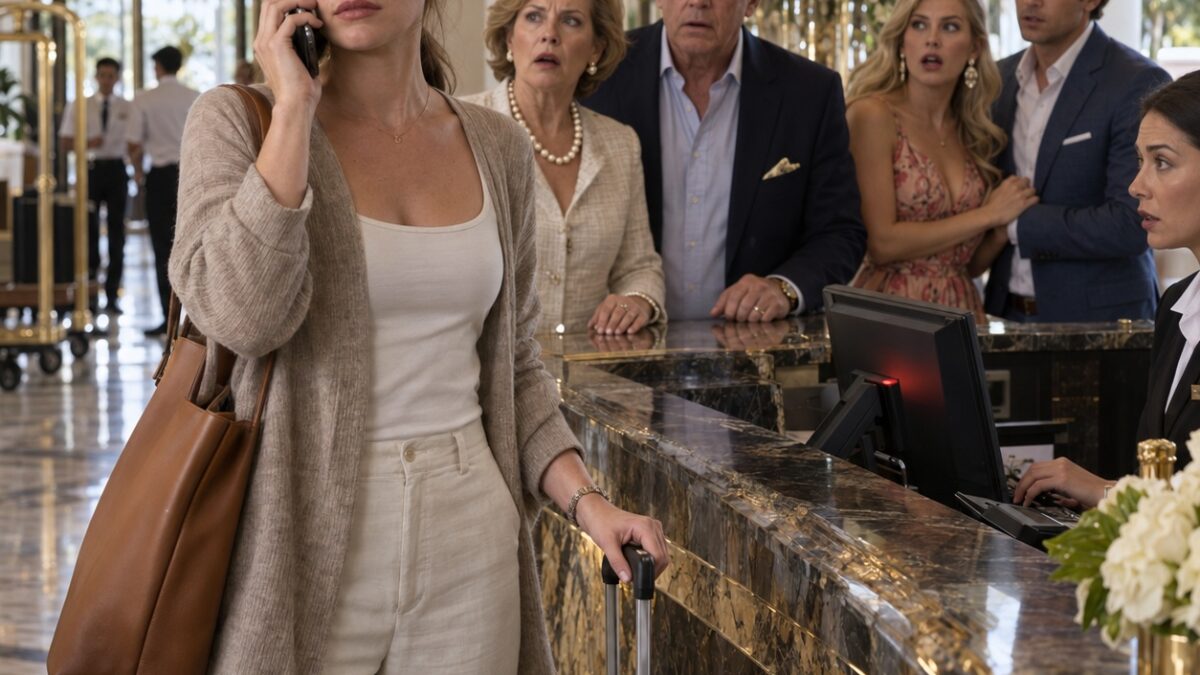
My grandmother, Eleanor Bennett, had died sixty-three days earlier.
Most people knew her as the elegant widow who attended charity galas in dark blue gowns and donated millions without allowing her name to appear on buildings. To me, she was the woman who kept ginger cookies in a silver tin, smelled faintly of lavender, and never asked me to become smaller so other people could feel taller.
She was also the true founder of Aurelia Hospitality Group.
My grandfather supplied the original investment, but Grandma created everything that made the company extraordinary. She selected the first properties, developed the service standards, recruited the executives, and insisted that employees receive health insurance years before other hospitality companies offered it.
My father had spent most of his adult life telling people Aurelia was his inheritance.
It wasn’t.
He had been appointed chief development officer after Grandpa died, but Grandma retained the controlling shares. Richard received a salary, bonuses, travel privileges, and access to a corporate account. He had influence, but never ownership.
That distinction had always infuriated him.
After Grandma’s death, my father behaved as if the company had automatically become his. He moved into her office before the funeral flowers had wilted. He ordered new business cards identifying himself as acting chairman. He even instructed the staff to remove her personal photographs from the executive floor.
What he did not know was that, six months before she died, Grandma had changed her trust.
She left me fifty-two percent of Aurelia’s voting shares.
She left Madison a generous personal trust that would distribute money gradually, provided Madison completed substance-abuse counseling and remained free from criminal charges.
My father received the lake house in Michigan and the contents of his retirement account.
My mother received nothing.
I had learned about the shares five days after the funeral, when Grandma’s attorney, Samuel Greene, asked me to come to his office alone.
At first, I thought there had been a mistake.
“Grandma would never put the company in my hands,” I told him.
Samuel had regarded me over his glasses. “Your grandmother spent nearly four years deciding who should protect it.”
“I’m a financial compliance consultant. I’ve never run a hotel.”
“Your father has worked in hospitality for twenty-seven years,” Samuel said. “Do you believe he should control Aurelia?”
The answer came too quickly.
“No.”
“Neither did Eleanor.”
Samuel then handed me a sealed letter written in Grandma’s narrow, elegant handwriting.
My dearest Clara,
If you are reading this, I have run out of time to say what I should have said while I was alive.
You have spent your life believing you are the weak one because your family punished you whenever you showed a conscience. They called your compassion naïve, your independence selfish, and your honesty disloyal. Those accusations were not descriptions of you. They were tools used to control you.
Aurelia does not need the loudest Bennett. It needs the one who understands that dignity is not a luxury reserved for wealthy guests.
Your father wants the company because he believes ownership will make him important. Your sister wants what the company can buy. You are the only one who never asked me for it.
That is why I am trusting you with it.
Do not protect our name at the expense of the people carrying it.
Build something better.
I read the letter three times in Samuel’s office. By the end, tears had blurred every word.
“Why didn’t she tell me?” I whispered.
“She feared your father would pressure you into signing away your rights before the transfer became final.”
He had been right.
Even without knowing about the inheritance, my father had called me twice after the funeral and encouraged me to sign what he described as “routine family estate waivers.” When I asked to have my own attorney review them, he accused me of distrusting him.
The documents would have surrendered any voting interest I received from Grandma’s trust.
I had refused to sign.
Since then, Samuel, Aurelia’s board counsel, and a quiet group of senior executives had worked to complete the transfer without alerting Richard. The final certification was supposed to happen the following Monday.
Instead, the court approved it early.
That was the message now glowing on my phone.
The red symbol on Lani’s monitor flashed again.
I knew what it meant because I had helped design a similar system for another hospitality company. A red shield indicated that an account had been flagged for executive review.
Someone had already noticed an irregularity.
“Is something wrong?” I asked Lani.
She hesitated. “There appears to be a payment dispute connected to the family reservation.”
My father finally looked up.
“What kind of dispute?”
“I’m not able to discuss another guest’s payment information.”
“I’m Richard Bennett.”
He said his name the way some people presented diplomatic credentials.
Lani remained composed. “Yes, sir. I recognize you.”
“Then you know I’m an Aurelia executive.”
Mom gave the clerk a chilly look. “My husband practically owns this company.”
Not anymore, I thought.
Perhaps he never had.
Madison sighed. “Can we please go upstairs? I need to change before the welcome dinner.”
She and Preston had been assigned the hotel’s presidential suite. My parents occupied the adjoining oceanfront residence. Their package included private butler service, spa appointments, a sunset yacht excursion, and a dinner on the restricted cliff terrace.
The entire weekend was being billed to my father’s corporate hospitality account.
My five thousand dollars had supposedly been my contribution toward the event. Yet when I transferred the money to Mom, she had refused to provide an itemized invoice.
I opened the message from Samuel and typed one question.
DO I HAVE FULL AUTHORITY NOW?
His reply arrived immediately.
YES. EFFECTIVE 4:00 P.M. HAWAII TIME. NAOMI REYES IS EXPECTING YOUR CALL.
Naomi Reyes was Aurelia’s regional director for Hawaii and the Pacific. I had met her once at Grandma’s memorial. She had hugged me, whispered that my grandmother had saved her career, and given me her private number.
Mom noticed my phone.
“Who are you calling?” she asked. “A shelter?”
Madison laughed.
Even Preston smiled, although he had the decency to look slightly uncomfortable.
I had spent years imagining what it would feel like to finally confront them. In those fantasies, I shouted. I listed every forgotten birthday and deliberate insult. I forced them to acknowledge the damage they had done.
But standing in that lobby, something inside me became still.
I no longer needed them to admit anything.
I only needed the truth.
I pressed Naomi’s number.
She answered on the first ring.
“Ms. Bennett?”
“This is Clara.”
“I’ve been waiting for you.”
Her voice was calm, direct, and reassuring.
I looked at my family.
“Naomi, cancel the Bennett family’s presidential suite access.”
Madison’s eyebrows lifted.
I continued.
“Freeze Richard Bennett’s corporate hospitality account. Flag every charge associated with his executive Black Card for review, including this weekend’s reservations.”
My father took a step toward me.
“What the hell are you doing?”
I raised one finger and finished speaking.
“Do not cancel the rooms themselves yet. Place them on a direct-payment hold. No one enters until the legitimate guest personally guarantees the charges.”
There was a brief silence on the phone.
Then Naomi said, “Understood. Anything else?”
“Yes. Please come to the lobby with the hotel’s general manager and head of security.”
“We’re on our way.”
I ended the call.
Madison folded her arms. “That was pathetic.”
“No refunds after payment,” Mom said. “You can pretend to be important all you want, Clara. It doesn’t change the reservation.”
Two minutes later, Lani’s screen turned entirely red.
A soft electronic tone sounded beneath the desk.
The clerk straightened.
“Mr. Bennett, I’m afraid access to the presidential suite and oceanfront residence has been suspended.”
Madison’s smile disappeared.
“What?”
Lani looked at another screen. “The corporate authorization attached to your reservation has been frozen. Before keys can be issued, we’ll need a personal credit card capable of covering the full stay and incidental deposit.”
Dad pushed forward.
“This is my corporate account.”
“Yes, sir. It is currently under executive review.”
“By whom?”
The elevators opened behind us.
Naomi Reyes crossed the lobby with three people beside her: Daniel Cho, the hotel’s general manager; a broad-shouldered security director; and a woman carrying a tablet.
Naomi was in her late forties, with silver threaded through her dark hair and the kind of calm expression that made other people lower their voices.
She stopped in front of me.
“Ms. Bennett,” she said. “Welcome to the Aurelia Grand Maui.”
My father stared at her.
“Naomi, what is going on?”
She did not turn toward him.
“The transfer became effective at four o’clock,” she told me. “Your authority has been entered into the corporate system. We are prepared to follow your instructions.”
Mom’s face lost color.
Madison looked from Naomi to me. “What transfer?”
Dad’s expression changed more slowly.
Confusion came first.
Then calculation.
Finally, fear.
“Clara,” he said, “what did Eleanor leave you?”
Naomi answered before I could.
“Mrs. Eleanor Bennett transferred her controlling voting interest in Aurelia Hospitality Group to Ms. Clara Bennett.”
The silence that followed felt heavier than shouting.
Preston took his arm from Madison’s waist.
Mom blinked several times. “Controlling interest?”
“Fifty-two percent,” I said.
Madison gave a breathless laugh. “That’s impossible.”
“It became legally effective twenty minutes ago.”
Dad’s face hardened. “We need to speak privately.”
“No,” I said. “First, I need to understand why a room purchased with my money was canceled without my consent.”
“This is a family matter.”
“It became a company matter when you charged this weekend to a corporate account.”
His jaw tightened.
Naomi glanced at the woman with the tablet. “Our preliminary records indicate the canceled room was not refunded to Ms. Clara Bennett.”
I looked at Mom. “Where did my five thousand dollars go?”
Her mouth opened, but no answer emerged.
Madison recovered first.
“You are seriously doing this here?” she snapped. “During my engagement weekend?”
“You canceled my room during your engagement weekend.”
“Because Preston’s relatives needed it!”
Daniel, the general manager, cleared his throat.
“For clarity, no additional guests were added to the reservation after Ms. Bennett’s room was canceled.”
I turned toward him. “Then who has the room?”
His gaze shifted briefly to my mother.
“It was converted into a private preparation suite for Ms. Madison Bennett’s styling team.”
For a moment, I could only stare.
My room had not been given to visiting relatives.
It had been turned into a dressing room.
Madison lifted her chin. “My makeup artists need space.”
“You stranded me in Hawaii so your makeup artists could have a room?”
“Don’t say stranded. You’re being dramatic.”
Mom stepped between us.
“That is enough. Clara, I understand you’re upset, but freezing your father’s account is an absurd overreaction. Reinstate the suite access, and we’ll discuss your inheritance after the weekend.”
She spoke as if she were still dealing with the daughter who apologized whenever anyone else behaved badly.
“I’m not reinstating anything until the account review is complete.”
Dad lowered his voice. “You have no idea how this company operates.”
“You’re right. That is why I’m not pretending I do. Naomi and the compliance team will review it.”
His eyes narrowed at the word compliance.
It was a small reaction, but I saw it.
So did Naomi.
“Your father has dedicated his life to Aurelia,” Mom said. “Your grandmother made an emotional decision while she was sick. If you have any respect for this family, you’ll sign those shares over to him.”
I nearly laughed.
Twenty minutes earlier, they had expected me to sleep at the airport.
Now they wanted me to hand them a company worth more than a billion dollars in the name of family respect.
“The presidential suite costs eighteen thousand dollars per night,” Naomi said. “The adjoining residence is eleven thousand. With services, events, and security, the current authorization for this weekend totals approximately one hundred eighty-six thousand dollars.”
Preston’s head snapped toward Madison.
“You told me your parents were paying.”
“They are.”
Naomi looked at him. “Aurelia Hospitality Group was paying.”
His face tightened.
Dad reached into his jacket and removed a platinum card.
“Fine. Charge this.”
Lani processed it.
A moment later, she looked apologetic. “The card was declined.”
“Try again.”
She did.
The result did not change.
My mother quietly produced her own card.
That one was declined too.
Madison whispered, “What is happening?”
I knew.
The cards were supplementary accounts tied to Dad’s executive credit line. When I froze the Black Card, the connected cards had been suspended automatically.
Dad turned on me.
“Undo this now.”
His tone carried the old command that had frightened me when I was a child.
I remembered being eleven years old, standing in his study after Madison broke one of Grandma’s porcelain birds. My sister cried until Mom decided I must have done it. Dad ordered me to apologize.
When I refused, he took away my bedroom door for a month because, he said, privacy was a privilege for trustworthy children.
At thirty-two, the memory still had the power to make my hands cold.
But it could no longer make me obey.
“No.”
The single word seemed to shock him more than the frozen account.
Security Director Keoni Hale moved half a step closer—not threateningly, but enough to remind Dad where we were.
Preston pulled Madison aside.
“What else did you lie about?” he demanded quietly.
“I didn’t lie.”
“You said your family owned this place.”
“We do.”
His gaze moved to me.
“No,” he said. “Apparently, she does.”
Mom heard him.
“This is temporary,” she said quickly. “Clara has never managed anything larger than an office budget. Once the board understands—”
“The board confirmed the transfer,” Naomi said.
Dad looked at her. “You knew?”
“I knew Mrs. Bennett had established a succession plan.”
“And you said nothing to me?”
“My duty was to the company.”
“I am the company.”
The words rang through the lobby.
Several guests turned.
Naomi regarded him without emotion. “No, Mr. Bennett. You are an employee of it.”
I would remember that sentence for the rest of my life.
Dad’s face flushed dark red.
He looked at me as if I had spoken the words myself.
“You planned this.”
“I learned about the shares after Grandma died.”
“You could have told me.”
“You tried to make me sign them away before I knew they existed.”
His eyes flickered.
Mom turned toward him. “What is she talking about?”
“Nothing.”
“The estate waivers,” I said. “They would have surrendered any voting interest Grandma left me.”
“That was standard legal housekeeping.”
“Samuel Greene disagrees.”
At the mention of Grandma’s attorney, Dad’s anger became more controlled.
That frightened me more than the shouting.
“Clara,” he said quietly, “you are standing in a lobby making decisions you do not understand. Restore my account. We will return home after the weekend and resolve this with the attorneys.”
“I’m staying.”
Mom stared at me. “Where?”
Naomi smiled faintly.
“Mrs. Bennett’s private owner’s residence has been prepared.”
I had not known such a residence existed.
Apparently, neither had my family.
“It occupies the upper east wing,” Daniel explained. “Mrs. Eleanor Bennett maintained it for private visits. It has remained sealed since her last stay.”
Emotion caught behind my ribs.
Grandma had stayed here.
Perhaps she had stood beneath these same lights, looked through these windows, and watched the ocean turn gold.
“I’d like to see it,” I said.
“Of course.”
Madison moved toward me.
“You cannot walk away. What about my engagement dinner?”
“That reservation remains intact if you pay for it personally.”
“The cliff terrace requires executive approval!”
“It had executive approval when Dad used company money.”
She looked genuinely bewildered, as if the distinction between family wealth and corporate funds had never occurred to her.
“This weekend was supposed to be my gift,” she said.
“From whom?”
“Dad.”
“With whose money?”
She said nothing.
Preston’s mouth hardened.
I did not know him well. In the three years he had dated Madison, we had exchanged perhaps a dozen meaningful sentences. He came from a wealthy real-estate family, and Mom treated his parents as royalty.
But at that moment, Preston looked less angry about the lost luxury than about having been deceived.
“My parents are arriving tomorrow,” he said. “Did you tell them the company was hosting this?”
Madison grabbed his hand. “Why does that matter?”
“Because my father asked whether accepting a six-figure corporate event could create an ethics issue with the Hale development negotiations.”
Dad went still.
I looked at Naomi.
“What negotiations?”
She answered carefully. “Aurelia has been considering a partnership with Hale Coastal Development for two properties in California.”
Preston stared at my father. “You told us the board had approved everything.”
“The board authorized preliminary discussions,” Dad replied.
“You said the contract was done.”
“This is neither the time nor the place.”
A sick feeling settled in my stomach.
Madison’s engagement weekend was not merely a family celebration. Dad had used it to influence a potential business partner while presenting the expenses as corporate hospitality.
Grandma had warned me that he saw Aurelia as a source of status. I had not realized how literally he treated its accounts as his own.
“Naomi,” I said, “add the Hale development negotiations to the review.”
Dad’s expression became vicious.
“You ungrateful little fool.”
The insult landed, but it did not wound me the way it once had.
Perhaps because I could finally see what lived beneath it.
Fear.
He was afraid of me.
No—not of me.
Of being examined.
“Mr. Bennett,” Keoni said, “I need you to lower your voice.”
Dad pointed at me. “She is destroying her grandmother’s company twenty minutes after inheriting it.”
“I’m reviewing an executive account,” I said. “If everything is legitimate, you have nothing to fear.”
Mom seized my arm.
Her nails pressed into my skin.
“You listen to me,” she whispered. “Whatever fantasy Eleanor put in your head, you are not capable of this. You will embarrass yourself, the board will remove you, and you’ll come crawling back to us. When that happens, do not expect me to save you.”
I gently removed her hand.
“You canceled my room after taking my money. You lied about why. You planned to leave me alone on an island thousands of miles from home, and you stood here enjoying it.”
Her lips thinned.
“That was discipline.”
“No. It was cruelty.”
“You always were too sensitive.”
“And you always depended on me believing that.”
For the first time in my life, my mother had no answer.
Naomi led me toward the private elevators.
As the doors began to close, Madison called my name.
I looked back.
She stood in the center of the lobby, no longer radiant or superior. Preston had stepped away from her. Mom gripped her purse with both hands. Dad was already speaking urgently into his phone, probably calling attorneys who could not change what Grandma had done.
“What am I supposed to do now?” Madison asked.
It was the same question Mom had expected me to answer alone.
I held her gaze.
“You’re thirty-five, Madison. Figure it out.”
The elevator doors closed.
I expected triumph.
Instead, my knees nearly gave way.
Naomi caught my elbow.
“Easy.”
“I’m fine.”
“No, you’re not.”
The kindness in her voice broke something open inside me.
I pressed one hand over my mouth, but the first sob escaped anyway.
For sixty-three days, I had been grieving Grandma while my family debated her jewelry, her houses, and the seating arrangements at her memorial. I had attended meetings with attorneys in secret. I had lain awake wondering why she had chosen me and whether accepting the responsibility would destroy what remained of my family.
Then my mother had canceled my room as punishment.
And I had finally stopped protecting them.
Naomi guided me to a bench inside the private elevator vestibule.
“You don’t have to apologize for crying,” she said.
“I wasn’t going to.”
“Good. Eleanor hated unnecessary apologies.”
I laughed weakly through my tears.
“That sounds like her.”
Naomi sat beside me. “She told me you would try to be strong long after strength stopped being useful.”
“You knew her well?”
“She hired me twenty-one years ago. I was a single mother managing the front desk at the Aurelia San Diego. My son had pneumonia, and I missed three shifts. Your father wanted me terminated.”
I looked at her.
“Grandma stopped him?”
“She asked why no one had arranged emergency childcare or medical leave. Then she rewrote the company policy.” Naomi smiled sadly. “Your grandmother believed a business revealed its soul in the way it treated someone who had temporarily become inconvenient.”
The words pierced me.
My family had spent my entire life treating me as inconvenient.
Perhaps Grandma had noticed more than I realized.
The elevator opened into a quiet hallway washed in amber light. At the end stood double doors carved with a pattern of waves and stars.
Daniel entered a code. The doors opened.
The residence beyond them was not ostentatious. It was beautiful in the restrained, intimate way Grandma had always preferred: pale wood, linen furniture, shelves of books, bowls of smooth black stones, and wide windows overlooking the ocean.
Her presence remained everywhere.
A blue shawl folded over a chair.
Reading glasses beside an unfinished novel.
A ceramic cup on a tray.
And on the desk, a framed photograph of the two of us.
I was sixteen in the picture, scowling beneath a sun hat while Grandma laughed beside me. It had been taken on our trip to Maine after my parents forgot to pick me up from summer camp.
I walked toward the photograph and touched the edge of the frame.
“She knew she was dying when she came here last,” Naomi said. “She asked us not to clear the room until the succession was complete.”
My eyes filled again.
On the desk lay a sealed envelope.
CLARA was written across it.
My hands trembled as I opened it.
Inside was a single sheet.
If Richard is angry, look deeper.
His anger has always guarded a door.
Do not be afraid to open it.
E.
I read the message twice.
“What did she mean?” I asked.
Naomi did not answer immediately.
“Three weeks before Eleanor died, she ordered an internal audit.”
“Of my father?”
“Of several development projects under his authority. She received the preliminary findings the day before she entered hospice.”
“Where is the report?”
“It disappeared.”
A chill moved across my skin despite the warm room.
“Disappeared how?”
“The lead auditor resigned. The electronic file was deleted from the compliance server, and the paper copy could not be located.”
“Who had access?”
“Four people. Your grandmother, the auditor, your father, and Martin Crowe, Aurelia’s chief financial officer.”
I knew Martin.
He had spoken at Grandma’s funeral, praising her integrity while repeatedly checking his phone.
“What was the audit about?”
“Inflated development costs, unauthorized vendors, and possible payments to companies that could not be verified.”
“How much money?”
“The preliminary estimate was at least twenty-eight million dollars.”
The room seemed to tilt.
Downstairs, my father’s weekend charges were under review.
Up here, Grandma was telling me that his anger guarded a door.
My phone rang.
Dad.
I declined the call.
He called again.
Then Mom.
Then Madison.
A message appeared from my father.
YOU ARE IN DANGER OF COMMITTING SERIOUS CORPORATE VIOLATIONS. CALL ME BEFORE YOU MAKE THIS WORSE.
Another message followed.
YOUR GRANDMOTHER WAS CONFUSED AT THE END.
Then a third.
THERE ARE THINGS ABOUT ELEANOR YOU DON’T KNOW.
Naomi watched my face. “What did he say?”
“He’s trying three different kinds of fear to see which one works.”
“Which one usually does?”
“All of them.”
I looked out at the darkening ocean.
“But not tonight.”
I called Samuel Greene.
He answered immediately.
“I assume Richard knows.”
“He knows. So do I—at least about the missing audit.”
Silence.
“You found Eleanor’s note,” he said.
“You knew about it?”
“She asked me to tell Naomi the truth once you reached the residence.”
“Why not tell me before?”
“Because Eleanor wanted your first decision as controlling shareholder to be yours—not a response to an accusation against your father.”
I understood.
If I had arrived knowing he might have stolen millions, everything in the lobby would have been colored by suspicion. Instead, Dad had revealed himself through his own behavior.
“Can the audit be recovered?” I asked.
“Possibly.”
“Then I want an independent forensic team brought in tonight. Lock all executive deletion privileges. Preserve company email, expense records, vendor contracts, and security logs. No one should be allowed to destroy or modify anything.”
Samuel exhaled softly.
“Your grandmother hoped you would say that.”
Within an hour, the Aurelia Grand changed around me.
Not visibly. Guests still dined under lanterns. Waves still broke against the beach. Employees still carried towels and drinks along the pool deck.
But beneath that surface, systems were being locked down.
Naomi contacted the board’s audit committee. Samuel notified outside counsel. A cybersecurity firm began preserving servers in New York, Los Angeles, and Honolulu.
My father called eleven more times.
I did not answer.
At eight thirty, someone knocked on the residence door.
I expected Naomi.
It was Madison.
Her face had been washed clean of makeup. She wore jeans and an old gray sweatshirt, and for the first time that day, she looked less like the perfect Bennett daughter and more like the girl who used to crawl into my bed during thunderstorms.
“Preston left,” she said.
I stepped aside to let her enter.
“Left the hotel?”
“He moved to another property. He said he needs to think.”
“I’m sorry.”
“No, you’re not.”
“You’re right. I’m sorry you’re hurting. I’m not sorry he learned the truth.”
She flinched.
Her eyes moved around the residence, stopping at Grandma’s shawl.
“So this is all yours now?”
“I control the shares. That doesn’t mean the hotel belongs to me personally.”
“You know what I mean.”
I waited.
Madison wrapped her arms around herself.
“Mom says you’re trying to send Dad to prison.”
“I ordered an audit.”
“Of your own father.”
“Yes.”
She stared at me. “How can you be so cold?”
The question almost made me angry.
Then I remembered how thoroughly Mom had taught us to confuse obedience with love.
“You canceled my room,” I said. “You lied to me and laughed when Mom suggested I sleep at the airport.”
Her cheeks reddened. “I didn’t think she was serious.”
“You knew I had nowhere to stay.”
“I thought you’d figure something out. You always do.”
There was the truth, spoken without cruelty because she did not recognize it as cruelty.
I always figured something out.
When Madison forgot Grandma’s medication, I drove three hours to retrieve it.
When Mom overspent on a charity luncheon, I corrected the accounts before the committee noticed.
When Dad needed someone to proofread a proposal overnight, he called me.
They trusted me to solve every problem they created. They simply did not believe solving those problems made me valuable.
“You needed a styling room,” I said.
“It was important.”
“So was having a place to sleep.”
“You don’t understand the pressure I’m under.”
“What pressure?”
“Being watched all the time. Having everyone expect everything to be perfect. Preston’s family evaluates every dress, every word, every photograph. Mom said if this weekend went wrong, they might decide I wasn’t suitable.”
Her voice cracked.
For one dangerous second, I wanted to comfort her.
That instinct had shaped my entire life.
I did not reject it. I simply refused to let compassion erase accountability.
“So you offered them me,” I said.
She looked down.
“You let Mom humiliate me because sacrificing me made your life easier.”
“I didn’t think it would become all this.”
“Cruelty doesn’t become acceptable just because you expected the victim to stay quiet.”
Tears appeared in her eyes.
“Do you hate me?”
“I don’t know.”
She looked shocked.
Perhaps she expected an immediate denial.
“I love the sister I kept hoping you would become,” I continued. “I love the child who held my hand when we hid beneath Grandma’s dining table. I love the woman you might still choose to be. But I don’t know if I love the person who stood in that lobby today.”
Madison wiped her cheek.
“Mom said you were jealous of me.”
“I was.”
Her head lifted.
“I was jealous because she loved you in ways she never loved me. But I’m not jealous anymore.”
“Why?”
“Because what she gave you wasn’t love. It was approval that disappeared whenever you stopped performing.”
Madison’s face crumpled.
She sat on the edge of the sofa.
“Dad’s account is empty,” she whispered.
“What?”
“I heard them arguing. Mom tried to book another hotel, but their personal cards were rejected. She asked Dad to transfer money from their investment account. He said there wasn’t enough.”
My pulse quickened.
My parents lived as if they possessed unlimited wealth. They owned houses, cars, jewelry, and club memberships. Dad earned more than two million dollars a year.
“How could there not be enough?”
“I don’t know. Mom asked where the money went. Dad told her to keep her voice down.”
Grandma’s warning returned to me.
His anger has always guarded a door.
“Did he say anything else?”
Madison hesitated.
“He said you couldn’t be allowed to see the Hale files.”
The California development negotiations.
“Which Hale files?”
“I don’t know. Preston’s father’s company, I guess.”
“Think, Madison.”
She pressed both hands to her temples.
“Dad said something about Laguna. Mom asked whether Martin had fixed it. Then Dad saw me.”
Laguna.
Aurelia had been considering a coastal resort near Laguna Beach. The property was valued at nearly ninety million dollars.
I called Naomi.
“Add the Laguna project to the preservation order. Immediately.”
She asked no questions.
After the call, Madison stood.
“If Dad did something wrong, what happens?”
“That depends on what he did.”
“And if you find nothing?”
“Then the review clears him.”
She nodded slowly.
At the door, she turned back.
“Did Grandma really leave me a trust?”
“Yes.”
“Mom said she left me almost nothing because you turned her against me.”
“She left you enough to live comfortably for the rest of your life.”
Madison’s lips parted.
“There are conditions,” I added. “Counseling and no further criminal charges.”
Her shame returned.
“The car.”
“Yes.”
She looked toward the floor.
“You could have lied for me.”
“I know.”
“Why didn’t you?”
“Because you might have driven drunk again. You could have killed someone.”
She stood silently for several seconds.
Then she whispered, “I almost did.”
After she left, I remained by the door, listening to the ocean.
For the first time, I wondered whether Madison’s cruelty came from something more complicated than selfishness. That did not excuse her. But understanding was not the same as excusing.
At ten fifteen, the forensic team found the first hidden vendor.
Blue Meridian Consulting had received eleven payments totaling $6.4 million for “coastal feasibility services.” Its registered address belonged to a mailbox store in Delaware.
The beneficial owner was hidden behind two limited-liability companies.
At eleven forty, the team connected Blue Meridian to an investment trust in the Cayman Islands.
At twelve twenty-three, Samuel called.
“The trust beneficiary is Vivian Bennett.”
My mother.
I sat at Grandma’s desk while the screen of my laptop glowed in the dark room.
“How much has been transferred?”
“Potentially more than we know. Blue Meridian is only one vendor.”
“Does Mom know?”
“We can’t determine that yet.”
I thought of her in the lobby, smiling as she told me to sleep at the airport.
I wanted to believe even she would not help steal from Grandma’s company.
But wanting had protected my family from reality for too long.
“Continue,” I said.
At one in the morning, the lights flickered.
Once.
Twice.
Then went out.
Emergency lighting illuminated the hallway.
My phone lost its connection to the hotel network.
Someone knocked on the door.
Three slow knocks.
I froze.
“Ms. Bennett?” a man called. “Hotel engineering.”
I moved toward the door but did not open it.
“What is your name?”
“Eric.”
“What is your employee number?”
A pause.
“We need access to inspect the electrical panel.”
“The panel isn’t inside this residence.”
Another pause.
Then the handle moved.
The door was locked, but someone tried it twice.
I called Naomi using cellular service.
“Someone is outside the residence claiming to be engineering.”
“Do not open the door,” she said sharply. “Keoni is on the way.”
Footsteps retreated down the hallway.
Thirty seconds later, security officers arrived.
They found no one.
The power outage had affected only the private east wing. Someone had manually disabled the circuit from a service closet.
The security camera in that corridor had also been turned off.
Keoni reviewed access logs.
A master key had entered the elevator at twelve fifty-eight.
It belonged to my father.
Dad denied using it.
He claimed the card had been stolen.
But security footage showed him leaving his temporary room twelve minutes before the outage and returning six minutes afterward.
When Keoni confronted him, Dad demanded to speak with me.
I agreed, but only in the main conference room with Naomi, Samuel on video, and security present.
Dad entered wearing slacks and an open-collared shirt. Without his jacket and gold watch, he looked older.
“Are you trying to have me arrested?” he asked.
“Did you come to the residence?”
“I wanted to talk.”
“Why disable the power?”
“I didn’t.”
“Why turn off the camera?”
“I didn’t.”
“Then who did?”
He looked at Naomi. “Leave us.”
“She stays.”
His mouth tightened.
“You are enjoying this.”
“No.”
That was the truth.
“I’m terrified,” I said. “I inherited a company I never expected to control. I discovered that millions may have been sent to a hidden trust benefiting Mom. Someone cut the power to my room during a forensic investigation. I would give almost anything for a reasonable explanation.”
His expression flickered.
“But I will not trade the truth for comfort,” I continued. “Grandma trusted me not to do that.”
“Your grandmother was paranoid.”
“She ordered the audit.”
“She was dying. Medication affected her judgment.”
“Then why did the report disappear?”
Dad said nothing.
“What are the Hale files?”
His eyes sharpened.
“Madison has no idea what she heard.”
“She heard you say I couldn’t be allowed to see them.”
He leaned back.
“The Laguna project is complicated. Development projects always are.”
“Did you create Blue Meridian Consulting?”
“No.”
“Did Mom?”
“No.”
“Did you authorize payments to it?”
“I approved hundreds of vendor payments.”
“Six-point-four million dollars went to a trust benefiting your wife.”
For the first time, he looked genuinely stunned.
It lasted less than a second.
But I saw it.
Dad knew about Blue Meridian.
He had not known Mom’s name was attached to the money.
“That is impossible,” he said.
“Then help us prove it.”
He pushed back his chair.
“This conversation is over.”
Keoni stepped between him and the door.
“No one is detaining you,” I said. “But your master key is revoked, and you are suspended from all company systems pending review.”
Dad looked at me with naked hatred.
“You think Eleanor chose you because you were special?”
“I think she chose me because she was afraid of you.”
His face changed.
I knew immediately that I had touched the truth.
He left without another word.
The next morning, the engagement breakfast was canceled.
Preston’s parents never came to the hotel. They had received a call from their attorney before boarding their flight and postponed all discussions with Aurelia.
Madison blamed me.
Mom refused to answer my messages.
Dad disappeared from the property before sunrise.
At nine thirty, the forensic accountants uncovered three more shell companies. Together, they had received $31.8 million over six years.
Some invoices were attached to real projects but charged for services never performed. Others appeared entirely fabricated.
All had been approved by my father or Martin Crowe.
At ten, Martin sent the board a letter of resignation.
At ten five, he attempted to board a flight to Singapore.
Federal authorities stopped him before departure.
By noon, the story had begun leaking to the financial press.
Aurelia’s stock was privately held, but bondholders and lenders demanded answers. The board scheduled an emergency meeting.
I attended from Grandma’s residence.
Twelve faces appeared on the screen. Some looked worried. Two looked openly hostile.
Gerald Knox, a longtime friend of my father, spoke first.
“Clara, you have controlled these shares for less than twenty-four hours, and the company is already facing a public crisis.”
“The crisis existed before I arrived.”
“The public did not know about it.”
“So your objection is not the missing money. It is that we discovered it.”
“My objection is your lack of experience.”
“That is a legitimate concern,” I said. “I do not intend to appoint myself chief executive. I propose that Naomi Reyes serve as interim CEO while an independent committee oversees the investigation.”
Naomi looked surprised.
Gerald frowned. “Richard has led development for decades.”
“And he approved payments to unverified vendors.”
“These are allegations.”
“That is why we are investigating.”
Another director, Dr. Elaine Porter, leaned toward her camera.
“What protections have been implemented?”
I described the preservation orders, outside counsel, system restrictions, and voluntary lender disclosure.
When I finished, Elaine nodded.
“That is precisely what should have happened.”
Gerald’s objection failed.
The board voted nine to three to suspend my father, accept Martin’s resignation, and establish an independent special committee.
Naomi became interim chief executive.
I remained controlling shareholder and joined the board as chairwoman, the role Grandma had held.
After the meeting, I sat alone for several minutes.
Less than twenty-four hours earlier, Mom had told me to sleep at the airport.
Now I was chairing the company she believed I was too incompetent to understand.
But victory did not feel like I had imagined.
It felt like standing in the wreckage of a house and discovering the foundation had been hollow for years.
A message arrived from an unknown number.
IF YOU WANT THE MISSING AUDIT, COME TO ROOM 417 ALONE.
I showed Naomi.
She wanted security to handle it.
Instead, Keoni placed officers in the neighboring rooms and monitored the hallway. I went to 417 wearing a concealed emergency transmitter.
The man who opened the door was thin, exhausted, and perhaps fifty years old.
I recognized him from the audit file.
Thomas Vale, Aurelia’s former director of internal compliance.
The auditor who had resigned.
“I’m sorry about the theatrics,” he said. “I didn’t know who I could trust.”
“Why did you disappear?”
He closed the door.
“Because your father threatened my daughter.”
Cold spread through me.
Thomas handed me a small encrypted drive.
“The full audit is there. Copies of invoices, access logs, recorded calls, everything.”
“Why didn’t you go to the police?”
“I tried. Martin’s attorney contacted me before I reached the building. He knew where my daughter went to school.”
“Did my father make the threat himself?”
“No. Martin did. But Richard knew.”
“How can you prove that?”
Thomas took out his phone and played a recording.
Martin’s voice filled the room.
Richard says you have one chance to correct your conclusions. Withdraw the report, resign quietly, and your family stays outside this.
Then Thomas’s voice: Is that a threat?
Martin laughed.
Call it executive guidance.
I felt sick.
“Why come forward now?”
“Because Eleanor is gone, Martin has been detained, and Richard no longer controls security.” Thomas looked directly at me. “And because your grandmother told me that if anything happened to her, I should wait for you.”
“She knew I would inherit?”
“She knew you were the only person in the family who might choose the company over the Bennett name.”
The drive contained enough evidence to transform suspicion into a criminal case.
But it also contained something I did not expect.
The shell-company money had not gone only to my parents.
Millions had been routed into accounts connected to political consultants, zoning officials, and a private intelligence firm.
The Laguna project was at the center.
Aurelia did not yet own the beachfront site. The land belonged to several elderly homeowners and a marine conservation foundation. My father’s team had secretly funded lawsuits, code complaints, and harassment campaigns designed to force the owners to sell.
One homeowner had suffered a heart attack after receiving a fraudulent foreclosure notice.
The foundation’s director had been falsely accused of embezzlement.
The private intelligence firm had collected photographs, medical information, and family details.
My father had not simply stolen money.
He had used Grandma’s company to terrorize people.
I thought of the canceled room.
The lie.
The smile.
Maybe next time you’ll learn not to embarrass this family.
The scale was different, but the instinct was the same.
Punishment disguised as instruction.
Cruelty justified as business.
That afternoon, Mom finally asked to see me.
She arrived at the residence wearing large sunglasses despite being indoors.
When she removed them, her eyes were swollen.
“Your father is gone,” she said.
“Where?”
“I don’t know. He left a note saying he needed time.”
“Federal investigators may want to speak with him.”
“You did this.”
I let the accusation settle between us.
“No. He did.”
“You froze our accounts. You humiliated your sister. You destroyed her engagement.”
“Did you know about Blue Meridian?”
Mom looked away.
“The accountants say you benefited from the trust.”
“Richard handled our finances.”
“Did you know?”
“I signed papers.”
“What papers?”
“He said they were for tax planning.”
“Did you receive money?”
“Our lifestyle was expensive.”
“That isn’t an answer.”
Her face hardened.
“You have no idea what it cost to keep this family where it belonged.”
“Where did it belong?”
“At the top.”
The honesty of that answer startled me.
Mom walked toward the window.
“Your grandmother judged everything,” she said. “The clubs we joined, the people we entertained, Madison’s schools, my clothes. She acted superior because she had money before I did.”
“Grandma did not care about your clothes.”
“She cared that I spent too much.”
“Were you spending company money?”
She turned sharply.
“Your father worked for that company.”
“He was paid.”
“Not what he deserved.”
“So you helped him take more?”
Tears filled her eyes, but her voice remained cold.
“You make everything sound ugly.”
“Some things are ugly.”
“He promised the investments would be repaid after Laguna was approved. Property values would triple. No one was supposed to lose anything.”
“The homeowners you tried to force out would have lost their homes.”
“They were offered fair prices.”
“They refused.”
“People refuse because they don’t understand what’s best for them.”
I stared at her.
There was my childhood in one sentence.
Every punishment, every lie, every stolen choice had been justified because Mom believed she knew what was best.
“Did you cancel my room to punish me for refusing to lie about Madison’s crash?”
She gave an impatient sigh.
“We’re discussing federal investigations, and you’re still obsessed with a hotel room.”
“I want to hear you say it.”
“Fine. Yes. I canceled it.”
“Did Madison’s cousins ever need the room?”
“No.”
“Did you intend for me to sleep at the airport?”
“I assumed you would find something.”
“You checked the other hotels first.”
Her silence confirmed it.
“You wanted me trapped.”
“I wanted you humbled.”
“Why?”
“Because someone had to teach you that constantly opposing your family has consequences.”
I nodded slowly.
“Thank you.”
“For what?”
“For finally telling the truth.”
I placed my phone on the desk.
The voice-recording screen glowed red.
Mom’s face emptied.
“You recorded me?”
“Yes.”
“How dare you?”
“Samuel advised me to document every conversation involving the investigation.”
“This was private.”
“No, Mom. This was evidence.”
She crossed the room and slapped me.
The sound cracked through the residence.
My cheek burned.
Neither of us moved.
Then Keoni entered from the hallway. He had been waiting outside at my request.
“Mrs. Bennett,” he said, “you need to leave.”
Mom stared at her hand as if it belonged to someone else.
I did not cry.
That seemed to disturb her more than anger would have.
“You were always difficult to love,” she whispered.
The old wound opened instantly.
For years, I had believed those words without needing to hear them.
I looked at the woman who had built her identity around making one daughter shine and the other beg.
“No,” I said. “I was difficult to control.”
Keoni escorted her out.
That evening, authorities found my father aboard a private charter plane preparing to leave for Fiji.
He was arrested on charges related to wire fraud, obstruction, and witness intimidation.
Martin agreed to cooperate within forty-eight hours.
My mother was not immediately charged, but her accounts were frozen, and investigators seized records from the Palm Beach house.
The engagement ended three days later.
Preston met Madison on the beach at sunrise and returned her ring.
She came to my residence afterward, clutching it in her fist.
“He said he doesn’t know who I am.”
“Do you?”
She looked at me through tears.
“No.”
For once, I did not try to provide the answer.
The scandal expanded for months.
News crews waited outside Aurelia properties. Business commentators predicted the company would collapse. Several lenders threatened to withdraw.
I stayed.
Under Naomi’s leadership, we disclosed every fraudulent transaction we could identify. We canceled the Laguna project and created a restitution fund for the homeowners and organizations targeted by Dad’s campaign.
We sold two private aircraft, three executive residences, and a yacht that had been disguised as a “guest transportation asset.”
The money went back into the company and employee pension fund.
Some directors wanted the Bennett name removed from Aurelia’s public history.
I refused.
“Erasing the name would make this easier,” I told them. “Keeping it forces us to remember what can happen when a family confuses legacy with entitlement.”
Dad’s trial began fourteen months after Hawaii.
I attended every day.
He never looked at me during the testimony.
Thomas Vale described the threats against his daughter. Accountants traced millions through shell companies. Former employees testified about pressure to approve false invoices.
Mom accepted a plea agreement for conspiracy and tax fraud. She avoided prison but received house arrest, probation, and an order to surrender nearly all assets purchased with stolen funds.
Dad was convicted on eleven counts.
Before sentencing, he requested permission to address the court.
He stood in a dark suit, thinner than I remembered.
“My daughter,” he said, finally looking at me, “destroyed this family because she wanted revenge.”
The courtroom became silent.
For a heartbeat, I was back in that hotel lobby with my carry-on in my hand.
Then the judge asked whether I wished to respond.
I stood.
“My father is wrong,” I said. “I wanted a family so badly that I spent thirty-two years accepting things I would never have allowed anyone else to endure. I protected their image. I fixed their mistakes. I mistook silence for loyalty.”
Dad watched me with an expression I could not read.
“I did not expose him because I wanted revenge,” I continued. “I exposed him because innocent people were being harmed, employees’ futures were being risked, and my grandmother’s company was being used as a weapon. My family was not destroyed by the truth. It was destroyed by the belief that the truth should never apply to them.”
Dad received twelve years in federal prison.
When officers led him away, he did not look back.
Madison entered residential treatment voluntarily.
At first, I suspected she was doing it to satisfy the conditions of Grandma’s trust. Then she stayed longer than required.
She wrote me letters.
The early ones were defensive. She blamed Mom, Dad, Preston, alcohol, pressure, and childhood.
I answered only once.
You are allowed to explain how you became this person. You are not allowed to use the explanation as permission to remain her.
Six months later, she wrote again.
I canceled your room because I knew Mom wanted to hurt you. I let myself call it a styling issue because the truth made me ashamed. I was afraid that if I defended you, she would treat me the way she treated you.
I’m beginning to understand that she already did. She just used rewards instead of rejection.
I am sorry.
I kept that letter.
Forgiveness did not arrive like lightning. It came slowly and without certainty.
Madison and I began meeting with a family therapist after she completed treatment. Some sessions ended in tears. Others ended in anger. Once, we sat in silence for almost an hour.
But she kept returning.
So did I.
Two years after the trip, we went back to Hawaii.
Not for an engagement or a board meeting.
We went to scatter Grandma’s ashes from the cliff terrace she loved.
Naomi joined us, along with Samuel, several longtime employees, and people whose lives Grandma had changed.
Madison wore a simple blue dress. She had been sober for eighteen months.
Before the ceremony, she handed me an envelope.
Inside was a check for five thousand dollars.
I looked at her.
“I know it doesn’t fix anything,” she said. “It’s the money you paid for the trip.”
“The money came from Mom’s account.”
“I know. This came from mine.”
I started to return it.
She shook her head.
“Please. I need to give it back.”
I accepted the check.
Then I tore it in half.
Madison’s face fell.
“I didn’t accept it because I needed the money,” I said. “I accepted it because you needed to repay it.”
Understanding slowly entered her eyes.
I placed the pieces in her hand.
“The debt is acknowledged,” I said. “Now let’s stop carrying it.”
She began to cry.
This time, when I put my arms around her, it was not because I was rescuing her from consequences.
It was because she had finally faced them.
We walked together toward the terrace.
The evening sky burned orange and violet above the ocean. A warm wind lifted the flower petals arranged along the stone wall.
I carried Grandma’s urn.
Naomi read a passage from the speech Eleanor had delivered when the first Aurelia hotel opened nearly fifty years earlier.
“A hotel is a temporary home,” she read. “Every person who enters it arrives carrying a life we cannot fully see. Our duty is not merely to offer comfort. It is to remember their dignity.”
When it was my turn, I opened the urn.
For a moment, I could not move.
I thought about Grandma’s silver cookie tin. Her lavender perfume. The photograph on her desk. The letter she had left me.
You have spent your life believing you are the weak one because your family punished you whenever you showed a conscience.
The wind carried her ashes over the water.
They glittered briefly in the dying light before disappearing.
Madison took my hand.
After everyone left, I remained on the terrace alone.
Naomi approached quietly.
“You have a late arrival,” she said.
“Who?”
“A young employee from our Phoenix property. Her training reservation was mistakenly canceled during a system change. The hotel is full.”
My first instinct was to ask which nearby property had space.
Then I smiled.
“Prepare the guest room in the owner’s residence.”
Naomi smiled back. “I thought you might say that.”
The employee arrived an hour later. Her name was Sofia. She was twenty-four, exhausted, and trying not to cry as she apologized for causing trouble.
“You didn’t cause trouble,” I told her.
“I can stay at the airport.”
“No.”
She looked embarrassed. “I don’t want special treatment.”
“This isn’t special treatment. It’s how you should have been treated in the first place.”
I showed her to the guest room overlooking the ocean. Fresh orchids stood beside the bed. A meal waited on the balcony.
Sofia stared at everything.
“Why are you doing this?”
I thought of the marble lobby two years earlier.
My mother’s smile.
My father’s refusal to look at me.
My sister’s laughter.
And the phone call that changed all our lives.
“Because no one who comes to us in good faith should be made to feel disposable,” I said.
That became Aurelia’s guiding policy.
Not a slogan printed in advertisements.
A promise built into our decisions.
We created emergency lodging protections for employees traveling on company business. We strengthened independent compliance. We tied executive bonuses to employee retention and ethical standards, not only profit.
Five years after the scandal, Aurelia was stronger than it had ever been.
Naomi remained chief executive.
I remained chairwoman, though I never moved into Grandma’s old corporate office. Instead, we converted it into a permanent ethics and employee-advocacy center.
Her desk went to the residence in Maui.
The photograph of us stayed where she had left it.
My mother sent letters occasionally.
Most began with explanations and ended with requests.
I answered none for three years.
Then one arrived without either.
Clara,
I thought love meant shaping people into what I needed them to be. When you would not change, I punished you and called it discipline.
You did not destroy this family.
I helped destroy it.
I do not expect forgiveness. I only want the truth written somewhere outside a courtroom.
I am sorry.
I read the letter twice and placed it in the same box as Madison’s.
I did not call Mom.
Not every apology is an invitation to return.
Sometimes forgiveness means releasing the poison while keeping the door closed.
Years later, whenever I visited the Aurelia Grand Maui, I paused in the lobby.
Most employees no longer knew what had happened there. Guests crossed the marble floor carrying luggage, flowers, children, and private burdens.
The spot where I had stood looked ordinary.
That was the strangest part.
The moment that divided my life into before and after had left no mark on the floor.
But it had marked me.
My family had brought me to Hawaii to teach me that I was powerless.
They canceled the room I had paid for, watched me stand alone, and expected humiliation to drive me back into obedience.
Instead, they taught me something else.
They taught me that being excluded from a corrupt table is not rejection.
Sometimes it is rescue.
They taught me that silence does not keep a family together. It only keeps its secrets comfortable.
Most of all, they taught me that power is not proven by making someone panic, beg, or sleep at an airport.
Power is the ability to stop cruelty when it would be easier to look away.
My mother believed canceling my room would put me in my place.
In the end, it did.
It put me exactly where Grandma had been waiting for me to stand.








