My Family Dragged Me to Court for Grandma’s $4.7 Million—But the Judge Found the Identity I Had Hidden for Years
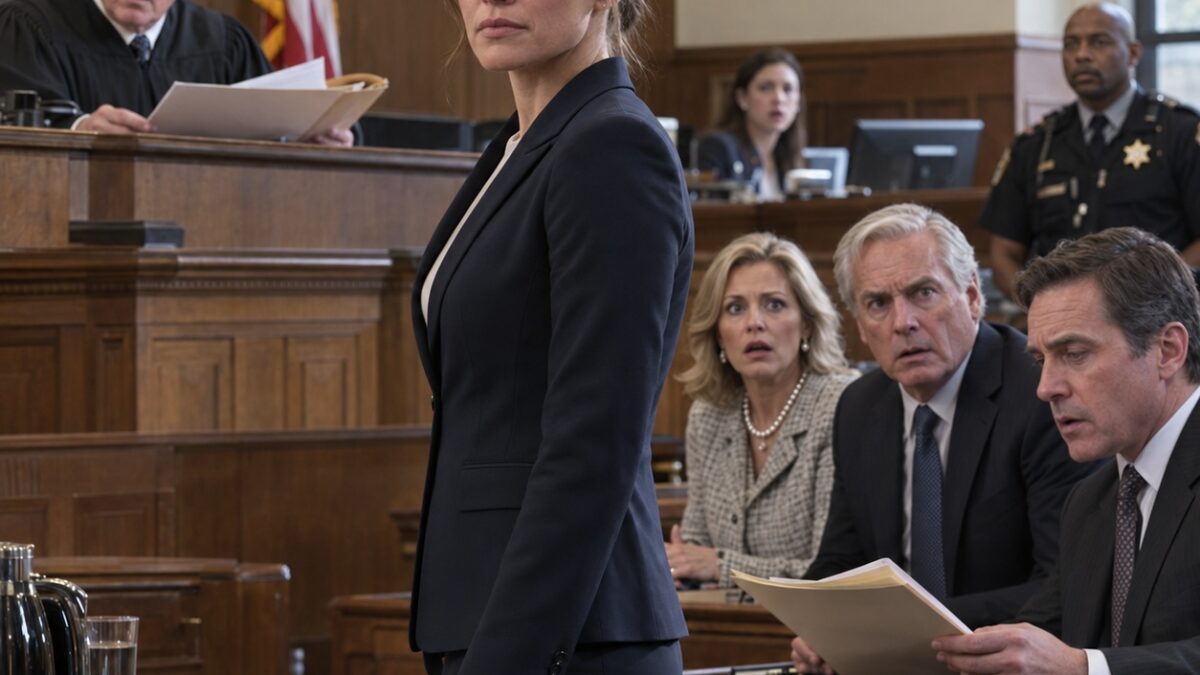
My mother laughed before she understood the question.
“Your Honor, she’s nothing of the kind.”
Judge Whitmore did not look at her.
His attention remained on me.
“Colonel Reed,” he said slowly, “is this service record accurate?”
A faint murmur moved through the courtroom.
My father turned toward me.
Nathan’s smirk disappeared.
Preston Hale lowered his legal pad.
I felt the old instinct telling me to minimize myself, to apologize for being noticed, to retreat before my parents could punish me for becoming someone they could not control.
Then I remembered Grandma Evelyn sitting at her kitchen table three months before her death.
You have hidden long enough, sweetheart.
I stood.
“Yes, Your Honor.”
My voice was calm, though my pulse had begun to pound beneath Grandma’s watch.
“My full legal name is Colonel Amara Evelyn Reed. I have served in the United States Army Judge Advocate General’s Corps for twenty-one years.”
My mother stared at me as if I had spoken in a language she did not understand.
Judge Whitmore continued reading.
“Your current assignment is with the Office of the Chief Trial Counsel?”
“Yes, Your Honor.”
“You oversee financial misconduct and procurement fraud cases?”
“I supervise a team assigned to complex fraud, official corruption, and military contracting investigations.”
The silence deepened.
The entire courtroom seemed to lean toward me.
My father’s face reddened.
“That’s impossible.”
Judge Whitmore finally looked at him.
“Mr. Carter, I strongly recommend that you speak only through counsel.”
“But she told us she was a clerk.”
“I told you I worked for the federal government,” I said.
Mother’s eyes narrowed. “You deliberately deceived us.”
“No. You deliberately stopped listening.”
Her mouth opened, but nothing came out.
Judge Whitmore removed his glasses.
“Colonel Reed, why does your family know you as Mara Carter?”
Daniel rose beside me.
“Your Honor, if I may, the respondent legally changed her surname more than nineteen years ago after a documented history of harassment, financial exploitation, and unauthorized attempts by relatives to obtain access to her military records.”
Preston Hale stood immediately.
“Objection. That allegation is inflammatory and irrelevant to the validity of the will.”
“It may become very relevant,” Judge Whitmore replied, “considering your clients have alleged that Colonel Reed is mentally incompetent and financially irresponsible.”
Preston’s posture stiffened.
The judge turned another page.
“I also see that Colonel Reed graduated from the University of Virginia School of Law, has served as both a prosecutor and defense counsel, and received a Legion of Merit six years ago.”
My mother gripped the edge of the table.
“She never told us any of this.”
Judge Whitmore’s expression became unreadable.
“That appears to be a family issue, Mrs. Carter. It is not evidence of incapacity.”
“But she barely speaks to us,” Mother insisted.
“The petition does not allege that she is impolite. It alleges that she is incapable of managing an estate.”
My father leaned toward Preston and whispered harshly. Preston raised one hand, trying to silence him.
I watched them with a strange detachment.
For years, I had imagined this moment.
Sometimes, in the loneliest months of my first deployment, I imagined walking into my parents’ house in uniform and watching pride finally appear on my father’s face.
Other times, I imagined confronting them at Christmas and listing every achievement they had ignored.
But as I stood inside that courtroom, I felt no satisfaction.
I saw only two aging people discovering that their favorite story about me had never been true.
Judge Whitmore closed the file.
“Mr. Hale, you have made serious allegations regarding Colonel Reed’s mental capacity. What evidence supports them?”
Preston cleared his throat.
“Testimony from immediate family members, Your Honor.”
“Medical evidence?”
“We anticipate introducing testimony regarding patterns of behavior.”
“That was not my question.”
Preston hesitated. “We do not currently possess a psychiatric evaluation.”
“Financial records demonstrating reckless behavior?”
“We are still pursuing discovery.”
Daniel rose. “Your Honor, Colonel Reed submitted twenty years of security-clearance evaluations, tax returns, financial disclosures, and medical assessments. She manages personnel entrusted with matters of national importance. There is no legitimate question regarding her competence.”
Judge Whitmore nodded.
“That is increasingly apparent.”
My mother turned toward me and whispered, “How could you do this to us?”
The question almost made me laugh.
Not because anything was funny, but because it revealed the universe in which she had always lived.
In her mind, my survival had been an act committed against her.
My success was a betrayal.
My silence was cruelty.
Even my grandmother’s death had somehow become an injury to Patricia Carter.
Judge Whitmore ordered a brief recess and instructed counsel to meet him in chambers.
As soon as he left, my father stood.
“What kind of game are you playing?”
Daniel moved between us.
“Mr. Carter, do not address my client directly.”
“I’m her father.”
“That does not give you permission to intimidate her.”
Father looked past him at me. “You think wearing a uniform makes you important?”
“I’m not wearing one.”
“You know what I mean.”
“I do. That’s the problem.”
Nathan rose from the bench behind him.
“So this is where all Grandma’s money went? She financed your secret little life?”
“No.”
“Then who paid for law school?”
“The Army, scholarships, and me.”
Mother gave a sharp laugh. “You expect us to believe that?”
I looked at her.
“When I was eighteen, you refused to provide your tax information for my financial-aid application because you said college would be wasted on me. Grandma helped me complete the paperwork. I earned a scholarship. After my first year, I joined ROTC.”
Claire’s face changed.
“You were in ROTC?”
I nodded.
“You told me you worked at the library.”
“I did. At night.”
Father stepped closer, but Daniel blocked him again.
“You always had to make us look cruel,” Father said.
“I spent years making sure no one knew what you were.”
His jaw tightened.
For a moment, the courtroom disappeared, and I was thirteen again, standing in the kitchen after winning a statewide essay competition.
My teacher had called the house because she wanted permission to submit my work for publication.
Father listened for thirty seconds before telling her she had the wrong child.
“Nathan is the gifted one,” he had said.
When I tried to explain, he accused me of embarrassing him.
Mother took the certificate from my hands and placed it beneath a stack of grocery coupons.
Three weeks later, she threw it away.
Grandma Evelyn found me digging through the kitchen trash after midnight.
She didn’t ask what I was looking for.
She knelt beside me, helped pull apart coffee grounds and wet paper, and found the certificate stuck to the bottom of a milk carton.
She cleaned it carefully and placed it between two heavy books to dry.
The next morning, she bought a wooden frame.
That certificate had hung in her hallway until the day she died.
“I never made you look cruel,” I told my father. “I merely stopped helping you look kind.”
Preston ordered my family into the corridor.
Before Mother left, she looked back at me.
There was no pride in her eyes.
Only calculation.
That hurt more than I expected.
Daniel waited until the doors closed.
“You all right?”
“No.”
“Good answer.”
I looked at him.
He smiled faintly. “People usually lie when I ask that question in court.”
“I’ve had enough family lies for one lifetime.”
“Then we’ll give the judge facts.”
Judge Whitmore called us into chambers ten minutes later.
He sat behind a broad oak desk, his robe draped over the back of his chair. Preston and Daniel took seats on opposite sides. I sat beside Daniel while my parents occupied the chairs nearest the door.
The judge held up the petition.
“I want to make certain everyone understands the gravity of these proceedings. Contesting a will is lawful. Fabricating allegations of incapacity or undue influence is not.”
Preston shifted in his chair.
“We have not fabricated anything.”
“Then identify the factual basis for calling Colonel Reed mentally incompetent.”
“My clients believed—”
“I asked for facts, Mr. Hale.”
My father leaned forward.
“She disappears for years. She changes her name. She refuses to tell her family where she lives. She doesn’t behave like a normal daughter.”
Judge Whitmore’s eyes hardened.
“Estrangement is not mental illness.”
“She lied about being in the military.”
“I never asked,” Mother said quickly. “She concealed it.”
The judge turned to me. “Colonel?”
“My parents knew I joined the Army. My grandmother attended my commissioning ceremony. My parents were invited.”
Mother frowned.
“We never received an invitation.”
Daniel opened a folder and slid a photocopy across the desk.
“The original invitation was sent by certified mail. Mrs. Carter signed for it.”
The color drained from her face.
I remembered that envelope.
I had saved for weeks to buy heavy cream stationery because I wanted the invitation to look important enough for them to take seriously.
Mother signed for it on April 11, 2005.
She never answered.
On the morning of my commissioning, I kept looking toward the auditorium doors until the ceremony began.
Grandma Evelyn was sitting in the first row.
She wore a blue dress and held a small American flag in both hands.
Afterward, she hugged me so tightly my cap fell off.
Your life is yours now, Mara, she whispered. Don’t let them take it back.
Judge Whitmore examined the receipt.
“Mrs. Carter?”
Mother’s lips tightened. “I receive a lot of mail.”
My father glared at her.
It was the first time I realized he might truly not have known.
She had not merely ignored the invitation.
She had hidden it from him.
Preston cleared his throat. “Whether the family understood Colonel Reed’s occupation does not address the possibility of undue influence over Mrs. Evelyn Carter.”
“On that point,” Judge Whitmore said, “what evidence do you have?”
“My clients will testify that the deceased became increasingly isolated during the last years of her life.”
I reached for the second folder.
Daniel placed a hand over it, signaling me to wait.
The judge noticed.
“What do you have there, Colonel?”
“Grandma’s visitor logs, medical transport records, phone bills, and correspondence.”
“Visitor logs?”
“She lived in a gated senior community during the last two years of her life. Every visitor was recorded.”
Daniel handed over the documents.
“Those records establish that Colonel Reed visited twenty-seven times in twenty-four months,” he said. “Mrs. Carter visited twice. Mr. Carter visited once. Neither sibling visited at all.”
“That isn’t fair,” Nathan said from behind us.
The judge looked toward the door.
Nathan had apparently entered with Claire during the conference. Preston turned around, visibly irritated.
“You were instructed to wait outside,” he whispered.
Nathan ignored him.
“I lived in California.”
“So did I for part of that period,” I said.
He stared at me.
I had been stationed near Monterey for eleven months. I flew across the country whenever Grandma’s health deteriorated. On three occasions, I arrived at the hospital still wearing the civilian clothes I had traveled in and left less than twenty-four hours later to report for duty.
Nathan had posted photographs from Las Vegas, Miami, and Rome during the same period.
He never visited her once.
Claire stepped forward.
“I called Grandma.”
The judge examined the phone records.
“Four times in two years,” he said. “The longest call lasted three minutes.”
Claire lowered her eyes.
Mother’s fingernails dug into her purse.
“You made her turn against us.”
I looked at her. “When was Grandma’s birthday?”
“That is insulting.”
“When was it?”
Mother’s face went blank.
My father answered first. “May seventh.”
“May seventeenth.”
“It was a simple mistake.”
“What was the name of her cardiologist?”
Silence.
“What medication nearly killed her because it interacted with her blood thinner?”
Mother looked at Preston as though he could rescue her.
“What food did she request every Sunday after she stopped eating regularly?”
“This proves nothing,” Father said.
“It proves I knew her.”
“You knew her bank accounts.”
“I knew she liked peach cobbler from the bakery on Grove Avenue, but only if they warmed it and left off the whipped cream. I knew she hated the yellow blanket at the hospital because it reminded her of the room where Grandpa died. I knew she slept with the television on after a storm knocked a tree through her roof in 1998. I knew she called her heart medication ‘the blue devils’ because they made her nauseated.”
My voice began to shake, and I hated myself for it.
Then I remembered that grief was not weakness.
It was evidence that someone had mattered.
“I knew she was afraid of dying alone,” I continued. “So whenever I couldn’t be there, I arranged for someone she trusted to sit with her. You knew she had money. That is not the same as knowing her.”
No one spoke.
Judge Whitmore set the records aside.
“Mr. Hale, unless you possess evidence not included in this filing, I am considering dismissal.”
Preston glanced at my parents.
“We have a witness.”
Daniel’s posture changed.
“What witness?”
“Someone who observed Colonel Reed exerting pressure on Mrs. Evelyn Carter.”
The judge leaned back.
“Why was this witness not identified in your filing?”
“Fear of retaliation.”
“From a decorated military attorney?”
Preston gave a careful nod. “The witness believes Colonel Reed used her government position to intimidate people.”
The accusation was absurd, but a cold uneasiness moved through me.
Daniel leaned close.
“Do you know who he means?”
“No.”
“Think.”
Grandma’s caregivers had all provided statements supporting me. Her doctors confirmed her mental capacity. Her estate attorney had recorded the will signing. There should have been no surprises.
Then the door opened.
A court officer escorted a woman into the room.
She wore a beige coat buttoned to her throat. Her gray hair was pulled back severely, and she clutched a leather handbag with both hands.
I recognized her immediately.
“Lydia?”
Lydia Shaw had been Grandma’s live-in companion during the final eight months of her life.
She had cooked meals, organized medication, and slept in the downstairs bedroom when Grandma could no longer climb the stairs alone.
She had held my hand at the funeral.
Now she refused to look at me.
Preston stood.
“Ms. Shaw is prepared to testify that Colonel Reed threatened to have her prosecuted unless she helped isolate Mrs. Carter from her family.”
I stared at Lydia.
“That never happened.”
Judge Whitmore raised a hand.
“You will have an opportunity to respond.”
Lydia sat beside Preston.
She looked frightened.
Not of me.
Of someone else.
I had interviewed enough witnesses to recognize the difference.
Her right hand trembled around the handle of her bag. Her eyes kept flicking toward my father and then falling away.
Judge Whitmore asked everyone except counsel and the parties to leave chambers. Nathan and Claire returned to the hallway. Lydia was placed under oath.
Preston questioned her first.
“Ms. Shaw, did Colonel Reed visit Evelyn Carter regularly?”
“Yes.”
“Did her behavior concern you?”
Lydia swallowed. “Sometimes.”
“In what way?”
“She wanted to control everything.”
“What did she control?”
“The medication. The telephone. The mail.”
That was technically true.
After Grandma missed two doses of heart medication, I created a written schedule. After my mother called three times in one week demanding money, Grandma asked Lydia to screen calls. After forged sweepstakes notices began arriving, I arranged for her mail to be reviewed.
Preston knew how to turn protection into imprisonment.
“Did Colonel Reed ever discuss Evelyn’s will?”
“Yes.”
“What did she say?”
Lydia stared at the carpet.
“She said Mrs. Carter needed to make sure the money went to the right person.”
My father exhaled loudly, as though victory had arrived.
Preston continued.
“Did Colonel Reed identify herself as that person?”
A long pause followed.
“Yes.”
The word struck me harder than my father’s insults.
Lydia had sat beside me in the hospice room when Grandma stopped breathing.
She had watched me wash Grandma’s face and comb her hair before the funeral home arrived.
Why would she lie?
Preston’s voice softened.
“Were you frightened of Colonel Reed?”
“Yes.”
“Why?”
“She told me she could make trouble for me. She said she knew federal prosecutors.”
Daniel wrote something on his pad.
I stared at Lydia’s hands.
There was a pale band around her left ring finger where a ring had recently been removed.
She used to wear her husband’s wedding ring beside her own, even though he had been dead for eleven years.
She never took it off.
“Did Colonel Reed offer you money?” Preston asked.
“No.”
“Did anyone connected to Colonel Reed offer you money?”
“No.”
Preston smiled.
“No further questions.”
Daniel stood.
“Ms. Shaw, how long did you work for Mrs. Carter?”
“Eight months.”
“Who hired you?”
“Mara did.”
“Who paid your salary?”
“Mrs. Carter’s care trust.”
“Who established that trust?”
“Mara did.”
“And did Colonel Reed ever miss a payment?”
“No.”
“Did she ever shout at you?”
Lydia hesitated. “No.”
“Did she threaten you in writing?”
“No.”
“Were any of these alleged threats witnessed?”
“No.”
“Did you report them to Mrs. Carter’s physician, estate attorney, social worker, or any law-enforcement agency?”
“No.”
Daniel walked closer.
“You attended Evelyn Carter’s funeral, didn’t you?”
“Yes.”
“You approached Colonel Reed afterward?”
“Yes.”
“You hugged her?”
Lydia’s eyes filled with tears.
“Yes.”
“You told her she had given Mrs. Carter peace during the final year of her life.”
Preston rose. “Objection. Counsel is testifying.”
Daniel turned toward the judge.
“I have a recording, Your Honor.”
Everyone looked at him, including me.
He reached into his case and removed his phone.
“My investigator obtained the videographer’s unedited footage from outside the church. Ms. Shaw’s statement was captured clearly.”
Judge Whitmore allowed him to play it.
Grandma’s funeral appeared on the small screen.
Rain darkened the church steps. People crowded beneath black umbrellas. I stood near the doors, pale and exhausted, while Lydia wrapped both arms around me.
Her voice came through the recording.
You were the only one who never abandoned her, Mara. She knew you loved her. You gave her peace.
The video ended.
Lydia covered her mouth.
Daniel allowed the silence to settle.
“Were you lying at the funeral, Ms. Shaw?”
“No.”
“Are you lying now?”
Preston objected again.
Judge Whitmore overruled him.
Lydia began to cry.
My father shifted toward her.
It was a small movement, hardly noticeable, but Lydia recoiled.
I saw it.
So did the judge.
Daniel’s voice became gentle.
“Ms. Shaw, where is your husband’s wedding ring?”
Her eyes widened.
“My what?”
“You wore it every day for eleven years. Where is it?”
Preston stood so quickly that his chair scraped the floor.
“This is entirely irrelevant.”
“Sit down, Mr. Hale,” Judge Whitmore said.
Lydia clutched her handbag to her chest.
“I lost it.”
“When?”
“I don’t remember.”
“Did Michael Carter take it?”
My father surged to his feet.
“That’s outrageous.”
“Sit down,” the judge ordered.
Daniel stepped back.
“Did Mr. Carter come to your home three nights ago?”
Lydia’s breathing became shallow.
“How did you know that?”
My father turned toward Preston.
Preston looked just as surprised.
Daniel produced a photograph.
“Our investigator was delivering a subpoena regarding your prior written statement. He observed Mr. Carter leaving your residence at 11:42 p.m.”
He placed the image on the desk.
My father stood on Lydia’s porch, one hand holding the railing. The timestamp was visible in the corner.
Daniel took out a second photograph.
“This image was taken yesterday at Walker’s Pawn and Loan. That ring belonged to your husband, didn’t it?”
Lydia stared at the picture.
Her composure collapsed.
“He said he would give it back.”
My mother looked at my father.
“What did you do?”
He ignored her.
Judge Whitmore leaned forward. “Ms. Shaw, I need you to tell me the truth right now.”
Lydia’s shoulders began to shake.
“Michael came to my house after the funeral. He asked me what Evelyn had said about the will. I told him I didn’t know the details.”
“What happened next?”
“He said Mara was dangerous. He said she had access to military investigators and could make me disappear.”
I closed my eyes briefly.
It sounded like him.
Even as a child, my father had discovered that fear worked faster than persuasion.
“He told me I had stolen from Evelyn,” Lydia continued. “He showed me copies of checks and said he could prove I overcharged the care trust.”
“Did you overcharge it?” the judge asked.
“No. Evelyn gave me a Christmas bonus. She signed the check herself.”
“Then why were you afraid?”
“Because Michael said the signature looked forged. He said he would report me for elder abuse unless I testified.”
Daniel glanced at my father. “And the ring?”
Lydia wiped her cheeks.
“He took it from my jewelry box. He said I would get it back after the judge froze the inheritance.”
My mother stared at her husband.
“You stole a dead man’s wedding ring?”
Father’s face had become dark red.
“She’s confused.”
Lydia turned on him.
“You stood in my kitchen and told me Mara could have me arrested without a warrant.”
“That’s a lie.”
“You said if I helped you, you’d make sure I received fifty thousand dollars.”
Preston closed his eyes.
The case had not merely collapsed.
It had become something criminal.
Judge Whitmore called the court officer and ordered Lydia separated from the parties so she could provide a complete statement.
Then he looked at my father.
“Mr. Carter, you will remain in this courthouse until I determine whether this matter should be referred to the Commonwealth’s Attorney.”
Mother stood.
“No. This is a misunderstanding.”
Judge Whitmore’s voice hardened.
“Sit down.”
She obeyed.
I had never seen anyone speak to my mother that way.
More surprising was the fact that she allowed it.
For once, charm, outrage, and wounded dignity had failed her simultaneously.
Judge Whitmore turned to Preston.
“Did you know this witness had been coerced?”
“Absolutely not.”
“Did you conduct an independent interview?”
“My clients brought her to my office.”
“That was not my question.”
Preston loosened his tie.
“I spoke with her in their presence.”
“You never interviewed her privately?”
“No.”
The judge’s expression showed what he thought of that decision.
Daniel requested immediate dismissal of the petition, sanctions, preservation of all communications among the petitioners, and an injunction preventing my parents from contacting any witness connected to Grandma’s estate.
Preston asked for time to respond.
Judge Whitmore denied the request for delay.
“I am dismissing the incapacity allegation with prejudice,” he said. “The undue-influence issue will remain open only long enough for this court to review evidence related to witness tampering and possible fraud upon the court.”
My parents had entered expecting to take my inheritance.
They left under an order forbidding them from contacting almost everyone who had known my grandmother.
But the worst part came in the hallway.
Court officers escorted my father toward another room for questioning. Mother stood beside Preston, speaking in frantic whispers. Nathan paced near the elevator, while Claire sat alone on a wooden bench.
As I passed, Mother reached for my arm.
“How much do you want?”
I stopped.
“What?”
“To end this.”
She looked around to make sure no one else could hear.
“You’ve made your point. Tell me how much you want to keep, and we can divide the rest reasonably.”
Grandma had been dead for less than a month.
My mother was trying to negotiate over her life as if we were dividing furniture after an estate sale.
“She left everything to me.”
“She was confused.”
“Her doctors disagree.”
“She was angry with us.”
“She was hurt.”
Mother’s eyes flashed.
“You filled her head with poison.”
“No. I was the person she spoke to after the poison was already there.”
“You think you were special because she used you to punish me?”
The words landed in the place where my childhood still lived.
For years, Mother had insisted Grandma loved me only to hurt her.
Every kindness became a weapon.
Every birthday card was manipulation.
Every afternoon in Grandma’s garden was part of some ancient struggle that began before I was born.
But Grandma had never treated me like ammunition.
She had treated me like a person.
“I was special to her,” I said. “Not because she hated you. Because she loved me.”
Mother’s expression twisted.
“You always thought you were better than this family.”
“No. I spent most of my life believing I was less than all of you.”
For one second, something uncertain appeared in her face.
Then it vanished.
She leaned closer.
“You may have fooled that judge, but I know who you are.”
“So do I now.”
I walked away.
Outside the courthouse, November wind swept dead leaves along the stone steps.
Daniel came through the doors a few minutes later.
“Your father hasn’t been arrested,” he said. “Not yet. Lydia is giving a formal statement.”
“What about the ring?”
“The investigator recovered it from the pawnshop this morning. He had already alerted local police.”
I looked at him. “You knew?”
“I suspected someone had pressured her after she abruptly changed her statement. I didn’t know the details until last night.”
“Why didn’t you tell me?”
“Because you would have called Lydia.”
He was right.
“And that could have been portrayed as intimidation,” I said.
“Yes.”
I stared at the traffic beyond the courthouse lawn.
“You handled me like a witness.”
“I protected you like a client.”
“I’m usually on the other side of that sentence.”
“Today you’re allowed to let someone else do the protecting.”
I did not know how to respond.
Independence had saved me, but it had also become a locked room.
I was comfortable protecting soldiers, advising commanders, and standing beside terrified young officers whose lives had been reduced to allegations in a file.
Receiving protection felt different.
It felt dangerously close to trust.
My phone vibrated.
A message from an unknown number appeared.
YOU THINK THE COURTROOM WAS THE SECRET.
IT WASN’T.
I showed it to Daniel.
His expression changed immediately.
“Do not answer.”
“I wasn’t planning to.”
Another message appeared.
ASK EVELYN WHY SHE REALLY CHOSE YOU.
Then a photograph loaded.
It showed Grandma Evelyn standing beside a man in an Army uniform.
The image looked at least forty years old. Grandma was much younger, perhaps in her early thirties. The man’s face had been scratched away until only white scars remained across the paper.
On the back, someone had written two words in blue ink.
SHE KNOWS.
A chill moved down my spine.
“Do you recognize the uniform?” Daniel asked.
“Vietnam era, probably late seventies based on the insignia.”
“Recognize the man?”
“His face is gone.”
“What about the handwriting?”
I enlarged the image.
The letters leaned sharply to the right.
I had seen them before.
Not recently.
Somewhere inside Grandma’s house.
“I don’t know.”
Daniel forwarded the messages to his investigator and advised me not to return to my apartment alone.
I wanted to call the threat theatrical.
I wanted to believe Nathan had found an old photograph and decided to frighten me.
But the sender had used a private number that required more effort than either of my siblings usually invested in anything.
And they had mentioned a secret I did not understand.
Grandma’s will was explicit about the money.
It was silent about why she had chosen me.
I had assumed love was enough.
Perhaps someone else believed there was more.
That afternoon, I drove to Grandma’s house with Daniel following in his car.
The property stood at the end of a quiet road lined with sycamore trees. The redbrick exterior looked unchanged from my childhood, but the windows were dark.
I unlocked the front door.
The familiar scent of lavender polish and old books greeted me.
For one impossible heartbeat, I expected Grandma to call from the kitchen.
Instead, there was only silence.
Daniel walked through the rooms while I disarmed the security system.
“No sign of forced entry,” he said.
“That doesn’t mean much. My parents used to have keys.”
“You changed the locks after the funeral.”
“Yes.”
“Anyone else?”
“Lydia had one, but she returned it.”
We started in Grandma’s study.
Her desk stood beneath a window overlooking the garden. Everything remained as I had left it after sorting the estate papers: fountain pens in the top drawer, bills clipped by month, personal letters inside labeled boxes.
Grandma had believed chaos was simply information waiting for a good filing system.
I searched for the handwriting from the photograph.
Daniel examined the bookshelves.
After nearly an hour, I found a bundle of old birthday cards tied with faded green ribbon.
The third card was addressed to Grandma in the same sharp blue writing.
Evelyn—
I understand why you cannot forgive me. But the child deserves to know the truth before we are all gone.
—Thomas
There was no surname.
I turned the card over.
The postmark was from 1989, the year I was born.
Daniel read it over my shoulder.
“What child?”
“I don’t know.”
“Could mean you.”
“It could mean Nathan. Or Claire. Or someone else entirely.”
We searched the remaining cards.
Three were signed by Thomas.
The earliest was dated six months before my birth.
The last had arrived when I was four.
Each referred to a truth Grandma refused to reveal.
One contained a single sentence:
Michael cannot be allowed to repeat what was done to him.
My father’s name tightened something inside me.
I sat in Grandma’s chair.
“What was done to him?”
Daniel crouched beside a locked drawer at the bottom of the desk.
“Do you have the key?”
“I thought I did.”
The key was not on Grandma’s ring.
We found it taped beneath the back of her framed wedding photograph.
Inside the drawer were two military medals, a stack of letters, a sealed envelope with my name, and a small cassette recorder.
My hand trembled as I touched the envelope.
The front read:
For Mara, when they finally force the truth into the light.
Daniel glanced at me.
“You don’t have to open it today.”
“Yes, I do.”
Inside was a handwritten letter.
My darling Mara,
If you are reading this, then Patricia and Michael have done exactly what I feared. They have treated my death as an opportunity and my love for you as a crime.
There are truths I should have told you years ago. I kept them because I wanted you to build a life before the Carter family had another chance to define you.
The first truth is simple: Michael Carter is not my biological son.
I stopped reading.
The room seemed to tilt.
Daniel took the letter before it slipped from my hand.
“My father was adopted?”
I had never heard even a whisper of it.
Grandma had only one child.
Or so I had believed.
I forced myself to continue.
Michael was born to my younger sister, Rose, after she became involved with a married Army officer named Thomas Reed. When Rose died shortly after childbirth, your grandfather and I raised Michael as our own. Thomas attempted contact over the years, but Michael wanted nothing to do with him after learning the circumstances surrounding his birth.
The name Reed struck me like a physical blow.
It was the surname I had chosen when I legally separated my identity from my parents.
I chose it because Grandma once told me reeds could bend through a storm without breaking.
She had never told me the word carried blood.
The letter continued.
Thomas Reed later married and had another son, Jonathan. That means Michael has a half brother. It also means you have family you have never met.
But this is not the most important truth.
Years ago, Michael learned that Thomas had established a trust for him. Michael rejected the man but accepted the money. Much of the foundation of your parents’ comfortable life came from that trust, though they allowed you to believe every advantage had been earned through sacrifice.
When you were born, Thomas asked to create a similar trust for you. Michael refused. He said you were his responsibility and no Reed would interfere.
I disagreed.
The argument ended our relationship for almost three years.
I placed Thomas’s contributions into investments under my own control. Those investments became a substantial portion of the estate I have now left to you.
Some will say I disinherited your father.
The truth is that much of the money was never morally his.
It began as a gift intended for you.
I stared at the page.
The $4.7 million had not appeared from nowhere.
Grandma had spent thirty-seven years protecting money my father refused to let me receive.
But why me?
Thomas had grandchildren he did not know. Why establish a trust for his son’s first daughter?
The final paragraph answered that question.
Thomas saw you once when you were an infant. Michael does not know. He said you had Rose’s eyes. Perhaps that is why he cared. Perhaps he was trying to repair one abandoned child through another.
I cannot defend every choice Thomas made. Nor can I excuse my silence.
But I can tell you this: I did not leave you the estate because you served me, pressured me, or turned me against anyone.
I left it to you because you were the one person in this family who continued to love without becoming cruel.
Do not let their anger make you cruel now.
There was one final line beneath Grandma’s signature.
Listen to the tape before you decide what to do.
I inserted the cassette into the recorder.
Static hissed through the speaker.
Then Grandma’s voice filled the study.
“Mara, if this is playing, I suppose I have run out of opportunities to be brave.”
My breath caught.
The recording had been made only a few months before her death. Her voice was weak but unmistakable.
“I told myself silence protected you. That is what frightened people often call their silence when they cannot admit it also protected them.”
She coughed, and I heard Lydia’s voice in the background offering water.
Grandma resumed.
“Your father was not always the man you know. As a boy, he was affectionate, curious, and terribly afraid of being unwanted. When he learned the truth about Thomas, something in him changed. He began believing love was a competition in which one child had to lose for another to win.”
I closed my eyes.
“In time, he built the same kind of family he feared. Nathan became the chosen child. Claire became Patricia’s reflection. And you, my darling girl, became the person they could blame whenever the picture cracked.”
Daniel sat silently across from me.
“I should have intervened more directly,” Grandma continued. “I should have told Michael that what he called discipline was cruelty. I should have told Patricia that ignoring a child can wound her as surely as striking her. Instead, I gave you a room in this house, money for books, and a place at my table. I hope those things saved part of you. I know they did not save all of you.”
Tears blurred the shelves.
Grandma had understood.
Not everything.
But enough.
“There is one more thing you must know. Michael has searched for evidence of the Reed trust for years. If he learns I preserved it, he may do desperate things. The original records are not in the house. They are with my attorney, sealed under your military name.”
A sound occurred on the recording.
A door shutting.
Grandma’s voice dropped to a whisper.
“If Michael contests the will, ask Mr. Bell about Project Lantern. Do not mention those words to anyone else until you are safe.”
The tape ended.
Neither Daniel nor I moved.
“Who is Mr. Bell?” he asked.
“Grandma’s estate attorney. Arthur Bell.”
“Why wasn’t he at the hearing?”
“He retired two weeks before she died. His partner handled the filing.”
Daniel checked his phone.
“We need to contact him.”
I called Arthur Bell’s office.
The receptionist told me he had suffered a stroke three days after Grandma’s funeral and was recovering in a private care facility.
Three days after the funeral.
Around the same time my father approached Lydia.
I felt the old investigative part of my mind take control.
“Ask whether anyone visited him,” I told Daniel.
He made the call through his investigator.
While he spoke, I examined the locked drawer again.
One of the military medals was a Bronze Star engraved with the name Thomas J. Reed.
The other was an Army Commendation Medal.
Beneath them lay a photograph that had not been damaged.
Grandma stood between two men in uniform.
One was Thomas.
The other was Arthur Bell.
They had all known one another.
Daniel ended the call.
“Bell had a visitor the evening before his stroke.”
“My father?”
“No. Claire.”
I stared at him.
My sister had always been the quiet one.
Nathan performed cruelty loudly. Claire observed it.
As children, she sometimes crept into my room after Mother punished me and left cookies beside my bed. But by morning, she would deny doing it.
She learned early that secret kindness cost less than public courage.
“Why would Claire visit him?”
“We should ask her.”
My phone vibrated again.
This time the message came from Claire.
PLEASE DON’T TRUST DANIEL MERCER.
I read it twice.
Then I slowly looked at the man sitting across from me.
He noticed the change in my face.
“What happened?”
I held up the phone.
Daniel read the message without touching it.
“Interesting.”
“That’s all you have to say?”
“What would you prefer? A dramatic denial?”
“I’d prefer the truth.”
“So would I. Ask her why.”
I called Claire.
She answered immediately but spoke in a whisper.
“Are you alone?”
“No.”
“Is Mercer there?”
“Yes.”
“Get away from him.”
“Why?”
“Because Dad didn’t find Lydia by himself.”
Daniel watched me without expression.
“What does that mean?” I asked.
“Someone gave Dad copies of Lydia’s first interview. Someone told him she was the only witness whose statement could be twisted.”
“Who?”
“I don’t know. But Dad said the information came from inside your legal team.”
My gaze remained on Daniel.
“How do you know?”
“I heard him arguing with Mom.”
“Why did you visit Arthur Bell?”
Silence.
“Claire.”
“I was trying to warn him.”
“About what?”
“Dad wanted the original trust papers. He said if he found them, he could prove Grandma stole from him.”
“Why didn’t you warn me?”
“I tried.”
“No, you sent me three messages asking whether I planned to sell Grandma’s house.”
“Because I knew Dad could see my phone.”
Daniel leaned forward slightly, trying to hear.
Claire continued.
“Arthur wouldn’t give me anything. He said the records were protected. The next morning, someone found him unconscious.”
“Did Dad hurt him?”
“I don’t know.”
“Where are you now?”
“At my apartment.”
“Stay there. Lock the door.”
“I can’t.”
“Why?”
Her voice cracked.
“Because Dad is here.”
A heavy sound came through the phone.
Then my father’s voice.
“Tell your sister to bring me the letter.”
The call ended.
I was already standing.
Daniel caught my arm.
“You cannot go there alone.”
“I won’t be alone.”
I called the police, identified myself, explained the threat, and requested an immediate welfare check at Claire’s address.
Then I contacted an Army investigator I trusted and asked him to preserve the anonymous messages and determine whether the sender had accessed any protected records.
Daniel gathered the documents from Grandma’s desk.
“You think I gave your father Lydia’s statement?”
“I think I don’t know.”
“That’s fair.”
His lack of defensiveness disturbed me more than anger would have.
“Who else had access?” I asked.
“My investigator, a paralegal, you, and me.”
“Names.”
He gave them to me.
One name stopped me.
“Ethan Cole?”
“Yes.”
I knew Ethan.
Not personally, but professionally.
He was a former military police officer who had left the Army after allegations that he accessed sealed investigative files for private clients.
No charges were filed.
I had reviewed the administrative appeal that allowed his honorable discharge to stand.
“Why did you hire him?”
“He’s good.”
“He nearly lost his clearance over unauthorized access.”
“I didn’t know that.”
“You didn’t check?”
Daniel’s silence answered for him.
The betrayal was not proven, but the path had appeared.
I called my office and requested a conflict review involving Ethan Cole.
Then Daniel and I drove separately to Claire’s building.
Police cars were already outside when we arrived.
An officer stopped us near the entrance.
“They’re bringing a man down now.”
My father emerged in handcuffs.
His face looked gray beneath the flashing lights.
When he saw me, he twisted away from the officers.
“You did this.”
“You threatened Claire.”
“She stole documents from me.”
Claire appeared behind him, wrapped in a blanket.
There was a red mark on her cheek.
My entire body went cold.
“What happened?”
“He grabbed me,” she whispered.
Father shouted from beside the patrol car.
“She attacked me first.”
The officers placed him inside.
Mother arrived five minutes later and ran toward the vehicle.
“What have you done?” she screamed at me.
I stepped between her and Claire.
“I called the police after Dad threatened her.”
“You had your own father arrested?”
“His behavior got him arrested.”
“He was trying to protect this family.”
“From whom?”
“From you.”
Claire flinched.
Mother saw the mark on her face but did not ask whether she was hurt.
Instead, she turned to Preston, who had arrived behind her, and demanded that he fix everything.
That was the moment something inside Claire broke.
“Mom.”
Mother kept talking.
“Mom!”
We all turned.
Claire dropped the blanket from her shoulders.
“Dad hit me.”
Mother stared at her.
Then she said the same words she had used throughout my childhood.
“I’m sure he didn’t mean it that way.”
Claire’s face emptied.
I remembered being fifteen, my wrist bruised after Father dragged me away from the dinner table.
Mother had said I bruised easily.
At seventeen, he slapped me after I accepted a college interview without his permission.
Mother said stress made people behave unpredictably.
Every wound had been translated into something harmless.
For the first time, Claire heard the translation applied to her.
“He hit me,” she repeated.
Mother glanced toward the police officers.
“Keep your voice down.”
Claire began to laugh.
It was not amusement.
It was the sound a person makes when the final illusion dies.
“You knew,” she said.
“Knew what?”
“You knew what he did to Mara.”
Mother’s eyes shifted toward me.
“This is not the time.”
“You knew, and you taught us to pretend she caused it.”
“Your sister was difficult.”
“I was a child,” I said.
Mother ignored me.
Claire stepped closer to her.
“What would I have to do for you to believe me?”
Mother’s expression hardened.
“Stop creating a spectacle.”
Claire recoiled as if struck again.
I put my arm around her.
This time, she did not pull away.
My father was charged with assault, witness intimidation, attempted extortion, and theft related to Lydia’s ring. The prosecutor later added charges connected to false statements in the probate case.
But the criminal investigation uncovered something none of us expected.
Ethan Cole had indeed accessed our confidential files.
He had not been working for my father at first.
He had been working for Nathan.
My brother had contacted Ethan two months before Grandma died.
He wanted information about her estate because he had accumulated nearly $600,000 in gambling debts and believed his inheritance would solve everything.
When Ethan discovered Grandma planned to leave the estate to me, he began selling information to Nathan.
Nathan passed selected documents to our father.
The anonymous messages came from Ethan after the courtroom hearing. He wanted me frightened enough to negotiate before investigators discovered the breach.
Project Lantern was not a hidden military operation, as the threatening messages implied.
It was the name Grandma had given the original investment account funded by Thomas Reed.
A lantern, she once wrote in a ledger, was a light you protected until someone lost in darkness could find the road home.
The account had begun with $25,000 intended for me.
Under Grandma’s careful management, it grew for more than three decades and eventually became the financial center of her estate.
Arthur Bell survived his stroke.
There was no evidence anyone caused it.
Claire had visited him to warn that our father was searching for the records, and Arthur had moved the documents into protected storage that same night.
The timing had been sinister.
The truth was simpler.
Not every shadow hid a monster, though our family history had trained us to expect one.
The next probate hearing took place six weeks later.
Snow covered the courthouse steps.
This time, I wore my Army dress uniform.
I did not wear it to intimidate my parents.
I wore it because I was finished separating the woman I had become from the girl they had mistreated.
My nameplate read REED.
Grandma’s silver watch remained on my wrist beneath the sleeve.
When I entered the courtroom, people turned.
My mother was seated beside a new attorney. Preston Hale had withdrawn after learning his clients had withheld material information and coerced a witness.
Nathan sat behind her.
He looked exhausted and much older than he had six weeks earlier.
Claire sat on my side.
That small choice meant more to me than I wanted to admit.
My father entered through a side door with his criminal attorney. He had been released on bond but was forbidden from contacting witnesses.
He looked at my uniform with naked hatred.
Judge Whitmore entered and reviewed the findings.
Grandma had completed three separate medical evaluations before signing the will.
Each confirmed that she understood the nature of her assets, her family relationships, and the legal consequences of her decisions.
Her attorney had recorded the signing.
In the video, Grandma sat upright at a conference table wearing the blue dress from my commissioning ceremony.
Arthur Bell asked why she had chosen me.
Her answer filled the courtroom.
“Because Mara showed up.”
Bell asked whether I had pressured her.
“No. That girl spent half her life asking me to forgive people who never apologized.”
“Are you leaving her the estate to punish your son?”
Grandma looked directly toward the camera.
“No. I am leaving it to her because it belongs with someone who understands that money is a responsibility, not proof of love.”
My mother looked down.
Father stared ahead.
On the recording, Arthur asked whether Grandma expected the will to be challenged.
“Oh, certainly,” she said. “My family can ignore a woman’s heart for years, but they become very interested when her heart stops beating near a bank account.”
A few people in the courtroom shifted uncomfortably.
Even Judge Whitmore’s mouth tightened as though he were suppressing a reaction.
Grandma continued.
“If Michael challenges this will, tell him I loved him. Tell him I loved him even when I was disappointed in him. But also tell him love does not require me to reward what he has done to his daughter.”
The recording ended.
Judge Whitmore removed his glasses.
“The evidence establishes beyond serious dispute that Evelyn Carter acted knowingly, deliberately, and free from undue influence.”
He dismissed every remaining challenge with prejudice.
He also ordered my parents and Nathan to pay my legal expenses and imposed sanctions for their false representations to the court.
The estate was mine.
But before the judge concluded, my father requested permission to speak.
His attorney tried to stop him.
Judge Whitmore warned that anything he said could affect the criminal case.
Father insisted.
He rose slowly.
For the first time in my life, he seemed uncertain of his own size.
“I was her son,” he said.
Judge Whitmore waited.
“She raised me. She gave me her name. Everything she had should have come to me.”
There it was.
Not grief.
Ownership.
The judge looked at him for a long moment.
“Your mother’s love was given to you,” he said. “Her property was hers to distribute.”
“She poisoned my daughter against me.”
“No, Mr. Carter. From the evidence before this court, your daughter formed an opinion of you through extensive personal experience.”
A quiet sound came from someone in the gallery.
Father turned toward me.
“You think you won?”
I met his eyes.
“This was never supposed to be a war.”
“You took my mother.”
“No. You stopped visiting her.”
“You took my name.”
“I returned it to you.”
His gaze moved to the nameplate on my uniform.
“Reed,” he said bitterly. “You don’t even know what that name means.”
“I know enough.”
“Thomas abandoned my mother. He abandoned me.”
“Yes.”
“And you honor him?”
“I didn’t choose the name for him.”
“Then why?”
“Because Grandma taught me that reeds survive storms by knowing when to bend and when to remain rooted.”
His face changed.
For a moment, he was no longer the frightening man from my childhood.
He was the abandoned boy Grandma had described on the tape.
I could see the wound inside him.
But seeing it did not make me responsible for bleeding from it.
“You could have told me,” he said.
“Would you have listened?”
His silence answered.
Judge Whitmore ended the hearing.
Outside, snow fell in small dry flakes.
Reporters had gathered at the bottom of the courthouse steps because news of a decorated JAG colonel defending herself against allegations of incompetence had attracted attention.
I refused interviews.
My service was not a weapon for public revenge, and Grandma’s life did not belong in a headline.
Claire followed me toward the parking lot.
“Are you going back to Grandma’s house?”
“Yes.”
“Can I come?”
The question sounded small.
I studied her face.
For years, resentment had lived between us. She had watched our parents hurt me and chosen safety. Part of me wanted to tell her that regret did not erase complicity.
Another part remembered the cookies beside my childhood bed.
“You can come,” I said.
Grandma’s house felt warmer that afternoon.
Claire helped me light a fire in the living room. We sat on the floor with boxes of photographs spread around us.
For a long time, neither of us spoke.
Then she picked up a picture from my high school graduation.
Grandma and I stood together beneath a maple tree.
“You kept looking into the crowd that day,” Claire said.
“I thought Mom and Dad might come.”
“They were at Nathan’s baseball tournament.”
“I know.”
“I wanted to go to your graduation.”
I looked at her.
“I was twelve,” she continued. “Mom said if I asked again, she’d leave me home alone all weekend.”
“You could have told me later.”
“I was ashamed.”
“So was I.”
Claire turned the photograph over.
“Why didn’t you tell me about the Army?”
“Because the first time I called home from training, Mom told me not to upset Grandma with stories about how badly I was failing.”
“Were you failing?”
“No. I had the highest score in my unit.”
Claire closed her eyes.
“I believed her.”
“Most people did.”
“I’m sorry.”
The apology was quiet and incomplete.
But it was real.
I did not tell her everything was forgiven.
Forgiveness was not a door I could open simply because someone finally knocked.
“I believe you’re sorry,” I said.
Tears gathered in her eyes.
It was a beginning.
In the months that followed, I learned that receiving an inheritance was far less simple than courtroom dramas suggested.
The properties required repairs. Taxes had to be settled. Investments had to be reviewed. Every object inside Grandma’s house carried an emotional weight no appraisal could measure.
I kept the house.
I sold one rental property and used the proceeds to establish the Evelyn Reed Legal Defense Fund, providing emergency assistance to young service members and veterans facing domestic abuse, financial exploitation, or family coercion.
The name joined Grandma’s first name with the identity she had quietly helped me claim.
I converted the second property into transitional housing for women leaving abusive homes.
Not because Grandma had asked me to.
Because her final letter had reminded me that money was a responsibility.
Lydia returned her Christmas bonus voluntarily, though no one asked her to. I refused to accept it and made certain her husband’s ring was restored.
She apologized to me inside Grandma’s garden.
“I was afraid,” she said.
“I know.”
“That doesn’t excuse what I did.”
“No.”
She cried.
I did not absolve her immediately, but I did not punish her either.
Fear had controlled too many people in my family already.
Ethan Cole pleaded guilty to unlawful access, obstruction, and conspiracy. His records revealed that Nathan had paid him through a shell company.
Nathan avoided prison by cooperating, entering treatment for gambling addiction, and agreeing to a strict restitution plan.
He called me once before treatment.
“I didn’t think Dad would threaten Lydia.”
“You gave him the information.”
“I just needed the money.”
“You were willing to declare me mentally incompetent to get it.”
“I thought we would settle.”
“You thought I would surrender.”
He had no answer.
“I’m sorry,” he finally said.
“You’re sorry it failed.”
“Maybe right now,” he admitted. “I’m trying to become sorry for the right reason.”
It was the most honest thing he had ever said to me.
I wished him well, but I did not offer money.
Recovery purchased with another person’s surrender would only have continued the same sickness.
My father accepted a plea agreement that spared Lydia and Claire from testifying at trial. He received probation, home confinement, mandatory counseling, and a permanent no-contact order protecting Lydia.
The result angered me at first.
Some ancient part of me wanted a punishment large enough to equal every forgotten birthday, every bruise, every insult, every year of pretending.
No court could impose that sentence.
There was no legal measurement for the childhood a person should have had.
My mother filed for divorce three months after the probate case ended.
She called me the same evening.
It was the first time in years she had contacted me without wanting money or control.
“I left him,” she said.
I waited.
“Aren’t you going to say anything?”
“What would you like me to say?”
“That I did the right thing.”
“You did the necessary thing.”
“He controlled me too.”
“I know.”
“I was afraid of him.”
“I know that too.”
Her breathing became uneven.
“Then why can’t you understand?”
“I understand fear. I don’t understand why you repeatedly offered me to it so it would leave you alone.”
She began to cry.
In childhood, her tears had always ended arguments. They summoned apologies from everyone around her.
I did not apologize.
“I didn’t know how bad it was for you,” she whispered.
“You knew enough.”
“I thought you were strong.”
“I was a child.”
“You never acted like one.”
“Because I wasn’t allowed to.”
The silence between us contained thirty years.
“Is there any chance you can forgive me?” she asked.
“Yes.”
She inhaled sharply.
“But forgiveness will not mean pretending it didn’t happen. It will not mean giving you access to my home, my money, or every part of my life. It will not happen on your schedule.”
“I’m your mother.”
“And I am your daughter. That relationship created responsibilities in both directions, not only privileges for you.”
She did not like the answer.
But for once, she did not argue.
My military retirement ceremony took place the following spring.
After twenty-two years of service, I stood inside a bright hall at Fort Belvoir while friends, colleagues, and soldiers I had mentored filled the seats.
For most of my career, I had imagined Grandma sitting in the front row.
There was an empty chair there for her.
Her blue dress was gone.
Her small American flag rested across the seat.
Claire sat beside it.
Daniel sat on the other side.
We had never become anything dramatic or easy. Trust between two attorneys grew through evidence, patience, and occasional arguments about coffee.
But he had become the person I called when the house felt too silent.
He had also become the person who knew when not to answer with advice.
My mother attended.
She sat near the back.
I saw her before the ceremony began, and for several seconds the frightened daughter inside me waited for something to go wrong.
Nothing did.
She remained in her seat.
She did not demand recognition.
She simply watched.
When my commanding general spoke about my career, Mother lowered her head.
He described cases I had handled, reforms I had helped establish, and young officers whose futures I had protected.
Then he said, “Colonel Reed possesses a quality no training program can create. She understands that justice is not revenge. Justice is the disciplined refusal to let power define truth.”
I looked toward Grandma’s empty chair.
For the first time, I did not wish my parents had known who I was sooner.
Their ignorance had given me a strange kind of freedom.
I learned to serve without applause from the people whose approval once controlled me.
I learned that a hidden life could still be an honorable one.
But I also understood why Grandma had told me I had hidden long enough.
There is a difference between privacy and erasure.
Privacy protects what belongs to you.
Erasure convinces you that you do not deserve to be seen.
After the ceremony, Mother approached slowly.
She looked at my medals, then at my face.
“I’m proud of you,” she said.
The words I had wanted for decades finally arrived.
They did not heal everything.
They did not transform the past.
But they no longer had the power to define me.
“Thank you,” I said.
She glanced at the empty chair.
“Your grandmother would have loved this.”
“She would have complained that the speeches were too long.”
Mother almost smiled.
“Yes. She would have.”
She handed me a narrow wooden frame.
Inside was my childhood essay certificate—the one Grandma had rescued from the trash.
“I found it in a box your father kept,” Mother said. “I don’t know why he had it.”
Perhaps Father had taken it from Grandma’s hallway during one of his rare visits.
Perhaps he had intended to destroy it.
Perhaps some part of him had kept proof that the daughter he rejected had always been visible.
I no longer needed to know.
I carried the frame home and hung it in Grandma’s study beside the photograph from my commissioning.
A week later, I found one last envelope tucked behind the frame.
I recognized Grandma’s handwriting immediately.
Mara,
If you have found this, then you finally brought your certificate home.
You once asked me why some people cannot love without making the person they love feel small.
I did not have a good answer then.
I still do not.
But I know this: anyone who demands that you disappear in exchange for belonging is not offering love. They are offering a cage.
Build something kinder with what I have given you.
And, for heaven’s sake, open the curtains. This room needs sunlight.
I laughed so suddenly that I began to cry.
Then I crossed the study and pulled the curtains apart.
Morning light flooded the desk, the photographs, the old wooden floor, and the boxes I had been too grief-stricken to finish sorting.
Dust drifted through the golden air.
Outside, Grandma’s garden was waking after winter.
The first daffodils had pushed through the dark soil.
I stood at the window wearing no uniform, carrying no legal file, and waiting for no one’s permission.
My parents had dragged me into court believing money would finally expose me as the failure they had always claimed I was.
Instead, the courtroom exposed the truth they had spent decades refusing to see.
I had never been weak.
I had merely learned to survive quietly.
Grandma’s inheritance gave me financial security, but that was not the greatest thing she left behind.
She gave me the evidence of my own life.
The rescued certificate.
The empty chair.
The name I had chosen without understanding why it felt like home.
And one final instruction to stop hiding from the light.
So I opened every curtain in the house.
Then I began building the life she always knew I deserved.








