I Inherited My Uncle’s 4,800-Acre Lake Ranch—Then I Found Out What the HOA Had Been Doing There for 11 Years
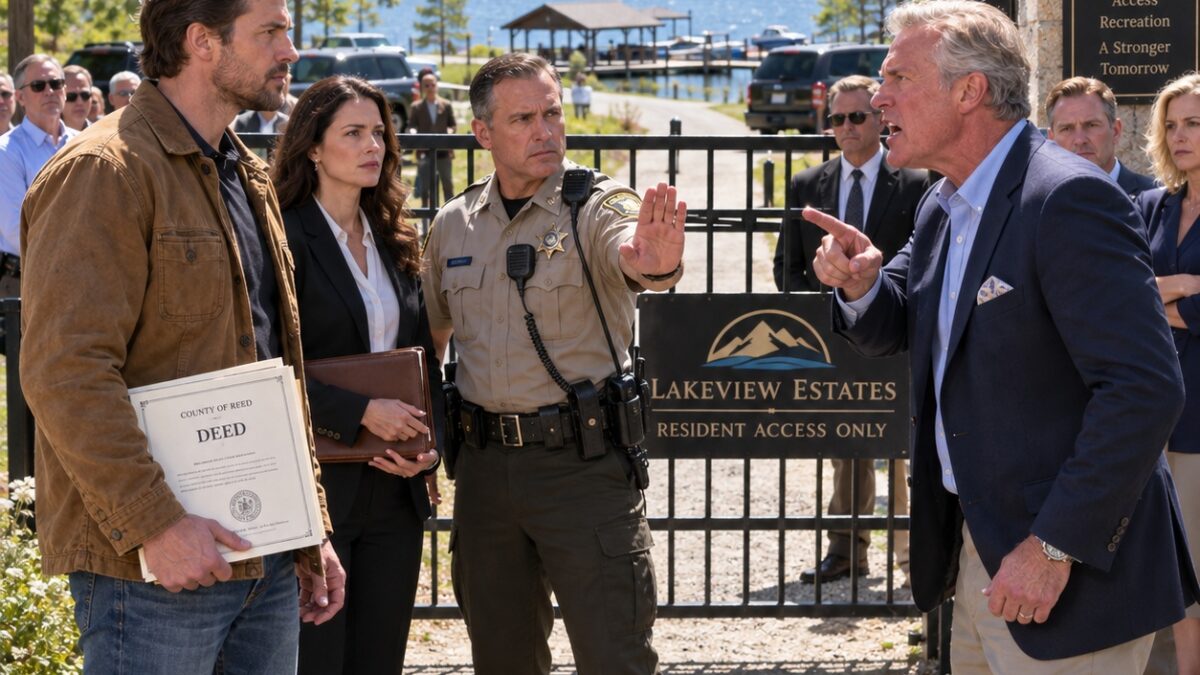
I Inherited My Uncle’s 4,800-Acre Lake Ranch—Then I Found Out What the HOA Had Been Doing There for 11 Years
For eleven years, the Lakeview Estates HOA charged hundreds of families to use a private road, dock, pavilion, and boat launch on land they insisted had somehow become theirs through “community use.”
Then my great-uncle died, and the deed to all 4,800 acres—including every foot of that shoreline—landed in my hands.
What finally destroyed the HOA’s claim, however, wasn’t the deed at all, but two forgotten letters in an old management box proving their board had known the truth for years.
The deputy’s hand rested near his belt, but his voice remained calm.
“Sir, step off now.”
Gerald Whitmore stared at him as though the man had suddenly started speaking another language.
Gerald was seventy-one years old, president of the Lakeview Estates Homeowners Association, and the kind of man who wore polished loafers to stand in the middle of a gravel road.
His face had turned dark red beneath carefully combed silver hair.
“This is community property,” he said.
The deputy glanced at the certified deed in my hand.
“County records say otherwise.”
Behind Gerald stood three HOA board members, two security contractors, and nearly fifty homeowners who had followed the confrontation from the subdivision entrance.
Behind me stood Margaret Cole, my attorney, holding a leather folder against one hip.
Beyond all of us was a black metal gate with LAKEVIEW ESTATES RESIDENT LAKE ACCESS painted across its center.
Beyond that gate sat everything Gerald’s association had spent more than a decade treating as its own.
A paved access road.
A parking lot.
A covered pavilion.
A concrete boat launch.
Twenty-four floating slips.
A storage building.
Picnic areas.
And almost two miles of reservoir shoreline.
Every square foot sat inside the legal descriptions attached to the certified deed in my hand.
Gerald pointed toward the lake.
“Our association built those facilities.”
Margaret answered before I could.
“That is precisely the problem.”
Gerald turned toward her.
“We have maintained this property openly for eleven years.”
“On land your association never purchased.”
“We have established rights.”
“You have established an expensive dispute.”
His mouth tightened.
Then he looked at me.
“Nathan, you have absolutely no idea what you inherited.”
That was the first thing he said that afternoon I agreed with.
Three months earlier, I hadn’t even known the ranch was 4,800 acres.
My great-uncle Harlan Mercer had never been the kind of man who discussed net worth, acreage, mineral interests, or anything else he considered private.
He wore the same canvas jackets for decades.
Drove an old Ford pickup long after he could have bought ten replacements.
Repaired tools with electrical tape other people would have thrown away.
During the 1970s and early ’80s, Harlan quietly bought failing farms and timber parcels around what later became a sprawling Tennessee reservoir.
Some sellers were retiring.
Some had inherited land they didn’t want.
Some needed money immediately.
Harlan rarely argued over price.
He cared about boundaries more than bargains.
By the time I was born, he had assembled thousands of acres of woods, pasture, rocky ridges, creek bottoms, and shoreline.
“They aren’t making more land,” he used to tell me.
I thought it was just one of those sentences old men repeat until children stop asking what it means.
Then Harlan died at eighty-seven.
Four days later, his attorney unfolded a parcel map across a conference table and told me my inheritance contained approximately 4,800 acres.
I laughed.
He didn’t.
A week after that, I drove out to see it.
And found an HOA gate blocking the road into my own ranch.
FULL STORY CONTINUATION 👇👇
At first, I assumed there had to be a reasonable explanation.
That is probably important to admit.
I did not arrive at the ranch looking for a fight.
I wasn’t one of those people who inherited land and immediately started thinking about fences, trespass notices, or how many neighbors I could make miserable before lunch.
Maybe Harlan had signed an easement I hadn’t seen.
Maybe he had leased the lake access to Lakeview Estates for twenty years.
Maybe the HOA actually owned a narrow corridor cutting through the ranch.
Maybe the probate attorney had given me an incomplete title package.
Those were reasonable possibilities.
So I started with the boundary.
I parked my truck along the shoulder of the old state road and unfolded the county parcel map across my hood.
Fourteen tax parcels made up most of Harlan’s ranch.
Some had been acquired in the 1970s.
Others later.
The southeastern corner was the one that mattered.
Lakeview Estates sat south of the ranch, between Harlan’s property and the highway.
The subdivision itself had no natural connection to the reservoir.
Harlan’s property separated it from the water.
I followed the legal description until I found the corner monument shown on a 1998 survey.
A concrete post sat beneath leaves and pine needles approximately sixty feet west of the HOA sign.
I brushed dirt from the brass cap.
MERCER TRACT — 1998.
I checked the bearing.
Then looked toward the gate.
It stood almost three hundred feet inside the boundary.
Not on a line.
Not straddling the line.
Three hundred feet inside.
The paved road behind it traveled almost a mile through the ranch before reaching the cove.
I stood there for several minutes listening to boat engines carry through the trees.
A white Ford pickup pulled alongside my truck.
The driver lowered his window.
He was maybe fifty, wearing a Tennessee Volunteers cap.
“You locked out?”
“No.”
He pointed toward the keypad.
“Thing freezes when it gets cold. Code usually works after a couple tries.”
“I don’t have a code.”
He looked at me more closely.
“You visiting someone?”
“No.”
His expression changed.
“What are you doing?”
“Checking the property line.”
He laughed.
“Property line’s way through those woods.”
“No.”
“It is.”
I held up the map.
“Actually, it runs behind you.”
He stared.
“You with the county?”
“No.”
“Survey company?”
“No.”
“What then?”
I folded the map.
“Owner.”
For a second, his face remained blank.
Then he laughed again.
Not because he thought I was funny.
Because he thought the claim itself was ridiculous.
“HOA owns the lake access.”
“Does it?”
“Everybody knows.”
Those two words stayed with me.
Everybody knows.
Ask ten people where a fence line is and eight will point confidently.
Ask for the deed and half disappear.
“Who told you the HOA owns it?”
He shrugged.
“It’s in our documents.”
“Which documents?”
“The community paperwork.”
“Recorded easement?”
He frowned.
“I don’t know.”
“Purchase agreement?”
“Look, man, I just live here.”
“Fair.”
He started rolling the window up.
I stopped him with one question.
“How much do you pay for lake access?”
That made him hesitate.
“Why?”
“Trying to understand what I’m looking at.”
He thought.
“Seven-fifty last year, I think.”
“Seven hundred fifty dollars?”
“Lake assessment.”
“How many houses?”
“Three hundred something.”
“All paying?”
“Pretty much.”
Then he drove away.
I stood there calculating.
Three hundred houses.
Seven hundred fifty dollars.
More than two hundred thousand dollars annually if everybody paid.
Maybe there were expenses.
Dock insurance.
Road maintenance.
Utilities.
Still.
Real money.
I walked farther along the boundary.
Through the gate I could see cars near the pavilion.
A couple was loading coolers into a pontoon boat.
Two children rode bicycles near the parking area.
Someone had mounted a decorative wooden sign beside the road.
LAKEVIEW ESTATES PRIVATE WATERFRONT.
The word private almost made me laugh.
I took photographs.
Coordinates.
The gate.
Road.
Sign.
Boundary monument.
Then I called the HOA office.
A cheerful woman answered.
“Lakeview Estates Community Association, this is Sandra.”
“Hi, Sandra. My name is Nathan Mercer.”
Silence.
Only a fraction too long.
I noticed.
“I recently inherited the Mercer property north of the subdivision.”
Another pause.
“Oh.”
That was all she said.
“I need to speak with whoever manages the facilities your association built on the Mercer shoreline.”
“I can take a message.”
“Who’s board president?”
“Gerald Whitmore.”
“Please have Gerald call me.”
“May I ask what this concerns?”
“The lake road.”
That caused another pause.
“I’ll pass along your number.”
Gerald called less than two hours later.
No introduction.
“Nathan Mercer?”
“Yes.”
“I’m told you were at our lake-access entrance.”
“I was.”
“I understand there may be some confusion following your uncle’s estate.”
“I agree.”
His voice softened slightly.
“Good. Then we should probably resolve this before unnecessary alarm spreads through the community.”
“Excellent.”
I leaned against my truck.
“Send me the recorded easement.”
Silence.
Not long.
But enough.
“What?”
“The recorded easement across Harlan’s land.”
“Our association has longstanding access rights.”
“Great. I’d like a copy.”
“I don’t have title documents in front of me.”
“Then purchase agreement.”
“Again—”
“Lease?”
“Nathan.”
“License?”
His voice changed.
Less polished.
“The association has openly maintained the corridor and waterfront improvements for more than a decade.”
“That isn’t what I asked.”
“Our residents have relied on that access.”
“Also not what I asked.”
“You said you work in commercial construction?”
That surprised me.
Sandra must have looked me up.
“Yes.”
“Then you understand longstanding investment creates legal interests.”
“Sometimes.”
“We have spent substantial community resources maintaining the road and building recreational facilities.”
“On Harlan’s land.”
“That characterization is disputed.”
“By whom?”
“The association.”
“Based on what recorded instrument?”
Gerald exhaled.
“I’ll have counsel contact you.”
“Before you do, one more question.”
“What?”
“Did Harlan know you were charging residents money for lake access?”
The silence this time was longer.
“I never dealt directly with Harlan.”
“Who did?”
“Our management companies handled historical matters.”
“Which company?”
“We’ve used several.”
“Who handled the original lake arrangement?”
“I don’t have that information in front of me.”
“Find it.”
His tone hardened.
“Mr. Mercer, I suggest you avoid disrupting resident access until our legal rights are reviewed. Interference could expose you to substantial liability.”
There it was.
Not:
We own it.
Not:
We have the easement.
Be careful.
I said:
“Send the documents.”
Then ended the call.
The next day, Harlan’s estate attorney received a certified letter from Brooks, Fenner & Dale, a Nashville firm representing Lakeview Estates.
It was six pages long.
Professionally written.
Careful.
No obvious bluffing.
That worried me more than Gerald’s confidence.
The letter described the HOA’s use as:
Open.
Continuous.
Visible.
Exclusive in certain respects.
Maintained under an asserted claim of right.
It referenced theories of prescriptive easement, irrevocable license, equitable estoppel, detrimental reliance, and implied dedication.
The phrase “possible prescriptive access interest” appeared twice.
Possible.
That mattered.
The letter warned that interfering with residents could expose me to injunctive relief, damages, and claims tied to diminished home values.
At the end, counsel suggested a meeting “to formalize historic rights.”
Formalize.
Not confirm.
Not record.
Formalize.
I read the letter three times.
Then I called Margaret Cole.
Margaret had represented the company I worked for during a right-of-way dispute outside Knoxville.
She was fifty-eight, calm to the point of being unnerving, and had spent twenty-six years handling land-use fights.
I emailed the documents.
She called that evening.
“First question.”
“Go ahead.”
“Do you have any written agreement from Harlan?”
“No.”
“Any reference in probate records?”
“No.”
“Tax bills show Harlan owned all parcels?”
“Yes.”
“Did the HOA ever pay taxes?”
“Not on those parcels.”
“Condemnation?”
“No.”
“Recorded utility easement near the road?”
“Power easement farther north.”
“Nothing else?”
“Nothing.”
“Okay.”
I waited.
“That’s it?”
“No.”
“You’re doing that lawyer thing.”
“What lawyer thing?”
“Making silence expensive.”
She laughed.
“Let me explain what concerns me about their letter.”
I sat at my kitchen table.
“Prescriptive rights generally require elements that vary by jurisdiction, but they usually depend on use being adverse, not simply permissive.”
“So if Harlan allowed them to use it—”
“That can defeat the hostility component for as long as the permission exists.”
“Even if they used it eleven years?”
“Time is not magic.”
“What if they paved the road?”
“That creates facts.”
“Dock?”
“Facts.”
“Pavilion?”
“More expensive facts.”
“But not ownership.”
“Correct.”
“What about an irrevocable license?”
“Potentially stronger if they made substantial improvements in reasonable reliance on permission.”
“Reasonable.”
“Exactly.”
She continued.
“If the owner explicitly told them no permanent improvements, reliance gets harder to describe as innocent.”
“I don’t know whether Harlan did.”
“Then that’s where we start.”
“How?”
“Original management files.”
“HOA will give us those?”
“They’ll give us the ones they want us to see.”
“What about the others?”
“We find the people who kept copies.”
That became our first plan.
No gate confrontation.
No threats.
No signs.
No removing docks.
No calling residents trespassers.
Margaret made me promise all of that.
“You’re asking someone who just inherited 4,800 acres not to buy a tractor and park it across the road.”
“Yes.”
“I don’t own a tractor.”
“You will within six months.”
She was wrong.
It took four.
The early county files showed Lakeview Estates had been approved around 2009.
The original development covered roughly 620 acres south of Harlan’s ranch.
No lake frontage.
That was the first surprise.
I pulled the approved plat from the county planning department.
Subdivision roads.
Lots.
Clubhouse.
Pool.
Stormwater ponds.
No waterfront property.
Not one foot.
The developer called the project Lakeview Estates anyway.
Marketing.
The reservoir could be seen from certain ridges.
Early brochures said:
COUNTRY LIVING MINUTES FROM THE LAKE.
Not:
Private lake access.
But brochures from 2015 were different.
EXCLUSIVE RESIDENT WATERFRONT.
PRIVATE BOAT LAUNCH.
PRIVATE DOCK.
RESIDENT-ONLY LAKE PAVILION.
Something happened between those two marketing periods.
I drove to Harlan’s old storage unit.
His attorney had already warned me.
“He kept everything.”
He was not exaggerating.
Harlan had saved tax receipts from 1976.
Fence-wire invoices.
Gas receipts.
Timber contracts.
Handwritten rainfall logs.
Cancelled checks for machinery that had rusted away before I finished college.
Three days disappeared into cardboard.
Every box smelled like paper and dust.
I found photographs of my grandmother as a teenager.
A hunting license from 1968.
A note Harlan had written himself reminding him to “stop lending Charlie the log splitter.”
Nothing about Lakeview.
Until late on the third afternoon.
A brown accordion folder.
Black marker across the front:
LAKE PEOPLE.
I sat down on the concrete floor.
Inside were five documents.
The first was dated March 17, 2014.
Ridgeway Residential Management.
Dear Mr. Mercer,
As discussed, Lakeview Estates residents currently lack practical vehicle access to the public reservoir facilities due to temporary closure of the nearby county launch.
The Association respectfully requests permission for residents to use your existing gravel service road to reach the shoreline between May 1 and October 31, 2014.
We understand this would constitute a neighborly accommodation only and would create no ownership, easement, leasehold, or permanent access rights.
I stopped reading.
There it was.
Not just permission.
Explicit permission.
Temporary.
No ownership.
No easement.
No leasehold.
At the bottom, Harlan had written in pencil:
May use road May 1–Oct 31.
No commercial use.
No structures.
No fees charged for my land.
Gate remains mine.
Permission may be withdrawn any time.
H. Mercer.
I called Margaret immediately.
“Tell me you found something.”
“I found something.”
“Read it.”
I did.
She interrupted halfway.
“Stop.”
My heart dropped.
“What?”
“Scan it before you touch it more.”
“It’s paper.”
“Exactly.”
“I’m holding it.”
“Put it flat. Photograph every page. Front. Back. Envelope if any.”
“There’s no envelope.”
“Fine.”
“What do you think?”
“I think Gerald is going to have a worse week.”
I kept searching.
The second letter came from Ridgeway in November 2014.
Thanking Harlan.
Asking permission again for 2015.
The letter acknowledged that access remained temporary.
Harlan approved.
Same conditions.
The third document changed things.
Ridgeway requested permission to grade portions of the road and add crushed stone because resident traffic had created ruts.
They also wanted a removable gravel turnaround near the shoreline.
The letter specifically said:
No ownership interest is requested or implied.
Harlan wrote:
Okay if no pavement and no permanent buildings.
Access still by permission.
Then came 2016.
A formal proposal.
Five-year recreational license.
Annual payment:
$12,000.
Association wanted permission for:
Road improvement.
Small launch apron.
Seasonal floating dock.
Defined operating hours.
Insurance.
Harlan’s response consisted of one word.
NO.
Underlined twice.
I laughed.
Then I found the document that stopped being funny.
It was a photocopy.
No envelope.
No cover note.
Internal Ridgeway memo dated August 22, 2017.
TO: LAKEVIEW ESTATES BOARD
FROM: JANET WELLS, COMMUNITY MANAGER
SUBJECT: MERCER SHORELINE ACCESS — LEGAL STATUS
The memo began by saying the board needed to stop describing the Mercer corridor as an HOA-owned amenity because access remained permissive.
Then:
Mr. Mercer has repeatedly declined to grant a recorded easement, lease, or permanent license.
Management counsel has advised that the Association should not construct permanent improvements or charge residents fees represented as payment for ownership or guaranteed permanent lake access without securing a formal agreement.
Continued use is dependent upon Mr. Mercer’s permission and may be revoked.
I read it twice.
Then a third time.
At the bottom, yellow highlighter marked one line:
Board leadership requests that ownership concerns remain confidential while alternative acquisition strategies are evaluated.
Confidential.
Not misunderstood.
Not forgotten.
Confidential.
I called Margaret again.
“I found the second one.”
“Second what?”
“The letter that kills them.”
“Lawyers never say kills.”
“Fine. The letter that ruins Gerald’s morning.”
“Read it.”
I did.
Silence.
Then:
“Who received it?”
“Lakeview board.”
“Named recipients?”
“Attachment page.”
I flipped.
Carl Benton — President.
Tessa Morrison — Treasurer.
Gerald Whitmore — Amenities Committee.
Two others.
Gerald.
He had told me:
I never dealt directly with Harlan.
Maybe technically true.
But he knew.
“Send it.”
“I’m scanning now.”
“Do not call Gerald.”
“I wasn’t going to.”
“You were absolutely going to.”
“Only a little.”
“Don’t.”
I spent the evening reading Harlan’s notebooks.
The letters stopped after 2017.
The notebooks continued.
May 2017:
Lake people put floating dock. Told Janet too much.
August:
Board wants buy strip. Offer insulting.
September:
Gerald fellow says investment makes sense. Told him no permanent rights.
That line made my pulse jump.
Gerald had spoken to Harlan.
Or Harlan believed he had.
Then 2018:
Road paved without asking. Called management. They say safety. Told them remove if sale ever needed.
2019:
Pavilion started. Need lawyer.
Then Harlan’s handwriting became shaky.
In January 2020 he suffered a stroke.
By summer he was in assisted living.
The ranch remained legally his.
Taxes paid automatically.
But he had lost the energy to fight a board that apparently understood time was working in its favor.
I sat among boxes until nearly midnight.
The story looked different now.
The HOA had not walked onto land nobody knew existed.
They began with permission.
Then tested it.
Gravel.
Dock.
Paving.
Pavilion.
Fees.
Each step made the next feel less outrageous.
That is how entitlement grows.
Not always through one dramatic theft.
Sometimes through a sequence of increasingly confident assumptions.
Margaret sent Lakeview a preservation letter the next morning.
Every record involving Harlan.
Every board email.
Every management file.
Every legal memo.
Every fee schedule.
Every construction contract.
Every waterfront advertisement.
Every owner disclosure.
Every permit.
Every payment tied to lake facilities.
Do not delete.
Do not alter.
Do not destroy.
Gerald called me within an hour.
“You hired counsel.”
“You already had counsel.”
“This is escalating unnecessarily.”
“Then send the easement.”
“We have substantial equitable rights.”
“You had permission.”
Silence.
That was my answer.
“What exactly did you find?”
I smiled.
“You first.”
“Nathan.”
“Did you receive Janet Wells’s 2017 memorandum?”
Click.
He hung up.
Two hours later, the HOA lawyer emailed Margaret.
The tone changed.
No more simple claim of historic community ownership.
Now they acknowledged the early use may have begun permissively but argued later circumstances transformed the legal relationship.
Their position:
Harlan knew substantial improvements had been made.
Harlan failed to seek removal promptly.
Residents purchased homes in reliance on permanent lake access.
The HOA spent large sums improving and maintaining the corridor.
Harlan benefitted indirectly from improved road conditions.
Longstanding open use created equitable interests.
Margaret read the response.
“They’re smarter now.”
“That’s bad?”
“It means they’ve moved to arguments they can actually brief.”
“Can they win?”
She looked at me over her glasses.
“You keep asking.”
“I’m persistent.”
“You’re annoying.”
“Occupational hazard.”
She leaned back.
“They can argue estoppel. Irrevocable license. Maybe some form of equitable access based on investment.”
“But the letters?”
“Help enormously.”
“Harlan objected.”
“Also helpful.”
“They knew.”
“Very helpful.”
“So—”
“Nathan.”
I stopped.
She continued.
“What courts dislike is one side acting knowingly and then asking equity to rescue the consequences.”
Meaning?
“If the HOA spent money after being warned no permanent right existed, that weakens their argument that fairness requires the landowner to absorb their investment.”
“Good.”
“Yes.”
“Can I close the gate?”
“No.”
I groaned.
“Why?”
“Because litigation is not revenge.”
“I just want to use my ranch.”
“You can request access.”
“Request access to my own property.”
“Yes.”
“I hate law.”
“You hired me.”
“Temporary lapse.”
Lakeview produced its first batch of records ten days later.
About twelve hundred pages.
Margaret’s paralegal called it a paper avalanche.
Most documents were harmless.
Landscaping.
Pool chlorine.
Architectural approvals.
Parking complaints.
Pet rules.
But the lake sections were suspiciously thin.
Meeting minutes said:
Waterfront update discussed.
Lake improvement program progressing.
Management coordinating access.
No attachments.
No legal opinions.
No 2017 memo.
No letters from Harlan.
Curated.
Margaret said the word without hesitation.
“They gave us the clean file.”
“Can we prove it?”
“Not yet.”
We asked for electronic communications.
They objected.
Confidentiality.
Privilege.
Burden.
Margaret filed suit.
Quiet title.
Trespass.
Declaratory judgment.
Accounting.
Injunctive relief.
My name became:
Nathan Mercer, Plaintiff.
I hated it.
Court papers make normal disputes look like wars between corporations.
The HOA filed counterclaims.
Prescriptive easement.
Irrevocable license.
Equitable estoppel.
Interference with contractual and property expectations.
They requested an injunction preventing me from blocking residents.
The judge temporarily preserved the status quo.
Lakeview residents could continue limited access while the case proceeded.
No new construction.
No sale or assignment of claimed access rights.
No additional capital improvements.
Any newly collected lake-specific charges had to be accounted for separately.
Gerald emailed residents within hours.
COURT PRESERVES LAKEVIEW WATERFRONT ACCESS.
Technically true.
Misleading.
Margaret read it.
“Save that.”
“Why?”
“Because he is still speaking as though the court confirmed the right.”
“Can we correct him?”
“Yes.”
“Should we?”
“No.”
“Why?”
“Because every exaggerated public statement makes discovery more interesting.”
I started enjoying Margaret’s version of patience.
Then homeowners found me.
At first, they were furious.
Voicemails.
Emails.
One woman accused me of “trying to steal Lakeview’s lake.”
I did not own the lake.
Someone else said:
“Our family has paid for this dock for eleven years. You can’t just take it.”
That one bothered me.
Because she was right about one part.
She had paid.
Not me.
The HOA.
A man named Peter Lawson sent a different message.
Mr. Mercer,
I am a Lakeview homeowner. I’m not asking you to give anything up. I want to understand whether the HOA actually has documents supporting what we’ve been told.
If not, I want to know what I’ve been paying for.
That seemed reasonable.
We met at a coffee shop.
Peter was fifty-three, an insurance adjuster, and looked like he hadn’t slept.
He brought a binder.
HOA statements.
Eleven years.
The lake assessment began at $420.
Then $450.
$525.
$575.
$600.
$650.
$700.
$750.
Plus occasional capital charges.
His total exceeded $7,000.
“Everyone pays?” I asked.
“Now.”
“What does that mean?”
“It used to be optional.”
“When?”
“Before 2020.”
“What changed?”
“Gerald said all homes benefit from lake access because it supports values.”
“So mandatory.”
“Yes.”
“How many homes?”
“Three hundred twelve.”
I did the math.
Peter watched.
“Yeah.”
“How much did the HOA collect?”
“That’s what we’re asking.”
“Who’s we?”
“About thirty homeowners.”
He hesitated.
“More after your lawsuit.”
He opened a purchase disclosure from 2018.
Amenities included:
Resident-owned private waterfront pavilion.
Resident-owned boat launch.
Exclusive HOA shoreline access.
I stared.
“Resident-owned.”
“Yes.”
“Your closing attorney didn’t ask for an easement?”
“I assumed the title company had.”
“Did it?”
“Not in my house file.”
That created a second class of potential victims.
Homeowners.
They had been sold access as though ownership existed.
If the HOA had always known otherwise, the fight wasn’t between me and three hundred families.
It was between all of us and whoever had told the story.
Margaret subpoenaed old management records.
Ridgeway Residential Management responded quickly.
Too quickly for Gerald’s comfort, I later learned.
The firm had not managed Lakeview since 2019.
But it maintained archived electronic files.
A retired community manager named Janet Wells agreed to speak.
She came to Margaret’s office carrying a legal pad and a small envelope.
She was sixty-four.
Gray hair cut short.
No lawyer at first.
Margaret advised her she could have one.
Janet said:
“I’m not here to protect anybody.”
Then she looked at me.
“I’m sorry.”
That wasn’t what I expected.
“For what?”
“We should have done more.”
“Start at the beginning.”
She did.
In 2014, heavy rain damaged the nearest public boat launch.
Lakeview residents complained because the subdivision had been marketed as close to water, but boats had to travel nearly twenty minutes by road to another ramp.
A board member knew Harlan.
They asked.
He said yes.
Temporary summer access.
“That part was exactly as the letter says?”
“Yes.”
“No fee?”
“No.”
“No permanent structure?”
“No.”
“Harlan had a gate?”
“Yes. Old chain gate.”
“What changed?”
“The developer realized lake access was selling houses.”
There it was.
Profit.
The subdivision still had unsold phases.
Sales agents began taking prospective buyers down Harlan’s road.
“Did Harlan know?”
“Not initially.”
“What happened when he did?”
“He complained.”
“What did the developer say?”
“That it was temporary.”
“And then?”
“The HOA transitioned from developer control.”
Residents had come to expect the lake.
The new board inherited a promise it did not actually own.
“They wanted Harlan to make it permanent.”
Janet said.
“He refused.”
“Why?”
“He didn’t like commercializing the cove.”
“Did he hate residents using it?”
“No.”
“That’s important.”
“He liked fishermen.”
She smiled faintly.
“He hated committees.”
Accurate.
The board proposed the five-year license.
Harlan rejected it.
Then, in 2017, the board installed floating docks.
Temporary in theory.
Twenty-four slips.
“They called them removable.”
Janet said.
“Everything is removable with enough equipment.”
She smiled.
“Exactly what Harlan said.”
I laughed.
“Was Gerald involved?”
“Yes.”
“He told me he never dealt directly with Harlan.”
“Maybe not formally.”
“What does that mean?”
“Gerald served on the amenities committee.”
She opened her notebook.
“He attended meetings about purchase options.”
“Did he know access was permissive?”
“Yes.”
“How sure are you?”
“Completely.”
Margaret leaned forward.
“Why?”
“Because our attorney said it in a meeting Gerald attended.”
“Written opinion?”
“Yes.”
“Do you have it?”
“Ridgeway’s archive should.”
“What did it say?”
Janet looked at me.
“That the HOA had no recorded easement, title, or permanent license.”
“And?”
“That continued use depended on Harlan’s permission.”
“And?”
“That construction of permanent improvements without securing rights first was risky.”
I sat back.
“What happened after the warning?”
“Gerald argued the association should keep improving the area.”
My skin prickled.
“Why?”
“He said investment strengthened the community’s position.”
Margaret’s pen stopped.
“Exact language?”
“Close.”
Janet opened the envelope.
Inside were photocopied handwritten notes.
August 2017 executive session.
C.B. wants renewed purchase offer.
G.W.: continuing investment creates reliance. Eventually Mercer cannot practically unwind access.
I read it twice.
“Cannot practically unwind.”
Not:
We own it.
Not:
We have rights.
Make the situation too difficult to reverse.
Margaret asked:
“What was Harlan offered?”
“Three hundred thousand.”
“For what?”
“Thirty-two acres including the road and cove.”
Even in 2017, laughable.
“He declined?”
“Immediately.”
“Did Gerald know?”
“Yes.”
“What happened next?”
“The road was paved.”
“Harlan approved?”
“No.”
“He knew?”
“When he saw it.”
“How did he react?”
“Furious.”
“Documented?”
Janet nodded.
“Emails.”
Then the pavilion.
The HOA argued permanent restrooms and shelter were needed for safety and sanitation.
Ridgeway objected.
Harlan objected.
The board approved anyway.
“Why didn’t Harlan sue?” I asked.
Janet looked sad.
“His health.”
The stroke.
The assisted living.
“Did the board know?”
“Yes.”
The word fell heavily.
Margaret asked:
“What caused Ridgeway to resign?”
“The board stopped listening.”
“About this?”
“This and other things.”
“Any final letter?”
“Yes.”
That became the second major document.
Ridgeway’s 2019 transition letter.
Formal.
Addressed to the board.
Copied to association counsel.
It said:
Ridgeway Residential Management again advises the Association that the Mercer shoreline facilities are located upon privately owned property used through revocable permission historically granted by Harlan Mercer.
No deed to Lakeview Estates has been identified.
No recorded easement has been provided.
No permanent license exists in the records maintained by management.
Mr. Mercer has objected to permanent construction and commercialized use.
The Association should not represent these facilities to members, prospective purchasers, lenders, insurers, or vendors as Association-owned property without obtaining appropriate legal rights.
Gerald had received it.
The same man now telling residents I was trying to steal “their” waterfront.
I drove home angry.
Not explosive anger.
Cold anger.
The kind that sits behind your ribs and becomes more precise the longer you think.
Harlan had not abandoned the land.
He had been old.
Sick.
Outnumbered by people who decided his weakening ability to fight could eventually be mistaken for consent.
The next production from Ridgeway included emails.
That was where things grew darker.
Gerald to the board in 2018:
If Mercer refuses a reasonable sale, continued community reliance may eventually provide leverage a direct purchase does not.
Another:
We should avoid alarming residents with unresolved technical title language.
Technical title language.
Meaning:
They did not own it.
A 2019 email from Gerald to Carl Benton:
Once the pavilion is complete, no judge will realistically order three hundred families off the water.
Margaret stared at that one.
“Do judges like being told what they will realistically do?”
“I’m guessing no.”
“Correct.”
Then the money records came.
Lakeview resisted.
Judge ordered.
Eleven years of lake assessments.
Boat-slip fees.
Guest permits.
Pavilion reservations.
Capital contributions.
Late penalties.
Special “waterfront preservation” charges.
Approximate gross:
$2.46 million.
Legitimate direct costs:
Road maintenance.
Dock maintenance.
Insurance.
Utilities.
Pavilion cleaning.
Security.
Repairs.
Around $1.1 million over the period.
Still left more than one million flowing elsewhere.
The HOA had used excess lake-related money to support:
Clubhouse renovation.
Pool resurfacing.
Landscaping.
General legal fees.
Management bonuses.
Holiday events.
A digital access system.
Even part of Gerald’s favorite project, a brick monument at the subdivision entrance.
Peter Lawson stared at the accounting summary.
“So we paid lake fees for landscaping?”
“Some money was pooled into general operations.”
“But they told us it preserved waterfront rights.”
I opened one annual budget.
Under LAKE AMENITIES:
Protection of exclusive permanent community access.
Permanent.
They knew better.
“What about boat slips?”
Peter asked.
Those were worse.
Twenty-four slips.
Annual rental.
Waitlist.
Premium transfer fees.
Over eleven years, slips generated nearly half a million dollars.
Residents believed they were renting HOA-owned dock rights.
The dock itself sat on my shoreline.
The floating structure might belong to the HOA.
The right to keep it there did not.
Then Margaret found payments to Lake Recreation Services LLC.
Private company.
About $186,000 over seven years.
Purpose:
Waterfront administration.
Dock coordination.
Event management.
Owner?
Gerald Whitmore Jr.
Gerald’s son.
I stared.
“Is that legal?”
“Related-party transactions aren’t automatically illegal.”
“Was it disclosed?”
“We’re looking.”
It wasn’t.
Not properly.
Board minutes approved “waterfront management services” without naming ownership.
Gerald had recused himself from one vote but not several renewals.
Residents had never been told the HOA president’s son was being paid from fees collected on land the HOA did not own.
Peter’s reaction was less controlled.
“You’ve got to be kidding me.”
Margaret warned everyone against using the word stolen without proof.
“Misallocated, conflicted, potentially undisclosed.”
Peter stared.
“Lawyers make anger boring.”
“That is why people pay us.”
A homeowner committee formed.
Lakeview Transparency Coalition.
Terrible name.
Excellent spreadsheets.
About eighty residents eventually joined.
Their goal wasn’t to support me against themselves.
It was to separate homeowner interests from board interests.
That was important.
Sarah Kim became one of the organizers.
Civil engineer.
Forty-six.
Direct.
She called me.
“I want to ask you something before social media invents the answer.”
“Good policy.”
“Do you want to close the lake?”
“No.”
Silence.
“You don’t?”
“No.”
“Then what do you want?”
“Recognition that I own my land.”
“Anything else?”
“An agreement that doesn’t pretend generosity becomes permanent ownership through repetition.”
She paused.
“That sounds reasonable.”
“It probably means I’m missing something.”
She laughed.
“What about money?”
“I don’t want eleven years of assessments.”
“You could ask.”
“Residents already paid.”
“HOA profited.”
“Then residents should deal with the board.”
“Do you want rent going forward?”
“I don’t know.”
“Why not?”
“Because I haven’t decided what Harlan intended.”
That answer mattered to her.
“We were told your uncle hated the subdivision.”
“He hated committees.”
“Fair.”
“He let people fish.”
Sarah became a bridge.
She explained to residents that I wasn’t arriving with bulldozers.
I explained that their children were not trespassers I planned to prosecute.
The enemy of clarity is often fear.
Once homeowners stopped imagining I wanted to lock them away from the reservoir forever, Gerald lost his best political weapon.
Then he gave me another.
The gate.
Margaret and I needed access to inspect the shoreline.
Not to shut it.
A forestry consultant was evaluating erosion and timber conditions around the cove.
We notified HOA counsel.
They acknowledged.
When I arrived Tuesday morning, my code didn’t work.
The keypad flashed red.
A security guard came from the small booth.
“HOA residents only.”
“I’m Nathan Mercer.”
His face changed.
He knew the name.
“Mr. Whitmore said you’re not permitted through.”
I stared.
“On whose instruction?”
“Board.”
“You understand this road is part of my deed?”
“I don’t handle legal issues.”
“Call your supervisor.”
He did.
Ten minutes later Gerald arrived in an SUV.
Two board members followed.
Then homeowners began appearing.
Apparently someone posted:
MERCER AT GATE. GERALD BLOCKING HIM.
Neighborhood social media should qualify as emergency dispatch.
Within twenty minutes, forty people stood around.
Sarah arrived.
Peter.
Several angry older residents.
Some supported Gerald.
Some didn’t.
Gerald walked to the center of the road.
“You were advised not to interfere with HOA operations.”
“I notified counsel I was coming.”
“Our attorney did not grant permission.”
I almost laughed.
“Your attorney doesn’t grant me permission to enter my ranch.”
“You are intentionally provoking a confrontation.”
“Move.”
Gerald crossed his arms.
“No.”
Margaret was an hour away.
I called.
She said one word.
“Stay.”
“I have been.”
“Do not touch gate.”
“Fine.”
“Do not touch Gerald.”
“I was less likely to do that before you mentioned it.”
“Nathan.”
“Joking.”
“Badly.”
Gerald’s attorney called.
Then ours.
Nobody moved.
The security guard looked as if he wanted to quit.
Homeowners filmed.
Gerald spoke loudly enough for them.
“The court ordered continued community access.”
Sarah answered:
“The court didn’t give you ownership.”
Gerald ignored her.
“You cannot simply appear and interfere with a facility residents have financed for eleven years.”
I held up a certified copy of the deed.
“I’m trying to drive down my road.”
“Our road.”
“Show me the deed.”
“This is harassment.”
“Show me the easement.”
“You know that issue is being litigated.”
“Exactly.”
Margaret arrived forty-eight minutes later.
She walked directly to Gerald.
“Move your client.”
Gerald’s attorney was only on speakerphone.
Gerald said:
“This is a civil matter.”
Margaret called the sheriff.
Two deputies arrived.
They reviewed:
My deed.
The temporary order.
The pleadings.
The HOA’s arguments.
One spoke with the judge’s clerk by phone.
Then the older deputy approached Gerald.
His hand rested near his belt.
“Sir, step off now.”
Everything went silent.
Gerald stared.
“This is community property.”
“County records show Mr. Mercer as fee owner.”
“We have equitable rights.”
“Then your attorney can litigate them.”
The deputy pointed toward the shoulder.
“Right now, stop blocking his access.”
Gerald looked at the residents.
That made it worse.
He had created the audience.
Now the audience watched authority contradict him.
“We built all this.”
He pointed toward the lake.
Margaret answered quietly.
“That is precisely the problem.”
Gerald stepped aside.
I drove through.
Slowly.
No victory horn.
No raised fist.
Five miles an hour.
Because the moment did not feel celebratory.
It felt like entering evidence.
The road curved through cedar and oak.
Fresh asphalt.
Drainage ditches.
Streetlights the HOA had installed.
Then the cove opened.
The pavilion was larger than I expected.
Stone columns.
Metal roof.
Commercial grills.
Restrooms.
Fireplace.
Twenty-four-slip floating dock.
Concrete ramp.
Parking for nearly seventy vehicles.
People had spent serious money.
I understood why residents felt ownership.
Physical investment creates emotional ownership long before legal ownership.
But feeling is not title.
Margaret parked beside me.
“This is substantial.”
“Harlan would have hated it.”
“Probably.”
We walked behind the pavilion.
Ornamental grasses grew near a retaining wall.
Between them stood a weathered wooden post.
PRIVATE PROPERTY.
ACCESS BY PERMISSION.
H. MERCER.
I stopped.
Margaret stared.
“You have got to be kidding.”
The HOA had never removed it.
They landscaped around it.
I photographed it.
Close.
Wide.
Coordinates.
A reminder standing in plain sight.
The lie had not required erasing all evidence.
Only teaching people not to notice it.
We found an old chain gate behind the maintenance shed.
Rusty.
Metal tag:
MERCER PROPERTY.
The pavilion utility account listed the service location as:
MERCER TRACT WATERFRONT.
Insurance documents described the premises as:
Licensed recreational area.
Licensed.
Not owned.
Recent public brochures had changed that to resident-owned.
Different departments told different truths depending on who was reading.
Our hearing on title and access began six weeks later.
Three days.
No jury.
The HOA argued that whatever the access had been in 2014, its character changed later.
Residents used the property openly.
The HOA invested millions.
Harlan observed improvements.
He failed to take effective legal action.
Homes were sold in reliance.
The community could not practically lose access now without tremendous harm.
Margaret began with the first letter.
Temporary permission.
No easement.
No ownership.
No permanent rights.
Then Harlan’s 2015 letter.
No pavement.
No buildings.
Access remains permission.
Then the proposed 2016 license.
Rejected.
Then Janet’s memo.
Then Ridgeway’s transition warning.
Then Gerald’s emails.
Then Harlan’s notes.
Then the photographs.
The old sign.
The chain gate.
The utility description.
Every time the HOA tried to turn use into ownership, Margaret returned to knowledge.
You knew.
That became the case.
Not whether residents used the lake.
Everyone agreed.
Not whether the HOA spent money.
Everyone agreed.
The issue was whether the HOA could transform permitted use into permanent rights after repeatedly being told no.
Gerald testified on day two.
Polished.
Calm.
He had spent years speaking in front of school boards, sorry, wrong story. Here he had spent years speaking to homeowners, county committees, vendors. He was good at sounding reasonable.
He said:
“I inherited a complicated historical situation.”
Margaret asked:
“When did you join the board?”
“2016.”
“Committee?”
“Amenities.”
“Did you attend the August 2017 executive meeting?”
“I attended many meetings.”
She displayed Janet’s memo.
“Your initials appear on the receipt list.”
He studied it.
“That appears correct.”
“Did the memo state there was no recorded easement?”
“Yes.”
“Did it state access depended on Harlan Mercer’s permission?”
“That was management’s opinion.”
“Did you possess a contrary deed?”
“No.”
“Recorded easement?”
“No.”
“Signed lease?”
“No.”
“Permanent license?”
“No.”
“Did Harlan reject a proposed five-year license?”
“Yes.”
“Did he reject an offer to purchase thirty-two acres?”
“Yes.”
“Did you know he objected to pavement?”
“I knew he had concerns.”
“Did you know he objected to the pavilion?”
“I understood there was disagreement.”
She placed a Gerald email on screen.
Once the pavilion is complete, no judge will realistically order three hundred families off the water.
Gerald stared.
Margaret asked:
“You wrote that?”
“Yes.”
“So before construction, you understood ownership was unresolved?”
“I understood there was legal uncertainty.”
“Yet the Association built anyway.”
“We believed the community had developed equitable rights.”
“Based on what?”
“Longstanding use and reliance.”
“At that point use began with permission, correct?”
Gerald hesitated.
“Yes.”
“No recorded easement?”
“No.”
“No purchase?”
“No.”
“No permanent license?”
“No.”
“Harlan had refused to sell?”
“Yes.”
“Then your strategy was to build enough that removal became difficult.”
“Objection.”
Sustained.
Margaret rephrased.
“You believed increasing community investment would strengthen the HOA’s legal position?”
Gerald looked toward his lawyer.
Then:
“Yes.”
There it was.
She let silence sit.
Then asked:
“Does spending money on somebody else’s land transfer title?”
“No.”
“Thank you.”
Harlan would have enjoyed that.
The judge took the case under advisement.
Two weeks later, Margaret called.
“Sit down.”
“I’m already sitting.”
“Good.”
We won the title question.
The court held my deed controlled the fee ownership.
Lakeview had no ownership of the road or shoreline.
More importantly, the court rejected a prescriptive easement.
The use began expressly permissive.
The HOA had repeatedly acknowledged Harlan’s ownership.
The court found insufficient evidence of a clear repudiation communicated to Harlan that would convert permitted use into a legally hostile claim for the required period.
The irrevocable-license and estoppel arguments failed too.
The court’s language was devastating.
An entity cannot knowingly undertake substantial improvements on property after being warned that permanent rights have not been granted and thereafter rely upon the cost of those voluntary improvements to compel the owner to surrender the very rights he refused to convey.
I read that paragraph five times.
“So I can close the gate?”
Margaret sighed.
“You ruin everything.”
“What?”
“The court also directed us to address transition issues.”
“Why?”
“Because hundreds of innocent homeowners relied on association representations.”
I looked out my window.
That mattered.
Peter.
Sarah.
Families who bought homes because somebody told them the lake access belonged to them.
They weren’t Gerald.
They weren’t the old board.
Many were victims of the same misinformation.
“What do you recommend?”
“Temporary license.”
“How temporary?”
“One year.”
“Free?”
“Your decision.”
I thought of Harlan.
He had never charged.
He had allowed neighbors to fish.
His fight was about control, not squeezing money from people.
“One dollar.”
Margaret paused.
“Annual?”
“For the transition year.”
“You want them to pay one dollar?”
“I want paper showing permission.”
She smiled.
“That may be the most Harlan thing you’ve said.”
The proposal surprised the neighborhood.
One-year transitional recreational license.
Residents could continue using the road, pavilion, ramp, and dock.
Conditions:
The HOA would issue written notice that it did not own the land.
No new structures.
No commercial events.
No representation of permanent access.
No mandatory “ownership” assessment.
All lake-specific money held in a segregated account.
Operating expenses transparent.
Insurance updated.
One dollar license fee.
Gerald opposed it.
Of course.
He told residents accepting the agreement would “surrender decades of community rights.”
Sarah stood at the meeting.
“What rights did the court say we have?”
Gerald stared.
“The ruling is appealable.”
“Do you intend to appeal?”
“Our attorneys are evaluating.”
“How much will that cost?”
No answer.
Peter spoke.
“How much have we already spent?”
Another silence.
The treasurer reluctantly answered.
$286,000 in legal expenses related to the Mercer dispute.
The room erupted.
Peter held up the one-dollar proposal.
“He wants one dollar.”
Someone shouted:
“Take the deal!”
Gerald’s power fractured in that meeting.
Not because residents suddenly loved me.
Because he could no longer make conflict sound like protection.
The board approved the temporary license 4–1.
Gerald voted no.
Three days later, every homeowner received a letter.
The first paragraph said:
Lakeview Estates Homeowners Association does not own the Mercer shoreline property, access road, pavilion site, boat-launch site, parking area, or dock location.
Current resident use is permitted under a temporary license granted by Nathan Mercer.
I printed it.
Put it in Harlan’s folder.
Eleven years late.
Then the money problem exploded.
The homeowner group filed its own suit.
Their attorneys wanted:
Historic lake fees.
Sales disclosures.
Capital assessments.
Vendor contracts.
Management agreements.
Gerald’s son’s company.
Developer communications.
Former board-member conflicts.
I was not part of that case, but my records overlapped.
The forensic accounting became brutal.
Gross lake-related collections:
Approximately $2.46 million.
Direct legitimate expenses:
About $1.12 million.
Remaining allocations:
General HOA operations.
Clubhouse deficits.
Landscaping.
Administration.
Legal expenses.
Management bonuses.
Related-party vendor charges.
Not every transfer was illegal.
That distinction mattered.
HOAs often pool income depending on governing documents.
But residents had been told repeatedly that the lake assessment funded permanent waterfront rights and preservation.
That representation was difficult to reconcile with money paying for unrelated operations.
Then came Lake Recreation Services LLC.
Gerald Jr.’s company.
$186,000.
Seven years.
Some services were real.
Slip coordination.
Seasonal dock inspections.
Reservation administration.
Event scheduling.
But Gerald Jr. had charged rates significantly higher than comparable managers.
Competitive bidding had been inconsistent.
Conflict disclosures were incomplete.
Gerald Sr. had participated in discussions surrounding renewals.
The homeowner suit expanded.
The original developer became involved because marketing materials from its sales period described “exclusive resident waterfront access” before any permanent agreement existed.
The developer argued the HOA approved later wording.
The HOA argued the developer created the expectation first.
Ridgeway produced emails warning both.
Everyone began hiring separate lawyers.
Margaret said:
“This is what happens when one unresolved property issue gets financed for a decade.”
Nobody wanted to be the last wallet standing.
Gerald resigned six weeks after the court ruling.
His letter ran six pages.
He blamed:
Litigation opportunism.
Hostile homeowners.
A “revisionist” reading of historical access.
Media distortion.
An heir attempting to “monetize long-established community relationships.”
That last one infuriated Peter.
He printed Gerald’s resignation and brought a dollar bill to the next meeting.
“Nathan is monetizing us aggressively.”
People laughed.
Gerald did not attend.
Sarah Kim became interim board president.
Her first email to me began:
Mr. Mercer,
I would like to start over using documents instead of assumptions.
I liked her immediately.
We met at the pavilion.
Sarah brought the new treasurer.
Independent attorney.
Insurance representative.
Civil engineer.
Title agent.
No Gerald.
No speeches.
She placed a binder on the picnic table.
“Here is every lake expense for the last three years.”
“Voluntarily?”
“Don’t sound surprised.”
“I’m learning.”
She smiled.
“What do you want long term?”
That question was harder than the lawsuit.
“I don’t know.”
“Sell the corridor?”
“No.”
“Develop the cove?”
“No.”
“Close public access?”
“It isn’t public now.”
“You know what I mean.”
“I don’t want three hundred families thrown off because their board lied to them.”
Sarah nodded.
“Would you consider a permanent easement?”
“No.”
“Why?”
“Permanent means I lose control forever.”
“Long-term license?”
“Maybe.”
“What term?”
“Ten years.”
“Renewal?”
“Possible.”
“Use fee?”
I looked at the dock.
Children were fishing at the far end.
Harlan’s rule came back.
People should be able to fish.
“Dollar.”
Sarah blinked.
“One dollar?”
“Legal consideration.”
“And operations?”
“Residents pay actual operations into a separate account.”
“Managed by HOA?”
“With independent accounting.”
“What do you receive?”
“Nothing beyond the dollar.”
“Why?”
“Because the money isn’t the point.”
Sarah leaned back.
“What is?”
“The sentence on the document.”
“What sentence?”
“That access exists because the owner granted it.”
She understood.
“Consent.”
“Yes.”
We negotiated for five months.
Not because we disagreed much.
Because lawyers can turn agreement into one hundred pages.
The final license covered:
Surveyed access corridor.
Parking limits.
Pavilion footprint.
Boat ramp.
Dock area.
Shoreline-management standards.
Insurance.
Emergency procedures.
Maintenance.
Water-quality rules.
Tree removal.
Fireworks.
Alcohol policies.
Commercial-event restrictions.
Renewal options.
Default.
Termination.
Dispute resolution.
One dollar annual consideration.
The new documents used one phrase everywhere:
PRIVATELY OWNED MERCER PROPERTY — ACCESS LICENSED TO LAKEVIEW ESTATES.
No resident-owned.
No permanent right.
No “exclusive HOA shoreline.”
Truth on every page.
Sarah asked:
“Do we really need that phrase on the website?”
“Yes.”
“Brochure?”
“Yes.”
“Boat-slip agreement?”
“Yes.”
“Pavilion reservation form?”
“Yes.”
She laughed.
“You have trust issues.”
“I inherited them.”
The segregated lake fund changed behavior immediately.
Residents could see:
Insurance.
Electric.
Dock inspection.
Road repair.
Trash.
Restroom service.
Security.
Every dollar.
Boat-slip users paid more because they created more cost.
Homeowners who never used the lake could opt out of certain recreational charges.
The old mandatory assessment ended.
Some people hated the new system.
Transparency does not guarantee lower bills.
It guarantees people can see why they exist.
The homeowner litigation eventually settled in pieces.
Current owners received credits tied to improperly allocated lake assessments.
Former owners had a claims process.
The developer’s insurer contributed.
The HOA’s insurance contributed where coverage applied.
Related vendors refunded or adjusted certain payments.
Gerald and other former leaders reached confidential resolutions.
I never learned the exact amount he paid.
Didn’t care.
I did learn something more interesting.
The two letters from Harlan’s file had not been forgotten accidentally.
During discovery in the homeowner suit, Ridgeway produced an email from Gerald in 2020.
Subject:
Historical Mercer Documents.
Please remove obsolete permissive-access correspondence from homeowner-facing digital folders. Retain only in restricted legal archive. Current community position is based on established rights and reliance.
Not destroy.
Remove from homeowner-facing folders.
Careful.
Gerald knew paper mattered.
He wanted residents to see the modern story, not the original one.
Sarah read it.
“You know what makes me angry?”
“What?”
“He treated us like children.”
“How?”
“He decided we couldn’t handle uncertainty.”
I nodded.
“That’s how bad governance starts.”
“Protect people from details?”
“Then protect the decision from people.”
The old management file became famous inside Lakeview.
People started calling it “the Harlan folder.”
I hated that because it sounded like a television mystery.
Harlan would have hated it more.
Peter wanted to display copies in the clubhouse.
I said no.
“Why?”
“Because this doesn’t need a museum.”
“It’s history.”
“It’s litigation trauma.”
Sarah compromised.
The HOA created an online property-rights archive.
Recorded documents.
Current license.
Survey.
Budget.
Historical disclosures.
No dramatic commentary.
If residents wanted to know why they had access, they could read.
That was healthier than mythology.
I began spending more time on the ranch.
At first because litigation required it.
Then because I liked it.
4,800 acres sounds romantic until you own fences.
Miles of them.
Broken gates.
Invasive plants.
Eroding roads.
A creek crossing that washed out after storms.
Timber stands needing management.
Taxes.
Insurance.
Cattle lessees.
Hunters asking permission.
Utility companies asking for easements.
Everyone wants something from land.
Harlan knew.
His small cabin sat on the eastern edge.
Two rooms.
Tin roof.
Wood stove.
I restored it.
Not beautifully.
Harlan would have distrusted beautiful.
I repaired the porch.
Replaced plumbing.
Kept his old kitchen table.
Inside one drawer, I found another notebook.
This one had no legal value.
Personal notes.
Weather.
Deer.
Neighbors.
Then:
Lakeview folks not bad. Board people make trouble. Kids like fishing.
Another:
Little Lawson boy caught first bass. Father nearly cried.
Peter’s son.
I called him.
“You lived here in 2016?”
“Yeah.”
“Your son catch a bass at Harlan’s cove?”
Peter went silent.
“How do you know?”
“Harlan wrote it.”
Peter laughed softly.
“Eli was six.”
“Harlan noticed.”
“He helped him remove the hook.”
That changed something.
Peter had spent months believing Harlan was some distant landowner the HOA had fought.
Harlan knew them.
Not everyone.
But enough.
“He never hated us.”
Peter said.
“No.”
“Gerald made it sound like he was hostile to the community.”
“He was hostile to the board taking ownership.”
“Different thing.”
“Yes.”
Harlan’s final informal land plan was hidden among forestry notes.
WEST RIDGE — timber rotation.
SOUTH PASTURE — keep cattle lease.
CREEK BOTTOM — no development.
EAST CABIN — repair roof.
COVE — no marina. No condos. Let neighbors fish if respectful.
Then, underlined:
DON’T LET SOME DAMN COMMITTEE THINK THEY OWN IT.
I laughed so hard I had to sit down.
I framed that one.
Margaret called the frame “legally irrelevant.”
I called it spiritually dispositive.
She threatened higher billing rates.
The first full summer under the ten-year license felt strange.
I drove to the cove on a Saturday.
Nearly sixty residents were there.
Boats launching.
Children swimming along the roped area.
Families grilling.
Nobody stopped talking when I arrived.
That was progress.
Peter stood behind a grill.
“You’re trespassing.”
He looked at me.
“I have a contract.”
“Damn.”
He handed me a burger.
Sarah walked over carrying a clipboard.
“Dock inspection is next month.”
“You don’t have to tell me every maintenance item.”
“You complained for a year that nobody told the owner anything.”
“Fair.”
A boy ran up holding a fishing rod.
Maybe seven.
“Are you Mr. Mercer?”
“Yes.”
“My mom says you own the lake.”
“No.”
He frowned.
“Who does?”
“Depends which part.”
“The water.”
“Government manages most of that.”
“So you don’t?”
“No.”
“Do you own the dock?”
“The HOA owns the floating dock.”
He looked more confused.
“Do you own the ground under it?”
“Probably.”
“Why probably?”
“Water boundaries are annoying.”
His mother hurried over.
“I’m sorry.”
“It’s fine.”
The boy asked:
“Can I fish?”
“Yes.”
“Because you let me?”
I smiled.
“Exactly.”
He nodded.
That made perfect sense to him.
Children understand permission beautifully until adults turn it into status.
He ran off.
His mother said:
“He’s been asking about all this.”
“What do you tell him?”
“That the HOA made mistakes.”
“That’s generous.”
“He doesn’t need litigation.”
Correct.
The old Harlan sign had been restored near the tree line.
PRIVATE PROPERTY. ACCESS BY PERMISSION.
We added a new one beside it.
LAKEVIEW ESTATES RECREATION AREA
USED UNDER PRIVATE LICENSE
PLEASE RESPECT THE LAND
No giant warnings.
No territorial chest beating.
Just truth.
Gerald sold his Lakeview home the next year.
Moved to Florida.
I heard he stopped using the cove long before leaving.
Pride has expensive hobbies.
I assumed that was the end of him.
Then a letter arrived.
Plain envelope.
Gerald.
Nathan,
You have publicly portrayed the Association’s actions as though board members simply decided to take your uncle’s property.
That is not how I understood the situation.
I believed eleven years of open community use, substantial investment, developer representations, homeowner reliance, and Harlan’s failure to pursue removal after improvements created rights that deserved protection.
The court disagreed with aspects of that position.
I continue to believe the matter was more complicated than your supporters claim.
I will acknowledge one mistake.
We should have resolved title before constructing the first permanent improvement.
Every decision afterward became harder because we were protecting decisions already made.
Gerald Whitmore
No apology.
No admission of deceit.
But the last sentence was the closest thing to truth he ever gave me.
Protecting decisions already made.
That phrase explained the entire eleven-year mess.
The board allowed temporary access.
Developer marketed it.
Residents expected it.
Instead of correcting the marketing, the HOA improved the road.
Then docks.
Then pavilion.
Once money was spent, admitting uncertainty became embarrassing.
So they spent more.
Then charged fees.
Now admitting uncertainty became financially dangerous.
So they created a stronger ownership story.
Then homes were sold based on it.
Now admitting uncertainty threatened residents.
So they doubled down.
Then Harlan became sick.
Silence became convenient.
Every new decision was built to protect the previous one.
That is how organizations become dishonest without everyone waking up one morning planning fraud.
One compromise.
Then another.
Then institutional memory gets edited until the original truth feels disruptive.
I put Gerald’s letter in Harlan’s folder.
Not beside the permission letter.
Behind it.
Because chronology mattered.
The first truth:
Permission.
The final explanation:
We protected decisions.
Everything in between was consequence.
Five years after inheriting the ranch, I stood with Sarah near the gate while a survey crew updated the license exhibit.
The black metal gate had been damaged by a fallen tree the previous winter.
The replacement looked almost identical except for two signs.
LAKEVIEW ESTATES RESIDENT ACCESS.
Below:
PRIVATE MERCER PROPERTY — LICENSED ENTRY.
Sarah looked toward it.
“You know some people still hate that second sign.”
“Why?”
“They think it makes the subdivision sound less exclusive.”
“Reality is brutal.”
She laughed.
“Property values are fine.”
“Good.”
“Actually up.”
“Then people survived nouns.”
She handed me a binder.
Renewal budget.
Insurance certificate.
Dock inspection.
Road-reserve balance.
Environmental report.
No mystery.
“Board approved everything unanimously.”
I flipped through.
“Where are the secret management memos?”
“We burned them ceremonially.”
I stared.
“Kidding.”
“Not funny after discovery.”
“Sorry.”
We walked down the road.
The cove looked almost the same as the first day.
Pavilion.
Dock.
Boats.
But everything invisible beneath it had changed.
Consent.
Accounting.
Disclosure.
Authority.
Same physical place.
Different legal reality.
That taught me something important.
Property conflicts are rarely only about dirt.
They are about expectations.
If I had arrived demanding residents disappear overnight, I might have been legally aggressive and morally stupid.
If residents had continued insisting eleven years of use made them owners, the fight could have lasted forever.
The solution required separating two questions.
Who owns it?
I do.
Who may use it?
People I permit under clear terms.
Once those were no longer confused, everything became easier.
Harlan had understood that from the beginning.
He wasn’t selfish.
He was precise.
He let neighbors use the road.
He refused to surrender ownership.
Those two things were not contradictory until the HOA pretended they were.
One-dollar checks arrive every year now.
Actual paper checks.
Sarah started the tradition.
First memo line:
2029 LAKE LICENSE — PLEASE DO NOT FRAME.
I framed it.
She called me childish.
The next year:
2030 LAKE LICENSE — SERIOUSLY, NATHAN.
Framed that too.
Harlan would have enjoyed it.
I visited his grave around the fifth anniversary of his death.
Small family cemetery.
My grandmother beside him.
Nothing dramatic.
I brought no flowers because Harlan considered cut flowers “dead plants with a marketing department.”
Instead, I brought the framed copy of his handwritten note.
DON’T LET SOME DAMN COMMITTEE THINK THEY OWN IT.
I leaned it against the stone.
“Good news.”
Wind.
Cedar.
Birds.
“They still fish.”
I looked at his name.
“And the committee knows they don’t own it.”
Then I laughed alone in a cemetery like an idiot.
That was probably more his style than flowers.
People often ask me what actually won the case.
My deed?
Yes.
It established title.
The survey?
Important.
County records?
Important.
But the HOA never seriously claimed it had a deed to all the land.
Their stronger theory was that time, reliance, improvements, and Harlan’s inaction had created enforceable access rights.
That story sounded powerful until we opened the old management file.
The first letter proved the beginning.
Permission.
Temporary.
Revocable.
No ownership.
No easement.
The later warnings proved continued knowledge.
The HOA knew Harlan had never granted permanent rights.
The board knew.
Gerald knew.
Management knew.
Counsel had warned.
Harlan had objected.
The very records the HOA hoped would disappear into administrative history were the records that prevented history from being rewritten.
Without them, the case would have been harder.
Maybe much harder.
That is why I became obsessive about documents afterward.
A handshake matters.
Memory matters.
But paper survives confidence.
Harlan was gone.
Janet had retired.
Boards changed.
Management companies changed.
Residents moved.
Gerald reinvented the past.
The letters waited.
Not emotional.
Not angry.
Just dated words.
No permanent access rights.
That sentence outlived everybody’s version of the story.
The money mattered too.
For eleven years, Lakeview families had paid believing they were maintaining rights already owned.
That wasn’t merely a technical error.
It shaped purchases.
Budgets.
Property decisions.
Expectations.
Gerald’s son earned money managing waterfront facilities.
The HOA subsidized unrelated expenses with lake revenue.
Sales materials described ownership that didn’t exist.
The financial harm spread wider than my property line.
In the end, residents recovered part of what had been misused.
Not everything.
Life rarely refunds mistakes perfectly.
Daniel and his wife had bought partly because of guaranteed lake access.
They stayed anyway.
Peter remained.
Sarah became one of the best HOA presidents I’ve ever met, which is like saying someone is an excellent dental procedure—possible, but nobody expects it.
The board became boring.
That was the greatest success.
Meetings about mulch.
Pool repairs.
Insurance renewals.
Dog waste.
People arguing for twenty minutes over mailbox colors.
Beautiful.
Boring governance means nobody is quietly trying to manufacture title through community reliance.
The ranch became my second career.
I left my corporate construction job eventually.
Started consulting part-time.
Managed forestry.
Leased pasture.
Rebuilt two old barns.
Restored creek banks.
Allowed a university biology program to monitor wetlands.
Opened certain trails to a local conservation group twice a year.
Kept the cove undeveloped.
No marina.
No condos.
No restaurant.
The lake-access footprint remained where it was.
Harlan’s cabin became my weekend home.
The pale green refrigerator finally died.
I replaced it.
Felt guilty.
Then found an old note behind it:
THIS DAMN THING LEAKS.
That helped.
I learned more about Harlan after inheriting his land than I had during his life.
That is one of inheritance’s cruel jokes.
You gain access to a person’s private world only after you can no longer ask questions.
Why did he buy parcel 14?
Why did he refuse the second timber contract?
Why did he let Lakeview keep using the road after they paved it?
Maybe kindness.
Maybe exhaustion.
Maybe he believed somebody would eventually do the right thing.
I’ll never know.
I do know he never intended silence to become surrender.
His papers made that clear.
The last time I saw Gerald was not in court.
It was almost seven years after the inheritance.
I was at a gas station outside Nashville.
A silver SUV pulled in.
He stepped out.
Older.
Thinner.
For a moment, neither of us recognized the other.
Then we did.
“Nathan.”
“Gerald.”
We stood beside pumps like two ordinary men.
No lawyers.
No residents.
No gate.
He looked toward my truck.
“You still have the ranch?”
“Yes.”
“I heard the license was renewed.”
“Yes.”
“Residents happy?”
“Mostly.”
He nodded.
Then:
“I thought you would close it.”
“Why?”
He looked almost embarrassed.
“Because I would have.”
That answer explained him better than all the depositions.
He assumed ownership meant control used defensively because that was how he would have used it.
“I didn’t inherit it to punish people.”
“No.”
He looked toward the highway.
“I know that now.”
I said nothing.
Gerald asked:
“Did your uncle really hate me?”
The question surprised me.
“I don’t know.”
“You read his notes.”
“Yes.”
“What did he say?”
I thought.
There was the line:
Gerald fellow says investment makes sense. Told him no permanent rights.
That was basically it.
“He thought you were pushy.”
Gerald laughed once.
“That sounds generous.”
“He didn’t spend much time hating people.”
“I did.”
Honest.
He looked at me.
“I convinced myself I was protecting the neighborhood.”
“Maybe part of you was.”
“That’s not forgiveness.”
“I didn’t offer it.”
He nodded.
Then said:
“The worst thing was seeing the residents turn.”
I understood.
“Not the ruling?”
“No.”
“The money?”
“No.”
He looked almost ashamed.
“I thought if I lost authority, everything would become chaos.”
“And?”
“It didn’t.”
“No.”
“The new board did better.”
“Yes.”
He gave a faint smile.
“That was unpleasant to learn.”
I almost laughed.
Then he extended his hand.
I looked at it.
For a second, I thought of the gate.
The deputy.
His face red with certainty.
Then I shook it.
Not forgiveness.
Not friendship.
Just two older men at a gas station.
Gerald drove away.
I never saw him again.
Sarah later told me he died several years after that.
Heart condition.
I felt something.
Not grief exactly.
Maybe completion.
People are rarely the villains they imagine themselves to be.
Gerald believed he was protecting Lakeview.
That belief did not erase what he did.
Understanding motive is not the same as surrendering accountability.
I learned that through the ranch.
The HOA’s mistake was not simply claiming my land.
It was believing community benefit could replace consent.
That if enough families depended on something, the owner’s no became unreasonable.
That if enough money was spent, the original boundary became unfair.
That if permission lasted long enough, gratitude could be converted into entitlement.
Harlan rejected all of that.
You can share without surrendering.
That became the principle I carried forward.
I still let Lakeview residents use the cove.
I still let local fishermen cross a separate ranch road during certain seasons.
A nearby church uses one field for a charity run each fall.
A high school environmental club visits the creek.
Every agreement is written.
Not because I distrust everyone.
Because clarity protects generosity.
If people know the boundaries, kindness has a better chance of staying kindness.
A man once told me:
“Why bother with all that paperwork if you’re letting them use it anyway?”
I smiled.
“Because I want my yes to remain a yes.”
“What does that mean?”
“It means I don’t want somebody twenty years from now claiming I never had the right to say no.”
Harlan would have approved.
The two letters remain in a fireproof archive.
Originals.
Acid-free sleeves.
Digital scans in three places.
Margaret mocked me for buying archival storage.
Then asked me for the product link.
Peter once wanted to display the originals during a Lakeview anniversary event.
“No.”
“Why?”
“Because people spill drinks.”
“Copies?”
“Fine.”
They displayed copies beside the current license.
The exhibit title:
HOW WE GOT TO THE LAKE.
No scandal language.
No Gerald accusations.
Just chronology.
2014 permission.
2015 extension.
2016 rejected license.
2017 warnings.
2019 management transition.
2027 court ruling.
2028 long-term license.
A teenager reading it asked:
“So the HOA just thought it owned this?”
His father said:
“Sort of.”
I corrected:
“They knew they didn’t own it.”
The teenager frowned.
“Then why did they say they did?”
Peter answered before I could.
“Because adults are very good at believing things that become expensive not to believe.”
I looked at him.
“That’s better than my answer.”
He smiled.
“I’ve had years.”
The ranch changed me too.
Before Harlan died, land was a line item to me.
Construction site.
Right-of-way.
Asset.
Access route.
Afterward, I learned how much memory lives in place.
The cove where Harlan helped Peter’s son catch a bass.
The cabin where my grandmother spent summers.
The pasture where an old tenant named Roy still remembered Harlan delivering hay during a drought without sending a bill.
The ridge Harlan refused to sell to a developer.
The boundary monument under the pine needles.
Ownership is legal.
Stewardship is different.
The deed gave me rights.
Harlan’s history gave me obligations.
Not legal ones.
Personal.
I could have sold all 4,800 acres.
Developers called.
One offered more money than I expected to earn in the rest of my working life.
Waterfront communities.
Golf course.
Luxury marina.
I declined.
Not because development is evil.
Because I finally understood what Harlan had been protecting.
Continuity.
A place large enough to remain itself.
Lakeview already had its neighborhood.
They did not need the entire ranch.
Residents needed a road to water.
That I could give without turning 4,800 acres into another subdivision.
The agreement worked because everybody stopped trying to win everything.
I kept title.
Residents kept access.
HOA kept its structures under license.
Fees became transparent.
Harlan’s conservation goals remained.
Nobody got everything.
That is usually what a durable settlement looks like.
People prefer stories where the antagonist loses a building, gets arrested, or watches bulldozers arrive.
The real ending was less cinematic.
Lakeview families continued having picnics.
The dock stayed.
The pavilion stayed.
My deed stayed.
The signs changed.
The accounting changed.
The board changed.
The story residents were told changed.
That was enough.
Sometimes the most satisfying thing you can do with someone else’s false claim is not destroy what they built.
It is force them to label it correctly.
One summer morning, years later, I sat on Harlan’s cabin porch drinking coffee.
My phone buzzed.
Sarah.
Photo attached.
A check.
$1.00.
Memo:
ANNUAL LICENSE PAYMENT. YES, WE STILL KNOW IT IS YOUR LAND.
I laughed.
Then another message.
Do NOT frame this one.
I framed it.
Of course.
Beside the first.
My office now has a ridiculous row of one-dollar checks.
Visitors ask.
I tell the short version.
“HOA used my uncle’s lake property for years. We fixed the paperwork.”
They usually look disappointed.
They want drama.
Then I tell them about the deputy.
The gate.
Gerald.
The two letters.
The millions in fees.
The hidden warning.
The expression on Gerald’s face when Margaret asked whether spending money transferred ownership.
That satisfies them.
But the moment I remember most is quieter.
The first day in the storage unit.
Sitting on concrete.
Dust floating in afternoon light.
Brown folder in my lap.
LAKE PEOPLE.
Harlan’s pencil:
Permission can be withdrawn.
He had no idea his nephew would read that after his death.
No idea an HOA president would eventually claim eleven years of use gave hundreds of families rights.
He was simply being precise.
That precision saved the ranch from a much more difficult fight.
It protected homeowners too.
Because once the truth emerged, residents stopped paying money to defend rights they did not have.
Clarity was good for everyone except the people benefiting from confusion.
That is another lesson I kept.
Whenever a system becomes angry at a simple question—
Show me the deed.
Show me the easement.
Show me the invoice.
Show me where that fee went.
Show me who owns that company.
—keep asking.
Legitimate systems survive documentation.
Bad ones become defensive.
Gerald became defensive the first time I asked for the recorded easement.
I did not understand the significance then.
Now I do.
People who have authority sometimes expect questions about documents to sound disrespectful.
They aren’t.
Documents are how authority proves its limits.
The HOA had a gate.
A sign.
Security.
A board.
A law firm.
Hundreds of residents.
Millions invested.
I had a deed and a dusty folder.
The gate looked more powerful.
The folder was.
The county never cared who had the nicer sign.
The court didn’t care who had collected fees longer.
Ownership was not decided by applause.
Or use.
Or what everybody knew.
It was decided through actual rights, actual records, actual facts.
And where equity mattered, knowledge mattered too.
Did the HOA innocently build believing it had permission?
No.
Did Harlan stand silent while they relied unknowingly?
No.
Did the board have warnings?
Yes.
Did they proceed anyway?
Yes.
Those answers changed everything.
The deputy’s four words became a kind of family joke eventually.
Sir, step off now.
Peter printed them on a mug for me.
Margaret refused one.
Sarah accepted.
At the tenth anniversary of the new license, Lakeview held a cookout.
They invited me to say something.
I hate speeches.
I kept it short.
“I own the land.”
People laughed.
“You use it.”
More laughter.
“That arrangement has worked better than eleven years of pretending those two facts were the same thing.”
Sarah raised her drink.
I continued.
“Harlan let people come here because he liked neighbors fishing.”
I looked toward the dock.
Kids.
Parents.
Older couples.
A few residents who had been part of the neighborhood before all the trouble.
“He did not want your dues.”
“He did not want your houses.”
“He did not hate Lakeview.”
“He wanted one thing.”
I pointed toward the old sign.
“For permission to remain permission.”
The crowd became quiet.
“That seems like a small distinction until somebody forgets it.”
Then I sat down.
Peter whispered:
“That was almost profound.”
“Go away.”
He handed me a burger.
Later that evening, I walked alone to the end of the dock.
Sunset spread orange across the reservoir.
Boats moved in the distance.
Behind me, families talked beneath the pavilion.
The sounds reminded me of the first day I arrived.
Back then, every laugh had irritated me because it sounded like people enjoying something stolen from Harlan.
Now the same sound felt different.
Because the relationship underneath it was honest.
Same lake.
Same road.
Same dock.
Different truth.
I think Harlan would have liked that.
I know he would have complained about the pavilion roof.
Probably the parking lot lights too.
But he would have liked children fishing.
That was enough.
The title to 4,800 acres changed my life.
But inheritance did not change ownership.
Harlan had owned the ranch all along.
My name simply replaced his.
The real change happened because his death forced people to look at documents they had spent years hoping nobody would reopen.
Gerald thought Harlan’s silence had become a vacuum.
It hadn’t.
It had become an archive.
And archives are dangerous to anyone who builds authority on forgotten facts.
The first letter said Lakeview could use the road temporarily.
The second said the HOA knew that temporary permission had never become ownership.
Everything Gerald built afterward rested between those two truths.
The expensive dock.
The pavilion.
The assessments.
The marketing language.
The mandatory lake fee.
The legal threats.
The gate.
None could erase the beginning.
Permission.
That one word eventually mattered more than eleven years of confidence.
My uncle had understood something Gerald never did.
Land does not care how many people agree on the wrong story.
Boundaries remain where they are until lawfully changed.
A road does not become yours because you pave it.
A shoreline does not become yours because you charge people to reach it.
A gate does not become proof because you install a keypad.
And an owner does not disappear simply because he becomes old, sick, quiet, or inconvenient.
Harlan never stopped owning the ranch.
Lakeview simply stopped behaving like it remembered.
Then Harlan died.
I inherited 4,800 acres.
I opened a brown accordion folder.
And suddenly, everybody remembered.
That is why the deputy’s words stayed with me.
“Sir, step off now.”
For eleven years, the HOA’s leaders had gradually convinced themselves they were standing on community property.
The deed said otherwise.
The old letters said otherwise.
Their own management company had said otherwise.
Harlan had said otherwise.
Finally, someone with a badge looked at the document instead of the gate and said the simplest thing anyone had said during the entire dispute.
Step off.
Gerald did.
I drove through.
And from that day forward, Lakeview residents continued reaching the water exactly the way my uncle had originally intended.
Not as owners of his land.
Not as conquerors of an abandoned ranch.
Not because an HOA had charged them enough money to make the truth disappear.
As neighbors.
Using private land with permission.
Nothing more.
Nothing less.
And every year, when the one-dollar check arrives, I look at Harlan’s handwriting framed above my desk.
People should be able to fish.
Just don’t let some damn committee think they own it.
Then I deposit the dollar.
Because even generosity deserves a paper trail.








