I Found a Puppy With Wire Buried in Her Neck—Then the Man Who Abandoned Her Came Looking
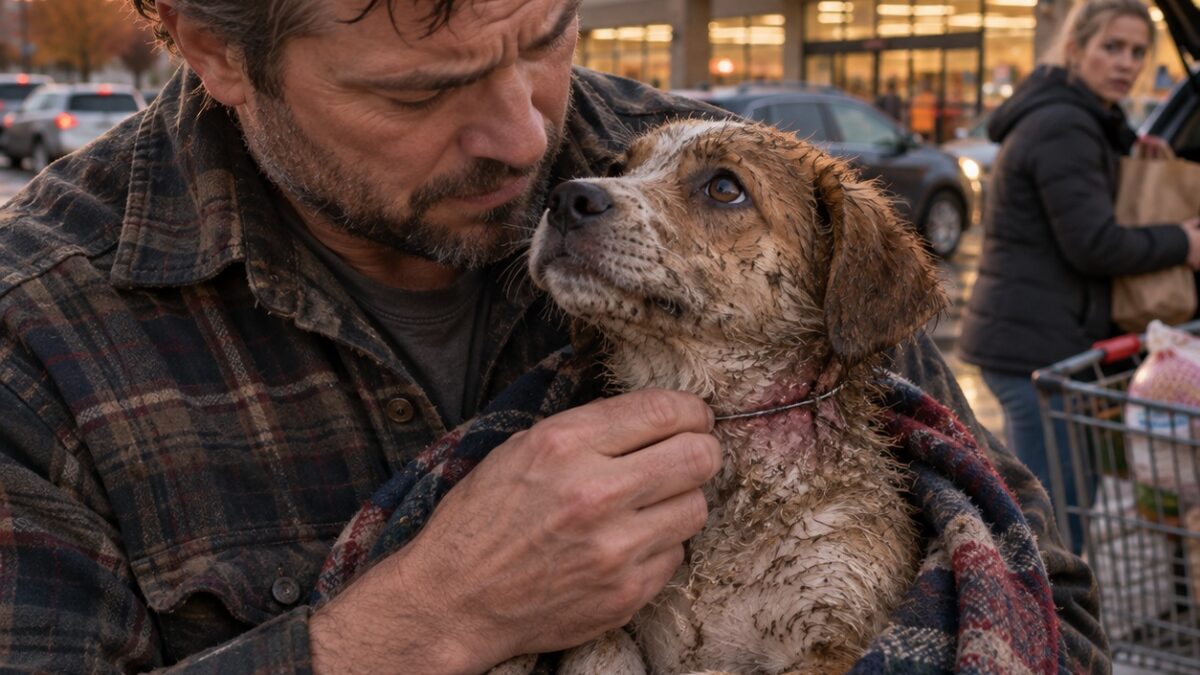
They sedated her before trying to remove the wire.
Dr. Langston explained what she was doing, but most of the words barely registered.
She said the wire had probably started as some kind of homemade collar or restraint.
As the puppy grew, it never loosened.
Instead, it cut deeper.
Whether someone forgot about it or simply didn’t care was impossible to know.
“What happens if you can’t get it all?”
“We will.”
“That wasn’t my question.”
She looked at me through tired gray eyes.
“If part has migrated too deep, we may need surgery.”
I swallowed.
“And if there’s damage underneath?”
“We find out.”
She rested one hand on my shoulder.
“Go sit down.”
I didn’t.
I stood outside the treatment-room window and watched.
A technician held the puppy steady while Dr. Langston worked with tiny cutters and forceps.
Piece by piece, she freed the wire.
Every section looked worse than the last.
Blood.
Yellow fluid.
Matted hair.
Inflamed tissue.
I had seen ugly things.
I ran Ferris Hardware.
I had spent most of my adult life around farms, contractors, hunters, mechanics, and people who occasionally arrived needing supplies because something had gone very wrong.
I once helped a man hold pressure on his forearm after a table saw kicked a board backward.
I had seen a deer hit by a truck and still trying to stand.
But the wire bothered me in a different way.
An accident has chaos in it.
This had time.
That was what made it cruel.
Someone had seen that puppy growing.
Had seen the wire tightening.
Had watched her lose fur.
Had watched skin swell around metal.
And still left it there.
After almost an hour, Dr. Langston came out carrying a small clear bag.
Inside was the wire.
Bent.
Rusty.
Dark in places with dried blood.
She handed it to me.
I stared.
“You keep this?”
“For now.”
“Why?”
“If this becomes an animal cruelty case, it may matter.”
I looked toward the treatment room.
“How bad?”
“She’s lucky.”
“That doesn’t answer anything.”
“No major vascular damage.”
I exhaled.
“Infection?”
“Yes.”
“Nerve damage?”
“Too early to know.”
“She going to live?”
Dr. Langston hesitated.
I hated that hesitation.
“Probably.”
“Probably?”
“She’s malnourished, dehydrated, infected, and exhausted. Her temperature is low. Her blood work isn’t good.”
She folded her arms.
“But she’s young.”
“How young?”
“Maybe six months.”
I looked at the little body beneath the warming blanket.
Six months.
I had expected a year.
Maybe more.
Pain had made her look older.
“She have a chip?”
“No.”
“Pregnant?”
“No.”
“Any sign she belonged to someone?”
“Besides the wire?”
I winced.
“Sorry.”
“No collar. No chip. No registration tattoo.”
She glanced through the window.
“There are old scars on her legs.”
“What kind?”
“Hard to say.”
“From what?”
“I don’t know yet.”
Something in her voice said she had guesses.
I asked.
She shook her head.
“Not until I know.”
Three hours later, I carried the puppy to my truck.
Dr. Langston had wrapped her neck in clean bandaging and given me antibiotics, pain medication, wound-care instructions, and enough warnings to make me afraid to breathe near her.
“Small meals.”
“Okay.”
“Keep her warm.”
“Okay.”
“No baths until I clear it.”
“Fine.”
“If she vomits repeatedly, collapses, stops drinking, develops severe swelling, or starts struggling to breathe, call me.”
“I’ll call.”
“And Tom?”
I stopped.
“Don’t leave her tied outside.”
I looked at her.
“I wasn’t going to.”
“I know.”
She lowered her voice.
“But I need you to understand something. That dog reacts to restraint like it means death.”
I looked down at the puppy.
Her eyes were half closed.
“I understand.”
My farmhouse sits just beyond the edge of town, where pavement narrows, mailboxes get farther apart, and eventually the road becomes gravel.
Two bedrooms.
Old porch.
Small garden.
A workshop I never use enough.
I had lived there alone since my mother died eight years earlier.
I had no wife.
No children.
People in town liked to assume that meant I was lonely.
Sometimes I was.
Mostly I had gotten used to quiet.
That night quiet changed shape.
I put the puppy on an old quilt beside my bed.
She curled into the tightest ball I had ever seen.
Her nose tucked under her tail.
Every muscle pulled inward.
I sat on the floor.
“What do I call you?”
One eye opened.
I looked around the room as though a name might be hanging somewhere.
Outside, a metal wind chime knocked softly against the porch.
On the dresser sat a faded photograph of my mother holding a bundle of clover from the field behind the house.
She used to say four-leaf clovers didn’t bring luck.
Finding one simply meant you had been paying attention.
“Clover.”
The puppy’s ear moved.
“Yeah?”
Nothing.
“Clover.”
She opened both eyes.
“That’ll do.”
I slept badly.
Clover barely moved.
At three in the morning, I woke convinced she had stopped breathing.
I put my hand near her nose.
Warm air touched my skin.
I sat there for almost ten minutes watching her chest rise.
The next morning she wouldn’t eat.
I warmed chicken broth.
Nothing.
Rice.
Nothing.
Scrambled egg.
She sniffed it.
Turned away.
I called Dr. Langston.
“Water?”
“A little.”
“Keep offering food. Don’t force her.”
“What if she doesn’t eat?”
“She will.”
“How do you know?”
“I don’t.”
“Helpful.”
“Tom, she survived wire growing into her neck. Give her twenty-four hours.”
That afternoon, I sat on the porch with Clover wrapped in the quilt.
Cold sunlight hit the yard.
She rested her head on my knee.
I stroked between her ears.
For almost an hour, neither of us moved.
Then she licked my wrist.
One quick touch.
That was all.
I remember smiling like an idiot.
The next morning, she ate three bites of egg.
By evening, she finished half a bowl of chicken and rice.
Two days later, she followed me into the kitchen.
Not close.
Ten feet behind.
When I turned, she froze.
“It’s okay.”
I kept walking.
She followed again.
The first week became a series of tiny victories nobody else would have considered victories.
Clover drinking without checking the room every few seconds.
Clover sleeping with her body stretched instead of curled.
Clover letting me clean the bandage without trembling.
Clover eating from a bowl instead of taking food away to hide.
Clover walking past the front door without flinching when a truck passed.
She still never barked.
That bothered me.
Dogs make noise.
Puppies especially.
Whining.
Yipping.
Growling.
Something.
Clover was nearly silent.
I brought her to Ferris Hardware after the first follow-up appointment.
I own the store because my father owned it before me, and his father owned half of it before him.
It sits on Main Street between a diner and a barber shop that has changed owners four times without changing the sign.
Most mornings, someone is waiting when I unlock the door.
Farmers.
Contractors.
Homeowners.
Men who need one screw but will spend forty minutes explaining the project.
Women who walk straight to the shelf they need because they don’t have time for explanations.
Clover stayed behind the counter on a blanket.
Mr. Palmer noticed her first.
He had bought nails from my family since the 1970s.
“That your dog?”
“Looks that way.”
He leaned closer.
“What happened to her neck?”
“Found her hurt.”
“Where?”
“Safeway.”
He whistled.
“Seen that pup before.”
I stopped.
“Where?”
He scratched his chin.
“Running around near the old mill.”
“When?”
“Week before you found her. Maybe earlier.”
“The Caldwell mill?”
“Yeah.”
The old sawmill had been closed more than a year.
Bankruptcy.
Equipment auction.
Property stuck in legal limbo.
Several small employee houses remained around it, most abandoned.
“Who had dogs out there?”
Mr. Palmer shrugged.
“Always somebody.”
That afternoon, I drove to the mill.
Clover stayed home.
I didn’t know what I expected.
The place looked dead.
Rusting corrugated roofs.
Broken loading dock.
Grass growing through gravel.
One window in the main mill office had been smashed.
The little worker shacks sat beyond the trees.
At the third shack, I found an empty dog bowl beneath the porch.
Beside it was a chain.
Broken.
The end had been twisted with thin wire.
I stood there staring.
The same type?
I couldn’t be sure.
I photographed it.
Didn’t touch it.
Then drove back.
Clover met me at the door.
Her tail moved.
Slowly.
Left.
Right.
Once.
I stopped.
“Did you just wag?”
She stared at me.
Then did it again.
That erased the mill from my head for five full minutes.
Three weeks after I found her, Clover discovered her voice.
I was repairing the back fence.
She sat on the porch watching.
A squirrel ran across the lawn.
Clover’s ears came forward.
Her body stiffened.
Then:
“Yip!”
She froze.
I froze.
The squirrel kept running.
Clover looked behind herself as though another dog had made the sound.
I laughed.
Her head snapped toward me.
“You did that.”
She stared.
“Go ahead.”
Another bark.
Louder.
Then another.
Suddenly Clover bolted off the porch and ran straight at me.
I barely had time to drop the hammer before she jumped against my legs.
I knelt.
She licked my face.
“Okay, okay.”
She barked again.
And for the first time, she sounded like a puppy.
That afternoon I took her to the park.
It was one of those late-November days when cold air carries the smell of wet leaves and wood smoke.
Clover sniffed everything.
Tree trunks.
Benches.
Trash cans.
A stroller.
A little girl dropped a red mitten.
Clover picked it up.
The girl’s mother tensed when Clover approached.
“She’s okay,” I said.
Clover carried the mitten directly to the child.
Dropped it.
Sat down.
The girl smiled.
“Thank you, puppy.”
The mother relaxed.
“She’s sweet.”
“Very.”
“Rescue?”
I looked down.
Clover’s tail tapped the sidewalk.
“Yeah.”
I thought for a second.
“Though some days I think she rescued me.”
I regretted saying it immediately because it sounded like something printed on a coffee mug.
The woman smiled anyway.
“Maybe that’s how it works.”
By December, Clover had become part of my routine.
Coffee.
Feed her.
Store.
Walk.
Dinner.
Fire.
Sleep.
She rode shotgun in my blue pickup, sitting upright like she had appointments.
Miss Lorna at the diner kept turkey behind the counter.
Mr. Palmer carried biscuits.
Kids came into the hardware store pretending their parents needed something.
Sometimes Clover still disappeared behind the shower curtain at night.
A sound would wake her.
She’d slip into the bathroom.
Curl behind the tub.
I never dragged her out.
I sat on the tile outside.
Talked.
Sometimes about nothing.
“Palmer says we’re getting snow.”
Silence.
“Lorna burned another pecan pie.”
Silence.
“I need to fix the gutter before it freezes.”
Eventually her nose would appear beneath the curtain.
Then one paw.
Then the rest.
Trust is boring from the outside.
It looks like waiting.
That was what Clover needed most.
Time with nothing bad happening.
Then, six days before Christmas, someone left a card under the hardware store door.
No stamp.
No envelope.
Just a photograph.
Clover.
Younger.
Maybe eight weeks old.
Two other puppies beside her.
Behind them stood a shirtless man.
His face was cut off at the top of the frame.
One hand held several chain leads.
His fist was clenched so tightly around them that the puppies’ necks were pulled upward.
On the back, five words were written in black ink.
DIDN’T THINK SHE’D MAKE IT.
Underneath:
GUESS I WAS WRONG.
I locked the front door.
Closed the blinds.
Clover was asleep behind the counter.
I looked at the picture again.
My hands felt cold.
Someone knew where she was.
Someone had known her before I did.
I called Sheriff Mace.
Mace had been sheriff for nine years and deputy for fifteen before that.
Large man.
Quiet voice.
Never hurried when everyone else did.
He came to the store.
Put on gloves.
Examined the photo.
“Anybody see who left it?”
“No.”
“Camera?”
“Front camera shows sidewalk, but not the bottom of the door.”
“Keep the card.”
“I was hoping you would.”
He studied Clover.
“What did your vet say about the wire?”
I told him.
“Any report?”
“She photographed everything.”
“Good.”
He looked at me.
“Tom, you need to understand something.”
“I’m getting tired of people starting sentences that way.”
“This could be someone trying to scare you.”
“I figured.”
“Could also be someone stupid enough to think the dog still belongs to them.”
“She doesn’t.”
“I know.”
“Do they?”
Mace’s expression didn’t change.
“That may be the problem.”
On December 26, snow covered the yard.
Clover saw it through the glass and became a completely different animal.
She ran outside without waiting for the leash.
Plunged her nose into powder.
Sneezed.
Leaped backward.
Then attacked the snow like it had insulted her.
She found a pine cone.
Dropped it at my feet.
“You want me to throw this?”
Head tilt.
I threw it.
For the next thirty minutes, nothing in the world existed except a puppy racing through snow.
That was the morning I started believing she might actually be okay.
By noon, I took her to the store.
Post-Christmas business was slow.
Miss Lorna arrived with leftover turkey.
“Your girl’s putting on weight.”
“She eats better than I do.”
“As she should.”
Clover sat beside the counter.
Around four forty-five, the front bell jingled.
A young man entered.
Late twenties.
Sandy hair.
Heavy brown jacket.
He didn’t look at the shelves.
Didn’t look at me.
His eyes went directly to Clover.
She changed before he spoke.
Body low.
Ears flat.
Tail disappeared between her legs.
She backed against my shin.
The man smiled without warmth.
“That your dog?”
My hand settled on Clover’s shoulder.
“She is.”
“Where’d you get her?”
“She found me.”
He stepped closer.
Clover pressed harder against my leg.
“She was mine.”
Every instinct in my body sharpened.
“Name?”
“What?”
“If she was yours, what was her name?”
He hesitated.
“Didn’t really have one.”
“Vet records?”
He laughed.
“She was a yard dog.”
“Photos?”
He looked around.
“You asking for paperwork over a mut?”
“I’m asking for proof.”
His eyes narrowed.
“I raised her.”
Clover began trembling.
I felt it through my pant leg.
“You raise her with wire around her neck?”
His jaw tightened.
He didn’t answer.
“That what you did?”
“She got loose.”
“That wasn’t my question.”
He looked down at Clover.
“Come.”
She did not move.
His expression changed.
“Come here.”
Clover pushed behind me.
That was enough.
“She’s not going anywhere.”
“You stole her.”
“I found her half-dead in a grocery-store parking lot.”
“She belonged to me.”
“Then call the sheriff.”
He stared.
I pointed toward the door.
“Go ahead. Tell him you owned the dog with wire embedded in her neck.”
His eyes went cold.
“You don’t know anything.”
“I know she’s scared of you.”
He looked at Clover.
Then me.
“You should be careful.”
“Leave.”
For a second, I thought he might swing at me.
Instead he smiled.
Small.
Ugly.
Then walked out.
The bell jingled behind him.
I locked the door.
Clover remained pressed against my leg.
I crouched.
“Hey.”
She wouldn’t look at me.
“Clover.”
Her eyes finally came up.
“You’re staying.”
Her breathing was fast.
“I don’t care what he says.”
I put my forehead against hers.
“You’re staying.”
That night, I checked every lock twice.
Then a third time.
I let Clover sleep on my bed.
She curled against my ribs.
Around midnight, she started running in her sleep.
Legs twitching.
Tiny whines.
I rested one hand against her back.
She woke.
For a moment, she didn’t know where she was.
Then she saw me.
Her body relaxed.
“I won’t let him take you.”
I said it quietly.
Maybe promises still meant nothing to her.
But they meant something to me.
Two mornings later, a dark pickup sat across from the hardware store.
Engine running.
Tinted windows.
It left when I stepped outside.
The following night, I found footprints behind my house.
They crossed the snow near the porch and disappeared toward the road.
Not mine.
I called Mace.
He came out.
Looked.
Photographed them.
“Could be anybody.”
“I know.”
“You see anyone?”
“No.”
“Anything taken?”
“No.”
“You want extra patrols?”
“Yes.”
He nodded.
Then looked at Clover.
“She react?”
“She barked around two.”
“That may have been it.”
I bought motion lights.
A better deadbolt.
A camera system.
I started carrying an old baseball bat when I took Clover outside after dark.
I didn’t own a handgun.
Didn’t want one.
I had hunted when I was younger, but this was different.
I did not want to turn my home into a place organized around fear.
Still, fear arrives whether invited or not.
New Year’s Eve, I took Clover to the river trail.
The snow had melted into gray patches.
Water ran high.
Clover splashed at the edge.
That was when I saw the boy.
Maybe twelve.
Thin.
No coat.
Standing beneath trees.
He stared at Clover.
“You okay?” I called.
He shrugged.
“She yours?”
“She is now.”
He looked at the dog.
“I seen her before.”
My stomach tightened.
“Where?”
“Mill.”
“Old sawmill?”
He nodded.
“My cousin kept dogs there.”
“The guy who came into my store?”
His eyes widened.
“Jesse?”
So I had a name.
“You know Jesse?”
“He’s my cousin.”
I crouched slightly.
Not close.
Enough to look less threatening.
“What’s your name?”
“Micah.”
“Micah, did Jesse own Clover?”
He looked at his shoes.
“Kind of.”
“What does that mean?”
“He helped.”
“With what?”
The boy didn’t answer.
Clover came toward him.
Micah flinched.
Then held out one hand.
Clover sniffed it.
Licked his fingers.
His face changed.
“She’s not scared of me.”
“No.”
“He used to make them fight.”
Everything in me went still.
“Who?”
“Jesse.”
“Fight each other?”
Micah shook his head.
“Not always.”
I knew enough not to push a child too hard.
“Was Clover one of them?”
“She wouldn’t do it.”
“Wouldn’t fight?”
He shook his head.
“She’d lay down.”
His voice became smaller.
“They’d put her with bigger dogs and she’d just lay there and cry.”
My stomach turned.
“Was she bait?”
I regretted the word as soon as I said it.
Micah didn’t seem to.
“Colin said she was useless.”
“Who’s Colin?”
The boy looked frightened.
“I gotta go.”
“Micah.”
“He left her.”
“Who?”
“Jesse. He said Colin would kill her anyway.”
He stepped backward.
“Don’t tell him I told.”
“Tell who?”
But Micah was already moving into the trees.
I did not follow.
That night, I called Mace.
He listened.
“Colin?”
“That’s all I got.”
“We’ll check.”
“Dog fighting?”
“We’ve had rumors.”
“Rumors?”
“Nothing enough for charges.”
“What about Jesse?”
“Give me time.”
I hated that phrase.
But Mace was right.
Knowing and proving are different.
Clover knew too.
She just couldn’t testify.
At the town New Year’s gathering, half the children wanted to pet her.
She let them.
Miss Lorna knelt.
“She’s got light in her now.”
“What does that mean?”
Lorna shrugged.
“Look at her.”
Clover was lying on her side while a six-year-old rubbed her belly.
“She knows she’s safe.”
I wanted to believe that.
Mace came over.
“I found Jesse.”
My smile disappeared.
“Where?”
“Didn’t arrest him.”
“Why?”
“Existing warrants? None. Dog cruelty case? Nothing documented enough yet.”
“He admitted she was his.”
“To you?”
“No.”
“Then we still have a problem.”
“He file anything?”
“Not yet.”
Mace looked toward Clover.
“But I told him to stay away from your place.”
“Will he?”
Mace’s expression said what his mouth didn’t.
Maybe.
February arrived cold.
One morning, a beige state sedan came up my drive.
The woman who stepped out introduced herself as Dana Walker from Animal Welfare Services.
“Mr. Ferris?”
“Yes.”
“I received a complaint regarding a dog in your possession.”
Of course.
Clover stood behind me.
Dana looked at her.
“There’s an allegation you removed her from someone else’s property.”
“I found her at Safeway.”
“I’m gathering information.”
“Want records?”
“Yes.”
I handed her everything.
Emergency treatment.
Wire removal.
Photographs.
Vaccines.
No microchip.
No registration.
Dana studied the medical photos.
Her expression changed.
“Who did this?”
“I’d love to know.”
“She had no chip?”
“No.”
“No active missing report at the time you found her?”
“No.”
“Did anyone claim her?”
“Jesse.”
“When?”
“About a month later.”
“Proof?”
“None.”
Dana closed the folder.
“I’m closing this complaint.”
“That easy?”
“It isn’t easy.”
She looked at Clover.
“It’s obvious.”
She handed everything back.
“Keep these records.”
“I will.”
She crouched slightly.
Clover watched but did not approach.
Dana stood.
“Most abusers don’t care until someone else does.”
I looked at her.
“What?”
“If this complaint came from who I think it came from, he may not actually want the dog.”
“Then why complain?”
“Control.”
That word stayed with me.
Two days later, Mace came by.
“Jesse’s truck turned up burned.”
I stared.
“Where?”
“Cold Hollow.”
“Jesse?”
“Missing.”
“Dead?”
“No body.”
“Then what?”
“We don’t know.”
He looked toward Clover.
“This may be bigger than one idiot wanting his dog back.”
The next weeks were quiet.
Too quiet.
Clover healed.
Her coat grew in thick.
Her weight became healthy.
The scar around her neck faded beneath fur.
She stopped following me everywhere.
That sounds like a strange thing to celebrate.
It wasn’t.
The first time she stayed asleep in the living room while I walked into the kitchen, I almost cried.
She trusted I would come back.
In March we drove to a lake I had visited with my parents as a kid.
Clover met a golden retriever named Bailey.
At first she stood rigid.
Then Bailey bowed.
Clover hesitated.
Finally she bowed too.
Five seconds later they were running circles around a girl named Emmy.
Emmy asked,
“Was she a rescue?”
“Yeah.”
“She looks happy.”
I watched Clover crash into a pile of leaves.
“She is.”
That day felt normal.
Normal became precious.
Then the letter arrived.
White envelope.
No return address.
Typed message.
YOU THINK SHE’S SAFE NOW?
YOU DON’T KNOW WHAT SHE WAS MADE FOR.
SHE REMEMBERS.
My hands went cold.
Mace took the letter.
“We’ll run prints.”
“You think Jesse?”
“Could be.”
“Colin?”
“Could be.”
“What do I do?”
“Keep doing what you’re doing.”
“That doesn’t feel like enough.”
“Sometimes not reacting is exactly enough.”
I kept cameras running.
Locks checked.
Clover close.
Then one night I saw a figure at the tree line.
He stood beneath the trees.
Watching the house.
Clover growled.
Low.
The figure turned.
Walked away.
The next morning, deputies found cigarette butts and boot prints.
Mace looked toward the woods.
“He’s not done.”
“Who?”
He didn’t answer.
In April, a little boy came into the store with his mother.
Cast on one arm.
Scar above his eyebrow.
Quiet.
Clover walked over.
The boy knelt.
Clover leaned against him.
He wrapped his good arm around her.
His mother began crying.
“He hasn’t smiled in three weeks.”
I didn’t ask why.
Clover licked the boy’s face.
He laughed.
Sharp.
Surprised.
For a few seconds, everyone in the store stopped moving.
After they left, I sat on the floor beside Clover.
“You have no idea what you do to people.”
She rested her chin on my knee.
Maybe she did.
That same month, Mace called me into the station.
He had a fingerprint result.
“Partial match to another case.”
“Who?”
“Colin Pritchard.”
The name hit.
Micah.
“History?”
“Suspected underground dog fighting. Complaints across multiple counties. Charges never held.”
“Why?”
“Witnesses disappear. Evidence disappears. Dogs disappear.”
“Connection to Jesse?”
“Worked together at the mill.”
He handed me a photograph.
Black-and-white flyer.
Clover.
Younger.
“Where did you get this?”
“Bait shop two towns over.”
My address was penciled beneath it.
I stared.
“They know where I live.”
“Yeah.”
“Then what are we doing?”
“Building something we can prosecute.”
“She’s being stalked.”
“So are you.”
He leaned forward.
“Tom, listen to me. Don’t confront anyone.”
“What happens when they come onto my property?”
“Call us.”
“And if there’s no time?”
His jaw tightened.
“Protect yourself. But don’t go looking for a fight.”
I went home angry.
Clover met me at the door carrying a rope toy.
My anger disappeared enough for me to throw it.
April storms arrived.
Rain.
Mud.
Thunder.
Dr. Langston stopped by the hardware store with homemade dog biscuits.
Clover approved immediately.
“She’s changed,” Langston said.
“Good changed?”
“Very.”
She looked at Clover’s neck.
“You can barely see the scar.”
“I can.”
“You always will.”
She was right.
Dr. Langston told me about a rescue dog she had owned in college.
Used as bait.
Half an ear missing.
“He never became fearless.”
“Clover won’t either?”
“Fearless isn’t the goal.”
“What is?”
“Choice.”
I looked at her.
“He could be afraid and still decide to come closer.”
She watched Clover carry a biscuit under the table.
“They don’t forget everything, Tom.”
“What do they do?”
“They learn which memories get to control the room.”
A week later, Mace confirmed Colin’s fingerprint was on the threatening letter.
Not enough by itself for the case he wanted.
Enough for me.
By May, flyers appeared around town.
MISSING DOG.
A photograph of Clover.
Male in his forties.
Blue pickup.
Reward.
I ripped one down.
Mace told me not to tear down others.
“We need them.”
“For evidence?”
“And to see where they appear.”
Someone was mapping my life.
Store.
House.
Truck.
Dog.
Three nights later, my trail camera recorded a hooded man at 2:11 a.m.
He stopped at my mailbox.
Looked toward my porch.
Then left.
Mace watched the clip.
“Colin?”
“Likely.”
“Likely isn’t enough.”
“No.”
“When is enough enough?”
“When we can put him somewhere he can’t come back.”
That answer frightened me because it meant Mace believed he would.
One morning at the creek, Clover froze.
A man stepped from the trees thirty feet away.
Dark hoodie.
Boots.
Older than Jesse.
Hard face.
“You’ve done a good job with her.”
I stood.
Clover moved behind my leg.
“She’s not yours.”
He smiled slightly.
“She remembers me.”
“She remembers what you did.”
His eyes dropped toward her.
“You think you fixed her?”
“No.”
That seemed to surprise him.
“I think she fixed herself.”
His smile disappeared.
“She was made for the pit.”
“She was made to live.”
Clover growled.
One low note.
Colin looked at her.
“See?”
“No.”
I kept my voice steady.
“She’s warning you.”
His hands remained visible.
Empty.
He took one step.
I stepped forward.
“You need to leave.”
For several seconds, neither of us moved.
Then he turned.
Walked back into the woods.
I called Mace before I reached the truck.
Deputies searched.
Nothing.
Only footprints.
Cigarette butt.
A faint tire mark farther down the road.
Summer began.
I started thinking in routines built around risk.
Check mirror.
Check camera.
Check gate.
Check locks.
Check Clover.
I hated what it did to my head.
Every strange car became somebody.
Every branch crack became footsteps.
Every unknown customer became a question.
Clover, somehow, seemed to move the opposite direction.
The safer her life became, the larger her world became.
She played.
Rolled in grass.
Barked at crows.
Chased bugs.
Slept belly-up.
One day she wandered into another room while I was reading and stayed there an hour.
She didn’t need to see me every second.
I envied her.
In June, a woman named Julia Paige called from the Department of Animal Protection Investigations Unit.
“We are reopening several older cruelty files.”
“What does that have to do with Clover?”
“We believe she may have come from an illegal fighting network operating across three counties.”
My hand tightened around the phone.
“Colin Pritchard?”
Silence.
That was answer enough.
She asked me to come in.
I brought everything.
Veterinary records.
Photos.
Threats.
Flyers.
Camera footage.
Julia listened for an hour.
Then opened a folder.
“She was likely a bait dog.”
“I know.”
“You know from who?”
“Kid named Micah.”
Julia nodded.
“That tracks.”
She pulled out photographs of several dogs.
Scars.
Neck wounds.
Small markings.
“There’s a system.”
“What system?”
“Handlers sometimes mark animals. Crude identification. Sometimes to track breeding. Sometimes to mark failures.”
“Failures?”
“Dogs that wouldn’t perform.”
She showed me Clover’s original medical photo.
I had seen it dozens of times.
Now she pointed to several faint scars above the wire wound.
Tiny overlapping marks.
Deliberate.
My stomach tightened.
“What does that mean?”
“Her mark matches dogs connected to Pritchard.”
I looked up.
“Connected how strongly?”
“Strongly enough that I’m comfortable telling you this.”
She closed the folder.
“Colin Pritchard owned or controlled Clover before you found her.”
I sat back.
“Then arrest him.”
“I wish it worked like that.”
“He’s stalking my house.”
“Sheriff Mace is documenting it.”
“He threatened me.”
“We know.”
“You know he ran the dogs.”
“We believe.”
I stood.
Julia’s voice sharpened.
“Tom.”
I stopped.
“We are trying to dismantle the network, not just arrest one man on a weak harassment case.”
“He could hurt her.”
“I know.”
“He could hurt me.”
“I know.”
“Then what do you want?”
“Stay alert.”
I almost laughed.
“I’ve been alert for seven months.”
“I know.”
She softened.
“We think he’s building again.”
“Another fighting operation?”
“Yes.”
“Where?”
“We’re working on it.”
I left feeling worse.
When I got home, Clover met me at the door.
I knelt.
Pressed my forehead against hers.
“He doesn’t own you.”
Her tail moved.
“He never did.”
Late June, Micah came to the hardware store.
Alone.
Dirty shirt.
Nervous.
“You got Clover?”
I looked behind me.
She appeared from under the counter.
Micah smiled.
Then looked toward the door.
“I know where Colin’s been.”
My stomach tightened.
“Where?”
“Old lumber shed near the river.”
“How do you know?”
“My cousin went there.”
“Jesse?”
Micah nodded.
“Jesse’s alive?”
He looked frightened.
“I think.”
“Did you see him?”
“No.”
“How do you know?”
“People talk.”
I crouched.
“Micah, does your mom know you’re here?”
He shook his head.
“Okay.”
I handed him water.
A granola bar.
“You did the right thing.”
“Don’t tell Colin.”
“I won’t.”
That night, Julia received the information.
Her voice changed.
“We’ve been looking near there.”
“So go.”
“We are.”
“Tonight?”
“Tom.”
“What?”
“Stay home.”
I did.
Two nights later, my garden gate creaked open at 1:34 a.m.
I woke instantly.
Clover growled beside the bed.
I grabbed the flashlight.
Bat.
Moved toward the back door.
I know what Mace told me.
I know what smart people do.
Call first.
Stay inside.
But somebody was already in my yard.
I opened the door.
The gate moved in the wind.
Clover stood behind me.
Exactly behind me.
Not running.
Training would come later.
Instinct had already taught her.
I swept the beam across the shed.
Fence.
Oak.
Then a shadow moved behind the woodshed.
“Hey!”
The figure ran.
I chased.
Barefoot.
Stupid.
I made it twenty yards before my foot hit gravel hard enough to remind me I was fifty-one.
The man disappeared into the trees.
Mace arrived ten minutes later.
Julia twenty after that.
They found fingerprints on the gate.
Colin’s.
This time, the harassment became harder to call coincidence.
A protective order followed.
Paper.
Julia called it useful.
I called it thin.
July brought heat.
Colin disappeared.
No sightings.
No letters.
No footprints.
“Moved,” Julia said.
“You sure?”
“No.”
“Good.”
“You prefer lies?”
“Sometimes.”
She laughed.
Clover slept on tile beneath box fans.
August was worse.
Then Julia showed up with a photograph.
Clover on my porch.
Timestamp four days earlier.
Taken from across the street.
I stared.
“When?”
“Morning.”
“What time?”
“Seven fourteen.”
I knew exactly what I had been doing.
Coffee.
Inside.
Five minutes.
That was all.
“They’re still watching,” Julia said.
“They?”
“We think Colin has help.”
My throat tightened.
“Who took this?”
“We don’t know.”
She handed me a small panic trigger.
“One button.”
“What happens?”
“Alerts dispatch and our task-force channel.”
“I carry this everywhere?”
“Yes.”
“What about Clover?”
“Keep her close.”
I stopped letting Clover sit alone on the porch.
That bothered me.
Not because she complained.
She didn’t.
Because someone had stolen a piece of her freedom without touching her.
I started taking longer drives to the lake.
Different route every time.
One Sunday, I met a man named Rob with a brown Labrador.
Friendly.
Normal.
Maybe too normal.
He scratched Clover’s ears.
“Face like that, you remember.”
I watched him drive away.
Later I realized he never asked her name.
Paranoia does something ugly.
It turns harmless details into evidence.
I called Julia anyway.
Nothing connected him.
“Not everyone is Colin,” she reminded me.
“I know.”
“You don’t sound like you know.”
Neither did I.
Another threatening note appeared under my windshield wiper.
YOU THINK YOU CAN KEEP HER FROM REMEMBERING.
SHE ALREADY HAS.
Mace read it.
“They’re baiting you.”
“For what?”
“To make you act.”
“Why?”
“Angry men make mistakes.”
“What do calm men do?”
“Wait.”
“I’m tired of waiting.”
“I know.”
In September, Julia proposed training.
“Not attack training.”
“Good.”
“Situational response.”
“For Clover?”
“For both of you.”
Dean, a retired canine-unit handler, arrived the following week.
He did something I immediately respected.
He ignored Clover.
Sat under the oak.
Waited.
Clover watched from the porch.
Eventually she walked over.
Sniffed his boot.
Dean said nothing.
She sniffed his hand.
He looked at me.
“She reads people.”
“Most dogs do.”
“Not like her.”
Over four sessions, Dean taught us structure.
Clover behind me when strangers approached.
Clover returning on one word.
Clover freezing instead of bolting when a door slammed.
I learned body position.
Voice.
How my tension traveled down a leash.
“She’s not a fighter,” Dean said.
“I know.”
“Good.”
“Why good?”
“Because people misunderstand courage.”
He watched Clover sitting ten feet away.
“Courage isn’t wanting conflict.”
One week later, somebody broke into the feed store.
Nothing stolen.
Shelves disturbed.
Manager said a man had been asking whether anyone nearby sold dogs.
Julia added it to the case.
Then a package appeared on my porch.
Inside:
A rusted chain collar.
Red tag.
No note.
I drove it straight to Mace.
He put it into evidence.
“We’re getting close.”
“How do you know?”
“Because people get louder when quiet stops working.”
“Or they get more dangerous.”
He looked at me.
“Yes.”
The town fair happened at the end of September.
I almost stayed home.
Nolan, an old friend with a ranch two towns over, talked me into going.
“You hide her, they win something.”
“That’s not how winning works.”
“Maybe not. Still.”
Clover wore a soft leather collar with her name stamped inside.
Not outside.
I didn’t want anyone learning anything they hadn’t earned.
She walked through the fair beside me.
Children pet her.
Miss Lorna fed her something she absolutely should not have been eating.
Clover looked happy.
Visible.
Alive.
That mattered.
October came quiet.
Too quiet.
Then one afternoon we were hiking behind Nolan’s ranch.
Clover stopped.
Her body changed.
I had learned the signals.
Ears back.
Weight shifted.
Eyes fixed.
I reached toward the panic trigger.
A voice came through the trees.
“I wondered if you’d come this far.”
Colin stepped from behind a pine.
He looked thinner.
Older.
Anger eats people too.
Clover moved back to my side.
Not behind me.
Beside me.
Colin noticed.
“She’s different.”
“Yes.”
“Knew she would be.”
“What do you want?”
He smiled.
“You ever wonder why she ended up with you?”
“No.”
“You should.”
“I found her because someone abandoned her.”
“You found her because Jesse lost his nerve.”
My pulse changed.
“Jesse alive?”
Colin’s expression told me I had asked the wrong question.
“He thought she deserved a chance.”
“And you didn’t.”
“She was useless.”
Clover growled.
Colin looked at her.
“There it is.”
“No.”
I rested one hand near her shoulder.
“That’s not what you think.”
“She knows me.”
“She knows danger.”
His eyes hardened.
“You think you saved her?”
“No.”
That stopped him.
“She saved herself.”
He took one step.
Clover did not move.
“I made her.”
“No.”
“You don’t know what she was like.”
“I know enough.”
“She learned pain from me.”
“You tried to break her.”
I pressed the panic trigger inside my pocket.
No sound.
No light.
Just one small vibration.
Colin stepped closer.
“You think police protect you?”
“No.”
I looked at Clover.
“But you’re not taking her.”
He stared at her.
Something changed in his face.
Not remorse.
Calculation.
Then he stepped back.
Turned.
Walked into the trees.
I heard nothing for maybe ninety seconds.
Then boots.
Mace appeared on the trail.
Hand near his sidearm.
“Where?”
I pointed.
Deputies moved past.
Julia arrived behind them.
They didn’t find Colin.
They found something better.
His camp.
Tarp.
Food.
Maps.
Binoculars.
Photographs.
Mine.
Clover’s.
The hardware store.
My house.
The lake.
Nolan’s ranch.
Names.
Dates.
Schedules.
A van hidden half a mile away.
Inside:
Cages.
Three.
Two empty.
One with dried blood.
Julia stood beside it for a long time.
“This isn’t just surveillance.”
“What is it?”
“Operations.”
“What does that mean?”
“He’s been moving dogs.”
Clover stayed in my truck.
I was grateful.
The state task force took over.
We left town three days later.
Not forever.
Temporarily.
Nolan’s brother owned a cabin near a lake four hours north.
One room.
Loft.
Stone fireplace.
Good fence.
No nearby houses.
I packed food.
Clothes.
Tools.
Clover’s blankets.
Her records.
The panic trigger.
We left before sunrise.
Clover slept in the passenger seat.
I did not look back at the house.
The first week at the cabin, I slept twelve hours total.
Every branch against the roof woke me.
Clover adjusted faster.
By day three, she was running along the fence.
By day five, she barked at deer.
By day seven, she slept in a patch of sun.
Julia called twice.
“Anything?”
“Not yet.”
“Mace?”
“Working with us.”
“Colin?”
“No.”
“Jesse?”
Pause.
“What?”
“We found him.”
I stood.
“Alive?”
“Yes.”
“Where?”
“Hospital in another county.”
“What happened?”
“He turned himself in after hearing about the camp.”
My knees felt weak.
“What did he say?”
“I can’t tell you everything.”
“Tell me what matters.”
Julia paused.
“Jesse abandoned Clover.”
“I know.”
“He says Colin ordered him to kill her because she wouldn’t fight.”
I closed my eyes.
“Jesse couldn’t.”
“So he left her?”
“He wrapped a loose restraint around her after moving her, but he claims the embedded wire was from earlier confinement.”
“Does that make him innocent?”
“No.”
“Did he hurt her?”
“Yes.”
The word was firm.
“He also gave us names.”
“How many?”
“Enough.”
“What happens now?”
“We move.”
The raids began four days later.
I learned afterward there were five locations.
Three counties.
Two barns.
One warehouse.
One rural property hidden behind a salvage yard.
Twenty-seven dogs recovered alive.
Three needed emergency surgery.
One did not survive transport.
Jesse gave testimony.
He led investigators to records Colin thought had been destroyed.
Betting lists.
Names.
Payments.
Videos.
Veterinary supplies.
Collars.
The same identifying marks Julia had shown me.
Still no Colin.
Then came the call at 4:22 on a Monday morning.
I was awake.
Of course I was.
“Tom.”
Julia’s voice.
I sat up.
“What happened?”
“We have him.”
For several seconds, I couldn’t speak.
“Colin?”
“Yes.”
“Alive?”
“Yes.”
“Where?”
“Traffic stop two states over. Federal partners flagged his vehicle.”
I looked toward Clover.
She was asleep beside the fireplace.
“What’s he charged with?”
“Multiple things. Animal cruelty. Organized fighting offenses. Witness intimidation. Stalking-related counts are being reviewed. Interstate evidence may add more.”
“Can he get out?”
“There will be a detention hearing.”
“That’s not what I asked.”
“No.”
Her voice softened.
“Tom, he isn’t coming to your house tonight.”
Something inside me broke.
Not dramatically.
I didn’t cry at first.
I simply sat there.
The cabin was dark.
Clover breathing.
Lake wind against glass.
For ten months, some part of my body had remained braced.
It didn’t know how to stop.
Julia stayed on the phone.
“You okay?”
“I don’t know.”
“That’s allowed.”
“What happens to Jesse?”
“He’s cooperating.”
“Does he go to prison?”
“Probably faces consequences.”
“He should.”
“Yes.”
I looked at Clover again.
“He left her to die.”
“Yes.”
“But he also wouldn’t kill her.”
“Yes.”
“Both can be true.”
“Yes.”
I understood something then.
The world is full of people who want clean categories.
Good.
Bad.
Hero.
Monster.
But Jesse had helped hurt dogs.
Then failed to commit one final cruelty.
That didn’t erase anything.
It just meant one moment of weakness in an evil system had allowed Clover to escape.
I didn’t need to forgive him to understand that.
Colin remained in custody.
The case took months.
Cases always do.
Julia warned me.
“Don’t build your peace around a verdict.”
“What should I build it around?”
“The fact that Clover is alive.”
That was harder and wiser.
We stayed at the cabin another three weeks.
Then returned home.
The first night back, Clover walked every room.
Living room.
Kitchen.
Bathroom.
Bedroom.
She stopped beside the shower curtain.
Sniffed.
Looked at me.
Then walked away.
I almost laughed.
No hiding.
Not that night.
At the hardware store, Miss Lorna cried when she saw her.
Palmer pretended he had dust in his eye.
Sheriff Mace came in after lunch.
Clover walked directly to him.
He scratched behind her ears.
“Good dog.”
“She’s always been good.”
Mace looked at me.
“Maybe.”
“What?”
“Some dogs have to relearn good.”
I thought about it.
“No.”
I shook my head.
“She had to relearn safe.”
He nodded.
“Fair.”
Life became boring again.
Beautifully boring.
No strange trucks.
No footsteps.
No threatening letters.
Cameras still ran.
For a long time, I still checked them constantly.
Then once an hour.
Then every few hours.
Then only when alerts came.
Clover returned to the porch.
At first, I sat beside her.
Eventually I went inside for coffee.
She stayed.
I watched through the kitchen window.
She slept in the sun.
The trial began the following spring.
I was subpoenaed.
So was Dr. Langston.
Julia.
Mace.
Jesse.
I hated the courthouse.
Everything about it made pain feel administrative.
Case number.
Exhibit number.
Photograph number.
Wire in a plastic evidence bag.
That wire looked smaller than I remembered.
It had once felt enormous.
The prosecutor asked me to describe finding Clover.
I did.
“Did you remove the wire yourself?”
“No.”
“Did the dog have identification?”
“No.”
“Did anyone claim her immediately?”
“No.”
“When did someone first claim ownership?”
“About a month later.”
“Who?”
“Jesse.”
“Was Clover’s behavior different when Jesse entered your store?”
“Yes.”
“How?”
“She became terrified.”
The defense objected.
The judge handled it.
I answered only what I knew.
That was important.
Not what I felt.
Not what I believed.
Facts.
Jesse testified two days later.
I watched from the back.
He looked smaller than when he came into my store.
He admitted helping Colin.
Admitted feeding dogs.
Moving them.
Cleaning kennels.
Collecting cash.
He cried once.
Not dramatically.
When the prosecutor showed a photograph of Clover.
“She wouldn’t fight,” he said.
“What happened when she refused?”
“Colin used her for bait.”
My hands clenched.
“Did you participate?”
Jesse looked down.
“Yes.”
The word nearly broke something in me.
Then the prosecutor asked,
“Why was Clover abandoned?”
Jesse wiped his face.
“Colin told me to finish her.”
“Meaning?”
“Kill her.”
“What did you do?”
“I drove her toward town.”
“Why?”
“I didn’t know.”
“Did you remove the wire?”
“No.”
“Why not?”
“I was scared.”
“Of the dog?”
“No.”
“Of Colin?”
“Yes.”
“Did you believe Clover would survive?”
Jesse shook his head.
“No.”
I hated him.
In that moment, I did.
Because fear had not stopped him from helping until the end.
Fear did not feed Clover.
Did not cut the wire.
Did not carry her into a veterinary clinic.
He simply left.
But leaving gave her one chance.
I could hold both truths.
Colin never testified.
His lawyers challenged evidence.
Questioned witness credibility.
Called Jesse a liar.
Called me emotional.
Called the state investigation overbroad.
What they could not explain away was the camp.
The photographs.
Financial records.
Recovered dogs.
Veterinary evidence.
Messages.
Videos.
Wire.
Clover’s scars.
The verdict came after two days of deliberation.
Guilty on enough counts that the exact list barely mattered to me.
Some charges failed.
Others held.
The judge later imposed a prison sentence that meant Colin would not be coming back anytime soon.
Jesse accepted a plea.
Less time.
Probation afterward.
Lifetime ban from possessing animals.
I didn’t celebrate.
People expected me to.
Miss Lorna offered cake.
Mace smiled.
Nolan called it justice.
Maybe it was.
But a sentence doesn’t give dogs their lost years back.
It doesn’t erase wire.
It doesn’t erase fear.
What it does is stop someone from doing the same thing tomorrow.
Sometimes that has to be enough.
The state placed most of the rescued dogs with specialized foster groups.
A few could eventually be adopted.
Others needed long-term rehabilitation.
Clover became useful to them in a way I never expected.
Julia asked whether I would bring her to one of the foster facilities.
“For what?”
“Handlers want to see recovery.”
“Clover isn’t a demonstration.”
“I know.”
“Then why?”
“Because some volunteers need hope too.”
I thought about that.
We went once.
Only once at first.
The facility smelled like disinfectant, food, and frightened animals.
Clover froze at the first row of kennels.
My heart sank.
“Too much.”
I turned.
She didn’t.
Clover looked toward one kennel.
Inside was a black dog missing part of one ear.
Thin.
Eyes down.
Clover walked slowly toward the bars.
The dog didn’t move.
Clover lay down.
No touching.
No barking.
Just stayed.
Five minutes.
Ten.
The black dog lifted his head.
That was all.
On the drive home, I cried.
Quietly.
Clover slept.
Over the next year, we visited several times.
Not because Clover had become a therapy dog in some formal sense.
She hadn’t.
She simply had a way of being still around frightened animals.
Maybe she recognized the silence.
People began asking me to speak at rescue events.
I usually said no.
I’m not a speaker.
I sell bolts.
Then Dr. Langston cornered me.
“You’re going.”
“To what?”
“County humane fundraiser.”
“No.”
“Yes.”
“No.”
“Clover is invited.”
“That is emotional manipulation.”
“It works.”
So I went.
I told the story.
Not dramatically.
Parking lot.
Wire.
Vet.
Recovery.
Threats.
Investigation.
Trial.
Then I looked at Clover sitting beside me.
“I used to tell people I rescued her.”
I paused.
“That isn’t exactly true.”
Clover looked up.
“I picked her up.”
“Dr. Langston treated her.”
“Investigators protected her.”
“Half this town loved her.”
“But Clover did the surviving.”
The room went quiet.
“She decided to eat.”
“She decided to trust.”
“She decided to bark.”
“She decided to play.”
“She decided that what had been done to her was not the only thing she was allowed to become.”
I swallowed.
“I didn’t teach her that.”
“She taught me.”
Afterward, a woman found me outside.
Her son was the boy Clover had comforted in the hardware store.
The one with the cast.
“He remembers her.”
“How’s he doing?”
“Better.”
She looked toward Clover.
“So is she.”
“Yes.”
“Funny.”
“What?”
“Two damaged things meet for thirty seconds, and both walk away a little different.”
I thought about that for days.
Years passed.
Clover grew into a beautiful dog.
Golden-brown eyes.
Thick coat.
Thin scar hidden beneath her neck fur.
She never liked chains.
I used soft collars.
Wide ones.
Nothing tight.
If metal clinked unexpectedly near her, she sometimes froze.
Fireworks bothered her.
Men in heavy work boots made her watch carefully.
But fear stopped being the center of her personality.
She loved snow.
Turkey.
Pine cones.
Car rides.
Kids.
The lake.
She hated baths.
Pretended not to hear me when rain made the backyard muddy.
Developed a criminal habit of stealing one sock at a time.
Miss Lorna claimed innocence whenever Clover gained weight after visiting the diner.
Sheriff Mace eventually retired.
At his retirement party, Clover sat beside him.
He looked down.
“You know, you’re the reason I spent half my last year chasing idiots through woods.”
Clover wagged.
“Unapologetic.”
She put one paw on his shoe.
He laughed.
“Fine. Worth it.”
Julia moved to a statewide task-force position.
She still sent Christmas cards.
Dean visited once.
Clover recognized him immediately.
He knelt.
“Still here.”
Her tail wagged.
He looked at me.
“So are you.”
That sentence hit harder than he knew.
Because there were nights I had almost disappeared into fear.
Not physically.
Inside myself.
I had built fences.
Locks.
Cameras.
Changed routes.
Stopped letting Clover sit outside.
Checked windows.
Watched strangers.
Fear had made my world small while I was trying to keep hers safe.
Then Clover slowly reopened both.
The porch.
The lake.
The store.
The trails.
People.
Ordinary days.
The most important thing she taught me was not courage.
It was recovery.
Courage is one moment.
Recovery is thousands.
Get up.
Eat.
Walk.
Sleep.
Trust once.
Trust again.
Bark.
Play.
Return to the place that scared you.
Leave when you need to.
Come home.
One November morning, exactly six years after I found her, Clover and I drove to Safeway.
I hadn’t planned anything sentimental.
I needed coffee and bread.
The parking lot had been repainted.
Different carts.
New sign.
Same cold.
I parked roughly where my truck had been that night.
Clover jumped out.
I clipped her leash.
She sniffed the asphalt.
No recognition that I could see.
Why would there be?
To me, this was where our life began.
To her, it might have been one more terrifying place in a long string of them.
I crouched.
“You remember?”
She looked at me.
Then sneezed.
I laughed.
“Fair.”
A woman pushing groceries stopped.
“Beautiful dog.”
“Thank you.”
“Friendly?”
“Usually.”
The woman offered her hand.
Clover sniffed.
Tail wagged.
No fear.
The woman smiled.
“Lucky girl.”
I looked at Clover.
Maybe.
But luck had less to do with it than people think.
Luck was me seeing her.
Luck was Dr. Langston answering the phone.
Everything after that was work.
Treatment.
Patience.
Documentation.
Investigations.
People willing to speak.
A kid named Micah risking trouble.
Jesse finally choosing to tell the truth.
Police who kept looking after the easy answer failed.
Volunteers who took in twenty-seven damaged dogs.
A frightened puppy deciding every morning to try again.
I scratched beneath Clover’s chin.
“Come on.”
We walked into the store.
That winter, her muzzle began showing gray.
Just a little.
I hated it.
Age feels unfair when you know someone already lost part of their childhood.
I told Dr. Langston that.
She looked at me like I was stupid.
“She isn’t counting lost time.”
“How do you know?”
“Because dogs don’t sit around calculating what life owes them.”
“That sounds healthier.”
“It is.”
Clover lived in the day.
I tried.
One morning we returned to the old mill.
I had avoided it for years.
Most buildings had been torn down.
A developer bought the property.
New fencing.
Equipment.
Soon it would become warehouses.
The shack where I found the bowl was gone.
Clover walked beside me along the public road.
She stopped near one patch of trees.
Her nose lifted.
Her body became still.
I watched.
“Want to go?”
She looked at me.
Then walked forward.
No dramatic moment.
No trembling.
No heroic bark.
She simply kept walking.
That was recovery too.
Not defeating the past.
Just refusing to stop there.
Eventually we moved from my farmhouse.
Not because I was afraid.
Because I sold it.
That surprised everyone.
I bought a smaller place closer to the lake.
Ferris Hardware had become too much.
My knees hurt.
The store needed younger energy.
I sold half to an employee named Caleb and kept a small ownership share mostly so people would still pretend to listen when I complained about inventory.
Clover approved of retirement immediately.
Morning walks.
Lake afternoons.
Porch naps.
Less time beneath the store counter.
One autumn day, Micah found me.
He was twenty now.
Tall.
Working construction.
He walked up at a community fundraiser.
“You Tom?”
I stared.
Then recognized the eyes.
“Micah?”
He smiled.
“Been a while.”
Clover was older.
She sniffed him.
Then leaned against his leg.
Micah swallowed.
“She remembers me?”
“Maybe.”
He crouched.
“She was the first dog I ever touched that didn’t scare me.”
I sat beside him.
“How are you?”
“Good.”
“Jesse?”
Micah looked down.
“Out.”
I knew.
Jesse had completed his sentence.
“Does he have dogs?”
“No.”
“Good.”
“He works with my uncle.”
I nodded.
Micah stroked Clover’s ears.
“I used to think Jesse was evil.”
“What do you think now?”
He considered.
“I think he was weak.”
“That can do a lot of damage.”
“Yeah.”
He looked at me.
“You hate him?”
“Sometimes.”
That surprised him.
“Still?”
“I don’t spend much time on it.”
“What about Colin?”
“No.”
“Why not?”
“Because he already got enough of our lives.”
Micah nodded.
We sat quietly.
Before he left, he hugged Clover.
Then me.
That night, Clover slept beside my bed.
Her legs twitched.
Dream.
Not nightmare.
I hoped.
She woke around three.
Looked at me.
Tail thumped once.
“Go back to sleep.”
She did.
Clover lived to be almost thirteen.
Longer than Dr. Langston expected after everything.
Her final year was slow.
Arthritis.
Gray muzzle.
More sleeping.
Shorter walks.
She still loved snow.
Still stole socks.
Still barked whenever a squirrel came within forty feet of property she considered hers.
One October morning, she couldn’t stand.
I knew.
You always imagine there will be uncertainty.
There wasn’t.
I called Dr. Langston.
She came to the house.
Same silver hair, now almost completely white.
Same kind hands.
Clover lay on her favorite blanket near the window.
Dr. Langston examined her.
Looked at me.
“Tom.”
I nodded.
“I know.”
There was no wire.
No fear.
No strange room.
No restraints she could see.
Just me.
Dr. Langston.
Her blanket.
Lake light through the glass.
I lay beside Clover.
Rested one hand against her face the way I had during our first drive.
“You remember me?”
Her eyes opened.
Tail moved once.
Barely.
“I got you.”
The same words.
Only this time, they meant goodbye.
She died with her head against my arm.
For a long time after Dr. Langston left, I stayed on the floor.
The house sounded wrong.
No nails clicking.
No breathing.
No tail against wood.
People came.
Lorna.
Caleb.
Mace.
Nolan.
Julia drove four hours.
She hugged me.
Said nothing.
That was perfect.
I buried Clover beneath a maple overlooking the lake.
Not with the wire.
The wire remained evidence for years.
Eventually it was released.
Mace asked whether I wanted it.
I said no.
I had carried it long enough.
I buried Clover with her old brown leather collar.
The soft one.
The one with her name inside.
A week later, I found one of her stolen socks behind the couch.
I sat down and laughed until I cried.
For months, I woke expecting her.
Sometimes I still do.
But grief changed the same way fear had.
At first it filled every room.
Then only some.
Then certain mornings.
Certain sounds.
Snow.
A pine cone.
A dog with golden-brown eyes.
People still say I rescued Clover.
I stopped correcting them.
It’s easier.
But I know what really happened.
I found a puppy in a parking lot with wire cutting into her neck.
That part is true.
I carried her.
Paid the bill.
Fed her.
Locked doors.
Called police.
Stood between her and people who believed cruelty created ownership.
Those things mattered.
But none of them explain who she became.
Clover had every reason to believe the world was dangerous.
She was right.
It was.
She had every reason to distrust hands.
Some hands had hurt her.
Every reason to hide.
Every reason to stay silent.
Yet somewhere inside that small battered body was a decision no one else could make for her.
Try again.
Eat one bite.
Take one step.
Let one hand touch your head.
Bark once.
Wag once.
Play once.
Sleep without hiding.
Love somebody.
Then do it again tomorrow.
That was Clover’s victory.
Not Colin’s conviction.
Not the raids.
Not the rescue headlines.
Not the people who eventually went to jail.
Her victory was ordinary life.
A warm bed.
Turkey from Lorna.
Snow under her paws.
A child’s mitten in her mouth.
A pine cone waiting to be thrown.
Her head on my knee.
Her body asleep without fear.
Years after she died, I visited the new animal-rescue center Julia helped fund with money seized from the fighting network.
They built a quiet recovery wing for traumatized dogs.
One room had a plaque.
I didn’t know about it until I arrived.
CLOVER ROOM
For the ones who survived long enough to discover kindness.
I stood there for a long time.
Julia joined me.
“You approve?”
“No.”
She looked worried.
“What?”
I pointed.
“You made me cry in public.”
She laughed.
A young volunteer brought in a trembling puppy.
Black fur.
White chest.
No visible injuries.
But terrified.
The volunteer sat on the floor.
Didn’t reach.
Didn’t call.
Just waited.
I watched the puppy stare at her from the corner.
Five minutes.
Ten.
Then one paw moved.
The puppy stepped forward.
Stopped.
Stepped again.
I smiled.
Julia looked at me.
“What?”
“Nothing.”
The puppy reached the volunteer.
Sniffed her hand.
Then sat down.
The volunteer didn’t grab her.
Didn’t celebrate.
She simply stayed still.
Paying attention.
My mother used to say that was what finding a four-leaf clover really meant.
Not luck.
You were paying attention.
That November evening years ago, hundreds of people crossed that parking lot.
They had families.
Dinner plans.
Problems.
Good reasons to hurry.
I don’t blame them.
But I happened to look beneath a truck.
I happened to wait.
And a puppy who had learned to run from everyone decided, for reasons I’ll never understand, to come close enough to touch my hand.
That tiny decision changed both our lives.
People ask me sometimes whether Clover ever forgot what happened to her.
No.
I don’t think she did.
Neither did I.
That wasn’t the miracle.
The miracle was that remembering did not stop her from becoming happy.
She carried the scar.
She just stopped letting the scar decide where she could go.
In the end, that was what she taught me too.
The world can hurt you.
People can fail you.
Fear can follow you home.
Sometimes the past really does know your address.
But the past is not the same thing as ownership.
Colin never owned what Clover became.
Jesse never owned her future.
The wire never owned her neck after it was gone.
Fear never owned every room.
And pain never got the last word.
Clover did.
For thirteen years, she said it with every wag of her tail.








