I Found a Puppy Tied to a Tree on My Mail Route—Weeks Later, He Refused to Walk Past One House
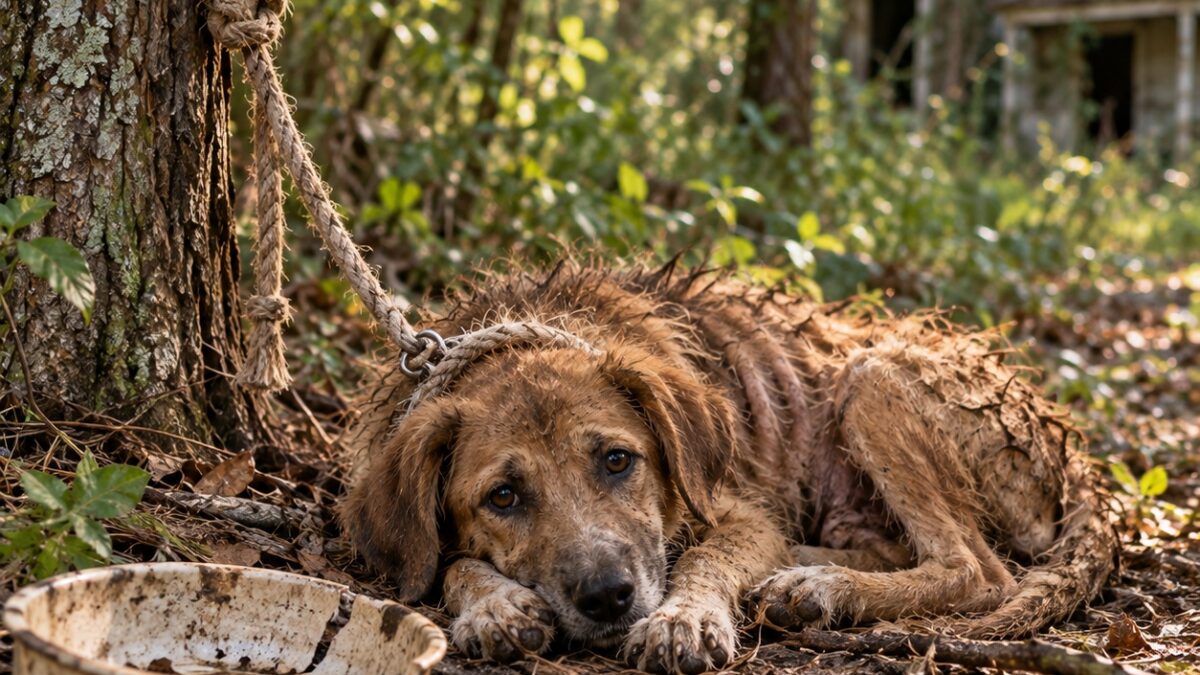
Carol found me on the porch around nine that night.
I was still wearing work pants.
Shoes off.
Coffee going cold between my hands.
“You haven’t eaten.”
“I’m not hungry.”
“That has never stopped you before.”
Normally that would have gotten a smile.
Not that night.
She sat across from me.
We had been married twenty-seven years.
Long enough that silence had vocabulary.
Carol knew the difference between angry quiet, tired quiet, worried quiet, and the particular quiet I carried when something had gotten under my skin.
“You did what you could.”
“I know.”
“That puppy would still be tied there if you hadn’t stopped.”
“I know.”
She waited.
I stared into the yard.
“I wonder how long.”
“How long what?”
“He was there.”
Carol’s face changed.
“Dennis.”
“The bowl was completely dry.”
“It’s been hot.”
“Exactly.”
“You don’t know.”
“I know.”
I hated when she was reasonable.
“What kind of person does that?”
“Same kind that hurts people.”
“I kept thinking maybe the family had to leave fast.”
“That doesn’t explain rope.”
“No.”
She moved her chair closer.
“Call the shelter tomorrow.”
“I have work.”
“You start at seven.”
“So?”
“So the shelter opens at six-thirty.”
I looked at her.
“You already checked?”
“I know you.”
That was marriage.
Sometimes love is not poetry.
Sometimes it is looking up county shelter hours before your stubborn husband admits he plans to go.
The next morning, I arrived at six-thirty-three.
A woman behind the front desk recognized me immediately.
“Mailman?”
“That obvious?”
“The animal control guys mentioned you.”
“How is he?”
She softened.
“Come back.”
The shelter smelled like disinfectant, sawdust, bleach, and dogs.
Lots of dogs.
Some barked.
Some jumped.
Some sat quietly behind gates.
We reached a small recovery area.
The puppy lay on a folded towel.
Clean now.
Light golden-brown fur.
White patch on his chest I hadn’t noticed beneath the dirt.
He looked smaller indoors.
One of his ears folded forward while the other stayed half upright.
His eyes opened when I approached.
“Hey.”
His tail moved.
Maybe half an inch.
I laughed.
That tiny movement did something enormous inside me.
“He remembers you,” the woman said.
“You think?”
“Could just be responding to your voice.”
“I’ll take it.”
She explained that he had received fluids.
Food in small amounts.
Treatment for parasites.
No major internal injury that the vet could find.
Severely malnourished.
Dehydrated.
Weak.
But improving.
“No chip?”
“Nothing.”
“Collar?”
“No.”
“Name?”
She looked at the kennel card.
“Stray male 1462.”
“That’s terrible.”
“It’s temporary.”
I crouched.
The puppy watched me.
I remembered the woods.
Rope.
Leaves.
The way I had pushed through branches because I heard something most people would have ignored.
“Scout.”
The woman smiled.
“Scout?”
“He was out there waiting to be found.”
She wrote it on the card.
SCOUT.
I visited every morning.
At first, I told myself it was temporary.
I wanted to know he survived.
That was all.
Day three, he lifted his head before I reached the kennel.
Day four, he ate a treat from my fingers.
Day five, he stood.
Wobbled.
Sat again.
I celebrated like he had won a race.
Day seven, he barked.
One rough little sound.
More cough than bark.
I almost called Carol from the shelter.
Instead, I waited until breakfast.
“He barked.”
Carol spread jam on toast.
“Congratulations.”
“You should have heard it.”
“I’m thrilled.”
“You don’t sound thrilled.”
“I am trying to eat toast.”
“He’s getting stronger.”
“I’m happy.”
The way she said it made me suspicious.
“Why are you looking at me like that?”
“Like what?”
“Like you know something.”
“I know many things.”
“Carol.”
She smiled.
“What?”
“Nothing.”
That evening, the shelter manager called.
“We need fosters.”
“No.”
I said it too quickly.
She laughed.
“You didn’t hear the question.”
“I know the question.”
“Scout is medically stable.”
“That’s good.”
“He’ll recover better in a home.”
“I work.”
“Many foster families work.”
“My wife’s allergic.”
There.
The perfect excuse.
Carol had mild animal allergies.
Cats worse than dogs.
Dogs mostly sneezing, itchy eyes.
Nothing life-threatening.
Still legitimate.
“I understand,” the shelter manager said.
“Good.”
I hung up.
Carol stood behind me holding laundry.
“Coward.”
“What?”
“You heard me.”
“You’re allergic.”
“I have medicine.”
“We’ve never had a dog.”
“True.”
“He might destroy things.”
“So did your brother when he stayed for Thanksgiving.”
“My brother was drunk.”
“Exactly.”
I stared.
“You want Scout here?”
Carol’s face softened.
“I want you to stop pretending you don’t.”
That ended the argument.
Two days later, Scout came home.
The shelter provided food.
Medication.
Instructions.
I bought a bed.
A bowl.
A stuffed yellow duck because the clerk at the pet store said puppies liked squeaky toys.
I spent forty-three dollars more than intended.
Carol noticed the receipt.
“I thought this was temporary.”
“Medical necessities.”
“The stuffed duck was medically necessary?”
“Emotional support.”
She shook her head.
Scout entered our house like a soldier entering unknown territory.
One paw.
Stop.
Sniff.
Second paw.
Stop.
He followed me room to room.
Kitchen.
Living room.
Hallway.
Laundry.
If I disappeared around a corner, he hurried after me.
Loud sounds terrified him.
Screen door slammed?
Scout vanished beneath the table.
Spoon hit the floor?
He backed into the wall.
Truck backfired outside?
He shook.
I sat near him but never dragged him out.
“Take your time.”
Eventually, he would creep back.
Find me.
Lean against my boot.
The first night, we put his bed in the laundry room.
At midnight, I woke because something touched my hand.
Scout stood beside our bed.
I looked at the doorway.
Then him.
“How did you get out?”
He had climbed over the baby gate.
Carol opened one eye.
“Bring his bed.”
“What?”
“You’re not putting him back.”
Five minutes later, Scout curled at the foot of our bed.
Carol sneezed twice.
“Sorry.”
“Don’t be. I took medicine.”
Scout sighed.
Long.
Deep.
Safe.
That was the first sound I heard from him that did not contain fear.
By week three, he looked like a different animal.
Ribs disappearing.
Coat shining.
Tail higher.
He discovered squirrels.
That became a personal campaign.
Squirrels had no reason to fear him.
Scout ran hard but had no strategy.
He would charge.
The squirrel would climb.
Scout would stand beneath the tree looking betrayed by physics.
Carol loved him.
Despite allergies.
She bought better allergy pills and vacuumed more.
Sunday afternoons, Scout lay beside her while she watched football.
He tilted his head at referee whistles.
Once, the whistle sounded and Scout barked at the television.
Carol laughed for nearly a minute.
“Your dog.”
“Your dog too.”
“No.”
Scout put his head on her lap.
She scratched behind his ear.
“Manipulator.”
The official foster period ended after a month.
Rachel, assistant director at the shelter, handed me paperwork.
“You adopting?”
I pretended to consider.
Scout sat beside my foot.
“Yes.”
“Shocking.”
“Don’t get smug.”
She slid the form toward me.
OWNER NAME.
Dennis Harper.
DOG NAME.
Scout.
My hand paused.
Owner.
Strange word.
I had found him dying beneath a tree.
Now a form said he belonged to me.
I didn’t think of it that way.
I felt more like I had been appointed.
Responsible.
Witness.
Family.
That evening, Mrs. Bixby watched us walking.
“That your dog?”
I looked down.
Scout looked up.
“Yeah.”
The word felt good.
“He’s mine.”
I thought the difficult part was over.
Scout was safe.
Happy.
Learning.
The rope belonged to the past.
Then we passed the white house on Cypress Street.
Scout stopped.
Not curious.
Not distracted.
Stopped.
His tail dropped.
Ears flattened.
Body lowered.
I looked down.
“Scout?”
He backed into my leg.
Across the yard, a rusted lawn mower sat near a hedge.
Paint peeled from the porch rail.
One window had a torn screen.
The property wasn’t unusual.
Plenty of houses looked worse.
But Scout trembled.
I crouched.
“Hey.”
His eyes remained on the porch.
The curtain moved.
A man came outside.
Early thirties.
Skinny.
Pale.
Faded tattoos on both arms.
Cigarette.
He leaned against a post.
Watched us.
I nodded.
“Morning.”
No response.
Scout whimpered.
The man looked at him.
Then smiled.
Not friendly.
“Cute mutt.”
“Thanks.”
“Stray?”
“He was.”
The man inhaled.
“Strays always find somebody soft.”
Something cold moved through me.
I forced a shrug.
“Guess I’m soft.”
He flicked ash.
“Watch him.”
“Why?”
“Sometimes they bite.”
Scout pressed harder against my leg.
“Only if they’ve got reason.”
The man’s eyes narrowed.
Then he laughed.
I walked away.
Scout kept looking backward.
That night, I told Carol.
She stopped stirring tea.
“You think Scout knows him?”
“I don’t know.”
“Dogs remember.”
“I know.”
“Could he have lived there?”
“No tag. No chip.”
“That doesn’t answer the question.”
“I don’t want to accuse somebody because my dog got scared.”
“Good.”
She paused.
“But don’t ignore him either.”
That was the balance.
I needed facts.
Not instinct alone.
The next walk, Scout reacted again.
Same house.
Same fear.
Third time, worse.
He refused to move forward.
I turned us around.
At the shelter, I asked Rachel:
“Have you had other animals from Cypress?”
She searched intake logs.
“Maybe.”
She scrolled.
“October. Adult female dog. Malnourished. Found wandering near Cypress and Mason.”
“How bad?”
“Underweight. Fearful. No chip.”
“Who brought her?”
“Anonymous finder through animal control.”
“Anything else?”
“No.”
“Could be coincidence.”
“Yes.”
Rachel watched me.
“But?”
“But I found Scout half dead less than a mile away.”
“That still isn’t evidence.”
“I know.”
She nodded.
“If his reaction continues, report it.”
I did not want to become the neighborhood lunatic.
Mail carriers see a lot.
We enter streets daily.
Observe routines without trying.
Which residents work nights.
Who gets medication deliveries.
Whose grass stops being cut.
Whose dog suddenly disappears.
That access comes with responsibility.
Also boundaries.
I was not a detective.
I delivered mail.
Still, Scout’s fear persisted.
Then the man said something else.
We were walking past.
This time, Scout stayed close but did not freeze completely.
The man sat on the porch smoking.
“Dog getting brave.”
I stopped.
“What?”
“Nothing.”
“You know him?”
“Why would I?”
“Just asking.”
He smirked.
“Dogs all look the same after a while.”
That sentence bothered me.
“Have you had dogs?”
“Maybe.”
“How many?”
He laughed.
“You the animal police now?”
“No.”
“Then deliver your mail.”
I continued walking.
My uniform suddenly felt conspicuous.
He knew my route.
My house was only several blocks away.
Maybe I should have dropped it.
Instead, I became more careful.
I asked Hugh, an older shelter volunteer, about the dog from October.
He remembered.
“Gray muzzle?”
“Yes.”
“Fearful.”
“Where exactly found?”
“Cypress area.”
“Any injuries?”
“Old scar.”
“Anything suggesting she’d been tied?”
“Not that I recall.”
Then Hugh added:
“You know, we had a couple others over the last year.”
“What?”
“Not all same street.”
“Malnourished?”
“Some.”
“Abandoned?”
“Looked like it.”
My stomach tightened.
“How many?”
“Three, maybe four.”
“Why didn’t anyone connect them?”
“Connect them to what?”
That was the problem.
There was no established what.
Animals get abandoned.
Sadly, often.
Without a witness or chip, patterns hide inside ordinary cruelty.
I called animal control.
“I’m not accusing anyone.”
The officer listened.
I gave the address.
Explained Scout’s reaction.
The previous intake.
The man’s comments.
“We can drive by.”
“That’s all?”
“Without visible violation or complaint, yes.”
Fair.
Frustrating.
But fair.
They drove by.
Knocked once.
Nobody answered.
They saw nothing from public view.
Case over.
Or so I hoped.
Then Sunday morning, Scout barked at our back fence.
Sharp.
Alarmed.
I was cleaning gutters.
Carol was inside.
Scout stood stiff.
Listening.
Whimper.
Not his.
Another dog.
Somewhere beyond the lot.
I opened the gate.
“Stay.”
Scout ignored me.
Of course.
He moved toward the creek.
I followed.
Thirty feet into the brush, beneath a low bush, an older dog lay curled.
Female.
Gray around muzzle.
Thin.
Scar across one shoulder.
No collar.
Not tied.
Alive.
She looked at Scout.
Scout approached slowly.
Instead of bouncing, he lowered himself.
Crawled the last few feet.
The older dog sniffed him.
Then relaxed.
My skin prickled.
Did they know each other?
Maybe.
Maybe not.
Dogs use universal body language.
I called the shelter.
They took her.
No chip.
No owner.
Malnourished.
The vet estimated she had been underfed for weeks.
Rachel called me that night.
“This is starting to look less coincidental.”
“Exactly.”
“Still doesn’t prove Cypress.”
“I know.”
“But I’m documenting.”
“Good.”
Scout paced that night.
Not fear.
Restlessness.
He sniffed the front door.
Walked to the window.
Returned.
Carol sat on the couch.
“You think someone dropped her near us because of Scout?”
That thought had already arrived.
“I hope not.”
“Why here?”
“Maybe random.”
“Dennis.”
“I know.”
“What if that man knows where you live?”
Every mail carrier’s address isn’t public.
But small towns don’t keep many secrets.
“I’ll call animal control tomorrow.”
“Tonight.”
“It’s nine.”
“So?”
She won.
The next morning, a supervisor called.
They would escalate.
Observe the property.
Coordinate with law enforcement if necessary.
Then a third dog appeared.
Not with me.
A woman dropped him at the shelter.
Middle-aged.
Nervous.
Wouldn’t give her name.
Said she found him near woods.
Left quickly.
Thin.
Scared.
Rachel called.
“That makes three in a month.”
“Can you pull camera footage?”
“Parking lot has cameras.”
“Plate?”
“Already checking.”
Now law enforcement took interest.
Detective Lynn Carrian knocked on my door at seven one Thursday.
Navy windbreaker.
Badge.
Blonde hair pulled back.
Expression that said she had not come for coffee.
“Mr. Harper?”
“Yes.”
“Detective Carrian.”
Scout sat behind me.
She looked down.
“This Scout?”
“Yes.”
“Mind if I come in?”
Carol made coffee.
Carrian asked everything.
The woods.
Rope.
Location.
Cypress house.
Scout’s behavior.
The man’s comments.
Older dog.
Third intake.
“Mail delivered to the property?”
“Yes.”
“Name?”
“A woman. Last name Bartlett.”
“You seen her?”
“Not lately.”
“How long?”
“Couple months maybe.”
“The man?”
“No mail in his name.”
Carrian wrote.
“You ever see vehicles?”
“White pickup sometimes.”
“What kind?”
“Old Ford maybe. Rusted bumper.”
Her pen stopped.
“You saw a white pickup at Thomas property?”
That surprised me.
“Yes.”
“Before family moved?”
“Yes.”
“How often?”
“Several times.”
“Same one at Cypress?”
I thought.
“I’m not sure.”
“Take your time.”
I pictured both.
Old white pickup.
Rust.
“Could be.”
Carrian closed the notebook.
“Don’t confront him again.”
“I didn’t confront.”
“You asked whether he knew your dog.”
“That was conversation.”
“That was stupid conversation.”
Carol hid a smile.
I glared.
Carrian continued.
“We’ll watch.”
“Anything else?”
“Call me directly.”
She handed me a card.
Then crouched slightly.
Scout backed away.
Carrian did not reach.
Good.
She let him choose.
After a few seconds, Scout sniffed her hand.
She smiled.
“Smart dog.”
“He found me.”
“Seems that way.”
Surveillance lasted several days.
Plain clothes.
Parked car.
Different positions.
Nothing obvious.
The man came and went.
No visible dogs.
No barking.
No cruelty in public.
Carrian told me investigations often look boring before they look important.
That weekend, storms hit.
Scout hid beneath couch.
Funny.
He could survive starvation but thunder terrified him.
I sat on floor until he came out.
“You’re safe.”
His entire body shook.
Carol brought a blanket.
“Poor baby.”
“He’s nearly forty pounds.”
“Still baby.”
Scout crawled closer to her.
Traitor.
The storm cleared Sunday.
Monday, Rachel called.
Third dog’s finder had been identified through plate footage.
Carrian interviewed her.
She claimed she had picked the dog up near Cypress.
Wouldn’t say more.
Scared.
“Of who?”
“Don’t know.”
Tuesday.
Nothing.
Wednesday.
Carrian called.
“We’re seeking a warrant.”
My stomach dropped.
“You found something?”
“Enough.”
“What?”
“Can’t discuss yet.”
“When?”
“If judge signs, tomorrow.”
Thursday afternoon, I stood at my kitchen window.
Two unmarked cars.
Animal control van waiting around corner.
Officers approached Cypress house.
Knocked.
Announced.
Entered.
I could not see inside.
An hour passed.
Then animal control moved in.
One crate came out.
Dog.
Thin.
Second crate.
Another dog.
Then a third.
My throat closed.
Carol stood beside me.
“Oh God.”
Two people came outside in handcuffs.
The man.
And a woman I had not seen in months.
Bartlett.
Scout watched from beside us.
He did not bark.
Carrian called that night.
“Four live dogs recovered.”
“Four?”
“Yes.”
“Condition?”
“Neglect. Dehydration. Underweight.”
“Any dead?”
Silence.
That answered enough.
“One.”
I sat down.
Carol covered her mouth.
“What happened?”
“Evidence suggests they were taking dogs.”
“For what?”
“Some were theirs.”
“Some picked up.”
“Some possibly stolen.”
“Why?”
“Resale attempts. Breeding. Sometimes just hoarding and neglect.”
“And Scout?”
“We found photographs.”
My hand tightened around phone.
“What?”
“Printed photos. Dogs.”
“Scout?”
“Looks like him.”
I closed my eyes.
“You sure?”
“Likely.”
“There’s also rope consistent with what animal control described.”
I couldn’t speak.
Carrian softened.
“You okay?”
“No.”
“Good answer.”
Later evidence made it clear.
Scout had lived there.
So had the older gray dog.
Her name had never been known.
Neither had most of the others.
The couple moved animals between houses and wooded areas when conditions got bad or when neighbors complained.
Scout had been tied behind the vacant Thomas property during a move.
Maybe they meant to return.
Maybe not.
It didn’t matter.
They left him.
The rope.
Dry bowl.
Heat.
They had made a choice.
The man had recognized Scout when we passed.
That was why he smiled.
Why he said strays find soft people.
Why Scout trembled.
That knowledge made me sick.
Also relieved.
Not because truth was pleasant.
Because Scout had not been afraid for no reason.
He remembered.
And I had listened.
Eventually.
Charges followed.
Animal cruelty.
Neglect.
Unlawful abandonment.
Other violations.
I did not follow every legal detail.
Carrian updated me enough.
The couple eventually pleaded.
The dogs entered custody, then rescue placement.
The older gray female recovered.
A family adopted her.
Scout saw her once before adoption.
They sniffed.
Tail wagged.
No dramatic reunion.
But I like to believe some part of them remembered.
After the arrest, Scout changed.
Subtle at first.
Walking past Cypress?
No freezing.
No tail tucked.
He looked once.
Then kept going.
First time, I almost cried.
“Good boy.”
He trotted.
Nothing heroic.
Just a dog discovering a road had become ordinary.
That mattered more than people understood.
The local paper ran a short piece.
MAIL CARRIER’S RESCUED DOG HELPS UNCOVER NEGLECT CASE.
I hated the headline.
Scout did not uncover evidence.
He reacted.
I reported.
Shelter tracked.
Animal control observed.
Carrian investigated.
Warrant produced evidence.
Stories simplify.
Real life is teamwork.
Still, people noticed.
Neighbors waved differently.
Some apologized.
“I knew something was off over there.”
“I heard dogs sometimes.”
“I should’ve called.”
That became the next part of Scout’s story.
Not punishment.
Attention.
One man stopped me during rain.
“My sister left her dog behind once.”
I waited.
“He wasn’t mine.”
“Okay.”
“I knew.”
I let rain hit awning between us.
“I didn’t do anything.”
“What happened?”
“Neighbor eventually took him.”
The man stared into coffee.
“I still feel bad.”
“Doing something now matters too.”
He looked up.
“Does it?”
“Yes.”
I believed it.
Guilt is useful only if it changes behavior.
Otherwise it becomes vanity.
Everyone making themselves the center of what somebody else suffered.
I began carrying more dog biscuits.
Watching more.
Not snooping.
Not assuming.
Watching.
A dog chained without shade in ninety-degree heat?
Call.
A stray appearing repeatedly near dumpsters?
Note location.
Overturned bowl behind a fence?
Knock.
Sometimes nothing wrong.
Dog was visiting.
Owner came home.
Water bowl hidden from street view.
Fine.
Being wrong occasionally was worth not ignoring real danger.
One morning, I found a brindle dog behind a trash bin.
Thin.
Nervous.
I offered biscuit.
She took it and ran.
Next day, she returned.
For five days, same.
Sixth day, gone.
I worried.
Two weeks later, a woman on Willow Street waved.
“You feeding a brindle stray?”
“Yes.”
“She’s mine now.”
The dog stood behind her.
New collar.
Healthy food bowl.
I laughed.
“Good.”
“I saw you feeding her.”
“She find you?”
“Eventually.”
Another second chance.
A letter appeared in my home mailbox.
No return address.
Male carrier extraordinaire.
Inside:
Saw what you did for the dogs.
Thank you.
Not all of us can speak up, but we notice.
I read it twice.
Put it beside newspaper clipping.
That note changed me almost as much as Scout.
Not all of us can speak up.
Animals obviously.
But people too.
Neighbors afraid of retaliation.
Kids.
Elderly.
Tenants worried landlords would evict them.
People who had waited too long and were ashamed to admit it.
The shelter began receiving more reports after Cypress.
Rachel said:
“People care more.”
“Or notice more.”
“Same result if it helps.”
The county scheduled a public hearing about animal welfare funding.
Carol told me to attend.
“I’m just a mailman.”
“You found Scout.”
“By accident.”
“You heard him.”
“I have ears.”
“Go.”
I sat in back.
Didn’t speak.
People did.
Shelter workers.
Neighbors.
Animal control.
Carrian.
They discussed response times.
Anonymous reporting.
Education.
Penalties.
Resources.
I realized cruelty laws mattered.
But systems matter too.
People need to know who to call.
Need confidence somebody will respond.
Need ways to report without creating danger.
Afterward, Carrian found me.
“Didn’t expect you.”
“Carol.”
“Ah.”
“She runs my civic life.”
Carrian smiled.
“You should talk next time.”
“No.”
“People listen.”
“To cops.”
“People distrust cops.”
“To shelter experts.”
“People think experts live in another world.”
“I deliver coupons.”
“You noticed.”
That phrase returned.
You noticed.
Rachel later asked me to volunteer with shelter outreach.
Part-time.
No grand title at first.
Just neighborhoods.
Pamphlets.
Events.
Talking to people.
“I work.”
“Weekend hours.”
“Carol?”
“She already told me you should do it.”
I stared.
“You called my wife?”
“She called me.”
Betrayal everywhere.
I agreed.
First meeting at shelter, folding chairs.
Scout at my feet.
Staff discussed patterns.
At-risk areas.
Barriers to reporting.
When my turn came, I said:
“People don’t always report because they’re afraid they’ll be judged for waiting.”
Rachel nodded.
“What would help?”
“Tell them today matters more than yesterday.”
Someone wrote it down.
“Anonymous line.”
“Simple website.”
“Clear examples.”
“Not everyone knows neglect.”
They do, someone said.
“No.”
I shook my head.
“They know beating is bad.”
“They don’t always know chaining all day without water is reportable.”
“Or severe matting.”
“Or no shelter.”
“Or an injured dog never seeing a vet.”
“Education.”
Scout barked once.
Everybody laughed.
“Exactly,” I said.
Our first neighborhood event attracted thirty people.
I expected six.
Older women with photographs.
Teenagers.
Families.
One man reported a dog near railroad tracks.
We checked.
Tan female.
Thin.
One ear bent.
Scout sat quietly while she approached.
Shelter named her June Bug.
Retired couple adopted her.
Then Daisy.
Terrier mix beneath billboard.
Microchip.
Missing two months.
Family reunion left everyone crying.
Daisy’s owner hugged me.
“You saved her.”
“No.”
I pointed at scanner technician.
“Chip saved her.”
That became another campaign.
Microchipping.
Tags.
Updated phone numbers.
Boring practical things save lives.
Scout’s story started attracting attention.
School invited us.
Third grade.
I wore uniform.
Scout wore blue leash.
Kids nearly detonated.
“IS THAT SCOUT?”
“He’s smaller than TV!”
“Can I touch him?”
“One at a time.”
A girl asked:
“How did you know to go in the woods?”
“I didn’t.”
That confused her.
“What?”
“I heard something.”
“But what if it was scary?”
I thought.
“Helping usually starts before you know how it ends.”
Teacher looked at me like she wanted to steal that sentence.
Kids made drawing.
Scout under big tree.
Me holding mailbag filled with hearts.
I hung it in office.
Shelter hosted Scout’s Day Out.
Twenty dogs adopted.
One older widower adopted quiet hound named Macy.
He told me:
“If Scout can trust again, maybe I can try having somebody in the house again.”
I shook his hand.
“You’ll help each other.”
Scout became minor celebrity.
This embarrassed me.
It delighted Carol.
Local radio.
Newspaper.
Mayor letter.
“Unwavering service to community and compassion.”
I read that line once.
“Who talks like this?”
Carol:
“Mayors.”
I put letter in drawer.
Then neighbors held surprise gathering.
Cupcakes.
Signs.
SCOUT FOR MAYOR.
EVERY DOG DESERVES A DENNIS.
That second sign made me uncomfortable.
No.
Every dog does not need a Dennis.
They need systems.
Responsible owners.
Accessible shelters.
Good animal control.
People willing to report.
One rescuer cannot be solution.
I said that whenever reporters tried turning me into hero.
“I heard a sound.”
I would tell them.
“That’s it.”
One morning after a dream about endless whimpering in woods, I called Rachel.
“I want to do more.”
“You already do.”
“More official.”
That became outreach coordinator role.
Part-time.
I balanced mail route and shelter.
My life filled.
Not busy.
Meaningful.
Important difference.
Busy had been holiday mail season.
Meaningful was installing dog run behind community center and seeing abandoned shepherd use grass safely for first time.
Meaningful was explaining to teenagers how to approach frightened animals without cornering.
Meaningful was telling neighbor:
Call before it becomes emergency.
Meaningful was listening.
Carol noticed.
“You smile more.”
“I smiled before.”
“You grunted less?”
“That’s not a sentence.”
“You know what I mean.”
She was right.
Scout filled our house.
His stuffed duck went everywhere.
At six months, duck had no face.
He still loved it.
He rode in mail truck occasionally, only on permitted days and shorter routes.
Passengers not usually allowed casually, but after clearance through supervisor for community event days, Scout became familiar.
He sat beside me.
Nose working.
At every stop, somebody waved.
One boy handed me card.
Drawing of Scout wearing mail hat.
I kept it.
The county considered stronger ordinance.
Rachel asked me to attend advisory meeting.
“I’m not a lawyer.”
“Good.”
“What does that mean?”
“Lawyers already there.”
I sat among suits.
When asked what neglect looked like, I answered:
“Sometimes cruelty is loud.”
“Sometimes it is a dog screaming.”
“Sometimes it is blood.”
“But sometimes it is silence behind a fence too long.”
Pens moved.
“Sometimes bowl is empty.”
“Sometimes dog stops barking because he learned nobody comes.”
The room went quiet.
That was Scout’s lesson.
People imagine suffering announces itself.
Not always.
Scout barely made sound.
If he had been barking wildly, maybe easier to notice.
He had nearly given up.
The ordinance passed.
More enforcement funding.
Clearer tethering standards.
Public education.
Anonymous reporting portal.
I did not pretend one law fixed everything.
It didn’t.
Calls still overwhelmed staff.
People still hurt animals.
Some cases slipped through.
But response improved.
Shelter intake rose initially.
Rachel said:
“Bad sign?”
“Maybe we’re finally seeing what was already there.”
Exactly.
Numbers can increase when detection improves.
Not always because problem worsened.
That became another thing I learned.
Seeing more can feel like failure.
Sometimes it is progress.
A young woman named Ellen approached after volunteer workshop.
Pink hair.
Oversized hoodie.
“There’s a dog behind my apartment.”
“How long?”
“Couple weeks.”
“You feeding him?”
“Yes.”
“Can you touch?”
“No.”
“Limp?”
“Yes.”
Scout and I met her next morning.
Brindle dog.
Older.
Left hind leg damaged.
Fearful.
We sat.
Twenty minutes.
He appeared.
Did not approach.
We returned.
Every morning.
Thursday, ate while we sat nearby.
Saturday, sniffed fingers.
Sunday, accepted slip lead.
At shelter, Rachel estimated old fracture.
They named him Bramble.
Ellen visited daily.
Two weeks later, she adopted.
I carried bed into apartment.
She hugged me.
“Thanks for not making me feel stupid.”
“For what?”
“I didn’t know what to do.”
“You did something.”
“I waited too long.”
“You fed him.”
“I could have called sooner.”
“Probably.”
She looked ashamed.
“So what?”
“What?”
“You called.”
Today matters.
She smiled.
Bramble watched from doorway.
Another life changed.
Then Ember.
Small shepherd mix near abandoned silo.
Ribs visible.
Soft music calmed her.
Art teacher adopted.
I saw Ember weekly on mail route.
She eventually watched through window without fear.
That became my favorite reward.
Not awards.
Not letters.
Seeing a once-terrified dog bored at a window.
Boredom is safety.
Six months after Scout came home, Carol planned party.
I protested.
“We do not celebrate six-month dog anniversaries.”
“We do now.”
“This is ridiculous.”
“Cake is ordered.”
“For humans?”
“Both.”
Guests came.
Rachel.
Ellen and Bramble.
Shelter volunteers.
Carrian.
Neighbors.
Dogs everywhere.
Chili.
Cider.
Cookies.
Scout moved guest to guest.
Head on knees.
Tail wagging.
Carrian joined me outside.
Cold air.
Stars.
“You think about it?”
“What?”
“If you hadn’t gone into woods.”
“Every time I pass Thomas property.”
“What do you think?”
“I think I’m glad I did.”
She nodded.
“We don’t choose many moments that matter.”
“That sounds philosophical for a detective.”
“Don’t tell anyone.”
Inside, Carol presented Scout with bone-shaped cake.
People clapped.
“To Scout,” she said.
“Who found us when we didn’t know we needed finding.”
Scout barked.
Then put his face in cake.
Perfect.
Later, I opened drawer.
Letters.
Clippings.
Drawings.
Mayor note.
Anonymous messages.
I spread them on table.
People gathered.
“I didn’t write this.”
Rachel looked confused.
“The story.”
I tapped pages.
“You all did.”
Every report.
Every dog.
Every person who stopped.
Rachel touched my shoulder.
“We’re still writing.”
Carol handed me folder.
Blank paper.
“You should write it.”
“I’m not a writer.”
“You talk constantly.”
“That is different.”
“Write like you talk.”
I sat.
Scout curled beside chair.
I wrote:
It started with a sound in the woods.
Then stopped.
Looked at him.
He sighed.
I wrote another sentence.
Then another.
That manuscript never became famous.
I didn’t care.
I wrote for myself.
For Scout.
For people at shelter.
It reminded me beginning had been small.
Whimper.
Choice.
Cross road.
Step into weeds.
The world loves dramatic turning points.
Most aren’t dramatic when they happen.
You don’t hear music.
No narrator says:
Everything changes now.
You simply decide whether to keep walking.
A year after arrest, Cypress house sold.
New family.
Young couple with baby.
They painted porch green.
Removed rusted mower.
Planted tomatoes.
First time Scout passed, he slowed.
Sniffed.
Then walked on.
No fear.
I almost cheered.
Months later, a Labrador appeared behind new fence.
Scout wagged.
They became friends.
The same place that once triggered panic became just another house with another dog.
That is healing.
Not forgetting.
Reclassifying.
Danger becomes memory.
Memory becomes street.
Street becomes ordinary.
Scout aged.
Puppy energy settled.
At two, strong.
At three, confident.
At four, he had routine.
Morning walk.
Breakfast.
Sometimes shelter.
Sometimes school.
Mail route event days.
Porch.
Duck toy.
Carol.
Me.
He still disliked thunder.
That never changed.
He hid.
I sat nearby.
“It’s weather.”
He knew.
Fear did not care.
I learned not to say “nothing is wrong.”
Something was wrong to him.
Better:
“I’m here.”
The difference matters.
Same with frightened animals.
Same with people.
Don’t argue with fear.
Add safety.
Years passed.
Scout became shelter ambassador officially.
Blue collar.
Silver tag.
FOUND.
I loved that word.
Found did not mean owned.
Found meant seen.
Found meant location changed.
Found meant someone noticed absence.
At regional shelter summit, people knew Scout.
His photo at table.
We handed pamphlets.
A young man approached.
Faded cap.
Nervous.
“I lived near Cypress.”
I waited.
“I knew dogs were there.”
Scout sat beside me.
“I heard them.”
The man’s eyes dropped.
“Why didn’t you call?”
He swallowed.
“I didn’t think it was my place.”
I could have judged him.
Wanted to, briefly.
Then remembered every time I had ignored something because it wasn’t my business.
I said:
“You’re speaking now.”
“Too late.”
“For Scout?”
“Yes.”
“For the next dog?”
Maybe not.
He looked up.
“What can I do?”
“Volunteer.”
He did.
For two years.
Eventually became foster.
People are more than their worst delay.
That became important to me.
Accountability without permanent condemnation.
If someone learns, changes, helps—let that count.
Not erase.
Count.
Scout taught through survival, not revenge.
I never took him near the man who neglected him after conviction.
Never needed confrontation.
Scout did not need apology.
He needed food.
Home.
Safety.
Love.
Humans crave speeches.
Animals crave conditions.
Create right conditions.
That is enough.
Mail route changed as I aged.
Knees complained.
Packages multiplied.
Online shopping turned carriers into pack animals.
I joked Scout had easier job.
He accepted treats.
I carried dog food bags people ordered.
At fifty-eight, I considered retirement.
Carol said:
“You’ll annoy me full-time.”
Fair.
I reduced overtime.
Shelter work increased.
Neighbors for Paws became formal nonprofit initiative.
I hated name.
“Sounds like grooming salon.”
Rachel insisted.
We built education programs.
Free vaccination clinic.
Low-cost spay/neuter referrals.
Food pantry.
Temporary foster for hospitalized owners.
Emergency boarding for domestic violence victims.
That last one mattered.
People stay in dangerous situations because shelters don’t accept pets.
I learned that.
We partnered.
Small change.
Big consequences.
One woman cried when told her dog could stay safely while she left.
“No one ever said I could bring him anywhere.”
We said:
“You don’t have to choose.”
Scout sat nearby.
I thought of rope.
Choices.
What systems force.
Compassion is not only rescuing after disaster.
It is making disaster less necessary.
Carol became as involved as me.
Despite allergies.
She handled donations.
Organized events.
People assumed I started everything.
Wrong.
Carol made calendars function.
Rachel built programs.
Carrian navigated enforcement.
Volunteers carried weight.
Scout attracted attention.
I told reporters:
“If you want hero, talk to my wife.”
Carol told them:
“Don’t.”
Perfect partnership.
Scout turned seven.
Gray appeared around muzzle.
Still chased squirrels.
Strategy not improved.
We celebrated unofficial birthday on day I found him.
Carol always made dog-safe cake.
I protested annually.
Lost annually.
At seven-year anniversary, I took Scout back to Thomas woods.
The property had been sold.
New owner let us walk edge.
Tree remained.
Same narrow trunk, thicker now.
I recognized it.
Scout sniffed.
No reaction.
I stood there remembering.
Tiny body.
Flies.
Dry bowl.
Rope.
Scout urinated on tree.
I laughed.
“Appropriate.”
Then he walked away.
That moment helped me.
I had carried location like grave.
Scout treated it like tree.
Maybe healing can be less ceremonial.
We returned home.
He slept.
At eight, arthritis.
At nine, fewer shelter events.
At ten, hearing softened.
Children at school adapted.
They read closer.
Touched gently.
Scout listened.
At eleven, he became more famous than I wanted.
Shelter displayed photo:
SCOUT: THE DOG WHO TAUGHT OUR COUNTY TO NOTICE.
I rolled eyes.
Then stood in front of it alone one evening and cried.
Because he had.
Not alone.
But he started something.
Our intake reporting data showed more welfare calls.
Fewer severe neglect cases discovered late.
More early interventions.
More microchips.
More adoptions.
Not perfect.
Improved.
Numbers became proof.
One whimper became policy.
That still amazes me.
At twelve, Scout could no longer jump into truck.
I bought ramp.
He hated it.
Same stubbornness.
We trained with cheese.
Cheese defeated pride.
He used ramp.
At thirteen, Carol found lump near shoulder.
Vet checked.
Benign fatty tumor.
I nearly passed out waiting.
Scout slept.
Dogs have no respect for suspense.
At fourteen, kidney values changed.
Manageable.
Diet.
Medicine.
Water.
More vet visits.
Time became visible.
I started noticing each walk differently.
People say live in moment.
Easy advice until moments are numbered.
Then it becomes desperate.
I had to remind myself not to turn Scout’s old age into pre-grief.
He was alive.
Today mattered.
Same lesson.
One autumn morning, we passed Cypress Street.
New family had moved again.
Different dog behind fence.
Scout stopped.
Not fear.
Interest.
The dog barked.
Scout barked once.
Then wagged.
We continued.
I whispered:
“Good boy.”
Always.
Carol heard less well by then.
I teased.
She blamed me.
“Twenty-seven years listening to you.”
We had reached thirty-eight years marriage.
Scout belonged to sixteen of them.
It became impossible to imagine early marriage without him even though fact said otherwise.
Animals alter memory.
They fill photos.
Christmas mornings.
Road trips.
Furniture.
Stories.
You remember life in eras:
Before Scout.
Scout.
After Scout.
The after came on a warm September morning.
Scout refused breakfast.
Not dramatic.
He sniffed.
Walked away.
That dog had never refused chicken.
I knew.
Vet confirmed kidney failure progressing.
Also heart strain.
Options could buy time.
Not cure.
“How much?”
Vet hesitated.
“Weeks.”
“Months?”
“Possible.”
“Comfort?”
“That’s the question.”
I brought him home.
Carol sat floor with him despite bad knees.
“We’re not doing anything he hates just for us.”
“No.”
We agreed.
Fluids he tolerated.
Medicine.
Special food.
Short walks.
He rallied.
Two good weeks.
Then bad day.
Then good day.
I learned quality-of-life charts.
Hunger.
Hydration.
Mobility.
Joy.
More good days than bad?
Such brutal math.
Scout remained himself.
Tail wag when I entered.
Head on Carol’s knee.
Duck toy nearby.
One evening thunderstorm rolled.
He tried hiding beneath table but legs failed.
I lay beside him.
“You don’t have to go anywhere.”
Carol brought blanket.
We stayed through storm.
Next morning, Scout didn’t stand.
He looked at me.
Clear.
Tired.
I called vet.
Home euthanasia.
Hardest call.
Kindest.
Carol cried quietly.
Scout rested beneath oak tree in backyard.
Scout’s Corner.
Sun warmed grass.
We carried his bed outside.
Duck toy.
Blue collar.
FOUND tag.
I almost laughed at irony.
He had been found for sixteen years.
Maybe more.
Vet arrived.
Scout lifted head weakly.
Tail moved.
Carol whispered:
“Good boy.”
I rubbed chest.
“You changed everything.”
Scout breathed.
“I hope you know.”
He didn’t.
Probably.
Didn’t matter.
Love does not require understanding.
Vet gave sedative.
Scout relaxed.
For first time in days, body released tension.
Head heavy in my lap.
I remembered first day.
Same position.
Except then he weighed almost nothing.
Now old.
Loved.
Full life between.
I said:
“No more looking.”
His eyes stayed on me.
“No more waiting.”
Carol touched his paw.
“You’re home.”
Then he was gone.
Silence in backyard.
Birds.
Wind.
Traffic far away.
I had heard thousands of sounds carrying mail.
Barks.
Whimpers.
Engines.
Children.
Doors.
Nothing prepared me for absence of one dog’s breathing.
We buried Scout under oak.
Not secretly.
Shelter staff asked to come.
Carrian.
Rachel.
Ellen and Bramble’s family.
Old widower with Macy.
Teachers.
Kids grown older.
Neighbors.
Too many.
I wanted private.
Carol said:
“He belonged to them too.”
She was right.
We placed blue collar in box.
Not grave.
I wanted it.
Duck went with him.
That felt right.
At small memorial, Rachel spoke.
“Scout survived because Dennis noticed.”
I shook head.
She continued.
“Many other dogs survived because Scout taught Dennis—and then all of us—to keep noticing.”
That was better.
No hero worship.
Chain.
Attention passing forward.
Carrian handed me folded paper.
County resolution honoring Scout’s role in animal welfare improvements.
I nearly refused.
Then accepted.
For history.
Not ego.
Children left drawings around oak.
One showed Scout in mail truck.
One wearing cape.
One sitting beneath tree with dozens of dogs.
A little girl wrote:
THANK YOU FOR MAKING PEOPLE LOOK.
That destroyed me.
After Scout, route hurt.
Every porch expected him.
Every child asked.
First week, I took biscuits from pocket by habit.
No dog beside me to judge.
I almost quit.
Carol stopped me.
“You love your route.”
“I loved it with him.”
“You had it before him.”
“Not same.”
“No.”
She held my hand.
“But different doesn’t mean over.”
That phrase became after-Scout lesson.
I kept working another year.
Then retired.
Not because grief.
Age.
Knees.
Postal service thanked me.
People on route held farewell.
They made mailbag filled with letters.
Stories.
Dogs I had helped.
Scout memories.
I read them over months.
One from Ellen:
Bramble died last winter, old and safe. I want you to know the reason I had the courage to keep going back behind that apartment was watching you and Scout. You taught me that frightened animals need patience, not pressure.
One from old widower:
Macy gave me seven years I didn’t think I needed. I needed every one.
One anonymous:
I was the person who left the first note. I lived near Cypress. I was scared of the man there. I had heard dogs. I didn’t call. I regret it. But after the arrest, I started volunteering in another county. I hope that counts.
It did.
Carol and I kept Scout’s Corner.
Bench under oak.
No shrine.
Just plaque:
SCOUT
FOUND IN THE WOODS
FOUND A HOME
HELPED US FIND OUR BETTER SELVES
Carol called last line sentimental.
“You approved it.”
“I was emotional.”
Years later, kids still knew Scout.
Some details exaggerated.
One boy told another Scout had “escaped a dog-fighting gang and led police back.”
No.
Another said I rescued twenty dogs personally.
No.
Story became legend.
I corrected when possible.
Truth is good enough.
I heard whimper.
I stopped.
Scout survived.
He remembered.
His fear led us to ask questions.
Questions exposed neglect.
Community changed.
That is plenty.
You do not need explosions.
No villains chasing us down roads.
No miracle intelligence.
No supernatural connection.
Just attention.
Persistence.
Institutions willing to listen.
People willing to report.
Love.
Those things are dramatic enough in real life.
Carol asked once:
“What do you think Scout remembered about the tree?”
“I don’t know.”
“Do dogs think about past like us?”
“Probably not.”
“Then maybe he never remembered being abandoned.”
“He remembered that man.”
“Yes.”
“But maybe not story.”
She nodded.
“Maybe that’s mercy.”
I think she was right.
Humans narrate pain.
We replay.
Assign meaning.
Dogs may carry body memory more than story.
Fear of sound.
Door.
Person.
But with safety, new associations form.
Scout learned screen doors didn’t mean danger.
Thunder meant blanket.
Mail truck meant adventure.
People could approach without harm.
Home could stay.
That is recovery.
Not deletion.
Relearning.
The shelter used Scout in training materials years after.
A photo from recovery.
Thin.
Then adoption.
Healthy.
Then older.
They taught volunteers:
Do not assume first behavior is permanent personality.
A terrified dog is not “shy forever.”
A shut-down dog is not “calm.”
A defensive dog is not necessarily aggressive.
Context.
Safety.
Time.
Scout became case study in compassion without romanticizing.
I liked that.
At eighty, my walking slowed.
Scout’s oak grew wide.
Carol and I sat there evenings.
She developed more severe allergies with age, ironically after dog gone.
We joked Scout had protected her immune system.
One spring, a young mail carrier stopped with package.
New guy.
Maybe twenty-four.
He noticed plaque.
“You had a dog named Scout?”
“Yeah.”
“My supervisor told me.”
“Oh no.”
“Said you found him on route.”
“That part’s true.”
He looked at tree.
“I heard something behind a fence last week.”
“What?”
“Dog whining.”
I stared.
“What did you do?”
“Knocked.”
“And?”
“Owner came out.”
“Everything okay?”
“Dog had hurt paw. Owner didn’t realize because she worked nights.”
“Vet?”
“He took her.”
I nodded.
Young carrier shifted.
“I almost kept walking.”
I smiled.
“Most important word there?”
He thought.
“Almost?”
“Exactly.”
After he left, I sat beneath oak.
“Still working, huh?”
Wind moved leaves.
No answer.
Good.
Scout didn’t need to haunt anything.
Influence was enough.
I eventually finished the story I started at six-month party.
Not polished.
Yellow pages became typed pages.
Carol edited.
Badly.
She cut my jokes.
I restored them.
We gave copies to shelter.
School.
Library.
Title:
The Sound I Almost Missed.
Not published commercially.
Didn’t matter.
The first line stayed:
It started with a sound in the woods.
Last line took years.
I kept changing.
Finally wrote:
Kindness did not save every dog, but every time we chose to notice, one more creature had a chance not to disappear unseen.
That felt true.
No promise impossible.
No grand claim.
A chance.
Scout got one.
That is all rescue can offer initially.
Chance.
Food.
Water.
Vet.
Safety.
Then life does rest.
Scout turned chance into sixteen years.
Sixteen.
I still cannot believe.
The puppy animal control thought might not survive the day grew old enough to have arthritis.
Old enough to gray.
Old enough to need kidney diet.
That is success.
People focus on suffering beginning.
I focus on ordinary middle.
Scout snoring during football.
Stealing Carol’s toast.
Destroying duck toys.
Chasing squirrels.
Mud on kitchen floor.
Allergies.
Vet bills.
Waiting by door.
Ordinary is goal.
Rescue isn’t dramatic forever.
It becomes laundry.
Hair.
Walks.
Food.
Years.
That is happy ending.
Not “saved.”
Lived.
Sometimes people ask whether I hated the man who hurt Scout.
At first yes.
Violently.
I imagined confronting.
Wanted apology.
Wanted him understand.
Over time, hate became boring.
Scout didn’t need it.
Justice happened.
Dogs removed.
Charges.
Community response.
My energy better spent elsewhere.
Anger can start action.
It cannot sustain healthy life forever.
Scout taught that too.
He passed Cypress.
Eventually wagged at dog there.
He did not spend remaining years staring at old porch.
Why should I?
Move forward does not mean excuse.
It means refuse to let offender continue owning your attention.
That lesson helped me after Scout died.
Grief owned attention for a while.
Deserved.
Then gradually I looked outward again.
Carol and I fostered one dog.
Exactly one.
We swore temporary.
Her name was Ruby.
Old beagle.
Twelve.
Needed hospice foster.
“Two months maybe,” Rachel said.
Ruby lived fourteen months.
Slept in Scout’s old corner.
Carol sneezed.
I laughed.
When Ruby died, grief returned differently.
Softer.
We knew.
Worth it.
After that, no more pets.
But shelter remained.
I volunteered until driving became hard.
Then phone calls.
Donor thank-yous.
Training.
Stories.
Purpose adapts.
You don’t have to stop contributing because body slows.
At ninety, I probably won’t be crawling into woods.
I hope not.
But I can still tell someone:
Call.
Look.
Listen.
Today matters.
One of Scout’s biggest impacts happened without me.
A teenage girl who attended school talk later became animal control officer.
She wrote:
You told us sometimes helping means stepping toward something even when you’re unsure. I remembered that every time I was scared on a call.
I didn’t remember saying it.
She did.
Words do that.
You never know which ones stay.
That made me more careful.
Casual kindness matters.
Casual cruelty too.
The man on Cypress said:
Strays always find somebody soft.
He meant insult.
I wore soft as compliment afterward.
Soft does not mean weak.
Soft notices pain.
Soft stays.
Soft makes calls.
Soft testifies.
Soft builds systems.
Hardness is overrated.
Scout survived because softness crossed road.
Carol’s softness opened home.
Rachel’s softness organized shelter.
Carrian’s softness hid beneath detective face but drove investigation.
Community’s softness became ordinance.
Soft changed county.
I would choose soft again.
One summer, county replaced Scout plaque because weather wore letters.
They asked if I wanted same wording.
“Yes.”
No embellishment.
No HERO.
No MIRACLE.
Same.
FOUND IN THE WOODS.
FOUND A HOME.
HELPED US FIND OUR BETTER SELVES.
That is the story.
At least mine.
Scout’s story, if he could tell it, might be simpler.
Hungry.
Man.
Water.
Shelter.
Man returns.
Home.
Duck.
Food.
Squirrels.
Scary house.
Safe again.
Carol.
Bed.
Years.
Maybe animals are wiser because they keep plot clean.
We add meaning.
They live.
The very last time I walked Maple Lane on postal route, I stopped near old Thomas property.
New house had been built farther back.
Woods thinned.
Tree gone.
Couldn’t find exact spot.
For a moment, that bothered me.
I wanted landmark.
Then realized disappearance was good.
No shrine to pain.
Scout’s true monument was not tree.
It was every dog bowl filled because neighbor spoke.
Every call.
Every adoption.
Every foster.
Every person who stopped.
Places change.
Influence stays.
I delivered final bundle.
Turned mail truck home.
Passed Cypress.
Green porch now.
Children’s bikes.
Healthy dog in yard.
It barked.
I waved.
Perfect.
The world hadn’t become perfect.
Never would.
Dogs still abandoned.
People still cruel.
Shelters still overcrowded.
But my world became more attentive.
That matters.
Sometimes you cannot solve whole problem.
You can widen circle of care.
One street.
One county.
One dog.
People dismiss small scale because suffering large.
Wrong.
Scale to creature in front of you is total.
To Scout, water wasn’t policy issue.
It was survival.
To Daisy, microchip wasn’t public program.
It was family.
To Bramble, one woman returning every morning wasn’t outreach model.
It was trust.
Big change is collections of specific care.
I learned that delivering mail.
Letters go one address at time.
Maybe kindness does too.
Carol died before me.
I didn’t expect to write that part.
Heart attack.
Quick.
She was seventy-nine.
One evening tea.
Next morning gone.
Grief was different than Scout.
Of course.
Deeper.
But Scout had trained me for loss without knowing.
Love remains in routines.
Carol’s mug.
Her gardening gloves.
Shelter calendar she kept long after retiring.
I sat beneath oak.
Talked to both.
Not because believed ghosts.
Because speaking helps arrange memory.
“You two conspired against me.”
Wind.
“You made me adopt that dog.”
Nothing.
“Best thing you ever forced me into.”
That was true.
After Carol, community held me.
People brought food.
Rachel, older now.
Carrian retired.
Ellen.
Neighbors.
Young carrier.
Shelter volunteers.
The circle Scout helped build came back.
That is community.
Not events.
Reciprocity over time.
I had helped some.
They helped me.
No one survives alone.
Even people who think they do.
Scout knew first night.
He climbed baby gate because alone wasn’t what he needed.
Neither was I.
I just had better vocabulary for denial.
If there is one moment I would change, it is not finding him sooner.
I couldn’t.
Not knowing.
I would change my hesitation after his reaction to Cypress.
I waited several walks.
Wanted evidence.
Reasonable.
But maybe call sooner.
Yet investigation worked.
No point rewriting endlessly.
Learning is enough.
The danger of hindsight is imagining perfect version of ourselves.
Doesn’t exist.
We act with information we have.
Then improve.
Scout didn’t demand perfection.
He needed action.
That is comforting.
My favorite photograph of him was not newspaper.
Not blue collar.
Not shelter before-and-after.
Carol took it around year five.
Scout asleep in sun beneath oak.
Duck toy by paw.
Belly exposed.
Mouth slightly open.
Nothing happening.
That is image on my dresser.
Because terror story became safety.
Every rescue should get that.
Not fame.
Sleep.
Deep sleep.
Unprotected sleep.
Body believing nobody is coming to hurt you.
Scout earned sleep.
I hope every creature does.
The county shelter now gives new volunteers copy of Scout photo with phrase:
THE FIRST SIGN OF TRUST MAY LOOK LIKE REST.
I wish I had said that.
Rachel did.
Still good.
There’s so much pressure to make rescued animals grateful.
Videos.
Tail wag.
Kisses.
Some shut down.
Some hide.
Some bite.
Some sleep.
Recovery not performance.
Give time.
Scout tail twitch in kennel meant world to me.
But even if no wag, he deserved care.
That distinction matters.
We shouldn’t require sweetness as admission ticket to compassion.
Hard dogs deserve safety too.
Frightened dogs.
Ugly dogs.
Old dogs.
Animals with behavior problems caused by trauma.
Care first.
Assessment later.
Scout happened to be gentle.
That made adoption easy.
Others harder.
Systems must serve them too.
Outreach changed around that philosophy.
We funded behavior support.
Foster education.
Not perfect.
Better.
When I think back to officer who said:
People move out, don’t take pets.
I understand anger beneath his voice.
He had seen pattern.
I saw one case.
He saw dozens.
Compassion workers burn out because they cannot stop every cruelty.
Community involvement distributes burden.
That is why reporting matters.
Why volunteers matter.
Why funding matters.
No one person should carry all abandoned animals.
Scout’s story originally tempted people to say:
Be Dennis.
I eventually said:
No.
Be network.
Be Dennis if you hear whimper.
Be Rachel if you run shelter.
Be Carol if home can foster.
Be Carrian if evidence needs investigation.
Be Ellen if you can feed scared stray until help arrives.
Be voter if ordinance needs support.
Be donor if you have money.
Be kid who tells adult.
Everyone has role.
Scout needed all.
That became message at my last workshop.
I was seventy.
Hands shaking slightly.
Scout gone.
Room full of new volunteers.
I told them:
“Do not leave here thinking you have to save everything.”
They watched.
“You will burn out.”
“Notice what is in front of you.”
“Do your part.”
“Pass it to next person.”
“Keep chain of care unbroken.”
That phrase stayed.
Chain of care.
Better chain than rope around tree.
Maybe sentimental.
Carol would have approved.
At end, volunteer asked:
“What if I’m wrong?”
“About abuse?”
“Yes.”
“What if I report and nothing wrong?”
“Then investigation ends.”
“What if I don’t report and something is wrong?”
Silence.
“That’s your answer.”
Not every suspicion merits police.
But animal control exists for welfare questions.
Use appropriate channels.
Do not trespass.
Do not confront dangerous people.
Do not steal animals unless immediate lawful emergency and authorities direct.
I learned boundaries.
Early days, I wanted personally investigate.
Bad idea.
Carrian reminded me.
Compassion without judgment can create danger.
Listen.
Document.
Report.
Professionals.
Another lesson.
Scout’s rescue itself—waiting for animal control rather than untying blindly—probably safer.
Injured animal can bite.
Rope could conceal trauma.
Emergency response mattered.
People online later praised me for “saving Scout with bare hands.”
Not true.
I moistened his mouth.
Waited.
Animal control untied.
Vet saved medically.
Accuracy matters.
Hero stories erase teams.
I refuse.
At eighty-one, I gave Scout’s original blue collar to county shelter archive.
Kept tag replica.
Why?
Because story belonged partly to public now.
The collar displayed beside photo.
A school kid stared.
“This is real?”
“Yes.”
“He wore it?”
“For years.”
Kid looked at FOUND tag.
“Was he lost?”
I smiled.
“Sort of.”
“Then found?”
“Yes.”
“Then why did he keep tag?”
Good question.
“Reminder.”
“To him?”
“No.”
“To us.”
Kid nodded as if obvious.
Children sometimes understand symbolism faster.
FOUND.
That word has layers.
Scout found physically.
I found purpose.
Carol found softer version of herself that tolerated dog hair.
Community found voice.
Neglected dogs found visibility.
Carrian found case.
We all found something.
No one knew they were looking.
That is why title of county article—Hope on Four Legs—annoyed me less over time.
Hope is not optimism.
Hope is attention plus action.
You see possibility.
You act before guarantee.
I walked into woods not knowing Scout could survive.
That was hope.
Carol opened home not knowing allergies manageable.
Hope.
Ellen returned to Bramble repeatedly.
Hope.
Shelter built programs.
Hope.
Not feelings.
Behaviors.
Scout taught behavior.
So maybe four legs indeed.
The last letter I kept came from child now adult.
It said:
Mr. Harper,
When I was nine, you and Scout came to my school. I don’t remember most of what you said. I remember Scout let me put my hand on his head. At home things weren’t good. My stepfather hurt our dog sometimes. After your talk I told my teacher. Someone came. The dog was removed. Eventually I told them other things too. I’m okay now. The dog went to my aunt. Thank you for telling us paying attention matters.
I sat with that letter for an hour.
I never knew.
Most impact invisible.
You plant.
Some seeds grow where you never see.
That is reason to speak carefully.
Act kindly.
You never know who watches.
Scout never knew that child.
Yet his presence gave courage.
Maybe that is legacy.
Not being remembered.
Being continued.
Scout continues every time someone stops.
That is enough.
Now I am old enough that my route exists mostly in dreams.
Sometimes I am back in blue polo.
Bag heavy.
Summer heat.
Cicadas.
I hear whimper.
In dream, I know what waits.
Still, I pause.
Then cross road.
Every time.
Same choice.
Wake with heart aching.
Not sadness exactly.
Gratitude.
For sound.
For timing.
For Carol.
For Scout.
For chance to matter in specific way.
Most lives do not become history.
Good.
History exhausting.
But lives become each other.
That is better.
If you ask me what Scout changed, I could give county statistics.
Laws.
Programs.
Adoptions.
Reports.
But deepest change is smaller.
Before Scout, when I heard something unusual, I categorized.
Probably animal.
Probably nothing.
Not my property.
Not my business.
After Scout, I listened longer.
Not intrusively.
Attentively.
Difference between minding business and abandoning responsibility.
Neighbors should not control each other.
But communities require awareness.
If someone cries help, respond.
If animal suffers visibly, report.
If elderly neighbor’s mail piles up, check appropriately.
If child seems afraid, tell someone trained.
Not suspicion everywhere.
Care everywhere.
That is a better neighborhood.
Scout helped build one.
The Thomas house woods where I found him are gone now.
Development.
Three new homes.
Sidewalk.
Kids ride bikes.
No one there knows a dog nearly died beneath tree.
I am glad.
Pain does not need permanent real estate.
But sometimes when driving past, I imagine dry bowl.
Then current scene.
Water sprinklers.
Families.
Dogs behind fences.
Life.
Contrast feels like answer.
One summer, little golden dog barked from one of those yards.
For half second, Scout.
Then not.
I waved anyway.
The dog wagged.
I smiled.
I keep one object besides tag.
Not rope.
Never wanted it.
Stuffed duck’s replacement.
Scout destroyed originals.
Carol kept buying same model.
Last one survived because Scout older and chewed less.
Yellow duck sits shelf.
Faded.
One eye missing.
Ridiculous relic.
When grief hits, I hold it.
Not because sacred.
Because ordinary.
Ordinary saved me.
Remembering Scout in pain hurts.
Remembering him destroying squeaker heals.
Endings should honor whole life, not worst day.
That is true for people too.
Do not let trauma become only identity.
Emily in other story? Different. Sorry—this story has Scout only and animal victims. That’s fine.
Scout was not “abused dog” forever.
He was Scout.
Squirrel failure.
Thunder coward.
Bacon thief.
Shelter ambassador.
Carol manipulator.
My best friend.
The rope was one chapter.
Not title of whole life.
That is why when people introduced:
“This is Scout, the dog tied to tree…”
I eventually corrected:
“This is Scout.”
Enough.
His past explained.
Did not define.
Same with every rescue.
Give names beyond suffering.
That philosophy shaped shelter.
Profiles changed.
Instead of:
Abuse survivor.
We wrote:
Loves tennis balls.
Quiet mornings.
Older kids.
Needs slow introductions.
Present and future.
Past only when relevant.
Adoptions improved.
People adopt personalities, not tragedy.
Another Scout lesson.
I could keep listing.
Maybe that is what old people do.
We turn one dog into philosophy.
Scout would prefer snack.
So I’ll end where he would.
At home.
Six-month party.
Before years.
Before gray muzzle.
Before goodbye.
Room full.
Chili.
Dogs.
Laughter.
Scout with cake on nose.
Carol glowing.
Rachel.
Ellen.
Carrian.
Letters on table.
Blank paper in front of me.
I had not yet written sentence.
Outside, wind moved last leaves.
Inside, fire cracked.
Scout came over.
Put head on my knee.
I looked down.
“You know this is your fault?”
Tail wag.
“Everything.”
Another wag.
Carol called:
“Stop blaming the dog.”
“I’m thanking him.”
“Sounds like blaming.”
Scout moved closer.
Warm.
Alive.
Safe.
I put pen to paper.
It started with a sound in the woods.
That was true.
But after all these years, I know it started even earlier.
It started with possibility that quiet suffering could still be heard.
It started with somebody deciding to listen.
And it continued every time another person chose not to keep walking.








