𝗙𝗨𝗟𝗟 𝗦𝗧𝗢𝗥𝗬 Victoria Bradford Called Me a Trespasser at Her Wedding, but She Had No Idea Why I Knew Every Corner of Her Mansion
𝗣𝗔𝗥𝗧 𝟮
The catering manager stood beside a table covered with white linen, staring at me.
“Mrs. Bradford,” he called nervously. “I think—”
Victoria turned.
“What?”
He looked at me again.
“Nothing, ma’am.”
His face had gone pale.
I recognized the expression.
It was the same look people gave me when they suddenly remembered something they had been trying very hard to forget.
I continued toward the reflecting pool.
An enormous oak tree stood beside it.
Its lowest branches had been trimmed, and the flowerbeds beneath it were different, but the trunk still carried two sets of initials.
A.W.
And beneath them, barely visible after decades of weather, R.W.
Mine and my father’s.
I placed my hand against the bark.
For a moment, I was a little girl again, holding a pocketknife while my father pretended not to notice what I had done.
“You know,” he had said, “your grandfather’s going to be furious when he sees that.”
I had burst into tears.
Then he laughed, pulled me into his arms, and carved his own initials beside mine.
“Now we’re both in trouble.”
That memory nearly broke me.
I had spent twenty years wondering whether I would ever see that tree again.
“Excuse me, ma’am?”
I turned.
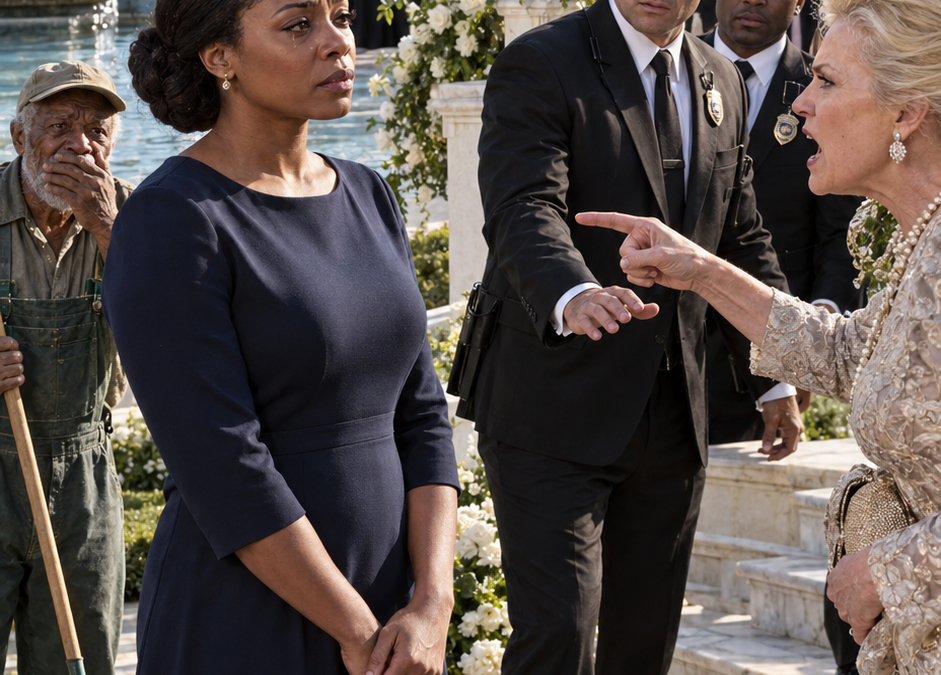
An elderly man stood several feet away, his gardening cap clutched between his weathered hands.
His shoulders were slightly bent, and his face had deepened with age, but I recognized him immediately.
“Thomas?”
His eyes filled with tears.
“Miss Angela?”
I smiled.
“Hello, Thomas.”
He took a step forward, then stopped as though he were afraid I might disappear.
“Good Lord. Is it really you?”
“It’s me.”
He covered his mouth.
“I never thought I’d see you here again.”
Thomas had worked on the estate for more than forty years.
His father had worked for my grandfather before him.
When I was little, Thomas taught me how to plant roses, how to recognize the sound of approaching rain, and why my grandfather insisted that every gardener deserved the same respect as every guest who came through our gates.
I looked toward the flowerbeds.
“You’re still taking care of the gardens beautifully.”
Thomas laughed through his tears.
“Your daddy would be so proud of you.”
The words struck deeper than he could have known.
My father had been dead for almost two decades.
And the last years of his life had been filled with a grief Thomas understood better than almost anyone.
Before I could answer, Victoria came marching across the lawn.
“Thomas! What are you doing?”
He immediately lowered his eyes.
“Mrs. Bradford, this is—”
“I know who she is. She’s the woman I just ordered security to remove.”
“Ma’am, you don’t understand.”
“Don’t tell me what I understand.”
Victoria grabbed his arm.
“Get back to work. You’re embarrassing our guests.”
Thomas flinched.
I looked at her hand gripping his sleeve.
“Please don’t treat him that way.”
She turned on me.
“Excuse me?”
“He’s an elderly man. You don’t need to grab him.”
Her face tightened.
“You have absolutely no idea how things work here, do you?”
I glanced at Thomas.
His eyes pleaded with me not to make the situation worse.
For his sake, I stepped back.
Victoria pointed toward the driveway.
“Get out. Now.”
As the guards approached again, I noticed movement behind the service entrance.
Two housekeepers were watching us through a window.
An older butler stood beside them.
When our eyes met, he lifted a hand to his mouth.
He recognized me.
So did the catering manager.
And judging by the way the servants were suddenly whispering to one another, Thomas wasn’t the only person who remembered the Washington family.
Victoria noticed their strange behavior.
“What is wrong with everyone today?”
Nobody answered.
She stared at me with renewed suspicion.
“What have you been telling my staff?”
“Nothing.”
“Then why are they acting like they’ve seen a ghost?”
I looked toward the oak tree.
“Perhaps they remember something you don’t.”
Her expression darkened.
“Security!”
This time, the guards escorted me directly toward the main entrance.
As we crossed the lawn, guests began gathering to watch.
A woman wearing a magnificent emerald necklace stepped forward.
“Victoria, darling, what’s happening?”
Victoria seized the opportunity.
“Constance, you wouldn’t believe the nerve of some people. This woman wandered onto our property without an invitation and started questioning my staff.”
Another guest, Harrison Blackwell, looked me up and down.
“Probably looking for handouts.”
His wife nodded.
“You can’t be too careful. People see a beautiful house and immediately assume they’re entitled to something.”
I kept walking.
I had spent years listening to attorneys make accusations in courtrooms.
One thing I had learned was that people often revealed more about themselves when they believed nobody could challenge them.
But what happened next still surprised me.
A young woman in an expensive pink dress stepped directly into my path.
“Seriously, why would you come here dressed like that?”
I looked at her.
“I’m sorry?”
“This is a society wedding. Did you honestly think you could just walk in and blend in?”
Her friends laughed.
One of them raised her phone.
“Maybe she was hoping somebody would mistake her for a guest.”
Victoria smiled approvingly.
“Exactly. And now she’s leaving.”
I glanced toward the wedding photographer.
He was standing near the flower arrangements, his camera pointed in our direction.
I saw him capture several photographs of the confrontation.
Victoria noticed, too.
“Delete those pictures!”
The photographer lowered his camera.
“Mrs. Bradford?”
“I will not have this embarrassment documented. Delete them.”
He nodded, but I noticed that his fingers never touched the delete button.
I made a mental note of his face.
Then I continued toward the gates.
The iron entrance stood between two massive stone pillars.
A large brass plate displayed the Bradford family name.
But beneath that plate, partly concealed by newer metalwork, I could still see the original Washington family crest.
My great-grandfather had commissioned the gates in 1924.
The same craftsman had forged the railings along the mansion’s grand staircase.
I remembered standing beside my father when the gates opened, listening to him tell stories about the men who built them.
Now a stranger’s name covered ours.
I reached out and touched the metal.
Daniel, the younger security guard, followed my gaze.
“Ma’am?”
“Those gates were made nearly a hundred years ago.”
He looked uncertain.
“Yes, ma’am.”
“The original brasswork was never supposed to be covered.”
He glanced toward Victoria, who was still entertaining the guests with exaggerated descriptions of my supposed intrusion.
Then he looked at me again.
“Are you going to leave?”
“Yes.”
I stepped through the gates.
For several seconds, I stood on the public road, looking back at the house.
Twenty years.
For twenty years, my family had been separated from that property.
Twenty years of unanswered questions.
Twenty years of watching my father’s memories become increasingly painful because he believed he had somehow lost everything his ancestors had worked to build.
I looked toward my car, parked across the street beneath a row of trees.
Inside the trunk was a leather briefcase containing the documents I had spent years assembling.
I had hoped I wouldn’t need to bring them into a confrontation.
I had hoped that when I arrived, someone would listen.
Victoria Bradford had destroyed that possibility within five minutes.
I opened the trunk and retrieved the briefcase.
Then I walked back toward the gates.
Daniel saw me approaching.
“Ma’am, please don’t make this harder than it already is.”
I stopped in front of him.
“Daniel, you’ve been polite to me. I appreciate that.”
“Thank you.”
“But I have every right to enter this property.”
He hesitated.
“Mrs. Bradford says—”
“Mrs. Bradford is mistaken.”
I looked directly at him.
“I’m not asking you to choose between your job and my word. I’m asking you to allow me to sit quietly while I produce the documents necessary to resolve this.”
He looked toward his partner.
Then he stepped aside.
I entered the estate and walked to an empty reception table near the garden.
I sat down, placed my briefcase on the white tablecloth, and opened it.
The reaction was immediate.
“She’s back!”
Victoria’s voice carried across the lawn.
She hurried toward me, her expensive heels striking the stone path.
“What on earth do you think you’re doing?”
“Reviewing some documents.”
“On my property?”
“That’s one of the matters we need to discuss.”
She stared at the papers.
“Legal documents?”
“Yes.”
She burst into laughter.
“Oh, this is wonderful. Now she’s going to pretend she’s a lawyer.”
I didn’t answer.
She turned toward the gathering crowd.
“Ladies and gentlemen, apparently our uninvited guest has decided to threaten us with a lawsuit.”
Harrison Blackwell chuckled.
“Some people will try anything.”
Victoria pointed toward my briefcase.
“Those papers are probably fake.”
I continued reading.
A young waiter approached with a tray of drinks.
“Would you like some water, ma’am?”
“Yes, please.”
He reached for a glass.
Victoria intercepted him.
“Absolutely not. Do not serve this woman anything.”
The waiter froze.
“Mrs. Bradford, I was just—”
“I don’t care. Nobody serves her. Nobody speaks to her. Is that understood?”
He lowered the tray.
“Yes, ma’am.”
I looked at him.
“Thank you for offering.”
He gave me a small, embarrassed nod and walked away.
Victoria leaned toward me.
“See? Even the staff understands you don’t belong here.”
I looked up.
“Your staff understands a great deal more than you realize.”
Her smile disappeared.
Before she could respond, the young woman in the pink dress arrived with several friends.
She folded her arms.
“Excuse me, but this is a private wedding.”
“I understand.”
“Then why are you sitting here?”
“Because I have an important matter to resolve.”
She laughed.
“You really think you’re somebody, don’t you?”
I closed the document I was reading.
“I know who I am.”
“Well, nobody here seems to know you.”
From behind the group, I heard Thomas clear his throat.
I turned toward him.
He was standing near the garden entrance, still holding his cap.
His face was full of anguish.
I understood why.
He had spent decades caring for land that belonged to my family while another family behaved as though our existence had never mattered.
“Thomas,” I said gently, “you don’t need to explain anything.”
He nodded, but he didn’t leave.
Victoria stepped between us.
“Stop encouraging my employees to disrespect me.”
“I’m not encouraging anyone to disrespect you.”
“Then what exactly are you doing?”
I looked down at my legal pad.
“Documenting what I’ve observed.”
The young woman in pink gasped.
“She’s taking notes about us!”
Several guests moved closer.
“What are you writing?”
“Are you recording our conversations?”
“Is this some kind of blackmail?”
I put down my pen.
“I’m recording what has happened since I arrived.”
Victoria laughed.
“Well, congratulations. You’ve managed to embarrass yourself in front of half of Southampton.”
She leaned down until her face was inches from mine.
“You have no idea what real power looks like.”
I met her eyes.
“Perhaps we have different definitions of it.”
Her expression twisted.
“Security! I want her removed immediately. If she comes back again, call the police!”
“That won’t be necessary.”
The new voice came from behind the crowd.
A tall man in a dark suit approached from the parking area.
He carried a wedding invitation in his breast pocket and wore the unmistakable expression of a police officer who had just walked into a situation that required considerably more attention than he had expected.
I recognized him immediately.
Detective Ray Coleman.
We had encountered each other professionally several years earlier, and I had attended a ceremony recognizing his promotion.
When he saw me, he stopped walking.
“Judge Washington?”
Victoria spun around.
“Ray! Thank God. Finally, someone with some authority.”
Ray looked at the guests surrounding my table.
Then at Victoria.
Then back at me.
“Your Honor, is everything all right?”
Victoria stared.
“Your Honor?”
I gave Ray a small, almost imperceptible shake of my head.
“Hello, Detective. Congratulations again on your promotion.”
“Thank you, ma’am.”
Victoria marched toward him.
“Ray, this woman has been trespassing on our property for nearly an hour. I’ve had security remove her twice. I want her arrested.”
Ray’s expression changed.
“Mrs. Bradford, perhaps we should speak privately.”
“Speak privately about what?”
“The situation.”
“There is no situation! She’s an intruder.”
Ray looked at me.
I nodded toward the briefcase.
“Detective Coleman, I’m here regarding a property matter. I have the necessary documentation.”
He studied me for another second.
Then he turned to Victoria.
“Are you certain your family owns this estate?”
The question brought every conversation around us to a halt.
Victoria looked offended.
“What kind of ridiculous question is that?”
“It’s a straightforward one.”
“We’ve lived here for twenty years!”
“That wasn’t what I asked.”
Her mouth tightened.
“Of course we own it.”
Ray took out his phone.
“Then there shouldn’t be any difficulty confirming the deed.”
Victoria laughed nervously.
“Are you seriously going to investigate my family because of this woman?”
“I’m going to check the property records before making any decision about trespassing.”
He opened the county records website.
I watched his expression as he read.
He entered the address.
Forty-seven Meadowbrook Lane, Southampton.
The original property record appeared on his screen.
He scrolled.
Then stopped.
“Interesting.”
Victoria folded her arms.
“What?”
Ray looked at me.
Then he read the name on the original deed.
“James Washington.”
My grandfather.
The sound of his name spoken aloud in that garden sent a wave of emotion through me.
Ray continued.
“Property acquired in 1924. Transferred through the Washington family. Subsequent ownership recorded under the Washington family trust.”
He scrolled again.
“Current controlling beneficiary and owner of record: Angela Washington.”
Silence spread across the lawn.
Victoria stared at him.
“That’s impossible.”
Ray looked up.
“According to the county records, your family isn’t listed as the owner.”
A few guests began whispering.
Margaret, Victoria’s closest friend, stepped forward.
“There must be some mistake.”
Victoria pointed at me.
“She forged those records!”
Ray frowned.
“These aren’t documents she handed me. I’m accessing the county’s public records.”
“Then she manipulated the county!”
I opened my briefcase.
“Mrs. Bradford, would you like to examine the original supporting documents?”
“I don’t want to see your forgeries!”
“Then perhaps your attorney would.”
Victoria’s eyes narrowed.
“My attorney will destroy this ridiculous claim.”
I placed a thick folder on the table.
Inside were certified copies of the original deed, subsequent transfers, estate documents, tax records, surveys, and correspondence from the management company that had controlled the property for almost two decades.
The documents represented years of work.
They also represented every sleepless night I had spent trying to understand how my father had been convinced that his family had lost the estate.
Ray asked to inspect them.
I handed him the folder.
He examined the seals and compared the recording information with the county records on his phone.
Then he called a contact who could help him confirm the property history.
While he waited, I walked toward the reflecting pool.
Victoria followed me.
“Where do you think you’re going?”
I pointed toward the fountain.
“My family installed that fountain in 1952.”
She laughed.
“You researched the property. Very impressive.”
“The original brass plaque was removed years ago, but the mounting holes are still there.”
I approached the fountain and touched the stone beneath the water.
Four small holes marked the place where the plaque had once been secured.
I looked toward the oak tree.
“My father carved his initials beside mine when I was seven.”
Victoria stared.
“The carriage house has our family initials beneath the old foundation. The eastern bedroom still has a loose window latch. And unless somebody has renovated the library, there’s a concealed safe behind the portrait above the fireplace.”
Her expression changed.
“How do you know about the safe?”
“Because my grandfather showed it to me.”
For the first time since I had arrived, Victoria seemed genuinely frightened.
Then she caught sight of the wedding guests watching us.
Her confidence returned.
“You could have researched all of that. You could have bribed somebody who worked here.”
She turned toward Thomas.
“How much did she pay you?”
Thomas looked stunned.
“Mrs. Bradford—”
“Answer me!”
I stepped between them.
“Thomas hasn’t taken a penny from me beyond the salary he’s earned.”
Victoria laughed.
“What salary?”
“His salary from the estate management company.”
“That’s our management company!”
I opened another document.
“The company has been receiving funds from the Washington trust for property maintenance and preservation.”
She stared at me.
“That’s impossible.”
“Have you ever examined your property tax statements, Mrs. Bradford?”
“Of course.”
“Then whose name appears on them?”
Her silence was answer enough.
Ray returned from his telephone call.
“Mrs. Bradford, I’ve confirmed that the property taxes have been paid through the Washington trust for more than twenty years.”
The guests began whispering again.
Victoria looked around desperately.
“We’ve been maintaining this estate!”
“Through a management company funded by my family,” I replied.
Her face drained of color.
I opened the oldest file in my briefcase.
“Twenty years ago, my father received a letter claiming this estate had been sold to satisfy outstanding family debts.”
I held up a copy.
“It was signed by Bradford Estate Management.”
Victoria glanced at the page.
“My husband’s company.”
“Yes.”
I unfolded another document.
“The letter was fraudulent.”
Her eyes widened.
“There were no debts requiring the sale of this property. No valid sale was recorded. The estate remained in Washington family ownership.”
I looked directly at her.
“Your family has been occupying it under a management arrangement that never gave you ownership.”
Victoria took a step backward.
“You’re lying.”
“I wish I were.”
And for the first time that afternoon, I allowed myself to remember the day the letter arrived.
It was the morning of April 14, 2004.
My father had called me shortly after eight.
I was working as an attorney in New York, buried beneath a mountain of case files when my secretary told me he sounded distressed.
I picked up immediately.
“Daddy?”
“Baby girl, something’s happened to the house.”
His voice was shaking.
I had never heard my father sound that frightened.
“What happened?”
“They say we don’t own it anymore.”
I thought I had misheard him.
“What?”
“They say there were debts. They say the estate had to be sold.”
“Who says that?”
He gave me the name of the management company.
Then he started crying.
My father was not a man who cried easily.
He had endured discrimination, professional setbacks, the death of his own father, and years of people questioning whether a Black family could legitimately own one of the most valuable estates in the Hamptons.
But he had always found comfort in the knowledge that his family had built something permanent.
Now someone was telling him that permanence had been an illusion.
“Angela, I don’t understand. My daddy worked his whole life for that house.”
I promised to investigate.
At first, I believed the problem would be resolved quickly.
The original deed existed. The family trust existed. Our tax records were complete.
But the people controlling the estate’s management records produced conflicting documents, questionable authorizations, and a complicated series of correspondence that took years to unravel.
Every time we requested one file, another appeared.
Every time we challenged an explanation, someone told us to wait for another review.
Meanwhile, the Bradford family occupied the house.
My father grew older.
Then he became ill.
By the time I obtained the documents that finally exposed the fraudulent letter, he was no longer healthy enough to fight.
He died in 2007.
And despite everything I told him, I believe some part of him died thinking he had failed his ancestors.
That was the wound I carried back to the estate.
Not simply the loss of a beautiful house.
The memory of my father apologizing to me for something he had never done.
Victoria interrupted my thoughts.
“If you really own this property, why did you wait twenty years to come here?”
It was the question I had expected.
“Because the people responsible for maintaining the records spent years hiding what happened. Because legal proceedings take time. And because I wanted enough evidence that nobody could rewrite my family’s history again.”
Margaret stepped forward.
“Victoria, perhaps you should call Richard.”
Victoria seized the suggestion.
“Of course!”
She pulled out her phone.
“Our family attorney will settle this nonsense in minutes.”
She dialed Richard Peton, a prominent attorney whose firm had represented wealthy Southampton families for decades.
“Richard, I need you at the estate immediately.”
She listened.
“Some woman is claiming she owns our house. She has documents, but they’re obviously fake.”
She glanced at me.
“Yes. She’s here right now. Please hurry.”
When she ended the call, her confidence seemed to return.
“Richard Peton has handled property matters for thirty years. He’ll recognize a fraud when he sees one.”
I closed my folder.
“I hope he’ll examine everything carefully.”
“Don’t worry. He will.”
She leaned toward me.
“And when he’s finished, I’ll sue you for every dollar you have.”
I looked at her quietly.
She apparently interpreted my silence as fear.
Her voice grew louder.
“I don’t care what kind of story you’ve invented. My family has connections you couldn’t begin to imagine.”
Harrison nodded.
“She’s absolutely right.”
Victoria began pacing around my table.
“Do you know how many politicians come to dinner here? How many judges play golf at our country club?”
I folded my hands.
“Does that affect the validity of a property deed?”
She scoffed.
“You don’t understand how the world works.”
“Perhaps not in the way you mean.”
She stopped beside me.
“Look at yourself. No jewelry worth mentioning. No designer handbag. No chauffeur waiting outside. And you expect us to believe you own a thirty-million-dollar estate?”
I glanced at my navy dress.
My father had taught me to purchase things because they were useful, beautiful, or meaningful.
Never because I needed strangers to recognize their price.
But I had stopped expecting Victoria Bradford to understand distinctions like that.
She leaned down.
“Your family probably lost whatever little money it had years ago. You just can’t accept it.”
I felt something tighten in my chest.
She saw it immediately.
“Oh, now we’re getting emotional?”
“Please stop talking about my family.”
“Why? Because I’m telling the truth?”
I looked away.
She laughed.
“Let me guess. Your father filled your head with stories about being rich. Maybe he gambled away the family fortune and couldn’t bear to admit it.”
My fingers tightened around the edge of the table.
I could still hear my father’s voice on that April morning.
I could still remember him standing beside his hospital bed three years later, asking whether I had found a way to bring us home.
He had died before I could give him a satisfactory answer.
“Stop,” I said.
Victoria’s smile widened.
“What was that?”
“I said stop.”
She glanced toward her friends.
“Well, ladies, apparently I’ve touched a nerve.”
Several of them laughed.
Then she looked back at me.
“Some families just don’t know how to manage money. Maybe yours was one of them.”
I closed my eyes.
For twenty years, I had carried the pain of losing that home.
But standing there, listening to a woman ridicule my dead father on land his family had preserved for generations, I felt something far more dangerous than grief.
I felt the desire to hurt her.
Not physically.
I wanted her to experience the humiliation she had inflicted on me.
I wanted her to understand what it felt like to be powerless while someone else mocked everything you loved.
And I knew I possessed information that could devastate her reputation.
But my father’s voice came back to me.
“Baby girl, power without mercy isn’t power at all. It’s just revenge.”
I opened my eyes.
Victoria was still talking.
She had begun discussing her connections again, listing influential friends and boasting about judges she claimed could protect her family.
I reached into my briefcase and removed a black folder.
It contained my federal judicial appointment documents and identification, which I carried separately from the property records.
Detective Coleman saw the official seal.
His expression changed immediately.
“Mrs. Bradford,” he said sharply, “I strongly suggest you stop talking.”
Victoria turned toward him.
“Why?”
“Because you don’t seem to understand who you’re speaking to.”
She threw up her hands.
“Then tell me!”
Ray looked at me.
I gave him a small nod.
He turned toward the gathering guests.
“This is Judge Angela Washington of the United States District Court for the Eastern District of New York.”
The garden fell silent.
Harrison lowered his champagne glass.
Margaret stared at me.
The young woman in pink covered her mouth.
Victoria blinked several times.
“A judge?”
I stood.
“Yes, Mrs. Bradford.”
She stared at the federal seal.
“A federal judge?”
“That’s correct.”
For several seconds, nobody moved.
Then Victoria looked toward Ray.
“You knew?”
“I recognized her when I arrived.”
“Why didn’t you tell me?”
“I tried to explain that you should speak privately.”
Her face reddened.
“Well, how was I supposed to know?”
I looked at her.
“Would knowing my occupation have changed the way you treated me?”
She opened her mouth.
No answer came.
I continued.
“You believed I was an ordinary woman who had entered your property without an invitation. You accused me of theft, mocked my appearance, threatened my employment prospects, and ordered security to remove me.”
I paused.
“Would any of that have been acceptable if I weren’t a judge?”
For the first time, Victoria looked away.
The photographer stepped out from behind the flower arrangements.
“Your Honor?”
I turned.
“Yes?”
“I photographed most of what happened. Mrs. Bradford told me to delete the pictures.”
“Did you?”
“No, ma’am.”
“Please preserve the original files.”
He nodded immediately.
Victoria’s head snapped toward him.
“You work for me!”
The photographer lowered his camera.
“Mrs. Bradford, I think I should keep them.”
Thomas approached.
He took off his cap.
“Miss Angela, your father would be proud.”
I smiled at him.
“Thank you, Thomas.”
Behind him, the butler and several housekeepers had gathered near the terrace.
The butler stepped forward.
“Your Honor, some of us have been hoping your family would return for years.”
Victoria stared at her employees.
“You all knew?”
Nobody answered immediately.
Then Thomas spoke.
“We tried to tell you, Mrs. Bradford. You never wanted to hear it.”
Her face contorted.
“You’re all fired!”
I raised my hand.
“Nobody is being fired for telling the truth.”
Victoria turned toward me.
“You can’t tell me how to run my household!”
“No,” I answered. “But your family’s right to occupy this household is precisely what my attorney has been trying to resolve.”
The distinction mattered.
I was not standing in that garden as a judge exercising authority over Victoria Bradford.
I was standing there as the owner of a family estate whose history had been deliberately concealed.
My position on the federal bench did not entitle me to threaten people with prosecution or impose punishment for a private property dispute.
The evidence would have to be examined through proper legal channels, and any potential criminal investigation would belong to independent authorities.
But Victoria had spent the entire afternoon boasting that she could use influential connections to intimidate me.
Now that she knew my professional identity, she seemed suddenly uncertain whether those connections would offer any protection.
A car pulled into the driveway.
An older man in an expensive suit stepped out, carrying a leather briefcase.
Victoria rushed toward him.
“Richard! Thank God you’re here!”
Richard Peton surveyed the guests, the security officers, and the documents scattered across my table.
Then he saw me.
He stopped.
“Judge Washington?”
“Good afternoon, Mr. Peton.”
His eyes moved from me to Victoria.
“What’s going on?”
Victoria seized his arm.
“This woman is trying to steal our estate!”
Richard looked at the black folder in my hand.
Then at the property documents.
“May I examine those?”
“Of course.”
I gave him the certified deed, inheritance documents, tax records, and the fraudulent management correspondence.
He read in silence.
At first, his expression was neutral.
Then he removed his glasses and checked the recording information against his own records.
I watched him reach the same conclusion that Ray Coleman had reached earlier.
“Victoria,” he said carefully, “we need to discuss this privately.”
“Discuss what?”
“Your family’s legal position.”
She laughed nervously.
“Richard, don’t tell me you’ve fallen for this, too.”
He looked at her.
“Do you have a recorded deed establishing your ownership?”
“Of course we do!”
“Where is it?”
She hesitated.
“In the safe.”
“Have you personally seen it?”
“Richard, we’ve lived here for twenty years!”
He closed the folder.
“Living in a house and holding title to it are not the same thing.”
Victoria’s expression changed.
“You can’t be serious.”
“These records appear authentic. We need to examine the complete management agreements and determine how your family came to occupy this property.”
She grabbed his arm.
“Then make her leave!”
He gently removed her hand.
“Victoria, I strongly recommend that you stop making threats until we understand exactly what happened.”
For the first time, I saw her confidence collapse.
Not because I was a federal judge.
Not because her guests were watching.
But because the attorney she had summoned to destroy my claim had just confirmed that it could not be dismissed.
I opened another folder.
“Mr. Peton, there’s more.”
He looked at me.
“The estate includes protected wetlands. I’ve also documented irregularities involving management payments, correspondence transmitted across state lines, and statements submitted in connection with the property.”
His expression grew serious.
“Have these materials been referred to investigators?”
“Some have. Others are being preserved pending further review.”
Victoria looked between us.
“Are you saying my family committed a crime?”
“I’m saying the evidence raises questions that deserve an independent investigation.”
She swallowed.
Richard placed a hand on her shoulder.
“Victoria, don’t say anything else about this until we review the documents.”
But before she could respond, another voice interrupted us.
“Mom?”
I turned.
A young man in a wedding suit stood near the terrace beside a woman in a white gown.
Michael Bradford.
The groom.
His new wife held his arm, looking bewildered by the gathering crowd and the sudden silence.
“What’s happening?” he asked.
Victoria hurried toward him.
“Michael, thank God. This woman is claiming she owns our home.”
Michael looked past his mother.
Our eyes met.
He stopped breathing for a moment.
“Judge Washington?”
Victoria froze.
“You know her, too?”
Michael stared at me.
“Of course I do.”
I nodded.
“Hello, Michael. Congratulations on your marriage.”
His wife looked between us.
“Michael, who is she?”
He swallowed.
“This is the judge who handled my federal case.”
Victoria took a step backward.
“What?”
I had recognized Michael when he entered the garden.
Three years earlier, he had appeared before me after pleading guilty in a federal financial crime case.
He had been a young man facing potentially devastating consequences for decisions driven partly by greed and partly by his willingness to follow the example of people he admired.
His attorneys had presented evidence of genuine cooperation, restitution, and substantial efforts to change his life.
After considering the applicable law, the circumstances of his offenses, and the relevant sentencing factors, I had imposed a sentence that allowed him to remain in the community under strict supervision rather than spend years in prison.
It included extensive community service, financial counseling, and restitution.
I had not known at the time that his family occupied my ancestral estate.
Our personal property dispute had not been part of that proceeding.
Michael remembered me immediately.
He stepped toward his mother.
“Mom, what did you do?”
Victoria gestured wildly.
“She’s trying to take our house!”
He looked at the documents on the table.
Then at the Washington family crest visible beneath the newer brass plate on the gates.
His face changed.
“Mom, tell me you haven’t been threatening her.”
“Why are you taking her side?”
“Because that woman gave me a second chance when I didn’t deserve one!”
His voice cracked.
The entire gathering fell silent.
He turned toward me.
“Your Honor, I’m so sorry.”
“Michael, you don’t need to apologize for something you didn’t do.”
He shook his head.
“You don’t understand. I heard what some of the guests were saying. I thought there was a problem with a trespasser.”
He looked toward his mother.
“I didn’t realize they were talking about you.”
Victoria grabbed his sleeve.
“Michael, stop. You’re embarrassing the family.”
He pulled away.
“No, Mom. That’s exactly what you’ve been doing.”
Then he walked toward the wedding microphone.
His bride followed him, her expression full of concern.
“Michael, are you sure?”
He looked at her.
“Yes.”
He lifted the microphone.
“Ladies and gentlemen, may I have your attention?”
Everyone turned.
“My mother has apparently spent the afternoon accusing Judge Angela Washington of trespassing.”
He paused.
“Three years ago, I stood before her in federal court after pleading guilty to financial crimes.”
A ripple of surprise moved through the crowd.
Victoria covered her face.
“Michael, please.”
He continued.
“I was looking at the possibility of spending the best years of my life in prison. I had made terrible decisions. I had hurt people. And I had spent months trying to convince myself that my family name would somehow protect me from the consequences.”
He looked directly at me.
“Judge Washington didn’t pretend what I’d done was acceptable.”
I remembered the young man who had stood before me.
He had cried when he spoke about the people he had harmed.
But the part I remembered most clearly was his willingness to make restitution before he knew what sentence he would receive.
Michael continued.
“She required me to take responsibility. I completed two hundred hours of community service. I attended financial counseling. I paid restitution to the people I hurt.”
His eyes filled.
“And while I was doing those things, I learned that the people I had looked down on were often working harder than anyone I’d ever met.”
He glanced at his bride.
“That’s part of why I’m standing here today. I had to become someone different before I could ask another person to build a future with me.”
His wife took his hand.
Victoria was crying now.
Not the tears of someone suffering injustice.
The tears of someone watching her carefully constructed public image collapse under the weight of her own family’s honesty.
Michael turned toward the guests.
“The woman my mother has been insulting is the person who helped me understand that my name and my money didn’t put me above anyone else.”
He took a breath.
“And according to the documents I’ve just seen, this wedding is taking place on property her family actually owns.”
The crowd became completely still.
Harrison looked down.
Margaret withdrew toward the terrace.
The young woman in pink put her phone away.
Michael lowered the microphone and approached me.
“Your Honor, I don’t know what brought you here today. But I’m grateful for the chance to thank you.”
He hesitated.
“Would you say something to our guests?”
I looked at the wedding decorations.
The flowers.
The champagne.
The smiling photographs displayed beside the cake.
A few hours earlier, this place had been filled with people celebrating two young people beginning their marriage.
Whatever Victoria had done, I didn’t want Michael and his bride to remember their wedding only as the day their family’s wrongdoing became public.
I accepted the microphone.
“Thank you, Michael.”
I looked around the garden.
“Today, I came here to address the ownership of this estate. I had hoped to discuss the matter privately, but that opportunity was taken away before I could explain why I was here.”
Victoria lowered her eyes.
“My family acquired this property in 1924. My grandfather and father devoted their lives to maintaining it. They believed this house was a place where future generations would gather and remember the people who came before them.”
I looked toward the oak tree.
“When I was seven, my father carved his initials beside mine on that tree. He told me that the greatest inheritance a person can receive isn’t a beautiful building or a large bank account.”
My voice trembled.
“It’s the responsibility to leave something better than you found it.”
I paused.
“My father died believing he’d lost this place. He never had the opportunity to learn that the documents used to take it from him were fraudulent.”
Thomas removed his cap.
Several members of the staff began crying.
I looked toward Victoria.
“Mrs. Bradford, what happened here today wasn’t simply a disagreement over property.”
She stood motionless.
“You assumed I was powerless. You accused me of stealing. You insulted my family. You mocked my father without knowing anything about him.”
I swallowed.
“And you treated members of your own staff as though their dignity depended on your permission.”
No one spoke.
“But I also watched your son stand in front of everyone he loves and admit that he’d made serious mistakes.”
I turned toward Michael.
“He didn’t try to hide behind his family’s reputation. He accepted responsibility.”
Michael lowered his head.
“And that matters.”
I handed the microphone back to him.
Then I looked at the property documents still spread across the table.
For years, I had imagined the day I would reclaim the estate.
I had pictured myself walking through the front doors, touching the carved banister, opening the library windows, and standing beside the fireplace where my father once read to me.
I had imagined restoring every missing family photograph.
Replacing the Washington crest.
Bringing the house back to the condition my grandfather would have recognized.
What I had never imagined was standing in the garden on a wedding afternoon, deciding whether I wanted to use my inheritance to punish another family or preserve something larger than my own anger.
My father had believed that mercy was not a weakness.
He had insisted that people should be given opportunities to change when they were willing to accept responsibility for the harm they had caused.
I looked at Michael and his bride.
They were holding hands.
Their future was beginning in the shadow of a past neither of them had entirely understood.
And I realized there was another way to honor my father.
“Michael,” I said, “would you and your wife come here for a moment?”
They approached.
Victoria watched nervously.
I picked up the property folder.
“I intend to recover full legal control of this estate.”
Richard Peton nodded.
“That would be the appropriate first step.”
“But once the title and management issues have been resolved, I’m prepared to make an extraordinary offer.”
I looked at Michael.
“I will transfer this estate to your family.”
Victoria gasped.
The guests began whispering.
Michael stared at me.
“Your Honor, I can’t accept that.”
“Please let me finish.”
He nodded.
“The transfer will be conditional. It won’t erase any wrongdoing, and it won’t prevent any investigation from proceeding.”
I turned toward Victoria.
“Your family will cooperate fully with the review of the fraudulent management documents and any related financial irregularities. Any restitution owed must be addressed before the property changes hands.”
Richard nodded slowly.
“Those terms can be documented.”
“Thomas will receive formal recognition for his decades of service, along with financial protection and the right to remain employed on this estate if he chooses.”
Thomas covered his mouth.
I continued.
“The Washington family crest will be restored to the gates. The original fountain plaque will be replaced. The historical records of this property will be preserved and made available to future generations.”
Michael wiped his eyes.
“Of course.”
“And a permanent scholarship fund will be established in my family’s name to support students who lack the financial advantages represented by this estate.”
I paused.
“The property will also be maintained in a manner that protects its historic structures and environmentally sensitive grounds.”
Then I looked directly at Victoria.
“Finally, I expect you to apologize to every employee you threatened today. Not because I’m a judge. Not because I’m the owner of this property. Because they’re human beings, and they deserve better.”
Victoria began crying.
For the first time since I had met her, she wasn’t trying to control the people around her.
She wasn’t looking toward Harrison for approval.
She wasn’t searching for another influential name to invoke.
She simply stood there.
Then she approached Thomas.
“I’m sorry.”
Her voice was barely audible.
He looked at her.
“Mrs. Bradford?”
She swallowed.
“I’m sorry for the way I’ve treated you.”
Thomas studied her for several seconds.
Then he nodded.
“Thank you, ma’am.”
It wasn’t forgiveness.
Not yet.
But it was the first honest exchange I had witnessed between them.
Victoria turned toward the other staff members.
I watched her apologize to the catering manager, the housekeepers, and the young waiter she had forbidden from serving me water.
Some accepted her words quietly.
Others looked uncertain.
I didn’t ask them to forgive her.
An apology wasn’t a transaction that entitled someone to immediate absolution.
It was only the beginning of accountability.
Richard Peton approached me after the guests began dispersing.
“Judge Washington, are you certain you want to proceed with this transfer?”
I looked toward the mansion.
“No. I’m certain I want the conditions fulfilled. The transfer comes afterward.”
He nodded.
“I understand.”
“Independent counsel will handle the property transaction. And any potential criminal matters will remain entirely separate.”
“Of course.”
I turned toward Michael.
“Your marriage deserves to begin with honesty. Whatever happens with this estate, don’t build your future on the assumption that your family name will protect you from consequences.”
He took his wife’s hand.
“I won’t.”
Then he surprised me.
He stepped forward and embraced me.
“Thank you,” he whispered.
I held him briefly.
“Make the most of your second chance.”
By the time I collected my documents, the afternoon sun had begun sinking toward the water.
Thomas accompanied me toward the gates.
We stopped beneath the old oak tree.
He looked at the carved initials.
“Your daddy used to bring his coffee out here every morning.”
I smiled.
“I remember.”
“He’d sit on that bench and tell me what needed doing, even when everything was already done.”
I laughed softly.
“That sounds like him.”
Thomas looked toward the house.
“Are you really going to give it to them?”
I considered the question.
“I want the house to mean something better than what happened here today.”
He nodded slowly.
“Your father would understand.”
I touched the oak tree one last time.
For twenty years, I had imagined returning to reclaim what my family had lost.
Now that I finally could, I understood that reclaiming my family’s legacy didn’t necessarily mean living behind these gates again.
It meant ensuring that the history hidden beneath them would never be erased.
The months that followed were difficult.
The fraudulent management correspondence became the subject of an independent investigation.
Richard Peton worked with separate counsel representing the Washington trust to establish the legal status of the property and identify the people responsible for the forged documents.
Financial irregularities were reported to the appropriate authorities.
The Bradford family cooperated, although the process was painful and expensive.
Victoria’s husband was required to answer questions about the management company and its records.
Several former employees came forward with additional information.
The independent review confirmed that the documents used to convince my father that the estate had been sold were fraudulent.
The investigation also established that the Bradford family’s occupancy had never transferred ownership away from the Washington trust.
For the first time in more than two decades, there was no remaining dispute over who held title to the estate.
I received the final confirmation in a letter delivered to my office.
I opened it alone.
Then I sat for a long time, looking at my father’s photograph.
“We did it, Daddy,” I whispered.
I wished he could have been there to hear me.
Victoria’s transformation was slower.
Public embarrassment had forced her to confront the consequences of her behavior, but changing a lifetime of entitlement required more than one afternoon of apologies.
Some days she resisted.
Some days she complained about the financial obligations.
But Michael refused to let her walk away from the commitments she had made.
He and his wife took responsibility for overseeing the estate’s transition.
Thomas received a substantial service recognition payment and chose to remain as head groundskeeper.
The historical preservation work began with the removal of the Bradford nameplate from the gates.
When the original Washington crest was uncovered, Thomas sent me a photograph.
I cried when I saw it.
The fountain plaque was restored next.
The scholarship fund was established through a separate charitable trust, with its first awards designated for students whose families could not afford the opportunities that wealthy communities often took for granted.
Months later, after the required legal and financial conditions had been satisfied, I completed the conditional transfer of the estate to Michael and his wife.
Victoria didn’t receive unconditional control of the property.
The historical preservation obligations and scholarship commitments would remain attached to the estate, protecting the Washington family’s legacy regardless of who occupied the house in the future.
On the day the transfer was finalized, Michael called me.
“Judge Washington, I want you to know something.”
“What is it?”
“We’re keeping the original family portraits in the library.”
I smiled.
“I’m glad.”
“And we’re going to display the history of the estate so every visitor knows who built it.”
I looked at the photograph of my father on my desk.
“That would mean a great deal to him.”
Michael was quiet for a moment.
“Would you come visit us sometime?”
I considered the invitation.
Then I answered.
“Yes, Michael. I think I would.”
One year after the wedding, I returned to the estate for the first scholarship ceremony.
The mansion looked different.
Not because the architecture had changed.
But because its history was finally visible again.
The Washington crest stood proudly on the gates.
The fountain carried its original dedication.
Inside the entrance hall, photographs of my grandfather and father hung beside a written account of the family’s history.
Thomas met me at the front steps.
He wore a clean suit instead of his gardening clothes.
“Miss Angela.”
“Thomas, you look wonderful.”
He grinned.
“First time I’ve worn a suit in fifteen years.”
I laughed and hugged him.
Beyond the terrace, several scholarship recipients stood with their families.
Some were the first in their families to attend college.
Others planned to study engineering, medicine, or public service.
Their parents watched them with expressions I recognized immediately.
Pride.
Relief.
Hope.
Michael approached with his wife.
Behind them stood Victoria.
She looked older than I remembered.
But when she saw me, she didn’t hesitate.
“Angela.”
“Victoria.”
She held out her hand.
“Welcome home.”
For a moment, I couldn’t speak.
Twenty years earlier, my father had been told that his family no longer belonged there.
One year earlier, Victoria had ordered security to remove me from the property.
And now, standing beneath the restored Washington crest, I was being welcomed into the house where my family had once lived.
I shook her hand.
“Thank you.”
The ceremony began beside the reflecting pool.
As the first scholarship recipient stepped forward, I looked toward the enormous oak tree.
The initials my father and I had carved were still there.
I imagined him sitting on the old garden bench, holding a cup of coffee and watching the students receive their awards.
I imagined the pride in his face.
And for the first time in twenty years, the memory of our family estate no longer felt like an open wound.
After the ceremony, I walked alone toward the fountain.
I touched the restored brass plaque.
Then I looked back at the mansion, where Michael and his wife were welcoming guests from every background into a home that had once been used to decide who did and didn’t belong.
I had returned believing that justice meant recovering what was mine.
I left understanding that my father’s inheritance had given me something far more valuable than ownership.
It had given me the chance to decide what kind of legacy would survive me.
And as I passed beneath the Washington crest for the final time that afternoon, I knew my family had finally come home.








