𝗙𝗨𝗟𝗟 𝗦𝗧𝗢𝗥𝗬 Valerie Kept Calling My Yard Worthless Until the City Started Building Its Biggest Project Through My Gate
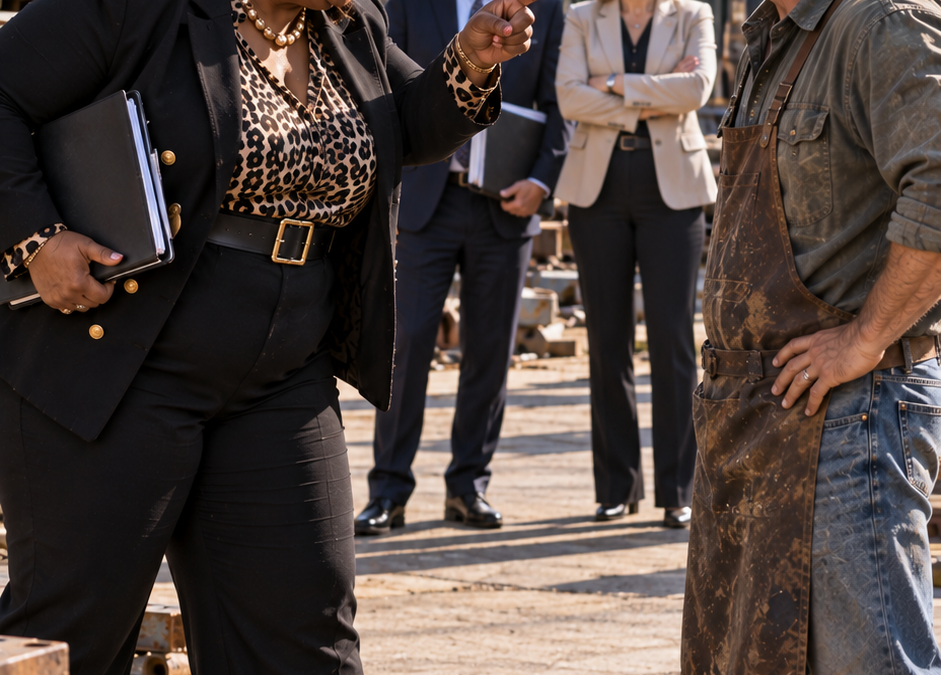
𝗣𝗔𝗥𝗧 𝟮
The fencing was bad.
The office roof leaked.
An old maintenance corner had petroleum contamination that cost me more to remediate than I care to remember.
Half the concrete was hidden beneath broken pallets, abandoned tires, and equipment nobody had moved in years.
But I saw three things.
The first was zoning.
Heavy industrial.
Not newly granted.
Not conditional.
A use history extending back to the 1960s.
That kind of zoning is almost impossible to create next to modern residential development.
Once lost, it rarely comes back.
The second thing was concrete.
The freight company had poured enormous reinforced pads designed for loaded tractor-trailers and container-handling equipment.
Thick.
Flat.
Built to carry weight.
People drove through and saw cracked weeds near the edges.
I saw millions of pounds of load-bearing capacity already paid for by someone else decades before.
The third thing was the road.
That road was the reason everything later became possible.
A dedicated commercial access ran from my gate to the county arterial.
Wide turning radius.
Two heavy vehicles could pass.
No need for trucks to enter residential streets.
The access existed under a recorded commercial easement dating to 1971.
Permanent.
Running with the land.
Specifically allowing industrial and commercial ingress and egress.
That was not neighborhood permission.
It was a property right.
So I bought the place.
Cleaned it.
Remediated the contamination.
Rebuilt the fence.
Repaired the office.
Installed cameras.
Brought in a certified truck scale.
Expanded stormwater controls.
Bought equipment one machine at a time.
Then I built Reic Reclamation.
For nineteen years, I made it work.
By the time Ashford Ridge was developed above me, my business had already been operating legally for more than a decade.
The developer knew what was there.
The county knew.
The zoning map knew.
The disclosures should have known.
I watched the first houses rise and assumed everybody buying one understood they were moving beside industrial land.
Maybe some did.
Most residents never bothered me.
They drove past.
I worked.
Life was fine.
Then the city announced the East Basin Flood Resilience Project.
The eastern basin had drainage infrastructure older than most people living over it.
Undersized trunk lines.
Old culverts.
Pump systems operating closer to capacity than anyone liked.
Repeated flooding after major storms had finally forced the city to stop patching and rebuild.
The project was enormous.
Drainage trunk replacement.
Road reconstruction.
New pump stations.
Hardened crossings.
Large-diameter culverts.
Structural steel.
Temporary bypass systems.
Miles of excavation.
Northline Civil Contractors won the prime contract.
A project that size needs more than equipment and workers.
It needs space.
Material arrives long before it goes into the ground.
Ninety-six-inch culvert sections do not wait politely on a residential street.
Sheet piling does not stack in somebody’s parking lot.
Pump assemblies need secure storage.
Structural steel needs sorting.
Old material coming out of the ground needs somewhere to be inspected, graded, reclaimed, or sent for recycling.
Northline needed a staging yard.
Their criteria were brutal.
Large acreage.
Load-bearing surface.
Secure fencing.
Twenty-four-hour camera coverage.
Commercial truck scale.
Environmental compliance.
Direct arterial access.
No residential routing.
Equipment capable of unloading oversized material.
An operator experienced in industrial logistics.
There were two properties in the eastern half of the county that met most of those requirements.
Mine was the only one with the right road.
So for four months, Northline had been quietly qualifying my yard.
Engineers walked the pads.
Safety people reviewed my equipment.
Insurance requirements were checked.
Stormwater records were reviewed.
Traffic engineers modeled truck movements.
Security reviewed camera retention.
Environmental staff pulled compliance histories.
I said almost nothing to anyone because I do not talk about contracts before signatures exist.
A deal that has not been signed is not a deal.
It is a rumor with a spreadsheet.
The first inbound material package alone was worth just over four million dollars.
And Valerie Hargrove was about to spend three weeks calling the site chosen to receive it a junk pile.
Her first formal letter came three days after her visit.
LANDSCAPE IMPACT VIOLATION.
$450.
Payable to the Ashford Ridge HOA.
I read it twice.
Then I laughed.
My property was not even inside the association.
I did not send an angry response.
I went to the county recorder.
Got a certified copy of the subdivision plat.
Highlighted Ashford Ridge.
Highlighted my parcel.
Highlighted the gap between them.
Then mailed it certified.
One page.
No commentary.
Valerie sent a second notice.
Then she sent an email to Ashford Ridge residents.
Someone forwarded it to me within an hour.
She described my business as a “deteriorating industrial facility” threatening surrounding property values.
She asked residents to document noise, dust, traffic, and visual impacts.
That email made me angrier than the fine.
Not because she hated scrapyards.
I understood why some people disliked looking at them.
What bothered me was that she had never once walked through mine.
Never asked how many people I employed.
Never asked about stormwater.
Never looked at the scale.
Never asked what material was stored where.
Never asked what the business actually did.
She had stood outside, taken one look at my work clothes and stacked steel, and decided she understood everything.
Three days later, a new sign appeared at the entrance to my commercial road.
Green and white.
Professional.
AUTHORIZED ASHFORD RIDGE TRAFFIC ONLY.
Below that was a reference to an HOA regulation.
It sat squarely inside my access corridor.
I arrived at 6:10 in the morning.
Stopped my truck.
Looked at it.
Then drove around it carefully.
Inside the office, I pulled the 1971 easement.
I already knew what it said.
Permanent industrial and commercial access.
Not subject to HOA control.
Not part of Ashford Ridge.
I took a socket wrench outside.
Removed the sign.
Photographed it.
Front.
Back.
Mounting points.
Location.
Timestamp.
Then I carried it into my office and leaned it against the wall.
I did not destroy it.
Evidence has more value intact.
Valerie arrived within an hour.
Apparently somebody from the ridge had been watching.
She marched across my yard in heels that were completely wrong for gravel.
“Where is the sign?”
“In my office.”
“You removed association property.”
“You installed it inside my recorded commercial access.”
“That road serves Ashford Ridge.”
“The first section gives some residents access to a side entrance. That does not make it yours.”
“You cannot simply take down association signage.”
“I can remove an obstruction placed on my access easement.”
She laughed.
“Commercial access?”
“Yes.”
“Malcolm, you sell scrap metal.”
That sentence.
More than anything else she ever said, that one stayed with me.
Not because it was insulting on its face.
I do sell scrap metal.
But the satisfaction in her voice told me what she meant.
She believed she had found my limit.
Scrap collector.
Small.
Dirty.
Unimportant.
I could have opened my desk drawer.
Shown her Northline’s draft designation.
Explained that, within days, city project engineers might be routing millions of dollars in new infrastructure through the exact road she had tried to restrict.
I did not.
The contract was not signed.
And a lifetime of work had taught me that unfinished deals are dangerous things to brag about.
Instead, I asked,
“Did you pull the easement?”
“I don’t need a scrap dealer to explain land management to me.”
“The recorder’s office closes at four-thirty.”
Her eyes narrowed.
“I’ll be contacting the city about your operation.”
“You should.”
I meant it.
Fire marshal.
Environmental.
Weights and measures.
Stormwater.
Traffic.
The city had reviewed my business more carefully than Valerie ever would.
She heard my answer as a bluff.
That was fine.
Two days later, three Northline vehicles entered my gate.
Project manager Elliot Sutter stepped out.
Forty-five.
Safety vest over a button-down shirt.
Never late.
Never rushed.
Four engineers followed.
Tripod.
Tablets.
Survey gear.
Final site walk.
We had barely started when I saw Valerie’s sedan slow on the arterial.
Then turn in.
She parked.
Stepped out.
Looked at the hard hats.
Survey equipment.
Tablets.
Engineers pointing toward my yard.
And smiled.
I could almost watch her build the wrong conclusion.
Serious people had finally arrived to inspect the place she had been complaining about.
She walked directly toward Elliot.
“Good morning.”
He turned.
She extended a hand.
“Valerie Hargrove, president of the Ashford Ridge Homeowners Association.”
Elliot shook it.
“How can I help you?”
“I’m glad the city is finally looking at this property.”
Elliot glanced at me.
Then back at her.
Valerie began listing violations.
Truck noise.
Visual blight.
Dust.
Vibration.
Traffic.
Failure to screen.
Noncompliance with community standards.
Unauthorized use of what she called an association-controlled access lane.
Property values came up four times.
Elliot listened.
He let her finish.
Then asked,
“Do you own this parcel?”
“No.”
“Do you represent the owner?”
“No, but—”
“Then I believe what we’re doing today is between Northline and Mr. Reic.”
She blinked.
“Well, I assume your findings will be provided to the city.”
Elliot nodded.
“We are the city’s contractor.”
Silence.
Then he turned to me.
“Can we walk the north pad?”
I almost felt bad for her.
Almost.
We continued the site review.
I showed Elliot the scale.
Commercial certification.
Calibration records.
Truck through-put.
Security.
Sixteen camera positions.
Ninety-day retention.
Full gate coverage.
Sorting layout.
Traffic paths that kept loaders separated from incoming trucks.
Concrete pads.
Stormwater catch basins.
Oil-water separator.
Discharge sampling.
Six years without a compliance exceedance.
Equipment.
Forklifts.
Container handler.
Spare hydraulic components.
Backup loader.
Elliot crouched and put his palm on the north pad.
“How thick?”
I told him.
He stood.
“Honestly, Malcolm, this is the cleanest yard I’ve walked in two years.”
Everything Valerie called garbage was organized around function.
She saw disorder because she did not know the system.
Elliot told me my property was at the top of Northline’s list.
The concrete gave me an advantage.
The scale gave me another.
The cameras satisfied the security requirement.
The access road was the biggest asset.
Then his tone changed.
“There is one issue.”
“What?”
“Uninterrupted access.”
I listened.
“Our delivery windows are tied to manufacturing schedules. Some material is coming from multiple states away. Oversized loads have escorts. If a truck misses a delivery window because this road gets blocked, delays can go six figures fast.”
He looked toward the arterial.
“I need confidence nobody can close this access on us.”
That was when Valerie stopped being merely irritating.
She became a contract risk.
I told him about the sign.
The HOA notices.
The recorded easement.
He asked for a certified copy.
Then asked,
“Do you expect them to interfere again?”
“I don’t know.”
That was true.
I did not want a feud.
I wanted the contract.
I wanted my business.
So I called Nolan Pierce.
My land-use attorney.
Fifty.
Expensive.
Worth it.
“Send one letter,” I told him.
“Not a lawsuit.”
The letter was two pages.
It identified the easement.
Recording number.
Date.
Legal purpose.
It stated the HOA held no ownership or regulatory interest in the access.
It documented the installed sign.
Requested written assurance of no future obstruction.
Then Nolan included standard language explaining that intentional interference with commercial access could create exposure for consequential damages.
That last sentence was boilerplate.
Valerie apparently treated it like an invasion.
Four days later, the HOA announced an emergency meeting.
I was invited so the community could pursue “a civilized resolution.”
I went.
Part of me still believed people would look at the records and calm down.
Another part wanted to hear what Valerie would say in a room full of residents.
The Ashford Ridge clubhouse was beautiful.
Vaulted ceiling.
Gas fireplace.
Stone surround.
Seventy folding chairs.
Projector.
Around fifty people attended.
I came straight from work.
Boots.
Work pants.
Clean company shirt.
Valerie stood at a lectern.
She had prepared slides.
Every photograph of my yard had been taken from above.
Late afternoon.
Sun behind the piles.
Rust dark.
Chain-link fence in the foreground.
One image was a close-up of a badly corroded beam waiting to be processed.
Presented as if that single beam represented twelve acres.
She did not show the office.
Scale.
Sorted bins.
Concrete pads.
Stormwater system.
Equipment lanes.
She narrated.
“Neglect.”
“Industrial decay.”
“Visual blight.”
Then she said,
“Families here have invested hundreds of thousands, sometimes millions, in their homes. No one should have to wake up and look out a window at a man making a living from a pile of rotting metal.”
The room shifted.
Some residents looked uncomfortable.
A woman near the back looked toward me and mouthed something that looked like sorry.
Then Valerie presented her solution.
Twelve-foot masonry screening wall.
My expense.
No truck traffic before 9:00 a.m.
No weekend operations.
Reduced visible storage.
Restrictions on heavy vehicle movement.
If compliance became too expensive, she said gently, several developers had shown interest in industrial land near the ridge.
The association would be happy to make introductions.
There it was.
Finally.
The real objective.
She wanted the land to become something else.
I stood.
“What is Ashford Ridge prepared to pay me?”
Valerie frowned.
“For what?”
“To give up the lawful industrial use of my land.”
Silence.
“You’re asking me to surrender operating hours, truck access, storage capacity, and industrial use.”
I looked around the room.
“That is a purchase.”
Valerie laughed.
“Malcolm, please. Let’s not turn a scrapyard into Rockefeller Center.”
A few residents laughed.
Not many.
I waited.
Then said,
“You keep looking at what is sitting on top of my land.”
She stopped smiling.
“That may be why you’ve never understood what is underneath the deed.”
I picked up my folder.
Walked out.
The room started talking before the door shut.
The next morning, two things happened.
First, Gavin Holt, the HOA treasurer, requested every document connected to Valerie’s campaign against me.
Recorded plat.
Legal opinions.
Invoices.
Contracts.
Authority for expenditures.
He had supported her until then.
But Gavin had spent his career running distribution budgets.
He understood paper.
Second, at 8:40 that night, Elliot called.
“Malcolm?”
“Yes.”
“You’re in.”
I sat down.
“Meaning?”
“City approved the designation. Reic Reclamation and Metals is the official staging and materials recovery site for East Basin.”
For a moment, I said nothing.
“First delivery is nineteen days.”
“How big?”
“First tranche just over four million.”
I looked through the windshield of my truck.
The yard was dark except for security lights.
Steel silhouettes.
Containers.
Loader parked near pad two.
I expected to feel triumphant.
Instead, I felt tired.
Weeks of fighting somebody over authority she never possessed had drained the joy out of good news.
Word spread badly.
People heard trucks were coming.
Valerie decided I was expanding in retaliation.
In her version, she had tried to control the scrapyard and I had responded by making it bigger.
So she escalated.
The Thursday before the first delivery, Gavin called me.
We had never spoken directly.
“Mr. Reic?”
“Yes.”
“This is Gavin Holt. HOA treasurer.”
“What can I do for you?”
“I’m calling as a courtesy.”
That was never a promising phrase.
He explained.
The board had approved, narrowly, a private security contract.
Temporary barricades.
Checkpoint.
Top of my access road.
Effective Monday at 6:00 a.m.
Purpose:
“Protect residents from unauthorized commercial traffic.”
Gavin had voted no.
I asked one question.
“Did anybody get a legal opinion before approving it?”
Silence.
“No.”
“Thank you for calling.”
Monday morning, I arrived at 5:50.
The barricades were already there.
Orange water-filled barriers across the road.
Private security pickup.
Three men in black polos.
Badges with no governmental authority.
Valerie stood on the shoulder wearing a wool coat and recording with her phone.
I parked.
Got out.
Walked toward them.
“You were warned,” she said.
“About what?”
“No industrial convoy is coming through Ashford Ridge today.”
“This isn’t Ashford Ridge’s road.”
“Then let the city decide.”
“They’re coming.”
She smiled.
Actually smiled.
That moment told me something.
Valerie believed authority would validate her automatically.
City.
Police.
Lawyers.
Engineers.
In her mind, institutions belonged naturally on her side.
At 6:20, the first Northline trucks appeared.
Nine heavy trucks in convoy.
Escort vehicles.
Oversized-load banners.
Diesel engines low and steady.
You could feel them in the road before they reached us.
Valerie turned to security.
“Do not move those barriers.”
Elliot arrived first in his pickup.
Folder under his arm.
He looked at the barriers.
Then me.
“Is this the interference you told me about?”
Before I answered, a county vehicle pulled in.
Marin Brooks stepped out.
Forty-one.
City infrastructure engineer for the eastern corridor.
If you wanted somebody on your side emotionally, Marin was not your person.
If you wanted somebody to read a record correctly, she was perfect.
Hard hat under one arm.
Tablet in hand.
Expression like her morning had been unnecessarily complicated.
Valerie walked straight toward her.
“Valerie Hargrove, HOA president. We’ve established a temporary access control point for neighborhood safety.”
Marin did not shake her hand.
“Barricade permit?”
Valerie hesitated.
“This is association property adjacent to—”
Marin opened the parcel map.
Then the easement.
Then Northline’s approved haul-route plan.
She turned the tablet around.
“This access is a recorded commercial easement benefiting the Reic parcel.”
She zoomed.
“Recorded 1971.”
Another screen.
“And as of last month, it is a designated haul route serving an active municipal capital project.”
Valerie stared.
“The association has safety concerns.”
Marin looked at her.
“Has the city delegated traffic-control authority over this haul route to your association?”
“No, but—”
“Then the barriers need to be removed.”
Valerie’s mouth tightened.
“How quickly?”
“Ten minutes.”
Silence.
“Also,” Marin added, “I suggest documenting who authorized the obstruction. Interference with an active municipal haul route is not an HOA compliance issue.”
One of the security guards stepped backward.
He understood.
The barriers were gone in six minutes.
Security left shortly after.
Then the convoy entered.
Valerie stayed.
So did several board members.
Residents began walking down from the ridge to see what was happening.
The first trailers carried ninety-six-inch reinforced concrete culvert sections.
Huge.
New.
Project numbers stenciled on the sides.
Then structural steel.
Bundled rebar.
Sheet piling.
Pump equipment wrapped for transport.
A lowboy with a generator unit.
Bridge components.
Everything new.
Engineered.
Expensive.
Destined for streets and drainage infrastructure.
Nothing was scrap.
Nothing was abandoned.
Everything was material waiting for purpose.
Elliot walked over holding his tablet.
“Malcolm.”
I turned.
“We’ve got just under four million in this first tranche.”
Valerie stood maybe twenty feet away.
“Do you want all of it on pad two, or should I put the pump equipment in the north yard?”
I looked toward the trailers.
“Pad two.”
He nodded.
“North yard stays open?”
“Yeah. Structural steel starts next week. I need the room.”
“Copy.”
He turned.
Valerie’s voice came quietly.
“Four million?”
Elliot stopped.
Polite as always.
He explained.
Reic Reclamation had been selected as the secure logistics and materials-recovery site for the East Basin project.
Qualification covered environmental compliance.
Load capacity.
Security.
Access.
Material handling.
My facility ranked highest.
And the contract was not only storage.
Old steel and pipe removed from the existing drainage system would come back to my yard.
We would sort it.
Grade it.
Process reusable material.
Recycle what could not return to service.
Coordinate outbound and inbound logistics.
The term was projected at fourteen months.
Valerie looked at the trucks.
Then at the yard.
The same pads she had photographed from the ridge as evidence of blight were now holding city infrastructure.
I could have made a speech.
I did not.
I said,
“You called it a dump.”
She looked at me.
“The city calls it infrastructure.”
Then I went to work.
I thought that was the ending.
It was not.
Two weeks later, Marin held a public information meeting at the Ashford Ridge clubhouse.
Phase two of East Basin required closing Kestrel Mill Road.
Six weeks.
Full closure.
The official detour would add fourteen to twenty-two minutes depending on destination.
Through two school zones.
During morning and afternoon congestion.
Residents were unhappy.
Understandably.
Then Marin showed an alternative.
A short connection using existing commercial pavement from the subdivision’s secondary exit to the arterial.
Three-minute detour.
She projected the map.
My road.
My property.
My access.
The room quieted.
Marin explained,
“The city cannot simply open this route to general public traffic.”
People turned toward her.
“It is privately held. Temporary public use would require written permission from the landowner.”
Then everybody turned toward me.
I was sitting in the back.
Work jacket.
Same man.
Same yard.
Different vocabulary.
Valerie contacted me the next day.
Phone.
Email.
Then office visit.
For the first time in her life, she walked through the front door of Reic Reclamation.
She stopped inside.
Looked at the permits framed on the wall.
Dispatch board.
Project schedule.
Employees through the window.
Scale tickets stacked for filing.
Coffee machine.
Normal business.
Her voice was different.
“Malcolm, I think we need to find a way to work together.”
I leaned back.
“Do we?”
“The road closure is going to be a serious burden on residents.”
“I heard Marin.”
“School traffic. Emergency response. People commuting.”
I waited.
“At the end of the day, we’re all part of the same community.”
I looked at her.
“Three weeks ago I thought I was just a man selling scrap metal.”
She did not answer.
Meanwhile, Gavin Holt had finished his review.
At the next board meeting, he presented his findings.
Ashford Ridge had spent just over $31,000 pursuing me.
Sign fabrication.
Installation.
Certified mail.
Photographs.
Outside counsel retainer.
Private security.
Cancellation fees.
Administrative costs.
Thirty-one thousand dollars asserting control over land and a road the HOA did not own.
A ten-minute title search would have shown that.
Gavin also found no legal opinion supporting the HOA’s jurisdiction.
The security contract had been signed under an emergency authority provision by Valerie alone.
No real emergency.
No proper legal review.
The board started asking questions.
For the first time, Valerie was answering instead of presenting.
Then I had a decision.
I could deny temporary public access.
Legally.
Completely.
Let the Kestrel Mill closure force Ashford Ridge residents around the basin for six weeks.
A small part of me wanted to.
I will admit that.
Forty extra minutes a day would have been an effective lesson.
But most residents had done nothing to me.
They had bought houses.
Raised families.
Paid dues.
Maybe believed Valerie.
Maybe not.
They were not responsible for her decision to treat me like a problem.
So I told Marin I would negotiate.
I had six conditions.
Nolan Pierce put them into proper language.
They were read at the next HOA meeting.
First:
Ashford Ridge would adopt a formal resolution acknowledging that the Reic parcel lies entirely outside association boundaries and is not subject to HOA covenants, rules, architectural standards, or enforcement.
Second:
Every notice, fine, fee, and violation issued against me would be rescinded.
Not waived.
Rescinded.
As if improperly issued from the beginning.
Third:
The HOA would execute a recorded acknowledgement that it had no right to obstruct, gate, sign, regulate, or otherwise interfere with my commercial access easement.
Fourth:
The HOA would reimburse documented costs caused by its obstruction.
Attorney fees.
One afternoon of crew standby.
Related charges.
A little under $19,000.
Not one dollar beyond documentation.
Fifth:
A written correction would go to every Ashford Ridge household stating that Reic Reclamation operates lawfully, holds required permits, and had not been in violation of association standards because association standards did not apply.
Sixth:
The temporary public-use agreement would last only for the city-defined Kestrel Mill closure.
Fixed termination date.
Insurance.
Indemnification.
Traffic controls.
No future right.
No implied public easement.
No residual access claim.
Valerie objected to number five.
“A community-wide letter is unnecessary.”
Gavin looked at her.
“You sent a community-wide email about his business.”
“That was different.”
“How?”
She said a correction would humiliate the board.
I stood from the back.
“I didn’t ask for an apology.”
She turned.
“I’m not asking Valerie to say she’s sorry.”
The room quieted.
“I’m asking the association record to tell the truth.”
That distinction mattered to me.
I did not want an emotional performance.
I wanted the false record corrected by the same institution that created it.
Gavin moved to accept all six conditions.
Five to one.
Valerie voted no.
She lost.
After the meeting, people left slowly.
Valerie stayed at the table.
Through the clubhouse windows, you could see my yard below.
Sodium lights.
Container handler moving concrete pipe.
Workers checking tags.
Trucks staged for morning.
The place she had called blight operating like a machine.
She said quietly,
“I didn’t know.”
I looked out the window too.
“Some things only look worthless when you don’t understand what they’re for.”
That was the last argument we ever had.
The temporary route opened when Kestrel Mill closed.
The city installed traffic controls.
Set hours.
Speed limit.
Flagging where needed.
My business kept operating.
Residents used the temporary connection.
Three minutes.
Not twenty-two.
Six weeks later, it closed exactly as agreed.
No permanent claim.
No fight.
No ambiguity.
The East Basin project ran fourteen months.
Finished three weeks ahead of schedule.
People who work large public projects will understand how rare that is.
My yard remained a scrapyard.
That part matters.
I did not wake up one morning and become a different person because city trucks started arriving.
I still sorted metal.
Still bought scrap.
Still sold to mills.
Still walked the yard before sunrise.
Still got dust in my collar.
But logistics grew.
Northline used us again.
The city placed Reic Reclamation on its qualified vendor list.
Two more industrial pads were poured.
I hired six people.
Bought another forklift.
Upgraded the scale software.
Installed better lighting.
Eventually I changed the sign at the gate.
REIC RECLAMATION & INDUSTRIAL LOGISTICS.
City vendor number below it.
Not fancy.
Accurate.
Valerie was not reelected.
The vote was not close.
Nobody forced her to move.
Nobody took her house.
Nobody destroyed her life.
As far as I know, she still lives in Ashford Ridge.
Beautiful house.
Stone front.
Landscaped lawn.
That is fine with me.
She lost the authority she had used carelessly.
That was enough.
Years later, people sometimes ask whether the city contract made me rich.
No.
It made the business stronger.
There is a difference.
Revenue went into equipment.
Concrete.
Insurance.
Employees.
Security.
Maintenance.
Tax.
Working capital.
Anybody who runs an industrial business knows that four million dollars sitting on your property does not mean four million dollars belongs to you.
Those culverts were not mine.
The pumps were not mine.
Steel was not mine.
My value was in handling them safely.
Storing them correctly.
Moving them when required.
Knowing what went where.
Exactly the kind of work Valerie had assumed a scrap dealer could not understand.
The irony was never the money.
It was the function.
She thought my business represented decay.
The city selected it because it understood recovery.
Everything I did was built around taking material from one stage of usefulness into another.
Old steel became feedstock.
Removed pipe became reclaimable material.
Concrete staging pads supported new infrastructure.
A commercial road built for freight in 1971 became the key logistics connection for a twenty-first-century flood project.
Even the temporary public route worked because something old still had value.
Valerie’s weakness was that she judged by appearance.
Rust meant worthless.
Work clothes meant uneducated.
Scrap meant garbage.
Industrial meant blight.
She never asked the next question.
What is it for?
That question changes everything.
One morning, after East Basin wrapped, I stood beside a load of structural steel removed from one of the old crossings.
Forty years underground.
Surface corrosion.
Mud.
To most people, it looked finished.
My crew was grading it.
Some would go to a mill.
Some sections had reusable value.
The rest would become feedstock.
I thought about Valerie standing in my yard the first day.
The way she looked around and saw only things people had thrown away.
I had spent my entire adult life seeing the opposite.
Not what something had been.
What it could still do.
That difference explained almost everything.
Even her campaign against me.
She saw land currently occupied by a scrapyard and assumed the yard lowered the land.
I saw industrial zoning.
Heavy concrete.
Commercial access.
Stormwater controls.
Security.
Scale capacity.
Equipment.
Permits.
Infrastructure.
She saw piles.
I saw systems.
And when Northline arrived, they saw the same systems I did.
That is why experts matter.
Expertise is often just the ability to recognize order where somebody else sees noise.
Months after Valerie left the board, Gavin stopped by my office.
No official reason.
He brought coffee.
We stood near the scale house.
“I owe you an apology,” he said.
“You personally?”
“The board.”
“You already sent the correction.”
“I mean me.”
He looked at the yard.
“I voted for the first notice.”
“I know.”
“I assumed Valerie had checked jurisdiction.”
“That was your mistake.”
He nodded.
“I know that now.”
We stood there.
Then he said,
“I spent thirty years in distribution. I should have understood this place.”
“You never came down here.”
“No.”
“That was the problem.”
He laughed once.
“Fair.”
Then he asked if I would show him around.
So I did.
Scale.
Pads.
Sorting.
Cameras.
Stormwater.
Equipment.
He asked good questions.
When we reached the north pad, he looked across it.
“This is where the first four million came in?”
“Most of it.”
He shook his head.
“She really had no idea.”
“No.”
Then I corrected myself.
“Neither did you.”
He looked at me.
Then nodded.
“Fair again.”
That conversation meant more to me than Valerie losing her election.
Because Gavin had changed his mind after learning something.
That is all I ever wanted from any of them.
You do not have to like a scrapyard.
You do not have to want one near your house.
You do not have to find industrial work beautiful.
But before you use authority against somebody, know what you are talking about.
Pull the deed.
Read the easement.
Check zoning.
Walk the property.
Ask a question.
Valerie did none of those things.
She started with contempt.
Everything else flowed from it.
I saw her again last spring.
I was in the loader.
Her white sedan slowed near the gate.
Not enough to stop.
Just enough for her to see the new sign.
REIC RECLAMATION & INDUSTRIAL LOGISTICS.
The city vendor number.
She looked.
I looked back.
Neither of us waved.
That was fine.
She drove on.
I returned to work.
The loader was carrying recovered structural steel removed from infrastructure that had failed after decades of service.
The steel would be graded.
Processed.
Sold.
Melted.
Used again.
Valerie once asked whether I planned to live off a pile of garbage for the rest of my life.
I suppose the answer is yes.
If that is what she insists on calling it.
Because what she called garbage put twelve people to work.
What she called blight gave the city somewhere to stage millions of dollars in critical infrastructure.
What she called a scrapyard helped a flood project finish early.
And the road she tried to block eventually saved her own neighborhood weeks of miserable detours.
I learned a long time ago that value and appearance are not the same thing.
A rusted beam can still have a grade.
A cracked machine can still have parts.
An ugly parcel can carry industrial rights nobody could recreate today.
A man in dusty boots can still own the ground everybody else is arguing about.
People who work with discarded material understand something other people sometimes miss.
Worth is not determined by who looks down on you.
It is determined by what you can still do.
Valerie never understood my yard because she kept asking the wrong question.
She looked at everything inside the fence and asked why anybody would want it.
The city looked at the same twelve acres and asked where to unload four million dollars.
Have you finished reading the story and want to read it again?
Valerie Kept Calling My Yard Worthless Until the City Started Building Its Biggest Project Through My Gate
The first time Valerie Hargrove walked into my scrapyard, she pinched her nose as if the smell of rust had personally lowered the value of every house on the ridge above me.
Then she looked at the stacked steel behind my office, looked at me in dusty work clothes, and asked in front of two board members whether I planned to spend the rest of my life making money from other people’s garbage.
What Valerie could not see was the folder inside my desk containing four months of engineering reviews for a city project that needed exactly the kind of place she had already decided was worthless.
My name is Malcolm Reic.
I am forty-eight years old, and I own Reic Reclamation and Metals.
A little under twelve acres.
Heavy industrial zoning.
Concrete pads.
Commercial access.
Scale house.
Sorting bays.
Equipment sheds.
Shipping containers.
Steel.
Copper.
Aluminum.
Stainless.
Cast iron.
Rebar.
More steel.
From the county road, I know exactly what it looks like.
A person driving past at forty miles an hour sees rust, machinery, trailers, and piles of material that somebody else has already decided they no longer want.
I see inventory.
That distinction became the entire story.
I had been reading metal for twenty-two years by the time Valerie arrived.
There is a language to a working yard.
The pitch of a hydraulic shear tells you when a blade needs attention.
A forklift tire sounds different on concrete when one side is low.
The way a bundle shifts when forks first lift it tells you whether the weight distribution is honest.
Copper stored too damp smells wrong before you ever see corrosion.
A container that lands with a hollow boom instead of a heavy thud usually means somebody overestimated what they sold you.
I knew all of it.
Most mornings I was on site before sunrise.
Thermos in one hand.
Clipboard in the other.
I walked the copper bins first because moisture can turn profit into loss faster than most people realize.
Then the heavy steel.
Loader.
Scale.
Drainage grates.
Security cameras.
Fuel.
Truck tires.
Every load entering my property received a ticket.
Every ticket carried weight.
Grade.
Source.
Destination.
Everything was logged because mills do not buy estimates.
Fabricators do not accept “close enough.”
And environmental inspectors do not care whether your intentions were good if your paperwork says otherwise.
I never thought of my business as ugly.
Functional, yes.
Industrial, definitely.
But not ugly.
There is something beautiful about seeing a thirty-foot structural beam come off a demolished building, get sorted, graded, processed, and become raw material again instead of disappearing into a landfill.
Valerie Hargrove never saw that.
The first time she came through my gate, she did not even ask.
A white luxury sedan stopped near the scale house on a Tuesday morning.
Two more vehicles followed.
A woman got out wearing a cream blazer that looked like it belonged in an air-conditioned conference room.
Two HOA board members came behind her, carrying folders.
I walked over.
“Morning.”
She looked past me toward the north yard.
“Is whoever owns this place here?”
“You’re looking at him.”
She stopped.
Actually stopped.
Her eyes traveled from my boots to my face.
Not quickly either.
I had seen that look before.
People sometimes need a second to update whatever story they already wrote about you.
Valerie had expected an employee.
A foreman.
A yard hand.
Something other than the owner.
“You own all of this?”
She put just enough weight on the word you that I heard everything inside it.
“Yes.”
She recovered fast.
People like Valerie often do.
“My name is Valerie Hargrove. I’m president of the Ashford Ridge Homeowners Association.”
She gestured toward the homes above my eastern fence.
“We’re conducting a visual and landscape impact review of adjoining parcels.”
“Why?”
Her expression suggested the answer should have been obvious.
“Because our residents are entitled to reasonable community standards.”
“This property isn’t in your community.”
“That doesn’t mean it doesn’t affect it.”
One of the board members looked toward the stacked shipping containers.
Valerie continued.
“A place like Ashford Ridge should not have to look down on something like this.”
Something like this.
Not a licensed industrial business.
Not twelve acres.
Not a permitted reclamation facility.
Something.
I asked whether she had a specific concern.
She listed them.
Full visual screening along the shared side.
Restrictions on truck hours.
Reduced weekend operations.
Limits on visible equipment.
Possible fencing upgrades.
Compliance with Ashford Ridge “community standards.”
She said that phrase repeatedly.
Community standards.
As if saying it often enough extended those standards beyond the subdivision plat.
I let her finish.
Then I said,
“My land is outside Ashford Ridge.”
“I’m aware.”
“My parcel is not subject to your covenants.”
“The neighborhood is directly affected.”
“That still doesn’t give the association authority over my property.”
She smiled.
Not warmly.
“Anyone who lives beside Ashford Ridge eventually learns to live with Ashford Ridge.”
That was the first time I understood what kind of person I was dealing with.
I did not argue.
“Have a good day.”
Then I turned and walked back to my office.
She called after me.
“We will be following up formally.”
I raised one hand without turning.
Inside my office, I sat behind my desk.
For a while I listened to the loader moving a bin outside.
Then I opened the bottom drawer on the right.
A thick folder sat inside.
NORTHLINE / EAST BASIN.
Valerie knew nothing about it.
At that point, almost nobody did.
I had been working through the qualification process for four months.
But to understand why that mattered, you have to understand why I bought my property in the first place.
Nineteen years earlier, the land belonged to a freight company that was collapsing.
Everybody told me not to buy it.
The fencing was bad.
The office roof leaked.
An old maintenance corner had petroleum contamination that cost me more to remediate than I care to remember.
Half the concrete was hidden beneath broken pallets, abandoned tires, and equipment nobody had moved in years.
But I saw three things.
The first was zoning.
Heavy industrial.
Not newly granted.
Not conditional.
A use history extending back to the 1960s.
That kind of zoning is almost impossible to create next to modern residential development.
Once lost, it rarely comes back.
The second thing was concrete.
The freight company had poured enormous reinforced pads designed for loaded tractor-trailers and container-handling equipment.
Thick.
Flat.
Built to carry weight.
People drove through and saw cracked weeds near the edges.
I saw millions of pounds of load-bearing capacity already paid for by someone else decades before.
The third thing was the road.
That road was the reason everything later became possible.
A dedicated commercial access ran from my gate to the county arterial.
Wide turning radius.
Two heavy vehicles could pass.
No need for trucks to enter residential streets.
The access existed under a recorded commercial easement dating to 1971.
Permanent.
Running with the land.
Specifically allowing industrial and commercial ingress and egress.
That was not neighborhood permission.
It was a property right.
So I bought the place.
Cleaned it.
Remediated the contamination.
Rebuilt the fence.
Repaired the office.
Installed cameras.
Brought in a certified truck scale.
Expanded stormwater controls.
Bought equipment one machine at a time.
Then I built Reic Reclamation.
For nineteen years, I made it work.
By the time Ashford Ridge was developed above me, my business had already been operating legally for more than a decade.
The developer knew what was there.
The county knew.
The zoning map knew.
The disclosures should have known.
I watched the first houses rise and assumed everybody buying one understood they were moving beside industrial land.
Maybe some did.
Most residents never bothered me.
They drove past.
I worked.
Life was fine.
Then the city announced the East Basin Flood Resilience Project.
The eastern basin had drainage infrastructure older than most people living over it.
Undersized trunk lines.
Old culverts.
Pump systems operating closer to capacity than anyone liked.
Repeated flooding after major storms had finally forced the city to stop patching and rebuild.
The project was enormous.
Drainage trunk replacement.
Road reconstruction.
New pump stations.
Hardened crossings.
Large-diameter culverts.
Structural steel.
Temporary bypass systems.
Miles of excavation.
Northline Civil Contractors won the prime contract.
A project that size needs more than equipment and workers.
It needs space.
Material arrives long before it goes into the ground.
Ninety-six-inch culvert sections do not wait politely on a residential street.
Sheet piling does not stack in somebody’s parking lot.
Pump assemblies need secure storage.
Structural steel needs sorting.
Old material coming out of the ground needs somewhere to be inspected, graded, reclaimed, or sent for recycling.
Northline needed a staging yard.
Their criteria were brutal.
Large acreage.
Load-bearing surface.
Secure fencing.
Twenty-four-hour camera coverage.
Commercial truck scale.
Environmental compliance.
Direct arterial access.
No residential routing.
Equipment capable of unloading oversized material.
An operator experienced in industrial logistics.
There were two properties in the eastern half of the county that met most of those requirements.
Mine was the only one with the right road.
So for four months, Northline had been quietly qualifying my yard.
Engineers walked the pads.
Safety people reviewed my equipment.
Insurance requirements were checked.
Stormwater records were reviewed.
Traffic engineers modeled truck movements.
Security reviewed camera retention.
Environmental staff pulled compliance histories.
I said almost nothing to anyone because I do not talk about contracts before signatures exist.
A deal that has not been signed is not a deal.
It is a rumor with a spreadsheet.
The first inbound material package alone was worth just over four million dollars.
And Valerie Hargrove was about to spend three weeks calling the site chosen to receive it a junk pile.
Her first formal letter came three days after her visit.
LANDSCAPE IMPACT VIOLATION.
$450.
Payable to the Ashford Ridge HOA.
I read it twice.
Then I laughed.
My property was not even inside the association.
I did not send an angry response.
I went to the county recorder.
Got a certified copy of the subdivision plat.
Highlighted Ashford Ridge.
Highlighted my parcel.
Highlighted the gap between them.
Then mailed it certified.
One page.
No commentary.
Valerie sent a second notice.
Then she sent an email to Ashford Ridge residents.
Someone forwarded it to me within an hour.
She described my business as a “deteriorating industrial facility” threatening surrounding property values.
She asked residents to document noise, dust, traffic, and visual impacts.
That email made me angrier than the fine.
Not because she hated scrapyards.
I understood why some people disliked looking at them.
What bothered me was that she had never once walked through mine.
Never asked how many people I employed.
Never asked about stormwater.
Never looked at the scale.
Never asked what material was stored where.
Never asked what the business actually did.
She had stood outside, taken one look at my work clothes and stacked steel, and decided she understood everything.
Three days later, a new sign appeared at the entrance to my commercial road.
Green and white.
Professional.
AUTHORIZED ASHFORD RIDGE TRAFFIC ONLY.
Below that was a reference to an HOA regulation.
It sat squarely inside my access corridor.
I arrived at 6:10 in the morning.
Stopped my truck.
Looked at it.
Then drove around it carefully.
Inside the office, I pulled the 1971 easement.
I already knew what it said.
Permanent industrial and commercial access.
Not subject to HOA control.
Not part of Ashford Ridge.
I took a socket wrench outside.
Removed the sign.
Photographed it.
Front.
Back.
Mounting points.
Location.
Timestamp.
Then I carried it into my office and leaned it against the wall.
I did not destroy it.
Evidence has more value intact.
Valerie arrived within an hour.
Apparently somebody from the ridge had been watching.
She marched across my yard in heels that were completely wrong for gravel.
“Where is the sign?”
“In my office.”
“You removed association property.”
“You installed it inside my recorded commercial access.”
“That road serves Ashford Ridge.”
“The first section gives some residents access to a side entrance. That does not make it yours.”
“You cannot simply take down association signage.”
“I can remove an obstruction placed on my access easement.”
She laughed.
“Commercial access?”
“Yes.”
“Malcolm, you sell scrap metal.”
That sentence.
More than anything else she ever said, that one stayed with me.
Not because it was insulting on its face.
I do sell scrap metal.
But the satisfaction in her voice told me what she meant.
She believed she had found my limit.
Scrap collector.
Small.
Dirty.
Unimportant.
I could have opened my desk drawer.
Shown her Northline’s draft designation.
Explained that, within days, city project engineers might be routing millions of dollars in new infrastructure through the exact road she had tried to restrict.
I did not.
The contract was not signed.
And a lifetime of work had taught me that unfinished deals are dangerous things to brag about.
Instead, I asked,
“Did you pull the easement?”
“I don’t need a scrap dealer to explain land management to me.”
“The recorder’s office closes at four-thirty.”
Her eyes narrowed.
“I’ll be contacting the city about your operation.”
“You should.”
I meant it.
Fire marshal.
Environmental.
Weights and measures.
Stormwater.
Traffic.
The city had reviewed my business more carefully than Valerie ever would.
She heard my answer as a bluff.
That was fine.
Two days later, three Northline vehicles entered my gate.
Project manager Elliot Sutter stepped out.
Forty-five.
Safety vest over a button-down shirt.
Never late.
Never rushed.
Four engineers followed.
Tripod.
Tablets.
Survey gear.
Final site walk.
We had barely started when I saw Valerie’s sedan slow on the arterial.
Then turn in.
She parked.
Stepped out.
Looked at the hard hats.
Survey equipment.
Tablets.
Engineers pointing toward my yard.
And smiled.
I could almost watch her build the wrong conclusion.
Serious people had finally arrived to inspect the place she had been complaining about.
She walked directly toward Elliot.
“Good morning.”
He turned.
She extended a hand.
“Valerie Hargrove, president of the Ashford Ridge Homeowners Association.”
Elliot shook it.
“How can I help you?”
“I’m glad the city is finally looking at this property.”
Elliot glanced at me.
Then back at her.
Valerie began listing violations.
Truck noise.
Visual blight.
Dust.
Vibration.
Traffic.
Failure to screen.
Noncompliance with community standards.
Unauthorized use of what she called an association-controlled access lane.
Property values came up four times.
Elliot listened.
He let her finish.
Then asked,
“Do you own this parcel?”
“No.”
“Do you represent the owner?”
“No, but—”
“Then I believe what we’re doing today is between Northline and Mr. Reic.”
She blinked.
“Well, I assume your findings will be provided to the city.”
Elliot nodded.
“We are the city’s contractor.”
Silence.
Then he turned to me.
“Can we walk the north pad?”
I almost felt bad for her.
Almost.
We continued the site review.
I showed Elliot the scale.
Commercial certification.
Calibration records.
Truck through-put.
Security.
Sixteen camera positions.
Ninety-day retention.
Full gate coverage.
Sorting layout.
Traffic paths that kept loaders separated from incoming trucks.
Concrete pads.
Stormwater catch basins.
Oil-water separator.
Discharge sampling.
Six years without a compliance exceedance.
Equipment.
Forklifts.
Container handler.
Spare hydraulic components.
Backup loader.
Elliot crouched and put his palm on the north pad.
“How thick?”
I told him.
He stood.
“Honestly, Malcolm, this is the cleanest yard I’ve walked in two years.”
Everything Valerie called garbage was organized around function.
She saw disorder because she did not know the system.
Elliot told me my property was at the top of Northline’s list.
The concrete gave me an advantage.
The scale gave me another.
The cameras satisfied the security requirement.
The access road was the biggest asset.
Then his tone changed.
“There is one issue.”
“What?”
“Uninterrupted access.”
I listened.
“Our delivery windows are tied to manufacturing schedules. Some material is coming from multiple states away. Oversized loads have escorts. If a truck misses a delivery window because this road gets blocked, delays can go six figures fast.”
He looked toward the arterial.
“I need confidence nobody can close this access on us.”
That was when Valerie stopped being merely irritating.
She became a contract risk.
I told him about the sign.
The HOA notices.
The recorded easement.
He asked for a certified copy.
Then asked,
“Do you expect them to interfere again?”
“I don’t know.”
That was true.
I did not want a feud.
I wanted the contract.
I wanted my business.
So I called Nolan Pierce.
My land-use attorney.
Fifty.
Expensive.
Worth it.
“Send one letter,” I told him.
“Not a lawsuit.”
The letter was two pages.
It identified the easement.
Recording number.
Date.
Legal purpose.
It stated the HOA held no ownership or regulatory interest in the access.
It documented the installed sign.
Requested written assurance of no future obstruction.
Then Nolan included standard language explaining that intentional interference with commercial access could create exposure for consequential damages.
That last sentence was boilerplate.
Valerie apparently treated it like an invasion.
Four days later, the HOA announced an emergency meeting.
I was invited so the community could pursue “a civilized resolution.”
I went.
Part of me still believed people would look at the records and calm down.
Another part wanted to hear what Valerie would say in a room full of residents.
The Ashford Ridge clubhouse was beautiful.
Vaulted ceiling.
Gas fireplace.
Stone surround.
Seventy folding chairs.
Projector.
Around fifty people attended.
I came straight from work.
Boots.
Work pants.
Clean company shirt.
Valerie stood at a lectern.
She had prepared slides.
Every photograph of my yard had been taken from above.
Late afternoon.
Sun behind the piles.
Rust dark.
Chain-link fence in the foreground.
One image was a close-up of a badly corroded beam waiting to be processed.
Presented as if that single beam represented twelve acres.
She did not show the office.
Scale.
Sorted bins.
Concrete pads.
Stormwater system.
Equipment lanes.
She narrated.
“Neglect.”
“Industrial decay.”
“Visual blight.”
Then she said,
“Families here have invested hundreds of thousands, sometimes millions, in their homes. No one should have to wake up and look out a window at a man making a living from a pile of rotting metal.”
The room shifted.
Some residents looked uncomfortable.
A woman near the back looked toward me and mouthed something that looked like sorry.
Then Valerie presented her solution.
Twelve-foot masonry screening wall.
My expense.
No truck traffic before 9:00 a.m.
No weekend operations.
Reduced visible storage.
Restrictions on heavy vehicle movement.
If compliance became too expensive, she said gently, several developers had shown interest in industrial land near the ridge.
The association would be happy to make introductions.
There it was.
Finally.
The real objective.
She wanted the land to become something else.
I stood.
“What is Ashford Ridge prepared to pay me?”
Valerie frowned.
“For what?”
“To give up the lawful industrial use of my land.”
Silence.
“You’re asking me to surrender operating hours, truck access, storage capacity, and industrial use.”
I looked around the room.
“That is a purchase.”
Valerie laughed.
“Malcolm, please. Let’s not turn a scrapyard into Rockefeller Center.”
A few residents laughed.
Not many.
I waited.
Then said,
“You keep looking at what is sitting on top of my land.”
She stopped smiling.
“That may be why you’ve never understood what is underneath the deed.”
I picked up my folder.
Walked out.
The room started talking before the door shut.
The next morning, two things happened.
First, Gavin Holt, the HOA treasurer, requested every document connected to Valerie’s campaign against me.
Recorded plat.
Legal opinions.
Invoices.
Contracts.
Authority for expenditures.
He had supported her until then.
But Gavin had spent his career running distribution budgets.
He understood paper.
Second, at 8:40 that night, Elliot called.
“Malcolm?”
“Yes.”
“You’re in.”
I sat down.
“Meaning?”
“City approved the designation. Reic Reclamation and Metals is the official staging and materials recovery site for East Basin.”
For a moment, I said nothing.
“First delivery is nineteen days.”
“How big?”
“First tranche just over four million.”
I looked through the windshield of my truck.
The yard was dark except for security lights.
Steel silhouettes.
Containers.
Loader parked near pad two.
I expected to feel triumphant.
Instead, I felt tired.
Weeks of fighting somebody over authority she never possessed had drained the joy out of good news.
Word spread badly.
People heard trucks were coming.
Valerie decided I was expanding in retaliation.
In her version, she had tried to control the scrapyard and I had responded by making it bigger.
So she escalated.
The Thursday before the first delivery, Gavin called me.
We had never spoken directly.
“Mr. Reic?”
“Yes.”
“This is Gavin Holt. HOA treasurer.”
“What can I do for you?”
“I’m calling as a courtesy.”
That was never a promising phrase.
He explained.
The board had approved, narrowly, a private security contract.
Temporary barricades.
Checkpoint.
Top of my access road.
Effective Monday at 6:00 a.m.
Purpose:
“Protect residents from unauthorized commercial traffic.”
Gavin had voted no.
I asked one question.
“Did anybody get a legal opinion before approving it?”
Silence.
“No.”
“Thank you for calling.”
Monday morning, I arrived at 5:50.
The barricades were already there.
Orange water-filled barriers across the road.
Private security pickup.
Three men in black polos.
Badges with no governmental authority.
Valerie stood on the shoulder wearing a wool coat and recording with her phone.
I parked.
Got out.
Walked toward them.
“You were warned,” she said.
“About what?”
“No industrial convoy is coming through Ashford Ridge today.”
“This isn’t Ashford Ridge’s road.”
“Then let the city decide.”
“They’re coming.”
She smiled.
Actually smiled.
That moment told me something.
Valerie believed authority would validate her automatically.
City.
Police.
Lawyers.
Engineers.
In her mind, institutions belonged naturally on her side.
At 6:20, the first Northline trucks appeared.
Nine heavy trucks in convoy.
Escort vehicles.
Oversized-load banners.
Diesel engines low and steady.
You could feel them in the road before they reached us.
Valerie turned to security.
“Do not move those barriers.”
Elliot arrived first in his pickup.
Folder under his arm.
He looked at the barriers.
Then me.
“Is this the interference you told me about?”
Before I answered, a county vehicle pulled in.
Marin Brooks stepped out.
Forty-one.
City infrastructure engineer for the eastern corridor.
If you wanted somebody on your side emotionally, Marin was not your person.
If you wanted somebody to read a record correctly, she was perfect.
Hard hat under one arm.
Tablet in hand.
Expression like her morning had been unnecessarily complicated.
Valerie walked straight toward her.
“Valerie Hargrove, HOA president. We’ve established a temporary access control point for neighborhood safety.”
Marin did not shake her hand.
“Barricade permit?”
Valerie hesitated.
“This is association property adjacent to—”
Marin opened the parcel map.
Then the easement.
Then Northline’s approved haul-route plan.
She turned the tablet around.
“This access is a recorded commercial easement benefiting the Reic parcel.”
She zoomed.
“Recorded 1971.”
Another screen.
“And as of last month, it is a designated haul route serving an active municipal capital project.”
Valerie stared.
“The association has safety concerns.”
Marin looked at her.
“Has the city delegated traffic-control authority over this haul route to your association?”
“No, but—”
“Then the barriers need to be removed.”
Valerie’s mouth tightened.
“How quickly?”
“Ten minutes.”
Silence.
“Also,” Marin added, “I suggest documenting who authorized the obstruction. Interference with an active municipal haul route is not an HOA compliance issue.”
One of the security guards stepped backward.
He understood.
The barriers were gone in six minutes.
Security left shortly after.
Then the convoy entered.
Valerie stayed.
So did several board members.
Residents began walking down from the ridge to see what was happening.
The first trailers carried ninety-six-inch reinforced concrete culvert sections.
Huge.
New.
Project numbers stenciled on the sides.
Then structural steel.
Bundled rebar.
Sheet piling.
Pump equipment wrapped for transport.
A lowboy with a generator unit.
Bridge components.
Everything new.
Engineered.
Expensive.
Destined for streets and drainage infrastructure.
Nothing was scrap.
Nothing was abandoned.
Everything was material waiting for purpose.
Elliot walked over holding his tablet.
“Malcolm.”
I turned.
“We’ve got just under four million in this first tranche.”
Valerie stood maybe twenty feet away.
“Do you want all of it on pad two, or should I put the pump equipment in the north yard?”
I looked toward the trailers.
“Pad two.”
He nodded.
“North yard stays open?”
“Yeah. Structural steel starts next week. I need the room.”
“Copy.”
He turned.
Valerie’s voice came quietly.
“Four million?”
Elliot stopped.
Polite as always.
He explained.
Reic Reclamation had been selected as the secure logistics and materials-recovery site for the East Basin project.
Qualification covered environmental compliance.
Load capacity.
Security.
Access.
Material handling.
My facility ranked highest.
And the contract was not only storage.
Old steel and pipe removed from the existing drainage system would come back to my yard.
We would sort it.
Grade it.
Process reusable material.
Recycle what could not return to service.
Coordinate outbound and inbound logistics.
The term was projected at fourteen months.
Valerie looked at the trucks.
Then at the yard.
The same pads she had photographed from the ridge as evidence of blight were now holding city infrastructure.
I could have made a speech.
I did not.
I said,
“You called it a dump.”
She looked at me.
“The city calls it infrastructure.”
Then I went to work.
I thought that was the ending.
It was not.
Two weeks later, Marin held a public information meeting at the Ashford Ridge clubhouse.
Phase two of East Basin required closing Kestrel Mill Road.
Six weeks.
Full closure.
The official detour would add fourteen to twenty-two minutes depending on destination.
Through two school zones.
During morning and afternoon congestion.
Residents were unhappy.
Understandably.
Then Marin showed an alternative.
A short connection using existing commercial pavement from the subdivision’s secondary exit to the arterial.
Three-minute detour.
She projected the map.
My road.
My property.
My access.
The room quieted.
Marin explained,
“The city cannot simply open this route to general public traffic.”
People turned toward her.
“It is privately held. Temporary public use would require written permission from the landowner.”
Then everybody turned toward me.
I was sitting in the back.
Work jacket.
Same man.
Same yard.
Different vocabulary.
Valerie contacted me the next day.
Phone.
Email.
Then office visit.
For the first time in her life, she walked through the front door of Reic Reclamation.
She stopped inside.
Looked at the permits framed on the wall.
Dispatch board.
Project schedule.
Employees through the window.
Scale tickets stacked for filing.
Coffee machine.
Normal business.
Her voice was different.
“Malcolm, I think we need to find a way to work together.”
I leaned back.
“Do we?”
“The road closure is going to be a serious burden on residents.”
“I heard Marin.”
“School traffic. Emergency response. People commuting.”
I waited.
“At the end of the day, we’re all part of the same community.”
I looked at her.
“Three weeks ago I thought I was just a man selling scrap metal.”
She did not answer.
Meanwhile, Gavin Holt had finished his review.
At the next board meeting, he presented his findings.
Ashford Ridge had spent just over $31,000 pursuing me.
Sign fabrication.
Installation.
Certified mail.
Photographs.
Outside counsel retainer.
Private security.
Cancellation fees.
Administrative costs.
Thirty-one thousand dollars asserting control over land and a road the HOA did not own.
A ten-minute title search would have shown that.
Gavin also found no legal opinion supporting the HOA’s jurisdiction.
The security contract had been signed under an emergency authority provision by Valerie alone.
No real emergency.
No proper legal review.
The board started asking questions.
For the first time, Valerie was answering instead of presenting.
Then I had a decision.
I could deny temporary public access.
Legally.
Completely.
Let the Kestrel Mill closure force Ashford Ridge residents around the basin for six weeks.
A small part of me wanted to.
I will admit that.
Forty extra minutes a day would have been an effective lesson.
But most residents had done nothing to me.
They had bought houses.
Raised families.
Paid dues.
Maybe believed Valerie.
Maybe not.
They were not responsible for her decision to treat me like a problem.
So I told Marin I would negotiate.
I had six conditions.
Nolan Pierce put them into proper language.
They were read at the next HOA meeting.
First:
Ashford Ridge would adopt a formal resolution acknowledging that the Reic parcel lies entirely outside association boundaries and is not subject to HOA covenants, rules, architectural standards, or enforcement.
Second:
Every notice, fine, fee, and violation issued against me would be rescinded.
Not waived.
Rescinded.
As if improperly issued from the beginning.
Third:
The HOA would execute a recorded acknowledgement that it had no right to obstruct, gate, sign, regulate, or otherwise interfere with my commercial access easement.
Fourth:
The HOA would reimburse documented costs caused by its obstruction.
Attorney fees.
One afternoon of crew standby.
Related charges.
A little under $19,000.
Not one dollar beyond documentation.
Fifth:
A written correction would go to every Ashford Ridge household stating that Reic Reclamation operates lawfully, holds required permits, and had not been in violation of association standards because association standards did not apply.
Sixth:
The temporary public-use agreement would last only for the city-defined Kestrel Mill closure.
Fixed termination date.
Insurance.
Indemnification.
Traffic controls.
No future right.
No implied public easement.
No residual access claim.
Valerie objected to number five.
“A community-wide letter is unnecessary.”
Gavin looked at her.
“You sent a community-wide email about his business.”
“That was different.”
“How?”
She said a correction would humiliate the board.
I stood from the back.
“I didn’t ask for an apology.”
She turned.
“I’m not asking Valerie to say she’s sorry.”
The room quieted.
“I’m asking the association record to tell the truth.”
That distinction mattered to me.
I did not want an emotional performance.
I wanted the false record corrected by the same institution that created it.
Gavin moved to accept all six conditions.
Five to one.
Valerie voted no.
She lost.
After the meeting, people left slowly.
Valerie stayed at the table.
Through the clubhouse windows, you could see my yard below.
Sodium lights.
Container handler moving concrete pipe.
Workers checking tags.
Trucks staged for morning.
The place she had called blight operating like a machine.
She said quietly,
“I didn’t know.”
I looked out the window too.
“Some things only look worthless when you don’t understand what they’re for.”
That was the last argument we ever had.
The temporary route opened when Kestrel Mill closed.
The city installed traffic controls.
Set hours.
Speed limit.
Flagging where needed.
My business kept operating.
Residents used the temporary connection.
Three minutes.
Not twenty-two.
Six weeks later, it closed exactly as agreed.
No permanent claim.
No fight.
No ambiguity.
The East Basin project ran fourteen months.
Finished three weeks ahead of schedule.
People who work large public projects will understand how rare that is.
My yard remained a scrapyard.
That part matters.
I did not wake up one morning and become a different person because city trucks started arriving.
I still sorted metal.
Still bought scrap.
Still sold to mills.
Still walked the yard before sunrise.
Still got dust in my collar.
But logistics grew.
Northline used us again.
The city placed Reic Reclamation on its qualified vendor list.
Two more industrial pads were poured.
I hired six people.
Bought another forklift.
Upgraded the scale software.
Installed better lighting.
Eventually I changed the sign at the gate.
REIC RECLAMATION & INDUSTRIAL LOGISTICS.
City vendor number below it.
Not fancy.
Accurate.
Valerie was not reelected.
The vote was not close.
Nobody forced her to move.
Nobody took her house.
Nobody destroyed her life.
As far as I know, she still lives in Ashford Ridge.
Beautiful house.
Stone front.
Landscaped lawn.
That is fine with me.
She lost the authority she had used carelessly.
That was enough.
Years later, people sometimes ask whether the city contract made me rich.
No.
It made the business stronger.
There is a difference.
Revenue went into equipment.
Concrete.
Insurance.
Employees.
Security.
Maintenance.
Tax.
Working capital.
Anybody who runs an industrial business knows that four million dollars sitting on your property does not mean four million dollars belongs to you.
Those culverts were not mine.
The pumps were not mine.
Steel was not mine.
My value was in handling them safely.
Storing them correctly.
Moving them when required.
Knowing what went where.
Exactly the kind of work Valerie had assumed a scrap dealer could not understand.
The irony was never the money.
It was the function.
She thought my business represented decay.
The city selected it because it understood recovery.
Everything I did was built around taking material from one stage of usefulness into another.
Old steel became feedstock.
Removed pipe became reclaimable material.
Concrete staging pads supported new infrastructure.
A commercial road built for freight in 1971 became the key logistics connection for a twenty-first-century flood project.
Even the temporary public route worked because something old still had value.
Valerie’s weakness was that she judged by appearance.
Rust meant worthless.
Work clothes meant uneducated.
Scrap meant garbage.
Industrial meant blight.
She never asked the next question.
What is it for?
That question changes everything.
One morning, after East Basin wrapped, I stood beside a load of structural steel removed from one of the old crossings.
Forty years underground.
Surface corrosion.
Mud.
To most people, it looked finished.
My crew was grading it.
Some would go to a mill.
Some sections had reusable value.
The rest would become feedstock.
I thought about Valerie standing in my yard the first day.
The way she looked around and saw only things people had thrown away.
I had spent my entire adult life seeing the opposite.
Not what something had been.
What it could still do.
That difference explained almost everything.
Even her campaign against me.
She saw land currently occupied by a scrapyard and assumed the yard lowered the land.
I saw industrial zoning.
Heavy concrete.
Commercial access.
Stormwater controls.
Security.
Scale capacity.
Equipment.
Permits.
Infrastructure.
She saw piles.
I saw systems.
And when Northline arrived, they saw the same systems I did.
That is why experts matter.
Expertise is often just the ability to recognize order where somebody else sees noise.
Months after Valerie left the board, Gavin stopped by my office.
No official reason.
He brought coffee.
We stood near the scale house.
“I owe you an apology,” he said.
“You personally?”
“The board.”
“You already sent the correction.”
“I mean me.”
He looked at the yard.
“I voted for the first notice.”
“I know.”
“I assumed Valerie had checked jurisdiction.”
“That was your mistake.”
He nodded.
“I know that now.”
We stood there.
Then he said,
“I spent thirty years in distribution. I should have understood this place.”
“You never came down here.”
“No.”
“That was the problem.”
He laughed once.
“Fair.”
Then he asked if I would show him around.
So I did.
Scale.
Pads.
Sorting.
Cameras.
Stormwater.
Equipment.
He asked good questions.
When we reached the north pad, he looked across it.
“This is where the first four million came in?”
“Most of it.”
He shook his head.
“She really had no idea.”
“No.”
Then I corrected myself.
“Neither did you.”
He looked at me.
Then nodded.
“Fair again.”
That conversation meant more to me than Valerie losing her election.
Because Gavin had changed his mind after learning something.
That is all I ever wanted from any of them.
You do not have to like a scrapyard.
You do not have to want one near your house.
You do not have to find industrial work beautiful.
But before you use authority against somebody, know what you are talking about.
Pull the deed.
Read the easement.
Check zoning.
Walk the property.
Ask a question.
Valerie did none of those things.
She started with contempt.
Everything else flowed from it.
I saw her again last spring.
I was in the loader.
Her white sedan slowed near the gate.
Not enough to stop.
Just enough for her to see the new sign.
REIC RECLAMATION & INDUSTRIAL LOGISTICS.
The city vendor number.
She looked.
I looked back.
Neither of us waved.
That was fine.
She drove on.
I returned to work.
The loader was carrying recovered structural steel removed from infrastructure that had failed after decades of service.
The steel would be graded.
Processed.
Sold.
Melted.
Used again.
Valerie once asked whether I planned to live off a pile of garbage for the rest of my life.
I suppose the answer is yes.
If that is what she insists on calling it.
Because what she called garbage put twelve people to work.
What she called blight gave the city somewhere to stage millions of dollars in critical infrastructure.
What she called a scrapyard helped a flood project finish early.
And the road she tried to block eventually saved her own neighborhood weeks of miserable detours.
I learned a long time ago that value and appearance are not the same thing.
A rusted beam can still have a grade.
A cracked machine can still have parts.
An ugly parcel can carry industrial rights nobody could recreate today.
A man in dusty boots can still own the ground everybody else is arguing about.
People who work with discarded material understand something other people sometimes miss.
Worth is not determined by who looks down on you.
It is determined by what you can still do.
Valerie never understood my yard because she kept asking the wrong question.
She looked at everything inside the fence and asked why anybody would want it.
The city looked at the same twelve acres and asked where to unload four million dollars.








