𝗣𝗔𝗥𝗧 𝟮 They Left Her to Freeze Beneath a Park Bench—But Lyra Refused to Let That Be Her Ending
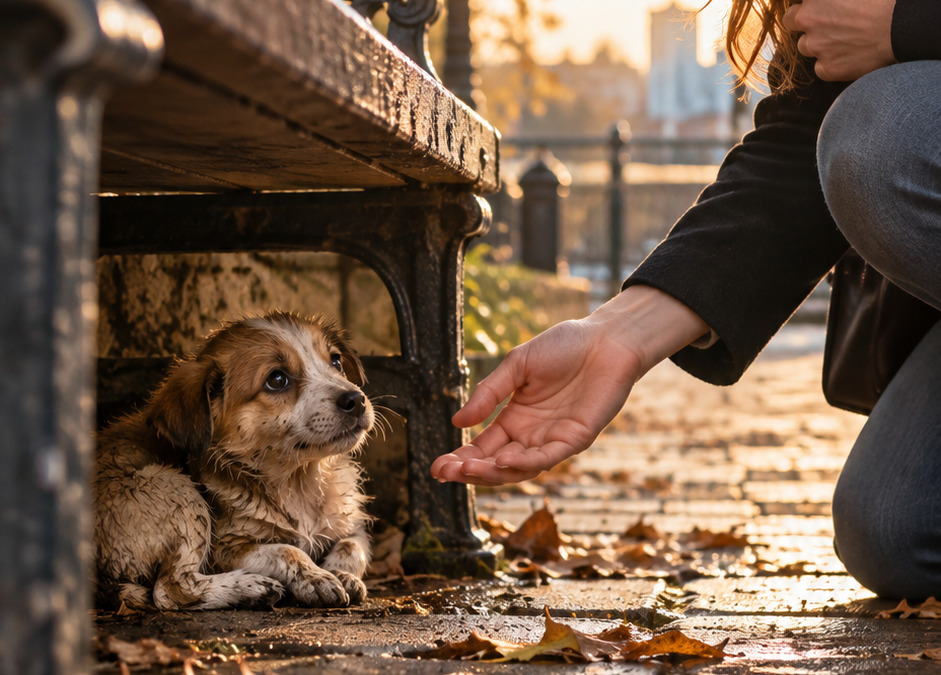
𝗣𝗔𝗥𝗧 𝟮
The drive back to my cabin took twenty-three minutes.
I know because I watched the dashboard clock like a man waiting for a bomb to either explode or change its mind.
8:17.
8:22.
8:31.
Every few minutes, I looked down at Lyra.
Her eyes remained closed.
I kept one hand beneath the flannel shirt so I could feel the movement of her ribs.
In.
Out.
Pause.
In.
“Don’t make me pull over and give you a motivational speech.”
No response.
“Trust me. Neither of us wants that.”
Her ear moved.
“Good. We’re negotiating.”
The road climbed through pine forest.
Snow blurred the headlights.
Branches sagged.
I drove slower than I wanted and faster than was intelligent, which is how most emergency driving by ordinary people probably works.
At one turn, the truck slid a few inches.
I corrected.
Lyra didn’t stir.
“See? Perfectly safe.”
I looked down.
“Ignore that.”
When I reached the cabin, I carried her inside beneath my coat.
The fire from the previous night had burned down to embers.
I added wood.
Opened the damper.
Flames began climbing.
I laid an old wool blanket several feet from the stove.
Not directly beside it.
Warming an animal with serious hypothermia too quickly can create its own problems, and even though I wasn’t a veterinarian, years around mountain winters had taught me enough not to turn panic into stupidity.
I placed Lyra on the blanket.
She remained curled.
I warmed towels.
Wrapped hot water bottles inside fabric.
Placed them around her, not against exposed skin.
Then I sat down.
And waited.
The cabin had not held another living creature in years.
That wasn’t entirely true.
Mice occasionally filed squatter’s-rights claims in the pantry.
But nothing that looked back.
Nothing that breathed beside the fire.
Nothing that needed me.
The last dog to sleep near that stove had belonged to my younger sister, Anna.
A shepherd mix named Cooper.
Anna and Cooper had been almost impossible to separate.
Then one icy December, Anna’s car went off a mountain road.
Cooper had been with her.
Neither survived.
That was eleven years earlier.
After that, I didn’t get another dog.
People suggested it.
I always had the same answer.
“No.”
Sometimes people thought I meant I wasn’t ready.
Eventually they understood I meant permanently.
Loving something creates a location inside you where loss can later live.
I had enough occupied property.
That was my philosophy.
A grim little real-estate theory of emotional survival.
Then Lyra opened one eye.
My philosophy immediately became less impressive.
“Hey.”
Her gaze drifted.
“Still here.”
I warmed a shallow bowl of water.
Not hot.
I dipped a clean cloth.
Touched it against her gums.
Her tongue moved.
Tiny.
But real.
“That’s right.”
Again.
Another lick.
“Good.”
I kept going.
A few drops at a time.
Lyra’s body began warming gradually.
The violent trembling became smaller.
Then less constant.
I checked her paws.
Cold.
Some superficial cracking.
No obvious severe frostbite yet.
Her ears worried me.
Pale edges.
I wrapped them gently with warm cloth.
“You’re going to hate me for this.”
She didn’t have the strength.
“I’ll consider that temporary.”
Hours passed.
The storm intensified.
Wind hammered the side of the cabin.
Snow struck the windows sideways.
I should have called a veterinarian immediately.
I tried.
No service.
I moved to the kitchen window.
One bar.
Gone.
Held the phone near the ceiling.
Nothing.
Walked onto the porch for exactly six seconds.
Regretted every life decision I’d ever made.
Still no signal.
The storm had effectively cut us off.
“Excellent.”
Lyra’s ear twitched.
“You’ve selected a very inconvenient rescuer.”
Her breathing remained shallow.
I sat beside her.
Counted.
Thirty-eight breaths.
Forty.
Forty-two.
Too fast.
But steady.
I found canned chicken in the pantry and mashed a small amount with warm water.
Lyra wouldn’t eat.
I put a little on my finger.
Held it near her nose.
Nothing.
“Fair.”
I left it.
The room grew dark before four.
Winter in the mountains has no respect for productivity.
I kept feeding the fire.
Checking Lyra.
Talking to her.
Mostly nonsense.
Weather.
The broken cabinet hinge.
The fact that if she lived she would owe me a new flannel shirt because she had already urinated on mine.
That was excellent news.
Not for the shirt.
For her.
“I disliked that shirt anyway.”
I had owned it seventeen years.
This was a lie.
By nightfall, Lyra had swallowed several teaspoons of water.
She also ate a little softened chicken.
Not enough.
But something.
I sat beside the stove.
She lay beneath two blankets.
Her nose visible.
Every time her breathing paused slightly longer than expected, my chest tightened.
I told myself I was being practical.
Monitoring.
Temporary responsibility.
Nothing emotional.
This worked until midnight, when Lyra made a sound.
A tiny sigh.
Then dragged herself maybe four inches closer to my hand.
Her head rested against my fingers.
I stopped breathing.
“That’s cheating.”
She closed her eyes.
I stayed there all night.
Not because I cared.
Obviously.
Because moving my hand might wake the patient.
Professional reasons.
Around three, I remembered Anna.
I hadn’t planned to.
Memory rarely asks.
I remembered sitting beside her fireplace while Cooper slept across both our feet.
Anna teasing me because I claimed not to like dogs.
“You like him.”
“I tolerate him.”
“He’s asleep on your boots.”
“He has poor judgment.”
Cooper would open one eye.
Anna would laugh.
Then the memory changed.
Hospital.
Sheriff.
Words.
Weather.
Guardrail.
Dead.
Memory is cruel that way.
It lets you enter through a warm door and then removes the floor.
I looked down at Lyra.
“No.”
She slept.
“You’re not allowed to turn into that story.”
I touched the blanket.
“Not tonight.”
The storm roared.
I fed the fire.
Counted breaths.
At some point near dawn, exhaustion pulled my eyes closed.
I woke to movement.
For one second, I didn’t know where I was.
Then I saw Lyra.
She had lifted her head.
Not high.
Maybe two inches.
But it was up.
Her ears sagged.
Eyes half-open.
She looked around the cabin.
Confused.
Then she saw me.
“Morning.”
Her head wobbled.
“You look terrible.”
She lowered it again.
“But alive.”
I brought water.
Held the bowl.
Lyra sniffed.
Her tongue touched the surface.
Once.
Then again.
She drank.
Slow.
Tiny laps.
I felt pressure behind my eyes.
Ridiculous.
A dog drank water.
I’d seen dogs drink water before.
This was not historically significant.
Except it was.
Because twelve hours earlier, I hadn’t been sure she’d ever lift her head.
“That’s enough.”
I moved the bowl.
She followed it with her eyes.
“Don’t be greedy.”
Another few laps.
I offered food.
Mashed chicken.
Small amount.
Lyra sniffed.
Licked my finger.
Then ate.
The sound of her swallowing might as well have been church bells.
I sat there grinning like an idiot.
She ate maybe two tablespoons before stopping.
Then rested her head on my wrist.
That gesture undid me more than anything.
Trust from a healthy dog is pleasant.
Trust from an animal who has every reason not to offer it feels like being handed something expensive by someone who owns almost nothing.
“You’re making terrible decisions.”
Lyra closed her eyes.
“Trusting me this early.”
Tail movement.
Or maybe muscle twitch.
I chose tail.
Optimism had apparently entered the building without permission.
By late morning, the storm weakened.
I finally found enough signal to reach Dr. Evelyn Harper, the veterinarian in town.
“You found what?”
“A shepherd puppy.”
“Where?”
“Under the bench at Miller Park.”
“In that storm?”
“Apparently she enjoys bad accommodations.”
“Declan.”
“Yes.”
“How cold was she?”
“Very.”
“Helpful.”
I described everything.
Breathing.
Food.
Paws.
Ears.
Response.
Evelyn listened.
“Bring her as soon as the road clears.”
“I will.”
“And don’t overfeed.”
“I know.”
“Don’t let her run around.”
“She can’t stand.”
Silence.
“All right.”
“That sounded worried.”
“I am worried.”
“Excellent bedside manner.”
“I’m not at your bedside.”
“Technicality.”
She sighed.
“Just keep her warm and hydrated. Slow. Call if anything changes.”
I hung up.
Lyra stared.
“Doctor says you’re inconvenient.”
She blinked.
“Not exact wording.”
By noon, Lyra tried to stand.
I didn’t encourage it.
She did it anyway.
Front legs first.
Then hind legs.
Her paws spread.
The muscles in her back trembled.
For one glorious second she stood.
Then folded.
I caught her.
“Ambitious.”
She looked annoyed.
“Good.”
That emotion pleased me.
Annoyed meant there was enough life in her to object.
She tried again fifteen minutes later.
Failed again.
Then rested her chin on my knee.
I stroked the side of her face.
“You’re stubborn.”
Her eyes closed.
“That’s going to become inconvenient.”
The roads opened enough by afternoon.
I drove Lyra into town.
Dr. Harper was waiting.
Evelyn had known me since school.
She was one of those people who retained the supernatural ability to detect nonsense before you spoke.
She saw Lyra wrapped in my coat.
Then looked at me.
“No.”
“What?”
“That face.”
“What face?”
“You’re keeping her.”
“I found her yesterday.”
“Exactly.”
“I am taking her to a shelter after she’s healthy.”
Evelyn held out her arms.
“Of course.”
I handed Lyra over.
The puppy stirred.
Then stretched one paw toward me.
Evelyn looked at the paw.
Then at me.
I pointed.
“Medical reflex.”
“Naturally.”
She examined Lyra.
Mild-to-moderate hypothermia recovery.
Dehydration.
Malnutrition.
Minor frost injury.
No broken bones.
No serious neurological problems.
Her lungs sounded clear.
“She’s lucky.”
I hated that word in rescue situations.
Lucky would have been never being abandoned.
Lucky would have been spending the storm inside.
What Lyra was, was alive.
Different category.
Evelyn noticed my expression.
“You know what I mean.”
“I do.”
“She should recover.”
“Should?”
“Declan.”
“Fine.”
“We need to watch for delayed complications. Infection. Respiratory problems. Tissue damage.”
I nodded.
“How long?”
“A few days before I’m comfortable.”
“Then?”
“Then you contact the shelter.”
She smiled.
“Because you’re definitely not keeping her.”
“Correct.”
Lyra licked my wrist.
Evelyn’s smile widened.
“Embarrassing.”
“She’s delirious.”
We returned home with medication, food, and instructions.
The next several days followed a quiet rhythm.
Warmth.
Food.
Water.
Short movement.
Rest.
Lyra began following me with her eyes.
Then with her head.
Then, by the third day, with her entire body.
I walked to the kitchen.
Click.
Click.
Tiny paws behind me.
I stopped.
She stopped.
I walked.
She followed.
“You know there’s nothing interesting in here.”
She continued.
I moved toward the bedroom.
Follow.
“You’re developing unhealthy attachment patterns.”
Tail thump.
“You need boundaries.”
She sat directly on my slipper.
“So do I, apparently.”
At night, she still dreamed badly.
Her paws twitched.
Sometimes she whined.
Once she woke suddenly and scrambled beneath the table.
I sat several feet away.
Didn’t reach.
“You’re home.”
Her eyes watched me from the shadows.
I hated myself for using the word.
Home implied permanent.
I wasn’t offering permanent.
I couldn’t.
“I’m sorry.”
I corrected.
“You’re safe.”
That seemed manageable.
Safety could be temporary.
Lyra crawled out.
Pressed against my leg.
Apparently she wasn’t interested in linguistic precision.
By the end of the first week, she barked.
One rough little sound at a raven outside the window.
She startled herself.
I laughed.
Lyra looked at me.
“Bark again.”
Nothing.
“Naturally.”
Two minutes later the raven returned.
“Bark!”
Stronger.
I clapped.
Lyra’s tail moved.
Once.
Twice.
Then wagged.
A real wag.
Something cracked open in my chest.
I had heard my own laughter more times that week than in the previous year.
That annoyed me.
Healing should not sneak up on a person.
It should at least knock.
Lyra became stronger.
She began playing.
First with my gloves.
Then with a rolled sock.
Then with a boot.
“Absolutely not.”
She tugged.
“That’s leather.”
Tug.
“It costs money.”
Tug.
“You were more manageable near death.”
I regretted the sentence instantly.
Lyra froze.
I crouched.
“Bad joke.”
She watched.
I held out my hand.
“Come here.”
Slowly, she approached.
I scratched her neck.
“You’re allowed to be trouble.”
Tail wag.
“Within reason.”
She grabbed the boot again.
“Apparently our definitions differ.”
The shelter called during the second week.
Mountain County Animal Rescue had been overwhelmed after the storm.
Lost dogs.
Cats found in sheds.
Livestock displaced by broken fencing.
People surrendering animals after heating failures.
The director, Maria Santos, needed volunteers.
Evelyn had apparently told her I had a recently rescued German Shepherd.
Betrayal.
Maria called.
“Dr. Harper says you’ve got experience.”
“Dr. Harper lies.”
“She says the pup’s doing well.”
“That part is true.”
“We could use help transporting supplies.”
I looked at Lyra.
She was chewing the corner of a rug.
“Maybe.”
“You could bring her.”
I paused.
Why would I bring Lyra into a noisy shelter?
Then I considered the other side.
Exposure.
Controlled.
Positive.
Maybe good.
Maybe terrible.
“One hour.”
“Deal.”
The next morning, I put a yellow collar on Lyra.
She hated it.
Scratched.
Shook.
Tried biting it.
“Very dignified.”
She glared.
“All shepherds begin as professional models.”
She sneezed.
We drove to the shelter.
The moment I opened the door, noise hit us.
Dogs barking.
Metal latches.
Phones.
Voices.
Lyra froze.
Her body pressed against my leg.
Ears flat.
Tail tucked.
I felt immediate guilt.
“All right.”
I crouched.
“We can leave.”
She stared toward the kennels.
One dog barked sharply.
Lyra jumped.
Backed up.
I loosened the leash.
“Your choice.”
People passed.
Maria approached slowly.
“That’s her?”
“Yeah.”
“She’s beautiful.”
Lyra hid partly behind me.
“She’s unconvinced.”
Maria knelt sideways.
Didn’t reach.
Smart.
“Hi, Lyra.”
The puppy watched.
Another kennel door clanged.
Lyra flinched.
I nearly left.
Then she took one step forward.
Not toward the kennel.
Toward Maria.
Sniffed.
Maria stayed still.
Lyra retreated.
“That’s enough,” I said.
Maria nodded.
We moved toward a quieter back hall.
Lyra walked beside me.
Nervous.
But moving.
The shelter’s playyard was quieter.
A small terrier mix approached with a rope toy.
Lyra froze.
The terrier dropped the rope.
Play bow.
Lyra looked at me.
“Don’t ask me.”
She looked back.
The terrier grabbed the rope.
Shook it.
Lyra’s ears rose.
One step.
Another.
Then she grabbed the other end.
The terrier pulled.
Lyra pulled.
Tail wag.
For thirty seconds, she became what she should have been all along.
A puppy.
No snow.
No bench.
No abandonment.
Just a ridiculous tug-of-war.
I smiled.
Then wind slammed against the chain-link fence.
Metal rattled.
Lyra dropped the rope.
Her body hit the ground.
Everything vanished from her face except terror.
“Lyra.”
She crawled toward the corner.
I went down beside her.
“No.”
Her breathing raced.
“You’re here.”
I placed my hand near her.
Not on her.
She pressed into it.
“That’s right.”
The terrier watched from several feet away.
Maria appeared at the gate.
“Need space?”
“Yes.”
She moved everyone back.
I sat with Lyra until her breathing slowed.
Recovery isn’t a staircase.
It’s a mountain trail.
You climb.
Slip.
Gain fifty feet.
Lose twenty.
Stop pretending setbacks mean failure.
That was something I was learning too.
Later, Maria called me into the office.
“We found something you need to see.”
Lyra slept beneath my chair.
Maria opened video footage on a monitor.
Park security camera.
Timestamp: the night before I found her.
Snow already falling.
The image was grainy.
A vehicle stopped along the road.
A person emerged.
Hood up.
Face impossible to identify.
They opened the rear door.
Removed a cardboard box.
Carried it toward the bench.
Set it down underneath.
Then walked away.
Didn’t pause.
Didn’t look back.
The vehicle left.
I stared.
Maria stopped the video.
“That’s all we have.”
“What time?”
“11:48 p.m.”
I felt sick.
Lyra had been there all night.
Hours.
“What kind of person—”
Maria shook her head.
“We don’t know the context.”
“They left a puppy in a box during a winter storm.”
“I know.”
“They didn’t surrender her. They didn’t call anyone.”
“I know.”
“She could have died.”
“I know.”
My hands were clenched.
Lyra shifted beneath the chair.
Her paw touched my boot.
I looked down.
Anger has an appetite.
It tells you feeding it will make things right.
Usually it just wants more.
The person in that video had done something cruel.
Cowardly.
Irresponsible.
But Lyra didn’t need my rage.
She needed the man sitting beside her now.
I exhaled.
“Can police use this?”
“Maybe. License plate isn’t readable.”
“Of course.”
Maria’s mouth tightened.
“Sometimes we don’t get accountability.”
I hated that.
Then I looked at Lyra.
Maybe accountability didn’t have to look like punishment.
Maybe sometimes it looked like survival.
“Keep a copy.”
“We will.”
I left.
On the drive home, Lyra slept against the passenger door.
I wanted to imagine confronting the person.
Demanding explanation.
Making them see what they’d nearly done.
Then I realized something embarrassing.
I was centering them.
They had already taken one night from Lyra.
I wasn’t giving them the rest of the story.
The next week, we returned to the shelter.
Lyra hesitated.
Then entered.
The chain-link rattle still bothered her.
But less.
A boy visiting with his mother stood near the back hall.
Maybe eight.
He had apparently been bitten by a dog when he was younger.
He wanted to like dogs.
His body disagreed.
Every bark made him step backward.
Lyra noticed.
She stopped.
The boy stopped too.
Two frightened creatures studying each other.
His mother whispered, “You don’t have to.”
He nodded.
But stayed.
I crouched beside Lyra.
“Your call.”
The boy held out one hand.
Lyra looked at me.
Then approached.
Slow.
She sniffed his fingers.
The boy held his breath.
Lyra touched her nose to his palm.
His shoulders dropped.
“She’s soft.”
“Usually.”
He smiled.
Lyra’s tail wagged.
He stroked the side of her neck.
She leaned slightly.
The boy laughed.
His mother covered her mouth.
I looked away.
There are times when being witnessed changes healing.
Lyra had spent so long afraid of being touched.
Now her gentleness made another frightened person brave.
That’s not magic.
It’s trust being passed from one nervous body to another.
The shelter became part of our routine.
Not daily.
Once or twice a week.
Lyra learned the sounds.
Dogs.
Gates.
Latches.
The building stopped being one giant warning.
She began playing with other puppies.
Greeting volunteers.
Sometimes sitting beside nervous dogs outside their kennels.
I never called it therapy.
She was still healing herself.
But she had a calmness around fear.
Maybe because she recognized it.
One afternoon, Maria asked a question I had been avoiding.
“Have you thought about adoption?”
I looked at Lyra.
She was asleep across my boots.
“What about it?”
“She’s healthy.”
“I know.”
“She’s socializing.”
“Mostly.”
“We have interested families.”
My chest tightened.
I hated that reaction.
I had told myself from day one that Lyra wasn’t mine.
Temporary.
Safe harbor.
Rehabilitation.
Nothing permanent.
Maria watched me.
“You could adopt her.”
“No.”
The answer came too fast.
“Okay.”
“I don’t want another dog.”
Maria nodded.
Annoyingly calmly.
“I understand.”
“I mean it.”
“I said I understand.”
“You look like Evelyn.”
“Should I be insulted?”
“Probably.”
She smiled.
“You don’t have to decide today.”
“I already decided.”
“Then we can begin screening.”
That should have been a relief.
It wasn’t.
Driving home, Lyra rested her chin on my thigh.
“Don’t.”
She looked up.
“You’re going to a family.”
Tail wag.
“Somewhere with kids.”
Wag.
“Maybe another dog.”
Wag.
“Yard.”
Wag.
“This is not a negotiation.”
She fell asleep.
I stared at the road.
Coward.
Not her.
Me.
I could rescue a freezing puppy.
I could sit beside her all night.
I could rebuild trust.
What scared me was the part after.
Keeping her.
Because keeping means eventually losing.
The logic was flawless if your goal is to avoid grief.
Unfortunately, it also prevents love.
I knew that.
Knowledge and courage are different departments.
The adoption fair happened several weeks later.
The shelter held it in the same park where I’d found Lyra.
I almost refused.
Maria reassured me.
“You don’t have to place her.”
“She’s not ready.”
“She may never be ready according to you.”
“Correct.”
“We want her there for socialization.”
That was how she trapped me.
I agreed.
Tents covered the grass.
Families walked between booths.
Dogs wore colorful bandanas.
Volunteers handed out applications.
The weather was cold but clear.
Nothing like the storm.
Lyra wore her yellow collar.
She walked close to my leg.
When we passed the bench, she didn’t react.
I did.
It was just a bench.
Someone sat there eating a muffin.
That felt almost offensive.
I wanted a monument.
A plaque.
SOMETHING TERRIBLE ALMOST HAPPENED HERE.
Instead, there were crumbs.
Probably healthier.
Lyra sniffed the grass.
Kept walking.
People noticed her.
“Beautiful dog.”
“How old?”
“Is she available?”
I answered carefully.
“Maybe.”
My own voice annoyed me.
A little girl dropped a mitten.
Lyra picked it up.
Carried it back.
The girl laughed.
“She gave it back!”
“Rare.”
Lyra wagged.
Several families gathered.
Hands reached slowly.
Lyra looked at me.
Permission.
I nodded.
She stepped forward.
Accepted touch.
One child scratched her chest.
Another stroked her ear.
Lyra’s tail moved.
I felt pride.
Then the public-address system exploded.
A burst of feedback.
CRACK.
Lyra vanished.
The leash ripped through my hand.
She dove beneath a tent.
Curling against one support pole.
Body flat.
Eyes wild.
People went silent.
I crawled underneath.
“Lyra.”
She panted.
Couldn’t focus.
“Look at me.”
Nothing.
I moved closer.
“No bench.”
Her eyes found me.
“Not the storm.”
Her body shook.
“I’m here.”
I put my hand palm-up.
Lyra crawled.
Pressed her face into it.
Her breathing began slowing.
Outside the tent, people waited.
No one laughed.
No one clapped.
Thank God.
Trauma is not performance.
I stayed until Lyra chose to move.
Eventually she stood.
Walked out beside me.
Head low.
Then something happened I hadn’t expected.
The girl with the mitten was still waiting.
She held her hand out.
Lyra stopped.
Approached.
Sniffed.
Tail wag.
The girl smiled.
That was the victory.
Not the panic disappearing.
The return.
Fear had knocked her down.
She came back.
That mattered more.
The adoption fair ended.
Several dogs went home.
Lyra returned to my cabin.
Maria said nothing.
Bless her.
That night, Lyra slept by the fire.
I watched.
The decision I had been avoiding pressed against me from every side.
Keep her.
Let her go.
Love meant both possibilities.
I slept badly.
Over the next few days, Lyra seemed different.
Not worse.
Bolder.
She ran to the door in the morning.
Barked at ravens.
Dragged both my boots across the room.
Apparently personal growth expressed itself as theft.
Then Maria called.
“A family wants to meet her.”
My stomach dropped.
“Who?”
“Daniel and Rebecca Hayes. San Diego.”
“California?”
“Last I checked.”
“That’s far.”
“They’re visiting family here. Saw her at the fair.”
“Why would they drive from San Diego for a dog?”
“People drive farther for worse reasons.”
“Helpful.”
“They have a twelve-year-old daughter. Previous shepherd experience. Large fenced yard. Rebecca works from home.”
I hated how good it sounded.
“When?”
“Saturday.”
I looked at Lyra.
She was asleep upside down.
“Fine.”
The Hayes family arrived ten minutes early.
I disliked them immediately.
Not because they did anything wrong.
Because I wanted to.
Daniel was calm.
Rebecca asked sensible questions.
Their daughter, Sophie, didn’t rush Lyra.
That was strike three.
Competent people are extremely irritating when you’re hoping for an excuse to reject them.
Sophie sat on the ground.
Placed a tennis ball beside her.
Waited.
Lyra watched.
Then walked over.
Sniffed the ball.
Sophie rolled it three feet.
Lyra chased.
Picked it up.
Returned.
Dropped it.
Sophie laughed.
Lyra barked.
Tail wagging.
I folded my arms.
Maria appeared beside me.
“Awful family.”
“Terrible.”
“Really suspicious how prepared they are.”
“Exactly.”
Rebecca asked about Lyra’s triggers.
Not “What’s wrong with her?”
Triggers.
Good language.
She asked about the park.
The shelter.
Noise.
Feeding schedule.
Veterinary care.
Training.
She didn’t ask whether Lyra was “fully over it.”
That mattered.
Trauma doesn’t come with warranty completion dates.
Daniel asked, “Would we be able to come back next week?”
I looked at him.
“Why?”
He seemed surprised.
“To let her know us gradually.”
Annoying.
Correct answer.
“Yes.”
They came back.
Then again.
Lyra recognized the car by the third visit.
Sophie brought the same tennis ball.
Lyra ran toward her.
I hated that.
Then loved it.
Then hated myself for both.
The fourth visit happened at my cabin.
I wanted them to see Lyra in her safest environment.
Also, I secretly hoped she would ignore them.
She didn’t.
Traitor.
Sophie sat by the fire.
Lyra curled against her leg.
Rebecca watched me.
“You’re very attached.”
“No.”
She smiled.
“Okay.”
“I’m serious.”
“Of course.”
I disliked her again.
Daniel walked outside with me.
Snow covered the field.
He stood quietly.
Then said, “You don’t have to give her to us.”
I looked over.
“We know you love her.”
I stared toward the trees.
“That’s not the problem.”
“What is?”
I almost said none of your business.
Instead:
“I’ve already lost enough.”
Daniel nodded.
No advice.
Good.
“I keep thinking if I keep her, one day I’ll lose her.”
“Yes.”
I looked at him sharply.
“Terrible sales technique.”
He smiled slightly.
“It’s true.”
“You don’t seem concerned.”
“I am. We had a shepherd for thirteen years.”
“How’d that end?”
“Badly.”
“Exactly.”
He looked toward the window.
Sophie was laughing while Lyra chewed a rope.
“My daughter cried for months.”
“And now you want another?”
“Eventually we realized losing him didn’t make having him a mistake.”
That shut me up.
I disliked him most of all now.
People who say exactly what you don’t want to hear should be taxed.
After they left, I sat beside Lyra.
“You like them.”
Tail wag.
“Don’t answer.”
She put a paw on my knee.
“They have California weather.”
Another wag.
“Disloyal.”
She licked my hand.
I closed my eyes.
There it was.
The truth.
I loved her.
I also knew something else.
My cabin was good for recovery.
Quiet.
Routine.
Safe.
But Lyra loved children.
Other dogs.
Activity.
She lit up at the shelter.
At the fair.
With Sophie.
I could keep her.
She would be happy.
I believe that.
But letting her go wasn’t abandoning her.
That distinction mattered.
Abandonment says:
Your needs are inconvenient to me, so disappear.
Love says:
Your future matters even when it hurts me.
I had to decide which man I wanted to be.
The paperwork arrived two weeks later.
I stared at it.
Adoption agreement.
Medical records.
Microchip transfer.
Maria sat across from me.
“You can stop this.”
“I know.”
“Nobody will judge you.”
“I’ll judge me.”
She waited.
I signed.
The pen felt heavier than it should have.
“Done.”
Maria smiled.
“How do you feel?”
“Like punching paperwork.”
“Healthy.”
“Thank you.”
The Hayes family came Saturday.
Sophie ran toward Lyra.
Stopped herself halfway.
Waited.
Lyra closed the distance.
That was all I needed.
Rebecca hugged me.
I tolerated it poorly.
Daniel shook my hand.
Sophie knelt.
Lyra leaned into her.
I crouched.
“Hey.”
Lyra turned.
Came to me.
Put her paws on my knees.
I held her face.
Those eyes.
Not cloudy anymore.
Bright.
Alive.
“You know what happens now?”
She licked my chin.
“Disgusting.”
Tail wag.
“You go home.”
My voice broke.
Wonderful.
Public humiliation by dog.
I whispered:
“You’re safe now, Lyra.”
Her ears tilted.
“Really safe.”
I swallowed.
“And if they annoy you, eat their shoes.”
Sophie laughed through tears.
Rebecca said, “Please don’t train her.”
“Too late.”
I pressed my forehead against Lyra’s.
For a second, the whole story returned.
Bench.
Snow.
Flannel shirt.
Fire.
Water.
First bark.
Yellow collar.
Shelter.
Panic.
Trust.
Then I let go.
Lyra walked toward Sophie.
Three steps.
Paused.
Looked back.
I had told myself that if she looked back, I would fall apart.
She looked.
I smiled.
“Go.”
Her tail wagged.
Then she climbed into their car.
Not dragged.
Not placed.
Climbed.
Choice.
The exact thing abandonment had stolen from her.
The car pulled away.
I stood holding the old yellow leash.
No dog attached.
The silence afterward was brutal.
The cabin felt wrong that evening.
Boots remained where I’d left them.
Rug unchewed.
No paws.
No bark.
No shadow following me to the kitchen.
I sat by the fire.
For the first time in months, nobody placed a head on my knee.
I cried.
No elegant version.
No noble rescue-worker tears.
I cried like a man who had just voluntarily sent away something he loved.
Then my phone buzzed.
A photo.
Sophie sitting in the back seat.
Lyra asleep across her lap.
Caption from Rebecca:
She hasn’t stopped touching Sophie.
I laughed.
Then cried harder.
“Good.”
The next morning brought another photo.
Lyra in a sunny kitchen.
Third photo:
Lyra chasing a tennis ball.
Fourth:
Lyra asleep between Sophie and the couch.
Then a video.
Lyra barking at waves on a beach.
I watched it five times.
California suited her.
Traitor.
Weeks passed.
The Hayes family sent updates regularly.
Training class.
First beach trip.
New dog bed ignored in favor of Sophie’s room.
Typical.
Lyra learned stairs.
Learned sprinklers.
Learned that ocean water tastes terrible but apparently requires repeated confirmation.
She became bigger.
Ears upright.
Long shepherd legs.
The little animal I’d carried like a frozen shadow had become a dog.
A real one.
Confident.
Ridiculous.
Loved.
Then Maria called.
“They identified the vehicle.”
I went quiet.
“What?”
“The one from the park footage.”
Police had enhanced footage from a nearby traffic camera.
License plate.
Registered owner.
The person who had left Lyra was contacted.
No dramatic criminal mastermind.
No secret evil kennel.
Just an overwhelmed owner who had bought a puppy without understanding what a German Shepherd required.
Energy.
Training.
Time.
Money.
Patience.
They claimed Lyra was destructive.
Wouldn’t settle.
Chewed furniture.
Had accidents.
Cried when left alone.
In other words:
She was a puppy.
A German Shepherd puppy.
The human equivalent of adopting a tornado with teeth and then filing a complaint about wind.
“They admitted it?” I asked.
“Yes.”
“Why the bench?”
Maria paused.
“They said shelters would ask questions.”
I stared at the wall.
“So they left her to freeze rather than answer questions?”
“Basically.”
My anger returned.
Fast.
Clean.
“What happens?”
Animal abandonment charges.
Fine.
Restriction on ownership.
Nothing cinematic.
No prison doors.
No television crews.
No public shame parade.
At first, I was disappointed.
I wanted punishment proportional to a freezing puppy beneath a bench.
The law rarely calibrates emotion that precisely.
Then Maria said, “They asked what happened to her.”
I went still.
“What did you say?”
“That she survived.”
“Anything else?”
“I showed them a photo.”
I smiled without meaning to.
“Which one?”
“The beach.”
I laughed.
Actually laughed.
Lyra running through surf.
Ears up.
Tail high.
Sophie behind her.
Beautiful.
Free.
That was the punishment I hadn’t understood I wanted.
They had left a trembling puppy because she was too inconvenient to care for.
Now that same dog was running beside the Pacific Ocean, loved by a family who had driven hundreds of miles for the privilege of earning her trust.
The person who abandoned her had reduced Lyra to a problem.
Lyra had turned their judgment into nonsense.
That was enough.
More than enough.
A month later, I received a package.
Inside was a framed photograph.
Lyra and Sophie on the beach at sunset.
Lyra’s head rested against the girl’s shoulder.
On the back, Sophie had written:
Thank you for seeing her.
I sat at the kitchen table holding that photograph for a long time.
Seeing her.
That was where the whole story began.
Not rescuing.
Seeing.
Because Lyra had been visible beneath that bench.
Technically.
Anybody could have looked.
Snow had not made her invisible.
Indifference had.
There are things people train themselves not to notice because noticing creates responsibility.
The man sleeping under cardboard.
The dog tied behind an empty building.
The elderly neighbor whose curtains haven’t opened.
The child eating lunch alone.
Looking can be expensive.
Looking may require action.
So sometimes people don’t.
That morning, I did.
And Lyra survived.
I wish I could pretend that made me extraordinary.
It didn’t.
I bent down.
That’s all.
The extraordinary part was what Lyra did after.
She trusted again.
Slowly.
She stood.
She ate.
She barked.
She played.
She walked into a noisy shelter.
She panicked and returned.
She met a frightened boy and offered gentleness.
She survived an adoption fair.
She chose a family.
She walked willingly into their car.
She learned the ocean.
She became herself.
Months after her adoption, Sophie called.
Not texted.
Called.
“Mr. Mercer?”
“Declan.”
“Mom says I should call you Mr. Mercer.”
“Your mother has questionable judgment.”
Sophie laughed.
“Lyra did something.”
I immediately worried.
“What?”
“She helped me.”
I sat straighter.
Sophie had struggled with anxiety.
Rebecca had mentioned it but never made it part of Lyra’s adoption narrative.
One night during a thunderstorm, Sophie had a panic attack.
Lyra came to her room.
Climbed onto the bed.
Pressed against her.
Stayed until Sophie’s breathing slowed.
The girl described it matter-of-factly.
“She knew.”
I looked toward the fireplace.
“Yeah.”
“How?”
“I don’t know.”
“Because she was scared before?”
“Maybe.”
Silence.
Then Sophie said, “She doesn’t like thunder either.”
“Then you helped each other.”
“Yeah.”
Her voice softened.
“I think so.”
After the call, I walked outside.
Snow covered the ground.
Not deep.
Quiet.
I drove into town.
Parked near Miller Park.
Walked toward the bench.
Same one.
Someone had replaced one slat.
Graffiti carved into the side.
Nothing sacred about it.
Good.
I sat down.
For several minutes, I watched people cross the park.
A man with a retriever.
Two teenagers.
A woman pushing a stroller.
An older couple.
Life moving.
I looked underneath the bench.
Empty.
I remembered Lyra curled there.
Small enough to fit beneath one arm.
Eyes tired.
Body nearly gone.
I had spent months imagining the person who left her as the villain.
They were.
In the simplest sense.
But villains don’t always wear expressions that announce themselves.
Sometimes they’re just ordinary people making cowardly decisions.
That may be more dangerous.
Cruelty doesn’t always arrive shouting.
Sometimes it drives away quietly before midnight and convinces itself someone else will deal with the consequences.
What defeated that cruelty wasn’t revenge.
It was everything that happened after.
The fire.
The food.
The shelter.
The boy’s hand.
Sophie’s tennis ball.
The beach.
The family.
Lyra’s choice.
The person who abandoned her had treated her life like an inconvenience.
Every good day she lived afterward became a rebuttal.
I liked that.
I liked it very much.
Years went by.
Lyra visited twice.
The first time, the Hayes family returned to Colorado for Christmas.
I waited outside the cabin.
Their SUV came up the road.
Door opened.
A full-grown German Shepherd launched out.
“Lyra!”
She hit me at approximately highway speed.
I went backward into snow.
Sophie screamed.
Rebecca shouted.
Daniel laughed, which confirmed my original suspicion that he was a terrible person.
Lyra stood over me licking my face.
“You remember.”
Tail wag.
“Get off.”
More licking.
“California ruined your manners.”
Sophie pulled her away.
“Sorry!”
“I’m suing.”
She laughed.
Lyra circled me.
Sniffing.
Then ran toward the cabin.
She stopped at the door.
Looked back.
I opened it.
“Go ahead.”
She entered.
Walked directly to the fireplace.
Circled.
Lay down.
As though she’d left yesterday.
My throat tightened.
Sophie noticed.
“She remembers.”
“Apparently.”
That evening, all of us sat around the fire.
Lyra moved between Sophie and me.
Not choosing.
No need.
Love isn’t always a competition.
That had taken me a long time to understand.
When they left, I hurt.
But differently.
The goodbye wasn’t abandonment.
There was a next visit.
Photos.
Calls.
Connection.
Loss and distance aren’t identical.
Another lesson Lyra had apparently assigned me without consent.
The second visit came when she was almost five.
Mature.
Broad-chested.
Calm.
She still disliked loud metallic rattling.
Not panic.
Just ears back.
Attention.
Then recovery.
Scars don’t always vanish.
Sometimes healing means they stop making decisions for you.
By then, I had started volunteering regularly at Mountain County Animal Rescue.
Maria enjoyed reminding me that I had once claimed not to be “an animal person.”
“I never said that.”
“You implied it.”
“Legally different.”
I handled transport.
Winter foster emergencies.
Maintenance.
Occasionally sat with terrified dogs who needed someone to do nothing beside them.
That last job became my specialty.
New volunteers often wanted to help too aggressively.
Treats.
Hands.
Voices.
Commands.
“Sit down,” I’d tell them.
“But shouldn’t we—”
“No.”
“What do I do?”
“Be boring.”
Turns out boring is useful.
Lyra taught me that.
Presence without demand.
One January, a young shepherd arrived at the shelter after being chained outside.
She hid beneath a bench in one of the indoor rooms.
I stopped.
Maria saw my face.
“Yeah.”
I sat down on the floor.
The puppy watched.
Different dog.
Different story.
Same posture.
I put my hand on the floor.
Not close.
Just available.
“You’re all right.”
The puppy remained hidden.
I smiled.
“I knew another dog who liked benches.”
Maria stood in the doorway.
“What was her name?”
I looked at her.
“Don’t.”
She grinned.
The puppy eventually crawled out.
Not to me.
Toward food.
Fine.
Choice.
That night, I sent Sophie a photo.
She replied with a picture of Lyra asleep upside down.
Caption:
Expert advice: snacks.
Correct.
Lyra aged.
Slowly at first.
Then all at once, as dogs do.
Silver appeared around her muzzle.
Her hips stiffened.
She stopped chasing tennis balls for an hour and began considering three throws a reasonable workday.
Sophie went to college nearby instead of across the country partly because she didn’t want to leave Lyra.
I told her not to make life decisions around a dog.
She said, “You did.”
Unfortunate child.
Correct child.
At twelve, Lyra’s health began declining.
Rebecca called me.
Cancer.
I sat in my kitchen with the phone pressed to my ear.
The word moved through me like cold.
Old fear returned.
See?
This was why you don’t love another dog.
This.
This exact ending.
Then I remembered Daniel Hayes years earlier.
Losing him didn’t make having him a mistake.
Damn the man.
I flew to San Diego.
First flight I’d taken in almost fifteen years.
I hated airports.
Lyra deserved the inconvenience.
When I entered their house, she was lying on a padded bed near the patio door.
Gray face.
Thin body.
Still Lyra.
Her ears rose.
Then her head.
She smelled the air.
Tail moved.
Once.
Again.
I knelt.
“Hey.”
She struggled to stand.
“No.”
Too late.
She came toward me.
Slow.
Placed her head against my chest.
I closed my eyes.
For one second, I felt the tiny frozen body beneath the bench.
Then the strong puppy by the fire.
Then the adult shepherd knocking me into snow.
All of them there.
All one dog.
“You did good.”
Lyra breathed against me.
“You caused considerable trouble.”
Tail wag.
“Worth it.”
Sophie sat beside us.
Twenty now.
Tears already running.
We spent three days together.
Short walks.
Sun.
Food she liked.
No heroics.
Cancer doesn’t care about narrative structure.
Eventually the veterinarian came to the house.
Lyra was hurting.
There are times when love means fighting.
There are times when love means stopping the fight.
I had learned both.
Sophie lay beside Lyra.
Rebecca held her paw.
Daniel stood behind them.
I sat near her head.
Lyra looked at me.
Those same brown eyes.
Not tired in the way they’d been under the bench.
Just old.
Full.
I whispered:
“You’re not alone.”
The first promise.
Same words.
Different ending.
Sophie kissed her head.
Lyra exhaled.
Then was gone.
I cried.
Everyone did.
Nothing about the pain felt satisfying.
Nothing made it fair.
But grief was different this time.
It didn’t carry regret.
That surprised me.
I had spent more than a decade avoiding dogs because I believed grief was evidence that love had been a bad bargain.
Lyra corrected me.
Grief was the invoice.
The years before it were what you bought.
She had nearly died beneath a park bench at three months old.
Instead she lived almost twelve years.
Twelve years of beaches.
Children.
Tennis balls.
Thunderstorms.
Cabins.
Clinic visits.
Road trips.
Stolen food.
Bad manners.
Love.
The person who abandoned her had almost reduced that entire future to one freezing night.
They failed.
Completely.
That was the ending I wanted.
Not their fine.
Not the ownership restriction.
Not shame.
Lyra’s life.
Their cowardice lasted minutes.
Her life lasted years.
Their decision said she was disposable.
A family reorganized holidays around her.
A girl chose a college partly because of her.
A frightened child at a shelter learned dogs could be gentle because of her.
I learned to open my life again because of her.
Several other dogs found temporary shelter in my cabin because Lyra had taught me I could survive loving something.
That is how the person who abandoned her lost.
They walked away believing they had ended a responsibility.
Instead, they became the smallest, ugliest footnote in a much larger story.
Months after Lyra died, Sophie sent me her yellow collar.
The original one.
Too small for adult Lyra.
She had kept it.
Inside the package was a note.
Not dramatic.
Just:
I thought this belonged with the person who first taught her what home meant.
I sat at the table.
Held that little collar.
Then looked toward the door.
My cabin had changed over the years.
There was a spare dog bed near the fire now.
Bowls.
Leashes.
Blankets.
Evidence of animals coming through.
Some stayed days.
Some weeks.
One eventually stayed permanently.
A ridiculous one-eyed shepherd mix named Otis who had terrible manners and no respect for furniture.
I had become the thing I once avoided.
Attached.
Vulnerable.
Alive.
Otis walked over.
Sniffed Lyra’s collar.
“Don’t eat that.”
He tried.
“Of course.”
I laughed.
Took it away.
Hung it beside the door.
Not as a memorial to abandonment.
A reminder of return.
Years earlier, Lyra waited beneath a bench while people walked past.
Snow covered her.
Cold closed in.
Her body began losing the argument.
Then somebody saw her.
That’s how people usually tell the story.
Someone finally saw her.
But over time, I understood the deeper truth.
Lyra spent the rest of her life seeing us.
Me, the man hiding inside an empty cabin.
Sophie, a frightened girl learning to live with anxiety.
Shelter dogs who needed calm.
Children learning not to be afraid.
A family ready to love another animal after losing one.
She noticed weakness and didn’t treat it like inconvenience.
Maybe because weakness had once nearly killed her.
Or maybe because dogs don’t require explanations before offering presence.
The bench remained in the park.
I visited occasionally.
Never on anniversaries.
I don’t like turning pain into appointments.
Sometimes I’d sit.
Watch snow.
Think.
One winter afternoon, a father and daughter stopped nearby.
The girl held a German Shepherd puppy.
Warm coat.
Red collar.
The puppy squirmed.
Wanted down.
The father laughed.
“She is so much trouble.”
The phrase hit me.
I looked over.
He said it affectionately.
The puppy licked his face.
He laughed again.
“Yeah, yeah. I love you too.”
I smiled.
Trouble.
There it was.
The word people misuse.
Puppies are trouble.
So are children.
Marriage.
Friendship.
Old parents.
Dreams.
Anything alive enough to matter will eventually complicate your day.
The answer isn’t to demand a life that asks nothing.
That’s not life.
That’s furniture.
The girl set the puppy down.
It bounced through the snow.
I watched.
Then looked beneath the bench.
Empty.
Good.
The snow kept falling.
For a moment, I could almost see Lyra there.
Not frozen.
Not afraid.
Running.
Ears up.
Yellow collar.
Tail high.
Then the image passed.
I stood.
Walked toward my truck.
And left the bench behind.
That’s what Lyra had done.
She didn’t spend her life under it.
Neither should I.
Her story began in snow.
But it did not belong to the snow.
It belonged to every warm place that came afterward.
The cabin fire.
The shelter playyard.
The adoption fair.
Sophie’s hands.
The back seat of a car headed west.
The Pacific Ocean.
A family couch.
A bedroom during thunderstorms.
A sunny patio where an old dog slept safely.
The person who abandoned her had tried to write the ending before Lyra was old enough to understand the beginning.
They were wrong.
The storm was wrong.
My fear was wrong.
Lyra got the last word.
Not with a bark.
Not with revenge.
With a life.
A long one.
A loved one.
A life so full that the freezing bench became only the first paragraph.
And every time I think about that morning, I remember the tiny paw moving beneath the snow.
One small motion.
Almost nothing.
But enough.
Enough for me to stop.
Enough for her to be seen.
Enough to change both our lives.
The snow had nearly erased Lyra.
It failed.
The person who abandoned her had decided she wasn’t worth staying for.
They failed too.
Because Lyra lived long enough to become someone’s best friend, someone’s courage, someone’s family, and the reason one stubborn man finally opened his heart after eleven years of keeping it locked.
The bench lost.
The storm lost.
Abandonment lost.
Lyra won.
And she won by living.








