𝗙𝗨𝗟𝗟 𝗦𝗧𝗢𝗥𝗬 They Drained My Pond Like It Belonged to the HOA Until the Water Board Opened My Deed
𝗙𝗨𝗟𝗟 𝗦𝗧𝗢𝗥𝗬
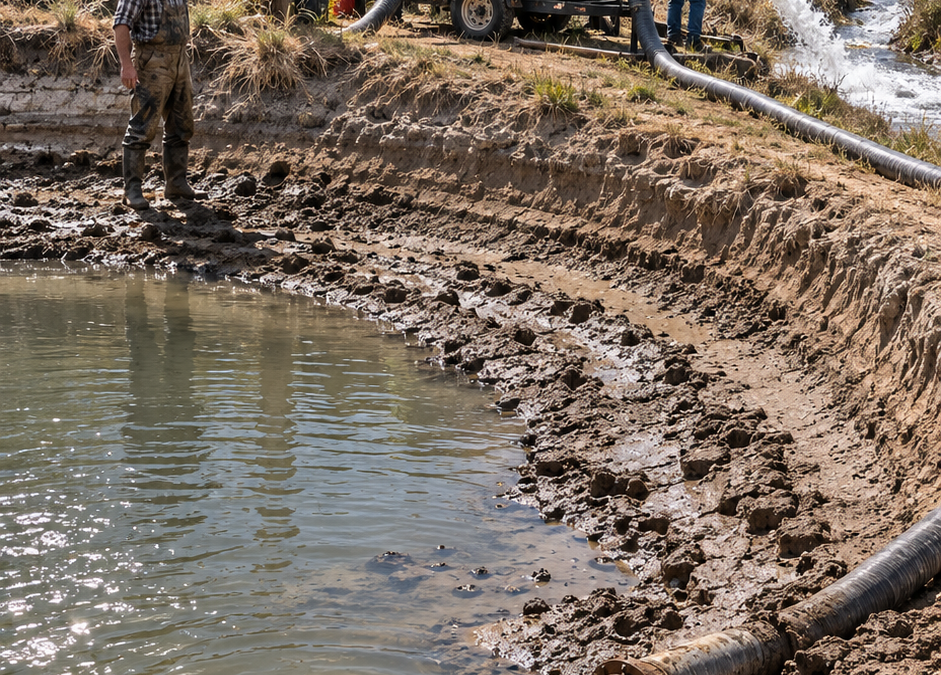
A worker stood beside the portable pump, checking something near the intake hose. He wore a safety vest and a hard hat with dust across the brim. He looked tired, not guilty. That almost made me angrier. He was standing beside my nearly empty pond as if this were an ordinary morning on an ordinary jobsite.
“Who gave you permission to empty my pond?” I shouted.
He glanced at the muddy shoreline.
Then at the hose.
Then at me.
“The HOA did.”
For a second, I thought I had misunderstood him.
“The HOA did what?”
“They authorized the pump.”
“This is my pond.”
He looked toward Brookstone.
“I just do what they tell me.”
“Turn it off.”
He hesitated.
A white SUV came racing down the gravel access road before he could answer. It stopped beside us hard enough to throw dust against the pump frame. Patricia Lang stepped out wearing cream-colored slacks, expensive sunglasses, and the expression of someone arriving to correct an employee.
She removed her sunglasses.
“Mr. Walker, there’s no need to interfere with authorized work.”
I pointed at the hose.
“That’s my pond.”
“It’s a shared stormwater feature.”
“No, it isn’t.”
She opened the leather folder.
“The development plans identify this water body as part of the regional drainage system. We’re lowering it temporarily.”
“Why?”
She looked toward the construction site.
“Brookstone’s retention basin isn’t ready. We need temporary capacity before the next phase begins.”
I stared at her.
“You drained my irrigation water for your construction schedule?”
Her expression tightened.
“We’re managing water levels.”
Behind her, the pump coughed and kept pulling.
I walked to the control panel.
Patricia stepped in front of me.
“Don’t touch HOA equipment.”
“It’s sitting on my property.”
“The access corridor is covered by our development rights.”
That was new.
“What access corridor?”
She handed me a photocopied site map.
A blue line crossed the edge of my pond and ran toward Brookstone’s unfinished retention area. Beside it were the words: Temporary Drainage Access.
No signature.
No parcel number.
No easement reference.
No recording stamp.
Just a line.
I looked at Patricia.
“Who approved this?”
“Our developer.”
“That’s not what I asked.”
Her jaw tightened.
Then another truck appeared on the road.
My neighbor Frank Dawson pulled over after seeing us. Frank owned pasture south of mine and had lived in the area long enough to distrust anything called temporary. He climbed out, looked past us, and stared at the exposed shoreline.
“What happened?”
Patricia answered before I could.
“Routine water management.”
Frank laughed once.
“That pond has never been HOA water.”
Patricia turned toward him.
“This doesn’t concern you.”
“It does when you’ve got hoses running across the drainage ditch beside my pasture.”
I followed the hose with my eyes.
Frank was right.
The line did not simply cross my fence and disappear. It ran under temporary construction panels, passed near the old ditch, and turned east toward Brookstone’s unfinished basin.
The water was not being released downstream.
They were using it.
I took out my phone and started recording.
Patricia noticed.
“Mr. Walker, I strongly suggest you review your deed before making accusations.”
That sentence stopped me.
Not because she sounded confident.
Because I had reviewed it.
Years ago, after my father transferred the property to me, I had read the documents at my kitchen table. I remembered old language about the pond. Irrigation rights. Stored water. Retained use. I could not recall every word, but I remembered my father’s warning clearly.
Take the deed to the water board.
I looked at the exposed intake pipe, then at Patricia.
“Turn the pump off.”
“No.”
So I called the county water board.
Twenty minutes later, I was speaking to an inspector named Daniel Ruiz. I gave him my parcel number, the pond location, and the name of the development.
I heard his keyboard stop.
“Mr. Walker?”
“Yes.”
“Do not authorize them to remove another gallon.”
I looked at Patricia.
“Why?”
There was a pause.
“Because I’m looking at the recorded water-right attachment to your deed.”
Patricia’s confident expression disappeared.
Daniel continued.
“And Brookstone Ridge isn’t listed anywhere on it. Put me on speaker.”
I did.
Patricia immediately folded her arms.
“This is Patricia Lang, president of Brookstone Ridge HOA. Our drainage work was approved through the development plan.”
Daniel’s voice stayed calm.
“Ms. Lang, I’m not reviewing your development plan right now. I’m reviewing Mr. Walker’s recorded deed attachment, and it identifies that pond as a privately maintained irrigation reservoir associated with his parcel.”
Patricia glanced toward the pump operator.
“That doesn’t mean he controls the entire water system.”
Daniel paused.
“Who authorized your withdrawal?”
“Our developer engineer.”
“Name?”
She hesitated.
“Michael Trent.”
I noticed that.
Until then, Patricia had answered everything instantly.
Daniel asked another question.
“Do you have a recorded drainage easement across Walker’s parcel?”
“The approved plans show access.”
“That’s not what I asked.”
Frank looked at me.
Same question I had asked her.
Patricia’s face tightened.
“We have documentation.”
“Good,” Daniel said. “Bring it. I’m driving out.”
Patricia ended the conversation by telling the pump operator to stop.
Not remove anything.
Just stop.
The sudden silence was almost worse.
Water dripped from the hose while the pond sat several feet below its normal level.
Then two construction pickups appeared beyond my fence. A man in a hard hat walked toward us. He introduced himself as Michael Trent, Brookstone’s site engineer, and immediately asked why work had stopped.
Patricia pointed at me.
“Mr. Walker contacted the water board.”
Michael looked annoyed rather than worried.
“This pond is shown on our drainage exhibit.”
I held up Patricia’s photocopy.
“This?”
He barely looked at it.
“That’s one version.”
“Show me the recorded easement.”
His expression changed.
“Drainage rights aren’t always shown the way property owners expect.”
Frank muttered, “That’s a fancy way of saying no.”
Michael ignored him.
Then I saw something near the pump shed.
A yellow plastic marker had been driven into the ground beside my irrigation line. I walked over.
Printed across it were the words: Temporary Water Intake.
“Who installed this?”
Michael answered.
“Our crew.”
“When?”
“Yesterday.”
I stared at him.
“The pump has been running longer than yesterday.”
Nobody answered.
Frank stepped closer.
“I saw tanker trucks here Monday night.”
Patricia turned sharply.
“What tanker trucks?”
“Three of them.”
Michael looked at Patricia.
That was the first moment I realized the HOA president might not know everything the developer was doing.
I opened my phone.
My security camera covered the gravel entrance near the pond. I scrolled backward.
Monday.
11:18 p.m.
Headlights.
A tanker truck entered. Then another. At 11:46, the camera caught a hose being dragged toward the pond.
Patricia stared at the screen.
“Michael.”
He shook his head.
“Construction water. Temporary use.”
“You were taking my pond water at night,” I said.
“It was operationally necessary.”
I almost laughed.
“Necessary doesn’t mean yours.”
A county vehicle pulled onto the property.
Daniel Ruiz stepped out carrying a tablet and a document case.
He did not go to Patricia.
He walked directly to the waterline, measured the drop, photographed the pump, photographed the hose, and then crouched beside my exposed irrigation intake.
“How much water was here before they started?”
I pointed at the wooden post.
“Normal level was just below that bolt.”
Daniel measured it.
His expression hardened.
“That’s a substantial withdrawal.”
Michael stepped forward.
“We were preparing storm capacity.”
Daniel looked toward the hose.
“Then why were tanker trucks removing water?”
Michael stopped.
Daniel opened his case. Inside was a certified copy of my deed attachment. He placed it on the hood of his county vehicle. An old diagram showed the pond, the ditch, and my parcel boundaries.
At the bottom was a sentence underlined in red.
Daniel tapped it.
“This reservoir and stored water are reserved exclusively for agricultural irrigation on the Walker parcel unless rights are transferred by recorded instrument.”
Patricia leaned closer.
“Transferred?”
“Yes.”
She looked at Michael.
“Was there a transfer?”
Michael did not answer.
Daniel did.
“I checked before I drove here.”
He turned the page.
“There isn’t one.”
Michael stopped calling it temporary drainage after that.
He called it a misunderstanding.
Daniel Ruiz did not seem impressed.
“How many gallons were removed?”
Michael glanced at Patricia.
“I don’t have that number.”
Daniel pointed toward the pump.
“What’s its rated flow?”
“That depends on operating conditions.”
“Approximately.”
Michael hesitated.
“Four hundred gallons per minute.”
Frank whistled.
Daniel looked at the exposed shoreline.
“And how many hours did it run?”
Nobody answered.
I opened my security footage again.
“The first truck came Monday night.”
The pump operator finally spoke.
“We started Sunday afternoon.”
Michael turned toward him.
“Caleb.”
The worker looked nervous.
“You told him to ask.”
Daniel did the math on his tablet, even allowing for interruptions. The number was enormous.
My stomach tightened.
I was not thinking about money.
I was thinking about July.
My lower field depended on that pond. So did the vegetable acreage I leased to a local grower.
Daniel asked Caleb where the water went.
“Some into the temporary basin,” Caleb said.
He pointed toward the development.
“Some filled dust-control trucks.”
Michael stepped forward.
“That’s standard construction use.”
Daniel looked at him.
“Not when the stored water belongs to somebody else.”
Patricia’s expression had changed completely.
She was not defending Michael anymore.
She was watching him.
Then another vehicle arrived.
A gray sedan.
A woman stepped out carrying rolled plans. She introduced herself as Laura Chun, a water board records specialist.
“I brought the historical file.”
Daniel looked surprised.
“Already?”
“You told me the parcel number.”
Laura placed the plans on my tailgate.
The oldest was dated 1968. The pond had originally been constructed by my grandfather and two neighboring farmers. But years later, when those properties were divided, the agreement changed.
Laura unfolded a 1989 amendment.
“This is important.”
She traced the drainage ditch.
“The neighboring parcels retained downstream drainage access.”
Patricia immediately pointed.
“Access.”
Laura shook her head.
“Drainage access.”
She tapped the pond.
“Not withdrawal rights.”
Then she unfolded a newer subdivision document.
Brookstone Ridge.
Approved eighteen months earlier.
My pulse jumped when I saw a blue line crossing the same area as Patricia’s map.
Michael stepped closer.
“That’s our exhibit.”
Laura studied it.
“No.”
He frowned.
“Excuse me?”
“This is the version filed with the water board.”
She pointed to a note beside the pond.
Private irrigation reservoir. No development withdrawal.
Patricia looked at Michael.
“The copy you gave the HOA doesn’t say that.”
Nobody moved.
Daniel asked Patricia for her map. She handed it over.
Laura placed the two sheets side by side.
Same subdivision.
Same road layout.
Same retention basin.
But on Patricia’s version, the warning beside my pond was gone.
In its place: Temporary Drainage Access.
Frank leaned over.
“Those aren’t the same plans.”
“No,” Laura said. “They aren’t.”
Michael’s jaw tightened.
“Plans get revised.”
Laura checked the revision box.
“Both sheets carry the same revision date and the same engineer-of-record block, but the water board copy has a digital filing stamp. Patricia’s does not.”
Daniel looked at Michael.
“Where did the HOA get this version?”
Patricia answered for him.
“Michael?”
He exhaled.
“It was a working construction exhibit.”
“You presented it as approved,” Patricia said.
“I presented what the project required.”
Her voice sharpened.
“You told us the pond was available.”
Michael did not respond.
Then Laura noticed something else. She pointed to the unfinished Brookstone retention basin.
“Your approved plan requires that basin to be operational before Phase Three grading.”
Daniel looked toward the bulldozers.
“They’re grading Phase Three now.”
Patricia stared at Michael.
“You said we were ahead of schedule.”
“We are.”
Laura rolled the plan halfway closed.
“That’s the problem.”
Michael had not drained my pond because Brookstone had a right to my water.
He had drained it because their own required basin was not ready, and my pond had become the shortcut that kept construction moving.
Daniel did not raise his voice.
He did not need to.
“Shut down Phase Three.”
Michael stared at him.
“You don’t have authority over the entire development.”
Laura rolled the plans back open.
“He has authority over water compliance, and your approved sequencing requires the retention basin before this phase.”
Daniel added, “You substituted Mr. Walker’s pond without recorded permission.”
Michael pulled out his phone.
“I’m calling our attorney.”
Patricia stepped away from him and called the developer first.
He ignored her.
Twenty minutes later, Brookstone’s bulldozers went silent.
That sound traveled farther than the pump had.
Workers climbed down from equipment. Supervisors gathered near the construction trailer. Residents from the finished section began appearing along the temporary fence. They wanted to know why everything had stopped.
Patricia walked toward them.
I thought she would blame me.
Instead, she said, “There’s a dispute concerning unauthorized water use.”
Michael looked furious.
“Patricia.”
She turned.
“Did you tell the board the water board approved that intake?”
He did not answer.
A man near the fence spoke up.
“She told us it was temporary stormwater work.”
Patricia recognized him.
“George, that’s what I was told.”
George Miller lived in one of Brookstone’s first completed homes. He pointed toward my pond.
“I saw crews over there Sunday.”
Daniel stepped closer.
“What time?”
“Late afternoon.”
“Did you see the pump operating?”
George nodded.
“And something else.”
Michael’s attorney still had not arrived, but suddenly Michael looked like he wished he had.
George took out his phone.
“I recorded it because the noise was driving my wife crazy.”
The video showed the pump beside my pond. Caleb was there. So was Michael. The time stamp read Sunday, 5:42 p.m. Michael stood beside the intake hose speaking with another man wearing a Brookstone construction vest.
George increased the volume.
Wind distorted most of the conversation.
Then one sentence came through clearly.
“Keep the level dropping until we have enough capacity.”
Daniel replayed it.
Michael folded his arms.
“That proves nothing.”
George swiped to another clip. Monday morning, a tanker truck was parked beside the temporary basin. The same black hose ran from my property.
Laura photographed the license number visible in the video.
Then Patricia’s phone rang.
She answered. Her face changed within seconds.
“What do you mean three invoices?”
She walked away.
We could still hear her.
“For pond water?”
Michael stopped moving.
Patricia returned slowly.
“Our HOA treasurer found contractor invoices.”
Daniel held out his hand.
“Can she send them?”
Patricia nodded.
A minute later, three PDFs arrived.
The invoices were from Brookstone Development Services to the HOA.
Temporary water management. Pump rental. Water transfer. Site dust control.
The HOA had been buying my water.
Patricia looked sick.
“We paid the first one.”
I stared at her.
“You paid someone to take water from my property.”
“I believed we were paying for authorized drainage.”
Michael finally spoke.
“The terminology is standard.”
Daniel looked at him.
“Then the supporting authorization should be easy to produce.”
A black sedan entered the site. Michael’s attorney had arrived, but another vehicle followed it.
A county utility truck.
The driver introduced himself as Nathan Cole, field supervisor for the regional water district. He walked directly to the pond’s outlet structure.
Then he stopped.
“Daniel.”
“What?”
Nathan pointed toward a metal control box near the bank.
“The seal is broken.”
I stepped closer.
“What seal?”
“The irrigation outlet valve. This control structure is district protected.”
My father had always told me not to touch that mechanism without the district.
Nathan crouched beside it. Fresh tool marks scarred the lock plate. The protective wire seal had been cut.
Daniel’s expression hardened.
“Was this necessary to run the portable pump?”
“No,” Nathan said. “Someone opened the outlet too.”
My stomach dropped.
They had not only pumped water from the surface.
They had altered the controlled release.
Daniel turned toward Michael.
“Who touched this valve?”
Michael’s attorney reached him first.
“Don’t answer that.”
Then Caleb, still standing beside the silent pump, looked down at his boots.
Daniel noticed.
“Caleb.”
The worker swallowed.
“Michael told the crew the HOA had permission.”
The attorney stepped forward.
Caleb kept talking.
“And Sunday night, he told us the pond wasn’t dropping fast enough.”
Michael’s face went pale.
Daniel looked at the broken seal.
“What happened next?”
Caleb pointed toward the valve.
“He told the foreman to open it.”
Michael’s attorney finally got him to stop talking.
Caleb was a different problem.
Daniel moved him away from the construction crew and asked Nathan to stay with them.
“Who opened the valve?”
Caleb rubbed both hands over his jeans.
“Our foreman, Dennis Cole. On Michael’s instruction.”
Michael’s attorney objected.
“That’s hearsay.”
Daniel barely looked at him.
“I’m documenting what the witness says.”
Nathan photographed the broken seal from three angles. Then he opened the control box. The valve indicator was almost fully open.
He stared at it.
“This wasn’t a small adjustment.”
I felt my stomach drop again.
“How much water could leave through there?”
“Enough to explain why your level fell this fast.”
Patricia looked toward Michael.
“You told the HOA the pump was lowering it gradually.”
Michael said nothing.
Then Frank walked toward the drainage ditch.
“Where did the outlet water go?”
Nathan followed him.
So did I.
The ditch should have carried water south along my property. Instead, fifty yards downstream, we found fresh excavation.
A temporary berm had been built across the channel. Beside it sat a corrugated pipe. The pipe turned east toward Brookstone.
Laura crouched beside the disturbed soil.
“This isn’t on the approved water plan.”
Michael’s attorney finally looked concerned.
Nathan followed the pipe through the temporary fence.
It emptied into Brookstone’s unfinished retention basin.
Frank stared at it.
“So they pumped from the top and opened the bottom.”
Daniel nodded.
“That’s what it looks like.”
Patricia said nothing.
Then George called from the resident side of the fence.
“Patricia.”
He was holding another phone.
“My doorbell camera caught a truck near that ditch Saturday.”
We gathered around.
The footage was not perfect, but the logo was clear.
Brookstone Site Services.
A small excavator passed George’s house at 6:13 Saturday evening. Behind it was a pickup.
Michael’s pickup.
He watched the video without reacting.
Then a second witness appeared.
An older woman named Ruth Bennett walked down from the first row of Brookstone homes.
“I saw them digging.”
Michael’s attorney sighed.
Ruth pointed toward the berm.
“I asked what they were doing because water started running behind my lot.”
Daniel asked, “What did they tell you?”
“Emergency drainage preparation.”
She looked at Michael.
“He told me personally.”
Every answer created another problem.
Laura returned to her historical file.
“There should be an access restriction here.”
She flipped through several pages, then stopped.
“Found it.”
She placed an old recorded agreement on the hood of Daniel’s truck. The document was not about ownership. It was about maintenance.
The water district could enter my parcel to service the outlet.
Nobody else.
Nathan read the relevant line twice.
“Access to control structures is reserved to the district and landowner.”
Patricia looked at Michael.
“So Brookstone had no right to touch the valve.”
“Correct,” Nathan said. “And no right to redirect the outlet. Not without approval.”
Her face hardened.
This time, the anger was not aimed at me.
Michael’s attorney pulled him aside. They whispered for nearly a minute.
Then Michael returned.
“We’re prepared to restore the berm and discuss compensation.”
Daniel looked at him.
“We’re not at compensation yet.”
Michael frowned.
“Then what are we at?”
Daniel pointed toward the nearly empty pond.
“Accounting.”
“For what?”
“Every gallon,” Nathan added. “And every person who authorized access to that control box.”
Then Patricia’s phone buzzed again.
She read the message.
Her eyes widened.
“Our treasurer found an email.”
Michael closed his eyes.
Patricia turned the screen toward Daniel.
The email had been sent by Michael three weeks earlier.
Subject: Walker Pond, Temporary Solution.
Patricia scrolled. One sentence had been highlighted by the treasurer.
Existing deed restrictions may complicate direct authorization. Recommend proceeding under temporary drainage operations while legal review remains pending.
Nobody spoke.
I looked at Michael.
Three weeks earlier, before the pump, before the tanker trucks, before the broken seal, before the exposed intake, he had known there was a deed problem.
Daniel read Michael’s email twice.
Then he asked Patricia to forward the original file.
Michael’s attorney stepped in.
“My client disputes the interpretation you’re placing on that message.”
Daniel looked at him.
“Then your client can explain it during the investigation.”
That was the first time anyone used that word.
Investigation.
Michael heard it too.
“This is getting ridiculous.”
Nathan pointed toward the broken district seal.
“No. This got serious when someone opened a controlled outlet without authorization.”
A sheriff’s cruiser appeared twenty minutes later.
Deputy Rachel Monroe stepped out and spoke privately with Daniel and Nathan. She was not there to decide who owned the water. Daniel had already shown her the deed attachment. She was there because the district wanted the damaged control structure documented.
Rachel photographed the cut seal, the fresh tool marks, and the redirected channel. Then she asked Caleb and Ruth for statements.
Michael stayed beside his attorney.
Patricia did not.
She called an emergency HOA board meeting right there beside the construction trailer.
Four board members arrived within half an hour. Patricia placed the invoices, Michael’s email, and both versions of the development plan on a folding table.
One board member, Mark Ellis, stared at the missing warning on the HOA’s copy.
“We approved payments based on this.”
Patricia nodded.
Mark looked at Michael.
“You told us the water board had reviewed it.”
Michael finally answered.
“They reviewed the development.”
“Not this water withdrawal,” Daniel said.
Silence.
Then another board member, Susan Grant, opened her laptop.
“I have the meeting minutes.”
She searched.
“Three weeks ago, Michael told us temporary pond drawdown was covered under existing drainage authority.”
Daniel looked over.
“Is that recorded?”
Susan turned the screen.
“It is now.”
Michael’s attorney whispered to him again, but the evidence was moving faster than his explanations.
Then Nathan’s radio crackled.
His maintenance crew had inspected the downstream ditch.
They found something else.
A portable flow meter had been installed behind the temporary berm.
Brookstone had been measuring the redirected water.
Nathan retrieved it with Deputy Monroe watching. A weatherproof tag hung from the side.
Brookstone Phase 3 Water Transfer.
Laura checked the serial number against a contractor equipment log Patricia’s treasurer had found.
“It was rented twelve days ago.”
I looked at Michael.
“You rented a meter before you supposedly knew there was a problem.”
He did not answer.
Daniel did.
“They weren’t guessing how much water they took.”
Nathan downloaded the device history.
The screen displayed daily totals.
Sunday.
Monday.
Tuesday.
Wednesday morning.
Thousands upon thousands of gallons recorded as they passed from my outlet toward Brookstone.
Patricia stared at the numbers.
“We paid for this.”
Mark shook his head.
“No. We were charged for it.”
That distinction landed hard.
The HOA residents had not benefited from some emergency. Their association had been billed for a developer shortcut.
Then Deputy Monroe’s phone rang.
She listened.
“Where?”
Her expression changed.
She looked at Michael.
“Your foreman Dennis Cole is at the construction office.”
Michael’s attorney stepped forward.
“Deputy, I’m going to speak with him voluntarily.”
We watched her cross the site.
Ten minutes later, she returned with Dennis.
He looked exhausted.
Daniel asked one question.
“Who told you to open Mr. Walker’s outlet valve?”
Dennis glanced at Michael, then at the attorney, then at the empty pond.
“Michael did.”
Michael shook his head.
“That’s not what I said.”
Dennis reached into his pocket.
“I still have the text.”
Nobody moved.
He opened his phone.
The message was dated Sunday, 8:36 p.m., from Michael Trent.
Pond level dropping too slowly. Open district outlet and route flow to Phase 3 basin. We need capacity by morning.
Deputy Monroe photographed the screen.
Michael’s attorney closed his folder.
Patricia looked at Michael with open disbelief.
Daniel looked toward my exposed irrigation intake.
For days, Michael had called it drainage, then water management, then a misunderstanding.
His own message called it exactly what it was.
They needed capacity.
They took mine.
Deputy Monroe did not arrest Michael.
She did not need to create a spectacle.
She asked him to come to the sheriff’s office with his attorney and provide a formal statement about the damaged outlet structure.
Michael looked toward Patricia.
“You know stopping this project will cost the HOA.”
Patricia stared at him.
“No. Your decisions will cost the project.”
That was the moment the alliance between them ended.
Michael left with his attorney.
Dennis stayed.
So did Caleb.
Daniel asked both men to identify everyone who had worked around my pond. Dennis gave him six names. Then he said something that made Nathan stop writing.
“There was another valve.”
Nathan looked up.
“What valve?”
“Near the north side of the pond.”
I frowned.
“There isn’t one.”
Dennis pointed toward a patch of brush beside my pump shed.
“Michael said it was an old auxiliary intake.”
Nathan walked over immediately.
We followed.
Behind the brush, half-covered with dirt, was a metal pipe connected to a temporary flexible line.
I had never seen it.
Nathan crouched.
“This isn’t part of the district system.”
Dennis nodded.
“We installed it.”
“When?”
“Friday.”
Before the pump.
Before the berm.
Before Patricia said anything about storm capacity.
Daniel looked at Dennis.
“Why?”
“He wanted a backup intake in case the portable pump lost suction.”
Patricia closed her eyes.
They had not improvised.
They had prepared.
Nathan followed the temporary line toward Brookstone. It disappeared beneath freshly placed gravel. A county crew brought a locator, and twenty minutes later, fluorescent paint traced the buried line across my eastern boundary straight into the development.
Laura checked the approved plans.
“No temporary water line is shown here.”
Then Frank noticed a small white stake near my fence. He pulled weeds away without touching it.
A number was written on the side.
T-17.
Dennis recognized it.
“Transfer line station.”
Daniel photographed it.
I looked at Patricia.
“How long did the HOA know about this?”
“We didn’t.”
Susan Grant stepped forward with her laptop.
“I can prove that.”
She opened the HOA’s project portal. Every approved utility change was supposed to appear there.
No transfer line.
No pond intake.
No outlet modification.
But there was one deleted entry.
Susan recovered the archived notification submitted eleven days earlier.
Temporary Agricultural Water Connection.
Status: removed by project administrator.
The administrator account belonged to Michael Trent.
Patricia stared at the screen.
“He deleted it.”
Susan nodded.
Daniel asked her to preserve the portal logs.
She did.
Then my phone rang.
It was the grower leasing my lower field.
“Ethan, irrigation pressure’s gone.”
I looked at the empty pond.
“I know.”
“We’ve got young plants in that south block.”
“I know.”
“How long can they hold?”
“Not long in this heat.”
For the first time, the dispute stopped being about documents.
My crop was beginning to feel it.
Daniel heard enough. He turned to Nathan.
“Can the district stabilize Walker’s supply?”
Nathan studied the pond.
“We can’t replace everything immediately.”
Patricia stepped forward.
“Brookstone has municipal construction water allocated.”
Everyone looked at her.
She continued, “If our project has water available, redirect it here.”
Mark Ellis nodded.
“Do it.”
Daniel looked at me.
“Temporary emergency supply only. It doesn’t change your rights.”
“I understand.”
Within two hours, Brookstone’s construction tankers were driving in the opposite direction.
Not taking water from my land.
Bringing water back.
Residents gathered along the fence, watching the first tanker discharge into a temporary irrigation reservoir Nathan’s crew had set up.
Frank smiled.
“That’s a reversal.”
But Daniel was not smiling.
Laura had just received another document from the water board archive. She walked toward us holding her tablet.
“Ethan, you need to see this.”
It was the original deed transfer from my father.
Attached behind the irrigation reservation was a recorded covenant I had never noticed.
Laura enlarged one paragraph.
Any development materially interfering with the reservoir’s agricultural function must restore water capacity and bear resulting documented agricultural losses.
Patricia read it.
Then Mark.
Then Susan.
Mark looked toward the silent bulldozers.
“So Brookstone isn’t just required to stop taking his water.”
Laura shook her head.
“No.”
She looked at my nearly empty pond.
“If this development caused the loss, the recorded agreement says the responsible development has to restore what it disrupted.”
Patricia read the covenant three times.
Then she looked at Laura.
“How old is this?”
“Recorded with the deed transfer,” Laura said. “And it runs with the property. The water board file cross-references it directly.”
Mark Ellis looked toward Brookstone’s unfinished basin.
“So the developer had access to this during title review.”
That question changed the mood.
Daniel turned to Laura.
“Can we confirm?”
She called the county records office.
While we waited, two more construction tankers arrived with emergency irrigation water. For the first time all morning, water was moving toward my farm instead of away from it.
Then Laura’s phone rang.
She listened.
“Send it.”
Thirty seconds later, a title report appeared on her tablet. She opened the exceptions page.
There it was.
Walker Reservoir Agricultural Water Covenant.
Referenced by recording number.
Dated.
Indexed.
Impossible to miss.
Patricia stared at it.
“Michael told us title review showed no restrictions affecting Brookstone.”
Susan pulled up old board emails.
“I have that.”
She found one from six months earlier. Michael had written:
No off-site water restrictions are expected to affect construction sequencing.
Daniel looked at me.
“He knew enough to know there was a deed issue three weeks ago.”
Laura nodded.
“And his company’s title report identified the covenant months before that.”
Mark’s face hardened.
“So this wasn’t an oversight.”
Nobody answered.
They did not have to.
Then a black pickup entered the site.
A man in his sixties stepped out. Thomas Avery, owner of Brookstone Development. I had never met him. He walked directly to Patricia.
“I came as soon as counsel called.”
Patricia handed him the title report.
Then Michael’s email.
Then Dennis’s text.
Thomas read everything without speaking. Finally, he looked at the empty pond.
“Where’s Michael?”
“Sheriff’s office,” Patricia said.
Thomas closed his eyes briefly.
Then he asked Daniel what had to happen next.
Daniel pointed toward my property.
“Unauthorized withdrawal stops permanently. The outlet must be restored. The temporary berm and transfer line come out under supervision. Water capacity must be stabilized. Agricultural losses need documentation.”
Thomas nodded.
“And Phase Three stays stopped until the approved retention system is operational and compliance is verified.”
Thomas did not argue.
Instead, he called his superintendent.
“Shut it down.”
“It already is.”
“Then keep it down.”
Patricia crossed her arms.
“The HOA is not paying another invoice related to this.”
Thomas looked at her.
“You shouldn’t.”
That surprised everyone.
He turned toward me.
“Mr. Walker, Brookstone Development will fund the immediate restoration.”
I did not thank him.
Not yet.
“What about my crops?”
“We’ll document them.”
Daniel stepped between us before the conversation became a negotiation.
“Through the proper process.”
Thomas nodded.
“Agreed.”
Then Nathan called from the outlet box.
His crew had removed the temporary connection. Underneath the cut district seal, they found a small plastic tag wedged behind the housing.
A contractor inspection tag dated Friday.
Before the withdrawal began.
Signed M. Trent.
Nathan handed it to Deputy Monroe when she returned.
She photographed it.
“Michael inspected this before Sunday.”
Dennis nodded.
“He wanted to know how fast it could drain.”
That was the final shift.
Michael had not reacted to an emergency.
He had inspected my irrigation system, arranged a backup intake, redirected the outlet, removed a project notification, and proceeded despite a recorded restriction.
Patricia looked at the pond.
“When I came here, I told you to review your deed.”
“I remember.”
She gave a tired, embarrassed laugh.
“Turns out I should have reviewed it.”
By sunset, county crews had closed the outlet and removed the berm. Brookstone workers began exposing the unauthorized transfer line for removal, and the first controlled delivery of replacement water was feeding my irrigation system.
The development still towered beyond my fence.
But the power had shifted.
Not because I shouted louder.
Not because the HOA suddenly became generous.
Because one recorded document had survived every revised plan, deleted notice, and convenient explanation.
The deed had been there the entire time.
They just hoped nobody would check it.
Three weeks later, my pond was filling again.
Not quickly.
Not magically.
But every morning, the waterline climbed a little higher against the wooden post beside my pump shed.
Brookstone paid for temporary irrigation deliveries while Nathan’s crew restored the outlet structure and replaced the damaged seal. The unauthorized pipe disappeared. The temporary berm disappeared. Every connection between my pond and the development was removed under water board supervision.
Phase Three stayed silent.
No bulldozers.
No graders.
No tanker trucks taking shortcuts across my property.
Thomas Avery eventually hired a different engineering team. They finished Brookstone’s retention basin on Brookstone land, exactly where the approved plans had required it from the beginning.
Patricia came by one afternoon while I was repairing irrigation lines.
She stopped at the fence.
“I owe you an apology.”
I looked up.
“For which part?”
She almost smiled.
“For telling you the HOA had authority it didn’t have.”
That mattered more than I expected.
“You believed Michael.”
“I did,” she said. “But I also liked the answer he gave me, so I didn’t ask enough questions.”
I appreciated that she did not pretend otherwise.
“What happened with the invoices?”
“The HOA rejected the remaining charges. Brookstone Development reimbursed the first payment.”
“And Michael?”
Her expression changed.
“He’s no longer managing the project.”
I later learned Thomas had removed him before construction resumed. The sheriff and water board handled the rest of the investigation. I was not involved in every meeting. I did not need to be.
The important facts were already documented.
The deed restriction.
The altered construction exhibit.
The broken seal.
The hidden transfer line.
The deleted project notice.
Dennis’s text.
Michael’s inspection tag.
The flow meter that recorded exactly how much water had been redirected.
The agricultural damage took longer to calculate. The grower lost part of one young planting block. My pasture irrigation fell behind. But because we had photographs, water records, crop logs, and the covenant Laura found, the losses were not treated like guesses.
Brookstone funded the documented restoration.
By late summer, the lower field was green again.
Frank stopped beside the pond one evening and looked at the water.
“Almost back.”
“Almost.”
He pointed toward Brookstone.
“They finally built their own basin. Imagine that.”
He laughed, then looked at the wooden post.
“Your dad really told you to take the deed to the water board?”
“Years ago.”
“He knew something.”
I nodded.
“He knew people forget what land records don’t.”
That stayed with me because Patricia had arrived that first morning with a folder and absolute confidence. Michael had plans, contractors, equipment, invoices, an HOA, and a development worth millions. I had an emptying pond and an old memory from my father.
For a few minutes, their paperwork looked more powerful than mine.
Then Daniel checked the deed.
One sentence changed everything.
The pond was not shared development water.
It was not temporary construction capacity.
It was not an HOA stormwater feature.
It was a private agricultural reservoir tied to my land.
The water had a purpose.
The access had limits.
And the recorded covenant had been sitting there long before Brookstone existed.
By fall, the pond reached its normal level.
I stood beside the pump shed and watched evening light move across the water, then across the fence. Brookstone streets were finished. Families walked their dogs. Children rode bicycles. Life moved on.
I never blamed the residents.
Most of them had been told the same story I was.
The difference was that I had something older than the story.
A deed.
A record.
A boundary between permission and assumption.
The HOA thought authority came from a development map.
Michael thought urgency could replace consent.
But water rights do not change because somebody has a deadline.
And when the water board finally opened the deed, the pond told the same story it had been telling for decades.
The water was mine to irrigate my land.
It always had been.
𝗧𝗛𝗘 𝗘𝗡𝗗
They Drained My Pond Like It Belonged to the HOA Until the Water Board Opened My Deed
The pump was still running when I reached the mud.
Three days earlier, my pond had been full enough to feed the lower field through July.
By the time Patricia Lang told me not to interfere with “authorized work,” the water level had already exposed the truth she should have checked before the first hose ever touched my land.
My name is Ethan Walker, and I had owned those fourteen acres outside Mill Creek for almost sixteen years before the Brookstone Ridge development appeared along my eastern boundary.
The pond was older than my house.
It sat low behind the pump shed, tucked between a shallow drainage ditch, a line of cottonwoods, and the lower field where my irrigation system fed pasture grass, vegetables, and a small leased acreage a local grower depended on every summer. My grandfather had helped dig that pond before I was born. My father maintained it like a family responsibility, not because it was pretty, though in spring it could be, but because stored water made the land usable.
That pond was not scenery.
It was not a neighborhood amenity.
It was not a stormwater decoration for a subdivision brochure.
It was working water.
My father made sure I understood that before he transferred the property to me.
We had been standing by the pump shed one evening years earlier while the sun dropped behind the trees and the pond reflected the sky in dull orange strips. He was older then, slower than he wanted to admit, but his voice still carried the weight it always had when land was involved.
“If anybody ever claims this pond belongs to the neighborhood,” he said, “don’t argue with them.”
I remember laughing because there was no neighborhood then.
There were trees, pasture, open dirt, and the old ditch running south.
“What neighborhood?” I asked.
He pointed with his chin toward the east.
“One day, somebody will build over there. They’ll see water, and they’ll call it drainage. They’ll see a ditch, and they’ll call it shared infrastructure. They’ll see a pond, and they’ll forget somebody paid for it, maintained it, and recorded the rights.”
I had smiled then, the way sons smile when fathers sound dramatic.
“What do I do if that happens?”
“Take the deed to the water board,” he said.
Not the sheriff.
Not the HOA.
Not the developer.
The water board.
At the time, it sounded like one of those old warnings a man gives because he has spent too many years dealing with people who read maps only when money depends on them.
I did not know how right he was.
Brookstone Ridge started as survey stakes in the brush.
Then came clearing crews.
Then temporary roads.
Then equipment trailers, portable toilets, stacked pipe, concrete forms, and signs showing smiling families in front of houses that did not exist yet. For eight months, the development grew along my eastern boundary. I watched from my side of the fence while bulldozers carved streets and graders flattened old pasture. I did not love it, but I had no right to stop it. Their land was theirs. Mine was mine.
That was supposed to be enough.
Patricia Lang introduced herself during the early construction months. She was president of the Brookstone Ridge HOA, though technically the neighborhood was still half-built and under developer control. She dressed like every meeting was a hearing, cream slacks, expensive sunglasses, leather folder, and a voice that sounded polite until you listened to what she was trying to take.
The first time we spoke, she asked about “cooperative drainage planning.”
The second time, she asked whether I would consider granting Brookstone temporary access across the edge of my property for “routine stormwater preparation.”
I told her no both times.
Not because I wanted conflict. Because I knew how temporary arrangements around land have a way of becoming expected, then assumed, then defended as historical.
After that, I mostly saw her from a distance.
She drove the construction roads in a white SUV. She met with contractors near the unfinished clubhouse. She spoke to buyers near the model home. She carried her folder everywhere, as though papers became truer when kept in leather.
I had my own work.
Fences.
Irrigation.
Equipment.
A leased growing plot in the lower field.
A dry summer coming in fast.
By late June, the land was already asking for water.
The pond should have been high enough to make me feel safe.
Three days before everything came apart, it was.
The waterline reached just below the bolt on the old wooden post beside my pump shed. That post had become my informal gauge over the years. When the water sat near the bolt, the lower field could make it through a stretch of heat. When the water dropped below the second nail, I watched every gallon.
That Monday, the pond looked right.
By Thursday morning, it looked wrong from fifty yards away.
I had walked down after breakfast expecting to check the intake screen and clear weeds from the pump shed. Instead, I stopped on the slope because the shoreline had moved.
Not by inches.
By feet.
The water that should have covered the low bank was gone, leaving cracked brown mud shining in the morning sun. Hundreds of feet of shoreline sat exposed. The damp ring around the pond looked raw and fresh, like a wound. My irrigation intake pipe, which should have been safely underwater, stood half-exposed near the edge, sucking air between shallow ripples.
Then I heard the pump.
Not mine.
A portable pump sat near the bank, mounted on a metal frame, vibrating hard enough that the hose beside it trembled. A thick black hose ran from the pond, across the ground, through my fence line, beneath temporary construction panels, and toward Brookstone Ridge.
Someone else’s pump was still running.
For a moment, I could not move.
There are violations that take time to understand.
This was not one of them.
Someone was taking my water.
I walked straight down the slope.
A worker stood beside the portable pump, checking something near the intake hose. He wore a safety vest and a hard hat with dust across the brim. He looked tired, not guilty. That almost made me angrier. He was standing beside my nearly empty pond as if this were an ordinary morning on an ordinary jobsite.
“Who gave you permission to empty my pond?” I shouted.
He glanced at the muddy shoreline.
Then at the hose.
Then at me.
“The HOA did.”
For a second, I thought I had misunderstood him.
“The HOA did what?”
“They authorized the pump.”
“This is my pond.”
He looked toward Brookstone.
“I just do what they tell me.”
“Turn it off.”
He hesitated.
A white SUV came racing down the gravel access road before he could answer. It stopped beside us hard enough to throw dust against the pump frame. Patricia Lang stepped out wearing cream-colored slacks, expensive sunglasses, and the expression of someone arriving to correct an employee.
She removed her sunglasses.
“Mr. Walker, there’s no need to interfere with authorized work.”
I pointed at the hose.
“That’s my pond.”
“It’s a shared stormwater feature.”
“No, it isn’t.”
She opened the leather folder.
“The development plans identify this water body as part of the regional drainage system. We’re lowering it temporarily.”
“Why?”
She looked toward the construction site.
“Brookstone’s retention basin isn’t ready. We need temporary capacity before the next phase begins.”
I stared at her.
“You drained my irrigation water for your construction schedule?”
Her expression tightened.
“We’re managing water levels.”
Behind her, the pump coughed and kept pulling.
I walked to the control panel.
Patricia stepped in front of me.
“Don’t touch HOA equipment.”
“It’s sitting on my property.”
“The access corridor is covered by our development rights.”
That was new.
“What access corridor?”
She handed me a photocopied site map.
A blue line crossed the edge of my pond and ran toward Brookstone’s unfinished retention area. Beside it were the words: Temporary Drainage Access.
No signature.
No parcel number.
No easement reference.
No recording stamp.
Just a line.
I looked at Patricia.
“Who approved this?”
“Our developer.”
“That’s not what I asked.”
Her jaw tightened.
Then another truck appeared on the road.
My neighbor Frank Dawson pulled over after seeing us. Frank owned pasture south of mine and had lived in the area long enough to distrust anything called temporary. He climbed out, looked past us, and stared at the exposed shoreline.
“What happened?”
Patricia answered before I could.
“Routine water management.”
Frank laughed once.
“That pond has never been HOA water.”
Patricia turned toward him.
“This doesn’t concern you.”
“It does when you’ve got hoses running across the drainage ditch beside my pasture.”
I followed the hose with my eyes.
Frank was right.
The line did not simply cross my fence and disappear. It ran under temporary construction panels, passed near the old ditch, and turned east toward Brookstone’s unfinished basin.
The water was not being released downstream.
They were using it.
I took out my phone and started recording.
Patricia noticed.
“Mr. Walker, I strongly suggest you review your deed before making accusations.”
That sentence stopped me.
Not because she sounded confident.
Because I had reviewed it.
Years ago, after my father transferred the property to me, I had read the documents at my kitchen table. I remembered old language about the pond. Irrigation rights. Stored water. Retained use. I could not recall every word, but I remembered my father’s warning clearly.
Take the deed to the water board.
I looked at the exposed intake pipe, then at Patricia.
“Turn the pump off.”
“No.”
So I called the county water board.
Twenty minutes later, I was speaking to an inspector named Daniel Ruiz. I gave him my parcel number, the pond location, and the name of the development.
I heard his keyboard stop.
“Mr. Walker?”
“Yes.”
“Do not authorize them to remove another gallon.”
I looked at Patricia.
“Why?”
There was a pause.
“Because I’m looking at the recorded water-right attachment to your deed.”
Patricia’s confident expression disappeared.
Daniel continued.
“And Brookstone Ridge isn’t listed anywhere on it. Put me on speaker.”
I did.
Patricia immediately folded her arms.
“This is Patricia Lang, president of Brookstone Ridge HOA. Our drainage work was approved through the development plan.”
Daniel’s voice stayed calm.
“Ms. Lang, I’m not reviewing your development plan right now. I’m reviewing Mr. Walker’s recorded deed attachment, and it identifies that pond as a privately maintained irrigation reservoir associated with his parcel.”
Patricia glanced toward the pump operator.
“That doesn’t mean he controls the entire water system.”
Daniel paused.
“Who authorized your withdrawal?”
“Our developer engineer.”
“Name?”
She hesitated.
“Michael Trent.”
I noticed that.
Until then, Patricia had answered everything instantly.
Daniel asked another question.
“Do you have a recorded drainage easement across Walker’s parcel?”
“The approved plans show access.”
“That’s not what I asked.”
Frank looked at me.
Same question I had asked her.
Patricia’s face tightened.
“We have documentation.”
“Good,” Daniel said. “Bring it. I’m driving out.”
Patricia ended the conversation by telling the pump operator to stop.
Not remove anything.
Just stop.
The sudden silence was almost worse.
Water dripped from the hose while the pond sat several feet below its normal level.
Then two construction pickups appeared beyond my fence. A man in a hard hat walked toward us. He introduced himself as Michael Trent, Brookstone’s site engineer, and immediately asked why work had stopped.
Patricia pointed at me.
“Mr. Walker contacted the water board.”
Michael looked annoyed rather than worried.
“This pond is shown on our drainage exhibit.”
I held up Patricia’s photocopy.
“This?”
He barely looked at it.
“That’s one version.”
“Show me the recorded easement.”
His expression changed.
“Drainage rights aren’t always shown the way property owners expect.”
Frank muttered, “That’s a fancy way of saying no.”
Michael ignored him.
Then I saw something near the pump shed.
A yellow plastic marker had been driven into the ground beside my irrigation line. I walked over.
Printed across it were the words: Temporary Water Intake.
“Who installed this?”
Michael answered.
“Our crew.”
“When?”
“Yesterday.”
I stared at him.
“The pump has been running longer than yesterday.”
Nobody answered.
Frank stepped closer.
“I saw tanker trucks here Monday night.”
Patricia turned sharply.
“What tanker trucks?”
“Three of them.”
Michael looked at Patricia.
That was the first moment I realized the HOA president might not know everything the developer was doing.
I opened my phone.
My security camera covered the gravel entrance near the pond. I scrolled backward.
Monday.
11:18 p.m.
Headlights.
A tanker truck entered. Then another. At 11:46, the camera caught a hose being dragged toward the pond.
Patricia stared at the screen.
“Michael.”
He shook his head.
“Construction water. Temporary use.”
“You were taking my pond water at night,” I said.
“It was operationally necessary.”
I almost laughed.
“Necessary doesn’t mean yours.”
A county vehicle pulled onto the property.
Daniel Ruiz stepped out carrying a tablet and a document case.
He did not go to Patricia.
He walked directly to the waterline, measured the drop, photographed the pump, photographed the hose, and then crouched beside my exposed irrigation intake.
“How much water was here before they started?”
I pointed at the wooden post.
“Normal level was just below that bolt.”
Daniel measured it.
His expression hardened.
“That’s a substantial withdrawal.”
Michael stepped forward.
“We were preparing storm capacity.”
Daniel looked toward the hose.
“Then why were tanker trucks removing water?”
Michael stopped.
Daniel opened his case. Inside was a certified copy of my deed attachment. He placed it on the hood of his county vehicle. An old diagram showed the pond, the ditch, and my parcel boundaries.
At the bottom was a sentence underlined in red.
Daniel tapped it.
“This reservoir and stored water are reserved exclusively for agricultural irrigation on the Walker parcel unless rights are transferred by recorded instrument.”
Patricia leaned closer.
“Transferred?”
“Yes.”
She looked at Michael.
“Was there a transfer?”
Michael did not answer.
Daniel did.
“I checked before I drove here.”
He turned the page.
“There isn’t one.”
Michael stopped calling it temporary drainage after that.
He called it a misunderstanding.
Daniel Ruiz did not seem impressed.
“How many gallons were removed?”
Michael glanced at Patricia.
“I don’t have that number.”
Daniel pointed toward the pump.
“What’s its rated flow?”
“That depends on operating conditions.”
“Approximately.”
Michael hesitated.
“Four hundred gallons per minute.”
Frank whistled.
Daniel looked at the exposed shoreline.
“And how many hours did it run?”
Nobody answered.
I opened my security footage again.
“The first truck came Monday night.”
The pump operator finally spoke.
“We started Sunday afternoon.”
Michael turned toward him.
“Caleb.”
The worker looked nervous.
“You told him to ask.”
Daniel did the math on his tablet, even allowing for interruptions. The number was enormous.
My stomach tightened.
I was not thinking about money.
I was thinking about July.
My lower field depended on that pond. So did the vegetable acreage I leased to a local grower.
Daniel asked Caleb where the water went.
“Some into the temporary basin,” Caleb said.
He pointed toward the development.
“Some filled dust-control trucks.”
Michael stepped forward.
“That’s standard construction use.”
Daniel looked at him.
“Not when the stored water belongs to somebody else.”
Patricia’s expression had changed completely.
She was not defending Michael anymore.
She was watching him.
Then another vehicle arrived.
A gray sedan.
A woman stepped out carrying rolled plans. She introduced herself as Laura Chun, a water board records specialist.
“I brought the historical file.”
Daniel looked surprised.
“Already?”
“You told me the parcel number.”
Laura placed the plans on my tailgate.
The oldest was dated 1968. The pond had originally been constructed by my grandfather and two neighboring farmers. But years later, when those properties were divided, the agreement changed.
Laura unfolded a 1989 amendment.
“This is important.”
She traced the drainage ditch.
“The neighboring parcels retained downstream drainage access.”
Patricia immediately pointed.
“Access.”
Laura shook her head.
“Drainage access.”
She tapped the pond.
“Not withdrawal rights.”
Then she unfolded a newer subdivision document.
Brookstone Ridge.
Approved eighteen months earlier.
My pulse jumped when I saw a blue line crossing the same area as Patricia’s map.
Michael stepped closer.
“That’s our exhibit.”
Laura studied it.
“No.”
He frowned.
“Excuse me?”
“This is the version filed with the water board.”
She pointed to a note beside the pond.
Private irrigation reservoir. No development withdrawal.
Patricia looked at Michael.
“The copy you gave the HOA doesn’t say that.”
Nobody moved.
Daniel asked Patricia for her map. She handed it over.
Laura placed the two sheets side by side.
Same subdivision.
Same road layout.
Same retention basin.
But on Patricia’s version, the warning beside my pond was gone.
In its place: Temporary Drainage Access.
Frank leaned over.
“Those aren’t the same plans.”
“No,” Laura said. “They aren’t.”
Michael’s jaw tightened.
“Plans get revised.”
Laura checked the revision box.
“Both sheets carry the same revision date and the same engineer-of-record block, but the water board copy has a digital filing stamp. Patricia’s does not.”
Daniel looked at Michael.
“Where did the HOA get this version?”
Patricia answered for him.
“Michael?”
He exhaled.
“It was a working construction exhibit.”
“You presented it as approved,” Patricia said.
“I presented what the project required.”
Her voice sharpened.
“You told us the pond was available.”
Michael did not respond.
Then Laura noticed something else. She pointed to the unfinished Brookstone retention basin.
“Your approved plan requires that basin to be operational before Phase Three grading.”
Daniel looked toward the bulldozers.
“They’re grading Phase Three now.”
Patricia stared at Michael.
“You said we were ahead of schedule.”
“We are.”
Laura rolled the plan halfway closed.
“That’s the problem.”
Michael had not drained my pond because Brookstone had a right to my water.
He had drained it because their own required basin was not ready, and my pond had become the shortcut that kept construction moving.
Daniel did not raise his voice.
He did not need to.
“Shut down Phase Three.”
Michael stared at him.
“You don’t have authority over the entire development.”
Laura rolled the plans back open.
“He has authority over water compliance, and your approved sequencing requires the retention basin before this phase.”
Daniel added, “You substituted Mr. Walker’s pond without recorded permission.”
Michael pulled out his phone.
“I’m calling our attorney.”
Patricia stepped away from him and called the developer first.
He ignored her.
Twenty minutes later, Brookstone’s bulldozers went silent.
That sound traveled farther than the pump had.
Workers climbed down from equipment. Supervisors gathered near the construction trailer. Residents from the finished section began appearing along the temporary fence. They wanted to know why everything had stopped.
Patricia walked toward them.
I thought she would blame me.
Instead, she said, “There’s a dispute concerning unauthorized water use.”
Michael looked furious.
“Patricia.”
She turned.
“Did you tell the board the water board approved that intake?”
He did not answer.
A man near the fence spoke up.
“She told us it was temporary stormwater work.”
Patricia recognized him.
“George, that’s what I was told.”
George Miller lived in one of Brookstone’s first completed homes. He pointed toward my pond.
“I saw crews over there Sunday.”
Daniel stepped closer.
“What time?”
“Late afternoon.”
“Did you see the pump operating?”
George nodded.
“And something else.”
Michael’s attorney still had not arrived, but suddenly Michael looked like he wished he had.
George took out his phone.
“I recorded it because the noise was driving my wife crazy.”
The video showed the pump beside my pond. Caleb was there. So was Michael. The time stamp read Sunday, 5:42 p.m. Michael stood beside the intake hose speaking with another man wearing a Brookstone construction vest.
George increased the volume.
Wind distorted most of the conversation.
Then one sentence came through clearly.
“Keep the level dropping until we have enough capacity.”
Daniel replayed it.
Michael folded his arms.
“That proves nothing.”
George swiped to another clip. Monday morning, a tanker truck was parked beside the temporary basin. The same black hose ran from my property.
Laura photographed the license number visible in the video.
Then Patricia’s phone rang.
She answered. Her face changed within seconds.
“What do you mean three invoices?”
She walked away.
We could still hear her.
“For pond water?”
Michael stopped moving.
Patricia returned slowly.
“Our HOA treasurer found contractor invoices.”
Daniel held out his hand.
“Can she send them?”
Patricia nodded.
A minute later, three PDFs arrived.
The invoices were from Brookstone Development Services to the HOA.
Temporary water management. Pump rental. Water transfer. Site dust control.
The HOA had been buying my water.
Patricia looked sick.
“We paid the first one.”
I stared at her.
“You paid someone to take water from my property.”
“I believed we were paying for authorized drainage.”
Michael finally spoke.
“The terminology is standard.”
Daniel looked at him.
“Then the supporting authorization should be easy to produce.”
A black sedan entered the site. Michael’s attorney had arrived, but another vehicle followed it.
A county utility truck.
The driver introduced himself as Nathan Cole, field supervisor for the regional water district. He walked directly to the pond’s outlet structure.
Then he stopped.
“Daniel.”
“What?”
Nathan pointed toward a metal control box near the bank.
“The seal is broken.”
I stepped closer.
“What seal?”
“The irrigation outlet valve. This control structure is district protected.”
My father had always told me not to touch that mechanism without the district.
Nathan crouched beside it. Fresh tool marks scarred the lock plate. The protective wire seal had been cut.
Daniel’s expression hardened.
“Was this necessary to run the portable pump?”
“No,” Nathan said. “Someone opened the outlet too.”
My stomach dropped.
They had not only pumped water from the surface.
They had altered the controlled release.
Daniel turned toward Michael.
“Who touched this valve?”
Michael’s attorney reached him first.
“Don’t answer that.”
Then Caleb, still standing beside the silent pump, looked down at his boots.
Daniel noticed.
“Caleb.”
The worker swallowed.
“Michael told the crew the HOA had permission.”
The attorney stepped forward.
Caleb kept talking.
“And Sunday night, he told us the pond wasn’t dropping fast enough.”
Michael’s face went pale.
Daniel looked at the broken seal.
“What happened next?”
Caleb pointed toward the valve.
“He told the foreman to open it.”
Michael’s attorney finally got him to stop talking.
Caleb was a different problem.
Daniel moved him away from the construction crew and asked Nathan to stay with them.
“Who opened the valve?”
Caleb rubbed both hands over his jeans.
“Our foreman, Dennis Cole. On Michael’s instruction.”
Michael’s attorney objected.
“That’s hearsay.”
Daniel barely looked at him.
“I’m documenting what the witness says.”
Nathan photographed the broken seal from three angles. Then he opened the control box. The valve indicator was almost fully open.
He stared at it.
“This wasn’t a small adjustment.”
I felt my stomach drop again.
“How much water could leave through there?”
“Enough to explain why your level fell this fast.”
Patricia looked toward Michael.
“You told the HOA the pump was lowering it gradually.”
Michael said nothing.
Then Frank walked toward the drainage ditch.
“Where did the outlet water go?”
Nathan followed him.
So did I.
The ditch should have carried water south along my property. Instead, fifty yards downstream, we found fresh excavation.
A temporary berm had been built across the channel. Beside it sat a corrugated pipe. The pipe turned east toward Brookstone.
Laura crouched beside the disturbed soil.
“This isn’t on the approved water plan.”
Michael’s attorney finally looked concerned.
Nathan followed the pipe through the temporary fence.
It emptied into Brookstone’s unfinished retention basin.
Frank stared at it.
“So they pumped from the top and opened the bottom.”
Daniel nodded.
“That’s what it looks like.”
Patricia said nothing.
Then George called from the resident side of the fence.
“Patricia.”
He was holding another phone.
“My doorbell camera caught a truck near that ditch Saturday.”
We gathered around.
The footage was not perfect, but the logo was clear.
Brookstone Site Services.
A small excavator passed George’s house at 6:13 Saturday evening. Behind it was a pickup.
Michael’s pickup.
He watched the video without reacting.
Then a second witness appeared.
An older woman named Ruth Bennett walked down from the first row of Brookstone homes.
“I saw them digging.”
Michael’s attorney sighed.
Ruth pointed toward the berm.
“I asked what they were doing because water started running behind my lot.”
Daniel asked, “What did they tell you?”
“Emergency drainage preparation.”
She looked at Michael.
“He told me personally.”
Every answer created another problem.
Laura returned to her historical file.
“There should be an access restriction here.”
She flipped through several pages, then stopped.
“Found it.”
She placed an old recorded agreement on the hood of Daniel’s truck. The document was not about ownership. It was about maintenance.
The water district could enter my parcel to service the outlet.
Nobody else.
Nathan read the relevant line twice.
“Access to control structures is reserved to the district and landowner.”
Patricia looked at Michael.
“So Brookstone had no right to touch the valve.”
“Correct,” Nathan said. “And no right to redirect the outlet. Not without approval.”
Her face hardened.
This time, the anger was not aimed at me.
Michael’s attorney pulled him aside. They whispered for nearly a minute.
Then Michael returned.
“We’re prepared to restore the berm and discuss compensation.”
Daniel looked at him.
“We’re not at compensation yet.”
Michael frowned.
“Then what are we at?”
Daniel pointed toward the nearly empty pond.
“Accounting.”
“For what?”
“Every gallon,” Nathan added. “And every person who authorized access to that control box.”
Then Patricia’s phone buzzed again.
She read the message.
Her eyes widened.
“Our treasurer found an email.”
Michael closed his eyes.
Patricia turned the screen toward Daniel.
The email had been sent by Michael three weeks earlier.
Subject: Walker Pond, Temporary Solution.
Patricia scrolled. One sentence had been highlighted by the treasurer.
Existing deed restrictions may complicate direct authorization. Recommend proceeding under temporary drainage operations while legal review remains pending.
Nobody spoke.
I looked at Michael.
Three weeks earlier, before the pump, before the tanker trucks, before the broken seal, before the exposed intake, he had known there was a deed problem.
Daniel read Michael’s email twice.
Then he asked Patricia to forward the original file.
Michael’s attorney stepped in.
“My client disputes the interpretation you’re placing on that message.”
Daniel looked at him.
“Then your client can explain it during the investigation.”
That was the first time anyone used that word.
Investigation.
Michael heard it too.
“This is getting ridiculous.”
Nathan pointed toward the broken district seal.
“No. This got serious when someone opened a controlled outlet without authorization.”
A sheriff’s cruiser appeared twenty minutes later.
Deputy Rachel Monroe stepped out and spoke privately with Daniel and Nathan. She was not there to decide who owned the water. Daniel had already shown her the deed attachment. She was there because the district wanted the damaged control structure documented.
Rachel photographed the cut seal, the fresh tool marks, and the redirected channel. Then she asked Caleb and Ruth for statements.
Michael stayed beside his attorney.
Patricia did not.
She called an emergency HOA board meeting right there beside the construction trailer.
Four board members arrived within half an hour. Patricia placed the invoices, Michael’s email, and both versions of the development plan on a folding table.
One board member, Mark Ellis, stared at the missing warning on the HOA’s copy.
“We approved payments based on this.”
Patricia nodded.
Mark looked at Michael.
“You told us the water board had reviewed it.”
Michael finally answered.
“They reviewed the development.”
“Not this water withdrawal,” Daniel said.
Silence.
Then another board member, Susan Grant, opened her laptop.
“I have the meeting minutes.”
She searched.
“Three weeks ago, Michael told us temporary pond drawdown was covered under existing drainage authority.”
Daniel looked over.
“Is that recorded?”
Susan turned the screen.
“It is now.”
Michael’s attorney whispered to him again, but the evidence was moving faster than his explanations.
Then Nathan’s radio crackled.
His maintenance crew had inspected the downstream ditch.
They found something else.
A portable flow meter had been installed behind the temporary berm.
Brookstone had been measuring the redirected water.
Nathan retrieved it with Deputy Monroe watching. A weatherproof tag hung from the side.
Brookstone Phase 3 Water Transfer.
Laura checked the serial number against a contractor equipment log Patricia’s treasurer had found.
“It was rented twelve days ago.”
I looked at Michael.
“You rented a meter before you supposedly knew there was a problem.”
He did not answer.
Daniel did.
“They weren’t guessing how much water they took.”
Nathan downloaded the device history.
The screen displayed daily totals.
Sunday.
Monday.
Tuesday.
Wednesday morning.
Thousands upon thousands of gallons recorded as they passed from my outlet toward Brookstone.
Patricia stared at the numbers.
“We paid for this.”
Mark shook his head.
“No. We were charged for it.”
That distinction landed hard.
The HOA residents had not benefited from some emergency. Their association had been billed for a developer shortcut.
Then Deputy Monroe’s phone rang.
She listened.
“Where?”
Her expression changed.
She looked at Michael.
“Your foreman Dennis Cole is at the construction office.”
Michael’s attorney stepped forward.
“Deputy, I’m going to speak with him voluntarily.”
We watched her cross the site.
Ten minutes later, she returned with Dennis.
He looked exhausted.
Daniel asked one question.
“Who told you to open Mr. Walker’s outlet valve?”
Dennis glanced at Michael, then at the attorney, then at the empty pond.
“Michael did.”
Michael shook his head.
“That’s not what I said.”
Dennis reached into his pocket.
“I still have the text.”
Nobody moved.
He opened his phone.
The message was dated Sunday, 8:36 p.m., from Michael Trent.
Pond level dropping too slowly. Open district outlet and route flow to Phase 3 basin. We need capacity by morning.
Deputy Monroe photographed the screen.
Michael’s attorney closed his folder.
Patricia looked at Michael with open disbelief.
Daniel looked toward my exposed irrigation intake.
For days, Michael had called it drainage, then water management, then a misunderstanding.
His own message called it exactly what it was.
They needed capacity.
They took mine.
Deputy Monroe did not arrest Michael.
She did not need to create a spectacle.
She asked him to come to the sheriff’s office with his attorney and provide a formal statement about the damaged outlet structure.
Michael looked toward Patricia.
“You know stopping this project will cost the HOA.”
Patricia stared at him.
“No. Your decisions will cost the project.”
That was the moment the alliance between them ended.
Michael left with his attorney.
Dennis stayed.
So did Caleb.
Daniel asked both men to identify everyone who had worked around my pond. Dennis gave him six names. Then he said something that made Nathan stop writing.
“There was another valve.”
Nathan looked up.
“What valve?”
“Near the north side of the pond.”
I frowned.
“There isn’t one.”
Dennis pointed toward a patch of brush beside my pump shed.
“Michael said it was an old auxiliary intake.”
Nathan walked over immediately.
We followed.
Behind the brush, half-covered with dirt, was a metal pipe connected to a temporary flexible line.
I had never seen it.
Nathan crouched.
“This isn’t part of the district system.”
Dennis nodded.
“We installed it.”
“When?”
“Friday.”
Before the pump.
Before the berm.
Before Patricia said anything about storm capacity.
Daniel looked at Dennis.
“Why?”
“He wanted a backup intake in case the portable pump lost suction.”
Patricia closed her eyes.
They had not improvised.
They had prepared.
Nathan followed the temporary line toward Brookstone. It disappeared beneath freshly placed gravel. A county crew brought a locator, and twenty minutes later, fluorescent paint traced the buried line across my eastern boundary straight into the development.
Laura checked the approved plans.
“No temporary water line is shown here.”
Then Frank noticed a small white stake near my fence. He pulled weeds away without touching it.
A number was written on the side.
T-17.
Dennis recognized it.
“Transfer line station.”
Daniel photographed it.
I looked at Patricia.
“How long did the HOA know about this?”
“We didn’t.”
Susan Grant stepped forward with her laptop.
“I can prove that.”
She opened the HOA’s project portal. Every approved utility change was supposed to appear there.
No transfer line.
No pond intake.
No outlet modification.
But there was one deleted entry.
Susan recovered the archived notification submitted eleven days earlier.
Temporary Agricultural Water Connection.
Status: removed by project administrator.
The administrator account belonged to Michael Trent.
Patricia stared at the screen.
“He deleted it.”
Susan nodded.
Daniel asked her to preserve the portal logs.
She did.
Then my phone rang.
It was the grower leasing my lower field.
“Ethan, irrigation pressure’s gone.”
I looked at the empty pond.
“I know.”
“We’ve got young plants in that south block.”
“I know.”
“How long can they hold?”
“Not long in this heat.”
For the first time, the dispute stopped being about documents.
My crop was beginning to feel it.
Daniel heard enough. He turned to Nathan.
“Can the district stabilize Walker’s supply?”
Nathan studied the pond.
“We can’t replace everything immediately.”
Patricia stepped forward.
“Brookstone has municipal construction water allocated.”
Everyone looked at her.
She continued, “If our project has water available, redirect it here.”
Mark Ellis nodded.
“Do it.”
Daniel looked at me.
“Temporary emergency supply only. It doesn’t change your rights.”
“I understand.”
Within two hours, Brookstone’s construction tankers were driving in the opposite direction.
Not taking water from my land.
Bringing water back.
Residents gathered along the fence, watching the first tanker discharge into a temporary irrigation reservoir Nathan’s crew had set up.
Frank smiled.
“That’s a reversal.”
But Daniel was not smiling.
Laura had just received another document from the water board archive. She walked toward us holding her tablet.
“Ethan, you need to see this.”
It was the original deed transfer from my father.
Attached behind the irrigation reservation was a recorded covenant I had never noticed.
Laura enlarged one paragraph.
Any development materially interfering with the reservoir’s agricultural function must restore water capacity and bear resulting documented agricultural losses.
Patricia read it.
Then Mark.
Then Susan.
Mark looked toward the silent bulldozers.
“So Brookstone isn’t just required to stop taking his water.”
Laura shook her head.
“No.”
She looked at my nearly empty pond.
“If this development caused the loss, the recorded agreement says the responsible development has to restore what it disrupted.”
Patricia read the covenant three times.
Then she looked at Laura.
“How old is this?”
“Recorded with the deed transfer,” Laura said. “And it runs with the property. The water board file cross-references it directly.”
Mark Ellis looked toward Brookstone’s unfinished basin.
“So the developer had access to this during title review.”
That question changed the mood.
Daniel turned to Laura.
“Can we confirm?”
She called the county records office.
While we waited, two more construction tankers arrived with emergency irrigation water. For the first time all morning, water was moving toward my farm instead of away from it.
Then Laura’s phone rang.
She listened.
“Send it.”
Thirty seconds later, a title report appeared on her tablet. She opened the exceptions page.
There it was.
Walker Reservoir Agricultural Water Covenant.
Referenced by recording number.
Dated.
Indexed.
Impossible to miss.
Patricia stared at it.
“Michael told us title review showed no restrictions affecting Brookstone.”
Susan pulled up old board emails.
“I have that.”
She found one from six months earlier. Michael had written:
No off-site water restrictions are expected to affect construction sequencing.
Daniel looked at me.
“He knew enough to know there was a deed issue three weeks ago.”
Laura nodded.
“And his company’s title report identified the covenant months before that.”
Mark’s face hardened.
“So this wasn’t an oversight.”
Nobody answered.
They did not have to.
Then a black pickup entered the site.
A man in his sixties stepped out. Thomas Avery, owner of Brookstone Development. I had never met him. He walked directly to Patricia.
“I came as soon as counsel called.”
Patricia handed him the title report.
Then Michael’s email.
Then Dennis’s text.
Thomas read everything without speaking. Finally, he looked at the empty pond.
“Where’s Michael?”
“Sheriff’s office,” Patricia said.
Thomas closed his eyes briefly.
Then he asked Daniel what had to happen next.
Daniel pointed toward my property.
“Unauthorized withdrawal stops permanently. The outlet must be restored. The temporary berm and transfer line come out under supervision. Water capacity must be stabilized. Agricultural losses need documentation.”
Thomas nodded.
“And Phase Three stays stopped until the approved retention system is operational and compliance is verified.”
Thomas did not argue.
Instead, he called his superintendent.
“Shut it down.”
“It already is.”
“Then keep it down.”
Patricia crossed her arms.
“The HOA is not paying another invoice related to this.”
Thomas looked at her.
“You shouldn’t.”
That surprised everyone.
He turned toward me.
“Mr. Walker, Brookstone Development will fund the immediate restoration.”
I did not thank him.
Not yet.
“What about my crops?”
“We’ll document them.”
Daniel stepped between us before the conversation became a negotiation.
“Through the proper process.”
Thomas nodded.
“Agreed.”
Then Nathan called from the outlet box.
His crew had removed the temporary connection. Underneath the cut district seal, they found a small plastic tag wedged behind the housing.
A contractor inspection tag dated Friday.
Before the withdrawal began.
Signed M. Trent.
Nathan handed it to Deputy Monroe when she returned.
She photographed it.
“Michael inspected this before Sunday.”
Dennis nodded.
“He wanted to know how fast it could drain.”
That was the final shift.
Michael had not reacted to an emergency.
He had inspected my irrigation system, arranged a backup intake, redirected the outlet, removed a project notification, and proceeded despite a recorded restriction.
Patricia looked at the pond.
“When I came here, I told you to review your deed.”
“I remember.”
She gave a tired, embarrassed laugh.
“Turns out I should have reviewed it.”
By sunset, county crews had closed the outlet and removed the berm. Brookstone workers began exposing the unauthorized transfer line for removal, and the first controlled delivery of replacement water was feeding my irrigation system.
The development still towered beyond my fence.
But the power had shifted.
Not because I shouted louder.
Not because the HOA suddenly became generous.
Because one recorded document had survived every revised plan, deleted notice, and convenient explanation.
The deed had been there the entire time.
They just hoped nobody would check it.
Three weeks later, my pond was filling again.
Not quickly.
Not magically.
But every morning, the waterline climbed a little higher against the wooden post beside my pump shed.
Brookstone paid for temporary irrigation deliveries while Nathan’s crew restored the outlet structure and replaced the damaged seal. The unauthorized pipe disappeared. The temporary berm disappeared. Every connection between my pond and the development was removed under water board supervision.
Phase Three stayed silent.
No bulldozers.
No graders.
No tanker trucks taking shortcuts across my property.
Thomas Avery eventually hired a different engineering team. They finished Brookstone’s retention basin on Brookstone land, exactly where the approved plans had required it from the beginning.
Patricia came by one afternoon while I was repairing irrigation lines.
She stopped at the fence.
“I owe you an apology.”
I looked up.
“For which part?”
She almost smiled.
“For telling you the HOA had authority it didn’t have.”
That mattered more than I expected.
“You believed Michael.”
“I did,” she said. “But I also liked the answer he gave me, so I didn’t ask enough questions.”
I appreciated that she did not pretend otherwise.
“What happened with the invoices?”
“The HOA rejected the remaining charges. Brookstone Development reimbursed the first payment.”
“And Michael?”
Her expression changed.
“He’s no longer managing the project.”
I later learned Thomas had removed him before construction resumed. The sheriff and water board handled the rest of the investigation. I was not involved in every meeting. I did not need to be.
The important facts were already documented.
The deed restriction.
The altered construction exhibit.
The broken seal.
The hidden transfer line.
The deleted project notice.
Dennis’s text.
Michael’s inspection tag.
The flow meter that recorded exactly how much water had been redirected.
The agricultural damage took longer to calculate. The grower lost part of one young planting block. My pasture irrigation fell behind. But because we had photographs, water records, crop logs, and the covenant Laura found, the losses were not treated like guesses.
Brookstone funded the documented restoration.
By late summer, the lower field was green again.
Frank stopped beside the pond one evening and looked at the water.
“Almost back.”
“Almost.”
He pointed toward Brookstone.
“They finally built their own basin. Imagine that.”
He laughed, then looked at the wooden post.
“Your dad really told you to take the deed to the water board?”
“Years ago.”
“He knew something.”
I nodded.
“He knew people forget what land records don’t.”
That stayed with me because Patricia had arrived that first morning with a folder and absolute confidence. Michael had plans, contractors, equipment, invoices, an HOA, and a development worth millions. I had an emptying pond and an old memory from my father.
For a few minutes, their paperwork looked more powerful than mine.
Then Daniel checked the deed.
One sentence changed everything.
The pond was not shared development water.
It was not temporary construction capacity.
It was not an HOA stormwater feature.
It was a private agricultural reservoir tied to my land.
The water had a purpose.
The access had limits.
And the recorded covenant had been sitting there long before Brookstone existed.
By fall, the pond reached its normal level.
I stood beside the pump shed and watched evening light move across the water, then across the fence. Brookstone streets were finished. Families walked their dogs. Children rode bicycles. Life moved on.
I never blamed the residents.
Most of them had been told the same story I was.
The difference was that I had something older than the story.
A deed.
A record.
A boundary between permission and assumption.
The HOA thought authority came from a development map.
Michael thought urgency could replace consent.
But water rights do not change because somebody has a deadline.
And when the water board finally opened the deed, the pond told the same story it had been telling for decades.
The water was mine to irrigate my land.
It always had been.








