𝗣𝗔𝗥𝗧 𝟮 The SEAL Commander Kept Watching My Handwriting—As If He Recognized the Life I Had Spent Two Years Trying to Forget
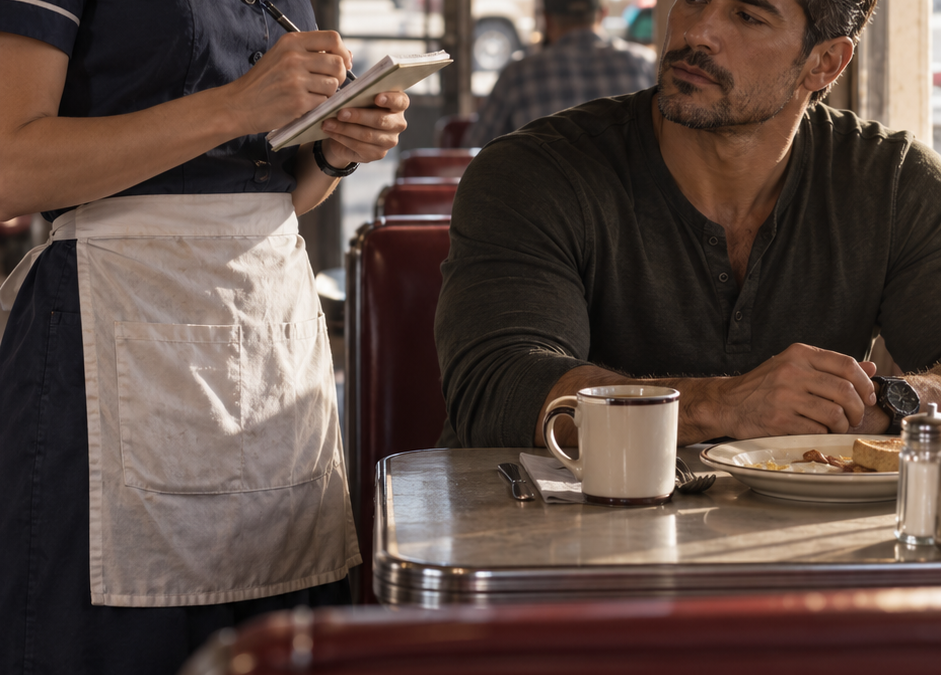
𝗣𝗔𝗥𝗧 𝟮
The grid did not replace official documentation.
It was never meant to.
It was a bridge between chaos and the next pair of hands.
The next medic should never have to solve a mystery.
That sentence became almost a rule for me.
And the first person I taught it to was Petty Officer Elena Cho.
Elena was younger than I was.
Sharp.
Fast.
Stubborn enough to be dangerous if you did not give her something difficult to master.
She carried three black pens in the chest pocket of her uniform.
Always three.
The first time I noticed, I asked whether she planned to open an office supply store after deployment.
She gave me a completely serious look.
“One pen fails, that’s bad luck. Two pens fail, that’s poor planning.”
I laughed at her.
Three weeks later, a sandstorm destroyed two of mine.
Elena stood beside me, slowly pulled the third pen from her pocket, and held it out without saying a word.
I can still see that expression.
Triumphant without being cruel.
“Not one word,” I told her.
“I wasn’t going to say anything.”
“You were thinking loudly.”
“That isn’t against regulations.”
That was Elena.
She could find humor in spaces where humor should not have survived.
She learned my grid quickly.
Then she improved it.
I had originally placed evacuation priority in the upper section.
Elena moved it to the final line.
Her reasoning was simple.
“When someone is exhausted, their eyes stop at the bottom.”
I argued with her for two days.
Then we tested it during drills.
She was right.
After that, the last line belonged to evacuation priority.
She also developed a little hook under the final section that meant the receiving team needed to verbally confirm the entire handoff.
I called it the return mark.
Soon Elena and I could exchange cards without asking a question.
Not because we had invented a secret language.
Because we had reduced ambiguity.
That difference mattered to us.
Eventually, we separated into different commands.
I assumed the grid would probably disappear with us.
Field habits often do.
People invent solutions for one environment, then another unit creates something else.
I never imagined anyone would remember mine.
Eighteen months after Elena and I went separate ways, she died.
The notification did not arrive dramatically.
There was no rainstorm.
No music.
No cinematic knock at the door.
I was working when someone told me I needed to speak privately with my commanding officer.
I knew before he finished the first sentence.
There are certain tones people use when they are carrying death toward you.
Elena had been supporting a night operation.
Multiple casualties.
A difficult evacuation.
The review eventually concluded there had been no failure in her treatment.
Men had survived because of her.
Her documentation had been clear.
Her handoffs had been effective.
Every official fact said the same thing.
She had done her job.
She had done it well.
She had saved people.
None of that changed what I heard in my head.
Her voice complaining about terrible coffee.
Her stupid three pens.
Her promise to call me Sunday.
Sunday came.
My phone never rang.
People sometimes imagine grief as one great collapse.
Mine was not like that.
I kept functioning.
I continued training younger corpsmen.
I showed up on time.
I reviewed cases.
I stood beside frightened medics and told them to breathe, slow down, identify the next problem.
People trusted me.
Some even praised me.
Praise became difficult.
Every time somebody told me one of my trainees was good, I wondered how long before somebody sent me another message.
I stayed eleven months after Elena died.
I tried to outlast what I was feeling.
Tried to reason with it.
Tried to remind myself that what happened to Elena was not mine to carry.
I had not planned her mission.
I had not been present.
Nothing in the review suggested any mistake connected to my training.
I understood every rational argument.
Grief did not care.
Eventually, every young medic standing in front of me began to look like a future casualty notification.
That scared me.
Not because I thought I would stop caring.
Because I cared so much I was afraid it might begin affecting my judgment.
And if there was one thing I had always believed about medicine, it was that the person depending on you should never have to pay for the wounds you carried into the room.
So I left.
No commander forced me.
Nobody told me I was finished.
I requested separation.
Then I drove three states inland to a town without a naval station, rented a small apartment, and took a job at Miller’s.
People occasionally asked whether waiting tables felt like a waste after the military.
I hated that question.
There was dignity in work that did not end with somebody’s mother receiving a folded flag.
At Miller’s, mistakes were usually fixable.
A cold plate could be reheated.
Wrong toast could be replaced.
A forgotten refill could be apologized for.
I needed a world where most errors were small.
Manageable.
For two years, manageable was enough.
I kept one old black pen in the top drawer of my dresser.
Every anniversary of Elena’s death, I bought three more.
I left them unopened beside it.
I never really understood why.
Then Marcus Reyes walked into Miller’s on a rainy Monday night.
He told me later that the restaurant near his temporary duty station had closed early.
He was in town for planning meetings and expected to leave within a month.
That first night, I brought him coffee.
He ordered meatloaf.
Green beans instead of fries.
No gravy.
I wrote the ticket the way I had written every restaurant order since starting at Miller’s.
Time and table at the top.
Main order in the middle.
Substitution below.
Warnings isolated.
I had adapted an old reflex to a harmless purpose.
It kept the kitchen organized.
That was all.
Or at least that was what I believed.
Marcus returned two nights later.
Then again.
By the third week, I recognized his truck through the diner window.
He sat in the same booth most evenings.
I started his coffee before he asked.
What I did not know was that he had started watching my hand.
The evening everything changed began with pot roast.
Marcus ordered carrots instead of potatoes.
He asked for one sauce changed because of an allergy.
I wrote it down.
I boxed the table number and time.
Placed the change in two compact lines.
Circled the allergy.
Then drew one heavy slash beside the kitchen instruction that could not be missed.
When I started to pull the ticket away, two of Marcus’s fingers settled on the paper.
I stopped.
He was staring at it.
Not casually.
His face had gone still in a way I recognized immediately.
People think surprise always looks dramatic.
It usually does not.
True recognition often looks like absence.
Like the mind has stepped backward into somewhere else.
“Is there a problem with the order?” I asked.
He looked at me.
Then back at the ticket.
“No.”
His voice was controlled.
Too controlled.
He released the paper.
“I was admiring how clear you make it.”
I felt something tighten between my shoulders.
“It keeps the kitchen from guessing.”
A perfectly ordinary answer.
He nodded.
But his eyes stayed on the ticket as I walked away.
I told myself not to read anything into it.
Then I caught him watching me three more times that evening.
Not my face.
My hands.
I should have been annoyed.
Instead, some old internal alarm had begun to whisper.
Two nights later, he came back.
Same booth.
Same pot roast.
But this time, he changed the order three times.
Carrots instead of potatoes.
No onions.
Gravy on the side.
Then he mentioned the allergy again.
I knew what he was doing before I finished writing.
He was testing whether the layout had been accidental.
I used the same structure.
Because after years of writing information one way, I could not comfortably write it another.
Marcus glanced down at the ticket.
“You always write orders like that?”
“The cooks prefer it.”
“Did someone teach you?”
I met his eyes.
There are questions that sound harmless because the person asking them has hidden the blade well.
“Everybody learns from somebody.”
For half a second, neither of us moved.
Then I tore off the ticket and walked away.
I thought that would end it.
It did not.
Marcus started asking ordinary questions.
How long had I been at Miller’s?
Two years.
Had I always lived in town?
No.
What did I do before?
Other jobs.
He never pushed hard enough for me to call him rude.
That somehow made it worse.
One evening, Mr. Hanley became dizzy near the register.
His wife said his name twice.
By the second time, I was already beside him.
I lowered him into a chair.
Checked his wrist.
His color.
His breathing.
Asked whether he had taken his blood pressure medication.
Whether he had eaten.
Whether he had chest pain.
Whether the room was spinning or he felt faint.
Within a minute, his breathing steadied.
He had skipped lunch and spent most of the afternoon working outside in the heat.
I brought water.
His wife thanked me.
I returned to the counter.
Marcus was watching.
I knew immediately what he had seen.
Not a waitress helping an elderly customer.
A medical assessment disguised as kindness.
I avoided his booth for ten minutes.
That was childish.
I knew it.
He knew it too.
Still, he did not ask.
The next time he came in, he sat at the counter.
The diner was nearly empty.
It was late.
I was adding up a family’s bill while the cook cleaned the grill.
Marcus ordered coffee and a slice of pie.
Then he started talking about a medic.
At first, I assumed he was finally going to tell me directly what he suspected.
Instead, he described a woman he had served with four years earlier.
She had supported his unit during a joint operation.
Nine days.
Hard days.
She could organize casualty information so clearly that exhausted people understood it immediately.
My pen kept moving.
Then Marcus said something about three black pens.
My hand slowed.
I hated that he noticed.
He continued.
The medic was funny.
Stubborn.
She had once rewritten a damaged casualty card the morning after an operation because one number was blurred.
I could hear my pulse.
Then Marcus said her name.
“Elena Cho.”
My pen stopped.
There are names that belong to the dead.
And there are names that still somehow contain a living person inside them.
Elena’s was the second kind.
My left hand went flat against the counter because suddenly I was afraid it might shake.
When I looked at Marcus, whatever polite distance I had maintained for three weeks was gone.
“Did you know her?”
He stared at me for a second.
“Yes.”
My fingers tightened around the pen.
He told me Elena had supported his unit.
That they had only known each other for nine days.
That he had learned of her death much later through another teammate.
He said she had been calm when everybody else rushed.
Funny when nobody expected humor.
Obsessive about handoffs.
“She hated weak coffee,” I said.
Marcus’s expression changed.
“She carried three pens.”
I almost smiled.
“She believed two pens counted as poor planning.”
That was the moment he knew.
I saw certainty enter his face.
Not victory.
Recognition.
The same thing I had seen when he looked at my ticket.
My hand had begun to tremble.
I set the coffee pot down.
“I trained her.”
The words sounded strange aloud.
Marcus said nothing.
So I kept going.
I told him how Elena had arrived young and determined.
How quickly she learned.
How she could imitate my handwriting well enough to irritate me.
How the six-line grid had started.
How I had taught it to her.
Marcus asked me to draw it.
I hesitated.
Then pulled a clean order sheet from my pad.
The moment my pen touched paper, my body remembered everything.
The open upper corner.
Time first.
Primary injury.
Treatment.
Response.
Warnings.
Evacuation priority.
Marcus pointed to the open space.
“Why leave that blank?”
“Because people write the wrong time when they’re moving too fast. You leave it empty until somebody confirms it.”
His eyes lifted to mine.
“Elena said those exact words to me.”
For a moment, I could not breathe comfortably.
I circled an imaginary allergy.
Placed a slash beside an imaginary repeat treatment.
Then added the tiny hook beneath the final line.
Marcus touched it with one finger.
“She called that the return mark.”
My head snapped up.
“I called it that.”
The diner disappeared.
Not literally.
But the walls felt farther away.
The clatter from the kitchen.
The refrigerator hum.
The old radio near the dish station.
Everything became background.
That small mark had been mine.
A practical little symbol created in a temporary aid station because I did not trust exhausted people to assume they had understood one another.
I had not used it in years.
Yet Marcus knew its name.
He told me Elena had once said her system belonged to somebody else.
“I’m just trusted with it.”
I stopped moving.
Those words hurt worse than I expected.
For two years, my last real image of Elena had been formed by death.
A report.
A phone call.
Silence on a Sunday.
Marcus was giving me something else.
Elena alive.
Drinking terrible coffee.
Explaining my work.
Protecting its origin.
Proud of it.
“She said that?”
Marcus nodded.
“Exactly that.”
I looked down because suddenly the diner lights were too bright.
Then he told me something I had never known.
Elena had taught the layout to other corpsmen.
Not officially.
Not as some Navy-wide doctrine.
Just practically.
A tool.
Something people could read quickly before full documentation caught up.
Marcus had seen variations after their operation.
One of his senior corpsmen had taken it to another unit.
He had seen a similar grid on a training board overseas and assumed it was common practice.
Until he saw my dinner tickets.
“How many people?” I asked.
“I don’t know.”
“Ten?”
“Maybe.”
“Fifty?”
“Maybe.”
“Hundreds?”
He gave a small shrug.
“Informal systems don’t leave clean records.”
That should have made me proud.
Instead, fear arrived first.
“Did anyone misunderstand it?”
Marcus seemed surprised.
“What?”
“Did anyone use the abbreviations wrong? Did somebody treat the slash as a completed treatment instead of a repeat? Did anyone use the grid instead of proper documentation?”
He shook his head.
“Not that I’ve seen.”
“That isn’t an answer.”
“No. It isn’t.”
He did not try to comfort me with certainty he did not have.
That made me trust him more.
He explained that wherever he had seen the format, it was being used alongside standard documentation.
A rapid handoff aid.
Nothing more.
I stared at the little grid.
“Things change when they travel.”
“I know.”
“People shorten things that shouldn’t be shortened.”
“I know.”
“They forget why a mark exists.”
“That’s why origins matter.”
I looked at him.
He leaned forward slightly.
“If people are already using something based on your method, somebody should understand what every part was supposed to mean.”
I felt the old door inside me starting to open.
I pushed against it.
“I left that life.”
“I know.”
“They don’t need me.”
“I didn’t say they did.”
I looked at him.
Marcus’s voice stayed quiet.
“Leaving a job doesn’t make the good work disappear.”
I had no answer.
He asked why I left.
Then immediately added, “You don’t have to tell me.”
I should have taken the escape he gave me.
Instead, I told him about Elena.
Not the official facts.
The real ones.
How every young medic had started to resemble a future obituary.
How I feared eventually I would hesitate to send someone into difficult work because I was protecting myself rather than preparing them.
How praise had started feeling dangerous.
How I knew Elena’s death was not my fault but knowledge and grief lived in different parts of the body.
Marcus listened.
He did not interrupt once.
When I finished, he sat quietly for a while.
Then he said, “Elena told me her mentor taught her that courage wasn’t the absence of fear.”
My throat tightened.
“She said courage was knowing what still had to be done while fear stood beside you.”
I looked away.
I had said that.
Years earlier.
To Elena.
During a night when she admitted she was afraid she would freeze the first time somebody she knew was badly wounded.
I had forgotten the words.
She had remembered them.
Our manager called from the office that closing time was near.
I folded the grid and slipped it into my apron.
Marcus paid.
At the door, he stopped.
“I’m in town another three weeks.”
I waited.
“I’d like to ask some people where they learned the layout.”
My first instinct was to say no.
He continued before I could.
“Nothing public. No promises. No pressure. I’m not trying to drag you back into anything.”
“What do you think you’re going to find?”
“I don’t know.”
His eyes dropped toward the order pad.
“But if Elena carried this farther than either of us realized, somebody should know where it began.”
I said nothing.
He opened the door.
Rain moved silver beneath the parking lot lights.
Then he turned back.
“If I find proof, will you let me come back?”
I did not answer.
For nineteen days, I heard nothing.
I convinced myself that meant there was nothing to find.
I told myself Marcus had returned to his meetings, made a few calls, discovered that the marks were coincidence, and let the whole thing die.
That should have been a relief.
Instead, every time the diner door opened, I looked up.
On the twentieth evening, Marcus walked in carrying a dark folder.
I knew before he spoke.
He waited until I finished serving a family.
Then sat at the counter.
“You said I could come back if I found proof.”
“I did not say that.”
“You didn’t say no.”
“There’s a difference.”
“I know.”
He did not smile.
That helped.
He placed seven copied pages on the counter.
The first one stopped my breathing.
Elena’s handwriting.
I would have known it anywhere.
Compact.
Slight right tilt.
Her number fours open at the top.
My six-line grid.
The last page had been completed three months earlier by a corpsman whose name meant nothing to me.
Marcus explained what he had found.
Elena had taught the layout to three other corpsmen.
One later became an instructor.
Another used an adapted form with a team that often operated in places where radio communication was unreliable.
The marks had changed over time.
Some were simplified.
Some dangerously.
But the structure remained.
Confirmed time.
Major concern.
Treatment and response.
Warnings isolated.
Evacuation priority last.
Marcus found variants across four units over six years.
None of them replaced mandatory documentation.
They were rough working notes.
Temporary bridges.
Exactly what I had intended.
Then he turned to one photocopied notebook page.
Elena’s writing.
One sentence had been underlined.
Six-line handoff taught by HM1 Olivia Carter. Never make the next medic solve a mystery.
I read it.
Then read it again.
My eyes blurred before I could stop them.
For years, I had believed Elena’s last mission had become the final punctuation mark on everything we had shared.
The folder in front of me proved otherwise.
Her work had continued.
Our work had continued.
Not perfectly.
Not cleanly.
But it had lived.
Marcus let me read in silence.
Then he told me why he had brought the folder.
A medical training officer he trusted had reviewed the examples.
They believed the concept might be useful as a controlled supplemental teaching aid for rapid handoffs.
Not a new medical record.
Not a replacement for existing procedure.
A teaching structure.
But there was a problem.
The method had drifted.
Some abbreviations were unsafe.
One version used a symbol that could be interpreted two different ways.
Another removed the space for confirmed time.
If anyone wanted to test the tool responsibly, they needed the original reasoning.
Marcus said the reviewers wanted me involved.
Not as a symbol.
Not as a story.
As someone who knew why each element existed.
I closed the folder.
“No.”
He did not argue.
“They don’t need me.”
Marcus touched Elena’s notebook page.
“She thought they did.”
Anger rose so quickly it surprised me.
“That’s not fair.”
“I know.”
“You don’t get to use her against me.”
“I’m not trying to.”
“That’s exactly what you just did.”
Marcus closed the folder gently.
“Then say no.”
I stared at him.
He continued.
“But say no because you choose to. Not because you think everything useful about you died when Elena did.”
That sentence followed me home.
For four days, the folder stayed beneath the diner counter.
I did not touch it during my shifts.
At closing, I carried it to the last booth.
On the first night, I read two pages.
On the second, all seven.
On the third, I began making notes in the margins.
By the fourth night, I was angry.
Not at Marcus.
At the mistakes.
Somebody had shortened an allergy notation so badly that it could be misread.
One version placed repeat-treatment marks too close to completed interventions.
Another had removed the confirmed-time space entirely.
I found myself muttering aloud.
“No.”
I drew a line through one abbreviation.
“That’s not what this means.”
I corrected another.
Then another.
At some point, I realized I had been working for almost two hours.
The diner was closed.
Lights dimmed.
Coffee burners off.
My apron lay on the seat beside me.
And I was doing exactly what I had spent two years refusing to do.
Teaching.
At the bottom of the final page, I wrote:
This layout belongs beside approved medical documentation. Never instead of it.
The next morning, I called the number on Marcus’s card.
He answered on the second ring.
“One meeting.”
He was silent.
“I’ll explain what they got wrong.”
“One meeting,” he agreed.
I knew he was trying not to sound pleased.
“Do not make me regret this.”
“I won’t.”
A week later, I walked into a training office carrying Elena’s old notebook and three black pens.
I nearly turned around twice before reaching the building.
The first time was in the parking lot.
The second was at the front desk.
Then I remembered something I had once told Elena.
Fear could stand beside you.
It simply did not get to decide what happened next.
So I walked in.
The process lasted eight months.
Nobody treated my grid like sacred history.
I was grateful for that.
Medical reviewers challenged everything.
Why six lines?
Why that order?
Why isolate allergies?
Why the slash?
Could a slash be mistaken for something else?
Was evacuation priority really best at the bottom?
What happened under poor lighting?
What if the patient moved between teams?
What terms were prohibited?
What happened when information was uncertain?
Some questions irritated me.
Most improved the tool.
We removed two abbreviations entirely.
One was too easy to misunderstand.
The other made sense only to people trained in one environment.
We made the slash more clearly defined.
We required verbal confirmation for repeat treatments.
We kept Elena’s evacuation-priority line.
During testing, exhausted trainees consistently found it faster at the bottom.
I smiled the first time the data proved Elena right.
Again.
The revised grid was eventually approved as a supplemental tool for one advanced course.
Not Navy-wide.
Not mandatory.
That mattered to me.
Good medicine does not need mythology.
It needs clear purpose.
Evidence.
Limitations.
People willing to say, “This works here, but not there.”
During one pilot exercise, a young corpsman almost missed a repeat-treatment time on a simulated casualty.
The instructor stopped him.
“Look again.”
The trainee scanned the page.
His eyes landed on the marked line.
He corrected himself.
The instructor said, “That mark just protected the next set of hands.”
I had to turn away.
For years, I had associated my training with Elena’s death.
That morning, for the first time, I associated it with someone catching a mistake before it happened.
One question remained.
Whose name belonged on the final document?
The first draft listed me alone.
Developed by HM1 Olivia Carter.
I stared at it for a long time.
Then sent it back.
Marcus called that evening.
“I heard you rejected the credit line.”
“It’s wrong.”
“The early notes are yours.”
“The evacuation line is Elena’s.”
“That can be documented.”
“She taught the first three people who carried it forward.”
“That too.”
“She preserved it after I stopped using it.”
Marcus was quiet.
I continued.
“If you put only my name on that page, you’ll be making the record cleaner by making it less true.”
There was a pause.
Then Marcus said, “What do you want it to say?”
I had already written it.
The final version read:
Developed from field practice by HM1 Olivia Carter, refined and carried forward by HM2 Elena Cho.
Below that was a simple purpose statement.
To organize essential information during rapid casualty handoff while supporting approved medical documentation.
No dramatic language.
No word like hero.
No mention of sacrifice.
Just two names.
Accurate words.
That mattered to me more than praise ever could.
Marcus and I stood together in a quiet office the first time I saw the finished page.
He looked at the credit line.
Then at me.
“Is it enough?”
I ran my finger beneath Elena’s name.
“It’s accurate.”
Marcus nodded.
By then, he understood that accuracy had always been one of the deepest forms of respect I knew how to give.
A week later, he came into Miller’s carrying a slim binder.
I was pouring Mr. Hanley’s decaf.
Marcus waited at the counter until I finished.
He handed me the binder without ceremony.
Inside was the course supplement.
The grid.
The examples.
The warnings.
The limits.
Our names.
Behind the final page was a photograph.
I recognized Elena before my mind fully understood what I was seeing.
She stood outside a medical tent.
Sunlight hard across one side of her face.
Hair pulled back.
Smiling.
In one raised hand, she held three black pens spread between her fingers like playing cards.
I turned the photograph over.
Her handwriting covered the back.
Always prepared for the great ink emergency.
I laughed.
One sound.
Small.
Broken.
It turned into a breath I could not control.
Then tears.
I had cried for Elena before.
Many times.
But those tears had always belonged to the same memory.
A message.
A mission.
A death.
This was different.
Marcus looked toward the window.
He did not pretend not to notice.
He simply gave me the dignity of not being watched while I cried.
For two years, I had remembered Elena almost entirely through how she died.
Marcus had given me back the way she lived.
Funny.
Prepared.
Stubborn.
Proud.
Still carrying three pens.
The following week, I bought a simple black frame.
Nothing expensive.
I placed the credit page inside it.
Then tucked Elena’s photograph beside the corner.
I hung it behind the counter at Miller’s.
Most customers never noticed.
Some thought Elena was my sister.
Others assumed the paper was a nursing certificate.
I did not correct them unless they asked.
My life did not suddenly become dramatic again.
I kept working at Miller’s.
I still wore the blue uniform.
Still knew who needed decaf.
Still remembered Ruth Bell’s toast.
Still carried plates.
Marcus eventually finished his temporary assignment.
Before he left, he came in one final time.
Same booth.
Same black coffee.
I brought him the pot roast without asking.
Carrots instead of potatoes.
Gravy on the side.
No onions.
I placed the ticket on the table beside him.
He looked down at my handwriting.
Then smiled.
“You still use the grid for dinner orders.”
“It keeps people from making mistakes.”
He lifted his coffee.
“Some habits are worth keeping.”
I sat across from him for the first time.
Only for a minute.
“What made you notice it?”
“The slash.”
“That’s all?”
“At first.”
He paused.
“Then everything else.”
I looked toward Elena’s picture behind the counter.
“You really remembered her cards after four years?”
Marcus nodded.
“I remembered that when I was exhausted and everything was loud, I could look at what she wrote and understand what mattered.”
That sentence stayed with me.
Not because it made me proud.
Because it finally gave me a different way to measure Elena’s life.
Not by the mission where it ended.
By the people who could still hear her thinking years later.
On the anniversary of her death, I bought three black pens.
Just as I had every year.
I carried them home.
Set them beside the old unopened packages in my dresser drawer.
For a while, I stood there looking at them.
Then I opened the new package.
I kept one.
The second I mailed to the training course with a note asking them to place it beside the instructor’s master copy.
The third I brought to Miller’s.
A young waitress named Hannah had recently started working evenings while finishing prerequisites for nursing school.
She was nineteen.
Smart.
Nervous.
Always losing pens.
That night, she reached into her apron and sighed.
“I swear somebody steals every pen I own.”
I looked at the black pen in my hand.
For one moment, I saw Elena.
Young.
Tired.
Smiling through dust.
Holding out that third pen to me after the sandstorm.
I gave the pen to Hannah.
“Keep a backup.”
She smiled.
“Just one?”
I nearly laughed.
“No.”
I reached into my apron and handed her another.
“Two backups.”
She stared at the three pens in her hand.
“Is this some kind of rule?”
I looked toward the small frame behind the counter.
Elena was still smiling in the photograph.
Three pens raised between her fingers.
“Yes,” I said.
“It is now.”
That night, after everyone left, I stood alone in Miller’s.
The lights over the booths were off.
Only the counter lamps remained.
For years, I had believed healing meant leaving certain rooms and never entering them again.
I had been wrong.
Sometimes healing meant returning with different eyes.
Sometimes it meant discovering that the thing you abandoned because it hurt too much had continued doing good without asking you to witness it.
And sometimes a person you lost had been carrying pieces of you farther than you ever knew.
I still missed Elena.
Recognition did not erase grief.
Nothing could.
But grief no longer felt like the only evidence that she had existed.
Her name was printed beside mine.
Her change to the evacuation line remained in the course.
Her words lived in notebooks.
Her habits had passed from corpsman to corpsman.
And somewhere, people I would never meet were learning one simple principle she and I had once repeated to each other in a dusty aid station.
Never make the next medic solve a mystery.
Years earlier, I had taught that lesson because clear information could protect a patient.
Elena carried it forward because she understood something I did not yet understand.
A good lesson does not belong only to the person who creates it.
It belongs to the people who preserve it carefully.
Improve it honestly.
Respect its limits.
And pass it to the next set of hands.
For two years, I thought I had walked away from the most important part of myself.
The truth was quieter.
I had only changed uniforms.
The medic I had been had never completely disappeared.
She was there every time I noticed someone turning pale before anyone else did.
Every time I moved a hot plate away from a child’s reaching hand.
Every time I wrote an allergy where the cook could not miss it.
Every time I made sure the person after me would not have to guess.
Marcus had recognized that woman before I was ready to recognize her myself.
Not from my face.
Not from a medal.
Not from a uniform.
From the way my pen moved across a diner order.
From a pattern Elena had carried across years and units and people.
A pattern that had traveled all the way back to me.
And in the end, that was what healed something I had been unable to name.
I had spent years believing Elena’s death proved that everything good between us had ended too soon.
Instead, her life had quietly continued in the habits she taught, the people she trained, and the work she refused to let disappear.
I used to think legacies arrived with ceremonies.
With medals.
With speeches.
With people standing at attention.
Now I know better.
Sometimes they arrive folded inside an old notebook.
Sometimes they are hidden in seven photocopied pages.
Sometimes they are written on the back of a photograph.
And sometimes they sit unnoticed on a diner counter until a stranger looks at your handwriting and recognizes the person you thought the world had forgotten.
Some legacies do not make noise.
They pass quietly from one steady hand to another.
And if they are lucky, one day they find their way home.
Have you finished reading the story and want to read it again?
The SEAL Commander Kept Watching My Handwriting—As If He Recognized the Life I Had Spent Two Years Trying to Forget
The first time Commander Marcus Reyes stared at my handwriting, I thought he was simply another customer watching a waitress too closely.
The second time, I realized he was looking at something he had seen before.
By the time he spoke Elena Cho’s name, the life I had buried for two years was already standing between us.
PART2
I had been serving Marcus Reyes coffee for three weeks before I understood that he was studying me.
Not in the way some men studied waitresses.
There was no flirting in it.
No careless lingering glance.
No attempt to turn politeness into invitation.
He watched the way I moved.
The way I wrote.
The way I positioned myself near the counter.
The way my eyes lifted whenever something dropped in the kitchen.
At first, I told myself I was imagining it.
That was something I had become very good at after leaving the Navy.
Explaining away instincts.
Softening observations.
Convincing myself that things were ordinary when some older part of me knew they were not.
Marcus came into Miller’s Diner twice a week.
Sometimes three times.
He usually chose booth seven, near the windows but with a clear view of the entrance.
That should have been the first thing I noticed.
Instead, I noticed his coffee.
Black.
No sugar.
Refill before the cup dropped below half.
He liked meatloaf, green beans instead of fries, and no gravy unless the roast was dry.
He never complained.
Never rushed me.
Never tried to make conversation when the diner was busy.
He had the broad shoulders and stillness of a man accustomed to command, but he did not announce himself with it.
I did not know he was a Navy SEAL commander at first.
To me, he was simply Marcus.
Quiet.
Observant.
Temporary.
Those were my favorite kinds of customers.
People who came and left without asking me who I had been before I tied on a blue apron.
I had worked at Miller’s for almost two years by then.
Long enough that most people in town thought they knew me.
They knew I remembered Mr. Hanley’s decaf.
They knew Ruth Bell wanted her toast nearly burned but would send it back if one edge actually blackened.
They knew I could carry four dinner plates without looking down and calculate three split checks in my head while filling coffee.
They knew I wore my blonde hair twisted loosely at the back of my neck.
They knew I lived alone.
They knew almost nothing else.
That arrangement suited me.
My manager once told me I had a talent for answering personal questions without appearing unfriendly.
I had smiled at that.
The truth was simpler.
For years, I had worked in places where speaking too much could cost time, concentration, sometimes lives.
Silence had stopped feeling awkward a long time ago.
People usually filled it for me.
I had never lied about my past.
I simply did not offer it.
Nobody at Miller’s knew that before I became the woman carrying pie and coffee across a checkerboard floor, I had spent nine years as a Navy hospital corpsman attached to special operations units.
Nobody knew I had learned to start IVs in moving vehicles.
To recognize internal bleeding by color and breathing.
To make treatment decisions while gunfire turned clear thinking into a physical act of resistance.
Nobody knew why I never stood with my back completely exposed to the front door.
Or why a dropped tray made me turn toward the sound before everyone else.
Or why, when somebody cut a finger in the kitchen, I always seemed to see the blood before the person who was bleeding.
At Miller’s, those habits were just quirks.
That was what I wanted them to be.
Harmless leftovers from a life I had no intention of returning to.
The habit that caught Marcus Reyes’s attention had begun during my second deployment.
Six wounded men arrived at a temporary casualty point within eleven minutes.
I still remembered the heat.
The dust.
The sound of rotor blades somewhere beyond the walls.
We had proper medical documentation.
Of course we did.
But proper documentation takes time, and time becomes a strange currency when six bodies arrive carrying six separate emergencies.
One man had a chest wound.
Another had a broken femur and blood pressure falling fast.
One had taken shrapnel across his shoulder and neck.
Another was conscious but deteriorating.
The treatment area became noise and movement.
People calling out vitals.
Someone requesting blood.
Someone else shouting for transport priority.
A radio talking over all of it.
I remember looking down at one casualty card and realizing that the treatment time I needed had been buried between two hastily written notes.
For maybe three seconds, I could not tell whether a medication had been given at 1420 or needed to be repeated at 1420.
Three seconds is not much.
Until three seconds stands between two interpretations of a medical order.
That frightened me more than the blood.
So I drew six lines.
Nothing revolutionary.
Nothing sophisticated.
A quick structure.
Confirmed time and primary injury at the top.
Treatment and response in the middle.
Allergies and immediate warning information isolated below.
Evacuation priority on the final line.
If a medication or intervention needed to be repeated during transport, I put one heavy slash beside it.
The grid did not replace official documentation.
It was never meant to.
It was a bridge between chaos and the next pair of hands.
The next medic should never have to solve a mystery.
That sentence became almost a rule for me.
And the first person I taught it to was Petty Officer Elena Cho.
Elena was younger than I was.
Sharp.
Fast.
Stubborn enough to be dangerous if you did not give her something difficult to master.
She carried three black pens in the chest pocket of her uniform.
Always three.
The first time I noticed, I asked whether she planned to open an office supply store after deployment.
She gave me a completely serious look.
“One pen fails, that’s bad luck. Two pens fail, that’s poor planning.”
I laughed at her.
Three weeks later, a sandstorm destroyed two of mine.
Elena stood beside me, slowly pulled the third pen from her pocket, and held it out without saying a word.
I can still see that expression.
Triumphant without being cruel.
“Not one word,” I told her.
“I wasn’t going to say anything.”
“You were thinking loudly.”
“That isn’t against regulations.”
That was Elena.
She could find humor in spaces where humor should not have survived.
She learned my grid quickly.
Then she improved it.
I had originally placed evacuation priority in the upper section.
Elena moved it to the final line.
Her reasoning was simple.
“When someone is exhausted, their eyes stop at the bottom.”
I argued with her for two days.
Then we tested it during drills.
She was right.
After that, the last line belonged to evacuation priority.
She also developed a little hook under the final section that meant the receiving team needed to verbally confirm the entire handoff.
I called it the return mark.
Soon Elena and I could exchange cards without asking a question.
Not because we had invented a secret language.
Because we had reduced ambiguity.
That difference mattered to us.
Eventually, we separated into different commands.
I assumed the grid would probably disappear with us.
Field habits often do.
People invent solutions for one environment, then another unit creates something else.
I never imagined anyone would remember mine.
Eighteen months after Elena and I went separate ways, she died.
The notification did not arrive dramatically.
There was no rainstorm.
No music.
No cinematic knock at the door.
I was working when someone told me I needed to speak privately with my commanding officer.
I knew before he finished the first sentence.
There are certain tones people use when they are carrying death toward you.
Elena had been supporting a night operation.
Multiple casualties.
A difficult evacuation.
The review eventually concluded there had been no failure in her treatment.
Men had survived because of her.
Her documentation had been clear.
Her handoffs had been effective.
Every official fact said the same thing.
She had done her job.
She had done it well.
She had saved people.
None of that changed what I heard in my head.
Her voice complaining about terrible coffee.
Her stupid three pens.
Her promise to call me Sunday.
Sunday came.
My phone never rang.
People sometimes imagine grief as one great collapse.
Mine was not like that.
I kept functioning.
I continued training younger corpsmen.
I showed up on time.
I reviewed cases.
I stood beside frightened medics and told them to breathe, slow down, identify the next problem.
People trusted me.
Some even praised me.
Praise became difficult.
Every time somebody told me one of my trainees was good, I wondered how long before somebody sent me another message.
I stayed eleven months after Elena died.
I tried to outlast what I was feeling.
Tried to reason with it.
Tried to remind myself that what happened to Elena was not mine to carry.
I had not planned her mission.
I had not been present.
Nothing in the review suggested any mistake connected to my training.
I understood every rational argument.
Grief did not care.
Eventually, every young medic standing in front of me began to look like a future casualty notification.
That scared me.
Not because I thought I would stop caring.
Because I cared so much I was afraid it might begin affecting my judgment.
And if there was one thing I had always believed about medicine, it was that the person depending on you should never have to pay for the wounds you carried into the room.
So I left.
No commander forced me.
Nobody told me I was finished.
I requested separation.
Then I drove three states inland to a town without a naval station, rented a small apartment, and took a job at Miller’s.
People occasionally asked whether waiting tables felt like a waste after the military.
I hated that question.
There was dignity in work that did not end with somebody’s mother receiving a folded flag.
At Miller’s, mistakes were usually fixable.
A cold plate could be reheated.
Wrong toast could be replaced.
A forgotten refill could be apologized for.
I needed a world where most errors were small.
Manageable.
For two years, manageable was enough.
I kept one old black pen in the top drawer of my dresser.
Every anniversary of Elena’s death, I bought three more.
I left them unopened beside it.
I never really understood why.
Then Marcus Reyes walked into Miller’s on a rainy Monday night.
He told me later that the restaurant near his temporary duty station had closed early.
He was in town for planning meetings and expected to leave within a month.
That first night, I brought him coffee.
He ordered meatloaf.
Green beans instead of fries.
No gravy.
I wrote the ticket the way I had written every restaurant order since starting at Miller’s.
Time and table at the top.
Main order in the middle.
Substitution below.
Warnings isolated.
I had adapted an old reflex to a harmless purpose.
It kept the kitchen organized.
That was all.
Or at least that was what I believed.
Marcus returned two nights later.
Then again.
By the third week, I recognized his truck through the diner window.
He sat in the same booth most evenings.
I started his coffee before he asked.
What I did not know was that he had started watching my hand.
The evening everything changed began with pot roast.
Marcus ordered carrots instead of potatoes.
He asked for one sauce changed because of an allergy.
I wrote it down.
I boxed the table number and time.
Placed the change in two compact lines.
Circled the allergy.
Then drew one heavy slash beside the kitchen instruction that could not be missed.
When I started to pull the ticket away, two of Marcus’s fingers settled on the paper.
I stopped.
He was staring at it.
Not casually.
His face had gone still in a way I recognized immediately.
People think surprise always looks dramatic.
It usually does not.
True recognition often looks like absence.
Like the mind has stepped backward into somewhere else.
“Is there a problem with the order?” I asked.
He looked at me.
Then back at the ticket.
“No.”
His voice was controlled.
Too controlled.
He released the paper.
“I was admiring how clear you make it.”
I felt something tighten between my shoulders.
“It keeps the kitchen from guessing.”
A perfectly ordinary answer.
He nodded.
But his eyes stayed on the ticket as I walked away.
I told myself not to read anything into it.
Then I caught him watching me three more times that evening.
Not my face.
My hands.
I should have been annoyed.
Instead, some old internal alarm had begun to whisper.
Two nights later, he came back.
Same booth.
Same pot roast.
But this time, he changed the order three times.
Carrots instead of potatoes.
No onions.
Gravy on the side.
Then he mentioned the allergy again.
I knew what he was doing before I finished writing.
He was testing whether the layout had been accidental.
I used the same structure.
Because after years of writing information one way, I could not comfortably write it another.
Marcus glanced down at the ticket.
“You always write orders like that?”
“The cooks prefer it.”
“Did someone teach you?”
I met his eyes.
There are questions that sound harmless because the person asking them has hidden the blade well.
“Everybody learns from somebody.”
For half a second, neither of us moved.
Then I tore off the ticket and walked away.
I thought that would end it.
It did not.
Marcus started asking ordinary questions.
How long had I been at Miller’s?
Two years.
Had I always lived in town?
No.
What did I do before?
Other jobs.
He never pushed hard enough for me to call him rude.
That somehow made it worse.
One evening, Mr. Hanley became dizzy near the register.
His wife said his name twice.
By the second time, I was already beside him.
I lowered him into a chair.
Checked his wrist.
His color.
His breathing.
Asked whether he had taken his blood pressure medication.
Whether he had eaten.
Whether he had chest pain.
Whether the room was spinning or he felt faint.
Within a minute, his breathing steadied.
He had skipped lunch and spent most of the afternoon working outside in the heat.
I brought water.
His wife thanked me.
I returned to the counter.
Marcus was watching.
I knew immediately what he had seen.
Not a waitress helping an elderly customer.
A medical assessment disguised as kindness.
I avoided his booth for ten minutes.
That was childish.
I knew it.
He knew it too.
Still, he did not ask.
The next time he came in, he sat at the counter.
The diner was nearly empty.
It was late.
I was adding up a family’s bill while the cook cleaned the grill.
Marcus ordered coffee and a slice of pie.
Then he started talking about a medic.
At first, I assumed he was finally going to tell me directly what he suspected.
Instead, he described a woman he had served with four years earlier.
She had supported his unit during a joint operation.
Nine days.
Hard days.
She could organize casualty information so clearly that exhausted people understood it immediately.
My pen kept moving.
Then Marcus said something about three black pens.
My hand slowed.
I hated that he noticed.
He continued.
The medic was funny.
Stubborn.
She had once rewritten a damaged casualty card the morning after an operation because one number was blurred.
I could hear my pulse.
Then Marcus said her name.
“Elena Cho.”
My pen stopped.
There are names that belong to the dead.
And there are names that still somehow contain a living person inside them.
Elena’s was the second kind.
My left hand went flat against the counter because suddenly I was afraid it might shake.
When I looked at Marcus, whatever polite distance I had maintained for three weeks was gone.
“Did you know her?”
He stared at me for a second.
“Yes.”
My fingers tightened around the pen.
He told me Elena had supported his unit.
That they had only known each other for nine days.
That he had learned of her death much later through another teammate.
He said she had been calm when everybody else rushed.
Funny when nobody expected humor.
Obsessive about handoffs.
“She hated weak coffee,” I said.
Marcus’s expression changed.
“She carried three pens.”
I almost smiled.
“She believed two pens counted as poor planning.”
That was the moment he knew.
I saw certainty enter his face.
Not victory.
Recognition.
The same thing I had seen when he looked at my ticket.
My hand had begun to tremble.
I set the coffee pot down.
“I trained her.”
The words sounded strange aloud.
Marcus said nothing.
So I kept going.
I told him how Elena had arrived young and determined.
How quickly she learned.
How she could imitate my handwriting well enough to irritate me.
How the six-line grid had started.
How I had taught it to her.
Marcus asked me to draw it.
I hesitated.
Then pulled a clean order sheet from my pad.
The moment my pen touched paper, my body remembered everything.
The open upper corner.
Time first.
Primary injury.
Treatment.
Response.
Warnings.
Evacuation priority.
Marcus pointed to the open space.
“Why leave that blank?”
“Because people write the wrong time when they’re moving too fast. You leave it empty until somebody confirms it.”
His eyes lifted to mine.
“Elena said those exact words to me.”
For a moment, I could not breathe comfortably.
I circled an imaginary allergy.
Placed a slash beside an imaginary repeat treatment.
Then added the tiny hook beneath the final line.
Marcus touched it with one finger.
“She called that the return mark.”
My head snapped up.
“I called it that.”
The diner disappeared.
Not literally.
But the walls felt farther away.
The clatter from the kitchen.
The refrigerator hum.
The old radio near the dish station.
Everything became background.
That small mark had been mine.
A practical little symbol created in a temporary aid station because I did not trust exhausted people to assume they had understood one another.
I had not used it in years.
Yet Marcus knew its name.
He told me Elena had once said her system belonged to somebody else.
“I’m just trusted with it.”
I stopped moving.
Those words hurt worse than I expected.
For two years, my last real image of Elena had been formed by death.
A report.
A phone call.
Silence on a Sunday.
Marcus was giving me something else.
Elena alive.
Drinking terrible coffee.
Explaining my work.
Protecting its origin.
Proud of it.
“She said that?”
Marcus nodded.
“Exactly that.”
I looked down because suddenly the diner lights were too bright.
Then he told me something I had never known.
Elena had taught the layout to other corpsmen.
Not officially.
Not as some Navy-wide doctrine.
Just practically.
A tool.
Something people could read quickly before full documentation caught up.
Marcus had seen variations after their operation.
One of his senior corpsmen had taken it to another unit.
He had seen a similar grid on a training board overseas and assumed it was common practice.
Until he saw my dinner tickets.
“How many people?” I asked.
“I don’t know.”
“Ten?”
“Maybe.”
“Fifty?”
“Maybe.”
“Hundreds?”
He gave a small shrug.
“Informal systems don’t leave clean records.”
That should have made me proud.
Instead, fear arrived first.
“Did anyone misunderstand it?”
Marcus seemed surprised.
“What?”
“Did anyone use the abbreviations wrong? Did somebody treat the slash as a completed treatment instead of a repeat? Did anyone use the grid instead of proper documentation?”
He shook his head.
“Not that I’ve seen.”
“That isn’t an answer.”
“No. It isn’t.”
He did not try to comfort me with certainty he did not have.
That made me trust him more.
He explained that wherever he had seen the format, it was being used alongside standard documentation.
A rapid handoff aid.
Nothing more.
I stared at the little grid.
“Things change when they travel.”
“I know.”
“People shorten things that shouldn’t be shortened.”
“I know.”
“They forget why a mark exists.”
“That’s why origins matter.”
I looked at him.
He leaned forward slightly.
“If people are already using something based on your method, somebody should understand what every part was supposed to mean.”
I felt the old door inside me starting to open.
I pushed against it.
“I left that life.”
“I know.”
“They don’t need me.”
“I didn’t say they did.”
I looked at him.
Marcus’s voice stayed quiet.
“Leaving a job doesn’t make the good work disappear.”
I had no answer.
He asked why I left.
Then immediately added, “You don’t have to tell me.”
I should have taken the escape he gave me.
Instead, I told him about Elena.
Not the official facts.
The real ones.
How every young medic had started to resemble a future obituary.
How I feared eventually I would hesitate to send someone into difficult work because I was protecting myself rather than preparing them.
How praise had started feeling dangerous.
How I knew Elena’s death was not my fault but knowledge and grief lived in different parts of the body.
Marcus listened.
He did not interrupt once.
When I finished, he sat quietly for a while.
Then he said, “Elena told me her mentor taught her that courage wasn’t the absence of fear.”
My throat tightened.
“She said courage was knowing what still had to be done while fear stood beside you.”
I looked away.
I had said that.
Years earlier.
To Elena.
During a night when she admitted she was afraid she would freeze the first time somebody she knew was badly wounded.
I had forgotten the words.
She had remembered them.
Our manager called from the office that closing time was near.
I folded the grid and slipped it into my apron.
Marcus paid.
At the door, he stopped.
“I’m in town another three weeks.”
I waited.
“I’d like to ask some people where they learned the layout.”
My first instinct was to say no.
He continued before I could.
“Nothing public. No promises. No pressure. I’m not trying to drag you back into anything.”
“What do you think you’re going to find?”
“I don’t know.”
His eyes dropped toward the order pad.
“But if Elena carried this farther than either of us realized, somebody should know where it began.”
I said nothing.
He opened the door.
Rain moved silver beneath the parking lot lights.
Then he turned back.
“If I find proof, will you let me come back?”
I did not answer.
For nineteen days, I heard nothing.
I convinced myself that meant there was nothing to find.
I told myself Marcus had returned to his meetings, made a few calls, discovered that the marks were coincidence, and let the whole thing die.
That should have been a relief.
Instead, every time the diner door opened, I looked up.
On the twentieth evening, Marcus walked in carrying a dark folder.
I knew before he spoke.
He waited until I finished serving a family.
Then sat at the counter.
“You said I could come back if I found proof.”
“I did not say that.”
“You didn’t say no.”
“There’s a difference.”
“I know.”
He did not smile.
That helped.
He placed seven copied pages on the counter.
The first one stopped my breathing.
Elena’s handwriting.
I would have known it anywhere.
Compact.
Slight right tilt.
Her number fours open at the top.
My six-line grid.
The last page had been completed three months earlier by a corpsman whose name meant nothing to me.
Marcus explained what he had found.
Elena had taught the layout to three other corpsmen.
One later became an instructor.
Another used an adapted form with a team that often operated in places where radio communication was unreliable.
The marks had changed over time.
Some were simplified.
Some dangerously.
But the structure remained.
Confirmed time.
Major concern.
Treatment and response.
Warnings isolated.
Evacuation priority last.
Marcus found variants across four units over six years.
None of them replaced mandatory documentation.
They were rough working notes.
Temporary bridges.
Exactly what I had intended.
Then he turned to one photocopied notebook page.
Elena’s writing.
One sentence had been underlined.
Six-line handoff taught by HM1 Olivia Carter. Never make the next medic solve a mystery.
I read it.
Then read it again.
My eyes blurred before I could stop them.
For years, I had believed Elena’s last mission had become the final punctuation mark on everything we had shared.
The folder in front of me proved otherwise.
Her work had continued.
Our work had continued.
Not perfectly.
Not cleanly.
But it had lived.
Marcus let me read in silence.
Then he told me why he had brought the folder.
A medical training officer he trusted had reviewed the examples.
They believed the concept might be useful as a controlled supplemental teaching aid for rapid handoffs.
Not a new medical record.
Not a replacement for existing procedure.
A teaching structure.
But there was a problem.
The method had drifted.
Some abbreviations were unsafe.
One version used a symbol that could be interpreted two different ways.
Another removed the space for confirmed time.
If anyone wanted to test the tool responsibly, they needed the original reasoning.
Marcus said the reviewers wanted me involved.
Not as a symbol.
Not as a story.
As someone who knew why each element existed.
I closed the folder.
“No.”
He did not argue.
“They don’t need me.”
Marcus touched Elena’s notebook page.
“She thought they did.”
Anger rose so quickly it surprised me.
“That’s not fair.”
“I know.”
“You don’t get to use her against me.”
“I’m not trying to.”
“That’s exactly what you just did.”
Marcus closed the folder gently.
“Then say no.”
I stared at him.
He continued.
“But say no because you choose to. Not because you think everything useful about you died when Elena did.”
That sentence followed me home.
For four days, the folder stayed beneath the diner counter.
I did not touch it during my shifts.
At closing, I carried it to the last booth.
On the first night, I read two pages.
On the second, all seven.
On the third, I began making notes in the margins.
By the fourth night, I was angry.
Not at Marcus.
At the mistakes.
Somebody had shortened an allergy notation so badly that it could be misread.
One version placed repeat-treatment marks too close to completed interventions.
Another had removed the confirmed-time space entirely.
I found myself muttering aloud.
“No.”
I drew a line through one abbreviation.
“That’s not what this means.”
I corrected another.
Then another.
At some point, I realized I had been working for almost two hours.
The diner was closed.
Lights dimmed.
Coffee burners off.
My apron lay on the seat beside me.
And I was doing exactly what I had spent two years refusing to do.
Teaching.
At the bottom of the final page, I wrote:
This layout belongs beside approved medical documentation. Never instead of it.
The next morning, I called the number on Marcus’s card.
He answered on the second ring.
“One meeting.”
He was silent.
“I’ll explain what they got wrong.”
“One meeting,” he agreed.
I knew he was trying not to sound pleased.
“Do not make me regret this.”
“I won’t.”
A week later, I walked into a training office carrying Elena’s old notebook and three black pens.
I nearly turned around twice before reaching the building.
The first time was in the parking lot.
The second was at the front desk.
Then I remembered something I had once told Elena.
Fear could stand beside you.
It simply did not get to decide what happened next.
So I walked in.
The process lasted eight months.
Nobody treated my grid like sacred history.
I was grateful for that.
Medical reviewers challenged everything.
Why six lines?
Why that order?
Why isolate allergies?
Why the slash?
Could a slash be mistaken for something else?
Was evacuation priority really best at the bottom?
What happened under poor lighting?
What if the patient moved between teams?
What terms were prohibited?
What happened when information was uncertain?
Some questions irritated me.
Most improved the tool.
We removed two abbreviations entirely.
One was too easy to misunderstand.
The other made sense only to people trained in one environment.
We made the slash more clearly defined.
We required verbal confirmation for repeat treatments.
We kept Elena’s evacuation-priority line.
During testing, exhausted trainees consistently found it faster at the bottom.
I smiled the first time the data proved Elena right.
Again.
The revised grid was eventually approved as a supplemental tool for one advanced course.
Not Navy-wide.
Not mandatory.
That mattered to me.
Good medicine does not need mythology.
It needs clear purpose.
Evidence.
Limitations.
People willing to say, “This works here, but not there.”
During one pilot exercise, a young corpsman almost missed a repeat-treatment time on a simulated casualty.
The instructor stopped him.
“Look again.”
The trainee scanned the page.
His eyes landed on the marked line.
He corrected himself.
The instructor said, “That mark just protected the next set of hands.”
I had to turn away.
For years, I had associated my training with Elena’s death.
That morning, for the first time, I associated it with someone catching a mistake before it happened.
One question remained.
Whose name belonged on the final document?
The first draft listed me alone.
Developed by HM1 Olivia Carter.
I stared at it for a long time.
Then sent it back.
Marcus called that evening.
“I heard you rejected the credit line.”
“It’s wrong.”
“The early notes are yours.”
“The evacuation line is Elena’s.”
“That can be documented.”
“She taught the first three people who carried it forward.”
“That too.”
“She preserved it after I stopped using it.”
Marcus was quiet.
I continued.
“If you put only my name on that page, you’ll be making the record cleaner by making it less true.”
There was a pause.
Then Marcus said, “What do you want it to say?”
I had already written it.
The final version read:
Developed from field practice by HM1 Olivia Carter, refined and carried forward by HM2 Elena Cho.
Below that was a simple purpose statement.
To organize essential information during rapid casualty handoff while supporting approved medical documentation.
No dramatic language.
No word like hero.
No mention of sacrifice.
Just two names.
Accurate words.
That mattered to me more than praise ever could.
Marcus and I stood together in a quiet office the first time I saw the finished page.
He looked at the credit line.
Then at me.
“Is it enough?”
I ran my finger beneath Elena’s name.
“It’s accurate.”
Marcus nodded.
By then, he understood that accuracy had always been one of the deepest forms of respect I knew how to give.
A week later, he came into Miller’s carrying a slim binder.
I was pouring Mr. Hanley’s decaf.
Marcus waited at the counter until I finished.
He handed me the binder without ceremony.
Inside was the course supplement.
The grid.
The examples.
The warnings.
The limits.
Our names.
Behind the final page was a photograph.
I recognized Elena before my mind fully understood what I was seeing.
She stood outside a medical tent.
Sunlight hard across one side of her face.
Hair pulled back.
Smiling.
In one raised hand, she held three black pens spread between her fingers like playing cards.
I turned the photograph over.
Her handwriting covered the back.
Always prepared for the great ink emergency.
I laughed.
One sound.
Small.
Broken.
It turned into a breath I could not control.
Then tears.
I had cried for Elena before.
Many times.
But those tears had always belonged to the same memory.
A message.
A mission.
A death.
This was different.
Marcus looked toward the window.
He did not pretend not to notice.
He simply gave me the dignity of not being watched while I cried.
For two years, I had remembered Elena almost entirely through how she died.
Marcus had given me back the way she lived.
Funny.
Prepared.
Stubborn.
Proud.
Still carrying three pens.
The following week, I bought a simple black frame.
Nothing expensive.
I placed the credit page inside it.
Then tucked Elena’s photograph beside the corner.
I hung it behind the counter at Miller’s.
Most customers never noticed.
Some thought Elena was my sister.
Others assumed the paper was a nursing certificate.
I did not correct them unless they asked.
My life did not suddenly become dramatic again.
I kept working at Miller’s.
I still wore the blue uniform.
Still knew who needed decaf.
Still remembered Ruth Bell’s toast.
Still carried plates.
Marcus eventually finished his temporary assignment.
Before he left, he came in one final time.
Same booth.
Same black coffee.
I brought him the pot roast without asking.
Carrots instead of potatoes.
Gravy on the side.
No onions.
I placed the ticket on the table beside him.
He looked down at my handwriting.
Then smiled.
“You still use the grid for dinner orders.”
“It keeps people from making mistakes.”
He lifted his coffee.
“Some habits are worth keeping.”
I sat across from him for the first time.
Only for a minute.
“What made you notice it?”
“The slash.”
“That’s all?”
“At first.”
He paused.
“Then everything else.”
I looked toward Elena’s picture behind the counter.
“You really remembered her cards after four years?”
Marcus nodded.
“I remembered that when I was exhausted and everything was loud, I could look at what she wrote and understand what mattered.”
That sentence stayed with me.
Not because it made me proud.
Because it finally gave me a different way to measure Elena’s life.
Not by the mission where it ended.
By the people who could still hear her thinking years later.
On the anniversary of her death, I bought three black pens.
Just as I had every year.
I carried them home.
Set them beside the old unopened packages in my dresser drawer.
For a while, I stood there looking at them.
Then I opened the new package.
I kept one.
The second I mailed to the training course with a note asking them to place it beside the instructor’s master copy.
The third I brought to Miller’s.
A young waitress named Hannah had recently started working evenings while finishing prerequisites for nursing school.
She was nineteen.
Smart.
Nervous.
Always losing pens.
That night, she reached into her apron and sighed.
“I swear somebody steals every pen I own.”
I looked at the black pen in my hand.
For one moment, I saw Elena.
Young.
Tired.
Smiling through dust.
Holding out that third pen to me after the sandstorm.
I gave the pen to Hannah.
“Keep a backup.”
She smiled.
“Just one?”
I nearly laughed.
“No.”
I reached into my apron and handed her another.
“Two backups.”
She stared at the three pens in her hand.
“Is this some kind of rule?”
I looked toward the small frame behind the counter.
Elena was still smiling in the photograph.
Three pens raised between her fingers.
“Yes,” I said.
“It is now.”
That night, after everyone left, I stood alone in Miller’s.
The lights over the booths were off.
Only the counter lamps remained.
For years, I had believed healing meant leaving certain rooms and never entering them again.
I had been wrong.
Sometimes healing meant returning with different eyes.
Sometimes it meant discovering that the thing you abandoned because it hurt too much had continued doing good without asking you to witness it.
And sometimes a person you lost had been carrying pieces of you farther than you ever knew.
I still missed Elena.
Recognition did not erase grief.
Nothing could.
But grief no longer felt like the only evidence that she had existed.
Her name was printed beside mine.
Her change to the evacuation line remained in the course.
Her words lived in notebooks.
Her habits had passed from corpsman to corpsman.
And somewhere, people I would never meet were learning one simple principle she and I had once repeated to each other in a dusty aid station.
Never make the next medic solve a mystery.
Years earlier, I had taught that lesson because clear information could protect a patient.
Elena carried it forward because she understood something I did not yet understand.
A good lesson does not belong only to the person who creates it.
It belongs to the people who preserve it carefully.
Improve it honestly.
Respect its limits.
And pass it to the next set of hands.
For two years, I thought I had walked away from the most important part of myself.
The truth was quieter.
I had only changed uniforms.
The medic I had been had never completely disappeared.
She was there every time I noticed someone turning pale before anyone else did.
Every time I moved a hot plate away from a child’s reaching hand.
Every time I wrote an allergy where the cook could not miss it.
Every time I made sure the person after me would not have to guess.
Marcus had recognized that woman before I was ready to recognize her myself.
Not from my face.
Not from a medal.
Not from a uniform.
From the way my pen moved across a diner order.
From a pattern Elena had carried across years and units and people.
A pattern that had traveled all the way back to me.
And in the end, that was what healed something I had been unable to name.
I had spent years believing Elena’s death proved that everything good between us had ended too soon.
Instead, her life had quietly continued in the habits she taught, the people she trained, and the work she refused to let disappear.
I used to think legacies arrived with ceremonies.
With medals.
With speeches.
With people standing at attention.
Now I know better.
Sometimes they arrive folded inside an old notebook.
Sometimes they are hidden in seven photocopied pages.
Sometimes they are written on the back of a photograph.
And sometimes they sit unnoticed on a diner counter until a stranger looks at your handwriting and recognizes the person you thought the world had forgotten.
Some legacies do not make noise.
They pass quietly from one steady hand to another.
And if they are lucky, one day they find their way home.








