𝗙𝗨𝗟𝗟 𝗦𝗧𝗢𝗥𝗬 The Phone Call My Mother Interrupted Was the Warning That Could Have Saved My Family
𝗣𝗔𝗥𝗧 𝟮
Then my mother decided she wanted a house.
Not the modest three-bedroom home she’d been renting for years.
She wanted a large property in a desirable neighborhood, with a formal dining room, a landscaped backyard, and enough space to entertain the relatives she constantly complained about.
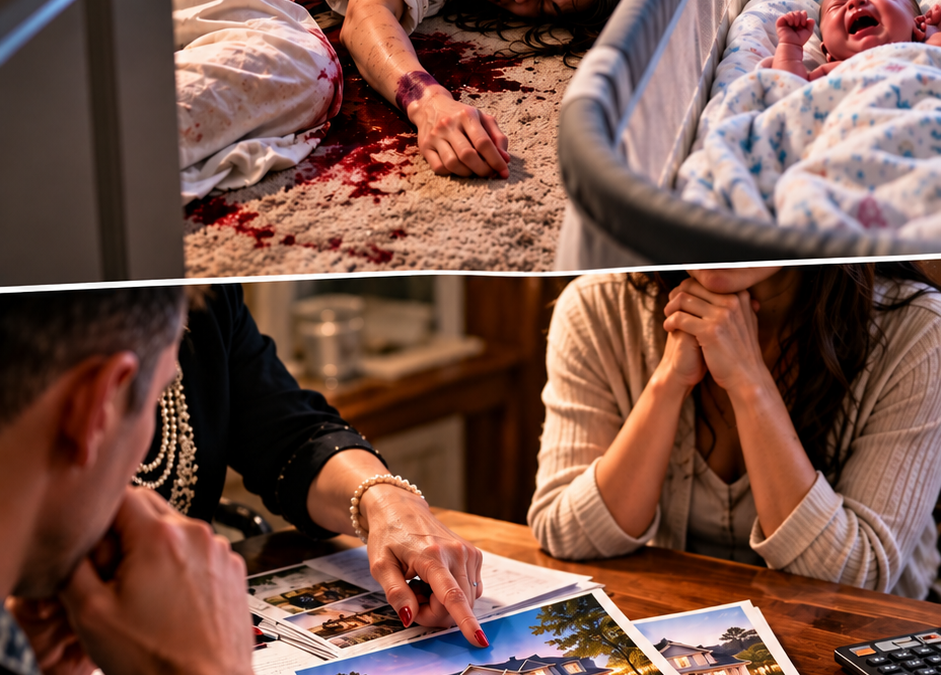
One Sunday, she arrived at our house carrying real estate brochures.
She spread them across the dining room table while Hannah prepared dinner.
“I’ve found the perfect place,” she announced.
I glanced at the photographs.
It was an expensive property.
“Mom, this is way beyond what you said you wanted to spend.”
She waved away the objection.
“That’s why I’m talking to you.”
I looked at her.
“What do you mean?”
She leaned forward.
“You’ve saved all that money throughout your military career. It doesn’t make sense to leave it sitting in an account when you could invest in something permanent.”
Hannah stopped moving in the kitchen.
I noticed, but I didn’t understand why.
“Mom, Hannah and I have plans for that money.”
Patricia smiled.
“Of course you do. I’m talking about investing it in the family.”
She slid another brochure toward me.
“I’d like you to buy this property. We can put it in my name so there won’t be any complications later.”
I stared at her.
“You want me to buy you a house and put it entirely in your name?”
“Exactly.”
Hannah walked into the dining room.
“Ethan, can we talk privately?”
My mother sighed.
“There’s no reason to whisper. We’re family.”
Hannah remained standing.
“I’d still like to speak with my husband.”
Patricia’s smile disappeared.
She collected the brochures with exaggerated patience.
“Of course. Heaven forbid a mother ask her successful son for a little help.”
After she left that evening, Hannah sat beside me on the couch.
“Please tell me you’re not considering it.”
I shook my head.
“Mom’s just looking at options.”
“She wants you to spend our savings on a property neither of us will legally own.”
“I know what she said.”
“Then why didn’t you tell her no?”
I looked at my wife.
She was five months pregnant, already experiencing back pain, and had spent most of the afternoon trying to prepare a meal my mother barely touched.
“Because I didn’t want to start an argument.”
Hannah stared at me.
“Your refusal to have an argument with her is becoming an argument between us.”
I didn’t know what to say.
She rested one hand on her growing belly.
“That money is our emergency fund, Ethan. It’s for our family. For the baby. For our future.”
“I know.”
“Then please act like it.”
Her eyes filled.
“I’m not risking our child’s future to satisfy someone who treats me like an enemy.”
I pulled her close and promised that I wouldn’t buy the house.
I meant it.
But I never addressed the larger problem.
I never told my mother that her behavior toward Hannah was unacceptable. I never established consequences when she crossed our boundaries.
Instead, I continued trying to keep everyone happy.
And my mother apparently interpreted my reluctance to confront her as proof that she could eventually get whatever she wanted.
As Hannah’s pregnancy progressed, Patricia became increasingly insistent.
She called me during work.
Sent listings to my personal email.
Asked whether I’d spoken with our bank.
Then, about six weeks before Owen was born, she made a comment that should have ended the conversation permanently.
“Wives come and go, Ethan. Mothers don’t.”
I was standing in our garage when she said it.
I remember looking toward the door connecting the garage to our kitchen.
Hannah was inside preparing dinner.
“Mom, don’t talk about my wife like that.”
Patricia laughed.
“I’m not insulting her. I’m telling you to protect yourself.”
“My marriage isn’t a temporary arrangement.”
“Of course not, sweetheart. But people change.”
She lowered her voice.
“You’d be surprised how quickly a woman can turn on her husband when money becomes involved.”
I ended the call.
Then I walked inside and said nothing to Hannah.
I told myself I’d handled it.
In reality, I’d simply avoided telling my wife that my mother was still trying to undermine our marriage.
Three weeks later, Hannah asked me to limit Patricia’s involvement after the baby arrived.
“She doesn’t respect me, Ethan. And I’m going to be exhausted. I don’t want to spend the first week of our son’s life defending every decision I make.”
I agreed that we needed boundaries.
Then I added the sentence I wish I could take back.
“But she’s going to be his grandmother. We should at least give her a chance.”
Hannah looked at me for a long time.
“How many chances does she get?”
I didn’t answer.
Our son was born early on a Monday morning.
We named him Owen.
He weighed seven pounds and three ounces, had a thick patch of dark hair, and arrived with an indignant little cry that made Hannah laugh through her tears.
I remember standing beside her hospital bed when the nurse placed him against her chest.
Hannah looked up at me.
“He’s beautiful.”
I couldn’t speak.
I’d experienced moments of enormous pride throughout my military career.
I’d watched young soldiers accomplish things they believed were impossible. I’d helped coordinate operations that brought stranded personnel home safely.
But nothing compared to that moment.
My wife was exhausted, pale, and trembling.
Our son was blinking against the hospital lights.
And suddenly, everything I’d worked for seemed to exist in that small room.
I kissed Hannah’s forehead.
“You did it.”
She laughed weakly.
“We did it.”
“No. I’m pretty sure you handled the difficult part.”
She smiled.
Then she looked down at Owen.
“Hello, little man.”
I thought we were beginning the happiest chapter of our lives.
Hannah’s recovery was more difficult than we’d expected.
She’d lost a considerable amount of blood during delivery and was still experiencing significant pain and exhaustion when the hospital discharged her.
The medical team explained the importance of rest, taking her prescribed medication, attending follow-up appointments, and seeking immediate care if she developed concerning symptoms.
I listened carefully.
I asked questions.
I organized her medication instructions and placed the discharge paperwork in a folder on our kitchen counter.
I considered myself prepared.
Then my mother arrived with flowers.
She cried when she held Owen.
“Oh, Ethan. He’s perfect.”
Courtney stood beside her, taking photographs.
For the first time since I’d married Hannah, my mother seemed genuinely pleased about something that involved my wife.
She complimented Hannah.
Asked whether she’d eaten.
Even offered to prepare meals for us.
I remember watching her hold Owen and feeling foolishly relieved.
Perhaps becoming a grandmother really had changed her.
Perhaps she’d finally understood that Hannah wasn’t competing with her.
Perhaps all those years of tension could be left behind.
I wanted to believe that so badly that I ignored the way Hannah became quiet whenever Patricia entered the room.
Three days after Owen’s birth, Lieutenant Colonel David Mercer called me.
Mercer was my commanding officer.
I’d served under him for nearly eighteen months. He was experienced, articulate, and exceptionally good at convincing people that he had their best interests at heart.
He’d attended our wedding reception.
He knew my mother.
He’d even met Courtney at a unit family event the previous year.
I never considered those relationships particularly important.
When he called, I was standing in the kitchen preparing a bottle of water for Hannah.
“Major Parker, we’ve got a situation.”
His voice was unusually serious.
“What kind of situation, sir?”
“An emergency logistics issue at one of our support facilities out of state. We need an experienced officer on-site to coordinate the response.”
I glanced toward the living room.
Hannah was sleeping on the couch while Owen rested in his bassinet beside her.
“Sir, my wife just gave birth. I’m on approved leave.”
“I understand.”
He paused.
“Believe me, I wouldn’t be making this call if there were another option.”
I closed my eyes.
“How long would you need me?”
“Three days. Four at the absolute most.”
I hesitated.
Mercer seemed to hear it.
“Ethan, I know the timing is terrible. But this is exactly the kind of situation where your experience matters.”
I looked toward my sleeping wife.
Thirteen years in the Army had taught me to take responsibility seriously.
I didn’t like abandoning an assignment.
I didn’t like disappointing people who depended on me.
And Mercer knew that.
“I’ll need to arrange someone to help Hannah,” I said.
“Of course. Take whatever time you need today.”
After ending the call, I sat beside my wife.
“Hannah?”
She opened her eyes.
“What’s wrong?”
I explained the assignment.
At first, she simply stared at me.
Then her face changed.
“You’re leaving?”
“Only for a few days.”
“Ethan, I can barely walk upstairs.”
“I know.”
“Owen’s three days old.”
“I know, sweetheart.”
Her eyes filled.
“Can’t somebody else go?”
I told her Mercer had personally requested me.
That it was an emergency.
That the unit needed someone with my experience.
I explained everything except the fact that I didn’t want to disappoint my commanding officer.
Hannah looked down at Owen.
“Okay.”
But there was nothing okay about the way she said it.
My mother arrived less than an hour later.
When I mentioned the assignment, she immediately volunteered to stay.
“Go take care of your soldiers,” she said warmly. “I’ve raised two children. Hannah just needs someone with experience.”
Courtney laughed.
“We’ll survive without you for a few days. Stop acting like you’re deploying overseas.”
I looked at Hannah.
She was standing beside the bassinet, holding one hand against her abdomen.
“Are you comfortable with this?” I asked.
She looked toward my mother.
Patricia smiled.
“Of course she is.”
I should have waited for Hannah to answer.
Instead, I accepted my mother’s reassurance.
When I packed my bag that evening, Hannah followed me into the bedroom.
“Do you really have to go?”
I turned.
She looked exhausted.
“I’ll be back before you know it.”
She didn’t smile.
“Ethan, I don’t want to be alone with your mother.”
I placed my bag on the bed.
“She’s here to help.”
“She already told me I’m holding Owen too much.”
I sighed.
“She’s probably just offering advice.”
“She said I’m going to spoil him because I pick him up when he cries.”
I walked toward her.
“Then ignore her.”
Hannah stared at me.
“That’s easy for you to say. You’re leaving.”
The words stung.
I felt defensive.
“I don’t have a choice about the assignment.”
She looked away.
“I’m not asking you to abandon your responsibilities. I’m asking you to understand that I’m frightened.”
I kissed her forehead.
“Mom won’t let anything happen to you.”
She closed her eyes.
I would remember that sentence for the rest of my life.
The first two days away were uneventful.
When I arrived at the support facility, the work seemed far less urgent than Mercer had suggested.
There were inventory discrepancies, equipment transfers awaiting approval, and transportation schedules that needed to be reconciled.
I assumed someone had exaggerated the situation to ensure it received immediate attention.
That sometimes happened.
But I was there, and I had a job to do.
I spent long hours reviewing manifests, resolving paperwork issues, and coordinating with the personnel assigned to the facility.
Every evening, I called home.
My mother answered.
The first night, she sounded cheerful.
“Everything’s wonderful, sweetheart.”
“How’s Hannah?”
“Sleeping.”
“Can I talk to her?”
“She’s exhausted. You know how new mothers are.”
“How’s Owen?”
“Perfect. Eating like a little champion.”
I smiled.
“Tell Hannah I love her.”
“Of course.”
The second evening, Patricia answered again.
“Mom, where’s Hannah?”
“Resting.”
“She’s been resting every time I call.”
“Because she’s recovering from childbirth, Ethan. You wanted her to rest, didn’t you?”
I rubbed my forehead.
“Can you give her the phone?”
There was a long pause.
Then I heard muffled voices.
Finally, Hannah answered.
“Ethan?”
Her voice sounded weak.
“Hey, sweetheart. How are you feeling?”
Silence.
“Hannah?”
“I’m tired.”
“Are you taking your medication?”
Another pause.
“Not all of it.”
I sat straighter.
“Why?”
Before she could answer, my mother’s voice appeared in the background.
“Give me that.”
There was a rustling sound.
Then Patricia returned to the call.
“She’s fine. Honestly, Ethan, you need to stop worrying about every little thing.”
“Mom, she said she hasn’t been taking her medication.”
“She’s being dramatic. I told her she doesn’t need to rely on pills for every little ache.”
I stared at the wall.
“Those medications were prescribed by her doctor.”
“Sweetheart, I’ve raised two children. I think I know a little more about childbirth than you do.”
I should have called Hannah’s doctor immediately.
I should have contacted someone else who could check on her.
Instead, I allowed my mother to turn the conversation into another argument about her experience.
I told her to make sure Hannah followed her discharge instructions.
Then I returned to work.
The third day, I called four times.
Nobody answered the first two calls.
On the third, Courtney picked up.
“Everybody’s fine, Ethan. Relax.”
“Put Hannah on.”
“She’s sleeping.”
“Wake her.”
Courtney sighed.
“You’re being ridiculous.”
“Now, Courtney.”
She muttered something and walked away from the phone.
I heard a door opening.
Then my wife’s voice.
“Ethan?”
Something was terribly wrong.
She sounded weak and frightened.
“Hannah, what’s happening?”
A sob escaped her.
“Please come home.”
My stomach tightened.
“What’s wrong?”
“Ethan, I—”
The phone moved abruptly.
My mother returned.
“Nothing is wrong,” she said brightly. “New mothers get emotional. She’s just overwhelmed.”
I stood.
“Put my wife back on.”
“She’s crying. I’ll get her settled.”
“Mom.”
“Ethan, honestly. You’re making everything worse by encouraging her.”
Then the call ended.
For several seconds, I stood motionless beside my desk.
Something about Hannah’s voice had frightened me more than anything Mercer had said about the supposed emergency.
She hadn’t sounded simply exhausted.
She’d sounded afraid.
And she’d asked me to come home.
I called back.
No answer.
I called again.
Nothing.
Then I contacted Mercer.
“Sir, I need to return home.”
He sounded irritated.
“Major, we’re not finished here.”
“My wife is having complications after childbirth.”
“Has a doctor confirmed that?”
“I haven’t been able to reach her.”
He paused.
“Ethan, don’t let a family disagreement interfere with your judgment. You’ve already completed most of the assignment.”
I felt my jaw tighten.
“Sir, I’m requesting permission to return.”
“Finish your report. We’ll discuss it tomorrow.”
I looked at the incomplete paperwork on my desk.
For the first time in thirteen years, I found myself wondering why a task that appeared entirely routine was suddenly more important than a possible medical emergency involving my wife.
I called Hannah again.
Still nothing.
I completed the immediate handover to another officer and arranged to return home.
By the following morning, I was on my way.
I didn’t tell my mother.
I didn’t tell Courtney.
And I didn’t ask Mercer for another explanation.
On the fourth day, I pulled into our driveway wearing my Army uniform.
I’d stopped on the way home to buy diapers, pastries from Hannah’s favorite bakery, and a small green blanket for Owen.
It seems ridiculous now, remembering those purchases.
I was frightened.
I knew something was wrong.
But some part of me still believed that if I arrived carrying the right things, I could somehow restore the happy family I’d left behind.
Then I saw the front door.
It was slightly open.
That was the first warning.
Hannah was meticulous about locking the house, especially since we’d brought Owen home.
I stepped inside.
The television was blaring.
Dirty dishes covered the kitchen counter.
Takeout containers sat on the dining room table, surrounded by empty soda cans and discarded paper napkins.
The air smelled stale.
My mother and Courtney were asleep on the living room couch beneath separate blankets.
For several seconds, I simply stared.
Then I heard Owen crying.
Not an ordinary hungry cry.
A desperate, exhausted scream.
It came from upstairs.
I dropped the shopping bags.
As I reached the staircase, I heard my mother’s voice coming from the bedroom.
“If taking care of a baby is so difficult for you, maybe you never should have become a mother.”
I took the stairs three at a time.
The bedroom door was partially open.
I pushed it inward.
And everything I’d believed about the people I’d left in my house collapsed.
Hannah was lying on the floor beside our bed.
Her nightclothes were soaked with blood.
Her skin was pale and damp, and her breathing was frighteningly shallow.
Owen was screaming in his bassinet.
My mother stood over Hannah with her arms crossed.
“She refuses to do anything herself,” Patricia said.
I barely heard her.
I dropped beside my wife.
“Hannah?”
Her eyes moved toward me.
For one brief second, I thought I saw relief.
Then they began closing again.
“Sweetheart, stay with me.”
I touched her forehead.
She was burning with fever.
Then I saw the blood.
Too much blood.
Far too much.
I pulled out my phone and dialed 911.
My mother rolled her eyes.
“Honestly, Ethan, she’s being dramatic.”
I looked at her.
“Get away from her.”
Patricia stared.
“What?”
“Get away from my wife.”
I gave the dispatcher our address, explained that Hannah had recently given birth, and described her condition.
Then I looked toward the bassinet.
Owen was still crying.
His little face was red, and his movements seemed weaker than I expected.
I checked him carefully while continuing to speak with the dispatcher.
My hands were shaking.
“There’s a newborn here too. Six days old. I think he may be dehydrated.”
Behind me, Courtney appeared in the doorway.
“Oh, great. Now everybody’s making a scene.”
I turned.
“Where’s Hannah’s phone?”
She blinked.
“What?”
“Where is her phone?”
My mother stepped forward.
“Ethan, don’t start interrogating your sister. Your wife has been impossible for days.”
I looked down at Hannah.
Her lips moved.
I leaned closer.
“Help me.”
Those two words destroyed whatever restraint I had left toward my family.
But I didn’t shout.
I didn’t touch my mother.
I didn’t threaten Courtney.
I concentrated on keeping my wife responsive, following the emergency dispatcher’s instructions, and making sure the paramedics could reach us.
When the ambulance arrived, I was still kneeling beside Hannah.
One paramedic immediately began assessing her.
Another checked Owen.
They asked when Hannah had given birth, what medications she’d been prescribed, how much she’d been bleeding, and whether she’d experienced fever or other symptoms.
I answered what I knew.
Then I had to admit how much I didn’t know.
I’d been away for four days.
My mother began speaking over me.
“She hasn’t been taking care of herself. I’ve tried everything.”
The paramedic looked at her.
“Ma’am, I need you to step aside.”
Patricia opened her mouth.
Then closed it.
I watched them prepare Hannah for transport.
She briefly opened her eyes.
“Ethan?”
I took her hand.
“I’m here.”
She tried to speak.
I leaned closer.
“I’m sorry,” she whispered.
My chest tightened.
“No. Don’t apologize.”
Tears slipped down the sides of her face.
I kissed her forehead.
“You’re getting help. I’m not leaving you.”
Twenty minutes later, the emergency department staff were preparing Hannah for surgery.
The physician who examined her explained that she was critically ill. She had severe postpartum infection and significant bleeding, and the team needed to intervene immediately.
I stood in the hallway holding Owen’s green blanket.
The pastries I’d bought were still sitting on the kitchen counter.
My military bag was somewhere near the staircase.
None of those things mattered.
A physician approached me.
“Major Parker, your wife is extremely sick. The surgical team is moving as quickly as possible.”
“Is she going to survive?”
The doctor looked at me carefully.
“We’re doing everything we can.”
I hated that answer.
Not because it was dishonest.
Because it was the only honest answer anyone could give me.
Owen was admitted for assessment and treatment as well.
He was dehydrated, but the pediatric team believed his condition was stable.
I visited him while Hannah was in surgery.
A nurse had wrapped him in a clean blanket.
His tiny hand curled around my finger.
I looked at my son and remembered the first time I’d held him, less than a week earlier.
I’d promised Hannah that I would always protect our family.
Now our son was in a hospital bassinet, and his mother was undergoing emergency surgery.
I bent toward him.
“I’m here, little man.”
His fingers tightened slightly.
And for the first time since returning home, I cried.
I don’t know how long I sat beside Owen before someone came to find me.
The pediatric nurse touched my shoulder.
“Major Parker? Dr. Collins would like to speak with you.”
I immediately stood.
“Is Hannah okay?”
“She’s out of surgery. The doctor will explain everything.”
I followed her down the corridor.
Dr. Rebecca Collins was waiting outside Hannah’s room. She looked exhausted, but her expression was less guarded than it had been before the operation.
“Your wife made it through surgery.”
I closed my eyes.
For several seconds, those words were enough.
Dr. Collins continued.
“She had a severe postpartum infection and significant bleeding. She’s receiving antibiotics and additional treatment. We’ll be monitoring her very closely.”
“Is she out of danger?”
“She’s in a much better position than she was when she arrived, but the next several days are important.”
I nodded.
“Can I see her?”
“Yes. But first, there’s something we need to discuss.”
Something in her voice made my stomach tighten.
She led me into a small consultation room.
On the desk were photographs taken during Hannah’s examination.
Dr. Collins turned one toward me.
“Have you seen these injuries before?”
I stared at the photograph.
Both of Hannah’s wrists were marked with dark bruises.
Several narrow, curved marks stood out against her skin.
“No.”
“Do you know how she sustained them?”
I shook my head.
“When I found her, she was on the bedroom floor. I was concentrating on getting her to the hospital.”
The doctor studied my expression.
“These injuries concern me. Their appearance is consistent with someone gripping or restraining her wrists.”
I felt sick.
For a moment, I could see my mother’s face again.
The way she’d stood over Hannah.
The disgust in her voice.
The complete absence of concern when I discovered how seriously ill my wife was.
“Are you saying somebody hurt her?”
“I’m saying the injuries need to be explained, and they raise concerns about possible abuse.”
She paused.
“Major Parker, I believe we need to involve the police.”
I looked down at the photograph.
My wife’s wrists.
The hands that had held our son against her chest only six days earlier.
The hands that had spent months preparing his nursery, folding his tiny clothes, and assembling the ridiculous collection of stuffed animals she insisted he would eventually love.
Someone had gripped those wrists hard enough to leave bruises.
And I had no idea what else had happened while I was gone.
“Call them,” I said.
My voice sounded unfamiliar.
“Please.”
When the detectives arrived, I told them everything I knew.
The conflict over my savings.
My mother’s insistence that I buy her a house.
Her hostility toward Hannah.
The sudden military assignment.
The telephone calls my mother repeatedly interrupted.
And the condition of our home when I returned.
One of the detectives, a man named Michael Reyes, listened without interrupting.
His partner took notes.
When I finished, Reyes asked a question that made me feel physically ill.
“Major Parker, did your wife ever express concern about being alone with your mother?”
I stared at him.
“Yes.”
“When?”
“The night before I left.”
“What did she say?”
I swallowed.
“She said she didn’t want to be alone with her.”
Reyes waited.
“And what did you do?”
I looked toward the hospital corridor.
“I left anyway.”
The detective wrote something in his notebook.
He didn’t criticize me.
He didn’t need to.
I was already hearing Hannah’s voice.
Ethan, I’m not asking you to abandon your responsibilities. I’m asking you to understand that I’m frightened.
I pressed both hands against my face.
“I should have listened.”
Reyes closed his notebook.
“Right now, the important thing is establishing exactly what happened and making sure your wife and child are safe.”
I nodded.
But the words did little to relieve the guilt sitting in my chest.
The following morning, Hannah opened her eyes.
I was sitting beside her bed when she moved.
At first, I thought she was simply shifting in her sleep.
Then I heard my name.
“Ethan?”
I stood so quickly that my chair scraped against the floor.
“I’m here.”
Her eyes searched the room.
“Where’s Owen?”
“He’s safe. The pediatric team is taking care of him. He was dehydrated, but he’s doing better.”
She tried to sit up.
Pain crossed her face.
“Don’t move too quickly, sweetheart.”
“I need to see him.”
“You will. The doctors want you to rest first.”
Her breathing quickened.
“Ethan, your mother—”
“She’s not here.”
Hannah stared at me.
“She can’t take him?”
“No.”
Tears filled her eyes.
“Promise me.”
I moved closer.
“I promise. She isn’t coming near you or Owen.”
Hannah began crying.
Not loudly.
She simply turned her face toward the pillow and cried as though she’d been holding those tears inside her for days.
I sat beside her and waited.
When she finally looked at me, I took her hand.
“I’m sorry, Hannah.”
She closed her eyes.
“I called you.”
“I know.”
“I tried to tell you.”
My throat tightened.
“I know.”
“Your mother wouldn’t let me.”
I looked at the bruises around her wrists.
“What happened, sweetheart?”
She stared at the ceiling.
For several seconds, I wasn’t certain she would answer.
Then she began telling me what had happened after I left.
The first morning, Patricia took control of the household.
She began by criticizing the way Hannah fed Owen.
Then she complained that the nursery wasn’t organized properly.
When Hannah explained that she was in pain and needed to lie down, Patricia accused her of using childbirth as an excuse to avoid responsibility.
Courtney joined in.
“Mom says women used to have babies and get right back to work,” Hannah whispered.
I felt my jaw tighten.
“She actually said that?”
Hannah nodded.
“She kept telling me I was weak.”
The second day, my mother began insisting that Hannah get out of bed whenever Owen cried.
She criticized her for resting between feedings and refused to help with ordinary household tasks unless Hannah agreed to follow her instructions.
When Hannah developed a fever and complained that her pain was worsening, Patricia dismissed her concerns.
Courtney took away her prescribed pain medication.
“She said your mother thought I was becoming too dependent on it.”
I stared at her.
“Where did they put it?”
“I don’t know. Courtney took the bottles out of the bathroom.”
“Did they give you your phone?”
Hannah shook her head.
“Your mother said I was calling you too much.”
She wiped her face.
“She told me I was distracting you from your responsibilities.”
I thought about the conversations I’d had with Patricia.
Every time I’d called, she’d insisted that everything was fine.
Every time I’d asked to speak with Hannah, she’d claimed my wife was sleeping.
Meanwhile, Hannah had been becoming progressively sicker.
“I tried to tell her I needed a doctor,” Hannah continued.
“What did she say?”
“She said I was exaggerating.”
Her voice trembled.
“Then the bleeding got worse.”
I felt my stomach turn.
“Did you tell her?”
“Yes.”
“What happened?”
“She said I needed to stop being dramatic and take care of my son.”
I stood and walked toward the window.
For a moment, I couldn’t bear to look at my wife’s face.
Not because I was angry with her.
Because I was struggling to comprehend the indifference she’d been forced to endure.
Then Hannah said something that made me turn around.
“I tried to leave.”
I returned to her bedside.
“What?”
“On the third day. I was scared. I knew something was wrong.”
She looked at her wrists.
“I put Owen in his carrier. I was going to call a taxi and go to the hospital.”
My hands went cold.
“Did they stop you?”
Hannah nodded.
“Your mother caught me near the stairs.”
She began trembling.
“She grabbed my wrists and told me I wasn’t taking her grandson anywhere.”
I looked down at the bruises again.
“Both wrists?”
“Yes.”
“Where was Courtney?”
“Standing behind her.”
Hannah covered her eyes.
“I told them I needed help. I begged them to let me leave.”
My chest tightened.
“What happened?”
“Your mother pulled me back into the bedroom.”
She struggled to finish.
“Then she locked the door.”
I sat down.
For a long time, I couldn’t speak.
My mother had restrained my recovering wife and prevented her from seeking medical care.
She’d kept Hannah separated from her phone.
She’d dismissed symptoms that had eventually required emergency surgery.
And she’d done all of that while I was away, believing she’d volunteered to help our family.
Hannah looked at me.
“I was so scared, Ethan.”
I leaned closer.
“I’m here now.”
She began crying again.
“I thought I was going to die.”
Those words nearly broke me.
She reached for my hand.
“I thought Owen would be alone.”
I held her carefully, afraid of disturbing the medical equipment around her.
“I’m so sorry.”
She pulled back.
“You didn’t believe me.”
I looked at her.
There was no anger in her voice.
That made it worse.
“I told you she hated me,” Hannah whispered. “I told you she was trying to come between us. Every time, you said I misunderstood her.”
I lowered my head.
“You’re right.”
“I needed you to believe me.”
“I know.”
She looked toward the hospital door.
“I don’t know if I can trust you to protect us from her.”
That hurt more than anything else she’d said.
But I didn’t defend myself.
I didn’t remind her that I’d driven home as soon as I realized something was wrong.
I didn’t tell her I’d called an ambulance or that I’d spent the night beside Owen.
Those things mattered.
But they didn’t erase the years I’d spent dismissing her concerns.
“I understand,” I said.
Hannah closed her eyes.
“I’m tired.”
I kissed her forehead.
“Then rest.”
She turned away.
And I remained sitting beside her, finally understanding that rebuilding her trust would require considerably more than an apology.
Detective Reyes returned later that afternoon.
Hannah gave him her statement with a hospital social worker present.
I stayed outside because she wanted to speak without me in the room.
That was difficult.
Every part of me wanted to know what she was saying, what she remembered, and whether the detectives believed her.
But she had already spent several days being denied control over her own life.
I wasn’t going to make her investigation another situation in which someone else decided what she was allowed to say.
When Reyes emerged, he looked grim.
“Major Parker, we need to discuss access to your residence.”
I nodded.
“What do you need?”
“We’re seeking authorization to recover evidence related to your wife’s statement. We’ll explain the process and coordinate with your attorney.”
“Whatever you need.”
He studied me.
“Your mother and sister are still at the house?”
“As far as I know.”
“We’ll be contacting them.”
I took a breath.
“Detective, is there something else?”
He hesitated.
“We’re looking into several inconsistencies in their accounts.”
“What inconsistencies?”
“Your mother claims Hannah was free to leave whenever she wanted. Your wife says she was restrained and locked in the bedroom.”
I thought about Hannah’s wrists.
“She has the bruises.”
“Yes. We also need to establish what happened to her phone, medication, and discharge paperwork.”
I nodded.
Then I asked the question I’d been avoiding.
“What about Owen?”
Reyes’s expression softened.
“The hospital has documented his condition. We’re examining whether there was neglect in addition to what happened to your wife.”
I looked toward the pediatric ward.
My newborn son had spent the first week of his life in a house full of people who’d promised to care for him.
Yet he’d arrived at the hospital dehydrated.
I wondered how long he’d cried before I heard him.
How many times Hannah had tried to reach his bassinet while she was feverish and bleeding.
How many times my mother had called her lazy instead of helping.
I couldn’t bear to imagine the answers.
Two days later, the detective called me back to the hospital.
He wanted to speak with both Hannah and me.
By then, she was alert enough to sit upright for short periods, although she remained weak and needed considerable assistance.
I was sitting beside her when Reyes entered carrying a folder.
His expression immediately told me he hadn’t come merely to update us about the assault investigation.
“We recovered several items from your home.”
He placed photographs on the small table beside Hannah’s bed.
The first showed her phone.
The second showed her medication.
Both had been found in a locked drawer inside my mother’s guest room.
Hannah began crying.
“I told you.”
I took her hand.
“I know, sweetheart.”
Then Reyes produced another photograph.
It showed several documents spread across my desk.
My military identification information.
Bank statements.
Copies of my signature.
And property paperwork.
I frowned.
“What property paperwork?”
The detective opened his folder.
“Major Parker, did you recently authorize a transfer of ownership involving your residence?”
I stared at him.
“No.”
He placed a document in front of me.
It was a deed transferring our home into my mother’s name.
My signature appeared at the bottom.
A notary’s seal had been applied.
For a moment, I couldn’t understand what I was looking at.
Then I recognized the date.
It had been signed while I was supposedly away on my emergency military assignment.
I looked at Reyes.
“That’s not my signature.”
“We’re having the documents examined.”
“I never signed anything transferring our house.”
Hannah stared at the paperwork.
“She took our house?”
I squeezed her hand.
“No. A document has been filed, but we’re going to challenge it.”
Reyes nodded.
“Your attorney is being notified so the ownership issue can be addressed immediately.”
He turned another page.
“We also recovered power-of-attorney documents bearing your signature.”
I looked at them.
The wording purported to give my mother broad authority over our finances and property.
My stomach tightened.
“I’ve never given her power of attorney.”
The detective watched me.
“Are you certain?”
“Absolutely.”
“Have you ever signed documents granting her temporary authority while you were deployed?”
“No. Hannah has always been my primary contact for financial and medical matters.”
He nodded.
“That’s consistent with what we’ve been able to verify so far.”
Hannah looked at me.
“Ethan, what is happening?”
I wished I had an answer.
Then Reyes opened another folder.
“We also contacted your financial institution after identifying several unusual transactions.”
He placed a copy of a check on the table.
The amount made me stop breathing.
$186,000.
Almost the entire savings balance I’d accumulated throughout my military career.
The check was drawn from my savings account.
It had been deposited by Courtney.
I stared at her signature on the deposit paperwork.
“How?”
Reyes turned toward me.
“Your mother used the power-of-attorney documents to obtain account access. The bank is cooperating with the investigation.”
I looked at Hannah.
Her face had gone pale.
All those years of deployments.
All the money I’d saved.
The emergency fund we’d intended to use if our child needed medical care or Hannah wanted to take additional time away from teaching.
My mother had tried to take it.
And she’d done so while my wife was trapped in our bedroom.
I swallowed.
“Where did the money go?”
“We’re tracing it. The bank has identified accounts associated with the transaction, and steps are being taken to prevent further transfers.”
I couldn’t speak.
Then Reyes showed me a still photograph from a security camera at the bank.
Courtney stood at a teller’s counter.
Her expression was casual.
She was holding the check.
A second image showed my mother leaving the bank beside a man in a dark suit.
I recognized him immediately.
Lieutenant Colonel David Mercer.
My commanding officer.
The same man who’d personally ordered me to leave my wife and newborn son four days earlier.
I stared at the photograph.
“That’s impossible.”
Reyes leaned forward.
“You know him?”
“He’s my commanding officer.”
Hannah looked at me.
“Ethan?”
I couldn’t take my eyes off the photograph.
“He’s the man who sent me out of state.”
The detective nodded.
“We’ve been looking into that.”
I felt my pulse quicken.
“Looking into what?”
“Your travel orders. The circumstances surrounding your assignment. The people who authorized it.”
My mouth went dry.
“Why?”
Reyes closed the folder.
“Major Parker, we checked with the relevant personnel.”
He paused.
“There was no emergency assignment.”
For several seconds, I couldn’t understand what he meant.
I’d spent four days at a military support facility.
I’d reviewed transportation records, reconciled inventories, and worked long hours because my commanding officer had personally told me the situation was urgent.
“What do you mean there was no emergency?”
Reyes turned another document toward me.
“The work you performed was routine. We’ve confirmed that the emergency used to justify your recall and immediate travel didn’t exist.”
I stared at him.
“Mercer arranged it?”
“That’s what we’re investigating.”
I looked at the security photograph again.
My mother.
My commanding officer.
Leaving a bank together while my sister deposited a check for $186,000.
Something inside me became completely still.
I had been ordered away from my family.
My mother had taken control of our home.
My sister had stolen our money.
And the man whose orders I’d followed had apparently helped make it possible.
Hannah gripped my hand.
“Ethan?”
I turned toward her.
Her eyes were filled with fear.
For one terrible moment, I realized she had every reason to believe that another disaster might be waiting around the corner.
I leaned closer.
“You’re safe here.”
She looked toward Reyes.
“Can they come into this hospital?”
“No,” I answered. “We’re not allowing them near you or Owen.”
The detective nodded.
“We’ll work with hospital security and discuss the appropriate protective measures with you.”
Hannah closed her eyes.
Then she asked the question I hadn’t expected.
“Why would they do this?”
I looked down at the forged deed.
At the bank photograph.
At my mother’s signature.
I didn’t have an answer that made sense.
But I was beginning to understand that the woman who’d spent my life insisting that mothers always protected their children had been willing to destroy mine to get what she wanted.
The hospital social worker helped Hannah request protective measures that same afternoon.
Neither my mother nor Courtney would be permitted to visit her or Owen. We also made arrangements to secure our house while the investigation continued.
Our attorney, Laura Bennett, contacted the bank, the title company, and the appropriate authorities about the fraudulent property transfer.
I called the military installation and requested to speak with an officer outside Mercer’s chain of command.
When I explained what Detective Reyes had discovered, the conversation changed immediately.
Within hours, I was speaking with military investigators.
They wanted every detail about the assignment.
When Mercer had called.
What he’d said.
How the travel had been authorized.
Who’d received my reports.
And whether I’d noticed anything unusual after arriving at the support facility.
I told them the truth.
The work had been real.
The emergency hadn’t.
And when I’d contacted Mercer about Hannah’s frightening telephone call, he’d discouraged me from returning home.
That detail seemed particularly important to the investigators.
I provided the messages I’d exchanged with him, copies of my travel paperwork, and the records from the support facility.
Then I gave them the photograph Detective Reyes had shown me.
Mercer leaving the bank beside my mother.
The investigator studied it without comment.
I wanted to ask whether he was surprised.
Whether Mercer had done anything like this before.
Whether the man who’d spent years speaking about honor, duty, and personal accountability had secretly been helping my mother steal from me.
But I didn’t ask.
I was beginning to understand the difference between needing an answer and trying to force one before the evidence was ready.
Two days later, Mercer was relieved of his command pending investigation.
He attempted to contact me that evening.
I didn’t answer.
He left a voicemail.
“Ethan, this situation has gotten completely out of hand. I suggest you call me before things become unnecessarily complicated.”
I listened to it once.
Then I forwarded it to my attorney and the military investigator.
I wasn’t interested in having another conversation with someone who believed his authority entitled him to decide what information I should receive.
My mother tried a different approach.
She called my personal number seventeen times in one afternoon.
Then she began leaving messages.
At first, she was angry.
“Ethan, you need to tell those detectives to stop harassing your sister. We’ve done nothing except try to help you.”
The next message was tearful.
“After everything I’ve sacrificed for you, I cannot believe you would let strangers treat your mother like a criminal.”
Then came the one that finally made me understand how little she’d learned.
“Hannah has always wanted to turn you against us. You’re letting her destroy this family over an unfortunate medical complication.”
I was sitting beside Hannah when I listened to it.
She watched my face.
“What did she say?”
I hesitated.
Then I handed her the phone.
She listened.
When the message ended, she sat quietly for a long time.
Finally, she looked at me.
“She still thinks I did something wrong.”
I took her hand.
“She doesn’t get to decide what happens to our family anymore.”
Hannah studied me.
“Ethan, you’ve said things like that before.”
I felt the words land.
She was right.
I’d promised to stand up to my mother more times than I could count.
Then I’d accepted an apology, a tearful phone call, or an explanation about how difficult Patricia’s life had been.
And everything had returned to normal.
Until the next incident.
Hannah looked down at our joined hands.
“I can’t go through that again.”
“You won’t.”
Her expression tightened.
“Please don’t promise me something if you’re going to change your mind the next time she cries.”
I took a breath.
“Then I’ll show you.”
That was the beginning of the difficult work I’d spent years avoiding.
I changed the locks.
Revoked any access my mother or sister had to our home and accounts, and worked with our attorney to protect our remaining finances.
I gave the investigators every document they requested.
And when my mother continued trying to contact us, I stopped engaging.
There was no dramatic confrontation on our doorstep.
No shouting match.
No moment when I put on my uniform and used my rank to intimidate anyone.
I simply stopped allowing her to use our relationship as a way to escape responsibility.
Hannah remained in the hospital for nearly two weeks.
Her infection responded to treatment, and her doctors were eventually satisfied that the immediate danger had passed.
But she was exhausted.
The surgery, blood loss, and days of serious illness had left her physically weak.
She couldn’t comfortably hold Owen for very long at first.
That devastated her.
The first time a nurse helped place him against her chest after surgery, Hannah began crying.
“I’m sorry, baby.”
I stood beside her.
“Sweetheart, you have nothing to apologize for.”
She kissed his forehead.
“I missed so much.”
Owen opened his little mouth and made a soft, indignant sound.
Hannah smiled through her tears.
“Are you telling Mommy off?”
I watched them together.
Six days earlier, I’d left her struggling to stand because I’d convinced myself that completing a military assignment was the responsible thing to do.
Now, watching her hold our son, I understood how close I’d come to losing them both.
When Owen was discharged, I took him home to the nursery Hannah had spent months preparing.
I fed him, changed his diapers, washed bottles, and learned how little sleep a newborn could allow a grown man to survive on.
Then I returned to the hospital to sit beside my wife.
My brother-in-law helped with transportation when I needed it, and we arranged professional assistance for Hannah’s eventual return home.
I didn’t ask my mother for help.
I didn’t ask Courtney.
And for the first time in my adult life, I stopped treating their involvement as an essential part of being a good son.
During Hannah’s second week in the hospital, Detective Reyes called.
He had new information about the money.
The bank had flagged the unusual transaction before the entire amount could be transferred out of the receiving account.
A substantial portion of our savings remained frozen while investigators traced the remaining funds.
The rest had moved through several transactions.
One was particularly revealing.
Forty-five thousand dollars had been transferred to an account associated with David Mercer.
I sat down.
“What?”
Reyes repeated the information.
My commanding officer had received $45,000 from the money my mother had fraudulently obtained.
“Why?”
“We’re still establishing the full arrangement. But we’ve recovered communications indicating that Mercer helped coordinate the paperwork and your travel assignment.”
I thought about his telephone call.
The urgency in his voice.
The way he’d insisted that nobody else could handle the operation.
Then I remembered my mother volunteering to stay with Hannah almost immediately after I’d told her I was leaving.
I felt physically sick.
“Did they plan all of this before Owen was born?”
“The records suggest they began discussing the property and financial transactions several months earlier.”
That evening, I told Hannah what we’d learned.
She was sitting up in bed, carefully eating a small bowl of soup.
When I mentioned the transfer to Mercer, she set down her spoon.
“So your mother paid him?”
“It appears that way.”
“For sending you away?”
“Investigators believe he helped arrange the assignment and the fraudulent financial transactions.”
She stared at me.
“Ethan, they planned it.”
I nodded.
“They planned it while I was pregnant.”
I didn’t know what to say.
Hannah looked toward the photograph of Owen on her bedside table.
Then she covered her face.
“I thought she just hated me.”
I moved closer.
“Sweetheart—”
“She was trying to take everything.”
Her voice broke.
“And when I got sick, she wouldn’t even let me get help.”
I sat beside her.
For a long time, neither of us spoke.
Then Hannah looked at me.
“I don’t want to live in that house anymore.”
I understood immediately.
Our bedroom had become the place where she’d believed she was going to die.
The nursery we’d decorated together was upstairs from the room where my mother had hidden her medication.
The kitchen I’d imagined filled with ordinary family memories had become part of something neither of us wanted to remember.
“We don’t have to stay,” I said.
She looked uncertain.
“But the deed. The money. What if we can’t afford to move?”
“We’ll figure that out.”
I wasn’t promising an easy solution.
The forged property transfer still had to be resolved, and our savings were tied up in an investigation.
But I could promise that Hannah wouldn’t be forced to return to a place where she no longer felt safe.
When she was discharged, we moved temporarily into a furnished rental near her sister.
It was smaller than our house.
The second bedroom barely fit Owen’s crib.
The kitchen had an old refrigerator that hummed loudly at night.
Hannah loved it.
There were no memories of my mother standing in the hallway criticizing her.
No bedroom door she was afraid to close.
No expectation that she had to smile through a family dinner with people who had hurt her.
For the first few weeks, she slept with a small lamp on.
Sometimes she woke up convinced she could hear footsteps outside the bedroom.
Other times, she became frightened when I left the apartment to buy groceries.
I stopped taking those reactions personally.
I told her where I was going.
I returned when I said I would.
And when she needed professional support, I helped her arrange it without pretending that my presence alone should be enough.
We also began marriage counseling.
The first session was one of the most uncomfortable experiences of my life.
I’d spent thirteen years believing that difficult problems could be solved through discipline, persistence, and a clearly defined plan.
Our counselor asked Hannah what she needed from me.
She thought about the question for several minutes.
Then she said, “I need him to believe me even when his mother tells him I’m wrong.”
I looked down.
The counselor turned toward me.
“What do you think when you hear that?”
I took a long breath.
“That she’s asking for something I should have given her years ago.”
Hannah began crying.
And I realized that the work required to rebuild our marriage had very little to do with the criminal investigation.
Even if my mother were convicted, Hannah would still remember how often I’d dismissed her concerns.
Even if Mercer were punished, I’d still have to confront the fact that I’d allowed him to define my responsibilities without questioning an assignment that took me away from my recovering wife.
I couldn’t change those decisions.
But I could stop repeating them.
The investigation continued for months.
The forged deed was eventually invalidated through the appropriate legal process, restoring the correct ownership records for our home.
Our bank cooperated in recovering the funds it could, and the remaining losses became part of the financial case against those responsible.
Investigators also identified how Patricia and Courtney had obtained the documents they’d used.
They’d taken copies of my personal information and financial records from my home.
My mother had then used falsified authorization documents to obtain access to accounts and initiate the property transaction.
Mercer had assisted with the scheme, using his position and professional connections to facilitate my absence and coordinate parts of the fraud.
He’d represented the routine logistics work as an emergency, arranged my travel, and discouraged me from returning when I expressed concern about Hannah.
As investigators reconstructed the timeline, it became increasingly clear that the deception had served a specific purpose.
My mother wanted access to our house and money.
Mercer wanted a share of the financial proceeds.
And Courtney had helped carry out the transactions.
I wasn’t certain what hurt more.
The fact that my own family had betrayed me.
Or the realization that Hannah had been right about them long before I was willing to listen.
The first time I saw my mother after the hospital, it was in court.
She was wearing a conservative gray jacket and clutching a tissue.
Courtney sat beside her, looking frightened.
I was there with Hannah, who had chosen to attend despite my concerns about how upsetting the proceedings might be.
Before entering, I asked whether she wanted to go home.
She looked at me.
“No.”
“Are you sure?”
“Yes, Ethan.”
She took my hand.
“I spent days being told what I was allowed to do. I’m going to decide this for myself.”
I nodded.
“Okay.”
Inside the courtroom, my mother looked toward us almost immediately.
When she saw Hannah, her expression hardened.
Then she noticed Owen’s photograph tucked into the side pocket of our diaper bag.
Her eyes filled.
For one brief moment, I felt the old instinct rising.
The urge to comfort her.
To explain everything.
To promise that once the legal proceedings ended, perhaps we could eventually return to normal.
Then I remembered the hospital photographs of Hannah’s wrists.
The blood on our bedroom floor.
And my newborn son screaming from a bassinet while the people who’d promised to protect him slept downstairs.
I looked away.
My mother eventually pleaded guilty to charges arising from the financial fraud, unlawful restraint, and neglect.
Courtney also entered a guilty plea for her involvement in the theft and her actions while Hannah was confined in our home.
Their cooperation helped investigators establish how the transactions had been arranged and what Mercer had contributed to the scheme.
The military proceedings against Mercer were handled separately.
He was found guilty at court-martial of offenses connected to the false orders, financial conspiracy, and abuse of his position.
He was dismissed from the service and faced additional consequences arising from the financial investigation.
I read the final findings quietly.
I didn’t celebrate.
I’d once respected Mercer.
I’d trusted him with my professional future, my assignments, and the well-being of soldiers under our command.
Knowing he’d used that authority to create an opportunity for my family to be robbed was something I would never fully understand.
But I no longer needed to understand his motives to recognize what he’d done.
Eventually, the financial case was resolved as well.
The recovered funds, restitution, and the bank’s fraud resolution process restored our stolen savings.
The house was legally ours again.
Hannah and I decided to sell it.
We didn’t want to raise Owen in a place that reminded us of the worst week of our lives.
Instead, we bought a smaller home in a quiet neighborhood, close to Hannah’s sister and within reasonable driving distance of my military installation.
Hannah chose the house.
I didn’t try to persuade her toward something larger or more impressive.
I simply wanted her to walk through the front door and feel that she belonged there.
On moving day, Owen was old enough to sit upright and clap whenever someone carried another box inside.
Hannah laughed as she watched him.
“He’s going to be completely useless with the furniture.”
I looked at our son.
“Private Parker, your performance has been disappointing.”
Owen squealed.
Hannah laughed again.
It was the kind of sound I’d feared I might never hear after that terrible afternoon.
That evening, after the movers left, we sat on the living room floor surrounded by unopened boxes.
Owen fell asleep against Hannah’s shoulder.
She looked around our new home.
“It’s smaller.”
“Much smaller.”
“And the kitchen needs work.”
“Definitely.”
She smiled.
“But I like it.”
I put my arm around her.
“Me too.”
After a while, she rested her head against my shoulder.
“Ethan?”
“Yeah?”
“I’m still angry with you sometimes.”
I looked at her.
“I know.”
“I don’t think that’ll disappear overnight.”
“I don’t expect it to.”
She stared at Owen.
“But I can see that you’re trying.”
Those words meant more to me than any military commendation I’d received.
Because Hannah hadn’t been looking for a husband who could frighten people into respecting him.
She’d needed someone who would listen when she said she was afraid.
Someone who would believe her.
Someone who understood that protecting his family sometimes meant standing up to the people who’d raised him.
And for the first time, I was learning how to be that man.
Nearly eighteen months after the day I found Hannah on our bedroom floor, Owen took his first steps across our new living room.
I was sitting on the carpet when he pulled himself upright against the couch.
Hannah was nearby, folding laundry.
“Look at him,” she whispered.
Owen took one uncertain step.
Then another.
Then he wobbled toward me with both arms stretched forward.
I caught him before he fell.
He laughed.
Hannah hurried over and knelt beside us.
“Did you see that?”
I grinned.
“I saw it.”
“His first real steps!”
Owen looked delighted with himself.
He clapped his little hands and demanded another opportunity.
I sat him down a few feet away.
“All right, little man. Let’s see it again.”
He immediately crawled toward me instead.
Hannah burst out laughing.
“Apparently walking is exhausting.”
I lifted him into my arms.
“Understandable. I’ve had days like that.”
He wrapped his small fingers around my collar.
And for a moment, I remembered the day I’d returned from that assignment.
The front door standing open.
The television blaring.
The filthy kitchen.
My mother’s voice coming from upstairs.
The sight of Hannah lying on the floor.
I remembered how close I’d come to returning home too late.
Then Owen rested his head against my shoulder.
Hannah sat beside me.
And the memories loosened their grip.
My son was alive.
My wife was recovering.
Our family had a home where nobody had to be afraid of the people who loved them.
I no longer spoke to my mother or Courtney.
They had continued sending letters through the appropriate channels, asking for forgiveness and insisting that they missed us.
I hoped they would eventually understand the consequences of their choices.
But Hannah and Owen weren’t responsible for giving them another opportunity to cause harm.
I’d spent much of my life believing that loyalty meant standing beside family regardless of their behavior.
Now I understood that real loyalty sometimes meant protecting the family I’d built from the family I’d come from.
That evening, after putting Owen to bed, Hannah found me standing in the nursery doorway.
She slipped her hand into mine.
“What are you thinking about?”
I looked toward our son.
He was sleeping beneath the little green blanket I’d bought on the day I returned home.
The blanket had become one of his favorites.
Hannah followed my gaze.
“You still have that thing.”
I smiled.
“Couldn’t throw it away.”
She leaned against me.
For a while, we stood together without speaking.
Then she whispered, “I’m glad you came home.”
I turned toward her.
“I’m glad I did too.”
She looked into my eyes.
“But next time I tell you something is wrong, please believe me.”
My chest tightened.
I took her hand.
“I will.”
She studied my face.
Then she nodded.
And as I stood beside the woman I’d nearly lost, listening to our son breathe peacefully in the room we’d prepared together, I finally understood something that thirteen years of military service had never taught me.
Being a good husband and father wasn’t about being the strongest man in the room.
It was about believing the people who trusted me enough to tell me when they were hurting.
And making sure they never had to beg me to listen again.








