𝗙𝗨𝗟𝗟 𝗦𝗧𝗢𝗥𝗬 The Men Smiling Outside My Wife’s ICU Room Forgot She Had Already Left Me a Trail
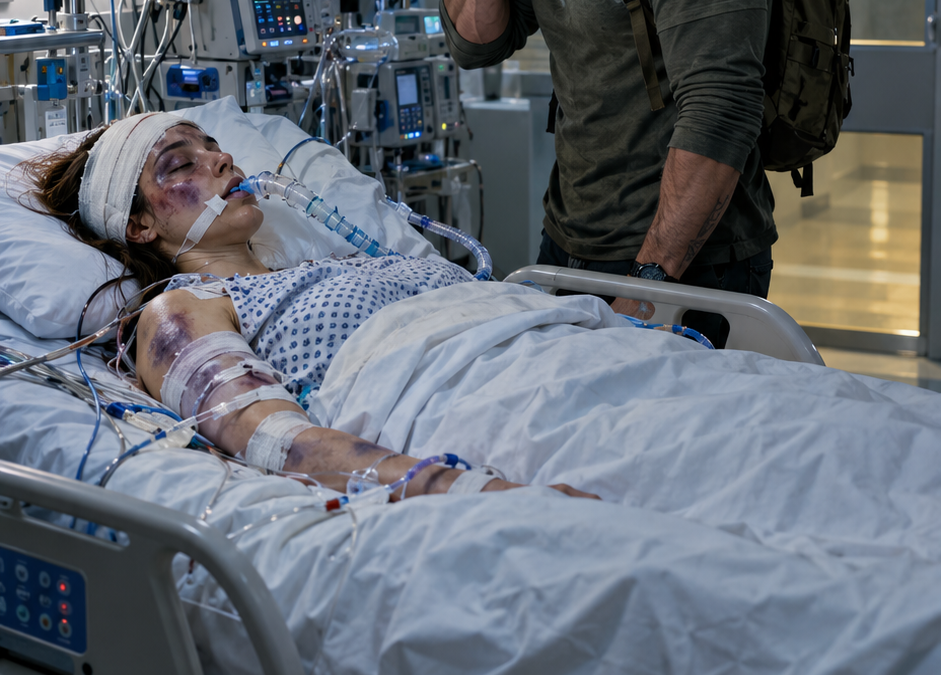
𝗙𝗨𝗟𝗟 𝗦𝗧𝗢𝗥𝗬
They were not crying.
They were not pacing.
They looked relaxed, almost amused, like men waiting for the next act of a show.
Detective Miller stood nearby, avoiding my eyes.
That told me something before he opened his mouth.
“We’re treating it as a robbery,” he muttered.
I watched the way his gaze flicked toward Victor before he finished the sentence.
That told me more.
“A robbery,” I repeated.
Miller shifted.
“Back door was open. Drawers disturbed. Some items missing.”
“Who found her?”
He hesitated.
Victor answered instead.
“That doesn’t matter right now.”
I turned toward him slowly.
Victor Wolfe had built Wolfe Freight from two trucks and a repair yard into one of the largest private transportation companies in the state. He talked like every room belonged to him because, in most rooms, it did. He had never approved of me. A soldier with no family money, no interest in Wolfe Freight, and no habit of asking his permission did not fit the future he had imagined for his only daughter.
I had tolerated him because Tessa loved him.
That tolerance ended in the ICU hallway.
“It matters to me,” I said.
Victor’s face tightened.
“You’re emotional.”
“My wife has thirty-one broken bones.”
“Yes,” he snapped. “And my daughter is fighting for her life. So don’t stand here acting like you’re the only person who lost something tonight.”
Dominic stepped closer.
He was the oldest Wolfe son and the largest, enormous in the way some men use their bodies as punctuation. He crossed his arms and blocked most of the hallway.
“You just got back, Caleb,” he said. “Maybe let people who have actually been here handle this.”
I looked past him into Tessa’s room.
Then I went back to her bedside.
Miller followed.
Victor and his sons followed too.
I did not tell them to leave.
Not yet.
I lifted Tessa’s hand carefully into the light.
“My wife knows martial arts,” I said.
No one answered.
“If a stranger attacked her, she would have fought until she couldn’t move.”
I turned her hand over.
Her fingernails were clean.
“No blood. No skin. Nothing.”
The room went quiet behind me.
“She didn’t fight them,” I continued. “Which means either she couldn’t…”
I looked at Victor.
“Or she trusted the people close enough to restrain her.”
Mason shifted near the door.
I noticed.
I noticed everything.
I picked up the chart and read the summary again.
Thirty-one separate fractures.
Repeated blunt-force trauma.
Defensive wounds inconsistent.
I looked at Victor’s sons.
Then at Victor.
“A robber hurts someone to escape,” I said. “This wasn’t escape.”
Victor’s smile disappeared.
“This was personal.”
His jaw tightened.
“Enough,” he said. “You’re a soldier, not an investigator. Go back to your base. My family will take care of Tessa.”
I almost laughed.
My family.
As if twelve years of marriage could be dismissed by a man who believed blood was the only form of belonging.
Dominic stepped fully in front of me.
“You heard him,” he said with a smirk. “Get lost, government dog.”
I did not move.
I leaned closer to Victor.
“You want to call me a dog?” I whispered. “Then you should remember what trained dogs do when they finally catch a scent.”
When I stepped back, I stopped looking at Victor.
I looked at Mason.
The youngest Wolfe brother was gripping a paper coffee cup.
His hand was trembling.
Coffee spilled over the rim and splashed onto the hospital floor.
The second our eyes met, he looked away.
For the first time that day, something inside me became very still.
Fear had found the weakest one.
“I’m done asking questions here,” I said, loud enough for all of them to hear.
No one answered.
I walked away knowing one thing for certain.
The Wolfe family thought the truth was lying unconscious in that hospital bed.
But Mason had just shown me where to start looking.
I made it halfway across the hospital parking garage before I heard footsteps behind me.
Not running.
Not hurried.
Just uneven.
I kept walking until I reached my truck.
“Mason,” I said without turning around.
The footsteps stopped.
For several seconds, neither of us spoke.
The fluorescent lights overhead made a faint electrical hum. Somewhere below us, a horn sounded twice and an engine started.
When I finally looked back, Mason Wolfe stood twenty feet away.
Without his father and brothers around him, he seemed smaller.
Not physically. He was still six feet tall and broad-shouldered like every Wolfe man I had ever met.
But the confidence was gone.
He looked twenty-four again.
He looked like the kid who had once asked me how to change the oil in his first truck because he was too embarrassed to admit to his brothers that he did not know.
“You shouldn’t have followed me,” I said.
“I know.”
“Then why did you?”
His eyes moved toward the security camera mounted near the elevator.
“Can we go somewhere else?”
“No.”
He swallowed.
“Caleb—”
“If you have something to tell me, tell me here.”
Mason rubbed both hands over his face.
I watched him carefully.
A year earlier, I would have trusted him without hesitation.
Tessa had always been closest to Mason. There were eight Wolfe children altogether—seven sons and one daughter. Tessa had been born between Dominic and Owen, the third child and only girl.
Mason was the youngest by nearly ten years.
Tessa used to joke that she had practically raised him.
She had taught him to drive.
Helped him fill out college applications.
Paid his first apartment deposit when Victor told him a Wolfe man should learn independence the hard way.
When Mason got engaged and panicked two weeks before the wedding, it was Tessa who stayed on the phone with him until three in the morning.
Now he could not look me in the eye.
“I didn’t hurt her,” he said.
The words should have reassured me.
They did not.
“Who did?”
“I don’t know.”
I stared at him.
“That answer better improve.”
“I’m telling you the truth.”
“You were shaking upstairs.”
“I was scared.”
“Of me?”
His expression changed.
“No.”
That interested me.
“Of your father?”
Mason looked toward the elevator again.
I stepped closer.
“Mason.”
He lowered his voice.
“You don’t understand what’s happening.”
“Then explain it.”
“I can’t.”
“You followed me through a hospital garage to tell me you can’t talk?”
“I followed you to tell you to stop looking at my brothers.”
My jaw tightened.
“That sounds a lot like advice from Victor.”
“It isn’t.”
“Then whose advice is it?”
“Tessa’s.”
That stopped me.
Mason reached into his jacket.
My body reacted before my mind did.
He froze instantly.
“Easy,” he said. “It’s paper.”
He slowly pulled out a folded parking receipt.
On the back, someone had written three things.
Oak Street Station.
And beneath that:
Use your anniversary.
I recognized Mason’s handwriting.
“What is this?”
“She gave me instructions six weeks ago.”
“Six weeks?”
“Before anything happened.”
The anger inside me shifted.
Not gone.
Redirected.
“Tessa knew something was wrong six weeks ago?”
Mason nodded.
“What?”
“She wouldn’t tell me everything.”
“Try me.”
He leaned against the concrete pillar.
“For the last few months, she’d been going through old Wolfe Freight records.”
Victor Wolfe talked about Wolfe Freight as if the company were another child.
His first truck was framed in a photograph above the fireplace.
Dominic ran operations.
Owen handled fleet maintenance.
Luke managed regional contracts.
Nathan oversaw warehouses.
Eric worked in procurement.
Jonah handled client relations.
Mason had recently moved into financial planning after finishing graduate school.
And Tessa had left the company years ago.
At least, that was what I believed.
“She wasn’t working for your father,” I said.
“No.”
“Then why was she looking at company records?”
“Because Mom asked her to.”
I stared at him.
Their mother, Evelyn Wolfe, had died three years earlier.
Mason saw the question on my face.
“She left Tessa a box.”
“What box?”
“Documents. Notes. Old statements. Nobody knew except Tessa.”
“Why?”
“I don’t know.”
“You keep saying that.”
“Because I don’t know, Caleb.”
For the first time, frustration broke through his fear.
“Tessa kept trying to protect everybody by telling each of us only the part she thought we could handle.”
That sounded exactly like my wife.
It also made me furious.
“She should have called me.”
“You were deployed.”
“She had access to me.”
“She had twenty-minute calls every few days when communications allowed. What was she supposed to say? ‘Hi, I love you, by the way I think something may be seriously wrong with my father’s company’?”
“Yes.”
Mason gave a tired, helpless laugh.
“You know she wouldn’t.”
I did.
That was the problem.
Tessa believed burdens became lighter when she carried them alone.
It was one of the things I loved about her.
It was also one of the things we had fought about for twelve years.
I looked down at the numbers again.
“Locker?”
Mason nodded.
“She rented it herself.”
“What’s inside?”
“I’ve never opened it.”
“Why give you the information?”
“She said if she ever couldn’t reach you, I was supposed to make sure you got it.”
My fingers tightened around the paper.
“And you waited until now?”
Shame moved across his face.
“Dad told us there was nothing in the house worth turning into a family war.”
“That doesn’t answer my question.”
“No.”
He took a slow breath.
“I was scared.”
There it was.
Not an excuse.
An admission.
“What happened at my house?”
“I got there after the ambulance.”
“How long after?”
“Maybe fifteen minutes.”
“And Victor?”
“Already there.”
“Dominic?”
“Yes.”
“Who called you?”
“My father.”
“What did Victor tell you?”
“He said Tessa had been attacked during a robbery.”
“Did you believe him?”
“At first.”
“And then?”
Mason looked at the garage floor.
“There were papers on the dining-room table.”
“What papers?”
“I don’t know. Company records. Copies of wire transfers. Loan agreements. Something from a bank in Delaware.”
“What happened to them?”
“Dad took them.”
The answer came quietly.
My heartbeat seemed louder.
“All of them?”
“I think so.”
“And the bleach?”
Mason closed his eyes.
That was answer enough.
“You cleaned my house.”
“Dominic and I did.”
For several seconds, all I could hear was the fluorescent buzz overhead.
“You destroyed a crime scene.”
“I know.”
“My wife was nearly killed in that house, and you cleaned it.”
“Dad said the police had already documented everything important.”
“And you believed him?”
“I wanted to.”
That sentence carried more truth than anything else Mason had said.
I stepped away.
There were moments overseas when anger was useful.
It could sharpen you.
Push you through exhaustion.
Keep you moving.
This was not one of those moments.
Anger here could ruin the only chance I had to understand what happened.
So I asked the question that mattered.
“Why did Victor want those papers gone?”
Mason looked miserable.
“I think he was afraid they made him look guilty.”
“Was he?”
“I don’t know.”
“You work in finance.”
“Not on the accounts Tessa was investigating.”
“Whose accounts?”
Mason hesitated.
Then he said a name I recognized immediately.
“Pike and Mercer.”
Adrian Pike.
Victor Wolfe’s attorney.
Friend.
Business adviser.
Best man at Victor and Evelyn’s wedding.
He had been at every Wolfe Christmas dinner I could remember.
Tessa called him Uncle Adrian even though they were not related.
“What about Pike?”
“That’s what you need to find out.”
The elevator bell sounded.
Mason straightened immediately.
Two nurses walked into the garage, laughing about something between themselves.
Mason waited until they passed.
Then he looked at me.
“Go to the locker before you talk to anyone.”
“Anyone?”
“Especially Dad.”
He walked away.
“Mason.”
He stopped.
“Why are you helping me now?”
His shoulders remained turned toward me.
When he answered, his voice was barely audible.
“Because every time I look at Tessa, I remember that she trusted me to do one thing.”
He looked back.
“And I almost failed her.”
Oak Street Station had once been a train depot.
Now it was a renovated transportation hub with commuter buses, small shops, storage lockers, and a coffee stand that smelled better than anything I had consumed in four months overseas.
Locker 214 was on the lower level.
The keypad asked for six digits.
Our anniversary was June 14.
0614 was not enough.
I tried the full year.
The light turned green.
Inside was a canvas tote bag.
That was all.
I carried it to my truck and sat behind the wheel for several minutes before opening it.
There was no weapon.
No dramatic confession.
No secret photograph.
Just the ordinary remains of a woman trying to understand numbers that did not make sense.
Three folders.
A small notebook.
A flash drive.
And an envelope with my name on it.
I opened the envelope first.
Tessa’s handwriting immediately made my throat tighten.
Caleb,
If Mason gave you this, something has gone wrong, or I have lost my nerve and made him do what I should have done myself.
Despite everything, I almost smiled.
That was Tessa.
Even in a note about something serious, she would find a way to criticize herself before anyone else could.
I kept reading.
I don’t know exactly what I found yet. That is important. Please remember it. I have suspicions, not proof. Dad has made plenty of mistakes, but I do not believe he is what these records make him look like.
I stopped.
Read that sentence again.
Then continued.
Mom left me copies of financial records she collected during the last two years of her life. She believed money was being moved through Wolfe Freight without Dad fully understanding where it was going. She was afraid confronting him without proof would destroy the family.
I understand now why she was afraid.
If you’re reading this because I’m unable to explain it myself, do not assume the loudest person is the guilty one. And please, Caleb, do not turn yourself into someone you think I need. I need my husband. Not a soldier.
I put the letter down.
For a long time, I watched people come and go through the station entrance.
A father carried a sleeping toddler against his shoulder.
Two college students argued over a suitcase.
An older couple stood under the schedule board holding hands.
Ordinary life continued everywhere.
It felt almost offensive.
Then again, maybe ordinary life was the thing I was fighting to get back to.
Not vengeance.
Not punishment.
A kitchen where Tessa burned pancakes because she always tried to cook them too fast.
Sunday mornings.
Her feet tucked under my leg on the couch.
Her voice from another room asking where she had put her glasses while they were sitting on top of her head.
I unfolded the letter again.
At the bottom she had written:
Start with Mom’s notebook. Then ask why Wolfe Freight paid the same consulting company every month for eleven years.
The company name was underlined.
Hollis Strategic Services.
I opened the first folder.
The payments were astonishing in their consistency.
Every month.
Amounts ranging from eighteen thousand dollars to forty-two thousand.
Consulting.
Operational restructuring.
Market analysis.
Risk evaluation.
Hundreds of invoices.
All vague.
All clean enough to look boring if nobody cared to read them twice.
The notebook belonged to Evelyn Wolfe.
Her handwriting was smaller than Tessa’s.
Neater.
She had listed dates, payments, and questions.
On one page:
Asked Adrian about Hollis. Says Victor approved everything. Victor says he assumes Adrian handles it. Neither answer matches the other.
Another:
Bank guarantee renewed. Why is Tessa’s trust referenced?
I read that line three times.
Tessa’s trust.
Evelyn’s father had left Tessa a modest inheritance when she was young. She rarely discussed it. As far as I knew, most of it was still invested.
The next page contained a sentence circled twice.
Victor signs what Adrian puts in front of him. This has always frightened me more than Victor’s temper.
I sat back.
The image forming in my mind was no longer simple.
Victor could be controlling.
Stubborn.
Proud enough to turn being wrong into a three-hour argument.
But he had also trusted Adrian Pike for almost forty years.
Maybe Evelyn had believed that trust had become dangerous.
I plugged the flash drive into the encrypted laptop I carried for personal travel.
Most files were scans.
Statements.
Contracts.
Emails.
Then I found an audio file.
The recording began with the sound of silverware.
A restaurant, maybe.
Tessa’s voice came first.
“You told my mother Hollis was a logistics consultant.”
Adrian Pike answered.
His voice was calm.
“I told Evelyn many things over the years.”
“That isn’t an answer.”
“No, it isn’t.”
I leaned closer to the laptop.
Tessa continued.
“Hollis has no employees.”
A pause.
Then Adrian said, “You’ve been busy.”
“It has no office. No staff. No clients I can verify. Its registered address is a mailbox.”
Another pause.
“You sound like your mother.”
“I’ll take that as a compliment.”
“You should.”
The recording crackled.
Then Tessa asked, “Why is my trust listed as collateral on a loan I never authorized?”
My hands went cold.
Adrian’s response was too quiet to hear clearly.
Tessa said, “No. Don’t explain Dad to me. Explain your signature.”
Then the audio ended.
Not dramatically.
Just abruptly.
I checked the date.
Three weeks before the attack.
I called the hospital.
The ICU nurse answered.
“No change,” she told me. “She’s stable.”
Stable had become the most beautiful word in my vocabulary.
I thanked her.
Then I called the one person I trusted to help me without turning this into a personal crusade.
Her name was Lena Ortiz.
She had served as an Army intelligence officer before leaving active duty and becoming a forensic accountant for federal contractors.
More importantly, she had met Tessa.
Tessa liked her.
That mattered.
Lena answered on the fourth ring.
“You’re back.”
“How did you know?”
“You never call me at nine in the morning unless civilization is ending.”
“I need help reading financial records.”
Her humor disappeared.
“What kind?”
“Company accounts. Shell corporation, maybe. Loan guarantees.”
“Is this connected to Tessa?”
I said nothing.
She knew.
“What happened?”
“Can you help me?”
“Yes.”
No hesitation.
That almost broke something open inside me.
I sent her copies.
Then I drove back to the hospital.
Victor was alone in the hallway when I returned.
For once, his sons were gone.
He sat in a chair near Tessa’s room with his elbows resting on his knees.
He looked old.
I had never thought of Victor Wolfe as old before.
He was sixty-eight, but stubbornness had always kept age from touching him properly.
Now his shoulders sagged.
The hospital lighting exposed every line in his face.
He looked at me as I approached.
“You came back.”
“She’s my wife.”
“She’s my daughter.”
It wasn’t a challenge this time.
Just a fact.
I sat three chairs away.
We remained silent.
Then I asked, “What is Hollis Strategic Services?”
Victor’s head turned.
The change was almost imperceptible.
But it was there.
“I don’t know.”
“Tessa knew.”
“Apparently.”
“Evelyn knew too.”
His face tightened at his wife’s name.
“Leave Evelyn out of this.”
“She left records.”
Victor stood.
I remained seated.
“Where?”
“Why?”
“Because they belong to my family.”
“They belonged to your wife.”
“She was my wife.”
“And Tessa is mine.”
His eyes hardened.
For a moment, the old Victor returned.
Then something inside him seemed to collapse.
He sat down again.
“I never touched your wife.”
“I didn’t ask you that.”
“You think it.”
“I thought it.”
He looked at the floor.
“And now?”
“Now I think you’re hiding something different.”
Victor gave a bitter laugh.
“You always did think you were smarter than me.”
“No. Tessa is smarter than both of us.”
That almost produced a smile.
Almost.
I leaned forward.
“Why did you remove the documents from our house?”
Victor was quiet for so long I wondered whether he would answer.
Finally, he said, “Because I saw my signatures.”
“On what?”
“Loans.”
“Did you authorize them?”
“I sign hundreds of documents.”
“That isn’t an answer.”
“No.”
He rubbed his palms together.
“I don’t remember authorizing some of them.”
“Then why hide them?”
“Because Dominic was standing there.”
I frowned.
Victor looked toward Tessa’s ICU door.
“You think fathers stop trying to protect their children when those children become adults?”
“No.”
“They don’t. They just become worse at it.”
“What does Dominic have to do with the loans?”
“Wolfe Freight has been struggling.”
That surprised me.
The company looked healthy.
New trucks.
New distribution center.
Contracts announced every few months.
Victor continued.
“Three years. Rising fuel costs. Two clients went bankrupt owing us millions. Expansion came at the wrong time.”
“And you hid it.”
“From everyone except Adrian and Dominic.”
“Why Dominic?”
“He’ll run the company after me.”
“Does Mason know?”
“No.”
“Your other sons?”
“No.”
“Tessa?”
“Not until recently.”
“And Evelyn?”
Victor’s eyes closed.
“She knew something.”
“Enough to investigate.”
“Yes.”
“Why didn’t she confront you?”
“She did.”
That was new.
“When?”
“Two months before she died.”
“What did she say?”
Victor stared through the glass at his daughter.
“She said I had confused loyalty with wisdom.”
His voice became rough.
“She said I trusted people because admitting I had chosen badly felt worse than continuing to choose badly.”
I thought of Adrian Pike.
“Was she talking about Adrian?”
Victor did not answer.
He did not need to.
“Where were you the night Tessa was attacked?”
“At home.”
“Can anyone confirm that?”
“Dominic came by around eight.”
“What time did Tessa get hurt?”
“I don’t know.”
“You called Mason.”
“Yes.”
“How did you know something happened?”
“Adrian called me.”
Everything inside me went still.
“What did he say?”
Victor frowned.
“That Tessa had been taken to the hospital.”
“How did Adrian know?”
“He said Miller contacted him.”
“Did you verify that?”
“No.”
“Why would Detective Miller call your attorney before calling you?”
Victor’s expression changed.
Only slightly.
But enough.
He had never asked himself that question.
I stood.
“You should.”
Detective Miller wasn’t happy to see me.
His office was small and crowded with case files.
A photograph of two teenage girls sat beside his computer.
He closed the door after I entered.
“If you’re here to accuse the Wolfe family again—”
“I’m not.”
He stopped.
I placed my phone on his desk.
“Did you call Adrian Pike the night my wife was hospitalized?”
Miller sat slowly.
“Why?”
“That’s not complicated.”
“No.”
“So answer it.”
He studied me for several seconds.
“I called Victor.”
“Directly?”
“Yes.”
“What time?”
He checked something on his computer.
“Eleven forty-seven.”
“And Pike?”
“I didn’t speak to Pike until the next morning.”
I felt the room narrow.
“You’re certain?”
“Yes.”
“Victor says Pike called him first and claimed you had contacted him.”
Miller’s face changed.
This time there was no hiding it.
He leaned back.
“Why would Victor tell you that?”
“Because I asked the right question.”
Miller stood and walked to the door.
He checked the hallway, then closed it again.
“When officers arrived at your house, nobody was there.”
“I know.”
“Your neighbor called emergency services after seeing your wife’s back door standing open.”
That was different from what I had been told.
“I thought Victor found her.”
“No.”
“Who did?”
“Patrol officers.”
“Was she conscious?”
“Barely.”
“Did she say anything?”
“Nothing useful.”
“Why classify it as a robbery?”
“Open drawers. Missing jewelry. Back door unsecured.”
“Anything else missing?”
“Laptop.”
I thought about Tessa’s flash drive.
“What kind?”
“Personal computer.”
“Recovered?”
“No.”
“Any forced entry?”
“No.”
“That bothered you.”
“Yes.”
“Then why tell me robbery?”
“Because we were still investigating.”
“And because Victor wanted it quiet?”
Miller’s expression hardened.
“Victor Wolfe doesn’t tell me how to conduct an investigation.”
Maybe not.
But the defensiveness told me there was history.
“What aren’t you telling me?”
Miller looked tired.
“I grew up with Dominic.”
There it was.
“We played football together. I’ve known the Wolfes thirty-five years.”
“You thought you were protecting them.”
“No. I thought I was preventing speculation from becoming evidence.”
“That distinction disappeared pretty fast when my house got cleaned.”
His head snapped toward me.
“What?”
I told him.
Not everything.
I kept the locker to myself.
But I told him Victor had removed documents and Mason admitted cleaning portions of the house.
Miller’s face slowly lost color.
“They told us a restoration company had done it.”
“No.”
He sat again.
“That changes things.”
“Yes.”
“You understand I need Mason to say that officially.”
“He will.”
“You sound certain.”
“I’m not.”
That was something Tessa would have appreciated.
Before, I would have mistaken determination for certainty.
Now I was beginning to understand the difference.
Miller looked at me.
“You need to stop investigating this yourself.”
“I’m not investigating.”
“You’re sitting in my office with information I didn’t have.”
“I’m trying to understand what happened to my wife.”
“That’s investigating.”
“Then do it faster.”
He almost argued.
Instead, he nodded.
“Fair.”
That single word changed something between us.
Not trust.
Not yet.
But perhaps the possibility of it.
Lena called that evening.
I was sitting beside Tessa.
Her room was dim except for monitor lights and a lamp near the sink. I had been reading aloud from a gardening magazine because Tessa once told me that if she were ever unconscious, she wanted people around her to discuss normal things.
“Don’t stand over me talking about whether I’ll wake up,” she had said years earlier after watching some hospital drama. “Tell me tomatoes are overpriced. Complain about traffic. Give me something worth coming back to.”
So I had spent twenty minutes criticizing an article about hydrangeas.
My phone vibrated.
I stepped into the hall.
Lena didn’t waste time.
“Hollis Strategic Services is essentially empty.”
“So Tessa was right.”
“It exists legally, but it doesn’t appear to provide meaningful services.”
“Where does the money go?”
“That’s the interesting part.”
I waited.
“Hollis receives payments from Wolfe Freight, then distributes funds across several entities. Most appear legitimate at first glance. Investment partnerships. Property holding companies. Consulting groups.”
“At first glance?”
“The ownership loops back.”
“To whom?”
“Still working on that. But there’s something else.”
“What?”
“Tessa’s trust.”
My stomach tightened.
“The loan guarantee?”
“Her signature looks suspicious.”
“Can you prove it?”
“No. A document examiner might. But there’s a bigger issue.”
“What?”
“The guarantee was never used.”
I frowned.
“Explain.”
“It was prepared. Filed in a loan package. But the final loan was secured against a Wolfe Freight warehouse instead.”
“So why include Tessa’s trust?”
“Leverage, maybe. Or someone wanted the bank to believe additional assets were available.”
“Could Victor have known?”
“Possibly.”
“Adrian?”
“His firm prepared the documents.”
I leaned against the wall.
“What are you telling me, Lena?”
“I’m telling you Tessa may have uncovered fraud. I’m not telling you who committed it.”
That sounded almost identical to Tessa’s note.
Suspicion, not proof.
“Anything else?”
“Yes.”
Lena hesitated.
“Your wife was careful.”
“I know.”
“She created a directory called IF I AM WRONG.”
Despite myself, I smiled.
“That sounds like her.”
“It contains explanations for almost every person she suspected.”
“What do you mean?”
“She wrote arguments defending them.”
I closed my eyes.
Of course she did.
Tessa had built a case against her own certainty.
“Victor?”
“She listed six reasons the records might look worse than reality.”
“Dominic?”
“Four.”
“Adrian?”
A pause.
“One.”
“What was it?”
“That someone else at his firm might have used his authorization.”
I looked through the glass at my sleeping wife.
Even when Tessa suspected someone she had known her entire life, she left room to be wrong.
I wondered how much damage I had nearly done in twenty-four hours because I had not.
At 2:17 the next afternoon, Tessa moved her hand.
I almost missed it.
I was answering a message from Lena when her index finger shifted against the blanket.
At first, I assumed it was involuntary.
Then it happened again.
I stood so quickly the chair rolled backward.
“Tess?”
Her eyelids fluttered.
I pressed the call button.
“Tessa, it’s Caleb.”
Her breathing changed.
Not much.
But enough.
A nurse entered immediately, followed by another.
They asked me to step back.
I did.
Barely.
The next ten minutes became a quiet choreography of checks, questions, lights, whispered medical terms.
Then the doctor arrived.
Tessa opened her eyes.
Only slightly.
Her gaze moved without focus.
“Tess?”
The doctor glanced at me.
“Keep your voice calm.”
I almost laughed.
As though I had any other voice left.
“Tessa.”
Her eyes moved toward me.
For one second, I was not sure she knew who I was.
Then her fingers tightened around mine.
Weakly.
But unmistakably.
I bowed my head over her hand.
“Hey,” I whispered.
Her lips moved.
No sound came out.
“You don’t have to talk.”
She tried again.
The nurse handed me a small communication board used for patients who could not speak easily.
Tessa did not have the strength for it.
So the nurse placed a pen between her fingers and supported a pad against the blanket.
Tessa wrote one letter.
Stopped.
Then another.
The handwriting was barely recognizable.
M.
I thought of Mason.
Then she added an A.
My heart accelerated.
S.
O.
N.
I leaned closer.
“Mason?”
She blinked once.
Yes.
“What about him?”
Her hand moved again.
H.
E.
L.
P.
The pen slipped.
I caught it.
“Mason helped you?”
Another blink.
Yes.
Something inside me loosened.
Not enough.
But some.
Tessa rested.
The doctor told me not to push.
I nodded.
Then, after nearly a minute, Tessa reached for the pen again.
This time she wrote two words.
NOT DAD.
My throat tightened.
She knew.
Somehow, even half-conscious, she knew exactly where my mind had gone.
“Tessa—”
Her hand moved again.
Slowly.
Painfully.
Three letters.
A P.
I stared at them.
Adrian Pike.
But Tessa shook her head.
Barely.
Then added another letter.
T.
APT.
Apartment?
She closed her eyes before I could ask.
The nurse gently took the pen away.
“She needs rest.”
I stood beside the bed staring at those three letters.
APT.
Then I remembered something.
Tessa had helped Evelyn clear out an apartment after her death.
Not Victor’s house.
An apartment Evelyn had quietly kept downtown for years as a studio where she painted.
Victor had never liked the place.
Called it unnecessary.
After Evelyn died, Tessa told everyone the lease had ended.
But what if it had not?
I called Mason.
He answered immediately.
“Is she okay?”
“She woke up.”
Silence.
Then a broken exhale.
“Thank God.”
“She wrote your name.”
Another silence.
“What did she say?”
“That you helped her.”
Mason did not respond.
“She also wrote APT.”
This time his silence felt different.
“Mason.”
“I know what she means.”
“Your mother’s apartment?”
“Yes.”
“I thought it was gone.”
“So did Dad.”
“Where is it?”
Mason gave me the address.
Then he said, “Caleb?”
“What?”
“There’s something you need to understand before you go there.”
I waited.
“The week before Tessa got hurt, she took me to that apartment.”
“Why?”
“She wanted me to see what Mom had kept.”
“What was there?”
Mason’s answer came softly.
“Proof that Mom knew the family had been lied to for years.”
I looked through the glass at Tessa.
Mason continued.
“But Caleb… it wasn’t only about money.”
“What was it about?”
He took a breath.
“Ask yourself why Adrian Pike was the first person who knew Tessa had been taken to the hospital.”
And then the line went quiet.
Evelyn Wolfe’s apartment was on the fourth floor of an old brick building downtown, above an antique bookstore and a bakery that smelled like butter even from the sidewalk.
I did not go alone.
That was the hardest decision I made that day.
The old part of me wanted to move silently, enter quickly, clear rooms, secure evidence, and confront whatever waited there with the kind of certainty that used to keep me alive.
Tessa’s letter stopped me.
I need my husband. Not a soldier.
So I called Detective Miller.
Then Lena.
Then Mason.
Miller arrived with two officers and a warrant application already moving through the right channels. He did not thank me for waiting, but the look he gave me said he knew exactly how difficult it had been.
Lena arrived with a scanner bag, latex gloves, and the expression of a woman who considered sloppy paperwork a personal insult.
Mason arrived last.
His face looked pale and drawn.
“You told Dad?” I asked.
“No.”
“Good.”
Miller looked at him.
“You ready to make an official statement?”
Mason swallowed.
“Yes.”
That mattered.
Not enough to erase what he had done.
But enough to begin cleaning the right thing this time.
The apartment was small.
One bedroom.
Hardwood floors.
Tall windows.
Paintings leaned against the walls—Evelyn’s work. Landscapes mostly, but darker than anything I remembered seeing at the Wolfe house. Storm clouds over highways. Empty loading docks. A woman standing alone beside a river, her face turned away.
Mason stood in the doorway.
“She came here when she needed quiet,” he said.
I understood that immediately.
The Wolfe house had never been quiet.
Not with Victor. Not with seven sons. Not with a family business that treated dinner like a board meeting and arguments like a team sport.
Tessa had inherited Evelyn’s need for quiet.
Maybe that was why she married me.
The apartment looked untouched, but not abandoned.
Dust lay evenly on surfaces.
A few boxes stood near the wall.
Mason pointed toward the bedroom.
“She showed me the closet.”
Miller put on gloves.
Inside the closet was a gray metal filing cabinet and a small safe.
Mason knew the safe code.
“Mom’s birthday,” he said.
Inside were documents, hard drives, old checks, bank files, and a leather journal wrapped in a silk scarf.
Evelyn had documented everything.
Not perfectly.
Not like an investigator.
Like a wife trying to prove to herself that she was not imagining the slow collapse of truth inside her own family.
The earliest entries went back eleven years.
The first mention of Hollis Strategic Services.
The first strange invoice.
The first time Victor said Adrian had handled something.
The first time Adrian said Victor had insisted on it.
For years, Evelyn had traced contradictions.
Then came something none of us expected.
A birth certificate.
Not Tessa’s.
Not Mason’s.
A boy named Daniel Hollis Pike.
Born thirty-nine years earlier.
Mother: Evelyn Marie Hollis.
Father: Adrian Thomas Pike.
The room went still.
Mason stared at the page.
“No.”
I looked at him.
He shook his head slowly.
“No. No, that’s not possible.”
Lena leaned closer.
“Evelyn’s maiden name was Hollis?”
Mason nodded without taking his eyes off the document.
Hollis Strategic Services.
The shell company was named after Evelyn’s family name.
I felt the pieces rearranging.
It had never only been about money.
Evelyn had known Adrian long before Victor.
The journal explained the rest.
When Evelyn was young, before Victor Wolfe, before the seven sons, before the freight company became an empire, she had been involved with Adrian Pike. She had a child. A son. Daniel.
The journal did not say whether the adoption was forced, hidden, or arranged under pressure from families who thought scandal could be solved by distance.
It said only this:
Adrian promised he would never use Daniel against me.
Years later, when Wolfe Freight began expanding, Adrian became Victor’s attorney, adviser, and closest friend.
Evelyn believed he used their shared secret to control money moving through the company.
Not by threatening to expose her.
That would have been too simple.
By creating obligations.
Payments.
Consulting fees.
Loans.
Entities linked to entities.
Hollis Strategic Services was not just a shell company.
It was a private pipeline.
And somewhere along the way, Adrian Pike had stopped stealing from Wolfe Freight merely to hide an old scandal.
He had built a system around it.
Mason sat on the edge of the bed, holding the birth certificate with both hands.
“I have a brother?”
I did not know what to say.
Miller did.
“We need to secure all of this.”
His voice was careful.
Professional.
But I could see the shock beneath it.
Then Lena found the second hard drive.
It was taped under the bottom drawer of the filing cabinet.
Tessa had labeled it in black marker.
FOR CALEB IF I AM NOT WRONG.
I almost smiled and broke down at the same time.
Lena connected it to her forensic laptop.
The first file opened to a scanned letter from Evelyn to Tessa.
My darling girl,
If you are reading this, then I either lost my courage or ran out of time.
I do not know which is worse.
Mason began crying quietly.
I kept reading.
Evelyn wrote that she had spent years suspecting Adrian of exploiting Wolfe Freight through Hollis Strategic Services. She believed Victor trusted Adrian too deeply to see it. She believed Dominic had inherited Victor’s loyalty without his caution. She believed Tessa was the only one who would ask the right questions without setting fire to the family before she had proof.
Then came the line that made my blood go cold.
If anything happens to me, do not assume illness was the whole story.
Evelyn Wolfe had died of a stroke.
At least, that was what everyone believed.
Miller read the line over my shoulder.
His face changed.
“This needs to go to the state.”
“Yes,” Lena said. “And federal financial crimes.”
Mason looked up.
“Are you saying Adrian killed my mother?”
“No,” I said.
My voice was sharper than I intended.
Everyone looked at me.
I forced myself to slow down.
“No. We are not saying that until evidence says it.”
Tessa would have said the same thing.
Suspicion, not proof.
But Evelyn’s warning changed the investigation.
It gave motive.
Pattern.
History.
And a reason Adrian Pike might have known Tessa had been hurt before Victor did.
Because maybe Adrian had been watching.
Or because someone called him first.
Or because he had sent someone to retrieve the laptop and make the attack look like a robbery.
We found the last piece behind a painting.
A small envelope taped flat against the backing.
Inside was a recent photograph of Adrian Pike standing outside my house.
The timestamp was two days before Tessa was attacked.
On the back, in Evelyn’s handwriting, Tessa had written one sentence.
He came back.
Not he came by.
Not he visited.
He came back.
Meaning he had been there before.
That night, Miller opened a new line of investigation.
This time, he did not call Victor Wolfe first.
He called the state police.
Then he called the district attorney.
Then he called a judge.
By morning, Adrian Pike’s office was under warrant.
His firm fought it.
Of course they did.
Law firms know how to make paper move slowly.
But Lena’s analysis, Evelyn’s records, Tessa’s audio file, and the photograph outside my house made the path harder to block.
What investigators found inside Pike and Mercer did not give us instant answers.
Real evidence rarely behaves that kindly.
But it gave us pressure points.
Archived corporate filings.
Wire transfers.
Loan packages prepared but never finalized.
Documents containing Tessa’s forged signature.
Payments to a private security consultant two days before the attack.
And a message from Adrian to an unknown number:
She has the old apartment.
Make sure she doesn’t get time to organize it.
That was not proof he had struck her.
But it was enough to take his smile away.
Adrian Pike was arrested three days later.
He did not resist.
Men like Adrian rarely do.
They believe their power exists not in fists but in rooms—conference rooms, courtrooms, boardrooms, private dining rooms where someone always owes someone else a favor.
He looked past the cameras with calm contempt.
Victor watched the arrest from the hospital lounge.
For once, he said nothing.
Tessa continued waking in fragments.
At first, only minutes at a time.
Then longer.
Her voice returned as a whisper.
Her memory came in pieces.
The night of the attack was broken.
She remembered being home.
Remembered hearing the back door.
Remembered thinking it was Mason because he had promised to stop by.
Then a man she did not recognize stepped into the dining room.
Then another.
She remembered asking who they were.
Remembered one saying, “Where’s the laptop?”
She remembered running toward the hallway.
After that, pain and flashes.
A gloved hand.
The edge of the table.
Someone saying, “She wasn’t supposed to be here.”
That sentence changed everything again.
She wasn’t supposed to be here.
They had come for records.
For the laptop.
For the documents.
They expected an empty house.
Tessa had surprised them.
The violence that followed was not robbery.
Not rage from a family argument.
Not Victor.
Not Dominic.
Not Mason.
It was panic turned brutal.
Adrian had sent men to retrieve evidence.
They nearly killed my wife because she was home.
The two men were found through the private security payments.
One had a record.
One had worked contract jobs for companies tied to Pike and Mercer’s clients.
Both tried to reduce their own exposure by claiming Adrian had ordered only intimidation and recovery of stolen business records.
Nobody believed that made them less responsible.
The case became larger than Tessa.
Financial fraud.
Forgery.
Obstruction.
Conspiracy.
Assault.
Possible review of Evelyn’s death.
The Wolfe family cracked under the pressure.
Dominic admitted he helped Victor remove papers from my house because he thought protecting the company meant protecting Tessa from scandal.
Owen stopped speaking to Victor for weeks.
Luke hired his own lawyer.
Nathan turned over warehouse records.
Eric found procurement files that supported Lena’s findings.
Jonah, the smooth one who always kept peace at family dinners, broke down in a hospital hallway and confessed that he had known Wolfe Freight was in trouble but never imagined Adrian was bleeding it.
Mason gave his official statement.
He admitted cleaning the house.
He admitted hiding the locker information until fear and guilt finally overcame him.
He admitted Tessa had trusted him and he had almost failed her.
That statement mattered.
Not because it saved him from consequences.
Because it helped rebuild the truth he had helped damage.
Victor was the hardest.
For weeks, he refused to accept what Adrian had done.
He said there had to be another explanation.
He said Adrian had stood beside him when the company almost failed.
He said Adrian had held Evelyn’s hand when she was sick.
He said no man could sit at a family table for forty years while secretly stealing from it.
Tessa finally answered him herself.
Her voice was weak.
Her face was still healing.
One eye opened more slowly than the other.
But she was Tessa.
“Dad,” she whispered, “that’s exactly how he did it.”
Victor bowed his head.
I had never seen him cry before.
Not at Evelyn’s funeral.
Not outside Tessa’s ICU room.
Not once.
But that day, he sat beside her bed and wept like a man who had realized loyalty without judgment can become a weapon in someone else’s hand.
“I’m sorry,” he said.
Tessa reached for him.
Her fingers barely moved.
But Victor caught them.
“You didn’t hit me,” she whispered. “But you taught everyone to hide things.”
He flinched.
She closed her eyes, exhausted.
“That has to stop.”
It did.
Not quickly.
Not cleanly.
But it stopped.
Victor stepped down from Wolfe Freight.
Dominic did not take over.
The board appointed an outside restructuring firm. Lena assisted investigators and later consulted on rebuilding financial controls. Mason left finance and entered therapy before anyone could convince him guilt was the same thing as accountability.
Pike and Mercer collapsed under investigation.
Adrian Pike tried to bargain.
He offered names.
Accounts.
Documents.
He claimed Evelyn had been unstable.
He claimed Tessa had misunderstood.
He claimed Victor knew more than he admitted.
He claimed everything except responsibility.
But records are patient.
Evelyn had kept them.
Tessa had followed them.
Lena had mapped them.
Miller had finally stopped treating the Wolfe name like a reason to slow down.
And I had learned, painfully, that the system could work better when I stopped trying to replace it and started forcing it to see what Tessa had already found.
Months later, Tessa came home.
Not the same as before.
No one survives that kind of violence unchanged.
She moved slowly.
She tired easily.
Some mornings, pain made her quiet in a way that frightened me more than anger would have.
Her face healed, but not into exactly the same face I had kissed goodbye before deployment. There were new lines, faint scars, and a stiffness near her jaw when she smiled too quickly.
She hated that.
I loved her through it badly at first.
Too protective.
Too watchful.
Too ready to turn every room into a perimeter.
One morning, she caught me checking the back door for the fourth time.
“Caleb.”
I froze.
She stood in the kitchen wearing my old sweatshirt, one hand resting lightly against the counter.
“I need my husband,” she said.
I closed my eyes.
“Not a soldier.”
That sentence had followed me from her letter into every difficult day after.
I walked away from the door and crossed the kitchen.
“I’m trying.”
“I know.”
“I don’t know how to be normal after this.”
She gave me a tired smile.
“Good. Normal was never your strongest skill.”
I laughed.
Then I cried.
She pulled me down beside her, and we sat on the kitchen floor for a long time while the coffee went cold.
A year after the attack, Adrian Pike was sentenced for the financial crimes and for his role in ordering the break-in that led to Tessa’s injuries. The two men who entered our house received their own sentences. The investigation into Evelyn’s death did not produce enough evidence to charge anyone with causing it, and Tessa cried when she heard that.
Not because she was surprised.
Because uncertainty is its own form of grief.
Victor attended every court date.
He sat behind Tessa.
Never too close.
Never asking for forgiveness like it was owed to him.
Mason sat on her other side when she allowed it.
Their relationship rebuilt slowly, one honest conversation at a time.
Dominic apologized to me in the courthouse parking lot.
It was awkward.
He stood beside his enormous truck, hands shoved into his coat pockets, staring at the pavement.
“I called you a government dog,” he said.
“You did.”
“I also helped clean your house.”
“Yes.”
“I thought I was protecting my sister.”
“You were protecting your father.”
He swallowed.
“Yes.”
I waited.
He looked up.
“I’m sorry.”
I believed him.
That did not make everything right.
But it mattered.
“Don’t say it to me again,” I told him.
“What?”
“That you’re sorry. Say it to Tessa by how you treat her from now on.”
He nodded.
“I can do that.”
“Then do that.”
He did.
Eventually.
On the second anniversary of the attack, Tessa returned to Evelyn’s apartment.
She asked me to come with her.
The apartment had been cleared of evidence months earlier, but the paintings remained. Storm clouds. Empty roads. A woman by the river.
Tessa stood in the middle of the living room for a long time.
“She was lonely,” she said.
“Evelyn?”
“Yes.”
I looked at the paintings.
“She hid it well.”
“We all did.”
She walked to the window.
Below, buses pulled through Oak Street Station. People moved through their ordinary lives with coffee cups, backpacks, grocery bags, and somewhere to be.
Tessa leaned against me.
“I should have told you.”
“Yes.”
She looked up.
That answer surprised her.
I touched her cheek gently.
“You should have told me. I should have asked better questions. Your father should have listened to your mother. Mason should have given me the locker sooner. Miller should have treated the scene differently. There’s enough blame to go around without pretending love means nobody made mistakes.”
Tessa’s eyes filled.
“I was trying to protect everyone.”
“I know.”
“I almost got killed.”
“I know.”
She took a slow breath.
“I don’t want to carry everything anymore.”
“Good.”
“Don’t sound so relieved.”
“I’m extremely relieved.”
She laughed.
It was not the same laugh as before.
It was thinner.
Rougher.
But it was hers.
And it was real.
That evening, we went home.
The house no longer smelled like bleach.
For months, I thought I would never be able to stand in the dining room without seeing what had happened there. Sometimes I still did.
But Tessa had filled the room with plants.
Too many plants.
Plants on shelves.
Plants hanging near the windows.
Plants in pots that had names, which I considered unnecessary and said so frequently.
She ignored me.
One Sunday morning, she burned pancakes because she tried to cook them too fast.
Smoke curled toward the ceiling.
The fire alarm began shrieking.
I opened the windows while she waved a towel at the detector and blamed the pan.
“It is never the pan,” I said.
She pointed the spatula at me.
“You are on thin ice, Sergeant Major.”
“I left the Army.”
“Then you have no authority here.”
I looked around the kitchen.
At the smoke.
At the plants.
At my wife standing there with scars on her face and batter on her sleeve.
At the life that had almost been taken from us.
“No,” I said softly. “I don’t.”
She heard the change in my voice.
She set the spatula down and came to me.
I held her carefully.
Not because she was fragile.
Because I finally understood that love was not proven by how hard you held on.
Sometimes it was proven by learning when to loosen your grip.
The Wolfe family thought the truth was lying unconscious in Tessa’s hospital bed.
They were wrong.
The truth was in a locker at Oak Street Station.
In Evelyn’s notebook.
In shell-company invoices.
In a hidden apartment filled with paintings and records.
In Mason’s trembling hands.
In Victor’s misplaced loyalty.
In my wife’s stubborn insistence that suspicion was not proof.
And in the three letters she wrote when she barely had strength to hold a pen.
APT.
That was Tessa.
Half-dead and still giving directions.
For a long time, I believed I could no longer trust the system to uncover the truth for me.
Maybe I was partly right.
Systems do not uncover truth by magic.
People do.
People brave enough to speak.
People careful enough to preserve evidence.
People humble enough to admit when they are wrong.
People who refuse to let rage become the only compass.
I came home from deployment expecting to pull my wife into my arms.
Instead, I found her nearly broken beyond recognition.
The men outside her ICU room were smiling because they believed fear, money, and family loyalty had already buried the truth.
But Tessa had left a trail.
And in the end, the truth did what truth does when enough people stop running from it.
It came home.








