𝗙𝗨𝗟𝗟 𝗦𝗧𝗢𝗥𝗬 The Last Thing a Wounded SEAL Refused to Surrender in Trauma Two
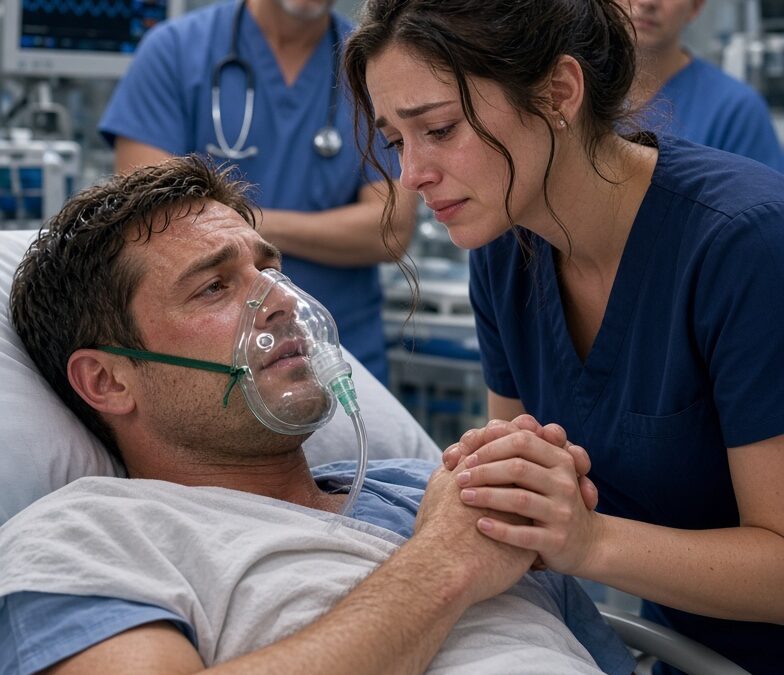
𝗙𝗨𝗟𝗟 𝗦𝗧𝗢𝗥𝗬
Patel paused.
Cole checked the monitor.
“His heart rate is one-thirty. His pressure is falling. He has multiple injuries. He’s reacting to everything.”
“Maybe.”
That word made Cole look at me.
I did not say he was wrong.
He wasn’t.
Pain could explain it.
Fear could explain it.
Confusion.
Noise.
The sight of someone leaning over him.
A hundred things could explain what I had seen.
But explanations are not the same thing as evidence.
“What exactly are you suggesting?” Cole asked.
“That he may still be trying to answer us.”
“Based on a change in breathing?”
“Based on the same change at the same moment twice.”
Cole looked toward the surgical transfer doors.
The transport team was already waiting.
“You understand his pressure is dropping.”
“Yes.”
“And you understand what happens if I delay repair because we think a half-conscious patient may be communicating through breathing changes.”
“Yes.”
“Then move.”
He wasn’t cruel.
That made it harder.
Cruelty is easier to resist.
Urgency has a point.
I looked at Ryan.
His eyes were closed again.
I placed two fingers lightly in his palm.
“Ryan.”
Nothing.
“Ryan Mercer, if you can hear me, squeeze my hand once.”
Nothing.
The monitor kept pulsing.
Patel waited with the capped syringe.
Megan looked from me to Cole.
Cole did not wait.
“We’re moving.”
I held my fingers there one second longer.
Still nothing.
And there was the line I had to respect.
Observation becomes wishful thinking very quickly if you decide what you want the patient to be capable of before the patient shows you.
“Okay.”
I started pulling my hand away.
Ryan squeezed.
Once.
Weak.
But deliberate.
I froze.
So did Cole.
“Ryan?”
His fingers loosened.
“Do that again.”
Three seconds.
Four.
Then his hand closed around my fingers a second time.
Weaker than the first.
Unmistakable.
Patel lowered the syringe.
Megan stopped typing.
Cole stepped toward the bed.
“He followed one command twice.”
“Yes.”
“That tells us he can respond intermittently.”
“Yes.”
“It does not tell us what he understands.”
“Agreed.”
My answer came quickly enough to surprise him.
I think he expected me to treat the squeeze as proof of everything.
It wasn’t.
It was proof of one thing.
Ryan was still in there enough to do something on command.
Nothing more.
“But it means we shouldn’t decide he understands nothing.”
Cole looked at the pressure.
Then the clock.
Then the doors.
His responsibility won.
“We are not delaying surgery to build a communication system in Trauma Two.”
“I’m not asking you to.”
“Megan takes over the handoff. Claire, step away.”
I nodded.
I did not like it.
But there are limits in a hospital for good reason.
I leaned closer to Ryan.
“They’re taking you upstairs.”
His hand remained around mine.
“I’m stepping away now.”
I started sliding my fingers from his palm.
His hand tightened.
I stopped.
“Ryan.”
I tried again.
The grip strengthened.
Not much.
He was too weak for much.
But the difference was clear.
When I stopped trying to leave, his grip eased.
When I moved, it tightened.
One of the transport techs reached toward his hand.
“I can free her.”
“No.”
My free hand came up before he touched Ryan.
Cole looked at me.
“Claire.”
“I heard you.”
“Then move.”
“I am.”
I kept my arm loose.
“I’m just not forcing an injured patient’s fingers open to do it.”
Patel shifted his tray.
Ryan’s grip tightened immediately.
I felt it before anyone else noticed.
My eyes went to the syringe.
Then to Ryan.
Then Cole.
I could have said, He doesn’t want that medication.
I didn’t.
I did not know that.
He might have been reacting to movement.
To Patel.
To the idea of losing my hand.
To anything.
That restraint mattered.
More than sounding certain.
Cole saw the grip too.
“I see it.”
It was the first important change in the room.
Not I believe you.
Not You’re right.
I see it.
“Give me one question,” I said.
“You’ve already had your five seconds.”
“And he used them to answer.”
“We are spending surgical time.”
“Then don’t give me enough time to guess.”
I looked down at Ryan.
“Give me enough time for one beat.”
Cole’s jaw tightened.
Nobody moved.
A surgeon with a patient losing blood stood on one side of the bed.
A nurse he had just ordered away stood on the other.
Between us lay a man who barely had enough strength to keep his fingers closed around mine.
Cole checked the monitor.
“One question.”
I leaned closer.
Not Why are you holding me?
Not What do you want?
Those required too much.
Simple.
One idea.
“Ryan, are you trying to warn us about something we’re about to do?”
His fingers stayed still.
One second.
Two.
I waited.
I did not squeeze back.
Did not help him.
Then his hand closed once.
Yes.
Patel lowered the medication.
Cole’s eyes moved toward the syringe.
I did not celebrate.
I did not know what the warning was.
I only knew the room could no longer say there had been none.
“Five seconds,” Cole said.
I nodded.
“Ryan, one squeeze for yes. Two for no. Do you understand?”
Nothing.
Cole glanced at the clock.
“Three seconds.”
Ryan squeezed once.
“Are you warning us about medication?”
One squeeze.
Patel looked down at his tray.
“Is it the medication Dr. Patel is holding?”
Ryan squeezed twice.
No.
Cole exhaled.
“Then we move.”
“Wait.”
“Claire.”
“He answered your concern.”
“What?”
“You thought I was trying to stop that specific drug.”
Patel looked at me.
I continued.
“He says it isn’t that.”
Cole stared.
I could almost see the calculation.
Unstable patient.
Incomplete information.
Surgical team waiting.
Every second carrying real physiological cost.
“I cannot delay surgery because an injured patient may be warning us about a medication we haven’t identified.”
“I’m not asking you to.”
I looked at Megan.
“Pull his transfer medication record. Allergies. Prior sedation reactions. Anything flagged from military medical.”
Megan was already typing.
“The first packet is incomplete.”
“Supplemental file.”
Cole stepped toward the bed.
“We move while she checks.”
I looked down at Ryan.
His grip weakened.
Continuing to question him would have been easier.
Every new answer would make my argument stronger.
That was exactly why I stopped.
“No more questions.”
Cole paused.
“What?”
“He’s getting weaker.”
I looked at Megan.
“Document what we actually have. Patient follows one-step command by hand squeeze. Indicates concern related to planned medication. Specific medication not identified.”
Then I looked at Patel.
“Don’t enter an allergy based on that.”
Patel nodded.
“Agreed.”
Cole studied me.
I think that changed something for him too.
I was not asking him to trust my interpretation.
I was asking him not to erase information the patient had actually provided.
There is a difference.
“Megan?”
“Supplemental file is loading.”
The transport tech unlocked the bed.
I tried easing my hand free again.
Ryan tightened.
I stopped.
“Ryan, they need to take you upstairs.”
His eyelids opened a fraction.
For the first time, his gaze found mine.
Only for a second.
But it found me.
Then it slipped away.
Patel moved the medication tray to clear the bed.
Ryan’s fingers tightened again.
Cole saw it.
“I see it.”
Again.
Not belief.
Observation.
Good enough.
Megan leaned toward her monitor.
“I’ve got something.”
Everyone looked at her.
She turned the screen.
“Previous procedural sedation. Severe paradoxical reaction to midazolam. Agitation followed by respiratory compromise. Alternative protocol recommended.”
Patel’s eyes dropped to the medication tray.
The syringe he had been holding earlier contained midazolam.
For half a second, the whole room became still.
Then Patel acted.
He removed the syringe from the active tray.
“Switching protocols.”
Cole stepped toward the screen.
“Confirmed?”
“Documented twice,” Megan said. “Earlier procedural record and field follow-up.”
Cole looked at Ryan’s hand around mine.
Then at me.
“That’s what he was trying to warn us about.”
The sentence gave me an opening.
An easy one.
I could have said yes.
Could have made myself the person who had understood Ryan when everybody else had failed.
Could have accepted the victory.
Instead I said, “We know he was warning us about medication. The record tells us which one.”
Cole held my gaze.
“Fair.”
That single word mattered.
He turned to Patel.
“Use the documented alternative. Keep moving.”
The room accelerated again.
But not in the same way.
The plan had changed.
Megan pushed the reaction into Ryan’s active chart.
Patel prepared the alternative.
Transport moved the bed.
Nobody congratulated me.
Nobody needed to.
The medication that could have caused respiratory compromise was no longer heading into Ryan’s IV.
That was enough.
Cole came back to the bedside.
“Claire.”
I looked at him.
“What else did he tell you?”
The question was different.
Ten minutes earlier, I had been something he wanted removed from the process.
Now he wanted information.
I answered carefully.
“Only what I can support.”
He waited.
“He follows simple commands intermittently. One squeeze yes, two no. His answers become unreliable if I put more than one idea into a question.”
Cole nodded.
“Then keep it to one idea.”
“Only when we need an answer.”
“Why?”
“Because he shouldn’t have to keep proving he understands us.”
Cole looked at Ryan.
His eyes were shut again.
The grip around my fingers had weakened until it was almost just contact.
“Agreed,” Cole said. “Ask only what changes care.”
Patel held up the replacement medication.
“Ready.”
Cole looked at me.
“Anything else we need from him before this?”
Minutes earlier, I would have needed permission to ask Ryan anything.
Now the surgeon was asking whether another question was necessary.
I looked at the chart.
Then at the syringe.
“No. The record answered the medication question.”
Cole nodded.
“Proceed.”
Patel administered the alternative.
I watched Ryan’s face.
Not because I expected another revelation.
Because he was still my patient until handoff.
His jaw remained loose.
His breathing did not show the same interruption.
His grip stayed light.
The bed brakes released.
“Let’s go,” Cole said.
I shifted my weight.
Ryan’s fingers tightened again.
This time Cole did not tell me to pull away.
He looked at the narrow space beside the stretcher.
“Can you walk with him safely?”
“Yes, if someone else takes this rail.”
Cole moved his own hand to it.
“Done.”
That was how I ended up walking beside Ryan toward the elevator.
Not because my authority had changed.
It hadn’t.
Cole was still the surgeon.
Patel still owned the anesthesia plan.
I was still the trauma nurse who had been ordered to step away.
But one working rule had changed.
If I reported something I could support, the team checked it.
If I said where my knowledge ended, they respected the edge.
At the elevator, Cole looked at me.
“You’re coming to the handoff.”
“For what?”
“His communication status. What you observed. What he can reliably answer.”
I nodded.
“Then I’ll hand that off.”
“I’m not asking for anything beyond it.”
“Good.”
The elevator opened.
Transport turned the bed carefully.
Cole positioned himself so Ryan’s arm would not be twisted away from me.
He did it without comment.
I noticed anyway.
The elevator doors closed.
Cole looked at Ryan’s hand around mine.
Then at me.
“If he gives you something new, tell me.”
“If he gives me something clear, I will.”
The surgical floor was brighter than trauma.
Quieter too.
Not calm.
Controlled.
We rolled into Pre-op Three.
Sarah, the receiving nurse, met us on Ryan’s right.
Cole gave the medical handoff.
“Injury pattern. Pressure trend. Documented midazolam reaction. Revised anesthesia protocol.”
Then he looked at me.
“Communication.”
I stepped forward.
I did not tell the entire story.
Stories create heroes too easily.
The next nurse did not need a hero.
She needed a method.
“Intermittently responsive. One squeeze means yes. Two means no. One idea per question. If the response is unclear, don’t interpret it.”
Sarah nodded.
“Got it.”
“Try it.”
She placed two fingers into Ryan’s free hand.
“Ryan, can you hear me?”
The room continued preparing around us.
After several seconds, his right hand squeezed once.
Sarah waited.
“Do you know you’re on the surgical floor?”
One squeeze.
She released his hand.
“Okay.”
I said nothing.
No correction.
No approval.
Cole noticed.
“So anyone can use it.”
“If he can still respond,” I said. “And if the question stays simple.”
That was what I wanted.
Ryan’s ability to be heard no longer depended entirely on me.
Sarah continued the pre-op checklist.
Before she touched his ID band, she told him.
Before she checked his IV, she told him.
When she needed an answer, she offered her fingers.
Ryan responded when he could.
I remained on his left because he still held my hand.
But I was no longer the only bridge between him and the room.
Cole looked at the OR status board.
“Room ready in two.”
I looked toward the double doors.
My access ended there.
Sarah asked, “Is the oxygen mask comfortable?”
Two squeezes.
No.
She adjusted it.
“Better?”
One squeeze.
Cole looked at Ryan’s right hand.
Then at his left around mine.
“He’s answering her.”
“Yes.”
“But he’s still holding you.”
I looked down.
His grip was weaker.
Yet when I shifted my fingers slightly, his hand closed again.
Cole stepped closer.
“You can stay until induction if it makes the transfer easier.”
I shook my head.
“It makes the next two minutes easier.”
“And after?”
“I still have to leave.”
He understood.
I turned to Sarah.
“Keep your hand where he can reach it. Don’t make him search.”
She moved closer immediately.
Then I leaned toward Ryan.
“Ryan, Sarah has you now. You can answer her the same way you answered me.”
His right fingers moved once against Sarah’s hand.
Yes.
His left did not release mine.
I did not pull.
The problem had changed.
We no longer needed to prove Ryan could communicate.
We no longer needed me to translate.
The team had the method.
The medication warning was in the chart.
The OR was ready.
And yet the thing that had started everything remained.
He would not let go.
Cole moved to the head of the bed.
Earlier he would have solved that with an order.
Now he looked at me.
“What do you need?”
I shook my head.
“Not what I need.”
I looked at Ryan.
“We need to find out what he still needs before I step away.”
The OR nurse signaled through the glass.
Ready.
Sarah already knew how to hear him.
Cole already treated his answers as information.
My usefulness had transferred.
His hand had not.
I looked down at our hands.
Then stopped treating his grip as a problem to solve.
Maybe that was the mistake everyone had been making from the beginning.
A patient resists.
We ask how to remove the resistance.
A patient cannot speak.
We ask how to proceed without the speech.
A patient grips someone’s hand.
We ask how to separate the hands.
Sometimes the better question is what the behavior is protecting.
“Ryan,” I said.
His eyelids moved.
“Do you remember me telling you before I touched you?”
One squeeze.
“Do you remember me telling you what I was doing before I checked your IV?”
One squeeze.
Cole’s attention shifted toward me.
“You knew him before tonight?”
“No.”
“Then what did you do differently?”
I almost answered.
Then stopped myself.
“Check his dressing.”
Cole frowned.
“Now?”
“You were going to before transport.”
He stepped toward Ryan’s left side.
Then paused.
That pause was new.
“Ryan, I’m checking the dressing on your side before we move you. I’m going to lift the blanket. Nothing else.”
He waited.
Then he lifted the blanket.
Checked the dressing.
Replaced it.
Ryan’s shoulders stayed loose.
The pressure around my fingers eased.
Cole noticed.
Patel stepped toward the IV.
“This is the alternative medication from the protocol in your record. I’m giving it through your IV.”
He waited until Ryan’s eyes shifted slightly toward him.
Then he administered it.
Ryan’s grip did not tighten.
Sarah reached toward the pulse-ox cable.
“I’m moving this wire away from your arm.”
Nothing changed.
Cole stepped back.
“He needs to know what’s coming.”
I looked at Ryan.
“He needs to know he’s still part of what’s happening.”
Sarah glanced at me.
“Even when there isn’t really a choice?”
“Sometimes there isn’t a choice about what has to be done.”
I looked at her.
“That doesn’t mean we treat his silence like he disappeared.”
Cole was quiet.
Then he said, “Tell him before you move him or touch a line when time allows.”
He looked at Patel.
“Same with medications.”
Patel nodded.
I shifted my hand again.
Ryan’s fingers loosened.
But did not open.
Cole watched.
“I thought he was holding you because he trusted you more than us.”
“Maybe he does.”
I kept my voice low.
“But Sarah is getting answers now.”
Cole looked at Ryan’s free hand resting beside hers.
I turned back to him.
“Sarah can hear you. Dr. Patel knows the medication warning. Dr. Cole knows you can answer when you’re able.”
Ryan’s eyes opened slightly.
“And I am not walking into that operating room just because you’re holding my hand.”
His fingers tightened once around mine.
Not a clean yes.
Not a signal.
Just pressure.
I did not name it.
The OR nurse raised her hand again.
Ready.
Cole took the bed rail.
For the first time, he did not look to me for interpretation.
He looked directly at Ryan.
“We’re taking you into the operating room now. Sarah stays through the handoff. Dr. Patel manages your anesthesia. Claire stays outside.”
Ryan’s eyes opened.
His free hand moved toward Sarah.
She offered two fingers.
Cole continued.
“Do you understand where we’re going?”
One squeeze.
“Do you understand Claire cannot come with us?”
One squeeze.
My hand remained trapped in his.
Cole looked at it.
“He understands you’re leaving.”
“Yes.”
“But he’s still holding you.”
“Those can both be true.”
Cole waited.
I gave him nothing else.
This time, he worked it out himself.
“Understanding isn’t the same as being ready.”
“No.”
The OR nurse opened the doors wider.
“Room is ready.”
Patel checked the pressure.
“We need to move.”
I leaned toward Ryan.
“This is where my part ends.”
His eyes stayed closed.
“Sarah can hear you.”
His hand around mine remained closed.
“Dr. Cole can hear you.”
Still closed.
“You don’t have to hold on for me to keep them listening.”
Nothing.
I waited.
Then said, “You decide when you’re ready to let go.”
No one touched his fingers.
Cole kept the stretcher still.
Patel watched the monitor.
The OR nurse glanced at the clock.
I knew what every second meant.
So did Cole.
But for the first time that night, the room allowed Ryan to own one of them.
His free hand moved toward Sarah.
She offered her fingers.
Cole stepped closer.
“Ryan, before we move, I need one answer.”
He waited until Ryan’s eyes opened.
“If something concerns you and you can still answer, will you use the signal?”
One squeeze.
“If you can’t answer, we’ll make the decisions your condition requires. But we won’t pretend your silence told us something it didn’t.”
One squeeze.
Cole straightened.
I felt Ryan’s fingers loosen.
Almost open.
Then close again.
Not hard.
Not panicked.
Just not yet.
Patel looked at Cole.
“Ethan.”
Cole looked toward the OR.
Then back at Ryan.
“Give him a moment.”
That sentence might sound small.
It wasn’t.
An hour earlier, Ryan’s silence had been treated as empty space the team had to move through.
Now the surgeon with the most reason to hurry had decided a few seconds still belonged to the patient.
I stayed still.
I did not reassure Ryan.
Did not ask anything else.
Did not interpret the grip.
Sarah could hear him now.
Patel had the correct medication.
Cole had stopped looking to me for the meaning of Ryan’s silence.
I had brought them as far as I could without making myself necessary to everything that followed.
The rest belonged to him.
The OR nurse spoke again.
“We need to go.”
Patel’s eyes stayed on the monitor.
Cole held the rail.
Ryan still had my hand.
Not tightly now.
Deliberately.
I leaned close.
“You don’t need me to speak for you anymore.”
His free hand shifted toward Sarah.
She gave him her fingers.
Cole stepped into his line of sight.
“Do you need Claire to stay with you?”
Two squeezes.
No.
Nobody moved.
Cole looked at the hand still holding mine.
Then at me.
“If he doesn’t need you, why won’t he let go?”
I kept my eyes on Ryan.
“Ask him.”
Cole bent closer.
“Ryan, do you need to know I understand how you want us to communicate before you release her?”
One squeeze.
Yes.
Cole nodded.
“One squeeze yes. Two no. One question at a time. If you don’t answer, I don’t decide what your silence means just because I need an answer.”
Ryan’s hand remained around mine.
Cole glanced at me.
“I said it.”
“You did.”
“He’s still holding on.”
“Maybe repeating the rule isn’t the same as using it.”
Patel checked the monitor.
“Ethan.”
“Ten seconds.”
Cole turned back to Ryan.
“I’m going to ask you about what happens next.”
He waited.
“Do you understand we’re taking you into surgery?”
One squeeze.
Cole waited again.
“Are you ready for us to move through those doors?”
One squeeze.
This time, Cole did not look at me.
“Understood,” he said directly to Ryan.
Nothing more.
No translation through the nurse.
No confirmation.
Ryan had answered him.
And Cole had accepted that answer as enough.
I felt Ryan’s grip change.
His fingers loosened.
Then closed one last time around mine.
Not a signal.
Not a warning.
Just pressure.
A final human contact.
I resisted the instinct to help him release.
“Your answer was heard,” I said. “The rest is yours.”
One breath.
Then Ryan opened his hand.
Completely.
I waited until his fingers rested against the sheet.
Only then did I withdraw mine.
Sarah kept her hand within reach.
She did not grab Ryan’s.
Did not replace me.
She simply left it there for him to choose.
Cole took the rail.
“We’re moving now, Ryan.”
The stretcher rolled.
I stayed behind.
At the threshold, Ryan’s eyes opened once.
He did not reach back.
Cole walked beside him.
“We’re turning left into the room.”
Transport waited until he said it.
Sarah stayed where Ryan could reach her.
Patel leaned into his line of sight.
“The next medication goes through your IV. Then you’re going to get sleepy.”
Ryan’s fingers moved toward Sarah.
The doors started closing.
Cole looked back at me.
“After surgery, I want your observations in the recovery handoff.”
“The observations,” I said. “Not me.”
A beat.
“The observations.”
Then the doors closed.
I looked at my empty hand.
Less than an hour earlier, Cole had ordered me out because he thought I was slowing the work that mattered.
Now that work continued without me.
That was the point.
Ryan had not released me because someone forced his fingers open.
Not because time defeated him.
Not because I convinced him he did not need anything.
He let go when the people taking him forward stopped simply telling him they understood and showed him they would listen.
I went back downstairs.
There were other patients.
Trauma does not pause because one story feels important.
I replaced an IV bag.
Helped clean a laceration.
Called radiology.
Documented.
Spoke with a frightened husband whose wife had been hit by a car.
Three hours later, I was in another bay when I noticed Dr. Cole standing outside the curtain.
He waited.
That alone surprised me.
I finished checking the IV line.
Documented.
Pulled the curtain closed.
Then walked toward him.
“How is Ryan?”
“Surgery went well.”
My shoulders dropped.
“Stable?”
“Yes.”
The sharp urgency was gone from Cole’s face.
He looked exhausted.
Not weak.
Just human again.
“Recovery is taking him.”
“Good.”
I started toward the nurses’ station.
He followed.
“I need your observations for the recovery handoff.”
“They need the method, not me.”
“That’s what I mean.”
We stopped at an empty workstation.
He pulled a chair beside mine instead of standing over me.
“Tell me what they need.”
I opened Ryan’s chart.
“Keep questions simple. Explain before touching him when possible. If he doesn’t respond, don’t assign meaning to the silence.”
Cole nodded.
“And the medication reaction.”
“Already flagged.”
“Good.”
I started typing.
He watched.
“Should we document that he responds better with familiar staff?”
My fingers stopped.
“No.”
“Why?”
“He responded to you.”
Cole’s eyes narrowed slightly.
“He responded to Sarah once she gave him a way to answer.”
I turned toward him.
“If we write that he needs a specific person, the next team may wait for that person instead of communicating with him themselves.”
Cole considered it.
“So we transfer the trust.”
“Responsibility.”
He looked at me.
“Trust is his to decide.”
A small nod.
“Responsibility.”
The station phone rang.
Megan answered.
Listened.
Then covered the receiver.
“Recovery for Dr. Cole.”
Cole picked it up.
“Cole.”
He listened.
“Is he awake enough to follow commands?”
Pause.
“Then ask him directly.”
I continued typing.
“Use the hand signal in the note,” he said. “Tell him what you’re doing before you do it. If he doesn’t answer, assess why before you label it agitation.”
Another pause.
“No. Don’t assume he wants Claire.”
My fingers stopped.
Cole glanced at me but kept speaking.
“Ask him what you need to know.”
Another pause.
“Good. Call if his status changes.”
He hung up.
I resumed typing.
“They asked if you should come up.”
“Do they need me clinically?”
“No.”
“Then I’m staying here.”
No challenge.
No defense.
Cole nodded.
“Agreed.”
I finished the note.
Signed it.
For a moment, neither of us spoke.
Then he said, “For a few minutes, I thought keeping you with him was the safest solution.”
“And after that?”
He looked toward the trauma bays.
“Then you become something everyone waits for.”
I closed the chart.
“Exactly.”
“That’s a strange way to help someone.”
“What is?”
“Making sure they stop needing you.”
I looked down the corridor.
“They didn’t need me.”
Cole waited.
“They needed someone to notice what he could still do.”
My pager sounded.
I checked it.
“I have to go.”
Cole nodded.
“Go.”
I had taken several steps when the recovery phone rang again.
Cole answered.
I kept walking.
His voice followed me through the noise of the station.
He listened.
Then said, “Good.”
Pause.
“Keep asking him.”
I did not turn around.
Four days later, I entered Ryan Mercer’s room carrying a medication cup and scanner.
No rushing stretcher.
No trauma alarms.
Morning sunlight came through the blinds.
He sat partly upright.
Bruised.
Pale.
A long incision beneath the dressing.
But awake.
Very awake.
Dr. Cole stood near the window reviewing the morning plan with physical therapy.
“We’d like to get you standing today,” the therapist said.
Ryan looked at him.
“That sounds suspiciously like your idea of fun.”
The therapist smiled.
“You’ll love me by lunch.”
“Unlikely.”
It was the first time I had heard Ryan speak.
His voice was rough.
Weak.
But unmistakably his.
I scanned his wristband.
Cole glanced at my medication cup.
Then looked at Ryan.
“Before she gives you anything, do you have questions about the medication change from this morning?”
He waited.
Four days earlier, Cole would have filled that silence.
Now he allowed it.
“The pain medication?” Ryan asked.
“Yes.”
“Lower dose?”
“Same schedule. Lower dose unless you want us to reconsider after therapy.”
Ryan thought.
“Try lower.”
“Okay.”
Cole marked the decision.
I gave the medication.
No interpretation required.
No hand signal.
No one needed me to translate him.
Afterward, Cole approached the bed.
“I need to check your incision.”
He waited until Ryan looked at him.
“I’m going to move the blanket and examine your left side.”
“Okay.”
Cole did exactly what he had described.
Then replaced the blanket before discussing anything else.
The behavior was ordinary now.
That was what made it remarkable.
No speech announcing change.
No apology ceremony.
No grand promise.
He simply stopped treating a quiet patient like empty space.
The therapist returned to standing.
“Chair first. Then a few steps if your pressure cooperates.”
Cole looked at Ryan.
“What do you think?”
Ryan raised one eyebrow.
“I think both of you are terrible people.”
Cole waited.
Ryan sighed.
“Chair first.”
“Chair first,” Cole repeated.
I checked Ryan’s IV.
“You’re becoming difficult.”
He looked at me.
“Becoming?”
That was the first time his voice carried enough strength for humor.
I smiled.
“Fair point.”
I finished the check.
“I’ll be around later.”
I was almost at the door when he spoke.
“Claire.”
I turned.
His left hand lifted slightly from the blanket.
Not desperate.
Not weakly searching.
Just waiting.
I walked back.
Placed my hand in his.
His fingers closed around mine.
Lightly.
No code.
No warning.
No reason for anyone to stop.
Then he opened them on his own.
“Thanks,” he said.
I looked at the hand that had once stopped an entire trauma team.
“You’re welcome.”
I started toward the door again.
Cole shifted aside so I could pass.
Ryan looked toward the therapist.
“If I make it to the chair, does everyone leave me alone?”
“Absolutely not.”
“I knew there was a catch.”
I reached the doorway.
Behind me, Cole said, “Before we move you, which position hurts least?”
There was a pause.
Ryan started answering slowly.
Cole did not finish the sentence for him.
I looked back once.
Nobody was watching me.
Nobody needed to.
That mattered more than almost anything else.
A few hours later, Ryan’s military liaison found me at the nurses’ station.
Commander Marcus Hale.
He introduced himself with the careful formality of someone accustomed to walking into civilian hospitals carrying information other people were not sure they were allowed to ask for.
“You’re Nurse Bennett?”
“Yes.”
“Ryan asked for you.”
My stomach tightened.
“Is something wrong?”
“No.”
That answer relaxed me only slightly.
Hale looked toward Ryan’s room.
“He told me what happened downstairs.”
I leaned against the counter.
“How much does he remember?”
“More than I expected.”
That did not surprise me.
“Did he tell you why he held on?”
Hale smiled faintly.
“No.”
I thought about it.
“Maybe he doesn’t know.”
“Maybe.”
He hesitated.
“Ryan doesn’t like losing control.”
“Most people don’t.”
“For him, it’s worse.”
I waited.
Hale did not offer operational details.
I did not ask.
“He was awake during part of the extraction,” he said. “Unable to move much. People had to do things to keep him alive while he couldn’t tell them what he understood.”
That explained something.
Not everything.
But enough.
“Then silence had already happened to him once before he reached us.”
Hale nodded.
“He remembers people talking over him.”
My throat tightened.
I thought about Trauma Two.
The language shifting around Ryan.
The medication being prepared.
The stretcher moving.
Everyone doing exactly what they thought was necessary.
“He wasn’t trying to control the surgery,” I said.
“No.”
“He was trying not to disappear.”
Hale looked at me.
“That’s probably as close as you’ll get.”
I looked down at my hands.
“There are easier ways to get a nurse’s attention.”
“He’s a SEAL.”
“That doesn’t make stubbornness a medical necessity.”
For the first time, Hale laughed.
“I’ll tell him you said that.”
“Please don’t.”
“I absolutely will.”
He walked away.
I remained at the station, thinking about how easily we romanticize strength.
Ryan had been a Navy SEAL.
That fact changed how people talked about him after they learned it.
Tough.
Disciplined.
Elite.
Resilient.
All true, probably.
But none of those words explained the most human thing he had done.
He had been scared.
Too weak to speak.
Unable to control what came next.
And when one person paused long enough to let him answer, he held on to that person until he believed the next room would pause too.
That was not weakness.
But it did not need to become heroism either.
It was simply a person trying to stay inside his own care.
Two days later, Ryan walked six steps.
I happened to be outside the room when physical therapy started.
Cole stood near the wall.
Hale stood by the window.
Ryan gripped the walker.
The therapist adjusted the belt.
“Ready?”
Ryan breathed out.
“No.”
Everyone waited.
Five seconds.
Then he nodded.
“Now.”
He stood.
Pain crossed his face.
His blood pressure held.
One step.
Then another.
At step four, he stopped.
The therapist said, “Two more.”
Ryan shook his head.
Cole started to speak.
Then stopped himself.
The therapist looked at Ryan.
“You want the chair?”
“Yes.”
They sat him down.
Nobody called it failure.
Nobody told him he could manage two more because the numbers looked safe.
His answer ended the attempt.
Simple.
I wondered whether anyone else noticed how much the room had changed.
Later, I found Cole outside an empty procedure room.
“Can I ask you something?”
He glanced at me.
“That’s usually how you start trouble.”
“Occupational hazard.”
He almost smiled.
“What?”
“Why did you tell me to leave?”
He looked surprised.
“That night?”
“Yes.”
“You know why.”
“I know the clinical reason.”
“Then what are you asking?”
I leaned against the wall.
“I want to know when you decided I was the obstacle.”
Cole considered the question.
He did not answer immediately.
That itself was an answer of sorts.
“When you asked for time I didn’t think we had.”
“Fair.”
“And when I couldn’t tell whether you were seeing a reproducible response or becoming attached to one interpretation.”
“Also fair.”
He looked at me.
“You want an apology?”
“No.”
“Good.”
“That wasn’t a joke.”
“I know.”
He crossed his arms.
“So what do you want?”
“To understand the point where listening became delay in your head.”
Cole looked toward the floor.
“I’ve seen patients die while teams discussed uncertainties that didn’t change management.”
There it was.
Not ego.
History.
“How many?”
“Enough.”
I waited.
“There is a point in trauma care where more information stops helping and starts costing time.”
“I agree.”
“I thought we had crossed it.”
“And I thought we hadn’t.”
“Yes.”
We stood there.
Two clinicians who had been right about different risks.
He said, “What changed my mind wasn’t the hand squeeze.”
I looked at him.
“What was it?”
“When you refused to call the response an allergy.”
That surprised me.
“You could have used that moment to prove yourself right.”
“I wasn’t right yet.”
“Exactly.”
He looked toward Ryan’s room.
“You kept defining what you knew and what you didn’t.”
“That’s the job.”
“It should be.”
The wording caught me.
“Should be?”
Cole exhaled.
“People get rewarded for certainty.”
“So do surgeons.”
“Especially surgeons.”
That was the closest thing to self-criticism I had heard from him.
He continued.
“You learn that hesitation scares people. Families. Staff. Residents.”
“Patients too.”
“Yes.”
“So you make decisions.”
“Yes.”
“And eventually?”
“You can forget that making the decision isn’t the same thing as owning all the information.”
I nodded.
“That’s what happened.”
“I know.”
We were quiet.
Then Cole said, “You also could have made yourself indispensable.”
“I almost did.”
He looked at me.
“When?”
“Upstairs.”
“Why didn’t you?”
“Because if Ryan could only be heard while holding my hand, we had failed.”
Cole’s face changed.
Not dramatically.
Just enough.
“That’s why you made Sarah do it.”
“Yes.”
“And why you refused recovery.”
“Yes.”
He nodded slowly.
“I thought you were being stubborn.”
“I was.”
“About the wrong thing?”
“About not becoming the solution.”
He smiled once.
“You are difficult.”
“So I’ve been told.”
When I returned to Ryan’s room that afternoon, he was alone.
Television off.
Window open a few inches.
Sunlight across the blanket.
I checked his medication schedule.
“How’s the pain?”
“Depends.”
“On?”
“Whether you’re asking before or after physical therapy threatens me.”
“Before.”
“Four.”
“Manageable?”
“Ask me in twenty minutes.”
I scanned the medication.
Before I could leave, he said, “I remember you telling them not to open my hand.”
I stopped.
“Do you?”
“Parts.”
I pulled the chair closer.
“How much?”
“Enough.”
He looked at his left hand.
“I couldn’t talk.”
“I know.”
“I could hear most of it.”
That made my chest tighten.
“Even downstairs?”
“Pieces.”
He swallowed.
“I heard Cole say move me.”
“Yes.”
“I heard you say no.”
“I said I wouldn’t force your hand open.”
“Same thing.”
“Not quite.”
He smiled faintly.
Then became serious.
“I thought they were going to give me the drug.”
“You mean midazolam.”
“Yeah.”
“Did you know the name?”
“I heard Patel say it.”
“And you couldn’t speak.”
He shook his head.
“My body reacts bad.”
“We found that.”
“I tried to move.”
“I saw.”
“No one else did.”
I corrected him.
“Not at first.”
He looked at me.
“Why did you?”
“I was standing closest.”
“That’s not an answer.”
“It is one.”
He waited.
I sighed.
“Because I look at patients before monitors when I can.”
“Why?”
“Monitors are useful.”
“That’s not what I asked.”
Apparently stubbornness survived surgery very well.
I sat back.
“My father had a stroke when I was nineteen.”
Ryan listened.
“He couldn’t speak for almost two days.”
I rarely told patients personal things.
This seemed different.
“He understood more than people realized. Nurses would come in and explain things to my mother while standing over him. Physicians would ask us questions about him while he was right there.”
Ryan’s expression changed.
“One nurse talked directly to him.”
“What did she do?”
“Nothing dramatic.”
I smiled slightly.
“She told him before she rolled him. Told him when she was adjusting oxygen. Asked yes-or-no questions and waited long enough to see his eyes move.”
“Did he recover?”
“Mostly.”
“And you became a nurse.”
“Not because of that alone.”
“But you remembered.”
“Yes.”
Ryan looked at his hand again.
“I remember people talking.”
“During the accident?”
“After.”
I waited.
“They kept saying I was fading.”
He stared toward the window.
“I wanted to tell them I wasn’t gone.”
There it was.
I felt my throat tighten.
“You weren’t.”
“I couldn’t prove it.”
“You shouldn’t have had to prove it every minute.”
He looked back at me.
“That’s why you stopped asking questions.”
“Yes.”
“I wondered.”
“You were getting weaker.”
“I thought you’d given up.”
“No.”
He nodded.
“I figured that out later.”
We sat quietly.
Then he said, “You know what the weirdest part is?”
“What?”
“I wasn’t holding you because I thought you were the only one who could save me.”
I smiled.
“Good. Because that would’ve been a terrible clinical plan.”
He laughed.
Immediately regretted it.
His hand went to his side.
“Don’t make me laugh.”
“You started it.”
He breathed carefully until the pain settled.
Then said, “I held on because you kept telling me before things happened.”
I looked at him.
“That simple?”
“When you can’t move, simple gets important.”
I thought about that for a long time.
When you can’t move, simple gets important.
“Why didn’t you release when Sarah took over?”
“I don’t know.”
“That’s allowed.”
“I think I was waiting to see if Cole meant it.”
“Meant what?”
“That he’d listen.”
I nodded.
That fit.
“He did.”
“Eventually.”
“Surgeons are slow learners.”
“Careful.”
“He isn’t here.”
Ryan’s smile faded.
Then he looked at me.
“When I finally let go, you know what I remember?”
“What?”
“He asked if I was ready.”
I felt something shift inside me.
“Not if I understood. If I was ready.”
“Yes.”
“Nobody had asked me that since the accident.”
I did not know what to say.
So I did something I had spent the entire week arguing for.
I left the silence alone.
Ryan went home twelve days after the accident.
He left with medication instructions, physical therapy appointments, surgical restrictions, and a communication note that no longer mattered because he could speak clearly.
The note stayed in his record anyway.
Not because he needed hand squeezes forever.
Because the chart needed to show what had happened when speech became unreliable.
Before discharge, Cole entered the room with the final surgical plan.
He explained every restriction directly to Ryan.
Then asked, “Anything you want clarified?”
Ryan asked three questions.
Cole answered all three.
No rush.
At the door, Ryan stopped him.
“Doctor.”
Cole turned.
“Yeah?”
“You were right to get me to surgery.”
Cole’s face shifted.
Ryan continued.
“Claire was right to make you listen first.”
I was standing by the medication cabinet.
Cole looked at me.
Then at Ryan.
“Both can be true.”
Ryan nodded.
“Apparently.”
Cole almost smiled.
Then left.
Hale arrived to drive Ryan home.
Before they left, Ryan held out his hand.
This time for a handshake.
I took it.
His grip was stronger.
“Thank you.”
“You already thanked me.”
“I was medicated.”
“Fair.”
He held on one second longer.
Then released on his own.
That mattered.
Not because I needed a symbolic ending.
Life rarely offers those cleanly.
But because our first contact had been something he could not release until the room proved it would hear him.
Our last was something he chose freely.
Grip.
Thanks.
Release.
Nothing trapped inside it.
A month later, Cole asked the trauma committee to review Ryan’s case.
I expected a discussion about the medication record.
That happened.
But he included something else.
Communication with intermittently responsive patients.
Simple commands.
One idea at a time.
Explain before non-emergency contact when feasible.
Do not equate absent verbal response with absent comprehension.
Do not infer refusal, consent, or agitation from silence alone.
I sat in the back of the meeting.
Cole presented it.
Not me.
That was appropriate.
A resident asked, “How much time are we expected to spend establishing communication in an unstable trauma?”
Cole answered, “Enough to gather information that may materially alter immediate care. Not enough to compromise necessary intervention.”
The resident nodded.
Another physician said, “That’s subjective.”
“Most judgment is.”
Cole continued.
“The point is not to delay lifesaving care indefinitely. The point is to stop using urgency as permission to ignore reproducible patient behavior.”
I looked at him.
He did not look back.
Good.
This was no longer our argument.
It belonged to the service.
Sarah added a nursing guideline about transferring communication methods during handoff so the patient did not become dependent on one staff member.
Megan added a documentation field for nonverbal response reliability.
Patel updated the anesthesia intake checklist to pull supplemental military medication records earlier when available.
No one called the changes revolutionary.
They weren’t.
They were small.
That is how most worthwhile hospital changes look.
A box.
A sentence.
A field.
A pause.
A habit repeated until it becomes ordinary.
Three months later, another patient arrived unable to speak after a motorcycle crash.
Different injuries.
Different circumstances.
I was charting across the bay.
A newer nurse named Lauren stood at his bedside.
The patient moved two fingers when she asked a question.
The resident started giving report over him.
Lauren interrupted politely.
“One second. He’s answering.”
Nobody rolled their eyes.
The resident stopped.
Lauren asked a simple question.
The patient moved his fingers.
She documented.
Continued.
No one called for me.
No one needed me.
I went back to charting.
That was when I knew what happened with Ryan had become more than one memorable night.
Months after his discharge, a package arrived at the nurses’ station.
No classified insignia.
No dramatic military presentation.
Just a plain cardboard box addressed to Trauma Two.
Inside was a framed photograph.
Ryan stood with several members of his SEAL team.
He was thinner than before the accident.
A scar visible above his collar.
Alive.
On the back, he had written:
For the room that learned silence isn’t the same thing as nothing.
Underneath:
And for the nurse who knew that before the rest of us did.
I stared at it.
Megan read over my shoulder.
“That’s going on the wall.”
“No.”
“Why?”
“The first sentence goes on the wall.”
She laughed.
“What do you want me to do, cut you out?”
“Absolutely.”
Cole came around the corner.
“What are we arguing about?”
Megan showed him.
He read the message.
Looked at me.
“The whole thing goes up.”
“Absolutely not.”
“It’s addressed to Trauma Two.”
“I hate both of you.”
The photograph went up.
Of course it did.
Not above my station.
Not with a plaque.
Just on a side wall near the staff room.
Most people never asked about it.
Those who did usually heard a shortened version.
A wounded serviceman.
Medication warning.
Hand-squeeze communication.
Surgery went well.
That was enough.
The fuller story lived somewhere harder to put on a wall.
It lived in the way Cole started introducing himself to patients who looked too confused to answer.
In the way Patel said medication names clearly even when he assumed the patient could not respond.
In the way Sarah kept a hand within reach rather than taking a hand without permission.
In the way I became less impressed with being the only person who noticed something.
For years, I had thought good nursing meant becoming indispensable.
The person who caught what everyone missed.
The person patients asked for.
The person physicians trusted enough to call when a room was difficult.
There is value in competence.
But Ryan taught me something more difficult.
If the patient can only be heard when I am present, I have not built safety.
I have built dependence.
The better work is quieter.
Notice.
Clarify.
Protect the information.
Then transfer it.
Make the next nurse capable.
Make the next doctor listen.
Make the method survive your absence.
That does not make you less important.
It makes the patient more important than your importance.
A year after the accident, I saw Ryan again.
I was leaving the hospital after a twelve-hour shift when someone called my name from the lobby.
“Claire.”
I turned.
He was standing near the entrance.
Civilian clothes.
Slight limp.
Stronger than the last time I saw him.
He held a paper coffee cup in one hand.
“You’re hard to find.”
“I’m usually working.”
“So I’ve heard.”
“What are you doing here?”
“Follow-up.”
“Everything okay?”
“Yes.”
He raised the coffee.
“And apparently I owe you one.”
“You owe me nothing.”
“I know.”
“Then why are you holding coffee?”
“Because people can do things they don’t owe.”
Fair.
We sat near the window.
No monitors.
No surgical doors.
No one counting seconds.
For a while we talked about ordinary things.
Physical therapy.
Work.
Hospital food.
He had returned to limited duty but was no longer doing the same operational role.
I did not ask more.
Eventually he said, “Cole still working here?”
“Every day.”
“He still terrifying?”
“Only residents.”
Ryan smiled.
“He came to see me once after discharge.”
That surprised me.
“At home?”
“No. Rehab.”
“What did he say?”
“Asked how much I remembered.”
I waited.
“I told him enough.”
“That sounds like you.”
“He asked whether I really understood what was happening before surgery.”
“What did you tell him?”
“Some of it.”
He looked down at his coffee.
“Then I told him I understood the important part.”
“What was that?”
“People had stopped deciding what I meant without asking.”
I felt the same tightness in my throat I had felt the night of the accident.
Ryan continued.
“He said you taught him that.”
“No.”
Ryan looked at me.
“I noticed it.”
“What’s the difference?”
“He chose what to do with it.”
Ryan considered that.
“Still refusing credit?”
“Still distributing responsibility.”
He laughed.
This time it did not hurt.
Then he held up his left hand.
The one that had held mine.
“Do you know I couldn’t feel two fingers properly for almost three months?”
“No.”
“Nerve injury.”
“Recovered?”
“Mostly.”
He flexed them.
“Physical therapy hated me.”
“I’m shocked.”
He looked toward the hospital entrance.
“I kept thinking about that hand.”
I waited.
“Not because of you.”
“Good.”
“That sounded rude.”
“It sounded healthy.”
He smiled.
“I kept thinking that there was almost nothing I could control.”
His voice softened.
“Couldn’t sit up. Couldn’t talk. Couldn’t make anybody stop. Couldn’t tell them the medication was wrong.”
He opened his hand.
“But I could still hold on.”
I looked at his palm.
“And later you could let go.”
“Yeah.”
We sat quietly.
Then Ryan said, “I think that’s why I came today.”
“To tell me you can release people’s hands?”
“To tell you I understand what you were doing.”
“What was I doing?”
“You weren’t trying to make me keep holding yours.”
He looked at me.
“You were trying to make sure I didn’t have to.”
That was the sentence that stayed with me.
Not the photograph.
Not the committee guideline.
Not Cole changing how he spoke.
That.
You were trying to make sure I didn’t have to.
Because that was exactly it.
The night Ryan Mercer came into Trauma Two, his grip looked like dependence.
The room could have solved it by forcing his hand open.
I could have solved it differently by making myself irreplaceable.
Both would have missed what he was actually asking for.
He did not need one nurse forever.
He needed proof that the next person would still hear him.
Once he had that, his hand opened.
Ryan finished his coffee.
Stood.
“I should go.”
“Take care of yourself.”
“Trying.”
He held out his hand.
I looked at it.
He raised an eyebrow.
“What?”
“Nothing.”
I took it.
Strong grip.
Normal handshake.
Then he released.
No drama.
Exactly how it should be.
He walked toward the doors.
Before leaving, he turned.
“Claire?”
“Yeah?”
“Tell Cole I still think he moves too fast.”
I smiled.
“Tell him yourself.”
Ryan laughed and disappeared through the entrance.
I sat there another minute.
Then went back upstairs.
Trauma Two was already occupied.
New patient.
New emergency.
Different team.
Cole stood at the bed.
A woman in her sixties was frightened, confused, trying to speak around an oxygen mask.
A resident began answering a question for her.
Cole lifted one hand.
“Let her finish.”
The resident stopped.
The woman struggled through the sentence.
Cole waited.
She finally got the words out.
“My daughter.”
Cole nodded.
“We’ll call her.”
Then he explained what he was about to do before touching the dressing on her shoulder.
Nothing dramatic.
No one else in the room even seemed to notice.
I did.
I moved to my station and opened the chart.
The hospital kept running.
That is what hospitals do.
Patients arrive.
Patients leave.
People recover.
People die.
Teams learn.
Teams forget and have to learn again.
There was no final victory where every clinician always listened perfectly afterward.
There never is.
Cole still rushed sometimes.
I still made mistakes.
Nurses still interrupted badly.
Residents still answered too quickly.
Patients still became lists of injuries when the room got crowded.
But one assumption had become harder to make in Trauma Two.
Silence no longer automatically meant absence.
That was Ryan’s gift to the room.
Not because he was a SEAL.
Not because he had been wounded.
Not because he held my hand with some extraordinary strength.
He barely had any strength at all.
That was what made it matter.
Thirty seconds before he squeezed my fingers, six people had been working over him as though the lack of words meant there were no words left inside him.
Then he used almost nothing—
two fingers,
one weak grip,
one deliberate choice—
and reminded all of us that a patient can lose his voice without losing his place in the conversation.
The surgeon ordered me away because he believed surgery was the thing that would save Ryan.
He was right.
I resisted because I believed Ryan still had information the team needed.
I was right too.
The lesson was never that nurses should defeat surgeons.
It was never that instinct should replace evidence.
It was never that one extraordinary nurse should stand between a helpless patient and a heartless hospital.
That would have been easier to tell.
It would also have been false.
What saved Ryan was a room finally doing both things it needed to do.
Move fast enough to save his body.
Pause long enough to hear the person still inside it.
I was simply the first one who noticed he was still answering.
After that, the responsibility belonged to all of us.
That was why I stayed outside the operating room.
Why I refused to make recovery call me back.
Why I taught Sarah the hand signal.
Why I corrected Cole when he tried to document Ryan as responding better to familiar staff.
Why I was relieved, not hurt, when nobody needed me anymore.
My job was never to become the hand Ryan could not release.
It was to help build a room where he finally felt safe enough to open it.
And when he did, surgery could begin without taking the last thing the accident had left him—
the right to decide when he was ready to let go.








