𝗙𝗨𝗟𝗟 𝗦𝗧𝗢𝗥𝗬 The Key My Daughter Hid Was the First Truth They Couldn’t Control
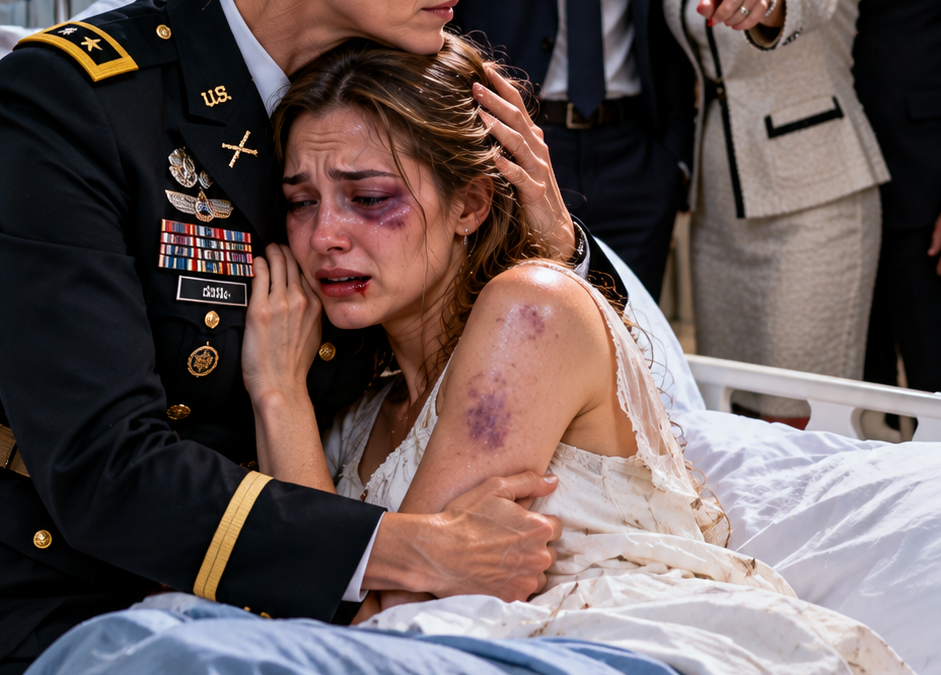
𝗙𝗨𝗟𝗟 𝗦𝗧𝗢𝗥𝗬
The nurse nodded.
“I’ll take care of it.”
For the first time since I had entered the hospital, Margaret Prescott stopped smiling.
She studied Emily for several seconds.
Then me.
“This misunderstanding can still be handled privately.”
I did not respond.
Margaret turned and walked away.
Brandon followed.
Ethan lingered.
He looked at his wife, and for one strange moment his expression changed. The polished irritation disappeared. What remained was something I could not immediately name.
Regret.
Fear.
Shame.
“Emily,” he said quietly.
She looked toward the window.
He waited.
When she did not answer, he left.
The door closed behind him.
Emily exhaled so slowly that it sounded as if she had been holding her breath for years.
I pulled a chair beside her bed.
“You don’t have to explain everything tonight.”
Her good eye filled with tears.
“I should have told you sooner.”
“No.”
“I should have.”
“No,” I repeated. “You tell me what you’re ready to tell me when you’re ready to tell it.”
She stared at the blanket.
“You’re not angry?”
“At you?”
She nodded.
I leaned forward.
“Emily, look at me.”
She did.
“I am many things right now. Angry at you is not one of them.”
Her face crumpled.
The first tear slipped down her cheek.
Then another.
I took her hand.
For several minutes, neither of us spoke.
Outside the room, carts rolled along the polished floor. A machine chimed somewhere down the hall. The ordinary life of the hospital continued around us with almost comforting indifference.
Finally, Emily whispered, “I kept thinking I could fix it.”
“What?”
“My marriage. Them. Everything.”
She gave a small, embarrassed laugh.
“I know how stupid that sounds.”
“It doesn’t.”
“It does. I kept thinking if I was patient enough, polite enough, grateful enough…”
She stopped.
“Ethan wasn’t always like this.”
I watched her carefully.
“Tell me about that.”
She looked surprised.
Maybe she had expected questions about the guest house. About her injuries. About what had happened that afternoon.
But those questions could wait.
I needed to understand the road that had brought her here.
Emily stared toward the darkening window.
“When I first met Ethan, he was kind.”
I remembered.
Three years earlier, Ethan Prescott had arrived at my house carrying a bottle of wine and flowers for Emily. He had been nervous around me. Painfully so.
At dinner, he dropped his fork when I asked what he did for a living. Emily laughed until tears came to her eyes. Ethan laughed too.
Later, while Emily was upstairs, he helped me clear the table.
“She talks about you constantly,” he said.
“That sounds dangerous.”
He grinned.
“She says you’re impossible to impress.”
“She’s exaggerating.”
“She says that too.”
I had liked him.
That memory hurt more than I expected.
“What changed?” I asked.
Emily rubbed her thumb over my knuckles.
“I don’t know if one thing changed.”
She thought for a moment.
“When his father died, maybe.”
I remembered the funeral.
Charles Prescott had built Prescott Holdings from a regional construction company into a network of development firms, real estate partnerships, and charitable foundations. His obituary had filled half a page.
After his death, Margaret became chairwoman of the family foundation, Brandon took over much of the business, and Ethan—who had always seemed uncomfortable with the family company—was pulled deeper into it.
“Ethan started working for Brandon,” Emily continued. “At first he hated it.”
“Why?”
“He said Brandon treated every conversation like a negotiation.”
That sounded believable.
“And Margaret?”
Emily hesitated.
“She thought I was good for Ethan until I started disagreeing with her.”
“About what?”
“Little things.”
She almost smiled.
“Where we spent Christmas. Which apartment we bought. Whether Ethan should go back to school.”
“What did Ethan want?”
“To study architecture.”
I blinked.
Ethan worked in finance.
“He never mentioned that.”
“He stopped mentioning it.”
That sentence stayed with me.
Emily looked down again.
“His mother said architecture was a hobby, not a Prescott career.”
“And Ethan listened.”
“Yes.”
“Then what?”
“Then I became the problem.”
There it was.
Not a single dramatic moment.
A slow rearranging of roles.
Emily continued.
“At first it was jokes. Margaret would say I was too independent. Brandon said I had opinions about everything. Ethan laughed.”
Her mouth tightened.
“Then family dinners became meetings about me.”
“What does that mean?”
“They would discuss what I should wear to charity events. Which interviews I should accept. What I should post online. Whether my work at the literacy foundation reflected the family properly.”
Emily had worked for years with a small Charlotte nonprofit supporting adult literacy programs.
She loved it.
“What did they want you to do instead?”
“Join the Prescott Foundation full time.”
“And you said no.”
She nodded.
“That was when everything really changed.”
I thought about Margaret’s words.
Our family has friends in the courts, the media, and state government.
At first, I had heard them as arrogance.
Now they sounded like something else.
A family accustomed to controlling its image.
“Did Ethan support you?”
“At first.”
“And later?”
Emily closed her eyes.
“He asked me why I was making everything so difficult.”
I sat back.
Outside the room, evening had become night. The lights of Charlotte shimmered beyond the window.
“Mom?”
“Yes?”
“I don’t want you to destroy them.”
The words surprised me.
I frowned.
“Why would you think I would?”
A faint smile touched her face.
“Because I know you.”
Despite everything, I almost smiled too.
Emily squeezed my hand.
“I know what your face looks like when you’re planning something.”
“I’m planning to get you home safely.”
“That’s all?”
“That’s enough for tonight.”
She studied me.
“Promise?”
I considered the question.
“I promise I won’t make decisions for you.”
Her expression changed.
That was apparently not the answer she expected.
“But I will help you make your own.”
She nodded.
That seemed to matter.
A doctor entered shortly afterward and discussed Emily’s discharge instructions. Her injuries required rest and follow-up, but she could leave later that evening.
The doctor spoke gently.
A hospital advocate also came in.
Her name was Denise Carter, a woman in her fifties with silver-threaded hair and a voice that carried none of the hurried efficiency of the emergency department.
She asked Emily whether she felt safe returning home.
Emily looked at me.
“No.”
Denise nodded as if Emily had simply answered whether she preferred tea or coffee.
“All right.”
That calmness seemed to steady her.
“There are several options,” Denise said. “You don’t need to choose anything permanently tonight.”
Emily exhaled.
“Can I stay with my mother?”
“Of course.”
Denise asked a few more questions.
She did not pressure.
She did not dramatize.
She simply explained choices.
I liked her immediately.
Before leaving, she placed a card on the bedside table.
“If you remember something tomorrow that you didn’t remember tonight, call me. If you change your mind about something, call me. You’re allowed to make decisions in stages.”
Emily stared at the card after she left.
“Decisions in stages,” she murmured.
I understood why she repeated it.
For months—perhaps longer—Emily had lived in a world where every choice seemed to carry enormous consequences.
Stay or leave.
Agree or fight.
Speak or remain silent.
But real life rarely moved in clean, dramatic decisions.
Sometimes courage was simply choosing the next hour.
We left the hospital shortly before eleven.
I had called my executive officer and told him I would not be returning to Fort Liberty that night. I offered no details.
He asked none.
“Take whatever time you need, ma’am.”
That was one mercy.
Emily wore hospital scrubs beneath my spare coat. She walked slowly beside me through the parking garage. When we reached my car, she stopped.
“Mom.”
I turned.
“I need something from the house.”
“Tomorrow.”
“It can’t wait.”
I studied her face.
“What?”
“My laptop.”
“Why?”
She hesitated.
“I have documents.”
“What kind of documents?”
“I’m not sure.”
That answer told me more than she realized.
“Are they important?”
“I think they might be.”
“Then we’ll handle it carefully.”
“I know where it is.”
“Not tonight.”
“Mom—”
“Emily.”
I softened my voice.
“You spent today frightened and hurt. You are not walking back into that house tonight for a computer.”
She looked away.
“I can’t leave it there.”
“Then we’ll find another way.”
She stared at me for a long moment.
Then she nodded.
On the drive to my townhouse, Emily fell asleep. At a red light, I glanced toward her.
Her face looked younger in sleep.
Not peaceful.
Just exhausted.
I thought about every conversation we had shared over the previous year.
How many clues had I missed?
The cancelled Thanksgiving visit.
The sudden vacation Ethan had supposedly planned.
Emily leaving the literacy foundation.
Her explanation had been simple.
“I need time to focus on my marriage.”
At the time, I had respected her privacy.
Now I wondered whether privacy had become isolation.
The thought made my hands tighten around the steering wheel.
But I reminded myself of the promise I had made.
I would not replace one controlling family with another controlling parent.
That would be an easier mistake than most people realized.
Love could become command if you were not careful.
Especially for someone like me.
Someone accustomed to giving orders.
When we reached my house, Emily stood in the entryway for several seconds. She looked around at the framed photographs, the worn wooden staircase, the old umbrella stand she had mocked since high school.
Then she began crying.
Quietly.
I did not ask why.
I simply held her.
Eventually she whispered, “It smells the same.”
I smiled against her hair.
“That is probably because I still refuse to buy new furniture.”
“You still have that terrible couch?”
“It builds character.”
She laughed.
A small sound.
But it was the first real laugh I had heard from her all evening.
I gave her my bedroom and took the guest room.
The next morning, I found her standing in the kitchen wearing one of my old Army physical-training shirts and making coffee.
“You’re supposed to be resting.”
“I am resting.”
“You’re standing.”
“Very slowly.”
I took the coffee pot from her.
She rolled her eyes.
There she was.
For half a second, I saw my daughter again.
Not someone’s wife.
Not a Prescott.
Just Emily.
We ate toast at the kitchen table. Morning light stretched across the floor. After several minutes, she said, “There’s someone I need to call.”
“Who?”
“Claire.”
I recognized the name.
“Claire Dalton?”
Emily nodded.
Claire had been Emily’s closest friend in college and her maid of honor.
I had not heard Emily mention her in nearly a year.
“I thought you two had a falling out.”
“We did.”
“What happened?”
Emily looked uncomfortable.
“Ethan said she was interfering.”
“That isn’t what I asked.”
She gave me a look.
I waited.
Finally she sighed.
“Claire told me she thought the Prescotts were controlling me.”
“And?”
“I defended them.”
“Understandable.”
“I said terrible things to her.”
“Also understandable.”
“No, Mom.”
She stared at her coffee.
“She was trying to help me.”
“You didn’t know that then.”
“I should have.”
That should again.
I was beginning to dislike the word.
Emily reached for my phone because hers was still missing. She knew Claire’s number by memory. She hesitated before pressing call.
“Want me to leave?”
“No.”
The phone rang four times.
Then someone answered.
“Hello?”
Emily closed her eyes.
“Claire?”
Silence.
Then—
“Emily?”
Her voice cracked.
Emily covered her mouth.
“Yes.”
“Oh my God.”
Neither woman spoke for several seconds.
Finally Claire asked, “Are you okay?”
Emily’s eyes filled.
“No.”
Another silence.
Then Claire said the simplest possible thing.
“Where are you?”
An hour later, she arrived carrying groceries, a phone charger, two sweatshirts, and a paper bag containing blueberry muffins.
Claire Dalton had always been practical.
She walked into the kitchen, saw Emily, dropped everything on the counter, and stopped.
Emily looked terrified.
“I’m sorry.”
Claire crossed the room and hugged her.
That was all.
No speech.
No accusation.
No I told you so.
Just a hug.
I turned away and started unpacking groceries.
Some moments belonged to daughters and friends, not mothers.
Later, the three of us sat around the table.
Claire looked at Emily.
“Do you still have it?”
Emily nodded.
“What?” I asked.
They both looked at me.
Emily exhaled.
“My laptop isn’t the important thing.”
“Then what is?”
“The drive.”
“What drive?”
“A flash drive.”
Claire leaned forward.
“About eight months ago, Emily started noticing strange payments through the Prescott Foundation.”
I looked at my daughter.
“You never told me this.”
“I wasn’t sure what they were.”
“What kind of payments?”
Emily hesitated.
“Consulting contracts.”
Claire continued.
“Some went to companies that didn’t seem to have employees.”
I sat very still.
“Shell companies?”
“I don’t know,” Emily said quickly. “That’s exactly why I didn’t want to accuse anyone.”
“What did you do?”
“I asked Ethan.”
My eyes narrowed.
“What did he say?”
“He told me I didn’t understand how foundations worked.”
“And Brandon?”
“I never asked Brandon.”
“Margaret?”
“No.”
Claire reached for a muffin but did not eat it.
“Emily copied the records.”
“Why?”
“Because they started disappearing.”
That got my attention.
Emily folded her hands.
“I checked the system one afternoon and several transactions were gone. I thought maybe I was mistaken, so I started downloading monthly reports.”
“Onto the flash drive.”
“Yes.”
“Where is it?”
She looked embarrassed.
“In the sewing box.”
I blinked.
“What sewing box?”
“The blue one in my dressing room.”
“You sew?”
“No.”
Claire smiled faintly.
“That’s why she used it.”
Despite the situation, I almost laughed.
“Who knows about it?”
“No one.”
Claire raised an eyebrow.
“Except me.”
“And now me.”
“Yes.”
I leaned back.
The picture becoming clear was not necessarily sinister.
There could be explanations for the payments.
Administrative errors.
Private vendors.
Accounting structures Emily had not understood.
But if records had actually disappeared after she asked questions, that was different.
“Did Ethan know you copied them?”
Emily shook her head.
“I don’t think so.”
“What does this have to do with yesterday?”
“I don’t know.”
“That’s important, Emily.”
“I know.”
She looked frustrated.
“I’m not saying the two things are connected. But yesterday started because Margaret asked me to sign something.”
“What?”
“A statement.”
“What kind of statement?”
“She wanted me to confirm that I had never worked with the foundation’s financial records.”
Claire and I exchanged a glance.
“Why?”
“She said there was an audit.”
“Government?”
“I don’t know.”
“Internal?”
“I don’t know.”
“What did the statement say exactly?”
“I only read the first page.”
Emily closed her eyes, remembering.
“It said I had no knowledge of financial reporting, contractor selection, or vendor approvals.”
“But you did.”
“Yes.”
“So you refused.”
“Yes.”
She looked down.
“That’s when everything went wrong.”
I did not ask for details.
I did not need them at that moment.
Instead, I asked, “Why would Margaret think you might contradict their records?”
Emily’s expression turned thoughtful.
“I don’t know.”
Claire answered quietly.
“Maybe someone else already did.”
The kitchen went silent.
That possibility sat between us.
Someone inside the Prescott organization might have raised questions.
An employee.
An accountant.
A board member.
Someone who knew Emily had seen the records.
My instinct was to gather every fact immediately.
Call investigators.
Call attorneys.
Secure documents.
Establish timelines.
But this was not an operation.
It was my daughter’s life.
“Before anyone touches that drive,” I said, “we speak with an attorney.”
Emily looked relieved.
“You know someone?”
“I know several people who know someone.”
Claire smiled.
“That sounds extremely colonel-ish.”
“Occupational hazard.”
By noon, I had been referred to Rebecca Shaw, a Charlotte attorney who specialized in corporate compliance and family matters involving closely held businesses.
She agreed to meet us that afternoon.
Her office was above a bookstore in an old brick building near Fourth Ward.
Nothing about it felt intimidating.
That seemed intentional.
Rebecca herself was in her early sixties, with close-cropped gray hair and round glasses. She listened more than she spoke.
Emily told her about the foundation records.
Then about the statement Margaret had asked her to sign.
Rebecca took notes.
Finally she asked, “Do you want to file any legal complaint today?”
Emily looked at me.
I said nothing.
She turned back.
“I don’t know.”
“That’s acceptable.”
Rebecca closed her notebook.
“You are allowed not to know.”
Emily exhaled.
It was the second time someone had given her permission to move slowly.
Rebecca continued.
“What we can do today is preserve your options.”
“What does that mean?”
“We document what you remember. We identify what property belongs to you. We arrange a safe method for retrieving your belongings. We preserve relevant records without altering them.”
Emily nodded.
“And the drive?”
“Do not modify anything on it.”
“Can you look at it?”
“If you bring it to me.”
“What if someone gets there first?”
Rebecca considered that.
“Does the house have security?”
Emily gave a humorless laugh.
“More than some banks.”
“Who controls it?”
“The Prescotts.”
“Then I would not recommend entering without arrangements.”
I said, “Could a neutral third party retrieve her property?”
Rebecca nodded.
“That is one option.”
Emily frowned.
“But what if the sewing box disappears?”
Rebecca looked at her.
“Then its disappearance becomes information too.”
That sentence stayed with me.
People often thought evidence was only what you found.
Sometimes evidence was what someone went out of their way to remove.
Over the next twenty-four hours, something unexpected happened.
Nothing.
No threatening calls.
No aggressive visits.
No dramatic messages.
The Prescotts were silent.
Almost completely.
Ethan sent one text to the temporary phone Claire had bought Emily.
I’m glad you’re somewhere safe. I’m sorry. I’ll respect whatever space you need.
Emily read it three times.
Then set the phone down.
“What do you think?” I asked.
“I don’t know.”
“What do you feel?”
“That’s worse.”
She walked to the window.
“I want him to be the man I married.”
I did not answer.
She turned.
“Does that make me weak?”
“No.”
“What if I still love him?”
“Love does not automatically answer every other question.”
She looked at me.
I continued.
“You can love someone and still need distance. You can remember their good qualities and still face their bad choices.”
Her eyes filled.
“You sound like you’ve thought about this before.”
I smiled sadly.
“I was married to your father.”
That startled a laugh out of her.
My husband, Daniel, had died eleven years earlier after a long illness. He had been stubborn, funny, disorganized, loyal, impossible, and kind.
Our marriage had contained arguments that lasted three days and friendships that lasted thirty years.
Love had never been simple.
Nothing worthwhile was.
That evening, Claire stayed for dinner.
We cooked pasta.
Emily insisted on chopping tomatoes even though both Claire and I kept telling her to sit down.
At one point she looked around the kitchen.
“You two are hovering.”
Claire denied it.
I denied it.
Emily pointed a wooden spoon at us.
“You are absolutely hovering.”
We stopped.
Mostly.
After dinner, Claire left.
I was washing dishes when Emily said, “There’s something else.”
I turned off the faucet.
She held Ethan’s message in her hand.
“He gave me something before his father died.”
“What?”
“A key.”
“To what?”
“I don’t know.”
I stared at her.
“You’ve had a key for years and never asked?”
“I asked. He said it belonged to an old storage cabinet at the lake house.”
“Did you believe him?”
“At the time.”
“And now?”
She shook her head.
“Why?”
“Because Margaret asked about it.”
“When?”
“Three weeks ago.”
“What did she say?”
Emily’s brow furrowed.
“She asked whether Ethan’s father had ever given Ethan anything before he died. Papers. Keys. Letters.”
“And?”
“I said no.”
“Why?”
“I don’t know.”
She looked guilty.
“It just felt strange.”
“Where is the key now?”
“In my jewelry case.”
“At the house?”
“Yes.”
Of course it was.
The next morning, Rebecca called.
She had arranged for Emily to retrieve personal belongings with a neutral civil escort and a representative from the Prescott household.
Margaret would not be present.
Neither would Brandon.
Ethan had volunteered to stay away as well.
Emily wanted me to come.
I did.
The Prescott home stood behind wrought-iron gates on a wooded property north of the city. I had attended Christmas there twice.
In daylight, the place looked different.
Less like a home.
More like a stage.
Everything was curated.
The hedges.
The stone fountain.
The spotless windows.
Inside, the house manager greeted us.
Her name was Rosa Alvarez.
She had worked for the family for almost fifteen years. I remembered her serving dinner at holidays.
This time she wore no uniform.
Just a navy cardigan and plain trousers.
“Mrs. Prescott,” she said softly to Emily.
“Rosa.”
For a moment, neither moved.
Then Rosa stepped forward and hugged her.
Emily froze.
Then hugged her back.
“I’m sorry,” Rosa whispered.
Emily pulled away.
“For what?”
Rosa looked toward the civil officer standing nearby.
Then toward me.
“I should have called someone sooner.”
Emily’s face changed.
“You knew?”
Rosa looked miserable.
“I knew you were unhappy.”
“That’s not the same thing.”
“No.”
She lowered her eyes.
“But I knew enough to ask questions.”
“What happened?”
Rosa shook her head.
“Not here.”
Before Emily could respond, Rosa took a folded piece of paper from her pocket.
“I found this in Mr. Charles’s study last year.”
Emily stared at it.
“Why are you giving it to me?”
“Because it has your name.”
The civil officer politely reminded us that we were there to collect Emily’s belongings, not search the house.
Rosa nodded.
The paper remained in her hand.
“Then later.”
Emily and I went upstairs.
Her dressing room looked untouched.
The blue sewing box sat on the top shelf.
Emily reached for it.
Opened it.
Then stopped.
The flash drive was gone.
She turned toward me.
“I put it right here.”
I looked inside.
Spools of thread.
Buttons.
Scissors.
No drive.
Emily’s breathing quickened.
“Someone found it.”
“Maybe.”
“No. I know where I left it.”
I took her hand.
“Remember what Rebecca said.”
Emily nodded slowly.
Its disappearance was information.
We continued packing.
Clothes.
Photographs.
A few books.
Her passport.
Then her jewelry case.
She opened the bottom drawer.
The key was still there.
It was small.
Brass.
Attached to a faded leather tag stamped with four characters:
C-17.
Emily stared at it.
“The lake house doesn’t have numbered cabinets.”
“You’re sure?”
“Yes.”
I took a photograph of the key but did not touch it.
We placed the case in her bag.
As we left, Rosa met us near the front door.
She glanced at the officer.
Then handed Emily the folded paper.
“It belongs to you.”
Outside, once we were seated in my car, Emily unfolded it.
The handwriting was shaky.
Old-fashioned.
Charles Prescott’s.
I recognized it from Christmas cards.
Emily read silently.
Then handed it to me.
Victoria,
If Emily ever sees this, please tell her I was grateful she tried to remind Ethan who he was before all of us began deciding for him.
There are things my family believes must remain private.
Some of them should.
Some of them should not.
If Ethan gives Emily the brass key, tell her it was not meant for the lake house.
And tell her not to assume the person protecting the family is the same person protecting the truth.
—Charles
I read the final sentence twice.
Emily whispered, “Why did he write this to you?”
“I don’t know.”
“You never saw it?”
“Never.”
She looked back toward the enormous Prescott house behind the gates.
“What does C-17 mean?”
I folded the letter carefully.
“That is what we find out next.”
Rebecca identified the key less than two hours later.
Not by magic.
By paperwork.
One of Charles Prescott’s old estate records referenced a private document-storage company outside Charlotte.
Carolina Archive & Trust.
Individual storage boxes were identified by letter and number.
C-17 existed.
And according to the estate inventory, it had never been opened after Charles Prescott’s death.
The listed authorized users were Charles Prescott and Ethan Prescott.
Emily sat motionless in Rebecca’s office.
“So Ethan knew.”
Rebecca adjusted her glasses.
“Possibly.”
“Possibly?”
“The authorization only means his name was on the account.”
Emily looked at me.
“He gave me the key.”
“Yes.”
“Before his father died.”
“Yes.”
Rebecca folded her hands.
“There is another complication.”
I had learned to dislike sentences beginning that way.
“What?”
She turned her computer screen toward us.
“The account was updated six months after Charles Prescott died.”
“Updated how?”
“An access request was submitted.”
Emily leaned forward.
“By Ethan?”
“No.”
“Margaret?”
Rebecca shook her head.
Then she pointed at the name.
Emily read it aloud.
“Rosa Alvarez.”
The house manager.
The woman who had just handed us Charles Prescott’s letter.
I stared at the screen.
“Was she allowed access?”
“No.”
“Then why did she request it?”
“That,” Rebecca said, “I think you should ask her.”
Emily’s temporary phone rang.
She looked down.
Her face went pale.
“Who is it?” I asked.
She turned the screen toward me.
Rosa.
Emily answered.
“Hello?”
Rosa’s voice was low but clear enough for both Rebecca and me to hear.
“Emily, I need to tell you something before someone else does.”
Emily looked at me.
“What?”
A pause.
Then Rosa said, “Your husband did know about the storage box.”
Emily closed her eyes.
But Rosa was not finished.
“And the reason he gave you the key wasn’t what his mother thinks.”
Emily sat forward.
“What do you mean?”
Another pause.
“When Charles got sick,” Rosa said, “Ethan asked me to help him hide something from Margaret.”
The room became very quiet.
Emily gripped the phone.
“What did he hide?”
Rosa took a breath.
“I don’t know everything that is inside box C-17.”
Then she said the sentence that changed the shape of every question we had been asking.
“But I know the box was never meant to expose the Prescott family.”
“What was it meant to do?” Emily whispered.
Rosa’s answer was softer this time.
“It was meant to protect Ethan from them.”
For a moment, nobody spoke.
Emily’s face was white.
I had seen soldiers react that way when the ground shifted beneath what they believed to be true. Not fear exactly. Not grief exactly. The disorientation of discovering that a person you had placed firmly in one category had always been standing somewhere else.
Rebecca leaned toward the phone.
“Rosa, this is Rebecca Shaw, Emily’s attorney. Are you somewhere safe to talk?”
“Yes.”
“Are you alone?”
“Yes.”
“Do you have any documents in your possession?”
A pause.
“Copies.”
“What kind?”
“Letters. Some old financial records. A note from Mr. Charles.”
Emily’s fingers tightened around the phone.
“Why didn’t you give them to Ethan?”
“Because he told me not to.”
Emily closed her eyes again.
Rosa continued, “He said if his mother knew what Charles left him, she would force him to use it before he understood it. He was frightened. He was angry. He was grieving. He trusted no one.”
“What about me?” Emily asked.
Rosa’s voice broke slightly.
“He trusted you most.”
Emily’s good eye filled with tears.
“Then why didn’t he tell me?”
“I think he planned to. Then Brandon pulled him deeper into the business. Margaret started watching everything. After that, he changed.”
No one interrupted.
“He became quieter,” Rosa said. “Harder. Not like Brandon exactly. But more like someone trying to survive Brandon by imitating him.”
That sentence landed heavily.
I thought of Emily saying Ethan had been kind.
I thought of Margaret saying her daughter-in-law had fallen.
I thought of Ethan standing in the hospital doorway, his face changing when Emily asked him to leave.
Regret.
Fear.
Shame.
Rosa said, “The night before Charles died, Ethan gave Emily the key. He told me he did it because if anything happened to him, he wanted the safest person he knew to have it.”
Emily covered her mouth.
Rebecca spoke gently.
“Rosa, why did you request access six months later?”
“Because Ethan asked me to see whether the account was still active.”
“Did you open the box?”
“No. I was denied.”
“Why?”
“I wasn’t authorized.”
“What happened after that?”
“Margaret found out I had asked.”
“And?”
Rosa’s voice became quieter.
“She warned me never to involve myself in Prescott family matters again.”
I looked at Emily.
She was staring at the table as if the wood grain might explain her marriage.
Rebecca said, “Rosa, I want you to stop discussing details by phone. Can you come to my office?”
“Yes.”
“When?”
“I’m outside.”
We all turned toward the window.
Down on the street, a navy sedan sat at the curb.
Rosa had driven there before calling.
I liked her more by the second.
When she entered Rebecca’s office, she carried a canvas tote bag in both hands. She looked smaller away from the Prescott house, as if the building itself had lent her a kind of borrowed authority. Without it, she was simply a woman who had worked too long for a family that trained everyone around them to confuse employment with obedience.
She placed the tote bag on Rebecca’s conference table.
“I copied what I could,” she said. “I didn’t know if I should. But after yesterday, I couldn’t keep it anymore.”
Emily’s voice shook.
“Did you know what they did to me?”
Rosa looked directly at her.
“I knew Margaret had you brought to the guest house after the argument.”
“Brought?”
Rosa swallowed.
“Brandon told staff you were ill.”
“And you believed him?”
“No.”
The honest answer cut deeper than a defensive one would have.
Rosa’s eyes filled.
“But I did not know what to do. I was afraid of losing my job. My health insurance. My apartment on the property. My sister’s medical bills are paid through my wages.”
Emily looked away.
I did not tell her that Rosa’s fear was understandable.
This was not my forgiveness to grant.
Rebecca opened the tote and removed several folders.
Charles Prescott’s handwriting appeared on the first envelope.
For Ethan.
Emily stopped breathing for a second.
Rebecca glanced at her.
“Do you want to open it now?”
Emily shook her head.
Then nodded.
Then shook her head again.
“I don’t know.”
“That’s acceptable,” Rebecca said.
She set it aside.
The next folder contained copies of foundation payments.
Some matched what Emily had described.
Consulting contracts to entities with vague names.
Strategic Horizons Group.
Civic Development Solutions.
Marion Advisory Partners.
Each had invoices for community outreach, policy research, donor analysis, or event development.
Rebecca examined them with a careful stillness.
“These could be legitimate,” she said.
“But?” I asked.
“But the descriptions are broad enough to hide almost anything.”
Rosa removed another envelope.
“These are from Mr. Charles’s private study.”
Inside were letters.
Not all from Charles.
Some from an accountant named Peter Lang.
Some from a former foundation board member.
Several mentioned concerns about Brandon’s use of foundation vendors. One referenced “political positioning through charitable channels.” Another mentioned Margaret’s insistence that “family reputation requires private handling.”
Rebecca looked up sharply at that phrase.
“Private handling of what?”
Rosa said, “There were allegations.”
“Against whom?”
“Brandon.”
Emily looked at me.
My body went still.
“What kind of allegations?” I asked.
Rosa hesitated.
Rebecca’s voice became firm.
“Rosa.”
“Financial intimidation,” Rosa said. “Retaliation against employees. Payments to silence complaints. Mr. Charles found out before he died.”
Emily whispered, “Did Ethan know?”
Rosa looked at her.
“Some.”
That single word hurt her.
I saw it.
Some was not nothing.
Rebecca opened the envelope marked For Ethan but did not remove the letter.
“Emily, we need to decide whether to seek court authorization to open C-17 with counsel present.”
Emily stared at the folder.
“What if it makes everything worse?”
“It might,” Rebecca said.
That honesty mattered.
“What if it helps?”
“It might.”
Emily’s laugh was hollow.
“You attorneys are very comforting.”
“Not always,” Rebecca said. “But I try to be accurate.”
Emily looked at me.
I wanted to tell her what to do.
Every cell in my body wanted to take command.
Open the box.
Secure the records.
Bring down the people who hurt you.
But I had promised.
I would not replace one controlling family with another controlling mother.
So I said only, “Whatever is in that box, it has waited this long. You can take a breath before deciding.”
Emily nodded slowly.
Then she said, “I want to know.”
The next morning, Rebecca filed an emergency motion to preserve records connected to Prescott Foundation, Charles Prescott’s estate, and storage box C-17. By afternoon, a judge granted a limited order allowing the box to be opened in the presence of counsel and a neutral custodian.
Margaret Prescott’s attorney objected within the hour.
That told us we were moving in the right direction.
Three days later, we stood inside Carolina Archive & Trust, a quiet facility with climate-controlled corridors and cameras in every corner.
Emily held the brass key.
Her hands were steady.
Mine were not.
Not entirely.
Rebecca stood beside her. A neutral custodian unlocked the outer compartment. Emily unlocked the inner box.
C-17 opened with a soft metallic click.
Inside were three sealed folders, a small black notebook, a flash drive, and a letter.
The letter sat on top.
Ethan’s name was written across the front.
Not Emily’s.
Not Margaret’s.
Not Brandon’s.
Ethan.
Emily stared at it.
Rebecca asked, “Do you want me to read it first?”
“No,” Emily said. “I do.”
Her voice did not shake.
She opened the envelope.
Charles Prescott’s handwriting was uneven but clear.
Ethan,
If you are reading this, then I either failed to tell you everything before I died or you waited until the truth became more frightening than the lie.
That would be very much like you.
You were never weak. I want you to understand that first. You were gentle in a family that mistook gentleness for something to be corrected. I watched your mother and brother sharpen you into someone you did not want to become, and I allowed too much of it because I confused peace with stability.
That was my failure.
Brandon has used the foundation to move money through advisory contracts that do not withstand scrutiny. Margaret knows more than she admits and less than Brandon believes. The records in this box are incomplete, but they are enough to begin the right questions.
Do not use them for revenge.
Use them to get free.
And Ethan, if Emily has the key, it means you trusted the correct person.
Do not punish her for being braver than you.
Dad
Emily lowered the letter.
Her face had gone still.
I knew that look.
It was the expression of someone trying to grieve several versions of a person at once.
The husband who had failed her.
The frightened son his father had tried to protect.
The man who had given her the key.
The man who had stood in a hospital doorway and let his mother call her dramatic.
Rebecca removed the folders carefully.
The first contained internal foundation records.
The second contained correspondence between Charles and Peter Lang, the accountant.
The third contained documents involving Brandon’s private firms and payments routed through foundation vendors.
The black notebook was worse.
Not because it was dramatic.
Because it was careful.
Charles had written dates, names, amounts, meetings, and questions. He had marked some entries with an asterisk. Others with a question mark. Beside several was one word.
Ask Ethan.
Emily touched the page.
“He wanted Ethan to help him.”
Rebecca nodded.
“It appears so.”
“And Ethan didn’t?”
“We don’t know.”
The flash drive remained sealed for forensic review.
That evening, Ethan called.
Emily watched the phone ring.
Once.
Twice.
Three times.
Then she answered.
“Hello?”
His voice was rough.
“You opened it.”
“How do you know?”
“My mother called Brandon. Brandon called me.”
Emily closed her eyes.
I sat across from her at Rebecca’s conference table but said nothing.
“What do you want, Ethan?”
A long silence.
Then he said, “To tell you the truth before they do.”
Emily’s hand trembled slightly.
Rebecca reached over and tapped a pen against the legal pad.
Speaker.
Emily put the call on speaker.
Ethan inhaled.
“My father started investigating Brandon before he died. I knew some of it. Not all. Dad asked me to help pull vendor files. I did. Then he got sicker. Brandon found out someone had accessed records. He thought it was me.”
“Was it?”
“Yes.”
Emily flinched.
Ethan continued quickly.
“I panicked. Dad told me to keep the key away from Margaret. He said if I couldn’t handle it, I should give it to someone who would not bend under pressure.”
Emily looked at the table.
“So you gave it to me.”
“Yes.”
“Then why didn’t you tell me what it was?”
“Because I was a coward.”
The word hung in the room.
No excuse.
No polishing.
No mother to answer for him.
Just a man naming himself.
“I thought I could fix it quietly,” Ethan said. “Then Dad died. Brandon brought me into the finance office. Mom kept saying the family needed unity. I told myself I was protecting Dad’s legacy by not creating a scandal.”
Emily’s voice was soft.
“And me?”
He did not answer quickly.
That was good.
Fast answers were often rehearsed.
Finally he said, “At first, I thought you were safe because you were outside it.”
“I wasn’t.”
“I know that now.”
“No, Ethan. You knew before now.”
Silence.
Emily continued, her voice gathering strength.
“You knew when Margaret started asking me to change my work. You knew when Brandon made comments about my clothes and my friends. You knew when I left the literacy foundation because your family wouldn’t stop treating it like an embarrassment. You knew when your mother asked me to sign that statement.”
“Yes,” he whispered.
“And yesterday?”
His breath shook.
“I did not hit you.”
Rebecca wrote something down.
Emily closed her eyes.
“No. But you let them keep me there.”
Another silence.
This one longer.
“Yes,” Ethan said.
The honesty did not heal anything.
But it changed the room.
“Brandon grabbed you,” he said, his voice breaking. “Mom told me to stay out of it. She said you were hysterical. I froze.”
“You froze?”
“Yes.”
Emily laughed once.
The sound had no humor.
“I was locked in the guest house, Ethan.”
“I know.”
“I called my mother from a phone I stole from a gardener’s cart.”
“I know.”
“You came to the hospital and lied.”
“I know.”
“Stop saying you know.”
His voice cracked.
“I don’t know what else to say.”
“Tell the truth,” she said. “All of it.”
So he did.
Not all at once. Truth like that rarely arrives cleanly. But over the next hour, Ethan explained what Charles had found, what Ethan had known, what Brandon had pressured him to do, and how Margaret had controlled the family’s image with a velvet glove over an iron hand.
He admitted he had helped remove some financial files but claimed he had not destroyed them.
He admitted Brandon told him to get Emily to sign the statement.
He admitted Margaret had ordered staff to keep Emily in the guest house after the argument, saying she was “unstable.”
He admitted he had not stopped it.
That last admission mattered most.
When the call ended, Emily sat very still.
Rebecca said, “That call was recorded with consent on this end. We will handle it appropriately.”
Emily nodded.
Then she looked at me.
“I loved him.”
“I know.”
“I think part of me still does.”
“I know.”
“I don’t know what that means.”
“It means you’re human.”
She pressed both hands to her face.
I wanted to hold her.
I waited.
This time, she reached for me first.
The Prescott name did not collapse overnight.
Power rarely does.
It resists.
It hires attorneys.
It releases careful statements.
It accuses.
It delays.
It calls accountability a misunderstanding.
But records have a patience people lack.
The flash drive from C-17 contained copies of the same records Emily had found and more. Charles had preserved emails, invoices, internal notes, and summaries of conversations with Peter Lang. Rebecca coordinated with the appropriate authorities. The foundation’s board was forced to appoint outside counsel. Brandon resigned from two leadership positions within a month, publicly for “personal reasons,” privately because the pressure was no longer containable.
Margaret tried to claim Emily was unstable.
The hospital records contradicted that.
The advocate’s notes contradicted that.
Rosa’s statement contradicted that.
Ethan’s recorded admissions contradicted that.
And Emily, slowly, carefully, in stages, contradicted it most of all by refusing to disappear.
She filed for legal separation.
Then for divorce.
She filed a formal complaint about what happened at the Prescott property.
She gave statements about the statement Margaret had tried to force her to sign.
She turned over the records she could identify.
She did not become vengeful.
That surprised some people.
It did not surprise me.
Emily had always been stronger than people noticed because she did not confuse strength with volume.
Ethan cooperated.
Not heroically.
Not perfectly.
But enough to matter.
He provided access logs, emails, and details about Brandon’s pressure. His attorney negotiated carefully. He faced consequences for what he had done and failed to do. He lost his place in the family company. He lost the marriage he had not protected. He lost the illusion that being afraid made him innocent.
One afternoon, months later, Emily agreed to meet him in Rebecca’s office.
I waited downstairs in the bookstore.
That was one of the hardest things I had ever done.
When she came down, she looked tired but clear.
“He apologized,” she said.
“Did you believe him?”
“Yes.”
I waited.
“That doesn’t change my decision.”
I nodded.
“No, it doesn’t.”
“He said his father left the box because he wanted Ethan to become free.”
“And?”
Emily looked out the window at the passing traffic.
“I told him freedom that depends on someone else getting hurt isn’t freedom. It’s just another cage.”
I smiled.
A little.
Because that sounded like my daughter.
A year after the hospital, Emily returned to the literacy foundation.
Not as Mrs. Prescott.
As Emily Hart.
She reclaimed her maiden name quietly, without a press release or dramatic announcement. She moved into a small apartment with large windows and terrible plumbing. Claire helped paint the kitchen yellow. I assembled a bookshelf badly enough that Emily threatened to call someone competent.
She laughed more often.
Not constantly.
Not in the effortless way she had before.
But honestly.
That mattered more.
One evening, we sat on the balcony of her apartment eating takeout from cardboard containers. The skyline of Charlotte glittered in the distance.
“I used to think leaving would feel like winning,” she said.
“And?”
“It feels like recovering.”
“That’s probably more accurate.”
She looked at me.
“Were you disappointed that I didn’t fight harder sooner?”
The question hurt.
I set down my fork.
“Emily, listen to me carefully.”
She did.
“I am not disappointed in you for surviving the way you knew how to survive.”
Her eyes filled.
“I keep thinking about the guest house.”
“I know.”
“I keep thinking I should have run.”
“Maybe.”
She looked surprised.
I continued.
“Maybe you could have. Maybe you couldn’t have. Maybe there were moments when you had options and moments when you didn’t. But sitting here now, safe, judging the terrified version of yourself will not help her.”
A tear slipped down her cheek.
“What will?”
“Thanking her for getting you to the phone.”
She covered her mouth.
Then she cried.
I moved my chair beside hers.
This time, when I held her, she did not shake like a child during a thunderstorm.
She cried like a woman grieving what she had endured and what she had almost lost.
That was different.
That was healing.
The last time I saw Margaret Prescott was not in court.
It was outside a hearing room after she had given a statement through her attorney. She looked smaller without Brandon beside her. Still polished. Still expensive. But diminished.
She saw me before I saw her.
“Colonel Hart,” she said.
I stopped.
Her attorney looked nervous.
Good.
“Margaret.”
For a moment, neither of us spoke.
Then she said, “You took my son from me.”
I looked at her carefully.
There had been a time when that sentence might have ignited every protective instinct in me.
Now it only sounded sad.
“No,” I said. “You taught him that love meant obedience. He is learning otherwise.”
Her face hardened.
“You think you won.”
“No.”
That answer seemed to unsettle her.
I stepped closer.
“I think my daughter lived.”
Margaret’s mouth opened.
Closed.
For once, she had no polished reply.
I walked away.
Months later, the Prescott Foundation publicly announced a restructuring, new oversight policies, and the resignation of several board members. Brandon’s legal troubles continued longer than Emily cared to follow closely. Margaret retreated from public life behind the phrase “health and family priorities.”
People in Charlotte whispered.
Then moved on.
Communities always do.
But Emily did not build her recovery around their attention.
She built it around smaller, better things.
A new apartment.
Therapy on Thursdays.
Coffee with Claire.
Work she loved.
A phone she always kept charged.
A spare key at my house.
A life where decisions could happen in stages.
On the anniversary of the night she called me, Emily came over for dinner.
I made pasta badly.
She brought blueberry muffins because Claire had apparently turned them into a tradition.
After dinner, Emily stood in my hallway looking at an old photograph of herself at seven years old, missing two front teeth and wearing my Army cover crooked over one eye.
“I remember that day,” she said.
“You saluted the mailman.”
“He saluted back.”
“He was afraid not to.”
She laughed.
Then she grew quiet.
“Mom?”
“Yes?”
“Thank you for not taking over.”
That sentence hit me harder than I expected.
I had wanted to take over.
I still did sometimes.
I wanted to shield her from every consequence, every hard conversation, every night she woke remembering. But protection, I had learned, could become another kind of control if it left no room for the person being protected to choose.
“I promised,” I said.
“I know.”
She turned toward me.
“You kept it.”
For years, soldiers had thanked me for things I considered duty. This was different. This was my daughter telling me I had helped without replacing her voice with mine.
That mattered more than any medal I had ever worn.
Later that night, after she left, I stood alone in my kitchen and thought about the hospital.
Margaret’s diamond earrings.
Brandon’s smirk.
Ethan’s shame.
Emily’s fingers wrapped around my sleeve.
They had thought my silence meant intimidation.
It had not.
My silence had been discipline.
It had been assessment.
It had been the moment before choosing the right action instead of the fastest one.
The Prescotts had money, connections, and a name that opened doors.
But they had made one mistake they never understood.
They believed power was the ability to control what other people said.
Real power was different.
Real power was my daughter whispering no in a hospital room.
It was a nurse listening.
An advocate offering choices.
A friend arriving with muffins and no judgment.
An attorney preserving options.
A house manager finally telling the truth.
A frightened husband admitting cowardice.
A dead father leaving a key.
A mother keeping her promise not to turn love into command.
The night Emily called me, I thought I was going to war.
In some ways, I was.
But the battle was not only against the Prescotts.
It was against fear.
Against silence.
Against the temptation to make every decision for someone I loved because I could.
Emily did not need me to become her commander.
She needed me to become a place where the truth could stand without being shoved back into hiding.
So that is what I became.
And when she walked into my house a year later with muffins in her hand, her shoulders straight, her voice clear, and her own name returned to her, I finally understood something I had missed that first night.
They had not broken her.
They had cornered her.
There was a difference.
And my daughter had found the door.








