𝗣𝗔𝗥𝗧 𝟮 The HOA President Was Certain Twenty Years of Convenience Had Erased My Name From the Deed
𝗣𝗔𝗥𝗧 𝟮
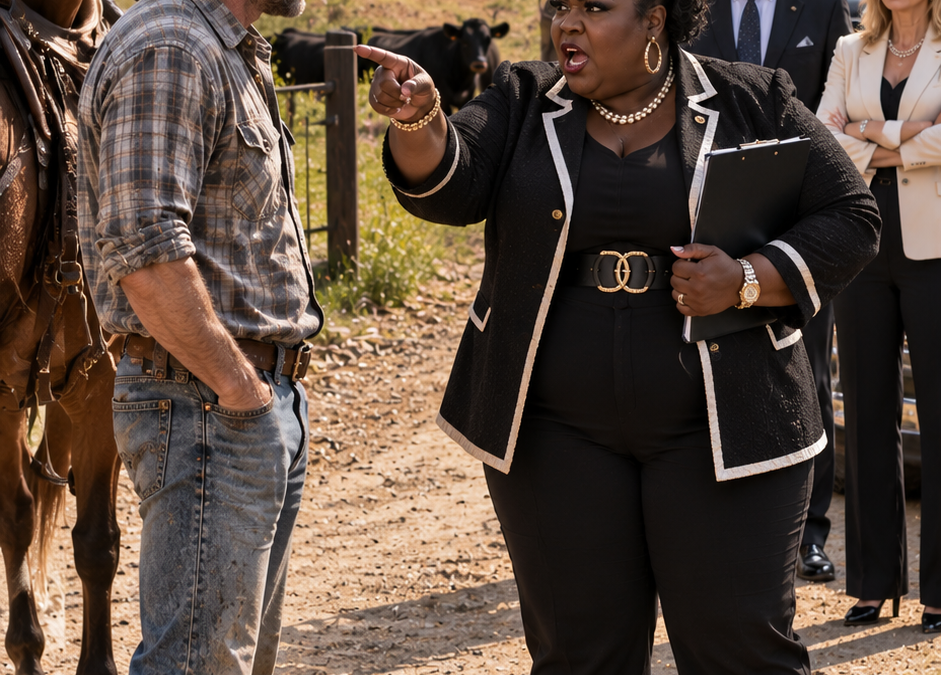
Flint shifted beneath me.
Vivian’s eyes moved toward his hooves.
“We’ve had complaints.”
“About what?”
“Horses.”
I waited.
She apparently expected me to understand.
“Horses doing what?”
“Leaving waste.”
“If Flint drops manure here, I clean it up.”
“That isn’t the entire issue.”
“What is?”
She looked beyond me toward the pasture.
“Image.”
I almost laughed.
But she was serious.
“Image?”
“People paid significant money for these homes. They have reasonable expectations about the surroundings.”
I looked down at my boots.
Dusty.
One toe scraped from repairing a wire fence that morning.
Then I looked at my land.
“You think I got two hundred eighty acres for free?”
“You know what I mean.”
“Yes.”
That irritated her more than disagreement would have.
Because I did know exactly what she meant.
Ashborne Ridge was polished.
My ranch was functional.
They had trimmed shrubs and architectural lighting.
I had cattle panels, stock trailers, and manure.
Vivian had decided one represented value and the other represented something the neighborhood should not have to see.
Flint moved his weight again.
I rubbed his neck.
Vivian watched me.
Her expression sharpened.
“We’ve received several complaints this week alone.”
“From whom?”
“I am not required to disclose residents.”
“So no names.”
“That is confidential.”
“Convenient.”
Her jaw tightened.
“Mr. Ror, this isn’t personal.”
“I’m riding a horse across land I own and you’re sitting in front of me telling me not to. Feels fairly personal.”
“You are deliberately oversimplifying this.”
“No. I think you’re making it complicated.”
I rode around her SUV and continued home.
I assumed that would be the end of it.
Two days later, I received a certified envelope from the Ashborne Ridge Homeowners Association.
Five thousand dollars.
That was the fine.
The violation was described as:
UNAUTHORIZED LIVESTOCK USE ON HOA ACCESS CORRIDOR.
I stood in my kitchen reading that sentence twice.
Then a third time.
Unauthorized livestock use.
On my ranch.
I picked up the phone and called Calvin Ross.
Calvin was a land attorney.
He had represented my father.
Before that, he had represented my grandfather in a water-line dispute.
He was somewhere in his late sixties by then, and he had perfected the legal art of remaining silent until people stopped talking long enough to hear themselves.
I explained everything.
He didn’t interrupt once.
When I finished, Calvin asked:
“Have they shown you anything proving they own the road?”
“No.”
“Recorded easement?”
“Not that I’ve seen.”
“Deed?”
“No.”
“Right-of-way agreement?”
“There was an old access arrangement from when Ashborne Ridge was built.”
“What kind?”
“I’d have to look.”
“That would be the first thing I’d look at.”
The HOA had already scheduled a hearing on my fine.
I decided to attend.
The meeting was held Tuesday evening in the Ashborne Ridge clubhouse.
Around thirty residents showed up.
I came straight from the barn.
Work shirt.
Jeans.
Boots.
I smelled faintly of hay and diesel.
Vivian wore a cream-colored suit.
She had photographs.
Of course she had photographs.
Flint walking along Ror Creek Road.
Hoofprints.
My pickup parked near the fence.
One image showed me leading Flint toward a gate.
Vivian displayed them as though she had documented an organized crime operation.
“What you’re seeing,” she told the room, “is repeated ranch activity within a residential access corridor.”
I almost admired the phrase.
Residential access corridor.
It sounded much more serious than dirt road across Cole’s ranch.
When she finished, I raised my hand.
Vivian looked annoyed.
“Yes?”
“Which parcel does Ror Creek Road belong to?”
“This isn’t a property-law seminar.”
A few people laughed.
Not many.
“I’m serious.”
“So am I.”
“Does Ashborne Ridge own the road?”
“The association has managed access for more than twenty years.”
“That isn’t what I asked.”
Her expression tightened.
“We have used and maintained community access continuously.”
“Do you own the road?”
She looked toward the board.
Then back at me.
“This community has relied on that access for decades.”
“Still not an answer.”
“Mr. Ror—”
“County parcel records either show your association owns it or they don’t.”
Vivian leaned forward.
“Perhaps to you this is just dirt and fence line. To these residents, their homes are substantial financial investments.”
“I understand investments.”
“Then you should understand why we cannot allow ranch activity to undermine the character of the community.”
“The ranch was here first.”
“Times change.”
“So do deeds?”
Her eyes narrowed.
“This is not the old West anymore.”
The room went quiet.
I looked toward the community manager.
Her name was Natalie Brooks.
She sat at a side table taking minutes.
“Natalie?”
She looked up.
“Yes?”
“Is that comment going into the minutes?”
Vivian answered for her.
“Record it word for word.”
I nodded.
“Thank you.”
I meant it.
The board upheld the five-thousand-dollar fine.
Then, apparently dissatisfied with merely being wrong once, they adopted an additional penalty.
Five hundred dollars for every future instance of horseback riding on the road.
Vivian looked directly at me.
“It is time you understood that this road no longer exists solely to serve you.”
I stood.
“You’re right about one thing.”
She smiled.
“What would that be?”
“It serves a lot of people.”
Then I left.
The next morning, I drove to Calvin’s office carrying the old deed folder from my father’s filing cabinet.
Calvin found the document in less than ten minutes.
CONDITIONAL ACCESS LICENSE.
Twenty years old almost to the day.
He spread it across his desk.
I remembered the agreement once I saw the signatures.
My father’s.
The original developer’s.
It had seemed unimportant for years because nobody had ever challenged it.
Calvin read.
Then looked at me.
“This is not an easement.”
“I know.”
“It’s not permanent.”
“I know.”
He tapped the page.
“Do you know when it expires?”
I leaned closer.
The date was only a few weeks away.
“That soon?”
“Apparently.”
Then Calvin turned the page.
“But that’s not even the interesting part.”
He ran his finger beneath a clause.
The license expressly protected the landowner’s continued use of the property.
Normal agricultural, equestrian, livestock, ranching, maintenance, and transportation activities could not be restricted or interfered with by the license holder.
I read it.
Then read it again.
I laughed.
“They fined me for the exact activity the agreement says they can’t restrict.”
“Yes.”
“Five thousand dollars.”
“Yes.”
“And another five hundred every time I do it.”
“Yes.”
I looked toward Calvin.
He wasn’t laughing.
“Can I close the road?”
“Eventually.”
“Why eventually?”
“Because the license is still active.”
“They’re violating it.”
“Yes.”
“So terminate it.”
Calvin leaned back.
“You could create a fight over early termination.”
“Or?”
“We let them show us what they intend to do.”
That was Calvin.
Never use a hammer when patience will give the other side enough time to build its own evidence.
He sent a letter.
Short.
Professional.
The road remained privately owned.
Any Ashborne Ridge access existed solely under the terms of a written conditional license.
The association had no authority to regulate ranch activity on my land.
The five-thousand-dollar fine had no legal basis and should be withdrawn.
We did not attach every relevant page.
We did not emphasize the expiration date.
We wanted to see whether anyone at Ashborne Ridge would bother reading their own files.
Vivian replied within an hour.
She rejected our “interpretation.”
Then she wrote something even more useful.
Twenty years of continuous community use, she claimed, established Ashborne Ridge’s right of access regardless of my objections.
Calvin read the email twice.
“She doesn’t understand the problem she’s creating.”
“What problem?”
“She is asserting a right independent of the license while simultaneously refusing to acknowledge the license that makes the use permissive.”
“Meaning?”
“Meaning if they believe they don’t need the license, they may decide not to renew it.”
I looked at the expiration date.
“And after that?”
“They ask permission like anyone else.”
Vivian escalated instead.
I rode Flint along the road.
Five-hundred-dollar fine.
I did it again the next day.
Another five hundred.
Two days later, another.
The total climbed toward seven thousand dollars.
I paid none of it.
Then the HOA installed a sign.
NO HORSES
HOA ACCESS ROAD
They planted it on my land.
That was the moment I stopped finding the situation irritating and started finding it useful.
The following morning, I pulled the sign out.
Carried it into my barn.
Leaned it against the wall.
Vivian called before lunch.
“You removed association property.”
“You installed association property on my ranch.”
“The sign regulates the access road.”
“The sign can regulate whatever it wants from inside your clubhouse.”
“This is exactly the problem with you.”
“What is?”
“You constantly need to remind everyone that you own something.”
I looked out the window at two hundred eighty acres.
“Well, right now we’re discussing land I actually own.”
“You act as though ownership makes you more important than an entire neighborhood.”
“No. Ownership just determines who owns something.”
“You should be grateful Ashborne Ridge has increased property values throughout this area.”
That one interested me.
“How much do you think my road contributed to the value of your neighborhood?”
Silence.
“That isn’t relevant.”
“I think it may be more relevant than you’d like.”
While Vivian was issuing fines, another board member started asking questions.
Graeme Talbot.
Retired logistics executive.
Quiet man.
Careful.
He asked Natalie Brooks whether there was a recorded permanent easement for Ror Creek Road.
Natalie searched the association files.
She couldn’t find one.
What she found instead were references to an older agreement.
The conditional license.
Vivian told her not to let me drag the association into “paperwork games.”
Natalie remembered those words.
They became important later.
Then Calvin called me.
“They sent another letter.”
“What now?”
“They say they will not renew or negotiate any alleged license.”
I stopped walking.
“Alleged?”
“That’s the exact word.”
“How long until it expires?”
“Six days.”
I looked at the calendar on the wall.
Six.
“You’re sure?”
“I’m holding the letter.”
“So they’re refusing to renew the document that gives them permission to use my road.”
“That is what they have done.”
“And they put it in writing.”
“Yes.”
I smiled.
“What do I do?”
“Nothing.”
Nothing turned out to be very difficult.
For six days, Ashborne Ridge used Ror Creek Road normally.
Cars.
Contractors.
Deliveries.
Maintenance carts.
Vivian apparently interpreted the lack of reaction as surrender.
She even put an article in the association newsletter.
According to her version, Ashborne Ridge had prevailed in a dispute with a neighboring rancher and had successfully protected resident safety from livestock traffic.
I forwarded it to Calvin.
He didn’t reply.
I imagined him reading it with that tiny expression he got whenever opposing counsel said too much.
The final day arrived.
No renewal request.
Five in the afternoon.
Nothing.
Nine.
Nothing.
Midnight.
The license expired.
Twenty years of access ended as quietly as a calendar date changing.
Before dawn, I got up.
Two ranch hands met me near the eastern boundary.
We installed a steel gate precisely on the surveyed property line.
No trenches.
No concrete barriers across public ground.
No traps.
No obstruction of anyone already on the road.
Just a gate.
Mine.
On my land.
Beside it, I installed a sign.
Ror Creek Ranch
Private Property
No Through Traffic
Below that was a second notice.
Emergency and utility access maintained at all times.
That part mattered.
This was never about endangering people.
Fire.
Ambulance.
Police.
Utility emergencies.
They could pass.
What ended was convenience.
The free daily shortcut.
When we finished, the sun was barely above the horizon.
I stood there holding coffee.
The steel bars caught the early light.
For twenty years, that road had felt almost public because so many people used it.
Now it looked exactly like what it had always legally been.
A road across a ranch.
At 6:17, the first car arrived.
Braked.
Stopped.
The driver stared.
He got out.
Walked toward the gate.
Then another car arrived.
Then another.
Within twenty minutes, there was a line.
People were calling each other.
Drivers turned around.
My phone rang before seven.
Vivian.
I answered.
“Morning.”
“Open the gate.”
“No.”
“You cannot block an HOA road.”
“I didn’t.”
“You have literally locked the road.”
“My road.”
“This is Ashborne Ridge access.”
“Yesterday it was.”
“You have no authority to do this.”
“That’s an interesting word to use.”
“Open it now.”
“No.”
She arrived less than fifteen minutes later.
Black SUV.
She parked outside the gate.
For the first time I could remember, Vivian Carrington had to stop at my property line.
I stood inside.
Flint stood beside me.
That image seemed to bother her almost as much as the gate.
She walked toward it.
“This is absurd.”
“Good morning.”
“You are causing a traffic problem.”
“The main entrance is open.”
“People depend on this road.”
“I know.”
“We have twenty years of rights here.”
“Show me the easement.”
“We don’t need to play this game.”
“Show me.”
“Continuous use establishes rights.”
“Your continuous use was permitted under a written license.”
“The association disputes that interpretation.”
“The association also refused to renew the agreement.”
Her face changed slightly.
“Open the gate.”
“No.”
“I’ll call the sheriff.”
“Okay.”
She apparently expected that threat to matter.
It didn’t.
A deputy arrived within the hour.
I had documents ready.
My deed.
Recent survey.
Conditional license.
Expiration date.
Correspondence showing the association had refused renewal.
Emergency-access provision.
The deputy read enough to understand the problem.
“This looks civil,” he said.
Vivian crossed her arms.
“So you’re doing nothing?”
He stayed neutral.
“Ma’am, I don’t see a basis for ordering a private property owner to open a private road for general residential traffic.”
“They have used this road for twenty years.”
“I understand.”
“That means something.”
“It may. That’s a question for your attorneys and a court if necessary. But I’m not going to order him to remove a gate based on what you’ve shown me.”
Vivian looked at me.
“You’re punishing an entire neighborhood over one fine.”
“No.”
“Yes, you are.”
“You fined me for riding a horse across my own land.”
“This is retaliation.”
“No. You told me in writing that my permission didn’t matter.”
She stared.
“So now I’m letting you operate without it.”
That morning was chaos on Ashborne Ridge’s side.
Not danger.
Inconvenience.
A lot of it.
Residents suddenly had to use the southern entrance.
Commutes increased.
Delivery routes changed.
A courier company announced surcharges for certain deliveries because the alternate route increased drive time.
A landscaping contractor called the HOA and explained that some of its larger rigs struggled with the geometry near the main service entrance.
My phone received a few angry messages.
More curious ones.
By midmorning, residents were asking one basic question.
Why can Cole close the gate if the road belongs to us?
That question was the beginning of the end for Vivian.
The board called an emergency meeting.
Calvin came with me.
Ashborne Ridge had its own attorney there.
Denise Warren.
I hadn’t met her before.
She was careful, composed, and had the immediate habit of asking for documents rather than opinions.
The meeting started badly.
Vivian called the closure an attempt to “hold an entire community hostage.”
Denise didn’t react.
She looked at Calvin.
“Do you have the underlying agreement?”
He handed it over.
Denise put on her reading glasses.
Then she read.
Not skimmed.
Read.
The room stayed quiet.
Finally she looked up.
“Does the association have a recorded easement in addition to this?”
Vivian answered.
“We have twenty years of continuous use.”
Denise kept her eyes on Vivian.
“My question is whether there is a recorded easement.”
“Our use has been open and continuous.”
“That’s not the question.”
Silence.
Natalie spoke.
“I haven’t located one.”
Denise turned back to the document.
“So this is the instrument under which access originated?”
Natalie nodded.
“As far as I can determine.”
Denise read again.
“This license retains ownership entirely with the ranch.”
“Yes,” Calvin said.
“It has a fixed expiration date.”
“Yes.”
“Renewal requires written agreement of both parties.”
“Yes.”
“And the expiration date has passed.”
“Yes.”
She looked toward the board.
“Was there a renewal?”
“No,” Natalie said.
“A holdover agreement?”
“No.”
“Written extension?”
“No.”
Vivian leaned forward.
“Again, we don’t accept that this license defines all of our rights.”
Denise paused.
“Did the association send a notice stating it would not renew or negotiate the license?”
Calvin slid over the letter.
Denise read it.
She took off her glasses.
Then put them back on.
“Who approved this letter?”
Vivian said, “I did.”
Denise’s expression gave almost nothing away.
Then she found the equestrian clause.
She looked at me.
“You were fined for horseback riding on Ror Creek Road?”
“Yes.”
“How much?”
“Originally five thousand. Then five hundred per additional crossing.”
Denise looked at Natalie.
“Is that accurate?”
Natalie opened her notes.
“Yes.”
Denise read the clause aloud.
The licensor retained unrestricted agricultural, ranching, livestock, maintenance, and equestrian use.
Nothing in the license allowed the HOA to interfere with those activities.
Nothing.
Vivian interrupted.
“Our rules prohibit livestock activity in common access areas.”
Denise looked at her.
“This is not a common area.”
The room became very still.
Vivian replied, “It serves the community.”
“That isn’t what common area means.”
Graeme Talbot leaned back.
“So we fined him for something the agreement explicitly says he can do.”
“Yes,” Denise said.
Vivian objected again.
“The road has changed in character over twenty years.”
Denise answered carefully.
“Use does not rewrite a contract simply because the use becomes convenient.”
Then she addressed Vivian’s repeated argument about long-term use.
Because Ashborne Ridge had entered under express permission, Denise explained, the history of use mattered differently than Vivian seemed to believe.
The residents had not spent twenty years openly using the road against the ranch owner’s objection while claiming an adverse right.
They had used it because the ranch granted permission through a written agreement.
Permissive use was not the same as hostile use.
That distinction appeared to be new information to half the room.
Then Calvin opened a second folder.
“There is another issue.”
He placed invoices on the table.
Gravel.
Grading.
Drainage work.
Equipment rental.
Culvert replacement.
Three years.
More than thirty-one thousand dollars.
Graeme picked up the top invoice.
“What are these?”
“My road maintenance expenses,” I said.
“You paid all of this?”
“Yes.”
“The HOA didn’t contribute?”
“Not for three years.”
Vivian said, “He chose to maintain his road.”
Calvin turned the license around.
“The license requires proportional maintenance contribution by the access holder.”
Denise read the clause.
Then she looked toward Natalie.
“Have these payments been made?”
Natalie searched through her notes.
“I don’t believe so.”
“Why?”
“I’d need to review the records.”
I said, “Because nobody asked.”
Vivian shook her head.
“You can’t suddenly turn routine ranch expenses into HOA obligations.”
“Routine ranch expenses don’t include repairing road damage created by hundreds of HOA vehicles.”
Graeme looked through the invoices.
One was for nearly nine thousand dollars.
“What happened here?”
“Summer storm washed out the culvert.”
“And you repaired it?”
“Yes.”
“So traffic could continue?”
“So I could use my ranch road.”
I looked at Vivian.
“Your residents benefited from it.”
That was the moment the mood changed.
Until then, many residents seemed to think the dispute was about a stubborn rancher locking a gate because he disliked an HOA fine.
Now they were looking at something different.
A private owner had spent years maintaining a road.
The neighborhood had used it.
The HOA had stopped paying what its own agreement required.
Then its president fined the owner for activity the agreement specifically protected.
Then she refused to renew the license.
Then the license expired.
And now she was demanding continued free access anyway.
A week later, the association sent a formal demand that I reopen the road.
Calvin’s response was short.
The association had:
Fined the landowner for protected conduct.
Asserted control over property it did not own.
Failed to meet maintenance obligations.
Rejected renewal.
Allowed the license to expire.
Continued claiming access rights unsupported by a recorded easement.
If Ashborne Ridge wanted to use Ror Creek Road again, it could negotiate a new license.
Vivian refused.
For another week, the gate stayed closed.
Residents adapted.
Some were angry.
Most simply became tired.
Real-estate agents began fielding questions about the western gate.
Contractors adjusted schedules.
Delivery companies updated routes.
Nobody suffered an emergency.
Nobody became trapped.
The neighborhood simply lost fifteen minutes.
And fifteen minutes turned out to be enough to teach hundreds of people the difference between convenience and ownership.
At the next board meeting, Graeme asked the obvious question.
“What happens if we negotiate a new agreement?”
Vivian answered before Denise could.
“We are not paying for something our residents have used for free for twenty years.”
I looked at her.
“It was never free.”
She turned toward me.
“Excuse me?”
“My family paid the cost.”
“We maintained this community.”
“You maintained your community.”
I pointed toward the invoices.
“I maintained the road.”
“That was your decision.”
“Yes. Because it’s mine.”
I kept my voice calm.
“You benefited from somebody else’s generosity long enough that you forgot it was generosity.”
Several people looked down.
I continued.
“You were guests on that road. Welcome guests. For twenty years. But guests.”
Vivian’s face hardened.
“That is insulting.”
“No. It’s accurate.”
Denise stepped in before the meeting deteriorated.
She outlined the potential costs if the association insisted on litigation.
Surveys.
Attorney hours.
Expert review.
A declaratory action.
Potential claims tied to the fines.
Disputed maintenance obligations.
And no guarantee whatsoever that Ashborne Ridge would secure the permanent rights Vivian kept insisting already existed.
Then a resident stood.
Middle-aged man.
I didn’t know his name.
He looked toward the board.
“Are we really spending HOA money because he rode a horse on his own property?”
Nobody answered.
He repeated it.
“That’s what started this?”
Natalie looked at the minutes.
“Yes.”
He sat down.
The question lingered.
A special meeting was scheduled.
This time Natalie prepared a full timeline.
Original license.
Protected agricultural use.
First complaint.
Five-thousand-dollar fine.
Additional horseback fines.
Sign installed on my property.
Legal notice challenging HOA authority.
Association refusal to renew.
License expiration.
Gate closure.
Maintenance records.
There it was.
No rhetoric.
Just sequence.
Graeme turned toward Vivian.
“Why didn’t anyone check ownership before issuing the first fine?”
Vivian looked at him.
“Because the issue was a horse.”
“No,” I said.
Everybody turned toward me.
Vivian looked tired now.
Not defeated.
But tired.
“That wasn’t the real issue.”
She crossed her arms.
“And what do you believe the real issue was?”
“You looked at me and decided checking wasn’t necessary.”
She started to respond.
I kept going.
“You saw boots.”
Silence.
“You saw an old truck.”
Silence.
“You saw a ranch.”
Nobody moved.
“And you decided you understood my own property better than I did.”
Vivian’s mouth opened.
Then closed.
“You never asked who maintained the road.”
I nodded toward the paperwork.
“You never read the license.”
I looked toward the board.
“You never checked the parcel.”
Then back at her.
“You didn’t even ask whether you had the authority to fine me.”
I paused.
“You assumed.”
No one spoke.
Natalie quietly closed her notebook.
Graeme exhaled.
Vivian finally said, “I was acting in the community’s interest.”
“Maybe you believed that.”
I nodded.
“But believing you’re protecting people doesn’t make every decision you make legal.”
That was all I said.
The board voted to cancel every fine connected to Flint.
Every dollar.
Five thousand.
The additional five-hundred-dollar penalties.
All of it.
They also authorized settlement discussions over maintenance obligations and directed Denise to negotiate a new access arrangement.
Then Graeme made another motion.
To remove Vivian Carrington as association president.
She objected immediately.
“This is retaliatory.”
Graeme shook his head.
“No.”
His voice was quiet.
“This is about judgment.”
The vote passed.
There was no applause.
That mattered to me.
I had never wanted an audience cheering while Vivian was humiliated.
I wanted the problem fixed.
Two weeks later, we signed a new license.
Not revenge.
Not punishment.
A contract.
Ashborne Ridge could again use Ror Creek Road for ordinary residential access.
In return, the association paid a fair contribution toward grading, gravel, drainage maintenance, culvert repairs, and gate upkeep.
They also resolved the unpaid maintenance amounts from the earlier agreement.
The road remained entirely mine.
The new document said so plainly.
The association received no ownership interest.
No permanent easement.
No claim based solely on continued use.
Ranch operations had priority.
Livestock movement was protected.
Horseback riding was protected.
Agricultural equipment was protected.
No HOA policy could regulate activity occurring on Ror Creek Ranch.
No HOA sign could be placed on ranch property without written permission.
Any future renewal would require a new written agreement.
Those terms were not extreme.
They were simply clear.
That was what had been missing from the relationship for years.
Clarity.
Once the documents were signed, I reopened the gate.
The first morning felt strangely ordinary.
Cars came through.
Someone waved.
A delivery truck rolled past.
One landscaping crew slowed near the gate and the driver lifted two fingers from the steering wheel.
Several residents looked uncomfortable when they saw me.
I didn’t hold it against them.
Most of them had never read the access agreement.
Why would they?
They woke up.
Drove a road.
Came home.
That was their entire relationship with Ror Creek Road.
They had been wrong about ownership because somebody else had been wrong loudly enough that the assumption spread.
Ignorance can be corrected.
Arrogance is harder.
Vivian came by later that morning.
She had no HOA title anymore.
No folder.
No audience.
She stood beside the fence while I rode Flint down the road.
She didn’t tell me to dismount.
That alone felt strange.
When I reached her, she said, “You could have reopened this gate sooner.”
I rested one hand on the saddle horn.
“You could have canceled the fine sooner.”
“Hundreds of residents were inconvenienced.”
“So was I.”
“That isn’t the same.”
“No.”
I looked toward the subdivision.
“It isn’t.”
She seemed surprised.
“You’re admitting it?”
“You sent a seven-thousand-dollar stack of fines to a man for riding across his own land.”
I looked at her.
“Then you told him his ownership didn’t matter.”
Vivian’s face tightened.
“That wasn’t what I said.”
“It was exactly what you meant.”
She looked at Flint.
“Did you really intend to keep the road closed permanently?”
“Only if Ashborne Ridge continued insisting it belonged to Ashborne Ridge.”
“And if we’d never agreed?”
“The gate would still be closed.”
She let out a short breath.
“That seems excessive.”
“No.”
I shook my head.
“Excessive was fining me five thousand dollars because you didn’t like the sight of a horse.”
She looked away.
I continued.
“For twenty years, my family let your neighborhood use that road because being decent neighbors cost us nothing more than maintenance.”
I nodded toward the gate.
“Then one person confused kindness with weakness.”
Vivian didn’t answer.
A few moments later, she returned to her car.
That was the last real conversation we ever had.
Months passed.
Ror Creek Road settled back into routine.
Morning traffic.
Afternoon deliveries.
Landscaping trucks.
Residents heading toward the highway.
Most visible things looked exactly as they had before.
But three details had changed.
The first was the sign.
Ror Creek Ranch
Private Road
Access by Agreement
Not as a threat.
Not as a boast.
Just a fact.
The second was that Ashborne Ridge paid its maintenance share on time.
Every quarter.
No argument.
No missing check.
The third was simpler.
Nobody ever sent me another notice about Flint.
One morning near sunrise, I was riding east along the road when Graeme Talbot approached in his car.
He slowed.
Lowered the window.
“Morning, Cole.”
“Morning.”
He looked at Flint.
“Any HOA violations today?”
I nodded toward the dirt under his tires.
“You’re standing on my property, Graeme. Be careful.”
He laughed.
Then continued toward the highway.
Flint and I kept going.
We passed the spot where the HOA’s NO HORSES sign had once stood.
The grass had grown back around the small holes left by the posts.
Almost nothing remained.
I thought about the first meeting.
Vivian telling me the road no longer existed solely to serve me.
She had been right.
It served hundreds of people.
What she misunderstood was why.
Serving other people didn’t make the road theirs.
A favor does not become ownership because it lasts a long time.
Permission does not become title because people stop remembering who granted it.
And a man’s willingness to share something does not mean he has forgotten it belongs to him.
I never wanted to close Ror Creek Road.
For twenty years, it had carried neighbors back and forth without trouble.
My father had believed that was worth preserving.
So did I.
What I would not preserve was the fiction that Ashborne Ridge could use my property, regulate my property, refuse to contribute to maintaining my property, and then fine me for using my property.
That wasn’t neighborly cooperation.
That was entitlement wearing a legal-looking letterhead.
Vivian thought the five-thousand-dollar fine would remind me whose rules mattered.
Instead, it reminded me to read an old agreement.
She thought twenty years of traffic had given the association ownership.
Instead, those twenty years proved that our family had honored permission longer than most people remember favors.
She thought closing the gate would make me look unreasonable.
Instead, it forced everyone to ask the question nobody had bothered asking before.
Who actually owns the road?
The answer had been sitting at the county courthouse the entire time.
My father knew it.
Calvin knew it.
Eventually the board knew it.
And after a few weeks of driving the long way around, every resident of Ashborne Ridge knew it too.
Later that fall, I rode Flint along Ror Creek Road after a light rain.
The dust had settled.
His hooves made soft prints in the damp gravel.
A sedan approached from behind.
The driver slowed.
Waited until there was room.
Then passed carefully.
He gave me a small wave.
I returned it.
No horn.
No complaint.
No photograph taken through a windshield.
No violation letter waiting in my mailbox the following week.
Just two neighbors using the same road under an agreement that finally told the truth about what that road was.
Private land.
Shared by permission.
Maintained fairly.
Owned by my family.
Flint kept walking.
The sun had climbed above the eastern ridge, and for a moment the rooftops of Ashborne Ridge caught the light.
Behind them were expensive homes, landscaped yards, and a community that had spent twenty years traveling half a mile of ground it never owned.
Ahead of me was open pasture.
My cattle.
My fences.
My ranch.
I thought about my father.
He had signed that first license because he believed neighbors ought to make reasonable accommodations for one another.
I don’t think he would have regretted it.
Neither do I.
The problem was never that Ashborne Ridge used our road.
The problem began when one person decided our permission had become her authority.
That’s a small distinction on paper.
In practice, it was worth a locked gate, several weeks of detours, thousands of dollars in canceled fines, three years of maintenance reimbursement, a new contract, and one HOA presidency.
I reached the western pasture and turned Flint toward the cattle.
Behind me, another car traveled down Ror Creek Road.
It slowed near the sign.
Then continued.
The gate was open.
The road was shared again.
And nobody had lost anything they were actually entitled to.
They had only lost the assumption that something freely given could never be taken back.
That was the part Vivian had never understood until the morning she found herself standing on the wrong side of my gate.
For twenty years, Ashborne Ridge had been welcome on Ror Creek Road.
Now they were welcome again.
But this time, everyone knew the difference between being welcome and being the owner.
Have you finished reading the story and want to read it again?
The HOA President Was Certain Twenty Years of Convenience Had Erased My Name From the Deed
The first time Vivian Carrington fined me for riding a horse across my own ranch, I thought somebody had made a clerical mistake.
Then she told me I should be grateful her homeowners association still allowed me to use the dirt road in front of my house.
That was when I realized she didn’t misunderstand who owned the road—she had simply decided ownership no longer mattered.
My name is Cole Ror.
I own two hundred eighty acres west of a gated community called Ashborne Ridge.
My family had been working that land long before anybody thought to pour concrete for a decorative fountain at the subdivision entrance or build a clubhouse with stone columns and landscape lighting.
I run cattle.
I train horses.
And on the side, I operate a small agricultural transport business hauling hay, equipment, and livestock for ranchers scattered across three counties.
You wouldn’t know any of that from looking at me.
Most days I’m wearing denim with grease at the knees, boots that lost their original color years ago, and a hat bleached pale by sun and sweat.
My pickup is silver, more than ten years old, and has enough scratches along the bed that a dealership salesman would probably call it unsellable.
I call it paid for.
I have never been impressed by appearances.
That turned out to be unfortunate for Vivian Carrington, because appearances were very important to her.
Vivian was president of the Ashborne Ridge Homeowners Association.
She drove a black SUV that always looked freshly washed, wore clothes that seemed designed for rooms with glass conference tables, and spoke with the careful confidence of someone who had grown accustomed to people assuming she knew what she was talking about.
The problem was that confidence and accuracy are not the same thing.
My father taught me that.
He taught me something else too.
Whenever someone tells you they have a legal right to your land, don’t waste time arguing over how certain they sound.
Ask where the right is written.
That lesson had carried me through fence disputes, water-use arguments, survey disagreements, and more than one conversation with neighbors who thought a line on an old aerial photograph mattered more than a recorded boundary.
It had never failed me.
I didn’t expect Vivian to be any different.
I only underestimated how much money, aggravation, and embarrassment it would take before she finally understood why.
My ranch sits on the western side of a shallow valley.
Cottonwoods follow the creek through the lower pasture. Higher ground rises toward scrub oak and dry grass where we run cattle part of the year.
The eastern boundary is flatter.
That’s where Ror Creek Road runs.
Half a mile of packed dirt and gravel.
Nothing impressive.
No painted center line.
No curbs.
No streetlights.
Just a ranch road.
But that half mile matters because at its eastern end it connects directly with the western gate of Ashborne Ridge.
If you lived in the neighborhood and used Ror Creek Road, you could reach the highway about fifteen minutes faster than if you drove through Ashborne Ridge’s main entrance to the south.
For twenty years, residents did exactly that.
Delivery vans used it.
Landscapers used it.
Contractors used it.
Parents taking children to school used it.
Commuters used it every morning.
And for twenty years, my family never caused trouble over that arrangement.
That was the part Vivian never understood.
The road wasn’t theirs because they had been using it for twenty years.
They had been using it for twenty years because we had allowed them to.
Those are completely different things.
The arrangement went back to the original developer.
When Ashborne Ridge was being built, the developer needed western access for construction traffic.
Buying that strip of land outright would have been expensive, and my father had no intention of selling it anyway.
So they negotiated.
The result was a conditional access license.
Not a deed.
Not ownership.
Not a permanent easement.
A license.
The developer and, later, the homeowners association could use Ror Creek Road under specific conditions for a fixed period of time.
Ownership stayed with our ranch.
My father kept using the road for cattle, horses, trucks, tractors, trailers, fencing equipment—whatever ranch work required.
Ashborne Ridge got convenient access.
Everybody benefited.
For most of two decades, nobody had a reason to care about the terminology.
Then Vivian became president.
By the time the conflict started, I was riding a blue roan quarter horse named Flint.
Nine years old.
Solid feet.
Good mind.
Reliable around cattle, machinery, and traffic.
Flint had one quality I appreciated more than almost anything else: he noticed people.
Not whether they were rich.
Not whether they were important.
Whether they were tense.
Whether they were angry.
Whether they were carrying themselves in a way that didn’t match their voice.
A horse knows the difference long before most people do.
I rode Flint along Ror Creek Road almost every day.
I checked fences from horseback.
Moved cattle between pastures.
Inspected the creek line.
Sometimes I rode simply because there are things you notice from a saddle that you never see through a windshield.
That road was part of the ranch.
I paid for grading.
I bought gravel.
After storms, I cleared fallen limbs.
I kept the drainage ditches open.
When runoff damaged a culvert, I repaired it.
Ashborne Ridge residents benefited from all of that.
I never sent them a bill.
I didn’t stand at the entrance collecting tolls.
It was a decent arrangement between neighbors.
Or at least it had been.
The first confrontation happened on a hot afternoon after I’d checked the northern pasture.
Flint and I were heading home at a walk.
Dust lifted lightly beneath his hooves.
I could see rooftops from Ashborne Ridge through the cottonwoods.
Then Vivian’s SUV came toward me.
Instead of slowing and passing, she stopped directly in front of us.
Flint raised his head.
His ears came forward.
Vivian lowered her window.
“You can’t ride that animal here.”
For a second, I genuinely believed I had misunderstood her.
“Excuse me?”
“The horse. You cannot ride him on this road.”
I looked down at Flint.
Then at the dirt beneath us.
Then back at her.
“I’m on my ranch.”
“This is an Ashborne Ridge access road.”
“It accesses Ashborne Ridge.”
She gave me a look that suggested I was being intentionally difficult.
“That is exactly what I said.”
“No. You said it belongs to Ashborne Ridge.”
“I said it’s an HOA access road.”
“It runs across my deed.”
“That doesn’t mean residents don’t have rights.”
“I didn’t say they don’t.”
Flint shifted beneath me.
Vivian’s eyes moved toward his hooves.
“We’ve had complaints.”
“About what?”
“Horses.”
I waited.
She apparently expected me to understand.
“Horses doing what?”
“Leaving waste.”
“If Flint drops manure here, I clean it up.”
“That isn’t the entire issue.”
“What is?”
She looked beyond me toward the pasture.
“Image.”
I almost laughed.
But she was serious.
“Image?”
“People paid significant money for these homes. They have reasonable expectations about the surroundings.”
I looked down at my boots.
Dusty.
One toe scraped from repairing a wire fence that morning.
Then I looked at my land.
“You think I got two hundred eighty acres for free?”
“You know what I mean.”
“Yes.”
That irritated her more than disagreement would have.
Because I did know exactly what she meant.
Ashborne Ridge was polished.
My ranch was functional.
They had trimmed shrubs and architectural lighting.
I had cattle panels, stock trailers, and manure.
Vivian had decided one represented value and the other represented something the neighborhood should not have to see.
Flint moved his weight again.
I rubbed his neck.
Vivian watched me.
Her expression sharpened.
“We’ve received several complaints this week alone.”
“From whom?”
“I am not required to disclose residents.”
“So no names.”
“That is confidential.”
“Convenient.”
Her jaw tightened.
“Mr. Ror, this isn’t personal.”
“I’m riding a horse across land I own and you’re sitting in front of me telling me not to. Feels fairly personal.”
“You are deliberately oversimplifying this.”
“No. I think you’re making it complicated.”
I rode around her SUV and continued home.
I assumed that would be the end of it.
Two days later, I received a certified envelope from the Ashborne Ridge Homeowners Association.
Five thousand dollars.
That was the fine.
The violation was described as:
UNAUTHORIZED LIVESTOCK USE ON HOA ACCESS CORRIDOR.
I stood in my kitchen reading that sentence twice.
Then a third time.
Unauthorized livestock use.
On my ranch.
I picked up the phone and called Calvin Ross.
Calvin was a land attorney.
He had represented my father.
Before that, he had represented my grandfather in a water-line dispute.
He was somewhere in his late sixties by then, and he had perfected the legal art of remaining silent until people stopped talking long enough to hear themselves.
I explained everything.
He didn’t interrupt once.
When I finished, Calvin asked:
“Have they shown you anything proving they own the road?”
“No.”
“Recorded easement?”
“Not that I’ve seen.”
“Deed?”
“No.”
“Right-of-way agreement?”
“There was an old access arrangement from when Ashborne Ridge was built.”
“What kind?”
“I’d have to look.”
“That would be the first thing I’d look at.”
The HOA had already scheduled a hearing on my fine.
I decided to attend.
The meeting was held Tuesday evening in the Ashborne Ridge clubhouse.
Around thirty residents showed up.
I came straight from the barn.
Work shirt.
Jeans.
Boots.
I smelled faintly of hay and diesel.
Vivian wore a cream-colored suit.
She had photographs.
Of course she had photographs.
Flint walking along Ror Creek Road.
Hoofprints.
My pickup parked near the fence.
One image showed me leading Flint toward a gate.
Vivian displayed them as though she had documented an organized crime operation.
“What you’re seeing,” she told the room, “is repeated ranch activity within a residential access corridor.”
I almost admired the phrase.
Residential access corridor.
It sounded much more serious than dirt road across Cole’s ranch.
When she finished, I raised my hand.
Vivian looked annoyed.
“Yes?”
“Which parcel does Ror Creek Road belong to?”
“This isn’t a property-law seminar.”
A few people laughed.
Not many.
“I’m serious.”
“So am I.”
“Does Ashborne Ridge own the road?”
“The association has managed access for more than twenty years.”
“That isn’t what I asked.”
Her expression tightened.
“We have used and maintained community access continuously.”
“Do you own the road?”
She looked toward the board.
Then back at me.
“This community has relied on that access for decades.”
“Still not an answer.”
“Mr. Ror—”
“County parcel records either show your association owns it or they don’t.”
Vivian leaned forward.
“Perhaps to you this is just dirt and fence line. To these residents, their homes are substantial financial investments.”
“I understand investments.”
“Then you should understand why we cannot allow ranch activity to undermine the character of the community.”
“The ranch was here first.”
“Times change.”
“So do deeds?”
Her eyes narrowed.
“This is not the old West anymore.”
The room went quiet.
I looked toward the community manager.
Her name was Natalie Brooks.
She sat at a side table taking minutes.
“Natalie?”
She looked up.
“Yes?”
“Is that comment going into the minutes?”
Vivian answered for her.
“Record it word for word.”
I nodded.
“Thank you.”
I meant it.
The board upheld the five-thousand-dollar fine.
Then, apparently dissatisfied with merely being wrong once, they adopted an additional penalty.
Five hundred dollars for every future instance of horseback riding on the road.
Vivian looked directly at me.
“It is time you understood that this road no longer exists solely to serve you.”
I stood.
“You’re right about one thing.”
She smiled.
“What would that be?”
“It serves a lot of people.”
Then I left.
The next morning, I drove to Calvin’s office carrying the old deed folder from my father’s filing cabinet.
Calvin found the document in less than ten minutes.
CONDITIONAL ACCESS LICENSE.
Twenty years old almost to the day.
He spread it across his desk.
I remembered the agreement once I saw the signatures.
My father’s.
The original developer’s.
It had seemed unimportant for years because nobody had ever challenged it.
Calvin read.
Then looked at me.
“This is not an easement.”
“I know.”
“It’s not permanent.”
“I know.”
He tapped the page.
“Do you know when it expires?”
I leaned closer.
The date was only a few weeks away.
“That soon?”
“Apparently.”
Then Calvin turned the page.
“But that’s not even the interesting part.”
He ran his finger beneath a clause.
The license expressly protected the landowner’s continued use of the property.
Normal agricultural, equestrian, livestock, ranching, maintenance, and transportation activities could not be restricted or interfered with by the license holder.
I read it.
Then read it again.
I laughed.
“They fined me for the exact activity the agreement says they can’t restrict.”
“Yes.”
“Five thousand dollars.”
“Yes.”
“And another five hundred every time I do it.”
“Yes.”
I looked toward Calvin.
He wasn’t laughing.
“Can I close the road?”
“Eventually.”
“Why eventually?”
“Because the license is still active.”
“They’re violating it.”
“Yes.”
“So terminate it.”
Calvin leaned back.
“You could create a fight over early termination.”
“Or?”
“We let them show us what they intend to do.”
That was Calvin.
Never use a hammer when patience will give the other side enough time to build its own evidence.
He sent a letter.
Short.
Professional.
The road remained privately owned.
Any Ashborne Ridge access existed solely under the terms of a written conditional license.
The association had no authority to regulate ranch activity on my land.
The five-thousand-dollar fine had no legal basis and should be withdrawn.
We did not attach every relevant page.
We did not emphasize the expiration date.
We wanted to see whether anyone at Ashborne Ridge would bother reading their own files.
Vivian replied within an hour.
She rejected our “interpretation.”
Then she wrote something even more useful.
Twenty years of continuous community use, she claimed, established Ashborne Ridge’s right of access regardless of my objections.
Calvin read the email twice.
“She doesn’t understand the problem she’s creating.”
“What problem?”
“She is asserting a right independent of the license while simultaneously refusing to acknowledge the license that makes the use permissive.”
“Meaning?”
“Meaning if they believe they don’t need the license, they may decide not to renew it.”
I looked at the expiration date.
“And after that?”
“They ask permission like anyone else.”
Vivian escalated instead.
I rode Flint along the road.
Five-hundred-dollar fine.
I did it again the next day.
Another five hundred.
Two days later, another.
The total climbed toward seven thousand dollars.
I paid none of it.
Then the HOA installed a sign.
NO HORSES
HOA ACCESS ROAD
They planted it on my land.
That was the moment I stopped finding the situation irritating and started finding it useful.
The following morning, I pulled the sign out.
Carried it into my barn.
Leaned it against the wall.
Vivian called before lunch.
“You removed association property.”
“You installed association property on my ranch.”
“The sign regulates the access road.”
“The sign can regulate whatever it wants from inside your clubhouse.”
“This is exactly the problem with you.”
“What is?”
“You constantly need to remind everyone that you own something.”
I looked out the window at two hundred eighty acres.
“Well, right now we’re discussing land I actually own.”
“You act as though ownership makes you more important than an entire neighborhood.”
“No. Ownership just determines who owns something.”
“You should be grateful Ashborne Ridge has increased property values throughout this area.”
That one interested me.
“How much do you think my road contributed to the value of your neighborhood?”
Silence.
“That isn’t relevant.”
“I think it may be more relevant than you’d like.”
While Vivian was issuing fines, another board member started asking questions.
Graeme Talbot.
Retired logistics executive.
Quiet man.
Careful.
He asked Natalie Brooks whether there was a recorded permanent easement for Ror Creek Road.
Natalie searched the association files.
She couldn’t find one.
What she found instead were references to an older agreement.
The conditional license.
Vivian told her not to let me drag the association into “paperwork games.”
Natalie remembered those words.
They became important later.
Then Calvin called me.
“They sent another letter.”
“What now?”
“They say they will not renew or negotiate any alleged license.”
I stopped walking.
“Alleged?”
“That’s the exact word.”
“How long until it expires?”
“Six days.”
I looked at the calendar on the wall.
Six.
“You’re sure?”
“I’m holding the letter.”
“So they’re refusing to renew the document that gives them permission to use my road.”
“That is what they have done.”
“And they put it in writing.”
“Yes.”
I smiled.
“What do I do?”
“Nothing.”
Nothing turned out to be very difficult.
For six days, Ashborne Ridge used Ror Creek Road normally.
Cars.
Contractors.
Deliveries.
Maintenance carts.
Vivian apparently interpreted the lack of reaction as surrender.
She even put an article in the association newsletter.
According to her version, Ashborne Ridge had prevailed in a dispute with a neighboring rancher and had successfully protected resident safety from livestock traffic.
I forwarded it to Calvin.
He didn’t reply.
I imagined him reading it with that tiny expression he got whenever opposing counsel said too much.
The final day arrived.
No renewal request.
Five in the afternoon.
Nothing.
Nine.
Nothing.
Midnight.
The license expired.
Twenty years of access ended as quietly as a calendar date changing.
Before dawn, I got up.
Two ranch hands met me near the eastern boundary.
We installed a steel gate precisely on the surveyed property line.
No trenches.
No concrete barriers across public ground.
No traps.
No obstruction of anyone already on the road.
Just a gate.
Mine.
On my land.
Beside it, I installed a sign.
Ror Creek Ranch
Private Property
No Through Traffic
Below that was a second notice.
Emergency and utility access maintained at all times.
That part mattered.
This was never about endangering people.
Fire.
Ambulance.
Police.
Utility emergencies.
They could pass.
What ended was convenience.
The free daily shortcut.
When we finished, the sun was barely above the horizon.
I stood there holding coffee.
The steel bars caught the early light.
For twenty years, that road had felt almost public because so many people used it.
Now it looked exactly like what it had always legally been.
A road across a ranch.
At 6:17, the first car arrived.
Braked.
Stopped.
The driver stared.
He got out.
Walked toward the gate.
Then another car arrived.
Then another.
Within twenty minutes, there was a line.
People were calling each other.
Drivers turned around.
My phone rang before seven.
Vivian.
I answered.
“Morning.”
“Open the gate.”
“No.”
“You cannot block an HOA road.”
“I didn’t.”
“You have literally locked the road.”
“My road.”
“This is Ashborne Ridge access.”
“Yesterday it was.”
“You have no authority to do this.”
“That’s an interesting word to use.”
“Open it now.”
“No.”
She arrived less than fifteen minutes later.
Black SUV.
She parked outside the gate.
For the first time I could remember, Vivian Carrington had to stop at my property line.
I stood inside.
Flint stood beside me.
That image seemed to bother her almost as much as the gate.
She walked toward it.
“This is absurd.”
“Good morning.”
“You are causing a traffic problem.”
“The main entrance is open.”
“People depend on this road.”
“I know.”
“We have twenty years of rights here.”
“Show me the easement.”
“We don’t need to play this game.”
“Show me.”
“Continuous use establishes rights.”
“Your continuous use was permitted under a written license.”
“The association disputes that interpretation.”
“The association also refused to renew the agreement.”
Her face changed slightly.
“Open the gate.”
“No.”
“I’ll call the sheriff.”
“Okay.”
She apparently expected that threat to matter.
It didn’t.
A deputy arrived within the hour.
I had documents ready.
My deed.
Recent survey.
Conditional license.
Expiration date.
Correspondence showing the association had refused renewal.
Emergency-access provision.
The deputy read enough to understand the problem.
“This looks civil,” he said.
Vivian crossed her arms.
“So you’re doing nothing?”
He stayed neutral.
“Ma’am, I don’t see a basis for ordering a private property owner to open a private road for general residential traffic.”
“They have used this road for twenty years.”
“I understand.”
“That means something.”
“It may. That’s a question for your attorneys and a court if necessary. But I’m not going to order him to remove a gate based on what you’ve shown me.”
Vivian looked at me.
“You’re punishing an entire neighborhood over one fine.”
“No.”
“Yes, you are.”
“You fined me for riding a horse across my own land.”
“This is retaliation.”
“No. You told me in writing that my permission didn’t matter.”
She stared.
“So now I’m letting you operate without it.”
That morning was chaos on Ashborne Ridge’s side.
Not danger.
Inconvenience.
A lot of it.
Residents suddenly had to use the southern entrance.
Commutes increased.
Delivery routes changed.
A courier company announced surcharges for certain deliveries because the alternate route increased drive time.
A landscaping contractor called the HOA and explained that some of its larger rigs struggled with the geometry near the main service entrance.
My phone received a few angry messages.
More curious ones.
By midmorning, residents were asking one basic question.
Why can Cole close the gate if the road belongs to us?
That question was the beginning of the end for Vivian.
The board called an emergency meeting.
Calvin came with me.
Ashborne Ridge had its own attorney there.
Denise Warren.
I hadn’t met her before.
She was careful, composed, and had the immediate habit of asking for documents rather than opinions.
The meeting started badly.
Vivian called the closure an attempt to “hold an entire community hostage.”
Denise didn’t react.
She looked at Calvin.
“Do you have the underlying agreement?”
He handed it over.
Denise put on her reading glasses.
Then she read.
Not skimmed.
Read.
The room stayed quiet.
Finally she looked up.
“Does the association have a recorded easement in addition to this?”
Vivian answered.
“We have twenty years of continuous use.”
Denise kept her eyes on Vivian.
“My question is whether there is a recorded easement.”
“Our use has been open and continuous.”
“That’s not the question.”
Silence.
Natalie spoke.
“I haven’t located one.”
Denise turned back to the document.
“So this is the instrument under which access originated?”
Natalie nodded.
“As far as I can determine.”
Denise read again.
“This license retains ownership entirely with the ranch.”
“Yes,” Calvin said.
“It has a fixed expiration date.”
“Yes.”
“Renewal requires written agreement of both parties.”
“Yes.”
“And the expiration date has passed.”
“Yes.”
She looked toward the board.
“Was there a renewal?”
“No,” Natalie said.
“A holdover agreement?”
“No.”
“Written extension?”
“No.”
Vivian leaned forward.
“Again, we don’t accept that this license defines all of our rights.”
Denise paused.
“Did the association send a notice stating it would not renew or negotiate the license?”
Calvin slid over the letter.
Denise read it.
She took off her glasses.
Then put them back on.
“Who approved this letter?”
Vivian said, “I did.”
Denise’s expression gave almost nothing away.
Then she found the equestrian clause.
She looked at me.
“You were fined for horseback riding on Ror Creek Road?”
“Yes.”
“How much?”
“Originally five thousand. Then five hundred per additional crossing.”
Denise looked at Natalie.
“Is that accurate?”
Natalie opened her notes.
“Yes.”
Denise read the clause aloud.
The licensor retained unrestricted agricultural, ranching, livestock, maintenance, and equestrian use.
Nothing in the license allowed the HOA to interfere with those activities.
Nothing.
Vivian interrupted.
“Our rules prohibit livestock activity in common access areas.”
Denise looked at her.
“This is not a common area.”
The room became very still.
Vivian replied, “It serves the community.”
“That isn’t what common area means.”
Graeme Talbot leaned back.
“So we fined him for something the agreement explicitly says he can do.”
“Yes,” Denise said.
Vivian objected again.
“The road has changed in character over twenty years.”
Denise answered carefully.
“Use does not rewrite a contract simply because the use becomes convenient.”
Then she addressed Vivian’s repeated argument about long-term use.
Because Ashborne Ridge had entered under express permission, Denise explained, the history of use mattered differently than Vivian seemed to believe.
The residents had not spent twenty years openly using the road against the ranch owner’s objection while claiming an adverse right.
They had used it because the ranch granted permission through a written agreement.
Permissive use was not the same as hostile use.
That distinction appeared to be new information to half the room.
Then Calvin opened a second folder.
“There is another issue.”
He placed invoices on the table.
Gravel.
Grading.
Drainage work.
Equipment rental.
Culvert replacement.
Three years.
More than thirty-one thousand dollars.
Graeme picked up the top invoice.
“What are these?”
“My road maintenance expenses,” I said.
“You paid all of this?”
“Yes.”
“The HOA didn’t contribute?”
“Not for three years.”
Vivian said, “He chose to maintain his road.”
Calvin turned the license around.
“The license requires proportional maintenance contribution by the access holder.”
Denise read the clause.
Then she looked toward Natalie.
“Have these payments been made?”
Natalie searched through her notes.
“I don’t believe so.”
“Why?”
“I’d need to review the records.”
I said, “Because nobody asked.”
Vivian shook her head.
“You can’t suddenly turn routine ranch expenses into HOA obligations.”
“Routine ranch expenses don’t include repairing road damage created by hundreds of HOA vehicles.”
Graeme looked through the invoices.
One was for nearly nine thousand dollars.
“What happened here?”
“Summer storm washed out the culvert.”
“And you repaired it?”
“Yes.”
“So traffic could continue?”
“So I could use my ranch road.”
I looked at Vivian.
“Your residents benefited from it.”
That was the moment the mood changed.
Until then, many residents seemed to think the dispute was about a stubborn rancher locking a gate because he disliked an HOA fine.
Now they were looking at something different.
A private owner had spent years maintaining a road.
The neighborhood had used it.
The HOA had stopped paying what its own agreement required.
Then its president fined the owner for activity the agreement specifically protected.
Then she refused to renew the license.
Then the license expired.
And now she was demanding continued free access anyway.
A week later, the association sent a formal demand that I reopen the road.
Calvin’s response was short.
The association had:
Fined the landowner for protected conduct.
Asserted control over property it did not own.
Failed to meet maintenance obligations.
Rejected renewal.
Allowed the license to expire.
Continued claiming access rights unsupported by a recorded easement.
If Ashborne Ridge wanted to use Ror Creek Road again, it could negotiate a new license.
Vivian refused.
For another week, the gate stayed closed.
Residents adapted.
Some were angry.
Most simply became tired.
Real-estate agents began fielding questions about the western gate.
Contractors adjusted schedules.
Delivery companies updated routes.
Nobody suffered an emergency.
Nobody became trapped.
The neighborhood simply lost fifteen minutes.
And fifteen minutes turned out to be enough to teach hundreds of people the difference between convenience and ownership.
At the next board meeting, Graeme asked the obvious question.
“What happens if we negotiate a new agreement?”
Vivian answered before Denise could.
“We are not paying for something our residents have used for free for twenty years.”
I looked at her.
“It was never free.”
She turned toward me.
“Excuse me?”
“My family paid the cost.”
“We maintained this community.”
“You maintained your community.”
I pointed toward the invoices.
“I maintained the road.”
“That was your decision.”
“Yes. Because it’s mine.”
I kept my voice calm.
“You benefited from somebody else’s generosity long enough that you forgot it was generosity.”
Several people looked down.
I continued.
“You were guests on that road. Welcome guests. For twenty years. But guests.”
Vivian’s face hardened.
“That is insulting.”
“No. It’s accurate.”
Denise stepped in before the meeting deteriorated.
She outlined the potential costs if the association insisted on litigation.
Surveys.
Attorney hours.
Expert review.
A declaratory action.
Potential claims tied to the fines.
Disputed maintenance obligations.
And no guarantee whatsoever that Ashborne Ridge would secure the permanent rights Vivian kept insisting already existed.
Then a resident stood.
Middle-aged man.
I didn’t know his name.
He looked toward the board.
“Are we really spending HOA money because he rode a horse on his own property?”
Nobody answered.
He repeated it.
“That’s what started this?”
Natalie looked at the minutes.
“Yes.”
He sat down.
The question lingered.
A special meeting was scheduled.
This time Natalie prepared a full timeline.
Original license.
Protected agricultural use.
First complaint.
Five-thousand-dollar fine.
Additional horseback fines.
Sign installed on my property.
Legal notice challenging HOA authority.
Association refusal to renew.
License expiration.
Gate closure.
Maintenance records.
There it was.
No rhetoric.
Just sequence.
Graeme turned toward Vivian.
“Why didn’t anyone check ownership before issuing the first fine?”
Vivian looked at him.
“Because the issue was a horse.”
“No,” I said.
Everybody turned toward me.
Vivian looked tired now.
Not defeated.
But tired.
“That wasn’t the real issue.”
She crossed her arms.
“And what do you believe the real issue was?”
“You looked at me and decided checking wasn’t necessary.”
She started to respond.
I kept going.
“You saw boots.”
Silence.
“You saw an old truck.”
Silence.
“You saw a ranch.”
Nobody moved.
“And you decided you understood my own property better than I did.”
Vivian’s mouth opened.
Then closed.
“You never asked who maintained the road.”
I nodded toward the paperwork.
“You never read the license.”
I looked toward the board.
“You never checked the parcel.”
Then back at her.
“You didn’t even ask whether you had the authority to fine me.”
I paused.
“You assumed.”
No one spoke.
Natalie quietly closed her notebook.
Graeme exhaled.
Vivian finally said, “I was acting in the community’s interest.”
“Maybe you believed that.”
I nodded.
“But believing you’re protecting people doesn’t make every decision you make legal.”
That was all I said.
The board voted to cancel every fine connected to Flint.
Every dollar.
Five thousand.
The additional five-hundred-dollar penalties.
All of it.
They also authorized settlement discussions over maintenance obligations and directed Denise to negotiate a new access arrangement.
Then Graeme made another motion.
To remove Vivian Carrington as association president.
She objected immediately.
“This is retaliatory.”
Graeme shook his head.
“No.”
His voice was quiet.
“This is about judgment.”
The vote passed.
There was no applause.
That mattered to me.
I had never wanted an audience cheering while Vivian was humiliated.
I wanted the problem fixed.
Two weeks later, we signed a new license.
Not revenge.
Not punishment.
A contract.
Ashborne Ridge could again use Ror Creek Road for ordinary residential access.
In return, the association paid a fair contribution toward grading, gravel, drainage maintenance, culvert repairs, and gate upkeep.
They also resolved the unpaid maintenance amounts from the earlier agreement.
The road remained entirely mine.
The new document said so plainly.
The association received no ownership interest.
No permanent easement.
No claim based solely on continued use.
Ranch operations had priority.
Livestock movement was protected.
Horseback riding was protected.
Agricultural equipment was protected.
No HOA policy could regulate activity occurring on Ror Creek Ranch.
No HOA sign could be placed on ranch property without written permission.
Any future renewal would require a new written agreement.
Those terms were not extreme.
They were simply clear.
That was what had been missing from the relationship for years.
Clarity.
Once the documents were signed, I reopened the gate.
The first morning felt strangely ordinary.
Cars came through.
Someone waved.
A delivery truck rolled past.
One landscaping crew slowed near the gate and the driver lifted two fingers from the steering wheel.
Several residents looked uncomfortable when they saw me.
I didn’t hold it against them.
Most of them had never read the access agreement.
Why would they?
They woke up.
Drove a road.
Came home.
That was their entire relationship with Ror Creek Road.
They had been wrong about ownership because somebody else had been wrong loudly enough that the assumption spread.
Ignorance can be corrected.
Arrogance is harder.
Vivian came by later that morning.
She had no HOA title anymore.
No folder.
No audience.
She stood beside the fence while I rode Flint down the road.
She didn’t tell me to dismount.
That alone felt strange.
When I reached her, she said, “You could have reopened this gate sooner.”
I rested one hand on the saddle horn.
“You could have canceled the fine sooner.”
“Hundreds of residents were inconvenienced.”
“So was I.”
“That isn’t the same.”
“No.”
I looked toward the subdivision.
“It isn’t.”
She seemed surprised.
“You’re admitting it?”
“You sent a seven-thousand-dollar stack of fines to a man for riding across his own land.”
I looked at her.
“Then you told him his ownership didn’t matter.”
Vivian’s face tightened.
“That wasn’t what I said.”
“It was exactly what you meant.”
She looked at Flint.
“Did you really intend to keep the road closed permanently?”
“Only if Ashborne Ridge continued insisting it belonged to Ashborne Ridge.”
“And if we’d never agreed?”
“The gate would still be closed.”
She let out a short breath.
“That seems excessive.”
“No.”
I shook my head.
“Excessive was fining me five thousand dollars because you didn’t like the sight of a horse.”
She looked away.
I continued.
“For twenty years, my family let your neighborhood use that road because being decent neighbors cost us nothing more than maintenance.”
I nodded toward the gate.
“Then one person confused kindness with weakness.”
Vivian didn’t answer.
A few moments later, she returned to her car.
That was the last real conversation we ever had.
Months passed.
Ror Creek Road settled back into routine.
Morning traffic.
Afternoon deliveries.
Landscaping trucks.
Residents heading toward the highway.
Most visible things looked exactly as they had before.
But three details had changed.
The first was the sign.
Ror Creek Ranch
Private Road
Access by Agreement
Not as a threat.
Not as a boast.
Just a fact.
The second was that Ashborne Ridge paid its maintenance share on time.
Every quarter.
No argument.
No missing check.
The third was simpler.
Nobody ever sent me another notice about Flint.
One morning near sunrise, I was riding east along the road when Graeme Talbot approached in his car.
He slowed.
Lowered the window.
“Morning, Cole.”
“Morning.”
He looked at Flint.
“Any HOA violations today?”
I nodded toward the dirt under his tires.
“You’re standing on my property, Graeme. Be careful.”
He laughed.
Then continued toward the highway.
Flint and I kept going.
We passed the spot where the HOA’s NO HORSES sign had once stood.
The grass had grown back around the small holes left by the posts.
Almost nothing remained.
I thought about the first meeting.
Vivian telling me the road no longer existed solely to serve me.
She had been right.
It served hundreds of people.
What she misunderstood was why.
Serving other people didn’t make the road theirs.
A favor does not become ownership because it lasts a long time.
Permission does not become title because people stop remembering who granted it.
And a man’s willingness to share something does not mean he has forgotten it belongs to him.
I never wanted to close Ror Creek Road.
For twenty years, it had carried neighbors back and forth without trouble.
My father had believed that was worth preserving.
So did I.
What I would not preserve was the fiction that Ashborne Ridge could use my property, regulate my property, refuse to contribute to maintaining my property, and then fine me for using my property.
That wasn’t neighborly cooperation.
That was entitlement wearing a legal-looking letterhead.
Vivian thought the five-thousand-dollar fine would remind me whose rules mattered.
Instead, it reminded me to read an old agreement.
She thought twenty years of traffic had given the association ownership.
Instead, those twenty years proved that our family had honored permission longer than most people remember favors.
She thought closing the gate would make me look unreasonable.
Instead, it forced everyone to ask the question nobody had bothered asking before.
Who actually owns the road?
The answer had been sitting at the county courthouse the entire time.
My father knew it.
Calvin knew it.
Eventually the board knew it.
And after a few weeks of driving the long way around, every resident of Ashborne Ridge knew it too.
Later that fall, I rode Flint along Ror Creek Road after a light rain.
The dust had settled.
His hooves made soft prints in the damp gravel.
A sedan approached from behind.
The driver slowed.
Waited until there was room.
Then passed carefully.
He gave me a small wave.
I returned it.
No horn.
No complaint.
No photograph taken through a windshield.
No violation letter waiting in my mailbox the following week.
Just two neighbors using the same road under an agreement that finally told the truth about what that road was.
Private land.
Shared by permission.
Maintained fairly.
Owned by my family.
Flint kept walking.
The sun had climbed above the eastern ridge, and for a moment the rooftops of Ashborne Ridge caught the light.
Behind them were expensive homes, landscaped yards, and a community that had spent twenty years traveling half a mile of ground it never owned.
Ahead of me was open pasture.
My cattle.
My fences.
My ranch.
I thought about my father.
He had signed that first license because he believed neighbors ought to make reasonable accommodations for one another.
I don’t think he would have regretted it.
Neither do I.
The problem was never that Ashborne Ridge used our road.
The problem began when one person decided our permission had become her authority.
That’s a small distinction on paper.
In practice, it was worth a locked gate, several weeks of detours, thousands of dollars in canceled fines, three years of maintenance reimbursement, a new contract, and one HOA presidency.
I reached the western pasture and turned Flint toward the cattle.
Behind me, another car traveled down Ror Creek Road.
It slowed near the sign.
Then continued.
The gate was open.
The road was shared again.
And nobody had lost anything they were actually entitled to.
They had only lost the assumption that something freely given could never be taken back.
That was the part Vivian had never understood until the morning she found herself standing on the wrong side of my gate.
For twenty years, Ashborne Ridge had been welcome on Ror Creek Road.
Now they were welcome again.
But this time, everyone knew the difference between being welcome and being the owner.








