𝗙𝗨𝗟𝗟 𝗦𝗧𝗢𝗥𝗬 The HOA President Thought My Ranch Road Was Just Dirt Until Her Excavator Reached the One Line She Never Bothered to Read
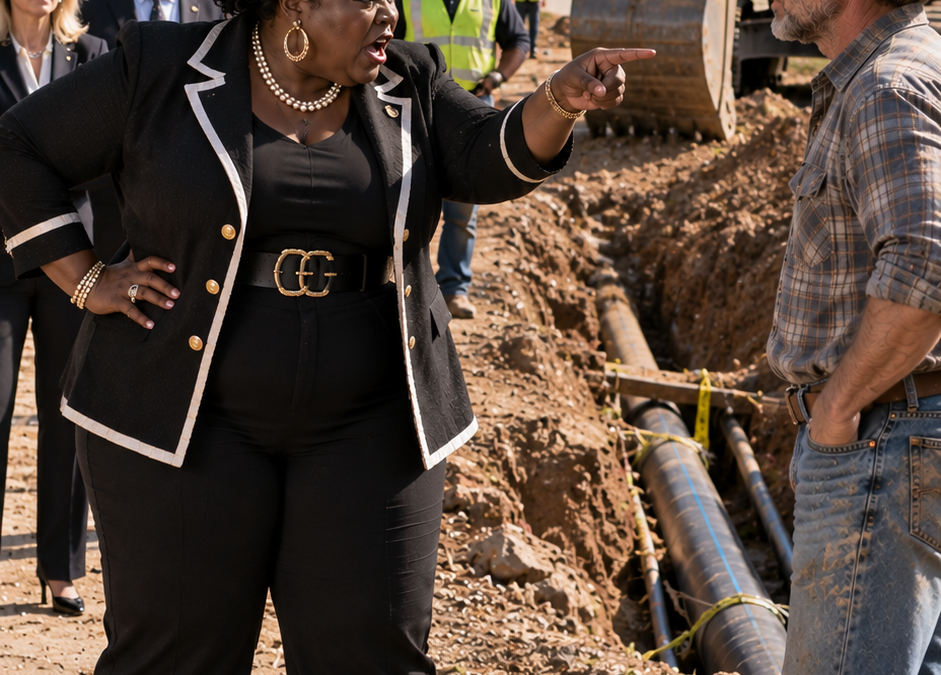
𝗣𝗔𝗥𝗧 𝟮
The normal things people discuss when one party wants permanent rights across somebody else’s land.
She shook her head.
“We don’t have the budget for that kind of delay.”
“Then you don’t have the budget for this route.”
Her mouth tightened.
She turned toward her SUV.
Before she got in, I said, “Marlene.”
She stopped.
“Don’t dig there until you check the utility easements.”
She looked over her shoulder.
“Is that a threat?”
“No.”
“What is it?”
“Information.”
She studied me.
Then gave me the same faint smile she used in her letters.
“I find it interesting that a man who claims to have no interest in our community suddenly has so many opinions about our projects.”
“It isn’t your project I’m concerned about.”
She got into the SUV.
Then drove out much faster than I would recommend on that road.
Two days later, the HOA sent me a certified letter.
NOTICE OF OBSTRUCTION.
According to Silver Creek Estates, I was interfering with an approved community drainage project.
Continued interference could result in penalties and legal action.
I stood inside the post office reading it while a woman behind me waited to reach the counter.
Then I laughed.
Not because it was funny.
Because sometimes something becomes so backward that your body chooses laughter before your brain finds another response.
They were accusing me of obstructing a project on my land because I would not donate access to my land.
Then came the map.
That was where things became dangerous.
Marlene had found an original development plat.
Old.
Wide.
Full of survey lines, notes, easement references, abbreviations, station numbers, and symbols.
One dashed line ran west across my parcel.
Marlene told her board it represented a community access corridor.
She said it had existed before most residents bought their homes.
Vice President Tessa Langford emailed me a copy.
She wasn’t accusing me.
Her note simply asked if I could clarify.
I printed the plat.
Put it on my kitchen table.
Turned on the bright light.
Read the notation beside the dashed line.
It took eleven seconds.
Temporary construction easement.
Original developer.
Limited purpose.
Access during utility installation.
Automatic expiration on issuance of the subdivision certificate of completion.
That certificate had been issued eight years earlier.
The easement was dead.
It had never been a permanent community road.
It had never given residents access.
It had never granted drainage rights.
And even while alive, it existed for a specific construction purpose.
I gathered documents.
Deed.
Current parcel map.
My father’s survey from the 1990s.
Recorded easements.
Utility instruments.
The expired developer easement.
Everything.
I sent copies by certified mail to Marlene, the HOA management office, and the board’s official address.
My cover letter stated one thing clearly:
No person, vehicle, contractor, or equipment had permission to enter Cain Ridge Ranch for the proposed drainage project.
Marlene never answered.
Nine days later, the HOA fined me five hundred dollars.
Obstruction of emergency drainage maintenance.
That was when I called Nolan Pierce.
Nolan practiced land-use law from two rooms above a hardware store in the county seat.
Forty-four years old.
Quiet.
He made his living in easements, boundaries, access disputes, and the kinds of problems growing counties create when subdivisions meet farms that were there first.
I placed everything on his desk.
He read for forty minutes.
No commentary.
Then he removed his glasses.
“They have nothing.”
“That’s my reading.”
“It’s not close.”
“What about the fine?”
He picked it up.
“This may be the most useful document you’ve received.”
“Why?”
“Because you’re not a member.”
“I know.”
“They know.”
I waited.
“A board issuing a financial penalty to a non-member for refusing property access looks less like confusion and more like an attempt to compel.”
He placed the paper down.
Then gave me advice that probably saved me more than any legal theory could.
“Do not physically block them.”
“I can close my road.”
“You can.”
“So why not?”
“Because if they bring equipment, I don’t want a photograph of you standing in front of an excavator.”
I understood immediately.
“The picture becomes the story.”
“Exactly.”
He leaned back.
“No tractor across the road. No yelling. No touching machinery. No threats. Send everything certified. Record everything. If they enter anyway after written notice, let their decision belong entirely to them.”
I followed that advice.
Exactly.
A few days later, I found something that bothered me more than the fine.
The utility markers were gone.
All three.
I stopped my truck beside the road.
Walked the shoulder.
Three disturbed circles remained where the posts had stood.
Fresh dirt.
Tire tracks in the ditch.
They hadn’t fallen.
They had been removed.
I photographed each location.
Then called Nolan.
“Don’t speculate in writing,” he said.
“I wasn’t planning to.”
“Good.”
“What if somebody cleared them for the project?”
“Then we find out later.”
Tuesday morning, diesel engines woke me at 6:40.
I recognized the sound before I was fully awake.
Tracked excavator.
Not a feed truck.
Not a pickup.
Heavy equipment idling under load.
I was dressed and outside in under three minutes.
I drove across the pasture rather than down the road.
That mattered.
I wanted to arrive as an observer.
Not an obstacle.
When I came over the rise by the stock tank, I saw the entire operation.
Excavator.
Dump truck.
Skid steer.
Price Civil Works pickup.
Five workers.
And Marlene’s white SUV.
She stepped out holding a folder.
She had expected me.
I parked well away.
Took out my phone.
Walked toward the man holding the clipboard.
He was around forty-six.
Sunburned.
Work boots.
The expression of a contractor who had already realized the person paying him had not told him the whole story.
“Gavin Price?”
He nodded.
“Darius Cain. I own this property.”
His face changed.
I asked one question.
“Did you call 811?”
He went still.
Half a second.
Maybe less.
But I had spent enough years around excavation to recognize the exact moment a competent person understands somebody upstream has made his day dangerous.
“The client provided site authorization,” he said.
His eyes moved toward Marlene.
Before he could continue, she stepped between us.
“We have authorization.”
“Show me.”
She opened her folder.
Two stapled pages.
I recognized them immediately.
The expired construction easement.
Second page included.
Expiration language fully visible.
I read the relevant paragraph.
Then handed it back.
“This expired eight years ago.”
“It did not.”
“It says it did.”
“Our attorney disagrees.”
That later turned out to be untrue.
The HOA attorney hadn’t been shown the document.
I took out my phone.
Started recording.
Held it openly.
Then stated the facts.
“My name is Darius Cain. I am the owner of this parcel. This is a private ranch road. I do not consent to this excavation. The association has received my deed, survey, parcel map, and recorded easement documents by certified mail. I have also warned the association in writing that a protected utility corridor exists beneath this road.”
Then I looked at Gavin.
“If you break ground here without utility clearance and without owner consent, part of the responsibility becomes yours.”
He understood.
He turned toward Marlene.
“Can you confirm in writing that the HOA accepts responsibility for proceeding over the owner’s objection?”
Marlene looked at him.
“We’re paying by the hour.”
Gavin didn’t move.
She added, “Start.”
Then she said something about a county review window closing at the end of the month.
I didn’t understand why that mattered.
Not yet.
At 7:11, the excavator bucket entered my road.
First pass removed the crown.
Dust.
Crushed rock.
Forty years of compacted surface.
Second pass.
Third.
The operator was good.
Clean trench.
Controlled bucket.
Then the excavation reached about three feet.
The soil changed.
That was the moment my stomach tightened.
Native material on my ranch is pale.
Hard.
Limestone fragments everywhere.
This material was darker.
Fine.
Uniform.
No rock.
Imported.
Engineered backfill.
Select material.
The kind you place around a buried utility because somebody designed the soil envelope as part of the installation.
I walked back to my truck.
Normal pace.
No drama.
Closed the door.
Called Mesa Valley Regional Utilities.
A woman answered.
Standard customer-service greeting.
I gave her the parcel number.
Told her an active excavation was occurring over what I believed was a protected Mesa Valley corridor.
I said no utility locate was visible and none had been requested to my knowledge.
Her tone changed.
She asked for the road location.
Distance from the state highway.
Nearest marker.
Then there was a pause.
“Sir?”
“Yes?”
“Are they north or south of marker forty-seven?”
I looked through the windshield.
At the trench.
At the exact place where one of the missing posts had stood.
“They’re directly on forty-seven.”
Her next words were immediate.
“Get everyone away from that trench and stop the excavation now. We have units responding.”
I walked back.
“Gavin.”
He looked at me.
“Mesa Valley has ordered a stop. They’re responding.”
He shut down the excavator.
Thirty seconds.
No argument.
Marlene walked toward him.
“Restart the machine.”
He took off his hard hat.
“No.”
“They do not have authority to shut down an HOA project because of a phone call from him.”
Gavin stared at her.
Then said something I never forgot.
“Ma’am, when the utility says stop, you stopped ten minutes ago.”
Nobody moved the machine again.
Mesa Valley arrived just under three hours later.
No sirens.
No panic.
That made it worse.
First a white utility truck with an amber light.
Then another.
Then a third.
Survey van.
Vacuum-excavation unit.
Flatbed.
Sedan.
Eventually twelve vehicles lined portions of my road.
People stepped out and immediately began working.
Cones.
Tape.
Measurements.
Documentation.
They established an exclusion area roughly one hundred fifty feet around the trench.
Nobody creates a one-hundred-fifty-foot exclusion zone for a residential service line.
The man in charge was Wesley Trent.
Fifty-eight.
Gray at the temples.
Reflective vest over a button-down shirt.
Tablet in one hand.
He walked the trench before speaking to anyone.
Looked at the spoil.
Picked up some of the dark material.
Let it run through his fingers.
Then asked:
“Who is directing this excavation?”
Marlene stepped forward.
“This is an approved Silver Creek Estates drainage project.”
Wesley looked at her.
“Approved by which utility owner?”
“The HOA board.”
“That wasn’t my question.”
Silence.
“Which utility owner authorized excavation within the corridor?”
“Our engineering consultant reviewed the drainage plan.”
“The consultant doesn’t own the pipe.”
Wesley’s voice never changed.
“Mesa Valley does. We have no locate request for this parcel in the system for the last three years.”
Marlene looked toward Gavin.
Wesley continued.
“This site is under Mesa Valley control effective now. No equipment moves without my approval.”
Then he looked toward the shoulder.
At the disturbed dirt.
“Who removed the markers?”
Marlene frowned.
“What markers?”
He pointed.
“Those markers.”
Three bare spots.
Standard spacing.
Straight line.
“Were obstructions cleared before mobilization?”
One of Gavin’s younger workers spoke quietly.
“I pulled three old posts Sunday.”
Wesley turned.
“Why?”
“We were told to clear the shoulder for staging.”
“Who told you?”
The kid looked toward his foreman.
Then toward Marlene.
Nobody blamed him.
He was twenty-three.
Someone gave him an instruction.
He followed it.
The vacuum crew spent more than two hours exposing the corridor without putting another steel tooth into the ground.
Water.
Suction.
Slow work.
Eventually Wesley called Gavin, Marlene, and me over.
The excavator had not struck the pipe.
That single fact probably saved millions more.
But the bucket had come within roughly fourteen inches of the casing.
Fourteen inches.
Wesley pointed downward.
The excavation had removed engineered cover that distributed surface loading.
A protective concrete slab above the line had been cracked in two places.
Bedding had been disturbed along one side for roughly thirty feet.
That mattered because large-diameter pressurized pipe depends on uniform support.
A compromised bedding envelope may not fail immediately.
It may wait.
Traffic.
Pressure cycles.
Settlement.
Then Wesley explained what lay below my ranch road.
Not a neighborhood main.
Not Silver Creek’s water supply.
A regional transmission line.
Treated water.
Large diameter.
Pressurized.
It supplied a service area that included two municipalities, a school district, a hospital campus, and roughly forty thousand people.
The segment had no equivalent parallel redundancy.
A failure there wouldn’t mean thirty wet backyards.
It could mean isolation of a major service zone.
Boil notices.
Tankers.
Emergency interconnections.
Pressure management.
Repair lasting weeks.
Marlene’s face changed.
Then she did what people often do when consequences become real.
She pointed at the contractor.
“Utility notification was their responsibility.”
Gavin stayed quiet.
She continued.
“We hired a licensed contractor. We relied on their expertise.”
Gavin reached into his pocket.
Pulled out his phone.
Opened a message.
Held it toward Wesley and the utility investigator standing beside him.
Sent at 9:14 the previous evening.
From Marlene.
Proceed even if the ranch owner objects. HOA accepts responsibility.
Nobody spoke.
Wind moved through the grass.
A meadowlark called somewhere in the pasture.
The investigator asked Gavin to forward the message.
He did.
Right there.
Before leaving that evening, Wesley handed Marlene a printed notice.
Case number.
Unauthorized excavation within protected utility easement.
The site would remain under Mesa Valley control.
Silver Creek contractors were prohibited from returning.
Mesa Valley would inspect and restore the affected corridor itself.
Incident investigation to follow.
Risk department contact to follow.
I thought that was the end.
A damaged road.
An HOA embarrassment.
Maybe a fine.
Maybe an insurance claim.
Wesley walked with me toward my pickup as the light turned orange over the western pasture.
He asked how old the road base was.
Whether I had seen settlement.
Whether heavy trucks normally used that section.
Then he stopped.
“Mr. Cain.”
“Yes?”
“I want you to understand something.”
He glanced back at the taped-off trench.
“What happened today is the first page.”
I waited.
“The bill is the rest of the book.”
There was something Marlene never knew about me.
At least not until it mattered.
For eleven years, starting in my twenties, I worked as a field coordinator on underground infrastructure projects.
Water transmission.
Gas distribution.
Fiber trunk routes.
Three states.
Mostly rural corridors.
I wasn’t an engineer.
I didn’t design pipe.
My work lived between the drawings and the ground.
Utility locates.
Landowner coordination.
Easement verification.
Right-of-entry.
Clearance records.
Contractor compliance.
Stopping excavation when the paper did not match the dirt.
I had shut down crews before.
I had been the man asking who removed a marker.
I had sat in conference rooms while lawyers asked why somebody ignored a locate requirement.
So when the spoil changed color, I knew.
When Mesa Valley asked about marker forty-seven, I knew.
When I told Marlene to check the utility easements, I wasn’t trying to sound mysterious.
I was giving her the same warning people used to pay me to give.
And the Cain family wasn’t simply aware of the Mesa Valley corridor.
We had created the legal instrument that put it there.
My grandfather negotiated the original easement.
My father renewed and amended it.
Permanent access.
Inspection.
Maintenance.
Repair.
Replacement.
Defined corridor.
Surface rights for utility purposes.
Recorded.
Stamped.
Real.
Exactly the kind of property interest Marlene kept pretending Silver Creek possessed.
The HOA had no comparable right.
No drainage easement.
No road easement.
No access license.
Nothing.
Then Nolan found the document that destroyed their ignorance defense.
He requested the original developer handover file.
The package transferred to Silver Creek when control passed from the developer to homeowners twelve years earlier.
Three weeks later, he called me.
“Come in.”
I knew from his voice.
Inside the developer file was a section labeled recorded encumbrances.
Tabbed.
Organized.
And inside that section sat a copy of the Mesa Valley easement.
Corridor map included.
Transmission main shown.
Protected zone shown.
Station markers shown.
Marker forty-seven shown.
Silver Creek had possessed the information for twelve years.
Worse for Marlene, she had personally gone through that same developer file.
She pulled the old plat sheet from it when she claimed the expired temporary construction easement created an HOA access corridor.
The Mesa Valley transmission easement sat a few pages away.
She had four chances to stop.
The association’s own records.
My verbal warning.
My certified package.
My attorney’s notice.
Then Gavin’s request for written responsibility.
Four exits.
She passed all four.
I need to say this clearly.
I did not trap Marlene.
A trap requires concealment.
I concealed nothing.
I warned her alone before any conflict became public.
I sent documents.
I sent the easement.
I sent my deed.
I sent the survey.
Nolan sent formal notice.
I objected on video.
I told the contractor directly.
The only thing I refused to do was physically place myself in front of a machine.
Why did she proceed?
For months, I thought pride was enough of an answer.
It wasn’t.
But it was part of it.
Marlene had already told her board that the route was available.
She had committed herself publicly.
Backing down would have meant admitting that the rancher she spent two years dismissing had been right.
Some people find losing money easier than losing face.
Two weeks after the excavation, Tessa Langford called me at 7:20 in the evening.
I was washing dishes.
“Mr. Cain?”
“Tessa.”
“Are you sitting down?”
“No.”
“You probably should.”
I dried my hands.
“What’s happened?”
“Did anybody tell you the amount?”
“What amount?”
“The utility claim.”
“No.”
She inhaled.
“Twenty-two million dollars.”
I thought I had misunderstood.
“How much?”
“Twenty-two million.”
I sat down.
“Against who?”
“The association. Price Civil. The insurers. Everybody involved.”
She started using terms.
Preliminary claim.
Reservation of rights.
Subject to adjustment.
Not final.
I set the plate in the sink carefully.
Then Tessa said something I remember more clearly than the number.
“Mr. Cain, I read your certified letter yesterday.”
I waited.
“For the first time.”
That told me a great deal about how Marlene had been running the board.
Nolan explained the twenty-two million when we met two days later.
Nobody valued a cracked concrete slab at twenty-two million.
The figure represented the potential cost of an incident involving critical regional infrastructure.
Emergency response.
Engineering mobilization.
Vacuum excavation.
System isolation planning.
Pressure management.
Potential temporary bypass pumping.
Full exposure and inspection of the affected main.
Replacement of the damaged protection slab.
Engineered rebedding.
Compaction testing.
Water-quality sampling.
Contamination protocols.
Corridor restoration.
Survey reestablishment.
Replacement of utility markers.
Reconstruction of my ranch road.
Contractor costs.
Third-party engineering monitoring.
Operational losses.
Legal administration.
And the right to revise the estimate after the complete assessment.
“Twenty-two million isn’t a punishment,” Nolan said.
He tapped the claim.
“It’s what a utility has to assume could be at stake when someone destabilizes a nonredundant transmission asset.”
The claim wasn’t personally delivered to Marlene’s house.
It went to Silver Creek Estates as an entity.
To its insurance carrier.
Price Civil.
Price’s insurer.
Potentially responsible parties.
That should have been frightening enough.
Then the insurance carrier issued a reservation-of-rights letter.
That frightened everyone.
Insurance covers accidents.
Negligence.
Mistakes.
It becomes much more complicated when documents suggest someone knowingly proceeded without authorization after warnings.
The carrier did not deny coverage.
It opened an investigation into whether portions of the incident could fall outside the policy.
Silver Creek had an annual operating budget around four hundred thousand dollars.
Reserve fund a little over three hundred thousand.
Two hundred six households.
Now those households were staring at a preliminary exposure that contained eight figures.
The clubhouse held around eighty people comfortably.
Nearly one hundred forty came to the emergency meeting.
People stood along walls.
Sat in aisles.
The room was hot.
I wore clean jeans.
Pressed shirt.
Hat in my lap.
Marlene started on time.
I’ll give her that.
She didn’t appear frightened.
She appeared prepared.
Her narrative was simple.
Thirty homes had a severe drainage problem.
The association had acted in good faith.
I had refused cooperation.
I had obstructed a safety project.
The board believed an easement existed.
The licensed contractor was responsible for utility notifications.
If the room contained no documents, that version might have survived.
Nolan asked for four minutes.
He walked to the front.
Then placed documents on the table one by one.
“May third.”
My refusal to grant an easement without negotiation.
“May sixth.”
Certified package.
Deed.
Parcel map.
Survey.
Recorded utility easements.
Signed green card.
“May eighth.”
My written warning.
Do not excavate until the utility easements are verified.
“May tenth.”
Cease-and-desist notice from Nolan’s office.
Another signed green card.
“May eleventh.”
The five-hundred-dollar HOA penalty issued to me for obstruction.
“May twelfth, 9:14 p.m.”
Nolan looked down.
Then read Marlene’s message.
“Proceed even if the ranch owner objects. HOA accepts responsibility.”
He paused.
“May thirteenth, 7:11 a.m.”
“Excavation begins.”
The silence wasn’t ordinary.
Someone in the back muttered something.
Marlene turned toward Gavin.
“The contractor represented that utility clearance was his responsibility.”
Gavin remained seated.
He held up his phone.
“I asked you in front of my crew and Mr. Cain.”
Then Tessa spoke.
She looked directly at Marlene.
“Why did you tell us the ranch road belonged to the association?”
Marlene shook her head.
“The mapping was ambiguous.”
Nolan opened my father’s survey.
Slid it forward.
Printed along the road:
PRIVATE PROPERTY — CAIN PARCEL.
Below that:
UTILITY EASEMENT ONLY.
He let everyone read.
Then he looked toward Silver Creek’s newly retained attorney.
“You’ll also want tab eleven of the original developer transfer file.”
The attorney looked confused.
“What’s in tab eleven?”
“Recorded Mesa Valley transmission easement and corridor map.”
The room went quiet again.
Nolan continued.
“That file has been in association custody for twelve years.”
Marlene finally looked at me.
For the first time that evening.
I think she expected triumph.
I didn’t feel any.
I’d seen men understand bad job-site decisions before.
There’s nothing enjoyable about watching somebody realize the size of a mistake when dozens of other people may have to help pay for it.
I spoke once.
“You were right about one thing, Marlene.”
She stared.
“There is an easement on that road.”
I looked at the papers.
“It just never belonged to you.”
Four days later, the board removed her as president.
I thought I finally understood the whole story.
I didn’t.
Ten days later, Tessa asked me to meet her at a diner.
She brought a folder.
Inside were closed-session minutes from the previous eighteen months.
A project kept appearing.
Western Parcel Initiative.
Silver Creek owned eleven undeveloped acres along its western boundary.
Low land.
Poor drainage.
No secondary access.
As configured, nearly useless for new homes.
Fix drainage and provide an emergency access route, and the property potentially supported twenty-two additional lots.
Marlene had preliminary planning work.
Valuation.
Concept layouts.
The assumptions behind the concept were simple.
Western drainage outlet.
Secondary emergency access.
The only improved surface west of that parcel was my ranch road.
Everything changed.
The drainage project was not the whole project.
It was the first move.
Once water was flowing west through a constructed crossing over my parcel, the physical corridor existed.
Once trucks and contractors had begun using that corridor, pressure for road access could follow.
Maybe it still wouldn’t create a legal right.
But it would create facts on the ground.
And facts on the ground make negotiations harder for the owner resisting them.
Tessa showed me a March closed-session minute.
Marlene had described the Cain easement as “anticipated” and said it should not be treated as an obstacle to planning.
Anticipated.
She had planned twenty-two lots around a property right she did not possess.
Then the deadline finally made sense.
The county was preparing to revise watershed-development standards.
Projects established before the review might remain under existing requirements.
Projects arriving afterward could face stricter drainage and access standards.
Years of additional process.
That explained her urgency.
Why she wouldn’t wait.
Why she wouldn’t negotiate.
Why she wanted the sixty-one-thousand-dollar trench immediately.
Why she stood on my road telling Gavin they were paying by the hour.
Why the Halloways’ flooded yards had become an “emergency” even though the problem had existed through multiple wet seasons.
Their flooding was real.
I never doubted that.
But Marlene had wrapped a broader development strategy inside the language of emergency relief.
Maybe she convinced herself they were the same thing.
People are good at that.
Especially when ambition and public good point in roughly the same direction.
For two years, Marlene had described me as an obstruction.
Obstruction to drainage.
Obstruction to community improvement.
Obstruction to progress.
The difficult rancher beyond the western fence.
But I never opposed their drainage project.
I never spoke against their possible expansion.
Never filed an objection with the county.
Never asked them to abandon development.
All I ever said was:
If you want to use my land, ask.
Survey it.
Engineer it.
Make an offer.
Negotiate.
Record the easement.
Utilities do it.
Counties do it.
Pipeline companies do it.
Developers do it.
That’s not obstruction.
That’s property.
The board removed Marlene as president.
She remained a regular member until the next annual election and did not run again.
Nobody went to prison.
No dramatic arrest.
I didn’t want one.
The consequences were already heavy.
The drainage project stopped.
Silver Creek endured another wet season before a replacement plan was finished.
The Western Parcel Initiative froze.
The insurance investigation continued for months.
The HOA hired outside counsel.
That triggered a special assessment.
Price Civil filed its own demand seeking allocation of responsibility.
Residents petitioned for an independent audit of three years of board decisions.
The twenty-two-million-dollar utility claim entered negotiation and technical review.
For my part, I asked for four things.
Restore my road.
Independent inspection.
Reimburse my survey costs, legal costs, and documented lost time.
Withdraw every HOA notice and fine ever issued against me and acknowledge in writing that I was not subject to Silver Creek’s authority.
And confirm that no Silver Creek representative, resident, or contractor would enter Cain Ridge Ranch without express written permission.
They agreed within three weeks.
Mesa Valley restored the road themselves.
Better than before.
Proper compacted base.
Correct crown.
New gravel.
Fresh markers.
Bright.
Tall.
Impossible to miss.
Marker forty-seven stood beside the road like a witness.
A few months later, I drove out there on a cool morning.
Tessa was waiting near the Silver Creek fence.
She had become interim president.
She looked like somebody who never wanted the job.
In my experience, those people often do it better.
“Darius.”
“Tessa.”
She apologized again.
She had done that several times by then.
“You don’t need to keep doing that.”
“I signed some of those letters.”
“You also finally read them.”
She winced.
“Fair.”
Then she held out a folder.
“I’d like to ask whether you’re willing to discuss a drainage easement.”
I looked at the folder.
This time, no old plat.
No dashed line being used as wishful thinking.
Current boundary survey.
Licensed surveyor’s seal.
My parcel shown correctly.
Engineering plan.
Culvert sized for the watershed.
Utility corridor identified.
Locate requirement noted directly on the sheet.
Restoration standards.
Thirty-foot defined easement strip.
Maintenance responsibility.
Attorney letter.
And a written offer.
With money attached.
I read the first page.
Then looked at Tessa.
“See?”
She waited.
“That wasn’t so hard.”
She laughed.
Not the polished laugh Marlene used.
A tired, real one.
“It only cost us a president, an audit, a special assessment, several lawyers, an insurance investigation, and a number I still can’t say without feeling sick.”
“I’ll have Nolan review it.”
“That’s probably wise.”
We found terms six weeks later.
The new drainage culvert went in the following spring.
Permitted.
Engineered.
Surveyed.
Mesa Valley had an inspector on site before excavation started.
811 markings covered the corridor like somebody had spilled fluorescent paint across the ranch.
Nobody complained about that.
The Halloways’ backyard stayed dry afterward.
That’s important to me.
Because they were never the enemy.
Neither were the other residents.
Most had no idea what Marlene was doing.
They wanted dry yards.
Safe homes.
A decent place to live.
Reasonable things.
The conflict came from one person deciding that because her goal was useful, the ordinary rules no longer applied.
One morning after the project was finished, I stopped beside marker forty-seven.
There was nothing dramatic to see.
New gravel.
Good crown.
Grass growing back.
Marker standing straight.
Marlene had once stood on that exact spot with her arms folded and told me I didn’t understand how a community worked.
What she didn’t know was that I had spent eleven years of my life on roads exactly like that.
Standing over underground lines.
Reviewing easements.
Stopping equipment.
Explaining to contractors that a landowner’s signature wasn’t optional because somebody’s schedule was inconvenient.
She could have learned that about me with one question.
What did you do before ranching?
She never asked.
The same way she never asked why the utility markers were there.
Never read the expiration clause.
Never read the easement I mailed her.
Never verified the road ownership.
Never asked Mesa Valley.
Never called 811.
Because once she decided I was only a rancher in a torn work shirt standing in the way of progress, nothing I said carried enough weight to interrupt the story she had already told herself.
That is what cost Silver Creek.
Not my refusal.
Not Nolan’s legal letters.
Not the engineer.
Not even the excavator.
Those things only exposed what was already wrong.
She had the deed.
She had the survey.
She had the utility easement.
She had the developer file.
She had my certified warning.
She had Gavin asking her to accept responsibility.
And finally she had one last opportunity to stop when a contractor looked directly at her and asked whether they were really proceeding over the owner’s objection.
Her answer was:
We’re paying by the hour.
That sentence said everything.
A deadline mattered more than ownership.
Momentum mattered more than verification.
Authority mattered more than accuracy.
And once the bucket entered the dirt, all of those choices became measurable.
Feet of trench.
Inches from a transmission main.
Thirty feet of disturbed bedding.
Twelve utility vehicles.
Two hundred six frightened households.
Twenty-two million dollars in preliminary exposure.
I never celebrated that number.
There is no satisfaction in knowing ordinary families might end up paying for somebody else’s refusal to read.
What satisfied me came later.
It was standing beside Tessa while she handed me a proper survey and a legitimate written offer.
It was watching a permitted contractor install the drainage crossing with utility personnel present.
It was seeing the Halloways’ yard after the next heavy storm.
Wet grass.
No standing pond.
No crawl-space water.
The problem had always been solvable.
It simply wasn’t solvable for free.
That’s what Marlene could not accept.
She believed the inconvenience of asking me for an easement was evidence that she shouldn’t need one.
She believed a project being good for thirty homeowners somehow reduced my rights.
Then, underneath that, she believed an expansion benefiting the HOA gave her even more reason to push.
My father understood something she didn’t.
A road really is a door.
I think about that whenever I drive ours now.
He refused to sell it because he understood that once somebody owns access through your property, your relationship with that land changes forever.
He wasn’t antisocial.
He wasn’t greedy.
He wasn’t afraid of neighbors.
He simply understood that permission and ownership are different things.
So are cooperation and surrender.
I turned my truck toward the house.
Passed the stock tank.
Cattle stood ankle-deep along the muddy edge.
Marker forty-seven disappeared behind me.
Silver Creek’s roofs showed above the fence in the distance.
Twenty-two new lots still had not been built.
Maybe someday they will be.
If they need another road, somebody will have to sit across a table from me or whoever owns Cain Ridge Ranch after I’m gone.
They’ll bring a survey.
A legal description.
Engineering.
Compensation.
Insurance.
A document that says exactly what right they want and exactly what they’re offering in return.
Then somebody will sign or somebody won’t.
That’s how property works.
Not because owners are more important than communities.
Because communities are made safer when everybody knows where authority begins and where it ends.
Marlene thought her title as HOA president allowed her to push that boundary until somebody stopped her.
The utility claim didn’t create the boundary.
The engineer didn’t create it.
Neither did my lawyer.
It had been there the whole time.
Recorded.
Surveyed.
Waiting under decades of dust in a file cabinet and under three feet of road base in the ground.
All she had to do was read before she dug.
She chose the excavator instead.
Have you finished reading the story and want to read it again?
The HOA President Thought My Ranch Road Was Just Dirt Until Her Excavator Reached the One Line She Never Bothered to Read
Marlene Voss watched an excavator bite into my ranch road like my deed meant nothing.
I had already warned her not to dig there until she checked the utility easements.
When the soil changed color three feet down, I knew exactly what she had just put at risk.
My name is Darius Cain.
I was forty-nine years old when the president of Silver Creek Estates decided a homeowners association could authorize excavation on land it did not own.
I own one hundred seventy acres about nine miles outside town.
Dry grass.
Mesquite.
Hard soil.
A stock tank that shrinks in August and turns silver under the winter sky.
The property is called Cain Ridge Ranch.
My grandfather bought it more than forty years ago, when the county had not yet extended water that far and most people considered the land too remote to be worth much.
I run around sixty cow-calf pairs in a good year.
I keep two horses I don’t ride nearly as often as I tell myself I should.
My truck is a Ford F-250 with more than two hundred forty thousand miles and a tailgate that requires a particular combination of lifting and pushing before the latch catches.
Most mornings, I’m dressed before sunrise.
Jeans.
Work shirt.
Boots.
Dust.
Nothing about me suggests boardrooms, legal files, or infrastructure plans.
I’ve learned over the years that some people see that and make decisions.
Usually small ones.
Sometimes expensive ones.
Marlene Voss made the most expensive one I ever witnessed.
To understand why, you need to understand the road.
It begins at the state highway.
You cross a cattle guard, head north through the low part of my ranch, curve around the stock tank, and straighten for nearly a mile before it stops about forty feet short of the rear boundary of Silver Creek Estates.
The surface is packed dirt over crushed rock.
My father built the base in the 1980s.
It’s wide enough for a feed truck and horse trailer to pass if both drivers know what they’re doing.
It has never been a county road.
It has never been dedicated to public use.
The county has never maintained it.
No municipality has ever listed it as public right-of-way.
It is a ranch road.
On ranch land.
My ranch land.
Silver Creek Estates came later.
Two hundred six houses.
Stone entrance columns.
Decorative walls.
A keypad gate.
Covenants thick enough to stop a door.
During construction, the developer approached my father.
They wanted the last half mile of our road.
Not just permission to cross it.
They wanted to buy the road and a strip of land on either side so Silver Creek could have a western entrance.
My father listened.
Then said no.
He explained it to me later with the kind of sentence he could produce without trying.
“A road is a door.”
He was tightening wire when he said it.
“If you sell somebody a door into your place, don’t complain later about who walks through it.”
That was the end of the discussion.
Silver Creek was built with its main entrance to the south.
Our ranch road remained ours.
For roughly ten years, nobody had much trouble understanding that.
A few residents wandered near the fence.
Occasionally somebody asked whether the road connected to the highway.
I told them yes and that it was private.
That usually ended things.
Then Marlene Voss became HOA president.
I knew within the first week.
The letters started.
Dust from my truck.
Fence appearance.
Hay deliveries.
Diesel noise during calving season.
Once she wrote that my barbed-wire fence created an “inconsistent visual transition” along Silver Creek’s western boundary.
I remember holding the letter in the kitchen and trying to imagine my grandfather receiving it.
He would have framed it.
Every time Marlene wrote, I sent the same response.
I am not a member of your association.
One sentence.
Polite.
Accurate.
Nothing else.
I think that sentence aggravated her because it gave her nothing to work with.
No insult.
No anger.
No threat she could quote at a meeting.
She wanted a difficult rancher.
What she got was a man who declined to participate in her jurisdiction.
Inside Silver Creek, Marlene had real authority.
Trash cans moved when she sent notices.
Basketball hoops disappeared.
Shutters changed color.
Homeowners paid fines because they had signed covenants agreeing to the system.
Then she drove beyond the subdivision fence and entered a place where none of that followed her.
I don’t think she ever became comfortable with the distinction.
There was another distinction she missed too.
Along the eastern shoulder of my ranch road stood three old utility markers.
Weathered posts.
Faded numbers.
Easy to overlook.
Most people probably saw them a thousand times without consciously seeing them once.
I knew what they were.
I knew what lay under the ground beside them.
I knew why they mattered.
Marlene had driven past those markers several times while complaining about my fence.
I don’t think she ever asked herself why they existed.
The trouble began after the wettest spring we’d had in years.
Silver Creek had a drainage problem.
The western section sat low.
About thirty homes backed toward a natural swale.
During heavy rain, water pooled in yards for days.
Brown.
Stagnant.
A couple of crawl spaces took water repeatedly.
The Halloways, an older couple near the rear fence, had an eleven-thousand-dollar repair estimate.
Their problem was real.
I never disputed that.
The HOA hired a drainage consultant.
He produced three alternatives.
The first involved constructing a retention basin on Silver Creek common ground.
Around four hundred thousand dollars.
It would also consume a neighborhood park.
Option two used an existing drainage route south toward a county culvert.
Engineering.
Permits.
County review.
Long schedule.
Then there was option three.
The cheap one.
Roughly sixty-one thousand dollars.
Cut west.
Cross the Silver Creek rear boundary.
Excavate through the last stretch of my ranch road.
Install a large culvert.
Discharge into the natural wash farther west.
Hydraulically, it was simple.
Legally, it wasn’t.
On page nine of the consultant’s report, the requirement was printed clearly.
A recorded drainage easement from the affected property owner must be obtained before work commenced.
I did not see that report until later.
Marlene apparently saw enough of it to choose the sixty-one-thousand-dollar option.
What she did not do was ask me for an easement.
She came to the ranch on a Tuesday in early May.
I was repairing fence near the entrance.
Sweat running down my back.
Post driver leaning against the truck.
She parked her white SUV partly across my drive and stepped carefully through the dirt in shoes that had no business near cattle.
“Darius.”
“Marlene.”
“The board approved the drainage improvement.”
“All right.”
“We’ll need access to your road for approximately three days next week.”
She said it like she was telling me when a package would arrive.
I put the pliers down.
“Who authorized that?”
Her eyebrows rose.
“The association.”
“That’s not what I asked.”
She looked annoyed.
“The Silver Creek board approved the project.”
“You can’t approve access to land you don’t own.”
Her expression changed just enough.
“This is a community drainage project.”
“I understand.”
“Thirty families are dealing with standing water.”
“I understand that too.”
“Then what exactly is the issue?”
“The issue is that this is my ranch.”
I pointed down the road.
“You need my permission.”
She stared at me for a moment.
Then looked at my boots.
My shirt.
Mud on the truck tires.
That look became familiar.
“You are turning a community project into a personal matter.”
That sentence told me exactly where the conversation was going.
“No.”
I kept my voice level.
“I’m turning private property into a property matter.”
She explained about flooded yards.
Children.
Damage.
The board’s fiduciary responsibilities.
All legitimate concerns.
None created a property right.
I told her I was willing to discuss a real easement.
Surveyed corridor.
Engineering.
Compensation.
Recorded document.
Liability terms.
Restoration.
The normal things people discuss when one party wants permanent rights across somebody else’s land.
She shook her head.
“We don’t have the budget for that kind of delay.”
“Then you don’t have the budget for this route.”
Her mouth tightened.
She turned toward her SUV.
Before she got in, I said, “Marlene.”
She stopped.
“Don’t dig there until you check the utility easements.”
She looked over her shoulder.
“Is that a threat?”
“No.”
“What is it?”
“Information.”
She studied me.
Then gave me the same faint smile she used in her letters.
“I find it interesting that a man who claims to have no interest in our community suddenly has so many opinions about our projects.”
“It isn’t your project I’m concerned about.”
She got into the SUV.
Then drove out much faster than I would recommend on that road.
Two days later, the HOA sent me a certified letter.
NOTICE OF OBSTRUCTION.
According to Silver Creek Estates, I was interfering with an approved community drainage project.
Continued interference could result in penalties and legal action.
I stood inside the post office reading it while a woman behind me waited to reach the counter.
Then I laughed.
Not because it was funny.
Because sometimes something becomes so backward that your body chooses laughter before your brain finds another response.
They were accusing me of obstructing a project on my land because I would not donate access to my land.
Then came the map.
That was where things became dangerous.
Marlene had found an original development plat.
Old.
Wide.
Full of survey lines, notes, easement references, abbreviations, station numbers, and symbols.
One dashed line ran west across my parcel.
Marlene told her board it represented a community access corridor.
She said it had existed before most residents bought their homes.
Vice President Tessa Langford emailed me a copy.
She wasn’t accusing me.
Her note simply asked if I could clarify.
I printed the plat.
Put it on my kitchen table.
Turned on the bright light.
Read the notation beside the dashed line.
It took eleven seconds.
Temporary construction easement.
Original developer.
Limited purpose.
Access during utility installation.
Automatic expiration on issuance of the subdivision certificate of completion.
That certificate had been issued eight years earlier.
The easement was dead.
It had never been a permanent community road.
It had never given residents access.
It had never granted drainage rights.
And even while alive, it existed for a specific construction purpose.
I gathered documents.
Deed.
Current parcel map.
My father’s survey from the 1990s.
Recorded easements.
Utility instruments.
The expired developer easement.
Everything.
I sent copies by certified mail to Marlene, the HOA management office, and the board’s official address.
My cover letter stated one thing clearly:
No person, vehicle, contractor, or equipment had permission to enter Cain Ridge Ranch for the proposed drainage project.
Marlene never answered.
Nine days later, the HOA fined me five hundred dollars.
Obstruction of emergency drainage maintenance.
That was when I called Nolan Pierce.
Nolan practiced land-use law from two rooms above a hardware store in the county seat.
Forty-four years old.
Quiet.
He made his living in easements, boundaries, access disputes, and the kinds of problems growing counties create when subdivisions meet farms that were there first.
I placed everything on his desk.
He read for forty minutes.
No commentary.
Then he removed his glasses.
“They have nothing.”
“That’s my reading.”
“It’s not close.”
“What about the fine?”
He picked it up.
“This may be the most useful document you’ve received.”
“Why?”
“Because you’re not a member.”
“I know.”
“They know.”
I waited.
“A board issuing a financial penalty to a non-member for refusing property access looks less like confusion and more like an attempt to compel.”
He placed the paper down.
Then gave me advice that probably saved me more than any legal theory could.
“Do not physically block them.”
“I can close my road.”
“You can.”
“So why not?”
“Because if they bring equipment, I don’t want a photograph of you standing in front of an excavator.”
I understood immediately.
“The picture becomes the story.”
“Exactly.”
He leaned back.
“No tractor across the road. No yelling. No touching machinery. No threats. Send everything certified. Record everything. If they enter anyway after written notice, let their decision belong entirely to them.”
I followed that advice.
Exactly.
A few days later, I found something that bothered me more than the fine.
The utility markers were gone.
All three.
I stopped my truck beside the road.
Walked the shoulder.
Three disturbed circles remained where the posts had stood.
Fresh dirt.
Tire tracks in the ditch.
They hadn’t fallen.
They had been removed.
I photographed each location.
Then called Nolan.
“Don’t speculate in writing,” he said.
“I wasn’t planning to.”
“Good.”
“What if somebody cleared them for the project?”
“Then we find out later.”
Tuesday morning, diesel engines woke me at 6:40.
I recognized the sound before I was fully awake.
Tracked excavator.
Not a feed truck.
Not a pickup.
Heavy equipment idling under load.
I was dressed and outside in under three minutes.
I drove across the pasture rather than down the road.
That mattered.
I wanted to arrive as an observer.
Not an obstacle.
When I came over the rise by the stock tank, I saw the entire operation.
Excavator.
Dump truck.
Skid steer.
Price Civil Works pickup.
Five workers.
And Marlene’s white SUV.
She stepped out holding a folder.
She had expected me.
I parked well away.
Took out my phone.
Walked toward the man holding the clipboard.
He was around forty-six.
Sunburned.
Work boots.
The expression of a contractor who had already realized the person paying him had not told him the whole story.
“Gavin Price?”
He nodded.
“Darius Cain. I own this property.”
His face changed.
I asked one question.
“Did you call 811?”
He went still.
Half a second.
Maybe less.
But I had spent enough years around excavation to recognize the exact moment a competent person understands somebody upstream has made his day dangerous.
“The client provided site authorization,” he said.
His eyes moved toward Marlene.
Before he could continue, she stepped between us.
“We have authorization.”
“Show me.”
She opened her folder.
Two stapled pages.
I recognized them immediately.
The expired construction easement.
Second page included.
Expiration language fully visible.
I read the relevant paragraph.
Then handed it back.
“This expired eight years ago.”
“It did not.”
“It says it did.”
“Our attorney disagrees.”
That later turned out to be untrue.
The HOA attorney hadn’t been shown the document.
I took out my phone.
Started recording.
Held it openly.
Then stated the facts.
“My name is Darius Cain. I am the owner of this parcel. This is a private ranch road. I do not consent to this excavation. The association has received my deed, survey, parcel map, and recorded easement documents by certified mail. I have also warned the association in writing that a protected utility corridor exists beneath this road.”
Then I looked at Gavin.
“If you break ground here without utility clearance and without owner consent, part of the responsibility becomes yours.”
He understood.
He turned toward Marlene.
“Can you confirm in writing that the HOA accepts responsibility for proceeding over the owner’s objection?”
Marlene looked at him.
“We’re paying by the hour.”
Gavin didn’t move.
She added, “Start.”
Then she said something about a county review window closing at the end of the month.
I didn’t understand why that mattered.
Not yet.
At 7:11, the excavator bucket entered my road.
First pass removed the crown.
Dust.
Crushed rock.
Forty years of compacted surface.
Second pass.
Third.
The operator was good.
Clean trench.
Controlled bucket.
Then the excavation reached about three feet.
The soil changed.
That was the moment my stomach tightened.
Native material on my ranch is pale.
Hard.
Limestone fragments everywhere.
This material was darker.
Fine.
Uniform.
No rock.
Imported.
Engineered backfill.
Select material.
The kind you place around a buried utility because somebody designed the soil envelope as part of the installation.
I walked back to my truck.
Normal pace.
No drama.
Closed the door.
Called Mesa Valley Regional Utilities.
A woman answered.
Standard customer-service greeting.
I gave her the parcel number.
Told her an active excavation was occurring over what I believed was a protected Mesa Valley corridor.
I said no utility locate was visible and none had been requested to my knowledge.
Her tone changed.
She asked for the road location.
Distance from the state highway.
Nearest marker.
Then there was a pause.
“Sir?”
“Yes?”
“Are they north or south of marker forty-seven?”
I looked through the windshield.
At the trench.
At the exact place where one of the missing posts had stood.
“They’re directly on forty-seven.”
Her next words were immediate.
“Get everyone away from that trench and stop the excavation now. We have units responding.”
I walked back.
“Gavin.”
He looked at me.
“Mesa Valley has ordered a stop. They’re responding.”
He shut down the excavator.
Thirty seconds.
No argument.
Marlene walked toward him.
“Restart the machine.”
He took off his hard hat.
“No.”
“They do not have authority to shut down an HOA project because of a phone call from him.”
Gavin stared at her.
Then said something I never forgot.
“Ma’am, when the utility says stop, you stopped ten minutes ago.”
Nobody moved the machine again.
Mesa Valley arrived just under three hours later.
No sirens.
No panic.
That made it worse.
First a white utility truck with an amber light.
Then another.
Then a third.
Survey van.
Vacuum-excavation unit.
Flatbed.
Sedan.
Eventually twelve vehicles lined portions of my road.
People stepped out and immediately began working.
Cones.
Tape.
Measurements.
Documentation.
They established an exclusion area roughly one hundred fifty feet around the trench.
Nobody creates a one-hundred-fifty-foot exclusion zone for a residential service line.
The man in charge was Wesley Trent.
Fifty-eight.
Gray at the temples.
Reflective vest over a button-down shirt.
Tablet in one hand.
He walked the trench before speaking to anyone.
Looked at the spoil.
Picked up some of the dark material.
Let it run through his fingers.
Then asked:
“Who is directing this excavation?”
Marlene stepped forward.
“This is an approved Silver Creek Estates drainage project.”
Wesley looked at her.
“Approved by which utility owner?”
“The HOA board.”
“That wasn’t my question.”
Silence.
“Which utility owner authorized excavation within the corridor?”
“Our engineering consultant reviewed the drainage plan.”
“The consultant doesn’t own the pipe.”
Wesley’s voice never changed.
“Mesa Valley does. We have no locate request for this parcel in the system for the last three years.”
Marlene looked toward Gavin.
Wesley continued.
“This site is under Mesa Valley control effective now. No equipment moves without my approval.”
Then he looked toward the shoulder.
At the disturbed dirt.
“Who removed the markers?”
Marlene frowned.
“What markers?”
He pointed.
“Those markers.”
Three bare spots.
Standard spacing.
Straight line.
“Were obstructions cleared before mobilization?”
One of Gavin’s younger workers spoke quietly.
“I pulled three old posts Sunday.”
Wesley turned.
“Why?”
“We were told to clear the shoulder for staging.”
“Who told you?”
The kid looked toward his foreman.
Then toward Marlene.
Nobody blamed him.
He was twenty-three.
Someone gave him an instruction.
He followed it.
The vacuum crew spent more than two hours exposing the corridor without putting another steel tooth into the ground.
Water.
Suction.
Slow work.
Eventually Wesley called Gavin, Marlene, and me over.
The excavator had not struck the pipe.
That single fact probably saved millions more.
But the bucket had come within roughly fourteen inches of the casing.
Fourteen inches.
Wesley pointed downward.
The excavation had removed engineered cover that distributed surface loading.
A protective concrete slab above the line had been cracked in two places.
Bedding had been disturbed along one side for roughly thirty feet.
That mattered because large-diameter pressurized pipe depends on uniform support.
A compromised bedding envelope may not fail immediately.
It may wait.
Traffic.
Pressure cycles.
Settlement.
Then Wesley explained what lay below my ranch road.
Not a neighborhood main.
Not Silver Creek’s water supply.
A regional transmission line.
Treated water.
Large diameter.
Pressurized.
It supplied a service area that included two municipalities, a school district, a hospital campus, and roughly forty thousand people.
The segment had no equivalent parallel redundancy.
A failure there wouldn’t mean thirty wet backyards.
It could mean isolation of a major service zone.
Boil notices.
Tankers.
Emergency interconnections.
Pressure management.
Repair lasting weeks.
Marlene’s face changed.
Then she did what people often do when consequences become real.
She pointed at the contractor.
“Utility notification was their responsibility.”
Gavin stayed quiet.
She continued.
“We hired a licensed contractor. We relied on their expertise.”
Gavin reached into his pocket.
Pulled out his phone.
Opened a message.
Held it toward Wesley and the utility investigator standing beside him.
Sent at 9:14 the previous evening.
From Marlene.
Proceed even if the ranch owner objects. HOA accepts responsibility.
Nobody spoke.
Wind moved through the grass.
A meadowlark called somewhere in the pasture.
The investigator asked Gavin to forward the message.
He did.
Right there.
Before leaving that evening, Wesley handed Marlene a printed notice.
Case number.
Unauthorized excavation within protected utility easement.
The site would remain under Mesa Valley control.
Silver Creek contractors were prohibited from returning.
Mesa Valley would inspect and restore the affected corridor itself.
Incident investigation to follow.
Risk department contact to follow.
I thought that was the end.
A damaged road.
An HOA embarrassment.
Maybe a fine.
Maybe an insurance claim.
Wesley walked with me toward my pickup as the light turned orange over the western pasture.
He asked how old the road base was.
Whether I had seen settlement.
Whether heavy trucks normally used that section.
Then he stopped.
“Mr. Cain.”
“Yes?”
“I want you to understand something.”
He glanced back at the taped-off trench.
“What happened today is the first page.”
I waited.
“The bill is the rest of the book.”
There was something Marlene never knew about me.
At least not until it mattered.
For eleven years, starting in my twenties, I worked as a field coordinator on underground infrastructure projects.
Water transmission.
Gas distribution.
Fiber trunk routes.
Three states.
Mostly rural corridors.
I wasn’t an engineer.
I didn’t design pipe.
My work lived between the drawings and the ground.
Utility locates.
Landowner coordination.
Easement verification.
Right-of-entry.
Clearance records.
Contractor compliance.
Stopping excavation when the paper did not match the dirt.
I had shut down crews before.
I had been the man asking who removed a marker.
I had sat in conference rooms while lawyers asked why somebody ignored a locate requirement.
So when the spoil changed color, I knew.
When Mesa Valley asked about marker forty-seven, I knew.
When I told Marlene to check the utility easements, I wasn’t trying to sound mysterious.
I was giving her the same warning people used to pay me to give.
And the Cain family wasn’t simply aware of the Mesa Valley corridor.
We had created the legal instrument that put it there.
My grandfather negotiated the original easement.
My father renewed and amended it.
Permanent access.
Inspection.
Maintenance.
Repair.
Replacement.
Defined corridor.
Surface rights for utility purposes.
Recorded.
Stamped.
Real.
Exactly the kind of property interest Marlene kept pretending Silver Creek possessed.
The HOA had no comparable right.
No drainage easement.
No road easement.
No access license.
Nothing.
Then Nolan found the document that destroyed their ignorance defense.
He requested the original developer handover file.
The package transferred to Silver Creek when control passed from the developer to homeowners twelve years earlier.
Three weeks later, he called me.
“Come in.”
I knew from his voice.
Inside the developer file was a section labeled recorded encumbrances.
Tabbed.
Organized.
And inside that section sat a copy of the Mesa Valley easement.
Corridor map included.
Transmission main shown.
Protected zone shown.
Station markers shown.
Marker forty-seven shown.
Silver Creek had possessed the information for twelve years.
Worse for Marlene, she had personally gone through that same developer file.
She pulled the old plat sheet from it when she claimed the expired temporary construction easement created an HOA access corridor.
The Mesa Valley transmission easement sat a few pages away.
She had four chances to stop.
The association’s own records.
My verbal warning.
My certified package.
My attorney’s notice.
Then Gavin’s request for written responsibility.
Four exits.
She passed all four.
I need to say this clearly.
I did not trap Marlene.
A trap requires concealment.
I concealed nothing.
I warned her alone before any conflict became public.
I sent documents.
I sent the easement.
I sent my deed.
I sent the survey.
Nolan sent formal notice.
I objected on video.
I told the contractor directly.
The only thing I refused to do was physically place myself in front of a machine.
Why did she proceed?
For months, I thought pride was enough of an answer.
It wasn’t.
But it was part of it.
Marlene had already told her board that the route was available.
She had committed herself publicly.
Backing down would have meant admitting that the rancher she spent two years dismissing had been right.
Some people find losing money easier than losing face.
Two weeks after the excavation, Tessa Langford called me at 7:20 in the evening.
I was washing dishes.
“Mr. Cain?”
“Tessa.”
“Are you sitting down?”
“No.”
“You probably should.”
I dried my hands.
“What’s happened?”
“Did anybody tell you the amount?”
“What amount?”
“The utility claim.”
“No.”
She inhaled.
“Twenty-two million dollars.”
I thought I had misunderstood.
“How much?”
“Twenty-two million.”
I sat down.
“Against who?”
“The association. Price Civil. The insurers. Everybody involved.”
She started using terms.
Preliminary claim.
Reservation of rights.
Subject to adjustment.
Not final.
I set the plate in the sink carefully.
Then Tessa said something I remember more clearly than the number.
“Mr. Cain, I read your certified letter yesterday.”
I waited.
“For the first time.”
That told me a great deal about how Marlene had been running the board.
Nolan explained the twenty-two million when we met two days later.
Nobody valued a cracked concrete slab at twenty-two million.
The figure represented the potential cost of an incident involving critical regional infrastructure.
Emergency response.
Engineering mobilization.
Vacuum excavation.
System isolation planning.
Pressure management.
Potential temporary bypass pumping.
Full exposure and inspection of the affected main.
Replacement of the damaged protection slab.
Engineered rebedding.
Compaction testing.
Water-quality sampling.
Contamination protocols.
Corridor restoration.
Survey reestablishment.
Replacement of utility markers.
Reconstruction of my ranch road.
Contractor costs.
Third-party engineering monitoring.
Operational losses.
Legal administration.
And the right to revise the estimate after the complete assessment.
“Twenty-two million isn’t a punishment,” Nolan said.
He tapped the claim.
“It’s what a utility has to assume could be at stake when someone destabilizes a nonredundant transmission asset.”
The claim wasn’t personally delivered to Marlene’s house.
It went to Silver Creek Estates as an entity.
To its insurance carrier.
Price Civil.
Price’s insurer.
Potentially responsible parties.
That should have been frightening enough.
Then the insurance carrier issued a reservation-of-rights letter.
That frightened everyone.
Insurance covers accidents.
Negligence.
Mistakes.
It becomes much more complicated when documents suggest someone knowingly proceeded without authorization after warnings.
The carrier did not deny coverage.
It opened an investigation into whether portions of the incident could fall outside the policy.
Silver Creek had an annual operating budget around four hundred thousand dollars.
Reserve fund a little over three hundred thousand.
Two hundred six households.
Now those households were staring at a preliminary exposure that contained eight figures.
The clubhouse held around eighty people comfortably.
Nearly one hundred forty came to the emergency meeting.
People stood along walls.
Sat in aisles.
The room was hot.
I wore clean jeans.
Pressed shirt.
Hat in my lap.
Marlene started on time.
I’ll give her that.
She didn’t appear frightened.
She appeared prepared.
Her narrative was simple.
Thirty homes had a severe drainage problem.
The association had acted in good faith.
I had refused cooperation.
I had obstructed a safety project.
The board believed an easement existed.
The licensed contractor was responsible for utility notifications.
If the room contained no documents, that version might have survived.
Nolan asked for four minutes.
He walked to the front.
Then placed documents on the table one by one.
“May third.”
My refusal to grant an easement without negotiation.
“May sixth.”
Certified package.
Deed.
Parcel map.
Survey.
Recorded utility easements.
Signed green card.
“May eighth.”
My written warning.
Do not excavate until the utility easements are verified.
“May tenth.”
Cease-and-desist notice from Nolan’s office.
Another signed green card.
“May eleventh.”
The five-hundred-dollar HOA penalty issued to me for obstruction.
“May twelfth, 9:14 p.m.”
Nolan looked down.
Then read Marlene’s message.
“Proceed even if the ranch owner objects. HOA accepts responsibility.”
He paused.
“May thirteenth, 7:11 a.m.”
“Excavation begins.”
The silence wasn’t ordinary.
Someone in the back muttered something.
Marlene turned toward Gavin.
“The contractor represented that utility clearance was his responsibility.”
Gavin remained seated.
He held up his phone.
“I asked you in front of my crew and Mr. Cain.”
Then Tessa spoke.
She looked directly at Marlene.
“Why did you tell us the ranch road belonged to the association?”
Marlene shook her head.
“The mapping was ambiguous.”
Nolan opened my father’s survey.
Slid it forward.
Printed along the road:
PRIVATE PROPERTY — CAIN PARCEL.
Below that:
UTILITY EASEMENT ONLY.
He let everyone read.
Then he looked toward Silver Creek’s newly retained attorney.
“You’ll also want tab eleven of the original developer transfer file.”
The attorney looked confused.
“What’s in tab eleven?”
“Recorded Mesa Valley transmission easement and corridor map.”
The room went quiet again.
Nolan continued.
“That file has been in association custody for twelve years.”
Marlene finally looked at me.
For the first time that evening.
I think she expected triumph.
I didn’t feel any.
I’d seen men understand bad job-site decisions before.
There’s nothing enjoyable about watching somebody realize the size of a mistake when dozens of other people may have to help pay for it.
I spoke once.
“You were right about one thing, Marlene.”
She stared.
“There is an easement on that road.”
I looked at the papers.
“It just never belonged to you.”
Four days later, the board removed her as president.
I thought I finally understood the whole story.
I didn’t.
Ten days later, Tessa asked me to meet her at a diner.
She brought a folder.
Inside were closed-session minutes from the previous eighteen months.
A project kept appearing.
Western Parcel Initiative.
Silver Creek owned eleven undeveloped acres along its western boundary.
Low land.
Poor drainage.
No secondary access.
As configured, nearly useless for new homes.
Fix drainage and provide an emergency access route, and the property potentially supported twenty-two additional lots.
Marlene had preliminary planning work.
Valuation.
Concept layouts.
The assumptions behind the concept were simple.
Western drainage outlet.
Secondary emergency access.
The only improved surface west of that parcel was my ranch road.
Everything changed.
The drainage project was not the whole project.
It was the first move.
Once water was flowing west through a constructed crossing over my parcel, the physical corridor existed.
Once trucks and contractors had begun using that corridor, pressure for road access could follow.
Maybe it still wouldn’t create a legal right.
But it would create facts on the ground.
And facts on the ground make negotiations harder for the owner resisting them.
Tessa showed me a March closed-session minute.
Marlene had described the Cain easement as “anticipated” and said it should not be treated as an obstacle to planning.
Anticipated.
She had planned twenty-two lots around a property right she did not possess.
Then the deadline finally made sense.
The county was preparing to revise watershed-development standards.
Projects established before the review might remain under existing requirements.
Projects arriving afterward could face stricter drainage and access standards.
Years of additional process.
That explained her urgency.
Why she wouldn’t wait.
Why she wouldn’t negotiate.
Why she wanted the sixty-one-thousand-dollar trench immediately.
Why she stood on my road telling Gavin they were paying by the hour.
Why the Halloways’ flooded yards had become an “emergency” even though the problem had existed through multiple wet seasons.
Their flooding was real.
I never doubted that.
But Marlene had wrapped a broader development strategy inside the language of emergency relief.
Maybe she convinced herself they were the same thing.
People are good at that.
Especially when ambition and public good point in roughly the same direction.
For two years, Marlene had described me as an obstruction.
Obstruction to drainage.
Obstruction to community improvement.
Obstruction to progress.
The difficult rancher beyond the western fence.
But I never opposed their drainage project.
I never spoke against their possible expansion.
Never filed an objection with the county.
Never asked them to abandon development.
All I ever said was:
If you want to use my land, ask.
Survey it.
Engineer it.
Make an offer.
Negotiate.
Record the easement.
Utilities do it.
Counties do it.
Pipeline companies do it.
Developers do it.
That’s not obstruction.
That’s property.
The board removed Marlene as president.
She remained a regular member until the next annual election and did not run again.
Nobody went to prison.
No dramatic arrest.
I didn’t want one.
The consequences were already heavy.
The drainage project stopped.
Silver Creek endured another wet season before a replacement plan was finished.
The Western Parcel Initiative froze.
The insurance investigation continued for months.
The HOA hired outside counsel.
That triggered a special assessment.
Price Civil filed its own demand seeking allocation of responsibility.
Residents petitioned for an independent audit of three years of board decisions.
The twenty-two-million-dollar utility claim entered negotiation and technical review.
For my part, I asked for four things.
Restore my road.
Independent inspection.
Reimburse my survey costs, legal costs, and documented lost time.
Withdraw every HOA notice and fine ever issued against me and acknowledge in writing that I was not subject to Silver Creek’s authority.
And confirm that no Silver Creek representative, resident, or contractor would enter Cain Ridge Ranch without express written permission.
They agreed within three weeks.
Mesa Valley restored the road themselves.
Better than before.
Proper compacted base.
Correct crown.
New gravel.
Fresh markers.
Bright.
Tall.
Impossible to miss.
Marker forty-seven stood beside the road like a witness.
A few months later, I drove out there on a cool morning.
Tessa was waiting near the Silver Creek fence.
She had become interim president.
She looked like somebody who never wanted the job.
In my experience, those people often do it better.
“Darius.”
“Tessa.”
She apologized again.
She had done that several times by then.
“You don’t need to keep doing that.”
“I signed some of those letters.”
“You also finally read them.”
She winced.
“Fair.”
Then she held out a folder.
“I’d like to ask whether you’re willing to discuss a drainage easement.”
I looked at the folder.
This time, no old plat.
No dashed line being used as wishful thinking.
Current boundary survey.
Licensed surveyor’s seal.
My parcel shown correctly.
Engineering plan.
Culvert sized for the watershed.
Utility corridor identified.
Locate requirement noted directly on the sheet.
Restoration standards.
Thirty-foot defined easement strip.
Maintenance responsibility.
Attorney letter.
And a written offer.
With money attached.
I read the first page.
Then looked at Tessa.
“See?”
She waited.
“That wasn’t so hard.”
She laughed.
Not the polished laugh Marlene used.
A tired, real one.
“It only cost us a president, an audit, a special assessment, several lawyers, an insurance investigation, and a number I still can’t say without feeling sick.”
“I’ll have Nolan review it.”
“That’s probably wise.”
We found terms six weeks later.
The new drainage culvert went in the following spring.
Permitted.
Engineered.
Surveyed.
Mesa Valley had an inspector on site before excavation started.
811 markings covered the corridor like somebody had spilled fluorescent paint across the ranch.
Nobody complained about that.
The Halloways’ backyard stayed dry afterward.
That’s important to me.
Because they were never the enemy.
Neither were the other residents.
Most had no idea what Marlene was doing.
They wanted dry yards.
Safe homes.
A decent place to live.
Reasonable things.
The conflict came from one person deciding that because her goal was useful, the ordinary rules no longer applied.
One morning after the project was finished, I stopped beside marker forty-seven.
There was nothing dramatic to see.
New gravel.
Good crown.
Grass growing back.
Marker standing straight.
Marlene had once stood on that exact spot with her arms folded and told me I didn’t understand how a community worked.
What she didn’t know was that I had spent eleven years of my life on roads exactly like that.
Standing over underground lines.
Reviewing easements.
Stopping equipment.
Explaining to contractors that a landowner’s signature wasn’t optional because somebody’s schedule was inconvenient.
She could have learned that about me with one question.
What did you do before ranching?
She never asked.
The same way she never asked why the utility markers were there.
Never read the expiration clause.
Never read the easement I mailed her.
Never verified the road ownership.
Never asked Mesa Valley.
Never called 811.
Because once she decided I was only a rancher in a torn work shirt standing in the way of progress, nothing I said carried enough weight to interrupt the story she had already told herself.
That is what cost Silver Creek.
Not my refusal.
Not Nolan’s legal letters.
Not the engineer.
Not even the excavator.
Those things only exposed what was already wrong.
She had the deed.
She had the survey.
She had the utility easement.
She had the developer file.
She had my certified warning.
She had Gavin asking her to accept responsibility.
And finally she had one last opportunity to stop when a contractor looked directly at her and asked whether they were really proceeding over the owner’s objection.
Her answer was:
We’re paying by the hour.
That sentence said everything.
A deadline mattered more than ownership.
Momentum mattered more than verification.
Authority mattered more than accuracy.
And once the bucket entered the dirt, all of those choices became measurable.
Feet of trench.
Inches from a transmission main.
Thirty feet of disturbed bedding.
Twelve utility vehicles.
Two hundred six frightened households.
Twenty-two million dollars in preliminary exposure.
I never celebrated that number.
There is no satisfaction in knowing ordinary families might end up paying for somebody else’s refusal to read.
What satisfied me came later.
It was standing beside Tessa while she handed me a proper survey and a legitimate written offer.
It was watching a permitted contractor install the drainage crossing with utility personnel present.
It was seeing the Halloways’ yard after the next heavy storm.
Wet grass.
No standing pond.
No crawl-space water.
The problem had always been solvable.
It simply wasn’t solvable for free.
That’s what Marlene could not accept.
She believed the inconvenience of asking me for an easement was evidence that she shouldn’t need one.
She believed a project being good for thirty homeowners somehow reduced my rights.
Then, underneath that, she believed an expansion benefiting the HOA gave her even more reason to push.
My father understood something she didn’t.
A road really is a door.
I think about that whenever I drive ours now.
He refused to sell it because he understood that once somebody owns access through your property, your relationship with that land changes forever.
He wasn’t antisocial.
He wasn’t greedy.
He wasn’t afraid of neighbors.
He simply understood that permission and ownership are different things.
So are cooperation and surrender.
I turned my truck toward the house.
Passed the stock tank.
Cattle stood ankle-deep along the muddy edge.
Marker forty-seven disappeared behind me.
Silver Creek’s roofs showed above the fence in the distance.
Twenty-two new lots still had not been built.
Maybe someday they will be.
If they need another road, somebody will have to sit across a table from me or whoever owns Cain Ridge Ranch after I’m gone.
They’ll bring a survey.
A legal description.
Engineering.
Compensation.
Insurance.
A document that says exactly what right they want and exactly what they’re offering in return.
Then somebody will sign or somebody won’t.
That’s how property works.
Not because owners are more important than communities.
Because communities are made safer when everybody knows where authority begins and where it ends.
Marlene thought her title as HOA president allowed her to push that boundary until somebody stopped her.
The utility claim didn’t create the boundary.
The engineer didn’t create it.
Neither did my lawyer.
It had been there the whole time.
Recorded.
Surveyed.
Waiting under decades of dust in a file cabinet and under three feet of road base in the ground.
All she had to do was read before she dug.
She chose the excavator instead.








