𝗣𝗔𝗥𝗧 𝟮 The HOA President Called My Weather Station Junk, but She Never Checked Who It Actually Belonged To
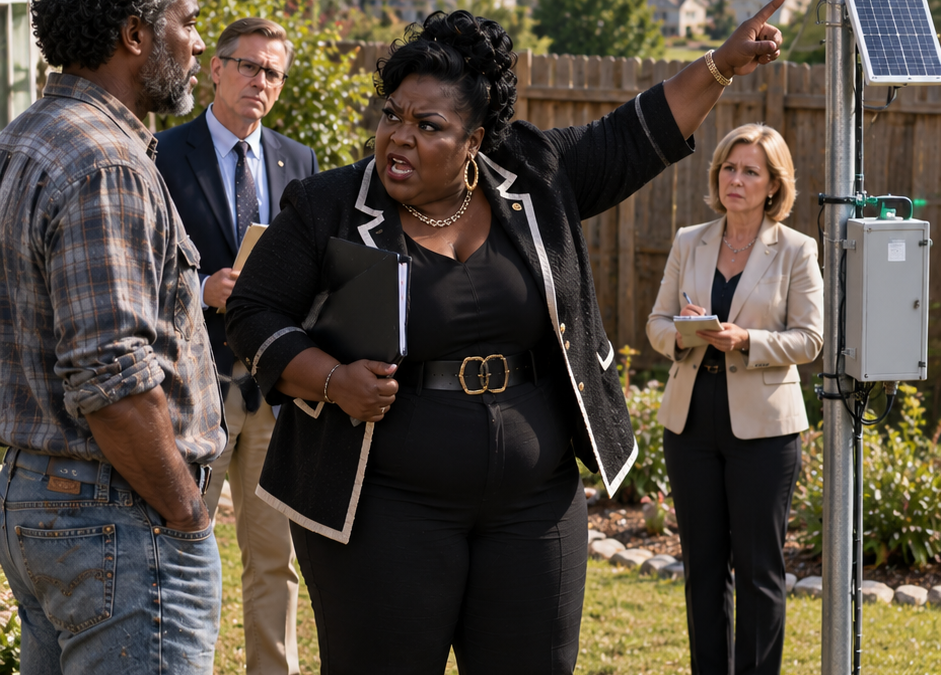
𝗣𝗔𝗥𝗧 𝟮
The county had installed the station.
And the aesthetic clause specifically deferred to recorded easements and encumbrances running with the land.
That language had been in the covenants since 1991.
Long before Diane had ever imagined becoming president.
I sent her an email.
I kept it short.
I had spent too many years in technical meetings not to understand that long explanations often provide people with more pieces to attack while allowing them to avoid the central point.
My email read:
The equipment referenced in your notice should not be moved. Before taking any further enforcement action, please review the county land records associated with my parcel.
That was all.
I did not say “emergency management.”
I did not say “county-owned weather station.”
I did not attach the easement.
I have been asked more than once whether I was setting Diane up.
I wasn’t.
A trap requires concealing the way out.
I told her exactly where the answer was.
The county land records.
Public.
Recorded.
Searchable.
Available to her, her attorney, every board member, and anyone else willing to spend ninety seconds looking.
Part of me also understood something less noble.
After being told I was an old man playing scientist, I wanted her to do the work herself.
If I had written three paragraphs explaining the station, she would have argued with me.
If she pulled the recorded instrument herself, she would have to argue with the county clerk’s stamp.
Her reply came eleven minutes later.
Attend Tuesday’s board meeting.
Nothing else.
The Brier Glenn clubhouse always smelled like industrial carpet cleaner mixed with stale coffee.
That Tuesday, nineteen residents showed up.
That was a crowd by our standards.
Diane had been issuing violation notices all month, and people were nervous about fences, sheds, basketball hoops, and whatever else might attract the attention of the new administration.
Diane sat in the center of the long board table.
To her left sat Caleb Sloan, the HOA attorney.
Caleb was around forty-four, well dressed, quiet, and permanently carried the exhausted look of a man paid by the hour to translate other people’s emotions into legal language.
Ray sat beside him.
Mara was on Diane’s other side taking minutes.
I chose the third row.
I carried a folder.
I never opened it.
When my violation came up, Diane read the notice aloud.
Then she started improvising.
She called the station a toy.
Then a personal project.
Then “junkyard science.”
Two residents in the back laughed.
Diane heard them.
I watched the satisfaction touch her face.
“Mr. Avery,” she said, looking directly at me, “knowing a few technical terms does not put you above the rules of this association.”
I waited.
Silence has always interested me.
If you let three seconds pass in a room where everyone expects a fight, people suddenly listen much harder.
“I never said I was above the rules.”
“Then do what an adult does,” Diane said. “Take it down.”
Caleb shifted in his chair.
That was the first thing during the meeting that actually interested me.
Not Diane’s insult.
Not the laughter.
The lawyer.
He had a yellow legal pad in front of him.
He had barely written anything.
I realized he had likely never seen a title report on my parcel.
He couldn’t evaluate a recorded easement nobody had shown him.
Diane had apparently brought him a covenant violation and asked him to treat it like one.
So he sat there while his client described county instrumentation as junkyard science.
I don’t excuse him entirely.
But I understood how he got there.
Before I sat down, I made one request.
“If the board intends to proceed, please issue every directive in writing.”
Diane almost smiled.
“Gladly.”
Mara wrote it into the minutes.
I watched her pen move.
Diane thought I was asking for paperwork because I was intimidated.
That is one of the more dangerous assumptions people make.
A frightened person sometimes asks for paper as protection.
A patient person asks for paper because paper remembers.
Four days later, Diane signed another notice.
The HOA would fine me $250 per day beginning Friday if the station remained.
Her signature was in blue ink.
Wide.
Confident.
The loop of the D ran underneath the rest of her name as though she had underlined herself.
I filed it.
I did not pay.
And I did not respond.
Over the next week, Diane started driving past my house more often.
Sometimes morning.
Sometimes late afternoon.
She always slowed near the curve where the backyard became visible.
One day, I had the telemetry housing open while checking a connector.
She stopped in the street and lowered her window.
“What are you doing?”
“Checking a connection.”
She laughed.
One short sound.
“It doesn’t matter. Next week it won’t be there.”
I stayed crouched.
“You know,” she added, “you could just put a weather app on your phone like a normal person.”
I looked over.
“Yes, ma’am.”
She drove away.
I finished torquing the connector.
That conversation would become much funnier later.
At the time, it mostly made me tired.
What Diane had never bothered to ask was why the weather station existed.
Eight years earlier, the county emergency management office had a data problem.
Most official surface observations in our area came from the regional airport twenty-two miles east.
The airport sat on relatively flat ground.
Brier Glenn did not.
We lived on the western side of a ridge above a creek corridor.
Weather behaved differently here.
Wind funneled through the gap above the creek and accelerated.
Thunderstorm cells sometimes stalled against the slope and dumped several inches of rain on us while the airport gauge saw a fraction of that.
Cold-air inversions pooled in the low terrain during winter.
Fire-weather conditions could shift across the ridge faster than the regional data reflected.
For most people, those differences were interesting.
For emergency managers, they mattered.
If you were deciding where to send a severe weather warning, where fire crews might encounter wind shifts, or whether a low-lying road was likely to flood, conditions on this side of the ridge could not always be inferred from a sensor twenty-two miles away.
The county wanted a permanent observation point.
Their site analysis identified several possible locations.
My back lot was the best one.
Good exposure.
Reliable power nearby.
Open approach for maintenance.
And a landowner willing to cooperate.
A county employee named Doyle came out with a survey crew.
We spent two hours walking the property in August heat.
They explained the project.
I asked questions.
We negotiated the footprint.
Then lawyers did what lawyers do.
The result was a recorded Public Safety Instrumentation and Access Easement.
It covered a small defined portion of my property where the station sat.
It granted the county the right to install, operate, maintain, repair, replace, and access the equipment.
It also established a fifteen-foot service corridor from the end of the cul-de-sac so county vehicles could reach the site.
The easement ran with the land.
Meaning it survived ownership changes.
It did not depend on the HOA president’s approval.
It did not disappear because someone disliked galvanized steel.
The county owned the equipment.
Every bolt.
Every sensor.
Every enclosure.
I was not a county employee.
I wasn’t secretly running the emergency management office from my kitchen.
I was simply the landowner who had granted the easement.
Because of my technical background, a maintenance addendum allowed me to perform basic visual inspections and connector checks when requested.
Nothing more.
The county paid a small annual consideration.
It barely covered my water bill.
I didn’t care.
I liked the station.
Not aesthetically.
Functionally.
I had spent most of my career making sure information arrived where it was needed.
There was something satisfying about knowing a little mast behind my house sent honest numbers into a system people depended on.
The recorded easement sat inside a fireproof document box in my hall closet.
After Diane’s fine notice arrived, I took it out.
Laid it across the kitchen table.
Photographed every page.
The recording stamp.
Book and page reference.
Survey exhibit.
Metes and bounds.
Access terms.
Maintenance addendum.
Then I put everything back.
I still did not send it to Diane.
I had already told her where to find it three times.
Then the weather changed.
Nothing catastrophic was predicted.
Not at first.
A broad upper-level trough was moving east faster than earlier guidance had suggested.
A line of storms was expected to organize along a cold front and move through the county the following afternoon.
I have always read weather discussions the way some men read sports pages.
Station 14 was showing the pattern before the sky changed.
Pressure falling steadily.
Dew points rising.
Wind backing southeast.
Speeds increasing through the creek corridor.
Each number meant little alone.
Together, they told a story.
Thursday afternoon at 4:20, my phone rang.
Tessa Monroe.
Tessa was the county meteorologist who had handled West Valley observations for five years.
She was thirty-nine, direct, technical, and allergic to wasted words.
“Station Fourteen look healthy from your end?”
“Yes.”
“Feed’s clean.”
“Hardware too. I reseated a connector two weeks ago after an intermittent dip. Rain gauge was cleared Sunday.”
“Good.”
She was about to hang up.
“Tessa.”
“Yeah?”
“What happens if somebody intends to move the station?”
Silence.
Long enough that I checked the phone.
Then her voice changed.
“Who intends to move it?”
“I’d rather send you something.”
“Send everything.”
Within four minutes, I forwarded the entire file.
Violation notice.
My first email.
My second written warning after the board meeting.
Fine notice.
Community bulletin.
And the HOA work announcement identifying a removal contractor scheduled for Friday morning.
Tessa replied nineteen minutes later.
Two sentences.
Do not physically interfere with anyone.
I am escalating this now.
I answered:
Understood.
Then I did nothing.
That matters.
I didn’t chain myself to the mast.
I didn’t block the access lane.
I didn’t threaten the contractor.
I didn’t call neighbors and ask them to form a crowd.
I had spent too much of my professional life watching manageable procedural problems turn into personal disasters once somebody decided physical confrontation would improve the paperwork.
Diane sent a community bulletin Thursday evening.
The HOA, she wrote, was “addressing an unapproved structure in order to protect neighborhood property values.”
Then she added:
No individual homeowner stands above the rules we all agreed to.
I read that sentence several times.
Mostly I felt tired.
Underneath the tiredness, though, was a small spark of anticipation.
I’m not particularly proud of it.
But it was there.
Friday morning arrived clear and strangely still.
High haze.
Soft light.
The sort of atmosphere that feels unfinished.
At 7:40, the first truck turned onto Brier Glenn Drive.
Clear View Landscape and Removal.
A flatbed towing a small excavator.
Behind it came a pickup carrying two workers and a rack of tools.
Ninety seconds later, Diane arrived.
She parked her white SUV across the mouth of my driveway.
Caleb Sloan pulled in behind her.
He sat inside his sedan for almost a minute before getting out.
Ray and Mara arrived together.
They stood near the curb.
Neither looked enthusiastic.
I came outside carrying coffee.
That part wasn’t theater.
It was 7:40 in the morning.
I drink coffee.
Diane walked up the driveway with a folder pressed against her chest.
“The deadline has passed.”
“Good morning.”
She stared at me.
I looked toward Ray.
“Morning, Ray.”
“Morning.”
He answered automatically, then looked embarrassed.
The two Clear View workers had gotten out.
The older one wore a company cap and had hands that told me he had spent decades around equipment.
Both men watched us cautiously.
They had clearly stepped into property disputes before.
I walked toward them.
“I’m Desmond Avery. I own the property.”
The older man nodded.
“Yes, sir.”
“Before you touch anything, has anyone told you that the equipment you’re here to remove may be part of a public safety system?”
Both men stopped.
The older one looked toward Diane.
“Ma’am?”
She moved quickly.
“Do not listen to him. This property is within the association and the board has authorized abatement.”
I pointed toward the gray telemetry box.
“Read the placard before anything happens.”
A stainless-steel plate was riveted to the enclosure.
Four inches by six.
Deeply engraved.
PROPERTY OF COUNTY EMERGENCY MANAGEMENT
STATION 14
Below that was a contact number and installation reference.
The older contractor read it.
Then Diane walked over.
She looked for maybe two seconds.
“That’s an old label.”
I will never forget that.
Not because it was clever.
Because it revealed just how complete her version of reality had become.
She had decided the mast belonged to me.
Therefore any evidence that contradicted that conclusion had to be outdated, irrelevant, fake, or misunderstood.
Caleb stepped closer.
He read the plate.
He did not call it outdated.
He removed his glasses.
Put them back on.
Then turned toward Diane.
“Did the association obtain a title report on this parcel?”
That was the first competent question anyone from the HOA had asked in five weeks.
It came four minutes too late.
“Caleb,” Diane said sharply, “don’t let him drag this out.”
Then she turned toward the contractors.
“Move that weather station.”
The older contractor hesitated.
Three seconds.
Maybe four.
Then he walked toward the mast.
I did not block him.
At the base of the station was a protective cage surrounding the junction area and anchor assembly.
The contractor unlatched it.
The cage had a magnetic tamper contact.
The mast also carried a three-axis accelerometer.
County equipment installed in remote areas tends to be monitored for tampering because people do strange things to equipment they don’t understand.
The contractor crouched.
Placed a pry bar against the anchor plate.
Applied pressure.
The mast shifted slightly.
Not enough for anyone standing there to notice.
Enough for the accelerometer.
Twenty-two miles east, inside the county operations center, Station 14 generated a tamper alert.
We heard nothing.
No siren.
No alarm.
Just wind through the trees.
I looked at my watch.
A few minutes later, at 8:19, a white county pickup turned onto Brier Glenn Drive.
An amber light bar sat on the roof.
No siren.
No emergency lights.
Behind it came a dark utility vehicle.
Then a technical-services van with equipment racks visible through the rear windows.
Three vehicles.
Driving slowly.
Deliberately.
Every person in my driveway stopped what they were doing.
The older contractor set the pry bar down.
Diane watched the vehicles approach.
I remember thinking that lights and sirens would have been less unsettling.
The quiet made it official.
A man stepped from the second vehicle.
Late fifties.
Gray at the temples.
Khakis.
County Emergency Management polo shirt.
He closed the door and surveyed the entire scene.
Truck.
Trailer.
Excavator.
Open protective cage.
Contractors.
Board members.
Me.
He took his time.
That was Grant Ellison, county emergency management director.
Tessa Monroe got out from the passenger side carrying a tablet.
A technical specialist followed with a hard case.
Tessa walked straight to the station.
She didn’t acknowledge anybody.
Diane approached Grant.
She held out her hand.
“I’m Diane Hargrove, president of Brier Glenn Estates Homeowners Association. This is an internal community matter.”
Grant did not take her hand.
“It stopped being an internal matter at 8:16 this morning.”
Then he walked around her.
I watched Diane turn.
For the first time since I had met her, somebody had declined to enter the conversation through the door she opened.
Grant crouched at the mast.
He examined the open cage.
The anchor plate.
Fresh pry marks in the galvanizing.
Ground strap.
Conduit.
Telemetry seal.
Tessa had station diagnostics open on her tablet.
She read status values quietly.
The technician photographed everything.
Anchor plate.
Tool marks.
Cage latch.
Bolt heads.
He placed a measurement scale beside each mark before taking the picture.
It was methodical.
Professional.
And visibly unfamiliar to the HOA board standing behind me.
Grant straightened.
“Who gave the order to move Station Fourteen?”
Nobody answered.
Ray looked at Mara.
The contractor stepped backward from the mast.
Caleb stood with his folder closed against his leg.
He had already done the legal arithmetic.
I could see it on his face.
I didn’t speak.
I looked at Diane.
After a few seconds, everyone else did too.
That is one of the risks of spending years making sure everyone knows you’re the person in charge.
Eventually, when something goes wrong, people know exactly where to look.
“The association authorized removal,” Diane said.
“The installation violates our architectural covenants.”
Grant nodded slightly.
“The homeowners association is directing the county to relocate emergency warning instrumentation.”
He didn’t say it angrily.
He phrased it like confirmation.
That made it worse.
Diane’s expression shifted.
Surprise.
Annoyance.
Then adaptation.
She found a new story almost instantly.
“I was told this belonged to Mr. Avery.”
“No,” I said quietly.
She ignored me.
“We received complaints about the structure. We were never informed that the county had any ongoing involvement.”
Grant looked at her.
“Did Mr. Avery provide documentation?”
“He refused to cooperate.”
I already had my phone out.
“May I read something?”
Grant nodded.
I opened my first email.
Dated five weeks earlier.
I read the sentence asking the association to review the county land records associated with my parcel before taking any action.
Then I opened my second written warning.
Again requesting review of the land records.
Then I looked at Diane.
“And before either of those, I told her in person to check the records.”
Ray was there.
Mara was there.
Neither contradicted me.
Grant turned to Tessa.
“Pull the parcel.”
She already had.
She rotated her tablet toward Caleb first.
I noticed that.
So did he.
At the top of the document:
PUBLIC SAFETY INSTRUMENTATION AND ACCESS EASEMENT.
My parcel number.
County recording stamp.
Book and page.
Survey exhibit.
Metes and bounds.
Recorded years before Diane’s election.
Below it was the maintenance and access agreement with my signature and Doyle’s.
Caleb read slowly.
He scrolled.
Read again.
Then handed the tablet back.
He looked down at the grass.
Grant addressed the group.
“This equipment is currently transmitting live observations to the county operations center.”
Nobody spoke.
“We have a strong storm system expected to enter the western county this afternoon.”
He pointed toward the mast.
“This is the only dedicated surface observation site between the ridge and the state line capable of giving us this specific slope-level data.”
Diane’s arms tightened around the folder.
Grant continued.
“The regional airport does not experience the same wind, rainfall, or low-level temperature behavior as this side of the ridge.”
No adjectives.
No drama.
Just facts.
“The anchor assembly now has fresh tool damage.”
Diane looked toward the contractor.
He looked away.
“And this station generated a tamper alert approximately three minutes before we arrived.”
That was when I thought the morning was over.
It wasn’t.
Grant turned toward Tessa.
“Check the access corridor.”
She nodded.
The recorded easement included a fifteen-foot county service corridor from the cul-de-sac to the station.
I rarely used it.
County technicians did when larger equipment was necessary.
Tessa and the technician walked behind the neighboring lots.
They disappeared for about seven minutes.
When they came back, Tessa’s expression had changed.
“The access corridor is obstructed.”
Grant looked at her.
“How?”
“Decorative fencing at two points. Masonry gate pier. Three stone planters inside the easement footprint.”
“Gate width?”
“Approximately six feet.”
“Required?”
“Twelve for the service truck. Fifteen-foot corridor remains recorded.”
Grant looked toward the HOA board.
“Who authorized the gate?”
Silence.
Then Ray spoke.
“Diane.”
His voice was almost apologetic.
Mara nodded.
“The president approved it under the discretionary appearance budget.”
Diane turned.
“The board reviewed the rendering.”
Mara looked directly at her.
“The board saw a rendering. There was no easement review and no recorded vote approving encroachment.”
That sentence told me Mara had been waiting for someone to ask the right question for a while.
Grant nodded.
“Then we have two separate issues.”
He pointed toward the mast.
“Interference with Station Fourteen.”
Then toward the rear corridor.
“And obstruction of a recorded emergency access easement predating today’s attempted removal.”
Diane turned toward me.
“If he had simply explained himself properly from the beginning—”
That was the only time all morning I interrupted.
“I told you to check the records three times.”
Nothing else.
No speech.
No insult.
Three times was the correct number.
Caleb confirmed it.
He opened his folder.
Found the email chain.
Diane herself had apparently forwarded it to him as proof of my noncompliance.
He read my warnings aloud.
Neutral voice.
Exact words.
Then he closed the folder.
And said:
“Diane, I asked you whether there were any recorded encumbrances affecting this parcel before I prepared the violation correspondence.”
He stopped there.
He never said what she had told him.
He didn’t need to.
That was probably the most professionally brutal thing I saw during the entire dispute.
Five weeks earlier, I had sat in the third row of the clubhouse while residents laughed at “junkyard science.”
Now Diane stood on my lawn while her own attorney established, in front of witnesses, that he had asked the right question and been given the wrong information.
Ray had unconsciously moved several feet away from her.
The contractors were already walking toward their trucks.
Grant issued instructions.
Removal work stopped immediately.
Clear View was released.
The station would remain untouched until a technical inspection confirmed no functional damage had occurred.
The county would document the anchor plate.
The service corridor had to be restored.
Until then, the HOA would be responsible for ensuring immediate emergency access whenever county personnel required it.
County counsel would contact the association attorney regarding the encroachments and attempted interference.
Grant directed most of that toward Caleb.
Not Diane.
I suspected she noticed.
Then he looked at her.
“Mrs. Hargrove, Mr. Avery is not the person obstructing this community today.”
That was the last thing he said to her.
By 9:15, the trucks were leaving.
The excavator never came off the trailer.
Caleb drove away with his phone already against his ear.
Ray and Mara left together.
Diane sat in her SUV for several minutes.
Then she pulled away.
No one waved.
Tessa stayed.
She ran a full diagnostic.
Wind sensor.
Pressure.
Humidity.
Temperature.
Telemetry.
Rain gauge.
Backup communications.
Everything passed.
“The alert hit at 8:16 and forty seconds,” she told me.
I nodded.
Then she said something I appreciated.
“You know we’d have come for any station.”
“I know.”
“It’s not about you.”
“That’s why it never felt like revenge.”
She studied me for a moment.
Then nodded.
That afternoon, Station 14 demonstrated exactly why it existed.
The front arrived harder and earlier on our side of the ridge than the regional observations suggested.
By three o’clock, the western sky had turned the color of dull metal.
Pressure fell sharply.
The wind rose.
At 3:22, Station 14 measured sustained winds near thirty-eight miles per hour.
The strongest gust reached sixty-one.
At almost the same time, the airport station twenty-two miles east was reporting roughly half that wind and only light rain.
Two stations.
Same county.
Very different conditions.
That difference was not some technical curiosity.
It was the point.
Emergency management combined our local readings with radar, upstream observations, lightning data, and the rest of the network.
The western half of the county was deteriorating faster than the broader guidance implied.
At 3:26, phones throughout Brier Glenn sounded the warning tone.
Mine did.
Mrs. Delacroy’s did.
Ray’s did.
Mara’s did.
And somewhere nearby, Diane Hargrove’s phone did too.
Nothing catastrophic happened.
I want to be clear about that.
No tornado.
No fatalities.
No injuries in our neighborhood.
We received a little over two inches of rain in less than an hour.
Wind stripped large limbs from the young maples along the boulevard.
A forty-year-old poplar came down near Holly Court.
Power went out on the west side of the development for almost five hours.
People had warning.
Roughly eleven minutes before the worst conditions reached us.
Eleven minutes does not sound like much until you imagine what can happen inside eleven minutes.
A child comes indoors.
A car is moved away from a tree.
Patio furniture gets secured.
Someone closes a garage door.
A person gets away from windows.
Mrs. Delacroy managed to carry her folding chairs and wind chimes into the garage.
She later told me she had about four minutes left before the wind became too strong for her to stay outside comfortably.
She didn’t know Station 14 had contributed to the warning.
I didn’t explain it.
I didn’t need the credit.
I sat in my kitchen during the storm with the power out, listening to rain flatten itself against the windows.
And I remembered Diane leaning from her SUV.
You could put a weather app on your phone like a normal person.
The irony was almost too clean.
Weather apps do not create weather observations.
They consume them.
Behind every polished interface are radars, satellites, airport stations, river gauges, volunteer networks, automated instruments, remote sensors, and ugly galvanized poles sitting behind ordinary houses.
Her phone knew enough to warn her because equipment she thought was beneath her attention had been collecting the data.
Grant called shortly after eight that evening.
“Station Fourteen performed perfectly.”
“Good.”
“West Valley was one of our cleanest early indicators.”
I looked through the dark toward the mast.
The green light blinked.
“I suppose it still isn’t pretty.”
Grant laughed once.
“It doesn’t need to be.”
The HOA scheduled a special meeting for the following Thursday.
This time, the clubhouse overflowed.
More than forty people came.
Residents stood along the rear wall and spilled into the hallway.
Diane opened the meeting by calling what had happened “a misunderstanding.”
She used the word unfortunate twice.
Then she said:
“With better communication from all parties, this situation could have been avoided.”
And she looked directly at me when she said all parties.
I had prepared a speech.
Three pages.
I threw it away before leaving home.
I’ve spent enough time in meetings to know that a long speech rarely beats a short document.
When the floor opened, I walked forward carrying a manila folder.
I placed four items on the table.
My first email.
My second written warning.
The recorded easement.
The $250-per-day fine notice bearing Diane’s signature.
Then I added the work authorization for Clear View.
Also bearing Diane’s signature.
“A misunderstanding happens when people don’t have enough information,” I said.
The room was silent.
“I told the president three times exactly where the information was.”
Diane started speaking.
Caleb put one hand flat on the table.
She stopped.
That tiny gesture probably prevented several more problems.
Caleb addressed the room.
Every fine assessed against me was void.
All would be rescinded in writing.
The contractor’s cancellation charges would be paid by the association.
So would county documentation and inspection expenses attributable to the incident.
Legal costs had already begun accumulating.
The fencing, gate, masonry pier, and planters inside the recorded county corridor had to be moved.
A contractor’s preliminary estimate placed that work above nineteen thousand dollars.
Then he reached the part that mattered most to everyone in the room.
The association’s procedures had failed.
One president had been able to initiate enforcement against a parcel, approve contractor involvement, and commit association resources without anyone verifying whether a recorded public easement affected the property.
A homeowner near the front asked the obvious question.
“Why wasn’t that checked?”
Caleb paused.
“I cannot answer for the board’s internal process.”
Ray could.
He leaned toward his microphone.
“Because we relied on the president.”
Diane looked at him.
Ray continued.
“And that was our mistake.”
Then he made a motion.
He didn’t perform.
Didn’t lecture.
Didn’t try to save himself.
“The board has a duty to this community. We failed that duty here. I move that Diane Hargrove be removed as president.”
Mara spoke immediately.
“I second.”
Diane stared at both of them.
“This is ridiculous.”
Caleb leaned toward her and spoke quietly.
I couldn’t hear the words.
I assume the meaning was stop.
The vote proceeded.
Name by name.
Nobody shouted.
Nobody cheered.
Nobody called security.
There was no dramatic confrontation.
I was glad.
Real accountability often looks much quieter than people expect.
Diane remained in the same center chair where she had told me I wasn’t above the rules.
Mara read each vote.
The margin was not close.
Diane was removed.
I did not smile.
I didn’t feel triumphant.
Mostly, I felt relieved that somebody else finally understood what I had been trying to say from the beginning.
Rules matter.
So do the boundaries of those rules.
Over the following three weeks, the county access corridor was restored.
The decorative gate was relocated eleven feet north.
The opening was widened.
The stone piers were rebuilt outside the easement.
The planters were moved to the boulevard.
They actually looked better there.
The damaged station anchor assembly was replaced.
The county did not bill me.
It wasn’t my equipment.
The HOA eventually covered the costs associated with the interference and access obstruction as required.
Then the association adopted a new policy.
It appeared in the newsletter in bold.
Any proposed enforcement or construction activity affecting a utility, easement, right-of-way, drainage area, telecommunications system, or other infrastructure had to receive documented parcel-record review and legal review before action could be taken.
One paragraph.
A very expensive paragraph.
Had somebody insisted on that procedure before Diane’s presidency, the association could have saved itself weeks of humiliation and thousands of dollars.
Diane never returned to the board.
She still lived in Brier Glenn for some time afterward.
I occasionally saw her white SUV.
It no longer slowed at the curve near my property.
People asked me twice whether I wanted a board seat.
I declined twice.
I had no interest.
I never wanted Diane’s chair.
Wanting that chair too much was part of what had gotten her into trouble.
Power is useful only when you understand its boundaries.
Diane believed being HOA president meant every visible problem in Brier Glenn belonged to her.
An ugly mast?
Her problem.
A homeowner saying no?
Her problem.
A metal gate improving the appearance of the rear corridor?
Her decision.
Recorded county documents were inconvenient because they reminded her that some things existed beyond the reach of her title.
I think that was what she truly couldn’t tolerate.
Not the weather station.
Limits.
A few weeks after the storm, I went outside early with coffee.
The air was cool.
Bright.
Dry leaves had collected inside the lip of the rain gauge.
I brushed them away.
Same little maintenance chore I had done dozens of times.
Tessa’s county truck was parked at the end of the now-clear service corridor.
She had finished a quarterly calibration.
She raised one hand.
I raised mine.
No speech.
No applause.
No ceremony.
Station 14 stood where it had stood for eight years.
Ten feet of galvanized steel.
Ugly as ever.
A new anchor plate at the base.
Green telemetry light blinking.
Anemometer cups turning slowly in a southwest breeze.
And I stood there thinking about the first morning Diane had walked into my yard.
She had looked at the station for less than a minute and decided she understood everything she needed to understand.
Who owned it.
Why it was there.
What it did.
Whether it mattered.
Who I was.
That last assumption may have been the most revealing.
She saw a fifty-two-year-old man living alone with tools in his shed and decided the mast must be some little project I had built to entertain myself.
When I advised her to check the county records, she heard ego instead of information.
When I asked for written directives, she heard fear instead of documentation.
When I refused to remove the mast, she saw stubbornness instead of legal restraint.
Even when a metal plate told her plainly that the equipment belonged to emergency management, she dismissed it as an old label because accepting the label meant admitting that the story she had created about me was wrong.
That was the mistake underneath every other mistake.
She wasn’t investigating facts.
She was defending an assumption.
And every time reality gave her another opportunity to correct course, she treated correction as opposition.
The deed record.
My emails.
The covenants.
Caleb’s questions.
The placard.
The contractors’ hesitation.
Each one was an exit.
She ignored all of them.
Until three county vehicles came down the street and there were no exits left.
I sometimes think about what would have happened if the contractor had reached the mast thirty minutes earlier.
Maybe they would have loosened the anchors.
Maybe severed conduit.
Maybe damaged the telemetry system badly enough to interrupt observations before the storm.
Would the county still have issued a warning?
Probably.
They had radar.
Regional observations.
Other data.
Station 14 was part of a network, not some magical machine carrying the safety of the entire county by itself.
But that misses the point.
Emergency systems are built from layers because every reliable source improves the picture.
No one gets to remove one layer casually because it offends an architectural preference.
No HOA president gets to decide that a recorded public safety installation has become unnecessary because she thinks weather applications are more attractive.
And no homeowner should have to physically defend county equipment from people who could have solved the entire question by reading one public document.
That was the lesson I carried away from it.
Not that I had beaten Diane.
I didn’t.
She beat herself one decision at a time.
I told her where to look.
She refused.
Her attorney asked the right question.
She brushed him aside.
The equipment identified its owner.
She dismissed the label.
The contractor hesitated.
She ordered him forward.
By the time Grant Ellison arrived, there was almost nothing left for me to do except stand there and let the record catch up with her.
Months afterward, Mrs. Delacroy came over while I was trimming branches near the rear fence.
She looked at the mast.
“So that’s the thing that warned us?”
“One of the things.”
She nodded.
“Still ugly.”
I laughed.
“Absolutely.”
She pointed at it.
“Leave it.”
“I plan to.”
That conversation pleased me more than the board vote ever did.
Because she understood the only thing that really mattered.
The station didn’t exist to be attractive.
It existed to work.
The anemometer did not care about property values.
The rain gauge did not care who sat at the center of the board table.
The easement did not care who won an HOA election.
And the county clerk’s recording stamp certainly did not care whether Diane Hargrove thought galvanized steel matched the neighborhood.
Those things simply existed.
Quietly.
Precisely.
Doing what they had been designed to do.
So did the rules protecting them.
Diane spent five weeks trying to prove that one homeowner could not place himself above the authority of an association.
On that narrow point, she was right.
No homeowner should be above legitimate rules.
But she never considered the other half of the principle.
An association is not above the documents that create and limit its authority either.
It is not above recorded property rights.
It is not above a public safety easement.
It is not above county emergency infrastructure.
And its president is certainly not above the obligation to read before she orders someone else to tear something down.
Station 14 never moved.
Eight years after its installation, it remained on the same concrete pad behind my house, sending wind, rain, temperature, humidity, and pressure data toward people whose job was to turn those numbers into useful decisions.
The only thing Diane Hargrove ever succeeded in removing from Brier Glenn was the one thing she had been most determined to protect.
Her own chair.
Have you finished reading the story and want to read it again?
The HOA President Called My Weather Station Junk, but She Never Checked Who It Actually Belonged To
Diane Hargrove gave me seventy-two hours to remove the weather station behind my house.
I asked her only once whether she was certain she wanted to put that order in writing.
By the next morning, three county vehicles were turning onto our street while her removal crew stood with a pry bar against the mast.
My name is Desmond Avery.
I was fifty-two when all of this happened, old enough to know that arrogance rarely announces itself as arrogance.
Usually it arrives dressed as efficiency.
Authority.
Standards.
Sometimes it carries a leather folder and tells you it is only trying to protect property values.
I lived alone at the last house on Brier Glenn Drive, where the pavement ended and the land began dropping toward a wooded creek bed. My lot was larger than most in Brier Glenn Estates because the subdivision narrowed toward the western ridge, leaving my backyard exposed to open slope and sky.
About forty feet behind the rear corner of my house stood a galvanized steel mast roughly ten feet tall.
It was not beautiful.
I have never claimed otherwise.
Mounted to it were an anemometer, a wind vane, a shielded temperature and humidity sensor, a tipping-bucket rain gauge, a barometric sensor, and a weatherproof telemetry enclosure with a stubby antenna.
A green status light blinked every few seconds.
That was about as dramatic as the whole thing got.
It made no noise.
Cast no meaningful light.
Blocked nobody’s view.
And for eight years, practically nobody cared that it existed.
The Kramers next door had long since stopped noticing it.
Mrs. Delacroy, who lived behind me and had been in Brier Glenn since before the street trees had shade, once asked whether the rain gauge froze in winter.
That was the full extent of her concern.
Walter Prime, the previous HOA president, had asked about the mast exactly once.
Walter was a retired mail carrier who believed most neighborhood problems could be resolved by speaking to people before mailing them threats.
He had come over one afternoon after a storm dropped a limb across my side fence.
He pointed toward the equipment.
“County thing?”
“Yes.”
“Weather?”
“Mostly.”
He nodded.
“All right.”
That was the entire conversation.
For years, the station blended into the tree line so completely that if you asked residents to describe my backyard, most would have mentioned my storage shed before the mast.
Then Diane Hargrove became HOA president.
Diane won the election with a presentation titled something close to Protecting Brier Glenn’s Premium Future.
I remember the slides because neighbors talked about them afterward.
Uniform fencing.
Updated entrance landscaping.
Architectural consistency.
Improved curb appeal.
Stricter enforcement.
She used the phrase “protecting value” the way preachers use scripture.
Three days after the election, her white SUV came up my driveway.
She left the engine running.
Two board members were with her.
Ray Whitaker was a quiet accountant who looked uncomfortable even before he stepped out of the vehicle.
Mara Dunn was the board secretary and carried a notebook everywhere.
Diane wore a pressed blazer on a Saturday morning.
She did not knock.
She did not introduce herself.
She walked around the side of my house and stopped in the backyard with both hands on her hips, staring up at the spinning cups on the anemometer as though she had discovered industrial machinery in a children’s playground.
I followed her outside.
“Morning.”
She pointed upward.
“That has to go.”
Those were the first words Diane Hargrove ever said directly to me.
I looked at the mast.
Then at her.
“Did you check the records on it?”
Her expression barely changed.
“What records?”
“The property records.”
She gave me a small smile.
Not friendly.
Patient.
The kind of smile people use when they have already decided you’re difficult and want witnesses to see how graciously they’re managing you.
“I don’t need property records to know a metal tower lowers surrounding home values.”
“It’s ten feet tall.”
“It’s visible.”
“So is my shed.”
“The shed looks residential.”
I nodded once.
“Check the records before you sign anything.”
Behind her, Ray looked toward the gray telemetry enclosure.
He seemed curious.
Diane didn’t even glance back at him.
She kept her attention on me.
“This is obviously hobby equipment.”
I said nothing.
She continued.
“I understand men your age sometimes need projects.”
That one almost got a reaction out of me.
Almost.
She said it with sympathy.
Real sympathy, which somehow made it worse.
“I’m sure it gives you something technical to work on. But Brier Glenn has standards, and your personal projects can’t override them.”
I stood on my own grass and let her finish.
There is a kind of insult that tells you far more about the person delivering it than the person receiving it.
I had spent twenty-six years working in telecommunications and remote instrumentation.
Before my knees started complaining and the industry changed enough that I was happy to step away, I had installed, maintained, troubleshot, and commissioned equipment in places where a bad assumption could take an entire communication link down.
Microwave relays.
Telemetry systems.
Remote monitoring packages.
Industrial data connections.
I had learned early that confidence did not make a signal reach its destination.
Documentation did.
Testing did.
Knowing exactly what equipment belonged to whom did.
Diane knew none of that.
And I had no intention of reciting my résumé in my backyard to earn the right to be heard.
So I repeated myself.
“You should check the county records before you issue anything.”
Her chin rose slightly.
She heard that as defiance.
“I’ll keep that in mind.”
She said it in the tone people use when they absolutely will not.
Then she turned and walked back toward her SUV.
Ray glanced over his shoulder once before getting in.
I went inside.
Made coffee.
And stood at my kitchen sink watching the green telemetry light blink through the screen door.
Three days later, I received a certified letter.
The HOA gave me seventy-two hours to remove or relocate the mast.
The notice cited three provisions of the Brier Glenn covenants.
One prohibited unapproved antennas and transmitting equipment.
One prohibited metal structures visible from common areas.
And one was the usual broad aesthetic language about maintaining architectural harmony.
I sat at my kitchen table with the letter, the covenants, and a pencil.
I read each cited section twice.
By the second pass, I knew Diane had a problem.
She just didn’t know it yet.
The antenna rule contained an exemption for equipment installed pursuant to governmental authority.
The metal-structure provision addressed structures erected by individual owners.
I had erected nothing.
The county had installed the station.
And the aesthetic clause specifically deferred to recorded easements and encumbrances running with the land.
That language had been in the covenants since 1991.
Long before Diane had ever imagined becoming president.
I sent her an email.
I kept it short.
I had spent too many years in technical meetings not to understand that long explanations often provide people with more pieces to attack while allowing them to avoid the central point.
My email read:
The equipment referenced in your notice should not be moved. Before taking any further enforcement action, please review the county land records associated with my parcel.
That was all.
I did not say “emergency management.”
I did not say “county-owned weather station.”
I did not attach the easement.
I have been asked more than once whether I was setting Diane up.
I wasn’t.
A trap requires concealing the way out.
I told her exactly where the answer was.
The county land records.
Public.
Recorded.
Searchable.
Available to her, her attorney, every board member, and anyone else willing to spend ninety seconds looking.
Part of me also understood something less noble.
After being told I was an old man playing scientist, I wanted her to do the work herself.
If I had written three paragraphs explaining the station, she would have argued with me.
If she pulled the recorded instrument herself, she would have to argue with the county clerk’s stamp.
Her reply came eleven minutes later.
Attend Tuesday’s board meeting.
Nothing else.
The Brier Glenn clubhouse always smelled like industrial carpet cleaner mixed with stale coffee.
That Tuesday, nineteen residents showed up.
That was a crowd by our standards.
Diane had been issuing violation notices all month, and people were nervous about fences, sheds, basketball hoops, and whatever else might attract the attention of the new administration.
Diane sat in the center of the long board table.
To her left sat Caleb Sloan, the HOA attorney.
Caleb was around forty-four, well dressed, quiet, and permanently carried the exhausted look of a man paid by the hour to translate other people’s emotions into legal language.
Ray sat beside him.
Mara was on Diane’s other side taking minutes.
I chose the third row.
I carried a folder.
I never opened it.
When my violation came up, Diane read the notice aloud.
Then she started improvising.
She called the station a toy.
Then a personal project.
Then “junkyard science.”
Two residents in the back laughed.
Diane heard them.
I watched the satisfaction touch her face.
“Mr. Avery,” she said, looking directly at me, “knowing a few technical terms does not put you above the rules of this association.”
I waited.
Silence has always interested me.
If you let three seconds pass in a room where everyone expects a fight, people suddenly listen much harder.
“I never said I was above the rules.”
“Then do what an adult does,” Diane said. “Take it down.”
Caleb shifted in his chair.
That was the first thing during the meeting that actually interested me.
Not Diane’s insult.
Not the laughter.
The lawyer.
He had a yellow legal pad in front of him.
He had barely written anything.
I realized he had likely never seen a title report on my parcel.
He couldn’t evaluate a recorded easement nobody had shown him.
Diane had apparently brought him a covenant violation and asked him to treat it like one.
So he sat there while his client described county instrumentation as junkyard science.
I don’t excuse him entirely.
But I understood how he got there.
Before I sat down, I made one request.
“If the board intends to proceed, please issue every directive in writing.”
Diane almost smiled.
“Gladly.”
Mara wrote it into the minutes.
I watched her pen move.
Diane thought I was asking for paperwork because I was intimidated.
That is one of the more dangerous assumptions people make.
A frightened person sometimes asks for paper as protection.
A patient person asks for paper because paper remembers.
Four days later, Diane signed another notice.
The HOA would fine me $250 per day beginning Friday if the station remained.
Her signature was in blue ink.
Wide.
Confident.
The loop of the D ran underneath the rest of her name as though she had underlined herself.
I filed it.
I did not pay.
And I did not respond.
Over the next week, Diane started driving past my house more often.
Sometimes morning.
Sometimes late afternoon.
She always slowed near the curve where the backyard became visible.
One day, I had the telemetry housing open while checking a connector.
She stopped in the street and lowered her window.
“What are you doing?”
“Checking a connection.”
She laughed.
One short sound.
“It doesn’t matter. Next week it won’t be there.”
I stayed crouched.
“You know,” she added, “you could just put a weather app on your phone like a normal person.”
I looked over.
“Yes, ma’am.”
She drove away.
I finished torquing the connector.
That conversation would become much funnier later.
At the time, it mostly made me tired.
What Diane had never bothered to ask was why the weather station existed.
Eight years earlier, the county emergency management office had a data problem.
Most official surface observations in our area came from the regional airport twenty-two miles east.
The airport sat on relatively flat ground.
Brier Glenn did not.
We lived on the western side of a ridge above a creek corridor.
Weather behaved differently here.
Wind funneled through the gap above the creek and accelerated.
Thunderstorm cells sometimes stalled against the slope and dumped several inches of rain on us while the airport gauge saw a fraction of that.
Cold-air inversions pooled in the low terrain during winter.
Fire-weather conditions could shift across the ridge faster than the regional data reflected.
For most people, those differences were interesting.
For emergency managers, they mattered.
If you were deciding where to send a severe weather warning, where fire crews might encounter wind shifts, or whether a low-lying road was likely to flood, conditions on this side of the ridge could not always be inferred from a sensor twenty-two miles away.
The county wanted a permanent observation point.
Their site analysis identified several possible locations.
My back lot was the best one.
Good exposure.
Reliable power nearby.
Open approach for maintenance.
And a landowner willing to cooperate.
A county employee named Doyle came out with a survey crew.
We spent two hours walking the property in August heat.
They explained the project.
I asked questions.
We negotiated the footprint.
Then lawyers did what lawyers do.
The result was a recorded Public Safety Instrumentation and Access Easement.
It covered a small defined portion of my property where the station sat.
It granted the county the right to install, operate, maintain, repair, replace, and access the equipment.
It also established a fifteen-foot service corridor from the end of the cul-de-sac so county vehicles could reach the site.
The easement ran with the land.
Meaning it survived ownership changes.
It did not depend on the HOA president’s approval.
It did not disappear because someone disliked galvanized steel.
The county owned the equipment.
Every bolt.
Every sensor.
Every enclosure.
I was not a county employee.
I wasn’t secretly running the emergency management office from my kitchen.
I was simply the landowner who had granted the easement.
Because of my technical background, a maintenance addendum allowed me to perform basic visual inspections and connector checks when requested.
Nothing more.
The county paid a small annual consideration.
It barely covered my water bill.
I didn’t care.
I liked the station.
Not aesthetically.
Functionally.
I had spent most of my career making sure information arrived where it was needed.
There was something satisfying about knowing a little mast behind my house sent honest numbers into a system people depended on.
The recorded easement sat inside a fireproof document box in my hall closet.
After Diane’s fine notice arrived, I took it out.
Laid it across the kitchen table.
Photographed every page.
The recording stamp.
Book and page reference.
Survey exhibit.
Metes and bounds.
Access terms.
Maintenance addendum.
Then I put everything back.
I still did not send it to Diane.
I had already told her where to find it three times.
Then the weather changed.
Nothing catastrophic was predicted.
Not at first.
A broad upper-level trough was moving east faster than earlier guidance had suggested.
A line of storms was expected to organize along a cold front and move through the county the following afternoon.
I have always read weather discussions the way some men read sports pages.
Station 14 was showing the pattern before the sky changed.
Pressure falling steadily.
Dew points rising.
Wind backing southeast.
Speeds increasing through the creek corridor.
Each number meant little alone.
Together, they told a story.
Thursday afternoon at 4:20, my phone rang.
Tessa Monroe.
Tessa was the county meteorologist who had handled West Valley observations for five years.
She was thirty-nine, direct, technical, and allergic to wasted words.
“Station Fourteen look healthy from your end?”
“Yes.”
“Feed’s clean.”
“Hardware too. I reseated a connector two weeks ago after an intermittent dip. Rain gauge was cleared Sunday.”
“Good.”
She was about to hang up.
“Tessa.”
“Yeah?”
“What happens if somebody intends to move the station?”
Silence.
Long enough that I checked the phone.
Then her voice changed.
“Who intends to move it?”
“I’d rather send you something.”
“Send everything.”
Within four minutes, I forwarded the entire file.
Violation notice.
My first email.
My second written warning after the board meeting.
Fine notice.
Community bulletin.
And the HOA work announcement identifying a removal contractor scheduled for Friday morning.
Tessa replied nineteen minutes later.
Two sentences.
Do not physically interfere with anyone.
I am escalating this now.
I answered:
Understood.
Then I did nothing.
That matters.
I didn’t chain myself to the mast.
I didn’t block the access lane.
I didn’t threaten the contractor.
I didn’t call neighbors and ask them to form a crowd.
I had spent too much of my professional life watching manageable procedural problems turn into personal disasters once somebody decided physical confrontation would improve the paperwork.
Diane sent a community bulletin Thursday evening.
The HOA, she wrote, was “addressing an unapproved structure in order to protect neighborhood property values.”
Then she added:
No individual homeowner stands above the rules we all agreed to.
I read that sentence several times.
Mostly I felt tired.
Underneath the tiredness, though, was a small spark of anticipation.
I’m not particularly proud of it.
But it was there.
Friday morning arrived clear and strangely still.
High haze.
Soft light.
The sort of atmosphere that feels unfinished.
At 7:40, the first truck turned onto Brier Glenn Drive.
Clear View Landscape and Removal.
A flatbed towing a small excavator.
Behind it came a pickup carrying two workers and a rack of tools.
Ninety seconds later, Diane arrived.
She parked her white SUV across the mouth of my driveway.
Caleb Sloan pulled in behind her.
He sat inside his sedan for almost a minute before getting out.
Ray and Mara arrived together.
They stood near the curb.
Neither looked enthusiastic.
I came outside carrying coffee.
That part wasn’t theater.
It was 7:40 in the morning.
I drink coffee.
Diane walked up the driveway with a folder pressed against her chest.
“The deadline has passed.”
“Good morning.”
She stared at me.
I looked toward Ray.
“Morning, Ray.”
“Morning.”
He answered automatically, then looked embarrassed.
The two Clear View workers had gotten out.
The older one wore a company cap and had hands that told me he had spent decades around equipment.
Both men watched us cautiously.
They had clearly stepped into property disputes before.
I walked toward them.
“I’m Desmond Avery. I own the property.”
The older man nodded.
“Yes, sir.”
“Before you touch anything, has anyone told you that the equipment you’re here to remove may be part of a public safety system?”
Both men stopped.
The older one looked toward Diane.
“Ma’am?”
She moved quickly.
“Do not listen to him. This property is within the association and the board has authorized abatement.”
I pointed toward the gray telemetry box.
“Read the placard before anything happens.”
A stainless-steel plate was riveted to the enclosure.
Four inches by six.
Deeply engraved.
PROPERTY OF COUNTY EMERGENCY MANAGEMENT
STATION 14
Below that was a contact number and installation reference.
The older contractor read it.
Then Diane walked over.
She looked for maybe two seconds.
“That’s an old label.”
I will never forget that.
Not because it was clever.
Because it revealed just how complete her version of reality had become.
She had decided the mast belonged to me.
Therefore any evidence that contradicted that conclusion had to be outdated, irrelevant, fake, or misunderstood.
Caleb stepped closer.
He read the plate.
He did not call it outdated.
He removed his glasses.
Put them back on.
Then turned toward Diane.
“Did the association obtain a title report on this parcel?”
That was the first competent question anyone from the HOA had asked in five weeks.
It came four minutes too late.
“Caleb,” Diane said sharply, “don’t let him drag this out.”
Then she turned toward the contractors.
“Move that weather station.”
The older contractor hesitated.
Three seconds.
Maybe four.
Then he walked toward the mast.
I did not block him.
At the base of the station was a protective cage surrounding the junction area and anchor assembly.
The contractor unlatched it.
The cage had a magnetic tamper contact.
The mast also carried a three-axis accelerometer.
County equipment installed in remote areas tends to be monitored for tampering because people do strange things to equipment they don’t understand.
The contractor crouched.
Placed a pry bar against the anchor plate.
Applied pressure.
The mast shifted slightly.
Not enough for anyone standing there to notice.
Enough for the accelerometer.
Twenty-two miles east, inside the county operations center, Station 14 generated a tamper alert.
We heard nothing.
No siren.
No alarm.
Just wind through the trees.
I looked at my watch.
A few minutes later, at 8:19, a white county pickup turned onto Brier Glenn Drive.
An amber light bar sat on the roof.
No siren.
No emergency lights.
Behind it came a dark utility vehicle.
Then a technical-services van with equipment racks visible through the rear windows.
Three vehicles.
Driving slowly.
Deliberately.
Every person in my driveway stopped what they were doing.
The older contractor set the pry bar down.
Diane watched the vehicles approach.
I remember thinking that lights and sirens would have been less unsettling.
The quiet made it official.
A man stepped from the second vehicle.
Late fifties.
Gray at the temples.
Khakis.
County Emergency Management polo shirt.
He closed the door and surveyed the entire scene.
Truck.
Trailer.
Excavator.
Open protective cage.
Contractors.
Board members.
Me.
He took his time.
That was Grant Ellison, county emergency management director.
Tessa Monroe got out from the passenger side carrying a tablet.
A technical specialist followed with a hard case.
Tessa walked straight to the station.
She didn’t acknowledge anybody.
Diane approached Grant.
She held out her hand.
“I’m Diane Hargrove, president of Brier Glenn Estates Homeowners Association. This is an internal community matter.”
Grant did not take her hand.
“It stopped being an internal matter at 8:16 this morning.”
Then he walked around her.
I watched Diane turn.
For the first time since I had met her, somebody had declined to enter the conversation through the door she opened.
Grant crouched at the mast.
He examined the open cage.
The anchor plate.
Fresh pry marks in the galvanizing.
Ground strap.
Conduit.
Telemetry seal.
Tessa had station diagnostics open on her tablet.
She read status values quietly.
The technician photographed everything.
Anchor plate.
Tool marks.
Cage latch.
Bolt heads.
He placed a measurement scale beside each mark before taking the picture.
It was methodical.
Professional.
And visibly unfamiliar to the HOA board standing behind me.
Grant straightened.
“Who gave the order to move Station Fourteen?”
Nobody answered.
Ray looked at Mara.
The contractor stepped backward from the mast.
Caleb stood with his folder closed against his leg.
He had already done the legal arithmetic.
I could see it on his face.
I didn’t speak.
I looked at Diane.
After a few seconds, everyone else did too.
That is one of the risks of spending years making sure everyone knows you’re the person in charge.
Eventually, when something goes wrong, people know exactly where to look.
“The association authorized removal,” Diane said.
“The installation violates our architectural covenants.”
Grant nodded slightly.
“The homeowners association is directing the county to relocate emergency warning instrumentation.”
He didn’t say it angrily.
He phrased it like confirmation.
That made it worse.
Diane’s expression shifted.
Surprise.
Annoyance.
Then adaptation.
She found a new story almost instantly.
“I was told this belonged to Mr. Avery.”
“No,” I said quietly.
She ignored me.
“We received complaints about the structure. We were never informed that the county had any ongoing involvement.”
Grant looked at her.
“Did Mr. Avery provide documentation?”
“He refused to cooperate.”
I already had my phone out.
“May I read something?”
Grant nodded.
I opened my first email.
Dated five weeks earlier.
I read the sentence asking the association to review the county land records associated with my parcel before taking any action.
Then I opened my second written warning.
Again requesting review of the land records.
Then I looked at Diane.
“And before either of those, I told her in person to check the records.”
Ray was there.
Mara was there.
Neither contradicted me.
Grant turned to Tessa.
“Pull the parcel.”
She already had.
She rotated her tablet toward Caleb first.
I noticed that.
So did he.
At the top of the document:
PUBLIC SAFETY INSTRUMENTATION AND ACCESS EASEMENT.
My parcel number.
County recording stamp.
Book and page.
Survey exhibit.
Metes and bounds.
Recorded years before Diane’s election.
Below it was the maintenance and access agreement with my signature and Doyle’s.
Caleb read slowly.
He scrolled.
Read again.
Then handed the tablet back.
He looked down at the grass.
Grant addressed the group.
“This equipment is currently transmitting live observations to the county operations center.”
Nobody spoke.
“We have a strong storm system expected to enter the western county this afternoon.”
He pointed toward the mast.
“This is the only dedicated surface observation site between the ridge and the state line capable of giving us this specific slope-level data.”
Diane’s arms tightened around the folder.
Grant continued.
“The regional airport does not experience the same wind, rainfall, or low-level temperature behavior as this side of the ridge.”
No adjectives.
No drama.
Just facts.
“The anchor assembly now has fresh tool damage.”
Diane looked toward the contractor.
He looked away.
“And this station generated a tamper alert approximately three minutes before we arrived.”
That was when I thought the morning was over.
It wasn’t.
Grant turned toward Tessa.
“Check the access corridor.”
She nodded.
The recorded easement included a fifteen-foot county service corridor from the cul-de-sac to the station.
I rarely used it.
County technicians did when larger equipment was necessary.
Tessa and the technician walked behind the neighboring lots.
They disappeared for about seven minutes.
When they came back, Tessa’s expression had changed.
“The access corridor is obstructed.”
Grant looked at her.
“How?”
“Decorative fencing at two points. Masonry gate pier. Three stone planters inside the easement footprint.”
“Gate width?”
“Approximately six feet.”
“Required?”
“Twelve for the service truck. Fifteen-foot corridor remains recorded.”
Grant looked toward the HOA board.
“Who authorized the gate?”
Silence.
Then Ray spoke.
“Diane.”
His voice was almost apologetic.
Mara nodded.
“The president approved it under the discretionary appearance budget.”
Diane turned.
“The board reviewed the rendering.”
Mara looked directly at her.
“The board saw a rendering. There was no easement review and no recorded vote approving encroachment.”
That sentence told me Mara had been waiting for someone to ask the right question for a while.
Grant nodded.
“Then we have two separate issues.”
He pointed toward the mast.
“Interference with Station Fourteen.”
Then toward the rear corridor.
“And obstruction of a recorded emergency access easement predating today’s attempted removal.”
Diane turned toward me.
“If he had simply explained himself properly from the beginning—”
That was the only time all morning I interrupted.
“I told you to check the records three times.”
Nothing else.
No speech.
No insult.
Three times was the correct number.
Caleb confirmed it.
He opened his folder.
Found the email chain.
Diane herself had apparently forwarded it to him as proof of my noncompliance.
He read my warnings aloud.
Neutral voice.
Exact words.
Then he closed the folder.
And said:
“Diane, I asked you whether there were any recorded encumbrances affecting this parcel before I prepared the violation correspondence.”
He stopped there.
He never said what she had told him.
He didn’t need to.
That was probably the most professionally brutal thing I saw during the entire dispute.
Five weeks earlier, I had sat in the third row of the clubhouse while residents laughed at “junkyard science.”
Now Diane stood on my lawn while her own attorney established, in front of witnesses, that he had asked the right question and been given the wrong information.
Ray had unconsciously moved several feet away from her.
The contractors were already walking toward their trucks.
Grant issued instructions.
Removal work stopped immediately.
Clear View was released.
The station would remain untouched until a technical inspection confirmed no functional damage had occurred.
The county would document the anchor plate.
The service corridor had to be restored.
Until then, the HOA would be responsible for ensuring immediate emergency access whenever county personnel required it.
County counsel would contact the association attorney regarding the encroachments and attempted interference.
Grant directed most of that toward Caleb.
Not Diane.
I suspected she noticed.
Then he looked at her.
“Mrs. Hargrove, Mr. Avery is not the person obstructing this community today.”
That was the last thing he said to her.
By 9:15, the trucks were leaving.
The excavator never came off the trailer.
Caleb drove away with his phone already against his ear.
Ray and Mara left together.
Diane sat in her SUV for several minutes.
Then she pulled away.
No one waved.
Tessa stayed.
She ran a full diagnostic.
Wind sensor.
Pressure.
Humidity.
Temperature.
Telemetry.
Rain gauge.
Backup communications.
Everything passed.
“The alert hit at 8:16 and forty seconds,” she told me.
I nodded.
Then she said something I appreciated.
“You know we’d have come for any station.”
“I know.”
“It’s not about you.”
“That’s why it never felt like revenge.”
She studied me for a moment.
Then nodded.
That afternoon, Station 14 demonstrated exactly why it existed.
The front arrived harder and earlier on our side of the ridge than the regional observations suggested.
By three o’clock, the western sky had turned the color of dull metal.
Pressure fell sharply.
The wind rose.
At 3:22, Station 14 measured sustained winds near thirty-eight miles per hour.
The strongest gust reached sixty-one.
At almost the same time, the airport station twenty-two miles east was reporting roughly half that wind and only light rain.
Two stations.
Same county.
Very different conditions.
That difference was not some technical curiosity.
It was the point.
Emergency management combined our local readings with radar, upstream observations, lightning data, and the rest of the network.
The western half of the county was deteriorating faster than the broader guidance implied.
At 3:26, phones throughout Brier Glenn sounded the warning tone.
Mine did.
Mrs. Delacroy’s did.
Ray’s did.
Mara’s did.
And somewhere nearby, Diane Hargrove’s phone did too.
Nothing catastrophic happened.
I want to be clear about that.
No tornado.
No fatalities.
No injuries in our neighborhood.
We received a little over two inches of rain in less than an hour.
Wind stripped large limbs from the young maples along the boulevard.
A forty-year-old poplar came down near Holly Court.
Power went out on the west side of the development for almost five hours.
People had warning.
Roughly eleven minutes before the worst conditions reached us.
Eleven minutes does not sound like much until you imagine what can happen inside eleven minutes.
A child comes indoors.
A car is moved away from a tree.
Patio furniture gets secured.
Someone closes a garage door.
A person gets away from windows.
Mrs. Delacroy managed to carry her folding chairs and wind chimes into the garage.
She later told me she had about four minutes left before the wind became too strong for her to stay outside comfortably.
She didn’t know Station 14 had contributed to the warning.
I didn’t explain it.
I didn’t need the credit.
I sat in my kitchen during the storm with the power out, listening to rain flatten itself against the windows.
And I remembered Diane leaning from her SUV.
You could put a weather app on your phone like a normal person.
The irony was almost too clean.
Weather apps do not create weather observations.
They consume them.
Behind every polished interface are radars, satellites, airport stations, river gauges, volunteer networks, automated instruments, remote sensors, and ugly galvanized poles sitting behind ordinary houses.
Her phone knew enough to warn her because equipment she thought was beneath her attention had been collecting the data.
Grant called shortly after eight that evening.
“Station Fourteen performed perfectly.”
“Good.”
“West Valley was one of our cleanest early indicators.”
I looked through the dark toward the mast.
The green light blinked.
“I suppose it still isn’t pretty.”
Grant laughed once.
“It doesn’t need to be.”
The HOA scheduled a special meeting for the following Thursday.
This time, the clubhouse overflowed.
More than forty people came.
Residents stood along the rear wall and spilled into the hallway.
Diane opened the meeting by calling what had happened “a misunderstanding.”
She used the word unfortunate twice.
Then she said:
“With better communication from all parties, this situation could have been avoided.”
And she looked directly at me when she said all parties.
I had prepared a speech.
Three pages.
I threw it away before leaving home.
I’ve spent enough time in meetings to know that a long speech rarely beats a short document.
When the floor opened, I walked forward carrying a manila folder.
I placed four items on the table.
My first email.
My second written warning.
The recorded easement.
The $250-per-day fine notice bearing Diane’s signature.
Then I added the work authorization for Clear View.
Also bearing Diane’s signature.
“A misunderstanding happens when people don’t have enough information,” I said.
The room was silent.
“I told the president three times exactly where the information was.”
Diane started speaking.
Caleb put one hand flat on the table.
She stopped.
That tiny gesture probably prevented several more problems.
Caleb addressed the room.
Every fine assessed against me was void.
All would be rescinded in writing.
The contractor’s cancellation charges would be paid by the association.
So would county documentation and inspection expenses attributable to the incident.
Legal costs had already begun accumulating.
The fencing, gate, masonry pier, and planters inside the recorded county corridor had to be moved.
A contractor’s preliminary estimate placed that work above nineteen thousand dollars.
Then he reached the part that mattered most to everyone in the room.
The association’s procedures had failed.
One president had been able to initiate enforcement against a parcel, approve contractor involvement, and commit association resources without anyone verifying whether a recorded public easement affected the property.
A homeowner near the front asked the obvious question.
“Why wasn’t that checked?”
Caleb paused.
“I cannot answer for the board’s internal process.”
Ray could.
He leaned toward his microphone.
“Because we relied on the president.”
Diane looked at him.
Ray continued.
“And that was our mistake.”
Then he made a motion.
He didn’t perform.
Didn’t lecture.
Didn’t try to save himself.
“The board has a duty to this community. We failed that duty here. I move that Diane Hargrove be removed as president.”
Mara spoke immediately.
“I second.”
Diane stared at both of them.
“This is ridiculous.”
Caleb leaned toward her and spoke quietly.
I couldn’t hear the words.
I assume the meaning was stop.
The vote proceeded.
Name by name.
Nobody shouted.
Nobody cheered.
Nobody called security.
There was no dramatic confrontation.
I was glad.
Real accountability often looks much quieter than people expect.
Diane remained in the same center chair where she had told me I wasn’t above the rules.
Mara read each vote.
The margin was not close.
Diane was removed.
I did not smile.
I didn’t feel triumphant.
Mostly, I felt relieved that somebody else finally understood what I had been trying to say from the beginning.
Rules matter.
So do the boundaries of those rules.
Over the following three weeks, the county access corridor was restored.
The decorative gate was relocated eleven feet north.
The opening was widened.
The stone piers were rebuilt outside the easement.
The planters were moved to the boulevard.
They actually looked better there.
The damaged station anchor assembly was replaced.
The county did not bill me.
It wasn’t my equipment.
The HOA eventually covered the costs associated with the interference and access obstruction as required.
Then the association adopted a new policy.
It appeared in the newsletter in bold.
Any proposed enforcement or construction activity affecting a utility, easement, right-of-way, drainage area, telecommunications system, or other infrastructure had to receive documented parcel-record review and legal review before action could be taken.
One paragraph.
A very expensive paragraph.
Had somebody insisted on that procedure before Diane’s presidency, the association could have saved itself weeks of humiliation and thousands of dollars.
Diane never returned to the board.
She still lived in Brier Glenn for some time afterward.
I occasionally saw her white SUV.
It no longer slowed at the curve near my property.
People asked me twice whether I wanted a board seat.
I declined twice.
I had no interest.
I never wanted Diane’s chair.
Wanting that chair too much was part of what had gotten her into trouble.
Power is useful only when you understand its boundaries.
Diane believed being HOA president meant every visible problem in Brier Glenn belonged to her.
An ugly mast?
Her problem.
A homeowner saying no?
Her problem.
A metal gate improving the appearance of the rear corridor?
Her decision.
Recorded county documents were inconvenient because they reminded her that some things existed beyond the reach of her title.
I think that was what she truly couldn’t tolerate.
Not the weather station.
Limits.
A few weeks after the storm, I went outside early with coffee.
The air was cool.
Bright.
Dry leaves had collected inside the lip of the rain gauge.
I brushed them away.
Same little maintenance chore I had done dozens of times.
Tessa’s county truck was parked at the end of the now-clear service corridor.
She had finished a quarterly calibration.
She raised one hand.
I raised mine.
No speech.
No applause.
No ceremony.
Station 14 stood where it had stood for eight years.
Ten feet of galvanized steel.
Ugly as ever.
A new anchor plate at the base.
Green telemetry light blinking.
Anemometer cups turning slowly in a southwest breeze.
And I stood there thinking about the first morning Diane had walked into my yard.
She had looked at the station for less than a minute and decided she understood everything she needed to understand.
Who owned it.
Why it was there.
What it did.
Whether it mattered.
Who I was.
That last assumption may have been the most revealing.
She saw a fifty-two-year-old man living alone with tools in his shed and decided the mast must be some little project I had built to entertain myself.
When I advised her to check the county records, she heard ego instead of information.
When I asked for written directives, she heard fear instead of documentation.
When I refused to remove the mast, she saw stubbornness instead of legal restraint.
Even when a metal plate told her plainly that the equipment belonged to emergency management, she dismissed it as an old label because accepting the label meant admitting that the story she had created about me was wrong.
That was the mistake underneath every other mistake.
She wasn’t investigating facts.
She was defending an assumption.
And every time reality gave her another opportunity to correct course, she treated correction as opposition.
The deed record.
My emails.
The covenants.
Caleb’s questions.
The placard.
The contractors’ hesitation.
Each one was an exit.
She ignored all of them.
Until three county vehicles came down the street and there were no exits left.
I sometimes think about what would have happened if the contractor had reached the mast thirty minutes earlier.
Maybe they would have loosened the anchors.
Maybe severed conduit.
Maybe damaged the telemetry system badly enough to interrupt observations before the storm.
Would the county still have issued a warning?
Probably.
They had radar.
Regional observations.
Other data.
Station 14 was part of a network, not some magical machine carrying the safety of the entire county by itself.
But that misses the point.
Emergency systems are built from layers because every reliable source improves the picture.
No one gets to remove one layer casually because it offends an architectural preference.
No HOA president gets to decide that a recorded public safety installation has become unnecessary because she thinks weather applications are more attractive.
And no homeowner should have to physically defend county equipment from people who could have solved the entire question by reading one public document.
That was the lesson I carried away from it.
Not that I had beaten Diane.
I didn’t.
She beat herself one decision at a time.
I told her where to look.
She refused.
Her attorney asked the right question.
She brushed him aside.
The equipment identified its owner.
She dismissed the label.
The contractor hesitated.
She ordered him forward.
By the time Grant Ellison arrived, there was almost nothing left for me to do except stand there and let the record catch up with her.
Months afterward, Mrs. Delacroy came over while I was trimming branches near the rear fence.
She looked at the mast.
“So that’s the thing that warned us?”
“One of the things.”
She nodded.
“Still ugly.”
I laughed.
“Absolutely.”
She pointed at it.
“Leave it.”
“I plan to.”
That conversation pleased me more than the board vote ever did.
Because she understood the only thing that really mattered.
The station didn’t exist to be attractive.
It existed to work.
The anemometer did not care about property values.
The rain gauge did not care who sat at the center of the board table.
The easement did not care who won an HOA election.
And the county clerk’s recording stamp certainly did not care whether Diane Hargrove thought galvanized steel matched the neighborhood.
Those things simply existed.
Quietly.
Precisely.
Doing what they had been designed to do.
So did the rules protecting them.
Diane spent five weeks trying to prove that one homeowner could not place himself above the authority of an association.
On that narrow point, she was right.
No homeowner should be above legitimate rules.
But she never considered the other half of the principle.
An association is not above the documents that create and limit its authority either.
It is not above recorded property rights.
It is not above a public safety easement.
It is not above county emergency infrastructure.
And its president is certainly not above the obligation to read before she orders someone else to tear something down.
Station 14 never moved.
Eight years after its installation, it remained on the same concrete pad behind my house, sending wind, rain, temperature, humidity, and pressure data toward people whose job was to turn those numbers into useful decisions.
The only thing Diane Hargrove ever succeeded in removing from Brier Glenn was the one thing she had been most determined to protect.
Her own chair.








