𝗙𝗨𝗟𝗟 𝗦𝗧𝗢𝗥𝗬 The HOA President Bet an $18 Million Development on a Deed She Never Read to the Last Page
𝗙𝗨𝗟𝗟 𝗦𝗧𝗢𝗥𝗬
She gave me a case number.
Said a formal notice had been mailed.
It arrived the next day.
Horizontal drilling plan.
Surface pad on association-controlled land.
Directional bore running beneath nearly thirty acres of my farm.
The well path would pass through subsurface formations beneath my north field before angling toward a production zone farther west.
I knew enough from survey work to understand the geometry.
Then I saw the rights line.
Mineral Owner:
Silver Pine Estates Homeowners Association.
I read it twice.
Then sat back.
The room went quiet around me.
I drove to Silver Pine’s office.
Celeste met me in a conference room.
Crown Ridge Reserve’s scale model occupied half a table.
Tiny villas.
Tiny cars.
Turquoise pool.
Tiny trees.
Everything looked perfect.
She seemed pleased I had come.
“I assume you received the notice.”
“I did.”
“Good.”
“Why does it say your HOA owns minerals under my farm?”
She leaned back.
“Because it does.”
“Based on what?”
She slid over a map.
1998 planning map.
A shaded area labeled SHARED INTEREST ZONE crossed the north end of my property.
I studied it.
“That’s wrong.”
“No.”
“That’s not my boundary.”
She smiled.
“You own the surface.”
“I own the farm.”
“You own grass, topsoil, fences, and improvements. Subsurface rights are a separate issue.”
“I know how mineral estates work.”
Her expression changed slightly.
She hadn’t expected that.
Then she recovered.
“Good. Then you understand.”
“I understand that this map doesn’t establish mineral ownership.”
“Our attorneys reviewed it.”
“Show me the mineral deed.”
She tapped the contract.
“This is the result of professional title review.”
“No. That’s a contract saying you warrant ownership.”
She didn’t like that distinction.
“We have signed with Black Ridge.”
“How much?”
“That’s association business.”
“How much?”
Her pride beat caution.
“Initial consideration was one point eight million dollars.”
I stared at her.
She smiled again.
“That capital is funding Crown Ridge Reserve.”
Everything clicked.
Matching capital.
Construction loan.
Development timing.
The drilling money was already tied into something larger.
“You’ve spent it?”
“Committed it.”
“Same problem.”
“No, Evan.”
Her tone shifted into the one she used when explaining something to someone she considered slow.
“Silver Pine is making strategic use of an asset.”
“An asset beneath my farm.”
“An asset within the association’s mineral interest.”
She pointed toward the map.
“You still get to farm. Nothing changes for you.”
“A horizontal bore crosses my groundwater table.”
“At engineered depth.”
“That isn’t an answer.”
She looked at my jacket.
Then my hands.
“You repair fences and raise cattle.”
I waited.
“People who do this professionally understand the risk better than you do.”
There it was.
I stood.
“Are you certain?”
“Certain enough to have already spent the first payment.”
As I turned to leave, I noticed a plaque on the model.
CONSTRUCTION MOBILIZATION — 10 DAYS.
Outside, I stood beside my truck and looked toward the empty construction field.
She had tied an eighteen-million-dollar development to a mineral claim.
If that claim was wrong, the damage would be larger than a few survey stakes.
I went to the county records office the next morning.
Dean Hollis met me there.
Dean was technically retired.
In reality, surveyors never retire.
They simply stop wearing company logos.
He had spent nearly thirty years doing title overlays, boundary research, and old-line retracement work.
We pulled three documents.
1912 Calder survey.
1987 subdivision precursor.
1998 Silver Pine planning map.
Dean studied them.
Then got very quiet.
“Here.”
He pointed.
The association’s boundary followed an old irrigation ditch.
“That’s not where the ditch is.”
“Not anymore.”
He found a county flood-control record from 1976.
The ditch had been relocated.
Nearly four hundred feet.
Somebody preparing the later map had treated the relocated physical ditch as if it remained the original deed boundary.
It didn’t.
Legal descriptions don’t slide across the ground because somebody moves water.
Dean laid tracing paper over both.
The difference became obvious.
Roughly twenty-nine acres.
My acres.
Represented for years as part of an association shared-interest zone.
Maybe the original error was honest.
An old map copied.
Then copied again.
Nobody cared because nothing depended on it.
Until somebody tried selling minerals.
Then Dean found something worse.
Six months earlier, Silver Pine’s law firm had prepared a title review.
It specifically flagged Calder Hollow.
Mineral ownership unresolved.
Boundary overlap.
No mineral conveyance should proceed without clarification.
Celeste had received it.
Her signature appeared on the review acknowledgment.
She knew there was a problem.
She signed Black Ridge anyway.
That changed everything.
I called Black Ridge.
Eventually I reached Grant Sloan, a vice president.
I gave him the case number.
Explained the boundary problem.
Explained the title warning.
He was polite.
Not helpful.
“Your dispute is with Silver Pine.”
“Your stakes are on my surface.”
“We relied on an ownership warranty.”
“From an HOA.”
“Supported by title information.”
“Title information that warned them not to proceed.”
Pause.
“Mr. Calder, if you’re asserting ownership of the mineral estate, we’ll need a mineral deed.”
I hated that he had a point.
Surface ownership does not automatically mean mineral ownership.
In farming country, mineral rights get separated all the time.
Sometimes a hundred years before the current owner is born.
I went home.
Opened my father’s steel lockbox.
Yellow deeds.
Tax receipts.
Insurance.
Survey notes.
Most of it told me what I already knew.
Calder Hollow held clear surface title.
Mineral history was murkier.
For about an hour, I thought Celeste might be right in the narrowest possible sense.
Maybe minerals had been severed.
Maybe Silver Pine had acquired them later.
Then I found an envelope.
My father’s handwriting.
EAST RIDGE — NEVER TO BE SOLD.
Inside was a recording reference.
Not our county.
Adjoining county.
Old enough that the numbering system looked unfamiliar.
I called Mara Bell.
Mara handled mineral-rights litigation.
She had a reputation for reading century-old instruments the way normal people read menus.
I handed her the reference that afternoon.
Two days later she called.
“You need to come in.”
Her conference table held a deed reproduction.
The original regional tract had exceeded six hundred acres.
When portions were divided, the Calder family retained specific mineral interests.
Not everything.
But more than I expected.
Western mineral estate.
Groundwater-protection rights.
And then the final page.
Sixty-foot access corridor.
Permanent.
Running with the land.
The language reserved to the Calder farm owner the right to survey, enter, inspect, protect, and physically access retained mineral interests through a defined corridor along the eastern hillside.
Mara read it twice.
Then turned the page toward me.
“Do you know where this is?”
I did.
Crown Ridge Reserve.
Dean overlaid the 1912 corridor onto the new site plan.
For several seconds, none of us spoke.
The sixty-foot strip passed through:
The only construction access road.
Main water line alignment.
Clubhouse footprint.
Part of the planned infinity pool.
Six villa lots.
Celeste’s project was sitting across an old mineral-access right.
I asked the obvious question.
“Can I shut it down?”
Mara looked at me sharply.
“Not because you’re angry.”
“I’m not asking about anger.”
“Good.”
She tapped the deed.
“This isn’t ownership of the development. It doesn’t let you walk in tomorrow and control Silver Pine.”
“I understand.”
“But they cannot build permanent improvements that materially obstruct a valid recorded access right.”
“Abandonment?”
“They’ll argue it.”
“It hasn’t been used in decades.”
“That’s not necessarily abandonment.”
She pointed toward the language.
“No release. No termination. No signed waiver.”
Then:
“And here’s their bigger problem.”
She opened Black Ridge’s drilling plan.
“Your need to protect the mineral estate isn’t hypothetical anymore.”
I understood.
For decades, my family hadn’t needed to use the corridor.
Nobody was drilling.
Nobody was threatening groundwater.
Now Silver Pine had sold drilling rights and authorized a bore beneath my farm.
Their own action created the reason I needed access.
Mara smiled faintly.
“They activated the exact interest they’re trying to bury under concrete.”
We sent formal notice.
Stop survey operations on Calder land.
Suspend the Black Ridge contract.
Recognize disputed mineral ownership.
Halt permanent construction within the 1912 access corridor.
Celeste replied in under two hours.
No court in this state is going to stop an $18 million development because a farmer found a hundred-year-old piece of paper.
Mara read the sentence aloud.
Then looked at me.
“She’s writing our emergency petition for us.”
Before we could file, bulldozers entered the corridor.
Celeste moved faster.
Not smarter.
She called an emergency association meeting.
I attended in field clothes.
Mud on my boots.
Dust on my sleeves.
She made a point of seating me at the back.
The Crown Ridge model sat beside her.
She described me as a difficult adjacent farmer exploiting a technicality to extort the community.
She spoke about jobs.
Property values.
Economic progress.
Families who had deposited money on future villas.
She claimed Silver Pine had offered me reasonable compensation.
It had not.
Residents looked back at me.
Some angry.
Some confused.
I waited.
One homeowner asked:
“How much does this delay cost us?”
Celeste gave no real figure.
Another asked:
“Is Calder Hollow part of Silver Pine?”
“Our counsel is reviewing jurisdictional history.”
That answer was careful.
She knew enough not to say yes.
After twenty minutes, she finally addressed me.
“Anything you’d like to add?”
I stood.
Walked forward.
Placed three maps on the table.
No speech.
Three questions.
“Did you receive a title report six months ago warning that mineral ownership under Calder Hollow was unresolved?”
She avoided it.
“I receive dozens of legal reports.”
“Did Silver Pine warrant to Black Ridge that it owned the mineral rights?”
“Yes.”
No hesitation.
“Did you use the Black Ridge payment as matching capital for Crown Ridge Reserve?”
“Yes.”
The room became quieter.
I nodded.
“That’s all.”
She looked irritated.
“That’s it?”
“Yes.”
“What are you trying to prove?”
“Nothing tonight.”
I turned.
Then she couldn’t resist.
“I did what was necessary to move this community forward instead of allowing one farmer to hold everyone back.”
I stopped.
Looked toward the camera recording the meeting.
“Thank you.”
Then I returned to my seat.
She realized too late what she had given me.
That night, a bulldozer ruptured one of my old irrigation lines inside the corridor.
Water flooded part of the lower field.
Damaged a fence my grandfather had built.
Celeste texted me.
Your outdated infrastructure is exactly why agricultural land is incompatible with modern development.
I forwarded it to Mara.
No commentary.
Before sunrise, she filed for emergency injunctive relief.
The hearing moved quickly.
Silver Pine’s attorney argued first.
The 1912 deed was archaic.
The corridor unused.
Any access right should be considered abandoned.
Stopping construction would cause enormous financial damage.
Mara stood.
“Then they should have resolved title before spending eighteen million dollars.”
Judge Lenora Pike looked over her glasses.
Mara introduced the deed.
No termination language.
Permanent right.
Runs with the land.
Dean testified.
Old irrigation ditch.
1976 relocation.
Four-hundred-foot mapping error.
Black Ridge stakes on my property.
Construction crossing the corridor.
Utility trench near the farm’s groundwater protection zone.
Then Grant Sloan testified for Black Ridge.
Mara asked:
“Why did Black Ridge sign?”
“Silver Pine provided a mineral ownership warranty.”
“Who specifically?”
“Celeste Harrow.”
“Did you independently confirm Calder Hollow mineral ownership?”
“We relied on the warranty and title materials.”
“Did those materials identify a dispute?”
Grant hesitated.
“Yes.”
“Yet you proceeded?”
“Silver Pine represented that it had been resolved.”
Mara placed the six-month-old title review on the screen.
Mineral rights under Calder Hollow remained unconfirmed.
Boundary overlap unresolved.
No mineral transaction recommended until clarification.
Celeste’s acknowledgment signature appeared on the last page.
Judge Pike read it.
Then looked toward Silver Pine’s lawyer.
“Your client was warned.”
The lawyer began explaining.
The judge raised one hand.
“I can read.”
Then Celeste testified.
Mara was almost gentle.
“Did you receive that report?”
“Yes.”
“Did you understand it identified an unresolved mineral claim?”
“I understood counsel was being cautious.”
“Did you obtain a mineral deed before signing with Black Ridge?”
“We had longstanding maps.”
“That’s not what I asked.”
“No.”
“Did you tell Black Ridge ownership was unresolved?”
“I told them we had valid rights.”
“Based on?”
“Historic association records.”
“Not a mineral deed.”
“No.”
“Not a signed Calder conveyance.”
“No.”
“Not a court order.”
“No.”
“Not a corrected survey.”
“No.”
Then Mara played the community meeting.
Celeste’s voice:
I did what was necessary to move this community forward.
Mara asked:
“That was your decision?”
“Yes.”
“No one forced you?”
“No.”
Celeste became frustrated.
“This whole argument is based on an imaginary pathway nobody has used in a hundred years.”
Mara walked toward the easel.
Placed Crown Ridge’s current site plan beside the 1912 deed.
Highlighted the corridor.
“Imaginary?”
The line ran directly beneath the planned clubhouse.
Judge Pike leaned forward.
Mara continued.
“The association is pouring permanent construction over the recorded corridor while simultaneously authorizing drilling beneath the mineral estate that corridor exists to protect.”
Nobody spoke.
Judge Pike studied the deed for several minutes.
She ran one finger along the final-page language.
The original county clerk’s notation.
Seal.
Recording reference.
Then she ruled.
Temporary injunction.
Immediately.
No further drilling or survey work beneath Calder Hollow.
No construction within the disputed sixty-foot corridor.
No removal or alteration of markers.
County review of permits relying on Silver Pine’s ownership representations.
Silver Pine’s attorney made one last attempt.
“Your Honor, perhaps construction outside the immediate disputed strip could continue while title issues are resolved.”
Judge Pike looked at him.
“Your client’s only heavy-construction route crosses the strip.”
He said nothing.
“The primary water line crosses the strip.”
Nothing.
“Part of the clubhouse foundation crosses the strip.”
Silence.
She closed the deed.
“I’m not going to permit an eighteen-million-dollar development to finish pouring concrete over a property right that may belong to someone else because your client finds delay inconvenient.”
That was it.
Three days after Celeste stood in my field telling me farmers didn’t understand land, every machine at Crown Ridge Reserve was silent.
Bulldozers.
Excavators.
Dump trucks.
Concrete crews.
Everything.
Celeste caught me in the courthouse hallway.
“You don’t own my development.”
“Correct.”
“You cannot control what Silver Pine builds.”
“Correct.”
She looked surprised.
“Then what exactly do you think you’re doing?”
“Protecting what I do own.”
I walked away.
The injunction was only the beginning.
Crown Ridge’s construction lender learned where the one-point-eight-million-dollar matching capital came from.
Black Ridge’s drilling contract.
A contract now under serious title challenge.
Loan disbursements froze.
The general contractor demobilized rather than continue work amid title litigation.
Six villa buyers demanded deposits back.
Crossland Development discovered Celeste had never fully disclosed the mineral dispute.
Benton Cross, Crossland’s president, arrived at Silver Pine furious.
His company had millions tied into grading, materials, subcontractors, and land acquisition.
Black Ridge demanded its $1.8 million back.
Most was gone.
Already poured into Crown Ridge.
That was when residents began understanding the difference between a wealthy-looking development and a liquid one.
Celeste didn’t retreat.
She attacked me through administration.
Barn violation.
Well inspection demand.
Truck complaints.
Road-damage accusations.
Community impact fee.
Every notice went into a folder.
None had jurisdiction.
Mara found the worst document while reviewing old annexation records.
A 1998 annexation form claiming the north portion of Calder Hollow had been absorbed into Silver Pine.
At first glance, it looked dangerous.
Then she turned to the signature page.
Blank.
My father’s signature was required.
Never provided.
County clerk Ruth Talbot confirmed the instrument never became legally effective.
It was an incomplete draft.
Somebody had pulled it from an old file and treated it like completed annexation.
I emailed the board a copy.
One sentence.
Before issuing additional fines against Calder Hollow, you may wish to ask why Silver Pine is relying on an annexation document that was never executed by the property owner.
That email changed the board.
Questions started.
Where was the Black Ridge money?
Who approved the contract?
Why hadn’t the title warning been disclosed?
Why were residents now potentially responsible for repayment?
Celeste called everything temporary.
A delay.
A technical dispute.
She told board members privately that she would outlast me.
Mara recorded a notice of ownership dispute affecting Crown Ridge.
That ended the fantasy.
Banks hate clouds on title.
So do buyers.
So do investors.
Nothing moved.
Then Black Ridge produced emails.
Grant Sloan had his own problem.
The more responsibility settled on Silver Pine’s ownership warranty, the less exposure his company carried.
One email came from Black Ridge’s title specialist.
Could the Calder family still hold mineral rights despite the association map?
Celeste’s response:
He’s one farmer. If we begin before he understands what is happening, he won’t have the money to stop it.
I read it in Mara’s office.
Once.
Then again.
She had never merely mocked me.
She had built the legal strategy around contempt.
Not that I was wrong.
That I was too poor for being right to matter.
Mara printed the email.
Tabbed it.
“Clients usually make me work harder for evidence.”
Another email showed the timing.
Crossland needed matching capital before a bank deadline.
Celeste pushed Black Ridge to close before title questions were answered.
Fast enough to get the money.
Fast enough to start construction.
Fast enough, apparently, that I couldn’t afford to react.
Benton Cross confronted her during a closed board meeting.
Later I learned she proposed two solutions.
Buy my access rights.
Or litigate until I sold the farm to pay legal bills.
That was when the board finally asked for my settlement terms.
They expected a number.
I gave them conditions.
Cancel Black Ridge entirely.
Recognize Calder Hollow’s mineral ownership where established by the 1912 deed.
Recognize the sixty-foot access corridor.
Repair my irrigation and fence.
Pay legal and survey costs.
Vacate every false HOA fine.
Establish a groundwater-protection zone around the farm.
Publicly acknowledge Calder Hollow is not part of Silver Pine.
And Celeste steps down.
Mara watched their faces.
Celeste read the list twice.
Then pushed it back.
“No.”
“All right.”
“This is revenge.”
“No.”
“You want to humiliate me.”
“I want you out of decisions involving my property.”
“You think I am resigning because you found an old deed?”
“I don’t need you to.”
She looked confused.
“If this continues, we’ll ask the court for full confirmation of the corridor.”
Mara slid the site plan forward.
“The entire sixty feet.”
Celeste looked at it.
Road.
Utilities.
Clubhouse.
Pool.
Six lots.
Benton had already priced a redesign.
It was brutal.
Relocate the road.
Reroute water.
Redesign clubhouse.
Shift pool.
Lose lots.
Permit again.
Regrade.
The project didn’t have the financial runway.
The board scheduled an emergency meeting.
Packed room.
Celeste arrived in white.
Still polished.
Still composed.
She opened by accusing me of destroying property values.
Destroying jobs.
Destroying Silver Pine’s future.
She called me an outsider.
A farmer standing in the way of progress.
This time, three people sat in the room who changed the atmosphere.
Grant Sloan.
Benton Cross.
Outside auditor.
The auditor spoke first.
Black Ridge’s $1.8 million had been spent.
Repayment exposure was real.
Insurance coverage questionable because of the ignored title warning.
Residents could face a substantial special assessment if litigation continued.
Then Mara read Celeste’s email.
He’s one farmer.
He won’t have the money to stop it.
The room went silent.
I stood.
Didn’t speak long.
“Celeste didn’t make this mistake because the records were confusing.”
She stared at me.
“Her own lawyers warned her.”
I looked around the room.
“She moved forward because she believed I couldn’t afford to matter.”
That was all.
Patricia Nolan, retired teacher and board member, stood.
“I am ashamed it took the farmer outside our gates to tell us what our own president was hiding.”
Another board member asked Celeste:
“Were you ever going to tell us about the title warning?”
Celeste answered with vision.
Growth.
Future.
Economic opportunity.
Nobody wanted those words anymore.
“Yes or no?”
She wouldn’t answer.
The vote took less than five minutes.
Celeste removed as president.
Access to accounts revoked.
Office privileges revoked.
Association counsel directed to report to the board rather than her.
The new leadership accepted my settlement terms within days.
Black Ridge canceled its drilling plans.
The association recognized the mineral rights.
The corridor remained.
That forced Crossland to remove the clubhouse.
Infinity pool.
Six villa lots.
Primary construction route.
Main utility alignment.
Crown Ridge Reserve, as originally designed, no longer worked financially.
The lender withdrew.
The eighteen-million-dollar project died.
Not because I owned it.
I didn’t.
Not because I demanded it stop forever.
I didn’t.
It died because the plan had been designed on top of rights nobody had bothered to clear.
That is an important distinction.
Celeste approached me after the meeting.
“Happy?”
“No.”
“You destroyed the future of this community.”
“I didn’t build your future on my deed.”
She looked at me.
I continued.
“You did.”
Then she walked out.
Nobody followed.
The next few months were quieter.
Black Ridge removed survey stakes.
My irrigation line was repaired.
Fence rebuilt.
Ground restored.
Silver Pine signed a groundwater-protection agreement.
The corrected boundary was recorded.
The old ditch error finally disappeared from current maps.
I used part of the settlement to repair the equipment barn.
Same weathered color.
Not because I wanted to spite Celeste.
Because I liked it.
I also placed a conservation restriction over the retained mineral estate.
No future drilling beneath Calder Hollow without protections that made it functionally impossible for another developer or HOA to repeat the same stunt.
Crown Ridge sat abandoned almost a year.
Rebar rusting.
Half-finished slab.
Weeds growing through disturbed soil.
Eventually the land sold at a heavy loss.
A smaller developer redesigned from scratch.
Before buying, they hired their own title people.
Surveyed everything.
Met with Mara.
Met with me.
Respected the corridor.
Moved the road.
Shifted utilities.
Built fewer units.
No infinity pool.
No giant clubhouse.
Their project actually finished.
Funny how much cheaper respecting ownership is when you do it before pouring concrete.
Celeste eventually sold her house.
I heard she left the county.
Legal bills.
Association disputes.
Maybe reputation.
I don’t know.
I didn’t ask.
By then, she had stopped being important.
Dean came to the farm one afternoon.
We walked the eastern hillside.
The old Crown Ridge clubhouse slab was still visible beyond the fence.
Cracked concrete.
Grass starting around the edges.
He stood on the corrected survey marker.
“Thirty years doing boundaries.”
I waited.
“I’ve never seen one line cost this much.”
“It wasn’t the line.”
He looked at me.
“It was somebody assuming a quiet man had nothing worth defending.”
Dean nodded.
“That’s usually more expensive.”
He was right.
That fall, I stood beside the old well near sunset.
Cattle moving across the field.
Fence repaired.
North pasture clean again.
For the first time in months, no orange Black Ridge stakes.
No contractor trucks.
No certified letters waiting at the mailbox.
I thought about my father.
He used to say land remembers who took care of it long after the people filing papers disappear.
As a kid, I thought that was sentimental.
Land doesn’t remember.
Not literally.
But deeds do.
Markers do.
Water does.
Fence lines do.
The shape of a field does.
Rights recorded properly can outlive everybody who originally understood why they mattered.
My great-grandfather had retained that corridor in 1912.
He couldn’t have imagined an HOA.
Horizontal drilling.
Infinity pools.
Construction loans.
Luxury villas.
But he understood one thing.
If you keep mineral rights and give away every path needed to protect them, sooner or later somebody else controls what you supposedly own.
So he kept the path.
For more than a century, nobody needed it.
Celeste’s lawyers argued that disuse made it meaningless.
I thought about that often.
A fire extinguisher isn’t abandoned because you never use it.
A will isn’t worthless because nobody needs it while you’re alive.
A mineral-access corridor exists for the moment access matters.
Celeste created that moment herself.
She sold drilling rights beneath my farm.
That triggered the need to protect the mineral estate.
And by doing that, she woke up the very right she had buried beneath Crown Ridge’s foundations.
There was poetry in it.
I didn’t need the poetry.
The deed was enough.
Silver Pine changed after Celeste.
Not overnight.
Boards don’t become wise because one president leaves.
But people started asking questions.
Title review became mandatory before any land transaction.
Board members received complete legal opinions instead of summaries.
Large contracts required independent verification.
No president could sign an ownership warranty without board approval.
Residents who had cursed me during the first meeting occasionally stopped by.
Some apologized.
One man named Carl Jensen came to the farm with a bottle of whiskey.
“I called you a parasite.”
“Did you?”
“At the clubhouse.”
“I probably didn’t hear you.”
“I did.”
He looked miserable.
I took the whiskey.
“Thanks.”
“That’s it?”
“What do you want?”
“I don’t know. Yell at me.”
“No.”
“I believed her.”
“Yes.”
“I should’ve checked.”
“Yes.”
He stared.
“You’re making this difficult.”
“I’ve been told.”
He laughed despite himself.
That was enough.
I never wanted Silver Pine residents humiliated.
Most had no idea.
They moved into houses.
Paid dues.
Assumed the HOA had competent counsel.
That is not an unreasonable assumption.
Celeste exploited it.
The lesson wasn’t that every HOA board is corrupt.
It was simpler.
No institution should rely on one person’s certainty where recorded rights are involved.
Certainty isn’t title.
Confidence isn’t title.
A color-coded planning map isn’t title.
A president saying “our attorneys reviewed it” isn’t title.
You read the deed.
All of it.
Especially the last page.
Years later, I still keep Celeste’s letters.
Same folder.
Barn color.
Tractor visibility.
Noise.
Drilling.
Fines.
Every page.
Mara once asked why.
“The case is over.”
“I know.”
“You could throw them out.”
“I could.”
“Then?”
I thought about my father’s lockbox.
“Maybe somebody after me needs to understand what happened.”
She nodded.
“Land records again.”
“Land records.”
The 1912 deed now sits in a better archive than my father’s steel box.
Certified copy in the farm safe.
Digital scans.
Mara has one.
Title company has one.
County index corrected.
No future Calder should have to spend three days hunting through adjoining-county records for the document that protects the farm.
I also wrote a plain-language summary.
Not legal advice.
Just history.
This corridor exists.
This mineral estate exists.
This groundwater protection language exists.
Do not sign it away because somebody offers quick money.
My father would have liked that.
Maybe my great-grandfather too.
I never drilled.
People found that strange.
After fighting so hard over mineral rights, why not profit from them?
Because owning something doesn’t obligate you to use it.
I fought for the right to decide.
That was always the point.
Celeste couldn’t understand that.
To her, control was valuable only if converted into money.
A gate became villa commissions.
Minerals became matching capital.
Common land became development leverage.
My farm became an inconvenience with a price.
She thought everybody operated that way.
I didn’t.
Some things are valuable precisely because nobody gets to use them.
The well.
The pasture.
The groundwater.
The view across the north field.
Quiet.
One evening, years after Crown Ridge failed, I was repairing a fence when a young surveyor from the redesigned development walked up.
“Mr. Calder?”
“Yeah?”
“I’m checking the corridor markers.”
“Go ahead.”
He hesitated.
“Could you show me the 1912 line?”
I set down the fencing pliers.
“Sure.”
We walked.
I pointed out the monuments.
Old references.
Corrected ditch alignment.
He had a tablet with the overlay.
Everything matched.
At the end, he said:
“I’ve heard the story.”
“I’m sorry.”
He laughed.
“They tell it in the office.”
“What version?”
“HOA tried to steal farmer’s minerals and farmer shut down eighteen-million-dollar project.”
“That isn’t quite right.”
“No?”
“I didn’t shut it down.”
He looked confused.
“They built it where they couldn’t legally finish it.”
He thought about that.
“That’s less dramatic.”
“Usually truth is.”
He smiled.
Then left.
I watched him drive away.
That distinction still mattered to me.
I never woke up hoping to destroy Crown Ridge.
Never looked at those twenty-six villas and thought I’d enjoy ruining them.
I wanted Black Ridge off my land.
I wanted my mineral estate recognized.
I wanted my groundwater protected.
I wanted Celeste to stop pretending Silver Pine governed my farm.
Once those rights were enforced, the development collapsed under its own design.
That’s not revenge.
That’s what happens when a project treats legal constraints as optional until after financing.
Developers understand this.
Good ones, anyway.
You clear title before construction.
Not after.
You resolve mineral ownership before selling drilling rights.
You map deed boundaries, not relocated ditches.
You don’t spend one-point-eight million dollars before you are sure you’re allowed to keep it.
You don’t pour clubhouse foundations over recorded rights because the person holding them looks too poor to sue.
That last part was Celeste’s real mistake.
Not the map.
Not even the title warning.
Her plan relied on a financial assumption.
Evan Calder won’t be able to fight.
She wrote it.
That line bothered me more than the public insults.
Because it turned contempt into strategy.
She knew there was uncertainty.
She proceeded because she believed the person harmed lacked resources.
That is a different kind of wrongdoing.
If she had believed the title was clean, we would have had a property dispute.
Instead, she knew it wasn’t clean and raced ahead because she expected money to decide who got heard.
Judge Pike understood that.
At the final hearing months later, she reviewed the corrected title chain.
Silver Pine’s attorney no longer disputed the basic ownership.
Black Ridge had withdrawn.
Settlement pending.
The judge looked toward me.
“Mr. Calder, do you intend to exercise the mineral corridor for drilling?”
“No.”
“Exploration?”
“No.”
“Commercial development?”
“No.”
“Then why preserve it?”
Celeste wasn’t present.
New board was.
I answered:
“Because it’s mine.”
Judge Pike waited.
“And because if the next owner needs it to protect the groundwater or mineral estate, I don’t have the right to trade away their protection just because I’m not using it today.”
She nodded.
“Fair answer.”
That was probably the closest thing to satisfaction I felt in court.
Not winning.
Being understood.
Back at the farm, life eventually returned to boring.
Calving season.
Fence repair.
Hay.
Equipment maintenance.
Taxes.
Rain.
Too much rain.
Not enough rain.
Ordinary problems.
The north field grew grass where Black Ridge stakes once stood.
Cattle grazed over the spot where Celeste had waved her contract.
They didn’t care.
I liked that.
Animals don’t recognize paperwork or status.
They care about water.
Fences.
Feed.
Weather.
The basics.
Standing there sometimes, I remembered Celeste saying:
“You own the grass and topsoil.”
She had meant it as an insult.
Years later, I thought about how much she underestimated grass and topsoil.
Every fortune built in Silver Pine ultimately depended on ground.
The houses.
Roads.
Utilities.
Pools.
Clubhouse.
Even the drilling contract.
All of it was someone else’s idea placed on land.
Land is patient.
Paper can be patient too.
The 1912 deed sat quietly for generations.
No lawsuits.
No meetings.
No threats.
Then one day an HOA president sold something she hadn’t verified.
The old page became relevant again.
That was all.
There is no magic in old documents.
Age doesn’t make them powerful.
Precision does.
A badly written hundred-year-old instrument can be useless.
A clear one can still govern modern decisions.
My great-grandfather’s language was clear.
Permanent.
Runs with the land.
Specific corridor.
Specific retained rights.
No expiration.
No surrender.
Celeste never read that far.
Maybe nobody had.
Her title lawyers found warning signs.
She ignored them.
Black Ridge asked questions.
She reassured them.
The bank saw matching capital.
Crossland saw momentum.
Everybody kept moving because stopping would have been expensive.
Then stopping became more expensive.
That’s another lesson I learned.
The cost of checking a problem is almost always lower before concrete.
My father said something similar about tractors.
“If you hear the knock, shut it off.”
Ignore a strange sound long enough and a fifty-dollar bearing becomes an engine.
Celeste heard every knock.
The title review.
My objections.
Dean’s survey.
Black Ridge questions.
Mara’s notice.
She kept the engine running.
Crown Ridge threw a rod.
Today, the eastern hillside looks different.
The abandoned slab is gone.
Smaller development beyond it.
More open space.
The sixty-foot corridor is marked properly.
Not fenced.
Not dramatized.
Just recorded.
The new association board occasionally sends me notices about utility work nearby.
Not permission requests.
Coordination notices.
That’s healthy.
One spring, they needed temporary crossing access to repair drainage.
They sent a formal request.
Insurance certificate.
Site plan.
Restoration commitment.
Dates.
I approved it.
Work happened.
They repaired the ground afterward.
Nobody threatened anyone.
Imagine that.
Mara called me afterward.
“You’re getting soft.”
“They asked.”
“Terrible precedent.”
“I know.”
We both laughed.
I still keep the old barn weathered.
Silver Pine’s current president once told me he likes it now.
I told him not to get sentimental.
It’s a barn.
My truck remains visible.
Tractor too.
Nobody asks for ornamental screening.
The old fight has become community folklore.
New homeowners sometimes hear fragments.
Most don’t care.
That’s fine.
I don’t want Calder Hollow known as the farm that beat an HOA.
I want it known as Calder Hollow.
That is enough.
I think often about the phrase Celeste used at that first meeting.
Building the future.
Clinging to the past.
She believed those were opposites.
They aren’t.
A future that ignores what already exists isn’t progress.
It’s trespass with renderings.
You can build new roads.
New homes.
New pools.
New businesses.
But you don’t get to pretend yesterday’s rights vanish because today’s project is expensive.
The future has to fit on the land that actually exists.
Not the land someone wishes existed.
My family had spent generations learning that.
Farmers are forced to.
You don’t negotiate with slope.
Or water.
Or soil.
You work with what is there.
Celeste thought land was an abstraction.
Lines on presentation maps.
Assets.
Development potential.
Mineral value.
Commission.
Matching capital.
My family understood land as something more stubborn.
A thing with history.
Limitations.
Memory.
Not mystical memory.
Recorded memory.
Deeds.
Surveys.
Fence corners.
Old ditches.
The location of a spring.
A well head.
A corridor someone had enough foresight to reserve in 1912.
That is what beat her.
Not me.
Not Mara.
Not Judge Pike.
A chain of facts she decided she could outspend.
Years later, someone asked if I ever felt guilty that Crown Ridge Reserve failed.
The question surprised me.
I thought about the buyers.
The contractors.
Residents worried about assessments.
There were innocent people caught in it.
I felt bad for them.
But guilt?
No.
I didn’t sign the Black Ridge contract.
Didn’t misrepresent mineral ownership.
Didn’t ignore the title warning.
Didn’t spend the payment.
Didn’t build over the corridor.
Didn’t use an unsigned annexation draft.
Didn’t write that a farmer wouldn’t have enough money to stop them.
Responsibility matters.
If you blur it out of sympathy, nobody learns anything.
I chose not to pursue terms that would punish uninvolved homeowners.
That was mercy.
Pretending Celeste’s choices were somehow mine would have been dishonesty.
Those are not the same thing.
At sunset now, I sometimes stand near the north well.
The cattle move slowly.
Wind comes over the ridge.
Silver Pine lights start appearing one by one.
For all our conflict, the neighborhood is peaceful.
Families cook dinner.
Kids ride bicycles.
Dogs bark behind fences.
Nobody thinks about mineral access corridors.
They shouldn’t have to.
The current board respects them.
That’s how rights should work.
Quietly.
The best legal protection is the one nobody has to litigate because everybody reads it first.
My great-grandfather probably never imagined a woman named Celeste Harrow.
Never imagined Black Ridge Energy.
Never imagined horizontal drilling.
Or an HOA financing an eighteen-million-dollar luxury development with a one-point-eight-million-dollar mineral contract.
But he understood that once land is divided, access matters.
So he kept sixty feet.
One strip.
One clause.
One final page.
More than a century later, that was enough.
Celeste stood in my field once and told me I didn’t understand how land worked.
In one sense, she was right.
I didn’t understand land the way she did.
To her, land was worth whatever deal could be built on it.
To me, land was worth knowing exactly what you owned, exactly what you didn’t, and exactly where one ended and the other began.
She had an eighteen-million-dollar model.
I had an old steel lockbox.
She had lawyers.
I had a reference number written by my father.
She had a drilling contract.
I had the final page of a 1912 deed.
Only one of those things described the property correctly.
And once somebody finally read it all the way to the end, every bulldozer stopped.
Have you finished reading the story and want to read it again?
The HOA President Bet an $18 Million Development on a Deed She Never Read to the Last Page
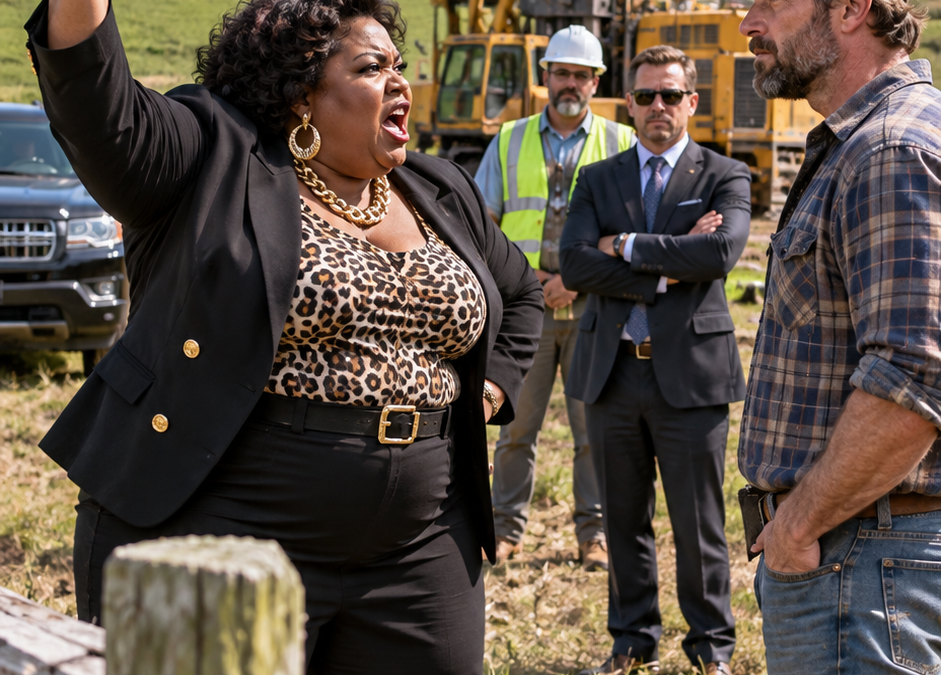
Celeste Harrow stood in the middle of my north field waving a drilling contract over her head like it was proof that my own land no longer belonged to me.
She told me farmers understood dirt, not mineral rights.
What she didn’t know was that a deed recorded in 1912 had already decided what happened next.
My name is Evan Calder.
I was born at Calder Hollow Farm, raised there, left for a few years, and eventually came back because every other place I lived felt temporary.
The farm covered eighty-four acres of rolling pasture, clay-bottomed hollows, fence lines older than most of the houses now surrounding us, and a spring-fed well that had never failed my family in four generations.
My great-grandfather bought the original tract more than a century ago.
Back then, it was considerably larger.
Over the years, pieces were sold.
A road parcel here.
A pasture there.
A few acres to pay medical bills during the Depression.
More after World War II.
But the core of Calder Hollow stayed in the family.
My grandfather ran cattle.
My father grew hay and kept a small dairy operation until the economics stopped making sense.
I came home in my thirties after several years working survey crews and right-of-way jobs.
That background mattered.
I knew how to read a plat.
I knew what a metes-and-bounds description was.
I knew an easement wasn’t ownership.
I knew a line on a developer’s color rendering had exactly as much legal force as the recorded document beneath it.
Celeste Harrow did not know any of that.
Or, more accurately, she believed she didn’t need to.
The land around us began changing fast when Crossland Development bought most of the eastern acreage.
Within eighteen months, pasture became graded pads.
Roads.
Curbs.
Drainage ponds.
Streetlights.
Iron gates.
Rows of large houses with identical roof pitches and ornamental stone near the garages.
Silver Pine Estates.
That was the name.
The houses weren’t ugly.
People always expect the farmer in these stories to hate development.
I didn’t.
People need places to live.
Developers buy land.
Families move in.
That’s how counties change.
What bothered me was what happened after people moved in and began confusing proximity with ownership.
Silver Pine’s homeowners association formed almost immediately.
Then Celeste Harrow became president.
That was when the letters started.
The first one complained that my equipment barn was visible from the north cul-de-sac.
The second said my tractor should be stored behind a visual screen.
The third suggested planting ornamental evergreens to “soften the agricultural view.”
One letter cited community noise standards because I ran a hay baler at seven in the morning.
I wasn’t in the community.
My land had never been annexed.
I didn’t pay dues.
Didn’t use the pool.
Didn’t have a gate code.
Didn’t sign covenants.
Every response I sent said essentially the same thing.
Calder Hollow Farm is not part of Silver Pine Estates and is not governed by the Silver Pine HOA.
That never stopped her.
Celeste acted as though HOA rules were a regional climate condition.
Something that naturally extended until it encountered another HOA.
She was in her late forties.
Tall.
Always put together.
Expensive boots that had never seen mud until she walked into my field.
She talked about Silver Pine as though she had personally carved the subdivision from wilderness.
Her favorite word was standards.
Community standards.
Architectural standards.
Visual standards.
Market standards.
The first time we met face to face, she looked at my barn, then at my work jacket, and told me:
“You’re going to have to understand eventually that the neighborhood is changing.”
I said:
“The neighborhood can change all it wants.”
She waited.
“The farm isn’t part of it.”
She smiled.
Not pleasantly.
“You live in the middle of Silver Pine.”
“No. Silver Pine was built around me.”
That distinction irritated her.
From then on, I became a symbol.
At a spring association meeting, nearly sixty residents attended to hear about a proposed expansion.
I sat in the back because one of the homeowners, a retired mechanic named Walt Brenner, told me my farm was on the agenda.
Celeste stood beside a large architectural rendering.
Behind her was a future neighborhood called Crown Ridge Reserve.
Twenty-six luxury villas.
Glass-railed balconies.
Private sports complex.
Expanded clubhouse.
Infinity pool overlooking the valley.
New internal road network.
Price tag:
About eighteen million dollars.
At one point, someone asked about the farm.
Celeste looked straight toward me.
“Silver Pine is building the future.”
Then down at my dusty boots.
“Some people are choosing to cling to the past.”
A few people laughed.
Not many.
I didn’t react.
People who perform for a room usually lose interest if you refuse to become their second actor.
After the meeting, I drove home.
It was cold.
The ground had hardened overnight.
My headlights caught orange near the northern boundary.
I stopped.
Survey stakes.
Dozens.
Fresh.
Bright.
Running diagonally across my pasture.
One stood less than two hundred feet from the livestock well.
Each carried a tag.
BLACK RIDGE ENERGY.
I shut off the truck.
Sat there.
Then walked the line with a flashlight.
They weren’t near my boundary.
They were inside it.
Well inside.
The next morning, I called Black Ridge.
A scheduling coordinator confirmed they were conducting preliminary survey work.
“Approved drilling site.”
“Approved by who?”
“Silver Pine Estates Homeowners Association.”
“Your survey stakes are on Calder Hollow Farm.”
She paused.
“Are you the surface owner?”
“I’m the owner.”
“Surface owner?”
That wording mattered.
“I own the parcel.”
She gave me a case number.
Said a formal notice had been mailed.
It arrived the next day.
Horizontal drilling plan.
Surface pad on association-controlled land.
Directional bore running beneath nearly thirty acres of my farm.
The well path would pass through subsurface formations beneath my north field before angling toward a production zone farther west.
I knew enough from survey work to understand the geometry.
Then I saw the rights line.
Mineral Owner:
Silver Pine Estates Homeowners Association.
I read it twice.
Then sat back.
The room went quiet around me.
I drove to Silver Pine’s office.
Celeste met me in a conference room.
Crown Ridge Reserve’s scale model occupied half a table.
Tiny villas.
Tiny cars.
Turquoise pool.
Tiny trees.
Everything looked perfect.
She seemed pleased I had come.
“I assume you received the notice.”
“I did.”
“Good.”
“Why does it say your HOA owns minerals under my farm?”
She leaned back.
“Because it does.”
“Based on what?”
She slid over a map.
1998 planning map.
A shaded area labeled SHARED INTEREST ZONE crossed the north end of my property.
I studied it.
“That’s wrong.”
“No.”
“That’s not my boundary.”
She smiled.
“You own the surface.”
“I own the farm.”
“You own grass, topsoil, fences, and improvements. Subsurface rights are a separate issue.”
“I know how mineral estates work.”
Her expression changed slightly.
She hadn’t expected that.
Then she recovered.
“Good. Then you understand.”
“I understand that this map doesn’t establish mineral ownership.”
“Our attorneys reviewed it.”
“Show me the mineral deed.”
She tapped the contract.
“This is the result of professional title review.”
“No. That’s a contract saying you warrant ownership.”
She didn’t like that distinction.
“We have signed with Black Ridge.”
“How much?”
“That’s association business.”
“How much?”
Her pride beat caution.
“Initial consideration was one point eight million dollars.”
I stared at her.
She smiled again.
“That capital is funding Crown Ridge Reserve.”
Everything clicked.
Matching capital.
Construction loan.
Development timing.
The drilling money was already tied into something larger.
“You’ve spent it?”
“Committed it.”
“Same problem.”
“No, Evan.”
Her tone shifted into the one she used when explaining something to someone she considered slow.
“Silver Pine is making strategic use of an asset.”
“An asset beneath my farm.”
“An asset within the association’s mineral interest.”
She pointed toward the map.
“You still get to farm. Nothing changes for you.”
“A horizontal bore crosses my groundwater table.”
“At engineered depth.”
“That isn’t an answer.”
She looked at my jacket.
Then my hands.
“You repair fences and raise cattle.”
I waited.
“People who do this professionally understand the risk better than you do.”
There it was.
I stood.
“Are you certain?”
“Certain enough to have already spent the first payment.”
As I turned to leave, I noticed a plaque on the model.
CONSTRUCTION MOBILIZATION — 10 DAYS.
Outside, I stood beside my truck and looked toward the empty construction field.
She had tied an eighteen-million-dollar development to a mineral claim.
If that claim was wrong, the damage would be larger than a few survey stakes.
I went to the county records office the next morning.
Dean Hollis met me there.
Dean was technically retired.
In reality, surveyors never retire.
They simply stop wearing company logos.
He had spent nearly thirty years doing title overlays, boundary research, and old-line retracement work.
We pulled three documents.
1912 Calder survey.
1987 subdivision precursor.
1998 Silver Pine planning map.
Dean studied them.
Then got very quiet.
“Here.”
He pointed.
The association’s boundary followed an old irrigation ditch.
“That’s not where the ditch is.”
“Not anymore.”
He found a county flood-control record from 1976.
The ditch had been relocated.
Nearly four hundred feet.
Somebody preparing the later map had treated the relocated physical ditch as if it remained the original deed boundary.
It didn’t.
Legal descriptions don’t slide across the ground because somebody moves water.
Dean laid tracing paper over both.
The difference became obvious.
Roughly twenty-nine acres.
My acres.
Represented for years as part of an association shared-interest zone.
Maybe the original error was honest.
An old map copied.
Then copied again.
Nobody cared because nothing depended on it.
Until somebody tried selling minerals.
Then Dean found something worse.
Six months earlier, Silver Pine’s law firm had prepared a title review.
It specifically flagged Calder Hollow.
Mineral ownership unresolved.
Boundary overlap.
No mineral conveyance should proceed without clarification.
Celeste had received it.
Her signature appeared on the review acknowledgment.
She knew there was a problem.
She signed Black Ridge anyway.
That changed everything.
I called Black Ridge.
Eventually I reached Grant Sloan, a vice president.
I gave him the case number.
Explained the boundary problem.
Explained the title warning.
He was polite.
Not helpful.
“Your dispute is with Silver Pine.”
“Your stakes are on my surface.”
“We relied on an ownership warranty.”
“From an HOA.”
“Supported by title information.”
“Title information that warned them not to proceed.”
Pause.
“Mr. Calder, if you’re asserting ownership of the mineral estate, we’ll need a mineral deed.”
I hated that he had a point.
Surface ownership does not automatically mean mineral ownership.
In farming country, mineral rights get separated all the time.
Sometimes a hundred years before the current owner is born.
I went home.
Opened my father’s steel lockbox.
Yellow deeds.
Tax receipts.
Insurance.
Survey notes.
Most of it told me what I already knew.
Calder Hollow held clear surface title.
Mineral history was murkier.
For about an hour, I thought Celeste might be right in the narrowest possible sense.
Maybe minerals had been severed.
Maybe Silver Pine had acquired them later.
Then I found an envelope.
My father’s handwriting.
EAST RIDGE — NEVER TO BE SOLD.
Inside was a recording reference.
Not our county.
Adjoining county.
Old enough that the numbering system looked unfamiliar.
I called Mara Bell.
Mara handled mineral-rights litigation.
She had a reputation for reading century-old instruments the way normal people read menus.
I handed her the reference that afternoon.
Two days later she called.
“You need to come in.”
Her conference table held a deed reproduction.
The original regional tract had exceeded six hundred acres.
When portions were divided, the Calder family retained specific mineral interests.
Not everything.
But more than I expected.
Western mineral estate.
Groundwater-protection rights.
And then the final page.
Sixty-foot access corridor.
Permanent.
Running with the land.
The language reserved to the Calder farm owner the right to survey, enter, inspect, protect, and physically access retained mineral interests through a defined corridor along the eastern hillside.
Mara read it twice.
Then turned the page toward me.
“Do you know where this is?”
I did.
Crown Ridge Reserve.
Dean overlaid the 1912 corridor onto the new site plan.
For several seconds, none of us spoke.
The sixty-foot strip passed through:
The only construction access road.
Main water line alignment.
Clubhouse footprint.
Part of the planned infinity pool.
Six villa lots.
Celeste’s project was sitting across an old mineral-access right.
I asked the obvious question.
“Can I shut it down?”
Mara looked at me sharply.
“Not because you’re angry.”
“I’m not asking about anger.”
“Good.”
She tapped the deed.
“This isn’t ownership of the development. It doesn’t let you walk in tomorrow and control Silver Pine.”
“I understand.”
“But they cannot build permanent improvements that materially obstruct a valid recorded access right.”
“Abandonment?”
“They’ll argue it.”
“It hasn’t been used in decades.”
“That’s not necessarily abandonment.”
She pointed toward the language.
“No release. No termination. No signed waiver.”
Then:
“And here’s their bigger problem.”
She opened Black Ridge’s drilling plan.
“Your need to protect the mineral estate isn’t hypothetical anymore.”
I understood.
For decades, my family hadn’t needed to use the corridor.
Nobody was drilling.
Nobody was threatening groundwater.
Now Silver Pine had sold drilling rights and authorized a bore beneath my farm.
Their own action created the reason I needed access.
Mara smiled faintly.
“They activated the exact interest they’re trying to bury under concrete.”
We sent formal notice.
Stop survey operations on Calder land.
Suspend the Black Ridge contract.
Recognize disputed mineral ownership.
Halt permanent construction within the 1912 access corridor.
Celeste replied in under two hours.
No court in this state is going to stop an $18 million development because a farmer found a hundred-year-old piece of paper.
Mara read the sentence aloud.
Then looked at me.
“She’s writing our emergency petition for us.”
Before we could file, bulldozers entered the corridor.
Celeste moved faster.
Not smarter.
She called an emergency association meeting.
I attended in field clothes.
Mud on my boots.
Dust on my sleeves.
She made a point of seating me at the back.
The Crown Ridge model sat beside her.
She described me as a difficult adjacent farmer exploiting a technicality to extort the community.
She spoke about jobs.
Property values.
Economic progress.
Families who had deposited money on future villas.
She claimed Silver Pine had offered me reasonable compensation.
It had not.
Residents looked back at me.
Some angry.
Some confused.
I waited.
One homeowner asked:
“How much does this delay cost us?”
Celeste gave no real figure.
Another asked:
“Is Calder Hollow part of Silver Pine?”
“Our counsel is reviewing jurisdictional history.”
That answer was careful.
She knew enough not to say yes.
After twenty minutes, she finally addressed me.
“Anything you’d like to add?”
I stood.
Walked forward.
Placed three maps on the table.
No speech.
Three questions.
“Did you receive a title report six months ago warning that mineral ownership under Calder Hollow was unresolved?”
She avoided it.
“I receive dozens of legal reports.”
“Did Silver Pine warrant to Black Ridge that it owned the mineral rights?”
“Yes.”
No hesitation.
“Did you use the Black Ridge payment as matching capital for Crown Ridge Reserve?”
“Yes.”
The room became quieter.
I nodded.
“That’s all.”
She looked irritated.
“That’s it?”
“Yes.”
“What are you trying to prove?”
“Nothing tonight.”
I turned.
Then she couldn’t resist.
“I did what was necessary to move this community forward instead of allowing one farmer to hold everyone back.”
I stopped.
Looked toward the camera recording the meeting.
“Thank you.”
Then I returned to my seat.
She realized too late what she had given me.
That night, a bulldozer ruptured one of my old irrigation lines inside the corridor.
Water flooded part of the lower field.
Damaged a fence my grandfather had built.
Celeste texted me.
Your outdated infrastructure is exactly why agricultural land is incompatible with modern development.
I forwarded it to Mara.
No commentary.
Before sunrise, she filed for emergency injunctive relief.
The hearing moved quickly.
Silver Pine’s attorney argued first.
The 1912 deed was archaic.
The corridor unused.
Any access right should be considered abandoned.
Stopping construction would cause enormous financial damage.
Mara stood.
“Then they should have resolved title before spending eighteen million dollars.”
Judge Lenora Pike looked over her glasses.
Mara introduced the deed.
No termination language.
Permanent right.
Runs with the land.
Dean testified.
Old irrigation ditch.
1976 relocation.
Four-hundred-foot mapping error.
Black Ridge stakes on my property.
Construction crossing the corridor.
Utility trench near the farm’s groundwater protection zone.
Then Grant Sloan testified for Black Ridge.
Mara asked:
“Why did Black Ridge sign?”
“Silver Pine provided a mineral ownership warranty.”
“Who specifically?”
“Celeste Harrow.”
“Did you independently confirm Calder Hollow mineral ownership?”
“We relied on the warranty and title materials.”
“Did those materials identify a dispute?”
Grant hesitated.
“Yes.”
“Yet you proceeded?”
“Silver Pine represented that it had been resolved.”
Mara placed the six-month-old title review on the screen.
Mineral rights under Calder Hollow remained unconfirmed.
Boundary overlap unresolved.
No mineral transaction recommended until clarification.
Celeste’s acknowledgment signature appeared on the last page.
Judge Pike read it.
Then looked toward Silver Pine’s lawyer.
“Your client was warned.”
The lawyer began explaining.
The judge raised one hand.
“I can read.”
Then Celeste testified.
Mara was almost gentle.
“Did you receive that report?”
“Yes.”
“Did you understand it identified an unresolved mineral claim?”
“I understood counsel was being cautious.”
“Did you obtain a mineral deed before signing with Black Ridge?”
“We had longstanding maps.”
“That’s not what I asked.”
“No.”
“Did you tell Black Ridge ownership was unresolved?”
“I told them we had valid rights.”
“Based on?”
“Historic association records.”
“Not a mineral deed.”
“No.”
“Not a signed Calder conveyance.”
“No.”
“Not a court order.”
“No.”
“Not a corrected survey.”
“No.”
Then Mara played the community meeting.
Celeste’s voice:
I did what was necessary to move this community forward.
Mara asked:
“That was your decision?”
“Yes.”
“No one forced you?”
“No.”
Celeste became frustrated.
“This whole argument is based on an imaginary pathway nobody has used in a hundred years.”
Mara walked toward the easel.
Placed Crown Ridge’s current site plan beside the 1912 deed.
Highlighted the corridor.
“Imaginary?”
The line ran directly beneath the planned clubhouse.
Judge Pike leaned forward.
Mara continued.
“The association is pouring permanent construction over the recorded corridor while simultaneously authorizing drilling beneath the mineral estate that corridor exists to protect.”
Nobody spoke.
Judge Pike studied the deed for several minutes.
She ran one finger along the final-page language.
The original county clerk’s notation.
Seal.
Recording reference.
Then she ruled.
Temporary injunction.
Immediately.
No further drilling or survey work beneath Calder Hollow.
No construction within the disputed sixty-foot corridor.
No removal or alteration of markers.
County review of permits relying on Silver Pine’s ownership representations.
Silver Pine’s attorney made one last attempt.
“Your Honor, perhaps construction outside the immediate disputed strip could continue while title issues are resolved.”
Judge Pike looked at him.
“Your client’s only heavy-construction route crosses the strip.”
He said nothing.
“The primary water line crosses the strip.”
Nothing.
“Part of the clubhouse foundation crosses the strip.”
Silence.
She closed the deed.
“I’m not going to permit an eighteen-million-dollar development to finish pouring concrete over a property right that may belong to someone else because your client finds delay inconvenient.”
That was it.
Three days after Celeste stood in my field telling me farmers didn’t understand land, every machine at Crown Ridge Reserve was silent.
Bulldozers.
Excavators.
Dump trucks.
Concrete crews.
Everything.
Celeste caught me in the courthouse hallway.
“You don’t own my development.”
“Correct.”
“You cannot control what Silver Pine builds.”
“Correct.”
She looked surprised.
“Then what exactly do you think you’re doing?”
“Protecting what I do own.”
I walked away.
The injunction was only the beginning.
Crown Ridge’s construction lender learned where the one-point-eight-million-dollar matching capital came from.
Black Ridge’s drilling contract.
A contract now under serious title challenge.
Loan disbursements froze.
The general contractor demobilized rather than continue work amid title litigation.
Six villa buyers demanded deposits back.
Crossland Development discovered Celeste had never fully disclosed the mineral dispute.
Benton Cross, Crossland’s president, arrived at Silver Pine furious.
His company had millions tied into grading, materials, subcontractors, and land acquisition.
Black Ridge demanded its $1.8 million back.
Most was gone.
Already poured into Crown Ridge.
That was when residents began understanding the difference between a wealthy-looking development and a liquid one.
Celeste didn’t retreat.
She attacked me through administration.
Barn violation.
Well inspection demand.
Truck complaints.
Road-damage accusations.
Community impact fee.
Every notice went into a folder.
None had jurisdiction.
Mara found the worst document while reviewing old annexation records.
A 1998 annexation form claiming the north portion of Calder Hollow had been absorbed into Silver Pine.
At first glance, it looked dangerous.
Then she turned to the signature page.
Blank.
My father’s signature was required.
Never provided.
County clerk Ruth Talbot confirmed the instrument never became legally effective.
It was an incomplete draft.
Somebody had pulled it from an old file and treated it like completed annexation.
I emailed the board a copy.
One sentence.
Before issuing additional fines against Calder Hollow, you may wish to ask why Silver Pine is relying on an annexation document that was never executed by the property owner.
That email changed the board.
Questions started.
Where was the Black Ridge money?
Who approved the contract?
Why hadn’t the title warning been disclosed?
Why were residents now potentially responsible for repayment?
Celeste called everything temporary.
A delay.
A technical dispute.
She told board members privately that she would outlast me.
Mara recorded a notice of ownership dispute affecting Crown Ridge.
That ended the fantasy.
Banks hate clouds on title.
So do buyers.
So do investors.
Nothing moved.
Then Black Ridge produced emails.
Grant Sloan had his own problem.
The more responsibility settled on Silver Pine’s ownership warranty, the less exposure his company carried.
One email came from Black Ridge’s title specialist.
Could the Calder family still hold mineral rights despite the association map?
Celeste’s response:
He’s one farmer. If we begin before he understands what is happening, he won’t have the money to stop it.
I read it in Mara’s office.
Once.
Then again.
She had never merely mocked me.
She had built the legal strategy around contempt.
Not that I was wrong.
That I was too poor for being right to matter.
Mara printed the email.
Tabbed it.
“Clients usually make me work harder for evidence.”
Another email showed the timing.
Crossland needed matching capital before a bank deadline.
Celeste pushed Black Ridge to close before title questions were answered.
Fast enough to get the money.
Fast enough to start construction.
Fast enough, apparently, that I couldn’t afford to react.
Benton Cross confronted her during a closed board meeting.
Later I learned she proposed two solutions.
Buy my access rights.
Or litigate until I sold the farm to pay legal bills.
That was when the board finally asked for my settlement terms.
They expected a number.
I gave them conditions.
Cancel Black Ridge entirely.
Recognize Calder Hollow’s mineral ownership where established by the 1912 deed.
Recognize the sixty-foot access corridor.
Repair my irrigation and fence.
Pay legal and survey costs.
Vacate every false HOA fine.
Establish a groundwater-protection zone around the farm.
Publicly acknowledge Calder Hollow is not part of Silver Pine.
And Celeste steps down.
Mara watched their faces.
Celeste read the list twice.
Then pushed it back.
“No.”
“All right.”
“This is revenge.”
“No.”
“You want to humiliate me.”
“I want you out of decisions involving my property.”
“You think I am resigning because you found an old deed?”
“I don’t need you to.”
She looked confused.
“If this continues, we’ll ask the court for full confirmation of the corridor.”
Mara slid the site plan forward.
“The entire sixty feet.”
Celeste looked at it.
Road.
Utilities.
Clubhouse.
Pool.
Six lots.
Benton had already priced a redesign.
It was brutal.
Relocate the road.
Reroute water.
Redesign clubhouse.
Shift pool.
Lose lots.
Permit again.
Regrade.
The project didn’t have the financial runway.
The board scheduled an emergency meeting.
Packed room.
Celeste arrived in white.
Still polished.
Still composed.
She opened by accusing me of destroying property values.
Destroying jobs.
Destroying Silver Pine’s future.
She called me an outsider.
A farmer standing in the way of progress.
This time, three people sat in the room who changed the atmosphere.
Grant Sloan.
Benton Cross.
Outside auditor.
The auditor spoke first.
Black Ridge’s $1.8 million had been spent.
Repayment exposure was real.
Insurance coverage questionable because of the ignored title warning.
Residents could face a substantial special assessment if litigation continued.
Then Mara read Celeste’s email.
He’s one farmer.
He won’t have the money to stop it.
The room went silent.
I stood.
Didn’t speak long.
“Celeste didn’t make this mistake because the records were confusing.”
She stared at me.
“Her own lawyers warned her.”
I looked around the room.
“She moved forward because she believed I couldn’t afford to matter.”
That was all.
Patricia Nolan, retired teacher and board member, stood.
“I am ashamed it took the farmer outside our gates to tell us what our own president was hiding.”
Another board member asked Celeste:
“Were you ever going to tell us about the title warning?”
Celeste answered with vision.
Growth.
Future.
Economic opportunity.
Nobody wanted those words anymore.
“Yes or no?”
She wouldn’t answer.
The vote took less than five minutes.
Celeste removed as president.
Access to accounts revoked.
Office privileges revoked.
Association counsel directed to report to the board rather than her.
The new leadership accepted my settlement terms within days.
Black Ridge canceled its drilling plans.
The association recognized the mineral rights.
The corridor remained.
That forced Crossland to remove the clubhouse.
Infinity pool.
Six villa lots.
Primary construction route.
Main utility alignment.
Crown Ridge Reserve, as originally designed, no longer worked financially.
The lender withdrew.
The eighteen-million-dollar project died.
Not because I owned it.
I didn’t.
Not because I demanded it stop forever.
I didn’t.
It died because the plan had been designed on top of rights nobody had bothered to clear.
That is an important distinction.
Celeste approached me after the meeting.
“Happy?”
“No.”
“You destroyed the future of this community.”
“I didn’t build your future on my deed.”
She looked at me.
I continued.
“You did.”
Then she walked out.
Nobody followed.
The next few months were quieter.
Black Ridge removed survey stakes.
My irrigation line was repaired.
Fence rebuilt.
Ground restored.
Silver Pine signed a groundwater-protection agreement.
The corrected boundary was recorded.
The old ditch error finally disappeared from current maps.
I used part of the settlement to repair the equipment barn.
Same weathered color.
Not because I wanted to spite Celeste.
Because I liked it.
I also placed a conservation restriction over the retained mineral estate.
No future drilling beneath Calder Hollow without protections that made it functionally impossible for another developer or HOA to repeat the same stunt.
Crown Ridge sat abandoned almost a year.
Rebar rusting.
Half-finished slab.
Weeds growing through disturbed soil.
Eventually the land sold at a heavy loss.
A smaller developer redesigned from scratch.
Before buying, they hired their own title people.
Surveyed everything.
Met with Mara.
Met with me.
Respected the corridor.
Moved the road.
Shifted utilities.
Built fewer units.
No infinity pool.
No giant clubhouse.
Their project actually finished.
Funny how much cheaper respecting ownership is when you do it before pouring concrete.
Celeste eventually sold her house.
I heard she left the county.
Legal bills.
Association disputes.
Maybe reputation.
I don’t know.
I didn’t ask.
By then, she had stopped being important.
Dean came to the farm one afternoon.
We walked the eastern hillside.
The old Crown Ridge clubhouse slab was still visible beyond the fence.
Cracked concrete.
Grass starting around the edges.
He stood on the corrected survey marker.
“Thirty years doing boundaries.”
I waited.
“I’ve never seen one line cost this much.”
“It wasn’t the line.”
He looked at me.
“It was somebody assuming a quiet man had nothing worth defending.”
Dean nodded.
“That’s usually more expensive.”
He was right.
That fall, I stood beside the old well near sunset.
Cattle moving across the field.
Fence repaired.
North pasture clean again.
For the first time in months, no orange Black Ridge stakes.
No contractor trucks.
No certified letters waiting at the mailbox.
I thought about my father.
He used to say land remembers who took care of it long after the people filing papers disappear.
As a kid, I thought that was sentimental.
Land doesn’t remember.
Not literally.
But deeds do.
Markers do.
Water does.
Fence lines do.
The shape of a field does.
Rights recorded properly can outlive everybody who originally understood why they mattered.
My great-grandfather had retained that corridor in 1912.
He couldn’t have imagined an HOA.
Horizontal drilling.
Infinity pools.
Construction loans.
Luxury villas.
But he understood one thing.
If you keep mineral rights and give away every path needed to protect them, sooner or later somebody else controls what you supposedly own.
So he kept the path.
For more than a century, nobody needed it.
Celeste’s lawyers argued that disuse made it meaningless.
I thought about that often.
A fire extinguisher isn’t abandoned because you never use it.
A will isn’t worthless because nobody needs it while you’re alive.
A mineral-access corridor exists for the moment access matters.
Celeste created that moment herself.
She sold drilling rights beneath my farm.
That triggered the need to protect the mineral estate.
And by doing that, she woke up the very right she had buried beneath Crown Ridge’s foundations.
There was poetry in it.
I didn’t need the poetry.
The deed was enough.
Silver Pine changed after Celeste.
Not overnight.
Boards don’t become wise because one president leaves.
But people started asking questions.
Title review became mandatory before any land transaction.
Board members received complete legal opinions instead of summaries.
Large contracts required independent verification.
No president could sign an ownership warranty without board approval.
Residents who had cursed me during the first meeting occasionally stopped by.
Some apologized.
One man named Carl Jensen came to the farm with a bottle of whiskey.
“I called you a parasite.”
“Did you?”
“At the clubhouse.”
“I probably didn’t hear you.”
“I did.”
He looked miserable.
I took the whiskey.
“Thanks.”
“That’s it?”
“What do you want?”
“I don’t know. Yell at me.”
“No.”
“I believed her.”
“Yes.”
“I should’ve checked.”
“Yes.”
He stared.
“You’re making this difficult.”
“I’ve been told.”
He laughed despite himself.
That was enough.
I never wanted Silver Pine residents humiliated.
Most had no idea.
They moved into houses.
Paid dues.
Assumed the HOA had competent counsel.
That is not an unreasonable assumption.
Celeste exploited it.
The lesson wasn’t that every HOA board is corrupt.
It was simpler.
No institution should rely on one person’s certainty where recorded rights are involved.
Certainty isn’t title.
Confidence isn’t title.
A color-coded planning map isn’t title.
A president saying “our attorneys reviewed it” isn’t title.
You read the deed.
All of it.
Especially the last page.
Years later, I still keep Celeste’s letters.
Same folder.
Barn color.
Tractor visibility.
Noise.
Drilling.
Fines.
Every page.
Mara once asked why.
“The case is over.”
“I know.”
“You could throw them out.”
“I could.”
“Then?”
I thought about my father’s lockbox.
“Maybe somebody after me needs to understand what happened.”
She nodded.
“Land records again.”
“Land records.”
The 1912 deed now sits in a better archive than my father’s steel box.
Certified copy in the farm safe.
Digital scans.
Mara has one.
Title company has one.
County index corrected.
No future Calder should have to spend three days hunting through adjoining-county records for the document that protects the farm.
I also wrote a plain-language summary.
Not legal advice.
Just history.
This corridor exists.
This mineral estate exists.
This groundwater protection language exists.
Do not sign it away because somebody offers quick money.
My father would have liked that.
Maybe my great-grandfather too.
I never drilled.
People found that strange.
After fighting so hard over mineral rights, why not profit from them?
Because owning something doesn’t obligate you to use it.
I fought for the right to decide.
That was always the point.
Celeste couldn’t understand that.
To her, control was valuable only if converted into money.
A gate became villa commissions.
Minerals became matching capital.
Common land became development leverage.
My farm became an inconvenience with a price.
She thought everybody operated that way.
I didn’t.
Some things are valuable precisely because nobody gets to use them.
The well.
The pasture.
The groundwater.
The view across the north field.
Quiet.
One evening, years after Crown Ridge failed, I was repairing a fence when a young surveyor from the redesigned development walked up.
“Mr. Calder?”
“Yeah?”
“I’m checking the corridor markers.”
“Go ahead.”
He hesitated.
“Could you show me the 1912 line?”
I set down the fencing pliers.
“Sure.”
We walked.
I pointed out the monuments.
Old references.
Corrected ditch alignment.
He had a tablet with the overlay.
Everything matched.
At the end, he said:
“I’ve heard the story.”
“I’m sorry.”
He laughed.
“They tell it in the office.”
“What version?”
“HOA tried to steal farmer’s minerals and farmer shut down eighteen-million-dollar project.”
“That isn’t quite right.”
“No?”
“I didn’t shut it down.”
He looked confused.
“They built it where they couldn’t legally finish it.”
He thought about that.
“That’s less dramatic.”
“Usually truth is.”
He smiled.
Then left.
I watched him drive away.
That distinction still mattered to me.
I never woke up hoping to destroy Crown Ridge.
Never looked at those twenty-six villas and thought I’d enjoy ruining them.
I wanted Black Ridge off my land.
I wanted my mineral estate recognized.
I wanted my groundwater protected.
I wanted Celeste to stop pretending Silver Pine governed my farm.
Once those rights were enforced, the development collapsed under its own design.
That’s not revenge.
That’s what happens when a project treats legal constraints as optional until after financing.
Developers understand this.
Good ones, anyway.
You clear title before construction.
Not after.
You resolve mineral ownership before selling drilling rights.
You map deed boundaries, not relocated ditches.
You don’t spend one-point-eight million dollars before you are sure you’re allowed to keep it.
You don’t pour clubhouse foundations over recorded rights because the person holding them looks too poor to sue.
That last part was Celeste’s real mistake.
Not the map.
Not even the title warning.
Her plan relied on a financial assumption.
Evan Calder won’t be able to fight.
She wrote it.
That line bothered me more than the public insults.
Because it turned contempt into strategy.
She knew there was uncertainty.
She proceeded because she believed the person harmed lacked resources.
That is a different kind of wrongdoing.
If she had believed the title was clean, we would have had a property dispute.
Instead, she knew it wasn’t clean and raced ahead because she expected money to decide who got heard.
Judge Pike understood that.
At the final hearing months later, she reviewed the corrected title chain.
Silver Pine’s attorney no longer disputed the basic ownership.
Black Ridge had withdrawn.
Settlement pending.
The judge looked toward me.
“Mr. Calder, do you intend to exercise the mineral corridor for drilling?”
“No.”
“Exploration?”
“No.”
“Commercial development?”
“No.”
“Then why preserve it?”
Celeste wasn’t present.
New board was.
I answered:
“Because it’s mine.”
Judge Pike waited.
“And because if the next owner needs it to protect the groundwater or mineral estate, I don’t have the right to trade away their protection just because I’m not using it today.”
She nodded.
“Fair answer.”
That was probably the closest thing to satisfaction I felt in court.
Not winning.
Being understood.
Back at the farm, life eventually returned to boring.
Calving season.
Fence repair.
Hay.
Equipment maintenance.
Taxes.
Rain.
Too much rain.
Not enough rain.
Ordinary problems.
The north field grew grass where Black Ridge stakes once stood.
Cattle grazed over the spot where Celeste had waved her contract.
They didn’t care.
I liked that.
Animals don’t recognize paperwork or status.
They care about water.
Fences.
Feed.
Weather.
The basics.
Standing there sometimes, I remembered Celeste saying:
“You own the grass and topsoil.”
She had meant it as an insult.
Years later, I thought about how much she underestimated grass and topsoil.
Every fortune built in Silver Pine ultimately depended on ground.
The houses.
Roads.
Utilities.
Pools.
Clubhouse.
Even the drilling contract.
All of it was someone else’s idea placed on land.
Land is patient.
Paper can be patient too.
The 1912 deed sat quietly for generations.
No lawsuits.
No meetings.
No threats.
Then one day an HOA president sold something she hadn’t verified.
The old page became relevant again.
That was all.
There is no magic in old documents.
Age doesn’t make them powerful.
Precision does.
A badly written hundred-year-old instrument can be useless.
A clear one can still govern modern decisions.
My great-grandfather’s language was clear.
Permanent.
Runs with the land.
Specific corridor.
Specific retained rights.
No expiration.
No surrender.
Celeste never read that far.
Maybe nobody had.
Her title lawyers found warning signs.
She ignored them.
Black Ridge asked questions.
She reassured them.
The bank saw matching capital.
Crossland saw momentum.
Everybody kept moving because stopping would have been expensive.
Then stopping became more expensive.
That’s another lesson I learned.
The cost of checking a problem is almost always lower before concrete.
My father said something similar about tractors.
“If you hear the knock, shut it off.”
Ignore a strange sound long enough and a fifty-dollar bearing becomes an engine.
Celeste heard every knock.
The title review.
My objections.
Dean’s survey.
Black Ridge questions.
Mara’s notice.
She kept the engine running.
Crown Ridge threw a rod.
Today, the eastern hillside looks different.
The abandoned slab is gone.
Smaller development beyond it.
More open space.
The sixty-foot corridor is marked properly.
Not fenced.
Not dramatized.
Just recorded.
The new association board occasionally sends me notices about utility work nearby.
Not permission requests.
Coordination notices.
That’s healthy.
One spring, they needed temporary crossing access to repair drainage.
They sent a formal request.
Insurance certificate.
Site plan.
Restoration commitment.
Dates.
I approved it.
Work happened.
They repaired the ground afterward.
Nobody threatened anyone.
Imagine that.
Mara called me afterward.
“You’re getting soft.”
“They asked.”
“Terrible precedent.”
“I know.”
We both laughed.
I still keep the old barn weathered.
Silver Pine’s current president once told me he likes it now.
I told him not to get sentimental.
It’s a barn.
My truck remains visible.
Tractor too.
Nobody asks for ornamental screening.
The old fight has become community folklore.
New homeowners sometimes hear fragments.
Most don’t care.
That’s fine.
I don’t want Calder Hollow known as the farm that beat an HOA.
I want it known as Calder Hollow.
That is enough.
I think often about the phrase Celeste used at that first meeting.
Building the future.
Clinging to the past.
She believed those were opposites.
They aren’t.
A future that ignores what already exists isn’t progress.
It’s trespass with renderings.
You can build new roads.
New homes.
New pools.
New businesses.
But you don’t get to pretend yesterday’s rights vanish because today’s project is expensive.
The future has to fit on the land that actually exists.
Not the land someone wishes existed.
My family had spent generations learning that.
Farmers are forced to.
You don’t negotiate with slope.
Or water.
Or soil.
You work with what is there.
Celeste thought land was an abstraction.
Lines on presentation maps.
Assets.
Development potential.
Mineral value.
Commission.
Matching capital.
My family understood land as something more stubborn.
A thing with history.
Limitations.
Memory.
Not mystical memory.
Recorded memory.
Deeds.
Surveys.
Fence corners.
Old ditches.
The location of a spring.
A well head.
A corridor someone had enough foresight to reserve in 1912.
That is what beat her.
Not me.
Not Mara.
Not Judge Pike.
A chain of facts she decided she could outspend.
Years later, someone asked if I ever felt guilty that Crown Ridge Reserve failed.
The question surprised me.
I thought about the buyers.
The contractors.
Residents worried about assessments.
There were innocent people caught in it.
I felt bad for them.
But guilt?
No.
I didn’t sign the Black Ridge contract.
Didn’t misrepresent mineral ownership.
Didn’t ignore the title warning.
Didn’t spend the payment.
Didn’t build over the corridor.
Didn’t use an unsigned annexation draft.
Didn’t write that a farmer wouldn’t have enough money to stop them.
Responsibility matters.
If you blur it out of sympathy, nobody learns anything.
I chose not to pursue terms that would punish uninvolved homeowners.
That was mercy.
Pretending Celeste’s choices were somehow mine would have been dishonesty.
Those are not the same thing.
At sunset now, I sometimes stand near the north well.
The cattle move slowly.
Wind comes over the ridge.
Silver Pine lights start appearing one by one.
For all our conflict, the neighborhood is peaceful.
Families cook dinner.
Kids ride bicycles.
Dogs bark behind fences.
Nobody thinks about mineral access corridors.
They shouldn’t have to.
The current board respects them.
That’s how rights should work.
Quietly.
The best legal protection is the one nobody has to litigate because everybody reads it first.
My great-grandfather probably never imagined a woman named Celeste Harrow.
Never imagined Black Ridge Energy.
Never imagined horizontal drilling.
Or an HOA financing an eighteen-million-dollar luxury development with a one-point-eight-million-dollar mineral contract.
But he understood that once land is divided, access matters.
So he kept sixty feet.
One strip.
One clause.
One final page.
More than a century later, that was enough.
Celeste stood in my field once and told me I didn’t understand how land worked.
In one sense, she was right.
I didn’t understand land the way she did.
To her, land was worth whatever deal could be built on it.
To me, land was worth knowing exactly what you owned, exactly what you didn’t, and exactly where one ended and the other began.
She had an eighteen-million-dollar model.
I had an old steel lockbox.
She had lawyers.
I had a reference number written by my father.
She had a drilling contract.
I had the final page of a 1912 deed.
Only one of those things described the property correctly.
And once somebody finally read it all the way to the end, every bulldozer stopped.








