𝗣𝗔𝗥𝗧 𝟮 The HOA Paved Over My Private Airstrip—Then a Medevac Helicopter Circled With Nowhere Safe to Land
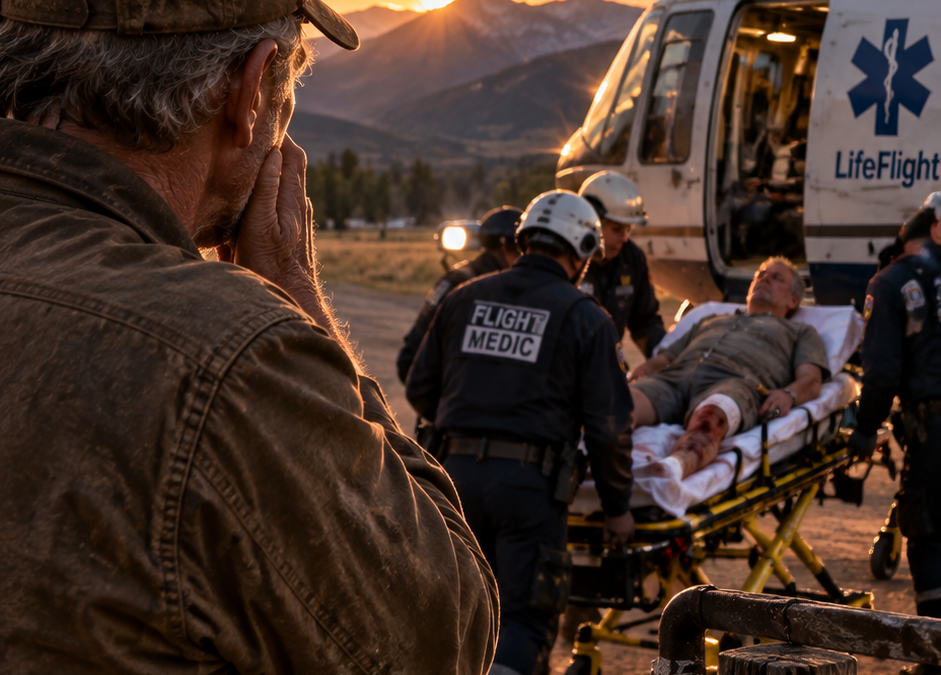
𝗣𝗔𝗥𝗧 𝟮
Ten weeks before that helicopter circled overhead, Palmer Field was still dirt.
And it was still mine.
At least that was what I believed.
My father cut the strip in 1962 with a borrowed bulldozer, a farm tractor, and a level he’d made from a length of clear garden hose filled with water.
He didn’t pave it because he didn’t want pavement.
Dirt drains.
Dirt gives.
Dirt tells a tailwheel pilot more than asphalt ever will.
You feel the surface.
You see where rain collected.
You watch dust lift along the edge and learn what the crosswind is doing when the windsock goes limp.
For nearly six decades, somebody in my family maintained that strip.
Mostly me.
Every spring, I dragged it.
Rolled it.
Filled low spots.
Reset threshold markers when frost moved them.
Repaired the old tie-down rings.
My father’s hand-painted steel sign stood at the south end:
PALMER FIELD.
The letters were rough.
The year 1962 had been punched into the lower corner with a cold chisel.
It wasn’t pretty.
Neither was the runway.
It worked.
That mattered more.
I flew a 1964 taildragger from it maybe nine times a year.
No airline.
No charter business.
No commercial operation.
Just me and an old airplane that had more honest scratches than most HOA presidents have honest minutes.
More importantly, Palmer Field had been used for emergencies.
Three medevac helicopters had landed there during the previous thirty years.
The last one before Dale involved an eleven-year-old boy named Cody Reese.
He’d been thrown from a horse west of the ridge.
The helicopter got him from my field to Billings in under forty minutes.
His mother brought me a pie two days later.
She’d baked it at two in the morning because she couldn’t sleep.
I remember that better than I remember the helicopter.
I never charged anyone to use the strip.
Never asked the county for money.
Never sent invoices.
If emergency crews needed it, they used it.
That was the arrangement as far as I understood it.
Cedar Bluff Ranch Estates came along in 2004.
A developer bought flat acreage east of me, cut it into sixty-two residential lots, built a clubhouse, landscaped an entrance, and installed a paved road.
That road clipped the corner of my property and became the easiest access to my house.
To use it, I joined the HOA.
Fifty-one dollars a month.
Mailbox standard.
Trailer rules.
Road maintenance.
That was basically it.
My sixty-two acres remained mine.
My hangar remained mine.
Palmer Field remained mine.
For fifteen years, nobody seemed confused about that.
Then Colleen Ashcroft became president.
Colleen had bought into Cedar Bluff around 2016.
Within a year, she was serving on committees.
Then chairing them.
By 2019, she ran the board.
She was one of those people who could turn volunteering into territorial expansion.
She reorganized the newsletter.
Created a violations section.
Standardized forms nobody had previously needed.
Residents who had once painted their mailbox posts without consulting anyone began asking whether eggshell white needed written approval.
I mostly stayed out of it.
If I saw Colleen at the community mailboxes, I nodded.
She nodded back.
That was enough civilization for both of us.
Until the second week of March.
She drove up my driveway in a white Lexus and got out holding a clipboard.
“Mr. Palmer, we need to discuss the airfield.”
“It’s an airstrip.”
She blinked.
“And it’s mine.”
She gave me the expression of someone whose opening line had been interrupted by an unnecessary fact.
“Aircraft operations are creating concerns.”
“What concerns?”
“Noise. Fuel storage. Liability. Property values. Aircraft over residential rooftops.”
“I fly nine times a year.”
“That’s still aviation activity.”
“Sharp observation.”
Her mouth tightened.
“The board has received complaints from eleven adjoining lots.”
“My approach doesn’t cross eleven lots.”
“That’s not for you to determine.”
I stared at her.
Then walked inside.
I came back with my deed.
I’m not a dramatic person.
I didn’t wave it.
I didn’t threaten court.
I placed it flat on the hood of her Lexus and pointed to the legal description.
“Sixty-two acres. Fee simple. No association easement over Palmer Field. No common-area transfer. No shared ownership.”
Colleen didn’t even bend closer.
Instead, she opened her folder and placed a colored map beside my deed.
My property appeared on it.
The airstrip was shaded gray.
COMMON AREA PARCEL C.
I stared at the rectangle.
“Where did you get this?”
“Association records.”
“It’s wrong.”
“The board has authority to designate community amenities.”
“A board can designate the moon if it wants. Doesn’t make the moon yours.”
That was the first time I saw real irritation cross her face.
“The parcel is shown as association planning area.”
“Planning area isn’t ownership.”
She gathered the map.
“The board will proceed according to its records.”
Then she got back into the Lexus and left.
I carried my deed and survey to the kitchen that evening.
I checked every line.
Every call.
Every monument.
Every bearing.
The runway sat entirely inside my deed.
There was no plausible reading that turned it into common property.
And right there, I made the mistake that caused almost everything that followed.
I decided I had already won.
I had the deed.
She had a color printout.
Case closed.
So I put my documents away.
Eleven days later, a certified HOA notice arrived.
NOTICE OF VIOLATION AND ORDER TO CEASE.
It ordered all aviation activity on “Common Area Parcel C” stopped within thirty days.
Fine:
$250 per day after the deadline.
Signed:
COLLEEN ASHCROFT, PRESIDENT.
I called the association office to get on the April agenda.
The manager told me the April meeting had already occurred.
“Nobody told me.”
“Notice went by email.”
“I don’t use email. The association has known that since 2004.”
Pause.
“I’ll note the account.”
“What did the board vote?”
Another pause.
“Four to two in favor of enforcement.”
That evening, Naen Kepler called.
Naen was sixty-eight, owned three lots down, kept goats, and had served on the board for six years.
She didn’t bother with greetings.
“I’m going to tell you something, and then I’m hanging up.”
“That’s encouraging.”
“Colleen brought a contractor bid into the meeting.”
“What contractor?”
“Paving.”
I stopped moving.
“What exactly were they bidding?”
“Twenty-four hundred feet.”
My strip.
“How much?”
She gave me the amount.
I sat down in my father’s kitchen chair.
“Why would an HOA spend that much to pave something they claim already belongs to them?”
“That,” Naen said, “is the question you should be asking.”
Then she hung up.
I spent that night trying to understand why Colleen cared whether my dirt strip remained usable.
Noise complaints didn’t explain paving.
If you disliked airplanes, converting dirt to asphalt made little sense unless you intended to make it impossible for airplanes to use.
Still, I assumed the ownership issue would stop everything.
I got myself onto the next open meeting.
Last Thursday of March.
Cedar Bluff Community Center.
Forty folding chairs.
Dead coffee urn.
Projector on a cart old enough to have opinions about dial-up internet.
I brought three things.
Certified deed.
1998 survey.
Eleven photographs showing the actual steel boundary pins.
When my turn came, I stood.
“My father built Palmer Field in 1962. My family has paid taxes on that ground ever since. Here’s the deed. Here’s the survey. Here are the pins. Nobody has to believe me. Go stand on them.”
Four minutes.
I sat down.
Someone clapped.
A man near the back said, “He’s right.”
Naen looked at the table.
Colleen waited for the room to settle.
Then she turned on the projector.
Her parcel map filled the wall.
Four feet tall.
My runway shaded gray.
COMMON AREA PARCEL C.
It looked official because large things on projection screens often do.
“As residents can see,” she said, “the airfield area has long been designated as common property.”
I stayed seated.
“Recorded where?”
Colleen looked at me.
“The association’s official map—”
“Recording number.”
Silence.
“If it’s a recorded parcel map, it’ll have a book and page. Date. Clerk stamp. Usually lower corner.”
I pointed.
“Put that corner up.”
She looked at the wall.
Blank.
No stamp.
No recording number.
No clerk.
Nothing.
Forty people stared at it.
Four seconds.
Long enough for embarrassment to become public.
Colleen finally said:
“This is a working association exhibit.”
I stood.
“So yours is a drawing.”
I held up my deed.
“Mine is recorded.”
The board suspended enforcement pending review.
Four to two.
Other direction.
Even Colleen voted with the majority.
And she smiled.
That should have bothered me.
Instead, I went home convinced the fight was over.
Three days later, the mail proved I still hadn’t understood her.
Certified envelope.
Recorded instrument.
Full county stamp.
Book.
Page.
Time.
Date.
NOTICE OF ABANDONMENT OF AVIATION EASEMENT.
Now she wasn’t claiming ownership.
She was attacking use.
The notice cited a document I had signed in 2012 when Cedar Bluff repapered membership agreements after a road-maintenance dispute.
I found my copy.
Page two.
Paragraph nine.
Tiny print.
“Member waives any nonconforming aerial-use rights over lands within the association planning area.”
I read it four times.
I remembered signing the packet at a folding table.
Pen on a string.
Probably complaining about how long the meeting was taking.
I had treated it like routine HOA bureaucracy.
Mailbox.
Road.
Dues.
Signature.
Done.
Now Colleen was using it to argue I had voluntarily surrendered the right to operate Palmer Field.
For the first time, I felt genuine fear.
Because ownership was one question.
Use rights were another.
The ground could belong to me while a restriction prevented aviation.
I had spent weeks proving something she was no longer contesting.
Two days later, a white Ridgeline Paving & Grading pickup drove up my lane.
The man who stepped out introduced himself as Gary Lindquist.
Sunburned neck.
Laser level.
Clipboard.
He held out a hand.
“Mr. Palmer. I’m supposed to shoot grades on the airstrip.”
“According to whom?”
“Cedar Bluff HOA.”
“My strip isn’t Cedar Bluff property.”
Gary looked at his work order.
“Address matches.”
“Come look at the pins.”
He did.
That told me I liked him already.
Ten minutes later, he returned rubbing the back of his neck.
“I don’t want to be in the middle of whatever this is.”
“Then don’t be.”
“Ms. Ashcroft says the county has signed off.”
“Which office?”
“Planning. Public works. Aeronautics. She listed a few.”
“Do you have anything from them?”
“No.”
I called Ferris County Planning.
Nineteen minutes on hold.
A clerk finally came back.
“Mr. Palmer, your property has a legacy designation.”
“What does that mean?”
“It predates the digital system.”
“What designation?”
“I’d have to retrieve the vault file.”
“Can you?”
“Records officer is out until Tuesday.”
I wrote LEGACY DESIGNATION on an envelope and stuck it beneath the sugar bowl.
At the time, the phrase didn’t feel important.
Just another delay.
That night, wind came hard from the west.
I woke after one because the house sounded wrong.
No canvas snapping.
No rhythmic crack from the windsock.
I grabbed a flashlight.
The pole was bare.
The halyard had been cut.
I found the windsock in a contractor dumpster at the head of my lane beneath a broken pallet and a rag soaked in diesel.
My father had repaired the third seam himself in 1981.
I held it under the flashlight and could still see his crooked stitches.
I folded it.
Put it on the passenger seat of my truck.
Didn’t hang it again.
Not yet.
Monday morning, I filed for a temporary restraining order in Ferris County District Court.
The clerk was kind.
The calendar wasn’t.
Colleen had recorded the abandonment notice nine days earlier.
The paving contract had also been recorded in the association records.
From the court’s perspective, it was a civil dispute with paperwork on both sides.
Hearing date:
Twenty days.
“Anything before that?” I asked.
“If conditions materially change, notify the court.”
Conditions changed the next morning.
5:50 a.m.
I woke to the window glass vibrating.
A roller has a particular sound.
Low.
Steady.
You feel it in flooring before your ears fully wake up.
I was outside in less than a minute.
They had staged in darkness.
Paver.
Grader.
Roller.
Two trucks.
Orange safety tape across my lane.
Two men in reflective vests standing beside it.
Colleen on the other side.
Clipboard.
Calm.
“You need to stay behind the tape, Mr. Palmer.”
“That is my gate.”
“Active work zone.”
“On my property.”
“Association common area.”
I pointed toward the equipment.
“Show me county authorization.”
She lifted a stapled packet.
“Board resolution.”
“I asked for the county.”
“The association does not need a county permit to improve its own amenity.”
I called the sheriff.
A deputy arrived about twenty minutes later.
Young guy.
Polite.
He read Colleen’s recorded abandonment notice on the hood of his cruiser while the roller kept moving behind him.
Finally, he looked at me.
“Sir, she has an instrument on record.”
“My deed is on record.”
“I understand.”
“They’re on my land.”
“I understand that too.”
“Then stop them.”
His face tightened.
“This is civil. I can’t adjudicate an easement dispute roadside.”
“They’re paving a runway.”
“You have a hearing scheduled?”
“Yes.”
“Get to the hearing.”
He looked over my shoulder.
Then at Colleen.
Then back at me.
“I’m sorry.”
He drove away.
That cruiser leaving my driveway was the lowest point of the entire fight.
Lower than the first paving truck.
Lower than the fine.
Lower than Colleen’s fake parcel map.
Because for the first time I understood that being right and being able to stop something right now are entirely different problems.
So I stood behind the tape.
And watched.
The grader took the crown off the dirt surface my father had shaped by eye.
The paver started at the north threshold at 8:40.
Hot black asphalt rolled south in one continuous ribbon.
The smell reached the house.
I’ve never been able to smell fresh pavement the same way since.
Second lift after lunch.
Roller by four.
Twenty-four hundred feet.
Sixty feet wide.
Gone.
At the southern threshold stood my father’s steel PALMER FIELD sign.
A skid steer clipped it.
The concrete footing cracked.
The sign fell with one flat metallic sound.
Nobody stopped.
That sound stayed with me more than the machinery.
Then a second crew arrived.
That was when I knew this wasn’t ordinary resurfacing.
They augered holes down the centerline.
Six decorative lamp posts.
Twenty feet high.
Three landscaped islands with river rock.
Conduit trench.
Two utility poles across the south approach.
I walked toward Colleen.
“Why are lights going in today?”
“Amenities require lighting.”
“There hasn’t been electricity on this strip in sixty years.”
“There is now.”
“Why today?”
She looked at me like I’d asked why a kitchen needed a ceiling.
“So nobody is confused about what this is.”
Then she walked toward her Lexus.
I followed at a distance.
Her driver’s door remained open while she made a phone call.
The roller was loud.
I caught only fragments.
But one sentence came through clearly enough that my thumb hit record on my phone.
“…west three… clear zone gone by June… then we list.”
Eleven seconds.
That was all.
I played it four times that evening.
West three.
Clear zone.
June.
List.
I didn’t understand.
Just after six, Naen sent me a photograph.
She’d taken it inside the association office.
Bad angle.
Half her thumb visible.
It was an unpublished real-estate listing sheet.
Three lots along the western boundary of Cedar Bluff.
The three behind my southern approach.
Rendering.
Projected price.
Marketing language:
BUILDABLE.
NO OVERFLIGHT RESTRICTION.
I sat in my truck.
My father’s folded windsock lay beside me.
Asphalt smell still clung to my shirt.
And I finally began to understand.
Colleen had not paved my strip because she hated airplanes.
She had paved it because something about that runway prevented those three lots from becoming fully buildable.
If the restriction disappeared, the lots became worth more.
A lot more.
I still didn’t know what “clear zone” legally meant.
But now I knew why she wanted it gone before June.
That same night, at 9:09, Dale Merrick rolled a tractor.
He was trying to finish work before dark.
Rear tire dropped into a badger hole.
Tractor went sideways.
Pinned his right leg.
His wife got a jack under the fender and freed him.
Then she saw the blood.
911 call at 9:15.
Ground ambulance arrived eleven minutes later.
Tourniquet within ninety seconds.
The medic looked at the distance to Billings.
Nearly an hour by road if conditions cooperated.
He requested air transport.
Ferris County dispatch had designated emergency landing zones.
One of them was Palmer Field.
At 9:41, I heard the rotor.
First pass came low over the ridge.
Searchlight found the strip.
I raised both arms.
For four seconds, I believed they would land.
Then the beam found the six lamp posts.
The helicopter climbed.
Second approach came from the south.
My father’s preferred approach.
Terrain open.
Except Colleen had installed a utility line across it.
The helicopter broke away sharply.
Third approach.
The light stayed on the asphalt.
Fresh surface.
No windsock.
No threshold.
No reliable wind indication.
No safe centerline.
Nothing.
Colleen stood at the curb watching.
“Tell them they can land,” I said.
“Tell them to use a proper landing zone.”
“This is one.”
“Not anymore.”
At 9:50, the aircraft left.
Ground crews reloaded Dale.
Drove eleven miles to the high school ball field.
Helicopter landed there.
Total delay from first arrival over Palmer Field until lift from the alternate site:
Thirty-eight minutes.
Dale lived.
Doctors amputated his right leg above the knee before dawn.
The next afternoon, a nurse called.
“Mr. Merrick asked me to tell you something.”
I gripped the phone.
“What?”
“He said he doesn’t blame you.”
That nearly broke me.
Because until that moment, I hadn’t considered that he might.
Colleen moved faster than I did.
Within thirty-six hours, the Ferris County Weekly ran a story.
MEDEVAC DIVERTED FROM LONG-DERELICT AIRSTRIP.
Her quote:
“That field has been derelict for years.”
Below it were three photographs.
Bare windsock pole.
Missing threshold markers.
Grass around an old tie-down.
Photographs taken after her crews removed the aviation equipment.
That was Colleen’s gift.
She created evidence, then photographed the conditions she created.
By Friday, she filed a county code complaint against me.
Count one:
Unpermitted hangar.
Technically true.
The hangar predated half the county staff.
Count two:
Maintaining a nonfunctional landing zone within the county emergency dispatch system.
That one hit.
Because it was technically true now.
The dispatch computer listed Palmer Field.
A helicopter arrived.
It couldn’t safely land.
The deed didn’t answer that.
The survey didn’t answer that.
For ten weeks, I’d been proving ownership.
Colleen had changed the question.
Why had emergency dispatch sent a helicopter there at all?
Monday morning, I drove to Ferris County Emergency Management.
Public records.
Binder.
Four inches thick.
I sat beside a window and went page by page.
Then I found it.
ANNEX F — DESIGNATED EMERGENCY LANDING ZONES.
LZ-3.
PALMER FIELD.
2400 x 60.
UNIMPROVED.
NORTH/SOUTH.
EMERGENCY USE — ALL HOURS.
I stared at the entry.
This wasn’t some dispatcher remembering that Preston had a dirt runway.
It was formally designated.
Reviewed.
Maintained in the county emergency plan.
And annual acknowledgments existed for the participating agencies and local entities.
Suddenly, I understood the legal question differently.
Maybe Palmer Field’s emergency function wasn’t a private right I owned.
Maybe it was something the county held.
That night, I went to my father’s hangar.
His old steel file cabinet stood against the back wall.
Bottom drawer.
I hadn’t opened it since we buried him.
It stuck.
I pulled harder.
The drawer finally released with the smell of old paper, gun oil, and dust.
Aircraft registrations.
Logbooks.
Old aeronautics forms.
Then a manila envelope standing upright at the back.
His handwriting in grease pencil:
PLAT — DO NOT DISCARD.
Inside were three folded sheets.
Sheet one:
Survey.
Sheet two:
Topography.
Sheet three:
Dense legal text.
Heading:
DEDICATION.
I read.
Then read again.
One phrase stopped me.
IN FAVOR OF FERRIS COUNTY.
I understood enough to know my father had given something away.
The next morning, I was waiting outside the clerk and recorder’s office before opening.
The clerk had worked there since the 1980s.
She moved slowly.
Carefully.
Exactly how I wanted somebody handling sixty-year-old records to move.
She pulled the 1962 filing.
Then the 2004 subdivision plat creating Cedar Bluff Ranch Estates.
She placed them beside each other.
Used a magnifier.
Then stopped.
“Mr. Palmer.”
“Yes?”
“Hold on.”
She rotated the 2004 plat.
Pointed to one line in the legal description.
“This subdivision incorporates the 1962 plat by reference.”
“What does that mean?”
“Potentially, everything on the earlier plat carries forward where applicable.”
She pulled Cedar Bluff’s filed plan set.
Two sheets.
Then looked at mine.
Three.
“The association’s working set appears to be missing sheet three.”
I felt my pulse change.
She certified the complete copy.
Stamp.
One hard sound against paper.
Then I asked:
“Can you tell me what this dedication means in plain English?”
She read it slowly.
My father, in 1962, had granted Ferris County a permanent emergency aviation and access easement across Palmer Field.
Not informal permission.
Not personal consent.
Recorded dedication.
Running with the land.
Including clear approach zones at both ends where structures and overhead obstructions were restricted.
County held the easement.
Not me.
Not Cedar Bluff.
Ferris County.
My father had given away the emergency landing right before I was born.
Which meant the 2012 document Colleen relied on was meaningless as to that county right.
I couldn’t waive something I didn’t own.
I actually laughed.
Right there at the counter.
Not because anything was funny.
Because after ten weeks of Colleen treating my signature like a loaded weapon, I had learned she had been pointing it in the wrong legal direction.
My father had beaten her in 1962.
He’d just neglected to tell me.
The next records came from Naen.
Six photographs from Cedar Bluff’s files.
Three annual acknowledgments for the Ferris County Emergency Operations Plan.
January 15.
Three consecutive years.
Signature on each:
COLLEEN ASHCROFT.
Annex list attached.
LZ-3 PALMER FIELD.
She knew.
Not “should have known.”
Not “was copied.”
Not “might have reviewed.”
She personally certified review three years running.
Next came Gary Lindquist.
I found him at Ridgeline’s yard halfway under a truck.
He rolled out when he saw me.
“Is Merrick’s leg gone?”
“Yes.”
Gary closed his eyes for a second.
Then went inside.
He returned carrying a folder.
Daily logs.
Load tickets.
Tonnage.
Times.
On paving day:
OWNER REPRESENTATIVE ON SITE DIRECTING LAYOUT — C. ASHCROFT.
“She told my guys where the poles went,” Gary said.
Then he handed me an email.
Sent by Colleen ten days before paving.
Scheduling language.
Reference to completing the work before the county’s June review.
Now the eleven-second recording made more sense.
Clear zone gone by June.
Then we list.
I should have felt relief.
Instead, Cedar Bluff filed a counterclaim.
Two hundred fifty thousand dollars against me personally.
Interference with common-area improvements.
Colleen’s attorney sent every resident a two-page legal opinion claiming the 1962 aviation easement had been extinguished by decades of nonuse and, alternatively, that I had waived aviation rights in 2012.
Sixty-two households received it.
Then she accelerated Phase Two.
Concrete curbing.
Permanent landscape islands.
She moved installation to the morning of June 4.
Naen discovered why.
The Ferris County Commission’s annual emergency-plan review was scheduled that afternoon.
Concrete in the morning.
Hearing in the afternoon.
Once curbing and permanent islands were installed, restoring Palmer Field would cost more than four times as much.
Colleen wasn’t trying to guarantee she’d win the hearing.
She was trying to make my winning expensive enough that the county might hesitate.
That was the first time I admired the ruthlessness of her plan.
Not morally.
Mechanically.
It was clever.
June 3, I took the certified 1962 plat to Ferris County Attorney Margaret Doyle.
She read Sheet Three for eleven minutes without looking up.
When she finished, she placed her pen down.
“Where has this been?”
“My father’s filing cabinet.”
“I’ll have to verify it independently.”
“I understand.”
“I can’t promise what the county will do.”
“Concrete trucks arrive tomorrow.”
“I heard.”
She squared the pages.
“Then I’d better read quickly.”
That evening, I drove to Billings.
Dale sat by the hospital window in a wheelchair.
His right pant leg was folded and pinned.
I told him what we’d found.
The dedication.
The county easement.
Colleen’s annual signatures.
The clear zone.
The three western lots.
“I can’t promise any of it fixes what happened to you.”
Dale listened.
Then asked:
“What time’s the hearing?”
“Two.”
“I’ll be there.”
“You don’t need to.”
He looked at me.
“Nine minutes.”
“What?”
“I counted every minute that helicopter circled.”
His voice stayed calm.
“I’ll be there.”
I drove home after dark.
Went to the south threshold.
Found my father’s bent PALMER FIELD sign where the skid steer had thrown it.
I dug it out.
Straightened what I could.
Leaned it against the bare windsock pole.
The windsock stayed folded inside my truck.
I wasn’t ready to raise it until I knew the field would survive.
At 6:40 the next morning, a concrete truck came up the road.
I stood by my gate with untouched coffee.
Gary Lindquist arrived behind it.
He walked the strip.
Looked at the stamped plat I’d given him.
Then came back.
“This thing recorded?”
“1962.”
“County easement?”
“That’s what the dedication says.”
Gary looked toward the concrete truck.
Then made a throat-cutting gesture.
The drum slowed.
Stopped.
“I’m not pouring concrete over a county aviation easement.”
Colleen was out of her car before he’d finished.
“You are under contract.”
Gary shrugged.
“Then sue me.”
She made four phone calls from the road.
By nine, the concrete truck was gone.
The landscape islands stayed on trailers.
Her attempt to make restoration prohibitively expensive died before the public hearing even began.
The county commission chamber held about sixty.
People stood against the back wall.
Ferris County Weekly was there.
A Billings television crew.
Dale sat in the front row.
Wheelchair.
Pant leg folded.
His wife beside him.
Colleen spoke first.
And she was good.
I’ll give her that.
She was organized.
Calm.
Binder.
Laptop.
Attorney.
She displayed the HOA board resolution.
The recorded abandonment notice.
Then my 2012 membership acknowledgment.
Paragraph nine appeared twelve feet wide.
She read it slowly.
Twice.
Then:
“There is no aviation easement to restore. Whatever use may have existed historically was abandoned decades ago. Mr. Palmer signed away any nonconforming aviation rights himself. Nobody took anything from him. He gave those rights up and objected only after an unfortunate medical incident.”
Unfortunate medical incident.
Dale sat fifteen feet from her with one leg.
That phrase aged badly the moment it left her mouth.
When my turn came, I carried one document.
No deed.
No survey.
No photographs.
Just the 1962 plat.
I opened Sheet Three.
“My father gave this away in 1962.”
I looked at the commissioners.
“Before I was born.”
Then I pointed to the dedication.
“The emergency aviation right was never mine. That’s all I came to say.”
Colleen stood.
“That plat was never incorporated into Cedar Bluff Ranch Estates. It has no authority over association land.”
Margaret Doyle rose from the county table.
Her voice was completely flat.
“Ms. Ashcroft, would you like me to display the 2004 subdivision plat?”
She didn’t wait.
The document appeared on the wall.
Eleven feet wide.
Doyle placed the cursor over one sentence.
“This subdivision incorporates by reference the plat of record filed in 1962, including all dedications and easements thereon.”
Nobody spoke.
Doyle continued.
“Ms. Ashcroft, the document you have just said carries no force is the document incorporated into the instrument creating Cedar Bluff Ranch Estates.”
Colleen’s attorney touched her arm.
She remained standing.
Doyle turned to Sheet Three.
“The 1962 instrument dedicates in perpetuity to Ferris County an emergency aviation and access easement across Palmer Field, including approach clear zones.”
Colleen spoke.
“Nonuse extinguished it.”
Margaret nodded.
“Then let’s discuss use.”
Next slide.
Ferris County Emergency Operations Plan acknowledgment.
Signature:
COLLEEN ASHCROFT.
Next year.
Same.
Third year.
Same.
Annex F:
LZ-3 PALMER FIELD.
The room made a sound.
Not words.
Recognition.
Doyle looked directly at Colleen.
“You are not being asked whether you should have known. Your signature certifies that you did know.”
“Those are routine forms.”
“Then here’s a less routine one.”
She displayed Gary’s email.
Scheduling before June review.
Then his daily log.
OWNER REPRESENTATIVE ON SITE DIRECTING LAYOUT — C. ASHCROFT.
“There are also approximately eight hours of video showing your presence during installation.”
That was when Colleen stopped speaking.
Not because she was finished.
Because she finally understood nobody in that room needed her interpretation anymore.
I asked for one minute.
The chairman granted it.
I put my phone near the microphone.
Played the eleven-second recording.
“…clear zone gone by June… then we list.”
Margaret Doyle displayed Naen’s photograph.
Three western lots.
Projected combined value:
$840,000.
BUILDABLE.
NO OVERFLIGHT RESTRICTION.
Then came the last document.
Purchase option.
Holder:
COLLEEN ASHCROFT.
Expiration:
June 30.
The clear zone made those lots effectively unbuildable in the way her plan required.
Eliminate the aviation easement.
Remove the clear zone.
Value changes.
There it was.
Not safety.
Not aesthetics.
Not a community amenity.
Money.
Doyle spoke carefully.
“The county’s position is that the reference to the ‘clear zone’ in Ms. Ashcroft’s recorded statement appears to concern the approach restriction dedicated to Ferris County in 1962.”
Nobody moved.
Colleen looked behind her.
At the residents.
Five years of being president.
Five years of newsletters.
Warnings.
Violations.
Votes.
Committees.
She looked for someone to give her the familiar nod.
Nobody did.
Dale shifted in his wheelchair.
The movement made a tiny sound in the quiet room.
The commission deliberated eleven minutes.
Vote:
Five to zero.
The recorded notice claiming abandonment was declared ineffective against the county’s dedicated easement.
LZ-3 remained in Annex F.
The commission directed the county attorney to pursue restoration of Palmer Field to its dedicated emergency condition.
It referred the entire file for further investigation.
Emails.
Logs.
Annual acknowledgments.
Video.
Paving records.
Naen stood from the third row.
Her hand shook slightly as she held a sheet of paper.
Four directors were present.
She called for an emergency board action under the association bylaws to remove Colleen as president.
Vote:
Five to one.
Colleen Ashcroft lost the office before leaving the room.
Sheriff Ellis Vance had entered sometime during the hearing.
He walked down the aisle afterward.
Bent beside Colleen.
Said something quietly.
She gathered her laptop.
Binder.
And, somehow, the clipboard.
Then walked toward the door.
She had to pass Dale.
He turned his wheelchair slightly.
“Nine minutes,” he said.
Colleen stopped.
Dale looked at her.
“I counted every one.”
She didn’t answer.
She left.
The civil fight lasted until October.
The court ordered Cedar Bluff HOA to restore Palmer Field to its dedicated condition.
Both asphalt lifts removed.
Lamp posts removed.
Conduit removed.
Service drop removed.
Landscape islands removed.
Surface rebuilt.
Compacted.
Threshold markers restored.
Emergency identifiers restored.
Total cost:
Just over six hundred thousand dollars.
An amount large enough to make every Cedar Bluff resident suddenly discover a passionate interest in reading board packets before voting.
The HOA’s counterclaim against me was dismissed.
Then came the ruling that changed Colleen’s situation personally.
The court found that her actions involving the paving and obstruction of Palmer Field went beyond the authority properly granted to her as an HOA officer in light of the county easement and her prior knowledge of the emergency designation.
Her insurer disputed coverage.
Her personal legal exposure expanded.
Dale pursued his own claim.
The purchase option on the three western lots expired June 30.
Clear zone intact.
Lots still restricted.
Her deposit disappeared with the option.
By November, Colleen sold her Cedar Bluff house.
I didn’t attend the closing.
Didn’t celebrate.
Didn’t need to.
The criminal case took longer.
I stayed out of it except when records were requested.
Eventually, Colleen entered pleas resolving charges related to property damage and interference with emergency-response infrastructure.
She received a custodial sentence with part suspended, community-service requirements, and restitution obligations.
Naen called to tell me.
I was raking the shoulder of Palmer Field.
“She’ll serve time,” Naen said.
I leaned against the rake.
“All right.”
“That is all you have to say?”
“What would you like?”
“I don’t know.”
“Neither do I.”
She became board president.
Her first policy fit on one page.
The important part fit in one sentence:
No association action affecting privately owned land or county-held easements without written verification of title and public rights.
I told her she could have saved everyone six hundred thousand dollars by passing that five years earlier.
She told me to shut up.
Dale got his prosthetic leg in September.
He hated it.
He hated the therapists.
He hated the exercises.
He hated the parallel bars.
He hated people saying he was inspirational.
He particularly hated falling.
In October, he went down in my driveway and cursed me for offering an arm.
Then accepted the arm.
We started having coffee on Tuesdays.
No dramatic speeches.
No therapy sessions.
Coffee.
Weather.
Cattle.
Equipment prices.
Sometimes silence.
That was enough.
The milling crew arrived in the second week of October.
Two days.
North to south.
Asphalt comes up differently than it goes down.
Going down, it’s hot and smooth.
Coming up, it’s a dry mechanical violence.
Grinding teeth.
Black chunks.
Dust.
Noise.
I stood outside in a heavy coat and listened.
It was one of the best sounds I’d heard all year.
Underneath the asphalt, the ridge slowly became dirt again.
Twenty-four hundred feet.
Sixty feet.
The color I remembered.
When restoration finished, I brought out my father’s steel sign.
PALMER FIELD.
Still bent where the skid steer had hit it.
A worker offered to straighten it.
“No.”
I reset it in fresh concrete exactly as it was.
The bend stayed.
Some damage should stay visible.
Then I walked to my truck.
The windsock had been folded on the passenger seat for months.
I took it out.
Diesel smell faint now.
Third seam crooked.
My father’s stitching.
I connected it to a new halyard.
Started raising it.
Halfway up, the west wind caught the canvas.
It snapped once.
Hard.
Then again.
That familiar cracking rhythm returned.
For most of my life, I’d fallen asleep to that sound without noticing.
You don’t understand what an ordinary sound means until someone takes it away.
I stood there longer than necessary.
Didn’t touch anything.
Didn’t talk.
Just listened.
By winter, Cedar Bluff looked mostly normal again.
Except people read the meeting agenda now.
They asked questions.
When an attorney said “association authority,” somebody asked for the instrument.
When a contractor proposed work near a boundary, Naen required a survey.
Residents who once believed HOA letterhead had mystical properties became suspicious of everything printed in twelve-point Times New Roman.
Healthy suspicion.
Colleen’s old violations column disappeared from the newsletter.
Nobody mourned it.
I still had county paperwork to finish.
Palmer Field needed to be formally documented in modern systems so nobody in another sixty years would have to retrieve a missing plat from a dead man’s file cabinet.
Ferris County scanned the complete 1962 instrument.
Sheet Three included.
The emergency-management database linked directly to the recorded easement.
Clear-zone information was mapped.
Aeronautics records were updated.
Everybody copied everybody.
For once, bureaucracy worked in my favor because everybody had been embarrassed by what happened when it didn’t.
The following spring came late.
Snow held in the shaded draws.
The ridge stayed muddy longer than usual.
I dragged Palmer Field once the ground dried.
Same way I’d done every spring.
Slow.
North.
South.
Fill the low spots.
Check drainage.
Roll the surface.
Reset one threshold marker frost had pushed crooked.
The whole job took most of a Saturday.
Dale sat in a lawn chair near the hangar watching me.
“You missed a spot.”
“I didn’t.”
“Looks rough.”
“So do you.”
He laughed.
His prosthetic rested straight in front of him.
By afternoon, the strip looked like it had before.
Not perfect.
Usable.
That was enough.
Then one Tuesday in April, at 2:14 in the afternoon, my kitchen scanner came alive.
“Summit Air Rescue responding to vehicle rollover…”
I stopped washing a coffee cup.
Dispatch continued.
“Landing zone LZ-3 Palmer Field confirmed open.”
I stood still.
The rotor came a few minutes later.
Fast down the ridgeline.
That heavy approach sound.
I didn’t go outside.
Didn’t wave.
Didn’t run toward the strip.
Didn’t need to.
I stood behind the screen door.
Hands on the frame.
Listened.
Pitch dropped.
Rotor changed.
Flare.
Settle.
Then quiet.
Helicopter on the ground.
Maybe ninety seconds from first hearing it over the ridge until landing.
No circling.
No uncertainty.
No lamp posts.
No power line.
No fresh asphalt.
Just a windsock.
A dirt strip.
And a landing zone my father had given the county sixty-three years earlier because he apparently understood something his son needed decades to learn.
Ownership isn’t always the most important right attached to land.
Sometimes what matters is the promise recorded against it.
My father owned Palmer Field.
Then he gave Ferris County one narrow, permanent promise:
If somebody needed to come out of the sky to save a life, that strip would be there.
Colleen tried to erase that promise because three building lots would become more valuable if the sky above them were empty.
She almost succeeded because I spent weeks defending the wrong thing.
“My land.”
“My deed.”
“My survey.”
All true.
None of them were the reason she lost.
She lost because the one right she needed me to surrender was never mine.
My father had already given it to the county.
Permanent.
Recorded.
Forgotten in a file cabinet.
But still there.
The irony still makes me smile.
Colleen had built her entire argument around one paragraph bearing my signature.
She told residents I gave up the aviation rights.
She told the board.
Her attorney told the county.
She recorded an abandonment notice based on it.
She paved two thousand four hundred feet of runway because of it.
She installed six lamp posts and strung a utility line because of it.
She planned to make three lots more valuable because of it.
And the whole time, the right she thought I’d waived belonged to someone else.
You can’t surrender another man’s property.
You can’t abandon a county easement by signing an HOA form beside the mailbox rules.
You can’t erase a recorded dedication because your working copy happens to be missing Sheet Three.
And you definitely shouldn’t certify three years in a row that you’ve reviewed an emergency landing zone, then pave it and later claim you didn’t know it existed.
That last part wasn’t a legal principle.
Just common sense.
Colleen lost the presidency.
Lost the western-lot deal.
Lost her Cedar Bluff house.
Lost the argument that the HOA controlled my runway.
And ultimately faced consequences far larger than the clipboard authority she’d used to start the whole thing.
The HOA lost more than six hundred thousand dollars restoring a strip it never should have touched.
The residents learned that “the board voted” isn’t the same as “the board had authority.”
The county learned that a permanent aviation easement shouldn’t live only on a forgotten third sheet of a 1962 filing.
And I learned something I should have learned the day Colleen first placed her fake gray parcel map on the hood of her Lexus.
Never assume you’ve won because the other person’s first document is stupid.
Sometimes the dangerous document is the second one.
And sometimes the document that saves you is sixty years old and stuck in the bottom drawer of your father’s cabinet.
I still fly Palmer Field.
Not much.
The taildragger is older than some of the trees around the hangar.
So am I, depending on how charitable you’re feeling.
I still drag the runway in spring.
Still check the threshold.
Still watch the drainage.
The PALMER FIELD sign leans slightly because of the bend.
I leave it that way.
People ask why I don’t replace it.
Because replacing it would erase evidence that something happened here.
The windsock is different.
That I maintain carefully.
Same old canvas whenever possible.
Same repaired third seam.
Some mornings, when the wind comes hard from the west, it snaps against the pole and I hear it from the kitchen.
Every time, I think of my father.
And sometimes of Dale.
Usually both.
A few months after the runway reopened, Cody Reese’s mother—the woman who brought me that pie years ago—heard what had happened and mailed me a note.
Only one sentence.
“Your father knew exactly why that field mattered.”
I put it inside the 1962 plat envelope.
Right beside Sheet Three.
The envelope now sits in a fireproof cabinet.
Not the old steel drawer.
I have learned.
Certified copies in three places.
Digital scan.
County scan.
Emergency-management copy.
Naen has one too, because she says she doesn’t trust me not to lose things.
She has some evidence for that.
Cedar Bluff is quieter now.
The clubhouse still stands.
Mailboxes still match.
Trailer rules still annoy people.
But nobody refers to Palmer Field as Common Area Parcel C anymore.
The phrase vanished as quickly as Colleen’s name disappeared from the board letterhead.
The three western lots still exist.
They just remain constrained by the clear zone.
Grass grows.
People complain.
Life goes on.
Somebody asked me recently whether I felt sorry for Colleen.
I don’t spend much time deciding.
I know what she did.
I know what Dale lost.
I know how close that helicopter came to needing the landing zone she deliberately made unusable.
And I know she had signed forms proving she knew exactly what Palmer Field was.
That’s enough.
I don’t need to carry her around after the judgment did its work.
There are better things to think about.
A west wind.
A dirt runway.
Tuesday coffee with Dale.
And the sound of a medevac helicopter landing where it is supposed to land.
Ninety seconds.
That’s all it ever needed.
That’s all it should have taken that night.
And now, because one forgotten sheet of paper finally surfaced, that’s all it takes again.
Have you finished reading the story and want to read it again?
The HOA Paved Over My Private Airstrip—Then a Medevac Helicopter Circled With Nowhere Safe to Land
I knew the helicopter was coming before I saw its light.
My runway had been destroyed eight hours earlier.
Then the woman who ordered it paved told the medevac crew to land somewhere else.
My name is Preston Palmer, and after thirty years of flying, you learn to recognize a rotor long before most people look up.
That night, I heard the helicopter coming over Cedar Bluff from inside my house.
Heavy.
Fast.
Purposeful.
Not sightseeing.
Not training.
Medevac.
I ran outside.
My father’s old airstrip lay along the ridge behind the house, twenty-four hundred feet long and sixty feet wide, running almost perfectly north to south.
Except it wasn’t an airstrip anymore.
At four o’clock that afternoon, the Cedar Bluff Ranch Estates Homeowners Association had finished covering it with hot asphalt.
My boots sank slightly when I stepped onto the surface.
Still soft.
Still curing.
Six decorative lamp posts now stood directly down what had been the centerline.
Twenty feet tall.
Perfectly spaced.
Perfectly useless.
Two new utility poles had been installed across the southern approach, carrying a service line at exactly the kind of height that could turn a landing helicopter into wreckage.
And my father’s windsock was gone.
Colleen Ashcroft stood beside the edge of the fresh pavement holding a clipboard.
Bright jacket.
Calm expression.
As though she had been waiting for me to arrive and discover what she’d done.
“Step behind the safety tape, Mr. Palmer.”
“The tape is on my land.”
“This is an active HOA improvement zone.”
I pointed toward the sky.
“There’s a medevac inbound.”
Her face didn’t change.
“There’s a helicopter approaching a common-area amenity.”
“You don’t own this strip.”
“The association’s position is already recorded.”
The helicopter came over the ridge.
Its searchlight swept the ground.
For four seconds, I believed the pilot might still take it.
Then the beam stopped on the lamp posts.
The aircraft climbed.
Circled.
At the north end of the strip, an ambulance waited with its rear doors open.
Inside was Dale Merrick.
Sixty-two years old.
Farmer.
Neighbor.
His tractor had rolled on him less than half an hour earlier, crushing his right leg and opening an artery badly enough that the ground crew had already put on a tourniquet.
The nearest trauma center was almost an hour away by road.
Air was supposed to solve that problem.
I turned to Colleen.
“Tell them they can land.”
She folded her arms.
“Tell them to land somewhere designated for it.”
“This is designated for it.”
“It was.”
The helicopter made a second approach from the south.
The pilot saw the new service line.
Broke away.
Third pass.
The searchlight moved slowly across the still-soft asphalt.
I knew exactly what the pilot was seeing.
No windsock.
No threshold markers.
No clean approach.
Six metal poles down the middle.
Fresh pavement not rated or prepared as a helicopter surface.
Nothing trustworthy.
At 9:50, the rotor pitch changed.
Every pilot knows that sound.
Decision made.
The helicopter climbed northeast.
The noise faded.
Nine minutes after arriving over Palmer Field, it left without Dale.
Colleen remained beside me with the clipboard.
She had no idea what she had just paved over.
And neither did I.
Not yet.
PART2
Ten weeks before that helicopter circled overhead, Palmer Field was still dirt.
And it was still mine.
At least that was what I believed.
My father cut the strip in 1962 with a borrowed bulldozer, a farm tractor, and a level he’d made from a length of clear garden hose filled with water.
He didn’t pave it because he didn’t want pavement.
Dirt drains.
Dirt gives.
Dirt tells a tailwheel pilot more than asphalt ever will.
You feel the surface.
You see where rain collected.
You watch dust lift along the edge and learn what the crosswind is doing when the windsock goes limp.
For nearly six decades, somebody in my family maintained that strip.
Mostly me.
Every spring, I dragged it.
Rolled it.
Filled low spots.
Reset threshold markers when frost moved them.
Repaired the old tie-down rings.
My father’s hand-painted steel sign stood at the south end:
PALMER FIELD.
The letters were rough.
The year 1962 had been punched into the lower corner with a cold chisel.
It wasn’t pretty.
Neither was the runway.
It worked.
That mattered more.
I flew a 1964 taildragger from it maybe nine times a year.
No airline.
No charter business.
No commercial operation.
Just me and an old airplane that had more honest scratches than most HOA presidents have honest minutes.
More importantly, Palmer Field had been used for emergencies.
Three medevac helicopters had landed there during the previous thirty years.
The last one before Dale involved an eleven-year-old boy named Cody Reese.
He’d been thrown from a horse west of the ridge.
The helicopter got him from my field to Billings in under forty minutes.
His mother brought me a pie two days later.
She’d baked it at two in the morning because she couldn’t sleep.
I remember that better than I remember the helicopter.
I never charged anyone to use the strip.
Never asked the county for money.
Never sent invoices.
If emergency crews needed it, they used it.
That was the arrangement as far as I understood it.
Cedar Bluff Ranch Estates came along in 2004.
A developer bought flat acreage east of me, cut it into sixty-two residential lots, built a clubhouse, landscaped an entrance, and installed a paved road.
That road clipped the corner of my property and became the easiest access to my house.
To use it, I joined the HOA.
Fifty-one dollars a month.
Mailbox standard.
Trailer rules.
Road maintenance.
That was basically it.
My sixty-two acres remained mine.
My hangar remained mine.
Palmer Field remained mine.
For fifteen years, nobody seemed confused about that.
Then Colleen Ashcroft became president.
Colleen had bought into Cedar Bluff around 2016.
Within a year, she was serving on committees.
Then chairing them.
By 2019, she ran the board.
She was one of those people who could turn volunteering into territorial expansion.
She reorganized the newsletter.
Created a violations section.
Standardized forms nobody had previously needed.
Residents who had once painted their mailbox posts without consulting anyone began asking whether eggshell white needed written approval.
I mostly stayed out of it.
If I saw Colleen at the community mailboxes, I nodded.
She nodded back.
That was enough civilization for both of us.
Until the second week of March.
She drove up my driveway in a white Lexus and got out holding a clipboard.
“Mr. Palmer, we need to discuss the airfield.”
“It’s an airstrip.”
She blinked.
“And it’s mine.”
She gave me the expression of someone whose opening line had been interrupted by an unnecessary fact.
“Aircraft operations are creating concerns.”
“What concerns?”
“Noise. Fuel storage. Liability. Property values. Aircraft over residential rooftops.”
“I fly nine times a year.”
“That’s still aviation activity.”
“Sharp observation.”
Her mouth tightened.
“The board has received complaints from eleven adjoining lots.”
“My approach doesn’t cross eleven lots.”
“That’s not for you to determine.”
I stared at her.
Then walked inside.
I came back with my deed.
I’m not a dramatic person.
I didn’t wave it.
I didn’t threaten court.
I placed it flat on the hood of her Lexus and pointed to the legal description.
“Sixty-two acres. Fee simple. No association easement over Palmer Field. No common-area transfer. No shared ownership.”
Colleen didn’t even bend closer.
Instead, she opened her folder and placed a colored map beside my deed.
My property appeared on it.
The airstrip was shaded gray.
COMMON AREA PARCEL C.
I stared at the rectangle.
“Where did you get this?”
“Association records.”
“It’s wrong.”
“The board has authority to designate community amenities.”
“A board can designate the moon if it wants. Doesn’t make the moon yours.”
That was the first time I saw real irritation cross her face.
“The parcel is shown as association planning area.”
“Planning area isn’t ownership.”
She gathered the map.
“The board will proceed according to its records.”
Then she got back into the Lexus and left.
I carried my deed and survey to the kitchen that evening.
I checked every line.
Every call.
Every monument.
Every bearing.
The runway sat entirely inside my deed.
There was no plausible reading that turned it into common property.
And right there, I made the mistake that caused almost everything that followed.
I decided I had already won.
I had the deed.
She had a color printout.
Case closed.
So I put my documents away.
Eleven days later, a certified HOA notice arrived.
NOTICE OF VIOLATION AND ORDER TO CEASE.
It ordered all aviation activity on “Common Area Parcel C” stopped within thirty days.
Fine:
$250 per day after the deadline.
Signed:
COLLEEN ASHCROFT, PRESIDENT.
I called the association office to get on the April agenda.
The manager told me the April meeting had already occurred.
“Nobody told me.”
“Notice went by email.”
“I don’t use email. The association has known that since 2004.”
Pause.
“I’ll note the account.”
“What did the board vote?”
Another pause.
“Four to two in favor of enforcement.”
That evening, Naen Kepler called.
Naen was sixty-eight, owned three lots down, kept goats, and had served on the board for six years.
She didn’t bother with greetings.
“I’m going to tell you something, and then I’m hanging up.”
“That’s encouraging.”
“Colleen brought a contractor bid into the meeting.”
“What contractor?”
“Paving.”
I stopped moving.
“What exactly were they bidding?”
“Twenty-four hundred feet.”
My strip.
“How much?”
She gave me the amount.
I sat down in my father’s kitchen chair.
“Why would an HOA spend that much to pave something they claim already belongs to them?”
“That,” Naen said, “is the question you should be asking.”
Then she hung up.
I spent that night trying to understand why Colleen cared whether my dirt strip remained usable.
Noise complaints didn’t explain paving.
If you disliked airplanes, converting dirt to asphalt made little sense unless you intended to make it impossible for airplanes to use.
Still, I assumed the ownership issue would stop everything.
I got myself onto the next open meeting.
Last Thursday of March.
Cedar Bluff Community Center.
Forty folding chairs.
Dead coffee urn.
Projector on a cart old enough to have opinions about dial-up internet.
I brought three things.
Certified deed.
1998 survey.
Eleven photographs showing the actual steel boundary pins.
When my turn came, I stood.
“My father built Palmer Field in 1962. My family has paid taxes on that ground ever since. Here’s the deed. Here’s the survey. Here are the pins. Nobody has to believe me. Go stand on them.”
Four minutes.
I sat down.
Someone clapped.
A man near the back said, “He’s right.”
Naen looked at the table.
Colleen waited for the room to settle.
Then she turned on the projector.
Her parcel map filled the wall.
Four feet tall.
My runway shaded gray.
COMMON AREA PARCEL C.
It looked official because large things on projection screens often do.
“As residents can see,” she said, “the airfield area has long been designated as common property.”
I stayed seated.
“Recorded where?”
Colleen looked at me.
“The association’s official map—”
“Recording number.”
Silence.
“If it’s a recorded parcel map, it’ll have a book and page. Date. Clerk stamp. Usually lower corner.”
I pointed.
“Put that corner up.”
She looked at the wall.
Blank.
No stamp.
No recording number.
No clerk.
Nothing.
Forty people stared at it.
Four seconds.
Long enough for embarrassment to become public.
Colleen finally said:
“This is a working association exhibit.”
I stood.
“So yours is a drawing.”
I held up my deed.
“Mine is recorded.”
The board suspended enforcement pending review.
Four to two.
Other direction.
Even Colleen voted with the majority.
And she smiled.
That should have bothered me.
Instead, I went home convinced the fight was over.
Three days later, the mail proved I still hadn’t understood her.
Certified envelope.
Recorded instrument.
Full county stamp.
Book.
Page.
Time.
Date.
NOTICE OF ABANDONMENT OF AVIATION EASEMENT.
Now she wasn’t claiming ownership.
She was attacking use.
The notice cited a document I had signed in 2012 when Cedar Bluff repapered membership agreements after a road-maintenance dispute.
I found my copy.
Page two.
Paragraph nine.
Tiny print.
“Member waives any nonconforming aerial-use rights over lands within the association planning area.”
I read it four times.
I remembered signing the packet at a folding table.
Pen on a string.
Probably complaining about how long the meeting was taking.
I had treated it like routine HOA bureaucracy.
Mailbox.
Road.
Dues.
Signature.
Done.
Now Colleen was using it to argue I had voluntarily surrendered the right to operate Palmer Field.
For the first time, I felt genuine fear.
Because ownership was one question.
Use rights were another.
The ground could belong to me while a restriction prevented aviation.
I had spent weeks proving something she was no longer contesting.
Two days later, a white Ridgeline Paving & Grading pickup drove up my lane.
The man who stepped out introduced himself as Gary Lindquist.
Sunburned neck.
Laser level.
Clipboard.
He held out a hand.
“Mr. Palmer. I’m supposed to shoot grades on the airstrip.”
“According to whom?”
“Cedar Bluff HOA.”
“My strip isn’t Cedar Bluff property.”
Gary looked at his work order.
“Address matches.”
“Come look at the pins.”
He did.
That told me I liked him already.
Ten minutes later, he returned rubbing the back of his neck.
“I don’t want to be in the middle of whatever this is.”
“Then don’t be.”
“Ms. Ashcroft says the county has signed off.”
“Which office?”
“Planning. Public works. Aeronautics. She listed a few.”
“Do you have anything from them?”
“No.”
I called Ferris County Planning.
Nineteen minutes on hold.
A clerk finally came back.
“Mr. Palmer, your property has a legacy designation.”
“What does that mean?”
“It predates the digital system.”
“What designation?”
“I’d have to retrieve the vault file.”
“Can you?”
“Records officer is out until Tuesday.”
I wrote LEGACY DESIGNATION on an envelope and stuck it beneath the sugar bowl.
At the time, the phrase didn’t feel important.
Just another delay.
That night, wind came hard from the west.
I woke after one because the house sounded wrong.
No canvas snapping.
No rhythmic crack from the windsock.
I grabbed a flashlight.
The pole was bare.
The halyard had been cut.
I found the windsock in a contractor dumpster at the head of my lane beneath a broken pallet and a rag soaked in diesel.
My father had repaired the third seam himself in 1981.
I held it under the flashlight and could still see his crooked stitches.
I folded it.
Put it on the passenger seat of my truck.
Didn’t hang it again.
Not yet.
Monday morning, I filed for a temporary restraining order in Ferris County District Court.
The clerk was kind.
The calendar wasn’t.
Colleen had recorded the abandonment notice nine days earlier.
The paving contract had also been recorded in the association records.
From the court’s perspective, it was a civil dispute with paperwork on both sides.
Hearing date:
Twenty days.
“Anything before that?” I asked.
“If conditions materially change, notify the court.”
Conditions changed the next morning.
5:50 a.m.
I woke to the window glass vibrating.
A roller has a particular sound.
Low.
Steady.
You feel it in flooring before your ears fully wake up.
I was outside in less than a minute.
They had staged in darkness.
Paver.
Grader.
Roller.
Two trucks.
Orange safety tape across my lane.
Two men in reflective vests standing beside it.
Colleen on the other side.
Clipboard.
Calm.
“You need to stay behind the tape, Mr. Palmer.”
“That is my gate.”
“Active work zone.”
“On my property.”
“Association common area.”
I pointed toward the equipment.
“Show me county authorization.”
She lifted a stapled packet.
“Board resolution.”
“I asked for the county.”
“The association does not need a county permit to improve its own amenity.”
I called the sheriff.
A deputy arrived about twenty minutes later.
Young guy.
Polite.
He read Colleen’s recorded abandonment notice on the hood of his cruiser while the roller kept moving behind him.
Finally, he looked at me.
“Sir, she has an instrument on record.”
“My deed is on record.”
“I understand.”
“They’re on my land.”
“I understand that too.”
“Then stop them.”
His face tightened.
“This is civil. I can’t adjudicate an easement dispute roadside.”
“They’re paving a runway.”
“You have a hearing scheduled?”
“Yes.”
“Get to the hearing.”
He looked over my shoulder.
Then at Colleen.
Then back at me.
“I’m sorry.”
He drove away.
That cruiser leaving my driveway was the lowest point of the entire fight.
Lower than the first paving truck.
Lower than the fine.
Lower than Colleen’s fake parcel map.
Because for the first time I understood that being right and being able to stop something right now are entirely different problems.
So I stood behind the tape.
And watched.
The grader took the crown off the dirt surface my father had shaped by eye.
The paver started at the north threshold at 8:40.
Hot black asphalt rolled south in one continuous ribbon.
The smell reached the house.
I’ve never been able to smell fresh pavement the same way since.
Second lift after lunch.
Roller by four.
Twenty-four hundred feet.
Sixty feet wide.
Gone.
At the southern threshold stood my father’s steel PALMER FIELD sign.
A skid steer clipped it.
The concrete footing cracked.
The sign fell with one flat metallic sound.
Nobody stopped.
That sound stayed with me more than the machinery.
Then a second crew arrived.
That was when I knew this wasn’t ordinary resurfacing.
They augered holes down the centerline.
Six decorative lamp posts.
Twenty feet high.
Three landscaped islands with river rock.
Conduit trench.
Two utility poles across the south approach.
I walked toward Colleen.
“Why are lights going in today?”
“Amenities require lighting.”
“There hasn’t been electricity on this strip in sixty years.”
“There is now.”
“Why today?”
She looked at me like I’d asked why a kitchen needed a ceiling.
“So nobody is confused about what this is.”
Then she walked toward her Lexus.
I followed at a distance.
Her driver’s door remained open while she made a phone call.
The roller was loud.
I caught only fragments.
But one sentence came through clearly enough that my thumb hit record on my phone.
“…west three… clear zone gone by June… then we list.”
Eleven seconds.
That was all.
I played it four times that evening.
West three.
Clear zone.
June.
List.
I didn’t understand.
Just after six, Naen sent me a photograph.
She’d taken it inside the association office.
Bad angle.
Half her thumb visible.
It was an unpublished real-estate listing sheet.
Three lots along the western boundary of Cedar Bluff.
The three behind my southern approach.
Rendering.
Projected price.
Marketing language:
BUILDABLE.
NO OVERFLIGHT RESTRICTION.
I sat in my truck.
My father’s folded windsock lay beside me.
Asphalt smell still clung to my shirt.
And I finally began to understand.
Colleen had not paved my strip because she hated airplanes.
She had paved it because something about that runway prevented those three lots from becoming fully buildable.
If the restriction disappeared, the lots became worth more.
A lot more.
I still didn’t know what “clear zone” legally meant.
But now I knew why she wanted it gone before June.
That same night, at 9:09, Dale Merrick rolled a tractor.
He was trying to finish work before dark.
Rear tire dropped into a badger hole.
Tractor went sideways.
Pinned his right leg.
His wife got a jack under the fender and freed him.
Then she saw the blood.
911 call at 9:15.
Ground ambulance arrived eleven minutes later.
Tourniquet within ninety seconds.
The medic looked at the distance to Billings.
Nearly an hour by road if conditions cooperated.
He requested air transport.
Ferris County dispatch had designated emergency landing zones.
One of them was Palmer Field.
At 9:41, I heard the rotor.
First pass came low over the ridge.
Searchlight found the strip.
I raised both arms.
For four seconds, I believed they would land.
Then the beam found the six lamp posts.
The helicopter climbed.
Second approach came from the south.
My father’s preferred approach.
Terrain open.
Except Colleen had installed a utility line across it.
The helicopter broke away sharply.
Third approach.
The light stayed on the asphalt.
Fresh surface.
No windsock.
No threshold.
No reliable wind indication.
No safe centerline.
Nothing.
Colleen stood at the curb watching.
“Tell them they can land,” I said.
“Tell them to use a proper landing zone.”
“This is one.”
“Not anymore.”
At 9:50, the aircraft left.
Ground crews reloaded Dale.
Drove eleven miles to the high school ball field.
Helicopter landed there.
Total delay from first arrival over Palmer Field until lift from the alternate site:
Thirty-eight minutes.
Dale lived.
Doctors amputated his right leg above the knee before dawn.
The next afternoon, a nurse called.
“Mr. Merrick asked me to tell you something.”
I gripped the phone.
“What?”
“He said he doesn’t blame you.”
That nearly broke me.
Because until that moment, I hadn’t considered that he might.
Colleen moved faster than I did.
Within thirty-six hours, the Ferris County Weekly ran a story.
MEDEVAC DIVERTED FROM LONG-DERELICT AIRSTRIP.
Her quote:
“That field has been derelict for years.”
Below it were three photographs.
Bare windsock pole.
Missing threshold markers.
Grass around an old tie-down.
Photographs taken after her crews removed the aviation equipment.
That was Colleen’s gift.
She created evidence, then photographed the conditions she created.
By Friday, she filed a county code complaint against me.
Count one:
Unpermitted hangar.
Technically true.
The hangar predated half the county staff.
Count two:
Maintaining a nonfunctional landing zone within the county emergency dispatch system.
That one hit.
Because it was technically true now.
The dispatch computer listed Palmer Field.
A helicopter arrived.
It couldn’t safely land.
The deed didn’t answer that.
The survey didn’t answer that.
For ten weeks, I’d been proving ownership.
Colleen had changed the question.
Why had emergency dispatch sent a helicopter there at all?
Monday morning, I drove to Ferris County Emergency Management.
Public records.
Binder.
Four inches thick.
I sat beside a window and went page by page.
Then I found it.
ANNEX F — DESIGNATED EMERGENCY LANDING ZONES.
LZ-3.
PALMER FIELD.
2400 x 60.
UNIMPROVED.
NORTH/SOUTH.
EMERGENCY USE — ALL HOURS.
I stared at the entry.
This wasn’t some dispatcher remembering that Preston had a dirt runway.
It was formally designated.
Reviewed.
Maintained in the county emergency plan.
And annual acknowledgments existed for the participating agencies and local entities.
Suddenly, I understood the legal question differently.
Maybe Palmer Field’s emergency function wasn’t a private right I owned.
Maybe it was something the county held.
That night, I went to my father’s hangar.
His old steel file cabinet stood against the back wall.
Bottom drawer.
I hadn’t opened it since we buried him.
It stuck.
I pulled harder.
The drawer finally released with the smell of old paper, gun oil, and dust.
Aircraft registrations.
Logbooks.
Old aeronautics forms.
Then a manila envelope standing upright at the back.
His handwriting in grease pencil:
PLAT — DO NOT DISCARD.
Inside were three folded sheets.
Sheet one:
Survey.
Sheet two:
Topography.
Sheet three:
Dense legal text.
Heading:
DEDICATION.
I read.
Then read again.
One phrase stopped me.
IN FAVOR OF FERRIS COUNTY.
I understood enough to know my father had given something away.
The next morning, I was waiting outside the clerk and recorder’s office before opening.
The clerk had worked there since the 1980s.
She moved slowly.
Carefully.
Exactly how I wanted somebody handling sixty-year-old records to move.
She pulled the 1962 filing.
Then the 2004 subdivision plat creating Cedar Bluff Ranch Estates.
She placed them beside each other.
Used a magnifier.
Then stopped.
“Mr. Palmer.”
“Yes?”
“Hold on.”
She rotated the 2004 plat.
Pointed to one line in the legal description.
“This subdivision incorporates the 1962 plat by reference.”
“What does that mean?”
“Potentially, everything on the earlier plat carries forward where applicable.”
She pulled Cedar Bluff’s filed plan set.
Two sheets.
Then looked at mine.
Three.
“The association’s working set appears to be missing sheet three.”
I felt my pulse change.
She certified the complete copy.
Stamp.
One hard sound against paper.
Then I asked:
“Can you tell me what this dedication means in plain English?”
She read it slowly.
My father, in 1962, had granted Ferris County a permanent emergency aviation and access easement across Palmer Field.
Not informal permission.
Not personal consent.
Recorded dedication.
Running with the land.
Including clear approach zones at both ends where structures and overhead obstructions were restricted.
County held the easement.
Not me.
Not Cedar Bluff.
Ferris County.
My father had given away the emergency landing right before I was born.
Which meant the 2012 document Colleen relied on was meaningless as to that county right.
I couldn’t waive something I didn’t own.
I actually laughed.
Right there at the counter.
Not because anything was funny.
Because after ten weeks of Colleen treating my signature like a loaded weapon, I had learned she had been pointing it in the wrong legal direction.
My father had beaten her in 1962.
He’d just neglected to tell me.
The next records came from Naen.
Six photographs from Cedar Bluff’s files.
Three annual acknowledgments for the Ferris County Emergency Operations Plan.
January 15.
Three consecutive years.
Signature on each:
COLLEEN ASHCROFT.
Annex list attached.
LZ-3 PALMER FIELD.
She knew.
Not “should have known.”
Not “was copied.”
Not “might have reviewed.”
She personally certified review three years running.
Next came Gary Lindquist.
I found him at Ridgeline’s yard halfway under a truck.
He rolled out when he saw me.
“Is Merrick’s leg gone?”
“Yes.”
Gary closed his eyes for a second.
Then went inside.
He returned carrying a folder.
Daily logs.
Load tickets.
Tonnage.
Times.
On paving day:
OWNER REPRESENTATIVE ON SITE DIRECTING LAYOUT — C. ASHCROFT.
“She told my guys where the poles went,” Gary said.
Then he handed me an email.
Sent by Colleen ten days before paving.
Scheduling language.
Reference to completing the work before the county’s June review.
Now the eleven-second recording made more sense.
Clear zone gone by June.
Then we list.
I should have felt relief.
Instead, Cedar Bluff filed a counterclaim.
Two hundred fifty thousand dollars against me personally.
Interference with common-area improvements.
Colleen’s attorney sent every resident a two-page legal opinion claiming the 1962 aviation easement had been extinguished by decades of nonuse and, alternatively, that I had waived aviation rights in 2012.
Sixty-two households received it.
Then she accelerated Phase Two.
Concrete curbing.
Permanent landscape islands.
She moved installation to the morning of June 4.
Naen discovered why.
The Ferris County Commission’s annual emergency-plan review was scheduled that afternoon.
Concrete in the morning.
Hearing in the afternoon.
Once curbing and permanent islands were installed, restoring Palmer Field would cost more than four times as much.
Colleen wasn’t trying to guarantee she’d win the hearing.
She was trying to make my winning expensive enough that the county might hesitate.
That was the first time I admired the ruthlessness of her plan.
Not morally.
Mechanically.
It was clever.
June 3, I took the certified 1962 plat to Ferris County Attorney Margaret Doyle.
She read Sheet Three for eleven minutes without looking up.
When she finished, she placed her pen down.
“Where has this been?”
“My father’s filing cabinet.”
“I’ll have to verify it independently.”
“I understand.”
“I can’t promise what the county will do.”
“Concrete trucks arrive tomorrow.”
“I heard.”
She squared the pages.
“Then I’d better read quickly.”
That evening, I drove to Billings.
Dale sat by the hospital window in a wheelchair.
His right pant leg was folded and pinned.
I told him what we’d found.
The dedication.
The county easement.
Colleen’s annual signatures.
The clear zone.
The three western lots.
“I can’t promise any of it fixes what happened to you.”
Dale listened.
Then asked:
“What time’s the hearing?”
“Two.”
“I’ll be there.”
“You don’t need to.”
He looked at me.
“Nine minutes.”
“What?”
“I counted every minute that helicopter circled.”
His voice stayed calm.
“I’ll be there.”
I drove home after dark.
Went to the south threshold.
Found my father’s bent PALMER FIELD sign where the skid steer had thrown it.
I dug it out.
Straightened what I could.
Leaned it against the bare windsock pole.
The windsock stayed folded inside my truck.
I wasn’t ready to raise it until I knew the field would survive.
At 6:40 the next morning, a concrete truck came up the road.
I stood by my gate with untouched coffee.
Gary Lindquist arrived behind it.
He walked the strip.
Looked at the stamped plat I’d given him.
Then came back.
“This thing recorded?”
“1962.”
“County easement?”
“That’s what the dedication says.”
Gary looked toward the concrete truck.
Then made a throat-cutting gesture.
The drum slowed.
Stopped.
“I’m not pouring concrete over a county aviation easement.”
Colleen was out of her car before he’d finished.
“You are under contract.”
Gary shrugged.
“Then sue me.”
She made four phone calls from the road.
By nine, the concrete truck was gone.
The landscape islands stayed on trailers.
Her attempt to make restoration prohibitively expensive died before the public hearing even began.
The county commission chamber held about sixty.
People stood against the back wall.
Ferris County Weekly was there.
A Billings television crew.
Dale sat in the front row.
Wheelchair.
Pant leg folded.
His wife beside him.
Colleen spoke first.
And she was good.
I’ll give her that.
She was organized.
Calm.
Binder.
Laptop.
Attorney.
She displayed the HOA board resolution.
The recorded abandonment notice.
Then my 2012 membership acknowledgment.
Paragraph nine appeared twelve feet wide.
She read it slowly.
Twice.
Then:
“There is no aviation easement to restore. Whatever use may have existed historically was abandoned decades ago. Mr. Palmer signed away any nonconforming aviation rights himself. Nobody took anything from him. He gave those rights up and objected only after an unfortunate medical incident.”
Unfortunate medical incident.
Dale sat fifteen feet from her with one leg.
That phrase aged badly the moment it left her mouth.
When my turn came, I carried one document.
No deed.
No survey.
No photographs.
Just the 1962 plat.
I opened Sheet Three.
“My father gave this away in 1962.”
I looked at the commissioners.
“Before I was born.”
Then I pointed to the dedication.
“The emergency aviation right was never mine. That’s all I came to say.”
Colleen stood.
“That plat was never incorporated into Cedar Bluff Ranch Estates. It has no authority over association land.”
Margaret Doyle rose from the county table.
Her voice was completely flat.
“Ms. Ashcroft, would you like me to display the 2004 subdivision plat?”
She didn’t wait.
The document appeared on the wall.
Eleven feet wide.
Doyle placed the cursor over one sentence.
“This subdivision incorporates by reference the plat of record filed in 1962, including all dedications and easements thereon.”
Nobody spoke.
Doyle continued.
“Ms. Ashcroft, the document you have just said carries no force is the document incorporated into the instrument creating Cedar Bluff Ranch Estates.”
Colleen’s attorney touched her arm.
She remained standing.
Doyle turned to Sheet Three.
“The 1962 instrument dedicates in perpetuity to Ferris County an emergency aviation and access easement across Palmer Field, including approach clear zones.”
Colleen spoke.
“Nonuse extinguished it.”
Margaret nodded.
“Then let’s discuss use.”
Next slide.
Ferris County Emergency Operations Plan acknowledgment.
Signature:
COLLEEN ASHCROFT.
Next year.
Same.
Third year.
Same.
Annex F:
LZ-3 PALMER FIELD.
The room made a sound.
Not words.
Recognition.
Doyle looked directly at Colleen.
“You are not being asked whether you should have known. Your signature certifies that you did know.”
“Those are routine forms.”
“Then here’s a less routine one.”
She displayed Gary’s email.
Scheduling before June review.
Then his daily log.
OWNER REPRESENTATIVE ON SITE DIRECTING LAYOUT — C. ASHCROFT.
“There are also approximately eight hours of video showing your presence during installation.”
That was when Colleen stopped speaking.
Not because she was finished.
Because she finally understood nobody in that room needed her interpretation anymore.
I asked for one minute.
The chairman granted it.
I put my phone near the microphone.
Played the eleven-second recording.
“…clear zone gone by June… then we list.”
Margaret Doyle displayed Naen’s photograph.
Three western lots.
Projected combined value:
$840,000.
BUILDABLE.
NO OVERFLIGHT RESTRICTION.
Then came the last document.
Purchase option.
Holder:
COLLEEN ASHCROFT.
Expiration:
June 30.
The clear zone made those lots effectively unbuildable in the way her plan required.
Eliminate the aviation easement.
Remove the clear zone.
Value changes.
There it was.
Not safety.
Not aesthetics.
Not a community amenity.
Money.
Doyle spoke carefully.
“The county’s position is that the reference to the ‘clear zone’ in Ms. Ashcroft’s recorded statement appears to concern the approach restriction dedicated to Ferris County in 1962.”
Nobody moved.
Colleen looked behind her.
At the residents.
Five years of being president.
Five years of newsletters.
Warnings.
Violations.
Votes.
Committees.
She looked for someone to give her the familiar nod.
Nobody did.
Dale shifted in his wheelchair.
The movement made a tiny sound in the quiet room.
The commission deliberated eleven minutes.
Vote:
Five to zero.
The recorded notice claiming abandonment was declared ineffective against the county’s dedicated easement.
LZ-3 remained in Annex F.
The commission directed the county attorney to pursue restoration of Palmer Field to its dedicated emergency condition.
It referred the entire file for further investigation.
Emails.
Logs.
Annual acknowledgments.
Video.
Paving records.
Naen stood from the third row.
Her hand shook slightly as she held a sheet of paper.
Four directors were present.
She called for an emergency board action under the association bylaws to remove Colleen as president.
Vote:
Five to one.
Colleen Ashcroft lost the office before leaving the room.
Sheriff Ellis Vance had entered sometime during the hearing.
He walked down the aisle afterward.
Bent beside Colleen.
Said something quietly.
She gathered her laptop.
Binder.
And, somehow, the clipboard.
Then walked toward the door.
She had to pass Dale.
He turned his wheelchair slightly.
“Nine minutes,” he said.
Colleen stopped.
Dale looked at her.
“I counted every one.”
She didn’t answer.
She left.
The civil fight lasted until October.
The court ordered Cedar Bluff HOA to restore Palmer Field to its dedicated condition.
Both asphalt lifts removed.
Lamp posts removed.
Conduit removed.
Service drop removed.
Landscape islands removed.
Surface rebuilt.
Compacted.
Threshold markers restored.
Emergency identifiers restored.
Total cost:
Just over six hundred thousand dollars.
An amount large enough to make every Cedar Bluff resident suddenly discover a passionate interest in reading board packets before voting.
The HOA’s counterclaim against me was dismissed.
Then came the ruling that changed Colleen’s situation personally.
The court found that her actions involving the paving and obstruction of Palmer Field went beyond the authority properly granted to her as an HOA officer in light of the county easement and her prior knowledge of the emergency designation.
Her insurer disputed coverage.
Her personal legal exposure expanded.
Dale pursued his own claim.
The purchase option on the three western lots expired June 30.
Clear zone intact.
Lots still restricted.
Her deposit disappeared with the option.
By November, Colleen sold her Cedar Bluff house.
I didn’t attend the closing.
Didn’t celebrate.
Didn’t need to.
The criminal case took longer.
I stayed out of it except when records were requested.
Eventually, Colleen entered pleas resolving charges related to property damage and interference with emergency-response infrastructure.
She received a custodial sentence with part suspended, community-service requirements, and restitution obligations.
Naen called to tell me.
I was raking the shoulder of Palmer Field.
“She’ll serve time,” Naen said.
I leaned against the rake.
“All right.”
“That is all you have to say?”
“What would you like?”
“I don’t know.”
“Neither do I.”
She became board president.
Her first policy fit on one page.
The important part fit in one sentence:
No association action affecting privately owned land or county-held easements without written verification of title and public rights.
I told her she could have saved everyone six hundred thousand dollars by passing that five years earlier.
She told me to shut up.
Dale got his prosthetic leg in September.
He hated it.
He hated the therapists.
He hated the exercises.
He hated the parallel bars.
He hated people saying he was inspirational.
He particularly hated falling.
In October, he went down in my driveway and cursed me for offering an arm.
Then accepted the arm.
We started having coffee on Tuesdays.
No dramatic speeches.
No therapy sessions.
Coffee.
Weather.
Cattle.
Equipment prices.
Sometimes silence.
That was enough.
The milling crew arrived in the second week of October.
Two days.
North to south.
Asphalt comes up differently than it goes down.
Going down, it’s hot and smooth.
Coming up, it’s a dry mechanical violence.
Grinding teeth.
Black chunks.
Dust.
Noise.
I stood outside in a heavy coat and listened.
It was one of the best sounds I’d heard all year.
Underneath the asphalt, the ridge slowly became dirt again.
Twenty-four hundred feet.
Sixty feet.
The color I remembered.
When restoration finished, I brought out my father’s steel sign.
PALMER FIELD.
Still bent where the skid steer had hit it.
A worker offered to straighten it.
“No.”
I reset it in fresh concrete exactly as it was.
The bend stayed.
Some damage should stay visible.
Then I walked to my truck.
The windsock had been folded on the passenger seat for months.
I took it out.
Diesel smell faint now.
Third seam crooked.
My father’s stitching.
I connected it to a new halyard.
Started raising it.
Halfway up, the west wind caught the canvas.
It snapped once.
Hard.
Then again.
That familiar cracking rhythm returned.
For most of my life, I’d fallen asleep to that sound without noticing.
You don’t understand what an ordinary sound means until someone takes it away.
I stood there longer than necessary.
Didn’t touch anything.
Didn’t talk.
Just listened.
By winter, Cedar Bluff looked mostly normal again.
Except people read the meeting agenda now.
They asked questions.
When an attorney said “association authority,” somebody asked for the instrument.
When a contractor proposed work near a boundary, Naen required a survey.
Residents who once believed HOA letterhead had mystical properties became suspicious of everything printed in twelve-point Times New Roman.
Healthy suspicion.
Colleen’s old violations column disappeared from the newsletter.
Nobody mourned it.
I still had county paperwork to finish.
Palmer Field needed to be formally documented in modern systems so nobody in another sixty years would have to retrieve a missing plat from a dead man’s file cabinet.
Ferris County scanned the complete 1962 instrument.
Sheet Three included.
The emergency-management database linked directly to the recorded easement.
Clear-zone information was mapped.
Aeronautics records were updated.
Everybody copied everybody.
For once, bureaucracy worked in my favor because everybody had been embarrassed by what happened when it didn’t.
The following spring came late.
Snow held in the shaded draws.
The ridge stayed muddy longer than usual.
I dragged Palmer Field once the ground dried.
Same way I’d done every spring.
Slow.
North.
South.
Fill the low spots.
Check drainage.
Roll the surface.
Reset one threshold marker frost had pushed crooked.
The whole job took most of a Saturday.
Dale sat in a lawn chair near the hangar watching me.
“You missed a spot.”
“I didn’t.”
“Looks rough.”
“So do you.”
He laughed.
His prosthetic rested straight in front of him.
By afternoon, the strip looked like it had before.
Not perfect.
Usable.
That was enough.
Then one Tuesday in April, at 2:14 in the afternoon, my kitchen scanner came alive.
“Summit Air Rescue responding to vehicle rollover…”
I stopped washing a coffee cup.
Dispatch continued.
“Landing zone LZ-3 Palmer Field confirmed open.”
I stood still.
The rotor came a few minutes later.
Fast down the ridgeline.
That heavy approach sound.
I didn’t go outside.
Didn’t wave.
Didn’t run toward the strip.
Didn’t need to.
I stood behind the screen door.
Hands on the frame.
Listened.
Pitch dropped.
Rotor changed.
Flare.
Settle.
Then quiet.
Helicopter on the ground.
Maybe ninety seconds from first hearing it over the ridge until landing.
No circling.
No uncertainty.
No lamp posts.
No power line.
No fresh asphalt.
Just a windsock.
A dirt strip.
And a landing zone my father had given the county sixty-three years earlier because he apparently understood something his son needed decades to learn.
Ownership isn’t always the most important right attached to land.
Sometimes what matters is the promise recorded against it.
My father owned Palmer Field.
Then he gave Ferris County one narrow, permanent promise:
If somebody needed to come out of the sky to save a life, that strip would be there.
Colleen tried to erase that promise because three building lots would become more valuable if the sky above them were empty.
She almost succeeded because I spent weeks defending the wrong thing.
“My land.”
“My deed.”
“My survey.”
All true.
None of them were the reason she lost.
She lost because the one right she needed me to surrender was never mine.
My father had already given it to the county.
Permanent.
Recorded.
Forgotten in a file cabinet.
But still there.
The irony still makes me smile.
Colleen had built her entire argument around one paragraph bearing my signature.
She told residents I gave up the aviation rights.
She told the board.
Her attorney told the county.
She recorded an abandonment notice based on it.
She paved two thousand four hundred feet of runway because of it.
She installed six lamp posts and strung a utility line because of it.
She planned to make three lots more valuable because of it.
And the whole time, the right she thought I’d waived belonged to someone else.
You can’t surrender another man’s property.
You can’t abandon a county easement by signing an HOA form beside the mailbox rules.
You can’t erase a recorded dedication because your working copy happens to be missing Sheet Three.
And you definitely shouldn’t certify three years in a row that you’ve reviewed an emergency landing zone, then pave it and later claim you didn’t know it existed.
That last part wasn’t a legal principle.
Just common sense.
Colleen lost the presidency.
Lost the western-lot deal.
Lost her Cedar Bluff house.
Lost the argument that the HOA controlled my runway.
And ultimately faced consequences far larger than the clipboard authority she’d used to start the whole thing.
The HOA lost more than six hundred thousand dollars restoring a strip it never should have touched.
The residents learned that “the board voted” isn’t the same as “the board had authority.”
The county learned that a permanent aviation easement shouldn’t live only on a forgotten third sheet of a 1962 filing.
And I learned something I should have learned the day Colleen first placed her fake gray parcel map on the hood of her Lexus.
Never assume you’ve won because the other person’s first document is stupid.
Sometimes the dangerous document is the second one.
And sometimes the document that saves you is sixty years old and stuck in the bottom drawer of your father’s cabinet.
I still fly Palmer Field.
Not much.
The taildragger is older than some of the trees around the hangar.
So am I, depending on how charitable you’re feeling.
I still drag the runway in spring.
Still check the threshold.
Still watch the drainage.
The PALMER FIELD sign leans slightly because of the bend.
I leave it that way.
People ask why I don’t replace it.
Because replacing it would erase evidence that something happened here.
The windsock is different.
That I maintain carefully.
Same old canvas whenever possible.
Same repaired third seam.
Some mornings, when the wind comes hard from the west, it snaps against the pole and I hear it from the kitchen.
Every time, I think of my father.
And sometimes of Dale.
Usually both.
A few months after the runway reopened, Cody Reese’s mother—the woman who brought me that pie years ago—heard what had happened and mailed me a note.
Only one sentence.
“Your father knew exactly why that field mattered.”
I put it inside the 1962 plat envelope.
Right beside Sheet Three.
The envelope now sits in a fireproof cabinet.
Not the old steel drawer.
I have learned.
Certified copies in three places.
Digital scan.
County scan.
Emergency-management copy.
Naen has one too, because she says she doesn’t trust me not to lose things.
She has some evidence for that.
Cedar Bluff is quieter now.
The clubhouse still stands.
Mailboxes still match.
Trailer rules still annoy people.
But nobody refers to Palmer Field as Common Area Parcel C anymore.
The phrase vanished as quickly as Colleen’s name disappeared from the board letterhead.
The three western lots still exist.
They just remain constrained by the clear zone.
Grass grows.
People complain.
Life goes on.
Somebody asked me recently whether I felt sorry for Colleen.
I don’t spend much time deciding.
I know what she did.
I know what Dale lost.
I know how close that helicopter came to needing the landing zone she deliberately made unusable.
And I know she had signed forms proving she knew exactly what Palmer Field was.
That’s enough.
I don’t need to carry her around after the judgment did its work.
There are better things to think about.
A west wind.
A dirt runway.
Tuesday coffee with Dale.
And the sound of a medevac helicopter landing where it is supposed to land.
Ninety seconds.
That’s all it ever needed.
That’s all it should have taken that night.
And now, because one forgotten sheet of paper finally surfaced, that’s all it takes again.








