𝗙𝗨𝗟𝗟 𝗦𝗧𝗢𝗥𝗬 The HOA Bulldozed My Private Airstrip and Billed Me $47,000—Then the FAA Came to Measure Their New Buildings
𝗣𝗔𝗥𝗧 𝟮
I retired four years before Karen destroyed the strip.
Thirty-two years in commercial aviation had given me more than twenty thousand hours in the air, three continents’ worth of hotel rooms, and a deep appreciation for arriving somewhere without needing to leave again before dawn.
I bought the property eighteen years earlier.
Eighteen acres at the rural edge of a development, with enough room for a modest grass runway and enough distance from the regional airport to make the project worth studying.
I did not build it on impulse.
There were surveys, local approvals, aviation paperwork, site reviews, drainage decisions, and months of work before the first airplane touched down.
The grading alone took more patience than I expected.
A grass strip is not simply a long lawn. Water must go somewhere. Low spots become hazards. Soft ground can punish a pilot who mistakes familiarity for certainty.
I learned the land a little at a time.
Where frost stayed longest.
Where a summer storm left standing water.
Which stretch needed attention after a dry season.
By the time the strip was ready, I could look across it from the porch and see work instead of grass.
I flew a Cessna 172.
Nothing impressive to someone interested only in speed or price. To me, it was the airplane that gave flying back its original meaning after decades of schedules and company procedures.
I used it for trips across the state to see my daughter.
I volunteered on search flights when called.
Sometimes I went up early simply because the air was still and I could.
My daughter understood that better than most people.
“You sound younger after you fly,” she once told me.
“I probably sound less tired.”
“That too.”
She had grown up measuring parts of our lives around my departures. Retirement was supposed to mean I could finally choose when to go and when to stay.
The strip made that possible.
For eight years, nobody complained.
Neighbors sometimes stopped to watch a takeoff. Children waved from the road. I kept operations considerate and maintained the property carefully.
Then Karen became board president.
She ran unopposed on a platform of community improvement.
At first, that meant flowers at the entrance and a new maintenance schedule.
Later, it meant discovering that improvement could be defined as whatever she wanted someone else to surrender.
Within six months, the board circulated forty-three pages of amendments.
The email arrived on a Tuesday beneath routine community announcements.
Most people acknowledged receipt without reading all of it.
I did read it, though I did not yet appreciate how aggressively the board intended to use the language.
Section 12.4 concerned nonconforming structures.
It gave the board purported authority to identify and remediate violations after sixty days’ written notice.
The definitions were broad.
Broad enough that a reasonable reader could imagine a neglected shed.
Broad enough that Karen could imagine my runway.
Four of the eight board seats were filled by people she had appointed.
I noticed that.
I still assumed major decisions would require enough procedure and scrutiny to prevent one person from doing something irreversible.
That assumption cost me.
The first notice arrived roughly two years before the demolition.
My airstrip allegedly conflicted with updated aesthetic standards.
Would I agree to voluntary removal?
I answered in writing.
The strip sat within my deeded boundaries. Its lawful operation predated the provisions the board was invoking. Its existence had been disclosed and documented long before Karen decided it was undesirable.
I enclosed supporting records.
The next notice added a monthly fine.
Five hundred dollars.
The stated reason was maintenance noncompliance, although the runway was maintained and the letter did not identify a condition that repairs would cure.
I asked for clarification.
The board repeated the demand.
I answered again.
Then came the lien threats.
Each letter went into a folder.
Each response received a date.
I did not enjoy the correspondence. I resented spending retired mornings answering accusations written as though facts were merely obstacles between Karen and her preferred outcome.
But I kept answering.
In aviation, an unresolved discrepancy does not improve because you stop writing it down.
That habit followed me home.
What I did not know was that the airstrip had become an obstacle to a development Karen had been discussing quietly with a regional builder.
Lake View Commons Phase Two.
Sixty-eight residential and retail units on association-controlled land adjoining my north boundary.
Two buildings.
One planned at sixty-two feet.
The other at fifty-eight.
My runway was inconvenient to those plans in a way no lawn rule could explain.
At the time, however, I knew only that a woman who rarely visited my side of the community had developed an intense interest in removing something that had stood there peacefully for years.
Three mornings before the demolition, orange stakes appeared on my property.
I found them while checking the runway after rain.
Fresh footprints crossed the damp grass.
No note.
No telephone call.
No contractor identification.
I photographed the stakes and emailed the board asking who had authorized entry.
Then I installed the camera.
I wish I could say I understood exactly what was coming.
I did not.
I expected measurements, perhaps another attempt to build a case around setbacks or appearance.
I wanted a record of anyone entering the property.
The camera stored footage locally and backed it up.
I tested it, checked the view, and returned to ordinary work.
Three days later, the bulldozers arrived.
After leaving the site that morning, I sat in my kitchen without turning on the lights.
I was angry enough that my hands hurt from how tightly I had gripped the steering wheel.
The calm I showed Karen was not the absence of anger.
It was the discipline of keeping anger from making decisions before I did.
Still, discipline did not spare me from grief.
I kept seeing the hangar wall.
That was where my daughter had once leaned against a workbench while telling me she had accepted a job across the state.
Where I had repaired a cabinet, stored old charts, and spent winter afternoons doing little jobs that never seemed important until the place holding them was gone.
The strip was property.
It was also the shape my retirement had taken.
I called my daughter that evening.
She listened without interrupting.
“Were you there when it happened?”
“At the end.”
“Did anybody get hurt?”
“No.”
Then she asked whether the airplane was safe.
“Yes.”
I had been focusing so fiercely on what had been destroyed that I needed the question to remind me what had not been.
“Dad,” she said, “you don’t have to sound fine.”
I looked toward the dark window.
“I’m not fine.”
“Okay.”
That simple acceptance helped more than reassurance would have.
After we hung up, I waited until the machines stopped.
Then I returned with a flashlight.
The contractor was loading equipment.
I stayed clear of the work, walked to the rubble, and found the laminated identification sheet where I had seen it that morning.
I brushed away the dirt.
One corner had been driven into the soil hard enough to crease it permanently.
I carried it home.
Before six the next morning, I opened the fireproof safe in my office.
The original FAA records were untouched.
So were the survey, property documents, and correspondence establishing the facility’s history.
I laid them beside the folder containing two years of HOA notices.
Then I called an aviation attorney I had known for twenty years.
He had moved away from airline work into airport, airspace, and land-use disputes.
“I need you to look at something.”
“How bad?”
“The association demolished my runway and part of my hangar yesterday.”
Silence.
“They claim a bylaw gave them authority.”
“Was there an order?”
“Not one anyone showed me.”
“Any notice to the aviation authorities?”
“Nothing I can find.”
He asked several more questions, each narrower than the last.
Then he told me to preserve everything and bring the records.
His first concern was practical: make certain nobody could rely on outdated information and attempt to use a damaged strip.
We addressed its unsafe condition through the appropriate reporting channels.
That step mattered to me.
My dispute with Karen did not justify leaving another pilot exposed to a hazard.
Then we turned to ownership, entry, demolition authority, and the proposed development.
“Your airport records matter,” he said. “But they are not the only records that matter.”
He spread out the deed.
“Neither are their permits.”
That was the beginning of a distinction Karen would refuse to understand.
An association vote did not answer a property-rights question.
A local construction permit did not answer every aviation question.
And demolishing a runway did not establish that the person ordering demolition had the right to do it.
The lawyer did not promise a dramatic outcome.
He gave me a list.
Preserve the footage.
Obtain the board records.
Get the contractor’s authorization.
Document the damage.
Keep every demand.
Respond to court papers on time.
I could work with a list.
It gave the next morning a shape.
The emergency board meeting took place that afternoon.
I requested it under the association’s procedures.
Karen agreed quickly.
She selected the room and arrived with two board members and the HOA attorney.
A pitcher of water stood at the center of the table.
Printed agendas waited at each chair.
The presentation was orderly enough to make the broken hangar seem like an unfortunate detail in somebody else’s administrative process.
I placed my folder in front of me.
Karen began with community standards and the board’s commitment to improvement.
Then she slid Section 12.4 across the table.
“This is the authority under which we acted.”
I read the page.
“I have three questions.”
Her attorney reached for his pen.
“Who authorized personnel to enter my property and place survey stakes before the demolition authorization was recorded?”
“The board has inspection access,” Karen replied.
“Was that entry documented?”
She referred me to the covenants.
I wrote down her answer.
“Who reviewed the aviation notice requirements and the facility’s status before work began?”
The attorney looked toward Karen.
She said they had received legal assurances that the airport records did not limit the board’s remediation powers.
“I would like the basis for that conclusion.”
“Privileged communication,” the lawyer said.
I wrote that down too.
“Who signed the contractor’s demolition order?”
Karen straightened the paper in front of her.
“That is an operational matter.”
“Someone authorized the machinery.”
“The board authorized the project.”
I let the silence remain for a moment.
Then she slid another document across the table.
An invoice.
Forty-seven thousand dollars.
Nonconforming structure removal.
Community improvement remediation.
Payment due within thirty days.
I stared at it long enough for one of the board members to begin shifting in his chair.
They had destroyed my property.
Now they expected me to pay the contractor who had done it.
Nonpayment, the letter warned, would lead to collection proceedings and a lien.
One board member added that interference with Lake View Commons could expose me to further damages.
That was the first time the development’s name had been said aloud in a room where I could ask questions.
Karen folded her hands.
“We have a signed agreement with the developer. This community is moving forward.”
“May I have copies of everything presented today?”
She nodded.
While a board member collected pages, I requested the amendment’s adoption records, attendance, votes, and original text.
The minutes showed six of eight members present for the relevant vote.
Four were Karen’s appointees.
The matter had taken less than twelve minutes.
The broader community announcement had followed afterward.
My lawyer would examine what the procedures required and whether those requirements had been met.
I did not attempt to argue it at the table.
I collected the documents.
The invoice.
The minutes.
The amendment.
The attorney’s card.
Karen seemed pleased by my silence.
She had mistaken restraint for the moment before surrender.
Dorothy arrived the next morning with a covered dish.
She was seventy-three and lived across the development.
“I saw what they did,” she said.
I invited her in.
She sat at my kitchen table holding her handbag with both hands.
Then she told me about the wind chime.
A small copper one.
Her daughter had given it to her six years earlier.
The board called it a nonpermitted auditory exterior fixture.
Thirty days to remove it.
Fees.
A threat involving a lien.
Dorothy had paid twelve hundred dollars because she was frightened of what might happen to her home.
“I didn’t understand half the letter,” she said. “I understood the part about owing money.”
I asked whether she had kept it.
“Every page.”
Before she left, Richard arrived.
A retired history teacher.
His wife had planted a yellow climbing rose along their front fence eleven years before.
An updated association marking supposedly placed part of it four inches beyond an accepted boundary.
He disputed the measurement.
The board escalated.
He paid to move the trellis.
An inspector returned and declared the result insufficient.
“My wife stopped sitting out front,” he said.
He looked embarrassed by how much that mattered.
It mattered to me.
The young couple came later with a sleepy toddler.
Their backyard shed measured sixty-four square feet.
Under the original rules, they believed it complied.
Under a revised process, structures larger than sixty square feet required a three-thousand-dollar architectural review.
Nonrefundable.
Payable before consideration.
They had paid.
The board approved the shed that had already stood there for five months.
The husband shifted the child against his shoulder.
“We couldn’t risk a problem with the house.”
By evening, three sets of statements lay on my table.
I had spent two years viewing the dispute as Karen’s campaign against my runway.
Now I saw the larger effect of her methods.
Different households.
Different violations.
The same language about what they might lose if they resisted.
These were not people eager for a fight.
They wanted to hang a gift on a porch, tend a rose, store a lawn mower, and go about their lives.
Karen had made ordinary ownership feel conditional on her approval.
At the planning office, I requested the Lake View Commons file.
The clerk found it within minutes.
The letter of intent between the association and developer was signed and dated.
The site plan showed the adjoining parcel.
The building heights were explicit.
Sixty-two feet.
Fifty-eight feet.
I photographed every page I was permitted to copy and took the records to my attorney.
At home, I spread my aeronautical charts, survey information, and airport file across the desk.
The plans placed substantial structures close to the runway approach.
That proximity had consequences requiring review.
I made preliminary calculations using the relevant data and marked the proposed locations.
At the positions shown, the airspace analysis raised concerns beginning around thirty-four feet.
These were questions for qualified review, not numbers I could turn into an order myself.
But the discrepancy was substantial.
One building extended twenty-eight feet above that reference.
The other extended twenty-four.
I called the lawyer.
“I think I know why they needed the strip gone.”
He reviewed the plans with the airport records.
Then he asked for the demolition timeline.
The survey stakes.
The camera footage.
The board documents.
The contractor paperwork.
By then, we had obtained the work authorization.
Karen’s signature was on it.
The same woman who had declined to name the signer at the meeting had personally signed the instruction that brought the machines onto my land.
The development documents did not contain the aviation review we expected to find.
Karen’s theory appeared to be simple.
Remove the airstrip.
Remove the aviation problem.
Build the project.
But a damaged facility, an owner who had not agreed to close it, and an unresolved airspace question were not made irrelevant by a bulldozer.
I sat looking at the plans.
For two years, she had called the runway an aesthetic violation.
She had never written that it interfered with the height of buildings she wanted constructed next door.
That omission told me more than any of her newsletters.
I assembled the file over two days.
Airport records.
Deed.
Survey.
Annotated charts.
Development plans.
Building coordinates and heights.
The letter of intent.
Adoption minutes.
Entry timeline.
Karen’s signed authorization.
The contractor’s work order.
The forty-seven-thousand-dollar invoice.
The neighbors’ statements went into a separate section for the civil issues.
The full camera recordings were preserved on multiple drives.
I watched some of the footage only once.
The first entry.
The workers setting stakes.
The machinery arriving.
Karen directing the supervisor.
The hangar wall coming down.
I paused there.
Watching it happen in person had been difficult.
Watching it happen again, knowing there was nothing the man in the recording could do to prevent it, was worse.
My attorney called while I was checking the index.
“Do you have the originals secured?”
“Yes.”
“Copies separate?”
“Yes.”
“Do not edit the source footage.”
“I haven’t.”
He told me the civil response and regulatory submission were different tracks.
We would pursue both.
He also told me not to confront the workers or make speculative accusations in public.
“Let them explain their documents,” he said. “You explain yours.”
Soon afterward, a process server knocked on my door.
Three claims.
The demolition bill.
Another $120,000 for alleged interference with association operations and development planning.
A request for an injunction preventing me from obstructing the project through regulatory action or otherwise.
Total demand: $167,000.
Among the activities described as interference were my written objections, requests for minutes, and questions about aviation compliance.
I read that section twice.
Apparently, asking who had authorized the destruction of my property had become part of the alleged wrong.
The lawsuit had a response deadline.
We calendared it.
My attorney prepared the answer and supporting strategy well before filing.
I did not let the demand frighten me into paying.
I also did not let anger persuade me to ignore a court document.
There is a difference between believing a claim is absurd and assuming it cannot hurt you.
I knew that by then.
The groundbreaking took place on a Saturday in late October.
My attorney suggested I attend briefly, photograph the signage and public presentation, and leave without argument.
White folding chairs stood on the graded parcel.
A banner read:
LAKE VIEW COMMONS PHASE TWO.
BUILDING OUR FUTURE TOGETHER.
A representative from the mayor’s office held a program.
The developer’s project director stood beside Karen.
Between them waited a ceremonial shovel with a gold-painted handle and a cream ribbon.
About sixty people gathered in autumn coats.
I stood at the back.
Forty-eight hours earlier, I had submitted the organized complaint package to the FAA regional office.
Forty-seven pages.
The submission described the airport’s recorded history, its destruction without my consent, the construction plans, the apparent missing notices, and the airspace concerns.
It asked for review.
I did not ask an agency to punish a person because I disliked her.
I asked it to examine work falling within its responsibilities.
That distinction mattered to me.
At the ceremony, Karen thanked the developer, the board, and everyone who had embraced the future.
She used unstoppable twice.
Then she noticed me.
“I see some people here who didn’t believe this community had a future.”
Several heads turned.
“That’s all right. The future doesn’t wait for people who can’t let go of the past.”
A few people laughed.
Others looked uncomfortable.
For a moment, I wanted to ask whether her future required sending me a bill for destroying mine.
Instead, I took four photographs.
Karen.
The developer.
The banner.
The ceremonial shovel.
I captured the company name clearly.
Then I left.
At home, I set the camera images beside the contractor’s authorization.
The contrast was almost absurd.
One photograph celebrated the first symbolic shovelful.
The video showed the real machinery that had made the celebration possible.
My daughter called that evening.
“Did you go?”
“For a few minutes.”
“Was she awful?”
“She was consistent.”
That made her laugh.
I had not heard myself make a joke about any of it before.
It did not mean I felt better.
It meant Karen had not taken every part of my life.
Three weeks after the ceremony, steel framing began rising.
From the north edge of my property, I could see the columns above the disturbed ground.
The newsletter featured a rendering with glass balconies and a rooftop terrace.
Sixty-two feet appeared in small print.
The developer posted progress photographs.
Karen announced that the project remained on schedule.
Neighbors called.
Not the ones who had brought statements.
Others.
People who had watched quietly and were now trying to decide whether resistance ever accomplished anything.
“She’s going to get away with it, isn’t she?”
“I don’t know yet,” I said.
That was the truth.
I had filed a strong complaint.
I had legal representation.
I had evidence.
None of those things entitled me to promise an outcome.
The waiting wore on me.
I went to the damaged strip some mornings and found myself mentally completing tasks that no longer existed.
Check the threshold.
Inspect the surface.
Open the hangar.
Routine reached for a place the machinery had removed.
Then another legal filing arrived.
The association characterized my federal complaint as harassment and improper interference.
My lawyer incorporated it into the response.
Karen sent a community email identifying my address and describing me as a disgruntled former user of an unregistered structure.
Unregistered.
After years of receiving copies of the records.
I saved it.
The sentence was useful evidence.
It was still ugly to imagine ninety-two households reading it over breakfast.
At the next emergency meeting, her attorney spoke for twelve minutes.
Local permits.
Zoning compliance.
The board’s position.
The limited relationship between federal aviation review and local land-use decisions.
Some of the distinctions were real.
His conclusion—that the aviation questions could simply be dismissed—was the problem.
He described the project as legally unassailable.
Dorothy raised her hand.
She sat near the front, coat still on, handbag in her lap.
“What if the FAA disagrees?”
He gave her a patient smile.
“The FAA has no role in overturning properly issued local permits.”
“That wasn’t what I asked.”
The room became very quiet.
Karen moved to the next speaker.
I wrote down the exchange.
The association’s recorder was running.
Dorothy had asked the question everybody else had been afraid to ask.
That night, a letter from the regional office waited in my mailbox.
It contained a case number, an investigator’s name, and a direct telephone line.
The matter had been escalated for priority review.
I read the words at the mailbox.
Then again inside.
Priority review did not mean a final decision.
It did not mean I had won.
It meant somebody had looked closely enough to move beyond a routine acknowledgment.
I called my attorney.
He listened while I read the letter.
“Send me a copy.”
“What do you think?”
“I think we prepare for their questions. Carefully.”
He would not tell me what I wanted to hear before the evidence supported it.
I respected him for that.
Still, after hanging up, I sat at the kitchen table for a long time.
Until then, the federal submission had felt like throwing a line into darkness.
Now there was a name at the other end.
The investigator later asked for additional survey references and confirmation of the facility’s use and status.
I supplied them.
My attorney handled the legal correspondence.
We did not announce the letter in the neighborhood.
We did not invite people to gather when a site visit was scheduled.
The purpose was to let qualified people measure and assess the project.
Karen had filled every room with certainty.
I wanted the next room to contain facts.
The night before the inspection, I checked the folder twice.
Then I stopped.
There was a point at which checking became a substitute for sleeping.
I had told anxious first officers that for years.
It seemed only fair to follow my own advice.
Two investigators arrived Tuesday morning with credentials, field cases, and survey equipment.
The lead investigator carried my submission.
Colored tabs marked several exhibits.
I had not added those.
He introduced himself, explained what they needed to verify, and asked to begin with the established runway references.
I handed him the original airport records and survey documentation.
He compared identifiers, dates, and coordinates.
His colleague photographed the relevant pages.
The inspection was methodical.
No speeches.
No announcement that someone was about to learn a lesson.
They checked what was there and what the records said had been there.
I found the ordinariness reassuring.
Karen arrived after the administrator saw the activity.
Her attorney came with her.
She wore the same charcoal blazer from the groundbreaking, though the expression above it had changed.
He introduced himself and summarized the city and county permits.
Then he described the legal opinion his firm had provided concerning the association’s authority and local construction.
The investigator listened.
“Those permits are part of the record,” he said. “We’re evaluating the aeronautical issues and the applicable notice requirements.”
“This is locally approved construction.”
“And our review concerns its effect on airspace and airport operations.”
He indicated the plans.
“We’re here to verify the data.”
That ended the exchange.
The lawyer could still submit arguments.
He could not argue a survey instrument into producing a different distance.
The measurements took less time than I expected.
The runway references were compared with the construction footprint.
The intended heights were checked against the approved plans.
The investigators worked through the obstruction analysis with the aeronautical data.
At the relevant points, the concerns I had identified remained.
Building A: sixty-two feet planned.
Building B: fifty-eight.
The reference surface in the analysis was approximately thirty-four feet at those locations.
The lead investigator recorded the differences.
Twenty-eight feet.
Twenty-four.
Karen watched his face.
Her attorney watched the notebook.
I watched the steel frame throwing a shadow over the ground where I had once begun my approach checks.
The investigator explained that both structures raised presumed-hazard concerns requiring formal study.
The construction-notice issues would be addressed as well.
The developer and local building authorities were being notified, and the unresolved aviation review had consequences for the project’s permits, commitments, and ability to continue as planned.
The result on the ground was immediate.
Vertical construction stopped.
What Karen had presented as a settled project was suddenly dependent on a review she had insisted did not matter.
The demolition documents were also being referred for the appropriate legal examination.
The investigator did not pretend every property claim belonged to the FAA.
The unauthorized entry and destruction were part of the civil case.
The airport records and aviation notice issues belonged in the regulatory file.
Different questions.
Different authorities.
Karen had tried to make one board provision answer all of them.
Her lawyer read the written notice.
Then he read it again.
Behind the fence, machinery idled down.
That change in sound was what finally made the moment feel real.
For weeks, I had listened to equipment building something over the argument I was still trying to have.
Now it was quiet.
Karen turned toward me.
“You did this.”
I could have said several things.
I had prepared some of them during sleepless nights.
None seemed worth using.
“I asked them to review the records.”
“You knew what this would cost.”
I looked toward the damaged hangar.
“So did you.”
She had no answer ready for that.
I took the bent identification placard from its protective sleeve and placed it beside the records.
The investigator compared the number, photographed it, and returned it carefully.
The dirt had been cleaned away.
The crease remained.
It was a small object.
Its value was not that it conferred ownership or magical protection.
Its value was that it connected the facility Karen dismissed with the documented history she had chosen to ignore.
I put it away.
There was nothing more I needed to say in the field.
The formal hazard determinations followed three weeks later.
Both proposed structures were identified as presenting unacceptable aeronautical concerns in the reviewed configuration.
The findings went to the association, developer, and relevant authorities.
They did not settle every dispute over my property.
They did destroy the claim that the project had no unresolved aviation obstacle.
The developer moved quickly.
Its agreement with the HOA included representations about regulatory compliance and required clearances.
Those assurances had helped support the project.
Now the documents showed that material questions had not been resolved before construction.
Within five business days, the developer invoked the contractual provision allowing it to terminate.
Lake View Commons Phase Two, as Karen had promised it, was finished.
The developer pursued recovery of predevelopment and related costs.
Surveys.
Architecture.
Engineering.
Testing.
Legal work.
Infrastructure.
The claimed amount exceeded eight hundred thousand dollars.
I did not rejoice at that number.
The association’s money belonged, ultimately, to neighbors.
Dorothy had paid twelve hundred dollars because she feared a wind chime might endanger her home.
The young couple had paid three thousand dollars to have a shed approved after it was built.
Those payments had helped fill a fund Karen treated as a source of power.
Now that fund was nowhere near enough to answer for the consequences.
My lawyer filed the counterclaims in the existing civil action.
Unauthorized entry.
Destruction of private property.
The improper demands and other associated losses.
Within thirty days, the HOA withdrew its $167,000 claim.
The demolition invoice went with it.
I kept the copy.
Not because I needed to read it again.
Because some things should remain available for the day someone says they were misunderstood.
The regulatory referral continued separately.
I followed what my attorney needed me to follow and left the rest to the people responsible for it.
I had no desire to become a full-time spectator at Karen’s collapse.
I wanted my runway back.
Twelve homeowners organized the next meeting.
They sent notice to all ninety-two households and reserved the community center.
Forty-one people came.
The old attendance record had been twenty-two.
People stood along the walls.
Dorothy sat two seats from the aisle.
Richard brought his file.
The young couple came with their child asleep in a carrier.
For the first time, the room was not arranged around Karen explaining what everyone else had to accept.
Neighbors spoke.
A fee.
A notice.
An unanswered appeal.
A threat involving a lien.
Each account came with documents.
What had felt private and embarrassing inside individual houses became recognizable when spoken aloud.
People had assumed they were alone because the board dealt with them one at a time.
Richard described the rose.
His voice caught when he reached the part about his wife no longer sitting on the porch.
He apologized.
Nobody wanted him to.
Dorothy spoke near the end.
“I kept thinking that if I paid, I would stop being afraid.”
She looked down at the letter in her hands.
“Then every envelope made me afraid again.”
The room stayed quiet.
“I’m glad somebody finally made them answer.”
People applauded.
I did not feel like standing.
I had not won this alone, and the cost had not been mine alone either.
The board subsequently voted five to two to remove Karen as president.
The two dissenting members resigned before the following Monday.
Four days later, the interim board suspended outstanding fines and disputed fees pending a full compliance review.
The new leadership began examining how decisions had been made, what money had been collected, and which demands could be supported.
It was not a clean morning-after transformation.
There were legal bills.
Angry residents.
Questions about repayment.
Embarrassment from people who had defended Karen because admitting she was wrong also meant admitting they had helped her remain powerful.
But meetings became places where questions could be asked.
That was a meaningful beginning.
I began the restoration process soon after construction stopped.
The airport’s recorded history had not vanished with the grass.
We had reported the damage and unsafe condition, but the facility had not been voluntarily abandoned by its owner.
That distinction simplified parts of the path back.
There were still inspections, updated information, surveys, and work to complete before I would operate safely.
I was glad of that.
After everything I had said about doing things correctly, I had no intention of treating my own rebuilding as exempt from scrutiny.
Survey crews arrived.
We checked grades, drainage, and the surviving reference points.
I did as much work myself as the rental equipment and my experience reasonably allowed.
The first days were difficult.
Restoration forced me to look closely at damage I had previously documented from a distance.
The places where machinery had cut too deep.
The ruined surface.
The broken foundation.
I found small objects in the dirt.
A bent bracket.
A piece of the old door track.
Hardware I remembered installing.
One afternoon, my daughter drove over.
She watched me sorting debris.
“Are you rebuilding the old place exactly?”
“As close as makes sense.”
She picked up a damaged hinge.
“You’re allowed to make some things better.”
I looked at her.
“I know.”
“I’m not sure you do.”
She was right.
Part of me wanted the new hangar to prove nothing had changed.
But something had.
I could restore the use of the place without pretending the months between had not happened.
We improved the drainage in one section.
I replaced storage that had never worked particularly well.
The hangar went up in February.
Prefabricated steel.
Straightforward construction.
The same exterior color.
On the day the doors were fitted, I stood inside and listened to the wind outside rather than through the walls.
For the first time in months, the building sounded like shelter again.
The empty development parcel changed too.
Under the resolution of the project disputes, the steel framing came down.
The trucks that had delivered the future carried it away in sections.
Concrete footings remained for a time.
Grass began appearing around their edges.
I did not stand at the fence watching every beam leave.
I had already given the project too much of my attention.
But one afternoon, Dorothy called.
“They’re taking the last of it down.”
“I saw the truck.”
“I put the wind chime back.”
That stopped me.
“How does it sound?”
She laughed softly.
“Like it always did.”
I thought about that after we hung up.
The simplest measure of change in the community was not a legal filing.
It was a woman hanging a gift on her porch without checking the road for an inspector.
Richard repaired the rose trellis.
The young couple stopped apologizing for their shed.
Neighbors began speaking to one another about problems before assuming the board’s version had to be right.
None of us became fearless.
We became less isolated.
Karen no longer controlled the agenda.
I heard occasional news about the remaining disputes.
I did not seek her out.
I did not need another conversation in which she explained that the harm she caused was really the fault of the person who refused to accept it.
The record was detailed enough.
In early March, I prepared a fresh display of the facility’s current identification and operating information.
I mounted it inside the hangar door.
Same position.
Same wall.
The old bent copy remained in my office with the important case documents.
I had considered throwing it away.
Instead, I kept it beneath the original camera still showing where it lay in the rubble.
Not on display.
Just preserved.
Some reminders are useful without needing to become the center of a room.
My first flight from the restored strip took place on a Thursday morning in early spring.
The air was cold and nearly still.
Light spread slowly across the grass.
I arrived earlier than necessary and walked the runway before taking out the airplane.
I checked the surface, edges, and threshold.
I knew the restoration had been completed and inspected.
I still wanted to walk it.
For months, the strip had been a set of exhibits.
Distances.
Photographs.
Damage estimates.
That morning, it became ground beneath my boots again.
My daughter had come to watch.
She stood near the hangar holding a cup of coffee.
“Nervous?”
“A little.”
She smiled.
“That’s more honest than usual.”
“I’m improving.”
I performed the preflight the way I always had.
No ceremonial shortcuts.
No extra flourish for the occasion.
Fuel.
Oil.
Controls.
Airframe.
Everything checked deliberately.
The checklist steadied me because it asked ordinary questions with practical answers.
It did not care who had insulted me at a meeting.
It did not care who had been board president.
It asked whether the airplane was ready.
Then it asked whether I was.
I climbed in and started the engine.
The sound filled the space between the restored hangar and the open runway.
My daughter stepped farther back and raised a hand.
I waved.
Then I taxied to the threshold.
For a moment, I looked down the length of the strip without moving.
I remembered the blade cutting through it.
Karen’s shoes in the mud.
The man telling me I was not authorized to stand on my own property.
Those memories were there.
They did not get to make the next decision.
I completed the checks, aligned the airplane, and advanced the throttle.
The Cessna gathered speed.
The surface passed beneath me, familiar and new at the same time.
Then the wheels lifted.
I climbed into a gentle circuit and looked down.
The hangar stood where it belonged.
My daughter was a small figure beside it.
Beyond the north boundary lay the quiet development parcel.
No balconies.
No rooftop terrace.
No steel rising into the space the project had never properly resolved.
I leveled the wings.
For months, I had imagined this moment as triumph.
In the air, it felt simpler.
I could fly home again.
There were still documents in my office and legal matters moving through their final stages.
There were losses no invoice would describe properly.
But below me was a repaired runway, and ahead of me was a clear morning.
That was enough to feel, for the first time, that the dispute had stopped occupying every room in my life.
Karen had called the airport record a hobby filing.
She had called the development unstoppable.
She had sent me the bill and expected fear to complete what the bulldozers began.
What answered her was quieter than any of those declarations.
A deed.
A recorded history.
Measurements.
A signed work order.
A camera left running.
People willing to read before deciding.
I turned north for a short flight, then came back and landed on the grass I had restored.
My daughter walked toward the airplane after I shut down.
“How was it?”
I looked past her at the open hangar door.
The new identification sheet was visible inside.
“Good,” I said.
She waited.
I smiled.
“Really good.”
We pushed the airplane into the hangar together.
Then I closed the doors, checked the latch, and went inside with her for breakfast.
Have you finished reading the story and want to read it again?
The HOA Bulldozed My Private Airstrip and Billed Me $47,000—Then the FAA Came to Measure Their New Buildings
The bulldozers were still running.
The woman who ordered them smiled.
Then I noticed what she had left in the rubble.
I had barely stepped out of my truck when a man in an orange vest moved into my path.
“Active work zone. You’re not authorized to enter.”
Behind him, a yellow bulldozer pushed through the center of the grass runway I had spent fifteen years maintaining. Another worked near the north threshold, dragging its blade through ground I knew almost as well as the rooms of my house.
“That’s my property,” I said.
He raised a hand.
“You need to stay back.”
The hangar stood beyond his shoulder with one wall missing. Corrugated panels lay twisted in the mud. The foundation had been broken at grade, and a contractor’s flatbed waited nearby with its loading ramp down.
TERRAFORM LAND SERVICES.
I read the name twice.
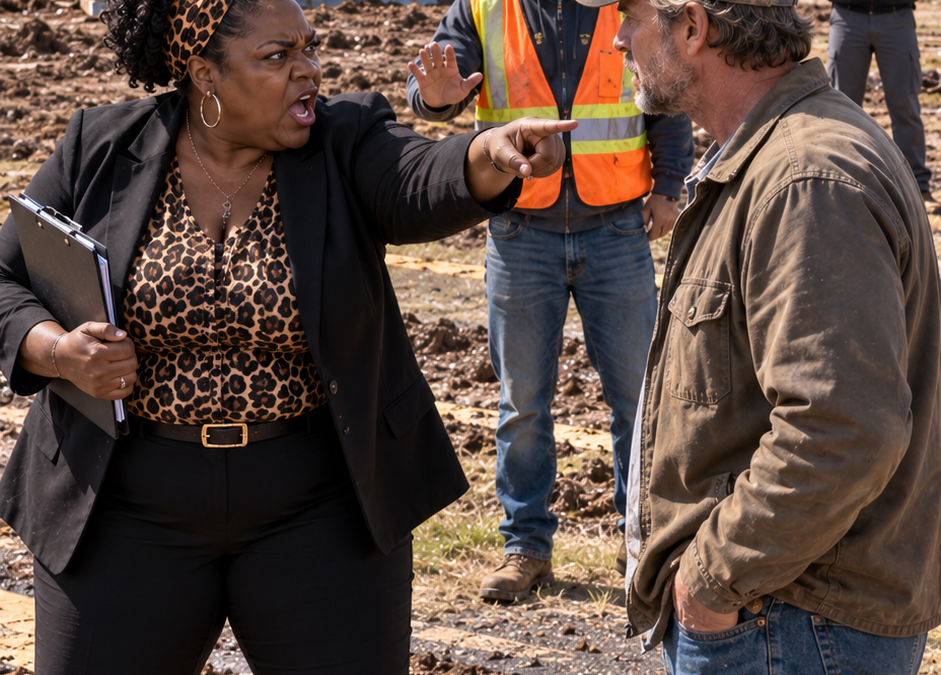
Then Karen came toward me carrying a clipboard, her good shoes sinking into the earth she had ordered someone else to tear apart.
“The board authorized remediation under Section 12.4,” she said. “If you interfere, we’ll have the sheriff here within twenty minutes.”
“You’re demolishing an active private airstrip.”
“We’re removing a nonconforming structure.”
“The facility is on the FAA’s records. There are aviation requirements your board doesn’t get to ignore.”
She looked at me with almost maternal disappointment.
“The FAA has absolutely zero jurisdiction over HOA development decisions.”
She gave the word zero room to settle.
“Your registration is a hobby filing. It means nothing here.”
I had spent thirty-two years flying commercial aircraft.
I knew what it felt like when someone dismissed a warning because accepting it would inconvenience their plans.
I also knew that arguing louder rarely improved the outcome.
So I looked past her.
Near the collapsed hangar wall, half covered by a ridge of overturned soil, lay the laminated copy of my airport identification and registration information. It had hung inside the door since the facility first appeared in the federal record.
The corner was bent.
The number was still visible.
I could not stop staring at it.
For fifteen years, that little sheet had meant almost nothing in my daily routine. I walked past it before flying to see my daughter, before volunteer search flights, before quiet morning circuits when I wanted nothing more than an hour in the air.
Now it lay in the mud while Karen explained that it had never mattered.
I moved one step toward the hangar.
The man in the vest blocked me again.
“Attempting to enter this area may result in removal.”
I stopped.
There was no useful version of this day in which I shoved a contractor and gave Karen a photograph she could put in the next newsletter.
I took out my phone instead.
Machines.
Truck markings.
Damaged foundation.
People.
Time.
Karen watched me for a moment, then turned away.
Apparently, a man taking pictures was less troublesome than a man insisting on being heard.
Before returning to my truck, I looked at the east wall of the hangar.
The camera I had installed three days earlier remained attached above the service door.
Its power cable had been severed.
The battery backup was still running.
I had put it there after orange survey stakes appeared on my land without permission.
Karen walked beneath it, pointing toward the next area she wanted cleared.
She never looked up.
I got into the truck and closed the door.
For the first time since arriving, I could hear myself breathe.
Then I opened the notebook I kept in the console and wrote down the time.
PART2
I retired four years before Karen destroyed the strip.
Thirty-two years in commercial aviation had given me more than twenty thousand hours in the air, three continents’ worth of hotel rooms, and a deep appreciation for arriving somewhere without needing to leave again before dawn.
I bought the property eighteen years earlier.
Eighteen acres at the rural edge of a development, with enough room for a modest grass runway and enough distance from the regional airport to make the project worth studying.
I did not build it on impulse.
There were surveys, local approvals, aviation paperwork, site reviews, drainage decisions, and months of work before the first airplane touched down.
The grading alone took more patience than I expected.
A grass strip is not simply a long lawn. Water must go somewhere. Low spots become hazards. Soft ground can punish a pilot who mistakes familiarity for certainty.
I learned the land a little at a time.
Where frost stayed longest.
Where a summer storm left standing water.
Which stretch needed attention after a dry season.
By the time the strip was ready, I could look across it from the porch and see work instead of grass.
I flew a Cessna 172.
Nothing impressive to someone interested only in speed or price. To me, it was the airplane that gave flying back its original meaning after decades of schedules and company procedures.
I used it for trips across the state to see my daughter.
I volunteered on search flights when called.
Sometimes I went up early simply because the air was still and I could.
My daughter understood that better than most people.
“You sound younger after you fly,” she once told me.
“I probably sound less tired.”
“That too.”
She had grown up measuring parts of our lives around my departures. Retirement was supposed to mean I could finally choose when to go and when to stay.
The strip made that possible.
For eight years, nobody complained.
Neighbors sometimes stopped to watch a takeoff. Children waved from the road. I kept operations considerate and maintained the property carefully.
Then Karen became board president.
She ran unopposed on a platform of community improvement.
At first, that meant flowers at the entrance and a new maintenance schedule.
Later, it meant discovering that improvement could be defined as whatever she wanted someone else to surrender.
Within six months, the board circulated forty-three pages of amendments.
The email arrived on a Tuesday beneath routine community announcements.
Most people acknowledged receipt without reading all of it.
I did read it, though I did not yet appreciate how aggressively the board intended to use the language.
Section 12.4 concerned nonconforming structures.
It gave the board purported authority to identify and remediate violations after sixty days’ written notice.
The definitions were broad.
Broad enough that a reasonable reader could imagine a neglected shed.
Broad enough that Karen could imagine my runway.
Four of the eight board seats were filled by people she had appointed.
I noticed that.
I still assumed major decisions would require enough procedure and scrutiny to prevent one person from doing something irreversible.
That assumption cost me.
The first notice arrived roughly two years before the demolition.
My airstrip allegedly conflicted with updated aesthetic standards.
Would I agree to voluntary removal?
I answered in writing.
The strip sat within my deeded boundaries. Its lawful operation predated the provisions the board was invoking. Its existence had been disclosed and documented long before Karen decided it was undesirable.
I enclosed supporting records.
The next notice added a monthly fine.
Five hundred dollars.
The stated reason was maintenance noncompliance, although the runway was maintained and the letter did not identify a condition that repairs would cure.
I asked for clarification.
The board repeated the demand.
I answered again.
Then came the lien threats.
Each letter went into a folder.
Each response received a date.
I did not enjoy the correspondence. I resented spending retired mornings answering accusations written as though facts were merely obstacles between Karen and her preferred outcome.
But I kept answering.
In aviation, an unresolved discrepancy does not improve because you stop writing it down.
That habit followed me home.
What I did not know was that the airstrip had become an obstacle to a development Karen had been discussing quietly with a regional builder.
Lake View Commons Phase Two.
Sixty-eight residential and retail units on association-controlled land adjoining my north boundary.
Two buildings.
One planned at sixty-two feet.
The other at fifty-eight.
My runway was inconvenient to those plans in a way no lawn rule could explain.
At the time, however, I knew only that a woman who rarely visited my side of the community had developed an intense interest in removing something that had stood there peacefully for years.
Three mornings before the demolition, orange stakes appeared on my property.
I found them while checking the runway after rain.
Fresh footprints crossed the damp grass.
No note.
No telephone call.
No contractor identification.
I photographed the stakes and emailed the board asking who had authorized entry.
Then I installed the camera.
I wish I could say I understood exactly what was coming.
I did not.
I expected measurements, perhaps another attempt to build a case around setbacks or appearance.
I wanted a record of anyone entering the property.
The camera stored footage locally and backed it up.
I tested it, checked the view, and returned to ordinary work.
Three days later, the bulldozers arrived.
After leaving the site that morning, I sat in my kitchen without turning on the lights.
I was angry enough that my hands hurt from how tightly I had gripped the steering wheel.
The calm I showed Karen was not the absence of anger.
It was the discipline of keeping anger from making decisions before I did.
Still, discipline did not spare me from grief.
I kept seeing the hangar wall.
That was where my daughter had once leaned against a workbench while telling me she had accepted a job across the state.
Where I had repaired a cabinet, stored old charts, and spent winter afternoons doing little jobs that never seemed important until the place holding them was gone.
The strip was property.
It was also the shape my retirement had taken.
I called my daughter that evening.
She listened without interrupting.
“Were you there when it happened?”
“At the end.”
“Did anybody get hurt?”
“No.”
Then she asked whether the airplane was safe.
“Yes.”
I had been focusing so fiercely on what had been destroyed that I needed the question to remind me what had not been.
“Dad,” she said, “you don’t have to sound fine.”
I looked toward the dark window.
“I’m not fine.”
“Okay.”
That simple acceptance helped more than reassurance would have.
After we hung up, I waited until the machines stopped.
Then I returned with a flashlight.
The contractor was loading equipment.
I stayed clear of the work, walked to the rubble, and found the laminated identification sheet where I had seen it that morning.
I brushed away the dirt.
One corner had been driven into the soil hard enough to crease it permanently.
I carried it home.
Before six the next morning, I opened the fireproof safe in my office.
The original FAA records were untouched.
So were the survey, property documents, and correspondence establishing the facility’s history.
I laid them beside the folder containing two years of HOA notices.
Then I called an aviation attorney I had known for twenty years.
He had moved away from airline work into airport, airspace, and land-use disputes.
“I need you to look at something.”
“How bad?”
“The association demolished my runway and part of my hangar yesterday.”
Silence.
“They claim a bylaw gave them authority.”
“Was there an order?”
“Not one anyone showed me.”
“Any notice to the aviation authorities?”
“Nothing I can find.”
He asked several more questions, each narrower than the last.
Then he told me to preserve everything and bring the records.
His first concern was practical: make certain nobody could rely on outdated information and attempt to use a damaged strip.
We addressed its unsafe condition through the appropriate reporting channels.
That step mattered to me.
My dispute with Karen did not justify leaving another pilot exposed to a hazard.
Then we turned to ownership, entry, demolition authority, and the proposed development.
“Your airport records matter,” he said. “But they are not the only records that matter.”
He spread out the deed.
“Neither are their permits.”
That was the beginning of a distinction Karen would refuse to understand.
An association vote did not answer a property-rights question.
A local construction permit did not answer every aviation question.
And demolishing a runway did not establish that the person ordering demolition had the right to do it.
The lawyer did not promise a dramatic outcome.
He gave me a list.
Preserve the footage.
Obtain the board records.
Get the contractor’s authorization.
Document the damage.
Keep every demand.
Respond to court papers on time.
I could work with a list.
It gave the next morning a shape.
The emergency board meeting took place that afternoon.
I requested it under the association’s procedures.
Karen agreed quickly.
She selected the room and arrived with two board members and the HOA attorney.
A pitcher of water stood at the center of the table.
Printed agendas waited at each chair.
The presentation was orderly enough to make the broken hangar seem like an unfortunate detail in somebody else’s administrative process.
I placed my folder in front of me.
Karen began with community standards and the board’s commitment to improvement.
Then she slid Section 12.4 across the table.
“This is the authority under which we acted.”
I read the page.
“I have three questions.”
Her attorney reached for his pen.
“Who authorized personnel to enter my property and place survey stakes before the demolition authorization was recorded?”
“The board has inspection access,” Karen replied.
“Was that entry documented?”
She referred me to the covenants.
I wrote down her answer.
“Who reviewed the aviation notice requirements and the facility’s status before work began?”
The attorney looked toward Karen.
She said they had received legal assurances that the airport records did not limit the board’s remediation powers.
“I would like the basis for that conclusion.”
“Privileged communication,” the lawyer said.
I wrote that down too.
“Who signed the contractor’s demolition order?”
Karen straightened the paper in front of her.
“That is an operational matter.”
“Someone authorized the machinery.”
“The board authorized the project.”
I let the silence remain for a moment.
Then she slid another document across the table.
An invoice.
Forty-seven thousand dollars.
Nonconforming structure removal.
Community improvement remediation.
Payment due within thirty days.
I stared at it long enough for one of the board members to begin shifting in his chair.
They had destroyed my property.
Now they expected me to pay the contractor who had done it.
Nonpayment, the letter warned, would lead to collection proceedings and a lien.
One board member added that interference with Lake View Commons could expose me to further damages.
That was the first time the development’s name had been said aloud in a room where I could ask questions.
Karen folded her hands.
“We have a signed agreement with the developer. This community is moving forward.”
“May I have copies of everything presented today?”
She nodded.
While a board member collected pages, I requested the amendment’s adoption records, attendance, votes, and original text.
The minutes showed six of eight members present for the relevant vote.
Four were Karen’s appointees.
The matter had taken less than twelve minutes.
The broader community announcement had followed afterward.
My lawyer would examine what the procedures required and whether those requirements had been met.
I did not attempt to argue it at the table.
I collected the documents.
The invoice.
The minutes.
The amendment.
The attorney’s card.
Karen seemed pleased by my silence.
She had mistaken restraint for the moment before surrender.
Dorothy arrived the next morning with a covered dish.
She was seventy-three and lived across the development.
“I saw what they did,” she said.
I invited her in.
She sat at my kitchen table holding her handbag with both hands.
Then she told me about the wind chime.
A small copper one.
Her daughter had given it to her six years earlier.
The board called it a nonpermitted auditory exterior fixture.
Thirty days to remove it.
Fees.
A threat involving a lien.
Dorothy had paid twelve hundred dollars because she was frightened of what might happen to her home.
“I didn’t understand half the letter,” she said. “I understood the part about owing money.”
I asked whether she had kept it.
“Every page.”
Before she left, Richard arrived.
A retired history teacher.
His wife had planted a yellow climbing rose along their front fence eleven years before.
An updated association marking supposedly placed part of it four inches beyond an accepted boundary.
He disputed the measurement.
The board escalated.
He paid to move the trellis.
An inspector returned and declared the result insufficient.
“My wife stopped sitting out front,” he said.
He looked embarrassed by how much that mattered.
It mattered to me.
The young couple came later with a sleepy toddler.
Their backyard shed measured sixty-four square feet.
Under the original rules, they believed it complied.
Under a revised process, structures larger than sixty square feet required a three-thousand-dollar architectural review.
Nonrefundable.
Payable before consideration.
They had paid.
The board approved the shed that had already stood there for five months.
The husband shifted the child against his shoulder.
“We couldn’t risk a problem with the house.”
By evening, three sets of statements lay on my table.
I had spent two years viewing the dispute as Karen’s campaign against my runway.
Now I saw the larger effect of her methods.
Different households.
Different violations.
The same language about what they might lose if they resisted.
These were not people eager for a fight.
They wanted to hang a gift on a porch, tend a rose, store a lawn mower, and go about their lives.
Karen had made ordinary ownership feel conditional on her approval.
At the planning office, I requested the Lake View Commons file.
The clerk found it within minutes.
The letter of intent between the association and developer was signed and dated.
The site plan showed the adjoining parcel.
The building heights were explicit.
Sixty-two feet.
Fifty-eight feet.
I photographed every page I was permitted to copy and took the records to my attorney.
At home, I spread my aeronautical charts, survey information, and airport file across the desk.
The plans placed substantial structures close to the runway approach.
That proximity had consequences requiring review.
I made preliminary calculations using the relevant data and marked the proposed locations.
At the positions shown, the airspace analysis raised concerns beginning around thirty-four feet.
These were questions for qualified review, not numbers I could turn into an order myself.
But the discrepancy was substantial.
One building extended twenty-eight feet above that reference.
The other extended twenty-four.
I called the lawyer.
“I think I know why they needed the strip gone.”
He reviewed the plans with the airport records.
Then he asked for the demolition timeline.
The survey stakes.
The camera footage.
The board documents.
The contractor paperwork.
By then, we had obtained the work authorization.
Karen’s signature was on it.
The same woman who had declined to name the signer at the meeting had personally signed the instruction that brought the machines onto my land.
The development documents did not contain the aviation review we expected to find.
Karen’s theory appeared to be simple.
Remove the airstrip.
Remove the aviation problem.
Build the project.
But a damaged facility, an owner who had not agreed to close it, and an unresolved airspace question were not made irrelevant by a bulldozer.
I sat looking at the plans.
For two years, she had called the runway an aesthetic violation.
She had never written that it interfered with the height of buildings she wanted constructed next door.
That omission told me more than any of her newsletters.
I assembled the file over two days.
Airport records.
Deed.
Survey.
Annotated charts.
Development plans.
Building coordinates and heights.
The letter of intent.
Adoption minutes.
Entry timeline.
Karen’s signed authorization.
The contractor’s work order.
The forty-seven-thousand-dollar invoice.
The neighbors’ statements went into a separate section for the civil issues.
The full camera recordings were preserved on multiple drives.
I watched some of the footage only once.
The first entry.
The workers setting stakes.
The machinery arriving.
Karen directing the supervisor.
The hangar wall coming down.
I paused there.
Watching it happen in person had been difficult.
Watching it happen again, knowing there was nothing the man in the recording could do to prevent it, was worse.
My attorney called while I was checking the index.
“Do you have the originals secured?”
“Yes.”
“Copies separate?”
“Yes.”
“Do not edit the source footage.”
“I haven’t.”
He told me the civil response and regulatory submission were different tracks.
We would pursue both.
He also told me not to confront the workers or make speculative accusations in public.
“Let them explain their documents,” he said. “You explain yours.”
Soon afterward, a process server knocked on my door.
Three claims.
The demolition bill.
Another $120,000 for alleged interference with association operations and development planning.
A request for an injunction preventing me from obstructing the project through regulatory action or otherwise.
Total demand: $167,000.
Among the activities described as interference were my written objections, requests for minutes, and questions about aviation compliance.
I read that section twice.
Apparently, asking who had authorized the destruction of my property had become part of the alleged wrong.
The lawsuit had a response deadline.
We calendared it.
My attorney prepared the answer and supporting strategy well before filing.
I did not let the demand frighten me into paying.
I also did not let anger persuade me to ignore a court document.
There is a difference between believing a claim is absurd and assuming it cannot hurt you.
I knew that by then.
The groundbreaking took place on a Saturday in late October.
My attorney suggested I attend briefly, photograph the signage and public presentation, and leave without argument.
White folding chairs stood on the graded parcel.
A banner read:
LAKE VIEW COMMONS PHASE TWO.
BUILDING OUR FUTURE TOGETHER.
A representative from the mayor’s office held a program.
The developer’s project director stood beside Karen.
Between them waited a ceremonial shovel with a gold-painted handle and a cream ribbon.
About sixty people gathered in autumn coats.
I stood at the back.
Forty-eight hours earlier, I had submitted the organized complaint package to the FAA regional office.
Forty-seven pages.
The submission described the airport’s recorded history, its destruction without my consent, the construction plans, the apparent missing notices, and the airspace concerns.
It asked for review.
I did not ask an agency to punish a person because I disliked her.
I asked it to examine work falling within its responsibilities.
That distinction mattered to me.
At the ceremony, Karen thanked the developer, the board, and everyone who had embraced the future.
She used unstoppable twice.
Then she noticed me.
“I see some people here who didn’t believe this community had a future.”
Several heads turned.
“That’s all right. The future doesn’t wait for people who can’t let go of the past.”
A few people laughed.
Others looked uncomfortable.
For a moment, I wanted to ask whether her future required sending me a bill for destroying mine.
Instead, I took four photographs.
Karen.
The developer.
The banner.
The ceremonial shovel.
I captured the company name clearly.
Then I left.
At home, I set the camera images beside the contractor’s authorization.
The contrast was almost absurd.
One photograph celebrated the first symbolic shovelful.
The video showed the real machinery that had made the celebration possible.
My daughter called that evening.
“Did you go?”
“For a few minutes.”
“Was she awful?”
“She was consistent.”
That made her laugh.
I had not heard myself make a joke about any of it before.
It did not mean I felt better.
It meant Karen had not taken every part of my life.
Three weeks after the ceremony, steel framing began rising.
From the north edge of my property, I could see the columns above the disturbed ground.
The newsletter featured a rendering with glass balconies and a rooftop terrace.
Sixty-two feet appeared in small print.
The developer posted progress photographs.
Karen announced that the project remained on schedule.
Neighbors called.
Not the ones who had brought statements.
Others.
People who had watched quietly and were now trying to decide whether resistance ever accomplished anything.
“She’s going to get away with it, isn’t she?”
“I don’t know yet,” I said.
That was the truth.
I had filed a strong complaint.
I had legal representation.
I had evidence.
None of those things entitled me to promise an outcome.
The waiting wore on me.
I went to the damaged strip some mornings and found myself mentally completing tasks that no longer existed.
Check the threshold.
Inspect the surface.
Open the hangar.
Routine reached for a place the machinery had removed.
Then another legal filing arrived.
The association characterized my federal complaint as harassment and improper interference.
My lawyer incorporated it into the response.
Karen sent a community email identifying my address and describing me as a disgruntled former user of an unregistered structure.
Unregistered.
After years of receiving copies of the records.
I saved it.
The sentence was useful evidence.
It was still ugly to imagine ninety-two households reading it over breakfast.
At the next emergency meeting, her attorney spoke for twelve minutes.
Local permits.
Zoning compliance.
The board’s position.
The limited relationship between federal aviation review and local land-use decisions.
Some of the distinctions were real.
His conclusion—that the aviation questions could simply be dismissed—was the problem.
He described the project as legally unassailable.
Dorothy raised her hand.
She sat near the front, coat still on, handbag in her lap.
“What if the FAA disagrees?”
He gave her a patient smile.
“The FAA has no role in overturning properly issued local permits.”
“That wasn’t what I asked.”
The room became very quiet.
Karen moved to the next speaker.
I wrote down the exchange.
The association’s recorder was running.
Dorothy had asked the question everybody else had been afraid to ask.
That night, a letter from the regional office waited in my mailbox.
It contained a case number, an investigator’s name, and a direct telephone line.
The matter had been escalated for priority review.
I read the words at the mailbox.
Then again inside.
Priority review did not mean a final decision.
It did not mean I had won.
It meant somebody had looked closely enough to move beyond a routine acknowledgment.
I called my attorney.
He listened while I read the letter.
“Send me a copy.”
“What do you think?”
“I think we prepare for their questions. Carefully.”
He would not tell me what I wanted to hear before the evidence supported it.
I respected him for that.
Still, after hanging up, I sat at the kitchen table for a long time.
Until then, the federal submission had felt like throwing a line into darkness.
Now there was a name at the other end.
The investigator later asked for additional survey references and confirmation of the facility’s use and status.
I supplied them.
My attorney handled the legal correspondence.
We did not announce the letter in the neighborhood.
We did not invite people to gather when a site visit was scheduled.
The purpose was to let qualified people measure and assess the project.
Karen had filled every room with certainty.
I wanted the next room to contain facts.
The night before the inspection, I checked the folder twice.
Then I stopped.
There was a point at which checking became a substitute for sleeping.
I had told anxious first officers that for years.
It seemed only fair to follow my own advice.
Two investigators arrived Tuesday morning with credentials, field cases, and survey equipment.
The lead investigator carried my submission.
Colored tabs marked several exhibits.
I had not added those.
He introduced himself, explained what they needed to verify, and asked to begin with the established runway references.
I handed him the original airport records and survey documentation.
He compared identifiers, dates, and coordinates.
His colleague photographed the relevant pages.
The inspection was methodical.
No speeches.
No announcement that someone was about to learn a lesson.
They checked what was there and what the records said had been there.
I found the ordinariness reassuring.
Karen arrived after the administrator saw the activity.
Her attorney came with her.
She wore the same charcoal blazer from the groundbreaking, though the expression above it had changed.
He introduced himself and summarized the city and county permits.
Then he described the legal opinion his firm had provided concerning the association’s authority and local construction.
The investigator listened.
“Those permits are part of the record,” he said. “We’re evaluating the aeronautical issues and the applicable notice requirements.”
“This is locally approved construction.”
“And our review concerns its effect on airspace and airport operations.”
He indicated the plans.
“We’re here to verify the data.”
That ended the exchange.
The lawyer could still submit arguments.
He could not argue a survey instrument into producing a different distance.
The measurements took less time than I expected.
The runway references were compared with the construction footprint.
The intended heights were checked against the approved plans.
The investigators worked through the obstruction analysis with the aeronautical data.
At the relevant points, the concerns I had identified remained.
Building A: sixty-two feet planned.
Building B: fifty-eight.
The reference surface in the analysis was approximately thirty-four feet at those locations.
The lead investigator recorded the differences.
Twenty-eight feet.
Twenty-four.
Karen watched his face.
Her attorney watched the notebook.
I watched the steel frame throwing a shadow over the ground where I had once begun my approach checks.
The investigator explained that both structures raised presumed-hazard concerns requiring formal study.
The construction-notice issues would be addressed as well.
The developer and local building authorities were being notified, and the unresolved aviation review had consequences for the project’s permits, commitments, and ability to continue as planned.
The result on the ground was immediate.
Vertical construction stopped.
What Karen had presented as a settled project was suddenly dependent on a review she had insisted did not matter.
The demolition documents were also being referred for the appropriate legal examination.
The investigator did not pretend every property claim belonged to the FAA.
The unauthorized entry and destruction were part of the civil case.
The airport records and aviation notice issues belonged in the regulatory file.
Different questions.
Different authorities.
Karen had tried to make one board provision answer all of them.
Her lawyer read the written notice.
Then he read it again.
Behind the fence, machinery idled down.
That change in sound was what finally made the moment feel real.
For weeks, I had listened to equipment building something over the argument I was still trying to have.
Now it was quiet.
Karen turned toward me.
“You did this.”
I could have said several things.
I had prepared some of them during sleepless nights.
None seemed worth using.
“I asked them to review the records.”
“You knew what this would cost.”
I looked toward the damaged hangar.
“So did you.”
She had no answer ready for that.
I took the bent identification placard from its protective sleeve and placed it beside the records.
The investigator compared the number, photographed it, and returned it carefully.
The dirt had been cleaned away.
The crease remained.
It was a small object.
Its value was not that it conferred ownership or magical protection.
Its value was that it connected the facility Karen dismissed with the documented history she had chosen to ignore.
I put it away.
There was nothing more I needed to say in the field.
The formal hazard determinations followed three weeks later.
Both proposed structures were identified as presenting unacceptable aeronautical concerns in the reviewed configuration.
The findings went to the association, developer, and relevant authorities.
They did not settle every dispute over my property.
They did destroy the claim that the project had no unresolved aviation obstacle.
The developer moved quickly.
Its agreement with the HOA included representations about regulatory compliance and required clearances.
Those assurances had helped support the project.
Now the documents showed that material questions had not been resolved before construction.
Within five business days, the developer invoked the contractual provision allowing it to terminate.
Lake View Commons Phase Two, as Karen had promised it, was finished.
The developer pursued recovery of predevelopment and related costs.
Surveys.
Architecture.
Engineering.
Testing.
Legal work.
Infrastructure.
The claimed amount exceeded eight hundred thousand dollars.
I did not rejoice at that number.
The association’s money belonged, ultimately, to neighbors.
Dorothy had paid twelve hundred dollars because she feared a wind chime might endanger her home.
The young couple had paid three thousand dollars to have a shed approved after it was built.
Those payments had helped fill a fund Karen treated as a source of power.
Now that fund was nowhere near enough to answer for the consequences.
My lawyer filed the counterclaims in the existing civil action.
Unauthorized entry.
Destruction of private property.
The improper demands and other associated losses.
Within thirty days, the HOA withdrew its $167,000 claim.
The demolition invoice went with it.
I kept the copy.
Not because I needed to read it again.
Because some things should remain available for the day someone says they were misunderstood.
The regulatory referral continued separately.
I followed what my attorney needed me to follow and left the rest to the people responsible for it.
I had no desire to become a full-time spectator at Karen’s collapse.
I wanted my runway back.
Twelve homeowners organized the next meeting.
They sent notice to all ninety-two households and reserved the community center.
Forty-one people came.
The old attendance record had been twenty-two.
People stood along the walls.
Dorothy sat two seats from the aisle.
Richard brought his file.
The young couple came with their child asleep in a carrier.
For the first time, the room was not arranged around Karen explaining what everyone else had to accept.
Neighbors spoke.
A fee.
A notice.
An unanswered appeal.
A threat involving a lien.
Each account came with documents.
What had felt private and embarrassing inside individual houses became recognizable when spoken aloud.
People had assumed they were alone because the board dealt with them one at a time.
Richard described the rose.
His voice caught when he reached the part about his wife no longer sitting on the porch.
He apologized.
Nobody wanted him to.
Dorothy spoke near the end.
“I kept thinking that if I paid, I would stop being afraid.”
She looked down at the letter in her hands.
“Then every envelope made me afraid again.”
The room stayed quiet.
“I’m glad somebody finally made them answer.”
People applauded.
I did not feel like standing.
I had not won this alone, and the cost had not been mine alone either.
The board subsequently voted five to two to remove Karen as president.
The two dissenting members resigned before the following Monday.
Four days later, the interim board suspended outstanding fines and disputed fees pending a full compliance review.
The new leadership began examining how decisions had been made, what money had been collected, and which demands could be supported.
It was not a clean morning-after transformation.
There were legal bills.
Angry residents.
Questions about repayment.
Embarrassment from people who had defended Karen because admitting she was wrong also meant admitting they had helped her remain powerful.
But meetings became places where questions could be asked.
That was a meaningful beginning.
I began the restoration process soon after construction stopped.
The airport’s recorded history had not vanished with the grass.
We had reported the damage and unsafe condition, but the facility had not been voluntarily abandoned by its owner.
That distinction simplified parts of the path back.
There were still inspections, updated information, surveys, and work to complete before I would operate safely.
I was glad of that.
After everything I had said about doing things correctly, I had no intention of treating my own rebuilding as exempt from scrutiny.
Survey crews arrived.
We checked grades, drainage, and the surviving reference points.
I did as much work myself as the rental equipment and my experience reasonably allowed.
The first days were difficult.
Restoration forced me to look closely at damage I had previously documented from a distance.
The places where machinery had cut too deep.
The ruined surface.
The broken foundation.
I found small objects in the dirt.
A bent bracket.
A piece of the old door track.
Hardware I remembered installing.
One afternoon, my daughter drove over.
She watched me sorting debris.
“Are you rebuilding the old place exactly?”
“As close as makes sense.”
She picked up a damaged hinge.
“You’re allowed to make some things better.”
I looked at her.
“I know.”
“I’m not sure you do.”
She was right.
Part of me wanted the new hangar to prove nothing had changed.
But something had.
I could restore the use of the place without pretending the months between had not happened.
We improved the drainage in one section.
I replaced storage that had never worked particularly well.
The hangar went up in February.
Prefabricated steel.
Straightforward construction.
The same exterior color.
On the day the doors were fitted, I stood inside and listened to the wind outside rather than through the walls.
For the first time in months, the building sounded like shelter again.
The empty development parcel changed too.
Under the resolution of the project disputes, the steel framing came down.
The trucks that had delivered the future carried it away in sections.
Concrete footings remained for a time.
Grass began appearing around their edges.
I did not stand at the fence watching every beam leave.
I had already given the project too much of my attention.
But one afternoon, Dorothy called.
“They’re taking the last of it down.”
“I saw the truck.”
“I put the wind chime back.”
That stopped me.
“How does it sound?”
She laughed softly.
“Like it always did.”
I thought about that after we hung up.
The simplest measure of change in the community was not a legal filing.
It was a woman hanging a gift on her porch without checking the road for an inspector.
Richard repaired the rose trellis.
The young couple stopped apologizing for their shed.
Neighbors began speaking to one another about problems before assuming the board’s version had to be right.
None of us became fearless.
We became less isolated.
Karen no longer controlled the agenda.
I heard occasional news about the remaining disputes.
I did not seek her out.
I did not need another conversation in which she explained that the harm she caused was really the fault of the person who refused to accept it.
The record was detailed enough.
In early March, I prepared a fresh display of the facility’s current identification and operating information.
I mounted it inside the hangar door.
Same position.
Same wall.
The old bent copy remained in my office with the important case documents.
I had considered throwing it away.
Instead, I kept it beneath the original camera still showing where it lay in the rubble.
Not on display.
Just preserved.
Some reminders are useful without needing to become the center of a room.
My first flight from the restored strip took place on a Thursday morning in early spring.
The air was cold and nearly still.
Light spread slowly across the grass.
I arrived earlier than necessary and walked the runway before taking out the airplane.
I checked the surface, edges, and threshold.
I knew the restoration had been completed and inspected.
I still wanted to walk it.
For months, the strip had been a set of exhibits.
Distances.
Photographs.
Damage estimates.
That morning, it became ground beneath my boots again.
My daughter had come to watch.
She stood near the hangar holding a cup of coffee.
“Nervous?”
“A little.”
She smiled.
“That’s more honest than usual.”
“I’m improving.”
I performed the preflight the way I always had.
No ceremonial shortcuts.
No extra flourish for the occasion.
Fuel.
Oil.
Controls.
Airframe.
Everything checked deliberately.
The checklist steadied me because it asked ordinary questions with practical answers.
It did not care who had insulted me at a meeting.
It did not care who had been board president.
It asked whether the airplane was ready.
Then it asked whether I was.
I climbed in and started the engine.
The sound filled the space between the restored hangar and the open runway.
My daughter stepped farther back and raised a hand.
I waved.
Then I taxied to the threshold.
For a moment, I looked down the length of the strip without moving.
I remembered the blade cutting through it.
Karen’s shoes in the mud.
The man telling me I was not authorized to stand on my own property.
Those memories were there.
They did not get to make the next decision.
I completed the checks, aligned the airplane, and advanced the throttle.
The Cessna gathered speed.
The surface passed beneath me, familiar and new at the same time.
Then the wheels lifted.
I climbed into a gentle circuit and looked down.
The hangar stood where it belonged.
My daughter was a small figure beside it.
Beyond the north boundary lay the quiet development parcel.
No balconies.
No rooftop terrace.
No steel rising into the space the project had never properly resolved.
I leveled the wings.
For months, I had imagined this moment as triumph.
In the air, it felt simpler.
I could fly home again.
There were still documents in my office and legal matters moving through their final stages.
There were losses no invoice would describe properly.
But below me was a repaired runway, and ahead of me was a clear morning.
That was enough to feel, for the first time, that the dispute had stopped occupying every room in my life.
Karen had called the airport record a hobby filing.
She had called the development unstoppable.
She had sent me the bill and expected fear to complete what the bulldozers began.
What answered her was quieter than any of those declarations.
A deed.
A recorded history.
Measurements.
A signed work order.
A camera left running.
People willing to read before deciding.
I turned north for a short flight, then came back and landed on the grass I had restored.
My daughter walked toward the airplane after I shut down.
“How was it?”
I looked past her at the open hangar door.
The new identification sheet was visible inside.
“Good,” I said.
She waited.
I smiled.
“Really good.”
We pushed the airplane into the hangar together.
Then I closed the doors, checked the latch, and went inside with her for breakfast.








