𝗙𝗨𝗟𝗟 𝗦𝗧𝗢𝗥𝗬 The Day My Solar Array Went Dark, Karen Finally Learned Who Had Been Keeping Her Neighborhood Lit
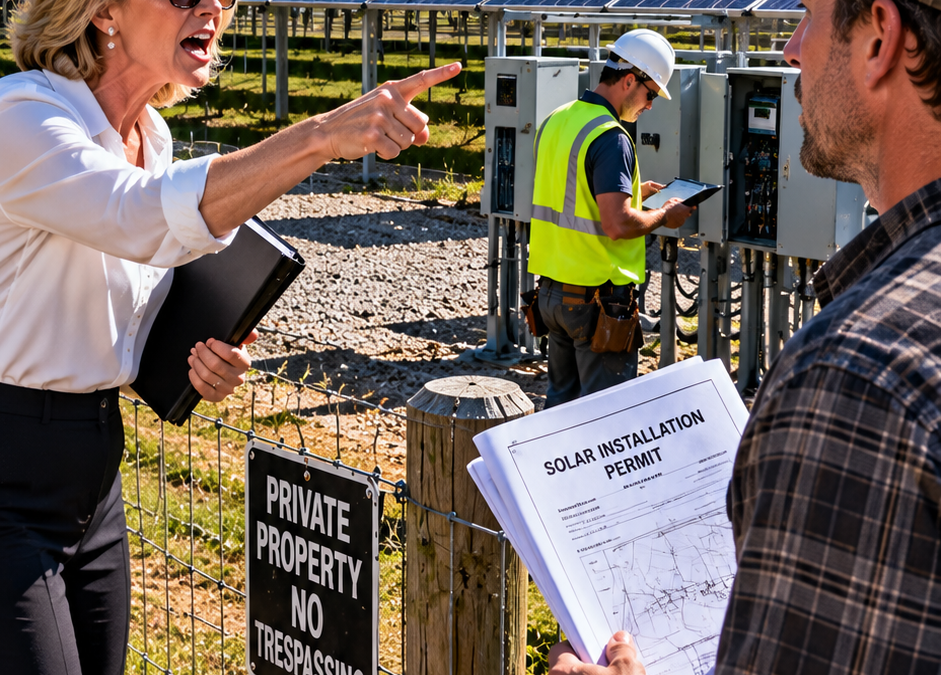
𝗙𝗨𝗟𝗟 𝗦𝗧𝗢𝗥𝗬
For two years, the array did exactly what I had built it to do.
It powered my property.
It lowered my bills.
It kept the lights on during short outages.
It gave me the satisfaction of knowing at least one essential system in my life did not answer to Karen, the HOA, or the utility company’s excuses.
Then came the software update.
It was supposed to be routine.
Daniel called me the week before.
“We’ve got a scheduled firmware and monitoring update for your inverter system,” he said. “Nothing dramatic. We’ll take the array offline briefly, update the controller, verify battery communication, and bring everything back up.”
“How long offline?”
“Probably ten to fifteen minutes. Maybe twenty if the controller takes longer than expected.”
“Does the house lose power?”
“No. Your batteries will carry critical loads. But solar production will pause during the update.”
“That’s fine.”
“Let’s do Tuesday at two.”
I put it on my calendar and thought nothing more of it.
Tuesday morning came clear and bright.
The kind of day solar panels love.
By eight o’clock, production was already strong. The sky was blue, the field was dry, and the panels sat in perfect rows catching the light that Karen hated looking at but apparently had no problem complaining about under electric lights powered by something.
I made breakfast late because I had been in the workshop before sunrise. I was halfway through toast and coffee when I heard tires on the driveway.
I did not need to look out the window to know who it was.
Karen’s SUV stopped near the front walk.
She got out wearing a pale jacket, holding a folder under one arm and her phone in the other. She walked toward the porch with the stiff, purposeful stride of someone arriving not to discuss, but to accuse.
I opened the door before she knocked.
“Karen.”
She looked past me toward the southern field.
“We need to talk about your solar equipment.”
“No, we don’t.”
“This is serious.”
“It always is when you’re holding a folder.”
Her mouth tightened.
“Several residents have reported electrical disturbances.”
That got my attention, though not in the way she wanted.
“What kind of disturbances?”
“Flickering lights. Device interruptions. Breaker problems. Power instability.”
“In Briar Ridge?”
“Yes.”
“Then they should call their electrician or utility provider.”
“They believe it may be connected to your solar array.”
I stared at her.
“My solar array is on my property.”
“That doesn’t mean it isn’t affecting the community.”
“It powers my house, my workshop, my well, and my outbuildings. It is not part of your neighborhood system.”
Karen’s eyes shifted for just a fraction of a second.
There are moments you notice only because you have spent too much time dealing with the same person. It was not fear exactly. It was a small calculation, a mental correction, as if I had stepped too close to a subject she did not want opened.
“You don’t know that,” she said.
I lowered my coffee cup.
“What is that supposed to mean?”
“It means electrical systems are interconnected.”
“Not the way you’re implying.”
She lifted the folder.
“Our residents are concerned that your equipment is changing the neighborhood’s appearance and now possibly affecting service reliability.”
“There it is,” I said.
“What?”
“You started with power complaints and landed right back on appearance. That’s what this is really about.”
“This is about protecting residents.”
“No, it’s about finding a technical excuse for an aesthetic complaint.”
Her face flushed.
“You are dismissing legitimate concerns.”
“Because you haven’t brought legitimate evidence.”
She leaned slightly toward me.
“If your system causes harm to Briar Ridge properties, the HOA will pursue all available remedies.”
I looked past her toward the field.
Rows of panels sat in quiet sunlight, producing clean power for a property that belonged to me. I had permits. I had inspections. I had a maintenance contract. I had no patience left for Karen pretending her irritation was a public emergency.
“Have your residents contact qualified electricians,” I said. “If they find something connected to my equipment, send me the report.”
“You’ll be hearing from us.”
“I usually do.”
She turned and walked back down the steps.
Before getting into her SUV, she looked again toward the solar field.
Not with disgust this time.
With concern.
That stayed with me.
At one forty-five that afternoon, Daniel arrived in his work truck.
He was in his forties, calm, practical, and hard to rattle. He had the quiet confidence of a person who understood systems deeply enough not to talk about them dramatically. He parked beside the equipment pad and opened his laptop on the tailgate.
I walked down from the house.
“Any reason this update should affect anyone beyond my property?” I asked.
He looked up.
“No.”
“Not neighbors?”
“No.”
“Not the HOA?”
He gave me a look.
“Karen came by?”
“This morning.”
“Of course she did.”
“She said homes are having electrical problems and suggested my array may be involved.”
Daniel’s expression changed slightly.
“That would be unusual.”
“Unusual meaning impossible?”
“In a properly isolated private installation, your solar production should not be directly feeding their homes. You may export to the utility under the approved interconnect rules, but that’s different. Their service shouldn’t depend on your array being online.”
“Shouldn’t?”
He closed the laptop halfway.
“Electrical systems are only as clean as the people who modified them over the years.”
That was not comforting.
He walked me through the update plan. At exactly two o’clock, he would place the array in controlled standby, pause production, update the inverter firmware and monitoring gateway, verify battery communication, then bring the system back up. During the update, my house would remain supported by battery storage for critical loads. The workshop would pause nonessential equipment. Nothing about Briar Ridge should care.
At least, nothing legal and properly configured should care.
At one fifty-eight, Daniel stood beside the inverter cabinet and watched the system dashboard.
“Ready?” he asked.
“Ready.”
At two o’clock exactly, he initiated the update.
The numbers on the screen changed first.
Solar production dropped.
The inverter status shifted to standby.
The hum from the equipment altered slightly, almost too faint to hear unless you knew the system well. Inside my house, the lights did not flicker. The refrigerator kept running. The critical loads panel switched cleanly. Everything behaved exactly as Daniel had predicted.
For about three minutes, nothing seemed strange.
Then Daniel’s phone buzzed.
He glanced at it and frowned.
“System alert?” I asked.
“No. Text from one of my guys.”
He read it silently.
Then my phone started ringing.
Karen.
I looked at Daniel.
He raised his eyebrows.
I answered on speaker.
“What is it, Karen?”
Her voice came through sharp and panicked.
“What did you do?”
“To what?”
“The power.”
“My system is undergoing scheduled maintenance.”
“You need to restore it immediately.”
I looked at Daniel.
He had gone completely still.
“Restore what?”
“Your solar system. Turn it back on right now.”
“It’s a private maintenance update.”
“You cannot shut it down without notice.”
I felt the air change around me.
“Notice to whom?”
There was a half-second pause.
Then Karen made the mistake that exposed everything.
“The neighborhood depends on it.”
Daniel’s eyes lifted from the laptop to my face.
I did not speak immediately.
Karen rushed to fill the silence.
“We have homes losing power. Several residents have called. Some systems are down. This is completely irresponsible.”
I kept my voice flat.
“Karen, why would Briar Ridge homes lose power because my private solar array paused production?”
Another pause.
This one longer.
“I’m not an electrician,” she said.
“No. But you just said the neighborhood depends on it.”
“I meant residents are being affected by your actions.”
“No,” I said. “You said the neighborhood depends on my system.”
Daniel was already typing.
Fast.
His fingers moved across the laptop with a speed I had never seen from him before. He opened system logs, connection history, load records, downstream reports, and configuration screens I had never needed to understand because I had trusted the installation and inspections.
Karen’s voice rose.
“Just restart it.”
“That’s not my problem.”
“It is absolutely your problem.”
“No. If your neighborhood loses power when my private system pauses, that is your problem. And I’m going to find out why.”
Karen stopped shouting.
That was when I knew she understood what she had revealed.
Her voice came back lower.
“How long will the update take?”
“Long enough.”
“You are being reckless.”
“I’m being curious.”
I ended the call.
Daniel did not look away from the screen.
“What are you seeing?” I asked.
He did not answer right away.
That frightened me more than an immediate reaction would have.
Daniel was not a dramatic man. If something was minor, he called it minor. If something was unclear, he called it unclear. But he was reading now with a tension in his jaw that told me the system had started telling him a story neither of us expected.
“Daniel.”
He exhaled slowly.
“There are downstream load signatures that should not be here.”
“What does that mean?”
“It means your system history is showing multiple loads beyond your property profile.”
“Loads from where?”
“I don’t know yet.”
“Could it be a monitoring error?”
“Maybe. But look at this.”
He turned the laptop toward me.
I understood almost none of the technical language, but I understood enough to see repeated entries tied to external distribution behavior. Daniel clicked through timestamps, voltage events, inverter load responses, and system routing logs.
“When your array is producing heavily,” he said, “something has been drawing from it beyond your configured private load panel.”
“How long?”
He clicked again.
His face hardened.
“Years.”
The word landed like a hammer.
Years.
I looked toward the HOA homes beyond the trees.
“You’re telling me Briar Ridge has been getting power from my system?”
“I’m telling you the logs suggest your system has been feeding downstream properties through a connection that should not exist in your private configuration.”
“Could that happen accidentally?”
Daniel did not answer quickly enough.
“Could it?” I repeated.
“Not like this.”
He clicked into another screen.
“The original installation we did was private. Your approved design did not include neighborhood distribution. But there’s a junction record here that looks like a later modification. It’s not in my company’s work order.”
“Who could have done that?”
“Someone with access to the shared infrastructure corridor or an electrician working off a separate plan.”
“HOA?”
“Maybe. Utility contractor. Management company. Previous infrastructure vendor. I don’t know yet.”
My phone buzzed again.
Karen.
I ignored it.
Then a text came through.
Call me immediately.
Then another.
This needs to be resolved before residents panic.
Then another.
Do not involve outside parties until we clarify internally.
I showed Daniel the last text.
He gave one short laugh without humor.
“Too late for that.”
He resumed checking the system.
At two thirteen, the update completed.
Daniel could have brought the array fully back online immediately. Instead, he kept the system in controlled standby while he isolated the configuration data. He took screenshots. He exported logs. He photographed cabinet labels, conduit routes, meter connections, breaker positions, and the area where the private system met the external service interface.
“Are we allowed to keep it offline?” I asked.
“It’s your system.”
“Even if homes are out?”
His expression was grave.
“That’s exactly why we document before restoring anything. If your private system is supporting neighborhood loads without authorization, turning it back on without documentation just hides the problem again.”
I looked toward the houses beyond the boundary.
I did not want people sitting without power. I was not trying to punish random homeowners who may have known nothing. But I also knew the truth had finally surfaced only because my system paused. If we rushed to restore everything, Karen would bury the issue under emergency language, internal review, and another folder full of fog.
So we documented.
Karen arrived eight minutes later.
She did not walk this time.
She hurried.
Her SUV stopped near the equipment pad, and she stepped out with her phone still in her hand. Her face was flushed, but the panic I had heard on the phone had changed into something more controlled. She was trying to become Karen the HOA president again.
“Turn it back on,” she said.
Daniel closed the inverter cabinet and stepped beside me.
“You need to leave the equipment area,” I told her.
“This is affecting dozens of residents.”
“Then you should explain why dozens of residents are affected by my private solar equipment.”
Her eyes flicked toward Daniel.
“I don’t know what your technician has told you.”
“He told me there are downstream loads connected to my system.”
“I’m sure that’s a misunderstanding.”
“Great. Then you won’t mind the county looking at it.”
Her face changed.
“There is no need to involve the county.”
“There absolutely is.”
“This can be handled between neighbors.”
“We are not neighbors in this matter. You are the HOA president, and my private energy system appears to have been used by HOA properties without my knowledge.”
“That is a reckless accusation.”
“No, Karen. It’s a measured accusation. Reckless was calling me at 2:04 and demanding I restore a system you supposedly knew nothing about.”
She stepped closer.
“You are twisting my words.”
“You said the neighborhood depends on it.”
“I was speaking under pressure.”
“Pressure from what? Homes losing power when my array stopped?”
She looked away.
That was answer enough.
Daniel spoke for the first time.
“Ms. Whitmore, who authorized the connection between Mr. Carter’s private system and the downstream distribution line?”
Karen turned on him.
“I don’t answer to you.”
“No,” he said calmly. “But the logs do.”
She looked back at me.
“This is bigger than you understand.”
“I’m starting to agree.”
“You cannot just cut off residents.”
“I didn’t cut off anyone. I paused my private array for scheduled maintenance. If that disrupted Briar Ridge, the fault is in the connection nobody told me about.”
Karen lowered her voice.
“Finish the update. Restore power. Then we can review the paperwork.”
“No.”
She stared at me.
“You are making a very serious mistake.”
“No,” I said. “The serious mistake happened before today. I’m just refusing to cover it up.”
I called the county infrastructure office from the field.
Karen stood there while I did it.
I gave the clerk my parcel number, described the private solar installation, explained the unexpected downstream impact, and asked for an inspector or infrastructure records official to document the situation. Because the issue involved possible unauthorized connection between private equipment and neighborhood service infrastructure, they treated it as urgent.
Tom Reynolds arrived a little after four.
Tom was not a dramatic man either.
He was the county’s infrastructure compliance officer, gray-haired, broad-bellied, sharp-eyed, and allergic to nonsense. He drove an old county pickup with a dented bumper and stepped out carrying a clipboard, a tablet, and a rolled utility map.
Karen approached him first.
“Tom, thank goodness,” she said, as if she had invited him.
He looked at her.
“Karen.”
The way he said her name told me they had met before.
She tried to begin immediately.
“This situation has caused an outage for several Briar Ridge residents, and we need Mr. Carter’s system restored while we sort out—”
Tom held up one hand.
“I’m here to determine what belongs to whom and whether infrastructure has been connected consistent with the recorded approvals.”
Karen stopped.
Tom turned to me.
“You’re the property owner?”
“Yes. James Carter.”
“Private solar array?”
“Yes.”
“Installed when?”
“Two years ago.”
“Permitted?”
“Yes. Daniel Mercer’s company designed and installed it.”
Daniel handed him the permit packet.
Tom reviewed it without expression.
Then he walked the site.
He looked at the array, the equipment pad, the inverter cabinet, the battery enclosure, the conduit path, the meter interface, the old utility corridor, and the access box near the boundary. Daniel explained the original configuration. I showed Tom my contract, permit approvals, and maintenance records. Karen tried twice to interrupt. Tom ignored her both times.
Then he unrolled the county utility map across the hood of his truck.
“Here is your parcel,” he said, pointing.
“Yes.”
“Here is the Briar Ridge distribution system as originally recorded.”
Karen leaned closer.
Tom looked at her.
“Please don’t touch the map.”
She stepped back.
He pointed to a marked line.
“This is the recorded separation point. Mr. Carter’s private system should not be serving loads beyond this interface except through approved utility interconnection.”
Daniel nodded.
“That matches our installation.”
Tom looked toward the equipment.
“But current field conditions show an additional connection.”
Karen said, “That connection may have been part of community planning.”
Tom looked up.
“Show me the recorded plan.”
She did not answer.
He waited.
Karen opened her folder, flipped through several pages, then removed a map I had never seen before. It looked older, printed from a scanned file, with faded markings and handwritten notes.
Tom took it.
“This is not a county-recorded plan,” he said.
“It was used by the HOA for infrastructure maintenance.”
“That wasn’t my question.”
She pressed her lips together.
Tom studied the map.
Then his eyebrows lifted slightly.
“Well,” he said.
“What?” I asked.
He turned the map toward Daniel and me.
The original layout clearly marked my solar array as “Private Carter Parcel Renewable System.” Briar Ridge’s distribution infrastructure was drawn separately, with a boundary notation between them.
On the clean version, they were separate.
On Karen’s copy, someone had drawn an additional connection in red ink, linking my private system to a neighborhood distribution line.
The note beside it read: Supplemental feed access — maintenance approved.
My stomach tightened.
“Who wrote that?” I asked.
Karen said quickly, “That map predates my current term.”
Tom looked at the bottom corner.
“There’s an approval note dated sixteen months ago.”
Karen’s face drained of color.
Tom held the paper closer.
“And initials.”
Daniel leaned in.
“Those are yours, Karen?”
She said nothing.
Tom looked at her.
“Ms. Whitmore?”
“I approve many maintenance documents.”
“That’s not an answer.”
“I would need to review the context.”
“You brought the document.”
Her mouth closed.
Tom photographed the map. Then he asked Karen for every maintenance record related to the connection, the distribution line, and the solar interface. She resisted at first. She said some documents were internal. Tom told her infrastructure affecting private property was not going to be brushed aside as internal.
By five o’clock, two more homeowners had walked down from Briar Ridge.
Then four.
Then eight.
Power had been restored to some homes through normal utility rerouting, but several residents had heard enough rumors to come looking for answers. Karen tried to wave them back.
“This is being handled,” she said.
A man named Paul Henderson stepped forward.
“Handled how? My house went dark when his solar system shut off.”
Karen’s smile looked brittle.
“There appears to be a technical issue.”
A woman beside him pointed toward my field.
“Why would our house depend on his panels?”
Karen did not answer.
Tom did.
“At this stage, we are investigating an apparent undocumented connection between private solar equipment and HOA-associated downstream infrastructure.”
The homeowners stared at him.
Paul looked at me.
“Did you know about this?”
“No.”
His wife said, “Have we been using his power?”
Daniel answered carefully.
“The logs indicate downstream loads have been supported by his system under certain production conditions. We’re still determining scope and mechanism.”
“That means yes,” Paul said.
Daniel did not contradict him.
The group shifted, murmuring.
Karen finally found her voice.
“This is not the time for speculation.”
Paul turned to her.
“Then give us facts.”
Karen’s eyes flashed.
“The board has managed infrastructure responsibly.”
“Did you know about the connection?”
She looked at Tom.
“This is under review.”
Paul said, “That sounds like yes.”
A younger resident holding a toddler on her hip looked at Karen with open disbelief.
“We pay HOA utility assessments every quarter.”
Karen said, “Those assessments support maintenance.”
“Maintenance of what?” the woman asked. “His equipment?”
I felt the anger in the group change direction.
Until that moment, I had worried homeowners might blame me for the interruption. Some probably had at first. Karen had trained them well. If something went wrong near Briar Ridge, it was easier to point at the outsider with the solar panels than ask what the board had been doing behind closed doors.
But now they were seeing the same thing I was seeing.
Their homes had been tied, at least partly, to equipment they did not own.
Their HOA president had complained for months about the very system her neighborhood had quietly benefited from.
And somewhere in the records was her signature.
Tom asked everyone to step back while he completed his inspection. Daniel brought my system back online in a limited, documented sequence, isolating what he could and logging every change. As production resumed, phones began buzzing among the Briar Ridge residents.
“My lights are back,” someone said.
“Mine too.”
Paul looked at the solar field, then at Karen.
The silence that followed was brutal.
Karen had spent months calling my array ugly, disruptive, dangerous, and inappropriate.
Now everyone was watching their homes come back to life because that same array was producing power again.
Tom documented the restoration sequence. He noted the correlation between my system status and downstream service behavior. He photographed the relevant cabinets, junction points, labels, maps, and Karen’s maintenance document.
Then he looked at me.
“Mr. Carter, your private system remains yours. Do not make further changes without your electrician present, but you are not obligated to operate your private equipment as neighborhood infrastructure.”
Karen said, “You can’t say that without a full review.”
Tom turned to her.
“I just did.”
Her face tightened.
He continued.
“The HOA will need to provide all records concerning this connection, including maintenance approvals, contractor invoices, board minutes, and resident disclosures.”
“There may be privileged material.”
“Then your counsel can identify it. But infrastructure records affecting private property and residential service are not disappearing into a folder.”
Karen looked furious.
I almost admired Tom’s complete lack of interest in her mood.
He gave instructions with the calm authority of someone who knew exactly what the law required and had no desire to perform righteousness while enforcing it. The HOA would need to establish an independent lawful arrangement. Any continued reliance on my private equipment would require proper agreement, disclosure, compensation if applicable, engineering review, safety certification, and my consent.
My consent.
Those two words mattered more than anything.
Not Karen’s assumption.
Not the HOA’s convenience.
Not a red line drawn on an old map.
My consent.
I had never given it.
That night, I barely slept.
Not because I doubted the facts.
Because the facts were worse than I had expected.
Daniel sent me the exported logs. I spent hours at my kitchen table scrolling through timestamps, load events, production curves, and notes he had written in plain English so I could understand what I was seeing. The pattern was undeniable. On high-production days, excess capacity from my system had been routed in ways that did not match my private design. During certain utility conditions, Briar Ridge homes had been receiving support through a connection that should never have existed without a formal agreement.
It had not powered every home constantly.
It was more complicated than that.
Some homes drew under specific load conditions. Some benefited during peak periods. Some appeared tied through shared downstream infrastructure that had been modified after my installation. But the moral issue was not complicated.
My equipment had been used beyond my property.
I had not been told.
The HOA had not paid me.
Residents had not been properly informed.
Karen had known enough to panic the moment the system went offline.
The next morning, my attorney sent the HOA a demand letter.
It required preservation of all documents related to the solar connection, infrastructure maintenance, contractor communications, board approvals, resident notices, utility assessments, and any records bearing Karen’s approval. It demanded that the HOA stop representing my private solar array as community infrastructure. It demanded written confirmation that no one would access, modify, or rely on my system without authorization.
Karen did not respond personally.
The HOA’s attorney did.
His letter was polished, cautious, and full of phrases like “unintended configuration,” “legacy infrastructure,” “prior board action,” and “good-faith maintenance assumption.”
I read it twice and laughed once.
Legacy infrastructure.
That was a beautiful phrase for taking from someone without asking.
The county review meeting happened ten days later.
It was held in the community hall inside Briar Ridge, which meant I had to drive through the entrance Karen had spent years acting like a border checkpoint. For once, nobody stopped me. Nobody asked why I was there. Nobody gave me that tight HOA smile that says welcome while meaning controlled.
The room was packed.
Homeowners filled every chair and stood along the walls. Some looked angry. Some looked embarrassed. Some looked confused in the specific way people look when they realize a system they trusted may have been dishonest in their name.
Karen sat at the front table beside the HOA attorney and two board members.
She avoided looking at me.
Tom Reynolds stood near a portable screen with county maps and photographs arranged in order. Daniel sat beside me with his laptop. My attorney sat on my other side with a binder that looked heavier than Karen’s confidence.
Tom opened the meeting plainly.
“This review concerns the connection between Mr. Carter’s private solar generation system and Briar Ridge downstream electrical infrastructure.”
A murmur passed through the room.
He continued.
“The county’s preliminary review shows that the Carter system was permitted and recorded as private equipment serving the Carter parcel. Briar Ridge infrastructure was recorded separately. A later connection appears to have been made or maintained without proper county documentation establishing authority, ownership, consent, or operating responsibility.”
Paul Henderson raised his hand.
“Does that mean our homes were using his power?”
Tom answered carefully.
“Several homes appear to have benefited from power support associated with Mr. Carter’s system under certain conditions. The exact scope is still being evaluated.”
Another resident asked, “Were we paying him for it?”
“No payment arrangement has been provided to the county.”
All eyes shifted toward Karen.
She leaned toward her microphone.
“The board was not aware of any improper benefit.”
A woman in the second row said, “But your signature is on the maintenance approval.”
Karen’s face tightened.
“That document has been taken out of context.”
Tom advanced the slide.
There it was.
The old HOA maintenance document.
Red connection line.
Supplemental feed access — maintenance approved.
Karen Whitmore’s signature at the bottom.
The room went silent.
Tom did not editorialize.
He did not need to.
Karen’s attorney leaned into his microphone.
“For clarity, Ms. Whitmore’s signature reflects approval of maintenance activity, not a legal determination of ownership or energy rights.”
My attorney responded before I could.
“That is precisely the problem.”
People turned toward him.
He continued.
“The HOA approved maintenance activity involving private equipment or a connection to private equipment without verifying ownership or securing my client’s consent. Whether the board intended to make a legal determination is irrelevant to the fact that it acted as though authority existed.”
Karen’s attorney said, “We dispute that characterization.”
“Then produce the agreement,” my attorney said.
The room went still again.
That was the question that had followed every HOA fight I had ever seen.
Show the agreement.
Show the deed.
Show the easement.
Show the recorded right.
Show the signature.
Show the consent.
When people rely on fog, nothing clears the air faster than asking for the document.
Karen’s attorney did not produce one.
Instead, he said the HOA was still reviewing historical files.
That answer landed badly.
A man near the back stood.
“I’ve been paying into the neighborhood maintenance fund for seven years. Are you telling me the board didn’t know what infrastructure we were maintaining?”
Karen said, “The previous board established many systems before my presidency.”
Tom looked at his file.
“The maintenance approval shown here is dated during your presidency.”
The man turned back to Karen.
“So you signed it.”
Karen’s voice sharpened.
“I signed many routine maintenance approvals based on professional recommendations.”
The woman with the toddler spoke again.
“Then who recommended connecting us to his system?”
No answer.
Daniel stood reluctantly.
He was not a public speaker, and I could tell he hated the room’s attention, but he spoke clearly.
“My company installed Mr. Carter’s system as a private system. We did not design it to serve Briar Ridge. We did not authorize downstream neighborhood load connections. The configuration discovered during the update does not match our installation records.”
Karen’s attorney asked, “Could another contractor have misunderstood the interface?”
Daniel looked at him.
“Misunderstanding a label is one thing. Maintaining a downstream feed over time is another.”
That sentence cut through the room.
The homeowners understood it.
So did Karen.
Tom outlined the county’s requirements.
The HOA would need to disconnect from unauthorized reliance on my system or negotiate a lawful, written, engineered, and compensated arrangement with my consent. Independent service infrastructure had to be established or restored. The HOA had to disclose the issue to affected homeowners. No further maintenance could involve my equipment without written authorization. Any contractor accessing shared infrastructure near my parcel had to be identified and documented.
Karen listened with her hands folded tightly in front of her.
For once, she did not interrupt.
The board member beside her, a quiet man named Leonard Voss, looked like he wanted to be anywhere else. The other board member, Diane Price, kept reading the document on the screen as though staring at it long enough might change the signature.
Then Paul Henderson stood again.
“I have a question for Karen.”
Tom glanced at the HOA attorney, then nodded.
Paul faced her.
“You complained about those solar panels for two years.”
Karen said nothing.
“You sent emails calling them an eyesore.”
She remained still.
“You told us they might lower property values.”
A few homeowners murmured.
Paul’s voice grew harder.
“But when they shut down for eleven minutes, you knew our houses might lose power. How?”
Karen’s attorney leaned forward.
“My client is not required to answer accusatory questions in this format.”
Paul did not look at him.
He looked only at Karen.
“How did you know?”
Karen’s face had gone pale again.
She said, “I was aware there had been prior infrastructure coordination.”
The room erupted.
Not in shouting exactly, but in disbelief.
Prior infrastructure coordination.
Another polished phrase trying to hide an ugly fact.
Tom tapped the microphone.
“Let’s keep order.”
But the damage was done.
Karen had admitted enough.
Maybe not legally. Maybe not fully. But politically, in that room, before the people she had governed with rules and warnings and letters, she had revealed that she knew more than she had ever told them.
The meeting ended with no applause, no dramatic resignation, no instant justice.
Real accountability almost never arrives that cleanly.
But something shifted.
Homeowners surrounded the board table. Not me. Not Daniel. Karen. They wanted records. They wanted dates. They wanted invoices. They wanted to know whether their dues had maintained unauthorized infrastructure. They wanted to know whether they had unknowingly relied on a private system they had been encouraged to resent.
Karen kept saying the matter was under review.
Nobody seemed comforted.
The county issued its written findings two weeks later.
The language was dry, but the meaning was not.
My solar array was private property. The permitted use was limited to my parcel and lawful utility interconnection. The HOA had no documented ownership interest in my equipment. No recorded easement authorized neighborhood reliance on my system. The connection to downstream HOA-associated properties had not been properly recorded, approved, or disclosed. The HOA was required to establish an independent compliant arrangement within a defined period and could not use my system without written consent.
I read the letter standing beside the array.
The panels reflected the sky in dark, clean rows.
For years, Karen had looked at them and seen an offense.
The HOA had looked at them and, quietly, seen a resource.
Neither view had treated them as mine.
That was the center of it.
Not electricity.
Not aesthetics.
Not even money, though my attorney was already reviewing whether compensation was owed for energy benefit, unauthorized use, and maintenance burden.
The core issue was ownership.
I had built the array because I wanted control over my energy future. I had paid for the equipment, the installation, the permits, the inspections, the maintenance, the software, the batteries, and every repair. I had carried the risk. I had handled the complaints. I had listened while Karen insulted the thing her neighborhood had been drawing from.
And somehow, without asking me, they had treated it like community infrastructure.
The physical correction took months.
Briar Ridge had to hire engineers, coordinate with the utility, install proper equipment, and untangle the unauthorized connection. During that time, Daniel configured my system to prevent further downstream support except under documented safety conditions required by law. Every change was logged. Every access point was locked. Every contractor had to sign in.
Karen hated that.
I knew because she stopped talking to me directly and started communicating only through attorneys.
That suited me fine.
The homeowners, however, did not stay quiet.
At the next HOA meeting, residents demanded a full infrastructure audit. They voted to create an oversight committee. They required board approval records to be made available for review. The management company came under scrutiny. Contractors were questioned. Invoices surfaced. Emails appeared. None of it made Karen look better.
The previous board had discussed “temporary supplemental energy support” after several homes on the eastern edge of Briar Ridge experienced service instability. The temporary solution had apparently become permanent because it was cheaper than building proper infrastructure. Karen, once elected president, had approved maintenance work that kept the arrangement alive while publicly complaining about the appearance of the very system involved.
Whether she understood every technical detail was almost beside the point.
She had known enough to panic when my system went offline.
She had known enough to tell me the neighborhood depended on it.
She had known enough to ask me not to involve outside parties.
That was enough for most residents.
By spring, Karen resigned as HOA president.
The letter she sent to residents was exactly what I expected: no apology, no admission, no plain sentence saying she had been wrong. She cited “personal reasons” and “unfair attacks” and “mischaracterizations of complex infrastructure matters.” She thanked herself for her service in language so polished it practically squeaked.
Paul Henderson forwarded me a copy.
I read the first paragraph and stopped.
Some documents do not deserve a second reading.
The new board contacted me through counsel.
Their tone was different.
Professional. Careful. Almost humble.
They acknowledged the county findings. They confirmed the HOA would complete independent infrastructure work. They agreed not to access or rely on my system without written permission. They reimbursed certain documented costs after negotiations I will not pretend were pleasant. They also sent a separate letter to residents explaining that my solar array was private property and not a Briar Ridge amenity.
I kept that letter.
Not because I needed validation.
Because it was the first HOA document in years that described my property accurately.
The day the final disconnect work was completed, Daniel came out for inspection.
It was another clear afternoon, not unlike the day everything had been exposed. He opened the cabinets, checked the meters, verified the logs, tested the isolation, and walked the line with a satisfaction he did not bother hiding.
“You’re clean,” he said.
“That sounds good.”
“It is good. Your system is serving your property. Nothing downstream showing. No unauthorized draw. No strange load signatures.”
“So it’s finally what it was always supposed to be.”
He smiled.
“Yes.”
I stood beside him, looking across the solar field.
The panels were working steadily. Quietly. Without drama. Sunlight hit them, electricity moved through wires I owned, and the system carried power to the house, the well, the workshop, the barn, and nowhere else.
For most people, that would not sound emotional.
For me, it felt like getting a locked door back.
That evening, I sat on the back porch as the sun dropped behind Briar Ridge.
The neighborhood lights came on one by one in the distance. This time, they came from their own system. Their own arrangements. Their own responsibility.
Mine stayed on too.
From my own.
I thought about the morning Karen first came to complain about appearance. I thought about her standing in my driveway with her folder, accusing my private investment of disturbing the community. I thought about the phone call during the update, the panic in her voice, the words she could not pull back.
The neighborhood depends on it.
That sentence had done what no argument could have done.
It had opened the hidden door.
For months afterward, people tried to dress the truth in softer language. Legacy infrastructure. Prior coordination. Maintenance oversight. Technical confusion. Historical ambiguity.
But the truth was simple.
I built a private solar array.
The HOA used it without permission.
Karen complained about it until the day it stopped helping her.
And when the system went dark, the records lit up.
I still maintain the array carefully. Daniel still handles updates. We schedule them when needed, document them properly, and notify only the people who actually have a right to be notified. Sometimes I stand near the equipment pad during maintenance and remember that strange afternoon when an ordinary software update became the most honest witness on my property.
Machines do not care about HOA politics.
They do not flatter board presidents.
They do not respect fake authority.
They record what happened.
That is what saved me.
Not anger. Not revenge. Not a speech at a meeting.
Data.
Maps.
Permits.
Logs.
Signatures.
The quiet, stubborn evidence that my system had been mine all along.
Briar Ridge still exists beyond the trees. The hedges are still trimmed. The mailboxes still match. The newsletters still arrive at their residents’ doors with phrases like “community standards” and “shared values.” I imagine the meetings are still too long and the arguments still too small.
But they do not talk about my solar array anymore.
They do not complain about the panels.
They do not ask for access.
They do not send Karen up my driveway with a folder.
The array sits in the sun, doing exactly what I built it to do.
It powers my property.
Nothing more.
Nothing less.
And every time I see those panels catch the morning light, I remember the lesson Karen learned too late.
Private property does not become community property just because the community finds it useful.
𝗧𝗛𝗘 𝗘𝗡𝗗
The Day My Solar Array Went Dark, Karen Finally Learned Who Had Been Keeping Her Neighborhood Lit
I built the solar array because I wanted one part of my life that nobody else could touch.
For years, Karen complained that my panels ruined the neighborhood’s image.
Then one routine update shut them down for eleven minutes, and half the homes behind her gate went dark.
When I bought the property, I knew exactly what I wanted from it.
Space.
That was the first thing.
Not luxury. Not prestige. Not a subdivision entrance with stone columns and seasonal wreaths. I wanted land wide enough that I could stand on my own driveway without hearing someone else’s garage door open. I wanted a house that faced the morning sun instead of a neighbor’s kitchen window. I wanted a workshop, a storage barn, a garden, and enough distance from the HOA boundary that their newsletters would feel like something happening in another country.
For the most part, I got that.
My property sat on twelve acres just east of Briar Ridge Estates, one of those carefully controlled communities where the mailboxes matched, the hedges looked measured with rulers, and every roofline seemed to have been approved by a committee that feared personality. The subdivision curved around the western side of my land but stopped at the old utility road. On paper, the boundary was clean. My acreage was private. Their lots were inside the HOA. The line between us was recorded, surveyed, and, at least in theory, obvious.
Theory, I learned, does not mean much to people like Karen Whitmore.
Karen was the HOA president of Briar Ridge Estates.
She had the posture of a woman who believed rules became more legitimate when delivered through clenched teeth. She wore white blouses, carried folders, spoke in phrases like “community character” and “architectural continuity,” and treated every private decision near her neighborhood as if it required her blessing.
The first time she complained about my solar array, the panels had not even been fully connected.
She drove up my gravel driveway in a silver SUV, stepped out holding a tablet, and stood at the edge of the field where the installation crew had been mounting the last row of panels. The array sat on my southern slope, where the land dropped gently away from the house and received sun almost all day. It was not visible from most of the road. It did not cross the property line. It met every county setback and electrical requirement. I had permits, inspections, engineering documents, and a contract thick enough to break a toe if dropped.
Karen looked at it like I had installed a junkyard.
“This is unacceptable,” she said.
I was standing beside Daniel Mercer, the solar contractor who had designed the system. He glanced at me as if asking whether this was a neighbor, an inspector, or a problem.
Usually, with Karen, the answer was all three in her own mind and none of them in reality.
“Good morning, Karen,” I said.
She ignored the greeting.
“This installation is completely inconsistent with the appearance of the community.”
“My property isn’t in your community.”
“It affects our visual environment.”
“It’s on my land.”
“It can be seen from several homes.”
“Then several homes have a view of private property.”
Daniel lowered his head slightly, pretending to check something on his clipboard. I could tell he was trying not to smile.
Karen stepped closer to the fence that separated my equipment area from the driveway.
“Briar Ridge has strict standards regarding visible energy equipment.”
“I’m sure it does.”
“This array violates those standards.”
“No,” I said. “It violates your preference.”
Her eyes narrowed.
“You are very dismissive.”
“I’m accurate.”
That was the beginning.
For months after the array went online, Karen found reasons to complain.
At first, it was glare. She claimed sunlight reflected off the panels and disturbed residents walking along the HOA trail. I had the installer provide the manufacturer’s anti-glare specifications, along with a site-angle analysis showing that the panels were positioned to absorb light, not throw it across the neighborhood like mirrors.
Then it was aesthetics. She said the array looked “industrial.” I sent her a copy of the county approval and reminded her that rural residential properties were allowed to install energy systems under county rules.
Then it was noise. She claimed the inverters produced a hum that could be heard by homeowners at night. I stood beside the equipment after sunset and recorded ten minutes of crickets, wind, and one distant dog barking from inside her subdivision. The inverters made less sound than my refrigerator.
Then it was safety. She suggested batteries could pose a hazard to nearby homes. I responded with the inspection report, the fire clearance approval, the equipment certifications, and the emergency disconnect diagram.
Every complaint ended the same way.
Karen objected.
Records answered.
Karen grew angrier.
I built the system for one reason: independence.
My house, workshop, well pump, cold storage, and outbuildings used more power than a normal suburban home. I ran equipment. I stored produce. I worked odd hours. After two major outages in five years and utility rates that seemed to climb whenever the company mailed an apology letter, I decided to invest in my own generation and battery system.
Daniel had designed the array carefully.
It was not a hobby setup. It was a serious private system: ground-mounted panels, battery storage, inverters, transfer controls, monitoring software, and a professionally installed connection that allowed my property to operate with far less dependence on the grid. It was still connected legally and properly, but it was built for me.
At least, that was what I believed.
I had no reason to believe otherwise.
When Daniel’s company finished the installation, we ran through every normal test. The system performed beautifully. I could see production data on my phone. I could track battery charge, consumption, export limits, and load behavior. I knew when the workshop drew heavily. I knew when clouds crossed the field. I knew when the well pump kicked on.
For two years, the array did exactly what I had built it to do.
It powered my property.
It lowered my bills.
It kept the lights on during short outages.
It gave me the satisfaction of knowing at least one essential system in my life did not answer to Karen, the HOA, or the utility company’s excuses.
Then came the software update.
It was supposed to be routine.
Daniel called me the week before.
“We’ve got a scheduled firmware and monitoring update for your inverter system,” he said. “Nothing dramatic. We’ll take the array offline briefly, update the controller, verify battery communication, and bring everything back up.”
“How long offline?”
“Probably ten to fifteen minutes. Maybe twenty if the controller takes longer than expected.”
“Does the house lose power?”
“No. Your batteries will carry critical loads. But solar production will pause during the update.”
“That’s fine.”
“Let’s do Tuesday at two.”
I put it on my calendar and thought nothing more of it.
Tuesday morning came clear and bright.
The kind of day solar panels love.
By eight o’clock, production was already strong. The sky was blue, the field was dry, and the panels sat in perfect rows catching the light that Karen hated looking at but apparently had no problem complaining about under electric lights powered by something.
I made breakfast late because I had been in the workshop before sunrise. I was halfway through toast and coffee when I heard tires on the driveway.
I did not need to look out the window to know who it was.
Karen’s SUV stopped near the front walk.
She got out wearing a pale jacket, holding a folder under one arm and her phone in the other. She walked toward the porch with the stiff, purposeful stride of someone arriving not to discuss, but to accuse.
I opened the door before she knocked.
“Karen.”
She looked past me toward the southern field.
“We need to talk about your solar equipment.”
“No, we don’t.”
“This is serious.”
“It always is when you’re holding a folder.”
Her mouth tightened.
“Several residents have reported electrical disturbances.”
That got my attention, though not in the way she wanted.
“What kind of disturbances?”
“Flickering lights. Device interruptions. Breaker problems. Power instability.”
“In Briar Ridge?”
“Yes.”
“Then they should call their electrician or utility provider.”
“They believe it may be connected to your solar array.”
I stared at her.
“My solar array is on my property.”
“That doesn’t mean it isn’t affecting the community.”
“It powers my house, my workshop, my well, and my outbuildings. It is not part of your neighborhood system.”
Karen’s eyes shifted for just a fraction of a second.
There are moments you notice only because you have spent too much time dealing with the same person. It was not fear exactly. It was a small calculation, a mental correction, as if I had stepped too close to a subject she did not want opened.
“You don’t know that,” she said.
I lowered my coffee cup.
“What is that supposed to mean?”
“It means electrical systems are interconnected.”
“Not the way you’re implying.”
She lifted the folder.
“Our residents are concerned that your equipment is changing the neighborhood’s appearance and now possibly affecting service reliability.”
“There it is,” I said.
“What?”
“You started with power complaints and landed right back on appearance. That’s what this is really about.”
“This is about protecting residents.”
“No, it’s about finding a technical excuse for an aesthetic complaint.”
Her face flushed.
“You are dismissing legitimate concerns.”
“Because you haven’t brought legitimate evidence.”
She leaned slightly toward me.
“If your system causes harm to Briar Ridge properties, the HOA will pursue all available remedies.”
I looked past her toward the field.
Rows of panels sat in quiet sunlight, producing clean power for a property that belonged to me. I had permits. I had inspections. I had a maintenance contract. I had no patience left for Karen pretending her irritation was a public emergency.
“Have your residents contact qualified electricians,” I said. “If they find something connected to my equipment, send me the report.”
“You’ll be hearing from us.”
“I usually do.”
She turned and walked back down the steps.
Before getting into her SUV, she looked again toward the solar field.
Not with disgust this time.
With concern.
That stayed with me.
At one forty-five that afternoon, Daniel arrived in his work truck.
He was in his forties, calm, practical, and hard to rattle. He had the quiet confidence of a person who understood systems deeply enough not to talk about them dramatically. He parked beside the equipment pad and opened his laptop on the tailgate.
I walked down from the house.
“Any reason this update should affect anyone beyond my property?” I asked.
He looked up.
“No.”
“Not neighbors?”
“No.”
“Not the HOA?”
He gave me a look.
“Karen came by?”
“This morning.”
“Of course she did.”
“She said homes are having electrical problems and suggested my array may be involved.”
Daniel’s expression changed slightly.
“That would be unusual.”
“Unusual meaning impossible?”
“In a properly isolated private installation, your solar production should not be directly feeding their homes. You may export to the utility under the approved interconnect rules, but that’s different. Their service shouldn’t depend on your array being online.”
“Shouldn’t?”
He closed the laptop halfway.
“Electrical systems are only as clean as the people who modified them over the years.”
That was not comforting.
He walked me through the update plan. At exactly two o’clock, he would place the array in controlled standby, pause production, update the inverter firmware and monitoring gateway, verify battery communication, then bring the system back up. During the update, my house would remain supported by battery storage for critical loads. The workshop would pause nonessential equipment. Nothing about Briar Ridge should care.
At least, nothing legal and properly configured should care.
At one fifty-eight, Daniel stood beside the inverter cabinet and watched the system dashboard.
“Ready?” he asked.
“Ready.”
At two o’clock exactly, he initiated the update.
The numbers on the screen changed first.
Solar production dropped.
The inverter status shifted to standby.
The hum from the equipment altered slightly, almost too faint to hear unless you knew the system well. Inside my house, the lights did not flicker. The refrigerator kept running. The critical loads panel switched cleanly. Everything behaved exactly as Daniel had predicted.
For about three minutes, nothing seemed strange.
Then Daniel’s phone buzzed.
He glanced at it and frowned.
“System alert?” I asked.
“No. Text from one of my guys.”
He read it silently.
Then my phone started ringing.
Karen.
I looked at Daniel.
He raised his eyebrows.
I answered on speaker.
“What is it, Karen?”
Her voice came through sharp and panicked.
“What did you do?”
“To what?”
“The power.”
“My system is undergoing scheduled maintenance.”
“You need to restore it immediately.”
I looked at Daniel.
He had gone completely still.
“Restore what?”
“Your solar system. Turn it back on right now.”
“It’s a private maintenance update.”
“You cannot shut it down without notice.”
I felt the air change around me.
“Notice to whom?”
There was a half-second pause.
Then Karen made the mistake that exposed everything.
“The neighborhood depends on it.”
Daniel’s eyes lifted from the laptop to my face.
I did not speak immediately.
Karen rushed to fill the silence.
“We have homes losing power. Several residents have called. Some systems are down. This is completely irresponsible.”
I kept my voice flat.
“Karen, why would Briar Ridge homes lose power because my private solar array paused production?”
Another pause.
This one longer.
“I’m not an electrician,” she said.
“No. But you just said the neighborhood depends on it.”
“I meant residents are being affected by your actions.”
“No,” I said. “You said the neighborhood depends on my system.”
Daniel was already typing.
Fast.
His fingers moved across the laptop with a speed I had never seen from him before. He opened system logs, connection history, load records, downstream reports, and configuration screens I had never needed to understand because I had trusted the installation and inspections.
Karen’s voice rose.
“Just restart it.”
“That’s not my problem.”
“It is absolutely your problem.”
“No. If your neighborhood loses power when my private system pauses, that is your problem. And I’m going to find out why.”
Karen stopped shouting.
That was when I knew she understood what she had revealed.
Her voice came back lower.
“How long will the update take?”
“Long enough.”
“You are being reckless.”
“I’m being curious.”
I ended the call.
Daniel did not look away from the screen.
“What are you seeing?” I asked.
He did not answer right away.
That frightened me more than an immediate reaction would have.
Daniel was not a dramatic man. If something was minor, he called it minor. If something was unclear, he called it unclear. But he was reading now with a tension in his jaw that told me the system had started telling him a story neither of us expected.
“Daniel.”
He exhaled slowly.
“There are downstream load signatures that should not be here.”
“What does that mean?”
“It means your system history is showing multiple loads beyond your property profile.”
“Loads from where?”
“I don’t know yet.”
“Could it be a monitoring error?”
“Maybe. But look at this.”
He turned the laptop toward me.
I understood almost none of the technical language, but I understood enough to see repeated entries tied to external distribution behavior. Daniel clicked through timestamps, voltage events, inverter load responses, and system routing logs.
“When your array is producing heavily,” he said, “something has been drawing from it beyond your configured private load panel.”
“How long?”
He clicked again.
His face hardened.
“Years.”
The word landed like a hammer.
Years.
I looked toward the HOA homes beyond the trees.
“You’re telling me Briar Ridge has been getting power from my system?”
“I’m telling you the logs suggest your system has been feeding downstream properties through a connection that should not exist in your private configuration.”
“Could that happen accidentally?”
Daniel did not answer quickly enough.
“Could it?” I repeated.
“Not like this.”
He clicked into another screen.
“The original installation we did was private. Your approved design did not include neighborhood distribution. But there’s a junction record here that looks like a later modification. It’s not in my company’s work order.”
“Who could have done that?”
“Someone with access to the shared infrastructure corridor or an electrician working off a separate plan.”
“HOA?”
“Maybe. Utility contractor. Management company. Previous infrastructure vendor. I don’t know yet.”
My phone buzzed again.
Karen.
I ignored it.
Then a text came through.
Call me immediately.
Then another.
This needs to be resolved before residents panic.
Then another.
Do not involve outside parties until we clarify internally.
I showed Daniel the last text.
He gave one short laugh without humor.
“Too late for that.”
He resumed checking the system.
At two thirteen, the update completed.
Daniel could have brought the array fully back online immediately. Instead, he kept the system in controlled standby while he isolated the configuration data. He took screenshots. He exported logs. He photographed cabinet labels, conduit routes, meter connections, breaker positions, and the area where the private system met the external service interface.
“Are we allowed to keep it offline?” I asked.
“It’s your system.”
“Even if homes are out?”
His expression was grave.
“That’s exactly why we document before restoring anything. If your private system is supporting neighborhood loads without authorization, turning it back on without documentation just hides the problem again.”
I looked toward the houses beyond the boundary.
I did not want people sitting without power. I was not trying to punish random homeowners who may have known nothing. But I also knew the truth had finally surfaced only because my system paused. If we rushed to restore everything, Karen would bury the issue under emergency language, internal review, and another folder full of fog.
So we documented.
Karen arrived eight minutes later.
She did not walk this time.
She hurried.
Her SUV stopped near the equipment pad, and she stepped out with her phone still in her hand. Her face was flushed, but the panic I had heard on the phone had changed into something more controlled. She was trying to become Karen the HOA president again.
“Turn it back on,” she said.
Daniel closed the inverter cabinet and stepped beside me.
“You need to leave the equipment area,” I told her.
“This is affecting dozens of residents.”
“Then you should explain why dozens of residents are affected by my private solar equipment.”
Her eyes flicked toward Daniel.
“I don’t know what your technician has told you.”
“He told me there are downstream loads connected to my system.”
“I’m sure that’s a misunderstanding.”
“Great. Then you won’t mind the county looking at it.”
Her face changed.
“There is no need to involve the county.”
“There absolutely is.”
“This can be handled between neighbors.”
“We are not neighbors in this matter. You are the HOA president, and my private energy system appears to have been used by HOA properties without my knowledge.”
“That is a reckless accusation.”
“No, Karen. It’s a measured accusation. Reckless was calling me at 2:04 and demanding I restore a system you supposedly knew nothing about.”
She stepped closer.
“You are twisting my words.”
“You said the neighborhood depends on it.”
“I was speaking under pressure.”
“Pressure from what? Homes losing power when my array stopped?”
She looked away.
That was answer enough.
Daniel spoke for the first time.
“Ms. Whitmore, who authorized the connection between Mr. Carter’s private system and the downstream distribution line?”
Karen turned on him.
“I don’t answer to you.”
“No,” he said calmly. “But the logs do.”
She looked back at me.
“This is bigger than you understand.”
“I’m starting to agree.”
“You cannot just cut off residents.”
“I didn’t cut off anyone. I paused my private array for scheduled maintenance. If that disrupted Briar Ridge, the fault is in the connection nobody told me about.”
Karen lowered her voice.
“Finish the update. Restore power. Then we can review the paperwork.”
“No.”
She stared at me.
“You are making a very serious mistake.”
“No,” I said. “The serious mistake happened before today. I’m just refusing to cover it up.”
I called the county infrastructure office from the field.
Karen stood there while I did it.
I gave the clerk my parcel number, described the private solar installation, explained the unexpected downstream impact, and asked for an inspector or infrastructure records official to document the situation. Because the issue involved possible unauthorized connection between private equipment and neighborhood service infrastructure, they treated it as urgent.
Tom Reynolds arrived a little after four.
Tom was not a dramatic man either.
He was the county’s infrastructure compliance officer, gray-haired, broad-bellied, sharp-eyed, and allergic to nonsense. He drove an old county pickup with a dented bumper and stepped out carrying a clipboard, a tablet, and a rolled utility map.
Karen approached him first.
“Tom, thank goodness,” she said, as if she had invited him.
He looked at her.
“Karen.”
The way he said her name told me they had met before.
She tried to begin immediately.
“This situation has caused an outage for several Briar Ridge residents, and we need Mr. Carter’s system restored while we sort out—”
Tom held up one hand.
“I’m here to determine what belongs to whom and whether infrastructure has been connected consistent with the recorded approvals.”
Karen stopped.
Tom turned to me.
“You’re the property owner?”
“Yes. James Carter.”
“Private solar array?”
“Yes.”
“Installed when?”
“Two years ago.”
“Permitted?”
“Yes. Daniel Mercer’s company designed and installed it.”
Daniel handed him the permit packet.
Tom reviewed it without expression.
Then he walked the site.
He looked at the array, the equipment pad, the inverter cabinet, the battery enclosure, the conduit path, the meter interface, the old utility corridor, and the access box near the boundary. Daniel explained the original configuration. I showed Tom my contract, permit approvals, and maintenance records. Karen tried twice to interrupt. Tom ignored her both times.
Then he unrolled the county utility map across the hood of his truck.
“Here is your parcel,” he said, pointing.
“Yes.”
“Here is the Briar Ridge distribution system as originally recorded.”
Karen leaned closer.
Tom looked at her.
“Please don’t touch the map.”
She stepped back.
He pointed to a marked line.
“This is the recorded separation point. Mr. Carter’s private system should not be serving loads beyond this interface except through approved utility interconnection.”
Daniel nodded.
“That matches our installation.”
Tom looked toward the equipment.
“But current field conditions show an additional connection.”
Karen said, “That connection may have been part of community planning.”
Tom looked up.
“Show me the recorded plan.”
She did not answer.
He waited.
Karen opened her folder, flipped through several pages, then removed a map I had never seen before. It looked older, printed from a scanned file, with faded markings and handwritten notes.
Tom took it.
“This is not a county-recorded plan,” he said.
“It was used by the HOA for infrastructure maintenance.”
“That wasn’t my question.”
She pressed her lips together.
Tom studied the map.
Then his eyebrows lifted slightly.
“Well,” he said.
“What?” I asked.
He turned the map toward Daniel and me.
The original layout clearly marked my solar array as “Private Carter Parcel Renewable System.” Briar Ridge’s distribution infrastructure was drawn separately, with a boundary notation between them.
On the clean version, they were separate.
On Karen’s copy, someone had drawn an additional connection in red ink, linking my private system to a neighborhood distribution line.
The note beside it read: Supplemental feed access — maintenance approved.
My stomach tightened.
“Who wrote that?” I asked.
Karen said quickly, “That map predates my current term.”
Tom looked at the bottom corner.
“There’s an approval note dated sixteen months ago.”
Karen’s face drained of color.
Tom held the paper closer.
“And initials.”
Daniel leaned in.
“Those are yours, Karen?”
She said nothing.
Tom looked at her.
“Ms. Whitmore?”
“I approve many maintenance documents.”
“That’s not an answer.”
“I would need to review the context.”
“You brought the document.”
Her mouth closed.
Tom photographed the map. Then he asked Karen for every maintenance record related to the connection, the distribution line, and the solar interface. She resisted at first. She said some documents were internal. Tom told her infrastructure affecting private property was not going to be brushed aside as internal.
By five o’clock, two more homeowners had walked down from Briar Ridge.
Then four.
Then eight.
Power had been restored to some homes through normal utility rerouting, but several residents had heard enough rumors to come looking for answers. Karen tried to wave them back.
“This is being handled,” she said.
A man named Paul Henderson stepped forward.
“Handled how? My house went dark when his solar system shut off.”
Karen’s smile looked brittle.
“There appears to be a technical issue.”
A woman beside him pointed toward my field.
“Why would our house depend on his panels?”
Karen did not answer.
Tom did.
“At this stage, we are investigating an apparent undocumented connection between private solar equipment and HOA-associated downstream infrastructure.”
The homeowners stared at him.
Paul looked at me.
“Did you know about this?”
“No.”
His wife said, “Have we been using his power?”
Daniel answered carefully.
“The logs indicate downstream loads have been supported by his system under certain production conditions. We’re still determining scope and mechanism.”
“That means yes,” Paul said.
Daniel did not contradict him.
The group shifted, murmuring.
Karen finally found her voice.
“This is not the time for speculation.”
Paul turned to her.
“Then give us facts.”
Karen’s eyes flashed.
“The board has managed infrastructure responsibly.”
“Did you know about the connection?”
She looked at Tom.
“This is under review.”
Paul said, “That sounds like yes.”
A younger resident holding a toddler on her hip looked at Karen with open disbelief.
“We pay HOA utility assessments every quarter.”
Karen said, “Those assessments support maintenance.”
“Maintenance of what?” the woman asked. “His equipment?”
I felt the anger in the group change direction.
Until that moment, I had worried homeowners might blame me for the interruption. Some probably had at first. Karen had trained them well. If something went wrong near Briar Ridge, it was easier to point at the outsider with the solar panels than ask what the board had been doing behind closed doors.
But now they were seeing the same thing I was seeing.
Their homes had been tied, at least partly, to equipment they did not own.
Their HOA president had complained for months about the very system her neighborhood had quietly benefited from.
And somewhere in the records was her signature.
Tom asked everyone to step back while he completed his inspection. Daniel brought my system back online in a limited, documented sequence, isolating what he could and logging every change. As production resumed, phones began buzzing among the Briar Ridge residents.
“My lights are back,” someone said.
“Mine too.”
Paul looked at the solar field, then at Karen.
The silence that followed was brutal.
Karen had spent months calling my array ugly, disruptive, dangerous, and inappropriate.
Now everyone was watching their homes come back to life because that same array was producing power again.
Tom documented the restoration sequence. He noted the correlation between my system status and downstream service behavior. He photographed the relevant cabinets, junction points, labels, maps, and Karen’s maintenance document.
Then he looked at me.
“Mr. Carter, your private system remains yours. Do not make further changes without your electrician present, but you are not obligated to operate your private equipment as neighborhood infrastructure.”
Karen said, “You can’t say that without a full review.”
Tom turned to her.
“I just did.”
Her face tightened.
He continued.
“The HOA will need to provide all records concerning this connection, including maintenance approvals, contractor invoices, board minutes, and resident disclosures.”
“There may be privileged material.”
“Then your counsel can identify it. But infrastructure records affecting private property and residential service are not disappearing into a folder.”
Karen looked furious.
I almost admired Tom’s complete lack of interest in her mood.
He gave instructions with the calm authority of someone who knew exactly what the law required and had no desire to perform righteousness while enforcing it. The HOA would need to establish an independent lawful arrangement. Any continued reliance on my private equipment would require proper agreement, disclosure, compensation if applicable, engineering review, safety certification, and my consent.
My consent.
Those two words mattered more than anything.
Not Karen’s assumption.
Not the HOA’s convenience.
Not a red line drawn on an old map.
My consent.
I had never given it.
That night, I barely slept.
Not because I doubted the facts.
Because the facts were worse than I had expected.
Daniel sent me the exported logs. I spent hours at my kitchen table scrolling through timestamps, load events, production curves, and notes he had written in plain English so I could understand what I was seeing. The pattern was undeniable. On high-production days, excess capacity from my system had been routed in ways that did not match my private design. During certain utility conditions, Briar Ridge homes had been receiving support through a connection that should never have existed without a formal agreement.
It had not powered every home constantly.
It was more complicated than that.
Some homes drew under specific load conditions. Some benefited during peak periods. Some appeared tied through shared downstream infrastructure that had been modified after my installation. But the moral issue was not complicated.
My equipment had been used beyond my property.
I had not been told.
The HOA had not paid me.
Residents had not been properly informed.
Karen had known enough to panic the moment the system went offline.
The next morning, my attorney sent the HOA a demand letter.
It required preservation of all documents related to the solar connection, infrastructure maintenance, contractor communications, board approvals, resident notices, utility assessments, and any records bearing Karen’s approval. It demanded that the HOA stop representing my private solar array as community infrastructure. It demanded written confirmation that no one would access, modify, or rely on my system without authorization.
Karen did not respond personally.
The HOA’s attorney did.
His letter was polished, cautious, and full of phrases like “unintended configuration,” “legacy infrastructure,” “prior board action,” and “good-faith maintenance assumption.”
I read it twice and laughed once.
Legacy infrastructure.
That was a beautiful phrase for taking from someone without asking.
The county review meeting happened ten days later.
It was held in the community hall inside Briar Ridge, which meant I had to drive through the entrance Karen had spent years acting like a border checkpoint. For once, nobody stopped me. Nobody asked why I was there. Nobody gave me that tight HOA smile that says welcome while meaning controlled.
The room was packed.
Homeowners filled every chair and stood along the walls. Some looked angry. Some looked embarrassed. Some looked confused in the specific way people look when they realize a system they trusted may have been dishonest in their name.
Karen sat at the front table beside the HOA attorney and two board members.
She avoided looking at me.
Tom Reynolds stood near a portable screen with county maps and photographs arranged in order. Daniel sat beside me with his laptop. My attorney sat on my other side with a binder that looked heavier than Karen’s confidence.
Tom opened the meeting plainly.
“This review concerns the connection between Mr. Carter’s private solar generation system and Briar Ridge downstream electrical infrastructure.”
A murmur passed through the room.
He continued.
“The county’s preliminary review shows that the Carter system was permitted and recorded as private equipment serving the Carter parcel. Briar Ridge infrastructure was recorded separately. A later connection appears to have been made or maintained without proper county documentation establishing authority, ownership, consent, or operating responsibility.”
Paul Henderson raised his hand.
“Does that mean our homes were using his power?”
Tom answered carefully.
“Several homes appear to have benefited from power support associated with Mr. Carter’s system under certain conditions. The exact scope is still being evaluated.”
Another resident asked, “Were we paying him for it?”
“No payment arrangement has been provided to the county.”
All eyes shifted toward Karen.
She leaned toward her microphone.
“The board was not aware of any improper benefit.”
A woman in the second row said, “But your signature is on the maintenance approval.”
Karen’s face tightened.
“That document has been taken out of context.”
Tom advanced the slide.
There it was.
The old HOA maintenance document.
Red connection line.
Supplemental feed access — maintenance approved.
Karen Whitmore’s signature at the bottom.
The room went silent.
Tom did not editorialize.
He did not need to.
Karen’s attorney leaned into his microphone.
“For clarity, Ms. Whitmore’s signature reflects approval of maintenance activity, not a legal determination of ownership or energy rights.”
My attorney responded before I could.
“That is precisely the problem.”
People turned toward him.
He continued.
“The HOA approved maintenance activity involving private equipment or a connection to private equipment without verifying ownership or securing my client’s consent. Whether the board intended to make a legal determination is irrelevant to the fact that it acted as though authority existed.”
Karen’s attorney said, “We dispute that characterization.”
“Then produce the agreement,” my attorney said.
The room went still again.
That was the question that had followed every HOA fight I had ever seen.
Show the agreement.
Show the deed.
Show the easement.
Show the recorded right.
Show the signature.
Show the consent.
When people rely on fog, nothing clears the air faster than asking for the document.
Karen’s attorney did not produce one.
Instead, he said the HOA was still reviewing historical files.
That answer landed badly.
A man near the back stood.
“I’ve been paying into the neighborhood maintenance fund for seven years. Are you telling me the board didn’t know what infrastructure we were maintaining?”
Karen said, “The previous board established many systems before my presidency.”
Tom looked at his file.
“The maintenance approval shown here is dated during your presidency.”
The man turned back to Karen.
“So you signed it.”
Karen’s voice sharpened.
“I signed many routine maintenance approvals based on professional recommendations.”
The woman with the toddler spoke again.
“Then who recommended connecting us to his system?”
No answer.
Daniel stood reluctantly.
He was not a public speaker, and I could tell he hated the room’s attention, but he spoke clearly.
“My company installed Mr. Carter’s system as a private system. We did not design it to serve Briar Ridge. We did not authorize downstream neighborhood load connections. The configuration discovered during the update does not match our installation records.”
Karen’s attorney asked, “Could another contractor have misunderstood the interface?”
Daniel looked at him.
“Misunderstanding a label is one thing. Maintaining a downstream feed over time is another.”
That sentence cut through the room.
The homeowners understood it.
So did Karen.
Tom outlined the county’s requirements.
The HOA would need to disconnect from unauthorized reliance on my system or negotiate a lawful, written, engineered, and compensated arrangement with my consent. Independent service infrastructure had to be established or restored. The HOA had to disclose the issue to affected homeowners. No further maintenance could involve my equipment without written authorization. Any contractor accessing shared infrastructure near my parcel had to be identified and documented.
Karen listened with her hands folded tightly in front of her.
For once, she did not interrupt.
The board member beside her, a quiet man named Leonard Voss, looked like he wanted to be anywhere else. The other board member, Diane Price, kept reading the document on the screen as though staring at it long enough might change the signature.
Then Paul Henderson stood again.
“I have a question for Karen.”
Tom glanced at the HOA attorney, then nodded.
Paul faced her.
“You complained about those solar panels for two years.”
Karen said nothing.
“You sent emails calling them an eyesore.”
She remained still.
“You told us they might lower property values.”
A few homeowners murmured.
Paul’s voice grew harder.
“But when they shut down for eleven minutes, you knew our houses might lose power. How?”
Karen’s attorney leaned forward.
“My client is not required to answer accusatory questions in this format.”
Paul did not look at him.
He looked only at Karen.
“How did you know?”
Karen’s face had gone pale again.
She said, “I was aware there had been prior infrastructure coordination.”
The room erupted.
Not in shouting exactly, but in disbelief.
Prior infrastructure coordination.
Another polished phrase trying to hide an ugly fact.
Tom tapped the microphone.
“Let’s keep order.”
But the damage was done.
Karen had admitted enough.
Maybe not legally. Maybe not fully. But politically, in that room, before the people she had governed with rules and warnings and letters, she had revealed that she knew more than she had ever told them.
The meeting ended with no applause, no dramatic resignation, no instant justice.
Real accountability almost never arrives that cleanly.
But something shifted.
Homeowners surrounded the board table. Not me. Not Daniel. Karen. They wanted records. They wanted dates. They wanted invoices. They wanted to know whether their dues had maintained unauthorized infrastructure. They wanted to know whether they had unknowingly relied on a private system they had been encouraged to resent.
Karen kept saying the matter was under review.
Nobody seemed comforted.
The county issued its written findings two weeks later.
The language was dry, but the meaning was not.
My solar array was private property. The permitted use was limited to my parcel and lawful utility interconnection. The HOA had no documented ownership interest in my equipment. No recorded easement authorized neighborhood reliance on my system. The connection to downstream HOA-associated properties had not been properly recorded, approved, or disclosed. The HOA was required to establish an independent compliant arrangement within a defined period and could not use my system without written consent.
I read the letter standing beside the array.
The panels reflected the sky in dark, clean rows.
For years, Karen had looked at them and seen an offense.
The HOA had looked at them and, quietly, seen a resource.
Neither view had treated them as mine.
That was the center of it.
Not electricity.
Not aesthetics.
Not even money, though my attorney was already reviewing whether compensation was owed for energy benefit, unauthorized use, and maintenance burden.
The core issue was ownership.
I had built the array because I wanted control over my energy future. I had paid for the equipment, the installation, the permits, the inspections, the maintenance, the software, the batteries, and every repair. I had carried the risk. I had handled the complaints. I had listened while Karen insulted the thing her neighborhood had been drawing from.
And somehow, without asking me, they had treated it like community infrastructure.
The physical correction took months.
Briar Ridge had to hire engineers, coordinate with the utility, install proper equipment, and untangle the unauthorized connection. During that time, Daniel configured my system to prevent further downstream support except under documented safety conditions required by law. Every change was logged. Every access point was locked. Every contractor had to sign in.
Karen hated that.
I knew because she stopped talking to me directly and started communicating only through attorneys.
That suited me fine.
The homeowners, however, did not stay quiet.
At the next HOA meeting, residents demanded a full infrastructure audit. They voted to create an oversight committee. They required board approval records to be made available for review. The management company came under scrutiny. Contractors were questioned. Invoices surfaced. Emails appeared. None of it made Karen look better.
The previous board had discussed “temporary supplemental energy support” after several homes on the eastern edge of Briar Ridge experienced service instability. The temporary solution had apparently become permanent because it was cheaper than building proper infrastructure. Karen, once elected president, had approved maintenance work that kept the arrangement alive while publicly complaining about the appearance of the very system involved.
Whether she understood every technical detail was almost beside the point.
She had known enough to panic when my system went offline.
She had known enough to tell me the neighborhood depended on it.
She had known enough to ask me not to involve outside parties.
That was enough for most residents.
By spring, Karen resigned as HOA president.
The letter she sent to residents was exactly what I expected: no apology, no admission, no plain sentence saying she had been wrong. She cited “personal reasons” and “unfair attacks” and “mischaracterizations of complex infrastructure matters.” She thanked herself for her service in language so polished it practically squeaked.
Paul Henderson forwarded me a copy.
I read the first paragraph and stopped.
Some documents do not deserve a second reading.
The new board contacted me through counsel.
Their tone was different.
Professional. Careful. Almost humble.
They acknowledged the county findings. They confirmed the HOA would complete independent infrastructure work. They agreed not to access or rely on my system without written permission. They reimbursed certain documented costs after negotiations I will not pretend were pleasant. They also sent a separate letter to residents explaining that my solar array was private property and not a Briar Ridge amenity.
I kept that letter.
Not because I needed validation.
Because it was the first HOA document in years that described my property accurately.
The day the final disconnect work was completed, Daniel came out for inspection.
It was another clear afternoon, not unlike the day everything had been exposed. He opened the cabinets, checked the meters, verified the logs, tested the isolation, and walked the line with a satisfaction he did not bother hiding.
“You’re clean,” he said.
“That sounds good.”
“It is good. Your system is serving your property. Nothing downstream showing. No unauthorized draw. No strange load signatures.”
“So it’s finally what it was always supposed to be.”
He smiled.
“Yes.”
I stood beside him, looking across the solar field.
The panels were working steadily. Quietly. Without drama. Sunlight hit them, electricity moved through wires I owned, and the system carried power to the house, the well, the workshop, the barn, and nowhere else.
For most people, that would not sound emotional.
For me, it felt like getting a locked door back.
That evening, I sat on the back porch as the sun dropped behind Briar Ridge.
The neighborhood lights came on one by one in the distance. This time, they came from their own system. Their own arrangements. Their own responsibility.
Mine stayed on too.
From my own.
I thought about the morning Karen first came to complain about appearance. I thought about her standing in my driveway with her folder, accusing my private investment of disturbing the community. I thought about the phone call during the update, the panic in her voice, the words she could not pull back.
The neighborhood depends on it.
That sentence had done what no argument could have done.
It had opened the hidden door.
For months afterward, people tried to dress the truth in softer language. Legacy infrastructure. Prior coordination. Maintenance oversight. Technical confusion. Historical ambiguity.
But the truth was simple.
I built a private solar array.
The HOA used it without permission.
Karen complained about it until the day it stopped helping her.
And when the system went dark, the records lit up.
I still maintain the array carefully. Daniel still handles updates. We schedule them when needed, document them properly, and notify only the people who actually have a right to be notified. Sometimes I stand near the equipment pad during maintenance and remember that strange afternoon when an ordinary software update became the most honest witness on my property.
Machines do not care about HOA politics.
They do not flatter board presidents.
They do not respect fake authority.
They record what happened.
That is what saved me.
Not anger. Not revenge. Not a speech at a meeting.
Data.
Maps.
Permits.
Logs.
Signatures.
The quiet, stubborn evidence that my system had been mine all along.
Briar Ridge still exists beyond the trees. The hedges are still trimmed. The mailboxes still match. The newsletters still arrive at their residents’ doors with phrases like “community standards” and “shared values.” I imagine the meetings are still too long and the arguments still too small.
But they do not talk about my solar array anymore.
They do not complain about the panels.
They do not ask for access.
They do not send Karen up my driveway with a folder.
The array sits in the sun, doing exactly what I built it to do.
It powers my property.
Nothing more.
Nothing less.
And every time I see those panels catch the morning light, I remember the lesson Karen learned too late.
Private property does not become community property just because the community finds it useful.








