𝗙𝗨𝗟𝗟 𝗦𝗧𝗢𝗥𝗬 The Day My Mother Chose Pickleball Over My Children Was the Day I Stopped Paying for Everyone’s Life
𝗙𝗨𝗟𝗟 𝗦𝗧𝗢𝗥𝗬
For years, I told myself I was helping.
And in some ways, I was.
But generosity becomes something else when nobody remembers it is a choice.
The house my parents called theirs?
My company owned it.
The SUV Mom drove to pickleball?
Leased through an account I funded.
The country club dues?
Mine.
The vacations?
Mine.
Sarah’s monthly consulting income?
Mine.
The comfortable life they enjoyed while describing me as demanding, distant, difficult, and always in crisis?
Mine.
I had invested my military income for years. I bought my first rental property when other officers were buying trucks they could barely afford. I lived below my means, avoided debt, and let discipline work quietly. Over time, I built a private portfolio, rental properties, a holding company, and a web of accounts that supported not only my life but half my family’s.
They had mistaken generosity for permanent access.
A nurse walked in and saw my face.
She paused halfway to the monitor.
“Colonel Carter, is there someone I can call?”
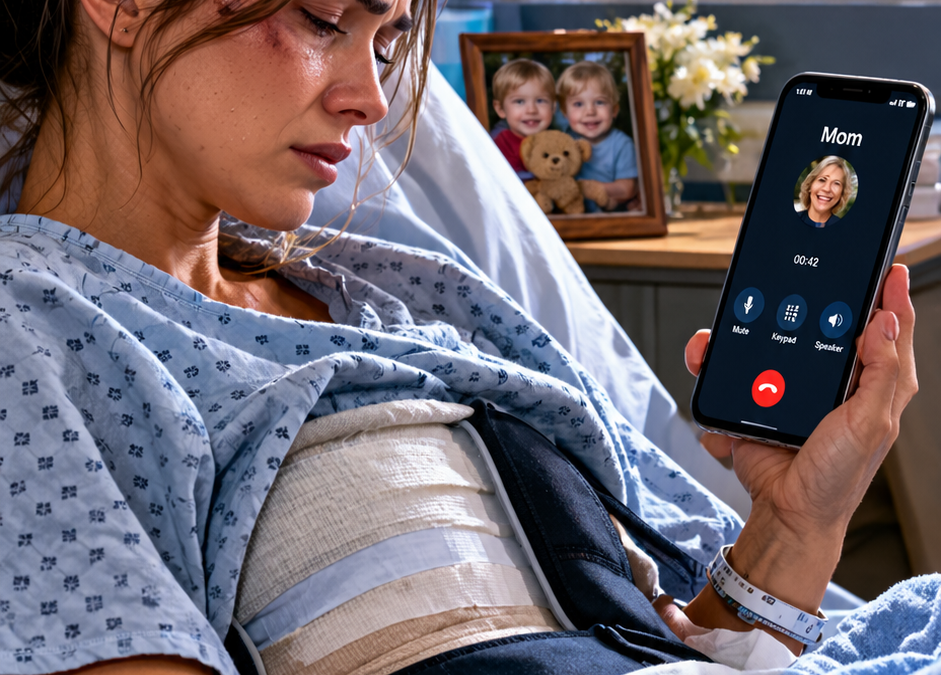
I looked at my phone.
My mother’s name still glowed in recent calls.
I turned the screen away.
“Yes.”
“Who?”
“My attorney.”
Daniel Mercer answered on the second ring.
“Elena, are you all right?”
“I will be.”
His silence sharpened.
“What happened?”
“I need you to stop everything.”
Another silence.
“The cards?”
“Freeze them.”
“The SUV?”
“Start the return process.”
“The club membership?”
“Cancel it.”
“Sarah’s payments?”
“Terminate them.”
Daniel did not ask whether I was sure.
That was why I trusted him.
He had been my attorney for twelve years. He knew I made hard decisions quickly, but never lightly.
“And the house?” he asked.
I looked at the photograph of Leo and Maya.
“Yes.”
“Elena.”
“I’m not evicting anyone tonight. But I want all automatic support stopped. No more open access. No more informal arrangements. No more assumptions.”
He exhaled.
“I’ll begin immediately.”
“At midnight.”
“Elena—”
“At midnight, Daniel.”
“Understood.”
By midnight, the automatic transfers stopped.
Three minutes later, Sarah’s card was declined.
Two minutes after that, Mom’s SUV account froze.
The club membership termination notice went out before sunrise.
Then the calls began.
Mom.
Dad.
Sarah.
Again.
Again.
Again.
I did not answer.
For eight years, they had lived comfortably because I made sure they did.
The one time I truly needed them, they told me to figure it out.
So I did.
Just before sunrise, Daniel called again.
His voice was different this time.
“Elena, I found something involving Sarah and your property accounts.”
I sat up as far as my injuries allowed.
Pain tore through my pelvis so sharply I had to close my eyes until the room stopped tilting.
“What did you find?”
Daniel did not speak for several seconds.
In all the years I had known him, silence from Daniel usually meant one of two things.
He was choosing his words carefully.
Or he had found something he wished he had not.
That morning, lying beneath a thin hospital blanket with dawn beginning to soften the window beside me, I knew it was the second.
“What did you find?” I asked again.
“Nothing criminal that I can establish from the records I have,” he said immediately. “I want to be clear about that.”
I closed my eyes.
“Then tell me what you can establish.”
He exhaled.
“There have been transfers from one of your property-management accounts into an account connected to Sarah’s old boutique.”
I stared at the ceiling.
“That boutique closed two years ago.”
“I know.”
“How much?”
“Not enough to trigger an automatic fraud review. That appears to be the point.”
My fingers tightened around the phone.
“How much, Daniel?”
“Over twenty-six months? Just under forty-eight thousand dollars.”
The number was large enough to matter and small enough to hide inside the operating expenses of the properties I owned.
For years, I had relied on a management firm to handle maintenance, insurance, tax payments, landscaping, and repairs across my rentals. The reports came quarterly. I reviewed summaries, not every invoice.
I had trusted the system because the system had worked.
Or I had believed it had.
“Did Sarah have access?”
“Not directly.”
“Then how?”
“That’s what I’m trying to understand.”
A nurse entered carrying a tray. I lifted one finger, and she nodded, setting it quietly on the table.
Daniel continued.
“There’s another name on several reimbursement forms.”
I knew before he said it.
“Dad.”
“Yes.”
My father, Michael Carter, had spent most of his working life selling commercial building supplies. He understood invoices, contractors, vendor accounts, and purchase orders better than anyone in our family.
Years earlier, when he retired, I gave him a small role helping my property manager evaluate repair estimates.
Not because I needed him.
Because he needed something useful to do.
At the time, he had been miserable.
Retirement stripped away his routine. He stopped shaving every morning. Stopped meeting friends for coffee. Started spending afternoons in his recliner watching financial news with the volume turned low.
My mother called me.
“Your father needs a purpose.”
So I gave him one.
He reviewed estimates.
He met contractors occasionally.
He checked roofs, gutters, fencing, flooring.
He was supposed to be paid a modest consulting fee.
Nothing more.
“Daniel,” I said, “are you telling me my father approved these transfers?”
“I’m telling you his name appears on paperwork associated with them.”
“That’s not the same thing.”
“No.”
That distinction mattered.
I had spent my career learning not to confuse evidence with conclusion.
“What were the payments listed as?”
“Vendor reimbursements. Mostly furnishings, maintenance materials, storage costs, and temporary staging.”
“For which properties?”
A pause.
“That is where the records stop making sense.”
I turned my head toward the photograph on my bedside table.
Leo was laughing. Maya was reaching for his sleeve.
“What doesn’t make sense?”
“Some reimbursements were assigned to properties that were occupied at the time. No staging was required. Others reference work that your regular contractors say they did not perform.”
“So someone created false expenses.”
“Possibly.”
“And Sarah received the money.”
“A company associated with Sarah received it.”
The distinction again.
Daniel was being careful because that was his job.
I appreciated him for it.
I hated him for it.
“Keep looking,” I said.
“I will.”
“And Daniel?”
“Yes?”
“Don’t contact my family yet.”
“I wasn’t planning to.”
“I need facts before accusations.”
“That,” he said quietly, “is why you called me.”
After we ended the call, I looked at the breakfast tray.
Eggs.
Toast.
A small container of fruit.
Coffee I was not allowed to have yet.
For some reason, the ordinary sight of strawberry slices nearly undid me.
My parents had refused to care for my children.
That hurt.
But this was different.
This threatened memories.
Trust has a strange architecture. We imagine it as one solid structure until something cracks. Then suddenly we discover it had rooms we had never inspected.
I wondered how many doors I had left unlocked simply because the people entering them shared my last name.
The nurse returned.
“You should eat something.”
“I will.”
“That’s what you said ten minutes ago.”
I looked at her name badge.
Captain Priya Nair.
“You always this persistent, Captain?”
“With colonels who think rank applies to breakfast? Yes, ma’am.”
Despite everything, I laughed.
It hurt my ribs badly enough that I regretted it immediately.
Captain Nair gave me the expression of someone proven right.
“See? Poor tactical decision.”
“I’ll add it to the report.”
She moved the tray closer.
“Your children are coming later.”
That changed the whole room.
“They are?”
“The family-support coordinator confirmed it. Short visit. Your doctor approved it.”
My eyes burned before I could stop them.
I turned toward the window.
“Thank you.”
She pretended not to notice.
Military hospitals are full of people who understand the dignity of pretending not to notice.
Leo and Maya arrived after lunch with Sergeant First Class Naomi Brooks, who had served under me years earlier and now worked nearby as part of a command support program.
Naomi was forty-two, sharp-eyed, practical, and one of the few people in the Army who had never once appeared intimidated by me.
The twins rode in a double stroller.
Leo wore a dinosaur shirt.
Maya had one shoe.
“Where’s the other one?” I asked.
Naomi looked exhausted.
“That is classified information, Colonel.”
Maya saw me and began kicking both legs.
“Ma!”
The single syllable filled every broken place inside me.
Naomi lifted her carefully and brought her close enough for me to kiss her hair.
Then Leo came up.
For twenty minutes, I was not Colonel Carter.
I was simply their mother.
We stacked soft blocks on my blanket.
Leo tried to steal the hospital remote.
Maya discovered the plastic bracelet on my wrist and regarded it as the most fascinating object in the world.
Nobody explained fractures.
Nobody explained why Mommy could not lift them.
Naomi had prepared them with the perfect amount of truth.
“Mommy got hurt at work, and the doctors are helping her get strong.”
That was enough.
When the twins became restless, Naomi took them down the hall to look through the large windows near the elevator.
I watched them leave.
Then I cried.
Quietly.
Not because I was afraid.
Because I knew, with sudden absolute certainty, what mattered.
The money did not matter.
The house did not matter.
The SUV did not matter.
Even the missing forty-eight thousand dollars, whatever explanation waited behind it, did not matter in the way I had believed money mattered when I was younger.
Security mattered.
Trust mattered.
People who appeared when life became inconvenient mattered.
Naomi returned alone a few minutes later. Another support worker had taken the twins downstairs for snacks.
She pulled a chair beside my bed.
“So,” she said.
“So.”
“Your mother called me.”
I looked at her sharply.
“How did she get your number?”
“Emergency contact directory.”
“What did she want?”
“To know whether you were really hurt.”
Something cold moved through me.
“And what did you say?”
“That your medical information was private.”
Naomi crossed one ankle over the other.
“She sounded shaken.”
“She told me to figure it out.”
“I know.”
“How?”
“You told me last night.”
I had forgotten.
The pain medication had turned the edges of conversations soft.
“I apparently complain freely under medication.”
“You mostly complained about hospital pudding.”
“That sounds reasonable.”
Naomi smiled, then became serious.
“She asked about the children.”
“Did you tell her?”
“I told her they were safe.”
I nodded.
“Good.”
“Are you going to call her?”
“No.”
“That sounded very colonel.”
“It was meant to.”
Naomi leaned back.
“Elena.”
Only old friends called me that with enough confidence to make it sound like an order.
I looked at her.
“You don’t have to forgive anybody today,” she said. “You also don’t have to make permanent decisions while you’re hurt.”
“I’m not.”
“You canceled everything.”
“I canceled financial arrangements.”
“That sounds permanent to somebody whose mortgage, car, and routine depend on them.”
“The house has no mortgage. I bought it.”
“You know what I mean.”
I did.
Naomi rested her hands on her knees.
“I’m not saying they deserve anything.”
“Then what are you saying?”
“I’m saying make sure you’re building the future you actually want, not just responding to the worst phone call of your life.”
I turned toward the window.
She had always been irritatingly good at saying things I did not want to hear.
“I asked them to care for their grandchildren.”
“I know.”
“They said pickleball.”
“I know.”
“I don’t know how I’m supposed to forget that.”
“You probably won’t.”
The answer surprised me.
Naomi shrugged.
“Forgiveness isn’t amnesia.”
My father called later that day.
I let it ring.
He left a voicemail.
I waited until evening before listening.
“Elena, it’s Dad.”
His voice was quieter than usual.
“I know you’re angry. Your mother shouldn’t have said what she said. I should have gotten on the phone. I didn’t.”
Silence.
There was background noise. A television, maybe.
“I don’t know what’s happening with the accounts, but the car stopped working and your mother says the club called. Sarah is upset, too.”
Another pause.
“I’m not calling about that.”
I almost laughed at the obvious contradiction.
Then he said something unexpected.
“I should have called you yesterday even if your mother didn’t want me to.”
I sat very still.
“I heard the conversation. I told myself you had Army people around you. I told myself we’re too old to keep up with twins. I told myself we’d only make things harder.”
His breath caught faintly.
“Those were reasons. Maybe some were even true. But they weren’t the whole truth.”
He stopped again.
“I was scared.”
The word landed differently than an apology would have.
My father had never admitted fear.
Not when his business struggled.
Not when he had heart surgery six years earlier.
Not at my husband’s funeral, where he had stood beside me like a pillar and spoken only when spoken to.
“I heard hospital and injuries, and I was afraid I’d walk in there and see you like that.”
His voice became rough.
“That’s not a good reason. It’s just the real one.”
I did not call him back.
But I saved the message.
The next two days brought progress measured in inches.
Sitting upright longer.
Moving from bed to chair with assistance.
Learning how to protect healing bones during transfers.
Learning that asking for help did not become easier simply because help was necessary.
My rehabilitation physician, Major Evan Liu, had the calm manner of someone who could deliver difficult information without turning it into tragedy.
“You are used to improvement being linear,” he told me during our second session.
“I’m used to improvement being measurable.”
“It will be measurable. It just won’t always move in one direction.”
“I dislike that.”
“I suspected you might.”
He showed me my schedule.
Physical therapy.
Occupational therapy.
Pain management.
Consultation about discharge planning.
“Home modifications?” I asked.
“Possibly temporary ones.”
“My house has stairs.”
“Then for a while, stairs may become optional.”
“They aren’t structurally optional.”
He smiled.
“You know what I mean.”
I did.
Everyone seemed to know what I meant, and increasingly everyone seemed determined to tell me what I did not want to hear.
That afternoon, Daniel arrived in person.
He carried a leather folder and the particular expression that meant there were facts now.
Naomi was with the twins, and I had asked that nobody visit until we finished.
Daniel closed the door.
“I found the source.”
He opened the folder.
“You remember the warehouse on Mercer Avenue?”
“Property Twelve.”
“You really call them by number?”
“It saves time.”
“It also makes you sound slightly terrifying.”
“What happened at Property Twelve?”
“Three years ago, your management company hired a vendor called Haven Logistics to store furniture during renovations.”
“Yes.”
“The work was legitimate.”
He slid a page toward me.
“The vendor account remained active after the renovation ended.”
I read the documents.
Haven Logistics.
Invoices.
Storage.
Delivery.
Consulting.
The amounts varied between nine hundred and twenty-four hundred dollars.
“They kept billing us.”
“Yes.”
“And Dad approved it.”
“Sometimes.”
“Who did the other approvals?”
“A junior administrator at the management firm. She says your father regularly forwarded the invoices and told her they were expected.”
I stared at his signature.
Michael Carter.
My father.
“Where did the money go?”
Daniel placed another sheet down.
“Haven Logistics was originally owned by a man named Patrick Doyle. He dissolved the company after retiring.”
“And?”
“Sarah purchased the inactive business name eighteen months later.”
I looked up.
“Why?”
“That’s the question.”
“So the account stayed active, Sarah acquired the company name, and payments continued.”
“Yes.”
“How much did Dad know?”
“I don’t know yet.”
“Have you spoken with him?”
“No. You told me not to.”
“Good.”
I rubbed my forehead.
The motion pulled at my ribs.
“What about Sarah’s consulting payments from my company?”
“Those were completely separate. Those payments came from you deliberately.”
I knew that.
After her boutique failed, Sarah had been embarrassed to accept money directly.
So I created a consulting arrangement.
She helped occasionally with staging rental properties, sourcing furniture, reviewing tenant-facing materials, and social media listings.
The work was real.
The compensation was generous.
Too generous, perhaps.
But legitimate.
“Could these Haven payments have been connected to actual work she did?”
“Possibly some. Not all.”
“How do you know?”
“Because several invoices describe storage units that do not exist.”
I closed my eyes.
There it was.
Not proof of some grand conspiracy.
Something sadder.
Something smaller.
Someone in my family had discovered a way to pull money from a system I rarely inspected.
Maybe Sarah.
Maybe Dad.
Maybe both.
“Call them,” I said.
Daniel studied me.
“Both?”
“Yes.”
“Separate conversations?”
“No.”
His eyebrows rose.
“You want them together?”
“I want to hear whether their stories change when they’re in the same room.”
“You’re still a colonel even from a hospital bed.”
“I’m also a landlord who would like to know where forty-eight thousand dollars went.”
The meeting happened over video the next morning.
Daniel sat beside me.
Dad joined from his kitchen.
Sarah joined from what appeared to be her apartment.
My mother was not invited.
For a moment, nobody spoke.
Sarah looked exhausted.
Her dark hair was pulled into a messy knot, and she wore no makeup. She was thirty-seven but suddenly looked like the sixteen-year-old who used to stand outside my bedroom after we argued, waiting for me to open the door first.
Dad looked older than he had the last time I saw him.
“Elena,” Sarah began.
“Daniel is here as my attorney.”
Her mouth closed.
I hated the formality.
I needed it.
Daniel spoke first.
He explained the transactions plainly.
Dates.
Amounts.
Invoice descriptions.
Haven Logistics.
Sarah’s connection to the business.
Dad’s approvals.
Nobody interrupted.
When he finished, Sarah pressed both hands against her face.
Dad stared at the table.
I waited.
Finally, Sarah said, “I can explain.”
“Please do.”
She looked at Dad.
He did not look back.
That told me something.
“I bought the company because Dad suggested it.”
My father closed his eyes.
“Why?” I asked.
Sarah swallowed.
“Because I needed a vendor account.”
“For what?”
“For work I was doing.”
“What work?”
“The staging jobs. Furniture deliveries. Storage. Design work.”
“You were already paid for that.”
“I know.”
“Then why another account?”
Her eyes filled.
“I was ashamed.”
The answer irritated me.
“Shame does not create invoices.”
“No,” she said. “But pride creates stupid decisions.”
Dad finally raised his head.
“Sarah—”
“No. She deserves the truth.”
I felt my heartbeat increase.
Sarah took a breath.
“When the boutique closed, I owed money. More than I told you.”
“How much?”
“About seventy thousand.”
I said nothing.
“You paid forty-two,” she continued. “I told you that was everything.”
“It wasn’t.”
“No.”
“Why?”
“Because every time you rescued me, I felt smaller.”
The words struck harder than accusation.
Sarah looked directly at me.
“You never made me feel small, Elena. That’s the worst part. You were always kind about it.”
I could hear a monitor humming behind me.
She continued.
“You sent money like it was simple. Problem, solution, done. And I knew I should be grateful. I was grateful. But I also felt like I would never become a person who could solve my own problems.”
“So you took more money.”
She flinched.
“Yes.”
Dad interrupted.
“It wasn’t like that at first.”
I turned to him.
“Then tell me how it was.”
He rubbed both hands over his face.
“I knew about the remaining debt.”
“You knew?”
“Yes.”
“And you didn’t tell me.”
“She asked me not to.”
“Dad.”
“I thought I was helping.”
“With my money.”
He nodded painfully.
“At first, Sarah actually did additional work. She helped me with furniture inventory, contractor schedules, tenant move-ins. I told her to invoice through Haven because I thought it would keep everything cleaner.”
“You created a vendor arrangement using an inactive company?”
“Yes.”
“Without telling me.”
“Yes.”
Daniel shifted beside me but remained silent.
“How much of the work was real?”
Sarah whispered, “At first? Most of it.”
“And later?”
She looked down.
“I started using the account to make debt payments.”
“How much?”
“Not all forty-eight thousand.”
“How much?”
“Twenty-nine thousand, approximately.”
Dad said, “I approved some without reading them closely.”
I stared at him.
“You knew?”
“Not exactly.”
“Dad.”
“I knew she was struggling. I knew some invoices were padded. I told myself she had done unpaid work before.”
I almost could not process the logic.
“You decided what I owed her?”
His face tightened.
“When you say it like that—”
“How else can it be said?”
Silence.
Sarah began crying quietly.
I did not feel victorious.
I felt tired.
Deeply, completely tired.
“This isn’t about forty-eight thousand dollars,” I said.
Neither answered.
“It’s about the fact that nobody in this family seems able to tell me what they need.”
Sarah wiped her cheeks.
“I needed help.”
“You had help.”
“I needed dignity.”
“Then you should have told me.”
“I didn’t know how.”
Dad looked at me.
“And I needed to feel useful.”
I turned toward him.
He continued.
“You put me in charge of checking estimates because you thought I was falling apart after retirement.”
“I did.”
“You were right.”
Something softened in his voice.
“But after a while I started treating those properties like they were partly mine to manage. Not own. I knew they weren’t mine. But I started making decisions I had no right to make.”
He looked toward Sarah’s square on the screen.
“I thought I was keeping peace.”
Instead, I thought, you were keeping secrets.
Yet I understood more than I wanted to.
Families rarely collapse from one enormous lie.
More often, they sag under a thousand small accommodations.
One person does not want to embarrass another.
Someone avoids a difficult conversation.
Someone says, “Don’t tell her yet.”
Someone else decides, “I can fix it.”
Then years pass.
The temporary solution becomes normal.
“I’m going to have the accounts audited,” I said.
Sarah nodded.
“I understand.”
“Every dollar.”
“Yes.”
“If work was legitimately performed, you’ll be paid for legitimate work. Money taken through false invoices will need to be repaid.”
Her eyes widened.
“I don’t have thirty thousand dollars.”
“I didn’t say tomorrow.”
She looked confused.
“I’m not trying to ruin you, Sarah.”
“I know.”
“I don’t think you do.”
My voice cracked slightly.
I waited until I trusted it again.
“I spent years thinking taking care of this family meant preventing everyone from being uncomfortable.”
Dad looked down.
“I paid bills before anyone had to ask twice. I solved emergencies before they became crises. I thought generosity was love.”
Sarah whispered, “It was.”
“No. Sometimes it was. Sometimes it was control disguised as efficiency.”
Daniel glanced at me, surprised.
I continued.
“I made myself indispensable. Then I resented everyone for depending on me.”
Nobody spoke.
That truth had arrived only recently, and I disliked it.
But truth does not become false because it is inconvenient.
“Dad,” I said.
He looked up.
“The property role is over.”
He nodded.
“I figured.”
“Sarah, the consulting arrangement is over too.”
Her mouth trembled.
“Okay.”
“That doesn’t mean I want either of you gone from my life.”
Sarah looked at me sharply.
I had not known I was going to say that until the words came out.
“But there cannot be any more secret money. No fake invoices. No rescue plans nobody discusses.”
Dad nodded.
“I understand.”
I looked at him.
“Do you?”
He held my gaze.
“I’m trying to.”
For that morning, it was enough.
My mother did not call for two days.
Then she sent a text.
Not an apology.
Not exactly.
I made soup.
I stared at the message.
A minute later another appeared.
I know hospital food is awful.
Then:
I can bring it if you want. I won’t stay.
I read the messages three times.
Naomi was sitting by the window feeding Maya pieces of banana.
“What does she want?” Naomi asked.
“She made soup.”
“That’s either reconciliation or an assassination attempt.”
“Naomi.”
“What? You said she’s very competitive at pickleball.”
I smiled despite myself.
Then I typed:
Tomorrow at noon.
My mother replied instantly.
Okay.
That single word frightened me more than the financial audit.
She arrived ten minutes early.
My mother, Patricia Carter, had always entered rooms as though she expected them to adjust around her.
That day, she stood just inside the doorway holding a thermos and looking uncertain.
Her hair was carefully styled.
Her lipstick was perfect.
Her eyes were not.
“I made chicken and rice.”
I nodded toward the table.
“You can put it there.”
She did.
Then she sat.
For nearly a minute, neither of us spoke.
Finally she said, “You look better than I expected.”
“I’m improving.”
“I’m glad.”
“Thank you.”
She folded her hands.
“I was awful.”
I had prepared for excuses.
That sentence dismantled my defenses faster than any excuse would have.
“Yes,” I said.
She almost smiled.
“You always did answer honestly.”
“You always said you preferred honesty.”
“I said many things when you were growing up that I apparently expected other people to follow.”
I watched her.
She looked toward the window.
“I was afraid.”
“Dad said the same thing.”
“I know.”
“You talked?”
“We’ve been married forty-six years, Elena. Occasionally we exchange information.”
That sounded like my mother.
For the first time since the call, I recognized her.
She continued.
“When you called, I had just come back from the club. Your father told me earlier that Sarah was having money trouble again. I was angry at everyone.”
“At me?”
“Yes.”
“Why?”
Her eyes came back to mine.
“Because you always fix everything.”
I blinked.
“That made you angry?”
“Yes.”
“Why?”
“Because it allowed the rest of us to remain exactly as we were.”
I said nothing.
She looked embarrassed.
“I knew Sarah relied on you. I knew your father was too involved in your properties. I knew I enjoyed things we couldn’t really afford ourselves.”
“The club.”
“The club. Vacations. The car.”
She rubbed one thumb against the other.
“And every time I felt uncomfortable about it, I told myself you wanted to provide those things.”
“I did.”
“I know. That made it easier.”
Her voice lowered.
“When you called asking for help, it exposed something I did not want to see.”
“What?”
“That after all the years you had supported us, I had become accustomed to receiving from you.”
My throat tightened.
“And when you needed something from me,” she continued, “I thought first about inconvenience.”
The word hung between us.
“I heard myself after I hung up.”
“Why didn’t you call back?”
“Pride.”
At least she did not decorate it.
“I kept telling myself you were angry and needed time. Then the cards stopped. The car account stopped. The club called.”
She looked down.
“And for a few ugly hours, I was angrier about those things than about what I had said to you.”
I appreciated her honesty.
Even when it hurt.
“Then your father played me his voicemail to you.”
She sighed.
“And I realized he had done something I hadn’t.”
“What?”
“He admitted what he was afraid of.”
My mother’s eyes filled.
“You are my oldest daughter. I have spent most of your adult life bragging that nothing scares you.”
“That was never true.”
“I know that now.”
Her voice shook.
“I think I used your strength as permission not to worry about taking care of you.”
I looked away.
Outside, a helicopter crossed the pale sky in the distance.
When I finally spoke, I said, “I don’t know what our relationship looks like after this.”
“I don’t either.”
“I’m not restarting the accounts.”
“I didn’t come for that.”
“The house situation has to change.”
She nodded.
That surprised me.
“You and Dad can remain there temporarily,” I said. “But we need a plan where you’re responsible for your own living expenses.”
“We’ve been talking about it.”
“You have?”
“Yes.”
“Since when?”
“Since your father discovered how much a normal SUV costs.”
I laughed.
My ribs objected.
My mother’s face changed instantly.
“Are you all right?”
“Yes.”
She half-rose.
“Should I call somebody?”
“Sit down, Mom.”
She sat.
And suddenly we were both laughing.
Quietly.
Carefully.
Not because anything was fixed.
Because for the first time in days, something felt familiar without feeling false.
After a moment she said, “I would still like to help with the twins.”
I studied her.
“Because you feel guilty?”
“Partly.”
“Mom.”
“You asked for honesty.”
I nodded.
“Partly because I feel guilty,” she repeated. “Partly because I love them. And partly because your father has already bought two car seats after watching six videos about safety ratings.”
I could picture it perfectly.
“Where would you keep them?”
“At our house.”
“My house.”
She gave me a long look.
“Fair.”
Then she added quietly, “For now.”
That mattered.
The audit continued.
Most of the irregular money had gone where Sarah said it had.
Old business debt.
Rent.
A medical bill after she broke her wrist.
Credit-card balances.
A few expenses were embarrassing rather than sinister: an expensive handbag she later returned, a weekend trip she claimed had been for “networking,” furniture she could not afford.
No secret fortune.
No hidden mansion.
No dramatic betrayal waiting in another country.
Just a woman who had been drowning financially and had concealed how deep the water was.
Sarah agreed to a repayment plan.
Daniel recommended documenting it formally.
I agreed.
Not because I wanted leverage over her.
Because vague family arrangements were what had brought us here.
My father wrote a statement accepting responsibility for the approvals.
He offered to repay part himself.
I refused.
Not immediately.
I thought about it first.
Then I told him, “Your responsibility is not to buy forgiveness. It’s to change how you handle boundaries.”
He was quiet.
“That sounds like something your mother would say.”
“Apparently we’re all evolving.”
He smiled.
So did I.
Two weeks after the accident, I transferred from acute care into an intensive rehabilitation unit.
The day I stood between parallel bars for the first time, Major Liu stayed close without touching me.
My legs trembled.
My pelvis burned with a deep ache.
Sweat formed at the base of my neck.
“Ten seconds,” he said.
“That’s insulting.”
“You’ve done four.”
“Still insulting.”
“Six.”
I tightened my grip.
Eight.
Nine.
Ten.
Then twelve.
When I lowered myself into the chair, my entire body shook.
Major Liu crouched slightly so we were at eye level.
“You’re smiling.”
“I am not.”
“You absolutely are.”
I was.
That evening, Naomi brought the twins.
My parents came separately.
It was the first time all three of us had been in the same room since the phone call.
Mom brought soup again.
Dad brought a toy helicopter that made an unbearable electronic sound.
“Why?” I asked.
“Leo likes it.”
“You’ve known him fourteen months and already betrayed me.”
Dad grinned.
Maya crawled toward my wheelchair and patted the wheel.
My mother immediately redirected her with a stuffed rabbit.
Nobody acted as if everything had returned to normal.
That was the surprising part.
We did not pretend.
We were careful.
My parents asked before making plans.
I answered instead of assuming.
They watched the twins twice that week with Naomi nearby, then once by themselves for two hours.
Nothing remarkable happened.
Which felt remarkable.
Sarah had not visited.
She sent messages.
How are you?
Physical therapy okay?
Tell the babies Aunt Sarah loves them.
I answered briefly.
I was not ready for more.
Then, one Friday afternoon, Daniel arrived carrying another folder.
I immediately groaned.
“No.”
He smiled.
“This folder contains mostly good news.”
“Mostly?”
“You’re a lawyer. You shouldn’t use that word around injured people.”
“Fair.”
He sat.
“The forensic accountant completed the review.”
“And?”
“Sarah’s estimate was accurate within a few hundred dollars.”
“So we know where the money went.”
“Almost all of it.”
I caught the phrase.
“Almost?”
Daniel opened the folder.
“There is one payment that doesn’t match the pattern.”
“How much?”
“Seven thousand eight hundred dollars.”
“That’s not small.”
“No.”
“Where did it go?”
“That’s what’s interesting.”
He turned a document toward me.
The payment had been issued eleven months earlier.
Vendor: Haven Logistics.
Description: emergency structural stabilization.
Property: 7.
I knew the property immediately.
A small brick duplex I had bought thirteen years earlier.
One of my first investments.
“Property Seven never needed structural work.”
“That’s what I thought.”
“Who approved it?”
Daniel pointed.
Michael Carter.
My father.
I felt disappointment settle heavily inside me.
Then Daniel said, “But the money didn’t go to Sarah.”
I looked at him.
“Where did it go?”
He placed a bank record beside the invoice.
The receiving account had been closed three months earlier.
The account holder’s name sat in plain black letters.
I read it twice.
Then a third time.
It was not Sarah.
It was not my father.
It was my mother.
Patricia Carter.
I looked at Daniel.
“She told me she didn’t know about the property payments.”
“I know.”
“What was the money for?”
“I asked the same question.”
“And?”
Daniel reached into the folder one last time.
He removed an envelope.
Old.
Cream-colored.
My name had been written across the front in handwriting I had not seen in more than a year.
I stopped breathing.
I knew that handwriting.
My husband’s.
“Daniel,” I whispered.
He placed the envelope gently on the blanket.
“I found this in the documentation attached to that payment.”
My hands began to shake.
My husband had been dead for fourteen months.
The envelope had never been opened.
Across the front, beneath my name, he had written four words.
For Elena, when ready.
And suddenly the missing money was no longer the question I cared about most.
I touched the envelope but did not open it.
For several seconds, I was back in our kitchen with sunlight across the floor, listening to my husband laugh while Leo and Maya slept in bassinets nearby.
His name was Aaron.
Captain Aaron Hale Carter, Army logistics officer, patient husband, terrible singer, expert pancake maker, and the only person I had ever trusted enough to let me fall apart without immediately trying to become useful again.
He had died on a Thursday morning.
The most ordinary morning.
That was what still offended me.
There should have been thunder.
There should have been warning.
There should have been something in the air that said a life was about to split open.
Instead, the dishwasher hummed. The babies slept. Aaron dropped a spoon, laughed at himself, and then collapsed beside the counter.
Fourteen months later, his handwriting sat on my hospital blanket like a door I had not known existed.
“Where did this come from?” I asked.
Daniel’s face softened.
“It was scanned as part of a reimbursement packet. The original appears to have been delivered to your mother’s account file when the payment was issued. There’s a memo line on the transfer.”
“What does it say?”
He looked at the paper.
“Nursery reinforcement.”
I blinked.
“What?”
“That’s the memo.”
“That makes no sense.”
“I agree.”
“Did Mom receive the original envelope?”
“I don’t know.”
“Call her.”
“Elena—”
“Now.”
Daniel hesitated.
I looked at him.
He called.
My mother answered on speaker.
“Daniel?”
“Patricia, I’m here with Elena.”
Silence.
Then, carefully, “Hello, Elena.”
I looked at the envelope.
“Mom, Daniel found a payment from Haven Logistics to an account in your name. Seven thousand eight hundred dollars. It was labeled emergency structural stabilization.”
No answer.
“Mom.”
Her voice was barely audible.
“I wondered when that would come up.”
That sentence made every monitor in the room seem louder.
“You knew.”
“Yes.”
“About Haven?”
“No. Not the larger arrangement. But that payment, yes.”
“What was it for?”
She did not answer immediately.
Then she said, “Your downstairs den.”
“My what?”
“At our house,” she corrected herself quietly. “At your house where we live. The downstairs den.”
“What about it?”
She inhaled unsteadily.
“Aaron asked me to convert it.”
I closed my eyes.
The room shifted.
“What?”
“He came to me before he died.”
My throat tightened so hard I could barely breathe.
“When?”
“About two months before.”
“He knew?”
“No,” she said quickly. “Not that. Not what would happen. He wasn’t sick. He didn’t know.”
“Then why?”
“He said you were carrying too much. He said you would never ask for help unless something forced you. He wanted the twins to have a safe room at our house in case you were deployed, injured, or overwhelmed.”
I stared at the envelope.
My mother continued, her voice trembling now.
“He gave me that envelope and said it was for you when you were ready to hear something without arguing with him.”
Despite everything, a laugh broke out of me.
It hurt.
I did not care.
That was Aaron.
Even from the grave, he knew I would argue with a sealed envelope.
“Why didn’t you tell me?” I whispered.
“I was embarrassed.”
“Of what?”
“That he saw us clearly.”
I said nothing.
“He saw that we depended on you,” Mom said. “He saw that you made it too easy for us. He told me, very gently, that a mother should not need her widowed daughter to fund her comfort before she agreed to be useful.”
My eyes burned.
“He said that?”
“Not those exact words.”
“But close enough.”
“Yes.”
“And the money?”
She exhaled.
“He didn’t want me using your funds. He gave me a cashier’s check.”
“Then why did the payment come from my property account?”
A long silence.
“Mom.”
“I used his money for the den,” she said. “Cribs, safety gates, flooring, storage, supplies. Your father helped install most of it.”
“And the reimbursement?”
“I asked your father to submit it later.”
“Why?”
“Because I told myself Aaron would have wanted you to pay for what benefited your children.”
My mother’s voice cracked.
“That was the lie I told myself.”
I felt cold everywhere.
“Mom.”
“I know.”
“No, I don’t think you do.”
“I know,” she whispered. “I took money from your account for something Aaron had already paid for. I told myself it was temporary. I meant to return it. Then I didn’t.”
“What did you use it for?”
She did not answer.
“Mom.”
“The club arrears,” she said. “And a trip deposit.”
There it was.
Not monstrous.
Not cinematic.
Worse, somehow.
Petty.
Selfish.
Human.
My husband had given her money to build a safe place for our children.
She had used my money to reimburse herself and keep playing the part of a woman whose life still looked effortless.
Daniel sat very still beside me.
I looked at the envelope again.
“Did you open his letter?”
“No.”
I believed her.
Somehow, after everything, I believed that.
“Why not?”
“Because I was afraid it would say exactly what I already knew.”
I ended the call before either of us said something we could not take back.
Then I opened the envelope.
Inside were four pages.
And one photograph.
Aaron had taken the photograph himself.
It showed me asleep in a recliner with Leo on my chest and Maya tucked against my side, both newborns small enough to fit inside the circle of my arms. I looked exhausted. My hair was a mess. My mouth was open slightly.
I would have deleted it if I had seen it.
Of course Aaron printed it.
On the back he had written:
Your command face finally lost a battle.
I laughed and cried at the same time.
Then I read.
Elena,
If Patricia actually gives you this, be kind to her for at least five minutes before you start cross-examining everyone.
I stopped and pressed the page against my mouth.
Daniel looked away.
I continued.
I am writing this because you are impossible.
I say that with love, admiration, and the authority of a man who has watched you turn assembling a crib into a formal operation with phases, contingencies, and a written after-action review.
You have built your entire life around being the person who can handle it.
You can handle war rooms, budgets, soldiers, bad news, broken appliances, Sarah’s emergencies, your father’s pride, your mother’s expectations, and two babies screaming at once while pretending you are not tired.
But handling everything is not the same as being loved well.
My vision blurred.
I kept reading.
I asked your mother to create a room for the twins because I know you trust prepared systems more than promises.
If something ever happens to me, or to you, or if life simply becomes too heavy for one person to carry with perfect posture, I want there to be somewhere safe already waiting.
Not because you are weak.
Because even the strongest people need doors they do not have to build while bleeding.
A sound came out of me that I could not control.
Daniel stood.
“I’ll step out.”
“No.”
He stopped.
“Stay.”
He sat again.
I read the rest.
Your family loves you, Elena. But they have become comfortable being protected by you.
That will become dangerous if no one names it.
So I am naming it.
Love that only knows how to receive will eventually resent being asked to give.
Do not keep buying peace.
Do not confuse efficiency with intimacy.
Do not turn every relationship into a logistics problem.
And when they fail you, because all families fail each other eventually, do not decide that needing people was the mistake.
Choose better boundaries.
Choose better help.
But keep choosing help.
That was when I broke.
Not dramatically.
Not beautifully.
I folded over the letter and cried so hard my ribs screamed.
Daniel called for Captain Nair.
Naomi came in five minutes later.
No one asked what the letter said.
No one told me to breathe.
They simply stayed until the wave passed.
That night, I asked Daniel to arrange another call.
This time with my mother and father together.
Sarah was not included.
This one was not hers to carry.
My parents appeared on the screen from their kitchen.
The same kitchen I had renovated after Mom complained the cabinets were “depressing.”
For once, neither of them looked comfortable inside it.
I placed Aaron’s letter on my blanket.
“I read it.”
Mom covered her mouth.
Dad looked down.
“Mom told me about the den,” I said. “And the reimbursement.”
Dad closed his eyes.
“I approved it.”
“I know.”
“Elena—”
“No. Listen.”
He stopped.
“Aaron gave Mom money to create a safe room for my children. You both used my account to reimburse yourselves and then spent the money elsewhere.”
Mom cried silently.
Dad stared into the camera.
“Yes,” he said.
The word was small.
But it was clean.
No decoration.
No defense.
“This is not the same as Sarah’s invoices,” I said. “This was Aaron.”
Mom nodded.
“I know.”
“You let me call you from a hospital bed and beg for help when there was a room in that house made for exactly that reason.”
My mother’s face crumpled.
“I know.”
“Did you forget?”
“No.”
“Then why?”
She tried to speak and failed.
Dad answered.
“Because accepting the room meant accepting what Aaron saw.”
I looked at him.
“What did he see?”
Dad’s voice was rough.
“That we had let you become the family’s foundation while treating you like the roof was your responsibility too.”
I did not speak.
He continued.
“When you called, your mother panicked. I panicked. We saw the thing Aaron had prepared for, and instead of stepping into it, we acted offended that you needed it.”
Mom whispered, “I am ashamed.”
“Good,” I said.
The word came out harsher than I intended.
But I did not take it back.
Some shame is useful if it leads somewhere honest.
“I need the money returned,” I said.
Mom nodded quickly.
“Yes.”
“The club is not coming back.”
“I know.”
“The SUV is gone.”
“Yes.”
“The house arrangement changes immediately. You can stay ninety days while Daniel helps create a transition plan. After that, you either lease it at fair market value under a real contract, or you move.”
Dad inhaled.
Mom looked devastated.
But neither argued.
“And the den?” Mom asked.
I looked at Aaron’s letter.
“The den stays.”
Her eyes lifted.
“For the twins?”
“Yes. But not as proof that everything is fine. As proof that Aaron loved them enough to prepare what the rest of us were too proud to discuss.”
Dad nodded.
“I understand.”
I looked straight at my mother.
“When I ask you to help, you can say no. But you cannot pretend you were never equipped to say yes.”
She cried harder.
“I know.”
“And Mom?”
“Yes?”
“If you want a relationship with me, it cannot be funded by me.”
She nodded.
“I understand.”
I did not know whether she did.
Not fully.
But she was trying to.
For that night, trying was the only bridge available.
The next morning, Sarah came to the hospital.
She stood in the doorway holding flowers from the gift shop downstairs.
“They’re ugly,” she said.
I looked at the arrangement.
It was indeed terrible.
Orange lilies, purple carnations, and something aggressively yellow.
“Why did you buy them?”
“I panicked.”
“That seems to be a family theme.”
She laughed once, then started crying.
I sighed.
“Sarah.”
“I’m sorry.”
“I know.”
“No. I don’t think you do.”
She stepped inside.
“I’m sorry I turned your help into something I resented. I’m sorry I lied. I’m sorry I let Dad cover for me. I’m sorry I made you the person I could take from because you always seemed like you had enough.”
I looked at my younger sister.
For years, I had seen her as careless.
She was.
I had seen her as dependent.
She was.
But she was also ashamed, frightened, and drowning under the weight of being rescued by someone she loved and envied.
“I don’t trust you with money,” I said.
She winced.
“I know.”
“That may take a long time.”
“I know.”
“But I don’t want you gone.”
Her face collapsed.
She sat beside my bed and cried into her hands.
I let her.
Then I handed her a tissue.
“Repayment agreement still stands.”
She laughed through tears.
“There she is.”
“I’m injured, not transformed.”
“Fair.”
Over the next month, my life became smaller and more honest.
Physical therapy remained brutal.
Progress came in pieces so tiny they would have embarrassed me before.
Standing twelve seconds.
Then twenty.
Transferring with less assistance.
Taking three steps between parallel bars.
Holding Leo on my lap while seated in a wheelchair without fear that pain would make me drop him.
Letting Maya smear applesauce on my sleeve because I could not move quickly enough to stop her.
My parents watched the twins three afternoons a week at first, always with Naomi nearby. Then half days. Then overnights, once I was satisfied they understood the difference between helping and reclaiming authority.
The downstairs den became a nursery.
When Naomi inspected it, she looked around and said, “Aaron did good.”
“He did everything good,” I said.
“Not everything.”
I looked at her.
“He married you,” she said. “That was brave, not necessarily good judgment.”
I laughed hard enough to make Major Liu appear in the doorway and ask whether I was making poor tactical decisions again.
Probably, I told him.
My parents moved out of the house four months later.
Not because I threw them out.
Because my father said he needed to know what their life actually cost.
They rented a smaller townhome fifteen minutes away.
Mom quit the country club.
She kept pickleball, but at a public recreation center.
The first time she told me that, she looked so embarrassed I almost softened the moment.
I did not.
She needed to survive a little embarrassment.
We all did.
Dad bought a used sedan after comparing safety ratings for three weeks.
He sent me spreadsheets.
I replied with a thumbs-up emoji.
He called immediately to ask whether that meant approval or sarcasm.
“Yes,” I said.
“Elena.”
“It means both.”
Sarah got a job managing inventory for a furniture warehouse.
Actual inventory.
Actual pay.
No fake invoices.
She hated it for the first two weeks, then admitted she was good at it.
The repayment plan began small.
Painfully small.
But every month, she paid.
Every month, I recorded it.
Not because I wanted to be her creditor forever.
Because rebuilding trust requires evidence.
So does rebuilding a body.
Six months after the injury, I walked across my living room with a cane while Leo and Maya cheered like I had won a war.
Mom cried.
Dad filmed it.
Sarah yelled, “Again!”
I pointed the cane at her.
“Do not become my physical therapist.”
She raised both hands.
“Understood.”
Naomi stood near the doorway with her arms crossed.
“Not bad, Colonel.”
“High praise.”
“I considered saying adequate.”
“Personal growth looks good on you.”
She smiled.
That evening, after everyone left and the twins were asleep, I sat alone at my kitchen table with Aaron’s letter.
I had read it so many times the folds were soft.
The final page contained one paragraph I returned to most often.
If I am gone, do not let grief convince you that you must become twice as strong to make up for my absence. That is not love. That is punishment.
Let people help.
Let them prove whether they can.
And if they cannot, do not confuse their failure with your worth.
I pressed my fingers against his handwriting.
For years, I had built safety with money.
Houses.
Accounts.
Insurance.
Backups.
Systems.
All of those mattered.
But they were not the same as being held.
My parents had failed me when I needed them.
That remained true.
They were also trying now.
That was true too.
Sarah had lied.
Dad had crossed boundaries.
Mom had chosen convenience over compassion.
I had used money to prevent discomfort and called it love.
No one came out clean.
Maybe that was why the repair felt real.
It was not built on pretending.
A year after the accident, I returned to duty in a modified role.
Not the same as before.
Not less.
Different.
I walked with a slight limp on bad days.
My ribs healed.
My pelvis stabilized.
I learned the strange humility of accepting that recovery is not returning to the body you had, but learning to command the one that survived.
On the anniversary of Aaron’s death, we gathered at my parents’ townhome.
Their townhome.
Not mine.
Mom made chicken and rice soup.
Dad burned garlic bread.
Sarah brought the world’s ugliest flowers from the same hospital gift shop, because apparently that had become a tradition.
Naomi came with the twins and told everyone the flowers looked like a tactical warning sign.
Leo and Maya ran through the living room shouting nonsense.
For the first time in a long time, I watched my family without calculating what I had paid for.
The couch was theirs.
The dishes were theirs.
The rent was theirs.
The help they offered was theirs too.
That mattered.
After dinner, Mom handed me a small key.
“What’s this?”
“For the nursery room.”
“At your place?”
She nodded.
“We still keep cribs for them. And supplies. We bought them ourselves.”
I looked at her.
She held my gaze.
“No reimbursement request.”
Despite myself, I smiled.
“Good.”
Her eyes filled.
“Elena, I am sorry for that phone call.”
“You’ve said that before.”
“I know.”
“Why say it again?”
“Because some things should be said more than once.”
I took the key.
“Thank you.”
That night, after I got home and the twins were asleep, I placed the key beside Aaron’s letter.
Not as proof that everything was repaired.
It was not.
Not as proof that my parents had become different people overnight.
They had not.
But as evidence.
A small, metal piece of evidence that something had shifted.
The house, the car, the vacations, the memberships, the easy life—none of that had been love by itself.
It had been money.
Useful, powerful, dangerous money.
Love was something else.
Love was Naomi showing up with one-shoed Maya and dinosaur-shirt Leo.
Love was Daniel telling me the truth carefully even when it hurt.
Love was Captain Nair moving my tray closer and pretending not to see me cry.
Love was my father admitting fear.
Love was my mother bringing soup without asking for the accounts back.
Love was Sarah signing a repayment agreement and still coming to sit beside my hospital bed with ugly flowers.
Love was Aaron, gone fourteen months, still somehow reaching into the worst week of my life to remind me that needing help was not failure.
I touched the envelope one last time before turning off the light.
For most of my life, I had believed strength meant making sure no one could refuse me anything essential.
Now I knew strength could also mean asking, hearing the answer, and changing the terms of your life accordingly.
My mother told me to figure it out.
So I did.
But not by becoming harder.
Not entirely.
I figured out that generosity without boundaries becomes resentment.
Family without honesty becomes debt.
And love that only receives will eventually forget how to give.
Then I built something better.
Slower.
Less impressive from the outside.
But real.
And when Leo cried in the next room, I rose carefully, took my cane, and walked toward him one measured step at a time.
Not alone.
Never again entirely alone.
But standing on my own terms.








