𝗙𝗨𝗟𝗟 𝗦𝗧𝗢𝗥𝗬 The Classified Protocol on His Screen Was Built Around a Mistake I Had Never Forgotten
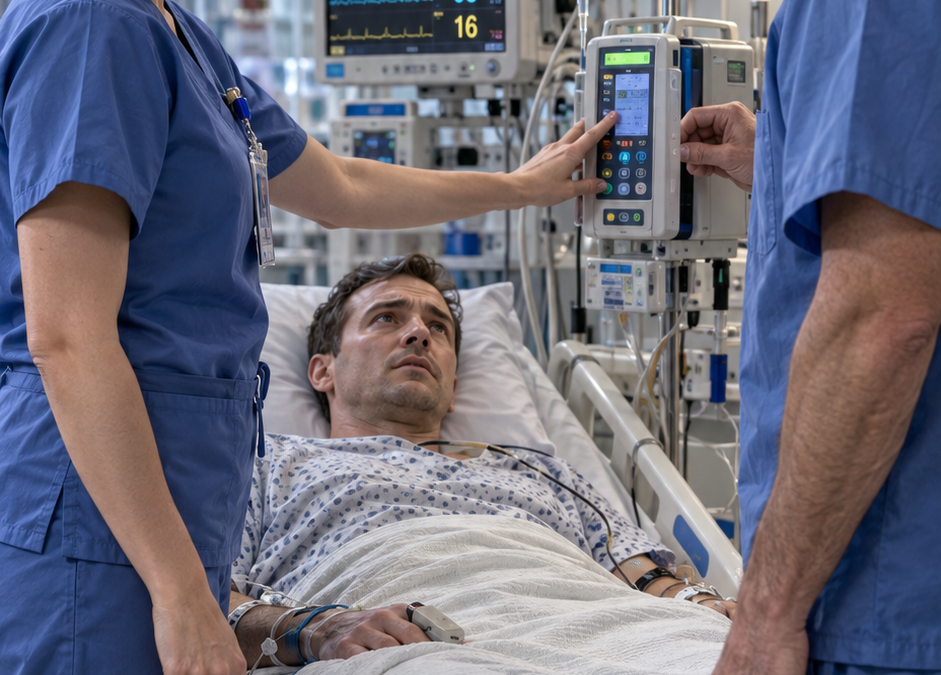
𝗙𝗨𝗟𝗟 𝗦𝗧𝗢𝗥𝗬
That answer surprised him.
Daniel shifted beneath the blanket.
“So nobody knows what’s happening?”
I looked at him.
“We know a lot.”
“Not comforting.”
“No.”
A weak smile touched his mouth.
Good.
Still engaged.
Still thinking.
I continued.
“Your blood pressure is improving. That matters. I just want to make sure the rest of your body is improving with it before we treat the pressure as proof that the next step fits.”
Daniel nodded slowly.
Cole watched me.
Then he looked at the trend again.
“If you’re wrong?”
“The next clean comparison should break the pattern.”
“And if it doesn’t?”
“Then you decide whether he still fits the pathway.”
Not me.
Him.
I made that distinction intentionally.
I had written protocols before.
I had also watched people use them badly.
The most dangerous protocol is not the one with an obvious error.
Obvious errors get challenged.
The dangerous one is mostly right.
Useful.
Evidence-based.
Efficient.
Trusted.
Then one day a patient stops matching the assumptions beneath it, and everyone keeps moving because the document still offers a next step.
Cole looked at Daniel.
Then at the clock.
Waiting had a cost.
Moving had a cost.
Medicine is full of moments where people want one option to be risk-free because choosing between competing risks is emotionally exhausting.
There was no risk-free option here.
Cole checked the clock again.
“Two minutes.”
I nodded.
“Show me what you’re seeing.”
I wrapped the manual cuff around Daniel’s arm.
Not because I distrusted the arterial line.
Because when one piece of a picture starts making too much sense, I like another source.
I took the pressure.
Released.
Waited.
Repeated it on the opposite side.
“Ninety-two over sixty-eight.”
Cole looked at the monitor.
“Ninety-eight over sixty-four.”
“Close enough.”
“I agree.”
His hand returned to the workstation.
“Then we continue.”
“The pressure wasn’t the comparison I wanted.”
His fingers stopped.
“Clare.”
“You gave me two minutes.”
“I did.”
“I’m still inside them.”
Daniel looked at me.
“What are you checking?”
I stepped closer so he did not have to raise his voice.
“Whether the rest of your circulation is responding the same way the blood pressure makes it look.”
Cole cut in.
“Do not frighten him.”
“I’m not.”
Then to Daniel:
“Any trouble breathing?”
“No.”
“Chest pressure?”
“No.”
“Pain?”
“Same.”
He hesitated.
“What?”
“It feels different when I move.”
Cole came closer.
“More painful?”
“Not exactly.”
Daniel frowned.
“Like my body doesn’t want me to.”
That was not a diagnosis.
Patients often describe physiology in terrible language and excellent truth.
I did not interpret it for Cole.
“Check the circulation response before the next adjustment.”
He stared at me.
“That check is not required at this stage.”
“I know.”
“You’re asking me to delay an approved sequence because you remember an old version.”
“No.”
I pointed to Daniel.
“I’m asking because we can test what is happening to him right now.”
Cole looked at the monitor.
“If it matches the pathway?”
“You lose less than a minute.”
“And continue.”
“Yes.”
“If it doesn’t?”
“The next intervention might erase our cleanest comparison.”
That mattered.
Medicine often creates its own noise.
Give another drug.
Change another setting.
Move another variable.
Then spend twenty minutes trying to determine which intervention caused the new pattern.
Cole looked toward Daniel again.
Nothing dramatic was happening.
That was precisely why saying no would have been easy.
The pathway remained defensible.
The pressure looked better.
No alarm screamed.
No one would criticize him for proceeding.
He could follow the protocol and still be considered careful.
That is where real judgment starts.
When doing the expected thing remains completely reasonable.
He said, “Do it.”
I moved.
No medication change.
No protocol deviation.
No unauthorized action.
Just assessment.
The tracing developed across the screen.
Cole leaned closer.
Pressure acceptable.
Supporting response wrong.
Not catastrophically.
Clearly.
He checked the arterial setup himself.
Good.
I would have trusted him less if he had trusted me immediately.
Then we repeated the assessment.
Same result.
Cole looked at Daniel first.
Not me.
That was when I knew the conversation had changed.
“So,” he said slowly, “the main number improves.”
“Yes.”
“But the rest of the response doesn’t behave like the intervention is accomplishing what we think it is.”
“That’s what I’m seeing.”
Cole canceled the pending adjustment.
Not the treatment.
The automatic next step.
“I’m not changing the plan.”
“I didn’t ask you to.”
He gave me a brief look.
Then enlarged Daniel’s trends across the main display.
A surgeon’s relationship with uncertainty is complicated.
They are trained to act.
Not impulsively.
Decisively.
A patient on a table cannot wait while everyone philosophizes about incomplete information.
But the best surgeons I had known could distinguish decisive action from automatic action.
Cole was not there yet.
Not with me.
Maybe not with this protocol.
But he was moving.
“Show me the assumption.”
“What?”
“In the pathway.”
He gestured toward the restricted screen.
“The assumption you think Daniel is violating.”
I stayed away from his controls.
“Start with what the branch expects after this intervention.”
Cole opened it.
“Pressure improves.”
“Yes.”
“Circulatory response follows.”
“Yes.”
“Both stabilize.”
“Yes.”
“Then transition.”
I pointed to Daniel’s data.
“He’s doing the first.”
Cole traced the other line.
“Not the second.”
“Right.”
“You think the pressure is misleading us.”
“I think it’s incomplete.”
He looked at me.
“That sounds like semantics.”
“A better number can be true without meaning what we think it means.”
His pager vibrated.
He checked it.
Receiving bed confirmed.
Transfer window: twelve minutes.
He read it twice.
Daniel opened his eyes.
“That means I’m leaving?”
Cole looked at him.
“Another monitored unit has a bed available.”
“That good?”
“It means they’re ready for you.”
Daniel gave a weak smile.
“Sounds good.”
On paper, he was right.
Transfer meant progress.
It meant moving from immediate postoperative recovery into monitored care.
It meant freeing surgical capacity.
It meant a bed.
Beds in military medical centers are not abstract resources.
They are time.
Flow.
Other patients.
A delayed bed ripples.
Cole looked at me.
“If I accept transfer, the pathway supports it.”
“Yes.”
“If I hold him here, we may lose the bed.”
“Yes.”
“You’re not going to tell me what to do.”
“Not yet.”
His irritation returned.
“Then tell me what I’m missing.”
I looked at the protocol.
“The pathway tells you what to do when its assumptions are true.”
Then Daniel.
“We have not confirmed that they still are.”
The receiving unit called.
Cole answered on speaker.
“Dr. Cole, transport is staged. We need confirmation.”
“Give me six minutes.”
“We can hold the slot five.”
Cole looked at Daniel.
Then the monitor.
“Five.”
He ended the call.
Daniel blinked.
“They’re waiting?”
“Yes.”
“Then hurry.”
That made Cole smile despite himself.
“I’m working on it.”
He examined Daniel again.
Abdomen.
Drain output.
Pain.
Recent labs.
Surgical findings.
Nothing announced itself.
No obvious complication.
No dramatic revelation.
When he finished, he looked at me.
“I have no evidence of a new complication.”
“No.”
“His pressure still does not force us off the pathway.”
“No.”
Pager.
Three minutes.
Cole placed it face down.
Twenty minutes earlier, the question had been whether I had enough authority to interrupt him.
Now that question was gone.
The patient had replaced it.
Cole looked toward me.
“Walk me through the decision logic.”
“Current version first.”
“Why?”
“Because that’s the one governing Daniel.”
Something in his face softened.
Maybe respect.
Maybe less irritation.
He opened the current pathway.
We moved through it together.
At one threshold, I stopped.
“No.”
Cole looked at me.
“What?”
“That changed.”
“You remember the old value?”
“Yes.”
“Different?”
“Yes.”
“Which is correct?”
“The current one may be.”
He frowned.
“You wrote the other.”
“That doesn’t make it better.”
That was one of the hardest lessons authors of clinical protocols must learn.
Creating a rule gives you knowledge of its purpose.
It does not give you permanent ownership of truth.
Evidence changes.
Patients change.
Systems improve.
Anyone who treats their original wording as sacred should not be writing medical guidance.
Cole checked the revision year.
“So your threshold is unreliable.”
“Without verification? Yes.”
We continued.
Later branch.
I stopped again.
“Here.”
“What?”
“The logic is compressed.”
“How?”
“The old version forced reassessment before this transition if improvement and supporting response separated.”
“Required reassessment?”
“Yes.”
“What treatment did it prescribe?”
“None.”
Cole turned.
“None?”
“It stopped the sequence.”
“For what?”
“For the clinician.”
His eyes narrowed.
“That sounds vague.”
“It was intentional.”
“Why?”
“Because the protocol could identify the point where its assumptions became questionable. It could not know why.”
His pager vibrated.
One minute to release the transfer bed.
Cole ignored it.
He read the current branch again.
“So the old pathway said stop.”
“Reassess.”
“Same thing.”
“No.”
He looked at me.
“A stop can become another automatic command.”
That mattered more later than either of us understood.
“Reassessment means the document gives the decision back to the clinician.”
The receiving unit called again.
Cole answered.
“We need your decision now.”
Silence.
He looked at Daniel.
At the pressure.
At the supporting response.
At the protocol.
At me.
I said nothing.
His choice.
“Release the bed.”
Pause.
“You’re declining transfer?”
“I’m delaying until I can confirm he meets the clinical assumptions behind the criteria.”
“The next monitored bed may not be immediate.”
“I understand.”
He ended the call.
Daniel looked at him.
“That was my bed?”
“Yes.”
“And you gave it away?”
Cole stepped closer.
“I’m keeping you here because there’s a question I cannot answer yet.”
Daniel glanced at me.
“Her question?”
Cole paused.
Then said, “Mine now.”
That sentence mattered.
Not because I needed credit.
Because ownership had moved to where it belonged.
Cole turned the monitor so we could both see it.
“Track the response conditions.”
“I will.”
“If they separate again, tell me before I advance anything.”
“Yes.”
“When he’s stable, I want the original logic beside the version I trained on.”
“We compare reasoning.”
“Not steps.”
I nodded.
“Exactly.”
The transfer notification disappeared.
The bed was gone.
Forty minutes later, another bed opened.
Daniel transferred safely to intensive monitoring.
Cole completed the handoff himself.
He remained until the receiving nurse repeated back the conditions we were watching.
Only then did he leave.
I thought the difficult part was over.
I was wrong.
His pager buzzed before he reached the review room.
Surgical Chief: Immediate protocol review.
Dr. Rebecca Sloan was already there when we arrived.
She was one of those people whose stillness made a room feel less stable rather than more.
Fifty-something.
Surgical chief.
No wasted language.
No interest in anyone’s feelings if they interfered with patient safety.
Exactly the person you wanted reviewing a decision that had cost the hospital a monitored bed.
She did not ask us to sit.
“You released a confirmed bed while a postoperative patient remained within transfer criteria.”
Cole put Daniel’s chart down.
“Yes.”
“The next placement took thirty-seven minutes.”
“Forty.”
Sloan looked at him.
“That improves your position enormously.”
“No.”
“Good.”
Her eyes moved toward me.
Then back.
“Explain.”
Cole opened Daniel’s trend.
“Pressure met the pathway recovery condition.”
“Yes.”
“Supporting response did not.”
“That alone does not fail transfer criteria.”
“I know.”
“Then why did you release the bed?”
Cole enlarged the three curves.
“Because I could not establish that the pressure improvement meant what the next branch assumed it meant.”
Sloan stared at the screen.
“This came from Bennett.”
“The observation did.”
Her eyes lifted.
“The decision?”
“Mine.”
I looked at Cole.
He did not look at me.
Good.
Responsibility without theater.
Sloan noticed anyway.
“You’re accepting ownership of the delay.”
“Yes.”
“Even though Mercer ultimately stabilized without the complication you were apparently worried about.”
Cole paused.
“I wasn’t worried about a specific complication.”
Sloan’s expression hardened.
“Then what exactly were you worried about?”
“Continuing because a primary number improved when I had not established that the patient improved for the reason the pathway expected.”
That answer did not satisfy Sloan.
But it made her look at the data again.
“Show me.”
Cole did.
First recovery.
Pressure up.
Supporting response lagging.
Second.
Same.
Third.
Worse.
“And you reassessed?”
“Yes.”
“What did you find?”
“No new complication.”
“So the pathway may have been correct.”
“Yes.”
Sloan looked at him sharply.
“You gave away monitored capacity for forty minutes and now tell me the protocol may have been right.”
Cole held her eyes.
“I’m telling you I did not know that when the decision had to be made.”
Silence.
That was the sentence at the center of the entire problem.
Medicine is easier in hindsight.
Once the patient stabilizes, every road not taken begins looking unnecessary.
But clinical decisions do not occur afterward.
They occur before the answer exists.
Sloan turned toward me.
“Nathan says you recognized logic missing from the current protocol.”
“Yes.”
“Because you wrote the first version.”
“I helped develop it.”
Her eyebrow lifted.
“Helped?”
“I wrote the initial clinical decision structure.”
“How long ago?”
“Eleven years.”
“What program?”
I paused.
She understood.
“Still restricted.”
“Yes.”
Sloan signed into the revision archive.
The system showed 2018.
Newer than the original version I remembered.
She looked at me.
“Where should the safeguard be?”
I pointed without touching the display.
“Between confirmation of response and the next high-risk transition.”
She searched.
Nothing.
Revision notes.
Threshold changes.
Timing changes.
Terminology standardized.
Several branches combined.
One multi-step sequence had become two.
No note said why.
No note said a reassessment stop had been removed.
No note said anyone intended to remove it.
Sloan searched again.
“Phrase?”
“Discordant response.”
Nothing.
“Supporting indicators.”
Nothing.
She leaned back.
“I can confirm the current pathway lacks what you describe.”
“Yes.”
“I cannot confirm it existed.”
“Yes.”
“Why it existed.”
“Yes.”
“Or why it disappeared.”
“Yes.”
She looked at me.
“You are remarkably calm about that.”
“Those are three different questions.”
Cole stared at the compressed branch.
“One of them cost us a bed.”
Sloan turned.
“No. Your decision cost us the bed.”
“Yes.”
“If this review shows the current pathway was appropriate, the delay is still yours.”
“I understand.”
“If every imperfect postoperative trend becomes a reason to freeze transfer, this hospital stops moving.”
“I understand.”
She turned toward me.
“Which brings me to you.”
Sloan opened an interim clarification document.
Then rotated the keyboard.
“Give me the original wording.”
I did not move.
“No.”
Her hand remained beside the keyboard.
“You just told me a missing safeguard may have affected a clinical decision.”
“Yes.”
“Then help me restore it.”
“I’ll help you determine whether it belongs back.”
“We have another hemorrhage case tonight.”
I knew.
The schedule was visible.
Same pathway.
Same branch available.
“We do not have the luxury of a historical seminar.”
“No.”
“Then what do you remember?”
I opened my notebook.
“What the safeguard was designed to detect.”
“Good.”
“Parts of the decision logic.”
“Good.”
“At least one threshold.”
“Give me the threshold.”
“No.”
Sloan stared.
Cole stared too.
“You remember it.”
“Yes.”
“And you won’t tell me.”
“Not for clinical use.”
“Why?”
“Because remembering a number is not the same as verifying that number survived eleven years of evidence.”
“The next patient is tonight.”
“Urgency does not improve memory.”
Sloan’s jaw tightened.
“If the next patient shows the same mismatch?”
I turned Daniel’s chart toward her.
“This is what we can defend today.”
I pointed to the trend.
“Primary improvement without corresponding supporting response.”
“Then?”
“Flag that condition.”
“And?”
“Require attention to it.”
“Treatment?”
“That belongs to whoever owns the patient.”
Sloan leaned back.
“You understand the position you’re leaving me in.”
“Yes.”
“A pathway I’m responsible for may have lost a safeguard.”
“Yes.”
“Another patient may reach the same branch tonight.”
“Yes.”
“And the person who remembers the original logic refuses to supply it.”
I looked at her.
“I’m supplying what I can defend.”
Cole spoke.
“She knew enough to stop me.”
I corrected him immediately.
“No.”
He turned.
“I knew enough to ask you to look again.”
“You stopped the pathway.”
“You did.”
Sloan looked at Cole.
He nodded.
“She’s right.”
The terminal fan was the loudest thing in the room for several seconds.
Then Sloan pulled the keyboard back.
“Fine.”
She opened a formal review flag.
“Evidence first.”
Daniel’s observed condition.
Pressure improvement without matching support response.
Cole documented his reassessment.
The lost bed.
His reasoning.
I separated memory from verified fact.
When we reached the threshold, Sloan asked again.
“You remember a number.”
“Yes.”
“Do you trust it?”
“No.”
She typed:
Historical threshold recalled but unverified.
The field beside it remained blank.
Cole stared at the blank space.
“So tonight, current pathway.”
“Yes,” Sloan said.
“With a review flag.”
“Yes.”
Cole looked at me.
“Knowing there may be a point where it stops describing the patient.”
I closed my notebook.
“Recognize that point before you ask the document to answer for you.”
Sloan saved the file.
Then added:
If discordant response appears before high-risk transition, direct attending notification required.
She entered three names.
Rebecca Sloan.
Nathan Cole.
Clare Bennett.
Next to mine:
Original development source. Verification required.
I read it.
“That works.”
Sloan closed the record.
The next case remained scheduled in the corner of the screen.
“For tonight,” she said, “if the mismatch appears, I want a direct call.”
Cole nodded.
“You’ll get it.”
Sloan looked at me.
“And then?”
“We look at the patient.”
She waited.
“Before assuming the protocol still fits.”
No rank changed that afternoon.
No authority moved.
I remained a bedside nurse.
Cole remained the surgeon.
Sloan remained responsible for institutional guidance.
That mattered.
Good systems do not improve by replacing one person’s authority with another person’s mythology.
Daniel transferred safely.
But the lost bed, the scheduled case, and the blank threshold had turned one hesitation into something larger.
The protocol itself was now a patient.
The next morning, I entered the review room at 6:40.
The disputed branch covered the wall display.
Yellow banner:
UNDER REVIEW.
A countdown sat in the upper corner.
Next scheduled use: 47 minutes.
Cole was already there.
Daniel’s trends open.
Sloan wore scrubs beneath her coat.
“The case last night was postponed,” she said.
“Because of this?”
“No.”
She looked at the countdown.
“We got lucky.”
Forty-six minutes.
“The next one wasn’t.”
I sat beside Cole.
Sloan opened every accessible revision.
“I traced all documented versions.”
“And?”
“Nothing explains the missing reassessment.”
Cole looked at the highlighted gap.
“So we know it’s gone.”
“We do not know whether putting it back creates another problem.”
“Correct.”
Sloan opened a blank review document.
“In forty-five minutes, another team may need the same decision.”
She looked at me.
“Tell us why it existed.”
I left my notebook closed.
“It protected against a protocol that still looked correct after the patient stopped fitting it.”
Cole’s pen stopped.
Sloan waited.
I looked at the pathway.
“The first version came from an early military trauma program.”
Neither interrupted.
“We were trying to create consistency under exhaustion, uneven resources, imperfect communication.”
“That’s what protocols do,” Sloan said.
“Yes.”
I looked at her.
“Until following them becomes easier than noticing the patient changed.”
No one spoke.
Countdown: 45.
“We had a case during early implementation.”
Cole watched me.
I rarely told this story.
Not because it was classified entirely.
Because some failures become private even when they belong to systems.
“The numbers stayed close enough.”
“What numbers?”
“Primary recovery markers.”
“Pressure?”
“Among them.”
I continued.
“Nothing crashed.”
“No alarm?”
“No.”
“No obvious complication?”
“Not initially.”
“Then what?”
“Every next step remained defensible.”
Cole understood first.
“The supporting response was separating.”
I nodded.
“We continued.”
“Why?”
“Because the document always had another reasonable instruction.”
Sloan’s hands went still above the keyboard.
“You were there.”
“Yes.”
“What happened?”
My thumb pressed against the edge of my notebook.
“We recognized it late.”
That was enough.
There had been a patient.
A young service member.
He had arrived unstable.
The protocol had worked beautifully at first.
Then less beautifully.
Then not at all.
We were so focused on whether each individual step remained justified that we missed the more important question.
Did the sequence still describe him?
By the time we asked, the answer had been no for too long.
He survived.
Barely.
His recovery changed every person involved.
The protocol changed too.
Sloan did not ask for his name.
I appreciated that.
“And that case created the safeguard.”
“Yes.”
“What exactly did it do?”
“Forced reassessment before escalation if the primary improvement and supporting response diverged.”
“Treatment instruction?”
“None.”
Sloan looked at me.
“Again, none.”
“It created a pause.”
“For what?”
“A question.”
Cole looked at the wall.
“One the protocol could not answer.”
“Yes.”
Sloan typed:
Purpose: forced reassessment when patient response no longer matches pathway assumptions.
Her pager vibrated.
Pre-op requesting guidance.
Thirty-nine minutes.
She opened an interim advisory.
“If primary indicator improves without corresponding supporting response, hold before escalation and reassess.”
I read it.
“As temporary guidance?”
“Yes.”
“Who owns the decision after reassessment?”
“Attending surgeon.”
I looked at Cole.
He knew why.
He nodded.
Sloan said, “I’m not turning your memory into a treatment order.”
“Good.”
“I’m making the mismatch visible.”
“That we can defend.”
Cole looked at Daniel’s trend.
“Yesterday I kept asking what instruction was missing.”
I followed his gaze.
“There may not be one.”
He stared at the gap.
Then understood.
“There’s a missing stop.”
“Yes.”
Sloan deleted the heading replacement instruction.
Typed:
Reassessment condition.
Five seconds.
Entire review changed direction.
Her pager vibrated again.
She reached for it.
I spoke.
“Rebecca.”
She stopped.
“Do not send the old threshold.”
“I’m not planning to.”
“Not even as context.”
She studied me.
“You still remember it.”
“Yes.”
“And still do not trust it.”
“Not enough to put it between a clinician and a patient.”
“We might verify it tomorrow and find your memory was exact.”
“Yes.”
“Leaving it out makes this advisory less precise.”
“Yes.”
She waited.
I did not soften.
“Urgency makes unverified memory tempting. Not accurate.”
Cole leaned back.
Sloan closed the threshold field.
Then called pre-op.
“The pathway remains active. Interim advisory on the escalation branch. If primary improvement and supporting response diverge, pause before high-risk transition, reassess the patient, and notify the attending. Do not use historical thresholds. They have not been verified.”
Pause.
“No, this is not a replacement treatment pathway.”
Another pause.
“Yes. I’m authorizing it.”
She ended the call.
Countdown continued.
But we had not delayed the next case.
We had not suspended a useful protocol.
We had not elevated my eleven-year-old memory above current evidence.
Cole looked at the advisory.
“The safeguard exists because a team followed reasonable steps too long.”
“Yes.”
“And now we could make the same mistake with the safeguard.”
I looked at him.
“What do you mean?”
“Stop every time anything looks imperfect.”
I nodded.
“That would be easier.”
“And wrong.”
“Yes.”
He looked at the wall.
“A pause only matters if somebody still thinks inside it.”
That was the first moment I believed he fully understood.
Sloan turned the keyboard toward me.
“Define the conditions.”
I moved it toward Cole instead.
“I can define what the old safeguard was trying to notice.”
He took the keyboard.
“And I decide what follows.”
“You decide whether the patient still fits.”
Sloan nodded.
“Then give us the observable conditions.”
I opened my notebook.
On a blank page, I drew a line down the center.
Left side:
CONDITIONS TO REASSESS.
Right side:
empty.
Cole looked.
“What goes there?”
I slid the paper toward him.
“Your decision.”
Sloan watched.
“Someone must own clinical response.”
“Exactly.”
I wrote the first condition.
Primary improvement without corresponding improvement in supporting response.
Second.
Apparent stability while underlying response continues to diverge.
Third.
Verified change weakening an assumption required for the next branch.
I reached the fourth line.
Stopped.
Cole knew.
“Threshold.”
“Yes.”
“You still remember it.”
“Yes.”
“You still won’t use it.”
“Especially now.”
Sloan wrote beside it:
Archive verification required.
Cole moved to the right column.
“If one appears, I stop.”
“Reassess.”
“Then decide whether the patient still qualifies for the branch.”
“Yes.”
“If yes, continue.”
“Under your authority.”
“If no?”
“You choose the clinical response and document why.”
He wrote it down.
Sloan took the page.
“Clare owns historical conditions she can support.”
She pointed to Cole.
“Nathan owns the patient decision.”
Then herself.
“I own whether this becomes institutional guidance.”
Three responsibilities.
No one standing inside another person’s column.
That, more than any protocol language, made the room safer.
Cole’s pager vibrated.
He read it.
His face changed.
“What?”
“Mercer.”
Sloan opened Daniel’s live record.
Pressure acceptable.
Supporting response beginning to separate again.
Not dramatically.
No alarm.
Enough.
Sloan checked timestamps.
“Two checks.”
Another message appeared.
Receiving team requests disposition guidance before next pathway transition.
Cole looked at the current branch.
Numerically, Daniel still qualified.
Yesterday, that might have ended the conversation.
Today, a yellow flag sat beside it.
Cole looked at me.
“First condition?”
I came closer.
Compared timing.
Pressure.
Supporting values.
Variability.
“Not clearly.”
He frowned.
“They’re separating.”
“They might be.”
“That sounds like what we wrote.”
“Close is not the same as present.”
Sloan looked at the incoming request.
“They need an answer.”
“Then give them one we can defend.”
Cole checked the clock.
“What confirms it?”
“One clean comparison under the same conditions.”
“How long?”
“Minutes.”
He called intensive monitoring.
“Hold the pathway transition. No treatment change. Repeat supporting assessment under identical conditions and send timing against primary trend.”
The physician answered on speaker.
“His pressure is acceptable.”
“I see it.”
“Nathan, if every secondary drift freezes the pathway, this advisory becomes a bottleneck by lunch.”
Legitimate criticism.
Cole knew.
I said nothing.
He needed to own the response.
“We’re not holding because two values drifted.”
He looked at our two-column sheet.
“We’re holding long enough to determine whether the flagged condition exists.”
“And if it doesn’t?”
“We proceed.”
“If it does?”
“I reassess him and make the decision.”
He ended the call.
I returned to my chair.
Cole noticed.
“You’re not watching.”
“We asked for a clean comparison.”
“So?”
“Watching the screen harder won’t make it arrive sooner.”
Sloan almost smiled.
We waited.
No alarms.
No drama.
Just the pressure that fills hospitals constantly.
Another team waiting.
Another bed.
Another patient.
Another schedule.
Another entirely reasonable reason to move faster.
Cole stared at the interim advisory.
“This is the real danger.”
“What?”
“A safeguard becoming its own automatic behavior.”
“Yes.”
The new comparison arrived.
Sloan opened it.
Pressure remained acceptable.
Supporting response had moved farther away.
Clean timing.
Same conditions.
Cole looked at me.
“Now?”
I read the data twice.
Then pointed to the left column.
“Now the condition is present.”
He waited.
I said nothing else.
“That’s it?”
“That’s my side.”
He looked at the right column.
His.
Cole called intensive monitoring.
“I’m coming down.”
The physician asked, “Hold the next branch?”
Cole glanced toward me.
Then answered:
“Yes.”
Pause.
“Because Bennett says the old safeguard applies?”
“No.”
He picked up Daniel’s chart.
“Because the condition we verified means I need to determine whether the current branch still applies.”
He hung up.
Sloan handed him the two-column page.
He folded it once and slid it inside the chart.
I picked up my notebook.
“I’m coming.”
He looked at me.
“To tell me what to do?”
“To tell you if what I’m seeing changes.”
“And if it doesn’t?”
I opened the door.
“You still make the call.”
We reached intensive monitoring several minutes later.
Nothing in Daniel’s room looked urgent.
That was becoming the theme of his case.
Awake.
Pressure acceptable.
Monitor quiet.
Approved next branch available.
Reasonable medicine waiting to happen.
Cole examined him.
“Pain?”
“About the same.”
“Dizziness?”
“When I sit up.”
“Anything else?”
Daniel thought.
“Tired of all of you.”
Good.
Cole almost smiled.
He checked the drain.
Labs.
Abdomen.
Then looked at me.
“Conditions.”
I unfolded the sheet.
“Pressure holding.”
“Yes.”
“Supporting response separating farther.”
He went to the workstation.
Opened the restricted pathway.
Read the next branch.
“If I advance, I’m accepting pressure improvement as evidence that the intervention produced the response this branch assumes.”
I did not answer.
He looked at me.
“Anything else?”
“Nothing I can support.”
That was important.
Close decisions tempt people to strengthen weak evidence.
I refused.
Cole looked at Daniel.
Then back.
“Repeat reassessment before escalation.”
The bedside nurse performed it.
I tracked only the conditions we had agreed mattered.
The result appeared.
Main number reassuring.
Supporting response farther away.
I marked it.
Turned the sheet toward Cole.
Did not touch his column.
He read the data.
For several seconds, only the monitor spoke.
Then he canceled the highlighted protocol step.
“We are not advancing this branch.”
No drama.
No triumph.
He documented the mismatch.
Ordered additional evaluation.
Changed the plan under his own authority.
Several minutes later, new findings supported his decision.
Not because the protocol had been bad.
Because Daniel no longer fit the assumptions required for that branch.
Cole finished the note.
Then looked at the pathway on one screen and Daniel on the other.
“When you told me you wrote the first version, I thought you were telling me why I should trust your answer.”
“I wasn’t.”
“You were telling me why the protocol should never become the answer.”
I shook my head.
“No.”
He frowned.
“I was telling you to look at the patient.”
That stopped him.
Then he smiled.
Barely.
“Fine.”
He closed the pathway window.
Not because it had failed.
Not because my old version had defeated the new one.
Because for that decision it had reached the edge of its authority.
Cole reopened Daniel’s chart.
“I’m documenting deviation.”
He turned the screen.
“Check my description of the condition.”
I read it.
He had described what we observed.
Not my interpretation.
Not my history.
Accurate.
“That works.”
“Anything missing?”
I checked timing.
“No.”
He signed.
Then moved our handwritten criteria sheet away from his side of the workstation.
Placed it beside nursing observations.
Where it belonged.
“Keep tracking.”
“I will.”
“If conditions change?”
“I tell you.”
“And I decide what they mean for treatment.”
“Yes.”
That was the structure.
Not glamorous.
Not cinematic.
Safe.
Before Daniel left the unit, the intensive-care nurse taking over read the condition back.
“If pressure improves but supporting signs separate, reassess before the next branch and call the responsible physician.”
Cole nodded.
“Correct.”
She looked at the handwritten page.
“Is this replacing the protocol?”
“No.”
“What is it?”
“A point where you stop and look again.”
He tapped his signed note.
“Treatment still belongs to the responsible clinician.”
Cole looked at me.
“Anything missing?”
“Timing.”
He added it himself.
“The mismatch matters because it follows intervention rather than resolving with it.”
The nurse repeated the handoff.
Daniel stirred.
“Am I better?”
Cole stepped close.
“You’re stable.”
Daniel looked toward me.
“And?”
“We changed the plan because your body wasn’t responding the way the next step expected.”
He looked between us.
“So she was right.”
I hated how quickly medicine turns into winners and losers.
I checked his monitor.
“The team asked the right question.”
Cole adjusted the blanket.
“She made sure we did.”
Daniel nodded weakly.
“Good question.”
The transport team unlocked his bed.
I reached automatically toward the chart.
Stopped.
The receiving nurse already had it.
She had the criteria sheet too.
“If these signs separate again,” she told the transporter, “we reassess and notify the physician before advancing.”
I lowered my hand.
Cole noticed.
“They need you upstairs?”
I watched them check Daniel’s identification.
Chart.
Monitor.
Patient.
“No.”
Cole nodded toward the doors.
“Then let them carry it.”
Daniel rolled away.
For the first time since I had placed two fingers beside his medication pump, the safeguard moved with the patient while I stayed behind.
That was when I knew we might actually fix the system.
Later that afternoon, the protocol review room displayed a different banner.
Not yellow.
Formal governance review.
Participants listed:
Surgery.
Critical care.
Nursing.
Clinical protocol governance.
Quality.
My name appeared beside:
Original development source.
Sloan turned toward me.
“I want you on the review.”
“Add another bedside nurse.”
“Nursing is represented.”
“One who has never seen the old version.”
Sloan paused.
Cole understood.
“If this only works when Clare explains it, we haven’t fixed anything.”
I looked at him.
“Exactly.”
Sloan added:
Bedside nursing representative unfamiliar with historical pathway.
“Anything else?”
I reviewed the list.
“No.”
Cole picked up Daniel’s latest update.
“Stable.”
He handed it to me.
“No further divergence.”
I read it.
“Good.”
No one asked me to sign beneath Cole’s decision.
No one made me the hero of a protocol revision.
The knowledge had moved.
That was the achievement.
By Friday morning, Daniel’s name had disappeared from urgent alerts.
His recovery had become boring.
Boring is one of the best outcomes in medicine.
He slept.
Ate.
Complained.
Asked when he could go home.
The review continued.
No ceremony.
No speeches.
No one restored my old wording.
Good.
Instead, the draft created a required reassessment point whenever apparent primary improvement no longer matched defined supporting response.
Responsible clinician determines whether pathway assumptions remain valid before proceeding.
The safeguard had returned in principle.
Not as a museum piece.
Not because Clare Bennett remembered it.
Because current evidence justified the need.
That afternoon, I passed the review room.
Cole sat with Sloan, a critical-care physician, and a bedside nurse I had never met.
The new nurse read the proposed wording aloud.
“If the primary indicator improves but supporting response remains inconsistent, consider reassessment before advancing.”
I stopped in the doorway.
Cole saw me.
“What?”
I looked at the screen.
“Consider.”
Sloan leaned back.
“Too weak?”
I entered.
“If the safeguard matters only when someone remembers to be cautious, it isn’t a safeguard.”
The unfamiliar nurse read the sentence again.
“So require reassessment.”
I did not answer immediately.
I read the entire branch.
Context first.
Always.
Then pointed to the preceding condition.
“This already defines when the mismatch exists.”
Sloan nodded.
“So if it exists?”
“Reassessment shouldn’t be optional.”
Cole added, “Treatment decision remains discretionary.”
“Yes.”
“The pause does not.”
“Exactly.”
Sloan changed one word.
Consider disappeared.
Reassess replaced it.
No one clapped.
The nurse read the revised language again.
“If these conditions separate, reassess whether the patient still meets pathway assumptions before advancing and escalate clinical decision to the responsible clinician.”
I closed my notebook.
“Yes.”
Sloan saved.
That was all.
Three days later, I was back in surgical recovery.
Different patient.
Different surgeon at first.
Resident at the workstation.
Cole came in during handoff.
I was adjusting a line at the neighboring bed when the resident said:
“Pressure improved after the intervention.”
Cole looked at the monitor.
Then at the rest.
The resident hesitated.
Months earlier, someone might have answered automatically.
Now Cole waited.
The young physician reopened the trend.
I kept working.
One minute later, the resident pointed.
“This part isn’t following.”
Cole moved closer.
“What doesn’t fit?”
The resident explained.
No one called me.
No one mentioned Daniel.
No one mentioned the protocol review.
Cole simply reassessed before allowing the next step.
I listened to the monitor behind me.
Steady.
That was the sound of success.
Not because the first author remained close enough to intervene.
Because she was irrelevant to the process now.
Near the end of the shift, another postoperative patient arrived.
Cole was at the workstation.
A newly assigned nurse entered baseline values.
I completed the assessment.
Nothing looked dangerous.
Then I noticed a small inconsistency.
Not the same as Daniel.
Close enough to deserve attention.
“Something doesn’t fit.”
Months earlier, that sentence might have required a résumé.
Evidence of authority.
Proof that I belonged in the conversation.
Cole turned the screen toward me.
“What are you seeing?”
I stepped beside him.
Pointed to the trend.
The new nurse moved closer.
No one asked what I used to do.
No one asked whether I had written anything.
No one reached for my title.
For several seconds, all three of us looked at the patient.
Then the data.
Then the protocol.
In that order.
Cole asked, “Does he meet the mismatch condition?”
“Not yet.”
The new nurse said, “What do we need?”
I showed her.
“Another clean comparison.”
She nodded.
“How long?”
“Two minutes.”
Cole looked at me.
Something passed between us.
Memory.
Twenty-six minutes after Daniel Mercer’s surgery.
My fingers beside the pump.
Not yet.
A sentence he had initially heard as defiance.
Now it meant something else.
Not refusal.
Attention.
He checked the clock.
“Two minutes.”
The new nurse started the comparison.
Nobody moved automatically.
Nobody stopped automatically either.
We waited for the patient to tell us which decision belonged to him.
That distinction was the entire point.
When the new values appeared, the supporting response followed appropriately.
No mismatch.
Cole nodded.
“Continue.”
The nurse advanced the approved pathway.
Safe.
Ordinary.
Correct.
I stepped away.
That moment mattered to me more than hearing my name attached to the first protocol ever had.
People think writing a protocol means creating the right answers.
It doesn’t.
At least, it shouldn’t.
The best clinical protocol I ever helped build did something less impressive and more important.
It knew where to stop pretending it could answer.
Eleven years earlier, we had learned that lesson because a patient nearly paid for our confidence.
Daniel reminded us because his body refused to behave neatly enough for the document.
Cole learned it because he was willing, eventually, to risk looking uncertain in order to remain responsible.
Sloan protected it because she refused to turn history into evidence before verifying it.
And I learned something too.
For years, I had carried the original protocol like an old scar.
Part pride.
Part guilt.
I knew why every branch existed.
I remembered the room where certain sentences had been written.
I remembered the patient whose deterioration forced us to add the reassessment point.
That knowledge mattered.
But memory is not authority.
Being the first author did not make me the final one.
If anything, knowing how painfully the original version had been built made me more cautious about asking anyone to trust it simply because my name once sat beneath the draft.
One afternoon, weeks after the review closed, Cole found me at the nurses’ station.
He set a printed copy of the approved revision beside my charting computer.
Not classified content.
Just the governance notice and summary language.
I looked at him.
“What?”
“Thought you might want to see it.”
“I already did.”
“Of course you did.”
He leaned against the counter.
“Final wording stayed.”
“Which part?”
“Mandatory reassessment when defined supporting response diverges from apparent primary improvement.”
“Good.”
“Attending retains treatment authority.”
“Also good.”
“Historical threshold excluded.”
“Very good.”
He watched me.
“You know what bothers me?”
“Many things.”
He ignored that.
“The first day.”
“What about it?”
“I heard ‘I wrote it’ and thought you were asking me to trust you because of who you were.”
I finished the line I was charting.
“You weren’t entirely wrong.”
He frowned.
I continued.
“Part of me expected the history to matter.”
“It did.”
“Too much.”
“You stopped yourself.”
“So did you.”
Cole smiled.
“Eventually.”
Then his expression became serious.
“What would’ve happened if I had ignored you?”
I looked toward the recovery bays.
“Maybe nothing.”
He waited.
“That is the honest answer.”
“Daniel might have tolerated the next step.”
“Yes.”
“And transferred.”
“Yes.”
“So we may have delayed him for no reason.”
“We delayed him because we had an unresolved clinical question.”
“That’s not the same thing.”
“No.”
I turned toward him.
“Nathan, if you need every cautious decision to be validated by a later disaster, you’ll eventually stop making cautious decisions.”
He absorbed that.
Medicine rewards dramatic saves because people can see them.
A code.
A hemorrhage controlled.
A diagnosis found.
It is much harder to see the value of a pause that prevents nothing obvious because perhaps nothing terrible was coming.
Good judgment cannot depend entirely on catastrophe proving it right.
Cole glanced toward the protocol summary.
“I still hate losing that bed.”
“So does Sloan.”
“She reminds me.”
“Good.”
He laughed.
Then asked, “Do you ever regret writing protocols?”
“Every time someone quotes one at me.”
“Serious answer.”
I thought about it.
“No.”
“Even after the old safeguard vanished?”
“Especially because it vanished.”
He frowned.
“A protocol is a living argument.”
“That sounds unpleasant.”
“It is.”
“Medicine would prefer a checklist.”
“Medicine likes checklists until reality disagrees.”
He nodded.
Then looked toward the patient bays.
“You know what Daniel asked me before discharge?”
“No.”
“He wanted to know whether you were some kind of secret surgeon.”
I laughed.
“What did you say?”
“That you’re a nurse.”
“Good.”
“He said, ‘That seems like an incomplete answer.’”
“That also seems fair.”
Cole straightened.
“He went home this morning.”
I stopped.
“Really?”
“Walking.”
“Pain?”
“Manageable.”
“Follow-up?”
“Scheduled.”
“Good.”
Cole watched my face.
“Want to know what he said?”
“Probably not.”
“He said to tell the nurse who argued with me that he was grateful.”
“I did not argue with you.”
Cole stared.
“You put your fingers beside my pump and told me not yet.”
“That was clinically elegant communication.”
“That was mutiny in a calm voice.”
I smiled.
“Patient lived.”
“Terrible defense.”
“Still true.”
He walked away.
I returned to charting.
But I thought about Daniel.
Not as the patient who proved I had been right.
He had not.
He was the patient who reminded all of us what being right was supposed to mean.
Not defeating another clinician.
Not rescuing an old idea.
Not proving a protocol flawed.
Right meant the patient received the decision that belonged to him rather than the one that happened to be easiest for the system.
Months later, the revised pathway was in routine use.
Most clinicians never knew why the reassessment point had returned.
Good.
They did not need the story.
They did not need my name.
They did not need the old military program or the patient from eleven years earlier.
They only needed language clear enough to do its job.
One morning, I watched a resident reach the reassessment branch.
She read it.
Looked at the patient.
Looked at the supporting trend.
Then said, “The main number improved, but this doesn’t match.”
Her attending asked, “So?”
She answered, “I need to confirm the assumptions before I advance.”
No one looked at me.
I was standing three beds away.
Nobody even knew I was listening.
I smiled anyway.
That was the moment the protocol finally stopped belonging to me.
Which meant it was working.
I had spent years believing authorship meant leaving part of yourself inside a document.
Now I understood the opposite.
If you build something well enough, eventually it should function without anyone needing to know you were there.
The safest protocol is not the one that makes its author indispensable.
It is the one that makes her unnecessary.
At the end of that shift, I passed Cole in the corridor.
He was reading a chart while walking, which I considered an offense against both medicine and architecture.
“Watch the wall.”
He looked up just before hitting it.
“Clinical save.”
“You’re welcome.”
He closed the chart.
Then nodded toward the recovery unit.
“Resident caught the mismatch.”
“I saw.”
“You didn’t say anything.”
“Didn’t need to.”
He smiled.
“That bother you?”
“No.”
“Not even a little?”
I thought about the first day.
His hand above the pump.
My two fingers beside it.
That sharp look when he said the protocol was classified.
The temptation I could have felt to use history as leverage.
I thought about the old patient whose near disaster had created the safeguard.
Daniel’s lost bed.
Sloan’s blank threshold.
The unfamiliar bedside nurse reading the revised language without needing me to explain it.
“No,” I said.
Cole studied me.
Then nodded once.
“Good.”
He started walking.
I called after him.
“Nathan.”
He turned.
“What?”
“Next time a nurse says not yet, maybe ask why before you snap at her.”
His eyebrow lifted.
“Next time a nurse claims she wrote my classified protocol, maybe she can lead with context.”
“That would ruin the suspense.”
For once, he laughed loudly enough that two people turned around.
Then he disappeared down the corridor.
I went back into recovery.
Another patient had just arrived.
Another monitor.
Another chart.
Another protocol waiting on the workstation.
I washed my hands.
Walked to the bedside.
Introduced myself.
“Hi. I’m Clare. I’m your nurse.”
The patient nodded.
No recognition.
No interest in old programs.
No reason to know anything about me beyond what mattered now.
Perfect.
I checked the monitor.
Then the patient.
In that order for exactly half a second.
I corrected myself.
Patient first.
Then the monitor.
Some lessons deserve to stay permanent.








