𝗙𝗨𝗟𝗟 𝗦𝗧𝗢𝗥𝗬 The Admiral Said My Rank Before My Family Could Rewrite Me Again
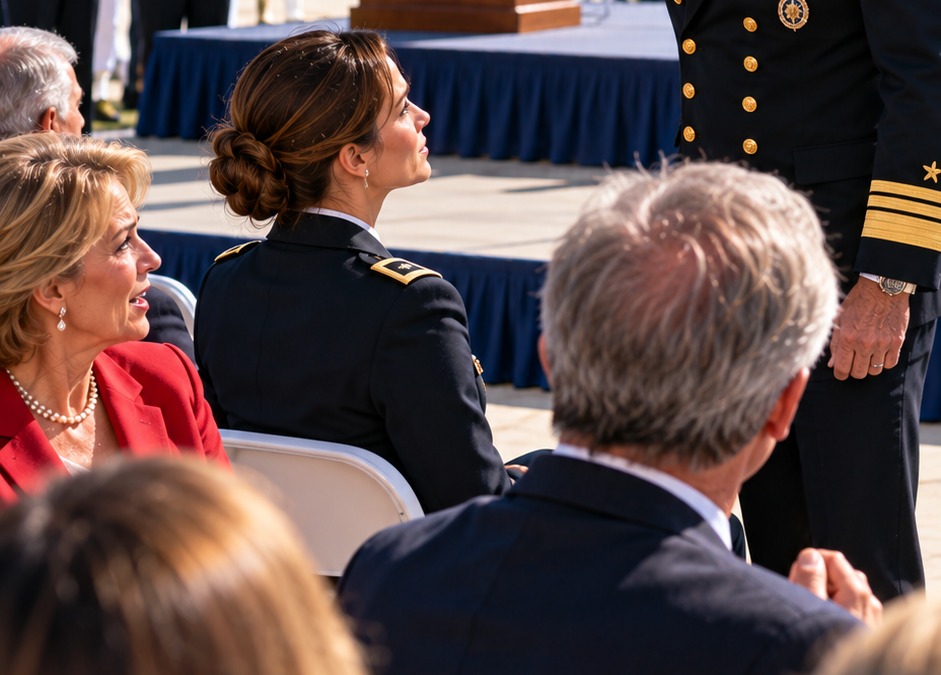
𝗙𝗨𝗟𝗟 𝗦𝗧𝗢𝗥𝗬
My father’s shoulders seemed to stiffen.
Whitaker was choosing every word carefully.
So was I.
“Colonel Hayes currently serves in a senior joint special operations support command,” he said. “Her career has included operational planning, intelligence integration, special mission coordination, and leadership assignments across multiple combatant commands.”
That was enough to change everything.
And vague enough to reveal almost nothing.
The admiral paused.
“I am mentioning this because several of today’s graduates will eventually work alongside people like Colonel Hayes—officers and civilians whose names never appear in public accounts, but whose decisions matter enormously to the people in the field.”
Jack lowered his eyes for a moment.
I knew exactly what he was thinking.
All those years Dad had told him that real service happened at the sharp end.
All the times our dinner-table conversations had divided the military into those who acted and those who supported them.
Life was rarely that simple.
Whitaker turned toward Jack.
“Petty Officer Hayes.”
“Yes, sir.”
“You have an unusual advantage.”
Jack looked uncertain.
“Sir?”
“You already have someone in your family who understands what it means to carry responsibility quietly.”
Jack glanced at me.
The expression in his eyes nearly broke my composure.
“Apparently I do, sir.”
The crowd laughed again.
Then Admiral Whitaker did something I appreciated more than he knew.
He moved on.
No dramatic medal.
No long biography.
No list of assignments.
No public disclosure.
The ceremony became Jack’s again.
Exactly as it should have been.
I stepped away from the microphone.
As I passed my brother, he whispered without moving his head, “We are having a conversation.”
I kept walking.
“Several, probably.”
Back in the bleachers, nobody said anything when I sat down.
Mom stared straight ahead.
Dad did the same.
The band resumed.
The ceremony continued.
One graduate after another received his trident.
Parents stood.
Spouses cried.
Friends shouted names from the bleachers.
But beside me, my family had become an island of complete silence.
When Jack’s turn came, my father stood.
His hands shook slightly as he applauded.
I stood too.
So did Mom.
Jack stepped forward.
The trident was pinned to his uniform.
He shook hands.
The applause rolled across the field.
And despite everything that had happened, the only emotion I felt in that moment was pride.
Not comparison.
Not vindication.
Pride.
My little brother had earned something difficult.
That truth did not become smaller because another truth about me had become visible.
When the ceremony ended, families poured onto the field.
Mom turned toward me immediately.
“How?”
It was the first word she had spoken in nearly forty minutes.
I looked at her.
“What do you mean?”
“How are you a colonel?”
Dad stood beside her, silent.
“Mom—”
“No.” Her voice was quiet but urgent. “I mean, how? You left the Academy.”
“I did.”
“You told us you withdrew.”
“I did withdraw.”
Dad finally spoke.
“Colonels don’t appear from nowhere.”
“No.”
His eyes held mine.
“Then start at the beginning.”
Jack reached us before I could answer.
He still looked exhausted, but there was energy in him now that had not been there that morning.
He pulled me into a hug.
A real one.
Not the quick sibling hug we usually exchanged at holidays.
For several seconds, neither of us said anything.
Then he leaned back.
“You’re a colonel.”
“So I’ve been told.”
He laughed once.
“You’re impossible.”
“You survived SEAL training and your first complaint is about me?”
“I have thirteen years of questions.”
“Get in line.”
His smile faded.
“I’m serious, Sam.”
“I know.”
Dad watched us.
The old version of him would have demanded answers. Captain Richard Hayes had spent thirty years believing that clarity came from direct questions and direct orders.
But my father was retired now.
And something about that morning had taken the authority out of his posture.
He looked older.
Not weak.
Just suddenly aware that the map he had carried of his own family was badly outdated.
Mom touched my sleeve.
“Were you in danger?”
There it was.
Not Why didn’t you tell me?
Not How could you embarrass us like this?
Not even What exactly did you do?
Her first real question was the one a mother would ask.
“Sometimes,” I said.
Her fingers tightened slightly around the fabric of my blazer.
I softened my voice.
“But I was trained. And I was surrounded by very good people.”
“That isn’t an answer.”
“It’s the most honest one I can give.”
Dad looked toward the families around us.
“This isn’t the place.”
I almost smiled.
For once, we agreed completely.
Jack had a gathering scheduled with several classmates and their families at a restaurant near the waterfront. For the first hour, we did what families do when they have discovered something enormous but are surrounded by strangers.
We pretended nothing had happened.
Mom asked Jack about his instructors.
Dad shook hands with other retired officers.
I listened to stories from parents I had never met.
Nobody mentioned Colonel Hayes.
At least not directly.
But people looked.
A few officers approached me politely.
One lieutenant colonel from an Air Force unit nodded from across the room.
I recognized him.
He recognized me.
Neither of us crossed the room.
Dad noticed.
Of course he did.
My father had spent half his life reading rooms.
By dessert, his silence had acquired weight.
Jack rescued us.
He tapped his spoon lightly against his glass.
“Family meeting.”
Mom stared at him.
“Here?”
“No. Outside.”
“Jack, people are still eating.”
“I have spent months being told what to do. Today I graduated. I’m using my temporary authority.”
I laughed.
Dad almost did.
Almost.
Ten minutes later, the four of us were walking along the marina.
The afternoon breeze had softened the heat. Sailboats moved slowly across the water. The noise from the restaurant faded behind us until all I could hear was rigging tapping against masts.
For several minutes, nobody spoke.
Jack finally turned to me.
“So.”
“So.”
“What happened at Annapolis?”
I had known that question would come first.
“At the end of my third year, I was approached about a program.”
Dad’s head turned.
“By whom?”
“I can’t give you every name.”
“Can you give us any?”
“Eventually.”
He did not like that answer, but he let me continue.
“The program wasn’t advertised. It involved several services and a handful of civilian agencies. They were looking for people with certain technical aptitudes, languages, analytical ability, psychological profiles.”
Jack frowned.
“You speak Spanish.”
“And Arabic.”
He stopped walking.
“You speak Arabic?”
“Enough.”
“How did I not know this?”
“You thought I spent two summers doing data-entry internships.”
“You told us you spent two summers doing data-entry internships.”
“I did quite a lot of data entry.”
He stared at me.
I smiled.
“Some of it happened to be in Arabic.”
Mom covered her mouth, half laughing, half overwhelmed.
Dad did not smile.
“What did they recruit you for?”
“Originally? Operational intelligence coordination.”
His expression changed.
That term meant something to him.
“Joint?”
“Yes.”
“And the Academy released you?”
“Not exactly.”
He looked at me sharply.
I understood why.
People did not casually pull midshipmen out of Annapolis. There were procedures. Records. Chains of command. Even classified programs generated paperwork somewhere.
“My withdrawal was approved at a level above the Academy,” I said.
Dad looked toward the water.
“You should have told us.”
“I couldn’t.”
“For thirteen years?”
“Yes.”
“You couldn’t tell us anything?”
“I told you what I was allowed to tell you.”
“You said you worked in administration.”
“I did.”
“That is deliberately misleading.”
“Yes.”
The word landed between us.
I could have softened it.
I did not.
My father deserved an honest answer, even if it was uncomfortable.
He nodded slowly.
“At least you admit it.”
“Dad.”
“What?”
“I wasn’t playing some game with you.”
“I didn’t say you were.”
“You’re talking like I deceived the family for fun.”
His jaw tightened.
“I’m trying to understand how my daughter became a colonel without me knowing she was still serving.”
That sentence carried more than irritation.
There was injury underneath it.
I could hear it now.
Not the injured pride of a retired captain.
The hurt of a father who had missed thirteen years of his daughter’s life while believing she had chosen to exclude him.
“I wanted to tell you,” I said.
He looked at me.
“Many times.”
Mom’s eyes filled.
I continued before emotion could take over.
“When I made major, I almost called. When I made lieutenant colonel, I wrote an email and deleted it. When I took my first command assignment, I sat in my apartment for forty minutes with your number on the screen.”
Dad’s face changed.
“You never called.”
“No.”
“Because of classification?”
“Partly.”
“What was the other part?”
I looked at him.
“Because by then, I wasn’t sure you wanted to hear from me unless I had become the person you expected.”
The marina sounds seemed to fade.
Jack looked away.
Mom whispered, “Samantha.”
Dad stood motionless.
“That isn’t fair.”
“Maybe not.”
“I called you.”
“Yes.”
“I invited you home.”
“Yes.”
“I never said you weren’t welcome.”
“No.”
“Then don’t rewrite history.”
“I’m not.”
My voice remained calm.
“That’s what made it harder.”
He stared at me.
“You were polite. You were responsible. You included me in holidays. But after Annapolis, you stopped asking me what I was doing.”
His eyes dropped.
“You decided the answer before I gave it.”
Mom looked at him.
I continued.
“At Thanksgiving, you asked Jack about training for forty-five minutes. You asked me whether traffic had been bad.”
Dad closed his eyes briefly.
“That doesn’t mean—”
“I know what it doesn’t mean.”
The words came softer now.
“It doesn’t mean you didn’t love me.”
That stopped him.
I swallowed.
“But it did mean you were disappointed in me.”
He did not deny it.
Somehow, that hurt less than if he had.
Jack leaned on the marina railing.
“I was part of that too.”
I looked at him.
“No.”
“Yes.”
“You were a kid when this started.”
“I haven’t been a kid for a while.”
He rubbed his hands together.
“I let Dad compare us.”
“You didn’t ask him to.”
“Sometimes I liked it.”
There was no drama in the admission.
Only embarrassment.
“When I was having a bad week, it felt good to be the one everyone thought was doing things right.”
Mom looked at him.
“Jack—”
“I’m not saying I wanted Sam to fail.”
He glanced at me.
“I just never questioned the story because the story made me feel successful.”
That was possibly the most adult thing I had ever heard my brother say.
I touched his shoulder.
“You earned today.”
“I know.”
“Then don’t shrink it because of me.”
He nodded.
“That’s what Admiral Whitaker meant, isn’t it?”
“What?”
“That I don’t have to become smaller because you turned out to be bigger than we thought.”
I smiled.
“I wouldn’t have put it quite like that.”
“You know what I mean.”
“I do.”
Dad remained quiet.
Then he asked, “How long can you stay?”
The question surprised me.
“I fly out tomorrow afternoon.”
“Can we have breakfast?”
Mom looked at him.
So did I.
“Just us?” I asked.
He nodded.
“All right.”
The next morning, Dad was waiting at a diner near the hotel before I arrived.
No uniform.
No medals.
Just khakis and a pale blue shirt with the sleeves rolled to his forearms.
For the first time in years, he looked less like Captain Hayes and more like my father.
He had already ordered coffee for me.
Black.
He remembered.
I sat down.
“You look tired,” he said.
“You look retired.”
“That bad?”
“Worse.”
He smiled faintly.
The waitress brought coffee.
Dad waited until she left.
Then he put a small envelope on the table.
“I want to show you something.”
I looked at it.
The paper was yellowing at the corners.
My name was written across the front.
MIDN HAYES, SAMANTHA E.
I stopped breathing for a second.
“Where did you get this?”
“It was mailed to me thirteen years ago.”
I looked up.
Dad’s face was difficult to read.
“From Annapolis?”
“No.”
“Then from where?”
“I don’t know.”
That was not possible.
My father never said I don’t know unless he meant it.
I opened the envelope.
Inside was a single sheet.
Most of it was ordinary. A brief notification stating that my status at the Naval Academy had changed and that further questions should be directed through designated administrative channels.
But near the bottom was a handwritten sentence.
I recognized the handwriting immediately.
Dad’s.
Request clarification regarding transfer authority. Possible joint access program.
My eyes rose.
“You suspected.”
He nodded.
“How much?”
“Not enough.”
I leaned back.
For thirteen years, I had believed my parents accepted the cover story completely.
Dad looked toward the window.
“The paperwork didn’t make sense.”
“What didn’t make sense?”
“Your record.”
“You saw my record?”
“The portion available to me.”
His voice carried the shame of someone admitting something he wished he had not done.
“I made calls.”
“How many?”
“Several.”
“To whom?”
“People I trusted.”
“Dad.”
“I was scared.”
That silenced me.
He looked down at his coffee.
“You were twenty-two. One day you were at the Academy. Then you called and told us you were leaving. You sounded rehearsed.”
“I was.”
“I knew.”
He rubbed a thumb over the rim of his mug.
“I assumed you were in trouble.”
“Why didn’t you ask me?”
“I did.”
“You asked whether I had been dismissed.”
He winced.
“I know.”
“You didn’t ask whether I was safe.”
“I know.”
The regret in his voice removed some of the anger I had carried for years.
Not all of it.
But some.
“What happened when you made the calls?”
“People stopped answering.”
I frowned.
“One commander told me your withdrawal had been properly authorized and suggested I stop asking questions.”
“That should have told you something.”
“It did.”
“Then why did you treat me like I failed?”
He looked at me for a long time.
“Because I made the worst kind of assumption.”
“What assumption?”
“That if you were involved in something important, eventually someone would tell me.”
I almost laughed.
Not because it was funny.
Because it was so completely my father.
“You were a Navy captain,” I said.
“Yes.”
“You thought your rank would get you an answer.”
“Yes.”
“And when it didn’t?”
“I decided I had been wrong.”
He folded his hands.
“And then I was embarrassed that I had imagined some secret explanation simply because I couldn’t accept that my daughter might have chosen to leave.”
That confession sat between us.
“You punished me for your embarrassment.”
His eyes lifted.
“Yes.”
No excuse.
No defense.
Just yes.
I looked away.
Outside the diner, a man walked a golden retriever along the sidewalk.
Somewhere behind us, plates clattered.
Dad pushed the envelope toward me.
“There’s more.”
I checked it again.
Nothing.
“That’s all.”
“No.”
He reached into his pocket.
This time he removed a folded copy of another document.
“I found this six months ago.”
My attention sharpened.
“Where?”
“In boxes from my retirement.”
The header had been partially redacted.
The document was a routing memo from more than a decade earlier.
My name appeared once.
So did a phrase I had not seen since I was twenty-two.
Candidate 7-H.
My hands went still.
Dad noticed.
“You know what that means.”
I looked at him.
“Where exactly was this?”
“In a folder that belonged to Admiral Edward Mercer.”
The name struck harder than the document.
Mercer.
One of Dad’s former commanding officers.
And the man who had been in the windowless room the morning I was recruited.
Dad leaned forward.
“He died last year. His daughter sent me several boxes of old professional papers because he had listed me in his records as someone who could help sort them.”
I barely heard him.
My eyes remained on the memo.
At the bottom was a routing notation.
Three initials.
E.M.
Mercer.
And beneath them another handwritten line.
Family contact requires compartmentalization. R. Hayes not read in.
My father’s name.
Dad looked at me.
“I thought Mercer barely knew you.”
“So did I.”
“Did he recruit you?”
“Not exactly.”
“But he was involved.”
“Yes.”
Dad sat back.
I read the memo again.
Something bothered me.
The date.
It was four months before the day I had been approached.
Four months before I believed anyone knew I was being considered.
I felt the old analytical part of my mind take control.
Details.
Sequence.
Intent.
“Dad.”
“What?”
“Did Mercer ever ask you about me?”
He frowned.
“Not directly.”
“Think.”
He looked toward the window.
Then his expression slowly changed.
“There was one conversation.”
“When?”
“The summer before your final year at Annapolis.”
My pulse quickened.
“What did he ask?”
“He asked whether you were happy.”
I said nothing.
Dad continued.
“I thought he was making conversation.”
“What else?”
“He asked what kind of officer you wanted to become.”
I stared at the initials on the memo.
“And what did you tell him?”
Dad hesitated.
“That you were wasting your abilities.”
The words could have hurt.
Once, they would have.
Now I heard something else.
“Why?”
“You hated shipboard routine.”
“That was obvious.”
“You were always more interested in intelligence exercises, languages, operational planning.”
He looked almost apologetic.
“I told him the Academy was making you into a version of me, and you were never supposed to be a version of me.”
I looked up.
For years, I had believed my father wanted exactly that.
A smaller Captain Hayes.
Someone who followed his path precisely enough to validate it.
“You said that?”
“Yes.”
“To Mercer?”
“Yes.”
“When?”
He thought.
“May.”
The memo was dated June.
A month later.
I read the page again.
Candidate 7-H.
Family contact compartmentalized.
My father’s old commander.
A recruitment process that apparently began before I knew it existed.
“You may have helped put me on their list,” I said.
Dad stared at me.
“What?”
“I don’t know for certain.”
“But—”
“This memo predates my recruitment.”
He became completely still.
“How long?”
“Four months.”
Neither of us spoke.
For thirteen years, I had believed one version of my life.
That a classified program had noticed me.
That I had disappeared into it.
That my father had mistaken my disappearance for failure.
Now there was another possibility.
My father’s own words may have helped someone recognize that I belonged somewhere else.
And he had never known.
Dad finally whispered, “Mercer chose you because of something I said?”
“I don’t know.”
“Can you find out?”
I looked at the memo.
Thirteen years ago, I would have answered immediately.
I would have needed the truth.
Age had taught me that answers mattered.
But so did the cost of getting them.
“Maybe.”
His face fell slightly.
“That’s not very reassuring.”
“It’s the truth.”
We finished breakfast slowly.
When we stood to leave, Dad picked up the check.
I let him.
Outside, he stopped beside my rental car.
“I owe you an apology.”
I looked at him.
“I know.”
The answer surprised him.
Then, unexpectedly, he laughed.
“You could make this easier.”
“I spent thirteen years making it easier for everyone else.”
His smile disappeared.
“That’s fair.”
He held out his arms awkwardly.
My father had never been a natural hugger.
I stepped into them anyway.
For a moment, I smelled coffee, laundry detergent, and the faint aftershave he had worn since I was a child.
“I was proud of you yesterday,” he said quietly.
I pulled back.
“Yesterday?”
He nodded.
“Before the admiral called your name.”
I searched his face.
“Why?”
“Because when Jack walked out, you looked happier for him than anyone there.”
My throat tightened.
“He’s my brother.”
“I know.”
Dad touched the roof of the rental car.
“I think I forgot that success isn’t a limited supply.”
I smiled slightly.
“That sounds painful for you.”
“Extremely.”
Before I drove away, he handed me the copy of Mercer’s memo.
“Keep it.”
I did.
That afternoon, on the flight east, I opened it again.
Then I noticed something I had missed at breakfast.
At the very bottom of the page, nearly hidden beneath an old staple mark, was a routing code.
I knew the code.
Or at least I knew what organization had once used it.
When my plane landed, I did not go straight home.
I drove to an office building in northern Virginia.
A former colleague named Daniel Cho met me downstairs. Daniel had left government service three years earlier and now consulted on secure systems. He was one of the few people from my early career who knew both the classified world I had entered and the woman I had been before it.
He studied the copied document.
“Where did you get this?”
“My father.”
His eyebrows rose.
“That sentence contains several problems.”
“I know.”
He pointed to the routing code.
“This is old.”
“Very.”
“You recognize it?”
“Yes.”
“So do I.”
He looked at me.
“This wasn’t recruitment.”
“What was it?”
“Assessment.”
My stomach tightened.
Daniel handed the paper back.
“These codes were used before candidates were contacted. Sometimes months before.”
“I figured that much out.”
“No, Sam.”
His voice changed.
“They weren’t assessing you.”
I stared at him.
“Then who?”
Daniel tapped the handwritten line containing my father’s name.
“They were assessing whether approaching you would create a conflict with Captain Richard Hayes.”
For several seconds, the quiet office lobby seemed impossibly loud.
People passed us carrying laptops and coffee.
An elevator chimed.
I looked again at the memo.
“My father was the security concern?”
“Not a concern exactly.”
Daniel chose his words carefully.
“He was senior Navy. Well connected. Known for asking questions.”
“That part sounds accurate.”
“If you disappeared from Annapolis without a believable explanation, he might have kept pulling threads.”
“He did.”
“Apparently they predicted that.”
I thought of Dad’s calls.
The unanswered messages.
The commander who told him to stop asking questions.
Daniel gave me an uneasy look.
“There’s another name you should ask about.”
“What name?”
He pointed toward a faint notation beside Mercer’s initials.
I had assumed it was an administrative mark.
Daniel knew better.
“That’s not a routing symbol.”
“What is it?”
“It’s someone’s initials.”
I held the page closer.
Two letters.
L.H.
My mind moved automatically through everyone I knew from that era.
Nobody fit.
Daniel was watching me.
“You don’t recognize them?”
“No.”
He looked surprised.
“What?”
He hesitated.
Then said, “Sam, I assumed you knew.”
“Knew what?”
He lowered his voice.
“L.H. was the person who formally recommended Candidate 7-H for the program.”
I stared at him.
“Who was L.H.?”
Daniel’s expression shifted from curiosity to disbelief.
“Laura Hayes.”
The name seemed to suspend itself in the air.
My mother’s name.
I looked down at the memo again.
Then back at Daniel.
“My mother was a school librarian.”
Daniel said nothing.
“She never served.”
“I know.”
“She didn’t have clearance.”
“I didn’t say she did.”
“Then how could she recommend me?”
“That,” Daniel said quietly, “is something I think you need to ask her.”
I called my mother from the parking garage.
She answered on the second ring.
“Sam?”
There was something fragile in her voice now, something still shaken loose by the ceremony.
“Mom,” I said, “I need to ask you about Admiral Mercer.”
Silence.
Not confusion.
Not surprise.
Silence.
That told me more than an answer would have.
Finally, she said, “Where are you?”
“Virginia.”
Another pause.
“You found something.”
“Yes.”
“What?”
“A routing memo. Candidate 7-H. Mercer’s initials. Dad’s name. And yours.”
Her breath caught.
For thirteen years, I had believed my mother knew nothing because she had chosen to see nothing.
Now I heard fear in the space between her words.
“Samantha,” she said, “that is not a conversation for the phone.”
“Then make it one.”
“I can’t.”
“That answer stopped working yesterday.”
She went quiet.
When she spoke again, her voice had changed.
Not warmer.
Truer.
“Come home this weekend.”
“No.”
The word surprised both of us.
“Sam—”
“I spent thirteen years arranging myself around what everyone else was ready to hear. I’m done doing that.”
I opened the car door and sat behind the wheel without starting the engine.
“You can tell me now, or I can start asking through people who still owe me favors. Either way, I’m going to find out.”
My mother exhaled slowly.
“You sound like your father.”
“No,” I said. “I sound like you, apparently.”
That landed.
I heard it.
After a long moment, she said, “I was not only a school librarian.”
I closed my eyes.
There it was.
A door opening.
“What were you?”
“I worked in academic language assessment before I met your father. Not intelligence. Not operations. Nothing dramatic.”
“Mom.”
“I am telling you the truth.”
“Then tell all of it.”
Her voice lowered.
“Graduate language programs, aptitude testing, cognitive pattern evaluation. Mostly boring research contracts. Universities. Government-adjacent grants. Some defense education work during the Cold War drawdown.”
Defense education work.
Government-adjacent.
I almost laughed.
Families were extraordinary at choosing harmless phrases for complicated things.
“What does that have to do with me?”
“Mercer contacted me when you were at Annapolis.”
My hand tightened around the steering wheel.
“Why?”
“He asked about language acquisition markers.”
“In general?”
“No.”
The answer came quietly.
“About you.”
I felt old anger flare.
“You discussed me with him?”
“He already knew about your scores, Sam. Your language exams, psych evaluations, tactical reasoning assessments, faculty comments. He did not come to me for permission.”
“Then why come to you?”
“Because he wanted context.”
“What context?”
“The part numbers don’t show.”
That sounded so much like her that it hurt.
My mother had always trusted quiet observation more than grand claims. As a librarian, she knew who checked out books to impress teachers and who read footnotes because they could not help themselves.
“What did you tell him?”
The silence lasted long enough that I knew the answer mattered.
“I told him the Navy would waste you if it forced you to become your father’s echo.”
For the second time in twenty-four hours, I heard a sentence from my parents that rewrote years of my own assumptions.
I pressed my forehead against the steering wheel.
“You said that?”
“Yes.”
“To Mercer?”
“Yes.”
“Why?”
“Because it was true.”
“Then why did you spend thirteen years acting like I had failed?”
Her voice cracked.
“Because I thought I had handed you to them.”
Everything in me went still.
“What?”
“I thought my recommendation was part of why they took you.”
“Took me?”
“You were twenty-two,” she said, and now she sounded less like the careful woman at ceremonies and more like a mother who had been holding her breath for over a decade. “You called from a number I couldn’t call back and told us you had withdrawn. You sounded like someone had taught you exactly which words to use. Your father was furious. I was terrified.”
“You never showed that.”
“I know.”
“You let him think I failed.”
“I let him think what made him stop asking questions.”
The words entered me slowly.
Then painfully.
“You used his disappointment to protect the cover story.”
“I thought I was protecting you.”
“No,” I said.
My voice was calm.
Dangerously calm.
“You were protecting yourself from admitting you helped open the door.”
She did not answer.
That was answer enough.
I sat there in the parking garage while cars moved past in slow circles and fluorescent lights hummed overhead.
“When Whitaker said Colonel Hayes,” she whispered, “I thought I was going to be sick.”
“Because you were shocked?”
“Because part of me was relieved.”
I hated that the sentence mattered.
“Relieved?”
“I had spent thirteen years wondering whether you were alive in all the ways a person can be alive. Whether you were safe. Whether you hated us. Whether you hated me. Whether I had mistaken your ability for consent.”
My anger did not vanish.
But it changed shape.
“You recommended me.”
“I answered Mercer’s questions honestly. I told him you learned languages by structure, not memorization. I told him you were calm under pressure but restless under meaningless authority. I told him you saw systems faster than most people saw details. I told him you were lonely at Annapolis in a way you refused to admit.”
My throat tightened.
“And then?”
“Then I told him that if there was work better suited to who you actually were, he had a responsibility to make sure you knew it existed.”
I stared at the windshield.
Outside, a man in a gray suit walked toward the elevator carrying a laptop bag and a sandwich.
Ordinary life, moving around me as if my history had not just rearranged itself.
“You should have told Dad.”
“Yes.”
“You should have told me.”
“I know.”
“You should not have let me sit at dinner tables while you treated me like a cautionary tale.”
Her breath trembled.
“I know.”
“Do you?”
“Yes.”
I heard tears in her voice now, but I did not soften.
Not yet.
“Why, Mom?”
“Because after you left, your father became impossible around your name. Every question turned into anger. Every mention of you turned into evidence that he had failed to see what was happening in his own house. I told myself keeping peace was better than telling a truth I couldn’t fully prove.”
“Peace for whom?”
“For me,” she whispered.
That was the first answer that did not insult me.
I sat back.
“Thank you.”
“For what?”
“For finally not dressing fear as sacrifice.”
She inhaled sharply, but she did not argue.
“When are you coming home?” she asked.
“I don’t know.”
“Will you?”
“Yes.”
I owed her that truth.
Not comfort.
Truth.
“But not so you can explain everything once and be forgiven.”
“I understand.”
“I don’t think you do yet.”
“Probably not,” she said.
That sounded more honest than any apology she had offered in years.
Two weeks later, I returned home.
Not for a holiday.
Not for Jack.
Not for ceremony.
For the truth.
My parents still lived in the same house near Norfolk, with the flagstone walk, the white porch columns, and the magnolia tree Mom had planted the year I left Annapolis. Dad opened the door before I knocked.
He looked as though he had not slept enough.
Behind him, Mom stood in the foyer.
No perfect cardigan.
No soft public smile.
Just Laura Hayes, former school librarian, former academic language evaluator, mother of a daughter she had helped send into a world she could not ask about.
Jack arrived ten minutes later.
“I’m here as Switzerland,” he announced.
Dad frowned. “What does that mean?”
“It means I brought coffee and refuse to be invaded.”
Despite everything, I laughed.
We sat around the dining table where so many wrong stories had been told.
This time, Mom spoke first.
She told Dad about Mercer.
About the questions.
About Candidate 7-H.
About the recommendation she had never called a recommendation.
Dad listened without interrupting.
That alone told me how much had changed.
When she finished, he stood and walked to the window.
For a moment, I thought he might explode.
Instead, he said, “You knew there was a chance.”
Mom looked down.
“Yes.”
“And you let me think she quit.”
“Yes.”
Dad turned.
Pain had made his face strange.
“You watched me treat her like a disappointment.”
“Yes.”
“Why?”
Mom’s eyes filled.
“Because I was a coward.”
The room went completely still.
Jack looked at me.
I did not move.
Mom continued.
“I told myself you were too proud to know the truth. I told myself Samantha was safer if you stopped asking questions. I told myself the work mattered, that silence was part of service, that one day someone would explain it. But underneath all of that, I was afraid you would never forgive me for helping them see her before you did.”
Dad’s anger seemed to strike something inside him and collapse inward.
“I might not,” he said.
Mom nodded.
“I know.”
I had never seen my parents look so much like strangers to each other.
Or so honest.
Dad sat down slowly.
Then he looked at me.
“And you?”
“What about me?”
“Can you forgive either of us?”
There it was.
The question people ask when they want pain to become a schedule.
I looked at my father.
Then my mother.
Then Jack, who had stopped pretending the coffee cup needed his full attention.
“I don’t know.”
Mom closed her eyes.
Dad nodded once.
“I suppose that is fair.”
“No,” I said. “It’s honest. Fair may take longer.”
Jack let out a breath.
“Okay.”
I turned to him.
“You don’t need to mediate this.”
“I know.”
“Do you?”
He smiled faintly.
“Mostly.”
Then he looked at Mom and Dad.
“For what it’s worth, I spent a lot of years enjoying being the uncomplicated kid. Turns out I was just the uninformed one.”
Mom touched his hand.
“You were not responsible for what we did.”
“No,” Jack said. “But I am responsible for what I do now.”
I felt something in my chest ease.
My little brother had come home from SEAL training exhausted, decorated by everyone’s expectations, and somehow still willing to tell the truth.
That mattered.
By the end of the afternoon, nothing was fixed.
That was the first sign we had stopped lying.
Dad apologized without asking me to reassure him.
Mom gave me copies of her correspondence with Mercer, including one letter she had written but never sent after my withdrawal.
Samantha is capable of choosing hard things. I am afraid I mistook that capability for permission to let others choose them for her.
I read that line twice.
Then folded the paper carefully.
“Why didn’t you send it?”
Mom’s mouth trembled.
“Because if I put it in writing, I had to admit what I had done.”
“Now you have.”
“Yes.”
Dad looked older by the time I left.
Mom looked smaller.
Jack walked me to the car.
“So,” he said.
“So.”
“You going to disappear for another thirteen years?”
“No.”
“Good.”
“But there will still be things I can’t tell you.”
“I know.”
“Do you?”
He leaned against the car.
“I’m learning.”
I studied him.
“You were good yesterday.”
“At the ceremony?”
“At the marina.”
He smiled.
“I have my moments.”
“You do.”
His smile faded.
“I’m sorry I let the story make me feel bigger.”
I reached out and squeezed his shoulder.
“You were trying to survive Dad too.”
He laughed once.
“That man could make loading a dishwasher feel like a command inspection.”
“He still can.”
Jack glanced toward the house.
“You think they’ll make it?”
“I don’t know.”
“You keep saying that.”
“It’s a useful phrase when it’s true.”
He nodded.
Then he hugged me.
Hard.
“Colonel Hayes,” he said quietly.
“Petty Officer Hayes.”
“Try not to outrank me at Thanksgiving.”
“No promises.”
Six months later, Admiral Mercer’s daughter agreed to meet me.
Her name was Anne Mercer, a quiet woman in her fifties who had inherited boxes of documents, a stubborn dog, and far more of her father’s secrets than she wanted. We met in a small archive room at a university library where she had donated his professional papers.
“I found additional material after your father contacted me,” she said.
“My father contacted you?”
“Yes. After the ceremony, I think.”
Of course he had.
Captain Richard Hayes could apologize and still investigate before breakfast.
Anne placed a folder on the table.
Inside was a letter from Admiral Edward Mercer to himself, dated one week after my final selection.
Candidate 7-H demonstrates high suitability for multi-domain coordination under compartmented conditions. Recommendation originated from L.H., confirmed through independent review and corroborated by R.H. comments made without knowledge of evaluation process.
I read the sentence again.
Recommendation originated from L.H.
Confirmed through independent review.
Corroborated by R.H.
My mother had seen me.
My father had seen me.
Neither had understood what their seeing would set in motion.
The final paragraph was handwritten.
Do not mistake parental insight for consent. Candidate must be offered the choice directly. No family member is to be read in without candidate approval or operational necessity.
I sat back.
There it was.
The answer I had not known I needed.
I had not been handed over.
Not exactly.
I had been seen.
Then offered.
Then I had chosen.
Imperfectly informed, maybe.
Young, certainly.
But I had chosen.
For thirteen years, I had carried a life built from secrecy, discipline, anger, pride, and purpose. I had blamed my father for disappointment. I had blamed my mother for silence. I had blamed myself for not finding a way to be both truthful and obedient.
The truth was less clean.
It usually is.
That night, I called Mom.
Then Dad.
Then Jack.
I told them what I could.
Not the operations.
Not the names.
Not the places that still belonged behind locked doors.
But the important part.
“I was offered a choice,” I said. “And I took it.”
Mom cried quietly.
Dad said nothing for almost a minute.
Then he asked, “Was it worth it?”
I looked around my apartment.
At the packed go-bag near the closet.
At the framed photograph Jack had sent from Coronado.
At the coffee mug Dad mailed me after breakfast, printed with the words SUCCESS IS NOT A LIMITED SUPPLY because apparently retired captains should never be allowed near custom gift websites.
At the handwritten note from Mom tucked beside Mercer’s memo.
I am sorry I saw you clearly and then hid from what that meant.
Was it worth it?
That was not a question one answer could hold.
“Yes,” I said. “And it cost more than I knew how to count.”
Dad exhaled.
“That sounds like service.”
“It sounds like life.”
He was quiet again.
Then he said, “I’m proud of you.”
This time, I let myself believe he knew what he was saying.
The next Thanksgiving was different.
Not perfect.
Different.
Dad asked Jack about training.
Then asked me what I could tell him about my work.
The phrase what I could tell him mattered.
It meant he understood there were doors he could not force open.
Mom did not call my life a different path.
She asked whether I still drank coffee black and whether Arabic grammar was as difficult as it sounded.
“It’s worse,” I said.
Jack raised his glass.
“To Colonel Hayes.”
Dad lifted his.
“To both Hayes officers.”
Mom looked at me.
“To the daughter we should have trusted enough to keep asking.”
That one hurt.
But it healed something too.
I lifted my glass.
“To complicated families.”
Jack laughed.
“That’s the Navy motto now?”
“No,” Dad said. “But it should be.”
After dinner, I stepped onto the porch for air.
The Virginia night was cool, and the magnolia branches moved softly above the yard. A car passed slowly down the street. Somewhere inside, Jack was arguing with Dad about football while Mom pretended not to enjoy the noise.
My phone buzzed.
A secure message.
Wheels up at 0600.
Some parts of my life had not changed.
Some never would.
Mom stepped onto the porch behind me.
“Leaving?”
“Morning.”
She nodded.
“Can I ask where?”
“No.”
A year earlier, that answer would have tightened her face.
This time, she only said, “Can I ask whether you’ll call when you can?”
I looked at her.
“Yes.”
She wrapped her cardigan tighter around herself.
“I can live with that.”
I believed her.
Not completely.
Belief takes time.
But enough.
She stood beside me for a while, not pressing, not apologizing again, not trying to turn one honest evening into a finished repair.
Finally, she said, “When Mercer asked me about you, he asked what made you angry.”
I looked over.
“What did you say?”
“I said wasted potential.”
I laughed quietly.
“Accurate.”
“He asked what made you brave.”
I waited.
She looked at me.
“I said being afraid and moving anyway.”
For a moment, the porch blurred.
“You knew me better than I thought.”
Her eyes shone.
“I knew you. I just failed you.”
The two truths stood together.
Neither erased the other.
Inside, Dad called out, “Laura, Jack is rewriting naval history again.”
Jack shouted, “It’s called interpretation.”
Mom smiled through tears.
“I should go prevent a court-martial.”
“Good idea.”
She touched my arm before going back inside.
Not a grip.
Not a claim.
Just a touch.
The next morning, Dad drove me to the airport.
He did not ask unnecessary questions.
That was new.
At the curb, he took my bag from the trunk and handed it to me.
“Colonel Hayes,” he said.
“Captain Hayes.”
He smiled.
Then, more quietly, “Samantha.”
I looked at him.
“Dad.”
“I will probably still get things wrong.”
“Probably.”
He gave me a look.
I smiled.
“But now you can ask.”
He nodded.
“And you can tell me when I’m asking the wrong way.”
“That may become a full-time job.”
“I’m retired.”
For the first time in years, we laughed without stepping around old disappointment.
He hugged me before I walked inside.
Not awkwardly this time.
Like he meant to learn how.
At security, I turned back once.
He was still there.
Watching.
Not like an officer inspecting departure.
Like a father unwilling to waste the last visible second.
I lifted one hand.
He lifted his.
Then I walked forward.
Thirteen years earlier, I had left Annapolis before sunrise under a cover story my family mistook for failure.
At Jack’s ceremony, that story cracked open under the Coronado sun.
For a while, I thought the truth would give me victory.
It did not.
Truth rarely does something that simple.
It gave me context.
It gave my father back the questions he should have asked.
It gave my mother back the responsibility she had avoided.
It gave Jack a sister instead of a cautionary tale.
And it gave me something I had not realized I still wanted.
A way to come home without becoming smaller.
Admiral Whitaker had called me forward in front of a field full of families, but he had not really revealed me.
He had only made it impossible for my family to keep looking away.
The rest was slower.
Breakfast.
A memo.
Two initials.
A mother’s confession.
A father’s apology.
A brother’s honesty.
A Thanksgiving toast.
No medal.
No dramatic ending.
Just a family learning, late and imperfectly, that service is not always visible, success is not a limited supply, and silence is only honorable when it protects truth instead of hiding from it.
By the time my flight lifted into the morning sky, I was already moving toward another place I could not name.
But this time, when I disappeared, I knew something had changed.
Somewhere behind me, my family finally knew I had not failed.
And more importantly, I no longer needed their misunderstanding to keep doing the work.








