𝗣𝗔𝗥𝗧 𝟮 My General Father-in-Law Spent Six Years Deciding Who I Was Without Ever Asking About the One Name I Could Never Explain
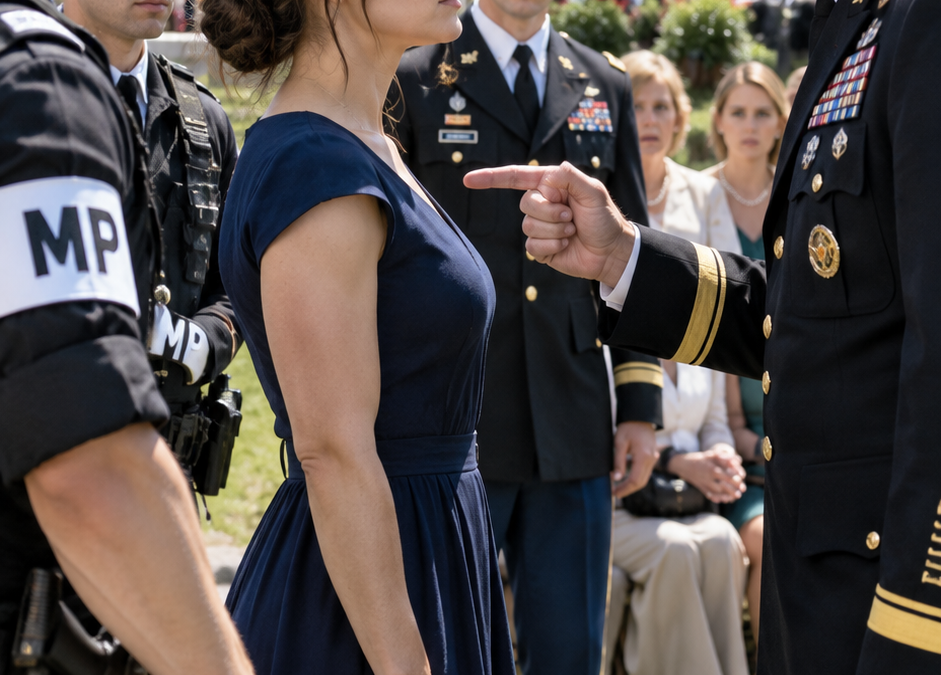
𝗣𝗔𝗥𝗧 𝟮
The second MP, Staff Sergeant Bell, leaned slightly closer.
He did not touch the envelope.
Harlan noticed immediately.
“What is it?”
Neither MP answered.
He moved between us.
“That paper is another performance.”
“It can be verified.”
“Then why hide it?”
“I’m not hiding anything.”
“You carried it into my ceremony sealed.”
“I carried it sealed because some of the names inside still deserve protection.”
The wind crossed the field.
Pages of Harlan’s retirement speech snapped beneath their clip.
He looked down at the visible corner.
For the first time that morning, his expression changed.
He knew the marking.
Not the document.
The marking.
“Where did you steal that?”
Matthew stepped forward.
“Dad.”
Harlan ignored him.
“If that document carries what I think it carries, she has no lawful reason to possess it.”
“The document belongs to me,” I said.
“That is impossible.”
“Why?”
“Because restricted material isn’t issued to civilian waitresses.”
Rodriguez’s posture changed.
His uncertainty was becoming caution.
“Sir,” he said, “I recommend moving this conversation away from the public area.”
Harlan looked at him as though the sergeant had personally insulted him.
“You haven’t even seen the document.”
“No, sir.”
“Then do your job.”
“My job includes determining whether I’m being ordered to remove an authorized guest.”
“I revoked her invitation.”
Hale shifted.
Harlan turned.
“Colonel. Confirm it.”
Hale hesitated.
Two seconds.
Maybe less.
But people who live under command learn how long two seconds can become.
“The current access roster still lists Mrs. Wade as an approved guest,” Hale said.
A murmur moved through the crowd.
Harlan stared at him.
“Then the roster is wrong.”
“Sir—”
“I am giving an order.”
Silence.
Hale glanced toward the reporters.
Several cameras were already recording.
“Perhaps this should be handled privately.”
“No.”
Harlan turned so everyone could see him.
“This woman has disrupted my family for six years. I will not let her contaminate the final day of my service.”
Contaminate.
I felt the edge of the envelope press into my palm.
I could have opened it.
I could have given him exactly the kind of confrontation he expected.
I didn’t.
Anger gives quick satisfaction.
Discipline waits for the moment after which nobody can change the record.
“Contaminate?” I repeated.
“You heard me.”
“So did everyone else.”
His smile was thin.
He believed cruelty became leadership if you delivered it calmly.
That belief had shaped his household long before it shaped this parade field.
The strange thing was that I had not come to ruin his retirement.
I almost wished later that I had.
It would have made the story simpler.
I came because Matthew asked me to.
At 10:14 that morning, I entered the visitor center.
The clerk scanned the invitation Matthew had mailed to my post office box outside Atlanta.
My married name triggered no warning.
At 10:21, I crossed the checkpoint.
At 10:27, I saw Harlan’s aide notice me near the family tent and reach immediately for his phone.
Three minutes later, Harlan appeared.
He told me to leave.
I showed him my badge.
He told me again.
I refused.
He walked away.
I thought he had chosen dignity.
Then the anthem started.
Only afterward did I understand.
He had waited.
He wanted the field full.
The cameras pointed forward.
Matthew trapped by formation.
The officers lined up.
Harlan had not lost his temper.
He had staged my removal.
That realization took away the last temptation to shout.
“Claire,” Matthew said.
I looked at him.
“What’s in the envelope?”
“My answer.”
“To what?”
“To the question your father has been asking since the first day I met him.”
Matthew frowned.
“What question?”
“Why someone like me never seemed impressed by someone like him.”
Harlan gave a short laugh.
“You confuse ignorance with indifference.”
“I knew exactly who you were.”
“And I knew exactly who you were.”
“No.”
I met his eyes.
“You researched the version of me you were allowed to find.”
His smile disappeared.
Matthew stared at me.
During six years of marriage, he had respected the limits around my earlier government work.
Mostly.
He knew I once held a clearance.
He knew certain records were sealed.
He knew there were nights I woke up and walked to the kitchen before I understood where I was.
He knew I attended medical evaluations when we first met.
He knew not to ask about certain scars.
He did not know Reaper Two.
That wasn’t romance.
It wasn’t manipulation.
It was an obligation.
When I met Matthew outside Tacoma, I had spent months building a life from ordinary things.
Appointments.
Temporary work.
Coffee.
Cheap apartments.
Sleep when I could get it.
We met beside a courthouse vending machine after he watched me lose three dollars to a broken coffee dispenser.
He hit the machine once.
A paper cup dropped.
“That probably violates federal law,” I told him.
“Then don’t tell my father.”
It was the first time he made me laugh.
He asked where I was from before he asked what I did.
Kentucky, I told him.
My mother worked breakfast shifts at a diner outside Bowling Green.
My father repaired transmissions in a cinder-block garage until illness took more from him than any machine ever had.
I left community college when his medical bills climbed past what my family could handle.
Every word was true.
Harlan later treated those truths as proof that there could not possibly be anything else.
Poverty made sense to him.
Service did too.
He simply couldn’t imagine the same woman containing both.
At our first Thanksgiving, Harlan called me temporary.
Matthew laughed nervously.
Everyone else did too.
Later, Margaret and I washed dishes.
“Don’t challenge him,” she said.
“I answered a question about my job.”
“You answered too confidently.”
I looked at her.
“What does acceptable confidence look like?”
She dried the same plate twice.
“Less noticeable.”
That became the Wade family rule.
I could attend as long as I remained grateful and indistinct.
At promotion dinners, Harlan seated me beside spouses who didn’t know my name.
During family photographs, Lauren moved me toward the edge.
When Matthew deployed, Harlan excluded me from briefings intended for immediate family.
He called it administrative.
Matthew apologized privately.
Then complied publicly.
Over time, his apologies became smoother.
So did my silence.
Standing on that field, I understood for the first time what six years of that bargain had cost us.
Matthew loved me.
I believed that.
He just expected me to survive everything he was unwilling to confront.
Harlan turned back to Rodriguez.
“This ends now.”
Rodriguez kept his eyes on the envelope.
“Sir, the document may contain controlled information.”
“You haven’t seen it.”
“I can see the handling code.”
Harlan looked again.
Recognition flashed in his eyes.
Then anger.
“Open it,” he ordered me.
I almost laughed.
“You just accused me of exposing restricted information.”
“Then prove it isn’t fraudulent.”
“I will show it to someone authorized.”
“I am the ranking officer on this field.”
“Not for much longer.”
The crowd inhaled as one.
Harlan’s retirement became official before sunset.
Everyone understood the reference.
He interpreted it as an insult.
“You think retirement makes us equals?”
“No.”
“Good.”
“Retirement has nothing to do with why we were never equals.”
Hale stepped down from the platform before Harlan could answer.
“Sir.”
“What?”
“General Whitaker’s motorcade is approaching the south gate.”
Harlan checked his watch.
“He’s early.”
“Yes, sir.”
“Delay him.”
Hale hesitated again.
“The vehicle has already cleared the checkpoint.”
A black SUV moved behind the reviewing stand.
A command flag caught the light.
Four silver stars flashed above the fender.
The entire field changed.
Officers straightened.
The bandmaster shifted.
Reporters turned.
Harlan did not.
“Move her before he arrives.”
Rodriguez remained still.
“That is a direct order.”
“With respect, sir, I need clarification on her access status.”
“You have it.”
“The roster and your verbal direction conflict.”
Harlan’s face reddened.
“You’re risking your career over a trespassing spouse.”
Rodriguez glanced once at the envelope.
“No, sir. I’m protecting my career until I understand what I’m being ordered to do.”
Bell stepped half a pace forward.
“I concur, sir.”
For the first time, Harlan stood on his own field and gave an order that did not produce immediate obedience.
It was a tiny moment.
But every officer nearby understood it.
Rank had not disappeared.
It had reached procedure.
The SUV stopped.
Its rear door opened.
General Samuel Whitaker stepped into the sun.
Tall.
Silver-haired.
Formal uniform.
Four stars.
I had last seen him seven years earlier inside a windowless medical facility.
He wore three stars then.
My left hand had been wrapped in gauze.
Neither of us expected to meet again.
Hale saluted and approached.
Whitaker returned it.
Then he noticed the silence.
His gaze moved from the empty podium to Harlan, then to the MPs, then to Matthew.
Finally he looked at me.
He stopped.
Harlan put on the smile he used for superiors.
“General. We weren’t expecting you quite this early.”
Whitaker didn’t answer.
His eyes stayed on my face.
He took one step.
Then another.
Hale followed him.
By the time he reached the grass, the children had stopped talking.
Whitaker looked at Rodriguez’s hand near my elbow.
Then at the envelope.
Then back at me.
“Claire?”
My throat tightened.
I had heard that voice through radios, concrete walls, medical sedation, rain, engines, and once through so much static I had thought I imagined it.
I hadn’t expected to hear it beneath a Georgia sun.
Harlan turned toward me.
Matthew stared.
Whitaker came closer.
For one instant, the control left his face.
“That’s Reaper Two.”
He whispered it.
He didn’t need to say it louder.
Rodriguez heard.
Bell heard.
Harlan heard.
The front row heard.
Silence carried the rest.
Something in Matthew’s face broke.
It wasn’t simple surprise.
It was grief.
Grief for every question he had never asked.
Every moment he had allowed his father’s assumptions to become easier than defending the woman beside him.
Whitaker stopped in front of me.
Neither of us saluted.
I no longer held a status that required it.
And what passed between us was older than ceremony.
“I was told you requested no contact,” he said.
“I didn’t request contact today.”
His gaze dropped to the envelope.
“Then why do you have that memorandum?”
“Because my father-in-law demanded proof that I belonged at his retirement.”
Whitaker turned slowly.
Harlan straightened.
“General, this woman entered a restricted ceremony against my direction.”
Whitaker’s face became unreadable.
“Was her invitation invalid?”
Hale answered.
“No, sir.”
Harlan looked at him.
Whitaker continued.
“Did she resist a lawful security instruction?”
Rodriguez replied, “No, sir.”
“Threaten anyone?”
“No, sir.”
“Misrepresent her identity?”
“No, sir.”
Whitaker looked at Harlan.
“Then why are military police surrounding her?”
Harlan’s voice remained measured.
“This is a private family matter that disrupted an official event.”
“You made it official when you issued an order in uniform.”
More cameras rose.
Harlan noticed.
“We can continue this inside headquarters.”
Whitaker looked toward Hale.
“Colonel Hale offered you that option already, didn’t he?”
Hale’s eyes dropped.
“Yes, sir.”
“And General Wade declined?”
“Yes, sir.”
Harlan’s jaw tightened.
“General Whitaker—”
Whitaker held out his hand to me.
“May I see the memorandum?”
“Yes, sir.”
I placed the envelope in his hand.
His fingers rested on the seal.
“Who released this copy?”
“The liaison office listed on the final page.”
“They contacted you?”
“I contacted them after Harlan removed me from the retirement family roster last month.”
Matthew turned toward me.
“He what?”
Harlan said nothing.
“You never told me,” Matthew said.
“You knew he didn’t want me here.”
“I restored your name.”
“Yes.”
“Then why—”
“Because restoring it did not erase what happened.”
Whitaker opened the envelope.
Inside was a personnel memorandum with most operational information blacked out.
One designation remained visible.
REAPER TWO.
Whitaker read the signature page.
“This is authentic.”
Harlan’s eyes dropped toward the paper.
“Authentic in what sense?”
Whitaker looked up.
“In every sense that matters.”
“She was never assigned to Fort Bellamy.”
“I didn’t say she was.”
“Then whatever she did has no bearing on installation access.”
“Her valid invitation establishes access.”
Whitaker refolded the paper.
“Her history establishes that your accusations of fraud and theft were reckless.”
Harlan glanced toward the cameras.
“You expect me to accept a hidden call sign as proof of character?”
“No.”
Whitaker’s voice remained quiet.
“I expect you to accept confirmed access records, lawful procedure, and the limits of your authority.”
“I have commanded soldiers for thirty-two years.”
“Then you should understand those limits better than anyone.”
Nobody moved.
Harlan had spent his career controlling rooms by making everyone else raise their emotional temperature while he lowered his own.
Whitaker defeated him by never changing his.
Matthew finally spoke.
“What does Reaper Two mean?”
I looked at Whitaker.
He waited.
The decision was mine.
“That designation remains restricted.”
Matthew’s eyes stayed on me.
“Were you military?”
“I served under military authority during joint assignments.”
“Doing what?”
“I can’t discuss those assignments.”
“Does my father know?”
“No.”
Harlan laughed once.
“Convenient.”
Whitaker looked at him.
“Careful.”
“I am being asked to accept an extraordinary claim without details.”
“No. You’re being told a verified fact by an officer senior to you.”
“I built my career on verification.”
Whitaker looked toward the reporters, the MPs, the valid roster in Hale’s folder.
“You built this spectacle on assumption.”
Harlan went silent.
Whitaker turned.
“Sergeant Rodriguez.”
“Sir.”
“Mrs. Wade is not being removed.”
“Yes, sir.”
“You and Staff Sergeant Bell may return to your posts.”
Rodriguez nodded.
Before leaving, he looked at me.
“Ma’am, I apologize for the confusion.”
“You handled an impossible order professionally.”
Relief moved across his face.
“Thank you.”
When the MPs walked away, Harlan watched them as though obedience itself had betrayed him.
His authority had not vanished.
It had encountered accountability.
There is a difference.
Whitaker handed the envelope back.
“Would you prefer the rest of this discussion privately?”
I looked across the field.
Three hundred people had already watched Harlan call me fraudulent, inferior, unwanted, and dangerous.
Privacy now would protect one person.
It wasn’t me.
“No, sir.”
Harlan exhaled.
“Of course.”
I looked at him.
“You chose the audience.”
Margaret rose from her chair.
She walked toward us with careful steps.
“Harlan.”
He turned.
“End this.”
His disbelief almost looked genuine.
“You’re defending her?”
“I’m asking you to stop.”
“After six years of silence?”
Margaret’s face changed.
“That is why I’m asking now.”
Lauren stood behind her.
“Mom, don’t make this worse.”
Margaret turned toward her daughter.
“We already made it worse.”
That surprised everyone.
Including Margaret.
She looked at me.
“I knew Matthew invited you.”
Harlan snapped toward her.
“You knew?”
“I found the mailing receipt.”
“And said nothing?”
“No.”
“Why?”
Her eyes filled.
“Because I wanted Claire here.”
For once, nobody rescued Harlan from the silence that followed.
Margaret continued.
“I also knew you planned to confront her publicly.”
Harlan’s expression shifted.
“You could have stopped this.”
“I tried.”
“When?”
“This morning.”
I remembered the two of them arguing behind the canvas wall of the hospitality tent.
Their voices had been too low to hear.
Margaret looked at her husband.
“You told me humiliation would teach Matthew obedience.”
A sound moved through the crowd.
Not quite a gasp.
Something worse.
Recognition.
Harlan looked at the reporters.
“This conversation is finished.”
Whitaker remained still.
“No, General. Your command-directed portion is finished.”
Harlan’s fists tightened.
“What exactly are you implying?”
“I’m stating that the use of military police during a personal family dispute requires review.”
“You’re opening an inquiry during my retirement ceremony?”
“I’m preserving facts during an official event.”
“This is personal.”
“You made it administrative.”
Whitaker turned to Hale.
“Secure the access roster, communication logs, and any instructions concerning Mrs. Wade.”
“Yes, sir.”
“Collect official media recordings.”
Harlan stepped forward.
“Hale, stay where you are.”
Hale stopped.
He looked from one general to the other.
Whitaker’s voice never changed.
“Colonel Hale, follow my instruction.”
Hale saluted.
“Yes, sir.”
He walked away.
Harlan watched him go.
For the first time, I saw something crack behind his eyes.
Not remorse.
Control.
He understood that his version of the morning was no longer the only version being preserved.
Matthew approached me.
“Claire.”
I turned.
“I didn’t know he removed you from the roster.”
“You knew he didn’t want me here.”
“I thought inviting you again would force him to behave.”
There it was.
A truth neither of us had wanted.
“You used me as a test.”
“No.”
“You brought me onto his field and hoped rank, cameras, and ceremony would restrain him.”
“I wanted my wife beside me.”
“Then why were you ten feet away when he ordered me removed?”
His face folded.
“I was in formation.”
“You left formation when General Whitaker arrived.”
He looked at the grass.
Around us, the whole field pretended not to listen.
Nobody succeeded.
“I failed you,” Matthew said.
“Yes.”
His head rose sharply.
For years, whenever he admitted something painful, I softened the landing.
I told him I understood.
Told him his father was difficult.
Told him family history was complicated.
Told him next time would be different.
My comfort had become another place he hid.
Not today.
“I was afraid of him,” he said.
“So was everyone.”
“That doesn’t excuse me.”
“No.”
His eyes reddened.
“I love you.”
“I believe you.”
“Is that enough?”
I looked at the man I had married.
“No.”
He swallowed.
“It wasn’t today.”
Harlan heard.
“Matthew, do not grovel.”
Matthew turned.
“I am apologizing to my wife.”
“You’re humiliating yourself.”
“No, Dad.”
Something in Matthew’s voice changed.
Not louder.
Steadier.
“You taught me that accountability feels like humiliation because you never allow anyone to practice it without punishment.”
Harlan went still.
Matthew stepped beside me.
He didn’t take my hand.
That small restraint meant more than the apology.
Lauren moved forward.
“This is ridiculous. Claire lied to all of us.”
“I protected restricted information.”
“You let us think you were nobody.”
“I never told you that.”
“You worked at a diner.”
“I still help my mother there.”
“You never corrected us.”
“You never asked a question without deciding the answer first.”
Her cheeks reddened.
“We welcomed you.”
“You put me outside the family section at your wedding.”
“That was a seating issue.”
“There were six empty chairs.”
Lauren glanced at her mother.
Margaret said nothing.
“You could have told us something,” Lauren said.
“I did.”
“What?”
“My father taught me engines. My mother taught me endurance. I left school to keep my family afloat.”
“That isn’t what I mean.”
“I know.”
What Lauren wanted was a credential large enough to retroactively justify kindness.
A heroic title.
A hidden rank.
A connection to a four-star.
Something impressive enough to explain why she should have treated me like a person.
Whitaker understood before I said it.
“Mrs. Wade never owed this family extraordinary credentials before receiving ordinary respect.”
Lauren looked away.
Harlan straightened his coat.
“My family relationships are not subject to your judgment.”
Whitaker faced him.
“Your use of personnel at an Army ceremony is.”
“She manipulated this.”
“How?”
“She brought that document.”
“I brought it unopened,” I said.
“You knew someone might recognize the marking.”
“I hoped nobody would need to.”
“Then why bring it at all?”
I looked at him.
“Because you spent six years turning private assumptions into public facts.”
His eyes narrowed.
“You called me temporary the first Thanksgiving.”
“A joke.”
“You removed me from deployment-family briefings.”
“Administrative.”
“I was Matthew’s wife.”
“The coordinator made that determination.”
“You ordered it.”
No denial.
“You told Lauren I married Matthew because my family needed money.”
“She misunderstood me.”
“You hired a private investigator to examine my mother’s finances.”
Matthew turned so sharply I heard leather creak in his uniform.
“You did what?”
Harlan looked only at me.
“How do you know about that?”
“The investigator refused the assignment.”
Matthew stepped closer.
“You tried to investigate her mother?”
“I was protecting you.”
“From what?”
Harlan finally lost some of his control.
“A woman whose history did not make sense.”
“My history made sense,” I said. “It simply didn’t satisfy your prejudice.”
“You appeared from nowhere with sealed records and no degree.”
“I appeared from Kentucky.”
“You know what I mean.”
“Yes.”
I stepped closer.
“You mean poverty made me suspicious.”
“Secrecy made you suspicious.”
“You mocked my mother before you knew records were sealed.”
That stopped him.
Whitaker looked at Matthew.
“How long did you know your wife’s prior records were protected?”
“Before our wedding, sir.”
“Did she misrepresent herself to you?”
“No.”
“Did you pressure her for restricted details?”
“No.”
“Then your father’s investigation had no legitimate purpose.”
Matthew stared at Harlan.
“Did you use Army resources?”
“No.”
Too fast.
Whitaker heard it too.
“Private resources, then?”
Harlan did not answer.
Another fact entered the record without a single word.
The ceremony was collapsing around us.
A band member lowered his trumpet.
Parents began leading children away.
The congressman’s representative moved toward the side of the field and began speaking urgently into a phone.
Reporters wrote faster.
Harlan looked at Whitaker.
“Are you canceling my retirement ceremony?”
“The ceremony is paused.”
“Under whose authority?”
“Mine.”
“You came to honor thirty-two years of service.”
Whitaker looked at the empty podium.
“I did.”
“And now?”
“Now I need to determine whether the conduct I witnessed represents something broader.”
Harlan’s voice tightened.
“You would discard my entire career over a domestic dispute?”
“No.”
Whitaker’s answer came immediately.
“Thirty-two years of service remain thirty-two years of service. What happened today remains what happened today. One does not erase the other.”
Harlan almost seemed unable to process that.
People like him preferred total judgment.
Hero or disgrace.
Loyal or traitor.
Strong or weak.
Complexity removed the control of choosing the category.
Whitaker continued.
“Mrs. Wade will not be removed without cause. Her protected service will not be discussed for entertainment. And your instructions to installation personnel will be reviewed.”
Harlan turned to me.
“What did you actually do under that name?”
I slid the envelope against my side.
“You’re not authorized to know.”
That answer hurt him more than anything else.
Harlan believed rank was a master key.
Some doors had just remained locked.
Whitaker faced the crowd.
“This event is in recess while administrative matters are addressed.”
Chairs began scraping.
Voices rose.
Reporters called questions.
“General Wade, did you order an authorized guest removed?”
“General Whitaker, who is Reaper Two?”
“Captain Wade, did you know your wife’s background?”
Whitaker’s security aide moved between us and the cameras.
“No comment will be provided regarding protected personnel matters.”
People left slowly.
Their eyes followed me.
Some looked impressed now.
That almost offended me more than contempt.
Nothing about my face had changed.
Nothing about my childhood had changed.
My mother’s apron had not become less real.
My father’s grease-stained hands had not become more respectable.
A four-star had simply whispered a name.
Suddenly everyone granted me complexity.
I hated how familiar that felt.
Rodriguez returned briefly.
“Ma’am, reporters are collecting near the visitor exit. We can arrange a private route.”
Whitaker nodded.
“That would be appropriate.”
Harlan laughed bitterly.
“She arrives wanting recognition and leaves demanding secrecy.”
I looked at him.
“I arrived for your retirement.”
“You arrived carrying evidence.”
“You arrived carrying military police.”
Matthew stepped beside me.
“We’re leaving together.”
Harlan turned.
“If you walk away now, do not expect my support again.”
Matthew went pale.
That threat was older than our marriage.
Harlan’s support meant recommendations.
Assignments.
Introductions.
Family money.
Approval.
A single leash made of many materials.
Matthew looked at me.
I gave him nothing.
No nod.
No reassurance.
No rescue.
This choice had to belong to him.
He removed his ceremonial gloves.
His fingers shook.
“Then keep it.”
Harlan stared.
“My support built your career.”
“My soldiers built my career.”
“I opened every important door you’ve ever walked through.”
“And closed every door Claire entered.”
“I protected this family’s name.”
Matthew’s voice nearly broke.
“You made that name something I’m ashamed of carrying.”
Margaret inhaled.
Lauren whispered, “Matthew.”
He kept looking at his father.
“I should have said that years ago.”
“You’ll regret this.”
“I already regret waiting.”
Then Matthew turned toward me.
“May I walk with you?”
Not, Are we okay?
Not, Do you forgive me?
May I walk with you?
“Yes.”
It was not forgiveness.
It was permission for one honest step.
Rodriguez led us behind the reviewing platform.
Whitaker walked beside me while his aide kept the press away.
The field remained visible through gaps between the tents.
Harlan stood near his podium.
For the first time that morning, his family was no longer arranged around him.
Margaret called after us.
“Wait.”
We stopped.
She walked over and removed the pearl necklace from her throat.
Without it, she looked smaller.
Not weaker.
Just human.
“I’m sorry,” she said.
I waited.
She had apologized before.
Her apologies usually sounded like this:
You know how Harlan is.
He means well.
He worries about Matthew.
He came from a different generation.
Don’t take it personally.
Every sentence converted harm into weather.
Something nobody caused.
Something everybody simply endured.
This time she said, “I watched him diminish you. I helped him by pretending my silence was kindness.”
Lauren stared at her.
“Mom.”
Margaret turned.
“You did it too.”
Lauren’s mouth closed.
Margaret faced me again.
“I don’t expect forgiveness.”
“Good.”
Her eyes filled.
“I can’t give it today.”
She nodded.
“I understand.”
Understanding without demand.
For the first time, one of the Wades gave me that.
Matthew looked at his mother.
“Are you coming with us?”
She glanced toward Harlan.
He was talking urgently to Hale beside the platform.
Her whole marriage seemed contained in the way she looked at him.
“No.”
Matthew’s disappointment showed.
Margaret touched his arm.
“Not yet.”
Then she drew a breath.
“But I’m not going back to the family tent.”
She walked alone toward headquarters.
Lauren watched her.
Then followed several yards behind.
Harlan saw them leave.
He did not call out.
Maybe pride stopped him.
Maybe he finally understood commands were failing.
We entered a small conference room inside the visitors’ center.
The air-conditioning felt brutal after the heat.
A vending machine hummed against one wall.
Plastic chairs surrounded a scratched wooden table.
Ordinary room.
Ordinary bad lighting.
Ordinary coffee smell.
It reminded me of the courthouse where Matthew and I met.
Whitaker closed the door.
For several seconds, nobody spoke.
I placed the envelope on the table.
He looked at it but did not touch it.
“Are you all right?”
“I’ve had better retirement ceremonies.”
A faint smile crossed his face.
Matthew didn’t smile.
“I need to understand what I’m allowed to know.”
Whitaker looked at me.
“That decision belongs to Claire and the liaison office.”
“I don’t need operational details.”
I folded my hands.
“Then what do you need?”
Matthew struggled.
“Were you in danger?”
“Yes.”
“Did General Whitaker command you?”
“Sometimes.”
“Did you stop because something happened?”
“Yes.”
“Did marrying me put you in danger?”
“No.”
He looked down.
“Did you ever trust me?”
The question hurt.
“Yes.”
“Then why didn’t you tell me the name?”
“Because trust does not cancel an oath.”
“I know.”
“Do you?”
He looked up.
“I’m trying to.”
Whitaker pulled out a chair.
“Captain, protected service is not a dramatic secret your wife withheld for effect.”
Matthew nodded.
“Yes, sir.”
“She built a civilian life because that transition was authorized and necessary.”
“I never asked her to violate anything.”
“No.”
Whitaker leaned forward.
“But you allowed your father to use her compliance as evidence against her.”
Matthew closed his eyes.
“Yes, sir.”
“That failure belongs to you.”
“I know.”
I shook my head slightly.
“No. He’s beginning to know.”
Matthew opened his eyes.
He accepted it.
That mattered.
Whitaker looked at me.
“You contacted the liaison office last month?”
“Yes.”
“Why not me?”
“You belonged to the life I left.”
There was pain in his expression.
He didn’t argue.
“Fair.”
“They released the memorandum after confirming Harlan’s investigator had found an obsolete personnel routing reference.”
Whitaker straightened.
“He found what?”
“A routing number. Redacted service dates. Nothing operational.”
“That explains why he became suspicious.”
“It doesn’t excuse anything.”
“No.”
Matthew stared at me.
“My father found a protected reference?”
“Yes.”
“He never told me.”
“He preferred a suspicion he could control.”
Whitaker examined the envelope.
“The liaison office knew you planned to attend?”
“Yes.”
“They will need notification about today’s exposure.”
“I know.”
“You may receive press restrictions again.”
“I know.”
Matthew looked between us.
“What happens now?”
Whitaker chose his words carefully.
“The access records will be reviewed. Official recordings will be preserved. General Wade’s instructions will be documented.”
“Can he still retire?”
“Retirement processing and ceremonial recognition are separate matters.”
“So the ceremony is over.”
“The ceremony you arrived for is.”
Matthew sat down.
His father’s career had not vanished.
But the triumphant ending Harlan scripted had.
Whitaker looked at me.
“What outcome do you want?”
“I don’t control the findings.”
“You control whether you make a statement.”
I thought about Thanksgiving.
Deployment briefings.
Empty chairs.
My mother’s bank account.
Matthew standing ten feet away.
“I’ll make one.”
Matthew lifted his head.
“So will I.”
I studied him.
“Even if it affects your career?”
“My silence already affected my character.”
Whitaker leaned back.
“That answer matters more than you think.”
“I’m not asking for protection, sir.”
“Good. You won’t get special treatment.”
“I understand.”
“You may be asked what you knew and how you responded.”
“I should be.”
The steadiness in Matthew’s voice did not repair our marriage.
It did something more believable.
It suggested repair might be possible.
A knock sounded.
Hale entered.
He looked exhausted.
“Sir, media recordings have been secured.”
“Access records?”
“Yes.”
“Communications?”
“The MP desk retained the original instruction.”
Whitaker looked up.
“What instruction?”
Hale opened his folder.
“At 10:31, General Wade directed the desk to classify Mrs. Wade as disruptive.”
“Based on what?”
“Her refusal to leave after he personally requested it.”
“Was her invitation active?”
“Yes, sir.”
“Was a formal revocation submitted?”
“No.”
Matthew rubbed both hands across his face.
Hale continued.
“General Wade requested two officers before the anthem ended.”
I stared at him.
“So this was planned.”
Hale hesitated.
“Yes, ma’am.”
“Why did you comply?”
His face tightened.
“I believed he intended a discreet escort after the ceremony.”
“You saw him point at me in front of everyone.”
“Yes.”
“You heard what he said.”
“Yes.”
“Why didn’t you intervene?”
Hale looked toward Whitaker.
Then me.
“Because I believed opposing him would define my final evaluation.”
The honesty surprised me.
“That is how he controlled this command.”
Hale nodded.
“Yes, ma’am.”
Whitaker’s expression became grave.
“Put that in your statement.”
“Yes, sir.”
Hale paused at the door.
“Mrs. Wade, I’m sorry.”
“Your statement will matter more than your apology.”
He nodded.
“I understand.”
After he left, Matthew stared at the door.
“How many people were afraid of him?”
“Enough,” Whitaker said.
That was the architecture of Harlan’s power.
Each person believed their fear was private.
A wife believed she was weak.
A son believed he was disappointing.
A colonel believed his career alone was at risk.
A daughter learned to redirect scrutiny.
Once they began comparing experiences, fear stopped looking personal.
It started looking systematic.
Another knock came.
Margaret stood outside.
“May I speak with Claire?”
I nodded.
She entered alone.
Her sunglasses were gone.
She placed her phone beside the envelope.
An audio recording was open on the screen.
Matthew looked at it.
“What is that?”
“Your father in the hospitality tent.”
He stared at her.
“You recorded him?”
“I started after he said Claire needed to be taught publicly.”
Whitaker did not touch the phone.
“Preserve the original file.”
“I will.”
“Do not send copies.”
“I haven’t.”
Margaret looked at me.
“I should have warned you.”
“Yes.”
“I told myself recording him was enough.”
“It wasn’t.”
“No.”
She accepted every answer without asking me to rescue her from it.
That was new.
Matthew stared at the phone.
“What did he say?”
Margaret’s voice trembled.
“He said removing Claire would remind everyone that Wades control who belongs.”
The room became still.
Whitaker asked, “Those exact words?”
“Yes.”
“Anything else?”
Margaret closed her eyes.
“He said Matthew needed to choose his commission over his marriage.”
Matthew stood so quickly his chair scraped backward.
“He planned that?”
“He believed public pressure would force you.”
“Why didn’t you tell me?”
Margaret flinched.
Then she looked directly at her son.
“Because I have spent thirty-four years confusing peace with obedience.”
Matthew turned away.
“I cannot undo that today,” she said.
“No.”
“I can stop helping him.”
He faced her.
“Will you?”
“Yes.”
No hesitation.
Something changed in Margaret’s face.
Perhaps strength does not appear suddenly.
Perhaps it simply becomes visible once someone stops spending all of it on survival.
Whitaker arranged for the original recording to be secured.
No one promised us justice.
Evidence does not guarantee justice.
It only makes forgetting more difficult.
Outside, Harlan’s celebration disappeared piece by piece.
Caterers covered food nobody had eaten.
Musicians packed brass instruments into cases.
Workers folded chairs.
The decorated stage remained.
His retirement speech stayed clipped to the podium.
Nobody heard it.
The irony was almost too obvious.
He had planned a speech about honor.
Instead, everyone witnessed the difference between honor and control.
Margaret began a written statement.
Her hand shook through the first page.
By the third, it steadied.
Lauren appeared near noon.
She stood in the doorway holding the same champagne glass.
Whitaker’s aide stopped her.
“You can’t bring that in here.”
Lauren looked down as though she had forgotten it was in her hand.
She set it outside.
“Can I talk to Mom?”
Margaret looked at me first.
I nodded.
Lauren entered.
All the confidence had drained from her.
“Dad says you’re destroying him.”
Margaret capped her pen.
“Your father made decisions.”
“He says General Whitaker misunderstood.”
“I recorded him.”
Lauren’s face emptied.
“You recorded Dad?”
“Yes.”
“Why?”
“Because I finally believed what I kept telling Claire to tolerate.”
Lauren looked at me.
“You knew?”
“No.”
She folded her arms.
“This whole family is collapsing because nobody tells anyone anything.”
Margaret’s eyes hardened.
“Claire told us plenty. We dismissed every truth that challenged the story we preferred.”
“She concealed an entire identity.”
“She protected restricted service.”
“You’re only defending her because a four-star recognized her.”
Margaret reached into her purse.
She removed the pearl necklace.
The one she wore to every military function.
The one that had belonged to Harlan’s mother.
She placed it on the table.
“No.”
Lauren stared at it.
“I’m defending her because recognition exposed how badly we treated someone we considered unimportant.”
“What are you doing?”
“I don’t know.”
“Are you leaving Dad?”
Margaret looked tired.
“I am leaving this building without him.”
“That isn’t an answer.”
“It is the only one I have today.”
Lauren sat.
After a while, she looked at me.
“I said awful things.”
“Yes.”
“I thought you looked down on us.”
“I avoided you because you humiliated me.”
“I thought your silence was judgment.”
“It became protection.”
Her thumb rubbed against her palm.
“What am I supposed to say?”
“The truth would be a start.”
She stared at the floor.
Then she said something I did not expect.
“I liked when Dad targeted you.”
Matthew looked at her.
Margaret closed her eyes.
Lauren’s voice cracked.
“When he was criticizing you, he wasn’t criticizing me.”
There it was.
Not an excuse.
An explanation.
Harlan’s family had become a system of redirected pain.
Lauren hurt me because my humiliation bought her safety.
Margaret stayed quiet because resistance brought consequences.
Matthew apologized privately because public defiance threatened the approval he had been trained to need.
And I survived because I had mistaken endurance for control.
“That doesn’t excuse you,” I said.
“I know.”
“Do you?”
She swallowed.
“I’m beginning to.”
The answer sounded familiar.
Maybe change starts there.
Not with transformation.
With the loss of certainty.
Whitaker returned.
“The liaison office confirmed release of your memorandum.”
“What will they tell the press?”
“A narrow statement. They can confirm you previously served under protected joint authority.”
“The call sign?”
“They won’t confirm operational details.”
“The recording already captured it.”
“Yes.”
“So the name will spread.”
“Probably.”
I looked toward the window.
For years, I had built an ordinary life deliberately.
Now strangers would speculate.
Reporters might visit my mother’s diner.
People would search my name.
Old memories might return wearing new voices.
Harlan had lost control.
I had lost privacy.
Victories are rarely clean.
Matthew asked, “What happens to my father?”
Whitaker remained careful.
“He has been directed to headquarters.”
“Did he comply?”
“After receiving the order in writing.”
Margaret laughed once.
“He always respected paper more than people.”
Whitaker continued.
“His retirement remains scheduled under ordinary administrative processing. Ceremonial honors are suspended pending review.”
Lauren frowned.
“So he still keeps his rank?”
“This is not a family punishment proceeding.”
She looked dissatisfied.
I understood.
People expect accountability to arrive like the ending of a movie.
Immediate.
Perfect.
Symmetrical.
Real systems rarely work that way.
Harlan would not lose thirty-two years in one afternoon.
Nor should facts become theatrical just because theater would feel better.
What he would lose was control over how those years were remembered.
Whitaker looked at me.
“The installation commander has offered a formal apology.”
“I want it in writing.”
“That can be arranged.”
“I also want Rodriguez and Bell protected from retaliation.”
“They will be.”
“Hale too, if his statement is truthful.”
“Normal procedures will apply.”
“I don’t want favors.”
“Neither do I.”
Matthew watched us.
Something in his face softened.
For the first time, he was seeing authority practiced without humiliation.
Boundaries without cruelty.
Consequences without spectacle.
His father had taught him only domination or surrender.
There were other ways to stand upright.
We left after one.
The parade field was almost empty.
Heat shimmered above the pavement.
Cicadas screamed in the trees.
Workers dismantled Harlan’s white tents.
He stood beside the reviewing platform without his uniform jacket.
Without the ribbons and stars, he looked older.
Whitaker’s aide offered another route.
“No,” I said.
I walked toward Harlan.
Matthew followed behind me.
Margaret and Lauren remained near the visitor center.
Harlan watched us approach.
“You got what you wanted.”
“No.”
“The ceremony is gone.”
“That was your ceremony.”
“My reputation will become gossip.”
“Your conduct became evidence.”
He looked at Matthew.
“My own son submitted a statement.”
“Yes.”
“You turned him against me.”
Matthew stepped forward.
“She didn’t.”
Harlan ignored him.
His eyes went to my envelope.
“Was exposing yourself worth it?”
“I exposed no operational details.”
“You exposed enough.”
“You forced enough.”
His gaze remained on the paper.
“Did Whitaker know you well?”
“He knew my service.”
“Did you save his life?”
The question told me everything Harlan needed from the world.
He wanted one dramatic act.
One medal.
One score.
One measurable accomplishment large enough to explain why a four-star recognized the waitress he despised.
“I cannot discuss those assignments.”
He almost smiled.
“You enjoy saying that now.”
“No.”
I looked directly at him.
“I enjoy that you finally have to accept it.”
For the first time, something like regret appeared.
Then I recognized it.
It was not regret that he had hurt me.
It was regret that he had chosen someone he could not overpower.
Whatever hope I had left for an apology disappeared.
“You never respected this family,” he said.
“I respected Matthew.”
“Not enough to trust him.”
Beside me, Matthew flinched.
“Trust does not grant access to classified information.”
“A wife should not have locked rooms.”
“Every person has locked rooms.”
Harlan looked at his son.
“You’ll spend your whole life wondering what is inside hers.”
Matthew answered before I could.
“That is better than spending my whole life inside yours.”
Harlan went silent.
Matthew pulled the Wade family signet ring from his hand.
His father had given it to him when he received his commission.
Matthew studied it.
Then set it on the podium beside the unread retirement speech.
“I’m keeping my name,” he said. “But I’m deciding what it means.”
He turned away.
Harlan did not call him back.
I remained.
One question had followed me for six years.
Now I asked it.
“Why did my silence bother you so much?”
Harlan looked across the empty chairs.
“Because everyone wants something.”
“I wanted your son to be happy.”
“That is something.”
“Yes.”
His eyes returned to me.
“I could never determine your angle.”
“There wasn’t one.”
“There always is.”
For one second, I almost pitied him.
What must love look like to a man who experiences every relationship as leverage?
Kindness becomes strategy.
Boundaries become insults.
Privacy becomes deception.
“I think you spent six years fighting an enemy you invented.”
“And you let me.”
“I survived you.”
“That sounds like blame.”
“No.”
I picked up the envelope.
“It is a conclusion.”
Then I walked away.
There was no music.
No applause.
No dramatic salute.
Only workers folding chairs beneath the Georgia sun.
Somehow that sound felt more honest than the ceremony ever had.
Matthew waited at the gate.
He did not ask if I forgave him.
“Where do you want to go?”
“My mother’s diner.”
“In Kentucky?”
“Eventually.”
He nodded.
“For now?”
“There’s a place outside Columbus with terrible coffee.”
“I remember it.”
It reminded us both of breakfast after our courthouse wedding.
Back then, we had almost nothing.
Two cups of coffee.
Cheap rings.
Hope.
Now we had damage.
Truth.
And a decision neither of us was allowed to make only once.
We drove separately.
That mattered.
Matthew did not assume one brave afternoon restored six years of cowardice.
Margaret left with Lauren.
Harlan entered headquarters alone.
Whitaker stayed on the field until our cars passed the gate.
He raised one hand.
I returned the gesture.
Not a salute.
Recognition.
The diner outside Columbus sat beside a gas station and a faded motel.
A bell rang when I entered.
Cold air carried the smell of bacon, coffee, and lemon cleaner.
Nobody knew my name.
Nobody whispered Reaper Two.
Nobody cared that a four-star general recognized me.
The relief almost made me cry.
Matthew slid into the booth across from me.
The waitress brought two chipped mugs.
He wrapped both hands around his.
“I called a counselor.”
I looked up.
“When?”
“While you were talking to my father.”
“For us?”
“For us if you want.”
He paused.
“For me either way.”
I studied him.
“That is a beginning.”
“I also requested a reassignment review.”
“Don’t destroy your career to prove something.”
“I’m not trying to prove anything.”
He looked down at the coffee.
“I need to figure out which choices in my life were actually mine.”
“That could take time.”
“I know.”
The waitress appeared with two pieces of pie.
“We didn’t order these,” I said.
She shrugged.
“You two look like you survived a long morning.”
Matthew looked at me.
“You could say that.”
“Pie helps.”
She walked away.
I laughed.
A real laugh.
Small.
Exhausted.
My mother would have done exactly the same thing.
Matthew waited before touching his fork.
“Will you tell her?”
“She’ll probably see everything online before dinner.”
“I’m sorry.”
“So am I.”
His eyes moved toward the envelope beside me.
“Do you regret bringing it?”
I thought about the question.
“No.”
“Do you regret marrying me?”
The diner continued around us.
A trucker paid at the counter.
Ice crashed inside a soda machine.
Cars moved along the highway.
“Ask me after we do the work.”
Matthew nodded.
It wasn’t what he wanted.
For once, he accepted the answer I actually had.
Three days later, Fort Bellamy sent a written apology.
It confirmed I had entered with a valid invitation and acknowledged improper handling of the incident.
It did not explain Reaper Two.
The internet did that badly enough on its own.
Clips of Whitaker’s whisper spread everywhere.
People invented missions.
Countries.
Weapons.
Conspiracies.
Most were wrong.
I declined every interview.
Harlan’s ceremonial honors remained suspended.
His retirement still took effect through normal administrative processing.
The review later concluded that he had misused installation personnel during a personal dispute.
The finding entered his permanent record.
He kept his pension.
He lost a prestigious advisory position that had been waiting for him in Washington.
Some people thought that wasn’t enough.
Others described it as the destruction of his legacy.
I thought both descriptions missed the point.
It was documented.
That mattered to me.
Rodriguez received formal recognition for procedural judgment.
Bell received the same.
Hale gave investigators information about broader command-climate concerns.
Other officers eventually supported him.
That was when I understood that Harlan’s behavior had never begun with me.
I was simply the moment it became visible.
Margaret moved into a furnished apartment outside Atlanta.
She started therapy before she asked Matthew to visit.
Lauren sent me a letter.
Not a phone call.
Not another emotional apology.
A letter.
She did not explain away what she had done.
I read it once.
Then placed it inside a drawer.
I had not forgiven her.
But for the first time, forgiveness felt like a possibility instead of another obligation.
Matthew and I lived separately for four months.
Every Tuesday evening, we went to counseling.
Sometimes the sessions were brutal.
Matthew learned to speak before fear made his choices.
I learned something less flattering about myself.
I had told myself that enduring Harlan protected my marriage.
In reality, every time I protected Matthew from the consequences of failing me, I also protected the system his father built.
My silence had not caused Harlan’s behavior.
But sometimes survival habits outlive the danger that created them.
Some Tuesdays ended with hope.
Others ended with us sitting in separate cars for twenty minutes because neither knew what to say.
We stopped treating difficulty as proof of failure.
That November, Matthew and I drove to Kentucky.
My mother’s diner glowed beside the highway beneath an early winter sky.
She was refilling sugar jars when we walked in.
She looked at Matthew.
Then me.
Nobody had needed to call her.
No four-star general had explained anything.
No sealed memorandum rested in her hands.
She simply looked at the space between our shoulders and understood more than Harlan had learned through six years of investigation.
“You staying for supper?” she asked.
Matthew nodded.
“If you’ve got room.”
She pointed a sugar dispenser at him.
“Room depends on behavior.”
He almost smiled.
“Yes, ma’am.”
I slid into the booth where my father once fixed my broken wristwatch using a pocket screwdriver and patience.
Matthew sat opposite me.
Mom brought coffee.
Then three plates of meatloaf.
She did not ask what Reaper Two meant.
She didn’t ask what I had done.
She had known long before anybody at Fort Bellamy that a person’s worth did not become more real because a powerful man recognized it.
She asked one question.
“Are you two telling each other the truth now?”
I looked at Matthew.
“We’re trying.”
My mother nodded.
“Trying counts when it keeps happening.”
Matthew moved one hand across the table.
Then he stopped.
He waited.
Months earlier, he would have assumed permission.
That night, he waited.
I turned my palm upward.
His fingers settled gently into mine.
Outside, trucks rolled south through the Kentucky darkness.
Inside, dishes clicked.
Coffee poured.
My mother hummed behind the counter.
And inside my purse, the envelope remained sealed.
Reaper Two was still real.
So was the frightened woman who had once left a windowless medical facility trying to remember how ordinary people lived.
So was the daughter of a mechanic.
The waitress.
The unfinished college student.
The wife who had stayed too quiet.
The woman who finally stopped confusing endurance with peace.
None of those identities canceled the others.
That was what Harlan had never understood.
He thought worth had to be ranked.
Proved.
Announced.
Stamped with a clearance or saluted by somebody important.
He believed being ordinary meant being lesser.
And because he believed that, he spent six years trying to discover the impressive secret that would explain why I didn’t seem ashamed of myself.
There was no secret explanation.
The classified name was real.
The service was real.
So were the danger, the scars, the things I would never be allowed to tell Matthew.
But none of that was why I deserved a seat beside my husband.
None of it was why I deserved to be spoken to with dignity.
The four stars on Whitaker’s uniform had not made me worthy.
They had only forced Harlan to confront the fact that I had been worthy before he knew what I had done.
Matthew squeezed my hand once.
I squeezed back.
Mom called from behind the counter.
“Claire, quit staring into space and bring me those coffee filters.”
I laughed.
“Yes, ma’am.”
I stood and walked behind the counter.
No one stopped me.
No reporters shouted.
No officer asked for identification.
No general demanded proof.
For the first time in a very long time, nobody needed to know who Reaper Two had been.
And for the first time in six years, I no longer needed anyone to understand before I believed I belonged.








