𝗙𝗨𝗟𝗟 𝗦𝗧𝗢𝗥𝗬 My Brother Vanished After Walking Through the Airport Doors—His Dog Waited There for Months
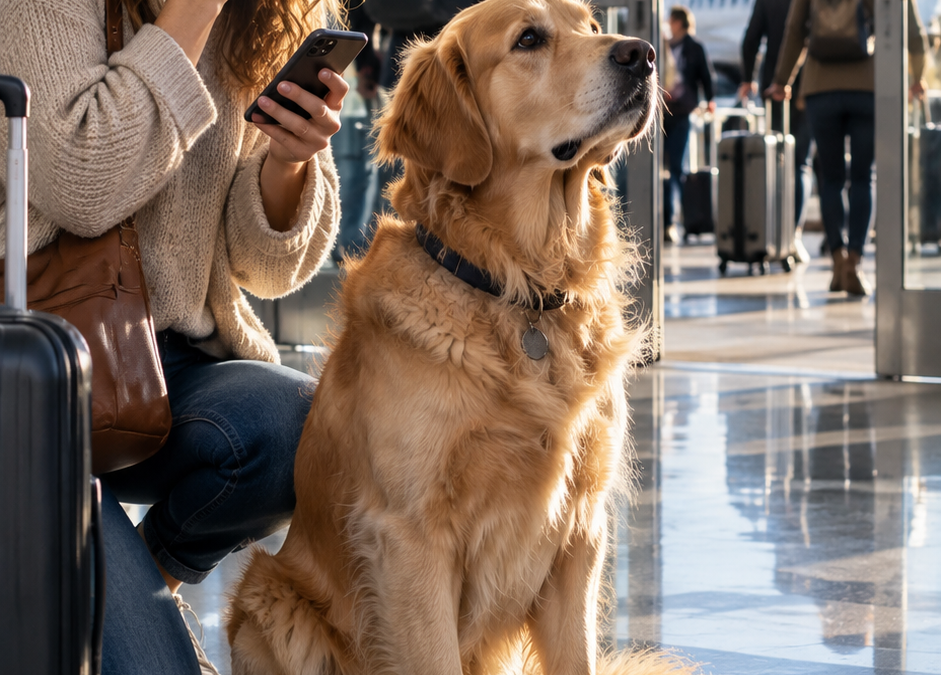
𝗣𝗔𝗥𝗧 𝟮
His voice sounded tired.
That bothered me more than the words.
My brother was not easily rattled.
He was the kind of man who treated problems as inconveniences until proven otherwise.
A canceled flight meant coffee and a new ticket.
A broken car meant rolled-up sleeves and a toolbox.
A bad day meant tomorrow would be better.
When his voice changed, I noticed.
“What aren’t you telling me?”
“Nothing.”
“Don’t do that.”
“Do what?”
“Use the voice.”
“What voice?”
“The voice you use when you want me not to ask questions.”
He laughed, but it was forced.
“I’ll call tomorrow.”
He didn’t.
I waited two days.
Then he called again.
“I’m okay.”
I hadn’t even said hello.
“Where are you?”
“Still here.”
“What happened?”
“Complicated.”
“Explain it.”
“I can’t right now.”
My stomach tightened.
“Can’t or won’t?”
“Can’t.”
Charlie had entered the room.
He heard my brother’s voice.
His ears rose.
“Are you in trouble?”
Silence.
“Answer me.”
“I’m working it out.”
“That’s not an answer.”
“I know.”
I walked toward the window.
“Are you safe?”
Another pause.
“Yes.”
It did not sound convincing.
“When are you coming home?”
“I don’t know.”
The room seemed to shrink.
“What do you mean you don’t know?”
“I mean I don’t know.”
Charlie sat beside me.
“One month,” I whispered.
“I know.”
“You promised.”
“I know.”
His voice cracked slightly.
My anger vanished.
“What’s happening?”
“I’ll tell you when I understand it.”
Then, very quietly:
“Take care of Charlie.”
The call ended soon after.
Three days passed.
Then five.
No calls.
No messages.
I sent everything.
Where are you?
Are you okay?
Call me.
Please.
Nothing.
The one-month mark came and went.
Charlie spent that day by the front door.
I told myself not to make meaning out of it.
Dogs don’t understand calendars.
But they understand routines.
They understand promises made through repetition.
They understand absence.
A month became six weeks.
Then two months.
The calls stopped completely.
My own days became phone calls.
Agencies.
Offices.
Numbers that transferred me to other numbers.
People who spoke politely without telling me anything useful.
I learned that bureaucracy could erase urgency simply by changing vocabulary.
My brother had not “disappeared.”
He had a status problem.
He was not “trapped.”
There were restrictions.
He was not “missing.”
His location was under administrative review.
Every phrase sounded designed to make fear feel unreasonable.
Then, one evening, the phone rang.
A formal voice.
A man I had never spoken to before.
He explained more clearly than anyone had.
There were documentation problems.
Legal complications my brother had not anticipated.
He was being held somewhere he could not freely leave.
That was the phrase.
Could not freely leave.
I sat at the kitchen table.
Charlie lay nearby.
“When can he come home?”
“We cannot provide a date at this time.”
“Can I speak to him?”
“Not through this office.”
“Does he know we’re trying?”
“I can’t answer that.”
“Is he safe?”
A pause.
“As far as we are aware.”
I hated him for saying those words.
Not because he was cruel.
Because he sounded calm.
My brother’s life had become a sentence in someone else’s file.
I ended the call.
Charlie looked at me.
I stared back.
For a ridiculous moment, I wanted to explain it all to him.
Your person didn’t choose not to return.
He is somewhere he cannot leave.
The world made a promise impossible.
There are rules humans create that dogs will never understand because sometimes humans barely understand them either.
Instead, I sat on the floor.
Charlie came closer.
I pressed my forehead against his.
“He’s not coming yet.”
His tail did not move.
“I’m sorry.”
That night, Charlie paced.
Down the hallway.
To the front door.
Back.
Again.
His nails clicked against the floor.
At every distant engine, he stopped.
Listened.
Then resumed.
He began sleeping beside the door every night.
He ate less.
Not enough to make him dangerously ill, but enough that I noticed.
He stopped bringing me his ball.
Stopped chasing birds in the yard.
Sometimes I found him sitting near my brother’s bedroom.
Looking inside.
Waiting.
I tried everything.
Long walks.
New toys.
Different food.
Trips to the park.
Charlie participated because I asked.
But his heart wasn’t in any of it.
There is a difference between a dog moving and a dog living.
Then one morning, I did something I still cannot fully explain.
I decided to take him back to the airport.
Maybe I thought it would break the pattern.
Maybe I believed if he saw my brother wasn’t there, the place would lose its power.
Maybe I simply wanted to return to the last place where certainty still existed.
I parked near the same entrance.
The moment I opened the back door, Charlie jumped out.
But he didn’t run.
That surprised me.
He walked slowly.
Deliberately.
As if memory had a map.
We reached the glass doors.
Charlie stopped.
Then sat.
Exactly where he had sat the day my brother left.
My chest tightened.
“Charlie.”
Nothing.
I waited.
Travelers moved past.
Rolling suitcases.
Phone conversations.
Taxi drivers.
A child holding a stuffed animal.
Charlie watched the doors.
Every time they opened, his head lifted slightly.
Every time someone emerged, he studied them.
Then relaxed again.
After ten minutes, I pulled gently on the leash.
“Come on.”
He planted his paws.
“Charlie.”
Nothing.
I crouched.
“He’s not here.”
His eyes stayed on the doors.
I sat on a metal bench nearby.
“Fine.”
We stayed three hours.
Three hours.
I expected him to become bored.
Hungry.
Tired.
He did become tired.
He lay down.
But he positioned himself facing the entrance.
I brought him home.
The next morning, he went to the car before I asked.
I stood with my keys in my hand.
“No.”
Charlie looked at me.
“We are not doing this.”
He sat beside the car.
“Absolutely not.”
He waited.
I lasted five minutes.
“Fine.”
That was how it began.
At first, I took him for a few hours.
Then longer.
Soon the airport employees recognized us.
A security officer named Daniel was the first to approach.
He was broad-shouldered, probably in his fifties, with the patient expression of someone accustomed to stressed travelers.
“Is this the dog who’s been coming every day?”
I glanced at Charlie.
“He has a reputation already?”
Daniel smiled.
“Hard not to notice.”
“He’s waiting for my brother.”
“Traveling?”
I hesitated.
“Something like that.”
Daniel looked at Charlie.
“How long?”
“Months.”
His expression changed.
“Your brother coming back?”
“I don’t know.”
That answer seemed to explain enough.
Daniel brought Charlie a bowl of water.
“Can’t block the entrance.”
“I understand.”
“But that corner over there is okay if he stays calm.”
“He will.”
Charlie had never caused trouble.
That was almost the problem.
He waited so quietly that people could walk past and never know his world had stopped.
The woman from the terminal café began noticing him next.
Her name was Maria.
On her morning break, she appeared with a small cardboard container.
“Chicken.”
I laughed.
“You’re going to spoil him.”
“Look at him.”
Charlie looked at the food.
Then the doors.
Maria frowned.
“He always does that?”
“Yes.”
“Even for chicken?”
“Apparently.”
She knelt.
“Sweetheart, any man worth waiting for would want you to eat.”
Charlie finally took one piece.
Maria looked at me.
“See? He listens to me.”
“He tolerates you.”
“I’ll take it.”
Soon, Charlie became part of airport routine.
Daniel refilled water.
Maria saved chicken.
A baggage worker scratched Charlie’s ears during breaks.
Someone from the night shift found an old blanket.
Then, one evening, I arrived and found a cardboard shelter tucked into the corner where Charlie sometimes slept.
It wasn’t pretty.
A large reinforced box.
Blanket inside.
Plastic sheet over the top.
I looked around.
A maintenance worker raised his hand.
“Weather’s supposed to turn cold tonight.”
I swallowed.
“Thank you.”
He shrugged.
“He’s one of us now.”
I wanted to say that Charlie shouldn’t be one of them.
He belonged at home.
With my brother.
But the airport had become his home because it was the last place where he believed reunion remained possible.
I still brought him back to my house at night whenever I could.
But some nights he resisted.
Especially when flights were arriving late.
He would look at the doors with such concentration that taking him away felt cruel.
Eventually, night-shift workers told me:
“Let him stay.”
I hesitated.
Daniel said, “We’ll watch him.”
“You can’t be responsible for my dog.”
“He isn’t causing trouble.”
Maria added, “And you look exhausted.”
She was right.
I had stopped sleeping properly.
Phone calls about my brother.
Work.
Charlie.
Driving back and forth.
Waiting.
We were both waiting.
Only Charlie was honest about it.
So some nights, I left him there.
I hated myself every time.
I would walk toward the parking lot and look back.
Charlie would be sitting in his corner, facing the glass doors.
Not watching me leave.
Watching for my brother to return.
In the mornings, he was always there.
Sometimes asleep.
Usually awake before the first arrivals.
Airline workers began greeting him.
“Morning, Charlie.”
His ears moved.
Passengers asked about him.
Some took pictures.
Others simply stood quietly when they heard the story.
Once, an elderly man sat beside Charlie for almost twenty minutes.
When he stood, he wiped his eyes.
“My wife waited for me through two deployments,” he told me.
Then he touched Charlie’s head.
“Somebody always has to keep believing.”
I thought about that for days.
Weeks became months.
My brother’s absence changed the shape of my life.
I stopped making plans too far ahead.
Every invitation became:
Maybe.
Every holiday depended on whether he returned.
Every unknown number made my heart jump.
Charlie and I became experts in interrupted hope.
A man with the same build walked through the doors.
Charlie stood.
Not him.
A familiar jacket.
Charlie moved forward.
Wrong person.
A voice that sounded similar.
His ears lifted.
Nothing.
Each disappointment was small.
But accumulated disappointment has weight.
I began wondering whether I was doing the wrong thing.
Was bringing Charlie there preserving love?
Or preventing healing?
I asked a veterinarian.
She told me there was no simple answer.
Dogs form deep associations.
Places.
Scents.
Routines.
People.
“If he’s otherwise healthy, eating, and interacting, the waiting itself isn’t necessarily harmful.”
“But what if he waits forever?”
She looked at me.
“Do you think he would stop waiting if you kept him home?”
I knew the answer.
No.
He would wait by the door.
The airport simply gave his waiting a location.
One afternoon, I sat beside him near the entrance.
“Maybe I should stop bringing you.”
Charlie watched the doors.
“Maybe I’m making this worse.”
No response.
“I miss him too.”
His head turned toward me.
I laughed sadly.
“There. Finally listening.”
Charlie shifted closer.
I put my arm around him.
“I don’t know what I’m doing.”
He leaned against my leg.
“You’re supposed to be the easy one.”
His head rested on my knee.
We stayed there.
Watching people return to other people.
That was the hardest part.
Airports are full of endings and beginnings happening in public.
Children running toward fathers.
Couples embracing.
Grandparents meeting babies.
People crying.
People laughing.
Flowers.
Signs.
Suitcases dropped because someone cannot wait one more second before hugging the person they love.
Charlie watched all of it.
I wondered what he understood.
Perhaps only one thing.
People go through those doors.
People also come back.
Therefore my brother could too.
The call came on a Thursday afternoon.
I was sitting in my car in the airport parking lot.
Charlie was near his cardboard shelter.
He wasn’t sleeping.
His head was raised.
Eyes on the entrance.
I remember noticing that he seemed unusually alert.
Almost restless.
My phone vibrated.
Unknown number.
By then, unknown numbers had become instruments of torture.
I stared at the screen.
Then answered.
“Hello?”
Silence.
Not official silence.
Human silence.
Someone breathing.
My heart began pounding.
Then:
“I’m coming home.”
I stopped breathing.
The voice was weaker than I remembered.
But it was him.
My brother.
I gripped the steering wheel.
“Say that again.”
“I’m coming home.”
I covered my mouth.
“When?”
“Tomorrow.”
Tears came immediately.
“Are you sure?”
A small laugh.
“Yes.”
“Don’t say it unless you’re sure.”
“I’m sure.”
“What happened?”
“I’ll explain when I get there.”
“You’re free?”
There was a pause.
Then:
“I’m free.”
I closed my eyes.
I don’t remember everything I said after that.
Questions.
Crying.
Probably anger mixed with relief.
I do remember asking:
“What time?”
He gave me the flight information.
Arrival at 9:47 the next morning.
Then he asked the question I knew was coming.
“How’s Charlie?”
I looked through the windshield.
He was sitting there.
Watching the doors.
“Waiting.”
My brother went completely silent.
“He’s been waiting?”
“Every day.”
A broken sound came through the phone.
“At the airport?”
“Almost every day.”
My brother began crying.
Not loudly.
I had heard him cry only a handful of times in my life.
“Why did you let him?”
I looked at Charlie.
“Because he wouldn’t stop.”
My brother breathed in.
“Does he still…”
“Yes.”
I didn’t need to finish.
After the call, I remained in the car.
Hands shaking.
Face wet.
Then Charlie stood.
He turned toward me.
For some reason, the way he looked at me made me laugh through tears.
“You knew?”
His tail moved.
“You impossible dog.”
I got out.
Charlie came to me.
I knelt and wrapped my arms around him.
“He’s coming.”
His tail moved harder.
“Tomorrow.”
He licked my face.
I laughed.
“You have no idea what I’m saying.”
But part of me wasn’t sure.
That night, Charlie would not settle.
Neither would I.
I brought him home because I wanted him rested.
He paced anyway.
From the front door to the window.
Back.
He drank water.
Ignored most of dinner.
At midnight, I found him sitting beside my brother’s bedroom door.
“Tomorrow.”
His ears lifted.
I sat beside him.
“Tomorrow.”
For once, the word did not hurt.
Before dawn, I was awake.
Charlie already stood beside my bed.
His tail was up.
His posture alert.
I dressed.
Skipped breakfast.
Then laughed and forced myself to eat because my brother would make fun of me if I fainted at arrivals.
Charlie barely waited for me to open the car door.
We arrived much too early.
The terminal wasn’t fully busy yet.
Morning light was still pale.
Cool air.
Charlie walked beside me.
Not dragging.
But every part of him felt charged.
When we reached the entrance, Daniel was there.
So was Maria.
The maintenance worker.
Two people from the night shift.
I stared.
“What are you all doing here?”
Maria looked offended.
“You thought we were missing this?”
“Who told you?”
Daniel smiled.
“You did.”
“When?”
“Yesterday. You apparently don’t remember much.”
That was possible.
Maria knelt beside Charlie.
“Today’s your day, sweetheart.”
Charlie barely noticed the chicken she offered.
“Wow,” she said. “Now I know it’s serious.”
We waited.
The time moved painfully slowly.
9:12.
9:23.
9:31.
A delay notice appeared briefly.
My heart stopped.
Then it disappeared.
Landed.
The screen showed the flight had arrived.
I started shaking.
Daniel noticed.
“You okay?”
“No.”
He smiled.
“Good answer.”
Charlie stood.
No one told him.
He just stood.
His ears came forward.
The glass doors opened.
Passengers began emerging.
A businessman.
A young couple.
A mother with a child.
Two college students.
Charlie stared.
Then more.
Suitcases rolled across the floor.
Drivers held signs.
Voices blended together.
My chest hurt from the force of my heartbeat.
9:47.
Exactly.
The doors opened again.
And there he was.
My brother.
For a second, I didn’t recognize him.
He had lost weight.
His clothes hung differently.
His face looked sharper.
There were shadows beneath his eyes.
He carried the same backpack.
Not the same man exactly.
Absence changes people.
So does confinement.
So does uncertainty.
But he was there.
Real.
Standing in sunlight.
My brother stopped.
His eyes searched.
Found me.
Then moved downward.
To Charlie.
Everything disappeared from his face except grief.
Not sadness.
Something deeper.
The expression of a person seeing proof that he mattered while believing for months that the world had moved on.
Charlie did not move.
That surprised me.
I expected immediate chaos.
Instead, he stared.
His entire body was frozen.
My brother took one step.
Then another.
He dropped his bag.
“Charlie.”
It was barely above a whisper.
Charlie heard.
His head lifted higher.
My brother’s mouth trembled.
“Charlie.”
The dog ran.
I had seen Charlie run hundreds of times.
After balls.
Birds.
Across parks.
Never like that.
His paws barely seemed to touch the ground.
He crossed the distance between them with his whole body transformed by joy.
My brother dropped to his knees.
Charlie hit him almost hard enough to knock him backward.
Paws on shoulders.
Tongue everywhere.
Face.
Hair.
Ears.
Charlie barked.
Whined.
Made sounds I had never heard.
His tail moved so violently that his entire body twisted with it.
My brother wrapped both arms around him.
Buried his face in Charlie’s neck.
His shoulders shook.
“You waited.”
Charlie licked his cheek.
“You waited for me.”
My brother cried openly.
So did I.
So did half the people who had spent months pretending they were simply airport employees doing their jobs.
Maria covered her mouth.
Daniel turned away and wiped his face.
The maintenance worker stared at the ceiling.
Even strangers slowed.
Some stopped.
For one minute, there were no schedules.
No boarding times.
No security lines.
No paperwork.
No legal complications.
There was simply a man on his knees holding the dog who had refused to believe he was gone.
Charlie pulled back for half a second.
He looked toward me.
I swear the expression said exactly what I imagined.
See?
I told you.
Then he returned to my brother.
Sat directly against him.
My brother held Charlie’s face between both hands.
Exactly as he had the morning he left.
Only now his fingers shook.
“I am so sorry.”
Charlie pushed his head forward.
“I’m sorry.”
He pressed his forehead against Charlie’s.
“I couldn’t come back.”
I knelt beside them.
My brother looked at me.
I hit him in the shoulder.
Not hard.
“You idiot.”
He laughed through tears.
Then I hugged him.
Charlie forced himself between us.
Of course he did.
For several seconds, all three of us remained tangled together on the pavement outside the airport.
My brother whispered:
“I’m home.”
That was the end of Charlie’s wait.
But it wasn’t the end of the story.
The drive home was almost completely quiet.
I drove.
My brother sat beside me.
Charlie was half across his lap despite being far too large.
His muzzle pressed against my brother’s chest.
One of my brother’s hands rested behind his ears.
The other remained on Charlie’s back.
Every few seconds, my brother looked down.
As if he needed proof.
Charlie did the same.
Whenever my brother’s hand stopped moving, Charlie lifted his head.
My brother immediately started again.
I watched them in the mirror.
“He’s not going anywhere.”
My brother looked at me.
“I know.”
“You’ve checked him about forty times.”
“I know.”
Charlie sighed.
My brother’s eyes filled again.
I looked back at the road.
At home, Charlie followed him everywhere.
Bathroom door.
Kitchen.
Bedroom.
Porch.
If my brother disappeared around a corner, Charlie stood and followed.
The first night, my brother went upstairs.
Charlie followed.
My brother came back down for water.
Charlie followed.
Finally I said, “You realize he’s going to supervise your breathing for the next six months.”
My brother smiled.
“Good.”
That first week, I noticed how changed my brother was.
He spoke more slowly.
Sometimes he disappeared into silence.
Loud noises made him pause.
Unexpected phone calls tightened his face.
He avoided discussing what happened in detail.
I never pushed.
I knew enough to understand that returning home physically did not mean every part of him had returned.
Charlie seemed to know too.
When my brother woke during the night, Charlie was there.
When he sat on the porch without speaking, Charlie rested against his feet.
When he could not finish a meal, Charlie remained beside him without begging.
Dogs do not ask:
Are you okay?
They simply decide:
I am here.
Some mornings, I found them outside before sunrise.
My brother in the porch chair.
Charlie beside him.
Both looking toward the road.
Once I carried coffee outside.
“Couldn’t sleep?”
My brother shook his head.
I handed him the cup.
Charlie leaned against his leg.
After a while, my brother said, “I kept thinking nobody would be there when I came back.”
I looked at him.
“Why?”
“Time.”
He stared into the coffee.
“Months go by. People have lives.”
“You’re my brother.”
“I know.”
“You thought I’d forget you?”
“No.”
His hand moved over Charlie’s head.
“I thought maybe life would become normal without me.”
I understood.
“And Charlie?”
He laughed softly.
“I never thought he’d be at the airport.”
“He made that decision.”
“You could’ve stopped him.”
“I tried.”
My brother looked at me.
“Thank you for not forcing him.”
That surprised me.
“I worried I was making him worse.”
“You gave him hope.”
“Or allowed an obsession.”
“No.”
He looked down at Charlie.
“He knew where I left.”
I thought about that.
Then my brother whispered:
“Sometimes the only thing that kept me going was imagining him.”
I said nothing.
“I pictured coming through those doors.”
His voice shook.
“Charlie waiting.”
I looked away.
He continued.
“I didn’t know he actually would be.”
The dog placed his head across my brother’s knee.
My brother smiled.
“He kept his side of the promise.”
That afternoon, I went into the garage and found Charlie’s old cardboard shelter folded against the wall.
Daniel had insisted I take it after the reunion.
“A souvenir,” he said.
I almost threw it away.
Instead, I kept it.
Not because I wanted to remember the suffering.
Because the box represented something larger.
People had cared.
Strangers.
Security workers.
Café employees.
Night crews.
Travelers.
While my brother was somewhere unreachable, people who had never met him helped protect the dog who loved him.
A few weeks after the reunion, I returned to the airport alone.
Daniel saw me first.
“No Charlie?”
“Home.”
His face brightened.
“Good.”
“Very good.”
Maria came from the café.
“How are they?”
“Attached.”
She laughed.
“More than before?”
“I didn’t think that was possible.”
Daniel leaned against the desk.
“Your brother okay?”
I hesitated.
“Getting there.”
He nodded.
“Charlie will help.”
“I think he already is.”
I thanked them.
All of them.
Daniel waved it away.
“He made the place better.”
Maria agreed.
“You know how many people came through here upset, stressed, angry?”
She smiled.
“Then they’d see Charlie.”
Daniel said, “Hard to stay mad about a delayed flight when there’s a dog who’s been waiting three months.”
I laughed.
Then cried.
Maria hugged me.
When I returned home, my brother was on the couch reading.
Charlie lay on the rug.
The moment I entered, Charlie looked up.
His tail moved.
Then he checked my brother.
Still there.
He relaxed.
I sat beside my brother.
Charlie stood.
Turned once.
Then lay down in a position where his back touched my legs and his head rested on my brother’s foot.
I smiled.
“He has to make physical contact with both of us now.”
My brother scratched his ear.
“Security protocol.”
We sat quietly.
After a while, my brother said, “Thank you.”
I looked over.
“For what?”
“For him.”
“He isn’t mine.”
“For taking care of him.”
“That was easy.”
“For the airport.”
“That was not.”
He smiled.
“For letting him wait.”
I thought about all the months I had questioned that decision.
“I almost stopped.”
“I’m glad you didn’t.”
I looked at Charlie.
“Maybe I was waiting too.”
My brother said nothing.
“I kept going to the airport with him because…”
I struggled to explain.
“As long as Charlie believed you’d come through those doors, I could believe it too.”
My brother’s eyes filled.
“He wasn’t the only one waiting.”
“No.”
We sat there.
My brother put one arm around me.
Charlie lifted his head.
Then pushed between us.
I laughed.
“Jealous.”
My brother kissed the top of Charlie’s head.
“He’s earned it.”
Over the following months, my brother slowly became himself again.
Not exactly the old version.
People don’t pass through uncertainty untouched.
But pieces returned.
His humor.
His appetite.
His interest in plans.
He started working again.
First part-time.
Then full days.
That created a new problem.
The first morning he prepared to leave for work, Charlie panicked.
My brother picked up his keys.
Charlie stood.
He went to the door.
Charlie pushed against him.
My brother froze.
“Hey.”
Charlie whined.
The sound transported all of us back to the airport.
My brother knelt.
“I’m coming back.”
Charlie stared.
My brother swallowed.
“Today.”
He held Charlie’s face.
“Not months.”
I turned away because I was already crying.
“Just a few hours.”
Charlie did not understand the words.
Not completely.
But he understood tone.
My brother left.
Charlie sat at the door.
I stayed with him.
Every engine made his ears rise.
At five twenty-three, my brother’s car turned into the driveway.
Charlie exploded.
He ran to the door.
Barked.
Whined.
My brother entered.
Charlie launched into him.
My brother laughed.
“I told you!”
That routine repeated.
Day after day.
And something changed.
Charlie learned a new kind of waiting.
Healthy waiting.
The kind built on evidence.
My brother leaves.
My brother returns.
Morning after morning.
Evening after evening.
The world became predictable again.
Charlie stopped sleeping at the door.
He brought his ball back.
Started chasing birds.
Ate his full meals.
His joy no longer depended on glass doors opening.
Sometimes I wondered what the airport meant to him now.
We found out months later.
My brother needed to travel for work.
One night only.
When he told me, both of us looked at Charlie.
“No,” I said.
My brother nodded.
“No airport.”
We arranged for me to keep Charlie home.
But on the morning of the trip, my brother knelt.
Charlie watched him.
“I’ll be back tomorrow.”
The words made my stomach twist.
My brother noticed.
“Different this time.”
I nodded.
He touched Charlie’s face.
“I’ll come back.”
The next day, we decided to pick him up at the airport together.
I wasn’t sure whether it was wise.
But my brother wanted to.
“He needs to see this can have a different ending.”
So Charlie came.
The moment we approached the terminal, he recognized it.
His body stiffened.
He looked toward those doors.
I kept the leash loose.
“It’s okay.”
He walked slowly.
Then stopped near the place where he had waited for months.
The cardboard shelter was gone.
Passengers moved around him.
Charlie sat.
For a moment, I felt sick.
Had we reopened everything?
Then the doors opened.
My brother walked through.
Right on schedule.
Charlie ran.
Same joy.
Same wild tail.
But something was different.
There had been no months.
No fear.
No uncertainty.
My brother laughed and caught him.
“See?”
Charlie licked his face.
“I came back.”
Daniel happened to be working.
He watched from a distance.
When he saw me, he smiled.
Charlie left the airport that day without resistance.
He didn’t look back.
That mattered more than I can explain.
For so long, the airport had been the place where my brother disappeared.
Now it became the place where he returned.
Memory had been rewritten.
Not erased.
Expanded.
I learned something from that.
Healing does not always remove the painful memory.
Sometimes it adds another ending.
Charlie had the doors closing.
Now he also had them opening.
My brother had confinement.
Now he had freedom.
I had months of unanswered phone calls.
Now I had his name appearing on my phone again because he wanted to know whether I needed groceries.
Life did not undo what happened.
It built around it.
A year has passed now.
Charlie sleeps at the foot of my brother’s bed.
Almost every night.
My brother claims he takes up too much room.
Then refuses to move him.
Their mornings begin early.
Walk first.
Coffee second.
Breakfast.
My brother talks to Charlie constantly.
Charlie still follows him through the house, though no longer with panic.
More like habit.
If my brother closes the bathroom door, Charlie waits outside.
“Boundaries,” I tell him.
Charlie ignores me.
My brother laughs.
There is laughter again.
That may be the part I’m most grateful for.
Not dramatic laughter.
Ordinary laughter.
The kind we never appreciate until a house goes without it.
Sometimes my brother and I talk about the months he was gone.
Not everything.
There are pieces he keeps private.
I respect that.
One evening, he told me:
“The hardest part wasn’t knowing what would happen.”
I waited.
“Days were manageable.”
He looked toward Charlie, asleep near the fireplace.
“Uncertainty was worse.”
I nodded.
“It makes you imagine every possible ending.”
“Yes.”
He smiled faintly.
“So I chose one.”
“What?”
“Coming home.”
He stared at Charlie.
“I would close my eyes and picture him.”
My throat tightened.
“At the airport?”
“Sometimes.”
He laughed softly.
“Funny thing is, in my imagination he wasn’t there.”
“What do you mean?”
“He was at home.”
My brother looked at me.
“I imagined opening the front door and him running down the hallway.”
He scratched his chin.
“Instead, he came to get me.”
That sentence broke me.
Charlie had gone to get him.
Not literally.
But emotionally, yes.
He stationed himself at the boundary between gone and returned.
And refused to abandon it.
People like to say dogs are loyal.
We use the word casually.
A dog follows.
A dog waits.
A dog loves.
But Charlie taught me that loyalty is not passive.
It costs something.
He gave up comfortable beds to sleep beside terminal doors.
He ignored food when his person did not return.
He watched thousands of strangers come through the place where one man had disappeared.
Day after day.
No explanation.
No guarantee.
Only memory.
Maybe humans are too complicated for that kind of faith.
We demand proof.
Dates.
Messages.
Plans.
Charlie had none.
He had scent.
Voice.
Promise.
That was enough.
I used to believe waiting was weakness.
Something people do when they are afraid to move forward.
Now I think there are different kinds.
There is waiting that traps you.
And waiting that keeps a light on.
Charlie’s waiting did both for a while.
It hurt him.
But it also gave him something to hold onto.
My job was not to tell him when to stop loving.
Only to make sure he survived long enough to see what happened next.
I think about the airport workers often.
Charlie is no longer theirs.
But in a way, they will always be part of his story.
Daniel with the water bowl.
Maria with chicken.
The night crew with the cardboard shelter.
People who had nothing to gain.
They simply saw a dog waiting and decided he should not wait alone.
That matters.
It matters more than grand gestures sometimes.
We cannot always fix what someone is waiting for.
But we can sit nearby.
Bring water.
Offer food.
Make the cold place slightly warmer.
There are human versions of cardboard shelters.
A phone call.
A chair beside a hospital bed.
A meal left at someone’s door.
Presence.
Charlie taught all of us that.
A few months ago, my brother and I drove past the airport on the way somewhere else.
Charlie was in the back seat.
He lifted his head when he saw the terminal buildings.
I watched him in the mirror.
His ears rose.
But he didn’t stand.
Didn’t whine.
Didn’t stare.
He looked for a few seconds.
Then rested his head again.
My brother noticed.
“Think he remembers?”
“Of course.”
My brother put one hand between the seats.
Charlie pressed his nose into it.
“He doesn’t need to wait there anymore.”
“No.”
My brother smiled.
“Neither do we.”
That was true.
For months, I had built my entire emotional life around waiting for news.
Even after he returned, part of me remained braced for another call.
Another problem.
Another disappearance.
Healing for me meant relearning that ordinary days were allowed.
My brother going to work.
Charlie sleeping.
Coffee.
Dinner.
Nothing happening.
I used to think uneventful days were boring.
Now I consider them gifts.
This morning, I woke early.
I went downstairs.
Charlie was already awake.
He stood in the kitchen staring at the cabinet where his food is stored.
“Good morning to you too.”
Tail wag.
My brother came in behind him.
Hair a mess.
Half asleep.
Charlie turned immediately.
The tail accelerated.
My brother knelt.
“Morning.”
Charlie pushed his head against his chest.
I watched.
For a second, the airport returned to me.
My brother on his knees.
Charlie almost knocking him over.
Tears.
People watching.
Then the image disappeared.
Back to the kitchen.
Sunlight.
Coffee.
Breakfast.
My brother looked up.
“What?”
“Nothing.”
“You’re staring.”
“I’m old. I’m allowed.”
“You are not old.”
“Then stop making me worry like I am.”
He smiled.
Charlie sat between us.
Exactly where he prefers to be.
I sometimes wonder whether the story really belongs to Charlie.
Maybe it belongs to all three of us.
My brother learned that someone could wait through the worst season of his life.
Charlie learned that disappearing does not always mean abandonment.
I learned that love sometimes looks unreasonable from the outside.
Three months at an airport.
A dog staring through glass doors.
A sister driving him there every day despite not knowing whether her brother would ever return.
None of it was rational.
But love is not always rational.
It is repetitive.
Stubborn.
Embarrassingly hopeful.
It wakes up and goes back to the same place.
Not because the outcome is guaranteed.
Because someone mattered enough to make the waiting meaningful.
I would never say everyone should wait forever.
Life requires movement.
There are doors we must eventually walk away from.
But Charlie’s story was different.
The person he loved had not chosen to abandon him.
He was trying to return.
Charlie somehow behaved as though he understood that before any of us had proof.
Maybe he didn’t understand anything beyond:
He left here.
Therefore I will look here.
But sometimes the simplest belief is the strongest.
My brother came back.
That is the fact I return to.
Not the months.
Not the bureaucracy.
Not the fear.
He came back.
Charlie saw him.
Ran.
And the waiting ended.
There are moments that repair more than the moment itself.
The reunion repaired every empty doorway.
Every ignored meal.
Every night Charlie paced.
Every unknown phone number.
Every time I told myself not to hope too much.
Not erased.
Repaired.
Those are different things.
Sometimes I still visit the airport.
Not often.
When I do, I look toward that corner.
There is no cardboard shelter.
No golden dog.
Just travelers.
People arriving.
People leaving.
But I can still see him there.
Head up.
Eyes on the doors.
And I remember what Daniel told me after the reunion.
“He shouldn’t have had to wait here.”
Then he added:
“But I’m glad he didn’t have to wait alone.”
I think that’s the heart of it.
None of us can promise that the people we love will never disappear from our lives.
Travel.
Distance.
Circumstances.
Illness.
Death.
Life is full of doors we cannot control.
What we can control is what happens on our side of them.
We can wait.
We can care for the one who waits.
We can keep faith without pretending fear isn’t real.
We can be there when the doors finally open.
Charlie no longer looks at doors the same way.
If my brother leaves, he watches.
But he doesn’t collapse into waiting.
He knows the sound of the car returning.
He knows footsteps on the porch.
He knows the key turning in the lock.
He has learned the difference between absence and abandonment.
That may be one of the greatest forms of peace any creature can know.
Tonight, as I finish telling this story, my brother is upstairs.
Charlie is asleep outside his bedroom.
Not because he’s afraid my brother will disappear.
Because he likes being close.
There is a difference.
In a few minutes, my brother will come down.
Charlie will hear the first step before I do.
His ears will rise.
His tail will tap against the floor.
Then my brother will appear.
Nothing dramatic will happen.
No crowd.
No airport.
No tears.
Charlie may not even stand.
He will simply look up.
My brother will say his name.
“Charlie.”
And Charlie’s eyes will soften.
Because now the name comes every day.
The voice returns every day.
The person returns every day.
That is what months of waiting bought him.
Not proof that love never leaves.
Proof that sometimes, even after the longest absence, it finds its way back.
I used to think the most powerful moment in Charlie’s story was when he ran across the airport and jumped into my brother’s arms.
Now I think it came later.
One quiet evening.
My brother had returned from work.
Charlie greeted him, followed him into the living room, then curled up beside the couch.
Within minutes, he was asleep.
Completely asleep.
Not listening for engines.
Not facing the door.
Not waiting.
Just sleeping.
Because the person he loved was home.
My brother looked down at him and whispered:
“He finally believes me.”
I knew exactly what he meant.
Charlie no longer needed to prove his loyalty by sitting at an airport.
My brother no longer needed to prove he would return with promises.
They had something stronger now.
History.
He left.
He returned.
Then he returned again.
And again.
Trust rebuilt through ordinary days.
That is how most deep healing happens.
Not in a single spectacular reunion.
In repetition afterward.
Breakfast.
Walks.
Work.
Home.
Goodnight.
Good morning.
I’m leaving.
I’m back.
Again.
Again.
Again.
Charlie waited for months because love was the only map he had.
Eventually, that map led him back to the person he had never stopped looking for.
And perhaps that is why, whenever I see him asleep peacefully beside my brother now, I no longer think first about the airport.
I think about home.
Because the most beautiful part of waiting is not the waiting itself.
It is the moment you finally understand you do not have to wait anymore.
Have you finished reading the story and want to read it again?
My Brother Vanished After Walking Through the Airport Doors—His Dog Waited There for Months
My brother promised he would be gone for only one month, but when the calls suddenly stopped, his golden retriever began waiting at the airport entrance where he had last watched him disappear.
For months, Charlie returned to those same glass doors every single day, ignoring the crowds, the cold floors, and every voice except the one he was certain would eventually call his name.
Then, on a Thursday afternoon, my phone rang from an unknown number—and before I even heard the voice on the other end, Charlie lifted his head as if he already knew the waiting was almost over.
My brother had made the promise on a clear morning outside the airport.
“One month.”
He said it twice.
Once to me.
Once to Charlie.
I can still see the three of us standing beside the departure entrance as clearly as if it happened yesterday.
My brother had one suitcase.
A dark backpack was slung over one shoulder.
Charlie sat between us, his golden tail sweeping slowly across the pavement.
Travelers moved around us with luggage carts and coffee cups.
Cars pulled up.
Doors slammed.
Announcements echoed faintly from inside the terminal.
Everything around us felt ordinary.
That is what makes certain memories so cruel.
You do not know you are standing inside the moment that will divide your life into before and after.
My brother knelt.
Charlie immediately leaned forward.
My brother placed both hands around the dog’s face.
“Take care of my sister.”
I rolled my eyes.
“I’m standing right here.”
He grinned.
“I’m talking to the responsible one.”
Charlie licked his chin.
My brother laughed and wiped his face.
Then his expression softened.
“One month, buddy.”
Charlie stared at him.
“You wait for me.”
Something about the way he said it bothered me.
“Don’t tell him that.”
My brother looked up.
“Tell him what?”
“To wait.”
“It’s one month.”
“You know how he is.”
He smiled.
“Exactly. He’ll probably sit by the window until I come back.”
“That’s what worries me.”
He stood.
I hugged him.
“Call when you land.”
“I will.”
“And don’t disappear.”
He pulled away and gave me that familiar look older brothers use when they believe younger sisters are being dramatic.
“I am traveling. I’m not joining a secret organization.”
“I’m serious.”
“So am I.”
His hand squeezed my shoulder.
“One month.”
Those were the last normal words I heard from him.
He took the suitcase.
Walked toward the glass doors.
Charlie followed until the leash became tight.
“Charlie.”
The dog stopped.
My brother turned once.
Raised his hand.
Charlie sat.
The doors opened.
My brother disappeared inside.
Charlie stayed completely still.
No whining.
No barking.
No pulling.
He simply watched.
The doors closed.
Someone else came through them.
Then another person.
Then a family.
Charlie kept staring.
“Come on.”
Nothing.
I tugged gently.
“Charlie.”
He looked at me briefly, then returned his attention to the entrance.
“He isn’t coming back out.”
I hated those words later.
At the time, they meant only that my brother had a flight to catch.
Eventually, I had to pull harder on the leash.
Charlie stood reluctantly.
Every few steps toward the parking lot, he looked back.
By the time I opened the car door, his body seemed heavy.
“Get in.”
He climbed onto the back seat.
On the drive home, he sat upright, looking through the rear window.
I watched him in the mirror.
“It’s one month.”
His ears moved at the sound of my voice.
“He’ll be back.”
I believed it.
That was the important part.
I believed it too.
For the first week, my brother called regularly.
Short conversations.
Nothing unusual.
He complained about food.
Asked about the house.
Asked whether Charlie was behaving.
“He sleeps by the front door.”
My brother laughed.
“Of course he does.”
“He barely touches breakfast until noon.”
“Give him time.”
“I think he thinks you’re coming back every time a car stops.”
There was a pause.
Then my brother said quietly, “Tell him I’ll be home soon.”
I looked down.
Charlie was lying beside my feet.
At the sound of my brother’s voice through the phone, his head lifted.
I put the call on speaker.
“Charlie.”
My brother’s voice filled the room.
The dog stood instantly.
His tail began moving.
“Hey, buddy.”
Charlie looked around.
Then toward the hallway.
Then at the phone.
His tail moved faster.
My chest hurt.
“You hear me?”
Charlie whined.
It was a soft sound.
My brother went quiet.
Then said, “One month.”
I closed my eyes.
After the call ended, Charlie searched the house.
Room by room.
He checked the front door.
Then the back.
Finally, he returned to me.
“You thought he was here.”
He lay down.
I sat beside him.
“So did part of me.”
Week two passed.
Then three.
My brother still called, though less often.
There were paperwork problems.
That was the phrase he used.
Paperwork.
Nothing serious, he told me.
Just delays.
“Will you still make the flight home?”
“I should.”
“You should?”
“I’m working on it.”
His voice sounded tired.
That bothered me more than the words.
My brother was not easily rattled.
He was the kind of man who treated problems as inconveniences until proven otherwise.
A canceled flight meant coffee and a new ticket.
A broken car meant rolled-up sleeves and a toolbox.
A bad day meant tomorrow would be better.
When his voice changed, I noticed.
“What aren’t you telling me?”
“Nothing.”
“Don’t do that.”
“Do what?”
“Use the voice.”
“What voice?”
“The voice you use when you want me not to ask questions.”
He laughed, but it was forced.
“I’ll call tomorrow.”
He didn’t.
I waited two days.
Then he called again.
“I’m okay.”
I hadn’t even said hello.
“Where are you?”
“Still here.”
“What happened?”
“Complicated.”
“Explain it.”
“I can’t right now.”
My stomach tightened.
“Can’t or won’t?”
“Can’t.”
Charlie had entered the room.
He heard my brother’s voice.
His ears rose.
“Are you in trouble?”
Silence.
“Answer me.”
“I’m working it out.”
“That’s not an answer.”
“I know.”
I walked toward the window.
“Are you safe?”
Another pause.
“Yes.”
It did not sound convincing.
“When are you coming home?”
“I don’t know.”
The room seemed to shrink.
“What do you mean you don’t know?”
“I mean I don’t know.”
Charlie sat beside me.
“One month,” I whispered.
“I know.”
“You promised.”
“I know.”
His voice cracked slightly.
My anger vanished.
“What’s happening?”
“I’ll tell you when I understand it.”
Then, very quietly:
“Take care of Charlie.”
The call ended soon after.
Three days passed.
Then five.
No calls.
No messages.
I sent everything.
Where are you?
Are you okay?
Call me.
Please.
Nothing.
The one-month mark came and went.
Charlie spent that day by the front door.
I told myself not to make meaning out of it.
Dogs don’t understand calendars.
But they understand routines.
They understand promises made through repetition.
They understand absence.
A month became six weeks.
Then two months.
The calls stopped completely.
My own days became phone calls.
Agencies.
Offices.
Numbers that transferred me to other numbers.
People who spoke politely without telling me anything useful.
I learned that bureaucracy could erase urgency simply by changing vocabulary.
My brother had not “disappeared.”
He had a status problem.
He was not “trapped.”
There were restrictions.
He was not “missing.”
His location was under administrative review.
Every phrase sounded designed to make fear feel unreasonable.
Then, one evening, the phone rang.
A formal voice.
A man I had never spoken to before.
He explained more clearly than anyone had.
There were documentation problems.
Legal complications my brother had not anticipated.
He was being held somewhere he could not freely leave.
That was the phrase.
Could not freely leave.
I sat at the kitchen table.
Charlie lay nearby.
“When can he come home?”
“We cannot provide a date at this time.”
“Can I speak to him?”
“Not through this office.”
“Does he know we’re trying?”
“I can’t answer that.”
“Is he safe?”
A pause.
“As far as we are aware.”
I hated him for saying those words.
Not because he was cruel.
Because he sounded calm.
My brother’s life had become a sentence in someone else’s file.
I ended the call.
Charlie looked at me.
I stared back.
For a ridiculous moment, I wanted to explain it all to him.
Your person didn’t choose not to return.
He is somewhere he cannot leave.
The world made a promise impossible.
There are rules humans create that dogs will never understand because sometimes humans barely understand them either.
Instead, I sat on the floor.
Charlie came closer.
I pressed my forehead against his.
“He’s not coming yet.”
His tail did not move.
“I’m sorry.”
That night, Charlie paced.
Down the hallway.
To the front door.
Back.
Again.
His nails clicked against the floor.
At every distant engine, he stopped.
Listened.
Then resumed.
He began sleeping beside the door every night.
He ate less.
Not enough to make him dangerously ill, but enough that I noticed.
He stopped bringing me his ball.
Stopped chasing birds in the yard.
Sometimes I found him sitting near my brother’s bedroom.
Looking inside.
Waiting.
I tried everything.
Long walks.
New toys.
Different food.
Trips to the park.
Charlie participated because I asked.
But his heart wasn’t in any of it.
There is a difference between a dog moving and a dog living.
Then one morning, I did something I still cannot fully explain.
I decided to take him back to the airport.
Maybe I thought it would break the pattern.
Maybe I believed if he saw my brother wasn’t there, the place would lose its power.
Maybe I simply wanted to return to the last place where certainty still existed.
I parked near the same entrance.
The moment I opened the back door, Charlie jumped out.
But he didn’t run.
That surprised me.
He walked slowly.
Deliberately.
As if memory had a map.
We reached the glass doors.
Charlie stopped.
Then sat.
Exactly where he had sat the day my brother left.
My chest tightened.
“Charlie.”
Nothing.
I waited.
Travelers moved past.
Rolling suitcases.
Phone conversations.
Taxi drivers.
A child holding a stuffed animal.
Charlie watched the doors.
Every time they opened, his head lifted slightly.
Every time someone emerged, he studied them.
Then relaxed again.
After ten minutes, I pulled gently on the leash.
“Come on.”
He planted his paws.
“Charlie.”
Nothing.
I crouched.
“He’s not here.”
His eyes stayed on the doors.
I sat on a metal bench nearby.
“Fine.”
We stayed three hours.
Three hours.
I expected him to become bored.
Hungry.
Tired.
He did become tired.
He lay down.
But he positioned himself facing the entrance.
I brought him home.
The next morning, he went to the car before I asked.
I stood with my keys in my hand.
“No.”
Charlie looked at me.
“We are not doing this.”
He sat beside the car.
“Absolutely not.”
He waited.
I lasted five minutes.
“Fine.”
That was how it began.
At first, I took him for a few hours.
Then longer.
Soon the airport employees recognized us.
A security officer named Daniel was the first to approach.
He was broad-shouldered, probably in his fifties, with the patient expression of someone accustomed to stressed travelers.
“Is this the dog who’s been coming every day?”
I glanced at Charlie.
“He has a reputation already?”
Daniel smiled.
“Hard not to notice.”
“He’s waiting for my brother.”
“Traveling?”
I hesitated.
“Something like that.”
Daniel looked at Charlie.
“How long?”
“Months.”
His expression changed.
“Your brother coming back?”
“I don’t know.”
That answer seemed to explain enough.
Daniel brought Charlie a bowl of water.
“Can’t block the entrance.”
“I understand.”
“But that corner over there is okay if he stays calm.”
“He will.”
Charlie had never caused trouble.
That was almost the problem.
He waited so quietly that people could walk past and never know his world had stopped.
The woman from the terminal café began noticing him next.
Her name was Maria.
On her morning break, she appeared with a small cardboard container.
“Chicken.”
I laughed.
“You’re going to spoil him.”
“Look at him.”
Charlie looked at the food.
Then the doors.
Maria frowned.
“He always does that?”
“Yes.”
“Even for chicken?”
“Apparently.”
She knelt.
“Sweetheart, any man worth waiting for would want you to eat.”
Charlie finally took one piece.
Maria looked at me.
“See? He listens to me.”
“He tolerates you.”
“I’ll take it.”
Soon, Charlie became part of airport routine.
Daniel refilled water.
Maria saved chicken.
A baggage worker scratched Charlie’s ears during breaks.
Someone from the night shift found an old blanket.
Then, one evening, I arrived and found a cardboard shelter tucked into the corner where Charlie sometimes slept.
It wasn’t pretty.
A large reinforced box.
Blanket inside.
Plastic sheet over the top.
I looked around.
A maintenance worker raised his hand.
“Weather’s supposed to turn cold tonight.”
I swallowed.
“Thank you.”
He shrugged.
“He’s one of us now.”
I wanted to say that Charlie shouldn’t be one of them.
He belonged at home.
With my brother.
But the airport had become his home because it was the last place where he believed reunion remained possible.
I still brought him back to my house at night whenever I could.
But some nights he resisted.
Especially when flights were arriving late.
He would look at the doors with such concentration that taking him away felt cruel.
Eventually, night-shift workers told me:
“Let him stay.”
I hesitated.
Daniel said, “We’ll watch him.”
“You can’t be responsible for my dog.”
“He isn’t causing trouble.”
Maria added, “And you look exhausted.”
She was right.
I had stopped sleeping properly.
Phone calls about my brother.
Work.
Charlie.
Driving back and forth.
Waiting.
We were both waiting.
Only Charlie was honest about it.
So some nights, I left him there.
I hated myself every time.
I would walk toward the parking lot and look back.
Charlie would be sitting in his corner, facing the glass doors.
Not watching me leave.
Watching for my brother to return.
In the mornings, he was always there.
Sometimes asleep.
Usually awake before the first arrivals.
Airline workers began greeting him.
“Morning, Charlie.”
His ears moved.
Passengers asked about him.
Some took pictures.
Others simply stood quietly when they heard the story.
Once, an elderly man sat beside Charlie for almost twenty minutes.
When he stood, he wiped his eyes.
“My wife waited for me through two deployments,” he told me.
Then he touched Charlie’s head.
“Somebody always has to keep believing.”
I thought about that for days.
Weeks became months.
My brother’s absence changed the shape of my life.
I stopped making plans too far ahead.
Every invitation became:
Maybe.
Every holiday depended on whether he returned.
Every unknown number made my heart jump.
Charlie and I became experts in interrupted hope.
A man with the same build walked through the doors.
Charlie stood.
Not him.
A familiar jacket.
Charlie moved forward.
Wrong person.
A voice that sounded similar.
His ears lifted.
Nothing.
Each disappointment was small.
But accumulated disappointment has weight.
I began wondering whether I was doing the wrong thing.
Was bringing Charlie there preserving love?
Or preventing healing?
I asked a veterinarian.
She told me there was no simple answer.
Dogs form deep associations.
Places.
Scents.
Routines.
People.
“If he’s otherwise healthy, eating, and interacting, the waiting itself isn’t necessarily harmful.”
“But what if he waits forever?”
She looked at me.
“Do you think he would stop waiting if you kept him home?”
I knew the answer.
No.
He would wait by the door.
The airport simply gave his waiting a location.
One afternoon, I sat beside him near the entrance.
“Maybe I should stop bringing you.”
Charlie watched the doors.
“Maybe I’m making this worse.”
No response.
“I miss him too.”
His head turned toward me.
I laughed sadly.
“There. Finally listening.”
Charlie shifted closer.
I put my arm around him.
“I don’t know what I’m doing.”
He leaned against my leg.
“You’re supposed to be the easy one.”
His head rested on my knee.
We stayed there.
Watching people return to other people.
That was the hardest part.
Airports are full of endings and beginnings happening in public.
Children running toward fathers.
Couples embracing.
Grandparents meeting babies.
People crying.
People laughing.
Flowers.
Signs.
Suitcases dropped because someone cannot wait one more second before hugging the person they love.
Charlie watched all of it.
I wondered what he understood.
Perhaps only one thing.
People go through those doors.
People also come back.
Therefore my brother could too.
The call came on a Thursday afternoon.
I was sitting in my car in the airport parking lot.
Charlie was near his cardboard shelter.
He wasn’t sleeping.
His head was raised.
Eyes on the entrance.
I remember noticing that he seemed unusually alert.
Almost restless.
My phone vibrated.
Unknown number.
By then, unknown numbers had become instruments of torture.
I stared at the screen.
Then answered.
“Hello?”
Silence.
Not official silence.
Human silence.
Someone breathing.
My heart began pounding.
Then:
“I’m coming home.”
I stopped breathing.
The voice was weaker than I remembered.
But it was him.
My brother.
I gripped the steering wheel.
“Say that again.”
“I’m coming home.”
I covered my mouth.
“When?”
“Tomorrow.”
Tears came immediately.
“Are you sure?”
A small laugh.
“Yes.”
“Don’t say it unless you’re sure.”
“I’m sure.”
“What happened?”
“I’ll explain when I get there.”
“You’re free?”
There was a pause.
Then:
“I’m free.”
I closed my eyes.
I don’t remember everything I said after that.
Questions.
Crying.
Probably anger mixed with relief.
I do remember asking:
“What time?”
He gave me the flight information.
Arrival at 9:47 the next morning.
Then he asked the question I knew was coming.
“How’s Charlie?”
I looked through the windshield.
He was sitting there.
Watching the doors.
“Waiting.”
My brother went completely silent.
“He’s been waiting?”
“Every day.”
A broken sound came through the phone.
“At the airport?”
“Almost every day.”
My brother began crying.
Not loudly.
I had heard him cry only a handful of times in my life.
“Why did you let him?”
I looked at Charlie.
“Because he wouldn’t stop.”
My brother breathed in.
“Does he still…”
“Yes.”
I didn’t need to finish.
After the call, I remained in the car.
Hands shaking.
Face wet.
Then Charlie stood.
He turned toward me.
For some reason, the way he looked at me made me laugh through tears.
“You knew?”
His tail moved.
“You impossible dog.”
I got out.
Charlie came to me.
I knelt and wrapped my arms around him.
“He’s coming.”
His tail moved harder.
“Tomorrow.”
He licked my face.
I laughed.
“You have no idea what I’m saying.”
But part of me wasn’t sure.
That night, Charlie would not settle.
Neither would I.
I brought him home because I wanted him rested.
He paced anyway.
From the front door to the window.
Back.
He drank water.
Ignored most of dinner.
At midnight, I found him sitting beside my brother’s bedroom door.
“Tomorrow.”
His ears lifted.
I sat beside him.
“Tomorrow.”
For once, the word did not hurt.
Before dawn, I was awake.
Charlie already stood beside my bed.
His tail was up.
His posture alert.
I dressed.
Skipped breakfast.
Then laughed and forced myself to eat because my brother would make fun of me if I fainted at arrivals.
Charlie barely waited for me to open the car door.
We arrived much too early.
The terminal wasn’t fully busy yet.
Morning light was still pale.
Cool air.
Charlie walked beside me.
Not dragging.
But every part of him felt charged.
When we reached the entrance, Daniel was there.
So was Maria.
The maintenance worker.
Two people from the night shift.
I stared.
“What are you all doing here?”
Maria looked offended.
“You thought we were missing this?”
“Who told you?”
Daniel smiled.
“You did.”
“When?”
“Yesterday. You apparently don’t remember much.”
That was possible.
Maria knelt beside Charlie.
“Today’s your day, sweetheart.”
Charlie barely noticed the chicken she offered.
“Wow,” she said. “Now I know it’s serious.”
We waited.
The time moved painfully slowly.
9:12.
9:23.
9:31.
A delay notice appeared briefly.
My heart stopped.
Then it disappeared.
Landed.
The screen showed the flight had arrived.
I started shaking.
Daniel noticed.
“You okay?”
“No.”
He smiled.
“Good answer.”
Charlie stood.
No one told him.
He just stood.
His ears came forward.
The glass doors opened.
Passengers began emerging.
A businessman.
A young couple.
A mother with a child.
Two college students.
Charlie stared.
Then more.
Suitcases rolled across the floor.
Drivers held signs.
Voices blended together.
My chest hurt from the force of my heartbeat.
9:47.
Exactly.
The doors opened again.
And there he was.
My brother.
For a second, I didn’t recognize him.
He had lost weight.
His clothes hung differently.
His face looked sharper.
There were shadows beneath his eyes.
He carried the same backpack.
Not the same man exactly.
Absence changes people.
So does confinement.
So does uncertainty.
But he was there.
Real.
Standing in sunlight.
My brother stopped.
His eyes searched.
Found me.
Then moved downward.
To Charlie.
Everything disappeared from his face except grief.
Not sadness.
Something deeper.
The expression of a person seeing proof that he mattered while believing for months that the world had moved on.
Charlie did not move.
That surprised me.
I expected immediate chaos.
Instead, he stared.
His entire body was frozen.
My brother took one step.
Then another.
He dropped his bag.
“Charlie.”
It was barely above a whisper.
Charlie heard.
His head lifted higher.
My brother’s mouth trembled.
“Charlie.”
The dog ran.
I had seen Charlie run hundreds of times.
After balls.
Birds.
Across parks.
Never like that.
His paws barely seemed to touch the ground.
He crossed the distance between them with his whole body transformed by joy.
My brother dropped to his knees.
Charlie hit him almost hard enough to knock him backward.
Paws on shoulders.
Tongue everywhere.
Face.
Hair.
Ears.
Charlie barked.
Whined.
Made sounds I had never heard.
His tail moved so violently that his entire body twisted with it.
My brother wrapped both arms around him.
Buried his face in Charlie’s neck.
His shoulders shook.
“You waited.”
Charlie licked his cheek.
“You waited for me.”
My brother cried openly.
So did I.
So did half the people who had spent months pretending they were simply airport employees doing their jobs.
Maria covered her mouth.
Daniel turned away and wiped his face.
The maintenance worker stared at the ceiling.
Even strangers slowed.
Some stopped.
For one minute, there were no schedules.
No boarding times.
No security lines.
No paperwork.
No legal complications.
There was simply a man on his knees holding the dog who had refused to believe he was gone.
Charlie pulled back for half a second.
He looked toward me.
I swear the expression said exactly what I imagined.
See?
I told you.
Then he returned to my brother.
Sat directly against him.
My brother held Charlie’s face between both hands.
Exactly as he had the morning he left.
Only now his fingers shook.
“I am so sorry.”
Charlie pushed his head forward.
“I’m sorry.”
He pressed his forehead against Charlie’s.
“I couldn’t come back.”
I knelt beside them.
My brother looked at me.
I hit him in the shoulder.
Not hard.
“You idiot.”
He laughed through tears.
Then I hugged him.
Charlie forced himself between us.
Of course he did.
For several seconds, all three of us remained tangled together on the pavement outside the airport.
My brother whispered:
“I’m home.”
That was the end of Charlie’s wait.
But it wasn’t the end of the story.
The drive home was almost completely quiet.
I drove.
My brother sat beside me.
Charlie was half across his lap despite being far too large.
His muzzle pressed against my brother’s chest.
One of my brother’s hands rested behind his ears.
The other remained on Charlie’s back.
Every few seconds, my brother looked down.
As if he needed proof.
Charlie did the same.
Whenever my brother’s hand stopped moving, Charlie lifted his head.
My brother immediately started again.
I watched them in the mirror.
“He’s not going anywhere.”
My brother looked at me.
“I know.”
“You’ve checked him about forty times.”
“I know.”
Charlie sighed.
My brother’s eyes filled again.
I looked back at the road.
At home, Charlie followed him everywhere.
Bathroom door.
Kitchen.
Bedroom.
Porch.
If my brother disappeared around a corner, Charlie stood and followed.
The first night, my brother went upstairs.
Charlie followed.
My brother came back down for water.
Charlie followed.
Finally I said, “You realize he’s going to supervise your breathing for the next six months.”
My brother smiled.
“Good.”
That first week, I noticed how changed my brother was.
He spoke more slowly.
Sometimes he disappeared into silence.
Loud noises made him pause.
Unexpected phone calls tightened his face.
He avoided discussing what happened in detail.
I never pushed.
I knew enough to understand that returning home physically did not mean every part of him had returned.
Charlie seemed to know too.
When my brother woke during the night, Charlie was there.
When he sat on the porch without speaking, Charlie rested against his feet.
When he could not finish a meal, Charlie remained beside him without begging.
Dogs do not ask:
Are you okay?
They simply decide:
I am here.
Some mornings, I found them outside before sunrise.
My brother in the porch chair.
Charlie beside him.
Both looking toward the road.
Once I carried coffee outside.
“Couldn’t sleep?”
My brother shook his head.
I handed him the cup.
Charlie leaned against his leg.
After a while, my brother said, “I kept thinking nobody would be there when I came back.”
I looked at him.
“Why?”
“Time.”
He stared into the coffee.
“Months go by. People have lives.”
“You’re my brother.”
“I know.”
“You thought I’d forget you?”
“No.”
His hand moved over Charlie’s head.
“I thought maybe life would become normal without me.”
I understood.
“And Charlie?”
He laughed softly.
“I never thought he’d be at the airport.”
“He made that decision.”
“You could’ve stopped him.”
“I tried.”
My brother looked at me.
“Thank you for not forcing him.”
That surprised me.
“I worried I was making him worse.”
“You gave him hope.”
“Or allowed an obsession.”
“No.”
He looked down at Charlie.
“He knew where I left.”
I thought about that.
Then my brother whispered:
“Sometimes the only thing that kept me going was imagining him.”
I said nothing.
“I pictured coming through those doors.”
His voice shook.
“Charlie waiting.”
I looked away.
He continued.
“I didn’t know he actually would be.”
The dog placed his head across my brother’s knee.
My brother smiled.
“He kept his side of the promise.”
That afternoon, I went into the garage and found Charlie’s old cardboard shelter folded against the wall.
Daniel had insisted I take it after the reunion.
“A souvenir,” he said.
I almost threw it away.
Instead, I kept it.
Not because I wanted to remember the suffering.
Because the box represented something larger.
People had cared.
Strangers.
Security workers.
Café employees.
Night crews.
Travelers.
While my brother was somewhere unreachable, people who had never met him helped protect the dog who loved him.
A few weeks after the reunion, I returned to the airport alone.
Daniel saw me first.
“No Charlie?”
“Home.”
His face brightened.
“Good.”
“Very good.”
Maria came from the café.
“How are they?”
“Attached.”
She laughed.
“More than before?”
“I didn’t think that was possible.”
Daniel leaned against the desk.
“Your brother okay?”
I hesitated.
“Getting there.”
He nodded.
“Charlie will help.”
“I think he already is.”
I thanked them.
All of them.
Daniel waved it away.
“He made the place better.”
Maria agreed.
“You know how many people came through here upset, stressed, angry?”
She smiled.
“Then they’d see Charlie.”
Daniel said, “Hard to stay mad about a delayed flight when there’s a dog who’s been waiting three months.”
I laughed.
Then cried.
Maria hugged me.
When I returned home, my brother was on the couch reading.
Charlie lay on the rug.
The moment I entered, Charlie looked up.
His tail moved.
Then he checked my brother.
Still there.
He relaxed.
I sat beside my brother.
Charlie stood.
Turned once.
Then lay down in a position where his back touched my legs and his head rested on my brother’s foot.
I smiled.
“He has to make physical contact with both of us now.”
My brother scratched his ear.
“Security protocol.”
We sat quietly.
After a while, my brother said, “Thank you.”
I looked over.
“For what?”
“For him.”
“He isn’t mine.”
“For taking care of him.”
“That was easy.”
“For the airport.”
“That was not.”
He smiled.
“For letting him wait.”
I thought about all the months I had questioned that decision.
“I almost stopped.”
“I’m glad you didn’t.”
I looked at Charlie.
“Maybe I was waiting too.”
My brother said nothing.
“I kept going to the airport with him because…”
I struggled to explain.
“As long as Charlie believed you’d come through those doors, I could believe it too.”
My brother’s eyes filled.
“He wasn’t the only one waiting.”
“No.”
We sat there.
My brother put one arm around me.
Charlie lifted his head.
Then pushed between us.
I laughed.
“Jealous.”
My brother kissed the top of Charlie’s head.
“He’s earned it.”
Over the following months, my brother slowly became himself again.
Not exactly the old version.
People don’t pass through uncertainty untouched.
But pieces returned.
His humor.
His appetite.
His interest in plans.
He started working again.
First part-time.
Then full days.
That created a new problem.
The first morning he prepared to leave for work, Charlie panicked.
My brother picked up his keys.
Charlie stood.
He went to the door.
Charlie pushed against him.
My brother froze.
“Hey.”
Charlie whined.
The sound transported all of us back to the airport.
My brother knelt.
“I’m coming back.”
Charlie stared.
My brother swallowed.
“Today.”
He held Charlie’s face.
“Not months.”
I turned away because I was already crying.
“Just a few hours.”
Charlie did not understand the words.
Not completely.
But he understood tone.
My brother left.
Charlie sat at the door.
I stayed with him.
Every engine made his ears rise.
At five twenty-three, my brother’s car turned into the driveway.
Charlie exploded.
He ran to the door.
Barked.
Whined.
My brother entered.
Charlie launched into him.
My brother laughed.
“I told you!”
That routine repeated.
Day after day.
And something changed.
Charlie learned a new kind of waiting.
Healthy waiting.
The kind built on evidence.
My brother leaves.
My brother returns.
Morning after morning.
Evening after evening.
The world became predictable again.
Charlie stopped sleeping at the door.
He brought his ball back.
Started chasing birds.
Ate his full meals.
His joy no longer depended on glass doors opening.
Sometimes I wondered what the airport meant to him now.
We found out months later.
My brother needed to travel for work.
One night only.
When he told me, both of us looked at Charlie.
“No,” I said.
My brother nodded.
“No airport.”
We arranged for me to keep Charlie home.
But on the morning of the trip, my brother knelt.
Charlie watched him.
“I’ll be back tomorrow.”
The words made my stomach twist.
My brother noticed.
“Different this time.”
I nodded.
He touched Charlie’s face.
“I’ll come back.”
The next day, we decided to pick him up at the airport together.
I wasn’t sure whether it was wise.
But my brother wanted to.
“He needs to see this can have a different ending.”
So Charlie came.
The moment we approached the terminal, he recognized it.
His body stiffened.
He looked toward those doors.
I kept the leash loose.
“It’s okay.”
He walked slowly.
Then stopped near the place where he had waited for months.
The cardboard shelter was gone.
Passengers moved around him.
Charlie sat.
For a moment, I felt sick.
Had we reopened everything?
Then the doors opened.
My brother walked through.
Right on schedule.
Charlie ran.
Same joy.
Same wild tail.
But something was different.
There had been no months.
No fear.
No uncertainty.
My brother laughed and caught him.
“See?”
Charlie licked his face.
“I came back.”
Daniel happened to be working.
He watched from a distance.
When he saw me, he smiled.
Charlie left the airport that day without resistance.
He didn’t look back.
That mattered more than I can explain.
For so long, the airport had been the place where my brother disappeared.
Now it became the place where he returned.
Memory had been rewritten.
Not erased.
Expanded.
I learned something from that.
Healing does not always remove the painful memory.
Sometimes it adds another ending.
Charlie had the doors closing.
Now he also had them opening.
My brother had confinement.
Now he had freedom.
I had months of unanswered phone calls.
Now I had his name appearing on my phone again because he wanted to know whether I needed groceries.
Life did not undo what happened.
It built around it.
A year has passed now.
Charlie sleeps at the foot of my brother’s bed.
Almost every night.
My brother claims he takes up too much room.
Then refuses to move him.
Their mornings begin early.
Walk first.
Coffee second.
Breakfast.
My brother talks to Charlie constantly.
Charlie still follows him through the house, though no longer with panic.
More like habit.
If my brother closes the bathroom door, Charlie waits outside.
“Boundaries,” I tell him.
Charlie ignores me.
My brother laughs.
There is laughter again.
That may be the part I’m most grateful for.
Not dramatic laughter.
Ordinary laughter.
The kind we never appreciate until a house goes without it.
Sometimes my brother and I talk about the months he was gone.
Not everything.
There are pieces he keeps private.
I respect that.
One evening, he told me:
“The hardest part wasn’t knowing what would happen.”
I waited.
“Days were manageable.”
He looked toward Charlie, asleep near the fireplace.
“Uncertainty was worse.”
I nodded.
“It makes you imagine every possible ending.”
“Yes.”
He smiled faintly.
“So I chose one.”
“What?”
“Coming home.”
He stared at Charlie.
“I would close my eyes and picture him.”
My throat tightened.
“At the airport?”
“Sometimes.”
He laughed softly.
“Funny thing is, in my imagination he wasn’t there.”
“What do you mean?”
“He was at home.”
My brother looked at me.
“I imagined opening the front door and him running down the hallway.”
He scratched his chin.
“Instead, he came to get me.”
That sentence broke me.
Charlie had gone to get him.
Not literally.
But emotionally, yes.
He stationed himself at the boundary between gone and returned.
And refused to abandon it.
People like to say dogs are loyal.
We use the word casually.
A dog follows.
A dog waits.
A dog loves.
But Charlie taught me that loyalty is not passive.
It costs something.
He gave up comfortable beds to sleep beside terminal doors.
He ignored food when his person did not return.
He watched thousands of strangers come through the place where one man had disappeared.
Day after day.
No explanation.
No guarantee.
Only memory.
Maybe humans are too complicated for that kind of faith.
We demand proof.
Dates.
Messages.
Plans.
Charlie had none.
He had scent.
Voice.
Promise.
That was enough.
I used to believe waiting was weakness.
Something people do when they are afraid to move forward.
Now I think there are different kinds.
There is waiting that traps you.
And waiting that keeps a light on.
Charlie’s waiting did both for a while.
It hurt him.
But it also gave him something to hold onto.
My job was not to tell him when to stop loving.
Only to make sure he survived long enough to see what happened next.
I think about the airport workers often.
Charlie is no longer theirs.
But in a way, they will always be part of his story.
Daniel with the water bowl.
Maria with chicken.
The night crew with the cardboard shelter.
People who had nothing to gain.
They simply saw a dog waiting and decided he should not wait alone.
That matters.
It matters more than grand gestures sometimes.
We cannot always fix what someone is waiting for.
But we can sit nearby.
Bring water.
Offer food.
Make the cold place slightly warmer.
There are human versions of cardboard shelters.
A phone call.
A chair beside a hospital bed.
A meal left at someone’s door.
Presence.
Charlie taught all of us that.
A few months ago, my brother and I drove past the airport on the way somewhere else.
Charlie was in the back seat.
He lifted his head when he saw the terminal buildings.
I watched him in the mirror.
His ears rose.
But he didn’t stand.
Didn’t whine.
Didn’t stare.
He looked for a few seconds.
Then rested his head again.
My brother noticed.
“Think he remembers?”
“Of course.”
My brother put one hand between the seats.
Charlie pressed his nose into it.
“He doesn’t need to wait there anymore.”
“No.”
My brother smiled.
“Neither do we.”
That was true.
For months, I had built my entire emotional life around waiting for news.
Even after he returned, part of me remained braced for another call.
Another problem.
Another disappearance.
Healing for me meant relearning that ordinary days were allowed.
My brother going to work.
Charlie sleeping.
Coffee.
Dinner.
Nothing happening.
I used to think uneventful days were boring.
Now I consider them gifts.
This morning, I woke early.
I went downstairs.
Charlie was already awake.
He stood in the kitchen staring at the cabinet where his food is stored.
“Good morning to you too.”
Tail wag.
My brother came in behind him.
Hair a mess.
Half asleep.
Charlie turned immediately.
The tail accelerated.
My brother knelt.
“Morning.”
Charlie pushed his head against his chest.
I watched.
For a second, the airport returned to me.
My brother on his knees.
Charlie almost knocking him over.
Tears.
People watching.
Then the image disappeared.
Back to the kitchen.
Sunlight.
Coffee.
Breakfast.
My brother looked up.
“What?”
“Nothing.”
“You’re staring.”
“I’m old. I’m allowed.”
“You are not old.”
“Then stop making me worry like I am.”
He smiled.
Charlie sat between us.
Exactly where he prefers to be.
I sometimes wonder whether the story really belongs to Charlie.
Maybe it belongs to all three of us.
My brother learned that someone could wait through the worst season of his life.
Charlie learned that disappearing does not always mean abandonment.
I learned that love sometimes looks unreasonable from the outside.
Three months at an airport.
A dog staring through glass doors.
A sister driving him there every day despite not knowing whether her brother would ever return.
None of it was rational.
But love is not always rational.
It is repetitive.
Stubborn.
Embarrassingly hopeful.
It wakes up and goes back to the same place.
Not because the outcome is guaranteed.
Because someone mattered enough to make the waiting meaningful.
I would never say everyone should wait forever.
Life requires movement.
There are doors we must eventually walk away from.
But Charlie’s story was different.
The person he loved had not chosen to abandon him.
He was trying to return.
Charlie somehow behaved as though he understood that before any of us had proof.
Maybe he didn’t understand anything beyond:
He left here.
Therefore I will look here.
But sometimes the simplest belief is the strongest.
My brother came back.
That is the fact I return to.
Not the months.
Not the bureaucracy.
Not the fear.
He came back.
Charlie saw him.
Ran.
And the waiting ended.
There are moments that repair more than the moment itself.
The reunion repaired every empty doorway.
Every ignored meal.
Every night Charlie paced.
Every unknown phone number.
Every time I told myself not to hope too much.
Not erased.
Repaired.
Those are different things.
Sometimes I still visit the airport.
Not often.
When I do, I look toward that corner.
There is no cardboard shelter.
No golden dog.
Just travelers.
People arriving.
People leaving.
But I can still see him there.
Head up.
Eyes on the doors.
And I remember what Daniel told me after the reunion.
“He shouldn’t have had to wait here.”
Then he added:
“But I’m glad he didn’t have to wait alone.”
I think that’s the heart of it.
None of us can promise that the people we love will never disappear from our lives.
Travel.
Distance.
Circumstances.
Illness.
Death.
Life is full of doors we cannot control.
What we can control is what happens on our side of them.
We can wait.
We can care for the one who waits.
We can keep faith without pretending fear isn’t real.
We can be there when the doors finally open.
Charlie no longer looks at doors the same way.
If my brother leaves, he watches.
But he doesn’t collapse into waiting.
He knows the sound of the car returning.
He knows footsteps on the porch.
He knows the key turning in the lock.
He has learned the difference between absence and abandonment.
That may be one of the greatest forms of peace any creature can know.
Tonight, as I finish telling this story, my brother is upstairs.
Charlie is asleep outside his bedroom.
Not because he’s afraid my brother will disappear.
Because he likes being close.
There is a difference.
In a few minutes, my brother will come down.
Charlie will hear the first step before I do.
His ears will rise.
His tail will tap against the floor.
Then my brother will appear.
Nothing dramatic will happen.
No crowd.
No airport.
No tears.
Charlie may not even stand.
He will simply look up.
My brother will say his name.
“Charlie.”
And Charlie’s eyes will soften.
Because now the name comes every day.
The voice returns every day.
The person returns every day.
That is what months of waiting bought him.
Not proof that love never leaves.
Proof that sometimes, even after the longest absence, it finds its way back.
I used to think the most powerful moment in Charlie’s story was when he ran across the airport and jumped into my brother’s arms.
Now I think it came later.
One quiet evening.
My brother had returned from work.
Charlie greeted him, followed him into the living room, then curled up beside the couch.
Within minutes, he was asleep.
Completely asleep.
Not listening for engines.
Not facing the door.
Not waiting.
Just sleeping.
Because the person he loved was home.
My brother looked down at him and whispered:
“He finally believes me.”
I knew exactly what he meant.
Charlie no longer needed to prove his loyalty by sitting at an airport.
My brother no longer needed to prove he would return with promises.
They had something stronger now.
History.
He left.
He returned.
Then he returned again.
And again.
Trust rebuilt through ordinary days.
That is how most deep healing happens.
Not in a single spectacular reunion.
In repetition afterward.
Breakfast.
Walks.
Work.
Home.
Goodnight.
Good morning.
I’m leaving.
I’m back.
Again.
Again.
Again.
Charlie waited for months because love was the only map he had.
Eventually, that map led him back to the person he had never stopped looking for.
And perhaps that is why, whenever I see him asleep peacefully beside my brother now, I no longer think first about the airport.
I think about home.
Because the most beautiful part of waiting is not the waiting itself.
It is the moment you finally understand you do not have to wait anymore.








