𝗣𝗔𝗥𝗧 𝟮 I Thought I Knew What My Father Was Capable of Until His Oldest Friend Finally Spoke
𝗣𝗔𝗥𝗧 𝟮
Those two words would haunt me.
Because I had asked my daughter to ignore the feeling that something was wrong in order to preserve the feelings of adults who had never extended her the same consideration.
About ten minutes later, Ava asked for water.
We were sitting near the patio doors. Daniel was speaking with George, one of my father’s oldest friends, and I was helping Ava wipe chocolate frosting from her fingers.
“Water, please.”
“Of course, baby.”
I started to stand, but my mother appeared beside us.
“There’s water in the kitchen, sweetheart. You know where the cups are.”
Ava slipped down from my lap.
“I can get it.”
She was in the stage of childhood where doing things independently felt like an enormous accomplishment.
I smiled.
“Okay. Just ask Grandma if you need help.”
She hurried inside.
I watched her disappear through the doorway, her yellow dress swinging around her knees.
Thirty seconds later, I heard my father shouting.
“YOU DON’T TAKE THINGS WITHOUT PERMISSION!”
Every muscle in my body tightened.
I knew that voice.
I’d heard it through bedroom doors, across dinner tables, and from the driver’s seat when I was too young to understand what terrible mistake I’d supposedly made.
I was already moving when Ava screamed.
I ran through the dining room.
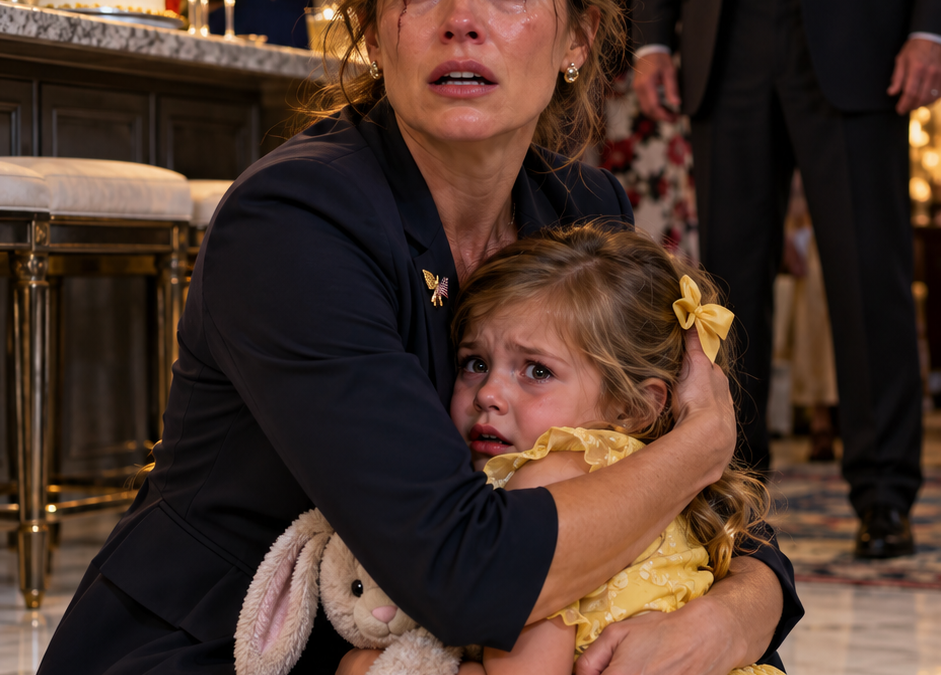
My father stood in the kitchen beside the refrigerator. Ava was backed against the cabinets, clutching a soda can with both hands.
Her eyes were enormous.
“I’m sorry, Grandpa!”
“Put it back!”
She immediately placed the can on the counter.
“I just wanted—”
“I don’t care what you wanted!”
“Dad!”
I reached the kitchen doorway.
My father turned.
“Stay out of this, Sarah. Your daughter needs to learn some manners.”
“She’s three years old.”
“Then she’s old enough to understand she doesn’t take things that don’t belong to her.”
I moved toward Ava.
“Come here, baby.”
She tried to take a step toward me.
That’s when my father reached for his belt.
I saw his hand move toward the buckle.
For a fraction of a second, I didn’t understand what I was seeing.
Then I recognized the movement.
The familiar metallic sound of a belt being pulled through its loops took me straight back to childhood.
“Dad. Don’t.”
He yanked the belt free.
“She needs to learn.”
“DAD!”
He snapped it through the air.
The leather never touched my daughter.
It didn’t have to.
Ava recoiled so violently that she lost her balance. Her little sock slid across the polished kitchen tile, her arms flew outward, and she fell backward.
Her head struck the floor with a sickening crack.
Then she stopped moving.
For one impossible moment, I couldn’t breathe.
“Ava!”
I dropped to my knees beside her.
Her eyes were closed.
Blood was already spreading beneath the back of her head.
“No. No, baby. Look at Mommy.”
I reached for her, then forced myself to stop.
My training took over before panic could make me move her carelessly.
I kept her head and neck as still as possible and shouted for Daniel to call 911. Someone handed me a clean kitchen towel, and I carefully applied pressure to the bleeding wound.
“Ava, sweetheart, can you hear me?”
Nothing.
“Baby, open your eyes.”
Her small face was frighteningly pale.
Behind me, my father exhaled sharply.
“Oh, for God’s sake.”
I turned my head.
He was standing exactly where he’d been before she fell.
The belt hung from his right hand.
“She needs to learn not to act like that,” he said.
I stared at him.
For a second, I was certain I’d misunderstood.
My daughter was unconscious.
There was blood on the floor.
And he was still talking about discipline.
“Put the belt down.”
My voice sounded unfamiliar.
Richard’s jaw tightened.
“Don’t you speak to me like that.”
“PUT IT DOWN.”
He looked startled.
Nicole appeared in the doorway.
“What happened?”
“She fell,” Dad said.
Nicole glanced at Ava.
Then at the soda can.
“Seriously? All this over a drink?”
“He frightened her with his belt,” I said.
My sister crossed her arms.
“Someone had to teach her respect.”
I felt something cold move through me.
“Get out of this kitchen.”
“Sarah, don’t start.”
“GET OUT.”
Daniel rushed in with his phone pressed to his ear.
“Three-year-old female. Head injury. She lost consciousness. She’s bleeding.”
He knelt beside me.
“Sarah, the ambulance is coming.”
My hands were shaking.
I couldn’t stop looking at Ava’s face.
“Baby, please.”
Daniel gently touched my shoulder.
“Talk to her. I’m right here.”
Then my mother entered.
She stopped when she saw the blood.
Her eyes moved from Ava to the towel beneath my hands.
For one heartbeat, I thought I saw horror cross her face.
I expected her to rush forward.
I expected her to scream for someone to get ice, towels, anything that might help.
Instead, she looked at me.
“She deserved it.”
The kitchen went silent.
Even my father seemed surprised by how plainly she’d said it.
I looked up.
“What?”
Margaret folded her arms.
“Your father told her not to take things. Children have to learn consequences.”
My daughter lay unconscious between us.
And my mother was explaining why she deserved what had happened.
There are moments when anger arrives so violently that it overwhelms everything else.
This wasn’t one of them.
Something inside me became completely still.
All the years of making excuses, swallowing insults, and convincing myself that maintaining a relationship with my parents was an obligation suddenly seemed very far away.
I looked down at Ava.
Her eyelids fluttered.
“Sweetheart?”
She made a tiny sound.
I leaned closer.
“Mommy’s here.”
My father stepped toward us.
“Sarah, don’t make this bigger than it is.”
I looked up at him.
“My daughter is unconscious.”
“It was an accident.”
“You threatened her with a belt.”
“I’m her grandfather.”
“That gives you no authority over my child.”
His face darkened.
“You still speak to me with respect in my house.”
I looked at the blood covering my hands.
For the first time in my life, my father’s anger meant absolutely nothing to me.
“Your house doesn’t matter right now.”
Sirens sounded outside.
Daniel hurried to open the front door.
My father looked toward the driveway, suddenly uneasy.
“There’s no reason to involve the police.”
I didn’t answer.
The paramedics were already coming inside.
The next several minutes passed in fragments.
Medical equipment.
Questions.
The sound of Velcro straps opening.
A paramedic kneeling beside Ava while another asked about her age, allergies, medications, and how long she’d been unconscious.
I answered everything.
Three years old.
No known allergies.
No medications.
She had lost consciousness immediately after striking her head.
I described the fall, the location of the wound, and how she’d responded afterward.
Then Daniel said my name.
“Sarah.”
I looked at him.
Ava’s eyes were open.
She was staring at the ceiling, frightened and confused.
“Mommy?”
I nearly collapsed.
“I’m here, baby.”
I leaned close enough for her to see me without asking her to move.
“Mommy’s right here.”
Her little mouth trembled.
“My head hurts.”
“I know, sweetheart. The doctors are going to help you.”
One of the paramedics gave me a reassuring look.
“She’s responding to us. That’s encouraging, but we still need to get her to the hospital immediately.”
I nodded.
Daniel leaned down and kissed Ava’s hand.
“I’ll ride with her.”
I looked at him.
Every instinct in my body wanted to climb into that ambulance.
He understood.
“Sarah, I’ll stay with her. Give the police your statement while everything is fresh. Then come straight to us.”
I hated the idea of letting her leave without me.
But I also knew what would happen if my father succeeded in convincing everyone that Ava had simply slipped while playing.
My daughter deserved an accurate account of what had happened.
I kissed her forehead.
“Daddy’s going with you. I’ll see you at the hospital.”
Ava reached weakly toward me.
I held her hand until the paramedic gently told me they needed to move.
Then I watched my husband climb into the ambulance beside our daughter.
The doors closed.
And I was left standing in my parents’ driveway with dried blood on my hands.
An officer approached me.
“Ma’am, were you present when the child was injured?”
“Yes.”
“Can you tell me exactly what happened?”
Before I could answer, my mother appeared behind me.
“Officer, this is just a family misunderstanding.”
I turned.
“No.”
She blinked.
“Sarah—”
“This is not a family misunderstanding.”
I looked back at the officer.
“My father threatened my daughter with a leather belt. She tried to get away from him, slipped, and struck her head on the floor. He had no permission to discipline her physically, and my daughter is now on her way to the hospital.”
The officer began taking notes.
“Did the belt make contact with the child?”
“No.”
I answered without hesitation.
“He snapped it toward her. She recoiled, lost her footing, and fell backward.”
My father stepped onto the porch.
“She slipped. That’s all.”
The officer looked at him.
“Sir, I’ll speak with you separately.”
Richard’s expression hardened.
“I think you should understand whose home you’re standing in.”
I almost laughed.
He was doing exactly what he had always done: trying to establish authority before anyone could question him.
The officer didn’t seem particularly impressed.
“Sir, I need you to wait here.”
I gave him my identification when he requested it.
His eyes briefly moved to my military rank.
“Colonel Coleman?”
“Yes.”
My parents stared.
I had never hidden my career from them. They knew my rank, my years of service, and what I did for a living.
But my father had spent so many years referring to my profession as my “little Army career” that he’d apparently convinced himself it was nothing worth respecting.
Standing in front of a police officer didn’t change my legal position.
I was still a mother giving a statement about her injured child.
But my father was discovering that he couldn’t order me to remain silent.
The officer asked me additional questions and explained how to obtain a copy of the incident report. He told me the investigation might require further statements after the hospital completed Ava’s examination.
I answered everything.
Then I heard someone behind me.
“Sarah?”
George stood near the doorway.
He had been my father’s friend for as long as I could remember. He’d attended family barbecues, Christmas dinners, and more birthdays than I could count.
I’d called him Uncle George when I was little, although we weren’t related.
Now he looked frightened.
“Before you leave,” he said, “there’s something you need to know.”
My father heard him.
“George, shut your mouth!”
Everyone turned.
George looked toward Richard.
Then back at me.
“I can’t keep pretending anymore.”
My father’s face went pale.
It was the first time that evening I’d seen him genuinely afraid.
Not when the ambulance arrived.
Not when the police questioned him.
Not even when I described exactly what he’d done.
But the possibility of George speaking seemed to terrify him.
“What are you talking about?” I asked.
George glanced toward my mother.
Her expression changed.
“Not here,” she whispered.
My sister stepped forward.
“Can we please not do this tonight?”
I looked at all three of them.
Whatever George knew, my family had apparently been keeping it from me for years.
“Tonight,” I said.
George rubbed his forehead.
“I’ve kept quiet for thirty years, Sarah.”
My father took a step toward him.
“Don’t you dare.”
George straightened.
“No, Richard. She’s almost forty years old. You don’t get to decide anymore.”
For several seconds, nobody spoke.
Then my mother said something I never expected to hear.
“George is right.”
My father turned toward her.
“Margaret.”
She stared at the floor.
“I’m tired of this.”
He looked as though she’d struck him.
George lowered his voice.
“Go to the hospital, Sarah. Be with your daughter. I’ll call you tomorrow.”
“What do you know?”
“Something about your family that should have been explained to you a long time ago.”
I studied his face.
“Is this about my father?”
“It’s about both your parents.”
My mother began crying.
And I realized that whatever secret they were protecting had existed long before Ava was born.
For a moment, I wanted to demand answers.
Then my phone rang.
Daniel.
I answered immediately.
“We’re at the hospital. They’re taking Ava for imaging.”
“I’m coming.”
I walked away from my parents without another word.
Nothing George could tell me mattered more than getting back to my daughter.
But as I drove toward the emergency department, one question kept returning.
What could my father possibly be hiding that frightened him more than the police standing in his kitchen?
The hospital was brighter than I remembered.
Perhaps it was because I’d spent so much of the evening surrounded by blood, shouting, and the terrible uncertainty of waiting for Ava to respond.
Or perhaps I was simply exhausted.
Daniel was standing outside the pediatric examination room when I arrived.
He crossed the hallway and wrapped his arms around me.
For a few seconds, I allowed myself to stop being the person who had to know what came next.
“How is she?”
“She’s awake. They’re finishing the examination.”
“Did they find anything?”
“She’s got a concussion. They’re checking everything else.”
I stepped back.
“Can I see her?”
“Of course.”
Ava was lying in a hospital bed with a small sensor attached to her finger. Her yellow dress had been replaced with a pediatric hospital gown, and a nurse was carefully arranging a blanket around her.
Her eyes brightened when she saw me.
“Mommy!”
I crossed the room and took her hand.
“Hi, my beautiful girl.”
She held up the finger with the glowing sensor.
“Look!”
“What is that?”
She considered the question.
“My robot finger.”
Daniel smiled behind me.
“She’s been telling everyone she’s a robot.”
I kissed her cheek.
“Well, you’re the prettiest robot I’ve ever seen.”
Ava giggled.
The sound almost broke me.
I’d spent the entire drive imagining the possibility of never hearing her laugh again.
Now she was lying in front of me, fascinated by a glowing piece of medical equipment, completely unaware of how close I’d come to losing control of my fear.
The physician entered a few minutes later.
He explained that Ava had a significant concussion and needed six stitches to close the wound on the back of her head. Fortunately, her imaging hadn’t revealed the serious injury we’d feared.
They wanted to keep her for observation.
I listened carefully, asking about her recovery, symptoms we should watch for, and when she would need follow-up care.
Then I asked the question that mattered most.
“Is she going to be okay?”
The doctor glanced toward Ava.
“Her imaging is reassuring, and she’s responding well. We’ll continue monitoring her tonight, but those are encouraging signs.”
I nodded.
Reassuring.
Encouraging.
Stable.
They were ordinary medical words.
That night, they sounded like the most beautiful words in the English language.
After the doctor left, I sat beside Ava’s bed.
She was watching cartoons on a small television mounted near the ceiling.
“Mommy?”
“Yes, sweetheart?”
“Is Grandpa mad?”
My chest tightened.
Daniel looked at me.
I gently took Ava’s hand.
“Grandpa did something very wrong today.”
She studied my face.
“Because I took the soda?”
“No, baby.”
I moved closer.
“You should ask before taking things that belong to other people. But nobody is allowed to frighten you or hurt you because you make a mistake.”
Her lower lip trembled.
“I said sorry.”
“I know you did.”
“Was I bad?”
I had believed my father had already taken enough from my daughter that evening.
Then I heard that question.
“No, Ava. You weren’t bad.”
I kissed her little fingers.
“Nothing that happened today was your fault.”
She looked at me for a long moment.
Then she reached toward my neck.
I carefully embraced her, making sure not to disturb her injury.
“Mommy, can we go home?”
“As soon as the doctor says you’re ready.”
“No Grandpa?”
I closed my eyes.
“No Grandpa, sweetheart.”
She relaxed against me.
And for the first time since leaving my parents’ house, I cried.
Later that evening, a nurse brought Ava a stuffed giraffe donated to the pediatric unit.
Ava named him Captain Waffles.
She insisted he needed his own blanket and became concerned when Daniel accidentally left him lying on his side.
“Daddy, he can’t sleep like that.”
Daniel immediately straightened the giraffe.
“My apologies, Captain.”
Ava smiled.
We watched cartoons with the volume low. Daniel found apple juice in the cafeteria, and I sat beside our daughter while she slowly regained the comfortable curiosity that made her so unmistakably herself.
By ten o’clock, she was asleep.
Daniel went downstairs to get coffee.
I was sitting beside her bed when my phone vibrated.
Nicole.
I ignored it.
A second message appeared.
Mom.
I ignored that too.
Then George called.
I stared at his name.
Finally, I answered.
“Hello?”
His voice sounded exhausted.
“How’s Ava?”
“She’s going to be okay. Six stitches and a concussion. They’re keeping her overnight.”
“Thank God.”
I looked at the little giraffe tucked beside her.
“George, you said there was something I needed to know.”
He was quiet.
“I shouldn’t have brought it up at the house.”
“Why did you?”
“Because I watched Richard tell you not to make a big deal out of what happened. And suddenly, I heard him saying the same thing he used to say thirty years ago.”
I felt my stomach tighten.
“About what?”
“Do you remember your grandfather Thomas?”
“My father’s father?”
“Yes.”
I leaned back in my chair.
My grandfather had died when I was seven.
I remembered a blue pickup truck, peppermints in a glass bowl, and a radio that always seemed to be broadcasting baseball games.
I also remembered my father’s behavior whenever we visited him.
Richard Coleman had been an imposing man throughout my childhood.
But around his own father, he’d become strangely quiet.
“Grandpa Thomas was strict,” I said.
George gave a humorless laugh.
“That’s one way of describing him.”
“George, please.”
He sighed.
“Your father grew up believing that fear and respect were the same thing. I’m sure you’ve figured that out.”
“Yes.”
“What you don’t know is that he once promised himself he’d never raise his children that way.”
I stared at the hospital wall.
“What?”
“When you were born, Richard was different. Or at least he wanted to be.”
I had trouble imagining my father as anything other than the man who measured every relationship according to how much authority he possessed.
George continued.
“You had breathing problems after delivery. Your father spent the entire night outside the nursery. He wouldn’t leave. I remember bringing him coffee at four in the morning.”
Something moved painfully inside my chest.
My mother had told me about the complications surrounding my birth.
She’d never mentioned my father sitting outside the nursery.
“Why are you telling me this?”
“Because a few months later, Richard told me he intended to break the pattern. He said his daughter would never be afraid of him.”
I looked toward Ava.
She was sleeping peacefully, one little hand wrapped around Captain Waffles.
“Well, he changed his mind.”
“Something happened, Sarah.”
“Something always happens, George. That doesn’t excuse frightening a child.”
“I’m not excusing him.”
“Then tell me what happened.”
He hesitated.
“Your grandfather’s business was struggling. Richard had just started working there full-time, and there were substantial debts. Your mother wasn’t working because you needed so much care. They were frightened about money.”
“I know that part.”
“Then you know Thomas offered Richard an opportunity to take over the business eventually.”
“Yes.”
“What you don’t know is that the offer came with conditions.”
I waited.
“Thomas wanted control over where your parents lived, how money was spent, and how Richard raised his family. He wanted your father to do things exactly the way he’d always done them.”
“Richard could have refused.”
“He wanted to.”
“Then why didn’t he?”
George was silent.
“Because Margaret convinced him to accept.”
My mother.
I sat forward.
“What?”
“She was frightened, Sarah. She thought the family needed security.”
“That still doesn’t explain why my father behaves the way he does.”
“No. It doesn’t.”
George took a breath.
“But there’s something else.”
I felt a familiar irritation rising.
“Then tell me.”
“Your mother had been accepted into graduate school in Colorado. She wanted to become a librarian.”
For a moment, I thought I’d misheard him.
“My mother?”
“Yes.”
Margaret Coleman had spent most of her adult life handling the bookkeeping for my father’s business.
She’d never mentioned wanting to become a librarian.
Not once.
“She gave it up?”
“She decided to stay. Ellen thought she was making a terrible mistake.”
I frowned.
“Who’s Ellen?”
George went quiet.
“That’s something you need to ask Margaret.”
“George.”
“There’s a blue plastic box in your parents’ attic. Your name is written beneath the lid.”
A cold sensation moved through my stomach.
“What’s inside?”
“Letters.”
“From whom?”
“Your mother.”
“To me?”
“No.”
He hesitated.
“They’re addressed to Ellen.”
“Who is she?”
“I promised Margaret I’d let her explain that herself.”
“When did you make that promise?”
“A long time ago.”
I closed my eyes.
“After what happened to Ava, I don’t think my parents get to decide what I’m allowed to know anymore.”
“You’re right.”
“Then tell me.”
His voice softened.
“Your mother has spent years trying to live with a decision she made before you were born. And your father has spent just as long making sure nobody questions it.”
“What decision?”
“Ask her about Ellen. Ask her why she kept those letters.”
Before I could respond, a nurse entered to check Ava’s monitors.
I lowered my voice.
“George, if this concerns my childhood, I deserve to know.”
“I know.”
“Then why did you stay quiet?”
There was a long silence.
“Because I thought keeping your family together was more important than telling the truth.”
He paused.
“Tonight, I finally understood how wrong I was.”
After we ended the call, I sat beside Ava for a long time.
The hospital room was quiet except for the soft sounds of medical equipment.
My daughter was alive.
She was recovering.
Those facts should have been enough to occupy every corner of my mind.
But I couldn’t stop thinking about George’s words.
My father had once promised that his daughter would never fear him.
My mother had once dreamed of an entirely different life.
And somewhere in my parents’ attic was a box full of letters written to a woman whose name I’d never heard.
I began to wonder how much of my childhood had been built on things nobody was willing to discuss.
We brought Ava home the following afternoon.
Daniel carried her through the front door while I collected her medication instructions, hospital paperwork, and the stuffed giraffe she’d refused to leave behind.
We made a comfortable nest on the living room couch.
Blankets.
Picture books.
Crackers.
Apple juice.
Captain Waffles.
Daniel canceled his work commitments, and I took emergency leave.
Neither of us discussed my parents in front of Ava.
She needed rest, reassurance, and the freedom to recover without being forced to revisit the worst experience of her short life.
But after she fell asleep that evening, Daniel found me sitting at the kitchen table with my phone in my hands.
“You’re thinking about going back there,” he said.
I nodded.
“I need to know what’s in that box.”
“Then we’ll find out.”
I looked at him.
“Daniel, this is my family.”
He pulled out the chair across from me.
“You’re my family.”
“I know.”
“And they’ve spent your entire life convincing you that you have to deal with their behavior by yourself.”
I stared at him.
He reached across the table.
“You’re not responsible for managing your father’s anger or protecting your mother’s secrets.”
I looked down at our joined hands.
“I don’t need anyone to protect me from them.”
“I know.”
“Then why are you looking at me like that?”
“Because being strong enough to face something alone doesn’t mean you should have to.”
I swallowed.
He was right.
My military career had taught me that strength wasn’t measured by how much suffering a person could endure without assistance.
I trusted the soldiers who understood when to ask for support.
Somehow, I’d never applied that lesson to myself.
“I’ll ask Mom to meet me somewhere public,” I said.
Daniel nodded.
“Good.”
I opened my phone and sent her a message.
Coffee shop on Main Street. Tomorrow morning. Just you.
Her response arrived almost immediately.
Okay.
No questions.
No argument.
That frightened me more than I’d expected.
My mother arrived fifteen minutes early.
She was sitting in a corner booth when I entered, wearing the same cream cardigan she’d worn to church for years.
She had a cup of coffee in front of her.
She wasn’t drinking it.
I sat across from her.
“How’s Ava?” she asked.
“Recovering.”
“Is she still in pain?”
“Some. The doctors expect her to get better.”
Mom nodded.
“Could I send her something? A toy, maybe?”
“Not right now.”
Her eyes filled.
“Sarah, please.”
“No.”
I hadn’t come to discuss presents.
I hadn’t come to make my mother feel better about what she’d said while my daughter lay bleeding on the floor.
I was there because I wanted the truth.
“Who is Ellen?”
My mother’s face changed.
Her hands tightened around her coffee cup.
“George told you.”
“He told me there are letters.”
She looked out the window.
For several seconds, she said nothing.
Then she whispered, “Ellen was my sister.”
I stared at her.
“You don’t have a sister.”
“I did.”
“Mom, you’ve told me your entire life that you were an only child.”
“I know.”
“Why?”
She closed her eyes.
“Because your father didn’t want us talking about her.”
I leaned back.
There it was again.
My father made a decision.
My mother agreed.
And the rest of the family behaved as though the resulting silence was perfectly normal.
“What happened to her?”
“She left town.”
“Why?”
“Because of me.”
My mother looked directly at me.
“Ellen was my best friend, Sarah. Before everything happened, I couldn’t imagine living without her.”
“Then what happened?”
She stared at her hands.
“When I was twenty-two, your grandfather Thomas offered Richard the opportunity to take over the family business. He wanted us to stay in town and follow his rules.”
“George told me.”
“Did he tell you about Colorado?”
I nodded.
“You wanted to become a librarian.”
Her eyes filled with tears.
“Yes.”
“Why didn’t you?”
“Because I was pregnant with you.”
I waited.
“The doctors had warned us that you might need ongoing medical care. Your father had debts. We had almost nothing saved.”
“So you accepted Grandpa’s offer.”
“I convinced Richard to accept it.”
I shook my head.
“And Ellen disagreed.”
My mother gave a small, painful smile.
“She begged me not to do it.”
“Why?”
“Because she understood what living under Thomas’s control would mean.”
I studied her.
“What did she know that you didn’t?”
Mom looked away.
“She knew your grandfather. She knew what he expected of Richard. And she knew that once we accepted his money, refusing him would become much harder.”
“But you stayed.”
“Yes.”
“Because you wanted security.”
“Because I wanted certainty.”
Her voice broke.
“I knew what life would look like if we accepted his help. We would have a house, a business, and the money to care for you. I was terrified of giving those things up for a future I couldn’t predict.”
I thought about my childhood.
The beautiful house.
The expensive furniture nobody was allowed to touch.
The family photographs arranged so carefully in the hallway.
And the constant awareness that my father’s temper could destroy an otherwise ordinary evening.
“What did you give up in return?”
Mom began crying.
“More than I understood at the time.”
I let her cry.
For most of my life, my mother’s tears had been enough to end a difficult conversation.
I’d learned to stop asking questions whenever she became upset.
Not this time.
“Why did Ellen leave?”
Mom wiped her cheeks.
“She told me I was making a terrible mistake. She said Richard and I could move away, find different jobs, and build our own life.”
“Was she right?”
“About some things.”
“Then why did you stop speaking to her?”
My mother’s expression changed.
“Because I accused her of trying to destroy my marriage.”
I frowned.
“Why would you think that?”
She looked at the table.
“Because I knew she had reasons to be angry with me.”
I felt my pulse quicken.
“What reasons?”
She reached into her handbag and removed a folded piece of paper.
The paper was yellowed and worn along the creases.
She pushed it toward me.
“Read this first.”
I unfolded it.
The handwriting was unfamiliar, written in elegant blue ink that had faded almost to gray.
Dear Maggie,
I have spent seven years respecting your request that I stay away from Sarah. I cannot do it anymore. She deserves to know that the story you and Richard have told her about our family is incomplete.
I stopped reading.
My mother was watching me.
I continued.
I am not asking to take anything from you. I am asking you to stop pretending I never existed.
There were three pages.
They described missed birthdays, unanswered letters, and a relationship that had deteriorated until two sisters who’d once been inseparable barely recognized each other’s lives.
Near the bottom of the final page was a sentence that made me stare.
If Sarah ever asks why you gave her my middle name, please tell her the truth.
My full name was Sarah Elizabeth Coleman.
I looked up.
“What was Ellen’s full name?”
My mother pressed a hand over her mouth.
“Ellen Sarah Whitmore.”
I stared at her.
“You named me after her?”
She nodded.
“Yes.”
“After the sister you erased from our family?”
“Yes.”
“Why?”
“Because when you were born, she was still one of the people I loved most in the world.”
I couldn’t understand it.
My mother had given me her sister’s name.
Then she’d spent my entire childhood pretending that sister had never existed.
“Why didn’t you tell me about her?”
“Because by the time you were old enough to ask questions, things had become complicated.”
I looked at the letter.
“Complicated how?”
Mom stared at the window.
“Ellen sent that letter the week before your eighth birthday. I called her when it arrived.”
“And?”
“She asked whether I was finally ready to tell you who she really was.”
I waited.
My mother slowly turned toward me.
“Sarah, Ellen wasn’t only my sister.”
A terrible feeling settled in my stomach.
“What does that mean?”
She closed her eyes.
“She was the reason Richard and I met.”
I didn’t speak.
My mother took a trembling breath.
“Ellen was engaged to your father before I married him.”
For several seconds, I couldn’t process what she’d said.
I looked at the letter again.
Then at my mother.
“Your sister was engaged to Dad?”
“Yes.”
“And you married him?”
Tears rolled down her cheeks.
“Yes.”
I pushed the letter away.
“Tell me what happened.”
My mother looked as though she wanted to disappear.
But I wasn’t going to leave without hearing the truth.
She began with the summer she met Richard Coleman.
Ellen had brought him home to meet their family. He was handsome, ambitious, and determined to make something of himself without becoming dependent on his father’s money.
He and Ellen had been together for nearly two years.
They planned to marry.
But their relationship had begun falling apart when Richard’s father demanded that he join the family business.
Ellen wanted to leave town.
Richard wanted to prove he could build a life independent of Thomas, but he couldn’t bring himself to walk away completely.
My mother had been living at home while preparing for graduate school.
She saw Richard frequently.
At first, they simply talked.
Then their conversations became more personal.
“Ellen knew we were getting close,” Mom admitted.
I stared at her.
“While they were still engaged?”
She nodded.
I felt sick.
“Ellen confronted you?”
“Yes.”
“What did you tell her?”
“That she was imagining things.”
I closed my eyes.
There were so many moments in my life when my mother had dismissed something I knew was happening.
She’d always been skilled at making other people’s concerns sound unreasonable.
Now I understood she’d developed that habit long before I was born.
“What happened next?”
“Ellen ended the engagement. She said she couldn’t marry someone who wasn’t prepared to build a life with her.”
“And you married him instead.”
“Not immediately.”
I looked at her.
“Does that distinction make you feel better?”
She flinched.
“No.”
I waited.
“Richard and I began seeing each other after the engagement ended. We told ourselves that Ellen had already decided to leave and that we weren’t responsible for her choices.”
“But you knew she was hurt.”
“Yes.”
“And you stayed with him anyway.”
She nodded.
A few months later, she discovered she was pregnant with me.
The complications surrounding my birth frightened both my parents.
Richard’s business prospects were uncertain. My mother still had the opportunity to pursue graduate school, but taking that path would mean moving away from the support Thomas had offered.
Then my grandfather made his proposal.
He would help pay Richard’s debts and give him a path toward owning the family business.
In return, Richard would remain nearby and follow his father’s expectations.
Ellen begged my mother to refuse.
She warned her that Thomas’s generosity came with conditions and that Richard would eventually adopt the very behavior he claimed to despise.
My mother accused her of being jealous.
“She wasn’t jealous, was she?” I asked.
Mom shook her head.
“No.”
“She was trying to warn you.”
“Yes.”
I looked out the window.
For the first time, I understood why my parents had been so determined to keep Ellen’s name out of our home.
She represented an alternative.
A life my mother might have lived.
A choice my father hadn’t made.
And a betrayal neither of them wanted to explain to their daughter.
But something else disturbed me.
“Why did Dad insist that you stop talking to her?”
My mother stared at her coffee.
“Because Ellen reminded him of everything he’d promised himself he would become.”
She paused.
“Whenever she visited, they argued about Thomas. She told him he was becoming more like his father. Richard said she had no right to interfere in our marriage.”
“And you agreed with him.”
“Yes.”
“Even when she was right?”
“Especially when she was right.”
Those words stayed with me.
I thought about George’s account of my father sitting outside the nursery after I was born.
The man who’d once promised that his daughter would never fear him had eventually become the person he claimed he would never be.
And my mother had helped him rationalize every step.
I looked at her.
“When did you realize what you’d done?”
She covered her face.
“I think I always knew.”
I didn’t answer.
“Every time your father shouted at you, I told myself he was stressed. When he punished you too harshly, I said he wanted the best for you. When you cried, I told you not to upset him.”
Her voice broke.
“I couldn’t admit what our family had become because I’d been the one who insisted we stay.”
I felt an old, familiar ache.
All those evenings when I had gone to bed believing I’d done something terrible.
All those mornings when my father behaved as though nothing had happened.
And my mother quietly prepared breakfast, expecting everyone to follow his example.
“You could have changed things,” I said.
“I know.”
“You could have protected us.”
“I know.”
I leaned forward.
“Then why didn’t you?”
She stared at me.
“Because I was afraid that if I confronted him, everything I’d sacrificed would have been for nothing.”
I sat back.
There it was.
My mother had spent decades defending a decision because acknowledging its consequences would mean confronting the possibility that she’d made a mistake.
And now my daughter had suffered for it.
I looked down at Ellen’s letter.
“Last night, Ava was bleeding on your kitchen floor.”
My mother began crying again.
“You told me she deserved it.”
“Sarah—”
“She was three years old.”
“I know.”
“She was unconscious.”
My voice trembled.
“And you looked at her and said she deserved it.”
Mom reached across the table.
I pulled my hand away.
“Why?”
She shook her head.
“I don’t have an explanation that makes it right.”
“I didn’t ask you to make it right.”
She stared at me for a long time.
Finally, she whispered, “Because I was still trying to defend your father.”
I felt tears burn behind my eyes.
“Even then?”
“Yes.”
My mother covered her mouth.
“And the moment I said it, I knew what I’d become.”
I looked at her.
For the first time in my life, she wasn’t asking me to excuse my father.
She wasn’t telling me he meant well.
She wasn’t insisting that I understand how hard he worked or how difficult his childhood had been.
She was admitting that she’d chosen to defend him when her granddaughter needed protection.
I appreciated the honesty.
But honesty didn’t erase what had happened.
“Mom, I don’t know what kind of relationship we’re going to have after this.”
She nodded.
“I understand.”
“No, I need you to listen.”
I waited until she looked at me.
“You’re not going to see Ava until Daniel and I are certain she can be safe around you. Dad isn’t going to have contact with her.”
Her face crumpled.
“Please don’t take her away from me.”
“I’m not punishing you.”
“Then why—”
“Because my daughter is not going to spend her childhood afraid of the people who are supposed to love her.”
She began crying harder.
I let her.
For once, I didn’t try to protect my mother from the consequences of her choices.
When we left the coffee shop, she promised to retrieve the blue box from the attic and give it to me.
I wasn’t sure whether I wanted to read more letters.
But I knew I was finished accepting a version of our family history that required everyone to remain silent.
The police investigation continued.
I provided the hospital records requested by the investigating officer and gave a complete statement about what I’d witnessed.
Daniel described what he’d heard and seen.
George also agreed to speak with the investigators about the birthday party.
My mother eventually gave her own account.
She acknowledged that Richard had threatened Ava with his belt and that the child had fallen while trying to get away.
My father was furious.
He called repeatedly.
I didn’t answer.
He left messages accusing me of embarrassing him, overreacting, and allowing my military career to make me believe I was better than my own family.
In one message, he insisted that because the belt had never touched Ava, he couldn’t possibly be responsible for her injury.
That was the message I listened to twice.
Not because I believed him.
Because I finally understood how completely he separated his intentions from their consequences.
He hadn’t intended for Ava to strike her head.
I believed that.
But he’d intended to frighten her.
And even after watching her collapse, he’d continued defending what he’d done.
I saved the messages and stopped answering his calls.
I wasn’t going to argue with him about whether my daughter deserved to feel safe.
The investigation would proceed through the appropriate authorities.
My responsibility was to Ava.
For the next several weeks, we focused on her recovery.
Her stitches came out.
Her headaches gradually subsided.
Her pediatrician monitored her progress, and we followed the instructions we’d been given about rest and returning to normal activities.
But her emotional recovery wasn’t as straightforward.
Sometimes she woke up crying.
Other times, she became frightened when somebody raised their voice, even if the person wasn’t angry.
One afternoon, she accidentally knocked a plastic cup off the kitchen counter.
It hit the floor and bounced beneath the table.
Ava froze.
I watched her expression change.
She looked at the cup.
Then at me.
“I’m sorry, Mommy.”
I crouched beside her.
“It’s okay, sweetheart.”
She began crying.
“I didn’t mean to.”
I held out my arms.
She rushed into them.
For several minutes, I simply held her while she cried.
Then she whispered something I will never forget.
“Are you going to get the belt?”
I closed my eyes.
“No, baby.”
She clung to me.
“Never?”
“Never.”
I held her a little closer.
“You’re allowed to make mistakes, Ava. Mommy and Daddy will help you learn. You never have to be afraid of us hurting you.”
She rested her cheek against my shoulder.
After a while, she pointed toward the cup.
“Can I pick it up?”
“Of course.”
She climbed down from my lap, retrieved the cup, and carefully placed it on the counter.
Then she looked at me.
“All better?”
I smiled through my tears.
“All better.”
That evening, Daniel found me sitting on the floor beside her bedroom after she’d fallen asleep.
He sat next to me.
“Rough day?”
I nodded.
“She asked whether I was going to get a belt.”
His expression changed.
For a moment, neither of us spoke.
Then he put his arm around me.
“We’ll help her through this.”
“I should’ve taken her home when she asked.”
“Sarah.”
“I knew what Dad was like. I knew how Nicole’s kids treated her. She wanted to leave, and I made her stay.”
Daniel gently turned me toward him.
“You can’t change what happened at that party.”
My eyes filled.
“But I should have protected her.”
“We’re protecting her now.”
I looked toward Ava’s closed bedroom door.
Daniel took my hand.
“And we’re going to keep protecting her.”
We arranged additional support to help Ava work through her fear.
We also made changes in our own home.
We were more deliberate about explaining rules, giving her choices appropriate for her age, and making sure she understood that being corrected didn’t mean she was in danger.
Some days were difficult.
Others felt wonderfully ordinary.
And slowly, Ava began laughing without looking over her shoulder to see whether an adult disapproved.
A few weeks after the birthday party, my mother brought the blue plastic box to our house.
She left it on the porch.
I waited until she’d driven away before bringing it inside.
Daniel sat beside me while I opened it.
My name was written beneath the lid in my mother’s handwriting.
Inside were dozens of letters.
Some were neatly folded.
Others had been opened so many times that the paper was beginning to separate along the creases.
Ellen’s handwriting appeared again and again.
I read about her life in Colorado, the library where she’d worked, and the small apartment she’d rented when she first moved away.
I read letters in which she congratulated my mother on my birthdays, asked about my health, and expressed concern about the increasingly strained relationship between my parents.
In one letter, she’d written that she hoped I would grow up knowing that love and obedience weren’t the same thing.
I had to stop reading.
I thought about the little girl I’d once been.
The girl who learned to recognize her father’s footsteps.
The girl who could tell from the sound of the garage door whether dinner would be peaceful.
The girl who became very good at anticipating other people’s moods.
And somewhere far away, there had been an aunt who wanted me to grow up differently.
I kept reading.
The letters weren’t perfect.
Ellen had been hurt, and her anger sometimes showed.
She questioned my mother’s decisions, criticized my father’s relationship with Thomas, and repeatedly asked why she wasn’t allowed to have any contact with me.
But she also kept writing.
For years.
Even when my mother refused to answer.
Even when she was told to stay away.
I finally understood why George had looked so ashamed at the birthday party.
He’d known.
He’d watched my parents erase someone who had challenged the way they lived.
And he’d accepted their explanation that silence was necessary to protect the family.
I didn’t hate him for it.
But I wished he’d spoken sooner.
My father eventually sent me a letter.
It arrived several weeks after Ava’s injury.
He wrote about his difficult childhood, his father’s expectations, and the sacrifices he’d made to provide for our family.
He explained that he’d never intended to hurt Ava.
He said he hoped I would remember everything he’d done for me before making a decision that would destroy our relationship.
I read the letter twice.
Then I put it away.
What I wanted from my father wasn’t an explanation of why he’d become the man he was.
I wanted him to accept responsibility for what he’d done.
His childhood mattered.
His intentions mattered.
But neither gave him the right to frighten my daughter.
I wasn’t going to make Ava responsible for helping him become a better person.
That was work he would have to choose for himself.
My mother began attending counseling.
She told me she’d spent so many years defending my father that she no longer knew how to disagree with him without feeling frightened.
I encouraged her to continue getting help.
But I didn’t promise her access to Ava.
Trust wasn’t something I could restore simply because my mother finally understood that she’d broken it.
Nicole remained angry.
She accused me of turning a family accident into a public humiliation.
I stopped discussing the incident with her.
I wasn’t interested in persuading people who believed a frightened three-year-old was responsible for her own injury.
George apologized for keeping my parents’ secret.
He also helped me locate Ellen.
It took time.
The address on the last letter was decades old, and my mother hadn’t spoken to her sister in years.
But eventually, we found a way to contact her.
I wrote a short letter.
I introduced myself, explained that I had recently learned about her, and told her that I’d read the letters she’d sent my mother.
I didn’t know what to expect.
She had every reason to want nothing to do with my family.
But several weeks later, an envelope arrived.
Inside was a handwritten letter.
Dear Sarah,
I have thought about you for nearly your entire life.
I don’t know what Margaret has told you, and I don’t want our first conversation to be about assigning blame. I would simply like the opportunity to know you, if that’s something you want too.
I read those words several times.
Then I called her.
Our first conversation was awkward.
How could it not have been?
I was nearly forty years old, speaking for the first time to a woman who had once been engaged to my father, who had watched her sister marry him, and who had spent decades trying to remain part of a family that had rejected her.
But Ellen didn’t begin by asking about Richard.
She asked about me.
My life.
My career.
My husband.
And eventually, my daughter.
When I told her what had happened to Ava, she fell silent.
Then she said, “I’m so sorry, Sarah.”
I looked toward the living room.
Ava was sitting beside Daniel, patiently explaining to Captain Waffles why giraffes couldn’t eat crayons.
“She’s getting better,” I said.
“I’m glad.”
There was a pause.
Then Ellen asked, “And how are you?”
I hadn’t expected that question.
Everyone had asked about Ava.
Everyone wanted to know whether the doctors expected a full recovery, whether she was sleeping, and whether her headaches had stopped.
Those were the right questions.
But nobody outside my immediate family had asked how I was managing the experience of watching my own father endanger my daughter.
I looked down at my hands.
“I don’t really know.”
Ellen didn’t rush to fill the silence.
Finally, she said, “You don’t have to figure everything out today.”
For reasons I couldn’t explain, those words made me cry.
We spoke for nearly two hours.
I learned about her career, the places she’d lived, and the life she’d built after leaving our hometown.
She told me she had loved Richard once.
She’d also believed he was capable of becoming someone different from his father.
But she’d eventually realized that wanting a person to change wasn’t enough to make it happen.
I thought about my mother.
“Do you still love her?” I asked.
Ellen was quiet.
“She’s my sister.”
“That doesn’t answer my question.”
“No,” she said softly. “I suppose it doesn’t.”
After a moment, she continued.
“I loved the person she was when we were young. I’ve spent a long time grieving the relationship we lost.”
“Would you ever speak to her again?”
“Perhaps.”
I looked toward Ava.
“She says she’s trying to change.”
“I hope she is.”
Ellen paused.
“But that’s something Margaret has to prove through her own choices.”
I smiled sadly.
It was the kind of answer I wished someone had given my mother thirty-seven years earlier.
Several months passed.
Ava continued recovering.
She returned to her ordinary routines, made friends at preschool, and developed an intense fascination with butterflies.
Captain Waffles remained her favorite stuffed animal.
Daniel and I celebrated every small sign that she was feeling secure again.
The first time she spilled a drink without crying, I nearly cried myself.
One evening, she asked whether Grandpa Richard was still angry.
I sat beside her on the couch.
“I don’t know, sweetheart.”
“Are we going to his house?”
“No.”
She considered that.
“Because he scared me?”
“Yes.”
She looked down at her rabbit.
“Maybe he could say sorry.”
I brushed her hair away from her face.
“Maybe someday he’ll understand that he needs to.”
She thought about it.
Then she climbed into my lap.
“I like our house.”
I wrapped my arms around her.
“Me too, baby.”
And I realized that was the ending I had needed all along.
My father could tell people his version of what happened.
My mother could continue working through the choices she’d made.
Ellen and I could build a relationship without pretending the lost years hadn’t existed.
But I no longer needed my parents to acknowledge my strength before I could use it.
I’d spent nearly eighteen years serving my country, learning to lead people through uncertainty, and accepting responsibility for the lives entrusted to me.
Yet the most important decision I’d ever made had nothing to do with my military rank.
It was deciding that the fear I’d grown up with would end with me.
That night, I tucked Ava into bed.
She placed Captain Waffles beside her pillow and stretched out her little arms.
“One more hug, Mommy.”
I leaned down and held her.
She smelled of strawberry shampoo and the lavender lotion Daniel had bought because she liked the purple bottle.
“Mommy?”
“Yes, sweetheart?”
“You’re staying?”
I kissed her forehead.
“I’m right here.”
She smiled, closed her eyes, and drifted toward sleep.
For a little while, I remained beside her bed, listening to her breathe.
I thought about my father’s birthday party.
The kitchen floor.
The belt.
The blood on my hands.
And the frightened little girl I’d once been, standing in that same house, waiting for someone to tell her that she deserved to feel safe.
Nobody had told me.
But I could tell my daughter.
And this time, I would make certain she believed it.








