𝗙𝗨𝗟𝗟 𝗦𝗧𝗢𝗥𝗬 I Restored an Abandoned Lakefront Mansion — Then the HOA Demanded 44 Years of Back Dues and Threatened to Foreclose
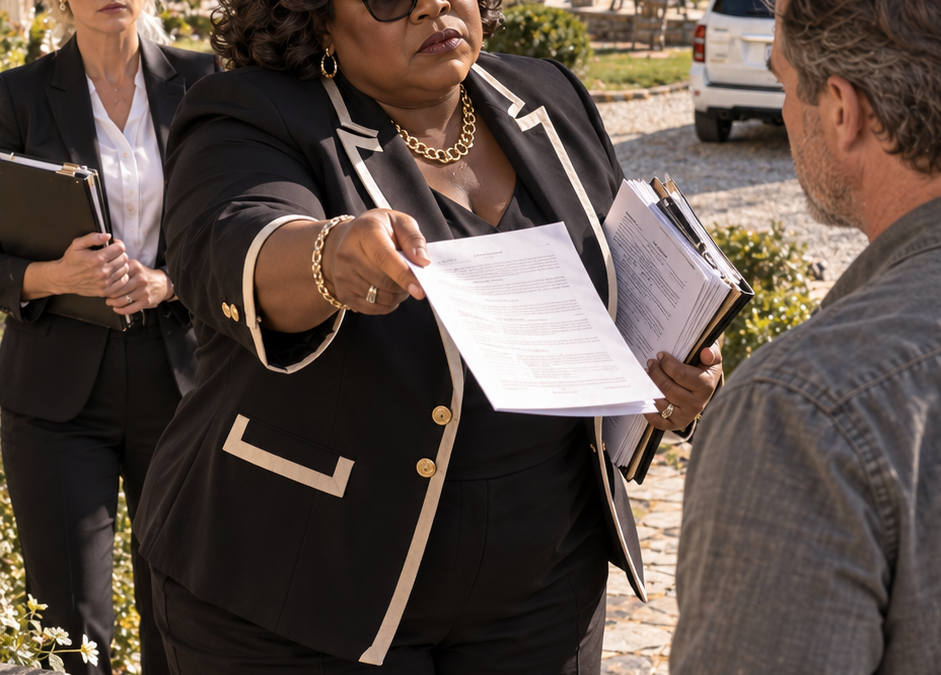
𝗣𝗔𝗥𝗧 𝟮
There it was.
The legal authority.
CC&Rs of Caldwell Shore Subdivision.
Recorded August 1978.
Instrument No. 78-04412.
I picked up a pen from the porch table and wrote the number in the margin.
I didn’t need to.
I already knew it.
I had known that number since a Tuesday afternoon three weeks before closing, sitting in the basement of the county recorder’s office with a cup of bad coffee and a microfiche reader.
But sometimes you write down a number because you want to remember the exact moment someone used it against you.
“Who authorized this calculation?” I asked.
“The board.”
Dileia watched my face.
She had clearly expected panic.
Maybe anger.
Perhaps tears.
What she got was me turning to page four.
A proposed payment schedule.
“This isn’t negotiable,” she said.
I kept reading.
“Every homeowner in Caldwell Shore is bound by the covenants.”
She gestured behind me toward the mansion.
“We don’t make exceptions because someone renovated a property.”
I finally looked up.
“Thank you for coming by.”
Vic’s smile vanished.
Dileia blinked once.
“That’s all?”
“For now.”
I stood.
Conversation over.
They walked back to the SUV.
I carried the envelope inside and placed it on the kitchen island beside an accordion file that had been sitting there since the previous night.
The folder was already thick.
Already tabbed.
Already organized in a way that would have seemed obsessive to most people.
I poured another cup of coffee.
Then I stood at the window and watched Dileia and Vic drive away.
They looked satisfied.
They believed they had ruined my morning.
What they did not know was that I had spent thirty-one years in the county recorder’s office.
The last twelve as a senior title examiner.
I had spent most of my adult life teaching people a simple truth.
Land does not remember what people say about it.
Land remembers what people record.
And I had not merely purchased 14 Caldwell Shore Drive.
Before I bought it, I had read it.
Every deed.
Every mortgage.
Every lien.
Every release.
Every instrument I could find going back to the original plat.
Somewhere inside that history was a problem.
And Dileia Hargrove had just handed me the citation pointing directly toward it.
I found the mansion in the spring of 2022.
At that point, I was eight months from retirement.
I had worked in land records for thirty-one years.
That means I had spent more time with dead people’s signatures than with most living people I knew.
My job was not glamorous.
I read.
That was essentially it.
But if you read land records long enough, patterns begin appearing where other people see stacks of paper.
Who owned a property.
Who mortgaged it.
Who died.
Who inherited.
Who sued.
Who lost money.
Who sold unexpectedly.
Who walked away.
Most chains of title are boring.
That is good.
Boring title is clean title.
But every so often, you find one that feels wrong before you can explain why.
14 Caldwell Shore Drive felt wrong.
The house had been vacant since 2009.
Before that, it belonged to Eugenia Fenwick.
Mrs. Fenwick had been a retired schoolteacher.
Widowed.
No children.
She lived alone in that enormous house after her husband died in 1997.
When she died, there was no will and no close heir ready to take possession.
The estate spent years in probate.
Eventually, the property went to court-ordered sale.
A developer bought it for approximately land value.
His plan was to demolish the mansion and create two smaller lakefront lots.
The permits became complicated.
Then financing became complicated.
Then the developer stopped paying attention.
The house sat.
But Mrs. Fenwick’s ownership was only one part of what caught my attention.
There had been four owners before her going back into the 1970s.
Every one of those ownership periods ended badly.
Short sale.
Deed in lieu of foreclosure.
Financial distress.
One outright abandonment.
That was unusual.
A large lakefront property in a desirable suburb should not repeatedly grind owners down until they leave.
One bad owner?
Normal.
Two?
Possible.
Four?
That is a pattern.
And patterns usually mean something outside the property itself is applying pressure.
I made an offer in August 2022.
Before signing the purchase agreement, I took three weeks of vacation time.
Most people take vacation somewhere warm.
I spent mine in a basement.
The recorder’s basement, specifically.
Microfiche.
Index books.
Cold coffee.
Dust.
Thirty-one years had taught me that if you are about to buy a property with a complicated history, every hour you spend before closing can save months in court afterward.
I started in 1971, when the lot was first platted.
I followed every transfer forward.
There was an old mechanic’s lien from 1994.
Never formally released.
But long since unenforceable.
There was an old county assessment lien the tax office had vacated years earlier but had failed to properly clear from one index.
Messy.
Fixable.
Then I started reviewing the HOA history.
Caldwell Shore had a steady paper trail in the late 1970s and early 1980s.
Bylaws.
Amendments.
Assessment notices.
Easement reservations.
Ordinary neighborhood paperwork.
Then, around 1986 through 1988, something changed.
The filings thinned out.
Not disappeared.
But foundational references stopped appearing the way I expected.
That bothered me.
Institutions leave paper.
Especially institutions collecting money.
When the paper suddenly changes shape, something caused it.
I made a note.
1986–1988 — REVIEW AGAIN.
Then I found another problem.
Every modern Caldwell Shore document referenced the same original CC&Rs.
Recorded August 1978.
Instrument No. 78-04412.
So I pulled the 1978 index.
And looked for it.
78-04409.
78-04410.
78-04411.
Then—
Nothing.
Then 78-04413.
I went backward.
Forward.
Checked cross-reference books.
No 78-04412.
At first, I assumed indexing error.
That happens.
Humans create records.
Humans make mistakes.
So I made another note.
VERIFY FOUNDATIONAL INSTRUMENT.
I did not make accusations.
I did not call the HOA.
I finished my due diligence.
Negotiated the price down because of the title clouds I already knew how to clear.
Closed in November.
Then I spent twenty-two months restoring the house.
During restoration, the HOA mostly ignored me.
That would later become interesting.
Nobody demanded dues from 1980.
Nobody threatened foreclosure.
Nobody mentioned forty-four years of delinquency.
Contractors came and went.
Dumpsters appeared.
Roofing materials sat in the yard.
Stone masons worked weekends.
Then, almost immediately after the last contractor left, Dileia arrived with her $61,400 demand.
My first real education in Caldwell Shore politics came from Fletcher Odum.
Fletcher lived two houses away.
Retired schoolteacher.
Quiet.
Thin.
The kind of man who watches everything before deciding whether any of it deserves comment.
He knocked the evening after my last contractor left.
He brought a loaf of bread and a six-pack of beer.
“I didn’t know which you preferred.”
“I prefer people who bring both.”
That got the first smile out of him.
We sat in my kitchen.
That was where I learned Dileia’s history.
She moved into Caldwell Shore in 2003.
Joined the board in 2005.
Vice president by 2007.
President in 2008.
She had remained president for sixteen years.
“How?” I asked.
Fletcher gave me a look.
“She controls nominations.”
“And residents vote?”
“On the people she approves.”
He shrugged.
“You see how that works.”
I did.
Under Dileia, the HOA’s rules had expanded constantly.
Grass height.
Mailbox styles.
Exterior paint.
Then more creative violations.
Satellite dish angles.
A flag supposedly too large.
Doorbell cameras classified as intrusive surveillance.
A backyard storage shed invisible from the road.
The current fine schedule started at $150 a day.
There were ninety-six homes in Caldwell Shore.
At least fourteen households, according to Fletcher, had active fines or ongoing disputes.
Three families had sold and left during the previous four years.
“Because of the HOA?”
“Partly.”
Fletcher looked into his coffee.
“She’s good at making leaving feel easier than fighting.”
Then he told me his story.
In 2019, he built a backyard storage shed.
Within the setback.
Not visible from the road.
Dileia’s board objected.
Eighteen months of fines.
Delayed hearings.
Letters.
Threats.
“How much?”
“Eleven thousand.”
I stared at him.
“You paid?”
“I couldn’t afford not to.”
There are sentences people say very calmly because they have already spent all the emotion years earlier.
That was one of them.
“What do people usually do when the board comes after them?”
Fletcher gave me another small shrug.
“Pay.”
Then:
“Or leave.”
He looked directly at me.
“Nobody’s beaten her.”
I didn’t tell him about instrument 78-04412.
Not yet.
I only said, “The paperwork is interesting.”
Fletcher considered that.
“I’m not sure whether that makes me feel better or worse.”
Ten days after Dileia delivered the demand, I mailed her a certified letter.
One page.
No accusation.
Three questions.
First:
Provide the original recorded instrument number and certified filing information for the CC&Rs upon which the HOA relied.
Not an internal copy.
Not a later reference.
The original recorded instrument.
Second:
Identify the legal authority supporting the position that decades of unpaid HOA assessments belonging to prior owners transferred as my personal obligation after an arm’s-length sale.
Third:
Provide any prior legal proceedings, settlement agreements, releases, or formal resolutions involving assessment obligations on Lot 7.
I mailed it Thursday.
Delivery confirmed Monday.
Dileia did not answer.
Instead, Tuesday morning, I found a notice taped to my front door.
MANDATORY SPECIAL SESSION.
Mandatory was underlined.
Signed by Vic.
Title:
Compliance and Enforcement Officer.
I had seen no document creating that office.
I photographed the notice before removing it.
Date.
Time.
Placement.
One thing record work teaches you is that delivery methods sometimes become evidence too.
The meeting was Thursday at seven.
The Caldwell Shore clubhouse smelled exactly like every clubhouse built between 1970 and 1995.
Coffee.
Old carpet.
Cleaning chemicals.
Six board members sat at a folding table.
Dileia in the middle.
Vic beside her.
At one end sat a younger man in a quarter-zip sweater.
Nobody introduced him.
He introduced himself.
“Wade Hargrove.”
I waited.
“I’m here to observe.”
Dileia’s son.
No board position.
No elected office.
No role I had found in any governing document.
Four plastic chairs faced the board.
I was the only person expected.
I sat in the middle one.
Wade spoke first.
“Several residents have expressed concerns about your renovation changing the character of the street.”
I took out my notepad.
“Which residents?”
“That information is confidential.”
“Under what provision?”
He glanced at his mother.
Dileia interrupted.
“We’re not here to revisit the renovation.”
She slid two pages across the table.
“No letterhead,” I said.
“What?”
“Nothing.”
I read.
The heading said:
LEGAL ANALYSIS — ASSESSMENT LIABILITY TRANSFER.
No signature.
No author.
No law firm.
No date.
The document argued that HOA obligations created a perpetual lien running with the land and therefore transferred automatically to me.
“Who wrote this?”
“Our attorney reviewed it,” Dileia said.
“What attorney?”
“That’s not relevant.”
“Name and bar number?”
“This is not a deposition.”
I nodded and made a note.
Then she slid another sheet over.
“The board has voted to proceed with a lien unless the matter is resolved within fifteen days.”
“Resolved how?”
“Payment in full.”
“Or?”
“A board-approved payment plan.”
I read the numbers.
$1,200 per month for five years.
Plus current annual dues of $2,800 paid every January in advance.
I did the math.
Seventy-two thousand dollars in monthly payments.
Another fourteen thousand in future dues.
An $86,000 solution to a $61,400 debt.
I looked up.
“Can you provide the recorded instrument number for the original 1978 covenants?”
Dileia’s expression changed.
Only slightly.
A recalculation behind the eyes.
“I don’t have it in front of me.”
“That’s fine.”
I capped my pen.
“I’ll wait for it in writing.”
I stood.
Wade’s voice followed me.
“This isn’t a negotiation.”
I turned.
His composure was gone now.
“We will put a lien on that house,” he said. “And you’ll spend ten years trying to clear it.”
Nobody at the board table stopped him.
“You can fight,” he continued. “You’ll run out of money before we do.”
I let the sentence sit in the room.
Then I said:
“I appreciate you making the board’s position clear.”
The drive home took eleven minutes.
For most of it, I was thinking about one blank line in a 1978 index.
Why did the legal analysis cite an instrument that did not exist?
The next evening, Fletcher knocked.
This time he brought people.
Four of them.
Ren Solless.
Gus and Patrice Mard.
Reed Callaway.
They stood awkwardly in my kitchen at first.
Not strangers exactly.
But people connected mostly by the fact that the same institution had hurt each of them.
Ren was in her thirties.
Single mother.
Two children.
Bookkeeper.
She owed $4,200 over a backyard fence she had painted without prior approval.
Gus and Patrice were retired.
He had worked as a machinist.
She taught kindergarten for twenty-seven years.
Since January 2013, the HOA had charged them something called a legacy assessment.
$180 every month.
For maintenance reserves supposedly benefiting common areas near their property.
Patrice had saved every letter.
Every notice.
Every receipt.
Eleven years of paperwork inside labeled folders.
Reed had moved in two years earlier.
He had paid $900 over a doorbell camera.
“Under protest,” he said.
“You wrote that?”
“In every email.”
“Did they answer?”
“No.”
We spread everything across my kitchen island.
For twenty minutes, I read.
Fine letters.
Assessment schedules.
Demand notices.
Board correspondence.
Different names.
Different amounts.
Different alleged violations.
Same authority.
Every single document cited:
CC&Rs of Caldwell Shore Subdivision.
August 1978.
Instrument No. 78-04412.
I put the last letter down.
Then I looked at them.
“I need to explain something.”
Nobody moved.
“And I want to be careful because I am still waiting on one document.”
I explained what a recorded instrument was.
A deed.
Mortgage.
Restrictive covenant.
Lien.
Release.
When the recorder accepts it, it receives an identity.
Instrument number.
Date.
Index entry.
That is how courts and title examiners verify what exists.
“If the number isn’t in the official record,” I said, “that matters.”
Ren’s voice was very quiet.
“What are you saying?”
“I’m saying the number your HOA cites does not appear in the 1978 county index.”
Patrice stared at me.
“Then what does that mean?”
“It may mean the covenants were never legally recorded.”
Nobody spoke.
I continued.
“If that is true, the HOA may have a very serious problem enforcing them against property owners.”
Gus sat forward.
“What about assessments?”
“Same problem.”
Patrice’s face changed.
“The legacy payment?”
“Potentially.”
She had paid $180 a month since January 2013.
I calculated it.
$24,360.
I wrote the number on my pad.
Turned it toward her.
Patrice looked at it.
Then at Gus.
And started crying.
No dramatic sobbing.
No speech.
Just tears.
Gus covered her hand with his.
Nobody tried to make the moment smaller.
Reed opened his laptop.
He showed me a three-year-old thread in the Caldwell Shore private Facebook group.
Dozens of residents asking whether HOA fines were enforceable.
Asking whether anyone possessed the original CC&Rs.
Asking how to challenge the board.
Eventually, the conversation had died.
“Everyone’s been trying to understand this,” Reed said.
“They were looking in the wrong place,” I replied.
Most people do not know how to search land records.
That is not stupidity.
It is specialized work.
The board had been operating inside that information gap for years.
I told everyone to do nothing unusual.
Do not confront Dileia.
Do not stop payments yet.
Do not announce what we had found.
“Why?” Ren asked.
“Because I am waiting on one more document.”
“What document?”
“A record from 1987.”
She studied me.
“Are we going to win?”
I thought before answering.
“I’m working on it.”
That was the truth.
I knew the foundational instrument was missing.
I knew there was a strange filing gap around 1986 through 1988.
I knew Lot 7 had a long pattern of owners under financial pressure.
What I did not know yet was whether those things connected.
My formal records request had been submitted four days earlier.
The county estimated seven to ten business days.
I waited.
Day fifteen of Dileia’s ultimatum arrived on a Wednesday.
At 5:30 a.m., I made coffee.
At 8:04, I logged into the county recorder portal.
The lien was there.
Filed the previous afternoon.
Caldwell Shore HOA against Lot 7.
$61,400.
Authority:
CC&Rs recorded August 1978.
Instrument No. 78-04412.
The ghost number.
Dileia had now taken a citation I believed was invalid and placed it inside the public title record of my house.
I printed the lien.
Then I drove downtown and obtained a certified copy.
Thirty-one years in records teaches redundancy.
One copy gets lost.
Two copies become evidence.
At 11:15, the board sent an email to all ninety-six homes.
Fletcher forwarded it to me.
Subject:
COMMUNITY NOTICE — LOT 7 COMPLIANCE ACTION.
The message named me repeatedly.
It described me as a homeowner refusing to honor legally binding community obligations.
It warned that judicial foreclosure might be necessary.
It used the phrase bad-faith owner twice.
I read it standing in Fletcher’s driveway.
“She sent this to everybody,” he said.
Ren called while we were talking.
Three neighbors had already contacted her.
People were frightened.
If the board could threaten foreclosure against the person who had just poured two years into restoring the biggest abandoned house on the lake, what could they do to someone already struggling with a $5,000 fine?
“Are you still okay?” Ren asked.
I understood what she meant.
“I’m still working.”
When I got home, a large envelope was waiting.
County Recorder’s Office.
I carried it inside.
Set it on the kitchen table.
Poured water instead of coffee.
Then opened it.
Eight pages.
Certified.
Recorded October 14, 1987.
Instrument No. 87-11203.
I read the first five pages.
Then page six.
Then again.
Then the signature page.
I sat absolutely still.
The missing piece had been sitting in the public record for thirty-seven years.
It was titled:
RELEASE OF ALL CLAIMS AND COVENANT NOT TO SUE.
Parties:
Caldwell Shore HOA.
The estate of Harold Fenwick.
Owner of Lot 7.
My property.
In 1987, Harold Fenwick’s estate had challenged the HOA’s governing authority.
The dispute centered on the same foundational problem I had discovered.
The association’s covenants had not been properly recorded.
Rather than risk litigation, the HOA settled.
The terms were remarkably clear.
In exchange for withdrawal of the Fenwick estate’s lawsuit, Caldwell Shore HOA permanently released Lot 7 from all existing and future HOA assessment obligations.
Past.
Future.
In perpetuity.
My property had been exempted.
Thirty-seven years earlier.
And unlike the missing 1978 covenants, this release had actually been recorded.
At the bottom was the signature of the HOA president.
Robert Hargrove.
Dileia’s late father-in-law.
I read his name three times.
Then I created a new tab in my accordion file.
HARGROVE.
The following morning, Wade Hargrove appeared at the edge of my driveway.
He did not enter.
I was on the porch.
“You should take the payment plan while it’s available.”
I kept drinking coffee.
“Once this moves to the next stage, the board’s hands are tied.”
“Do you have legal authority to negotiate for the board?”
He hesitated.
“My mother is president.”
“That wasn’t my question.”
He stood another few seconds.
Then walked away.
That afternoon, I called the county attorney.
I explained that I was a retired senior title examiner dealing with a potentially improper recorded lien involving a residential subdivision.
A meeting was scheduled for Tuesday.
I brought everything.
The certified 1978 index.
The lien.
The 1987 release.
My deed.
The HOA letters.
The county attorney read quietly.
At the end, he gave me a two-page letter confirming the recorder’s index contained no Instrument 78-04412 and explaining the legal significance of the properly recorded 1987 release.
That letter went into the folder.
Days later, another notice appeared beneath my door before sunrise.
SPECIAL SESSION.
MANDATORY ATTENDANCE.
Purpose:
Formal vote authorizing judicial foreclosure against Lot 7.
Wednesday.
7:00 p.m.
Clubhouse.
I photographed the notice.
Then I called Carol Estep.
Carol ran a court reporting business downtown.
“I need a certified court reporter Wednesday evening.”
“For court?”
“HOA meeting.”
She was quiet.
“That bad?”
“That interesting.”
She agreed.
I spent the next two days organizing my file.
There is an art to presenting documents.
Not chronologically.
Logically.
Each exhibit should create the question answered by the next exhibit.
You do not dump paper onto a table.
You build a staircase.
By Wednesday evening, my folder was ready.
I reached the clubhouse at 6:45.
Carol was already there setting up her stenography machine.
Dileia entered five minutes later.
She stopped when she saw Carol.
“What is that?”
“A court reporter.”
“The board did not authorize that.”
“You don’t need to.”
Her face hardened.
“I am creating a contemporaneous certified record of a proceeding affecting my property rights.”
Carol looked up.
“I have my credentials available.”
Dileia said nothing else.
By seven o’clock, the room was packed.
Sixty-five people, maybe more.
Far above normal attendance.
Fletcher sat in the third row.
Ren was nearby.
Gus and Patrice near the front.
Reed farther back.
None acknowledged me beyond a brief glance.
That was intentional.
Dileia called the meeting to order.
Beside her stood a poster board.
On it was the $61,400 calculation.
Dues from 1980 forward.
Late fees.
Interest.
Administrative charges.
Final total circled in red.
Dileia spoke for twelve minutes.
She was good.
Measured.
Confident.
She described me as someone refusing community obligations.
Said the board had a fiduciary duty to pursue collection.
Said the covenants created a perpetual lien attached to the property.
Some homeowners nodded.
Then she looked toward me.
“The board will allow the owner of Lot 7 five minutes.”
I stood.
Carol’s hands waited above the stenograph.
“I have two questions.”
Silence.
“First: can the board produce the original recorded instrument number for the covenants you are relying upon tonight? Specifically, the instrument appearing in the county recorder’s 1978 index.”
Dileia stared at me.
“Second: can the board confirm whether any Caldwell Shore HOA officer signed a permanent release of assessment claims involving Lot 7 before the year 2000?”
That silence was different.
Heavier.
Something moved through Dileia’s expression.
Not understanding yet.
But recognition that I was asking questions for a reason.
“Both questions are irrelevant,” she said.
I nodded.
“Thank you.”
Then sat.
The board voted.
Five in favor of foreclosure.
One abstention.
Sorenson.
A newer member.
He spent most of the vote staring at his hands.
Dileia announced the motion carried.
The meeting adjourned.
Then Fletcher stood.
“I have a question about my assessment.”
Dileia looked toward him.
Before she could answer, Ren stood.
Then Patrice.
Gus.
Reed.
Then another homeowner.
Then another.
Eight people stood holding folders, envelopes, phones.
For sixteen years, Dileia had controlled the room through procedure.
That night, the room stopped cooperating.
“The board will address individual matters through proper channels,” she said.
Nobody sat.
People began talking to one another.
Actually talking.
Not whispers.
Not frightened conversations in driveways.
Questions.
Numbers.
Dates.
“How much did you pay?”
“When did yours start?”
“What document did they cite?”
I left quietly.
Outside, cold air came off the lake.
I sat in my car without starting it.
Through the clubhouse windows, I could still see Dileia.
She believed she had won.
She had her foreclosure vote.
I let her enjoy it.
Friday morning, I was parked outside the courthouse at 7:15.
Three envelopes rested on the passenger seat.
The clerk’s office opened at eight.
I filed all three.
First:
Motion to void the HOA lien.
Second:
Formal complaint with the state HOA regulatory office concerning collection under unrecorded governing documents.
Third:
Notice to the association’s liability insurer directing preservation of records relating to disputed assessments, liens, and collection practices.
The motion to void the lien contained six exhibits.
Exhibit A:
Dileia’s lien.
Exhibit B:
Certified 1978 county index.
That exhibit was devastating in its simplicity.
The index showed every instrument around the claimed number.
78-04411 existed.
A residential deed in another subdivision.
78-04413 existed.
A commercial mechanic’s lien.
Between them:
Nothing.
78-04412 had never been recorded.
The foundational CC&Rs the board had cited for decades did not exist in the official index.
Exhibit C:
Relevant state property law concerning unrecorded restrictive covenants and subsequent purchasers.
Exhibit D:
The 1987 release.
Recorded.
Certified.
Signed.
Lot 7 permanently discharged from past and future assessments.
Robert Hargrove’s signature at the bottom.
Exhibit E:
The county attorney’s letter.
Exhibit F:
Carol’s certified transcript of the foreclosure meeting.
Including Wade’s earlier statements in the record submitted with supporting materials where relevant.
The court scheduled an emergency hearing four days later.
The HOA’s lawyer arrived carrying a leather portfolio.
He looked tired.
Judge Anita Reeves was in her early sixties.
Compact.
Reading glasses low on her nose.
The sort of judge who clearly read briefs before hearings and did not enjoy watching lawyers discover their own cases in real time.
She looked at the HOA attorney.
“Counsel, can you produce Instrument 78-04412?”
He asked for a continuance.
She denied it.
“The county certified index is before me.”
He tried to explain that historical filings could be incomplete.
Judge Reeves looked down at the index.
“Then produce the instrument.”
He could not.
She moved to the 1987 release.
“This document is recorded?”
“Yes, Your Honor.”
“Certified?”
“Yes.”
“Your client’s predecessor executed it?”
The attorney paused.
“Yes.”
“And it releases this property from future assessments?”
He looked at the page.
“That is the language.”
Judge Reeves voided the lien.
Immediately.
She also issued a preliminary finding that the cited Caldwell Shore CC&Rs lacked enforceability pending full evidentiary review.
Then she ordered the association to cease collection activity under those documents and remove active assessment liens within thirty days.
Before dismissing us, she looked at the HOA attorney.
“Your client should consider retaining counsel specializing in property law before the full hearing.”
He wrote something down.
Outside the courthouse, I called Fletcher.
“Check your mail.”
“For what?”
“Court order.”
Silence.
“The lien?”
“Gone.”
Another silence.
Then:
“All of them?”
“Collection activity is suspended. Fourteen households with active notices are getting copies.”
Fletcher breathed out slowly.
“Nineteen years.”
“I know.”
That afternoon, Reed posted the public court filing in the Caldwell Shore group.
Within two days, it had traveled far beyond our neighborhood.
Other community forums picked it up.
A local television station called.
I declined an on-camera interview.
I gave them the court case number and told them to read the public filings.
The story aired Friday.
Four minutes.
Exterior footage of the courthouse.
Lakefront streets.
A quote from Judge Reeves’s order.
The reporter explained that the HOA’s governing document, as cited in its liens and assessments, did not appear in the county’s certified index.
Then she mentioned the 1987 release signed by a former Caldwell Shore president.
Robert Hargrove.
I watched from my restored living room.
My accordion folder sat on the coffee table.
Closed.
For the first time since Dileia arrived in the white SUV, I allowed myself to believe the hardest part might be behind me.
It wasn’t finished.
But it had turned.
The full evidentiary hearing took place three weeks later.
By then, Caldwell Shore had hired a different attorney.
Property law specialist.
Her name was Petrov.
She was competent.
Prepared.
Professional.
Which meant she knew exactly how little room the evidence gave her.
The county index remained the county index.
Instrument 78-04412 did not exist.
The property statute remained the property statute.
The recorded 1987 release remained what it was.
Judge Reeves ruled from the bench.
The Caldwell Shore CC&Rs, as repeatedly cited by the board in assessment notices, fine notices, and liens, had never been validly recorded.
They could not be retroactively enforced against the owners.
My lien was permanently expunged.
Every active lien relying on the defective governing documents was void.
Then came the part that changed the neighborhood.
The HOA had ninety days to draft new governing documents.
They had to be legally reviewed.
Properly recorded.
And approved by the homeowner membership according to state law.
Not Dileia.
Not six board members.
The homeowners.
Petrov asked whether the HOA retained its right to appeal.
Judge Reeves said yes.
Then added that the certified county index would remain equally certified at the appellate level.
Seventeen minutes.
That was how long the hearing took.
Sixteen years of Dileia’s authority began collapsing in seventeen minutes.
My own financial damages were limited.
I had never paid the $61,400.
The lien was removed before I tried selling or refinancing.
I had done much of my own research.
So instead of building a personal damages case, I focused on the residents who had actually paid.
I prepared a referral memorandum for the eleven households with the strongest refund claims.
I attached the court order.
The certified index.
The property-law analysis.
Then I stepped away.
Their decision.
Not mine.
All eleven retained the same litigator.
Kalista Drummond.
She took the matter on contingency.
Patrice and Gus became lead plaintiffs.
At their first meeting, Patrice carried eleven years of HOA records in her binder.
Pink tabs for assessments.
Blue for payments.
Yellow for unanswered correspondence.
Kalista later told me:
“Thirty years in litigation, and a kindergarten teacher gave me one of the cleanest damages files I’ve ever received.”
The combined disputed collections totaled around $190,000.
Assessments.
Fines.
Legacy charges.
Payments made under documents the court had determined were not enforceable as claimed.
The association’s insurer was already involved.
Settlement discussions began.
The eventual settlement terms were confidential.
I was not a party.
Fletcher eventually told me enough to know that the homeowners recovered an amount close enough to what they had sought that nobody felt cheated.
Caldwell Shore’s liability policy did not renew.
The state regulatory case continued.
Slowly.
Government investigations tend to move at the speed of drawers being opened one at a time.
But by February, regulators had opened formal proceedings concerning two decades of collections under improperly recorded governing documents.
Potential remedies included restitution.
Civil penalties.
Governance restructuring.
Dileia resigned eleven days after the emergency court order.
One paragraph.
“Personal reasons.”
“Privilege of serving.”
“Best wishes for the community.”
No mention of the court.
No mention of the missing instrument.
No mention of the 1987 release signed by Robert Hargrove.
No mention of the $61,400 demand she had carried onto my porch.
Wade’s car disappeared from the neighborhood around the holidays.
I did not track him.
One morning I simply realized I had not seen it lately.
Sorenson—the board member who had abstained from foreclosure—became interim president.
His first message to the neighborhood announced cooperation with the court and regulators.
Then came a community meeting.
Seventy-one of ninety-six households attended.
Fletcher chaired it.
That surprised me.
The man who had spent nineteen years paying whatever the HOA demanded because he could not afford a fight now stood at the front with a two-page agenda.
He moved slowly.
No gavel.
No theatrics.
Questions were allowed.
People finished sentences.
Ren joined the transition committee.
Four different neighbors had nominated her independently.
Gus and Patrice sat near the front.
Gus brought a thermos.
Before the meeting started, he poured coffee for the person beside him.
Then the next person.
Then the next.
I sat toward the back.
I had not planned to speak.
When I entered, somebody started clapping.
I still do not know who.
Then someone else joined.
Then the room.
I sat quickly.
Looked at my hands.
Waited.
Applause has always made me uncomfortable.
Documents are easier.
Documents do not look at you.
The applause stopped.
The meeting began.
And for the first time since I had moved into Caldwell Shore, the clubhouse felt like a place owned by the people sitting inside it.
Not by one woman at the center table.
Dileia’s house was two doors north of mine.
It went on the market in January.
Sold in three weeks.
I never asked who bought it.
By early spring, Caldwell Shore had drafted new CC&Rs.
Thirty-one pages.
Professionally prepared.
Proper statutory references.
Every recording requirement identified.
Every instrument number checked.
Every enforcement process limited.
Hearing procedures.
Appeal rights.
Notice rules.
Caps on certain fines.
Membership vote requirements.
I read the whole thing one Tuesday afternoon.
Forty minutes.
When I finished, I went back and checked every recording citation.
Old habits.
The community vote was scheduled for April.
That Sunday morning, I sat on the porch.
Coffee.
Mist.
Same lake.
Same flat gray-green water.
The restored boathouse reflected near the shoreline.
Behind me, the stone foundation held the mansion exactly where it had stood for generations.
Fletcher arrived at 9:02.
For him, that was punctual.
He carried a bakery bag.
“Morning.”
“Morning.”
He took the second porch chair.
For a while, we said nothing.
There was a heron near the reeds.
Motionless.
Waiting.
Fletcher nodded toward it.
“He’s been there all week.”
“I know.”
“You watch him?”
“Most mornings.”
We drank coffee.
Eventually, Fletcher asked:
“You knew, didn’t you?”
I turned toward him.
“Knew what?”
“That they couldn’t win.”
I thought about Ren asking essentially the same question months earlier.
“Not exactly.”
He waited.
“I knew what the documents said.”
“And?”
“I didn’t know how far Dileia would push it.”
Fletcher nodded.
Then smiled.
“I’m glad she pushed.”
I looked out at the water.
So was I.
That sounds cruel until you understand what I mean.
If Dileia had answered my certified letter honestly, she might have discovered the problem privately.
If she had withdrawn the $61,400 demand, the larger system might have survived.
Fletcher might still be living with the memory of eleven thousand dollars paid over a shed.
Patrice and Gus might still be sending $180 every month.
Ren might still owe thousands over a painted fence.
Reed might still believe he had no right to question a $900 camera fine.
Fourteen households might still be carrying active penalties.
The board might still be citing a legal instrument that had never existed.
Dileia could have stopped.
Instead, she filed the lien.
She sent the mass email.
She called me a bad-faith owner.
She held the foreclosure vote.
Each time, she created another document.
And each document required somebody to ask the same question:
Under what authority?
That question finally reached a courtroom.
Inside the study, my accordion folder now sits on the top shelf.
Empty.
Every important page exists somewhere else now.
Court file.
Recorder archive.
Regulatory file.
Attorney exhibits.
Certified transcript.
The folder itself is just cardboard and elastic.
I have thought about throwing it away.
I won’t.
Some things are worth keeping because they remind you how ordinary injustice can look while it is happening.
It does not always arrive shouting.
Sometimes it arrives at 6:47 in the morning in a white SUV.
A clipboard.
A laminated badge.
A polite voice.
“You’ve been formally notified.”
Sometimes it appears as a number printed in bold.
$61,400.
Sometimes it calls itself an administrative fee.
Sometimes it hides behind phrases like perpetual obligation or community integrity.
Sometimes the person delivering it has said those words so many times that nobody remembers to ask the simplest question.
Show me where that authority actually comes from.
I spent thirty-one years reading land records.
Deeds.
Liens.
Releases.
Mortgages.
Judgments.
History written in legal descriptions and signatures.
Most people think property law is about houses.
It isn’t.
Not really.
It is about memory.
Who remembers what was agreed.
Who can prove it.
Who recorded it.
Who failed to.
People die.
Boards change.
Neighbors move.
Buildings rot.
But properly recorded paper can sit inside a courthouse for thirty-seven years waiting for somebody to ask the right question.
Robert Hargrove signed that release in 1987.
He could not have known that decades later his daughter-in-law would preside over an HOA demanding money from the same property.
He could not have known I would restore the mansion.
He could not have known Dileia would stand on my porch carrying forty-four years of imaginary arithmetic.
He did not need to know.
He recorded the agreement.
That was enough.
Fletcher opened the bakery bag.
“Blueberry?”
“Please.”
He handed me one.
The mist was almost gone.
The heron still had not moved.
In April, the owners of Caldwell Shore would vote on their own rules.
Some would vote yes.
Some no.
There would be disagreements.
Arguments.
Probably very long meetings.
That was fine.
A community is allowed to disagree.
What had changed was who got to decide.
The answer was no longer one woman who controlled nominations and treated questions like insubordination.
The answer was ninety-six households.
With notice.
With ballots.
With records anybody could inspect.
Fletcher took a bite of pastry.
“Funny.”
“What?”
“All this because she wanted sixty-one thousand dollars.”
I shook my head.
“No.”
He looked at me.
“It happened because she believed nobody would check.”
He thought about that.
Then nodded.
That was the part worth remembering.
Not the courtroom.
Not the television story.
Not even the money returned.
For years, Caldwell Shore had operated on a simple assumption.
People were too intimidated, too busy, too tired, too unfamiliar with property records, or too financially vulnerable to force the board to prove what it claimed.
That assumption had worked.
Until it reached my porch.
The house behind me had survived decades of weather, neglect, probate, developers, bad repairs, and thirteen years sitting empty.
People had told me to demolish it.
They said the foundation was too old.
The windows too expensive.
The stonework too damaged.
The project too complicated.
But old things are not automatically worthless.
Sometimes they simply need somebody patient enough to understand how they were built.
The same turned out to be true of the title.
When I bought 14 Caldwell Shore Drive, I thought I was restoring a house.
In the end, the house was the easier part.
Wood can be repaired.
Stone can be reset.
Glass can be reglazed.
Paper is harder.
Paper requires you to understand what came before you.
Which promise mattered.
Which claim was false.
Which signature still controlled.
Which empty line changed everything.
Fletcher leaned back.
“You keeping that folder?”
“Yes.”
“Thought so.”
“Why?”
“You’re the only person I know who gets sentimental about recording indexes.”
I laughed.
“That’s unfair.”
“It’s completely fair.”
We sat quietly again.
The sun finally broke through.
The lake changed from gray-green to silver.
Behind the boathouse, the heron struck once into the shallows and came up with something small flashing in its beak.
Fletcher pointed.
“There.”
“I saw it.”
The bird swallowed.
Then went still again.
Waiting.
There is a kind of strength in patience.
I had spent my career learning that.
You do not always answer immediately because somebody demands an answer.
You read.
You verify.
You find the instrument.
You compare the signature.
You follow the index.
You wait until the record is complete.
Then you speak.
Dileia Hargrove came onto my property believing she was delivering a verdict.
She walked away believing I was frightened.
What she had actually delivered was evidence.
A document citing a number that did not exist.
A demand contradicting a release her own family had signed decades earlier.
A claim she was willing to push all the way to foreclosure without once stopping to verify the foundation beneath it.
She thought the mansion had forty-four years of debt attached to it.
She was wrong.
The only thing tracing back decades was the paper proving exactly why she could never collect it.
And after thirty-one years of reading other people’s property histories, that old mansion gave me something I had never had before.
A chance to write the ending myself.
Have you finished reading the story and want to read it again?
I Restored an Abandoned Lakefront Mansion — Then the HOA Demanded 44 Years of Back Dues and Threatened to Foreclose
They handed me a $61,400 bill for a debt older than some of the houses on my street.
Then they threatened to foreclose on the lakefront mansion I had spent two years bringing back from the dead.
What they didn’t know was that I had spent thirty-one years reading property records—and their own paperwork had already started telling me a very different story.
The morning I finished restoring 14 Caldwell Shore Drive, I sat on the wraparound porch with a cup of coffee and watched mist lift from the lake.
It was 6:47.
The water was flat and gray-green, the color it takes on in early fall before the sunlight has fully decided what kind of day it wants to make.
I had been awake since five.
Old habit.
For nearly two years, my mornings had begun before most contractors’ alarms went off.
I had walked every room before coming outside.
The original hardwood floors had been cleaned and repaired.
The stone fireplace, which three contractors had told me was beyond saving, stood solid again.
The old windows facing Caldwell Shore had been reglazed by a craftsman who drove four hours because almost nobody local still knew how to do that kind of work properly.
The boathouse had been stabilized.
The stone foundation repaired.
The porch rebuilt without losing the proportions of the original house.
Twenty-two months of decisions were inside those walls.
Permits.
Invoices.
Inspections.
Arguments over materials.
Unexpected rot.
Hidden plumbing.
Bad wiring.
Seven o’clock phone calls asking whether I wanted the cheaper modern replacement or the expensive one that actually belonged in a house built when men wore hats to the grocery store.
That morning, for the first time, there was nothing left to decide.
The house finally looked the way I believed it had always wanted to look.
I had approximately forty minutes of peace.
Then I heard tires on fresh gravel.
There is a particular sound a vehicle makes when it moves slowly up a newly finished drive.
Crunch.
Pause.
Crunch.
Deliberate enough that whoever is coming wants you to notice.
A white SUV appeared around the bend.
It parked at the edge of the turnaround.
Two people got out.
The woman was somewhere in her mid-fifties.
Neat hair.
Expensive sunglasses.
A lanyard with a laminated badge.
Clipboard held against her chest.
The man with her was younger, broad through the shoulders, wearing a polo shirt embroidered with CALDWELL SHORE HOA.
Neither came to the porch.
They started walking my property.
The woman pointed toward the boathouse.
The man photographed it.
Then he photographed the restored stone foundation.
Then the windows.
Then the edge of the driveway.
Then the porch.
I sat fifteen feet away with my coffee.
Neither acknowledged me.
They moved like insurance adjusters cataloging storm damage.
Except they had no appointment.
And nothing on my property belonged to them.
I put my coffee down.
Eventually, they reached the porch.
The woman stopped at the bottom step and looked up at me with the expression people sometimes use on contractors who have shown up at the wrong job site.
Not openly hostile.
Worse.
Administrative.
As if my presence were a minor inconvenience.
She held out a sealed envelope.
“You’ve been formally notified.”
I didn’t reach for it immediately.
“Of what?”
“Sixty-one thousand four hundred dollars in outstanding dues, fees, and accrued interest.”
I looked at her.
Then at the envelope.
“This property has been delinquent since 1980,” she said. “You purchased a delinquent property. The obligation transferred with the deed.”
She finally seemed to remember introductions.
“I’m Dileia Hargrove, president of the Caldwell Shore Homeowners Association.”
The man crossed his arms.
“Vic.”
That was apparently enough name for him.
Then he smiled.
A small smile.
“We can file the lien by the end of the week. Sheriff’s sale process starts after that.”
He paused.
“You might want to get a lawyer.”
The way he said it told me he had used the sentence before.
And enjoyed it.
I took the envelope.
Opened it slowly.
The demand letter was four pages.
My name.
My address.
Lot 7.
14 Caldwell Shore Drive.
At the top, in bold:
$61,400.
The second page contained a year-by-year accounting.
Annual dues going back to 1980.
Late fees.
Interest.
Administrative processing charges.
Forty-four years of arithmetic attached to a house I had owned for less than two.
I turned to page three.
There it was.
The legal authority.
CC&Rs of Caldwell Shore Subdivision.
Recorded August 1978.
Instrument No. 78-04412.
I picked up a pen from the porch table and wrote the number in the margin.
I didn’t need to.
I already knew it.
I had known that number since a Tuesday afternoon three weeks before closing, sitting in the basement of the county recorder’s office with a cup of bad coffee and a microfiche reader.
But sometimes you write down a number because you want to remember the exact moment someone used it against you.
“Who authorized this calculation?” I asked.
“The board.”
Dileia watched my face.
She had clearly expected panic.
Maybe anger.
Perhaps tears.
What she got was me turning to page four.
A proposed payment schedule.
“This isn’t negotiable,” she said.
I kept reading.
“Every homeowner in Caldwell Shore is bound by the covenants.”
She gestured behind me toward the mansion.
“We don’t make exceptions because someone renovated a property.”
I finally looked up.
“Thank you for coming by.”
Vic’s smile vanished.
Dileia blinked once.
“That’s all?”
“For now.”
I stood.
Conversation over.
They walked back to the SUV.
I carried the envelope inside and placed it on the kitchen island beside an accordion file that had been sitting there since the previous night.
The folder was already thick.
Already tabbed.
Already organized in a way that would have seemed obsessive to most people.
I poured another cup of coffee.
Then I stood at the window and watched Dileia and Vic drive away.
They looked satisfied.
They believed they had ruined my morning.
What they did not know was that I had spent thirty-one years in the county recorder’s office.
The last twelve as a senior title examiner.
I had spent most of my adult life teaching people a simple truth.
Land does not remember what people say about it.
Land remembers what people record.
And I had not merely purchased 14 Caldwell Shore Drive.
Before I bought it, I had read it.
Every deed.
Every mortgage.
Every lien.
Every release.
Every instrument I could find going back to the original plat.
Somewhere inside that history was a problem.
And Dileia Hargrove had just handed me the citation pointing directly toward it.
I found the mansion in the spring of 2022.
At that point, I was eight months from retirement.
I had worked in land records for thirty-one years.
That means I had spent more time with dead people’s signatures than with most living people I knew.
My job was not glamorous.
I read.
That was essentially it.
But if you read land records long enough, patterns begin appearing where other people see stacks of paper.
Who owned a property.
Who mortgaged it.
Who died.
Who inherited.
Who sued.
Who lost money.
Who sold unexpectedly.
Who walked away.
Most chains of title are boring.
That is good.
Boring title is clean title.
But every so often, you find one that feels wrong before you can explain why.
14 Caldwell Shore Drive felt wrong.
The house had been vacant since 2009.
Before that, it belonged to Eugenia Fenwick.
Mrs. Fenwick had been a retired schoolteacher.
Widowed.
No children.
She lived alone in that enormous house after her husband died in 1997.
When she died, there was no will and no close heir ready to take possession.
The estate spent years in probate.
Eventually, the property went to court-ordered sale.
A developer bought it for approximately land value.
His plan was to demolish the mansion and create two smaller lakefront lots.
The permits became complicated.
Then financing became complicated.
Then the developer stopped paying attention.
The house sat.
But Mrs. Fenwick’s ownership was only one part of what caught my attention.
There had been four owners before her going back into the 1970s.
Every one of those ownership periods ended badly.
Short sale.
Deed in lieu of foreclosure.
Financial distress.
One outright abandonment.
That was unusual.
A large lakefront property in a desirable suburb should not repeatedly grind owners down until they leave.
One bad owner?
Normal.
Two?
Possible.
Four?
That is a pattern.
And patterns usually mean something outside the property itself is applying pressure.
I made an offer in August 2022.
Before signing the purchase agreement, I took three weeks of vacation time.
Most people take vacation somewhere warm.
I spent mine in a basement.
The recorder’s basement, specifically.
Microfiche.
Index books.
Cold coffee.
Dust.
Thirty-one years had taught me that if you are about to buy a property with a complicated history, every hour you spend before closing can save months in court afterward.
I started in 1971, when the lot was first platted.
I followed every transfer forward.
There was an old mechanic’s lien from 1994.
Never formally released.
But long since unenforceable.
There was an old county assessment lien the tax office had vacated years earlier but had failed to properly clear from one index.
Messy.
Fixable.
Then I started reviewing the HOA history.
Caldwell Shore had a steady paper trail in the late 1970s and early 1980s.
Bylaws.
Amendments.
Assessment notices.
Easement reservations.
Ordinary neighborhood paperwork.
Then, around 1986 through 1988, something changed.
The filings thinned out.
Not disappeared.
But foundational references stopped appearing the way I expected.
That bothered me.
Institutions leave paper.
Especially institutions collecting money.
When the paper suddenly changes shape, something caused it.
I made a note.
1986–1988 — REVIEW AGAIN.
Then I found another problem.
Every modern Caldwell Shore document referenced the same original CC&Rs.
Recorded August 1978.
Instrument No. 78-04412.
So I pulled the 1978 index.
And looked for it.
78-04409.
78-04410.
78-04411.
Then—
Nothing.
Then 78-04413.
I went backward.
Forward.
Checked cross-reference books.
No 78-04412.
At first, I assumed indexing error.
That happens.
Humans create records.
Humans make mistakes.
So I made another note.
VERIFY FOUNDATIONAL INSTRUMENT.
I did not make accusations.
I did not call the HOA.
I finished my due diligence.
Negotiated the price down because of the title clouds I already knew how to clear.
Closed in November.
Then I spent twenty-two months restoring the house.
During restoration, the HOA mostly ignored me.
That would later become interesting.
Nobody demanded dues from 1980.
Nobody threatened foreclosure.
Nobody mentioned forty-four years of delinquency.
Contractors came and went.
Dumpsters appeared.
Roofing materials sat in the yard.
Stone masons worked weekends.
Then, almost immediately after the last contractor left, Dileia arrived with her $61,400 demand.
My first real education in Caldwell Shore politics came from Fletcher Odum.
Fletcher lived two houses away.
Retired schoolteacher.
Quiet.
Thin.
The kind of man who watches everything before deciding whether any of it deserves comment.
He knocked the evening after my last contractor left.
He brought a loaf of bread and a six-pack of beer.
“I didn’t know which you preferred.”
“I prefer people who bring both.”
That got the first smile out of him.
We sat in my kitchen.
That was where I learned Dileia’s history.
She moved into Caldwell Shore in 2003.
Joined the board in 2005.
Vice president by 2007.
President in 2008.
She had remained president for sixteen years.
“How?” I asked.
Fletcher gave me a look.
“She controls nominations.”
“And residents vote?”
“On the people she approves.”
He shrugged.
“You see how that works.”
I did.
Under Dileia, the HOA’s rules had expanded constantly.
Grass height.
Mailbox styles.
Exterior paint.
Then more creative violations.
Satellite dish angles.
A flag supposedly too large.
Doorbell cameras classified as intrusive surveillance.
A backyard storage shed invisible from the road.
The current fine schedule started at $150 a day.
There were ninety-six homes in Caldwell Shore.
At least fourteen households, according to Fletcher, had active fines or ongoing disputes.
Three families had sold and left during the previous four years.
“Because of the HOA?”
“Partly.”
Fletcher looked into his coffee.
“She’s good at making leaving feel easier than fighting.”
Then he told me his story.
In 2019, he built a backyard storage shed.
Within the setback.
Not visible from the road.
Dileia’s board objected.
Eighteen months of fines.
Delayed hearings.
Letters.
Threats.
“How much?”
“Eleven thousand.”
I stared at him.
“You paid?”
“I couldn’t afford not to.”
There are sentences people say very calmly because they have already spent all the emotion years earlier.
That was one of them.
“What do people usually do when the board comes after them?”
Fletcher gave me another small shrug.
“Pay.”
Then:
“Or leave.”
He looked directly at me.
“Nobody’s beaten her.”
I didn’t tell him about instrument 78-04412.
Not yet.
I only said, “The paperwork is interesting.”
Fletcher considered that.
“I’m not sure whether that makes me feel better or worse.”
Ten days after Dileia delivered the demand, I mailed her a certified letter.
One page.
No accusation.
Three questions.
First:
Provide the original recorded instrument number and certified filing information for the CC&Rs upon which the HOA relied.
Not an internal copy.
Not a later reference.
The original recorded instrument.
Second:
Identify the legal authority supporting the position that decades of unpaid HOA assessments belonging to prior owners transferred as my personal obligation after an arm’s-length sale.
Third:
Provide any prior legal proceedings, settlement agreements, releases, or formal resolutions involving assessment obligations on Lot 7.
I mailed it Thursday.
Delivery confirmed Monday.
Dileia did not answer.
Instead, Tuesday morning, I found a notice taped to my front door.
MANDATORY SPECIAL SESSION.
Mandatory was underlined.
Signed by Vic.
Title:
Compliance and Enforcement Officer.
I had seen no document creating that office.
I photographed the notice before removing it.
Date.
Time.
Placement.
One thing record work teaches you is that delivery methods sometimes become evidence too.
The meeting was Thursday at seven.
The Caldwell Shore clubhouse smelled exactly like every clubhouse built between 1970 and 1995.
Coffee.
Old carpet.
Cleaning chemicals.
Six board members sat at a folding table.
Dileia in the middle.
Vic beside her.
At one end sat a younger man in a quarter-zip sweater.
Nobody introduced him.
He introduced himself.
“Wade Hargrove.”
I waited.
“I’m here to observe.”
Dileia’s son.
No board position.
No elected office.
No role I had found in any governing document.
Four plastic chairs faced the board.
I was the only person expected.
I sat in the middle one.
Wade spoke first.
“Several residents have expressed concerns about your renovation changing the character of the street.”
I took out my notepad.
“Which residents?”
“That information is confidential.”
“Under what provision?”
He glanced at his mother.
Dileia interrupted.
“We’re not here to revisit the renovation.”
She slid two pages across the table.
“No letterhead,” I said.
“What?”
“Nothing.”
I read.
The heading said:
LEGAL ANALYSIS — ASSESSMENT LIABILITY TRANSFER.
No signature.
No author.
No law firm.
No date.
The document argued that HOA obligations created a perpetual lien running with the land and therefore transferred automatically to me.
“Who wrote this?”
“Our attorney reviewed it,” Dileia said.
“What attorney?”
“That’s not relevant.”
“Name and bar number?”
“This is not a deposition.”
I nodded and made a note.
Then she slid another sheet over.
“The board has voted to proceed with a lien unless the matter is resolved within fifteen days.”
“Resolved how?”
“Payment in full.”
“Or?”
“A board-approved payment plan.”
I read the numbers.
$1,200 per month for five years.
Plus current annual dues of $2,800 paid every January in advance.
I did the math.
Seventy-two thousand dollars in monthly payments.
Another fourteen thousand in future dues.
An $86,000 solution to a $61,400 debt.
I looked up.
“Can you provide the recorded instrument number for the original 1978 covenants?”
Dileia’s expression changed.
Only slightly.
A recalculation behind the eyes.
“I don’t have it in front of me.”
“That’s fine.”
I capped my pen.
“I’ll wait for it in writing.”
I stood.
Wade’s voice followed me.
“This isn’t a negotiation.”
I turned.
His composure was gone now.
“We will put a lien on that house,” he said. “And you’ll spend ten years trying to clear it.”
Nobody at the board table stopped him.
“You can fight,” he continued. “You’ll run out of money before we do.”
I let the sentence sit in the room.
Then I said:
“I appreciate you making the board’s position clear.”
The drive home took eleven minutes.
For most of it, I was thinking about one blank line in a 1978 index.
Why did the legal analysis cite an instrument that did not exist?
The next evening, Fletcher knocked.
This time he brought people.
Four of them.
Ren Solless.
Gus and Patrice Mard.
Reed Callaway.
They stood awkwardly in my kitchen at first.
Not strangers exactly.
But people connected mostly by the fact that the same institution had hurt each of them.
Ren was in her thirties.
Single mother.
Two children.
Bookkeeper.
She owed $4,200 over a backyard fence she had painted without prior approval.
Gus and Patrice were retired.
He had worked as a machinist.
She taught kindergarten for twenty-seven years.
Since January 2013, the HOA had charged them something called a legacy assessment.
$180 every month.
For maintenance reserves supposedly benefiting common areas near their property.
Patrice had saved every letter.
Every notice.
Every receipt.
Eleven years of paperwork inside labeled folders.
Reed had moved in two years earlier.
He had paid $900 over a doorbell camera.
“Under protest,” he said.
“You wrote that?”
“In every email.”
“Did they answer?”
“No.”
We spread everything across my kitchen island.
For twenty minutes, I read.
Fine letters.
Assessment schedules.
Demand notices.
Board correspondence.
Different names.
Different amounts.
Different alleged violations.
Same authority.
Every single document cited:
CC&Rs of Caldwell Shore Subdivision.
August 1978.
Instrument No. 78-04412.
I put the last letter down.
Then I looked at them.
“I need to explain something.”
Nobody moved.
“And I want to be careful because I am still waiting on one document.”
I explained what a recorded instrument was.
A deed.
Mortgage.
Restrictive covenant.
Lien.
Release.
When the recorder accepts it, it receives an identity.
Instrument number.
Date.
Index entry.
That is how courts and title examiners verify what exists.
“If the number isn’t in the official record,” I said, “that matters.”
Ren’s voice was very quiet.
“What are you saying?”
“I’m saying the number your HOA cites does not appear in the 1978 county index.”
Patrice stared at me.
“Then what does that mean?”
“It may mean the covenants were never legally recorded.”
Nobody spoke.
I continued.
“If that is true, the HOA may have a very serious problem enforcing them against property owners.”
Gus sat forward.
“What about assessments?”
“Same problem.”
Patrice’s face changed.
“The legacy payment?”
“Potentially.”
She had paid $180 a month since January 2013.
I calculated it.
$24,360.
I wrote the number on my pad.
Turned it toward her.
Patrice looked at it.
Then at Gus.
And started crying.
No dramatic sobbing.
No speech.
Just tears.
Gus covered her hand with his.
Nobody tried to make the moment smaller.
Reed opened his laptop.
He showed me a three-year-old thread in the Caldwell Shore private Facebook group.
Dozens of residents asking whether HOA fines were enforceable.
Asking whether anyone possessed the original CC&Rs.
Asking how to challenge the board.
Eventually, the conversation had died.
“Everyone’s been trying to understand this,” Reed said.
“They were looking in the wrong place,” I replied.
Most people do not know how to search land records.
That is not stupidity.
It is specialized work.
The board had been operating inside that information gap for years.
I told everyone to do nothing unusual.
Do not confront Dileia.
Do not stop payments yet.
Do not announce what we had found.
“Why?” Ren asked.
“Because I am waiting on one more document.”
“What document?”
“A record from 1987.”
She studied me.
“Are we going to win?”
I thought before answering.
“I’m working on it.”
That was the truth.
I knew the foundational instrument was missing.
I knew there was a strange filing gap around 1986 through 1988.
I knew Lot 7 had a long pattern of owners under financial pressure.
What I did not know yet was whether those things connected.
My formal records request had been submitted four days earlier.
The county estimated seven to ten business days.
I waited.
Day fifteen of Dileia’s ultimatum arrived on a Wednesday.
At 5:30 a.m., I made coffee.
At 8:04, I logged into the county recorder portal.
The lien was there.
Filed the previous afternoon.
Caldwell Shore HOA against Lot 7.
$61,400.
Authority:
CC&Rs recorded August 1978.
Instrument No. 78-04412.
The ghost number.
Dileia had now taken a citation I believed was invalid and placed it inside the public title record of my house.
I printed the lien.
Then I drove downtown and obtained a certified copy.
Thirty-one years in records teaches redundancy.
One copy gets lost.
Two copies become evidence.
At 11:15, the board sent an email to all ninety-six homes.
Fletcher forwarded it to me.
Subject:
COMMUNITY NOTICE — LOT 7 COMPLIANCE ACTION.
The message named me repeatedly.
It described me as a homeowner refusing to honor legally binding community obligations.
It warned that judicial foreclosure might be necessary.
It used the phrase bad-faith owner twice.
I read it standing in Fletcher’s driveway.
“She sent this to everybody,” he said.
Ren called while we were talking.
Three neighbors had already contacted her.
People were frightened.
If the board could threaten foreclosure against the person who had just poured two years into restoring the biggest abandoned house on the lake, what could they do to someone already struggling with a $5,000 fine?
“Are you still okay?” Ren asked.
I understood what she meant.
“I’m still working.”
When I got home, a large envelope was waiting.
County Recorder’s Office.
I carried it inside.
Set it on the kitchen table.
Poured water instead of coffee.
Then opened it.
Eight pages.
Certified.
Recorded October 14, 1987.
Instrument No. 87-11203.
I read the first five pages.
Then page six.
Then again.
Then the signature page.
I sat absolutely still.
The missing piece had been sitting in the public record for thirty-seven years.
It was titled:
RELEASE OF ALL CLAIMS AND COVENANT NOT TO SUE.
Parties:
Caldwell Shore HOA.
The estate of Harold Fenwick.
Owner of Lot 7.
My property.
In 1987, Harold Fenwick’s estate had challenged the HOA’s governing authority.
The dispute centered on the same foundational problem I had discovered.
The association’s covenants had not been properly recorded.
Rather than risk litigation, the HOA settled.
The terms were remarkably clear.
In exchange for withdrawal of the Fenwick estate’s lawsuit, Caldwell Shore HOA permanently released Lot 7 from all existing and future HOA assessment obligations.
Past.
Future.
In perpetuity.
My property had been exempted.
Thirty-seven years earlier.
And unlike the missing 1978 covenants, this release had actually been recorded.
At the bottom was the signature of the HOA president.
Robert Hargrove.
Dileia’s late father-in-law.
I read his name three times.
Then I created a new tab in my accordion file.
HARGROVE.
The following morning, Wade Hargrove appeared at the edge of my driveway.
He did not enter.
I was on the porch.
“You should take the payment plan while it’s available.”
I kept drinking coffee.
“Once this moves to the next stage, the board’s hands are tied.”
“Do you have legal authority to negotiate for the board?”
He hesitated.
“My mother is president.”
“That wasn’t my question.”
He stood another few seconds.
Then walked away.
That afternoon, I called the county attorney.
I explained that I was a retired senior title examiner dealing with a potentially improper recorded lien involving a residential subdivision.
A meeting was scheduled for Tuesday.
I brought everything.
The certified 1978 index.
The lien.
The 1987 release.
My deed.
The HOA letters.
The county attorney read quietly.
At the end, he gave me a two-page letter confirming the recorder’s index contained no Instrument 78-04412 and explaining the legal significance of the properly recorded 1987 release.
That letter went into the folder.
Days later, another notice appeared beneath my door before sunrise.
SPECIAL SESSION.
MANDATORY ATTENDANCE.
Purpose:
Formal vote authorizing judicial foreclosure against Lot 7.
Wednesday.
7:00 p.m.
Clubhouse.
I photographed the notice.
Then I called Carol Estep.
Carol ran a court reporting business downtown.
“I need a certified court reporter Wednesday evening.”
“For court?”
“HOA meeting.”
She was quiet.
“That bad?”
“That interesting.”
She agreed.
I spent the next two days organizing my file.
There is an art to presenting documents.
Not chronologically.
Logically.
Each exhibit should create the question answered by the next exhibit.
You do not dump paper onto a table.
You build a staircase.
By Wednesday evening, my folder was ready.
I reached the clubhouse at 6:45.
Carol was already there setting up her stenography machine.
Dileia entered five minutes later.
She stopped when she saw Carol.
“What is that?”
“A court reporter.”
“The board did not authorize that.”
“You don’t need to.”
Her face hardened.
“I am creating a contemporaneous certified record of a proceeding affecting my property rights.”
Carol looked up.
“I have my credentials available.”
Dileia said nothing else.
By seven o’clock, the room was packed.
Sixty-five people, maybe more.
Far above normal attendance.
Fletcher sat in the third row.
Ren was nearby.
Gus and Patrice near the front.
Reed farther back.
None acknowledged me beyond a brief glance.
That was intentional.
Dileia called the meeting to order.
Beside her stood a poster board.
On it was the $61,400 calculation.
Dues from 1980 forward.
Late fees.
Interest.
Administrative charges.
Final total circled in red.
Dileia spoke for twelve minutes.
She was good.
Measured.
Confident.
She described me as someone refusing community obligations.
Said the board had a fiduciary duty to pursue collection.
Said the covenants created a perpetual lien attached to the property.
Some homeowners nodded.
Then she looked toward me.
“The board will allow the owner of Lot 7 five minutes.”
I stood.
Carol’s hands waited above the stenograph.
“I have two questions.”
Silence.
“First: can the board produce the original recorded instrument number for the covenants you are relying upon tonight? Specifically, the instrument appearing in the county recorder’s 1978 index.”
Dileia stared at me.
“Second: can the board confirm whether any Caldwell Shore HOA officer signed a permanent release of assessment claims involving Lot 7 before the year 2000?”
That silence was different.
Heavier.
Something moved through Dileia’s expression.
Not understanding yet.
But recognition that I was asking questions for a reason.
“Both questions are irrelevant,” she said.
I nodded.
“Thank you.”
Then sat.
The board voted.
Five in favor of foreclosure.
One abstention.
Sorenson.
A newer member.
He spent most of the vote staring at his hands.
Dileia announced the motion carried.
The meeting adjourned.
Then Fletcher stood.
“I have a question about my assessment.”
Dileia looked toward him.
Before she could answer, Ren stood.
Then Patrice.
Gus.
Reed.
Then another homeowner.
Then another.
Eight people stood holding folders, envelopes, phones.
For sixteen years, Dileia had controlled the room through procedure.
That night, the room stopped cooperating.
“The board will address individual matters through proper channels,” she said.
Nobody sat.
People began talking to one another.
Actually talking.
Not whispers.
Not frightened conversations in driveways.
Questions.
Numbers.
Dates.
“How much did you pay?”
“When did yours start?”
“What document did they cite?”
I left quietly.
Outside, cold air came off the lake.
I sat in my car without starting it.
Through the clubhouse windows, I could still see Dileia.
She believed she had won.
She had her foreclosure vote.
I let her enjoy it.
Friday morning, I was parked outside the courthouse at 7:15.
Three envelopes rested on the passenger seat.
The clerk’s office opened at eight.
I filed all three.
First:
Motion to void the HOA lien.
Second:
Formal complaint with the state HOA regulatory office concerning collection under unrecorded governing documents.
Third:
Notice to the association’s liability insurer directing preservation of records relating to disputed assessments, liens, and collection practices.
The motion to void the lien contained six exhibits.
Exhibit A:
Dileia’s lien.
Exhibit B:
Certified 1978 county index.
That exhibit was devastating in its simplicity.
The index showed every instrument around the claimed number.
78-04411 existed.
A residential deed in another subdivision.
78-04413 existed.
A commercial mechanic’s lien.
Between them:
Nothing.
78-04412 had never been recorded.
The foundational CC&Rs the board had cited for decades did not exist in the official index.
Exhibit C:
Relevant state property law concerning unrecorded restrictive covenants and subsequent purchasers.
Exhibit D:
The 1987 release.
Recorded.
Certified.
Signed.
Lot 7 permanently discharged from past and future assessments.
Robert Hargrove’s signature at the bottom.
Exhibit E:
The county attorney’s letter.
Exhibit F:
Carol’s certified transcript of the foreclosure meeting.
Including Wade’s earlier statements in the record submitted with supporting materials where relevant.
The court scheduled an emergency hearing four days later.
The HOA’s lawyer arrived carrying a leather portfolio.
He looked tired.
Judge Anita Reeves was in her early sixties.
Compact.
Reading glasses low on her nose.
The sort of judge who clearly read briefs before hearings and did not enjoy watching lawyers discover their own cases in real time.
She looked at the HOA attorney.
“Counsel, can you produce Instrument 78-04412?”
He asked for a continuance.
She denied it.
“The county certified index is before me.”
He tried to explain that historical filings could be incomplete.
Judge Reeves looked down at the index.
“Then produce the instrument.”
He could not.
She moved to the 1987 release.
“This document is recorded?”
“Yes, Your Honor.”
“Certified?”
“Yes.”
“Your client’s predecessor executed it?”
The attorney paused.
“Yes.”
“And it releases this property from future assessments?”
He looked at the page.
“That is the language.”
Judge Reeves voided the lien.
Immediately.
She also issued a preliminary finding that the cited Caldwell Shore CC&Rs lacked enforceability pending full evidentiary review.
Then she ordered the association to cease collection activity under those documents and remove active assessment liens within thirty days.
Before dismissing us, she looked at the HOA attorney.
“Your client should consider retaining counsel specializing in property law before the full hearing.”
He wrote something down.
Outside the courthouse, I called Fletcher.
“Check your mail.”
“For what?”
“Court order.”
Silence.
“The lien?”
“Gone.”
Another silence.
Then:
“All of them?”
“Collection activity is suspended. Fourteen households with active notices are getting copies.”
Fletcher breathed out slowly.
“Nineteen years.”
“I know.”
That afternoon, Reed posted the public court filing in the Caldwell Shore group.
Within two days, it had traveled far beyond our neighborhood.
Other community forums picked it up.
A local television station called.
I declined an on-camera interview.
I gave them the court case number and told them to read the public filings.
The story aired Friday.
Four minutes.
Exterior footage of the courthouse.
Lakefront streets.
A quote from Judge Reeves’s order.
The reporter explained that the HOA’s governing document, as cited in its liens and assessments, did not appear in the county’s certified index.
Then she mentioned the 1987 release signed by a former Caldwell Shore president.
Robert Hargrove.
I watched from my restored living room.
My accordion folder sat on the coffee table.
Closed.
For the first time since Dileia arrived in the white SUV, I allowed myself to believe the hardest part might be behind me.
It wasn’t finished.
But it had turned.
The full evidentiary hearing took place three weeks later.
By then, Caldwell Shore had hired a different attorney.
Property law specialist.
Her name was Petrov.
She was competent.
Prepared.
Professional.
Which meant she knew exactly how little room the evidence gave her.
The county index remained the county index.
Instrument 78-04412 did not exist.
The property statute remained the property statute.
The recorded 1987 release remained what it was.
Judge Reeves ruled from the bench.
The Caldwell Shore CC&Rs, as repeatedly cited by the board in assessment notices, fine notices, and liens, had never been validly recorded.
They could not be retroactively enforced against the owners.
My lien was permanently expunged.
Every active lien relying on the defective governing documents was void.
Then came the part that changed the neighborhood.
The HOA had ninety days to draft new governing documents.
They had to be legally reviewed.
Properly recorded.
And approved by the homeowner membership according to state law.
Not Dileia.
Not six board members.
The homeowners.
Petrov asked whether the HOA retained its right to appeal.
Judge Reeves said yes.
Then added that the certified county index would remain equally certified at the appellate level.
Seventeen minutes.
That was how long the hearing took.
Sixteen years of Dileia’s authority began collapsing in seventeen minutes.
My own financial damages were limited.
I had never paid the $61,400.
The lien was removed before I tried selling or refinancing.
I had done much of my own research.
So instead of building a personal damages case, I focused on the residents who had actually paid.
I prepared a referral memorandum for the eleven households with the strongest refund claims.
I attached the court order.
The certified index.
The property-law analysis.
Then I stepped away.
Their decision.
Not mine.
All eleven retained the same litigator.
Kalista Drummond.
She took the matter on contingency.
Patrice and Gus became lead plaintiffs.
At their first meeting, Patrice carried eleven years of HOA records in her binder.
Pink tabs for assessments.
Blue for payments.
Yellow for unanswered correspondence.
Kalista later told me:
“Thirty years in litigation, and a kindergarten teacher gave me one of the cleanest damages files I’ve ever received.”
The combined disputed collections totaled around $190,000.
Assessments.
Fines.
Legacy charges.
Payments made under documents the court had determined were not enforceable as claimed.
The association’s insurer was already involved.
Settlement discussions began.
The eventual settlement terms were confidential.
I was not a party.
Fletcher eventually told me enough to know that the homeowners recovered an amount close enough to what they had sought that nobody felt cheated.
Caldwell Shore’s liability policy did not renew.
The state regulatory case continued.
Slowly.
Government investigations tend to move at the speed of drawers being opened one at a time.
But by February, regulators had opened formal proceedings concerning two decades of collections under improperly recorded governing documents.
Potential remedies included restitution.
Civil penalties.
Governance restructuring.
Dileia resigned eleven days after the emergency court order.
One paragraph.
“Personal reasons.”
“Privilege of serving.”
“Best wishes for the community.”
No mention of the court.
No mention of the missing instrument.
No mention of the 1987 release signed by Robert Hargrove.
No mention of the $61,400 demand she had carried onto my porch.
Wade’s car disappeared from the neighborhood around the holidays.
I did not track him.
One morning I simply realized I had not seen it lately.
Sorenson—the board member who had abstained from foreclosure—became interim president.
His first message to the neighborhood announced cooperation with the court and regulators.
Then came a community meeting.
Seventy-one of ninety-six households attended.
Fletcher chaired it.
That surprised me.
The man who had spent nineteen years paying whatever the HOA demanded because he could not afford a fight now stood at the front with a two-page agenda.
He moved slowly.
No gavel.
No theatrics.
Questions were allowed.
People finished sentences.
Ren joined the transition committee.
Four different neighbors had nominated her independently.
Gus and Patrice sat near the front.
Gus brought a thermos.
Before the meeting started, he poured coffee for the person beside him.
Then the next person.
Then the next.
I sat toward the back.
I had not planned to speak.
When I entered, somebody started clapping.
I still do not know who.
Then someone else joined.
Then the room.
I sat quickly.
Looked at my hands.
Waited.
Applause has always made me uncomfortable.
Documents are easier.
Documents do not look at you.
The applause stopped.
The meeting began.
And for the first time since I had moved into Caldwell Shore, the clubhouse felt like a place owned by the people sitting inside it.
Not by one woman at the center table.
Dileia’s house was two doors north of mine.
It went on the market in January.
Sold in three weeks.
I never asked who bought it.
By early spring, Caldwell Shore had drafted new CC&Rs.
Thirty-one pages.
Professionally prepared.
Proper statutory references.
Every recording requirement identified.
Every instrument number checked.
Every enforcement process limited.
Hearing procedures.
Appeal rights.
Notice rules.
Caps on certain fines.
Membership vote requirements.
I read the whole thing one Tuesday afternoon.
Forty minutes.
When I finished, I went back and checked every recording citation.
Old habits.
The community vote was scheduled for April.
That Sunday morning, I sat on the porch.
Coffee.
Mist.
Same lake.
Same flat gray-green water.
The restored boathouse reflected near the shoreline.
Behind me, the stone foundation held the mansion exactly where it had stood for generations.
Fletcher arrived at 9:02.
For him, that was punctual.
He carried a bakery bag.
“Morning.”
“Morning.”
He took the second porch chair.
For a while, we said nothing.
There was a heron near the reeds.
Motionless.
Waiting.
Fletcher nodded toward it.
“He’s been there all week.”
“I know.”
“You watch him?”
“Most mornings.”
We drank coffee.
Eventually, Fletcher asked:
“You knew, didn’t you?”
I turned toward him.
“Knew what?”
“That they couldn’t win.”
I thought about Ren asking essentially the same question months earlier.
“Not exactly.”
He waited.
“I knew what the documents said.”
“And?”
“I didn’t know how far Dileia would push it.”
Fletcher nodded.
Then smiled.
“I’m glad she pushed.”
I looked out at the water.
So was I.
That sounds cruel until you understand what I mean.
If Dileia had answered my certified letter honestly, she might have discovered the problem privately.
If she had withdrawn the $61,400 demand, the larger system might have survived.
Fletcher might still be living with the memory of eleven thousand dollars paid over a shed.
Patrice and Gus might still be sending $180 every month.
Ren might still owe thousands over a painted fence.
Reed might still believe he had no right to question a $900 camera fine.
Fourteen households might still be carrying active penalties.
The board might still be citing a legal instrument that had never existed.
Dileia could have stopped.
Instead, she filed the lien.
She sent the mass email.
She called me a bad-faith owner.
She held the foreclosure vote.
Each time, she created another document.
And each document required somebody to ask the same question:
Under what authority?
That question finally reached a courtroom.
Inside the study, my accordion folder now sits on the top shelf.
Empty.
Every important page exists somewhere else now.
Court file.
Recorder archive.
Regulatory file.
Attorney exhibits.
Certified transcript.
The folder itself is just cardboard and elastic.
I have thought about throwing it away.
I won’t.
Some things are worth keeping because they remind you how ordinary injustice can look while it is happening.
It does not always arrive shouting.
Sometimes it arrives at 6:47 in the morning in a white SUV.
A clipboard.
A laminated badge.
A polite voice.
“You’ve been formally notified.”
Sometimes it appears as a number printed in bold.
$61,400.
Sometimes it calls itself an administrative fee.
Sometimes it hides behind phrases like perpetual obligation or community integrity.
Sometimes the person delivering it has said those words so many times that nobody remembers to ask the simplest question.
Show me where that authority actually comes from.
I spent thirty-one years reading land records.
Deeds.
Liens.
Releases.
Mortgages.
Judgments.
History written in legal descriptions and signatures.
Most people think property law is about houses.
It isn’t.
Not really.
It is about memory.
Who remembers what was agreed.
Who can prove it.
Who recorded it.
Who failed to.
People die.
Boards change.
Neighbors move.
Buildings rot.
But properly recorded paper can sit inside a courthouse for thirty-seven years waiting for somebody to ask the right question.
Robert Hargrove signed that release in 1987.
He could not have known that decades later his daughter-in-law would preside over an HOA demanding money from the same property.
He could not have known I would restore the mansion.
He could not have known Dileia would stand on my porch carrying forty-four years of imaginary arithmetic.
He did not need to know.
He recorded the agreement.
That was enough.
Fletcher opened the bakery bag.
“Blueberry?”
“Please.”
He handed me one.
The mist was almost gone.
The heron still had not moved.
In April, the owners of Caldwell Shore would vote on their own rules.
Some would vote yes.
Some no.
There would be disagreements.
Arguments.
Probably very long meetings.
That was fine.
A community is allowed to disagree.
What had changed was who got to decide.
The answer was no longer one woman who controlled nominations and treated questions like insubordination.
The answer was ninety-six households.
With notice.
With ballots.
With records anybody could inspect.
Fletcher took a bite of pastry.
“Funny.”
“What?”
“All this because she wanted sixty-one thousand dollars.”
I shook my head.
“No.”
He looked at me.
“It happened because she believed nobody would check.”
He thought about that.
Then nodded.
That was the part worth remembering.
Not the courtroom.
Not the television story.
Not even the money returned.
For years, Caldwell Shore had operated on a simple assumption.
People were too intimidated, too busy, too tired, too unfamiliar with property records, or too financially vulnerable to force the board to prove what it claimed.
That assumption had worked.
Until it reached my porch.
The house behind me had survived decades of weather, neglect, probate, developers, bad repairs, and thirteen years sitting empty.
People had told me to demolish it.
They said the foundation was too old.
The windows too expensive.
The stonework too damaged.
The project too complicated.
But old things are not automatically worthless.
Sometimes they simply need somebody patient enough to understand how they were built.
The same turned out to be true of the title.
When I bought 14 Caldwell Shore Drive, I thought I was restoring a house.
In the end, the house was the easier part.
Wood can be repaired.
Stone can be reset.
Glass can be reglazed.
Paper is harder.
Paper requires you to understand what came before you.
Which promise mattered.
Which claim was false.
Which signature still controlled.
Which empty line changed everything.
Fletcher leaned back.
“You keeping that folder?”
“Yes.”
“Thought so.”
“Why?”
“You’re the only person I know who gets sentimental about recording indexes.”
I laughed.
“That’s unfair.”
“It’s completely fair.”
We sat quietly again.
The sun finally broke through.
The lake changed from gray-green to silver.
Behind the boathouse, the heron struck once into the shallows and came up with something small flashing in its beak.
Fletcher pointed.
“There.”
“I saw it.”
The bird swallowed.
Then went still again.
Waiting.
There is a kind of strength in patience.
I had spent my career learning that.
You do not always answer immediately because somebody demands an answer.
You read.
You verify.
You find the instrument.
You compare the signature.
You follow the index.
You wait until the record is complete.
Then you speak.
Dileia Hargrove came onto my property believing she was delivering a verdict.
She walked away believing I was frightened.
What she had actually delivered was evidence.
A document citing a number that did not exist.
A demand contradicting a release her own family had signed decades earlier.
A claim she was willing to push all the way to foreclosure without once stopping to verify the foundation beneath it.
She thought the mansion had forty-four years of debt attached to it.
She was wrong.
The only thing tracing back decades was the paper proving exactly why she could never collect it.
And after thirty-one years of reading other people’s property histories, that old mansion gave me something I had never had before.
A chance to write the ending myself.








