𝗣𝗔𝗥𝗧 𝟮 I Inherited 1,800 Acres — HOA Karen Called the Sheriff Before She Checked One Parcel Number
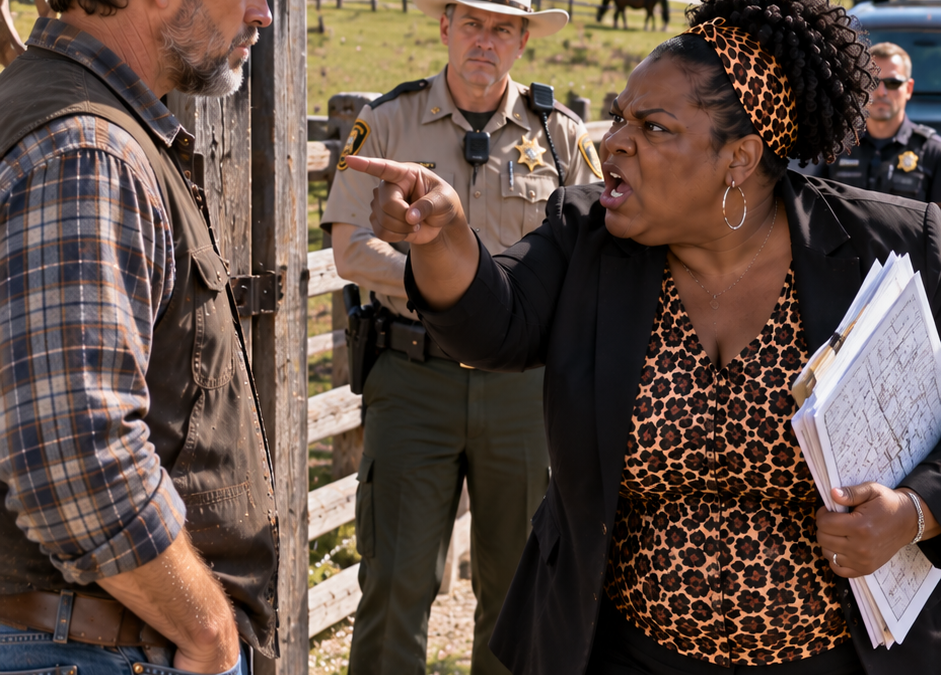
𝗣𝗔𝗥𝗧 𝟮
Her face stayed composed.
But she didn’t answer.
Briggs closed both folders.
“I’m not deciding ownership at a ranch gate.”
Victoria stared at him.
“What?”
“This is a civil property dispute until county records say otherwise.”
“You’re allowing a trespasser to occupy HOA land?”
“I’m saying nobody removes anybody today.”
Her voice sharpened.
“Sheriff—”
“Ms. Holloway.”
He held up one hand.
“Not here.”
She looked furious.
Then composed herself.
“You’ll hear from our attorney.”
Briggs shrugged.
“Wouldn’t surprise me.”
He gave me a short nod.
Got back into his truck.
Drove away.
Dust settled slowly across the gate.
Victoria stayed.
“This isn’t finished, Mr. Mercer.”
“I never thought it was.”
She turned toward her SUV.
Then stopped.
“Almost forgot.”
She removed one sheet from the clipboard.
Pressed it against my chest.
Orange border.
HOA logo.
72-HOUR REMOVAL DEMAND.
According to Silver Pine Ridge, I had three days to vacate the ranch.
After that:
$500 per day for unlawful occupancy.
I read it.
Then looked at her.
“You know what I find strange?”
“What?”
“You keep calling this your property.”
“It is.”
“And you still haven’t shown me a deed.”
For the first time, her smile vanished completely.
She got into the SUV.
Drove away.
The moment she disappeared through the gate, I called Rebecca Lawson.
She was a property attorney.
More importantly, she had known Walter.
She answered on the second ring.
“Ethan.”
“I inherited a lawsuit.”
“That quickly?”
“You have no idea.”
I explained everything.
Victoria.
The sheriff.
The parcel numbers.
Removal order.
Eighteen hundred acres apparently claimed by an HOA.
Rebecca stayed silent until I finished.
“Don’t sign anything.”
“Wasn’t planning to.”
“Where are you?”
“Ranch.”
“Meet me at county records in one hour.”
By late afternoon, we were standing in the land records department.
Walter’s old deed lay across a large examination table.
The clerk brought up the modern parcel system.
I stared at the screen.
I almost didn’t recognize the land.
The ranch had been cut apart visually by digital boundaries.
Residential parcels.
Community recreation areas.
Road corridors.
Clubhouse property.
Trail systems.
More than two hundred homes now occupied ground that had once been pasture.
Mercer Lake appeared mostly inside an HOA recreational zone.
The main ranch road was shown as a community entrance.
Rebecca leaned toward the monitor.
“Zoom into the parent parcel.”
The clerk did.
She compared the digital map to Walter’s legal description.
Then frowned.
“What?”
She didn’t answer.
She traced a recording sequence.
Every subdivision begins with a parent tract.
Then legal instruments divide it.
Terminate it.
Merge portions.
Create new parcels.
Rebecca tapped Walter’s deed.
“This parent parcel was never terminated.”
The clerk looked confused.
“That can’t be right.”
“Search it.”
He did.
Nothing.
Different database.
Nothing.
Archive index.
Nothing.
Rebecca slowly looked at me.
“They never extinguished Mercer Ranch.”
I stared at her.
“Then what happened to eighteen hundred acres?”
“They stopped carrying the parent title forward.”
The clerk started pulling historical filings.
We requested everything tied to the creation of Silver Pine Ridge.
Twenty minutes later, he returned with three binders.
Old plats.
Development agreements.
Road approvals.
Utility documents.
Rebecca worked through the first binder.
Halfway through, a folded handwritten note slipped onto the table.
She opened it.
Six words.
GROUND USE AGREEMENT — SEE ORIGINAL CONTRACT
Rebecca read it twice.
“Where’s the contract?”
The clerk checked the binder.
Then the next.
Then the third.
Nothing.
The reference existed.
The agreement did not.
Rebecca looked at me.
“Someone wanted a record that the agreement existed.”
She closed the binder.
“But someone also made sure the agreement itself wasn’t here.”
By the time I returned to the ranch, Victoria had covered my property in violation notices.
One on the gate.
Two on the barn.
Several along the fence toward the lake.
One had been stapled directly over the parcel number Walter carved into the cedar.
Unauthorized occupancy.
Livestock violation.
Unapproved vehicle.
Illegal use of HOA waterfront.
I pulled them down one at a time.
Inside the cabin, another envelope waited beneath the door.
Attorney Daniel Price.
Rebecca read the demand over speakerphone.
“They want control of the entrance road.”
“Of course.”
“Cattle removed.”
I looked through the window at Walter’s herd.
“They’re calling livestock illegal?”
“And they want you to stop accessing the lake.”
I laughed once.
“Anything else?”
“They’re threatening an emergency injunction if you interfere with residents, contractors, or board members using the road.”
“So they can enter my ranch.”
“Yes.”
“But I can’t interfere.”
“That’s their position.”
My phone buzzed.
Victoria had posted my picture in the HOA community group.
The photograph had been taken near the gate.
Caption:
WARNING: UNAUTHORIZED OCCUPANT ON ASSOCIATION PROPERTY
She described me as unstable.
Potentially aggressive.
A threat to residents attempting to access community amenities.
By evening, comments called me a squatter.
A drifter.
Dangerous.
I had met none of these people.
Victoria couldn’t beat the deed yet.
So she was trying to win the story first.
Rain started after dark.
Cold.
Steady.
I was comparing Walter’s deed to county maps when headlights crossed the cabin windows.
An old sedan stopped outside.
A woman around seventy got out carrying a casserole dish.
She kept looking over her shoulder.
“You Ethan?”
“Yes.”
“Grace Bennett.”
The name was familiar from the funeral.
“I knew Walter.”
That was enough.
I opened the door.
She refused coffee.
Sat at the table holding her purse.
“Victoria told everyone Walter lost the ranch years ago.”
“So I’ve learned.”
“But he never said that.”
“What did he say?”
“That the houses were built on leased ground.”
The rain seemed louder.
“Leased?”
She nodded.
“From Walter.”
I leaned forward.
“Tell me everything.”
Grace had lived in the valley before Silver Pine Ridge grew large.
The first developer needed road access.
Lake access.
Selected building sites.
Walter agreed to some arrangement.
“He liked the idea of families coming back into the valley,” she said. “It had gotten lonely.”
“He sold the land?”
Grace shook her head immediately.
“Never.”
“Did you see the contract?”
“No.”
“But I saw development people come here. They’d argue with him.”
“About what?”
“Money. Boundaries. Roads. I don’t know.”
She looked toward Walter’s old hallway.
“Later, the HOA began saying he was confused.”
“Confused?”
“They told residents Walter’s maps were outdated. That he couldn’t accept progress.”
My jaw tightened.
Grace continued.
“He wasn’t confused.”
She hesitated.
“He was scared.”
Walter Mercer had survived droughts.
Cattle injuries.
Mountain winters.
A broken leg miles from the nearest road.
I had never heard anyone call him scared.
“Of what?”
“Losing the proof.”
Grace got up.
Walked toward the locked survey room.
“I helped him carry a metal box in there maybe twelve years ago.”
I stared at her.
“What box?”
“He hid it.”
“Where?”
She pointed at the floor.
“He pulled up a board.”
I unlocked the room.
Dust covered the drafting table.
Rolled surveys filled one corner.
Grace found a narrow seam in the floorboards.
“There.”
I knelt.
Pressed down.
The board shifted.
Before I could lift it, white headlights swept across the window.
Victoria’s SUV.
Another car behind it.
Daniel Price.
I left Grace inside.
Stepped onto the porch.
Daniel carried a leather document case beneath his coat.
Victoria held a black umbrella.
“We’re here to resolve this,” Daniel said.
“At night?”
“Your refusal to cooperate creates urgency.”
Victoria looked past me toward the hallway.
“We won’t take long.”
“You won’t come inside.”
Daniel opened his case on the porch rail.
“We have the original agreement transferring Walter Mercer’s development and access rights to the predecessor organization of Silver Pine Ridge.”
Victoria looked almost relieved.
“Permanent transfer.”
Daniel laid out an old-looking document.
“No expiration.”
“Then why wasn’t it in county records?”
“Historical filing irregularity.”
He pushed another page forward.
“If you sign acknowledgement of association ownership, we can suspend fines and avoid unnecessary litigation.”
I read the document.
Slowly.
The legal description referenced the Western Service Road.
I knew that road.
Walter helped build it.
In 1974.
I looked at the agreement date.
My heartbeat slowed.
Not because I was worried.
Because the mistake was obvious.
“This road didn’t exist in 1958.”
Daniel kept his expression neutral.
“Descriptions may have been updated when copies were prepared.”
“Not if this is the original.”
He didn’t answer.
I pointed at the parcel number.
“This numbering format wasn’t used in this county in 1958 either.”
Victoria folded her arms.
“You’re a mechanic, Mr. Mercer.”
“I was a survey technician.”
That silenced her.
I looked at Walter’s signature.
Broad letters.
Uneven pressure.
I knew that signature.
He signed that way after a horse crushed two fingers on his right hand.
That injury happened in 1981.
In photographs and documents from the fifties, Walter’s signature was narrow.
Controlled.
Different.
“This isn’t how he signed in 1958.”
Daniel closed the document halfway.
“That’s a serious accusation.”
“I’m reading what you brought me.”
Victoria stepped forward.
“This document was authenticated.”
“By whom?”
Neither answered.
I called Rebecca.
She arrived twenty minutes later.
With Thomas Reid.
Retired county surveyor.
Seventy-eight.
Bent shoulders.
Still sharp.
His name appeared on several old Mercer surveys.
Thomas placed Daniel’s agreement next to a 1956 map.
Measured the calls.
Checked markers.
Then looked at Daniel.
“This description isn’t Walter’s boundary.”
Daniel frowned.
“It reflects corrected subdivision measurements.”
“Corrected?”
Thomas tapped one point.
“Your southwest corner moved twenty-nine feet.”
Victoria laughed.
“Twenty-nine feet over eighteen hundred acres?”
Thomas moved his finger.
“Twenty-nine feet puts the main ranch road inside your claimed plat.”
Then toward the lake.
“And it moves the access corridor.”
Victoria stopped smiling.
Rebecca inspected the recording references.
“This sequence is impossible.”
Daniel leaned closer.
“What?”
“This agreement references a later subdivision plat as if that plat already existed.”
He reached for the paper.
Rebecca covered it with one hand.
“You presented this as ownership evidence.”
“You can’t seize association records.”
“She’s not seizing it,” I said. “She’s examining the document you placed on my porch.”
Thomas rolled the old survey.
“There’s another problem.”
Victoria looked at him.
“The county binder references a separate ground-use agreement.”
Her face changed.
Tiny movement.
But everyone saw it.
“If Walter leased usage rather than transferred title,” Thomas continued, “this document may be worthless.”
Daniel snapped the case shut.
“We’ll respond through formal channels.”
Rebecca asked:
“Where is the ground-use agreement?”
Victoria turned toward the SUV.
“I have no idea what you’re talking about.”
She left.
We waited until the taillights disappeared.
Thomas looked at me.
“A false survey can be bad.”
Then toward the survey room.
“But that missing contract could be worse.”
We went back inside.
I lifted the floorboard.
Underneath sat a metal box wrapped in oilcloth.
The lock had rusted.
Grace remembered Walter taping a key beneath the drafting table.
It was still there.
Inside the box were decades of records.
Ledgers.
Certified letters.
Old photographs.
County envelopes.
Survey copies.
Walter had labeled everything.
LEASE PAYMENTS
BOUNDARY CHANGES
UNAUTHORIZED CONSTRUCTION
LEGAL NOTICES
Rebecca opened the first ledger.
Quarterly payments from the original developer.
Road use.
Lake access.
Selected building sites.
Then the payments stopped.
Walter had written in red:
PAYMENT NOT RECEIVED
Next quarter:
Same.
Again.
Again.
Thomas unfolded photographs showing old survey monuments around Mercer Lake.
“These are mine.”
“You remember them?”
“I set them.”
Another folder contained Walter’s letters ordering construction halted until the lease dispute was resolved.
Many had been returned unopened.
Others accused him of harassment.
Confusion.
Interference with development.
Grace sat in his chair.
“They made people think he was losing his mind.”
Near the bottom of the box, I found Walter’s journal.
The last pages were difficult to read.
His hand had deteriorated.
But the words were clear.
They tell residents I am trying to take their homes. I never threatened those families. I only ask the board to honor the agreement.
Another entry:
County records no longer show the old parcel correctly. They say new maps control. They laugh when I bring originals.
I swallowed hard.
Our family had believed Walter was obsessed.
That he had spent years fighting over land already lost.
He never told us the whole story.
The final entry was six weeks before his death.
They think they have broken me. They think age makes truth disappear. I have kept every payment record, every map, and every lie. Ethan understands boundaries. Maybe one day he will understand me.
I closed the journal.
Nobody spoke.
I walked outside.
Across Mercer Lake, the meadow where we buried him disappeared into darkness beneath the ridge.
For years, I had believed Walter couldn’t let go of a bad investment.
Now I understood.
Leaving would have made the lie permanent.
Rebecca came out.
“He built the case for you.”
“No.”
I looked toward the burial meadow.
“He built it because nobody believed him.”
Back inside, we emptied the last layer of the box.
At the bottom:
Oilskin envelope.
Walter’s handwriting.
ORIGINAL — DO NOT FILE WITH COUNTY COPY
Inside was the missing ground-use agreement.
Original paper.
Clean signatures.
Old recording marks.
Rebecca read silently.
Thomas leaned over her shoulder.
Then she reached the final pages.
A small handwritten note had been clipped beside one section.
Six words.
IF THEY STOP PAYING, EVERYTHING RETURNS.
Rebecca looked at me.
That was the moment the dispute changed.
Until then, the question had been:
Did the HOA take Walter’s ranch?
Now the question became:
How much had legally returned to him when they stopped paying?
Rebecca spent the next day rebuilding the agreement.
The original developer did not purchase Mercer Ranch.
Walter granted limited development and usage rights.
Selected building sites.
One access road.
A narrow lake corridor.
Utility access.
The ranch title remained Walter’s.
The lake bed remained Walter’s.
The dam.
Main road.
Underlying acreage.
Still Walter’s.
Thomas compared the legal calls against surviving survey monuments.
The gatehouse sat on Mercer title.
The clubhouse.
Private shoreline.
Main entrance road.
All inside the original ranch.
Rebecca opened the payment ledger.
“The lease required quarterly payments.”
“And?”
“Last legitimate payment was fifteen years ago.”
I stared at her.
“They just stopped?”
“According to Walter’s records.”
“And kept building.”
“Yes.”
She pointed to another provision.
“Also kept collecting resident access fees.”
My anger came quickly.
I owned the road.
Maybe the clubhouse ground.
The lake.
Potentially much more.
“I can close the gate.”
Rebecca looked at me.
“No.”
“They’re using my road.”
“Do not touch that gate.”
“They’ve been stealing from Walter for fifteen years.”
“And there are two hundred families who had nothing to do with that.”
She was right.
One blocked ambulance.
One school bus.
One emergency.
Victoria would turn me into exactly what she’d told the residents I was.
So I did the opposite.
Cameras at the entrance.
Cameras at the lake corridor.
Every surviving survey monument photographed.
A notice beside Walter’s sign:
PRIVATE TITLE DISPUTE PENDING.
EMERGENCY AND RESIDENT ACCESS REMAINS OPEN.
NO HOA OWNERSHIP OR AUTHORITY IS ACKNOWLEDGED.
I let everyone through.
Every vehicle recorded.
Every act of restraint documented.
Rebecca filed a quiet-title action.
Walter’s deed.
Ground-use agreement.
Payment records.
Thomas’s preliminary declaration.
Daniel responded immediately.
He called the agreement obsolete.
Walter’s ledgers unreliable.
My claim an attempted seizure of an established community.
Victoria sent an emergency email to residents.
She claimed I intended to lock the gate.
Block lake access.
Destroy property values.
Cars slowed past the cabin.
People took pictures of me.
Grace brought me a copy of the message.
“She wants them scared.”
“I know.”
“Before they read anything.”
“Same strategy she used on Walter.”
Next morning, Sheriff Briggs stopped at the ranch.
He read my notice.
Looked at the cameras.
Then down the open road.
“You’re still letting everyone through.”
“Until the court rules.”
“That matters.”
He turned toward his patrol truck.
Then stopped.
“One thing.”
“What?”
“Victoria applied for an emergency road permit yesterday.”
My stomach tightened.
“For what?”
“Fire-safety widening.”
I looked toward the strip beside the main entrance road.
Beyond it lay Walter’s burial meadow.
Rebecca had warned me.
Desperate people move faster than careful people.
At dawn the next morning, diesel engines rolled through the valley.
Two bulldozers.
Excavator.
Work trucks.
Steel fencing.
Survey stakes.
Victoria stood beside the road holding a county permit.
The excavator moved toward Walter’s grave.
I reached the meadow before the bucket touched earth.
The engine shook the fence posts.
One worker had already cut wire along the roadside.
Orange stakes marched toward the stone marker.
Victoria turned.
“You’re too late.”
“What are you doing?”
“Emergency fire access expansion.”
“The title case is active.”
“We have a county permit.”
Sheriff Briggs arrived.
He stepped out.
“Ethan. Do not interfere with the machinery.”
“I’m not.”
Victoria smiled.
“Good. Maybe you finally understand authority.”
I went back to my truck.
Returned with a document tube.
“I understand authority very well.”
I gave Briggs Walter’s deed.
Then the original agreement.
Then Thomas’s new survey.
The foreman looked toward Victoria.
“Proceed?”
“Yes.”
The excavator engine rose.
I kept my eyes on Briggs.
“Check her permit parcel number.”
He unfolded it.
Victoria stepped closer.
“It’s already been reviewed.”
“Then review it again.”
Briggs compared the permit to Thomas’s survey.
His face changed.
Same altered parcel number.
Same numbering system that moved the ranch road twenty-nine feet.
The same description now under active challenge.
He looked at Victoria.
“Did you disclose the title litigation?”
“This is a safety project.”
“That’s not what I asked.”
A dark sedan arrived.
Daniel Price.
He walked over quickly.
Briggs handed him the permit.
Daniel read.
Slowed.
Then turned toward Victoria.
“You told me this used the uncontested corridor.”
“It does.”
“No,” I said. “It uses the disputed survey.”
Rebecca’s truck appeared at the gate.
She got out holding stamped papers.
“Emergency injunction request accepted this morning.”
Victoria snapped:
“A request isn’t an order.”
“No,” Rebecca said. “But altering disputed property while litigation is active becomes evidence.”
The contractor stopped cutting.
Excavator dropped to idle.
Victoria pointed.
“Continue.”
Nobody moved.
Briggs stepped into the road.
“Shut it down.”
Victoria stared.
“You don’t have authority.”
“I have enough authority to stop disputed construction until this permit is verified.”
One engine died.
Then another.
Hydraulics sighed as the excavator bucket settled above untouched grass.
The valley became quiet.
Victoria had gone pale.
The foreman waited until she returned to her SUV.
Then approached me.
“I wasn’t told ownership was disputed.”
Rebecca looked at him.
“What were you told?”
He pulled a folded email from his jacket.
“Mrs. Holloway sent this last night.”
Rebecca read it.
Then handed it to me.
The Mercer claim is weak. Start at sunrise. Once the road is opened, the court will not force us to restore it.
Victoria’s name below.
I read it twice.
Rebecca placed it in an evidence sleeve.
“That’s intent.”
Sheriff Briggs photographed everything.
Permit.
Equipment.
Survey flags.
Untouched grave.
Email.
Then looked toward the gate.
“I’ll send this to county investigators.”
For the first time, someone in government was no longer treating Victoria’s version as the default truth.
The next morning, Silver Pine Ridge was strangely quiet.
No HOA patrol vehicles.
No new notices.
Meetings canceled.
Legal envelopes taped to the clubhouse doors.
People waited.
Rebecca spent the day answering investigators.
Thomas submitted his completed survey.
Every surviving Mercer monument photographed and mapped.
Briggs added Victoria’s email to the file.
Daniel called before noon.
“I’ll withdraw several emergency motions.”
Rebecca raised an eyebrow.
“Several?”
“My client maintains ownership of the roads.”
“She can maintain whatever she wants.”
Pause.
Then Daniel said something unexpected.
“I was not shown every document before this began.”
Not an apology.
But definitely a crack.
That afternoon, Grace arrived with three Silver Pine Ridge residents.
A retired teacher brought twenty years of HOA statements.
A young couple had lien threats over mailbox color.
Another man had paid thousands in lake maintenance charges while requiring HOA permission each time he wanted to use Mercer Lake.
Rebecca studied the paperwork.
“They’ve been collecting money for rights they may never have owned.”
The retired teacher looked at me.
“Are you going to take our homes?”
That question hurt more than anything Victoria had said.
These people hadn’t changed surveys.
They had not hidden Walter’s contract.
They had bought houses.
Paid mortgages.
Raised children.
Trusted title companies and an HOA.
“No.”
She searched my face.
“My fight isn’t with the families.”
Relief moved across the porch.
“It’s with whoever lied to them.”
Over the next three days, residents started coming quietly.
Old closing packets.
Fee notices.
Photographs.
One couple brought pictures showing survey markers being moved during a subdivision expansion years earlier.
Every visit added another piece.
Late Friday, Rebecca covered Walter’s survey table with documents.
Deed.
Ground agreement.
Payment ledgers.
Thomas’s survey.
Victoria’s email.
Fee schedules.
Resident statements.
She reread the contract.
Then stopped.
“What?”
“I’ve been focused on the lease terms.”
“And?”
“I haven’t paid enough attention to enforcement.”
She traced one paragraph.
Then looked up.
“This agreement has a reversion clause.”
Thomas leaned over.
“For what?”
Rebecca reread it.
“Not just the road.”
My pulse increased.
“What else?”
“Every common improvement constructed under the ground-use agreement after prolonged payment default.”
“What qualifies?”
She closed the agreement slowly.
“Clubhouse.”
“Gatehouse.”
“Shoreline facilities.”
Pause.
“Potentially structures built on land that reverted to the Mercer estate.”
The room went silent.
“For months Victoria has threatened to take this ranch.”
Rebecca nodded.
“The contract may say the opposite happened fifteen years ago.”
She spent the entire weekend researching reversion law.
Monday morning, her conference table was buried under case law.
Statutes.
Lease opinions.
Walter’s ledger.
The agreement.
“I know why Walter never enforced this clause.”
“Why?”
“Because he understood the consequences.”
She pointed at the language.
“If payments remain in default beyond the specified period, improvements constructed under the lease become subject to reversion unless separately protected by recorded ownership.”
“The roads.”
“Yes.”
“Clubhouse.”
“Yes.”
“Gatehouse.”
“Yes.”
I hesitated.
“The houses?”
“Possibly.”
That landed differently.
Two hundred families.
People who had paid for homes in good faith.
“That could destroy them.”
“It could.”
“So we don’t do that.”
Rebecca nodded.
“The legal right and equitable remedy aren’t always the same thing.”
That afternoon, we went before Judge Eleanor Brooks.
First major evidentiary hearing.
Victoria sat beside Daniel.
Sheriff Briggs was in the second row.
Grace sat with nearly forty residents.
Judge Brooks looked at Rebecca.
“Proceed.”
Walter’s deed came first.
Recorded.
Never terminated.
Then the original ground-use agreement.
Thomas Reid testified.
He showed how the old boundary markers aligned with Walter’s title.
He showed how later filings shifted the southwest line twenty-nine feet.
Enough to move the ranch road.
Enough to shift lake access.
The photographs went onto courtroom monitors.
Daniel didn’t challenge Thomas’s credentials.
Then came Walter’s payment ledgers.
Quarter after quarter.
Payments.
Then nothing.
Daniel stood.
“Private ledgers are not proof of legal default.”
Rebecca was ready.
She produced certified bank records.
Last legitimate payment.
Fifteen years earlier.
Then she showed the county archive reference.
Ground-use agreement.
Missing from the binder.
Judge Brooks made notes.
Then Rebecca introduced Victoria’s email.
Start at sunrise. Once the road is opened, the court will not force us to restore it.
Sheriff Briggs testified that the contractor voluntarily provided it.
Daniel lowered his pen.
Rebecca faced the judge.
“The association continued exercising ownership authority after lease payments ceased.”
She pointed toward the enlarged survey.
“It relied on altered property descriptions and disputed parcel numbers inconsistent with the original recorded title.”
Judge Brooks leaned forward.
“What remedy are you seeking?”
Rebecca took one breath.
“The contract contains a reversion clause.”
The gallery stirred.
“Under its language, Mr. Mercer may possess claims not merely to the road and lake corridor but to common improvements constructed after the lease default.”
The room changed.
Victoria stood.
“This is insane.”
Judge Brooks looked at her.
“Sit down.”
“He’s trying to take people’s houses.”
Everyone looked at me.
Judge Brooks did too.
“Mr. Mercer?”
I stood.
“I could pursue every remedy the contract allows.”
Silence.
“But I won’t punish families who bought homes believing their paperwork was legitimate.”
A few residents shifted.
“I’ll offer homeowners recorded purchase agreements at fair value, with affordable long-term payments, so they can own the land beneath their homes outright.”
Then I looked at Victoria.
“But anyone who knowingly changed surveys, ignored the lease, collected unauthorized fees, or continued construction after default can answer for those decisions themselves.”
Judge Brooks studied me.
Then the documents.
Finally she looked toward Victoria.
“Mrs. Holloway.”
Victoria swallowed.
“Yes?”
The judge rested one hand on Walter’s agreement.
“Are you certain you want this court to examine every association account connected to Mercer property?”
Victoria did not answer.
For the first time since she drove onto my ranch in that white SUV, she looked afraid.
Judge Brooks ordered a complete accounting.
Every HOA record related to Mercer property.
All road charges.
Lake fees.
Lease payments.
Construction records.
Survey changes.
The quiet-title case continued.
But she granted temporary injunctive relief immediately.
No construction.
No land alteration.
No new enforcement activity on disputed property.
Victoria slowly sat.
Three weeks later, we returned.
County investigators had reviewed fifteen years of records.
Their findings mirrored Walter’s journals.
Lease payments stopped.
Construction continued.
Boundaries changed in later filings.
HOA charges continued.
Permits repeatedly referenced the altered parcel description.
Judge Brooks looked across the courtroom.
“The Mercer title was never lawfully extinguished.”
She lifted Walter’s deed.
“The ground-use agreement granted limited development and access rights.”
Then:
“It did not transfer ownership of the underlying ranch.”
A murmur passed through the gallery.
She raised Thomas’s survey.
“Later boundary modifications are inconsistent with the original recorded title.”
Then she looked at Victoria.
“The Silver Pine Ridge Homeowners Association exceeded the authority available under its governing documents and underlying land agreement.”
Every altered survey would be corrected.
HOA claims to Mercer Lake access, the main ranch road, gatehouse, clubhouse, and disputed shoreline were declared invalid except as resolved through the court-approved settlement.
Evidence concerning altered filings was referred to state investigators for possible civil or criminal review.
Under emergency governance provisions, Victoria was removed as HOA president.
Daniel stood.
“My firm withdraws as counsel for the association.”
Nobody reacted.
By then, nothing about Victoria’s collapse surprised anyone.
Judge Brooks turned toward me.
“Mr. Mercer, you hold considerable leverage under the original agreement.”
“Yes.”
“How do you intend to exercise it?”
I looked behind Victoria.
Families.
Older residents.
Young couples.
People who had spent decades believing they already owned what they paid for.
“My grandfather protected this ranch because he believed land should mean something.”
I paused.
“These families didn’t falsify maps.”
“They didn’t stop lease payments.”
“They didn’t hide contracts.”
“So I’m not taking their homes.”
Rebecca submitted our settlement plan.
Each homeowner received an opportunity to purchase the underlying land through court-approved recorded agreements.
Affordable terms.
No surprise eviction.
No threat.
No punishment for trusting bad paperwork.
Once completed, they would own their properties outright.
The old HOA structure would dissolve.
In its place:
A small voluntary road and fire association.
Shared maintenance.
Emergency access.
Nothing more.
No mailbox policing.
No architectural intimidation.
No invented fines.
No president pretending to own a valley.
Months later, Silver Pine Ridge barely felt like the place Victoria had controlled.
Violation signs disappeared.
Families walked the shoreline without seeking HOA permission.
Residents gathered in the community hall to elect their own maintenance association.
Thomas Reid helped install permanent survey monuments along Walter’s original lines.
Grace came to the dedication.
She cried when the first marker went into the ground.
Sheriff Briggs stopped at the ranch one afternoon.
He stood beside Walter’s gate.
Looked at the parcel number still carved into the wood.
“You were right.”
“About what?”
“The first day.”
I waited.
“You asked why anyone called the sheriff before reading the land records.”
He smiled.
“We probably should’ve started there.”
After he left, I brought Walter’s old ranch sign out of the barn.
Cleaned it.
Rehung it beside the entrance.
MERCER RANCH
Same wood.
Same carved parcel number.
Cars passed through the gate.
Nobody argued anymore.
The old documents had survived everything.
False surveys.
Threatening letters.
Missing contracts.
Board meetings.
Construction crews.
Years of people calling Walter confused.
He hadn’t lost the ranch.
The truth had simply been buried under enough newer paper that everyone stopped checking what came first.
I walked down toward Mercer Lake near sunset.
Walter’s grave sat across the water in the meadow Victoria almost cut open with an excavator.
I stood there until the light reached the ridge.
For most of my life, I thought my grandfather’s obsession with records was stubbornness.
Every receipt.
Every map.
Every certified letter.
Every payment entry.
Every survey photograph.
He kept all of it.
“Land doesn’t lie,” he used to tell me.
“People do.”
I finally understood the rest of that lesson.
People can lie loudly.
Officially.
Repeatedly.
They can stamp the lie.
Mail it.
Put it on a map.
Build houses over it.
Charge fees because of it.
Call the sheriff because of it.
And if the lie lasts long enough, everyone begins calling it history.
But one original deed can survive.
One genuine signature.
One forgotten contract.
One parcel number carved into a cedar gate.
Victoria Holloway drove onto Mercer Ranch convinced ownership belonged to whoever held the newest clipboard.
Walter had spent his life believing the opposite.
In the end, he was right.
The loudest document wasn’t the one that mattered.
The oldest truthful one was.
Have you finished reading the story and want to read it again?
I Inherited 1,800 Acres — HOA Karen Called the Sheriff Before She Checked One Parcel Number
Three days after burying my grandfather, an HOA president called the sheriff on me for trespassing on my own ranch.
She brought documents she said proved the entire valley belonged to her community.
Then the sheriff noticed one parcel number on her paperwork didn’t match the number carved into my grandfather’s gate.
My grandfather, Walter Mercer, used to tell me that land never lied.
“People do,” he would add.
Usually he said it while we were repairing fence posts or walking old survey lines, when I was too young to understand why a man would care so much about iron markers buried in grass.
Three days after I buried him, I finally understood.
I drove through the gate of Mercer Ranch shortly after noon.
The gate was cedar, weathered silver after more than forty years of mountain winters. Walter had built it himself.
On the right post, beneath the old ranch name, he had carved a parcel number by hand.
I had seen it thousands of times.
Never thought much about it.
My pickup rattled over the gravel road and kicked dust across the pasture.
Ahead, the cabin sat above Mercer Lake exactly as it had when I was a kid.
Old roof.
Stone chimney.
Wraparound porch Walter kept threatening to rebuild but never did.
Behind it rose the mountains.
Below it stretched eighteen hundred acres of pasture, timber, water, fencing, and memories I had not yet figured out what to do with.
I wasn’t thinking about property disputes.
I was thinking about repairs.
Taxes.
The roof.
The north fence.
The tractor Walter had left half-disassembled in the machine shed.
Mostly, I was thinking about him.
I stopped beside the cabin and shut off the engine.
For a few seconds, I stayed behind the wheel.
Walter’s funeral had been small.
He had outlived most of his friends.
The people who came told stories about a harder version of him than the man I remembered.
A cattleman.
Survey hand.
Mechanic.
The stubborn old rancher who refused every developer who tried to buy him out.
I knew that part.
What I didn’t know was how much of his final twenty years had been spent fighting people who claimed the ranch wasn’t his anymore.
I climbed out.
Opened the tailgate.
Reached for a cardboard box.
Then a horn blasted behind me.
I turned.
A spotless white SUV came through the ranch gate as if it belonged there.
It didn’t slow until it was twenty feet from me.
The driver’s door opened.
A woman stepped out wearing a cream blazer that probably cost more than the transmission in my truck.
Large sunglasses.
Perfect hair.
No mud anywhere.
She looked at my pickup first.
Then the cabin.
Then me.
“You’ll need to move that immediately.”
I set the box down.
“I’m sorry?”
“That vehicle.”
She pointed at my truck.
“It can’t remain here.”
I looked toward the Mercer Ranch sign.
Then back at her.
“Why?”
“It violates community appearance standards.”
That took me a second.
“My pickup.”
“Yes.”
“On my ranch.”
She gave me a small, controlled smile.
“This is not your ranch.”
I almost laughed.
Instead, I asked:
“Who are you?”
She opened the SUV and removed a clipboard.
“Victoria Holloway. President of the Silver Pine Ridge Homeowners Association.”
She said the title the way a judge might say court is now in session.
“This access road, Mercer Lake, and the surrounding common areas are controlled by the association.”
I stared at her.
“My grandfather lived here his entire life.”
“Your grandfather was permitted to remain under historical arrangements.”
“He owned it.”
“He once did.”
The answer came too quickly.
Like something rehearsed.
I stepped closer.
“Walter Mercer was buried three days ago.”
“I know.”
No condolence.
No hesitation.
“Then perhaps you understand why this isn’t a good day to come onto his ranch and tell me he didn’t own it.”
“Ownership transfers do not exempt anyone from HOA rules.”
She turned a page.
“Your vehicle is unapproved.”
I looked around us.
There wasn’t another house visible.
Only open pasture.
Pines.
Mountains.
Mercer Lake.
“I’ll take my chances.”
Her mouth tightened.
“So that’s your final position?”
“My position is that I’m standing on land my family has owned for generations.”
“Owned.”
She corrected me quietly.
“Past tense.”
Then she pulled out her phone.
“What are you doing?”
“Calling the sheriff.”
“Why?”
“To remove an unauthorized occupant.”
I watched her dial.
She told dispatch that a man was occupying HOA property without permission.
She said I had refused lawful instructions.
Then she described me as aggressive.
I had not raised my voice.
Twenty-five minutes later, a county patrol truck appeared at the gate.
Sheriff Owen Briggs stepped out.
He took off his sunglasses.
Looked at Victoria.
Then me.
“Ethan Mercer?”
“Yes.”
His expression softened.
“Sorry about Walter.”
“Thank you.”
Victoria stepped forward immediately.
“Sheriff, we’ve attempted to resolve this peacefully.”
She handed him a folder.
“Mr. Mercer has parked on HOA property, refused multiple requests to leave, and is claiming ownership of land under association control.”
Briggs took the folder.
He didn’t comment.
Then looked at me.
“You have paperwork?”
I reached into the pickup.
Walter’s deed was inside an old envelope.
I handed it over.
“Recorded deed.”
Victoria laughed under her breath.
“That predates Silver Pine Ridge.”
I ignored her.
Briggs looked at me.
“You inherited what’s described here?”
“Every acre.”
Victoria crossed her arms.
“That document is outdated.”
I looked at her.
“And yours?”
“Ours is current.”
“Then show the sheriff.”
She tapped the folder in his hand.
“I already have.”
I nodded.
“Can I ask one question before anybody decides I’m trespassing?”
Briggs looked at me.
“Go ahead.”
I pointed to the wooden gate.
“Why did the HOA call the sheriff before anybody read the original land records?”
For the first time since arriving, Victoria said nothing.
Wind moved through the pines around Mercer Lake.
Sheriff Briggs opened her folder.
The first page contained a property map and parcel identification number.
He read it.
Then looked toward the gate.
Walter had carved the original parcel number into the cedar post decades earlier.
Briggs walked a few steps.
Looked at it.
Then back at Victoria’s page.
I saw his face change.
He compared them again.
“Ms. Holloway.”
“Yes?”
“This parcel number doesn’t match.”
Victoria recovered almost instantly.
“County records were reorganized when the subdivision was formed. Original numbers became obsolete.”
Too fast.
Briggs looked at me.
“Anything current?”
“The recorded deed.”
Victoria scoffed.
“Which is decades old.”
I took the envelope back when Briggs offered it.
“Old doesn’t mean invalid.”
“It does when property has transferred.”
“To whom?”
“The association.”
“Show me the deed.”
Her face stayed composed.
But she didn’t answer.
Briggs closed both folders.
“I’m not deciding ownership at a ranch gate.”
Victoria stared at him.
“What?”
“This is a civil property dispute until county records say otherwise.”
“You’re allowing a trespasser to occupy HOA land?”
“I’m saying nobody removes anybody today.”
Her voice sharpened.
“Sheriff—”
“Ms. Holloway.”
He held up one hand.
“Not here.”
She looked furious.
Then composed herself.
“You’ll hear from our attorney.”
Briggs shrugged.
“Wouldn’t surprise me.”
He gave me a short nod.
Got back into his truck.
Drove away.
Dust settled slowly across the gate.
Victoria stayed.
“This isn’t finished, Mr. Mercer.”
“I never thought it was.”
She turned toward her SUV.
Then stopped.
“Almost forgot.”
She removed one sheet from the clipboard.
Pressed it against my chest.
Orange border.
HOA logo.
72-HOUR REMOVAL DEMAND.
According to Silver Pine Ridge, I had three days to vacate the ranch.
After that:
$500 per day for unlawful occupancy.
I read it.
Then looked at her.
“You know what I find strange?”
“What?”
“You keep calling this your property.”
“It is.”
“And you still haven’t shown me a deed.”
For the first time, her smile vanished completely.
She got into the SUV.
Drove away.
The moment she disappeared through the gate, I called Rebecca Lawson.
She was a property attorney.
More importantly, she had known Walter.
She answered on the second ring.
“Ethan.”
“I inherited a lawsuit.”
“That quickly?”
“You have no idea.”
I explained everything.
Victoria.
The sheriff.
The parcel numbers.
Removal order.
Eighteen hundred acres apparently claimed by an HOA.
Rebecca stayed silent until I finished.
“Don’t sign anything.”
“Wasn’t planning to.”
“Where are you?”
“Ranch.”
“Meet me at county records in one hour.”
By late afternoon, we were standing in the land records department.
Walter’s old deed lay across a large examination table.
The clerk brought up the modern parcel system.
I stared at the screen.
I almost didn’t recognize the land.
The ranch had been cut apart visually by digital boundaries.
Residential parcels.
Community recreation areas.
Road corridors.
Clubhouse property.
Trail systems.
More than two hundred homes now occupied ground that had once been pasture.
Mercer Lake appeared mostly inside an HOA recreational zone.
The main ranch road was shown as a community entrance.
Rebecca leaned toward the monitor.
“Zoom into the parent parcel.”
The clerk did.
She compared the digital map to Walter’s legal description.
Then frowned.
“What?”
She didn’t answer.
She traced a recording sequence.
Every subdivision begins with a parent tract.
Then legal instruments divide it.
Terminate it.
Merge portions.
Create new parcels.
Rebecca tapped Walter’s deed.
“This parent parcel was never terminated.”
The clerk looked confused.
“That can’t be right.”
“Search it.”
He did.
Nothing.
Different database.
Nothing.
Archive index.
Nothing.
Rebecca slowly looked at me.
“They never extinguished Mercer Ranch.”
I stared at her.
“Then what happened to eighteen hundred acres?”
“They stopped carrying the parent title forward.”
The clerk started pulling historical filings.
We requested everything tied to the creation of Silver Pine Ridge.
Twenty minutes later, he returned with three binders.
Old plats.
Development agreements.
Road approvals.
Utility documents.
Rebecca worked through the first binder.
Halfway through, a folded handwritten note slipped onto the table.
She opened it.
Six words.
GROUND USE AGREEMENT — SEE ORIGINAL CONTRACT
Rebecca read it twice.
“Where’s the contract?”
The clerk checked the binder.
Then the next.
Then the third.
Nothing.
The reference existed.
The agreement did not.
Rebecca looked at me.
“Someone wanted a record that the agreement existed.”
She closed the binder.
“But someone also made sure the agreement itself wasn’t here.”
By the time I returned to the ranch, Victoria had covered my property in violation notices.
One on the gate.
Two on the barn.
Several along the fence toward the lake.
One had been stapled directly over the parcel number Walter carved into the cedar.
Unauthorized occupancy.
Livestock violation.
Unapproved vehicle.
Illegal use of HOA waterfront.
I pulled them down one at a time.
Inside the cabin, another envelope waited beneath the door.
Attorney Daniel Price.
Rebecca read the demand over speakerphone.
“They want control of the entrance road.”
“Of course.”
“Cattle removed.”
I looked through the window at Walter’s herd.
“They’re calling livestock illegal?”
“And they want you to stop accessing the lake.”
I laughed once.
“Anything else?”
“They’re threatening an emergency injunction if you interfere with residents, contractors, or board members using the road.”
“So they can enter my ranch.”
“Yes.”
“But I can’t interfere.”
“That’s their position.”
My phone buzzed.
Victoria had posted my picture in the HOA community group.
The photograph had been taken near the gate.
Caption:
WARNING: UNAUTHORIZED OCCUPANT ON ASSOCIATION PROPERTY
She described me as unstable.
Potentially aggressive.
A threat to residents attempting to access community amenities.
By evening, comments called me a squatter.
A drifter.
Dangerous.
I had met none of these people.
Victoria couldn’t beat the deed yet.
So she was trying to win the story first.
Rain started after dark.
Cold.
Steady.
I was comparing Walter’s deed to county maps when headlights crossed the cabin windows.
An old sedan stopped outside.
A woman around seventy got out carrying a casserole dish.
She kept looking over her shoulder.
“You Ethan?”
“Yes.”
“Grace Bennett.”
The name was familiar from the funeral.
“I knew Walter.”
That was enough.
I opened the door.
She refused coffee.
Sat at the table holding her purse.
“Victoria told everyone Walter lost the ranch years ago.”
“So I’ve learned.”
“But he never said that.”
“What did he say?”
“That the houses were built on leased ground.”
The rain seemed louder.
“Leased?”
She nodded.
“From Walter.”
I leaned forward.
“Tell me everything.”
Grace had lived in the valley before Silver Pine Ridge grew large.
The first developer needed road access.
Lake access.
Selected building sites.
Walter agreed to some arrangement.
“He liked the idea of families coming back into the valley,” she said. “It had gotten lonely.”
“He sold the land?”
Grace shook her head immediately.
“Never.”
“Did you see the contract?”
“No.”
“But I saw development people come here. They’d argue with him.”
“About what?”
“Money. Boundaries. Roads. I don’t know.”
She looked toward Walter’s old hallway.
“Later, the HOA began saying he was confused.”
“Confused?”
“They told residents Walter’s maps were outdated. That he couldn’t accept progress.”
My jaw tightened.
Grace continued.
“He wasn’t confused.”
She hesitated.
“He was scared.”
Walter Mercer had survived droughts.
Cattle injuries.
Mountain winters.
A broken leg miles from the nearest road.
I had never heard anyone call him scared.
“Of what?”
“Losing the proof.”
Grace got up.
Walked toward the locked survey room.
“I helped him carry a metal box in there maybe twelve years ago.”
I stared at her.
“What box?”
“He hid it.”
“Where?”
She pointed at the floor.
“He pulled up a board.”
I unlocked the room.
Dust covered the drafting table.
Rolled surveys filled one corner.
Grace found a narrow seam in the floorboards.
“There.”
I knelt.
Pressed down.
The board shifted.
Before I could lift it, white headlights swept across the window.
Victoria’s SUV.
Another car behind it.
Daniel Price.
I left Grace inside.
Stepped onto the porch.
Daniel carried a leather document case beneath his coat.
Victoria held a black umbrella.
“We’re here to resolve this,” Daniel said.
“At night?”
“Your refusal to cooperate creates urgency.”
Victoria looked past me toward the hallway.
“We won’t take long.”
“You won’t come inside.”
Daniel opened his case on the porch rail.
“We have the original agreement transferring Walter Mercer’s development and access rights to the predecessor organization of Silver Pine Ridge.”
Victoria looked almost relieved.
“Permanent transfer.”
Daniel laid out an old-looking document.
“No expiration.”
“Then why wasn’t it in county records?”
“Historical filing irregularity.”
He pushed another page forward.
“If you sign acknowledgement of association ownership, we can suspend fines and avoid unnecessary litigation.”
I read the document.
Slowly.
The legal description referenced the Western Service Road.
I knew that road.
Walter helped build it.
In 1974.
I looked at the agreement date.
My heartbeat slowed.
Not because I was worried.
Because the mistake was obvious.
“This road didn’t exist in 1958.”
Daniel kept his expression neutral.
“Descriptions may have been updated when copies were prepared.”
“Not if this is the original.”
He didn’t answer.
I pointed at the parcel number.
“This numbering format wasn’t used in this county in 1958 either.”
Victoria folded her arms.
“You’re a mechanic, Mr. Mercer.”
“I was a survey technician.”
That silenced her.
I looked at Walter’s signature.
Broad letters.
Uneven pressure.
I knew that signature.
He signed that way after a horse crushed two fingers on his right hand.
That injury happened in 1981.
In photographs and documents from the fifties, Walter’s signature was narrow.
Controlled.
Different.
“This isn’t how he signed in 1958.”
Daniel closed the document halfway.
“That’s a serious accusation.”
“I’m reading what you brought me.”
Victoria stepped forward.
“This document was authenticated.”
“By whom?”
Neither answered.
I called Rebecca.
She arrived twenty minutes later.
With Thomas Reid.
Retired county surveyor.
Seventy-eight.
Bent shoulders.
Still sharp.
His name appeared on several old Mercer surveys.
Thomas placed Daniel’s agreement next to a 1956 map.
Measured the calls.
Checked markers.
Then looked at Daniel.
“This description isn’t Walter’s boundary.”
Daniel frowned.
“It reflects corrected subdivision measurements.”
“Corrected?”
Thomas tapped one point.
“Your southwest corner moved twenty-nine feet.”
Victoria laughed.
“Twenty-nine feet over eighteen hundred acres?”
Thomas moved his finger.
“Twenty-nine feet puts the main ranch road inside your claimed plat.”
Then toward the lake.
“And it moves the access corridor.”
Victoria stopped smiling.
Rebecca inspected the recording references.
“This sequence is impossible.”
Daniel leaned closer.
“What?”
“This agreement references a later subdivision plat as if that plat already existed.”
He reached for the paper.
Rebecca covered it with one hand.
“You presented this as ownership evidence.”
“You can’t seize association records.”
“She’s not seizing it,” I said. “She’s examining the document you placed on my porch.”
Thomas rolled the old survey.
“There’s another problem.”
Victoria looked at him.
“The county binder references a separate ground-use agreement.”
Her face changed.
Tiny movement.
But everyone saw it.
“If Walter leased usage rather than transferred title,” Thomas continued, “this document may be worthless.”
Daniel snapped the case shut.
“We’ll respond through formal channels.”
Rebecca asked:
“Where is the ground-use agreement?”
Victoria turned toward the SUV.
“I have no idea what you’re talking about.”
She left.
We waited until the taillights disappeared.
Thomas looked at me.
“A false survey can be bad.”
Then toward the survey room.
“But that missing contract could be worse.”
We went back inside.
I lifted the floorboard.
Underneath sat a metal box wrapped in oilcloth.
The lock had rusted.
Grace remembered Walter taping a key beneath the drafting table.
It was still there.
Inside the box were decades of records.
Ledgers.
Certified letters.
Old photographs.
County envelopes.
Survey copies.
Walter had labeled everything.
LEASE PAYMENTS
BOUNDARY CHANGES
UNAUTHORIZED CONSTRUCTION
LEGAL NOTICES
Rebecca opened the first ledger.
Quarterly payments from the original developer.
Road use.
Lake access.
Selected building sites.
Then the payments stopped.
Walter had written in red:
PAYMENT NOT RECEIVED
Next quarter:
Same.
Again.
Again.
Thomas unfolded photographs showing old survey monuments around Mercer Lake.
“These are mine.”
“You remember them?”
“I set them.”
Another folder contained Walter’s letters ordering construction halted until the lease dispute was resolved.
Many had been returned unopened.
Others accused him of harassment.
Confusion.
Interference with development.
Grace sat in his chair.
“They made people think he was losing his mind.”
Near the bottom of the box, I found Walter’s journal.
The last pages were difficult to read.
His hand had deteriorated.
But the words were clear.
They tell residents I am trying to take their homes. I never threatened those families. I only ask the board to honor the agreement.
Another entry:
County records no longer show the old parcel correctly. They say new maps control. They laugh when I bring originals.
I swallowed hard.
Our family had believed Walter was obsessed.
That he had spent years fighting over land already lost.
He never told us the whole story.
The final entry was six weeks before his death.
They think they have broken me. They think age makes truth disappear. I have kept every payment record, every map, and every lie. Ethan understands boundaries. Maybe one day he will understand me.
I closed the journal.
Nobody spoke.
I walked outside.
Across Mercer Lake, the meadow where we buried him disappeared into darkness beneath the ridge.
For years, I had believed Walter couldn’t let go of a bad investment.
Now I understood.
Leaving would have made the lie permanent.
Rebecca came out.
“He built the case for you.”
“No.”
I looked toward the burial meadow.
“He built it because nobody believed him.”
Back inside, we emptied the last layer of the box.
At the bottom:
Oilskin envelope.
Walter’s handwriting.
ORIGINAL — DO NOT FILE WITH COUNTY COPY
Inside was the missing ground-use agreement.
Original paper.
Clean signatures.
Old recording marks.
Rebecca read silently.
Thomas leaned over her shoulder.
Then she reached the final pages.
A small handwritten note had been clipped beside one section.
Six words.
IF THEY STOP PAYING, EVERYTHING RETURNS.
Rebecca looked at me.
That was the moment the dispute changed.
Until then, the question had been:
Did the HOA take Walter’s ranch?
Now the question became:
How much had legally returned to him when they stopped paying?
Rebecca spent the next day rebuilding the agreement.
The original developer did not purchase Mercer Ranch.
Walter granted limited development and usage rights.
Selected building sites.
One access road.
A narrow lake corridor.
Utility access.
The ranch title remained Walter’s.
The lake bed remained Walter’s.
The dam.
Main road.
Underlying acreage.
Still Walter’s.
Thomas compared the legal calls against surviving survey monuments.
The gatehouse sat on Mercer title.
The clubhouse.
Private shoreline.
Main entrance road.
All inside the original ranch.
Rebecca opened the payment ledger.
“The lease required quarterly payments.”
“And?”
“Last legitimate payment was fifteen years ago.”
I stared at her.
“They just stopped?”
“According to Walter’s records.”
“And kept building.”
“Yes.”
She pointed to another provision.
“Also kept collecting resident access fees.”
My anger came quickly.
I owned the road.
Maybe the clubhouse ground.
The lake.
Potentially much more.
“I can close the gate.”
Rebecca looked at me.
“No.”
“They’re using my road.”
“Do not touch that gate.”
“They’ve been stealing from Walter for fifteen years.”
“And there are two hundred families who had nothing to do with that.”
She was right.
One blocked ambulance.
One school bus.
One emergency.
Victoria would turn me into exactly what she’d told the residents I was.
So I did the opposite.
Cameras at the entrance.
Cameras at the lake corridor.
Every surviving survey monument photographed.
A notice beside Walter’s sign:
PRIVATE TITLE DISPUTE PENDING.
EMERGENCY AND RESIDENT ACCESS REMAINS OPEN.
NO HOA OWNERSHIP OR AUTHORITY IS ACKNOWLEDGED.
I let everyone through.
Every vehicle recorded.
Every act of restraint documented.
Rebecca filed a quiet-title action.
Walter’s deed.
Ground-use agreement.
Payment records.
Thomas’s preliminary declaration.
Daniel responded immediately.
He called the agreement obsolete.
Walter’s ledgers unreliable.
My claim an attempted seizure of an established community.
Victoria sent an emergency email to residents.
She claimed I intended to lock the gate.
Block lake access.
Destroy property values.
Cars slowed past the cabin.
People took pictures of me.
Grace brought me a copy of the message.
“She wants them scared.”
“I know.”
“Before they read anything.”
“Same strategy she used on Walter.”
Next morning, Sheriff Briggs stopped at the ranch.
He read my notice.
Looked at the cameras.
Then down the open road.
“You’re still letting everyone through.”
“Until the court rules.”
“That matters.”
He turned toward his patrol truck.
Then stopped.
“One thing.”
“What?”
“Victoria applied for an emergency road permit yesterday.”
My stomach tightened.
“For what?”
“Fire-safety widening.”
I looked toward the strip beside the main entrance road.
Beyond it lay Walter’s burial meadow.
Rebecca had warned me.
Desperate people move faster than careful people.
At dawn the next morning, diesel engines rolled through the valley.
Two bulldozers.
Excavator.
Work trucks.
Steel fencing.
Survey stakes.
Victoria stood beside the road holding a county permit.
The excavator moved toward Walter’s grave.
I reached the meadow before the bucket touched earth.
The engine shook the fence posts.
One worker had already cut wire along the roadside.
Orange stakes marched toward the stone marker.
Victoria turned.
“You’re too late.”
“What are you doing?”
“Emergency fire access expansion.”
“The title case is active.”
“We have a county permit.”
Sheriff Briggs arrived.
He stepped out.
“Ethan. Do not interfere with the machinery.”
“I’m not.”
Victoria smiled.
“Good. Maybe you finally understand authority.”
I went back to my truck.
Returned with a document tube.
“I understand authority very well.”
I gave Briggs Walter’s deed.
Then the original agreement.
Then Thomas’s new survey.
The foreman looked toward Victoria.
“Proceed?”
“Yes.”
The excavator engine rose.
I kept my eyes on Briggs.
“Check her permit parcel number.”
He unfolded it.
Victoria stepped closer.
“It’s already been reviewed.”
“Then review it again.”
Briggs compared the permit to Thomas’s survey.
His face changed.
Same altered parcel number.
Same numbering system that moved the ranch road twenty-nine feet.
The same description now under active challenge.
He looked at Victoria.
“Did you disclose the title litigation?”
“This is a safety project.”
“That’s not what I asked.”
A dark sedan arrived.
Daniel Price.
He walked over quickly.
Briggs handed him the permit.
Daniel read.
Slowed.
Then turned toward Victoria.
“You told me this used the uncontested corridor.”
“It does.”
“No,” I said. “It uses the disputed survey.”
Rebecca’s truck appeared at the gate.
She got out holding stamped papers.
“Emergency injunction request accepted this morning.”
Victoria snapped:
“A request isn’t an order.”
“No,” Rebecca said. “But altering disputed property while litigation is active becomes evidence.”
The contractor stopped cutting.
Excavator dropped to idle.
Victoria pointed.
“Continue.”
Nobody moved.
Briggs stepped into the road.
“Shut it down.”
Victoria stared.
“You don’t have authority.”
“I have enough authority to stop disputed construction until this permit is verified.”
One engine died.
Then another.
Hydraulics sighed as the excavator bucket settled above untouched grass.
The valley became quiet.
Victoria had gone pale.
The foreman waited until she returned to her SUV.
Then approached me.
“I wasn’t told ownership was disputed.”
Rebecca looked at him.
“What were you told?”
He pulled a folded email from his jacket.
“Mrs. Holloway sent this last night.”
Rebecca read it.
Then handed it to me.
The Mercer claim is weak. Start at sunrise. Once the road is opened, the court will not force us to restore it.
Victoria’s name below.
I read it twice.
Rebecca placed it in an evidence sleeve.
“That’s intent.”
Sheriff Briggs photographed everything.
Permit.
Equipment.
Survey flags.
Untouched grave.
Email.
Then looked toward the gate.
“I’ll send this to county investigators.”
For the first time, someone in government was no longer treating Victoria’s version as the default truth.
The next morning, Silver Pine Ridge was strangely quiet.
No HOA patrol vehicles.
No new notices.
Meetings canceled.
Legal envelopes taped to the clubhouse doors.
People waited.
Rebecca spent the day answering investigators.
Thomas submitted his completed survey.
Every surviving Mercer monument photographed and mapped.
Briggs added Victoria’s email to the file.
Daniel called before noon.
“I’ll withdraw several emergency motions.”
Rebecca raised an eyebrow.
“Several?”
“My client maintains ownership of the roads.”
“She can maintain whatever she wants.”
Pause.
Then Daniel said something unexpected.
“I was not shown every document before this began.”
Not an apology.
But definitely a crack.
That afternoon, Grace arrived with three Silver Pine Ridge residents.
A retired teacher brought twenty years of HOA statements.
A young couple had lien threats over mailbox color.
Another man had paid thousands in lake maintenance charges while requiring HOA permission each time he wanted to use Mercer Lake.
Rebecca studied the paperwork.
“They’ve been collecting money for rights they may never have owned.”
The retired teacher looked at me.
“Are you going to take our homes?”
That question hurt more than anything Victoria had said.
These people hadn’t changed surveys.
They had not hidden Walter’s contract.
They had bought houses.
Paid mortgages.
Raised children.
Trusted title companies and an HOA.
“No.”
She searched my face.
“My fight isn’t with the families.”
Relief moved across the porch.
“It’s with whoever lied to them.”
Over the next three days, residents started coming quietly.
Old closing packets.
Fee notices.
Photographs.
One couple brought pictures showing survey markers being moved during a subdivision expansion years earlier.
Every visit added another piece.
Late Friday, Rebecca covered Walter’s survey table with documents.
Deed.
Ground agreement.
Payment ledgers.
Thomas’s survey.
Victoria’s email.
Fee schedules.
Resident statements.
She reread the contract.
Then stopped.
“What?”
“I’ve been focused on the lease terms.”
“And?”
“I haven’t paid enough attention to enforcement.”
She traced one paragraph.
Then looked up.
“This agreement has a reversion clause.”
Thomas leaned over.
“For what?”
Rebecca reread it.
“Not just the road.”
My pulse increased.
“What else?”
“Every common improvement constructed under the ground-use agreement after prolonged payment default.”
“What qualifies?”
She closed the agreement slowly.
“Clubhouse.”
“Gatehouse.”
“Shoreline facilities.”
Pause.
“Potentially structures built on land that reverted to the Mercer estate.”
The room went silent.
“For months Victoria has threatened to take this ranch.”
Rebecca nodded.
“The contract may say the opposite happened fifteen years ago.”
She spent the entire weekend researching reversion law.
Monday morning, her conference table was buried under case law.
Statutes.
Lease opinions.
Walter’s ledger.
The agreement.
“I know why Walter never enforced this clause.”
“Why?”
“Because he understood the consequences.”
She pointed at the language.
“If payments remain in default beyond the specified period, improvements constructed under the lease become subject to reversion unless separately protected by recorded ownership.”
“The roads.”
“Yes.”
“Clubhouse.”
“Yes.”
“Gatehouse.”
“Yes.”
I hesitated.
“The houses?”
“Possibly.”
That landed differently.
Two hundred families.
People who had paid for homes in good faith.
“That could destroy them.”
“It could.”
“So we don’t do that.”
Rebecca nodded.
“The legal right and equitable remedy aren’t always the same thing.”
That afternoon, we went before Judge Eleanor Brooks.
First major evidentiary hearing.
Victoria sat beside Daniel.
Sheriff Briggs was in the second row.
Grace sat with nearly forty residents.
Judge Brooks looked at Rebecca.
“Proceed.”
Walter’s deed came first.
Recorded.
Never terminated.
Then the original ground-use agreement.
Thomas Reid testified.
He showed how the old boundary markers aligned with Walter’s title.
He showed how later filings shifted the southwest line twenty-nine feet.
Enough to move the ranch road.
Enough to shift lake access.
The photographs went onto courtroom monitors.
Daniel didn’t challenge Thomas’s credentials.
Then came Walter’s payment ledgers.
Quarter after quarter.
Payments.
Then nothing.
Daniel stood.
“Private ledgers are not proof of legal default.”
Rebecca was ready.
She produced certified bank records.
Last legitimate payment.
Fifteen years earlier.
Then she showed the county archive reference.
Ground-use agreement.
Missing from the binder.
Judge Brooks made notes.
Then Rebecca introduced Victoria’s email.
Start at sunrise. Once the road is opened, the court will not force us to restore it.
Sheriff Briggs testified that the contractor voluntarily provided it.
Daniel lowered his pen.
Rebecca faced the judge.
“The association continued exercising ownership authority after lease payments ceased.”
She pointed toward the enlarged survey.
“It relied on altered property descriptions and disputed parcel numbers inconsistent with the original recorded title.”
Judge Brooks leaned forward.
“What remedy are you seeking?”
Rebecca took one breath.
“The contract contains a reversion clause.”
The gallery stirred.
“Under its language, Mr. Mercer may possess claims not merely to the road and lake corridor but to common improvements constructed after the lease default.”
The room changed.
Victoria stood.
“This is insane.”
Judge Brooks looked at her.
“Sit down.”
“He’s trying to take people’s houses.”
Everyone looked at me.
Judge Brooks did too.
“Mr. Mercer?”
I stood.
“I could pursue every remedy the contract allows.”
Silence.
“But I won’t punish families who bought homes believing their paperwork was legitimate.”
A few residents shifted.
“I’ll offer homeowners recorded purchase agreements at fair value, with affordable long-term payments, so they can own the land beneath their homes outright.”
Then I looked at Victoria.
“But anyone who knowingly changed surveys, ignored the lease, collected unauthorized fees, or continued construction after default can answer for those decisions themselves.”
Judge Brooks studied me.
Then the documents.
Finally she looked toward Victoria.
“Mrs. Holloway.”
Victoria swallowed.
“Yes?”
The judge rested one hand on Walter’s agreement.
“Are you certain you want this court to examine every association account connected to Mercer property?”
Victoria did not answer.
For the first time since she drove onto my ranch in that white SUV, she looked afraid.
Judge Brooks ordered a complete accounting.
Every HOA record related to Mercer property.
All road charges.
Lake fees.
Lease payments.
Construction records.
Survey changes.
The quiet-title case continued.
But she granted temporary injunctive relief immediately.
No construction.
No land alteration.
No new enforcement activity on disputed property.
Victoria slowly sat.
Three weeks later, we returned.
County investigators had reviewed fifteen years of records.
Their findings mirrored Walter’s journals.
Lease payments stopped.
Construction continued.
Boundaries changed in later filings.
HOA charges continued.
Permits repeatedly referenced the altered parcel description.
Judge Brooks looked across the courtroom.
“The Mercer title was never lawfully extinguished.”
She lifted Walter’s deed.
“The ground-use agreement granted limited development and access rights.”
Then:
“It did not transfer ownership of the underlying ranch.”
A murmur passed through the gallery.
She raised Thomas’s survey.
“Later boundary modifications are inconsistent with the original recorded title.”
Then she looked at Victoria.
“The Silver Pine Ridge Homeowners Association exceeded the authority available under its governing documents and underlying land agreement.”
Every altered survey would be corrected.
HOA claims to Mercer Lake access, the main ranch road, gatehouse, clubhouse, and disputed shoreline were declared invalid except as resolved through the court-approved settlement.
Evidence concerning altered filings was referred to state investigators for possible civil or criminal review.
Under emergency governance provisions, Victoria was removed as HOA president.
Daniel stood.
“My firm withdraws as counsel for the association.”
Nobody reacted.
By then, nothing about Victoria’s collapse surprised anyone.
Judge Brooks turned toward me.
“Mr. Mercer, you hold considerable leverage under the original agreement.”
“Yes.”
“How do you intend to exercise it?”
I looked behind Victoria.
Families.
Older residents.
Young couples.
People who had spent decades believing they already owned what they paid for.
“My grandfather protected this ranch because he believed land should mean something.”
I paused.
“These families didn’t falsify maps.”
“They didn’t stop lease payments.”
“They didn’t hide contracts.”
“So I’m not taking their homes.”
Rebecca submitted our settlement plan.
Each homeowner received an opportunity to purchase the underlying land through court-approved recorded agreements.
Affordable terms.
No surprise eviction.
No threat.
No punishment for trusting bad paperwork.
Once completed, they would own their properties outright.
The old HOA structure would dissolve.
In its place:
A small voluntary road and fire association.
Shared maintenance.
Emergency access.
Nothing more.
No mailbox policing.
No architectural intimidation.
No invented fines.
No president pretending to own a valley.
Months later, Silver Pine Ridge barely felt like the place Victoria had controlled.
Violation signs disappeared.
Families walked the shoreline without seeking HOA permission.
Residents gathered in the community hall to elect their own maintenance association.
Thomas Reid helped install permanent survey monuments along Walter’s original lines.
Grace came to the dedication.
She cried when the first marker went into the ground.
Sheriff Briggs stopped at the ranch one afternoon.
He stood beside Walter’s gate.
Looked at the parcel number still carved into the wood.
“You were right.”
“About what?”
“The first day.”
I waited.
“You asked why anyone called the sheriff before reading the land records.”
He smiled.
“We probably should’ve started there.”
After he left, I brought Walter’s old ranch sign out of the barn.
Cleaned it.
Rehung it beside the entrance.
MERCER RANCH
Same wood.
Same carved parcel number.
Cars passed through the gate.
Nobody argued anymore.
The old documents had survived everything.
False surveys.
Threatening letters.
Missing contracts.
Board meetings.
Construction crews.
Years of people calling Walter confused.
He hadn’t lost the ranch.
The truth had simply been buried under enough newer paper that everyone stopped checking what came first.
I walked down toward Mercer Lake near sunset.
Walter’s grave sat across the water in the meadow Victoria almost cut open with an excavator.
I stood there until the light reached the ridge.
For most of my life, I thought my grandfather’s obsession with records was stubbornness.
Every receipt.
Every map.
Every certified letter.
Every payment entry.
Every survey photograph.
He kept all of it.
“Land doesn’t lie,” he used to tell me.
“People do.”
I finally understood the rest of that lesson.
People can lie loudly.
Officially.
Repeatedly.
They can stamp the lie.
Mail it.
Put it on a map.
Build houses over it.
Charge fees because of it.
Call the sheriff because of it.
And if the lie lasts long enough, everyone begins calling it history.
But one original deed can survive.
One genuine signature.
One forgotten contract.
One parcel number carved into a cedar gate.
Victoria Holloway drove onto Mercer Ranch convinced ownership belonged to whoever held the newest clipboard.
Walter had spent his life believing the opposite.
In the end, he was right.
The loudest document wasn’t the one that mattered.
The oldest truthful one was.








