I Bought a $3,200 Strip of Land Nobody Wanted—Then the HOA Learned It Was the Only Legal Road to 84 Homes
I Bought a $3,200 Strip of Land Nobody Wanted—Then the HOA Learned It Was the Only Legal Road to 84 Homes
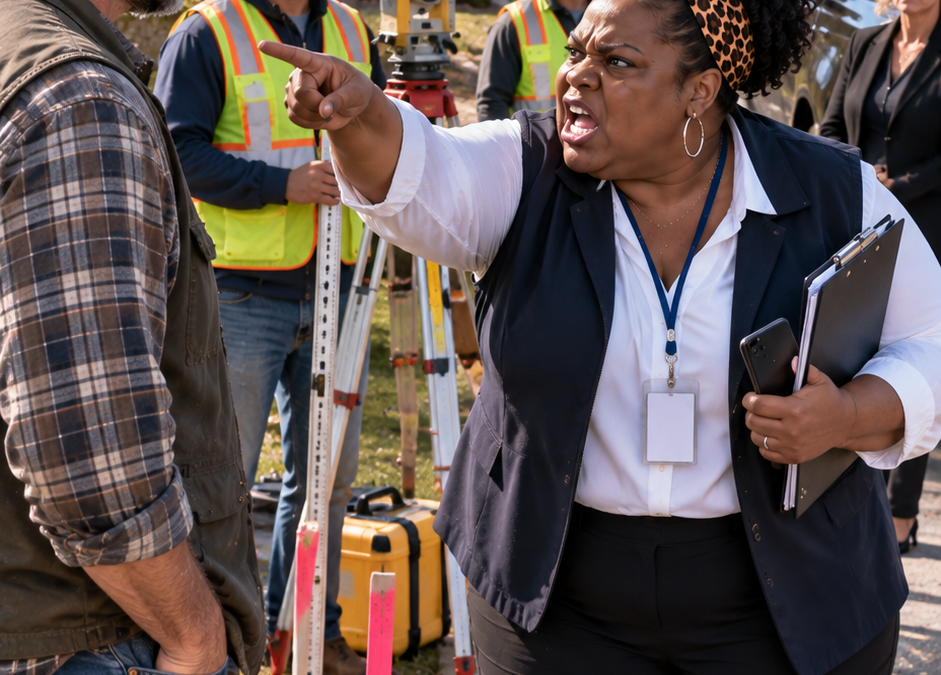
The HOA president gave my survey crew five minutes to get off “her” private road.
Then she threatened to fine me $500 a day for trespassing on land I had owned for eight years.
What she didn’t know was that the forty-foot strip beneath her feet was the only legal access road to every house in her neighborhood—and my name was the only one on the deed.
My name is Robert Hale.
I was standing beside my truck on a cold Tuesday morning in late October when Karen Hollis drove her black SUV halfway onto the curb and blocked both lanes of Maplewood Ridge’s entrance road.
She didn’t park.
She occupied.
There is a difference.
One is something ordinary people do when they arrive somewhere.
The other is what people do when they believe the place already belongs to them.
My survey crew had been working for maybe twenty minutes.
Three men.
GPS receiver.
Tripod.
Metal detector.
Paint.
Wood stakes.
Routine boundary work.
I had hired them because I was preparing to sell a small undeveloped lot beside Maplewood Ridge, and the title company wanted a current survey before closing.
Nothing controversial.
Nothing dramatic.
Until Karen opened her driver’s door.
She stepped onto the asphalt wearing a navy vest over a white blouse, HOA president badge hanging from a lanyard around her neck.
Clipboard under one arm.
Phone already in her hand.
She walked directly toward the crew chief.
“You need to stop.”
My surveyor looked up.
His name was Paul Mercer.
Twenty-two years licensed.
He had the calm expression of a man who had spent decades explaining geometry to angry people standing on the wrong side of fences.
“Morning,” he said.
Karen pointed at the stake he had just driven.
“Pull that out.”
Paul looked at the stake.
Then at her.
“We’re conducting a licensed boundary survey.”
“I don’t care what you’re conducting.”
She pointed toward the road entrance.
“This is HOA property.”
Paul glanced toward me.
I started walking over.
Karen noticed and immediately turned her phone toward my truck.
She photographed the license plate.
“Is that your vehicle?”
“Yes.”
“Then I have your information.”
“For what?”
“Trespassing.”
I almost smiled.
Not because it was funny.
Because I already knew exactly where we were standing.
Karen did not.
She raised her voice.
Three residents had stopped along the sidewalk.
A woman near a mailbox.
A couple holding a golden retriever.
An older man halfway down a driveway.
Karen made sure all of them could hear.
“This road has belonged to Maplewood Ridge since 1987.”
She gestured toward Paul and his crew.
“These people are conducting an unauthorized survey on HOA common property.”
Then she looked back at me.
“You have five minutes to remove your crew before I call 911.”
I walked to my truck.
Karen mistook that for retreat.
I could tell.
Her shoulders loosened slightly.
She had probably seen that response many times.
A violation notice.
A threat.
A raised voice.
People backed down.
Instead, I opened the passenger door and pulled out a plain manila envelope.
Inside was a certified copy of a deed.
I set the envelope on the hood.
“You might want to speak with an attorney before making that call.”
Karen laughed.
Short.
Dismissive.
“I don’t need an attorney to tell a trespasser to leave HOA property.”
She turned away before I answered.
That was Karen’s habit, I would learn.
She ended conversations at the exact point where another person might introduce a fact she didn’t like.
She called someone.
Not 911.
A board member.
Her voice rose even more.
“We have an active land-grab situation at the main road.”
I looked at Paul.
He gave me a tiny shrug.
Karen continued.
“Unauthorized survey crew. Yes. On Parcel A.”
That caught my attention.
She knew the parcel designation.
Interesting.
“I need another director down here.”
She glanced toward me.
“No, he is not cooperating.”
The residents on the sidewalk were watching now.
Karen had an audience.
And Karen understood audiences.
She used them the way other people use evidence.
The more people watching, the more certain she became.
At the entrance behind her stood a large sign mounted between two steel posts.
MAPLEWOOD RIDGE HOA
PRIVATE ROAD
RESIDENTS ONLY
The sign had been there for decades.
Official lettering.
HOA crest.
Reflective border.
The kind of sign people obey without ever asking what gives it authority.
Karen gestured toward it twice while she talked.
As though the sign itself settled ownership.
Nobody had apparently asked the simplest question.
Whose dirt are those posts sitting in?
I knew.
My dirt.
The entire forty-foot road corridor from the county road to the rear cul-de-sac belonged to me.
I had bought it eight years earlier for $3,200 at a county tax sale.
Karen had been driving across my property every day she lived in Maplewood Ridge.
So had all eighty-four households.
And until that morning, I had never cared.
PART2
I spent thirty-five years as a civil engineer.
Not bridges.
Not skyscrapers.
Nothing anybody takes pictures of.
My career was mostly the invisible bones of development.
Subdivision plats.
Drainage.
Ingress.
Egress.
Utility corridors.
Road widths.
Setbacks.
Easements.
Right-of-way descriptions.
The boring parts of property law that become extremely interesting the moment somebody discovers their driveway does not legally go where they thought it went.
Most people see a road.
I see the land beneath it.
That distinction is how I ended up owning Parcel A.
I retired at sixty-one.
Bought a modest property just east of Maplewood Ridge.
Close enough to enjoy the trees and quiet streets.
Outside the HOA.
That part mattered to me.
I had spent my entire professional life reading restrictive documents.
I had no desire to live under another set voluntarily.
The house had a deep backyard.
Good tree line.
No direct neighbors behind me.
It suited me.
A year after moving in, the county published its annual tax-lien auction list.
I read those lists out of habit.
Old engineers read strange things for entertainment.
Most parcels were unremarkable.
Commercial remnants.
Odd wedges of undeveloped land.
Tax-delinquent houses.
Then one description caught my eye.
PARCEL A.
NON-BUILDABLE ACCESS CORRIDOR.
Approximately forty feet wide.
Running through Maplewood Ridge.
I knew the subdivision.
So I pulled the plat.
The moment the map opened, I understood.
Parcel A was the road.
Not part of the road.
The entire central access corridor.
From Quarry Road at the front entrance all the way to the rear cul-de-sac.
Every Maplewood Ridge lot connected to it.
Every resident drove over it.
Trash trucks.
School buses.
Delivery vans.
Emergency vehicles.
Everyone.
The auction description called it nearly worthless because no building could be placed on it.
That was true.
But development value and access value are not the same thing.
I started pulling records.
Maplewood Ridge had been developed in 1986 by Harrow & Associates.
The original plat designated Parcel A as the subdivision access corridor.
The developer retained title while homes were sold.
That wasn’t unusual.
Developers frequently hold roads or common areas during construction and later convey them to an association or municipality.
Everyone assumed Harrow did that here.
They didn’t.
Harrow & Associates dissolved in 1989.
Parcel A remained titled in the corporation’s name.
Taxes went unpaid.
Year after year.
Nobody noticed.
Or if anyone did, they assumed somebody else was handling it.
Eventually the county seized the parcel for delinquent taxes.
Then it sat.
Nobody bid.
Why would they?
Forty feet wide.
Asphalt on top.
No building rights.
No obvious commercial value.
At the auction, I was the only bidder.
Three thousand two hundred dollars.
The clerk almost seemed surprised anybody wanted it.
I signed.
The county issued a deed.
It was recorded.
From that day forward, Parcel A belonged to me.
I paid the property taxes every year.
My name appeared in public county records.
There was no secrecy.
No trick.
I didn’t put up gates.
Didn’t charge tolls.
Didn’t stop residents.
I had no reason to.
People needed to get home.
I knew they used the road.
They knew they used the road.
As far as I was concerned, we had an unspoken practical arrangement.
I own it.
You use it.
Nobody bothers anybody.
For eight years, it worked perfectly.
Then I decided to sell the adjacent lot.
The title company asked for a current survey.
I hired Paul.
Paul drove a stake into Parcel A.
Karen looked out a window somewhere.
And thirty years of unexamined assumptions collided with a piece of wood hammered into the ground.
Three days after Karen threatened my crew, I received a certified letter.
I signed for it.
Brought it inside.
Opened it at my kitchen table.
Maplewood Ridge HOA letterhead.
Crest.
Board contact information.
Four pages.
Karen’s signature.
Two other board members countersigned.
The letter accused me of:
Unauthorized surveying.
Interference with HOA common property.
Attempted alteration of subdivision boundaries.
Trespassing.
I read that word twice.
Trespassing.
On my road.
The HOA demanded three things.
Cease all surveying activity.
Remove every survey stake within seventy-two hours.
Sign an acknowledgment promising not to enter “HOA-owned Parcel A” without prior written authorization.
Then came the penalty.
$500 per day for noncompliance.
Legal action at the board’s discretion.
I read all four pages again.
One phrase appeared repeatedly.
HOA COMMON PROPERTY SINCE 1987.
But nowhere did they cite a deed.
No recording number.
No conveyance.
No title document.
No plat transfer.
History.
Tradition.
Assumption.
That was all.
I wrote back.
One paragraph.
No insults.
No accusations.
Please provide the recorded deed, transfer instrument, or title document establishing Maplewood Ridge HOA ownership of Parcel A before further enforcement correspondence.
Certified mail.
Return receipt.
I assumed that would slow things down.
It accelerated them.
Within a week, Karen called an emergency board meeting.
They retained legal counsel through their management company.
The next letter came from an attorney.
More polished.
Same claim.
The letter also threatened to lien my adjacent lot for fines arising from my “continued trespass and interference.”
That got my attention.
Not because I believed the lien would survive.
Because it told me Karen was willing to reach beyond Parcel A and threaten another asset I was actively trying to sell.
At the same time, Karen went door to door.
I started hearing fragments.
An outsider is trying to steal the road.
Property values are in danger.
He wants control of access.
The HOA is defending the neighborhood.
Karen was good at this.
She owned the microphone.
She had eleven years of institutional credibility.
She had letterhead.
Meetings.
Email lists.
An official sign at the entrance.
I had a deed nobody inside the neighborhood had ever seen.
One afternoon, I pulled into my driveway and found an older woman waiting near the edge of my property.
She introduced herself as Margaret.
Seventy-four.
Retired schoolteacher.
Twenty-two years in Maplewood Ridge.
“I don’t know what you’re planning,” she said.
“I’m not planning anything.”
She nodded toward the neighborhood.
“Be careful with Karen.”
“I am.”
“No.”
Margaret looked directly at me.
“I mean careful.”
Then she told me about the Pattersons.
They had painted their shutters a gray Karen decided was outside the approved palette.
The dispute began at $100.
By the time it ended, the Pattersons had spent thousands on fines and legal letters.
Eventually, they repainted.
Then moved.
Margaret told the story without drama.
That made it worse.
“How long has Karen been president?”
“Nine years.”
“I thought eleven.”
“She moved here eleven years ago. Took over two years later.”
“Anyone run against her?”
Margaret gave me a tired smile.
“Not twice.”
“What does that mean?”
“The last woman who announced she was running got seven violation letters in three weeks.”
I understood.
Margaret started walking away.
Then stopped.
“She wins because everybody gets tired before she does.”
That sentence stayed with me.
The following morning, I went to the county assessor.
A clerk pulled Parcel A.
There was my name.
Purchase date.
Tax history.
Eight consecutive payments.
Current.
No HOA ownership.
No dispute notation.
No shared title.
“You own this road?” the clerk asked.
“Yes.”
She looked at the map.
“All of it?”
“All of it.”
She shook her head.
“Interesting.”
“That’s one word.”
I took certified copies to my real-estate attorney.
His name was David Rainer.
I had used him on two purchases.
He was the kind of lawyer who never said something was simple until he had checked every possible reason it might not be.
I liked that.
I put Karen’s letter on his desk.
He read it before the deed.
Then he read the deed.
Then the plat.
Then the tax records.
He took his glasses off.
“They don’t own it.”
“I know.”
“No. I mean there’s nothing ambiguous here.”
He tapped the title.
“You have a recorded county deed.”
Then the tax receipts.
“You have eight years of payments.”
Then Karen’s letter.
“They have this.”
“What exactly is this?”
“A strongly worded misunderstanding.”
I smiled.
“Can they fine me?”
“You’re not a member.”
“Can they lien my other property?”
“They can try to record something. Whether it survives is another question.”
“What about the road?”
David leaned back.
“That is the interesting part.”
He explained that long-term use alone did not create title.
An HOA owns property because somebody legally conveyed it.
A deed.
Recorded transfer.
Something.
Thirty years of belief could not replace that.
“Pull the original covenants,” I said.
His paralegal did.
Forty-one pages.
Maplewood Ridge founding documents.
Recorded 1987.
That evening, I read every page.
Common areas listed by parcel.
Drainage reserve.
Small recreation lot.
Entrance landscaping.
Nothing about Parcel A.
Not one reference.
Not one legal description.
The road was absent because the developer had never transferred it.
The next week, Margaret introduced me to Gary and Ruth Henderson.
Both retired.
They had lived in Maplewood Ridge for thirty years.
Two years earlier, Karen cited a fence post four inches too high.
The Hendersons challenged it.
Within three weeks, Karen escalated to a lien threat.
They paid $1,800.
Gary handed me copies.
Same signature.
Karen Hollis.
Then Margaret introduced Dana Foster.
Single mother.
Two daughters.
One had been hospitalized for several days.
Dana left her car on the street because she was going back and forth between home and the hospital.
Violation.
When Dana called to explain, Karen expressed sympathy.
Then sent a lien warning anyway.
Dana paid from her emergency savings.
Three separate households.
Same escalation.
Same handwriting.
Same mechanism.
Pressure people until fighting becomes more expensive than obedience.
My attorney sent the HOA counsel a formal letter.
One page.
My deed.
Tax history.
No HOA title.
Immediate cessation of fines.
Nothing else.
We intentionally did not mention the larger issue.
If the HOA truly had no ownership interest, what legal right did eighty-four households actually have to cross Parcel A?
That question was sitting in plain sight.
We left it alone.
Karen did not.
Two days after David’s letter arrived, Margaret called me.
“She’s telling people your lawyer is bluffing.”
“I expected that.”
“She says their case is airtight.”
“Did she say why?”
“She says thirty years of ownership.”
“Use.”
“What?”
“Thirty years of use. Not ownership.”
Margaret went quiet.
“That matters?”
“A lot.”
Karen apparently disagreed.
The HOA sued.
David called me Wednesday morning.
“They filed adverse possession.”
I set down my coffee.
“Seriously?”
“Seriously.”
Adverse possession.
The HOA claimed it had acquired legal ownership through more than thirty years of open, continuous, exclusive, hostile use.
I listened while David summarized the complaint.
“They’re saying nobody objected.”
“That’s true before I bought it.”
“They’re saying the HOA maintained it.”
“Did they?”
“We’ll find out.”
“They’re saying residents relied on it.”
“That part is obvious.”
David paused.
“Robert, this is no longer letters. We treat this seriously.”
“I know.”
“But I’ll tell you something.”
“What?”
“I think filing this lawsuit may be the worst decision they could have made.”
I understood why.
Karen had moved the dispute into the one room where confidence carried almost no weight.
Court.
Now she had to prove ownership.
With documents.
That Thursday, Karen held a neighborhood meeting.
Margaret called afterward.
Largest turnout in years.
Karen stood in front of residents and announced that the board had taken decisive legal action to secure the road “permanently and irrevocably.”
She framed me as an outsider trying to seize critical infrastructure.
People applauded.
I didn’t blame them.
Imagine someone tells you a stranger owns the road to your home.
Then tells you that stranger is challenging your ability to use it.
Fear makes simple stories attractive.
Karen gave them one.
I spent the next week with David pulling apart the adverse-possession claim.
Adverse possession laws vary by jurisdiction, but the theory generally depends on specific elements.
Open use.
Continuous use.
Hostile or adverse use.
Often exclusivity or conduct consistent with ownership.
The HOA had a problem.
I had known residents used the road from the first day I bought it.
I allowed them.
Never blocked them.
Never demanded payment.
Never sent cease-and-desist letters.
Never treated their presence as trespass.
That made their use look permissive.
Permission is poison to an adverse-possession claim.
David’s paralegal dug into maintenance.
Karen’s slideshow later claimed the HOA had repaved the road in 2009.
Maybe.
But their records were terrible.
No deed.
No maintenance agreement.
No consistent road asset entry.
No tax payments.
No legal description showing the HOA possessed Parcel A as owner.
Meanwhile, I had paid every property-tax bill after buying it.
Another issue worried David more than it worried me.
If the HOA lost, then the road’s legal status would become explicit.
Private land.
No easement.
No recorded access right.
That meant eighty-four households were using a private road with no formal recorded legal right to do so.
I had no intention of blocking anyone.
But intentions are not title rights.
Mortgages care about documents.
Title companies care.
Future buyers care.
Lenders care.
Karen had filed a lawsuit to “protect” the neighborhood and accidentally forced the lack of legal access into the public record.
Margaret called Friday evening.
Her voice sounded different.
Less curious.
More frightened.
“If the HOA loses, can you close the road?”
I answered carefully.
“I’m not interested in trapping people in their homes.”
“That isn’t what I asked.”
“No.”
She waited.
“Could you?”
“Ownership gives me rights. But there are also equitable issues, emergency issues, possible implied rights, and a court would look at everything. I’m not planning to close it.”
“Karen says you want control.”
“I already have control.”
That silenced her.
“I’ve owned it eight years.”
Another pause.
“And you never stopped anybody.”
“No.”
“Never charged us.”
“No.”
She exhaled.
“I wish someone had checked this thirty years ago.”
“So do I.”
Three weeks before the hearing, Karen called another “urgent community update.”
This time I went.
The community center sat near the entrance.
Everybody attending had to drive over Parcel A to get there.
I appreciated the irony.
The room filled.
I sat in the back.
No attorney.
No box of exhibits.
Just a manila folder.
Karen ran a slideshow.
Aerial images.
Road photographs.
Maintenance timeline.
She highlighted 2009 paving.
2014 drainage repairs.
The HOA sign installation.
Each slide presented stewardship as ownership.
Then she showed the lawsuit.
“Your board is taking every necessary step to protect community access.”
Applause.
She was good.
I’ll give her that.
Calm.
Reassuring.
Certain.
People want certainty when their homes feel threatened.
Karen sold it well.
When she opened public comments, I stood.
The room turned.
Karen’s face tightened for half a second.
Then reset.
I spoke for maybe twenty seconds.
“Parcel A is recorded in my name at the county assessor’s office. I purchased it at a county tax sale eight years ago. I have paid all property taxes since that date. Those documents have been provided to association counsel. I look forward to the court reviewing them.”
Then I sat.
Silence.
Three seconds.
Maybe four.
Karen immediately stepped into it.
“Mr. Hale’s so-called documents are part of a disputed claim. Our attorney has reviewed the matter. We remain confident.”
Light applause.
But something had changed.
Not everywhere.
A few faces.
Gary Henderson stared at the floor.
Ruth’s hands stayed folded tightly in her lap.
Dana looked toward Karen, not me.
Margaret met my eyes.
Then looked away.
The board publicly voted to continue funding the lawsuit.
Unanimous.
Afterward, I headed toward my car.
Footsteps behind me.
A man around thirty-five.
Board member.
His name was Eric Lawson.
Elected eight months earlier.
He stopped several feet away.
“Mr. Hale?”
“Robert is fine.”
He looked back toward the building.
“Is the road really in your name?”
“Yes.”
“Like… clearly?”
“Very.”
“County deed?”
“Yes.”
“Taxes?”
“Eight years.”
He swallowed.
“Does Karen know that?”
“Her attorney does.”
Eric nodded once.
Walked away.
That night, I sent the county planning office a formal notice.
Two paragraphs.
Parcel A was privately owned.
No easement to Maplewood Ridge was recorded.
Ownership litigation was pending.
I wanted an independent county record with a date.
No drama.
Just paper.
The court hearing came six weeks later.
Small courtroom.
Wood paneling.
Fluorescent lights.
Thirty gallery seats.
The county assessor sent a representative.
David sat beside me.
Across the aisle:
Karen.
Two directors.
HOA attorney.
Residents filled the gallery.
Gary and Ruth.
Dana.
Margaret.
Eric sat alone near the back.
The judge entered.
Everyone stood.
The HOA attorney went first.
Thirty-plus years of use.
Continuous access.
Maintenance.
Investment.
Expectation.
Reliance.
He described Parcel A almost as though the association had possessed it since construction.
The judge listened.
Then asked:
“Counsel, what recorded document establishes your client’s ownership?”
Silence.
The attorney looked at his folder.
“Our claim is based on adverse possession.”
“I understand.”
She looked directly at him.
“What deed or recorded conveyance shows prior HOA ownership?”
“None, Your Honor.”
That sentence changed the room.
David presented the deed.
County tax sale.
Recording information.
Eight years of payments.
Then the original subdivision plat.
The clerk projected it.
Parcel A appeared clearly.
Forty-foot ingress-egress corridor.
Separate parcel.
Not inside the HOA common-property schedule.
The assessor representative testified.
My ownership record was current.
Taxes current.
No HOA deed.
No HOA tax payments.
Then David introduced the forty-one-page founding declaration.
He gave a copy to the HOA attorney.
“Please identify where Parcel A is listed as HOA common property.”
The attorney turned pages.
Nothing.
The judge asked Karen directly.
“Ms. Hollis, do you know of a recorded deed transferring Parcel A to Maplewood Ridge?”
Karen sat upright.
“We have maintained that road for decades.”
“That was not my question.”
“We repaved it.”
“Do you have a deed?”
Karen looked at her attorney.
Then at the judge.
“No.”
The judge made a note.
David addressed adverse possession.
My knowledge of the residents’ use.
My continued payment of taxes.
No attempts to exclude them.
No demand for rent.
Conduct consistent with permissive access rather than hostile possession.
The HOA attorney argued that the community’s use predated my purchase.
True.
But the ownership chain before me mattered.
The developer retained title.
Then dissolved.
The county seized the land.
The HOA had not shown a period where all legal requirements for adverse possession had been satisfied against the appropriate titleholder.
Nor could it turn thirty years of assumption into a recorded conveyance simply because nobody had discovered the mistake.
The entrance sign came up last.
MAPLEWOOD RIDGE HOA
PRIVATE ROAD
RESIDENTS ONLY
David showed photographs.
The posts stood inside Parcel A.
My property.
No permission.
No easement.
No license.
The judge almost smiled.
Almost.
“So the association installed a sign identifying privately owned land as association private property?”
The HOA attorney answered carefully.
“That appears to be the situation.”
Behind me, Gary Henderson exhaled.
The ruling came after a recess.
Adverse-possession claim denied.
Ownership of Parcel A confirmed in my name.
The HOA produced no recorded title.
No deed.
No sufficient proof of exclusive hostile possession meeting the required legal standard.
The judge ordered Maplewood Ridge to remove unauthorized signs and structures from Parcel A within thirty days.
At its expense.
Then she added something important.
“The parties are encouraged to negotiate a formal recorded easement to protect residential access.”
That was the sensible outcome.
The gavel came down.
Karen did not look at me.
Eric put his head in his hands.
Margaret cried quietly.
Not because she had lost something.
Because for the first time, the thing she had been told belonged to the HOA had been examined by somebody outside Karen’s system.
And it didn’t.
The dismissal was with prejudice.
Finished.
The HOA could not simply file the same ownership theory again.
A month later, a contractor removed the Maplewood Ridge private-road sign.
I watched from my driveway.
The bolts came out.
Steel post cut.
Concrete footing broken.
Hole filled.
Four thousand two hundred dollars billed to the HOA.
Legal fees for the lawsuit were just under eighteen thousand.
Residents paid for both through association reserves.
I felt no pleasure in that.
The people living there had not created the title mistake.
Most had no idea.
Karen had gambled their money on a claim she never verified.
That distinction mattered to me.
All fines against me were canceled.
A certified letter arrived from the management company acknowledging that enforcement notices had been issued without valid legal basis.
Not signed by Karen.
She disappeared from correspondence after court.
The annual election came soon afterward.
Karen did not run.
Eric Lawson did.
He won.
A week later, he called.
“Mr. Hale?”
“Robert.”
“Right. Robert.”
He sounded nervous.
“I’d like to talk about the road.”
“Good.”
“We need an easement.”
“You do.”
A pause.
“Are you willing?”
“Yes.”
He sounded genuinely surprised.
“I’m not trying to keep anybody from their house.”
“Karen said—”
“I know what Karen said.”
We met with attorneys.
No threats.
No speeches.
The solution took two meetings.
Maplewood Ridge received a permanent recorded easement granting all current and future residents access across Parcel A.
Ingress.
Egress.
Emergency services.
Deliveries.
Normal residential traffic.
In return, the HOA paid a nominal annual fee and assumed defined maintenance obligations.
No gates.
No tolls.
No surprises.
One condition mattered to me.
No sign.
No structure.
No road modification.
No utility installation.
Nothing physically added to Parcel A without my written consent.
The agreement went to the county recorder.
Stamp.
Book.
Page.
Legal description.
For the first time since the subdivision opened, the residents’ right to use their road existed in the same place property rights should exist.
On paper.
Eric’s first board meeting drew a crowd.
Margaret called afterward.
“You should have come.”
“What happened?”
“He apologized.”
“For what?”
“Everything.”
Not exactly everything.
No one person can apologize for decades of institutional laziness.
But the board placed a formal statement in the minutes acknowledging that prior enforcement actions had sometimes been issued without sufficient legal review.
Then they started fixing individual cases.
Gary and Ruth Henderson received $1,800 back.
Gary called me.
For a long time, he talked about everything except the check.
Weather.
His lawn.
His truck.
Then finally:
“They refunded us.”
“I heard.”
“I never thought they would.”
“I know.”
“Ruth cried.”
I didn’t answer.
“Not because of the money.”
“I know.”
Dana received a written apology.
The fine from the hospital week was refunded.
The lien threat was formally rescinded from internal records.
The board rewrote the fine process.
No more instant escalation.
Mandatory cure periods.
Independent review for serious enforcement.
Multiple director approval before lien action.
Residents gained a real appeal process.
Margaret called again after that meeting.
“The room laughed tonight.”
“What?”
“Someone joked about the old mailbox-color rule.”
“And?”
“People laughed.”
She paused.
“I haven’t heard people laugh in that room in years.”
I understood what she meant.
Fear changes sound.
So does its absence.
A few weeks after the easement was recorded, I walked Parcel A from one end to the other.
Not because I needed to inspect anything.
I just wanted to.
Late October again.
Light through the trees.
Dry leaves collecting at the curbs.
Kids riding bicycles.
A delivery van idling near the cul-de-sac.
Normal life.
Nobody knew—or cared—that the asphalt belonged to a retired engineer living just outside the HOA.
That was how it should be.
Ownership is sometimes most successful when nobody has to think about it.
Margaret sat on her porch.
She raised her hand.
I raised mine.
When I got home, I put three documents on my kitchen table.
The easement.
My deed.
The original $3,200 county tax-sale receipt.
I looked at them for a long time.
So much noise had grown around those pieces of paper.
Karen’s threats.
Emergency meetings.
Certified letters.
Fines.
Lawsuit.
Applause.
Fear.
Property-value warnings.
Claims about history.
Thirty years of “everyone knows.”
And yet the legal facts had always been boring.
Harrow & Associates never transferred Parcel A.
The company dissolved.
The county seized the parcel for taxes.
I bought it.
I recorded the deed.
I paid the taxes.
That was all.
The land nobody wanted had turned out to be the most important parcel in the entire subdivision.
Not because I planned it that way.
Because everybody else stopped checking.
I thought the story was finished.
It mostly was.
But a few months later, I ran into Karen.
Grocery store.
Produce aisle.
She saw me first.
For a second, I thought she might turn away.
She didn’t.
“You must be pleased.”
I picked up an apple.
“With what?”
She gave me the look she always used when she believed someone was being deliberately difficult.
“You won.”
“I own a road.”
“You humiliated an entire association.”
“No.”
“You stood there and let people believe they might lose access to their homes.”
That annoyed me.
I put the apple down.
“Karen, your lawsuit did that.”
Her face hardened.
“We were protecting the community.”
“You sued me to take property you never owned.”
“We used that road for thirty years.”
“And if you’d called me before filing?”
She said nothing.
“I would have negotiated the same easement I eventually signed.”
She stared at me.
“You could have told me that.”
“I tried to tell you to call an attorney the first morning.”
“That’s not the same.”
“You threatened my survey crew with police.”
“They were trespassing.”
“No.”
I shook my head.
“They were on my land.”
She looked away.
For once, no clipboard.
No board.
No audience.
Just two people beside a pyramid of apples.
I softened my voice.
“You made one mistake at the beginning.”
Her eyes came back.
“You never checked.”
That was the whole thing.
She walked away.
I bought the apples.
Life moved on.
The road remained.
The HOA sign never returned.
A smaller sign went up later.
MAPLEWOOD RIDGE
RESIDENT ACCESS
Different words.
Different meaning.
Before installation, Eric emailed me the design.
Asked permission.
I approved it.
That email took four minutes.
Four minutes.
Compared with eighteen thousand dollars in legal fees.
A failed lawsuit.
Months of fear.
The difference between those outcomes was one question.
Who owns the land?
I still receive the Parcel A property-tax bill each year.
Not much.
The first time it arrived after the lawsuit, I laughed.
I wrote the check.
Mailed it.
No ceremony.
Sometimes people hear this story and assume the lesson is to buy strange tax-sale property because you might accidentally control somebody’s neighborhood.
That is not the lesson.
Most odd parcels are odd for a reason.
Sometimes they are useless.
Sometimes they come with liabilities.
Sometimes they are legally complicated.
I bought Parcel A because I understood what it was.
That matters.
What stayed with me was something else.
Assumptions harden.
Slowly.
One person says, “The road belongs to the HOA.”
Another repeats it.
A sign goes up.
Maintenance happens.
Board minutes refer to “our road.”
New residents arrive.
They hear the phrase.
Thirty years pass.
Eventually, nobody remembers that the original statement was never verified.
Then someone plants a survey stake.
And the whole structure shakes.
Karen believed history itself was evidence.
She kept saying “since 1987.”
As though age converted use into ownership automatically.
But time does not fix missing documents.
It just makes people more confident that they don’t need them.
The county clerk did not care what residents believed.
The assessor did not care.
The judge did not care.
A parcel either transferred or it did not.
Parcel A did not.
That simple fact sat unnoticed beneath eighty-four households for decades.
Gary told me once that after the case ended, he went through every closing document from the day he bought his house.
“You know what’s strange?”
“What?”
“I never asked how the road worked.”
“Most people don’t.”
“I asked about roof age.”
“Reasonable.”
“Property taxes.”
“Also reasonable.”
“School district.”
“Yep.”
“Never asked who owned the road.”
“Nobody does until something goes wrong.”
He laughed.
“Now I ask everybody.”
The new board invited me to speak once.
Not about Karen.
About property records.
I almost said no.
Then agreed.
I stood in the same community room where Karen had shown her slideshow and told residents I was trying to steal their road.
This time, there was no projector.
I brought one plat.
The 1986 original.
I put it on a table.
People gathered around.
I showed them how parcels are labeled.
How easements appear.
What common-property schedules look like.
Why maintenance and ownership are different.
Why a recorded access easement matters to lenders and buyers.
Nobody found it dramatic.
Good.
Property records are not supposed to be dramatic.
At the end, someone asked:
“Why didn’t the county tell us?”
“Tell you what?”
“That the HOA didn’t own the road.”
“The county records ownership. It doesn’t monitor what everyone believes about ownership.”
Another resident asked:
“Why didn’t the title companies catch it when homes sold?”
“They likely saw legal access assumptions embedded in older documents, or relied on existing practice. I can’t speak for every closing. That’s exactly why the new recorded easement matters.”
Eric stood near the back.
When the meeting ended, he came over.
“I wish somebody had done this in 1987.”
“So do I.”
“Would have saved us a lot of money.”
“Probably.”
He smiled.
“And Karen?”
“Maybe not.”
He laughed.
That was the difference Margaret had talked about.
People could laugh in the room again.
The Hendersons eventually replaced their fence.
Exactly the height they wanted.
Within the actual rules.
Dana’s daughter recovered.
She still lives in Maplewood Ridge.
Margaret remains there too.
Her porch looks directly toward Parcel A.
Every time I drive past, she waves.
Once she called me because the road developed a pothole.
Not because I was obligated to fix it—the maintenance agreement put that on the HOA—but because she thought I’d appreciate the irony.
“Your road has a hole.”
“Our road now.”
She corrected herself.
“The road you own that we have legal rights to use has a hole.”
“Better.”
She laughed.
Eric had it repaired the next week.
Invoice.
Board approval.
Maintenance agreement.
Everything documented.
Boring.
Perfect.
I sold the adjacent lot eventually.
The sale had been delayed by Karen’s lien threat and litigation, but once the title cleared, it closed without trouble.
The buyer asked about Parcel A.
I explained.
He looked surprised.
“So you own the neighborhood road?”
“I own the land under it.”
“Can you close it?”
“No. Not anymore.”
I showed him the recorded easement.
He nodded.
“Good.”
Exactly.
Good.
That was the goal.
Permanent certainty.
Not leverage.
Not revenge.
There had been a moment after the court ruling when I technically had tremendous bargaining power.
Residents were terrified.
I could have demanded an absurd price for an easement.
I could have threatened gates.
I could have made Karen’s nightmare story come true.
I didn’t.
Those eighty-four families had not caused the title problem.
Many had been manipulated by the same board president who targeted me.
Using their vulnerability to punish Karen would have made me another version of her.
So we negotiated fairly.
That decision mattered more to me than winning the case.
Ownership gives you power.
Character decides what you do with it.
I was never interested in owning people’s access.
I was interested in having the truth recognized.
Once it was, the practical problem was easy.
Record an easement.
Protect everyone.
Move on.
Years later, I still own Parcel A.
I could sell it to the HOA.
They have offered.
Twice.
Fair offers.
I declined.
Not because I want control.
Because I’m comfortable with the current arrangement.
The easement protects residents.
The maintenance agreement protects me.
The title is clear.
Nobody is confused.
Maybe someday I’ll sell.
For now, I pay the taxes.
A few hundred dollars.
The cheapest annual reminder I could ask for.
Every now and then, I drive into Maplewood Ridge and remember that Tuesday morning.
Paul’s survey equipment.
Third stake.
Karen’s SUV climbing the curb.
The board-president lanyard.
The clipboard.
Her voice carrying across the sidewalk.
“This road has been HOA property since 1987.”
She said it with such certainty.
Not performative certainty.
Real certainty.
That was the part I found most interesting.
Karen wasn’t bluffing at first.
She believed it.
She had inherited an assumption and treated it as a fact.
Then, when the deed contradicted her, she did what people like Karen often do.
Instead of updating the belief, she attacked the evidence.
First the surveyors.
Then me.
Then the deed.
Then the tax records.
Then the court.
Each escalation required more energy than simply admitting:
I was wrong.
By the time she reached the courtroom, her own attorney was trying to defend thirty years of habit against one recorded deed.
Habit lost.
It usually does.
The sign at the entrance today is modest.
No HOA crest.
No PRIVATE ROAD claim.
Just:
MAPLEWOOD RIDGE
RESIDENT ACCESS
SPEED LIMIT 20
My written approval is in a file.
County easement recorded.
Maintenance responsibility defined.
If somebody pulls the title fifty years from now, there will be no mystery.
That matters to me.
Civil engineering taught me that the best systems are the ones future people do not have to decipher.
Clear drainage path.
Clear load calculations.
Clear ownership.
Clear access.
Ambiguity feels harmless until someone depends on it.
Eighty-four families depended on an ambiguous road for thirty years.
Karen did not create the original mistake.
The developer did.
Or failed to correct it.
But she made the mistake dangerous because she refused to verify what she claimed.
That is what I remember most.
Not the lawsuit.
Not the judge.
Not Karen walking out of court.
The morning before all of that.
A woman standing on my land threatening to call police because I would not leave.
My manila envelope resting on the hood of the truck.
My deed inside.
I could have handed it to her.
I almost did.
Then she laughed when I suggested she talk to an attorney.
So I left the envelope closed.
Maybe that sounds petty.
It wasn’t.
I had learned enough in thirty-five years of property work to know that documents only matter to people willing to read them.
Karen wasn’t ready.
Eventually, a judge made her ready.
I still have that envelope.
Same one.
Worn corners now.
Inside is a copy of the deed I carried that morning.
At the bottom of the property description:
A forty-foot-wide access corridor known as Parcel A, extending from Quarry Road to the terminus of Maplewood Ridge subdivision.
Plain language.
Nothing dramatic.
Beside it in my file cabinet is the county tax-sale receipt.
$3,200.
Nobody else bid.
Nobody wanted a strip of asphalt they couldn’t build on.
They saw a useless corridor.
I saw land.
Karen saw HOA property because she had been told it was HOA property.
The judge saw what the records showed.
And in the end, that was all that mattered.
I bought land nobody wanted.
Eight years later, an HOA president threatened to arrest me for standing on it.
Six weeks after that, a court confirmed the truth she had never bothered to check.
The road beneath her feet was mine.
More importantly, it was the only road every family in Maplewood Ridge depended on to reach home.
I could have used that fact to punish them.
Instead, we finally did what should have been done in 1987.
We put the truth on paper.
And once we did, the neighborhood became quieter than it had been in years.
Have you finished reading the story and want to read it again?
I Bought a $3,200 Strip of Land Nobody Wanted—Then the HOA Learned It Was the Only Legal Road to 84 Homes
The HOA president gave my survey crew five minutes to get off “her” private road.
Then she threatened to fine me $500 a day for trespassing on land I had owned for eight years.
What she didn’t know was that the forty-foot strip beneath her feet was the only legal access road to every house in her neighborhood—and my name was the only one on the deed.
My name is Robert Hale.
I was standing beside my truck on a cold Tuesday morning in late October when Karen Hollis drove her black SUV halfway onto the curb and blocked both lanes of Maplewood Ridge’s entrance road.
She didn’t park.
She occupied.
There is a difference.
One is something ordinary people do when they arrive somewhere.
The other is what people do when they believe the place already belongs to them.
My survey crew had been working for maybe twenty minutes.
Three men.
GPS receiver.
Tripod.
Metal detector.
Paint.
Wood stakes.
Routine boundary work.
I had hired them because I was preparing to sell a small undeveloped lot beside Maplewood Ridge, and the title company wanted a current survey before closing.
Nothing controversial.
Nothing dramatic.
Until Karen opened her driver’s door.
She stepped onto the asphalt wearing a navy vest over a white blouse, HOA president badge hanging from a lanyard around her neck.
Clipboard under one arm.
Phone already in her hand.
She walked directly toward the crew chief.
“You need to stop.”
My surveyor looked up.
His name was Paul Mercer.
Twenty-two years licensed.
He had the calm expression of a man who had spent decades explaining geometry to angry people standing on the wrong side of fences.
“Morning,” he said.
Karen pointed at the stake he had just driven.
“Pull that out.”
Paul looked at the stake.
Then at her.
“We’re conducting a licensed boundary survey.”
“I don’t care what you’re conducting.”
She pointed toward the road entrance.
“This is HOA property.”
Paul glanced toward me.
I started walking over.
Karen noticed and immediately turned her phone toward my truck.
She photographed the license plate.
“Is that your vehicle?”
“Yes.”
“Then I have your information.”
“For what?”
“Trespassing.”
I almost smiled.
Not because it was funny.
Because I already knew exactly where we were standing.
Karen did not.
She raised her voice.
Three residents had stopped along the sidewalk.
A woman near a mailbox.
A couple holding a golden retriever.
An older man halfway down a driveway.
Karen made sure all of them could hear.
“This road has belonged to Maplewood Ridge since 1987.”
She gestured toward Paul and his crew.
“These people are conducting an unauthorized survey on HOA common property.”
Then she looked back at me.
“You have five minutes to remove your crew before I call 911.”
I walked to my truck.
Karen mistook that for retreat.
I could tell.
Her shoulders loosened slightly.
She had probably seen that response many times.
A violation notice.
A threat.
A raised voice.
People backed down.
Instead, I opened the passenger door and pulled out a plain manila envelope.
Inside was a certified copy of a deed.
I set the envelope on the hood.
“You might want to speak with an attorney before making that call.”
Karen laughed.
Short.
Dismissive.
“I don’t need an attorney to tell a trespasser to leave HOA property.”
She turned away before I answered.
That was Karen’s habit, I would learn.
She ended conversations at the exact point where another person might introduce a fact she didn’t like.
She called someone.
Not 911.
A board member.
Her voice rose even more.
“We have an active land-grab situation at the main road.”
I looked at Paul.
He gave me a tiny shrug.
Karen continued.
“Unauthorized survey crew. Yes. On Parcel A.”
That caught my attention.
She knew the parcel designation.
Interesting.
“I need another director down here.”
She glanced toward me.
“No, he is not cooperating.”
The residents on the sidewalk were watching now.
Karen had an audience.
And Karen understood audiences.
She used them the way other people use evidence.
The more people watching, the more certain she became.
At the entrance behind her stood a large sign mounted between two steel posts.
MAPLEWOOD RIDGE HOA
PRIVATE ROAD
RESIDENTS ONLY
The sign had been there for decades.
Official lettering.
HOA crest.
Reflective border.
The kind of sign people obey without ever asking what gives it authority.
Karen gestured toward it twice while she talked.
As though the sign itself settled ownership.
Nobody had apparently asked the simplest question.
Whose dirt are those posts sitting in?
I knew.
My dirt.
The entire forty-foot road corridor from the county road to the rear cul-de-sac belonged to me.
I had bought it eight years earlier for $3,200 at a county tax sale.
Karen had been driving across my property every day she lived in Maplewood Ridge.
So had all eighty-four households.
And until that morning, I had never cared.
PART2
I spent thirty-five years as a civil engineer.
Not bridges.
Not skyscrapers.
Nothing anybody takes pictures of.
My career was mostly the invisible bones of development.
Subdivision plats.
Drainage.
Ingress.
Egress.
Utility corridors.
Road widths.
Setbacks.
Easements.
Right-of-way descriptions.
The boring parts of property law that become extremely interesting the moment somebody discovers their driveway does not legally go where they thought it went.
Most people see a road.
I see the land beneath it.
That distinction is how I ended up owning Parcel A.
I retired at sixty-one.
Bought a modest property just east of Maplewood Ridge.
Close enough to enjoy the trees and quiet streets.
Outside the HOA.
That part mattered to me.
I had spent my entire professional life reading restrictive documents.
I had no desire to live under another set voluntarily.
The house had a deep backyard.
Good tree line.
No direct neighbors behind me.
It suited me.
A year after moving in, the county published its annual tax-lien auction list.
I read those lists out of habit.
Old engineers read strange things for entertainment.
Most parcels were unremarkable.
Commercial remnants.
Odd wedges of undeveloped land.
Tax-delinquent houses.
Then one description caught my eye.
PARCEL A.
NON-BUILDABLE ACCESS CORRIDOR.
Approximately forty feet wide.
Running through Maplewood Ridge.
I knew the subdivision.
So I pulled the plat.
The moment the map opened, I understood.
Parcel A was the road.
Not part of the road.
The entire central access corridor.
From Quarry Road at the front entrance all the way to the rear cul-de-sac.
Every Maplewood Ridge lot connected to it.
Every resident drove over it.
Trash trucks.
School buses.
Delivery vans.
Emergency vehicles.
Everyone.
The auction description called it nearly worthless because no building could be placed on it.
That was true.
But development value and access value are not the same thing.
I started pulling records.
Maplewood Ridge had been developed in 1986 by Harrow & Associates.
The original plat designated Parcel A as the subdivision access corridor.
The developer retained title while homes were sold.
That wasn’t unusual.
Developers frequently hold roads or common areas during construction and later convey them to an association or municipality.
Everyone assumed Harrow did that here.
They didn’t.
Harrow & Associates dissolved in 1989.
Parcel A remained titled in the corporation’s name.
Taxes went unpaid.
Year after year.
Nobody noticed.
Or if anyone did, they assumed somebody else was handling it.
Eventually the county seized the parcel for delinquent taxes.
Then it sat.
Nobody bid.
Why would they?
Forty feet wide.
Asphalt on top.
No building rights.
No obvious commercial value.
At the auction, I was the only bidder.
Three thousand two hundred dollars.
The clerk almost seemed surprised anybody wanted it.
I signed.
The county issued a deed.
It was recorded.
From that day forward, Parcel A belonged to me.
I paid the property taxes every year.
My name appeared in public county records.
There was no secrecy.
No trick.
I didn’t put up gates.
Didn’t charge tolls.
Didn’t stop residents.
I had no reason to.
People needed to get home.
I knew they used the road.
They knew they used the road.
As far as I was concerned, we had an unspoken practical arrangement.
I own it.
You use it.
Nobody bothers anybody.
For eight years, it worked perfectly.
Then I decided to sell the adjacent lot.
The title company asked for a current survey.
I hired Paul.
Paul drove a stake into Parcel A.
Karen looked out a window somewhere.
And thirty years of unexamined assumptions collided with a piece of wood hammered into the ground.
Three days after Karen threatened my crew, I received a certified letter.
I signed for it.
Brought it inside.
Opened it at my kitchen table.
Maplewood Ridge HOA letterhead.
Crest.
Board contact information.
Four pages.
Karen’s signature.
Two other board members countersigned.
The letter accused me of:
Unauthorized surveying.
Interference with HOA common property.
Attempted alteration of subdivision boundaries.
Trespassing.
I read that word twice.
Trespassing.
On my road.
The HOA demanded three things.
Cease all surveying activity.
Remove every survey stake within seventy-two hours.
Sign an acknowledgment promising not to enter “HOA-owned Parcel A” without prior written authorization.
Then came the penalty.
$500 per day for noncompliance.
Legal action at the board’s discretion.
I read all four pages again.
One phrase appeared repeatedly.
HOA COMMON PROPERTY SINCE 1987.
But nowhere did they cite a deed.
No recording number.
No conveyance.
No title document.
No plat transfer.
History.
Tradition.
Assumption.
That was all.
I wrote back.
One paragraph.
No insults.
No accusations.
Please provide the recorded deed, transfer instrument, or title document establishing Maplewood Ridge HOA ownership of Parcel A before further enforcement correspondence.
Certified mail.
Return receipt.
I assumed that would slow things down.
It accelerated them.
Within a week, Karen called an emergency board meeting.
They retained legal counsel through their management company.
The next letter came from an attorney.
More polished.
Same claim.
The letter also threatened to lien my adjacent lot for fines arising from my “continued trespass and interference.”
That got my attention.
Not because I believed the lien would survive.
Because it told me Karen was willing to reach beyond Parcel A and threaten another asset I was actively trying to sell.
At the same time, Karen went door to door.
I started hearing fragments.
An outsider is trying to steal the road.
Property values are in danger.
He wants control of access.
The HOA is defending the neighborhood.
Karen was good at this.
She owned the microphone.
She had eleven years of institutional credibility.
She had letterhead.
Meetings.
Email lists.
An official sign at the entrance.
I had a deed nobody inside the neighborhood had ever seen.
One afternoon, I pulled into my driveway and found an older woman waiting near the edge of my property.
She introduced herself as Margaret.
Seventy-four.
Retired schoolteacher.
Twenty-two years in Maplewood Ridge.
“I don’t know what you’re planning,” she said.
“I’m not planning anything.”
She nodded toward the neighborhood.
“Be careful with Karen.”
“I am.”
“No.”
Margaret looked directly at me.
“I mean careful.”
Then she told me about the Pattersons.
They had painted their shutters a gray Karen decided was outside the approved palette.
The dispute began at $100.
By the time it ended, the Pattersons had spent thousands on fines and legal letters.
Eventually, they repainted.
Then moved.
Margaret told the story without drama.
That made it worse.
“How long has Karen been president?”
“Nine years.”
“I thought eleven.”
“She moved here eleven years ago. Took over two years later.”
“Anyone run against her?”
Margaret gave me a tired smile.
“Not twice.”
“What does that mean?”
“The last woman who announced she was running got seven violation letters in three weeks.”
I understood.
Margaret started walking away.
Then stopped.
“She wins because everybody gets tired before she does.”
That sentence stayed with me.
The following morning, I went to the county assessor.
A clerk pulled Parcel A.
There was my name.
Purchase date.
Tax history.
Eight consecutive payments.
Current.
No HOA ownership.
No dispute notation.
No shared title.
“You own this road?” the clerk asked.
“Yes.”
She looked at the map.
“All of it?”
“All of it.”
She shook her head.
“Interesting.”
“That’s one word.”
I took certified copies to my real-estate attorney.
His name was David Rainer.
I had used him on two purchases.
He was the kind of lawyer who never said something was simple until he had checked every possible reason it might not be.
I liked that.
I put Karen’s letter on his desk.
He read it before the deed.
Then he read the deed.
Then the plat.
Then the tax records.
He took his glasses off.
“They don’t own it.”
“I know.”
“No. I mean there’s nothing ambiguous here.”
He tapped the title.
“You have a recorded county deed.”
Then the tax receipts.
“You have eight years of payments.”
Then Karen’s letter.
“They have this.”
“What exactly is this?”
“A strongly worded misunderstanding.”
I smiled.
“Can they fine me?”
“You’re not a member.”
“Can they lien my other property?”
“They can try to record something. Whether it survives is another question.”
“What about the road?”
David leaned back.
“That is the interesting part.”
He explained that long-term use alone did not create title.
An HOA owns property because somebody legally conveyed it.
A deed.
Recorded transfer.
Something.
Thirty years of belief could not replace that.
“Pull the original covenants,” I said.
His paralegal did.
Forty-one pages.
Maplewood Ridge founding documents.
Recorded 1987.
That evening, I read every page.
Common areas listed by parcel.
Drainage reserve.
Small recreation lot.
Entrance landscaping.
Nothing about Parcel A.
Not one reference.
Not one legal description.
The road was absent because the developer had never transferred it.
The next week, Margaret introduced me to Gary and Ruth Henderson.
Both retired.
They had lived in Maplewood Ridge for thirty years.
Two years earlier, Karen cited a fence post four inches too high.
The Hendersons challenged it.
Within three weeks, Karen escalated to a lien threat.
They paid $1,800.
Gary handed me copies.
Same signature.
Karen Hollis.
Then Margaret introduced Dana Foster.
Single mother.
Two daughters.
One had been hospitalized for several days.
Dana left her car on the street because she was going back and forth between home and the hospital.
Violation.
When Dana called to explain, Karen expressed sympathy.
Then sent a lien warning anyway.
Dana paid from her emergency savings.
Three separate households.
Same escalation.
Same handwriting.
Same mechanism.
Pressure people until fighting becomes more expensive than obedience.
My attorney sent the HOA counsel a formal letter.
One page.
My deed.
Tax history.
No HOA title.
Immediate cessation of fines.
Nothing else.
We intentionally did not mention the larger issue.
If the HOA truly had no ownership interest, what legal right did eighty-four households actually have to cross Parcel A?
That question was sitting in plain sight.
We left it alone.
Karen did not.
Two days after David’s letter arrived, Margaret called me.
“She’s telling people your lawyer is bluffing.”
“I expected that.”
“She says their case is airtight.”
“Did she say why?”
“She says thirty years of ownership.”
“Use.”
“What?”
“Thirty years of use. Not ownership.”
Margaret went quiet.
“That matters?”
“A lot.”
Karen apparently disagreed.
The HOA sued.
David called me Wednesday morning.
“They filed adverse possession.”
I set down my coffee.
“Seriously?”
“Seriously.”
Adverse possession.
The HOA claimed it had acquired legal ownership through more than thirty years of open, continuous, exclusive, hostile use.
I listened while David summarized the complaint.
“They’re saying nobody objected.”
“That’s true before I bought it.”
“They’re saying the HOA maintained it.”
“Did they?”
“We’ll find out.”
“They’re saying residents relied on it.”
“That part is obvious.”
David paused.
“Robert, this is no longer letters. We treat this seriously.”
“I know.”
“But I’ll tell you something.”
“What?”
“I think filing this lawsuit may be the worst decision they could have made.”
I understood why.
Karen had moved the dispute into the one room where confidence carried almost no weight.
Court.
Now she had to prove ownership.
With documents.
That Thursday, Karen held a neighborhood meeting.
Margaret called afterward.
Largest turnout in years.
Karen stood in front of residents and announced that the board had taken decisive legal action to secure the road “permanently and irrevocably.”
She framed me as an outsider trying to seize critical infrastructure.
People applauded.
I didn’t blame them.
Imagine someone tells you a stranger owns the road to your home.
Then tells you that stranger is challenging your ability to use it.
Fear makes simple stories attractive.
Karen gave them one.
I spent the next week with David pulling apart the adverse-possession claim.
Adverse possession laws vary by jurisdiction, but the theory generally depends on specific elements.
Open use.
Continuous use.
Hostile or adverse use.
Often exclusivity or conduct consistent with ownership.
The HOA had a problem.
I had known residents used the road from the first day I bought it.
I allowed them.
Never blocked them.
Never demanded payment.
Never sent cease-and-desist letters.
Never treated their presence as trespass.
That made their use look permissive.
Permission is poison to an adverse-possession claim.
David’s paralegal dug into maintenance.
Karen’s slideshow later claimed the HOA had repaved the road in 2009.
Maybe.
But their records were terrible.
No deed.
No maintenance agreement.
No consistent road asset entry.
No tax payments.
No legal description showing the HOA possessed Parcel A as owner.
Meanwhile, I had paid every property-tax bill after buying it.
Another issue worried David more than it worried me.
If the HOA lost, then the road’s legal status would become explicit.
Private land.
No easement.
No recorded access right.
That meant eighty-four households were using a private road with no formal recorded legal right to do so.
I had no intention of blocking anyone.
But intentions are not title rights.
Mortgages care about documents.
Title companies care.
Future buyers care.
Lenders care.
Karen had filed a lawsuit to “protect” the neighborhood and accidentally forced the lack of legal access into the public record.
Margaret called Friday evening.
Her voice sounded different.
Less curious.
More frightened.
“If the HOA loses, can you close the road?”
I answered carefully.
“I’m not interested in trapping people in their homes.”
“That isn’t what I asked.”
“No.”
She waited.
“Could you?”
“Ownership gives me rights. But there are also equitable issues, emergency issues, possible implied rights, and a court would look at everything. I’m not planning to close it.”
“Karen says you want control.”
“I already have control.”
That silenced her.
“I’ve owned it eight years.”
Another pause.
“And you never stopped anybody.”
“No.”
“Never charged us.”
“No.”
She exhaled.
“I wish someone had checked this thirty years ago.”
“So do I.”
Three weeks before the hearing, Karen called another “urgent community update.”
This time I went.
The community center sat near the entrance.
Everybody attending had to drive over Parcel A to get there.
I appreciated the irony.
The room filled.
I sat in the back.
No attorney.
No box of exhibits.
Just a manila folder.
Karen ran a slideshow.
Aerial images.
Road photographs.
Maintenance timeline.
She highlighted 2009 paving.
2014 drainage repairs.
The HOA sign installation.
Each slide presented stewardship as ownership.
Then she showed the lawsuit.
“Your board is taking every necessary step to protect community access.”
Applause.
She was good.
I’ll give her that.
Calm.
Reassuring.
Certain.
People want certainty when their homes feel threatened.
Karen sold it well.
When she opened public comments, I stood.
The room turned.
Karen’s face tightened for half a second.
Then reset.
I spoke for maybe twenty seconds.
“Parcel A is recorded in my name at the county assessor’s office. I purchased it at a county tax sale eight years ago. I have paid all property taxes since that date. Those documents have been provided to association counsel. I look forward to the court reviewing them.”
Then I sat.
Silence.
Three seconds.
Maybe four.
Karen immediately stepped into it.
“Mr. Hale’s so-called documents are part of a disputed claim. Our attorney has reviewed the matter. We remain confident.”
Light applause.
But something had changed.
Not everywhere.
A few faces.
Gary Henderson stared at the floor.
Ruth’s hands stayed folded tightly in her lap.
Dana looked toward Karen, not me.
Margaret met my eyes.
Then looked away.
The board publicly voted to continue funding the lawsuit.
Unanimous.
Afterward, I headed toward my car.
Footsteps behind me.
A man around thirty-five.
Board member.
His name was Eric Lawson.
Elected eight months earlier.
He stopped several feet away.
“Mr. Hale?”
“Robert is fine.”
He looked back toward the building.
“Is the road really in your name?”
“Yes.”
“Like… clearly?”
“Very.”
“County deed?”
“Yes.”
“Taxes?”
“Eight years.”
He swallowed.
“Does Karen know that?”
“Her attorney does.”
Eric nodded once.
Walked away.
That night, I sent the county planning office a formal notice.
Two paragraphs.
Parcel A was privately owned.
No easement to Maplewood Ridge was recorded.
Ownership litigation was pending.
I wanted an independent county record with a date.
No drama.
Just paper.
The court hearing came six weeks later.
Small courtroom.
Wood paneling.
Fluorescent lights.
Thirty gallery seats.
The county assessor sent a representative.
David sat beside me.
Across the aisle:
Karen.
Two directors.
HOA attorney.
Residents filled the gallery.
Gary and Ruth.
Dana.
Margaret.
Eric sat alone near the back.
The judge entered.
Everyone stood.
The HOA attorney went first.
Thirty-plus years of use.
Continuous access.
Maintenance.
Investment.
Expectation.
Reliance.
He described Parcel A almost as though the association had possessed it since construction.
The judge listened.
Then asked:
“Counsel, what recorded document establishes your client’s ownership?”
Silence.
The attorney looked at his folder.
“Our claim is based on adverse possession.”
“I understand.”
She looked directly at him.
“What deed or recorded conveyance shows prior HOA ownership?”
“None, Your Honor.”
That sentence changed the room.
David presented the deed.
County tax sale.
Recording information.
Eight years of payments.
Then the original subdivision plat.
The clerk projected it.
Parcel A appeared clearly.
Forty-foot ingress-egress corridor.
Separate parcel.
Not inside the HOA common-property schedule.
The assessor representative testified.
My ownership record was current.
Taxes current.
No HOA deed.
No HOA tax payments.
Then David introduced the forty-one-page founding declaration.
He gave a copy to the HOA attorney.
“Please identify where Parcel A is listed as HOA common property.”
The attorney turned pages.
Nothing.
The judge asked Karen directly.
“Ms. Hollis, do you know of a recorded deed transferring Parcel A to Maplewood Ridge?”
Karen sat upright.
“We have maintained that road for decades.”
“That was not my question.”
“We repaved it.”
“Do you have a deed?”
Karen looked at her attorney.
Then at the judge.
“No.”
The judge made a note.
David addressed adverse possession.
My knowledge of the residents’ use.
My continued payment of taxes.
No attempts to exclude them.
No demand for rent.
Conduct consistent with permissive access rather than hostile possession.
The HOA attorney argued that the community’s use predated my purchase.
True.
But the ownership chain before me mattered.
The developer retained title.
Then dissolved.
The county seized the land.
The HOA had not shown a period where all legal requirements for adverse possession had been satisfied against the appropriate titleholder.
Nor could it turn thirty years of assumption into a recorded conveyance simply because nobody had discovered the mistake.
The entrance sign came up last.
MAPLEWOOD RIDGE HOA
PRIVATE ROAD
RESIDENTS ONLY
David showed photographs.
The posts stood inside Parcel A.
My property.
No permission.
No easement.
No license.
The judge almost smiled.
Almost.
“So the association installed a sign identifying privately owned land as association private property?”
The HOA attorney answered carefully.
“That appears to be the situation.”
Behind me, Gary Henderson exhaled.
The ruling came after a recess.
Adverse-possession claim denied.
Ownership of Parcel A confirmed in my name.
The HOA produced no recorded title.
No deed.
No sufficient proof of exclusive hostile possession meeting the required legal standard.
The judge ordered Maplewood Ridge to remove unauthorized signs and structures from Parcel A within thirty days.
At its expense.
Then she added something important.
“The parties are encouraged to negotiate a formal recorded easement to protect residential access.”
That was the sensible outcome.
The gavel came down.
Karen did not look at me.
Eric put his head in his hands.
Margaret cried quietly.
Not because she had lost something.
Because for the first time, the thing she had been told belonged to the HOA had been examined by somebody outside Karen’s system.
And it didn’t.
The dismissal was with prejudice.
Finished.
The HOA could not simply file the same ownership theory again.
A month later, a contractor removed the Maplewood Ridge private-road sign.
I watched from my driveway.
The bolts came out.
Steel post cut.
Concrete footing broken.
Hole filled.
Four thousand two hundred dollars billed to the HOA.
Legal fees for the lawsuit were just under eighteen thousand.
Residents paid for both through association reserves.
I felt no pleasure in that.
The people living there had not created the title mistake.
Most had no idea.
Karen had gambled their money on a claim she never verified.
That distinction mattered to me.
All fines against me were canceled.
A certified letter arrived from the management company acknowledging that enforcement notices had been issued without valid legal basis.
Not signed by Karen.
She disappeared from correspondence after court.
The annual election came soon afterward.
Karen did not run.
Eric Lawson did.
He won.
A week later, he called.
“Mr. Hale?”
“Robert.”
“Right. Robert.”
He sounded nervous.
“I’d like to talk about the road.”
“Good.”
“We need an easement.”
“You do.”
A pause.
“Are you willing?”
“Yes.”
He sounded genuinely surprised.
“I’m not trying to keep anybody from their house.”
“Karen said—”
“I know what Karen said.”
We met with attorneys.
No threats.
No speeches.
The solution took two meetings.
Maplewood Ridge received a permanent recorded easement granting all current and future residents access across Parcel A.
Ingress.
Egress.
Emergency services.
Deliveries.
Normal residential traffic.
In return, the HOA paid a nominal annual fee and assumed defined maintenance obligations.
No gates.
No tolls.
No surprises.
One condition mattered to me.
No sign.
No structure.
No road modification.
No utility installation.
Nothing physically added to Parcel A without my written consent.
The agreement went to the county recorder.
Stamp.
Book.
Page.
Legal description.
For the first time since the subdivision opened, the residents’ right to use their road existed in the same place property rights should exist.
On paper.
Eric’s first board meeting drew a crowd.
Margaret called afterward.
“You should have come.”
“What happened?”
“He apologized.”
“For what?”
“Everything.”
Not exactly everything.
No one person can apologize for decades of institutional laziness.
But the board placed a formal statement in the minutes acknowledging that prior enforcement actions had sometimes been issued without sufficient legal review.
Then they started fixing individual cases.
Gary and Ruth Henderson received $1,800 back.
Gary called me.
For a long time, he talked about everything except the check.
Weather.
His lawn.
His truck.
Then finally:
“They refunded us.”
“I heard.”
“I never thought they would.”
“I know.”
“Ruth cried.”
I didn’t answer.
“Not because of the money.”
“I know.”
Dana received a written apology.
The fine from the hospital week was refunded.
The lien threat was formally rescinded from internal records.
The board rewrote the fine process.
No more instant escalation.
Mandatory cure periods.
Independent review for serious enforcement.
Multiple director approval before lien action.
Residents gained a real appeal process.
Margaret called again after that meeting.
“The room laughed tonight.”
“What?”
“Someone joked about the old mailbox-color rule.”
“And?”
“People laughed.”
She paused.
“I haven’t heard people laugh in that room in years.”
I understood what she meant.
Fear changes sound.
So does its absence.
A few weeks after the easement was recorded, I walked Parcel A from one end to the other.
Not because I needed to inspect anything.
I just wanted to.
Late October again.
Light through the trees.
Dry leaves collecting at the curbs.
Kids riding bicycles.
A delivery van idling near the cul-de-sac.
Normal life.
Nobody knew—or cared—that the asphalt belonged to a retired engineer living just outside the HOA.
That was how it should be.
Ownership is sometimes most successful when nobody has to think about it.
Margaret sat on her porch.
She raised her hand.
I raised mine.
When I got home, I put three documents on my kitchen table.
The easement.
My deed.
The original $3,200 county tax-sale receipt.
I looked at them for a long time.
So much noise had grown around those pieces of paper.
Karen’s threats.
Emergency meetings.
Certified letters.
Fines.
Lawsuit.
Applause.
Fear.
Property-value warnings.
Claims about history.
Thirty years of “everyone knows.”
And yet the legal facts had always been boring.
Harrow & Associates never transferred Parcel A.
The company dissolved.
The county seized the parcel for taxes.
I bought it.
I recorded the deed.
I paid the taxes.
That was all.
The land nobody wanted had turned out to be the most important parcel in the entire subdivision.
Not because I planned it that way.
Because everybody else stopped checking.
I thought the story was finished.
It mostly was.
But a few months later, I ran into Karen.
Grocery store.
Produce aisle.
She saw me first.
For a second, I thought she might turn away.
She didn’t.
“You must be pleased.”
I picked up an apple.
“With what?”
She gave me the look she always used when she believed someone was being deliberately difficult.
“You won.”
“I own a road.”
“You humiliated an entire association.”
“No.”
“You stood there and let people believe they might lose access to their homes.”
That annoyed me.
I put the apple down.
“Karen, your lawsuit did that.”
Her face hardened.
“We were protecting the community.”
“You sued me to take property you never owned.”
“We used that road for thirty years.”
“And if you’d called me before filing?”
She said nothing.
“I would have negotiated the same easement I eventually signed.”
She stared at me.
“You could have told me that.”
“I tried to tell you to call an attorney the first morning.”
“That’s not the same.”
“You threatened my survey crew with police.”
“They were trespassing.”
“No.”
I shook my head.
“They were on my land.”
She looked away.
For once, no clipboard.
No board.
No audience.
Just two people beside a pyramid of apples.
I softened my voice.
“You made one mistake at the beginning.”
Her eyes came back.
“You never checked.”
That was the whole thing.
She walked away.
I bought the apples.
Life moved on.
The road remained.
The HOA sign never returned.
A smaller sign went up later.
MAPLEWOOD RIDGE
RESIDENT ACCESS
Different words.
Different meaning.
Before installation, Eric emailed me the design.
Asked permission.
I approved it.
That email took four minutes.
Four minutes.
Compared with eighteen thousand dollars in legal fees.
A failed lawsuit.
Months of fear.
The difference between those outcomes was one question.
Who owns the land?
I still receive the Parcel A property-tax bill each year.
Not much.
The first time it arrived after the lawsuit, I laughed.
I wrote the check.
Mailed it.
No ceremony.
Sometimes people hear this story and assume the lesson is to buy strange tax-sale property because you might accidentally control somebody’s neighborhood.
That is not the lesson.
Most odd parcels are odd for a reason.
Sometimes they are useless.
Sometimes they come with liabilities.
Sometimes they are legally complicated.
I bought Parcel A because I understood what it was.
That matters.
What stayed with me was something else.
Assumptions harden.
Slowly.
One person says, “The road belongs to the HOA.”
Another repeats it.
A sign goes up.
Maintenance happens.
Board minutes refer to “our road.”
New residents arrive.
They hear the phrase.
Thirty years pass.
Eventually, nobody remembers that the original statement was never verified.
Then someone plants a survey stake.
And the whole structure shakes.
Karen believed history itself was evidence.
She kept saying “since 1987.”
As though age converted use into ownership automatically.
But time does not fix missing documents.
It just makes people more confident that they don’t need them.
The county clerk did not care what residents believed.
The assessor did not care.
The judge did not care.
A parcel either transferred or it did not.
Parcel A did not.
That simple fact sat unnoticed beneath eighty-four households for decades.
Gary told me once that after the case ended, he went through every closing document from the day he bought his house.
“You know what’s strange?”
“What?”
“I never asked how the road worked.”
“Most people don’t.”
“I asked about roof age.”
“Reasonable.”
“Property taxes.”
“Also reasonable.”
“School district.”
“Yep.”
“Never asked who owned the road.”
“Nobody does until something goes wrong.”
He laughed.
“Now I ask everybody.”
The new board invited me to speak once.
Not about Karen.
About property records.
I almost said no.
Then agreed.
I stood in the same community room where Karen had shown her slideshow and told residents I was trying to steal their road.
This time, there was no projector.
I brought one plat.
The 1986 original.
I put it on a table.
People gathered around.
I showed them how parcels are labeled.
How easements appear.
What common-property schedules look like.
Why maintenance and ownership are different.
Why a recorded access easement matters to lenders and buyers.
Nobody found it dramatic.
Good.
Property records are not supposed to be dramatic.
At the end, someone asked:
“Why didn’t the county tell us?”
“Tell you what?”
“That the HOA didn’t own the road.”
“The county records ownership. It doesn’t monitor what everyone believes about ownership.”
Another resident asked:
“Why didn’t the title companies catch it when homes sold?”
“They likely saw legal access assumptions embedded in older documents, or relied on existing practice. I can’t speak for every closing. That’s exactly why the new recorded easement matters.”
Eric stood near the back.
When the meeting ended, he came over.
“I wish somebody had done this in 1987.”
“So do I.”
“Would have saved us a lot of money.”
“Probably.”
He smiled.
“And Karen?”
“Maybe not.”
He laughed.
That was the difference Margaret had talked about.
People could laugh in the room again.
The Hendersons eventually replaced their fence.
Exactly the height they wanted.
Within the actual rules.
Dana’s daughter recovered.
She still lives in Maplewood Ridge.
Margaret remains there too.
Her porch looks directly toward Parcel A.
Every time I drive past, she waves.
Once she called me because the road developed a pothole.
Not because I was obligated to fix it—the maintenance agreement put that on the HOA—but because she thought I’d appreciate the irony.
“Your road has a hole.”
“Our road now.”
She corrected herself.
“The road you own that we have legal rights to use has a hole.”
“Better.”
She laughed.
Eric had it repaired the next week.
Invoice.
Board approval.
Maintenance agreement.
Everything documented.
Boring.
Perfect.
I sold the adjacent lot eventually.
The sale had been delayed by Karen’s lien threat and litigation, but once the title cleared, it closed without trouble.
The buyer asked about Parcel A.
I explained.
He looked surprised.
“So you own the neighborhood road?”
“I own the land under it.”
“Can you close it?”
“No. Not anymore.”
I showed him the recorded easement.
He nodded.
“Good.”
Exactly.
Good.
That was the goal.
Permanent certainty.
Not leverage.
Not revenge.
There had been a moment after the court ruling when I technically had tremendous bargaining power.
Residents were terrified.
I could have demanded an absurd price for an easement.
I could have threatened gates.
I could have made Karen’s nightmare story come true.
I didn’t.
Those eighty-four families had not caused the title problem.
Many had been manipulated by the same board president who targeted me.
Using their vulnerability to punish Karen would have made me another version of her.
So we negotiated fairly.
That decision mattered more to me than winning the case.
Ownership gives you power.
Character decides what you do with it.
I was never interested in owning people’s access.
I was interested in having the truth recognized.
Once it was, the practical problem was easy.
Record an easement.
Protect everyone.
Move on.
Years later, I still own Parcel A.
I could sell it to the HOA.
They have offered.
Twice.
Fair offers.
I declined.
Not because I want control.
Because I’m comfortable with the current arrangement.
The easement protects residents.
The maintenance agreement protects me.
The title is clear.
Nobody is confused.
Maybe someday I’ll sell.
For now, I pay the taxes.
A few hundred dollars.
The cheapest annual reminder I could ask for.
Every now and then, I drive into Maplewood Ridge and remember that Tuesday morning.
Paul’s survey equipment.
Third stake.
Karen’s SUV climbing the curb.
The board-president lanyard.
The clipboard.
Her voice carrying across the sidewalk.
“This road has been HOA property since 1987.”
She said it with such certainty.
Not performative certainty.
Real certainty.
That was the part I found most interesting.
Karen wasn’t bluffing at first.
She believed it.
She had inherited an assumption and treated it as a fact.
Then, when the deed contradicted her, she did what people like Karen often do.
Instead of updating the belief, she attacked the evidence.
First the surveyors.
Then me.
Then the deed.
Then the tax records.
Then the court.
Each escalation required more energy than simply admitting:
I was wrong.
By the time she reached the courtroom, her own attorney was trying to defend thirty years of habit against one recorded deed.
Habit lost.
It usually does.
The sign at the entrance today is modest.
No HOA crest.
No PRIVATE ROAD claim.
Just:
MAPLEWOOD RIDGE
RESIDENT ACCESS
SPEED LIMIT 20
My written approval is in a file.
County easement recorded.
Maintenance responsibility defined.
If somebody pulls the title fifty years from now, there will be no mystery.
That matters to me.
Civil engineering taught me that the best systems are the ones future people do not have to decipher.
Clear drainage path.
Clear load calculations.
Clear ownership.
Clear access.
Ambiguity feels harmless until someone depends on it.
Eighty-four families depended on an ambiguous road for thirty years.
Karen did not create the original mistake.
The developer did.
Or failed to correct it.
But she made the mistake dangerous because she refused to verify what she claimed.
That is what I remember most.
Not the lawsuit.
Not the judge.
Not Karen walking out of court.
The morning before all of that.
A woman standing on my land threatening to call police because I would not leave.
My manila envelope resting on the hood of the truck.
My deed inside.
I could have handed it to her.
I almost did.
Then she laughed when I suggested she talk to an attorney.
So I left the envelope closed.
Maybe that sounds petty.
It wasn’t.
I had learned enough in thirty-five years of property work to know that documents only matter to people willing to read them.
Karen wasn’t ready.
Eventually, a judge made her ready.
I still have that envelope.
Same one.
Worn corners now.
Inside is a copy of the deed I carried that morning.
At the bottom of the property description:
A forty-foot-wide access corridor known as Parcel A, extending from Quarry Road to the terminus of Maplewood Ridge subdivision.
Plain language.
Nothing dramatic.
Beside it in my file cabinet is the county tax-sale receipt.
$3,200.
Nobody else bid.
Nobody wanted a strip of asphalt they couldn’t build on.
They saw a useless corridor.
I saw land.
Karen saw HOA property because she had been told it was HOA property.
The judge saw what the records showed.
And in the end, that was all that mattered.
I bought land nobody wanted.
Eight years later, an HOA president threatened to arrest me for standing on it.
Six weeks after that, a court confirmed the truth she had never bothered to check.
The road beneath her feet was mine.
More importantly, it was the only road every family in Maplewood Ridge depended on to reach home.
I could have used that fact to punish them.
Instead, we finally did what should have been done in 1987.
We put the truth on paper.
And once we did, the neighborhood became quieter than it had been in years.








