𝗙𝗨𝗟𝗟 𝗦𝗧𝗢𝗥𝗬 HOA Used My Land as Free Storage—So I Locked Up Their $300,000 Equipment and Made Them Pay
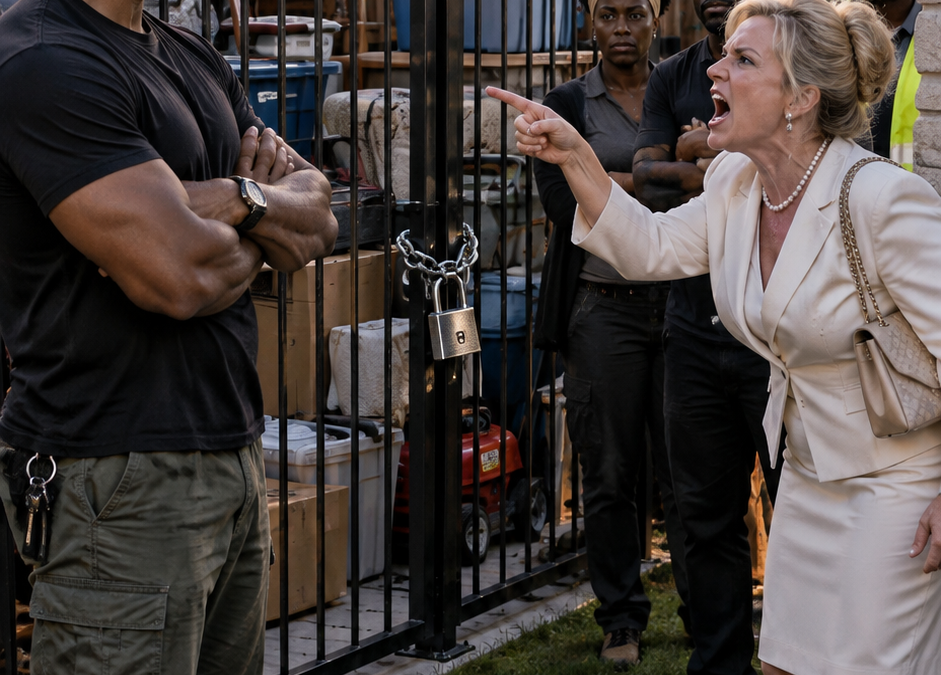
𝗣𝗔𝗥𝗧 𝟮
I spent the next two hours doing what Grant should have done before laughing at the man who owned the dirt beneath his skid steer.
Research.
I pulled Idaho statutes.
Commercial-storage provisions.
Personal-property lien procedures.
Notice requirements.
I called my attorney later to confirm the parts that mattered before I committed to anything expensive.
The framework was surprisingly straightforward.
My land was commercially zoned.
I could establish written storage terms for property knowingly left there after notice.
I needed conspicuous signage.
Documentation.
Notice.
A defensible record showing the owner or possessor knew the equipment was there without permission and chose not to remove it.
If charges remained unpaid long enough and the legal lien requirements were satisfied, there was a process for public sale.
Grant thought I needed a tow truck.
I needed a sign.
I called Mick Talbot.
Mick was sixty-one, a retired structural welder who operated a fencing and fabrication outfit and had helped me with several container-frame projects.
He answered over the sound of a grinder.
“What are we building?”
“Eight-foot perimeter fence.”
The grinder stopped.
“How much perimeter?”
“Whole parcel.”
“Ryan, that’s not a fence. That’s a project.”
“I need it finished Sunday.”
Silence.
Then:
“What’s inside the lot?”
“About seven pieces of HOA landscaping equipment.”
Another silence.
“Do you want the equipment moved first?”
“No.”
“Ah.”
That was all Mick said for several seconds.
I could almost hear him thinking.
“You want the fence around the equipment.”
“Yes.”
“And then?”
“Commercial rolling gate. Chain. Lock.”
“You planning on keeping whatever’s in there?”
“I’m planning on charging storage.”
“How much?”
“Enough that they’ll remember the lesson.”
Mick chuckled once.
“Is this legal?”
“My lawyer is checking the language before anything gets locked.”
“Good enough for me.”
He pulled a crew off another project.
I drove straight to a commercial sign company.
I ordered a four-by-eight-foot sign.
Hazard yellow.
Black reflective lettering.
No decorative border.
No friendly logo.
I wanted Grant to be able to read it from fifty yards away before sunrise.
The wording was intentionally dry.
Private commercial property.
Unauthorized equipment or materials remaining after notice would be subject to commercial storage charges.
The rate:
$1,750 per item, per calendar day.
Seven chargeable items.
Twelve thousand two hundred fifty dollars per day.
The young guy at the sign counter read the amount twice.
“You sure that number’s right?”
“It’s the number I want.”
“Must be some valuable stuff.”
“It’s about to be.”
Friday morning, Mick’s crew arrived.
Posts went into quick-set concrete.
Chain link stretched across the frontage.
Privacy slats followed.
Saturday afternoon, the lot began disappearing behind eight feet of steel mesh.
The funniest part?
The HOA added more equipment while we were building the fence.
A second flatbed loaded with pavers arrived Friday afternoon.
The driver backed right through an unfinished section, dropped it beside the first load, and drove away.
I stood across the lot watching.
Mick walked up beside me.
“They’re putting more stuff inside your fence.”
“I noticed.”
“You going to warn them?”
“I already warned their manager.”
Mick looked toward the new flatbed.
“People are fascinating.”
Sunday afternoon, the rolling gate went into place.
That evening I mounted the yellow sign where nobody approaching the property could possibly miss it.
I photographed the sign.
Photographed the gate.
Photographed every machine and trailer.
Timestamped everything.
At six, I threaded a hardened chain through the gate and clicked the padlock shut.
Mick watched.
“That it?”
“That’s it.”
He looked through the fence at the equipment.
“How much is sitting in there?”
“Retail?”
“Sure.”
“North of a hundred fifty.”
“And your storage meter?”
“Starts now.”
He whistled.
“You’re meaner than you look.”
“I asked nicely first.”
That night, I slept wonderfully.
Monday morning, I returned before sunrise and parked down the street.
I told myself I was there to document whatever happened.
That was true.
It was not the entire truth.
I also wanted to watch Grant read the sign.
At 6:02 a.m., his pickup rounded the corner.
It slowed.
Then stopped.
Grant got out.
He stared at the fence.
Walked ten feet.
Stopped again.
Then approached it like it might vanish if he got close enough.
He touched the chain link.
Walked to the gate.
Saw the padlock.
Then saw the sign.
He read it.
I could tell where he was in the paragraph just by watching his posture.
Unauthorized equipment.
Storage terms.
Daily rate.
Lien.
Possible auction.
His shoulders sank.
He pulled out his phone.
I took a drink of coffee.
Sometimes adulthood provides small gifts.
By 6:30, four more HOA vehicles had arrived.
Workers gathered around the entrance.
Some took photos.
One laughed.
Grant did not.
He paced with his phone against his ear.
At 6:51, a silver SUV arrived.
A woman stepped out.
Mid-fifties.
Professional clothes.
No hurry.
No confusion.
Grant practically sprinted to her.
He talked.
She listened.
Then she walked to the sign.
Read it.
Slowly.
That was my first look at Diane Sutter, president of the Silver Ridge Estates HOA.
Grant looked panicked.
Diane looked interested.
That distinction would matter later.
She made one phone call.
At 7:10, a Boise police cruiser rolled up.
No lights.
No siren.
The officer stepped out already wearing the expression of a man who suspected everyone involved had lawyers and nobody involved needed handcuffs.
I got out of my truck and walked over carrying a folder.
Grant pointed at me.
“That’s him.”
Always nice to be welcomed.
“He fenced off association equipment,” Grant told the officer. “He’s holding it. That’s theft.”
The officer looked at the gate.
Then me.
“This your property?”
“Yes.”
I handed him a copy of my deed.
“Closed Tuesday.”
He read it.
Diane stepped closer.
“Officer, this gentleman has locked association property inside his enclosure. We need access immediately so maintenance operations can continue.”
The officer looked toward the machinery.
“Was the equipment here before he put up the fence?”
Grant answered.
“Yes.”
“Did you have permission from the current owner?”
“It’s complicated.”
That usually means no.
The officer asked again.
“Written lease?”
“No.”
“Storage agreement?”
“No formal one.”
Grant jumped in.
“We’ve used this lot for months.”
I said, “I bought the property Tuesday. Thursday I told Mr. Dolan directly to remove everything.”
The officer looked at Grant.
“And?”
Grant’s jaw tightened.
“I told him we had operations through the month.”
“I have the conversation recorded,” I said.
That changed the temperature.
I opened my folder.
Deed.
Photos.
Timeline.
Notice.
Signage.
Transcript from the dash-camera recording.
I even had a copy of the relevant legal language my attorney had reviewed before I locked anything.
The officer read quietly.
Diane watched him.
Again, she didn’t look worried.
Finally, the officer closed the folder.
“This is civil.”
Grant threw both hands out.
“So he just keeps our equipment?”
“I didn’t say that.”
The officer pointed at me.
“He secured his own commercial property after telling you to remove things you admitted you had no written right to store here.”
He turned toward the gate.
“I’m not ordering a landowner to unlock private property without a court order.”
Diane asked, “What about the storage charges?”
“Talk to your attorney.”
Then the officer added something I still appreciate.
“Probably sooner than later. According to that sign, you’re paying by the day.”
He drove away.
Grant stared after him.
Diane turned toward me.
And smiled.
That bothered me more than if she had screamed.
“Mr. Colt?”
“Ryan is fine.”
“I think you and I should talk.”
“We’re talking.”
“You know what you’re doing.”
“I generally try to.”
“This isn’t the behavior of somebody panicking over trespass.”
“No.”
She studied me.
“Where did you learn lien procedure?”
“I used to value repossessed and seized commercial equipment.”
Something flickered in her eyes.
Not fear.
Recognition.
I nodded toward the skid steer.
“I can probably tell you within two grand what that machine will bring at a liquidation sale.”
Grant looked at Diane.
Diane kept looking at me.
“I’ll be in touch.”
She left.
No threat.
No negotiation.
Nothing.
That should have felt like victory.
Instead, something about her calm stuck with me.
Grant understood the problem.
His machines were behind my fence and getting more expensive every day.
Diane behaved as if she were waiting for something.
Monday afternoon, I issued the first invoice.
Seven items.
$1,750 per item.
Balance:
$12,250.
I sent copies by certified mail to the HOA, its management company, and Grant.
Tuesday, an attorney letter arrived.
Wrongful seizure.
Extortion.
Demand for immediate release.
I photographed it.
Filed it.
Issued invoice number two.
$24,500.
Wednesday, the landscaping crews began renting replacement equipment.
I happened to drive by while a rental company unloaded two mowers and a mini excavator.
There was something almost poetic about watching an organization pay rental fees to avoid paying storage fees on equipment it already owned.
By Wednesday evening:
$36,750.
Thursday, a process server found me.
The HOA wanted an emergency temporary restraining order compelling me to open the gate.
My attorney, Owen Reyes, read the filing and called me.
“They’re asking for emergency relief.”
“Good.”
“That isn’t usually the response I get.”
“They finally put it in front of a judge.”
“Yes.”
“Then they finally have to explain why their equipment was on my land.”
Owen laughed.
“I like you considerably more as a client than I would as opposing counsel.”
Friday:
$60,750.
Diane still hadn’t negotiated.
That was when her calm stopped looking like confidence and started looking like information I didn’t have.
The hearing took place the following Wednesday.
Ada County courthouse.
Judge Marla Okafor presiding.
The HOA’s attorney, Preston Vale, argued that the equipment was essential to community operations, that my fee structure was punitive, and that I was effectively holding expensive assets hostage.
He was good.
Polished.
Professional.
He almost made me sound like a pirate.
Then Judge Okafor asked the question that cut through everything.
“Did your client have a signed right to store this equipment on Mr. Colt’s property?”
Vale paused.
“No formal agreement, Your Honor.”
“Was the landowner aware of the equipment when he purchased the parcel?”
“He discovered it shortly thereafter.”
“Did he request removal?”
“Yes, but—”
“Was it removed?”
“No.”
She turned to me.
“Did you give notice before restricting access?”
“Yes, Your Honor.”
I handed over the documentation.
She reviewed the timeline.
The recorded exchange.
The sign.
The notice.
Then she returned her attention to Vale.
“If your client believes the storage charge is unreasonable, that may be litigated through the ordinary civil process. I am not issuing emergency relief requiring a private owner to open his property where your client has shown no lease granting a right of storage.”
Motion denied.
Grant would have panicked.
Diane sat in the gallery without moving.
I noticed.
Owen noticed too.
Outside the courtroom, I said, “That went well.”
“For today.”
His tone killed my smile.
“What did you find?”
He handed me a title report.
There was an easement dating to 1981.
The neighboring parcel had limited access rights across the rear portion of my land for drainage and utility maintenance.
“Storage isn’t drainage access.”
“No,” Owen said.
“So why do you look worried?”
“Because it muddies the photograph.”
“What photograph?”
“The one the next judge sees.”
He tapped the document.
“If the HOA argues that some equipment was staged in an area where it had limited access rights, that doesn’t create storage rights. But it makes your position less surgically clean.”
“I didn’t know the easement existed.”
“I know.”
“They know that.”
“A judge doesn’t know anything until somebody proves it.”
I hated that sentence because it was correct.
Then I remembered Diane.
The calm.
The patience.
No negotiation.
No urgency.
What if she knew about the easement?
What if she was waiting for the dispute to become messy?
That night, I stopped focusing on the machinery.
I started focusing on Diane.
HOAs generate paperwork.
Budgets.
Minutes.
Insurance disclosures.
Renewal summaries.
Vendor agreements.
Disputes.
Most people never read any of it because most people value their remaining years on earth.
I had a reason.
I found Silver Ridge’s previous annual budget packets.
Then I found the association’s insurer.
Meridian Casualty Mutual.
The policy included general liability and directors-and-officers coverage, plus broader property-dispute provisions than I expected.
The renewal window was approaching.
Five weeks.
Then I found something else.
Three years earlier, Silver Ridge had been involved in a boundary dispute with another neighboring landowner.
The dispute escalated.
Litigation followed.
The association made a substantial insurance claim.
I leaned back from my laptop.
Interesting.
Not proof.
A pattern.
An association had previously benefited from an expensive neighboring-property dispute.
Now another neighboring-property dispute was becoming expensive immediately before policy renewal.
And the woman responsible for the association seemed remarkably unconcerned about the expense.
I called Owen.
He listened.
Then said, “That is a theory.”
“I know.”
“Do not accuse her of insurance fraud based on timing.”
“I’m not.”
“Good.”
“I want to know whether creating a documented property loss could affect their coverage position.”
“That question I’m comfortable asking.”
I also called an old claims adjuster named Phil whom I had known during my asset-recovery days.
I didn’t give him Diane’s name.
Didn’t give him the association.
I described the general scenario.
He explained that commercial insurance renewals can become complicated when active disputes, claims histories, or demonstrated exposures are involved. Depending on policy structure, an association might have strategic reasons to document a significant loss before renewal.
Again:
Not proof.
But now Diane’s behavior had a possible explanation.
Grant thought the fight was costing the HOA money.
Maybe Diane thought the fight could eventually make the HOA money.
Or at minimum shift the financial damage somewhere else.
The fence.
The invoices.
The lawsuit.
The hearing.
Every escalation made the dispute larger.
More documented.
More expensive.
And every time I pushed harder, Diane remained calm.
I laughed when the realization finally clicked.
She might have been trying to turn me into the villain in her insurance file.
Fine.
Then I would stop giving her a private dispute.
I would give her transparency.
The statutory clock was approaching the point where I could record the lien and begin the properly noticed public-sale process.
So I did everything painfully correctly.
Certified mail receipts.
Photographs.
Invoices.
Recorded notices.
Attorney correspondence.
Dates.
By day fourteen, the invoiced balance had reached:
$171,500.
When the required period passed, I filed the lien paperwork with the county.
The clerk behind the counter looked at the asset list.
“Skid steer?”
“Yes.”
“Two zero-turn mowers?”
“Yes.”
“Chipper?”
“Yes.”
“Two spool trailers?”
“Yes.”
“Pavers?”
“Yes.”
She looked up.
“What did these people do?”
“Used my land as free storage.”
“And didn’t move after you told them?”
“No.”
She stamped another page.
“Well.”
Stamp.
“People learn differently.”
I liked her immediately.
Next came the auction notice.
I met the minimum publication requirements.
Then I went further.
Trade publications.
Commercial-equipment listings.
Industry bulletins.
Online searchable notice.
I wanted landscaping companies and equipment dealers across the region to know good machinery was coming up for sale.
Then I mailed one additional notice.
Not an accusation.
Not a threat.
A courtesy.
Meridian Casualty Mutual received a copy of the recorded lien and upcoming auction information because the property appeared connected to its insured association.
I simply stated that, given the dispute and the insured status of the equipment, a representative was welcome to observe.
If my theory was wrong, nothing happened.
If my theory was right, somebody would show up.
Diane remained silent.
Grant did not.
His calls to Owen became angrier.
“You can’t sell this stuff.”
Owen would reply, “Then resolve the lien.”
“Those fees are insane.”
“Then challenge them through the pending civil process.”
“We need our equipment.”
“Then perhaps paying before auction would be economically sensible.”
Apparently that suggestion never reached Diane.
The night before the sale, I sat at my kitchen table examining the manifest.
Seven categories of property.
Condition reports.
Serial numbers.
Market estimates.
Photographs.
The invoiced lien amount had reached $198,250.
I wasn’t angry anymore.
Anger is useful at the beginning.
After that, it makes you sloppy.
I wanted clean math.
Saturday morning, the auction was held at the storage yard.
Mick arrived early.
He tightened the gate hardware.
“Never thought this fence would get this famous.”
“Neither did I.”
Cars began arriving before nine-thirty.
Equipment dealers.
Landscaping-company owners.
Residents from Silver Ridge.
People who had heard the story and simply wanted to watch.
By 9:40, I counted around fifty people.
Then a black sedan arrived.
A man in a fitted gray suit stepped out carrying a leather folio.
He did not speak to Grant.
Did not speak to Diane.
Did not inspect the machinery like a dealer.
He stood near the back and watched.
Interesting.
Diane arrived ten minutes later.
For the first time since this started, I saw uncertainty cross her face.
Only for a second.
But it was there.
She looked at the crowd.
Then the man in gray.
Then me.
Auctioneer Wade Kessler set up a portable PA system.
At 10:00 sharp, he started.
“Morning, folks. Properly noticed lien sale. Commercial landscaping equipment sold as-is. Manifest and condition sheets are available at the registration table.”
He announced the outstanding lien.
“Current balance being satisfied is one hundred ninety-eight thousand two hundred fifty dollars.”
Nobody moved for several seconds.
Then a dealer raised a hand.
“One ninety-eight.”
Wade caught the bid instantly.
“Got one ninety-eight. Looking for two-ten.”
Another dealer:
“Two-ten.”
“Two-ten. Looking for two-twenty-five.”
Then the man in gray raised his hand.
“Two hundred fifty thousand.”
Every head turned.
Even Wade paused for half a heartbeat.
Then professional instinct took over.
“Two-fifty from the gentleman in back. Looking for two-sixty.”
One dealer went:
“Two-sixty.”
The man in gray responded immediately.
“Two seventy-five.”
Grant looked confused.
Diane didn’t.
“Two eighty-five?” Wade called.
“Three hundred thousand.”
Silence.
The dealers stopped bidding.
Of course they did.
The machinery wasn’t worth three hundred thousand dollars.
Not remotely.
I knew because valuing machinery had literally been my profession.
A normal bidder wanted assets.
Whoever the man in gray represented wanted something else.
I stepped forward.
“Wade, one moment.”
The auctioneer looked at me.
I was lienholder.
He lowered the microphone.
I addressed the crowd.
“We currently have a bid that materially exceeds the likely fair-market value of this equipment.”
The man in gray said, “I’m permitted to bid whatever I choose.”
“Absolutely.”
I smiled.
“You’re not required to identify your client either.”
His expression tightened.
“But since the bid has reached three hundred thousand dollars, I think some context may be relevant.”
Diane stepped forward.
“Ryan.”
First time she had used my first name.
I kept going.
“Several weeks ago, I sent formal courtesy notice of this auction to Meridian Casualty Mutual, the insurance carrier for Silver Ridge Estates.”
That changed the board members’ faces.
Diane said sharply, “That has nothing to do with this sale.”
“I’m not claiming anyone committed insurance fraud.”
I looked around deliberately.
“I’m saying the association has an insurance policy approaching renewal, that it has previously made a significant claim following another escalated neighboring-land dispute, and that someone in this crowd is now offering almost twice what competent buyers appear willing to pay for this machinery.”
The man in gray stood very still.
One HOA board member turned toward Diane.
“What insurance claim?”
Diane ignored him.
I continued.
“The HOA could have resolved this storage dispute weeks ago for far less than the current bid.”
Another board member frowned.
“Diane, why didn’t we?”
“There are legal principles involved.”
Grant looked at her.
“Wait.”
That one word carried weeks of confusion finally finding a target.
“You told us not to pay because we were fighting the charges.”
Diane turned toward him.
“Grant, not now.”
“When?”
He gestured toward the equipment.
“We rented replacement machines for three weeks.”
People in the crowd started whispering.
I looked toward the man in gray.
“Sir, you’re entitled to keep bidding.”
He looked at me.
Then Diane.
Then the board.
Then he pulled out his phone and walked several steps away.
Quiet conversation.
Maybe thirty seconds.
He returned.
“I withdraw the bid.”
Nobody spoke.
Then somebody near the back laughed.
Not cruelly.
Just because the timing was impossible to ignore.
Wade brought the microphone back up.
“Three hundred withdrawn. We return to two-sixty.”
One dealer raised his paddle.
“Two sixty-five.”
The other came back.
“Two seventy.”
Now we were back in reality.
Two legitimate buyers fought it out.
Two seventy-five.
Two eighty.
Finally:
$285,000.
Wade raised his hand.
“Two eighty-five once.”
Pause.
“Twice.”
Another pause.
“Sold.”
The gavel came down.
That sound was better than Grant’s laugh.
The sale proceeds satisfied my lien and related permitted charges.
Any lawful surplus after the debt and sale costs went back according to the applicable process rather than magically becoming mine.
I wasn’t interested in stealing anybody’s machinery.
I had been interested in getting paid for the commercial use of my property after they decided permission was optional.
The HOA still received a substantial surplus.
A consolation prize.
Diane received something different.
Questions.
Her own board surrounded her.
One member asked about the insurance policy.
Another wanted the prior property dispute file.
Grant wanted to know why he had been told to let the equipment remain locked up even when paying earlier could have stopped the charges.
A local business reporter who had originally come because “HOA equipment auction” sounded like an amusing Saturday feature was suddenly writing very quickly.
Diane looked at me.
The first time she had faced me, she had smiled like she understood the game better.
Now she looked like somebody who had just discovered she wasn’t the only one keeping records.
“This was reckless,” she said.
I almost laughed.
“You parked six figures of machinery on land you didn’t own.”
“The association will challenge your fees.”
“That’s what courts are for.”
“You created this.”
I shook my head.
“No.”
I pointed toward Grant.
“I asked him to move the equipment.”
Grant looked at the ground.
“You had every chance after that.”
Her face tightened.
“This isn’t over.”
Maybe she thought that would sound threatening.
Instead, one board member behind her said:
“No, Diane. I think your part might be.”
She turned.
The woman continued.
“We need an emergency board session.”
Right there.
In front of everyone.
Diane’s face changed.
Not dramatically.
Just enough.
She finally understood the problem.
She had spent weeks keeping control by making the dispute complicated.
Now the dispute was simple.
Residents understood a fence.
They understood equipment.
They understood storage charges.
They understood three hundred thousand dollars being bid by a mysterious outsider after an insurance carrier received notice.
And most importantly, they understood a president who repeatedly refused the cheaper exit.
There are moments when complicated power structures collapse because ordinary people suddenly realize they have been asking the wrong question.
For three weeks, the board’s question had been:
How do we beat Ryan Colt?
Now it became:
Why did Diane Sutter want this fight to continue?
That was much more dangerous for her.
Diane left before the paperwork was finished.
Grant remained.
He walked over while the winning buyer arranged transport.
He looked exhausted.
“For whatever it’s worth,” he said, “I didn’t know about the insurance stuff.”
“I know.”
“I really thought we were just fighting your storage bill.”
“I know that too.”
He stared toward the gate.
“You could’ve made this easier.”
I raised an eyebrow.
“You told me to call a tow truck.”
He winced.
“Yeah.”
“You laughed.”
“Yeah.”
“And then you threatened me with lawyers.”
He rubbed his face.
“When you list it like that, it sounds bad.”
“It looked bad in real time too.”
He actually smiled.
A tired, embarrassed smile.
“I should’ve moved the equipment.”
“Yes.”
“I didn’t want to move it twice.”
“And instead?”
“We lost the equipment.”
“Technically you converted it into money.”
He laughed despite himself.
“Still a jerk.”
“Probably.”
Then he held out his hand.
I shook it.
Grant had been arrogant.
Careless.
Lazy.
But I no longer believed he had designed the larger situation.
He was a guy who didn’t want to relocate machinery and assumed the new landowner would eventually surrender.
His mistake was ordinary.
Diane’s was strategic.
Three weeks later, Owen called.
“I have news.”
“How expensive?”
“For you? Not expensive.”
“Good start.”
“Silver Ridge held an emergency vote.”
I leaned back in my office chair.
“And?”
“Diane Sutter is no longer president.”
“What was the vote?”
“Five to one.”
I smiled.
“Let me guess the one.”
“Diane.”
“Of course.”
The board had ordered a review of the association’s handling of the equipment dispute, its insurance communications, and the earlier boundary dispute.
I never claimed to know exactly what Diane intended.
That mattered.
There’s a difference between seeing a pattern and pretending you can read somebody’s mind.
Maybe she genuinely believed aggressive litigation strengthened the association’s financial position.
Maybe she thought the insurer would absorb the damage.
Maybe she was gambling on a settlement.
Maybe she had simply become so accustomed to controlling HOA conflicts that she couldn’t recognize when walking away was the smarter move.
I didn’t need to solve every motive.
Her own board had enough questions.
And for once, those questions were aimed at her.
The reporter caught me before leaving the auction that Saturday.
“What are you doing with the money?”
“Building my container yard.”
“That’s it?”
“That was always the plan.”
“No vacation?”
“I run refrigerated storage.”
She smiled.
“That sounds depressing.”
“It pays better than vacations.”
Behind her, equipment was being loaded.
The privacy slats on one section of the fence were already coming down.
She pointed at the yellow sign.
“What about that?”
“I’m keeping it.”
“Why?”
“I paid rush pricing.”
She laughed.
“No, really.”
I looked at the sign.
Thirty days earlier, it had been a warning.
Now it felt like a trophy.
“I think I’ll hang it behind my desk.”
Next to it, I eventually framed a copy of the final auction sheet.
Not because I needed a daily reminder that I had beaten an HOA.
That would be childish.
Although not completely unsatisfying.
I kept them because together they represented something much more useful.
The sign represented notice.
The auction sheet represented consequence.
Grant thought property rights were theoretical until a fence appeared.
Diane thought paperwork was a weapon only people like her knew how to use.
Both were wrong.
My cold-storage yard eventually opened almost exactly the way I had originally designed it.
Containers in clean rows.
Dedicated loading space.
Security lighting.
Commercial gates.
Mick built the permanent fencing.
The HOA equipment never came back.
In fact, Silver Ridge became extremely respectful of my property line.
Painfully respectful.
One afternoon I found an HOA landscaping worker measuring the distance from my fence before parking his truck.
I called over.
“You can move six inches closer.”
He looked terrified.
“I’m good.”
I laughed.
“Fair enough.”
Grant eventually moved on to another contractor.
The last time I saw him, he pointed at my office window where the yellow sign hung behind my desk.
“You actually kept that thing?”
“Absolutely.”
“You’re unbelievable.”
“You helped pay for it.”
That earned me another laugh.
The Silver Ridge board changed its vendor procedures after Diane’s removal.
Written staging agreements.
Documented access rights.
Clear property boundaries.
Apparently all it takes to make an HOA discover contracts is watching its skid steer disappear at auction.
Funny how educational consequences can be.
People sometimes hear this story and assume the satisfying part was the money.
It wasn’t.
Money was useful.
Money expanded my yard.
Money covered the disruption.
Money made Grant’s original laugh expensive enough to become funny in hindsight.
But the best moment happened before the auction ended.
It was the second Diane realized the room had stopped following her version of events.
For weeks, she had been calm because she believed she understood the incentives better than everyone else.
She knew the HOA.
She knew the attorneys.
She knew the insurance.
She knew the board.
She knew how long ordinary property owners usually tolerate pressure before deciding peace is cheaper.
What she did not know was me.
I had spent years valuing distressed assets for people who made expensive mistakes.
I knew how to wait.
I knew how to document.
I knew that equipment has numbers attached to it, numbers don’t care about intimidation, and deadlines are considerably less frightening when you understand who they actually favor.
Diane tried to turn my land into free storage.
Grant tried to make my ownership sound inconvenient.
Their lawyer tried to turn the dispute into an emergency.
Then the easement appeared and briefly made my position look less clean than I wanted.
For the first time, I could have panicked.
I didn’t.
I followed the paper.
Then I followed the money.
And eventually the money led straight back to the one person who had remained suspiciously comfortable while everybody around her was losing it.
That was the mistake Diane never recovered from.
She assumed the louder the conflict became, the stronger she would become.
Instead, the louder it became, the more witnesses showed up.
The police saw the deed.
The judge saw the notice.
The recorder saw the lien.
The bidders saw the equipment.
The insurer saw the auction.
The residents saw the bidding.
And finally, the board saw Diane.
All at once.
No private meeting could put that back in the box.
No attorney letter could make sixty witnesses forget what they had watched.
No polished explanation could change the fact that an equipment dispute she had allowed to grow for weeks suddenly attracted a three-hundred-thousand-dollar bid from a man nobody recognized.
Her greatest weapon had been complexity.
My best response was transparency.
Years later, I still own that parcel.
The refrigerated containers are lined up where the HOA mowers once sat.
Trucks move in and out all week.
My customers sign storage contracts.
That part always makes me smile.
Nobody leaves anything on my property without paperwork anymore.
Near the office door hangs the original yellow sign.
Four feet by eight feet.
Ridiculously oversized for an indoor wall.
Mick says it makes my office look like a highway maintenance shed.
I tell him that’s the point.
Under it is the auction sheet.
FINAL SALE: $285,000.
Every once in a while, a customer asks what happened.
I usually give them the short version.
“HOA thought my land was free.”
Then they look at the giant sign.
“What did you do?”
“I introduced them to commercial storage.”
That answer is usually enough.
Because the truth is, I never needed revenge.
I needed them to understand one basic principle.
If something belongs to you, that does not mean you can put it wherever you want.
If someone else owns the ground beneath it, their permission matters.
Grant learned that when he arrived before sunrise and found a fence where his free parking used to be.
The board learned it when a judge refused to rescue them from their own arrangement.
Diane learned it when an auction crowd watched her strategy unravel faster than she could explain it.
And I learned something too.
Never assume the person staying calm is the smartest person in the room.
Sometimes they simply think everyone else is playing the game they designed.
The trick is not to beat them at that game.
It is to change what the game is about.
Diane wanted an escalating dispute.
I gave her documentation.
She wanted private legal pressure.
I gave her a public auction.
She wanted people focused on an aggressive young landowner charging outrageous storage fees.
I gave them a question she could not answer:
Why had she allowed those fees to keep growing?
By the time that question was asked publicly, her presidency was already dying.
Three weeks later, five members of her own board finished the job.
All because one HOA grounds manager looked at me on land I had just bought and decided I wasn’t important enough to listen to.
“Call a tow company,” Grant had said.
I never did.
I called a fence contractor instead.
Then I did the arithmetic.
And I waited.
Have you finished reading the story and want to read it again?
HOA Used My Land as Free Storage—So I Locked Up Their $300,000 Equipment and Made Them Pay
They thought my land was free storage.
Then they laughed when I told them to move their equipment.
That laugh became the most expensive mistake their HOA ever made.
I found the machinery on a Thursday morning in April, two days after I officially became the owner of the property.
Not one mower.
Not a forgotten trailer.
An entire commercial landscaping operation.
Two zero-turn mowers sat strapped to utility trailers near the east edge of my new lot. A skid steer with a landscaping attachment was parked beside a flatbed loaded with pavers. Two irrigation spool trailers took up another section. A commercial wood chipper stood near the rear fence like somebody had dropped a piece of municipal equipment there and simply forgotten about it.
In the middle of everything was a work truck with a magnetic sign on the door.
SILVER RIDGE ESTATES HOA — GROUNDS MAINTENANCE
I stood beside my pickup holding a cup of coffee and stared.
My name is Ryan Colt.
I was twenty-eight, owned a pallet fabrication and refrigerated-container storage business outside Boise, Idaho, and had just spent the better part of four years saving enough money to purchase that acre-and-a-half industrial parcel.
It wasn’t beautiful.
Flat gravel.
Utility access.
Commercial zoning.
An aging chain-link boundary on two sides.
Exactly what I wanted.
I planned to expand my refrigerated container yard there, which wasn’t glamorous enough for Instagram but happened to generate actual revenue.
Before starting my own business, I spent two years working for a regional asset-recovery company as a liquidation appraiser.
Banks would repossess machinery.
Construction companies would collapse.
Borrowers would default on loans.
My job was to look at the equipment and answer one unromantic question:
What is this thing actually worth if somebody has to sell it?
That job changes the way you see heavy equipment.
Most people saw a skid steer.
I saw make, model, operating hours, attachment condition, auction value, dealer value, transport cost, depreciation.
So my first reaction to the HOA equipment wasn’t outrage.
It was arithmetic.
Used skid steer?
Maybe forty-five thousand.
Two commercial zero-turns?
Another twelve to sixteen.
Chipper?
Probably twelve.
Trailers, irrigation equipment, pavers, attachments, tools.
The total climbed past a hundred thousand before I finished the coffee.
Then a man walked around the skid steer wiping his hands on a rag.
Mid-thirties.
Sunburned.
HOA polo.
He looked at me as though I had wandered onto his job site.
“Help you?”
Interesting opening question considering we were standing on my property.
“You can start by telling me why this is all here.”
He glanced around.
“This?”
“Yes. The collection of heavy machinery.”
“This lot’s been empty for months.”
“That wasn’t my question.”
He shrugged.
“We use it for staging during spring maintenance.”
“I bought it Tuesday.”
That finally made him look at me.
“Okay.”
“So move it.”
He gave me the kind of smile people use when they’re confident you’re the least important person in the conversation.
I would later learn his name was Grant Dolan, contract site manager for Silver Ridge’s grounds crew.
“We’ve got crews running through here all month,” he said. “Pool opening, landscaping, common areas. I can’t move everything every night.”
“I didn’t ask you to move it every night.”
I pointed toward the street.
“I’m asking you to move it once.”
Grant laughed.
Small laugh.
Dismissive.
Very expensive.
“Today’s not happening.”
“Why?”
“Because I’ve got four crews using this as staging.”
“Then find another staging area.”
“You can call the HOA office.”
He turned back toward the skid steer.
“File a complaint. Board usually gets back to people in a couple weeks.”
I stared at him.
“You’re telling the property owner to file a complaint because you’re using his property?”
“It’s been like this for months.”
“I’ve owned it for two days.”
“Exactly.”
He climbed toward the skid steer cab.
I said, “Or I could have this equipment removed.”
Grant laughed again.
“Good luck finding a towing company willing to touch a loaded skid steer when the HOA claims possession.”
He pointed toward the equipment.
“This belongs to the association or its contractors. You move anything, you’ll be the one answering to attorneys.”
Then he shut the cab door.
Conversation over.
At least he thought it was.
I stood there for another thirty seconds.
Then I smiled.
Because Grant had just made a mistake people make constantly when they mistake arrogance for leverage.
He had clearly admitted the HOA had no lease.
No written storage agreement.
No permission from me.
And no intention of leaving when instructed by the new owner.
Better yet, my truck’s dash camera was running.
Every word was recorded.
I got inside.
Opened my laptop.
And started reading.
PART2
I spent the next two hours doing what Grant should have done before laughing at the man who owned the dirt beneath his skid steer.
Research.
I pulled Idaho statutes.
Commercial-storage provisions.
Personal-property lien procedures.
Notice requirements.
I called my attorney later to confirm the parts that mattered before I committed to anything expensive.
The framework was surprisingly straightforward.
My land was commercially zoned.
I could establish written storage terms for property knowingly left there after notice.
I needed conspicuous signage.
Documentation.
Notice.
A defensible record showing the owner or possessor knew the equipment was there without permission and chose not to remove it.
If charges remained unpaid long enough and the legal lien requirements were satisfied, there was a process for public sale.
Grant thought I needed a tow truck.
I needed a sign.
I called Mick Talbot.
Mick was sixty-one, a retired structural welder who operated a fencing and fabrication outfit and had helped me with several container-frame projects.
He answered over the sound of a grinder.
“What are we building?”
“Eight-foot perimeter fence.”
The grinder stopped.
“How much perimeter?”
“Whole parcel.”
“Ryan, that’s not a fence. That’s a project.”
“I need it finished Sunday.”
Silence.
Then:
“What’s inside the lot?”
“About seven pieces of HOA landscaping equipment.”
Another silence.
“Do you want the equipment moved first?”
“No.”
“Ah.”
That was all Mick said for several seconds.
I could almost hear him thinking.
“You want the fence around the equipment.”
“Yes.”
“And then?”
“Commercial rolling gate. Chain. Lock.”
“You planning on keeping whatever’s in there?”
“I’m planning on charging storage.”
“How much?”
“Enough that they’ll remember the lesson.”
Mick chuckled once.
“Is this legal?”
“My lawyer is checking the language before anything gets locked.”
“Good enough for me.”
He pulled a crew off another project.
I drove straight to a commercial sign company.
I ordered a four-by-eight-foot sign.
Hazard yellow.
Black reflective lettering.
No decorative border.
No friendly logo.
I wanted Grant to be able to read it from fifty yards away before sunrise.
The wording was intentionally dry.
Private commercial property.
Unauthorized equipment or materials remaining after notice would be subject to commercial storage charges.
The rate:
$1,750 per item, per calendar day.
Seven chargeable items.
Twelve thousand two hundred fifty dollars per day.
The young guy at the sign counter read the amount twice.
“You sure that number’s right?”
“It’s the number I want.”
“Must be some valuable stuff.”
“It’s about to be.”
Friday morning, Mick’s crew arrived.
Posts went into quick-set concrete.
Chain link stretched across the frontage.
Privacy slats followed.
Saturday afternoon, the lot began disappearing behind eight feet of steel mesh.
The funniest part?
The HOA added more equipment while we were building the fence.
A second flatbed loaded with pavers arrived Friday afternoon.
The driver backed right through an unfinished section, dropped it beside the first load, and drove away.
I stood across the lot watching.
Mick walked up beside me.
“They’re putting more stuff inside your fence.”
“I noticed.”
“You going to warn them?”
“I already warned their manager.”
Mick looked toward the new flatbed.
“People are fascinating.”
Sunday afternoon, the rolling gate went into place.
That evening I mounted the yellow sign where nobody approaching the property could possibly miss it.
I photographed the sign.
Photographed the gate.
Photographed every machine and trailer.
Timestamped everything.
At six, I threaded a hardened chain through the gate and clicked the padlock shut.
Mick watched.
“That it?”
“That’s it.”
He looked through the fence at the equipment.
“How much is sitting in there?”
“Retail?”
“Sure.”
“North of a hundred fifty.”
“And your storage meter?”
“Starts now.”
He whistled.
“You’re meaner than you look.”
“I asked nicely first.”
That night, I slept wonderfully.
Monday morning, I returned before sunrise and parked down the street.
I told myself I was there to document whatever happened.
That was true.
It was not the entire truth.
I also wanted to watch Grant read the sign.
At 6:02 a.m., his pickup rounded the corner.
It slowed.
Then stopped.
Grant got out.
He stared at the fence.
Walked ten feet.
Stopped again.
Then approached it like it might vanish if he got close enough.
He touched the chain link.
Walked to the gate.
Saw the padlock.
Then saw the sign.
He read it.
I could tell where he was in the paragraph just by watching his posture.
Unauthorized equipment.
Storage terms.
Daily rate.
Lien.
Possible auction.
His shoulders sank.
He pulled out his phone.
I took a drink of coffee.
Sometimes adulthood provides small gifts.
By 6:30, four more HOA vehicles had arrived.
Workers gathered around the entrance.
Some took photos.
One laughed.
Grant did not.
He paced with his phone against his ear.
At 6:51, a silver SUV arrived.
A woman stepped out.
Mid-fifties.
Professional clothes.
No hurry.
No confusion.
Grant practically sprinted to her.
He talked.
She listened.
Then she walked to the sign.
Read it.
Slowly.
That was my first look at Diane Sutter, president of the Silver Ridge Estates HOA.
Grant looked panicked.
Diane looked interested.
That distinction would matter later.
She made one phone call.
At 7:10, a Boise police cruiser rolled up.
No lights.
No siren.
The officer stepped out already wearing the expression of a man who suspected everyone involved had lawyers and nobody involved needed handcuffs.
I got out of my truck and walked over carrying a folder.
Grant pointed at me.
“That’s him.”
Always nice to be welcomed.
“He fenced off association equipment,” Grant told the officer. “He’s holding it. That’s theft.”
The officer looked at the gate.
Then me.
“This your property?”
“Yes.”
I handed him a copy of my deed.
“Closed Tuesday.”
He read it.
Diane stepped closer.
“Officer, this gentleman has locked association property inside his enclosure. We need access immediately so maintenance operations can continue.”
The officer looked toward the machinery.
“Was the equipment here before he put up the fence?”
Grant answered.
“Yes.”
“Did you have permission from the current owner?”
“It’s complicated.”
That usually means no.
The officer asked again.
“Written lease?”
“No.”
“Storage agreement?”
“No formal one.”
Grant jumped in.
“We’ve used this lot for months.”
I said, “I bought the property Tuesday. Thursday I told Mr. Dolan directly to remove everything.”
The officer looked at Grant.
“And?”
Grant’s jaw tightened.
“I told him we had operations through the month.”
“I have the conversation recorded,” I said.
That changed the temperature.
I opened my folder.
Deed.
Photos.
Timeline.
Notice.
Signage.
Transcript from the dash-camera recording.
I even had a copy of the relevant legal language my attorney had reviewed before I locked anything.
The officer read quietly.
Diane watched him.
Again, she didn’t look worried.
Finally, the officer closed the folder.
“This is civil.”
Grant threw both hands out.
“So he just keeps our equipment?”
“I didn’t say that.”
The officer pointed at me.
“He secured his own commercial property after telling you to remove things you admitted you had no written right to store here.”
He turned toward the gate.
“I’m not ordering a landowner to unlock private property without a court order.”
Diane asked, “What about the storage charges?”
“Talk to your attorney.”
Then the officer added something I still appreciate.
“Probably sooner than later. According to that sign, you’re paying by the day.”
He drove away.
Grant stared after him.
Diane turned toward me.
And smiled.
That bothered me more than if she had screamed.
“Mr. Colt?”
“Ryan is fine.”
“I think you and I should talk.”
“We’re talking.”
“You know what you’re doing.”
“I generally try to.”
“This isn’t the behavior of somebody panicking over trespass.”
“No.”
She studied me.
“Where did you learn lien procedure?”
“I used to value repossessed and seized commercial equipment.”
Something flickered in her eyes.
Not fear.
Recognition.
I nodded toward the skid steer.
“I can probably tell you within two grand what that machine will bring at a liquidation sale.”
Grant looked at Diane.
Diane kept looking at me.
“I’ll be in touch.”
She left.
No threat.
No negotiation.
Nothing.
That should have felt like victory.
Instead, something about her calm stuck with me.
Grant understood the problem.
His machines were behind my fence and getting more expensive every day.
Diane behaved as if she were waiting for something.
Monday afternoon, I issued the first invoice.
Seven items.
$1,750 per item.
Balance:
$12,250.
I sent copies by certified mail to the HOA, its management company, and Grant.
Tuesday, an attorney letter arrived.
Wrongful seizure.
Extortion.
Demand for immediate release.
I photographed it.
Filed it.
Issued invoice number two.
$24,500.
Wednesday, the landscaping crews began renting replacement equipment.
I happened to drive by while a rental company unloaded two mowers and a mini excavator.
There was something almost poetic about watching an organization pay rental fees to avoid paying storage fees on equipment it already owned.
By Wednesday evening:
$36,750.
Thursday, a process server found me.
The HOA wanted an emergency temporary restraining order compelling me to open the gate.
My attorney, Owen Reyes, read the filing and called me.
“They’re asking for emergency relief.”
“Good.”
“That isn’t usually the response I get.”
“They finally put it in front of a judge.”
“Yes.”
“Then they finally have to explain why their equipment was on my land.”
Owen laughed.
“I like you considerably more as a client than I would as opposing counsel.”
Friday:
$60,750.
Diane still hadn’t negotiated.
That was when her calm stopped looking like confidence and started looking like information I didn’t have.
The hearing took place the following Wednesday.
Ada County courthouse.
Judge Marla Okafor presiding.
The HOA’s attorney, Preston Vale, argued that the equipment was essential to community operations, that my fee structure was punitive, and that I was effectively holding expensive assets hostage.
He was good.
Polished.
Professional.
He almost made me sound like a pirate.
Then Judge Okafor asked the question that cut through everything.
“Did your client have a signed right to store this equipment on Mr. Colt’s property?”
Vale paused.
“No formal agreement, Your Honor.”
“Was the landowner aware of the equipment when he purchased the parcel?”
“He discovered it shortly thereafter.”
“Did he request removal?”
“Yes, but—”
“Was it removed?”
“No.”
She turned to me.
“Did you give notice before restricting access?”
“Yes, Your Honor.”
I handed over the documentation.
She reviewed the timeline.
The recorded exchange.
The sign.
The notice.
Then she returned her attention to Vale.
“If your client believes the storage charge is unreasonable, that may be litigated through the ordinary civil process. I am not issuing emergency relief requiring a private owner to open his property where your client has shown no lease granting a right of storage.”
Motion denied.
Grant would have panicked.
Diane sat in the gallery without moving.
I noticed.
Owen noticed too.
Outside the courtroom, I said, “That went well.”
“For today.”
His tone killed my smile.
“What did you find?”
He handed me a title report.
There was an easement dating to 1981.
The neighboring parcel had limited access rights across the rear portion of my land for drainage and utility maintenance.
“Storage isn’t drainage access.”
“No,” Owen said.
“So why do you look worried?”
“Because it muddies the photograph.”
“What photograph?”
“The one the next judge sees.”
He tapped the document.
“If the HOA argues that some equipment was staged in an area where it had limited access rights, that doesn’t create storage rights. But it makes your position less surgically clean.”
“I didn’t know the easement existed.”
“I know.”
“They know that.”
“A judge doesn’t know anything until somebody proves it.”
I hated that sentence because it was correct.
Then I remembered Diane.
The calm.
The patience.
No negotiation.
No urgency.
What if she knew about the easement?
What if she was waiting for the dispute to become messy?
That night, I stopped focusing on the machinery.
I started focusing on Diane.
HOAs generate paperwork.
Budgets.
Minutes.
Insurance disclosures.
Renewal summaries.
Vendor agreements.
Disputes.
Most people never read any of it because most people value their remaining years on earth.
I had a reason.
I found Silver Ridge’s previous annual budget packets.
Then I found the association’s insurer.
Meridian Casualty Mutual.
The policy included general liability and directors-and-officers coverage, plus broader property-dispute provisions than I expected.
The renewal window was approaching.
Five weeks.
Then I found something else.
Three years earlier, Silver Ridge had been involved in a boundary dispute with another neighboring landowner.
The dispute escalated.
Litigation followed.
The association made a substantial insurance claim.
I leaned back from my laptop.
Interesting.
Not proof.
A pattern.
An association had previously benefited from an expensive neighboring-property dispute.
Now another neighboring-property dispute was becoming expensive immediately before policy renewal.
And the woman responsible for the association seemed remarkably unconcerned about the expense.
I called Owen.
He listened.
Then said, “That is a theory.”
“I know.”
“Do not accuse her of insurance fraud based on timing.”
“I’m not.”
“Good.”
“I want to know whether creating a documented property loss could affect their coverage position.”
“That question I’m comfortable asking.”
I also called an old claims adjuster named Phil whom I had known during my asset-recovery days.
I didn’t give him Diane’s name.
Didn’t give him the association.
I described the general scenario.
He explained that commercial insurance renewals can become complicated when active disputes, claims histories, or demonstrated exposures are involved. Depending on policy structure, an association might have strategic reasons to document a significant loss before renewal.
Again:
Not proof.
But now Diane’s behavior had a possible explanation.
Grant thought the fight was costing the HOA money.
Maybe Diane thought the fight could eventually make the HOA money.
Or at minimum shift the financial damage somewhere else.
The fence.
The invoices.
The lawsuit.
The hearing.
Every escalation made the dispute larger.
More documented.
More expensive.
And every time I pushed harder, Diane remained calm.
I laughed when the realization finally clicked.
She might have been trying to turn me into the villain in her insurance file.
Fine.
Then I would stop giving her a private dispute.
I would give her transparency.
The statutory clock was approaching the point where I could record the lien and begin the properly noticed public-sale process.
So I did everything painfully correctly.
Certified mail receipts.
Photographs.
Invoices.
Recorded notices.
Attorney correspondence.
Dates.
By day fourteen, the invoiced balance had reached:
$171,500.
When the required period passed, I filed the lien paperwork with the county.
The clerk behind the counter looked at the asset list.
“Skid steer?”
“Yes.”
“Two zero-turn mowers?”
“Yes.”
“Chipper?”
“Yes.”
“Two spool trailers?”
“Yes.”
“Pavers?”
“Yes.”
She looked up.
“What did these people do?”
“Used my land as free storage.”
“And didn’t move after you told them?”
“No.”
She stamped another page.
“Well.”
Stamp.
“People learn differently.”
I liked her immediately.
Next came the auction notice.
I met the minimum publication requirements.
Then I went further.
Trade publications.
Commercial-equipment listings.
Industry bulletins.
Online searchable notice.
I wanted landscaping companies and equipment dealers across the region to know good machinery was coming up for sale.
Then I mailed one additional notice.
Not an accusation.
Not a threat.
A courtesy.
Meridian Casualty Mutual received a copy of the recorded lien and upcoming auction information because the property appeared connected to its insured association.
I simply stated that, given the dispute and the insured status of the equipment, a representative was welcome to observe.
If my theory was wrong, nothing happened.
If my theory was right, somebody would show up.
Diane remained silent.
Grant did not.
His calls to Owen became angrier.
“You can’t sell this stuff.”
Owen would reply, “Then resolve the lien.”
“Those fees are insane.”
“Then challenge them through the pending civil process.”
“We need our equipment.”
“Then perhaps paying before auction would be economically sensible.”
Apparently that suggestion never reached Diane.
The night before the sale, I sat at my kitchen table examining the manifest.
Seven categories of property.
Condition reports.
Serial numbers.
Market estimates.
Photographs.
The invoiced lien amount had reached $198,250.
I wasn’t angry anymore.
Anger is useful at the beginning.
After that, it makes you sloppy.
I wanted clean math.
Saturday morning, the auction was held at the storage yard.
Mick arrived early.
He tightened the gate hardware.
“Never thought this fence would get this famous.”
“Neither did I.”
Cars began arriving before nine-thirty.
Equipment dealers.
Landscaping-company owners.
Residents from Silver Ridge.
People who had heard the story and simply wanted to watch.
By 9:40, I counted around fifty people.
Then a black sedan arrived.
A man in a fitted gray suit stepped out carrying a leather folio.
He did not speak to Grant.
Did not speak to Diane.
Did not inspect the machinery like a dealer.
He stood near the back and watched.
Interesting.
Diane arrived ten minutes later.
For the first time since this started, I saw uncertainty cross her face.
Only for a second.
But it was there.
She looked at the crowd.
Then the man in gray.
Then me.
Auctioneer Wade Kessler set up a portable PA system.
At 10:00 sharp, he started.
“Morning, folks. Properly noticed lien sale. Commercial landscaping equipment sold as-is. Manifest and condition sheets are available at the registration table.”
He announced the outstanding lien.
“Current balance being satisfied is one hundred ninety-eight thousand two hundred fifty dollars.”
Nobody moved for several seconds.
Then a dealer raised a hand.
“One ninety-eight.”
Wade caught the bid instantly.
“Got one ninety-eight. Looking for two-ten.”
Another dealer:
“Two-ten.”
“Two-ten. Looking for two-twenty-five.”
Then the man in gray raised his hand.
“Two hundred fifty thousand.”
Every head turned.
Even Wade paused for half a heartbeat.
Then professional instinct took over.
“Two-fifty from the gentleman in back. Looking for two-sixty.”
One dealer went:
“Two-sixty.”
The man in gray responded immediately.
“Two seventy-five.”
Grant looked confused.
Diane didn’t.
“Two eighty-five?” Wade called.
“Three hundred thousand.”
Silence.
The dealers stopped bidding.
Of course they did.
The machinery wasn’t worth three hundred thousand dollars.
Not remotely.
I knew because valuing machinery had literally been my profession.
A normal bidder wanted assets.
Whoever the man in gray represented wanted something else.
I stepped forward.
“Wade, one moment.”
The auctioneer looked at me.
I was lienholder.
He lowered the microphone.
I addressed the crowd.
“We currently have a bid that materially exceeds the likely fair-market value of this equipment.”
The man in gray said, “I’m permitted to bid whatever I choose.”
“Absolutely.”
I smiled.
“You’re not required to identify your client either.”
His expression tightened.
“But since the bid has reached three hundred thousand dollars, I think some context may be relevant.”
Diane stepped forward.
“Ryan.”
First time she had used my first name.
I kept going.
“Several weeks ago, I sent formal courtesy notice of this auction to Meridian Casualty Mutual, the insurance carrier for Silver Ridge Estates.”
That changed the board members’ faces.
Diane said sharply, “That has nothing to do with this sale.”
“I’m not claiming anyone committed insurance fraud.”
I looked around deliberately.
“I’m saying the association has an insurance policy approaching renewal, that it has previously made a significant claim following another escalated neighboring-land dispute, and that someone in this crowd is now offering almost twice what competent buyers appear willing to pay for this machinery.”
The man in gray stood very still.
One HOA board member turned toward Diane.
“What insurance claim?”
Diane ignored him.
I continued.
“The HOA could have resolved this storage dispute weeks ago for far less than the current bid.”
Another board member frowned.
“Diane, why didn’t we?”
“There are legal principles involved.”
Grant looked at her.
“Wait.”
That one word carried weeks of confusion finally finding a target.
“You told us not to pay because we were fighting the charges.”
Diane turned toward him.
“Grant, not now.”
“When?”
He gestured toward the equipment.
“We rented replacement machines for three weeks.”
People in the crowd started whispering.
I looked toward the man in gray.
“Sir, you’re entitled to keep bidding.”
He looked at me.
Then Diane.
Then the board.
Then he pulled out his phone and walked several steps away.
Quiet conversation.
Maybe thirty seconds.
He returned.
“I withdraw the bid.”
Nobody spoke.
Then somebody near the back laughed.
Not cruelly.
Just because the timing was impossible to ignore.
Wade brought the microphone back up.
“Three hundred withdrawn. We return to two-sixty.”
One dealer raised his paddle.
“Two sixty-five.”
The other came back.
“Two seventy.”
Now we were back in reality.
Two legitimate buyers fought it out.
Two seventy-five.
Two eighty.
Finally:
$285,000.
Wade raised his hand.
“Two eighty-five once.”
Pause.
“Twice.”
Another pause.
“Sold.”
The gavel came down.
That sound was better than Grant’s laugh.
The sale proceeds satisfied my lien and related permitted charges.
Any lawful surplus after the debt and sale costs went back according to the applicable process rather than magically becoming mine.
I wasn’t interested in stealing anybody’s machinery.
I had been interested in getting paid for the commercial use of my property after they decided permission was optional.
The HOA still received a substantial surplus.
A consolation prize.
Diane received something different.
Questions.
Her own board surrounded her.
One member asked about the insurance policy.
Another wanted the prior property dispute file.
Grant wanted to know why he had been told to let the equipment remain locked up even when paying earlier could have stopped the charges.
A local business reporter who had originally come because “HOA equipment auction” sounded like an amusing Saturday feature was suddenly writing very quickly.
Diane looked at me.
The first time she had faced me, she had smiled like she understood the game better.
Now she looked like somebody who had just discovered she wasn’t the only one keeping records.
“This was reckless,” she said.
I almost laughed.
“You parked six figures of machinery on land you didn’t own.”
“The association will challenge your fees.”
“That’s what courts are for.”
“You created this.”
I shook my head.
“No.”
I pointed toward Grant.
“I asked him to move the equipment.”
Grant looked at the ground.
“You had every chance after that.”
Her face tightened.
“This isn’t over.”
Maybe she thought that would sound threatening.
Instead, one board member behind her said:
“No, Diane. I think your part might be.”
She turned.
The woman continued.
“We need an emergency board session.”
Right there.
In front of everyone.
Diane’s face changed.
Not dramatically.
Just enough.
She finally understood the problem.
She had spent weeks keeping control by making the dispute complicated.
Now the dispute was simple.
Residents understood a fence.
They understood equipment.
They understood storage charges.
They understood three hundred thousand dollars being bid by a mysterious outsider after an insurance carrier received notice.
And most importantly, they understood a president who repeatedly refused the cheaper exit.
There are moments when complicated power structures collapse because ordinary people suddenly realize they have been asking the wrong question.
For three weeks, the board’s question had been:
How do we beat Ryan Colt?
Now it became:
Why did Diane Sutter want this fight to continue?
That was much more dangerous for her.
Diane left before the paperwork was finished.
Grant remained.
He walked over while the winning buyer arranged transport.
He looked exhausted.
“For whatever it’s worth,” he said, “I didn’t know about the insurance stuff.”
“I know.”
“I really thought we were just fighting your storage bill.”
“I know that too.”
He stared toward the gate.
“You could’ve made this easier.”
I raised an eyebrow.
“You told me to call a tow truck.”
He winced.
“Yeah.”
“You laughed.”
“Yeah.”
“And then you threatened me with lawyers.”
He rubbed his face.
“When you list it like that, it sounds bad.”
“It looked bad in real time too.”
He actually smiled.
A tired, embarrassed smile.
“I should’ve moved the equipment.”
“Yes.”
“I didn’t want to move it twice.”
“And instead?”
“We lost the equipment.”
“Technically you converted it into money.”
He laughed despite himself.
“Still a jerk.”
“Probably.”
Then he held out his hand.
I shook it.
Grant had been arrogant.
Careless.
Lazy.
But I no longer believed he had designed the larger situation.
He was a guy who didn’t want to relocate machinery and assumed the new landowner would eventually surrender.
His mistake was ordinary.
Diane’s was strategic.
Three weeks later, Owen called.
“I have news.”
“How expensive?”
“For you? Not expensive.”
“Good start.”
“Silver Ridge held an emergency vote.”
I leaned back in my office chair.
“And?”
“Diane Sutter is no longer president.”
“What was the vote?”
“Five to one.”
I smiled.
“Let me guess the one.”
“Diane.”
“Of course.”
The board had ordered a review of the association’s handling of the equipment dispute, its insurance communications, and the earlier boundary dispute.
I never claimed to know exactly what Diane intended.
That mattered.
There’s a difference between seeing a pattern and pretending you can read somebody’s mind.
Maybe she genuinely believed aggressive litigation strengthened the association’s financial position.
Maybe she thought the insurer would absorb the damage.
Maybe she was gambling on a settlement.
Maybe she had simply become so accustomed to controlling HOA conflicts that she couldn’t recognize when walking away was the smarter move.
I didn’t need to solve every motive.
Her own board had enough questions.
And for once, those questions were aimed at her.
The reporter caught me before leaving the auction that Saturday.
“What are you doing with the money?”
“Building my container yard.”
“That’s it?”
“That was always the plan.”
“No vacation?”
“I run refrigerated storage.”
She smiled.
“That sounds depressing.”
“It pays better than vacations.”
Behind her, equipment was being loaded.
The privacy slats on one section of the fence were already coming down.
She pointed at the yellow sign.
“What about that?”
“I’m keeping it.”
“Why?”
“I paid rush pricing.”
She laughed.
“No, really.”
I looked at the sign.
Thirty days earlier, it had been a warning.
Now it felt like a trophy.
“I think I’ll hang it behind my desk.”
Next to it, I eventually framed a copy of the final auction sheet.
Not because I needed a daily reminder that I had beaten an HOA.
That would be childish.
Although not completely unsatisfying.
I kept them because together they represented something much more useful.
The sign represented notice.
The auction sheet represented consequence.
Grant thought property rights were theoretical until a fence appeared.
Diane thought paperwork was a weapon only people like her knew how to use.
Both were wrong.
My cold-storage yard eventually opened almost exactly the way I had originally designed it.
Containers in clean rows.
Dedicated loading space.
Security lighting.
Commercial gates.
Mick built the permanent fencing.
The HOA equipment never came back.
In fact, Silver Ridge became extremely respectful of my property line.
Painfully respectful.
One afternoon I found an HOA landscaping worker measuring the distance from my fence before parking his truck.
I called over.
“You can move six inches closer.”
He looked terrified.
“I’m good.”
I laughed.
“Fair enough.”
Grant eventually moved on to another contractor.
The last time I saw him, he pointed at my office window where the yellow sign hung behind my desk.
“You actually kept that thing?”
“Absolutely.”
“You’re unbelievable.”
“You helped pay for it.”
That earned me another laugh.
The Silver Ridge board changed its vendor procedures after Diane’s removal.
Written staging agreements.
Documented access rights.
Clear property boundaries.
Apparently all it takes to make an HOA discover contracts is watching its skid steer disappear at auction.
Funny how educational consequences can be.
People sometimes hear this story and assume the satisfying part was the money.
It wasn’t.
Money was useful.
Money expanded my yard.
Money covered the disruption.
Money made Grant’s original laugh expensive enough to become funny in hindsight.
But the best moment happened before the auction ended.
It was the second Diane realized the room had stopped following her version of events.
For weeks, she had been calm because she believed she understood the incentives better than everyone else.
She knew the HOA.
She knew the attorneys.
She knew the insurance.
She knew the board.
She knew how long ordinary property owners usually tolerate pressure before deciding peace is cheaper.
What she did not know was me.
I had spent years valuing distressed assets for people who made expensive mistakes.
I knew how to wait.
I knew how to document.
I knew that equipment has numbers attached to it, numbers don’t care about intimidation, and deadlines are considerably less frightening when you understand who they actually favor.
Diane tried to turn my land into free storage.
Grant tried to make my ownership sound inconvenient.
Their lawyer tried to turn the dispute into an emergency.
Then the easement appeared and briefly made my position look less clean than I wanted.
For the first time, I could have panicked.
I didn’t.
I followed the paper.
Then I followed the money.
And eventually the money led straight back to the one person who had remained suspiciously comfortable while everybody around her was losing it.
That was the mistake Diane never recovered from.
She assumed the louder the conflict became, the stronger she would become.
Instead, the louder it became, the more witnesses showed up.
The police saw the deed.
The judge saw the notice.
The recorder saw the lien.
The bidders saw the equipment.
The insurer saw the auction.
The residents saw the bidding.
And finally, the board saw Diane.
All at once.
No private meeting could put that back in the box.
No attorney letter could make sixty witnesses forget what they had watched.
No polished explanation could change the fact that an equipment dispute she had allowed to grow for weeks suddenly attracted a three-hundred-thousand-dollar bid from a man nobody recognized.
Her greatest weapon had been complexity.
My best response was transparency.
Years later, I still own that parcel.
The refrigerated containers are lined up where the HOA mowers once sat.
Trucks move in and out all week.
My customers sign storage contracts.
That part always makes me smile.
Nobody leaves anything on my property without paperwork anymore.
Near the office door hangs the original yellow sign.
Four feet by eight feet.
Ridiculously oversized for an indoor wall.
Mick says it makes my office look like a highway maintenance shed.
I tell him that’s the point.
Under it is the auction sheet.
FINAL SALE: $285,000.
Every once in a while, a customer asks what happened.
I usually give them the short version.
“HOA thought my land was free.”
Then they look at the giant sign.
“What did you do?”
“I introduced them to commercial storage.”
That answer is usually enough.
Because the truth is, I never needed revenge.
I needed them to understand one basic principle.
If something belongs to you, that does not mean you can put it wherever you want.
If someone else owns the ground beneath it, their permission matters.
Grant learned that when he arrived before sunrise and found a fence where his free parking used to be.
The board learned it when a judge refused to rescue them from their own arrangement.
Diane learned it when an auction crowd watched her strategy unravel faster than she could explain it.
And I learned something too.
Never assume the person staying calm is the smartest person in the room.
Sometimes they simply think everyone else is playing the game they designed.
The trick is not to beat them at that game.
It is to change what the game is about.
Diane wanted an escalating dispute.
I gave her documentation.
She wanted private legal pressure.
I gave her a public auction.
She wanted people focused on an aggressive young landowner charging outrageous storage fees.
I gave them a question she could not answer:
Why had she allowed those fees to keep growing?
By the time that question was asked publicly, her presidency was already dying.
Three weeks later, five members of her own board finished the job.
All because one HOA grounds manager looked at me on land I had just bought and decided I wasn’t important enough to listen to.
“Call a tow company,” Grant had said.
I never did.
I called a fence contractor instead.
Then I did the arithmetic.
And I waited.








