𝗣𝗔𝗥𝗧 𝟮 HOA Towed My Mother’s Car and Locked Her Out of Her Own Home—Then I Came Back With Six Federal SUVs
𝗣𝗔𝗥𝗧 𝟮
I was a supervisory special agent assigned to a federal financial crimes task force.
I did not advertise that fact when I visited my mother.
There was rarely a reason to.
To her neighbors, I was Eleanor Whitaker’s son who lived a few hours away and visited when he could.
That arrangement suited me.
The Northstar investigation had started with what looked like unrelated complaints.
A widow in Ohio.
A retired mechanic in Pennsylvania.
An elderly couple in Virginia.
Different neighborhoods.
Different homeowners associations.
Same pattern.
Residents received escalating violations.
Small fines became large fines.
Large fines became liens.
Liens became threats of foreclosure.
Some owners paid.
Some sold.
Some lost their homes.
Northstar Community Collections appeared in case after case.
It claimed to be a legitimate debt servicing and community compliance company.
On paper, it looked ordinary.
In reality, money from its collection operations passed through a web of limited-liability companies, consultant agreements, management fees, and property acquisition entities.
Our challenge had been proving who controlled the scheme.
Then my mother sent me the photograph.
Northstar.
Hawthorne Ridge.
Meredith Sloan.
I spent most of that night cross-referencing public records.
My mother’s supposed lien had been filed six months earlier.
Amount claimed:
$18,760.42.
I almost admired the precision.
Fraud apparently became more persuasive with forty-two cents attached.
The debt was supposedly built from landscaping penalties, parking violations, legal costs, enforcement fees, administrative charges, late penalties, and assessments.
There was only one difficulty.
My mother owed none of them.
Her property was not subject to Hawthorne Ridge.
I pulled the county deed records.
No amendment.
No covenant.
No recorded annexation.
No voluntary membership agreement.
Then I found something worse.
Six months earlier, someone had recorded a document claiming Eleanor Whitaker had agreed to bring her property under Hawthorne Ridge jurisdiction.
Her signature appeared at the bottom.
I emailed the document to my mother.
Ten minutes later, she called.
“That is not my signature.”
“You’re certain?”
“Grant, I know how I sign my own name.”
“I have to ask.”
“I have never seen that paper.”
I leaned back from my computer.
“All right.”
“What does this mean?”
“It means don’t confront Meredith.”
“Why?”
“Because I need you to trust me.”
“I trust you.”
“Then keep every document. Record conversations if it’s lawful where you are. Don’t sign anything. Don’t physically interfere with anyone.”
She was quiet.
“That last part sounds very specific.”
“It is.”
“Grant.”
“Yes.”
“Is this bigger than an HOA?”
I stared at the forged filing.
“Yes.”
I brought the new evidence to Laurel Keane the next morning.
Laurel was the Assistant United States Attorney supervising our investigation.
She read the lien.
Then the annexation document.
Then the Northstar letter.
Finally, she looked at me.
“This is your mother?”
“Yes.”
“That complicates things.”
“I’m aware.”
“If Sloan is connected to Northstar, you cannot walk in there because you’re angry.”
“I know.”
“Do you?”
I gave her a look.
She ignored it.
Laurel had prosecuted financial crime for fifteen years.
She did not care whether I was offended.
She cared whether evidence survived court.
“We have spent six months building this,” she said. “If Sloan is part of the network and you spook her because this became personal, accounts disappear. Phones disappear. Servers get wiped.”
“So we let her continue?”
“For now, we document.”
I hated the answer.
That was how I knew it was probably correct.
I drove to Hawthorne Ridge that weekend in my personal pickup.
Jeans.
Old boots.
Canvas jacket.
Nothing about me suggested federal law enforcement.
That was intentional.
My mother was in her garden when I arrived.
She hugged me, then immediately said, “You look tired.”
“Good to see you too.”
“You do.”
“I work for a living.”
“So do people who sleep.”
I carried my bag inside.
The folder of HOA notices covered half the kitchen table.
My mother had organized everything by date.
I picked up the first violation.
Mailbox color.
The second.
Landscaping.
Third.
Exterior lighting.
Fourth.
Failure to cure previous violations.
Fifth.
Administrative enforcement.
“This is impressive.”
“I know.”
“I meant the stupidity.”
“So did I.”
A black SUV stopped near the end of the driveway.
My mother looked toward the window.
“That will be her.”
Meredith Sloan stepped out.
She was in her early fifties, immaculately dressed, controlled, polished, and clearly accustomed to people moving out of her way before she had to ask.
She approached the porch.
My mother opened the door.
“Eleanor.”
“Meredith.”
Her eyes moved to me.
“And you are?”
“My son.”
Meredith smiled.
“Perfect timing.”
“For what?” I asked.
“A practical conversation.”
I stepped outside.
My mother placed her phone on a small table near the door.
The screen faced down.
Recording.
Meredith did not notice.
She held a leather portfolio.
“Your mother has allowed this situation to become unnecessarily difficult.”
“My property is not part of your HOA,” Mom said.
Meredith gave her the expression adults use with children who keep insisting gravity is optional.
“We’ve been through this.”
“No. You’ve repeated yourself.”
Meredith turned to me.
“Your mother can sell voluntarily now, or the lien process may eventually make that decision for her.”
I let half a second pass.
“Are you threatening foreclosure?”
“Threatening is such an emotional word.”
“I’m comfortable with it.”
“I’m explaining consequences.”
“For debt she doesn’t owe?”
“The association’s position is that she does.”
“Based on what?”
“Our jurisdiction.”
“Which came from where?”
Meredith’s smile thinned.
“That has been documented.”
“Then explain it.”
My mother glanced at me.
She knew what I was doing.
Meredith did not.
She began explaining.
And I kept asking questions.
How long had Hawthorne Ridge controlled the parcel?
What records supported the lien?
Who prepared the documents?
Which collection company handled enforcement?
Would the lien disappear if my mother sold?
Who was buying the land?
Meredith answered more than any attorney would have advised.
Confidence can make people remarkably generous with evidence.
At one point she said, “Your mother is delaying a project that benefits hundreds of families.”
I nodded.
“So the lien helps encourage cooperation.”
“I didn’t say that.”
“You just did.”
“No. I said noncompliance has consequences.”
“Which disappear if she sells.”
Meredith paused.
“Selling would resolve the matter.”
I smiled.
“Please keep explaining.”
She did.
That recording became useful later.
Very useful.
Back at work, Marissa Vance began tracing Hawthorne Ridge’s financial connections.
Marissa was our forensic analyst and had a gift for following money through structures designed to make sane people quit.
Two days later she came into my office holding a yellow pad.
“You’re going to dislike this.”
“I already dislike all of it.”
“Hawthorne Ridge has a development agreement.”
“How large?”
“Thirty-two million.”
I looked up.
“For what?”
“Western expansion. Retail. Wellness center. Road corridor.”
She placed a map in front of me.
A highlighted line ran straight across my mother’s property.
“There’s your problem.”
The development agreement required Hawthorne Ridge to guarantee access rights before closing.
No access.
No deal.
My mother’s two acres were the bottleneck.
Meredith had offered $180,000.
Then $250,000.
When money failed, the fines began.
Marissa continued.
“Northstar gets eighteen percent of certain recovered balances.”
“That’s obscene.”
“That’s the boring part.”
“There’s a fun part?”
“A property company has been acquiring homes after Northstar-related foreclosure actions.”
She slid another document across.
“Who owns it?”
“Layered.”
“How layered?”
“Three LLCs, one management entity, and a partnership.”
“So a normal Tuesday.”
“Pretty much.”
She pointed at the final page.
“One of the beneficial interests connects to a business partner of Meredith Sloan.”
I sat back.
There it was.
Not enough yet.
But something.
The pattern began widening.
Northstar had serviced other associations.
Same language.
Same escalating fees.
Same sudden liens.
Same pressure to sell.
Some homes were then purchased by entities linked to people connected with the enforcement network.
Laurel insisted we slow down.
“I know what you’re thinking,” she said.
“Do you?”
“You’re thinking we finally have Sloan.”
“We might.”
“Might is not beyond a reasonable doubt.”
“She forged my mother’s signature.”
“We know someone forged it.”
“She benefits.”
“Motive.”
“She threatened foreclosure.”
“Evidence of pressure.”
“The developer needs the land.”
“More motive.”
I stared at her.
She stared back.
“This is why people hate lawyers.”
“This is why convictions survive appeal.”
She was right.
I hated that too.
So we kept building.
Meanwhile, Meredith continued.
HOA staff photographed my mother’s house almost every day.
A security SUV began parking across the street.
Residents were told Eleanor owed more than $11,000.
Then $18,000.
The numbers changed depending on which document Meredith was waving.
One afternoon, my mother called.
“There’s a sign in my driveway.”
“What kind?”
“HOA access. Residents only.”
“Your driveway?”
“My driveway.”
“What did you do?”
“Took it down.”
I closed my eyes.
“Mom.”
“What?”
“I told you not to physically interfere.”
“It was a sign.”
“That is physically interfering.”
“I used a screwdriver.”
“That does not help.”
She laughed.
The next day, Preston Vale arrived.
He managed the private security company Meredith had hired.
Two guards stood behind him.
He told my mother she needed an HOA parking permit to leave her sedan on her own driveway.
Mom pointed toward the porch camera.
“Would you repeat that?”
Preston looked at the camera.
Then left.
I watched the footage that evening.
He knew.
Maybe not everything.
But he knew enough to be cautious.
Then Meredith issued what she called a “Final Administrative Enforcement Notice.”
One line caught my attention.
POSSESSION RIGHTS MAY BE TEMPORARILY RESTRICTED PENDING COMPLIANCE.
I called Laurel.
“She’s preparing to lock Mom out.”
“Can we prove that?”
“Not yet.”
“Then keep documenting.”
I wanted to throw the phone.
Instead, I called my mother.
“If anyone comes to the property, do not resist.”
“What does that mean?”
“It means exactly what it sounds like.”
“This is my home.”
“I know.”
“And you expect me to stand there while someone walks onto my property?”
“Yes.”
“That is a ridiculous request.”
“Yes.”
“You’re not going to tell me why.”
“Not yet.”
There was a long silence.
“You sound like your father when he knew he was right and didn’t want to admit he was being irritating.”
“I’ll take that as a compliment.”
“It wasn’t one.”
By Friday, our team had identified an internal Hawthorne Ridge document called an emergency administrative possession order.
It had no legal standing.
None.
It was HOA letterhead pretending to be judicial authority.
Meredith scheduled enforcement for Monday.
She believed I would be out of state.
That assumption came from information she had apparently gathered through casual conversation with neighbors.
In reality, I was almost three hours away at our field office.
Monday morning, my mother drove into town for groceries.
When she returned, a Rusk Recovery tow truck was already waiting in her driveway.
Gideon Rusk stood beside it.
Preston Vale was there.
Two guards.
And Meredith.
Mom pulled in.
The tow operator stepped forward.
“Ma’am, leave the vehicle.”
“Why?”
“Unauthorized parking.”
She looked down at her driveway.
“Where?”
“This is HOA-controlled access.”
“No, it isn’t.”
Meredith produced a map.
A new map.
One that showed my mother’s driveway as a community easement.
The county had no such document.
My mother knew that.
“Show me the court order.”
Meredith smiled.
“This is administrative enforcement.”
“Where is the sheriff?”
“Not required.”
“Then nobody touches my car.”
Meredith looked at Gideon.
Then nodded.
The tow operator began connecting the car.
My mother instinctively moved forward.
Then stopped.
She remembered what I had told her.
No physical resistance.
She stepped back.
She took out her phone.
And recorded.
Gideon lifted the sedan.
Mom had owned that car for eight years.
She watched it roll away behind the tow truck while neighbors stood along the street pretending not to stare.
Meredith handed her an invoice.
Tow: $475.
Administrative release: $650.
Outstanding compliance balance: $18,760.42.
My mother looked at it.
“You’re stealing my car.”
“No,” Meredith said. “We’re enforcing lawful obligations.”
Then the locksmith arrived.
Mom looked from the van to Meredith.
“What is he doing?”
“Securing association collateral.”
“My house?”
“Until the lien is resolved.”
“You do not own my house.”
“Not while the lien remains unresolved.”
That sentence made no legal sense.
But arrogance rarely checks its own grammar.
The locksmith approached the door.
My mother stood three feet away while he replaced the cylinder.
The new key turned.
Her old one no longer did.
A guard taped a red notice across the frame.
ACCESS SUSPENDED
HOA ENFORCEMENT
Mom still had two grocery bags.
Milk.
Bread.
Coffee.
A carton of eggs.
Things an ordinary woman buys before returning to the home she expects to enter.
Meredith suggested she get a hotel.
“You can resolve this today,” she said.
“How?”
“Sign the property transfer.”
There it was.
Not whispered.
Not disguised.
Not even subtle.
Sell us the land and the harassment stops.
My mother lifted her phone.
She photographed the lock.
The notice.
The guards.
The tow truck.
Meredith.
Preston.
Then she called me.
I answered immediately.
For the first few seconds, she said nothing.
“Mom?”
“They took the car.”
I stood.
“What?”
“And they changed the locks.”
My hand tightened around the phone.
“Are you safe?”
“Yes.”
“Is anyone touching you?”
“No.”
“Stay outside. Don’t confront them.”
“Grant—”
“Mom. Are you safe?”
“Yes.”
“Good.”
I ended the call.
Owen Talbot sat across the operations room.
He had worked investigations with me for four years.
He saw my face.
“What happened?”
“They did it.”
“The lockout?”
“And the tow.”
He stood.
I picked up another phone.
“Owen, move the package.”
“Today?”
“Right now.”
Laurel was already preparing the final warrant package.
We had enough.
Not because Meredith had targeted my mother.
Because six months of investigation had converged with what Meredith had just done in daylight.
Forged property filings.
Fraudulent lien documentation.
Interstate electronic communications.
Financial transactions.
Potential bank fraud tied to the development deal.
Northstar.
The shell companies.
The collections.
Now active evidence preservation concerns.
Three hours later, six government SUVs left our building.
No sirens.
No flashing lights.
We did not need theater.
Federal warrants have a way of producing their own atmosphere.
While we drove, Meredith called an emergency Hawthorne Ridge board meeting.
She apparently believed my mother was about to surrender.
A quitclaim deed had already been prepared.
That detail still amazes me.
My mother had been locked out for only a few hours, and Meredith had the transfer paperwork waiting.
Predatory efficiency deserves its own category of incompetence.
The convoy reached Hawthorne Ridge late that afternoon.
Security spotted us first.
The gate guard radioed the clubhouse.
Preston came outside.
The barrier began closing.
Our lead vehicle stopped.
I opened the door.
The last time Meredith had seen me, I wore jeans and an old jacket.
This time, I wore a dark suit.
Credentials clipped at my belt.
Radio on my shoulder.
Service weapon concealed beneath my coat.
Owen stepped from the second SUV.
Then agents exited the others.
One after another.
The clubhouse entrance went quiet.
A landscaper stopped trimming a hedge.
Two residents froze beside a golf cart.
Preston looked at my credentials.
Then at me.
I walked past him.
My mother stood near the edge of the parking area.
I went directly to her.
“Did they let you inside?”
“No.”
“Anyone threaten you physically?”
“No.”
“You all right?”
“I’m furious.”
“That wasn’t my question.”
“I’m fine.”
Only then did I turn.
Meredith stood near the clubhouse door.
Her expression was almost fascinating.
Recognition.
Confusion.
Calculation.
Then disbelief.
She walked toward me.
“This is private HOA property.”
I opened my credential wallet.
“My name is Grant Whitaker.”
She stared at it.
“Supervisory Special Agent, Federal Bureau of Investigation.”
Nobody spoke.
Meredith’s face changed.
Not dramatically.
People like Meredith rarely collapse all at once.
They retreat by inches.
“This is a civil matter.”
“It was.”
“This is HOA enforcement.”
“It stopped being only that when fraudulent property documents crossed state and banking systems.”
Her eyes narrowed.
“You are abusing your position because this involves your mother.”
“No.”
I stepped aside.
Laurel was not with us physically at the scene, but the warrant had been reviewed, approved, and signed independently.
Owen approached holding the documents.
“This investigation began six months before Eleanor Whitaker became involved.”
Meredith looked at him.
Then back at me.
I continued.
“Your mistake was not targeting the mother of a federal agent.”
I nodded toward the clubhouse.
“Your mistake was targeting the mother of the agent already investigating Northstar.”
For the first time, Meredith had absolutely nothing to say.
Owen handed her the warrant.
“Federal search warrant.”
She stared at it.
“What does this cover?”
“The listed premises and electronic devices.”
“This clubhouse?”
“Yes.”
“That’s outrageous.”
“And additional locations.”
Agents moved.
No shouting.
No dramatic running.
No broken doors.
Just methodical execution.
Computers were photographed, disconnected, labeled, and seized.
Accounting records went into boxes.
Lien files.
Vendor contracts.
Northstar correspondence.
Tow records.
Phones.
External drives.
Paper ledgers.
Everything.
Meredith followed the agents through the office complaining about privilege, HOA confidentiality, resident privacy, and board authority.
Owen eventually looked at her.
“Ma’am, nothing in your bylaws overrides a federal warrant.”
It may have been the first accurate explanation of jurisdiction she had heard in months.
Marissa joined the evidence team remotely as forensic images began processing.
One deleted directory appeared almost immediately.
WEST ACCESS.
Inside was a spreadsheet.
I stood behind Marissa’s workstation when she opened it.
Names filled the rows.
Columns ran across the screen.
Pressure Level.
Fine Balance.
Lien Date.
Acquisition Target.
Expected Resale.
My mother’s name appeared halfway down.
ELEANOR WHITAKER.
Pressure level: High.
Acquisition target: $410,000.
And in the notes column:
MUST OBTAIN BEFORE RIDGEWAY CLOSING.
I stared at the screen.
There was something uniquely revolting about seeing a human life reduced to a spreadsheet strategy.
My mother was not a widow with memories tied to a garden.
She was an acquisition target.
A number.
An obstacle.
A line item.
Marissa scrolled.
Other names appeared.
Some I recognized from earlier cases.
Some were new.
“This is bigger than Hawthorne,” she said.
“I know.”
Agents went to Rusk Recovery next.
Gideon Rusk initially insisted every tow had been lawful.
Then investigators examined his records.
Dozens of vehicles had been held during disputed HOA collection matters.
Many were not towed from public roads.
Some were taken from private property.
Several releases were conditioned on owners paying unrelated HOA balances.
Then Marissa found the payments.
Rusk Recovery received normal towing fees.
But there was another recurring amount.
$150.
Again and again.
The description varied.
Expedite fee.
Compliance bonus.
Priority service.
Enforcement incentive.
Same amount.
Meredith had personally approved many of them.
Gideon’s confidence weakened.
Meanwhile, our broader Northstar investigation accelerated.
Laurel presented updated evidence to Judge Celeste Warwick.
Twenty-seven properties across multiple communities showed possible fraudulent liens.
Nine owners had sold under pressure.
Four properties had gone through foreclosure.
Several homes were eventually acquired by companies linked to people financially connected to Northstar’s network.
One victim was a retired schoolteacher named Margaret Hensley.
She had lived alone.
Her original “violations” totaled $600.
Within eight months, the claimed debt exceeded $19,000.
She sold her home for nearly $90,000 below estimated market value simply to end the harassment.
Another victim was a seventy-three-year-old widower named Harold Beck.
He had received so many certified letters that he stopped opening them.
Eventually he signed a settlement transferring his property.
When I read the victim list, my mother’s case became both more personal and less personal at the same time.
Meredith had not invented this system for Eleanor.
My mother had merely become the latest name.
Laurel stood beside me.
“Don’t make this only about her.”
“I’m not.”
I set the spreadsheet down.
“That’s the problem.”
She waited.
“Meredith thought every one of these people would face her alone.”
The next phase of the case focused on proving authorship and knowledge.
Meredith claimed my mother had joined Hawthorne Ridge voluntarily eleven years earlier.
She produced a membership agreement.
My mother’s signature looked convincing.
Too convincing.
The forensic document examiners compared it to historical records.
They found the source.
Years earlier, my mother had signed an architectural acknowledgment related to a neighbor’s fence.
The signature on the Hawthorne agreement was digitally identical.
Not similar.
Identical.
Someone had copied it.
Even worse, metadata showed the supposed eleven-year-old agreement had been created eight months earlier.
Meredith blamed an outside records consultant.
The consultant blamed Hawthorne staff.
Northstar blamed its client.
Everybody suddenly discovered the ancient legal tradition of pointing at somebody else.
We did not arrest Meredith immediately.
That frustrated my mother.
“So she gets to walk around?”
“For now.”
“She changed my locks.”
“I know.”
“She stole my car.”
“I know.”
“She forged my name.”
“Someone did.”
My mother gave me a look.
“You sound like Laurel.”
“That is deeply insulting.”
“Then arrest her.”
“Not yet.”
We needed cooperation.
Meredith eventually provided it herself.
Her attorney told her not to speak.
She ignored him.
Then she publicly blamed Preston Vale.
That was a mistake.
Preston realized he was being prepared as the sacrifice.
He contacted counsel.
Then us.
He turned over text messages.
One came from Meredith the morning of the lockout:
TOW THE CAR FIRST. ONCE SHE’S STRANDED, CHANGE THE LOCK. SHE’LL SIGN BY SUNSET.
Another:
DO NOT INVOLVE SHERIFF. KEEP IT INTERNAL.
And another:
ONCE WHITAKER SIGNS, DEVELOPER RELEASES OUR PAYMENT.
I read the last one twice.
There was no ambiguity left.
The fines were leverage.
The lien was leverage.
The tow was leverage.
The lockout was leverage.
All designed to obtain land required for the $32 million development agreement.
Gideon Rusk changed his story soon afterward.
Faced with bank transfers and text records, he admitted Meredith had instructed his company to remove my mother’s car despite being told it sat on private property.
He claimed he believed the HOA had legal authority.
That would be for prosecutors to evaluate.
But he had records.
And he began turning them over.
My mother was eventually allowed back inside her house.
I deliberately did not break the new lock myself.
Even though I could have removed it in less than a minute.
I wanted no argument that I had used federal authority to take direct action in a private property dispute.
A county official verified the deed.
An independent locksmith changed the cylinder.
Mom entered first.
I followed.
The living room looked normal.
Kitchen normal.
Bedroom normal.
Then she stopped at my father’s writing desk.
One drawer hung slightly open.
“What?”
She crossed the room.
Pulled it.
The lock was broken.
She searched inside.
Then looked at me.
“My deed.”
“What about it?”
“It’s gone.”
“Original?”
“Yes.”
The room suddenly felt colder.
I called Owen.
Then I walked outside.
My mother had security cameras at the front and rear.
We reviewed the recordings.
During the period she had been locked outside, an HOA-affiliated individual entered from the rear.
The camera captured him leaving with a small document box.
We obtained another warrant.
A second search of the clubhouse followed.
Inside a locked cabinet in Meredith’s private office, agents found an envelope.
ELEANOR WHITAKER PROPERTY RECORDS.
Inside was the original deed.
My father’s old survey.
Property tax receipts.
And several personal documents.
I stared at them through an evidence bag.
Then at Meredith.
“How did my mother’s original deed end up locked in your office?”
She said nothing.
I asked again.
No answer.
That silence carried more weight than most of her speeches.
Laurel authorized the case to move toward arrests.
Meredith sensed it.
Her next strategy was predictable.
She contacted a reporter through her attorney.
The story she wanted public was simple:
Federal agent uses government power to attack HOA after dispute involving his mother.
It was a strong narrative.
If it had been true, it would have been devastating.
That was why we had prepared for it.
The moment my mother became a formal victim, I removed myself from direct decision-making concerning warrants specific to her property.
Laurel handled them.
Another supervisor reviewed my participation.
Every significant step received independent approval.
The larger Northstar investigation had begun six months before my mother’s name appeared anywhere in it.
And Meredith’s financial connections had already surfaced before I knew she was targeting Eleanor.
Laurel eventually confirmed that timeline publicly.
The accusation collapsed.
Meredith had not been investigated because she targeted my mother.
She had targeted my mother while already being investigated.
There is a difference.
A rather important one.
Meredith’s final mistake came during an emergency board meeting.
She planned to terminate Hawthorne’s Northstar contract.
Move reserve funds.
Delete certain electronic records.
Then resign.
Unfortunately for her, the relevant accounts and systems were already subject to preservation orders.
Marissa flagged a transfer request.
$640,000.
Destination:
A newly created company.
The bank froze it.
Laurel called Meredith personally.
“Do not move any additional funds.”
According to the recorded call, Meredith replied that Laurel had no authority over HOA finances.
That statement aged poorly.
Meredith left the clubhouse carrying her phone.
Three agents waited in the parking lot.
I stood near one of the vehicles.
I was there.
But I was not arresting her.
Owen approached.
“Ms. Sloan, place your phone on the hood.”
Meredith looked past him toward me.
“This is because of your mother!”
I did not answer.
Laurel stepped forward.
“No, Ms. Sloan.”
Meredith turned.
“Agent Whitaker is not arresting you.”
Laurel handed her the warrant.
“I am.”
Meredith looked down.
Conspiracy to commit wire fraud.
Mail fraud.
Bank fraud.
Fraudulent property instruments.
Obstruction-related allegations.
Additional counts tied to the broader Northstar investigation.
For the first time since I had met her, Meredith Sloan looked small.
Not physically.
Institutionally.
The imaginary authority was gone.
No board meeting could override Laurel.
No HOA policy could dismiss the warrant.
No security guard could tell federal agents they needed resident access credentials.
Meredith was taken into custody without a chase.
Without force.
Without drama.
Just paperwork.
I found that appropriate.
She had used paperwork to terrorize people.
Paperwork finally came back for her.
News spread through Hawthorne Ridge within hours.
Residents started comparing notices.
One discovered his landscaping fines used wording almost identical to another homeowner’s parking violations.
A woman showed neighbors a threat letter demanding payment before the HOA would approve a refinance.
Another resident admitted he had nearly sold his home simply because he could no longer tolerate the constant certified letters.
The pattern became visible once people stopped experiencing it alone.
That was the system’s real strength.
Isolation.
Each homeowner thought the problem belonged only to them.
Each believed everyone else must be compliant.
Each assumed challenging the association would cost more than surrender.
Meredith and Northstar depended on that.
Once people compared files, the illusion collapsed.
Preston Vale entered a cooperation agreement.
Gideon Rusk faced criminal exposure and civil claims.
Northstar became the center of a larger federal investigation reaching well beyond Hawthorne Ridge.
Several property transfers were reviewed.
Restitution claims were initiated.
Former homeowners were contacted.
Some had spent years believing they had simply lost.
Now they learned someone had manufactured the game.
My mother’s case moved faster.
The lien on her property was declared void.
Every HOA fine was erased.
The supposed annexation agreement was invalidated.
The towing charges were reversed.
The association was ordered to reimburse her costs.
And the county records received a clarification so explicit that even someone with Meredith’s creative approach to boundaries would struggle to misunderstand it.
THE WHITAKER PARCEL WAS NOT SUBJECT TO THE HAWTHORNE RIDGE DECLARATION.
It never had been.
Then came the consequence Meredith cared about most.
The $32 million expansion agreement.
The developer had been told Hawthorne Ridge controlled the Western Road Corridor.
It did not.
The buyer had been told access was secured.
It was not.
The company suspended the agreement.
Then withdrew.
Thirty-two million dollars.
Gone.
Not because my mother had sabotaged the project.
Because Meredith had promised access she did not possess.
The irony would have been funny if the path to it had not involved stolen homes.
Hawthorne Ridge’s board commissioned an audit.
Reserve funds had been used for legal fees, Northstar payments, security contractors, collection actions, consulting agreements, and development expenses.
Residents learned that while Meredith publicly accused my mother of harming property values, Meredith had quietly placed their entire association in financial danger.
Insurance coverage came under review.
Civil claims multiplied.
Board members resigned.
The remaining directors voted to dissolve the existing leadership structure and rebuild governance procedures.
Meredith had wanted my mother’s two acres because she believed one old widow stood between her and a development deal.
By the end, Eleanor still had every inch.
Meredith had lost the road.
Lost the project.
Lost the presidency.
Lost access to association funds.
And gained federal defense counsel.
There are worse trades.
I received interview requests.
Television.
Newspapers.
Online outlets.
Everyone liked the same headline.
FBI AGENT RETURNS WITH FEDERAL CONVOY TO SAVE MOTHER FROM HOA.
I declined.
That was not what happened.
My mother was not rescued because her son had a badge.
If anything, my position forced us to be more careful.
The case belonged to twenty-seven victims.
To Margaret Hensley.
To Harold Beck.
To people whose names never made headlines.
My mother simply happened to become the person Meredith underestimated at exactly the wrong moment.
After the arrests, I visited Mom.
She was sitting on the porch.
The new lock had been installed.
Her original key worked again.
“You know,” I said, “you could have told me more when the first letters started.”
“You were busy.”
“You had an HOA trying to steal your house.”
“At first they were complaining about my mailbox.”
“That escalated.”
“Yes.”
She handed me coffee.
“I would have beaten her eventually.”
“I know.”
She looked toward the street.
“Though six black SUVs made the point faster.”
I laughed.
“One matter left.”
“My car.”
“Yes.”
Rusk Recovery still had it.
I offered to arrange the return.
My mother refused.
“I am going there.”
“Mom.”
“They took my car.”
“I remember.”
“They can give it back to me.”
So the next morning, we drove to the impound lot.
Rusk Recovery looked considerably less impressive with federal evidence notices posted inside the office.
A manager brought the sedan around.
“No charges due.”
My mother looked at him.
“I know.”
He handed her the keys.
She did not take them.
“I want a statement.”
“What kind?”
“A written statement confirming this vehicle was removed from my private property without a court order and without lawful authorization.”
The manager looked at me.
I raised both hands.
“This is her request.”
He looked back at Mom.
“We can’t admit liability.”
“Then I suppose the car can stay here until my attorney subpoenas your records.”
He reconsidered.
Twenty minutes later, she had a signed factual release document.
She folded it carefully.
Then accepted the keys.
On the drive home, I followed her.
Her sedan turned onto Willowcrest Road.
No security guards stopped her.
No HOA sign stood in her driveway.
No red notice covered the door.
A new sign did stand near the entrance.
PRIVATE PROPERTY
NOT HOA PROPERTY
My mother had ordered it herself.
I parked.
She got out.
“How much did that cost?”
“Twenty-eight dollars.”
“Best legal expense in the case.”
“I thought so.”
Several months later, Meredith appeared in federal court.
By then, the government’s case extended far beyond my mother.
Financial records.
Emails.
Text messages.
Forged documents.
Tow records.
Lien files.
Shell companies.
Bank transfers.
Victim testimony.
Metadata.
The spreadsheet.
The stolen deed.
The attempted $640,000 transfer.
I did not sit with prosecutors.
I sat in the gallery beside my mother.
Laurel presented the case.
One exhibit after another.
Margaret Hensley’s home.
Harold Beck’s home.
My mother’s home.
Others.
People Meredith believed were isolated enough to pressure.
When prosecutors displayed the WEST ACCESS spreadsheet, I glanced at my mother.
She stared at her own name.
ELEANOR WHITAKER.
PRESSURE LEVEL: HIGH.
ACQUISITION TARGET: $410,000.
MUST OBTAIN BEFORE RIDGEWAY CLOSING.
Mom shook her head.
Later, during a break, she whispered, “Four hundred ten thousand?”
“Yes.”
“She offered me two fifty.”
I looked at her.
“That’s what bothers you?”
“It’s insulting.”
I laughed harder than I should have in a federal courthouse.
The criminal proceedings continued according to the evidence against Meredith and the others involved.
I will not pretend every victim instantly recovered everything.
Legal systems are not magic.
Some properties had already changed hands.
Some money had moved through layers of entities.
Some losses took time to unwind.
But restitution processes began.
Civil suits followed.
Northstar’s operations were placed under intense scrutiny.
Property filings were challenged.
For several families, that meant the first realistic chance they had seen to recover homes or money they believed was gone forever.
Hawthorne Ridge slowly changed too.
The replacement board adopted restrictions on unilateral enforcement actions.
Large expenditures required broader approval.
Lien decisions required independent legal review.
Residents demanded access to financial records.
In other words, after discovering what happened when nobody paid attention, everyone suddenly became very interested in paying attention.
Funny how that works.
The development project was formally canceled.
No four-lane road crossed my mother’s garden.
No wellness center swallowed her property.
No retail corridor appeared.
The roses my father had planted remained exactly where they were.
So did the maple.
So did the stone garden border.
One afternoon, months after the worst of it ended, I sat on the porch with Mom.
She was watering flowers.
A new Hawthorne Ridge board vehicle drove slowly along the road.
The driver glanced toward her property.
Mom stopped watering.
She pointed at the sign.
PRIVATE PROPERTY.
NOT HOA PROPERTY.
The vehicle accelerated.
I smiled.
“You enjoy that too much.”
“No, I don’t.”
“Yes, you do.”
She returned to watering.
“Maybe a little.”
I handed her a cup of coffee.
“Do you think they’ll leave you alone now?”
She considered the question.
“People like Meredith?”
“No. The HOA.”
She looked down the street.
“I think they finally understand the property line.”
“That would be progress.”
We sat there quietly.
It struck me how ordinary everything looked.
That was what Meredith had almost destroyed.
Not some massive estate.
Not a corporate headquarters.
A stone house.
A driveway.
Two acres.
A garden.
A widow’s right to decide what happened to property she and her husband had built a life around.
Meredith had believed ordinary meant weak.
She had believed complexity would beat resistance.
Make the letters official enough.
Make the fines large enough.
Make the lien confusing enough.
Make the threats constant enough.
Eventually, the homeowner signs.
That system worked because most people do not have unlimited money for attorneys.
Most do not understand property law.
Most become frightened when official-looking documents start arriving.
And almost nobody expects the organization managing pool passes and lawn standards to manufacture a path toward taking their house.
Meredith understood those weaknesses.
She exploited them.
What she failed to understand was that fraud leaves patterns.
A fake lien resembles another fake lien.
A shell company receives money.
A forged document has metadata.
A text message survives.
A bank transfer records itself.
A tow company keeps invoices.
A spreadsheet gets deleted but not erased.
And sometimes the woman you lock out of her home happens to be connected to someone already following those patterns.
People later asked me what Meredith looked like when the federal convoy arrived.
They wanted some cinematic description.
Shock.
Fear.
Panic.
The truth was more satisfying.
She looked confused.
For months, she had lived inside a world where her authority always expanded.
If somebody challenged her, she issued another notice.
If somebody refused, she added another fee.
If a homeowner resisted, she threatened a lien.
If the lien failed, she threatened foreclosure.
If the deed stood in her way, someone produced a new document.
Every obstacle had been answered with more paperwork and more pressure.
Then six federal vehicles arrived.
For the first time, Meredith encountered authority she could not manufacture herself.
She tried to call it an HOA matter.
The warrant did not care.
She tried to accuse me of retaliation.
The six-month investigative timeline did not care.
She tried to blame Preston.
His text messages did not care.
She tried to blame consultants.
The metadata did not care.
She tried to move $640,000.
The bank froze it.
She tried to leave.
Agents were waiting.
That was how her power ended.
Not with somebody screaming louder than she did.
With records.
My mother never sold.
Years later, whenever I visited Willowcrest Road, the house looked much the same.
Stone walls.
White trim.
Garden out front.
Dad’s maple taller.
Mom’s sedan usually parked exactly where Gideon Rusk had once hooked it to a tow truck.
Sometimes I would arrive and find her working outside.
Sometimes she would wave from the kitchen window.
And every time I drove past the small PRIVATE PROPERTY sign, I remembered Meredith standing beside that same driveway insisting my mother no longer had possession rights to her own home.
It would have been difficult to invent a more complete defeat.
The car came back.
The house stayed.
The land stayed.
The forged lien disappeared.
The expansion road disappeared.
The $32 million agreement disappeared.
Northstar became evidence in a federal investigation.
Rusk Recovery faced the consequences of the seizures it carried out.
Preston became a cooperating witness.
The Hawthorne Ridge board Meredith controlled was dismantled.
And Meredith herself went from deciding whether an eighty-year-old widow could enter her own front door to explaining financial records in federal court.
My mother once asked me whether I enjoyed watching Meredith lose.
I told her that was not how I thought about it.
Mom looked at me for several seconds.
Then she said, “That was a very professional answer.”
“What does that mean?”
“It means you enjoyed it.”
I took a sip of coffee.
“I enjoyed seeing the evidence work.”
“Of course.”
“And seeing the victims get a chance to recover what they lost.”
“Certainly.”
“And seeing your deed returned.”
“Naturally.”
She waited.
I sighed.
“And maybe watching Meredith discover she couldn’t fine the FBI.”
My mother smiled.
“There it is.”
But the part I remembered most clearly was not the arrest.
It was the morning after Mom got her car back.
I was standing near the driveway while she carried groceries inside.
Same house.
Same door.
Same woman.
This time, the key turned.
She paused.
Looked at me.
Then pushed the door open.
No locksmith stood there.
No guard.
No HOA notice.
No Meredith.
Just home.
That was the victory.
Not the convoy.
Not the warrants.
Not the evidence boxes.
Not even the collapse of the thirty-two-million-dollar deal.
Meredith had tried to convince my mother that authority belonged to whoever could produce the most intimidating document.
She was wrong.
My mother owned the house before Hawthorne Ridge existed.
She owned it while Meredith issued the first fake fine.
She owned it while Northstar manufactured the lien.
She owned it while the tow truck removed her car.
She owned it while the locksmith changed her locks.
And she owned it when six federal SUVs turned through that gate and Meredith finally discovered that no amount of HOA letterhead could transform theft into ownership.
The house never belonged to Meredith.
The driveway never belonged to Hawthorne Ridge.
The garden never belonged to the developer.
And my mother never owed them a single dollar.
Meredith Sloan had spent months trying to force Eleanor Whitaker out of her home.
Instead, she forced investigators to look closely enough to expose everything she had been hiding.
She wanted two acres.
She lost a thirty-two-million-dollar project.
She wanted my mother’s signature.
Investigators recovered her own messages.
She wanted control of one house.
She exposed twenty-seven cases.
And when it was finally over, the only person removed from Hawthorne Ridge by force was not my mother.
It was Meredith.
Have you finished reading the story and want to read it again
HOA Towed My Mother’s Car and Locked Her Out of Her Own Home—Then I Came Back With Six Federal SUVs
The tow truck was still dragging my mother’s sedan away when the HOA president ordered a locksmith to change the locks on the house my parents had built with their own hands nearly thirty years earlier.
My mother stood on the curb holding two bags of groceries while Meredith Sloan smiled, called it “community enforcement,” and casually suggested she could sleep in a hotel until she surrendered the land Meredith wanted.
What Meredith did not know was that I had spent the previous six months investigating the collection company helping her manufacture those debts—and three hours later, six black federal SUVs rolled through the entrance of Hawthorne Ridge with me sitting in the lead vehicle.
My name is Grant Whitaker.
Six weeks before my mother was locked out of her own home, I still believed Meredith Sloan was merely an arrogant HOA president with an unhealthy attachment to stationery.
My mother, Eleanor, had lived in the same small stone house on Willowcrest Road for almost thirty years.
My father and she had built it together.
Not metaphorically.
They had actually built large parts of it with their own hands.
My father, Thomas, had been a carpenter before arthritis slowed him down, and he had spent two summers framing walls, hanging doors, installing cabinets, and arguing with my mother over whether the kitchen window needed to be six inches wider.
My mother won that argument.
She usually did.
Dad had been gone for several years by the time this started, but almost everything about the property still carried some trace of him.
The maple near the front walk had been planted on their tenth anniversary.
The stone border around the garden had come from a creek bed on my grandfather’s farm.
The workbench in the garage still carried pencil measurements Dad had written directly onto the wood.
That was why my mother refused to sell.
It had nothing to do with being stubborn.
Although, to be fair, she was exceptionally talented at that too.
The more important fact was that her property had existed seventeen years before Hawthorne Ridge Homeowners Association was created.
Her deed contained no HOA declaration.
No covenant.
No mandatory membership.
No assessment obligation.
Nothing.
Her two acres sat beside Hawthorne Ridge.
They were not part of it.
For years, nobody cared.
Then Meredith Sloan became president.
Meredith was the sort of woman who could turn a neighborhood committee into a minor monarchy if people gave her enough time and a laminated badge.
She had plans.
Large plans.
A new wellness complex.
Expanded clubhouse.
Retail corridor.
New entrance landscaping.
And, most importantly, a four-lane access road connecting Hawthorne Ridge to the highway.
There was only one problem.
The road Meredith wanted to build ran directly through my mother’s land.
She first offered Mom $180,000.
Mom refused.
Meredith returned with $250,000.
Mom refused again.
“You’re being emotional,” Meredith told her.
My mother looked out toward the garden my father had planted.
“No,” she said. “I’m being clear.”
Meredith apparently considered clarity a temporary condition.
The next morning, Mom received a $200 HOA violation for the color of her mailbox.
A mailbox controlled by an HOA she did not belong to.
One week later came a $500 landscaping violation.
Then $750 for unauthorized exterior lighting.
Then administrative fees.
Then legal fees.
Then collection fees.
Every letter arrived with increasingly official language and increasingly imaginary authority.
My mother saved them all.
At first, she did not tell me much.
Whenever I called, she described Meredith as “that ridiculous association woman.”
I assumed some attorney would eventually send a letter and the performance would end.
Then one evening my mother texted me a photograph.
It showed a collection notice.
I enlarged the image.
And stopped breathing for a second.
At the top of the page was the name:
NORTHSTAR COMMUNITY COLLECTIONS.
I knew that name.
In fact, I had spent six months learning it.
I called my mother immediately.
“Mom, who gave you this?”
“The HOA.”
“Who specifically?”
“Meredith’s office, I assume. Why?”
I looked across my apartment at a stack of federal case files sitting on my dining table.
“Keep everything they send you.”
“I already am.”
“Everything, Mom.”
There was a pause.
“Grant.”
“Yes?”
“What aren’t you telling me?”
I looked again at the Northstar logo.
“Nothing I can explain yet.”
That answer irritated her.
It also kept her safe.
Because at that moment, I realized my mother had somehow become entangled in the exact fraud network my team had already been investigating.
And Meredith Sloan had no idea whose mother she had chosen.
PART2
I was a supervisory special agent assigned to a federal financial crimes task force.
I did not advertise that fact when I visited my mother.
There was rarely a reason to.
To her neighbors, I was Eleanor Whitaker’s son who lived a few hours away and visited when he could.
That arrangement suited me.
The Northstar investigation had started with what looked like unrelated complaints.
A widow in Ohio.
A retired mechanic in Pennsylvania.
An elderly couple in Virginia.
Different neighborhoods.
Different homeowners associations.
Same pattern.
Residents received escalating violations.
Small fines became large fines.
Large fines became liens.
Liens became threats of foreclosure.
Some owners paid.
Some sold.
Some lost their homes.
Northstar Community Collections appeared in case after case.
It claimed to be a legitimate debt servicing and community compliance company.
On paper, it looked ordinary.
In reality, money from its collection operations passed through a web of limited-liability companies, consultant agreements, management fees, and property acquisition entities.
Our challenge had been proving who controlled the scheme.
Then my mother sent me the photograph.
Northstar.
Hawthorne Ridge.
Meredith Sloan.
I spent most of that night cross-referencing public records.
My mother’s supposed lien had been filed six months earlier.
Amount claimed:
$18,760.42.
I almost admired the precision.
Fraud apparently became more persuasive with forty-two cents attached.
The debt was supposedly built from landscaping penalties, parking violations, legal costs, enforcement fees, administrative charges, late penalties, and assessments.
There was only one difficulty.
My mother owed none of them.
Her property was not subject to Hawthorne Ridge.
I pulled the county deed records.
No amendment.
No covenant.
No recorded annexation.
No voluntary membership agreement.
Then I found something worse.
Six months earlier, someone had recorded a document claiming Eleanor Whitaker had agreed to bring her property under Hawthorne Ridge jurisdiction.
Her signature appeared at the bottom.
I emailed the document to my mother.
Ten minutes later, she called.
“That is not my signature.”
“You’re certain?”
“Grant, I know how I sign my own name.”
“I have to ask.”
“I have never seen that paper.”
I leaned back from my computer.
“All right.”
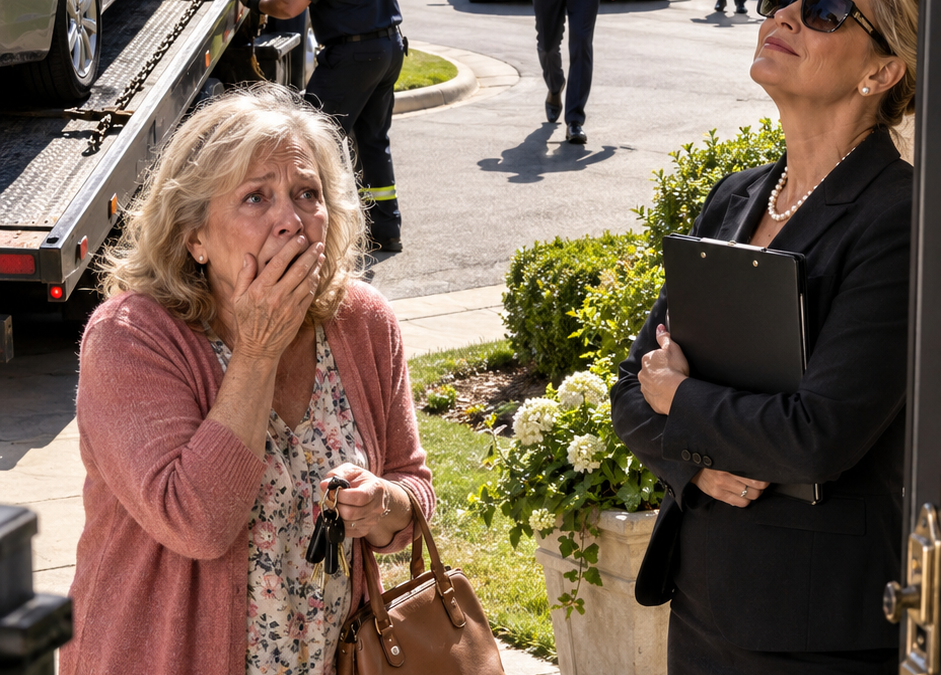
“What does this mean?”
“It means don’t confront Meredith.”
“Why?”
“Because I need you to trust me.”
“I trust you.”
“Then keep every document. Record conversations if it’s lawful where you are. Don’t sign anything. Don’t physically interfere with anyone.”
She was quiet.
“That last part sounds very specific.”
“It is.”
“Grant.”
“Yes.”
“Is this bigger than an HOA?”
I stared at the forged filing.
“Yes.”
I brought the new evidence to Laurel Keane the next morning.
Laurel was the Assistant United States Attorney supervising our investigation.
She read the lien.
Then the annexation document.
Then the Northstar letter.
Finally, she looked at me.
“This is your mother?”
“Yes.”
“That complicates things.”
“I’m aware.”
“If Sloan is connected to Northstar, you cannot walk in there because you’re angry.”
“I know.”
“Do you?”
I gave her a look.
She ignored it.
Laurel had prosecuted financial crime for fifteen years.
She did not care whether I was offended.
She cared whether evidence survived court.
“We have spent six months building this,” she said. “If Sloan is part of the network and you spook her because this became personal, accounts disappear. Phones disappear. Servers get wiped.”
“So we let her continue?”
“For now, we document.”
I hated the answer.
That was how I knew it was probably correct.
I drove to Hawthorne Ridge that weekend in my personal pickup.
Jeans.
Old boots.
Canvas jacket.
Nothing about me suggested federal law enforcement.
That was intentional.
My mother was in her garden when I arrived.
She hugged me, then immediately said, “You look tired.”
“Good to see you too.”
“You do.”
“I work for a living.”
“So do people who sleep.”
I carried my bag inside.
The folder of HOA notices covered half the kitchen table.
My mother had organized everything by date.
I picked up the first violation.
Mailbox color.
The second.
Landscaping.
Third.
Exterior lighting.
Fourth.
Failure to cure previous violations.
Fifth.
Administrative enforcement.
“This is impressive.”
“I know.”
“I meant the stupidity.”
“So did I.”
A black SUV stopped near the end of the driveway.
My mother looked toward the window.
“That will be her.”
Meredith Sloan stepped out.
She was in her early fifties, immaculately dressed, controlled, polished, and clearly accustomed to people moving out of her way before she had to ask.
She approached the porch.
My mother opened the door.
“Eleanor.”
“Meredith.”
Her eyes moved to me.
“And you are?”
“My son.”
Meredith smiled.
“Perfect timing.”
“For what?” I asked.
“A practical conversation.”
I stepped outside.
My mother placed her phone on a small table near the door.
The screen faced down.
Recording.
Meredith did not notice.
She held a leather portfolio.
“Your mother has allowed this situation to become unnecessarily difficult.”
“My property is not part of your HOA,” Mom said.
Meredith gave her the expression adults use with children who keep insisting gravity is optional.
“We’ve been through this.”
“No. You’ve repeated yourself.”
Meredith turned to me.
“Your mother can sell voluntarily now, or the lien process may eventually make that decision for her.”
I let half a second pass.
“Are you threatening foreclosure?”
“Threatening is such an emotional word.”
“I’m comfortable with it.”
“I’m explaining consequences.”
“For debt she doesn’t owe?”
“The association’s position is that she does.”
“Based on what?”
“Our jurisdiction.”
“Which came from where?”
Meredith’s smile thinned.
“That has been documented.”
“Then explain it.”
My mother glanced at me.
She knew what I was doing.
Meredith did not.
She began explaining.
And I kept asking questions.
How long had Hawthorne Ridge controlled the parcel?
What records supported the lien?
Who prepared the documents?
Which collection company handled enforcement?
Would the lien disappear if my mother sold?
Who was buying the land?
Meredith answered more than any attorney would have advised.
Confidence can make people remarkably generous with evidence.
At one point she said, “Your mother is delaying a project that benefits hundreds of families.”
I nodded.
“So the lien helps encourage cooperation.”
“I didn’t say that.”
“You just did.”
“No. I said noncompliance has consequences.”
“Which disappear if she sells.”
Meredith paused.
“Selling would resolve the matter.”
I smiled.
“Please keep explaining.”
She did.
That recording became useful later.
Very useful.
Back at work, Marissa Vance began tracing Hawthorne Ridge’s financial connections.
Marissa was our forensic analyst and had a gift for following money through structures designed to make sane people quit.
Two days later she came into my office holding a yellow pad.
“You’re going to dislike this.”
“I already dislike all of it.”
“Hawthorne Ridge has a development agreement.”
“How large?”
“Thirty-two million.”
I looked up.
“For what?”
“Western expansion. Retail. Wellness center. Road corridor.”
She placed a map in front of me.
A highlighted line ran straight across my mother’s property.
“There’s your problem.”
The development agreement required Hawthorne Ridge to guarantee access rights before closing.
No access.
No deal.
My mother’s two acres were the bottleneck.
Meredith had offered $180,000.
Then $250,000.
When money failed, the fines began.
Marissa continued.
“Northstar gets eighteen percent of certain recovered balances.”
“That’s obscene.”
“That’s the boring part.”
“There’s a fun part?”
“A property company has been acquiring homes after Northstar-related foreclosure actions.”
She slid another document across.
“Who owns it?”
“Layered.”
“How layered?”
“Three LLCs, one management entity, and a partnership.”
“So a normal Tuesday.”
“Pretty much.”
She pointed at the final page.
“One of the beneficial interests connects to a business partner of Meredith Sloan.”
I sat back.
There it was.
Not enough yet.
But something.
The pattern began widening.
Northstar had serviced other associations.
Same language.
Same escalating fees.
Same sudden liens.
Same pressure to sell.
Some homes were then purchased by entities linked to people connected with the enforcement network.
Laurel insisted we slow down.
“I know what you’re thinking,” she said.
“Do you?”
“You’re thinking we finally have Sloan.”
“We might.”
“Might is not beyond a reasonable doubt.”
“She forged my mother’s signature.”
“We know someone forged it.”
“She benefits.”
“Motive.”
“She threatened foreclosure.”
“Evidence of pressure.”
“The developer needs the land.”
“More motive.”
I stared at her.
She stared back.
“This is why people hate lawyers.”
“This is why convictions survive appeal.”
She was right.
I hated that too.
So we kept building.
Meanwhile, Meredith continued.
HOA staff photographed my mother’s house almost every day.
A security SUV began parking across the street.
Residents were told Eleanor owed more than $11,000.
Then $18,000.
The numbers changed depending on which document Meredith was waving.
One afternoon, my mother called.
“There’s a sign in my driveway.”
“What kind?”
“HOA access. Residents only.”
“Your driveway?”
“My driveway.”
“What did you do?”
“Took it down.”
I closed my eyes.
“Mom.”
“What?”
“I told you not to physically interfere.”
“It was a sign.”
“That is physically interfering.”
“I used a screwdriver.”
“That does not help.”
She laughed.
The next day, Preston Vale arrived.
He managed the private security company Meredith had hired.
Two guards stood behind him.
He told my mother she needed an HOA parking permit to leave her sedan on her own driveway.
Mom pointed toward the porch camera.
“Would you repeat that?”
Preston looked at the camera.
Then left.
I watched the footage that evening.
He knew.
Maybe not everything.
But he knew enough to be cautious.
Then Meredith issued what she called a “Final Administrative Enforcement Notice.”
One line caught my attention.
POSSESSION RIGHTS MAY BE TEMPORARILY RESTRICTED PENDING COMPLIANCE.
I called Laurel.
“She’s preparing to lock Mom out.”
“Can we prove that?”
“Not yet.”
“Then keep documenting.”
I wanted to throw the phone.
Instead, I called my mother.
“If anyone comes to the property, do not resist.”
“What does that mean?”
“It means exactly what it sounds like.”
“This is my home.”
“I know.”
“And you expect me to stand there while someone walks onto my property?”
“Yes.”
“That is a ridiculous request.”
“Yes.”
“You’re not going to tell me why.”
“Not yet.”
There was a long silence.
“You sound like your father when he knew he was right and didn’t want to admit he was being irritating.”
“I’ll take that as a compliment.”
“It wasn’t one.”
By Friday, our team had identified an internal Hawthorne Ridge document called an emergency administrative possession order.
It had no legal standing.
None.
It was HOA letterhead pretending to be judicial authority.
Meredith scheduled enforcement for Monday.
She believed I would be out of state.
That assumption came from information she had apparently gathered through casual conversation with neighbors.
In reality, I was almost three hours away at our field office.
Monday morning, my mother drove into town for groceries.
When she returned, a Rusk Recovery tow truck was already waiting in her driveway.
Gideon Rusk stood beside it.
Preston Vale was there.
Two guards.
And Meredith.
Mom pulled in.
The tow operator stepped forward.
“Ma’am, leave the vehicle.”
“Why?”
“Unauthorized parking.”
She looked down at her driveway.
“Where?”
“This is HOA-controlled access.”
“No, it isn’t.”
Meredith produced a map.
A new map.
One that showed my mother’s driveway as a community easement.
The county had no such document.
My mother knew that.
“Show me the court order.”
Meredith smiled.
“This is administrative enforcement.”
“Where is the sheriff?”
“Not required.”
“Then nobody touches my car.”
Meredith looked at Gideon.
Then nodded.
The tow operator began connecting the car.
My mother instinctively moved forward.
Then stopped.
She remembered what I had told her.
No physical resistance.
She stepped back.
She took out her phone.
And recorded.
Gideon lifted the sedan.
Mom had owned that car for eight years.
She watched it roll away behind the tow truck while neighbors stood along the street pretending not to stare.
Meredith handed her an invoice.
Tow: $475.
Administrative release: $650.
Outstanding compliance balance: $18,760.42.
My mother looked at it.
“You’re stealing my car.”
“No,” Meredith said. “We’re enforcing lawful obligations.”
Then the locksmith arrived.
Mom looked from the van to Meredith.
“What is he doing?”
“Securing association collateral.”
“My house?”
“Until the lien is resolved.”
“You do not own my house.”
“Not while the lien remains unresolved.”
That sentence made no legal sense.
But arrogance rarely checks its own grammar.
The locksmith approached the door.
My mother stood three feet away while he replaced the cylinder.
The new key turned.
Her old one no longer did.
A guard taped a red notice across the frame.
ACCESS SUSPENDED
HOA ENFORCEMENT
Mom still had two grocery bags.
Milk.
Bread.
Coffee.
A carton of eggs.
Things an ordinary woman buys before returning to the home she expects to enter.
Meredith suggested she get a hotel.
“You can resolve this today,” she said.
“How?”
“Sign the property transfer.”
There it was.
Not whispered.
Not disguised.
Not even subtle.
Sell us the land and the harassment stops.
My mother lifted her phone.
She photographed the lock.
The notice.
The guards.
The tow truck.
Meredith.
Preston.
Then she called me.
I answered immediately.
For the first few seconds, she said nothing.
“Mom?”
“They took the car.”
I stood.
“What?”
“And they changed the locks.”
My hand tightened around the phone.
“Are you safe?”
“Yes.”
“Is anyone touching you?”
“No.”
“Stay outside. Don’t confront them.”
“Grant—”
“Mom. Are you safe?”
“Yes.”
“Good.”
I ended the call.
Owen Talbot sat across the operations room.
He had worked investigations with me for four years.
He saw my face.
“What happened?”
“They did it.”
“The lockout?”
“And the tow.”
He stood.
I picked up another phone.
“Owen, move the package.”
“Today?”
“Right now.”
Laurel was already preparing the final warrant package.
We had enough.
Not because Meredith had targeted my mother.
Because six months of investigation had converged with what Meredith had just done in daylight.
Forged property filings.
Fraudulent lien documentation.
Interstate electronic communications.
Financial transactions.
Potential bank fraud tied to the development deal.
Northstar.
The shell companies.
The collections.
Now active evidence preservation concerns.
Three hours later, six government SUVs left our building.
No sirens.
No flashing lights.
We did not need theater.
Federal warrants have a way of producing their own atmosphere.
While we drove, Meredith called an emergency Hawthorne Ridge board meeting.
She apparently believed my mother was about to surrender.
A quitclaim deed had already been prepared.
That detail still amazes me.
My mother had been locked out for only a few hours, and Meredith had the transfer paperwork waiting.
Predatory efficiency deserves its own category of incompetence.
The convoy reached Hawthorne Ridge late that afternoon.
Security spotted us first.
The gate guard radioed the clubhouse.
Preston came outside.
The barrier began closing.
Our lead vehicle stopped.
I opened the door.
The last time Meredith had seen me, I wore jeans and an old jacket.
This time, I wore a dark suit.
Credentials clipped at my belt.
Radio on my shoulder.
Service weapon concealed beneath my coat.
Owen stepped from the second SUV.
Then agents exited the others.
One after another.
The clubhouse entrance went quiet.
A landscaper stopped trimming a hedge.
Two residents froze beside a golf cart.
Preston looked at my credentials.
Then at me.
I walked past him.
My mother stood near the edge of the parking area.
I went directly to her.
“Did they let you inside?”
“No.”
“Anyone threaten you physically?”
“No.”
“You all right?”
“I’m furious.”
“That wasn’t my question.”
“I’m fine.”
Only then did I turn.
Meredith stood near the clubhouse door.
Her expression was almost fascinating.
Recognition.
Confusion.
Calculation.
Then disbelief.
She walked toward me.
“This is private HOA property.”
I opened my credential wallet.
“My name is Grant Whitaker.”
She stared at it.
“Supervisory Special Agent, Federal Bureau of Investigation.”
Nobody spoke.
Meredith’s face changed.
Not dramatically.
People like Meredith rarely collapse all at once.
They retreat by inches.
“This is a civil matter.”
“It was.”
“This is HOA enforcement.”
“It stopped being only that when fraudulent property documents crossed state and banking systems.”
Her eyes narrowed.
“You are abusing your position because this involves your mother.”
“No.”
I stepped aside.
Laurel was not with us physically at the scene, but the warrant had been reviewed, approved, and signed independently.
Owen approached holding the documents.
“This investigation began six months before Eleanor Whitaker became involved.”
Meredith looked at him.
Then back at me.
I continued.
“Your mistake was not targeting the mother of a federal agent.”
I nodded toward the clubhouse.
“Your mistake was targeting the mother of the agent already investigating Northstar.”
For the first time, Meredith had absolutely nothing to say.
Owen handed her the warrant.
“Federal search warrant.”
She stared at it.
“What does this cover?”
“The listed premises and electronic devices.”
“This clubhouse?”
“Yes.”
“That’s outrageous.”
“And additional locations.”
Agents moved.
No shouting.
No dramatic running.
No broken doors.
Just methodical execution.
Computers were photographed, disconnected, labeled, and seized.
Accounting records went into boxes.
Lien files.
Vendor contracts.
Northstar correspondence.
Tow records.
Phones.
External drives.
Paper ledgers.
Everything.
Meredith followed the agents through the office complaining about privilege, HOA confidentiality, resident privacy, and board authority.
Owen eventually looked at her.
“Ma’am, nothing in your bylaws overrides a federal warrant.”
It may have been the first accurate explanation of jurisdiction she had heard in months.
Marissa joined the evidence team remotely as forensic images began processing.
One deleted directory appeared almost immediately.
WEST ACCESS.
Inside was a spreadsheet.
I stood behind Marissa’s workstation when she opened it.
Names filled the rows.
Columns ran across the screen.
Pressure Level.
Fine Balance.
Lien Date.
Acquisition Target.
Expected Resale.
My mother’s name appeared halfway down.
ELEANOR WHITAKER.
Pressure level: High.
Acquisition target: $410,000.
And in the notes column:
MUST OBTAIN BEFORE RIDGEWAY CLOSING.
I stared at the screen.
There was something uniquely revolting about seeing a human life reduced to a spreadsheet strategy.
My mother was not a widow with memories tied to a garden.
She was an acquisition target.
A number.
An obstacle.
A line item.
Marissa scrolled.
Other names appeared.
Some I recognized from earlier cases.
Some were new.
“This is bigger than Hawthorne,” she said.
“I know.”
Agents went to Rusk Recovery next.
Gideon Rusk initially insisted every tow had been lawful.
Then investigators examined his records.
Dozens of vehicles had been held during disputed HOA collection matters.
Many were not towed from public roads.
Some were taken from private property.
Several releases were conditioned on owners paying unrelated HOA balances.
Then Marissa found the payments.
Rusk Recovery received normal towing fees.
But there was another recurring amount.
$150.
Again and again.
The description varied.
Expedite fee.
Compliance bonus.
Priority service.
Enforcement incentive.
Same amount.
Meredith had personally approved many of them.
Gideon’s confidence weakened.
Meanwhile, our broader Northstar investigation accelerated.
Laurel presented updated evidence to Judge Celeste Warwick.
Twenty-seven properties across multiple communities showed possible fraudulent liens.
Nine owners had sold under pressure.
Four properties had gone through foreclosure.
Several homes were eventually acquired by companies linked to people financially connected to Northstar’s network.
One victim was a retired schoolteacher named Margaret Hensley.
She had lived alone.
Her original “violations” totaled $600.
Within eight months, the claimed debt exceeded $19,000.
She sold her home for nearly $90,000 below estimated market value simply to end the harassment.
Another victim was a seventy-three-year-old widower named Harold Beck.
He had received so many certified letters that he stopped opening them.
Eventually he signed a settlement transferring his property.
When I read the victim list, my mother’s case became both more personal and less personal at the same time.
Meredith had not invented this system for Eleanor.
My mother had merely become the latest name.
Laurel stood beside me.
“Don’t make this only about her.”
“I’m not.”
I set the spreadsheet down.
“That’s the problem.”
She waited.
“Meredith thought every one of these people would face her alone.”
The next phase of the case focused on proving authorship and knowledge.
Meredith claimed my mother had joined Hawthorne Ridge voluntarily eleven years earlier.
She produced a membership agreement.
My mother’s signature looked convincing.
Too convincing.
The forensic document examiners compared it to historical records.
They found the source.
Years earlier, my mother had signed an architectural acknowledgment related to a neighbor’s fence.
The signature on the Hawthorne agreement was digitally identical.
Not similar.
Identical.
Someone had copied it.
Even worse, metadata showed the supposed eleven-year-old agreement had been created eight months earlier.
Meredith blamed an outside records consultant.
The consultant blamed Hawthorne staff.
Northstar blamed its client.
Everybody suddenly discovered the ancient legal tradition of pointing at somebody else.
We did not arrest Meredith immediately.
That frustrated my mother.
“So she gets to walk around?”
“For now.”
“She changed my locks.”
“I know.”
“She stole my car.”
“I know.”
“She forged my name.”
“Someone did.”
My mother gave me a look.
“You sound like Laurel.”
“That is deeply insulting.”
“Then arrest her.”
“Not yet.”
We needed cooperation.
Meredith eventually provided it herself.
Her attorney told her not to speak.
She ignored him.
Then she publicly blamed Preston Vale.
That was a mistake.
Preston realized he was being prepared as the sacrifice.
He contacted counsel.
Then us.
He turned over text messages.
One came from Meredith the morning of the lockout:
TOW THE CAR FIRST. ONCE SHE’S STRANDED, CHANGE THE LOCK. SHE’LL SIGN BY SUNSET.
Another:
DO NOT INVOLVE SHERIFF. KEEP IT INTERNAL.
And another:
ONCE WHITAKER SIGNS, DEVELOPER RELEASES OUR PAYMENT.
I read the last one twice.
There was no ambiguity left.
The fines were leverage.
The lien was leverage.
The tow was leverage.
The lockout was leverage.
All designed to obtain land required for the $32 million development agreement.
Gideon Rusk changed his story soon afterward.
Faced with bank transfers and text records, he admitted Meredith had instructed his company to remove my mother’s car despite being told it sat on private property.
He claimed he believed the HOA had legal authority.
That would be for prosecutors to evaluate.
But he had records.
And he began turning them over.
My mother was eventually allowed back inside her house.
I deliberately did not break the new lock myself.
Even though I could have removed it in less than a minute.
I wanted no argument that I had used federal authority to take direct action in a private property dispute.
A county official verified the deed.
An independent locksmith changed the cylinder.
Mom entered first.
I followed.
The living room looked normal.
Kitchen normal.
Bedroom normal.
Then she stopped at my father’s writing desk.
One drawer hung slightly open.
“What?”
She crossed the room.
Pulled it.
The lock was broken.
She searched inside.
Then looked at me.
“My deed.”
“What about it?”
“It’s gone.”
“Original?”
“Yes.”
The room suddenly felt colder.
I called Owen.
Then I walked outside.
My mother had security cameras at the front and rear.
We reviewed the recordings.
During the period she had been locked outside, an HOA-affiliated individual entered from the rear.
The camera captured him leaving with a small document box.
We obtained another warrant.
A second search of the clubhouse followed.
Inside a locked cabinet in Meredith’s private office, agents found an envelope.
ELEANOR WHITAKER PROPERTY RECORDS.
Inside was the original deed.
My father’s old survey.
Property tax receipts.
And several personal documents.
I stared at them through an evidence bag.
Then at Meredith.
“How did my mother’s original deed end up locked in your office?”
She said nothing.
I asked again.
No answer.
That silence carried more weight than most of her speeches.
Laurel authorized the case to move toward arrests.
Meredith sensed it.
Her next strategy was predictable.
She contacted a reporter through her attorney.
The story she wanted public was simple:
Federal agent uses government power to attack HOA after dispute involving his mother.
It was a strong narrative.
If it had been true, it would have been devastating.
That was why we had prepared for it.
The moment my mother became a formal victim, I removed myself from direct decision-making concerning warrants specific to her property.
Laurel handled them.
Another supervisor reviewed my participation.
Every significant step received independent approval.
The larger Northstar investigation had begun six months before my mother’s name appeared anywhere in it.
And Meredith’s financial connections had already surfaced before I knew she was targeting Eleanor.
Laurel eventually confirmed that timeline publicly.
The accusation collapsed.
Meredith had not been investigated because she targeted my mother.
She had targeted my mother while already being investigated.
There is a difference.
A rather important one.
Meredith’s final mistake came during an emergency board meeting.
She planned to terminate Hawthorne’s Northstar contract.
Move reserve funds.
Delete certain electronic records.
Then resign.
Unfortunately for her, the relevant accounts and systems were already subject to preservation orders.
Marissa flagged a transfer request.
$640,000.
Destination:
A newly created company.
The bank froze it.
Laurel called Meredith personally.
“Do not move any additional funds.”
According to the recorded call, Meredith replied that Laurel had no authority over HOA finances.
That statement aged poorly.
Meredith left the clubhouse carrying her phone.
Three agents waited in the parking lot.
I stood near one of the vehicles.
I was there.
But I was not arresting her.
Owen approached.
“Ms. Sloan, place your phone on the hood.”
Meredith looked past him toward me.
“This is because of your mother!”
I did not answer.
Laurel stepped forward.
“No, Ms. Sloan.”
Meredith turned.
“Agent Whitaker is not arresting you.”
Laurel handed her the warrant.
“I am.”
Meredith looked down.
Conspiracy to commit wire fraud.
Mail fraud.
Bank fraud.
Fraudulent property instruments.
Obstruction-related allegations.
Additional counts tied to the broader Northstar investigation.
For the first time since I had met her, Meredith Sloan looked small.
Not physically.
Institutionally.
The imaginary authority was gone.
No board meeting could override Laurel.
No HOA policy could dismiss the warrant.
No security guard could tell federal agents they needed resident access credentials.
Meredith was taken into custody without a chase.
Without force.
Without drama.
Just paperwork.
I found that appropriate.
She had used paperwork to terrorize people.
Paperwork finally came back for her.
News spread through Hawthorne Ridge within hours.
Residents started comparing notices.
One discovered his landscaping fines used wording almost identical to another homeowner’s parking violations.
A woman showed neighbors a threat letter demanding payment before the HOA would approve a refinance.
Another resident admitted he had nearly sold his home simply because he could no longer tolerate the constant certified letters.
The pattern became visible once people stopped experiencing it alone.
That was the system’s real strength.
Isolation.
Each homeowner thought the problem belonged only to them.
Each believed everyone else must be compliant.
Each assumed challenging the association would cost more than surrender.
Meredith and Northstar depended on that.
Once people compared files, the illusion collapsed.
Preston Vale entered a cooperation agreement.
Gideon Rusk faced criminal exposure and civil claims.
Northstar became the center of a larger federal investigation reaching well beyond Hawthorne Ridge.
Several property transfers were reviewed.
Restitution claims were initiated.
Former homeowners were contacted.
Some had spent years believing they had simply lost.
Now they learned someone had manufactured the game.
My mother’s case moved faster.
The lien on her property was declared void.
Every HOA fine was erased.
The supposed annexation agreement was invalidated.
The towing charges were reversed.
The association was ordered to reimburse her costs.
And the county records received a clarification so explicit that even someone with Meredith’s creative approach to boundaries would struggle to misunderstand it.
THE WHITAKER PARCEL WAS NOT SUBJECT TO THE HAWTHORNE RIDGE DECLARATION.
It never had been.
Then came the consequence Meredith cared about most.
The $32 million expansion agreement.
The developer had been told Hawthorne Ridge controlled the Western Road Corridor.
It did not.
The buyer had been told access was secured.
It was not.
The company suspended the agreement.
Then withdrew.
Thirty-two million dollars.
Gone.
Not because my mother had sabotaged the project.
Because Meredith had promised access she did not possess.
The irony would have been funny if the path to it had not involved stolen homes.
Hawthorne Ridge’s board commissioned an audit.
Reserve funds had been used for legal fees, Northstar payments, security contractors, collection actions, consulting agreements, and development expenses.
Residents learned that while Meredith publicly accused my mother of harming property values, Meredith had quietly placed their entire association in financial danger.
Insurance coverage came under review.
Civil claims multiplied.
Board members resigned.
The remaining directors voted to dissolve the existing leadership structure and rebuild governance procedures.
Meredith had wanted my mother’s two acres because she believed one old widow stood between her and a development deal.
By the end, Eleanor still had every inch.
Meredith had lost the road.
Lost the project.
Lost the presidency.
Lost access to association funds.
And gained federal defense counsel.
There are worse trades.
I received interview requests.
Television.
Newspapers.
Online outlets.
Everyone liked the same headline.
FBI AGENT RETURNS WITH FEDERAL CONVOY TO SAVE MOTHER FROM HOA.
I declined.
That was not what happened.
My mother was not rescued because her son had a badge.
If anything, my position forced us to be more careful.
The case belonged to twenty-seven victims.
To Margaret Hensley.
To Harold Beck.
To people whose names never made headlines.
My mother simply happened to become the person Meredith underestimated at exactly the wrong moment.
After the arrests, I visited Mom.
She was sitting on the porch.
The new lock had been installed.
Her original key worked again.
“You know,” I said, “you could have told me more when the first letters started.”
“You were busy.”
“You had an HOA trying to steal your house.”
“At first they were complaining about my mailbox.”
“That escalated.”
“Yes.”
She handed me coffee.
“I would have beaten her eventually.”
“I know.”
She looked toward the street.
“Though six black SUVs made the point faster.”
I laughed.
“One matter left.”
“My car.”
“Yes.”
Rusk Recovery still had it.
I offered to arrange the return.
My mother refused.
“I am going there.”
“Mom.”
“They took my car.”
“I remember.”
“They can give it back to me.”
So the next morning, we drove to the impound lot.
Rusk Recovery looked considerably less impressive with federal evidence notices posted inside the office.
A manager brought the sedan around.
“No charges due.”
My mother looked at him.
“I know.”
He handed her the keys.
She did not take them.
“I want a statement.”
“What kind?”
“A written statement confirming this vehicle was removed from my private property without a court order and without lawful authorization.”
The manager looked at me.
I raised both hands.
“This is her request.”
He looked back at Mom.
“We can’t admit liability.”
“Then I suppose the car can stay here until my attorney subpoenas your records.”
He reconsidered.
Twenty minutes later, she had a signed factual release document.
She folded it carefully.
Then accepted the keys.
On the drive home, I followed her.
Her sedan turned onto Willowcrest Road.
No security guards stopped her.
No HOA sign stood in her driveway.
No red notice covered the door.
A new sign did stand near the entrance.
PRIVATE PROPERTY
NOT HOA PROPERTY
My mother had ordered it herself.
I parked.
She got out.
“How much did that cost?”
“Twenty-eight dollars.”
“Best legal expense in the case.”
“I thought so.”
Several months later, Meredith appeared in federal court.
By then, the government’s case extended far beyond my mother.
Financial records.
Emails.
Text messages.
Forged documents.
Tow records.
Lien files.
Shell companies.
Bank transfers.
Victim testimony.
Metadata.
The spreadsheet.
The stolen deed.
The attempted $640,000 transfer.
I did not sit with prosecutors.
I sat in the gallery beside my mother.
Laurel presented the case.
One exhibit after another.
Margaret Hensley’s home.
Harold Beck’s home.
My mother’s home.
Others.
People Meredith believed were isolated enough to pressure.
When prosecutors displayed the WEST ACCESS spreadsheet, I glanced at my mother.
She stared at her own name.
ELEANOR WHITAKER.
PRESSURE LEVEL: HIGH.
ACQUISITION TARGET: $410,000.
MUST OBTAIN BEFORE RIDGEWAY CLOSING.
Mom shook her head.
Later, during a break, she whispered, “Four hundred ten thousand?”
“Yes.”
“She offered me two fifty.”
I looked at her.
“That’s what bothers you?”
“It’s insulting.”
I laughed harder than I should have in a federal courthouse.
The criminal proceedings continued according to the evidence against Meredith and the others involved.
I will not pretend every victim instantly recovered everything.
Legal systems are not magic.
Some properties had already changed hands.
Some money had moved through layers of entities.
Some losses took time to unwind.
But restitution processes began.
Civil suits followed.
Northstar’s operations were placed under intense scrutiny.
Property filings were challenged.
For several families, that meant the first realistic chance they had seen to recover homes or money they believed was gone forever.
Hawthorne Ridge slowly changed too.
The replacement board adopted restrictions on unilateral enforcement actions.
Large expenditures required broader approval.
Lien decisions required independent legal review.
Residents demanded access to financial records.
In other words, after discovering what happened when nobody paid attention, everyone suddenly became very interested in paying attention.
Funny how that works.
The development project was formally canceled.
No four-lane road crossed my mother’s garden.
No wellness center swallowed her property.
No retail corridor appeared.
The roses my father had planted remained exactly where they were.
So did the maple.
So did the stone garden border.
One afternoon, months after the worst of it ended, I sat on the porch with Mom.
She was watering flowers.
A new Hawthorne Ridge board vehicle drove slowly along the road.
The driver glanced toward her property.
Mom stopped watering.
She pointed at the sign.
PRIVATE PROPERTY.
NOT HOA PROPERTY.
The vehicle accelerated.
I smiled.
“You enjoy that too much.”
“No, I don’t.”
“Yes, you do.”
She returned to watering.
“Maybe a little.”
I handed her a cup of coffee.
“Do you think they’ll leave you alone now?”
She considered the question.
“People like Meredith?”
“No. The HOA.”
She looked down the street.
“I think they finally understand the property line.”
“That would be progress.”
We sat there quietly.
It struck me how ordinary everything looked.
That was what Meredith had almost destroyed.
Not some massive estate.
Not a corporate headquarters.
A stone house.
A driveway.
Two acres.
A garden.
A widow’s right to decide what happened to property she and her husband had built a life around.
Meredith had believed ordinary meant weak.
She had believed complexity would beat resistance.
Make the letters official enough.
Make the fines large enough.
Make the lien confusing enough.
Make the threats constant enough.
Eventually, the homeowner signs.
That system worked because most people do not have unlimited money for attorneys.
Most do not understand property law.
Most become frightened when official-looking documents start arriving.
And almost nobody expects the organization managing pool passes and lawn standards to manufacture a path toward taking their house.
Meredith understood those weaknesses.
She exploited them.
What she failed to understand was that fraud leaves patterns.
A fake lien resembles another fake lien.
A shell company receives money.
A forged document has metadata.
A text message survives.
A bank transfer records itself.
A tow company keeps invoices.
A spreadsheet gets deleted but not erased.
And sometimes the woman you lock out of her home happens to be connected to someone already following those patterns.
People later asked me what Meredith looked like when the federal convoy arrived.
They wanted some cinematic description.
Shock.
Fear.
Panic.
The truth was more satisfying.
She looked confused.
For months, she had lived inside a world where her authority always expanded.
If somebody challenged her, she issued another notice.
If somebody refused, she added another fee.
If a homeowner resisted, she threatened a lien.
If the lien failed, she threatened foreclosure.
If the deed stood in her way, someone produced a new document.
Every obstacle had been answered with more paperwork and more pressure.
Then six federal vehicles arrived.
For the first time, Meredith encountered authority she could not manufacture herself.
She tried to call it an HOA matter.
The warrant did not care.
She tried to accuse me of retaliation.
The six-month investigative timeline did not care.
She tried to blame Preston.
His text messages did not care.
She tried to blame consultants.
The metadata did not care.
She tried to move $640,000.
The bank froze it.
She tried to leave.
Agents were waiting.
That was how her power ended.
Not with somebody screaming louder than she did.
With records.
My mother never sold.
Years later, whenever I visited Willowcrest Road, the house looked much the same.
Stone walls.
White trim.
Garden out front.
Dad’s maple taller.
Mom’s sedan usually parked exactly where Gideon Rusk had once hooked it to a tow truck.
Sometimes I would arrive and find her working outside.
Sometimes she would wave from the kitchen window.
And every time I drove past the small PRIVATE PROPERTY sign, I remembered Meredith standing beside that same driveway insisting my mother no longer had possession rights to her own home.
It would have been difficult to invent a more complete defeat.
The car came back.
The house stayed.
The land stayed.
The forged lien disappeared.
The expansion road disappeared.
The $32 million agreement disappeared.
Northstar became evidence in a federal investigation.
Rusk Recovery faced the consequences of the seizures it carried out.
Preston became a cooperating witness.
The Hawthorne Ridge board Meredith controlled was dismantled.
And Meredith herself went from deciding whether an eighty-year-old widow could enter her own front door to explaining financial records in federal court.
My mother once asked me whether I enjoyed watching Meredith lose.
I told her that was not how I thought about it.
Mom looked at me for several seconds.
Then she said, “That was a very professional answer.”
“What does that mean?”
“It means you enjoyed it.”
I took a sip of coffee.
“I enjoyed seeing the evidence work.”
“Of course.”
“And seeing the victims get a chance to recover what they lost.”
“Certainly.”
“And seeing your deed returned.”
“Naturally.”
She waited.
I sighed.
“And maybe watching Meredith discover she couldn’t fine the FBI.”
My mother smiled.
“There it is.”
But the part I remembered most clearly was not the arrest.
It was the morning after Mom got her car back.
I was standing near the driveway while she carried groceries inside.
Same house.
Same door.
Same woman.
This time, the key turned.
She paused.
Looked at me.
Then pushed the door open.
No locksmith stood there.
No guard.
No HOA notice.
No Meredith.
Just home.
That was the victory.
Not the convoy.
Not the warrants.
Not the evidence boxes.
Not even the collapse of the thirty-two-million-dollar deal.
Meredith had tried to convince my mother that authority belonged to whoever could produce the most intimidating document.
She was wrong.
My mother owned the house before Hawthorne Ridge existed.
She owned it while Meredith issued the first fake fine.
She owned it while Northstar manufactured the lien.
She owned it while the tow truck removed her car.
She owned it while the locksmith changed her locks.
And she owned it when six federal SUVs turned through that gate and Meredith finally discovered that no amount of HOA letterhead could transform theft into ownership.
The house never belonged to Meredith.
The driveway never belonged to Hawthorne Ridge.
The garden never belonged to the developer.
And my mother never owed them a single dollar.
Meredith Sloan had spent months trying to force Eleanor Whitaker out of her home.
Instead, she forced investigators to look closely enough to expose everything she had been hiding.
She wanted two acres.
She lost a thirty-two-million-dollar project.
She wanted my mother’s signature.
Investigators recovered her own messages.
She wanted control of one house.
She exposed twenty-seven cases.
And when it was finally over, the only person removed from Hawthorne Ridge by force was not my mother.
It was Meredith.








