𝗙𝗨𝗟𝗟 𝗦𝗧𝗢𝗥𝗬 HOA Tore Down My County-Required Fence to Raise Property Values — By Summer, Snakes Were Crawling Into Their Backyards
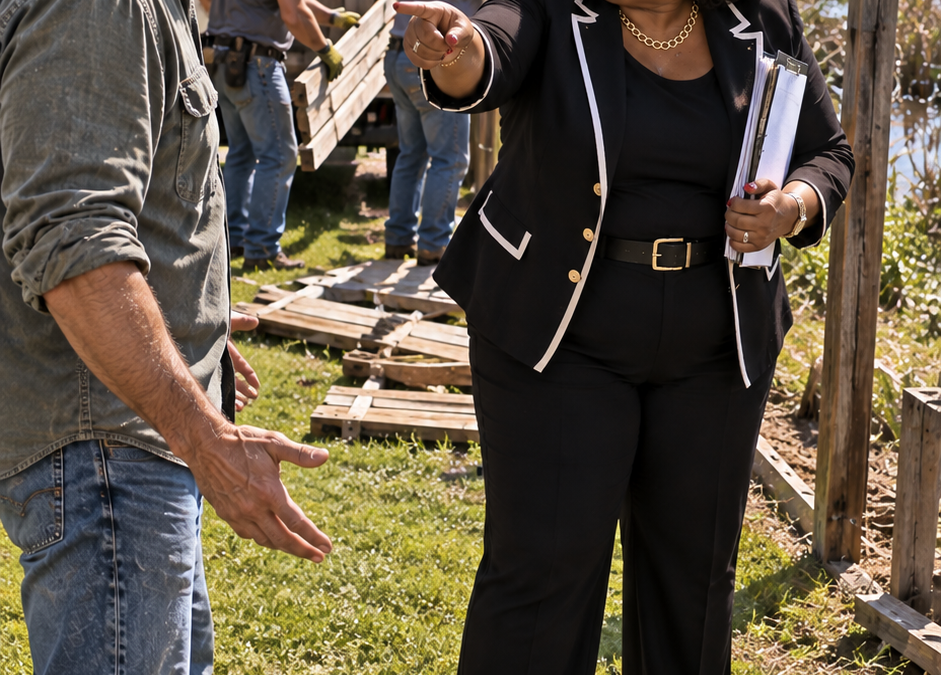
𝗣𝗔𝗥𝗧 𝟮
Then I went inside.
Opened my laptop.
And did three things.
I saved the video in two places.
I printed the email I had sent the board nine days earlier.
The one with Denise’s read receipt.
And I started a folder.
Before going to bed, I carried the county placard into the garage.
Wiped the remaining soil from the front.
Left the dirt packed inside the plastic seam.
Nine weeks later, the board would be begging the county for a copy of the same document Denise had dropped face down in my yard.
My name would still be printed across the bottom.
My name is Ray Coleman.
I bought Lot 47 in Cypress Landing eleven years before Denise took down that fence.
Cypress Landing was built in three phases on old cattle land east of the highway.
Ninety-six homes.
Clubhouse.
Pool.
Walking trail.
The trail curved along the rear edge of Phase Three.
Behind it sat the county wetland preserve.
Twelve houses backed directly onto that preserve.
Mine was one.
I bought Lot 47 specifically because of what was behind it.
Most people wanted the view.
I wanted the wetland.
For thirty-one years, I worked around water, wetlands, wildlife control, and vector management.
Some years were field heavy.
Some were inspection heavy.
Eventually, I became one of the people writing mitigation conditions developers complained about until they understood why those conditions existed.
When I retired, I was tired of driving toward wetlands every morning.
So I bought a house beside one.
It felt like a reward.
The first spring after I moved in, I built the rear barrier.
Eight-foot solid panels.
Buried footing.
Full width of the property.
Six-foot returns up both side lines.
It was not ornamental.
It was built to specification.
There was a county permit.
More importantly, the barrier itself was a condition attached to the mitigation plan that allowed those back-row lots to sit beside the wetland.
I inspected it every March.
For eleven years.
Checked footing.
Posts.
Gaps.
Rot.
Nothing glamorous.
Just maintenance.
Denise moved into Cypress Landing about four years after I did.
Two years later, she ran for HOA president.
Her campaign had one theme.
Property values.
That year, a few homeowners had received disappointing refinancing appraisals.
Denise stood at the annual meeting holding printouts of comparable sales and used the word values eleven times in six minutes.
I counted because I was bored.
She won sixty-one votes.
And in fairness to her, she believed what she said.
That was what made her dangerous.
Denise was not stealing association money.
She was not running some hidden fraud scheme.
She genuinely believed that controlling every visible surface in Cypress Landing would make all ninety-six households wealthier.
If you disagreed with her, you were not simply disagreeing about paint.
You were harming everybody’s investment.
Within a year, the Architectural Control Committee became Denise’s personal instrument.
Officially, there were three members.
Practically, the other two signed whatever she put in front of them.
Mailbox styles.
Garage-door shades.
Mulch color.
Natural brown or darker.
Boat trailers.
Basketball hoops.
Commercial vehicles.
Frank at Lot 45 owned his own business.
For nine years, he parked his pickup in his driveway.
Then Denise decided the company name printed on the door constituted prohibited commercial signage after ten at night.
He started receiving fines.
Marisol Reyes lived at Lot 44.
Seventy-one.
Widowed.
Her son built a wheelchair ramp after her hip surgery.
Pressure-treated lumber.
Plain.
Functional.
It extended maybe four feet toward her driveway.
Denise cited it three times.
First for lack of ACC approval.
Then for unfinished lumber.
Then because the compliant replacement, according to the board, would require approved stain and landscaping to screen it from the street.
Marisol paid the first fine.
Argued the second.
Stopped answering the door for the third.
That was how Cypress Landing functioned.
The grievance process technically existed.
But hearings were quarterly.
A fine issued in April might not be heard until July.
Daily charges could continue while you waited.
Owners complained quietly in parking lots after meetings.
Then went home.
Stained their ramps.
Moved their trailers.
Repainted their doors.
People say fines take money.
That is true.
But fines also purchase silence.
My trouble began six months before Denise removed the barrier.
October.
The first letter said:
NONCONFORMING REAR BARRIER — HEIGHT AND MATERIAL.
I wrote back politely.
Attached the county permit.
Attached the relevant plat sheet showing the conservation easement behind Lots 41 through 52.
I assumed that would end it.
A volunteer board sees a county permit.
Board says thank you.
Everybody moves on.
Instead, January brought a second notice.
Same language.
No acknowledgement of my response.
In February, I requested time during the monthly meeting.
They gave me four minutes.
I explained that the fence was a permit condition.
Not a design preference.
Not something I built because I liked privacy.
A condition.
Denise thanked me.
“The ACC will take it under advisement.”
Not one board member asked why the county required it.
Not one.
That was the part I kept thinking about afterward.
How could five adults hear county-required barrier beside managed wetland and not ask:
Required for what?
By March, I decided to remove every possible excuse.
I mailed a certified copy of the permit to the association’s registered agent.
Then I emailed all five board members.
Plain language.
I explained the barrier condition.
I explained the wetland.
I explained that removing the fence as spring temperatures increased could create a direct wildlife pathway into the back-row homes.
No drama.
No threats.
Four paragraphs.
The certified-mail card came back signed.
Denise’s account returned a read receipt.
Nine days later, I came home and found my fence on the grass.
For the first few weeks afterward, I still thought paperwork would fix it.
That was naive.
I called county environmental compliance.
They had two field people covering an enormous territory.
No emergency injury had occurred.
No active violation investigation had reached priority status.
The woman I spoke with was decent.
“Document everything.”
“I am.”
“Try the HOA first.”
“I have.”
“Most of these resolve once somebody actually reads the permit.”
I wish she had been right.
On April 29, I filed an ACC application.
Not because I believed the HOA had the right to approve the permit condition.
Because I wanted the barrier back.
I offered to rebuild it myself.
At my own expense.
Exact same specifications.
Same footprint.
Same footing depth.
Eight-foot solid panels.
I attached:
County permit.
Plat page.
County compliance letter stating that restoration was expected.
Then, because I was becoming petty, I even included a stained sample board in an HOA-approved color.
I paid their sixty-dollar review fee.
Eleven days later, the denial arrived.
One sentence.
“Nonconforming rear barrier conflicts with the open-preserve aesthetic adopted by the board.”
I read it twice.
Three government documents had gone into my application.
Not one government document appeared in the denial.
The word permit did not appear.
That changed the way I saw the situation.
A board that reads a permit and rejects it might be arrogant.
A board that writes a decision as though the permit never existed is doing something more deliberate.
I put the denial at the front of my folder.
The May board meeting was Thursday night.
Seven o’clock.
Clubhouse.
Twenty folding chairs.
Six owners.
Typical turnout.
Frank came.
Marisol sat near the door with her walker angled toward the exit.
Before the meeting began, I announced that I was recording.
Denise gave me a look.
“That’s fine.”
She meant:
That’s strange.
Owner comment came at the end.
Three minutes.
I did not argue about aesthetics.
I asked for one thing.
“Please enter the county permit into the minutes.”
Denise leaned back.
“That is a personal document.”
“It’s a recorded condition affecting Lot 47.”
“The county doesn’t have standing inside a private community, Mr. Coleman.”
The room changed.
Only slightly.
But everybody heard it.
“The covenants are our governing documents here,” Denise continued. “That’s what owners agreed to when purchasing.”
I looked around.
Nobody seemed entirely sure how to react to an HOA president saying county authority stopped at the entrance sign.
Then Denise lifted a sheet of paper.
“While we’re discussing Lot 47, the board should also note the outstanding balance.”
She read the number.
$3,250.
Daily fines.
October notice.
January notice.
And fines for failing to remove the fence panels.
Panels her crew had stacked on my grass.
“Some owners,” she said to the room, “appear to believe tenure creates exceptions.”
Eleven years.
She turned the fact that I had lived there eleven years into evidence of entitlement.
I waited.
Then asked one last question.
“Does the board understand that the barrier was a condition of a county permit?”
Denise looked toward Doug Pearl, the secretary.
Nervous man.
Followed instructions.
“Strike that question as out of order.”
Doug’s pen stopped.
He looked at Denise.
Then me.
Then crossed something off.
“Owner comment is not for interrogating the board.”
I remained standing.
“So the board’s position is that I cannot restore a barrier required by the county?”
Denise capped her pen.
“Put one post in that ground without ACC approval and the lien gets filed that week.”
She paused.
“And we will add removal costs.”
Then:
“Rebuild it and watch what happens.”
I nodded.
“Thank you.”
Frank caught me in the parking lot.
“That wasn’t right.”
“I know.”
“I wanted to say something.”
“But?”
“My house closes in September.”
I understood.
A dispute with the HOA could cloud his closing.
Delay a buyer.
Scare a lender.
“That’s okay.”
“No, it isn’t.”
“I know.”
But I still understood.
That night, I stopped trying to convince them.
I started building a record.
Timeline.
Date.
Action.
Who was present.
Every notice.
Every email.
Every meeting.
Every quote I could verify.
And each Saturday morning, I took one photograph.
Same place.
Same angle.
From the corner of my patio slab toward the missing barrier.
Nine seconds.
Post stubs in frame for scale.
Open gap.
Wetland behind it.
Week after week.
The first wildlife call came in late May.
Sunday afternoon.
Marisol.
Her voice was thin.
“Ray?”
“Yes?”
“There’s something under my ramp.”
“What kind of something?”
“A snake.”
“How thick?”
She paused.
“Thicker than my garden hose.”
“Stay inside.”
“My son is in Ocala.”
“I’ll be there in ten minutes.”
I brought a hook and a five-gallon bucket with a locking lid.
The snake was coiled under the ramp where the wood met the cool concrete.
Dark.
Heavy-bodied.
Banded.
Cottonmouth.
Roughly three feet.
It was not aggressive.
It did not need to be.
I moved it into the bucket.
Carried it beyond the tree line.
Released it deep inside the preserve.
When I came back, Marisol stood inside her doorway gripping her walker.
“Is that going to happen again?”
I lied.
“I don’t know.”
I did know.
The next call was Lot 41.
Five-foot shed skin behind a garage water heater.
Then Lot 49.
Snake in the pool skimmer.
The family ended up standing on patio furniture.
Then two more were photographed warming themselves on the asphalt walking trail.
The same walking trail Denise had spent years describing as a premier amenity.
By the second week of June, six of the twelve back-row houses had contacted me.
Not the HOA.
Me.
I never told them:
I warned you.
There are types of being right that feel good.
This was not one.
The wetland was not invading Cypress Landing.
The wetland had been there first.
For eleven years, the edge stayed relatively contained because there was a mitigation barrier.
Take out forty feet.
Do it in April.
Let temperatures climb through May.
Put warm concrete, shade, mulch, pools, rodents, garages, and ramps on the other side.
Wildlife follows opportunity.
That was all.
A woman at Lot 49 asked me:
“How does a retired guy know how to do this?”
“I used to do related work.”
“Pest control?”
“Something like that.”
I left it there.
By then, I knew my background might matter.
I was not going to spend it casually in a driveway argument.
Instead, I collected records.
Every homeowner who called received the same request.
Date.
Original photo with metadata.
One sentence describing exactly what they saw and where.
Five households gave me everything.
Marisol.
Lots 41, 43, 49, and 51.
The couple at 51 had a toddler.
They stopped using their backyard entirely.
I added each account to the folder.
Then I requested association minutes.
Doug emailed them.
March packet.
Removal order.
I read the page four times.
Three board members had authorized the fence removal.
One participated by phone.
The bylaws required all five directors for that category of physical property action.
No full quorum.
No valid authorization.
Denise had not merely made the wrong decision.
The written minutes suggested she lacked authority to make it in the first place.
I printed the page.
Added it behind the ACC denial.
Then June 18 brought a communitywide email.
Subject:
SEASONAL WILDLIFE SIGHTINGS.
Denise advised residents to keep pets indoors.
Reminded everyone the preserve was county land.
Suggested wildlife management was a county responsibility.
Then she spent the final paragraph reminding owners that unapproved fencing remained prohibited.
Six homes had snakes showing up in garages and pools.
And Denise still used the email to tell us not to build fences.
I printed that too.
Then I changed tactics.
Up until then, every notice I sent was addressed to Cypress Landing HOA.
The entity.
Registered agent.
Board address.
Management portal.
Now I sent five certified letters.
Individual names.
Denise Whitaker.
Doug Pearl.
Three other directors.
One page each.
The permit required the barrier.
The barrier had been removed.
Wildlife incursions were occurring.
The person receiving the letter was now personally on notice.
Five green return cards came back.
Five signatures.
Then July arrived.
And somebody got hurt.
Hector Duarte.
Thirty-four.
Landscaping crew.
He had worked that Phase Three slope many times.
On a Thursday, his crew was trimming around the retention area behind Lot 49.
Hector reached into ground cover to pull out a fallen palm frond.
Something struck just above his boot.
His crew leader did exactly what he should have done.
Loaded Hector into the truck.
Drove directly to Baptist.
Nineteen minutes.
He spent two days hospitalized.
He recovered.
I want that said clearly.
Hector lived.
But he missed six weeks of work.
Hourly pay.
Two children.
Could not put full weight on the leg.
When I heard what happened, I sat in my kitchen holding my phone.
Then walked outside.
Looked through the open forty-foot gap.
All the arithmetic I had been doing since April finally reached its answer.
I hated being right.
There is a version of being right that earns you an argument.
And another version that costs a stranger six weeks of wages and part of his summer.
I would have burned the whole folder if it could have made me wrong.
The landscaping company pulled its crews from Phase Three.
Then the neighborhood changed.
Two families stopped letting their kids use the backyards.
The couple at Lot 51 moved the toddler’s swing set into the garage.
People walked down the middle of the street instead of using the trail.
Lot 41 put their house on the market.
Their timing could not have been worse.
They received one serious offer.
Thirty thousand dollars below April comparable sales.
The inspection report explained why.
“Unscreened preserve edge along rear property boundary.”
Thirty thousand dollars.
Denise had removed my barrier to protect property values.
The first house to test the market afterward lost thirty thousand dollars over the exact condition she created.
Nobody needed me to explain that math.
The insurance company noticed too.
The association’s carrier issued a reservation of rights.
Translation:
We are investigating, but do not assume we will pay for what you did.
Then came the letter that changed everything.
Association attorney.
Real law firm letterhead.
Three pages.
I opened it standing beside the mailbox.
It blamed me.
The letter claimed the community hazard originated at Lot 47.
Claimed I had failed to maintain a safe rear boundary.
Demanded that I pay for professional wildlife exclusion work across all twelve back-row properties.
Demanded that I indemnify the HOA for claims connected to Hector’s injury.
Attached was my updated fine balance.
$9,150.
And notice of intent to file a lien against my house.
I went inside.
Made coffee.
Did not drink it.
Then read the attorney’s letter again.
Slowly.
And started laughing.
Not because anything was funny.
Because their lawyer had just put the missing piece in writing.
The HOA claimed authority over the barrier.
Claimed it removed the barrier.
Claimed the rear property line fell within its enforcement jurisdiction.
Claimed the entire sequence was an association action.
They had spent months pretending the permit did not matter.
Now, because liability appeared, they needed to explain why the fence was gone.
So their attorney documented the board’s involvement for me.
The letter was supposed to accuse me.
Instead, it was a confession.
I made two phone calls.
First:
Priya Raghunathan.
Real-estate attorney.
She had handled a boundary case for a friend years earlier.
I explained the story in four minutes.
She was quiet.
Then:
“Send me three things.”
“What?”
“Video of the removal. ACC denial. March meeting minutes.”
“In that order?”
“In that order.”
“Should I answer their letter?”
“No.”
“Nothing?”
“Nothing.”
Second call:
County environmental compliance.
Direct field-office number.
A number I had not dialed in four years.
I asked for an inspector by first name.
The moment he heard my surname, he stopped me.
“Coleman?”
“Yes.”
“Ray Coleman?”
“Yes.”
A pause.
“Cypress Landing?”
“That’s me.”
By then, the county had received the HOA attorney’s letter.
And because that letter formally asserted jurisdiction over the rear fence line, the county finally had the evidence it needed to identify who had caused the permit violation.
For two months, everyone had danced around responsibility.
Now Cypress Landing had claimed it in writing.
Denise called a special meeting for the final Tuesday in July.
She had never needed special meetings before.
Ordinary board meetings drew six residents.
Maybe ten.
That night, they set out sixty chairs.
Ran out.
More than forty households showed up.
I sat in the fourth row.
Folder on my lap.
Marisol two seats away.
Frank stood at the back.
The Lot 51 couple had hired a sitter.
They told me that twice.
It mattered to them that I understood how seriously they were taking it.
Denise opened with sympathy.
She spoke about Hector.
Used his name.
Said the board was heartbroken.
Then pivoted.
The real problem, she explained, was county neglect.
The preserve was county land.
The county had failed to control vegetation and wildlife.
She had slides.
Photos.
Tree line.
Drainage cut.
She used the word neglect repeatedly.
Forty minutes passed.
Not once did she say fence.
Then came money.
The board proposed a special assessment.
$640 per home.
Ninety-six homes.
Professional wildlife exclusion.
Trapping program through fall.
The room made the sound of dozens of people doing multiplication simultaneously.
A man asked:
“Why should all ninety-six houses pay for something affecting twelve?”
Denise nodded.
“Fair question.”
Then she turned the knife toward me.
“A substantial portion of the exposure traces to one noncompliant owner.”
Half the room looked at me.
“Lot 47 has been out of compliance since last fall.”
She read from a sheet.
“Unapproved rear structure. Refusal to remove debris. Outstanding balance exceeding nine thousand dollars.”
Debris.
My own fence.
Removed by her crew.
Stacked on my lawn.
“The association’s counsel has advised that we have a claim against that owner.”
She was telling forty households that I caused Hector’s injury.
Six people in that room had called me to remove snakes from their property.
Not one spoke.
Again, I do not blame them.
They had just watched Denise announce a nine-thousand-dollar claim against me.
Fear teaches people quickly.
Marisol tried.
She pushed against her walker.
“That fence was there eleven years and none of this ever—”
“Ma’am, we are not in owner comment.”
Denise never raised her voice.
“You’ll have your opportunity.”
Marisol sat.
Looked toward me.
I nodded.
When owner comment finally came, I received three minutes.
Priya had advised me to say almost nothing.
I did better.
I defended nothing.
Instead, I asked three questions.
“Did the board have the full quorum required by the bylaws when it authorized removal of the barrier at Lot 47?”
Denise replied:
“All board actions were properly taken.”
Not an answer.
“Did the board review the county permit before ordering removal?”
“The ACC reviews applications under adopted community standards.”
Not an answer.
Then the question I came for.
“Does the board still stand behind the statement in its attorney’s July 21 letter that the rear fence line of Lot 47 falls under association authority?”
Denise straightened.
She almost smiled.
“The board absolutely stands behind that letter.”
“Every word?”
“Every word.”
I nodded.
“Thank you.”
Then sat.
That answer mattered.
The annual meeting was scheduled two weeks later.
Assessment vote.
Ratification of the board’s action against Lot 47.
My name was on the agenda.
For the next fourteen days, Priya and I made sure the right people received the right documents.
The annual meeting filled the clubhouse.
More than ninety owners.
They opened the partition into the card room.
Denise sat at the front.
Doug beside her.
Association attorney beside him.
Brandt.
Gray suit.
I sat in the fourth row.
Three people came in behind me.
Two wore county polos.
Environmental compliance.
Health department vector control.
The third was Priya.
Blue blazer.
Legal pad.
No theatrics.
Denise noticed the county employees.
I watched her expression.
She seemed pleased.
I think she believed the county had finally arrived to discuss its neglected preserve.
She began with the special assessment.
$640 per household.
Same slides.
Same photos.
Same accusation of county neglect.
Then she moved to ratifying the actions taken against my property.
I raised my hand.
I had submitted an owner agenda item eight days earlier.
Properly.
Within the deadline.
Doug had confirmed receipt.
Denise hesitated.
Then saw the county employees.
“Mr. Coleman has five minutes.”
I walked to the front.
Did not open the folder.
Instead, I held up the laminated county placard.
Still dirty along the bottom seam.
“This was bolted to my rear fence for eleven years.”
The room quieted.
“Ms. Whitaker removed it during the demolition.”
Denise started moving in her chair.
I continued.
“This is not a decorative sign.”
I read from it.
Permit number.
Mitigation condition.
Wetland-edge barrier requirement.
Lots 41 through 52.
Inspection record.
Then the signature.
Raymond A. Coleman.
Wildlife and Vector Control.
Thirty-one years.
I looked toward the room.
“I did not build that fence because I liked eight-foot panels.”
Nobody moved.
“I built it because I wrote the condition requiring the barrier when this development was permitted against the wetland.”
Silence.
Then movement.
People turning.
A chair scraping.
Someone near the wall whispered:
“Wait.”
Denise recovered.
“The board was never presented with any permit.”
I already had my phone.
“April fifteenth.”
Nine-second video.
Priya had arranged for Doug’s slide speaker to be available.
I connected the phone.
The room heard it.
Worker removing the placard.
Handing it to Denise.
Denise looking at it.
Dropping it face down.
Then her own voice:
“Aesthetic standards are HOA jurisdiction. Not yours.”
Somebody laughed once.
A hard, involuntary sound.
Then silence again.
“That’s out of context,” Denise said.
“You were holding the permit.”
“If you had submitted—”
“March twenty-first.”
I pulled out the email.
“I sent all five directors the permit condition and warning.”
Then the read receipt.
“Your account opened it at 9:02 a.m.”
“I receive hundreds of emails.”
“You opened this one.”
She started to answer.
Stopped.
First time I ever watched Denise Whitaker stop mid-sentence.
Frank stood in the back.
Said nothing.
Just stood.
Then the county environmental inspector rose.
“Mr. Coleman?”
“Yes?”
“May I see the March minutes?”
I passed them down.
He read for less than a minute.
Then addressed the board.
“The removal order shows three directors participating.”
Brandt shifted.
The inspector continued.
“Your bylaws require five for this action.”
He looked toward Denise.
“An action taken without association authority may not be treated as an association act for purposes of county compliance.”
Brandt stood halfway.
“This is not the forum for a regulatory ruling—”
“I’m not making a ruling.”
The inspector’s voice remained calm.
“I’m reading your minutes.”
Then:
“Your insurer will decide what that means for coverage.”
Doug went pale.
Then the vector-control officer stood.
She had not spoken yet.
“For what it’s worth, the county field report is complete.”
Every face turned toward her.
“The wildlife incursions in Phase Three are consistent with the unscreened mitigation gap at Lot 47.”
Denise’s face changed.
“The required remediation will be billed to the responsible party that removed the barrier.”
The $640 assessment instantly found a different destination.
Marisol stood.
This time nobody stopped her.
“Ray came to my house on a Sunday.”
She turned toward the room.
“He took a cottonmouth from underneath my ramp.”
Then:
“The same ramp she fined me three times for.”
Lot 49 stood.
Then Lot 41.
Lot 43.
The couple from Lot 51.
Five households.
Standing.
A room where nobody had wanted to speak first suddenly had too many people speaking.
Denise raised her voice.
“He knew.”
The room quieted.
“He knew what would happen.”
Her voice was sharper than I had ever heard it.
“He let this happen so he could stand here tonight.”
I looked at her.
“I mailed you the permit in March.”
No answer.
“I warned all five directors.”
Nothing.
“I asked you in May to enter it into the minutes.”
Doug stared down at his notes.
“You ordered him to strike the question.”
Denise said:
“You could have contacted the county.”
“I did.”
Then I looked toward the two county employees.
“The difference is that the county has a backlog.”
I looked back at Denise.
“You had a read receipt.”
Silence.
Then I asked Doug:
“Is it still the board’s position that the county has no standing inside Cypress Landing?”
Doug looked toward Denise.
Then toward ninety neighbors.
Then down at his notes.
“No.”
The special assessment collapsed.
Someone moved to table it.
Three people seconded.
Voice vote.
Overwhelming.
Then Frank spoke from the back.
“I move to remove the president and the two directors who signed the March order.”
Seconded.
Then another second.
Then another.
Denise tried to speak.
Nobody was listening anymore.
For six years, she had run meetings because everybody waited for her permission before talking.
That night, permission disappeared.
They counted.
Denise sat at the front.
Her clipboard was gone.
Her pen was down.
For the first time since April, she held nothing.
Nine days later, the county citation arrived.
Not addressed to Ray Coleman.
Addressed to:
CYPRESS LANDING HOMEOWNERS ASSOCIATION.
Violation:
Removal of required mitigation barrier.
Compliance order:
Restore barrier at rear of Lot 47 to original approved specifications.
Inspection required within sixty days.
The second page named three individuals.
Denise Whitaker.
Doug Pearl.
And the third director who signed the March order.
The association’s minutes showed no valid quorum.
That mattered to the insurer.
The carrier had already reserved its rights.
Two weeks later, reservation became denial.
The policy covered authorized actions of the association.
According to its own records, the removal had not been properly authorized.
That left the individuals who directed it exposed.
I read the insurer’s letter at the same kitchen table where months earlier I had read the ACC denial and searched unsuccessfully for the word permit.
I expected to feel victorious.
I did not.
I was tired.
Bone tired.
Not sleepy.
The kind of tired that comes after months of staying ready for the next envelope.
The money issues moved quickly after that.
Every fine against Lot 47 was voided.
October notice.
January notice.
$250 daily assessment.
$9,150 balance.
Gone.
Two-line letter.
The association paid to rebuild my barrier.
Same specifications I had offered to install myself in April.
Eight-foot panels.
Buried footing.
Full width.
Six-foot returns.
They also paid for wildlife exclusion work across all twelve back-row lots.
County-recommended trapping program through fall.
The landscaping company settled its claim.
Hector received a separate settlement.
I never asked the amount.
He returned to work by October with a different company.
The first time I saw his truck on our street again, I sat in my driveway longer than necessary.
Just watching him get out.
Walking normally.
That mattered more to me than the board vote.
The $640 special assessment never happened.
Not one dollar.
Denise put her house on the market the following February.
Closed in April.
Almost one year to the week after she stood in my backyard telling me she was protecting property values.
I never investigated what personal liability she faced.
I did not care enough to know.
She never attended another board meeting.
When her listing sign appeared, she used a realtor three towns away.
The replacement board had five members.
Three lived on the back row.
Frank ran and won.
Marisol’s son ran too.
The first fall, they passed one amendment.
One paragraph.
“No structure located on an owner’s lot may be removed by the association without documented verification of applicable permits and a full recorded vote of the board.”
That was it.
One paragraph.
Would have prevented the entire story.
Marisol’s ramp fines were expunged.
Her money was refunded.
It took the new board about ten minutes to fix what Denise had spent years refusing to reconsider.
The old trail sign disappeared too.
It had described the preserve as:
CYPRESS LANDING’S PREMIER NATURAL AMENITY.
The county replaced it.
CONSERVATION EASEMENT — WETLAND EDGE — REMAIN ON MARKED TRAIL.
Marisol told me she liked the new sign.
“It’s ugly.”
“Yes.”
“But honest.”
“The first honest sign that trail ever had.”
The neighborhood slowly became ordinary again.
That was the real victory.
Not Denise moving.
Not the insurer denying coverage.
Not the fines disappearing.
Ordinary.
People walked the trail again instead of walking down the street.
The couple at Lot 51 brought the toddler’s swing set back outside.
Children returned to the backyards.
People began knocking on doors.
That was the strangest change.
For years, Cypress Landing communicated through portals.
Violation forms.
Certified notices.
Meeting packets.
Now Frank might knock and ask:
“You know who owns the ladder that was left by the clubhouse?”
Marisol might call because she needed somebody to move a planter.
Neighbors started speaking before filing complaints.
It turned out conversation had always been an available technology.
I moved the folder off my kitchen table.
Bottom drawer.
Back bedroom desk.
By late September, I started sleeping through the night again.
I did not notice immediately.
One morning I woke at six-thirty and realized I had not been awake at two.
Or three.
Or four.
That is how stress leaves sometimes.
Quietly.
After it has already overstayed its welcome.
The barrier crew arrived in October.
Two men.
One full day.
They were careful.
Measured footing depth.
Aligned the returns.
Removed the old post stubs Denise’s crew had left behind.
Reset every panel square.
Late in the afternoon, the foreman walked toward me holding a laminated placard.
The county had offered to print a new one.
I had refused.
I wanted the original.
Dirt was still packed along the lower seam.
“Where do you want this?”
“Corner post.”
“You want us to mount it?”
“No.”
“I’ll do that part.”
He nodded.
Packed his tools.
Drove away.
I carried the placard across the same forty feet of ground that had been open since April.
Same stretch where Denise stood with her clipboard.
Same place I had warned her what would happen.
I knelt at the corner post.
Aligned the holes.
Put the screws back in.
The dirt along the plastic seam bothered me for a second.
I could have cleaned it with a pin.
Would have taken one minute.
I left it.
Not as a trophy.
As a record.
That dirt was from the afternoon she dropped it.
I stood.
Looked down the fence.
Eight-foot panels.
Straight line.
Buried footing.
Wetland beyond it.
Exactly where everything was supposed to be.
For eleven years before Denise, that fence had done its job quietly.
That is the thing about good safety measures.
When they work, people eventually decide they are unnecessary because nothing bad is happening.
Nobody sees the decades of nothing as evidence of success.
They see nothing and assume there was never a danger.
Then someone removes the boring barrier.
And suddenly the reason for it becomes visible.
Snake under a wheelchair ramp.
Snake in a pool skimmer.
Shed skin behind a water heater.
Landscaper in the hospital.
Children kept inside.
House selling thirty thousand below comparable properties.
An insurer reading meeting minutes.
A county inspector asking why three people thought they could overrule a recorded permit.
Denise believed the fence lowered property values because she could see the fence.
She could not see what the fence prevented.
That mistake cost Cypress Landing far more than eight-foot panels ever did.
Sometimes I still think about the first afternoon.
4:40.
Truck in my driveway.
Denise holding that orange notice.
“We’re doing this to improve property values.”
I remember almost arguing.
Almost raising my voice.
Instead, I recorded.
That decision mattered.
Not because video automatically wins.
It does not.
But memory gets disputed.
Paper gets summarized.
Meetings get rewritten.
Video keeps tone.
Timing.
Sequence.
Her hand taking the county placard.
Her eyes touching it.
Her hand dropping it.
Her voice:
“Aesthetic standards are HOA jurisdiction. Not yours.”
Four months later, ninety people heard those words.
Not my version.
Hers.
And that was important because by then Denise had tried to tell the neighborhood she had never received the permit.
Documents do not always stop people from lying.
Sometimes they simply make the lie more expensive later.
I think about Frank too.
The night in May when he told me:
“I wanted to say something.”
But he had a closing.
At the time, part of me wanted him to speak anyway.
Later, I understood better.
He had watched me collect $3,250 in fines.
Then $9,150.
Then a lien threat.
He knew Denise could delay his sale.
Fear is not always cowardice.
Sometimes it is arithmetic.
What changed Cypress Landing was not that ninety-six people suddenly became brave.
It was that the cost of silence eventually became higher than the cost of speaking.
That happened after Hector.
After the thirty-thousand-dollar sale loss.
After the $640 assessment proposal.
After people understood that Denise’s certainty could reach into their own wallets.
Then Marisol stood.
Then Lot 49.
Then Lot 41.
Then Lot 43.
Once the first few people stood, fear had competition.
That was enough.
The county never removed the wetland.
It never needed to.
The snakes were not exterminated.
They did not need to be.
They still live behind the tree line.
Cottonmouths.
Rat snakes.
Water snakes.
Everything that belonged there before Cypress Landing existed.
The goal was never to make nature disappear.
The goal was to respect the boundary.
The barrier does that.
Human space here.
Managed wetland there.
Not perfect.
Not absolute.
But enough.
The board understands that now.
More importantly, the residents do.
Sometimes children ask why my fence is taller than the others.
I tell them:
“Because the county said so.”
Usually that is enough.
Adults tend to require longer explanations.
Children understand boundaries surprisingly well.
One evening the following spring, I sat on the patio while the light faded behind the trees.
Marisol’s son had just finished staining her ramp.
Not because the HOA demanded a specific shade.
Because she liked it.
Frank’s truck was parked in his driveway.
Company logo on the door.
Nobody cared.
Lot 51’s swing set was visible over the fence return.
I could hear a child laughing.
A year earlier, that yard had been empty all summer.
That sound probably meant more to me than any court letter could have.
I walked the fence afterward.
Habit.
Corner post.
Center span.
Returns.
Everything solid.
The county placard still had dirt in the bottom seam.
I touched it once.
Then left it alone.
People sometimes ask what I would have done differently.
I have thought about it.
Maybe I would have called Priya sooner.
Maybe I would have gone directly to environmental compliance after the first denial.
Maybe I should have told every neighbor my professional background immediately.
But I do not know that any of those things would have changed Denise.
The problem was never lack of information.
She had information.
Permit.
Email.
Certified receipt.
County letter.
Meeting request.
She had all of it.
She simply valued her interpretation more.
That is a particular kind of failure.
Not ignorance.
Refusal.
People forgive mistakes.
They should.
But when somebody is shown evidence and chooses authority over evidence, the consequences become theirs.
That was ultimately what happened to Denise.
The snakes did not destroy her presidency.
I did not destroy it.
The county did not destroy it.
Her own decisions did.
She removed the barrier.
Ignored the permit.
Rejected restoration.
Threatened a lien.
Denied county authority.
Authorized an action without the required vote.
Then hired a lawyer who put the association’s claimed jurisdiction in writing.
Every new step was supposed to strengthen her position.
Instead, each one became another page in my folder.
The final irony still gets me.
In April, I offered to rebuild the barrier myself.
At my expense.
Sixty-dollar application fee.
Approved stain.
Same permit specification.
The board said no.
By October, Cypress Landing paid contractors to rebuild the exact same fence.
And this time they paid for wildlife exclusion work.
Trapping.
County inspection.
Legal bills.
Settlement costs.
Insurance consequences.
All because the old fence did not fit an aesthetic.
Denise called it industrial.
The county called it mitigation.
One description was prettier.
The other one kept people safe.
I know which one mattered.
The street is quiet now.
Not the frightened quiet from Denise’s years.
A different quiet.
People speak when they need to.
Then they go home.
The HOA still exists.
It should.
Someone has to maintain the pool.
Pay clubhouse insurance.
Repair entrance lights.
Manage common landscaping.
The new board still sends notices when something legitimately needs attention.
But the notices read differently.
They cite rules.
Provide hearing dates.
Explain appeal rights.
Nobody shows up with a truck before the homeowner has been heard.
Nobody tears down structures because one person thinks they look bad.
And if a permit is involved, somebody calls the county.
That seems almost embarrassingly basic.
It should be.
Most good governance is boring.
Procedures.
Records.
Questions.
Full votes.
Checking before acting.
Denise thought those things slowed progress.
In reality, they were the things that would have protected her.
If one director had asked:
“Why does this fence have a county placard?”
Story over.
If Doug had said:
“We need five votes.”
Story over.
If Denise had opened my March email and called environmental compliance.
Story over.
If the ACC had read the county letter attached to my rebuild application.
Story over.
There were dozens of off-ramps.
She passed every one.
That is why I left the dirt in the placard.
It reminds me the warning was physically in her hand.
Not hidden.
Not technical.
Not inaccessible.
In her hand.
She dropped it.
Months later, I received a copy of the final county compliance inspection.
One page.
Barrier restored.
Mitigation condition satisfied.
No further action.
I slid it into the folder.
Then stopped.
For a second, I thought about reopening everything.
Video transcript.
Emails.
Green cards.
Photographs.
Minutes.
Attorney letter.
Instead, I closed the folder.
Put it back in the bottom drawer.
There was nothing left to prove.
That mattered too.
For months, I had lived as if the next piece of paper could decide whether I kept control of my own property.
When it ended, I had to relearn that not every envelope mattered.
Sometimes mail is just mail.
Sometimes a knock is a neighbor.
Sometimes a board meeting is about the pool pump.
That is what normal feels like after a fight.
Smaller than you expect.
Better too.
On the first anniversary of the removal, I walked outside around 4:40.
I did not plan it.
Only noticed the time when my phone buzzed.
The light looked almost the same.
Spring green.
Wetland beginning to wake.
I stood where Denise had stood.
The fence was intact.
No truck.
No clipboard.
No orange notice.
Just forty feet of barrier doing the same unremarkable job it had done for eleven years.
Frank was washing his truck.
He saw me.
“Thinking about last year?”
“Maybe.”
He looked toward the preserve.
“Quiet.”
“That’s the idea.”
Marisol’s son was helping her from a car two houses down.
Lot 51’s kid was running around the swing set.
The walking trail had people on it again.
Normal.
Frank shut off the hose.
“You ever think Denise understands now?”
I thought about it.
“Doesn’t matter.”
He nodded.
That was true.
I did not need Denise to agree with the permit anymore.
The county had spoken.
The board had changed.
The barrier was back.
What mattered was that nobody had to depend on Denise understanding it.
That is the purpose of rules when they are written correctly.
They make one person’s certainty less important.
I walked to the rear corner.
The placard caught the late sun.
COUNTY PERMIT.
MITIGATION CONDITION.
And at the bottom:
RAYMOND A. COLEMAN.
For thirty-one years, I had signed documents like that for other people.
Conditions.
Setbacks.
Barriers.
Controls.
Nobody likes them when construction is happening.
They cost money.
They complicate designs.
They ruin views.
Developers call and ask:
“Do we really need this?”
Sometimes the answer is yes.
Not because government loves fences.
Because wetlands do not care about resale brochures.
Wildlife does not read HOA bylaws.
Water does not stop flowing because a committee adopted an aesthetic.
You can decorate around reality.
You cannot vote it away.
Denise tried.
For a few months, she almost made everyone else believe she had succeeded.
Then nature gave its own opinion.
Quietly at first.
A skin in a garage.
A body in a skimmer.
A cottonmouth under a ramp.
Then Hector.
That was the moment the argument stopped being theoretical.
I wish it never got that far.
I would rather Denise had listened in April.
I would rather the old fence never came down.
I would rather Hector had worked that entire summer.
I would rather Lot 41 had received full market value.
Being vindicated does not refund all the damage between warning and consequence.
That is why I do not think of this as revenge.
There was no revenge.
There was restoration.
Of the fence.
Of the rules.
Of the neighborhood.
Maybe of some trust too.
The last thing Denise said to me in my yard was:
“We’re doing this to improve property values.”
A year later, her house sold.
The barrier was back.
The special assessment was gone.
The new board had rewritten the removal process.
And the wetland was still exactly where it had always been.
In the end, Cypress Landing did not need a prettier boundary.
It needed people willing to respect the one that already worked.
That eight-foot fence was never there to keep the neighborhood from nature.
It was there to keep both sides where they could safely exist.
Denise saw a wall.
I saw a line.
The county saw a condition.
The snakes saw an opening.
And for one very long summer, they were the only ones who understood the difference.








