𝗣𝗔𝗥𝗧 𝟮 HOA Sold 1,200 Tickets to My Pumpkin Farm—So I Made One Move Before Opening Day
𝗣𝗔𝗥𝗧 𝟮
And at that moment, I meant it.
I thought this was stupid.
Arrogant.
Careless.
But still fixable.
A revised date.
A refund notice.
Maybe Vivian would give me the HOA version of an apology, which usually consists of explaining that no one technically admits wrongdoing while asking you to appreciate how difficult volunteering is.
Then everybody would go home.
I was wrong.
Thursday’s meeting never happened.
Wednesday night at 11:42, an email landed in my inbox.
Subject:
FESTIVAL TIMELINE UPDATE
Three sentences.
The board had reviewed my concerns.
The October 3 date remained appropriate based on historical harvest patterns.
They looked forward to my continued participation as a “valued community partner.”
I read that phrase four times.
Valued community partner.
Nothing makes a man feel valued quite like twelve hundred strangers being invited onto his property against his objection.
I closed the email.
Then opened it again.
There was no meeting invitation.
No proposed compromise.
No question about crop readiness.
They had done something much more irritating.
They had managed me.
That’s different from talking to someone.
A conversation allows the possibility that the answer changes.
Management begins after the answer has already been chosen.
I went into my office and pulled an old metal filing box from the bottom cabinet.
Inside was the original access agreement between my grandfather, Eli Whitfield, and the developers who built Hollow Creek Estates.
The agreement dated back to when Hollow Creek was a sales trailer, two model homes, and a field full of optimism.
My grandfather had granted seasonal recreational access to a designated portion of our acreage.
Originally for hayrides.
Over time, pumpkin picking got added by custom.
Nobody complained because it worked.
The farm got extra retail traffic.
The neighborhood got its wholesome autumn tradition.
Children got photographs their mothers would later use to embarrass them.
Everybody won.
But I had never read the agreement closely.
Neither had my father, as far as I knew.
It was one of those documents families inherit along with property lines and broken tools.
You know it’s there.
You roughly understand what it does.
You don’t read page two until somebody makes you angry enough.
I began there.
Then I opened fifteen years of emails.
Farm confirms October 16.
HOA announces October 18.
Farm confirms October 9.
HOA announces October 10.
Farm confirms October 14.
Same pattern.
Year after year.
Farm approval first.
Announcement second.
Never once had the HOA sold a public date before the farm confirmed maturity.
Until Vivian Kesler.
I called Grace Alderman the next afternoon.
Grace was the newest HOA board member.
Mid-thirties.
Elementary school teacher.
Quiet.
I’d never had a real conversation with her, but a neighbor once mentioned she’d been the only vote against a ridiculous parking rule, which qualified her as a dangerous radical by HOA standards.
“Mr. Whitfield?”
“Daniel’s fine.”
“Okay.”
“I need an honest answer.”
There was a pause.
“I’ll do my best.”
“When did the board approve October third?”
“Early August.”
“Did anyone contact me first?”
Silence.
That was answer enough.
Grace finally said, “I asked whether we’d received harvest confirmation.”
“And?”
“I was told it wasn’t necessary.”
“By Vivian?”
“Vivian. Carol agreed with her.”
Carol Denning was treasurer.
“What was the rush?”
“The Bramwell sponsorship.”
“How much?”
“I was told forty thousand.”
“For one festival?”
“For the seasonal partnership.”
“Did you see the contract?”
“No.”
That answer came faster.
“I asked.”
“And?”
“Still haven’t received it.”
“You’re a board member.”
“I know.”
“Why can’t you see a board contract?”
“Apparently it’s always with someone else.”
I leaned back.
“Who?”
“Vivian says Carol has it. Carol says counsel is reviewing it. Then it’s supposedly with the sponsor.”
Grace sounded embarrassed.
Not guilty.
Embarrassed.
“The documents keep moving.”
That mattered.
A sponsorship big enough to make a board ignore its own pumpkin farmer was one thing.
A sponsorship hidden from the people who approved it was another.
“Can you request it again?”
“I can.”
“Do it in writing.”
She hesitated.
“Daniel?”
“Yeah?”
“I don’t think the festival is the whole deal.”
“Why?”
“Because Vivian was nervous when I asked for the numbers.”
“Nervous how?”
“Like somebody asking to see a receipt after dinner.”
I almost smiled.
“That’s unusually specific.”
“I’m a teacher. I know what guilt looks like when someone thinks the worksheet disappeared.”
Fair enough.
That afternoon, I drove into town to see Tom Reyes.
Tom owned Reyes Family Bakery.
His pumpkin pies had ruined supermarket pie for half the county.
Every October he bought my sugar pumpkins by the ton.
When I walked through the back door, he was elbow-deep in flour.
“Daniel.”
“You’ve seen the festival advertising?”
“Hard to miss.”
“You committed to a booth?”
“Yeah.”
“October third?”
His hands stopped.
“Yes.”
“My pumpkins won’t be ready.”
He stared at me.
“How not ready?”
“Two weeks.”
His face changed.
“Festival people said supply was confirmed.”
“It wasn’t.”
He slowly wiped his hands on his apron.
“I turned down a wholesale slot from Millbrook Produce.”
“For what?”
“Pie pumpkins.”
That landed harder than I expected.
“How much?”
“Enough for festival inventory.”
“Tom—”
“I assumed you approved the date.”
“Nobody asked me.”
He swore under his breath.
Not loudly.
Tom wasn’t loud.
That made it worse.
“What happens if they don’t move the festival?”
“I don’t know yet.”
He looked at the flour on the floor.
Then at me.
“You better figure it out fast.”
That was when the problem stopped being about disrespect.
Now another business had changed purchasing decisions because Hollow Creek had represented my crop as available.
People were making financial commitments downstream of a lie I hadn’t even known existed.
I drove home angry enough to finally search Bramwell Foods.
The company was bigger now.
Regional grocery stores.
Prepared foods.
Distribution.
Friendly logo.
Sustainability language.
Stock photographs of smiling farmers apparently delighted to be photographed leaning against produce crates.
Same name.
Same lineage.
Twenty-two years earlier, Bramwell had operated a regional procurement program that locked small growers into pricing agreements shortly before harvest.
The base price sounded acceptable.
Then came transport fees.
Grading adjustments.
Packaging assessments.
Quality deductions.
By the time farmers saw their actual checks, margins had disappeared.
My grandfather had signed one of those contracts.
I’d known that part.
I hadn’t understood how bad it had been.
He nearly lost the farm.
For almost a decade afterward, every equipment purchase had been delayed.
Repairs patched instead of replaced.
Fields leased out.
Debt refinanced.
My father told me once that Grandpa Eli stopped sleeping through the night for two years.
After that contract, he never sold to a national buyer again.
I sat at my kitchen table staring at Bramwell’s new website.
Twenty-two years had passed.
New executives.
New stores.
New branding.
Maybe it wasn’t the same operation anymore.
But that wasn’t the point.
The point was that an HOA had just invited that name back onto Whitfield property and committed my harvest to its marketing calendar without even calling me.
I closed the laptop.
This was no longer eleven days versus twenty-five.
I needed a lawyer.
Marisol Ortega had handled my father’s estate, my grandfather’s remaining land filings, two lease disputes, and one extremely stupid disagreement over drainage between me and a neighbor who thought water respected survey stakes.
She knew the farm.
I put the original access agreement on her conference table Friday morning.
She read it.
Then read it again.
“Well.”
I didn’t like the tone.
“What?”
“This gives Hollow Creek substantial rights.”
“How substantial?”
“Seasonal recreational access. Temporary structures. Community events.”
“So they can hold the festival?”
“Generally, yes.”
My stomach dropped.
Then she turned the page.
“But.”
I leaned forward.
She pointed.
“Read this.”
I did.
Recreational use shall not materially interfere with the agricultural operation of the property, including planting, cultivation, harvest timing, and commercial viability of crops grown thereon.
I read it again.
Marisol leaned back.
“They can hold events.”
“Not whenever they want.”
“Exactly.”
“They can’t force an early harvest.”
“Not under this language.”
“And if the pumpkins aren’t commercially ready?”
“That strengthens you.”
I pulled out the produce standards I’d brought.
“My issue isn’t cosmetic.”
“I know.”
“Immature pumpkins bruise, decay, and can’t be represented the same way as mature retail produce.”
She scanned the material.
“Then an event requiring you to distribute or sell them early could clearly interfere with commercial viability.”
“So I take this to the board.”
“Yes.”
“And we’re done.”
Marisol gave me the kind of smile lawyers reserve for clients who have accidentally displayed optimism.
“What?”
“You have a strong legal position.”
“Great.”
“That does not mean the board will behave rationally.”
“They have a recorded agreement.”
“They also have twelve hundred ticket holders, a sponsor, vendors, and money already committed.”
“The contract doesn’t care.”
“Contracts care a great deal once judges read them.”
“And before judges?”
“People become surprisingly creative.”
I frowned.
“What do you recommend?”
“Put everything in writing. Offer a reasonable solution. Demand that the date move.”
“And if they refuse?”
“Then we decide whether to seek an injunction.”
I didn’t want an injunction.
I wanted the people who printed the banner to develop common sense.
I was beginning to suspect litigation might be cheaper.
Monday’s emergency board meeting drew five board members and about a dozen residents.
Vivian sat at the center.
Carol Denning beside her.
Renata Foss.
Judith Alcor.
Grace slightly separated from the others.
I handed out packets.
Original access agreement.
Highlighted limitation clause.
Fifteen years of prior harvest confirmations.
Produce maturity guidance.
Marisol’s legal memo.
I explained the spring weather.
Late planting.
Rind development.
Harvest window.
I gave them three alternative dates.
October 17.
October 18.
October 24.
Same festival.
Same field.
Same pumpkins.
Just pumpkins mature enough not to turn into orange soup in people’s kitchens.
When I finished, Vivian folded her hands.
“Daniel, we appreciate how thoroughly you’ve prepared.”
I almost laughed.
Nothing good follows that sentence.
“However,” she continued, “the board has fiduciary obligations to the community.”
There it was.
“Those obligations include honoring commitments to residents, vendors, and sponsors.”
“My contract is also a commitment.”
Carol spoke.
“Our counsel reviewed the interference language.”
“Who is your counsel?”
“That isn’t relevant.”
“It is when you’re telling me his opinion.”
Vivian answered.
“The association’s attorney.”
“And?”
“His interpretation is that the clause requires material interference.”
I stared at her.
“Yes. That’s the phrase printed on the page.”
“A two-week variance in harvest timing may not meet that threshold.”
I looked around the table.
“You’re requiring premature harvest of the crop.”
“We’re not requiring you to harvest anything.”
That was clever.
“So twelve hundred people are coming to do what?”
“Participate in the festival.”
“In my pumpkin field.”
“Yes.”
“To pick pumpkins.”
“Traditionally.”
“Which requires mature pumpkins.”
Carol frowned.
“That is your interpretation.”
I turned toward her.
“It is also the pumpkin’s interpretation.”
Grace covered a smile.
Nobody else did.
Vivian straightened.
“I’d like to call for a vote reaffirming the October third date.”
Grace raised her hand.
“I object.”
“Your objection is noted.”
“No. I want it in the minutes.”
Vivian’s expression tightened.
“Fine.”
Grace looked toward the recording secretary.
“I believe we have not verified harvest readiness with the property owner. I believe the recorded agreement specifically protects harvest timing. I believe proceeding without independent review puts the association at unnecessary risk.”
“Entered,” Vivian said.
Then:
“All in favor?”
Four hands.
Vivian.
Carol.
Renata.
Judith.
Grace’s stayed down.
Four to one.
My legal position died in under ten minutes.
Not legally.
Politically.
I gathered my papers.
A woman near the back touched my arm as people stood.
Harriet Voss.
She’d lived in Hollow Creek longer than half the board.
“I’ve seen this before.”
“What?”
“They let you talk because it makes the vote look fair.”
I looked toward Vivian.
“You think she planned it?”
Harriet shrugged.
“I think the vote happened before you entered the room.”
That was exactly how it felt.
Grace stayed behind.
When everybody else left, she walked over.
“That was decided beforehand.”
“I gathered that.”
“I asked for the Bramwell agreement again.”
“And?”
“Nothing.”
I sighed.
Then she added, “But I overheard Carol last week.”
“What did she say?”
“She was on the phone.”
Grace lowered her voice.
“She mentioned a figure much larger than forty thousand.”
“How much?”
“I couldn’t hear everything.”
“Ballpark.”
“Six figures.”
I stopped.
“For a pumpkin festival?”
“And she said something about a parcel.”
“A parcel?”
“Real estate. That’s how it sounded.”
I looked around the empty clubhouse.
Folding chairs.
Coffee cups.
A laminated fall calendar.
A room designed for arguments about shrub height.
“Why tell me?”
“Because I’m on that board and I can’t get financial documents I’m entitled to inspect.”
She picked up her bag.
“And because I don’t think they’re protecting a pumpkin festival.”
Neither did I.
Not anymore.
Marisol called the next morning.
“How bad?”
“Four to one.”
“Grace?”
“The one.”
“That matters.”
“It didn’t feel like it mattered.”
“It does.”
“They ignored everything.”
“That matters too.”
“How?”
“Because you created notice.”
I leaned against my kitchen counter.
“Translate.”
“They cannot later say nobody explained the legal issue.”
“That helps after the damage.”
“Yes.”
“I’d prefer before.”
“So would civilization.”
I laughed despite myself.
Then told her what Grace heard.
Six figures.
Parcel.
Silence.
Marisol finally said, “Find the land.”
“What?”
“If someone used the word parcel around a sponsorship deal, find the land transaction.”
“You think Bramwell’s buying property?”
“I think boards don’t hide pumpkin contracts from their own members because pumpkins are embarrassing.”
“What do they hide?”
“Money.”
Pause.
“Or land.”
So I stopped trying to convince Vivian.
That was the first genuinely useful decision I made.
For nearly two weeks, I’d treated the board like a jury.
If I showed them enough evidence, they’d make the right decision.
But four of them weren’t evaluating evidence.
They were protecting an outcome.
Once I understood that, the argument became irrelevant.
I needed to know what outcome they were protecting.
The county recorder answered that question.
A woman named Delia had known my family since before I had gray hair and greeted me by saying, “You look irritated.”
“I’m farming.”
“Fair.”
I asked about recent property filings involving Hollow Creek.
She searched.
Then pointed at a parcel two lots from the clubhouse.
Vacant.
Owned by Hollow Creek’s community fund.
A pending purchase agreement had been filed six weeks earlier.
Buyer:
Bramwell Development Holdings LLC.
Parent company:
Bramwell Foods.
I felt my pulse speed up.
“Open it.”
Delia did.
The sale price was well above assessed value.
Very well above.
And buried in the purchase agreement was a contingency.
Closing depended upon successful execution of the 2026 Fall Community Partnership Agreement.
I stared at the wording.
“What’s the community partnership agreement?”
Delia shrugged.
“Not filed here.”
I knew.
The festival.
I called Marisol from the parking lot.
“The land sale closes only if the fall partnership is successfully executed.”
“How much?”
I told her.
She whistled.
“So the festival isn’t the deal.”
“No.”
“It triggers the deal.”
“Yes.”
The pumpkins were proof of performance.
Bramwell wanted the branded event.
Promotional footage.
Crowds.
Sponsor visibility.
If Hollow Creek delivered that on October 3, the land sale closed.
If the festival got postponed or materially changed, the transaction could fail.
Suddenly Vivian’s behavior made perfect sense.
The fixed date.
The midnight email.
The prewritten vote.
The refusal to show Grace the sponsor documents.
The HOA wasn’t terrified of disappointing ticket holders.
They were terrified of blowing a real estate closing.
I kept digging.
Community fund oversight committee:
Vivian Kesler.
Carol Denning.
Renata Foss.
Three board members.
Then I found another connection.
Renata’s brother-in-law worked in site acquisition for Bramwell’s parent company.
Not illegal by itself.
Not proof she personally profited.
But certainly something a board member should disclose before voting repeatedly on a transaction tied to the company employing a close relative.
I called Grace.
She went silent for almost half a minute.
“Send me everything.”
I did.
“This needs to go into the official record.”
“Agreed.”
“Not a closed board meeting.”
“No.”
“Our general membership meeting is Thursday.”
“I know.”
“There’s a budget vote involving use of the parcel proceeds.”
I sat up.
“Minutes?”
“Outside recording secretary.”
“Residents?”
“Open attendance.”
“Then Thursday’s the room.”
For the first time since the banner appeared, I smiled.
Not because I had won.
Because I finally understood where the actual fight was happening.
I made one more call.
Marcus Delgado.
We went to high school together.
He had become a reporter covering county land use and local government.
I had become the man who complained when people touched pumpkins too early.
Life sends everyone down different roads.
“You sound serious,” he said.
“I am.”
I explained the parcel.
The board.
Bramwell.
The festival.
The land-sale contingency.
Grace’s document requests.
When I finished, Marcus said, “Whitfield.”
“What?”
“Your grandfather was Eli Whitfield?”
“Yes.”
“Hold on.”
Keyboard.
Then silence.
Then:
“Well, this got more interesting.”
“What?”
“Our archive has a story from twenty-two years ago about Bramwell’s grower contracts.”
“I found references.”
“Your grandfather is quoted.”
That stopped me.
“What?”
“Fourth paragraph.”
Marcus emailed the scan.
I opened it.
There was his name.
ELI WHITFIELD, HOLLOW CREEK AREA GROWER.
My grandfather had described how Bramwell’s pricing structure left farmers trapped once harvest began.
His quote sounded exactly like him.
No outrage.
No theatrics.
Just facts.
A bad buyer doesn’t need to steal your crop if he can get you to sign away your leverage before you know what harvest costs.
I read that sentence three times.
Marcus said, “I’m attending Thursday.”
“As a reporter?”
“As a man with a notebook.”
“Same thing.”
“Usually.”
That night I sat at my kitchen table with Grandpa’s old article next to the land-sale agreement.
The symmetry felt almost ridiculous.
Twenty-two years ago, Bramwell had tried to use timing and contracts to squeeze farmers when the crop left them no leverage.
Now Bramwell was back, and an HOA board was using a calendar and an old access agreement to promise my land before the crop was ready.
Different structure.
Same pressure point.
Sign now.
Perform now.
We’ll explain later.
Grandpa never got his room full of witnesses.
I was beginning to think I might.
Thursday night, the Hollow Creek clubhouse parking lot was full.
Not pumpkin-festival full.
Angry-neighborhood-money-meeting full.
Marcus sat two rows behind me with his notebook.
Grace had a thick folder.
Vivian opened at seven.
Minutes.
Treasurer report.
Landscaping.
Maintenance.
Then:
“Community Fund Parcel Disposition.”
The room changed.
Vivian began.
“The board has received a favorable offer for the vacant parcel adjacent to the clubhouse—”
Grace stood.
“I’d like the minutes to reflect a disclosure question before discussion proceeds.”
Vivian looked at her.
“What disclosure?”
“The buyer’s relationship to Bramwell Foods and the fall festival.”
Silence.
Vivian’s eyes moved toward me.
There it was.
For the first time, she knew I knew.
Grace opened her folder.
“The buyer is Bramwell Development Holdings LLC.”
A murmur moved through the room.
“The entity is controlled by the same parent company sponsoring the October third pumpkin festival.”
Vivian interrupted.
“These are separate agreements.”
Grace kept reading.
“The purchase agreement includes a contingency requiring successful execution of the 2026 Fall Community Partnership Agreement.”
She lifted the page.
“The festival sponsorship.”
More murmuring.
Carol leaned toward her microphone.
“This characterization is misleading.”
Grace looked at her.
“Then explain the contingency.”
Carol said nothing.
Grace continued.
“The parcel sale price is significantly above assessed value.”
A resident called out, “How significantly?”
Grace read the number.
The room erupted.
I watched faces change.
People understood immediately why Vivian had refused to move eleven days on a pumpkin festival.
This wasn’t about pumpkins.
It wasn’t even about forty thousand dollars.
A much larger land transaction depended on the event happening exactly as promised.
Grace continued.
“I also want the minutes to reflect that I requested the full Bramwell agreement three times.”
Vivian said, “Administrative delays—”
“No.”
Grace’s voice sharpened.
“I have the emails.”
That quieted Vivian.
“I requested it July 14, August 2, and September 6. I was told it was being finalized after the board had already voted on the festival commitment.”
Harold Matthews, a resident with a landscaping company, raised his hand.
“Are you saying the board voted before seeing the contract?”
Grace looked toward Vivian.
“I did.”
Harold frowned.
“What about the others?”
Nobody answered.
That answer was worse.
Grace then disclosed Renata’s family connection to Bramwell site acquisition.
Renata finally spoke.
“My brother-in-law’s employment has no bearing on my board duties.”
“Did you disclose it before voting?”
Grace asked.
Renata’s mouth tightened.
“No.”
“Why?”
“I didn’t consider it relevant.”
A man behind me muttered, “Convenient.”
Marcus’ pen never stopped.
Carol tried another angle.
“This meeting is becoming an ambush based on unauthorized financial disclosures.”
Grace’s head snapped toward her.
“County land records are public.”
She held up another sheet.
“State employment disclosures are public.”
Another.
“Our own meeting minutes are member records.”
Another.
“The only documents I struggled to obtain are the ones this board controlled.”
That landed.
Hard.
Vivian looked increasingly pale.
Then Harold asked the question nobody could dodge.
“So you kept October third because the land sale fails if the festival gets moved?”
Vivian answered carefully.
“The agreements involve multiple performance requirements.”
“That sounds like yes.”
“We had a responsibility to maximize value for the community.”
I stood.
Vivian looked at me.
I hadn’t planned to speak.
The documents were doing fine without me.
But I suddenly wanted one answer.
“Why?”
Vivian blinked.
“Why what?”
“Why did you personally push this so hard?”
“We’ve explained—”
“No.”
I shook my head.
“Not the community fund.”
I pointed toward the documents.
“Not Bramwell.”
“Why did you decide my harvest schedule was something you could sacrifice for this?”
Her expression hardened.
“This isn’t personal.”
“I think it is.”
She looked away.
I continued.
“You could’ve moved the date.”
“No.”
“You could’ve renegotiated.”
“We would have jeopardized—”
“You could’ve called me in August.”
Silence.
“You didn’t.”
The room was completely quiet.
“What was worth that?”
For the first time since this began, Vivian stopped sounding like an HOA president.
“My mother worked for Bramwell.”
I did not expect that.
Nobody did.
“She worked in their regional office thirty years ago.”
Vivian’s hands tightened around the edge of the table.
“She reported what they were doing to growers.”
My stomach tightened.
“What?”
“Anonymous letter to the state agriculture board.”
Nobody moved.
“She thought the contracting practices were predatory.”
I thought about Grandpa’s article.
Vivian continued.
“The investigation never fully went anywhere.”
Her voice wavered.
“But people at Bramwell suspected she wrote the letter.”
“She lost her job?”
“Not immediately.”
Vivian swallowed.
“They made sure she understood she wasn’t trusted.”
The room was silent enough to hear the ventilation system.
“She spent years after that believing she’d ruined her career over something that changed nothing.”
Vivian looked directly at me.
“I grew up listening to her wonder whether she’d been wrong to interfere.”
Something shifted inside me.
Not forgiveness.
Understanding.
Different thing.
“When Bramwell came back,” she said, “I thought this partnership could close that chapter.”
“How?”
“I don’t know.”
That answer sounded painfully honest.
“I thought maybe bringing them back here successfully meant something. Maybe it proved my family hadn’t been the enemy.”
I stared at her.
“Your mother tried to protect farmers.”
“She lost everything for it.”
“She lost a job.”
“You didn’t watch it happen.”
“No.”
I thought of my grandfather.
“But I watched what Bramwell did on the other side.”
Her face changed.
I reached into my folder.
I had brought the old article.
I held it up.
“My grandfather was one of those farmers.”
Vivian stared.
“He nearly lost this farm because of the contracts your mother reported.”
Her mouth opened slightly.
I continued.
“Your mother wasn’t the reason Bramwell hurt people.”
I placed the article on the table.
“She was one of the people who tried to stop it.”
Vivian looked at the page.
For several seconds, she said nothing.
Then:
“I didn’t know.”
“I believe you.”
It was the first kind thing I’d said to her in two weeks.
Then I added:
“But you still sold twelve hundred tickets to my field without asking me.”
She closed her eyes.
“I know.”
“And you still ignored the agreement.”
“Yes.”
“And you still withheld documents from your own board.”
A quieter:
“Yes.”
“And three members still voted while sitting inside conflicts nobody disclosed.”
Renata looked away.
Carol stared at the table.
I didn’t feel triumphant.
That surprised me.
I had spent days imagining what it would feel like when Vivian finally had nowhere left to hide.
Instead, I felt tired.
Two families had spent decades carrying damage from the same company.
Mine carried anger toward Bramwell.
Vivian carried guilt on Bramwell’s behalf.
And twenty-two years later, that company had managed to walk back into our town and turn both of those old wounds into leverage.
Marcus raised his hand.
“Ms. Kesler, did Bramwell representatives know about your mother’s history with the company?”
Vivian looked toward him.
“Yes.”
That changed the room again.
“When did they learn?”
“During early partnership discussions.”
“Did they reference it while negotiating?”
Vivian hesitated.
Then nodded.
“How?”
She looked sick.
“They said they hoped the partnership could represent a new chapter.”
Marcus wrote something.
I knew exactly what.
Bramwell hadn’t accidentally found Vivian’s soft spot.
They had pressed it.
Maybe gently.
Maybe legally.
Maybe with smiles and corporate language.
But they had pressed it.
Grace stood.
“I move to table the parcel sale pending independent ethics review.”
Seconded immediately.
Vote.
Four to one.
This time in the other direction.
Carol opposed.
Renata abstained after someone asked whether she should have been voting at all.
Then Grace made a second motion.
“Rescind the October third festival authorization and require independent agricultural verification of crop readiness before any new public date.”
Vivian looked at me.
I looked back.
Then Vivian raised her hand.
“Yes.”
The motion passed.
The room erupted.
Not applause at first.
Relief.
Then applause.
October third was dead.
Eleven days of arrogance collapsed in under eleven minutes.
Funny how fast a schedule can become flexible once the money behind it is visible.
The next forty-eight hours were brutal.
Ticket holders got notices.
Refund options.
Replacement-date information.
Vendors were called.
Tom Reyes immediately secured a temporary wholesale shipment for his bakery.
Bramwell representatives issued a statement expressing disappointment over “unexpected local governance issues.”
That phrase was so beautiful I printed it.
Unexpected local governance issues.
Translation:
People read the contract.
Marcus’ article ran Sunday morning.
His headline was much better than Bramwell’s statement.
PUMPKIN FESTIVAL DISPUTE EXPOSES LAND DEAL AND HOA CONFLICTS
The story covered everything.
The premature festival date.
The land-sale contingency.
Grace’s document requests.
Renata’s family connection.
My grandfather’s old Bramwell history.
Vivian’s mother’s whistleblower story.
Marcus did something I appreciated.
He didn’t turn Vivian into a cartoon villain.
He wrote what happened.
That was enough.
Residents started a recall petition anyway.
Carol resigned first.
“Personal reasons.”
Apparently personal reasons flourish whenever public records become interesting.
Renata resigned two days later.
Vivian held out until Friday.
Then she stepped down too.
Grace became interim president.
I didn’t celebrate the resignations.
Okay.
That’s not entirely true.
I enjoyed Carol’s.
A little.
I’m only human.
The ethics review later concluded the board had failed to disclose material conflicts and had not followed its own document-access rules.
The parcel transaction was canceled.
Bramwell withdrew.
The community fund kept its land.
No civilization-ending financial catastrophe followed.
No one starved because Hollow Creek failed to sell one vacant lot to a grocery conglomerate.
People survived.
Miraculously.
The pumpkins did too.
I harvested October eighteenth.
Exactly where I’d predicted.
Hard rinds.
Dry stems.
Deep orange color.
Proper maturity.
Tom Reyes got every sugar pumpkin he’d ordered.
His first batch of pies sold out before lunch.
Grace called me five days before the rescheduled festival.
“Field ready?”
“Almost.”
“That’s not yes.”
I smiled.
“You’re learning.”
“When should we announce?”
“Give me two days.”
“Okay.”
No banners appeared.
No tickets went online.
Nobody called me a valued partner.
They waited.
Two days later I walked the field at sunrise.
Checked rind hardness.
Cut sample fruit.
Checked stems.
Looked at weather.
Then called Grace.
“October nineteenth.”
“You’re sure?”
“Yes.”
“Can I put it in writing that the farm has approved?”
“You can tattoo it on Harold Matthews if you want.”
“I’ll settle for email.”
The festival opened October nineteenth.
Smaller sponsor footprint.
No Bramwell.
Twelve hundred original ticket holders were offered priority rebooking.
Most came.
Families walked the rows.
Kids hauled pumpkins larger than their torsos.
A little boy tried to lift one so big he tipped backward and disappeared into the vines.
His father took a photograph before helping him, which I respected.
Nobody got sick.
Nobody took home immature fruit.
Nobody had to pretend agriculture obeyed a marketing calendar.
The festival was successful.
Which made the previous board’s behavior look even stupider.
They had nearly blown up a sixty-year community tradition because waiting sixteen days threatened a land transaction nobody had honestly disclosed.
That was the part residents never forgot.
Not that Vivian had made a bad decision.
That the board had acted like there was no alternative when a perfectly good alternative had been sitting two weeks later on the calendar the entire time.
Vivian called me the week after the festival.
I almost ignored it.
Then answered.
“Daniel.”
“Vivian.”
“I owe you an apology.”
“You already resigned.”
“That isn’t an apology.”
Fair.
I sat on the porch.
“Go ahead.”
She took a breath.
“I used your farm.”
“Yes.”
“I told myself I was protecting the community fund.”
“Yes.”
“I let Bramwell make the partnership feel personal.”
That was harder for her.
“I wanted something from that deal I couldn’t admit I wanted.”
“Closure.”
“Yes.”
“Did you get it?”
She laughed once.
“No.”
Silence.
Then:
“My mother saw Marcus’ article.”
That surprised me.
“How is she?”
“Angry.”
“At me?”
“At Bramwell.”
I almost smiled.
“She said the exact sentence you did.”
“Which one?”
“That she was never the reason they hurt farmers.”
Vivian’s voice broke slightly.
“She told me she’d spent thirty years wondering if she’d done the wrong thing.”
“And?”
“She said seeing your grandfather’s name in that old article finally answered it.”
I looked across the harvested field.
Pumpkin vines were flattening into brown tangles.
“Your mother did the right thing.”
“I know that now.”
“She probably knew then too.”
“No.”
Vivian exhaled.
“That’s the sad part.”
We sat in silence.
Finally she said, “I didn’t set out to hurt you.”
“I believe that.”
“That doesn’t make it better.”
“No.”
“I thought I was fixing something.”
“That wasn’t yours to fix.”
“I know.”
“You can’t repair your mother’s career by handing Bramwell somebody else’s leverage.”
“I know.”
Another silence.
Then she said, “I’m sorry.”
This time I believed her.
“I accept the apology.”
“Thank you.”
“I’m still keeping the legal memo.”
She laughed.
“Fair.”
“And if you ever sell tickets to my farm again—”
“I don’t think anyone is letting me near a ticketing platform.”
“Good governance.”
That was the last long conversation we had.
Marisol met me for coffee a few weeks later.
“You look disappointed.”
“Why?”
“You won.”
“I don’t feel like I won.”
She stirred her coffee.
“That’s because real disputes aren’t television.”
“I got the date moved.”
“Yes.”
“Parcel deal died.”
“Yes.”
“Three board members resigned.”
“Also yes.”
“Bramwell left.”
“Yes.”
“Why doesn’t that feel cleaner?”
“Because Vivian wasn’t evil.”
I looked at her.
“She did bad things.”
“Those are different statements.”
I knew.
That was the irritating part.
Marisol continued.
“You exposed the documents. You didn’t invent anything. You didn’t threaten anyone. You didn’t sabotage the festival. You made the actual financial structure visible.”
“Marcus did some of that.”
“Grace did plenty.”
“Delia found the filing.”
“Exactly.”
She smiled.
“You didn’t beat them by destroying anything.”
“What did I do?”
“You stopped cooperating with a story that wasn’t true.”
That sat with me.
Because the old board’s entire plan depended on one assumption.
That I would cooperate.
Not happily.
Not voluntarily.
But eventually.
They expected twelve hundred customers, sponsor money, public embarrassment, community pressure, and a four-to-one vote to make resistance more expensive than compliance.
They assumed I’d look at eleven days, look at the crowd, look at Bramwell, and decide picking early was easier than fighting.
My grandfather had faced the same basic calculation decades earlier.
A buyer put a contract in front of him when walking away felt impossible.
This time, I still had leverage.
I had the land.
I had the crop.
And eventually, I had the paperwork.
Tom Reyes sent a pie to my house.
No card.
Just a sticky note.
THANKS, DANNY.
Nobody outside my family called me Danny.
Tom had known me since I was ten.
I ate half the pie standing at the counter.
Harriet Voss stopped me outside the feed store.
“Well?”
“Well what?”
“Did you learn anything?”
“Never argue with an HOA?”
She shook her head.
“They’ve been teaching people that lesson for generations.”
“Then what?”
She smiled.
“Never assume the meeting is where the decision gets made.”
That one I kept.
Grace stayed on as board president after winning the regular election.
Her first major policy change required full board access to all sponsorship agreements before votes.
Her second required written agricultural approval before the HOA could advertise any event using farm property.
Her third prohibited board members from voting on contracts involving immediate family members’ employers without disclosure and recusal review.
Simple rules.
The kind everybody calls obvious immediately after learning why they were necessary.
The following August, my phone rang.
Grace.
“Before you panic, nothing has been printed.”
“Promising opening.”
“Next year’s pumpkin festival.”
“What about it?”
“We have a draft layout.”
“Draft.”
“Draft.”
“No tickets?”
“No.”
“No sponsor commitments?”
“No.”
“No giant banner?”
“Daniel.”
“I’m checking.”
She emailed a map.
I opened it.
The walking route crossed an irrigation line.
I marked it.
“Move this two rows east.”
“Done.”
“And don’t set a date yet.”
“Wasn’t planning to.”
“When do you need one?”
“Whenever the crop says.”
I leaned back in my chair.
“That might be the most beautiful sentence an HOA president has ever spoken.”
She laughed.
“Anything else?”
“Yeah.”
“What?”
“Ask me first.”
“We just did.”
Exactly.
Every year since, that’s how it works.
The HOA proposes.
I review.
The crop decides.
Then the date gets announced.
A revolutionary system apparently based on speaking to the person whose land you’re using.
Bramwell never sponsored another event on my property.
Their land subsidiary never bought the Hollow Creek parcel.
The community fund eventually leased it to a local daycare for an outdoor education garden at a fraction of the money Bramwell had offered.
People complained at first.
Then children started growing tomatoes there.
Nobody complained after that.
Carol Denning moved two years later.
Renata stayed in Hollow Creek but never ran for another board position.
Vivian stayed too.
For a while, I would see her at the grocery store and we’d perform the awkward choreography of two people who had once dismantled each other’s assumptions in front of seventy neighbors.
Eventually that eased.
One October, she came to the festival with her mother.
I knew who the older woman was immediately.
Vivian introduced us anyway.
“Daniel Whitfield.”
Her mother looked at me for a long second.
“Eli’s grandson.”
“Yes.”
She took my hand.
“Your grandfather was a stubborn man.”
I smiled.
“So I’ve been told.”
“He helped people.”
“He never said much about it.”
“Men like him rarely do.”
She looked toward the field.
“I wish I had met him again after everything happened.”
“You met him?”
“Once.”
“When?”
“State agriculture hearing.”
I stared.
She nodded.
“He testified.”
That was another piece of my grandfather I’d never known.
“I sent the letter.”
“I know.”
“He stood up publicly.”
She smiled sadly.
“We were both trying to do the same thing from different sides of the table.”
I looked across the festival.
Children running between rows.
Tom selling pies.
Grace arguing with a volunteer about parking cones.
No Bramwell logos.
No secret real estate contingency.
No premature harvest.
Just pumpkins.
I thought about how close we had come to letting two families inherit the wrong lesson from the same history.
My grandfather learned never to trust Bramwell.
Vivian learned that her mother’s resistance to Bramwell had brought shame.
Both stories contained pain.
Only one deserved to survive intact.
Her mother’s resistance wasn’t shameful.
Grandpa’s caution wasn’t bitterness.
Bramwell had simply benefited for years from everyone carrying its damage privately.
That was what had finally changed.
The damage became visible.
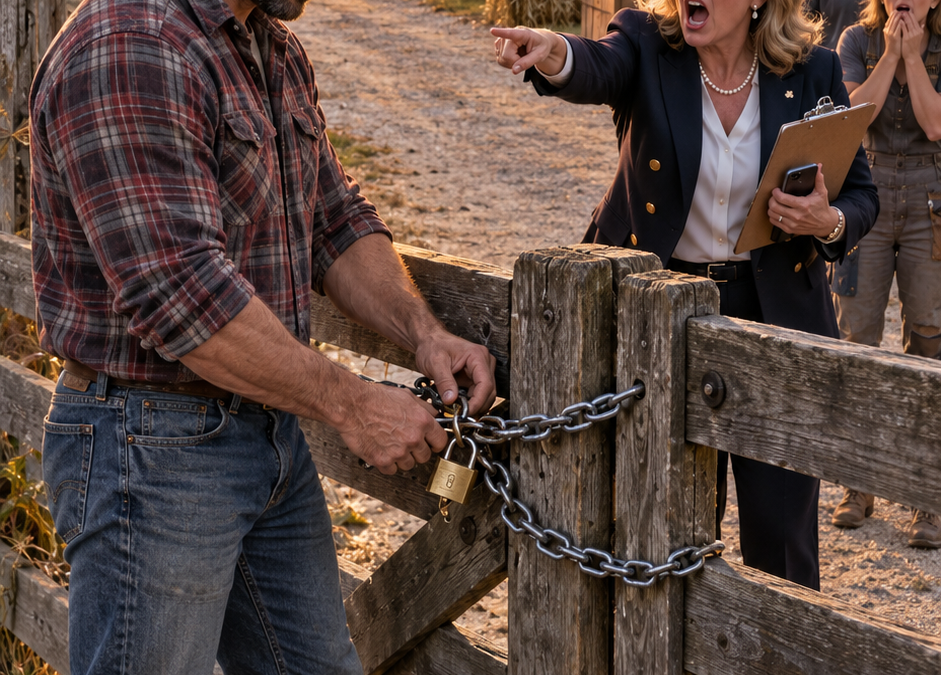
People sometimes ask why I didn’t simply lock the farm gate the moment I saw the banner.
I could have.
Legally, Marisol believed I had grounds to restrict access once the HOA threatened material interference with harvest.
It would have been dramatic.
Maybe satisfying for five minutes.
Twelve hundred customers arriving at a chained gate.
News cameras.
Angry parents.
An HOA president standing under a giant SOLD OUT banner while nobody could get inside.
Very cinematic.
Also stupid.
The ticket buyers hadn’t done anything wrong.
Tom hadn’t.
The vendors hadn’t.
Most residents hadn’t.
Even Grace hadn’t.
My problem wasn’t with a festival.
It was with people who decided a festival gave them ownership over someone else’s crop.
So I didn’t destroy the event.
I changed where the pressure landed.
That was my move before opening day.
I stopped fighting the date.
I followed the money attached to it.
Once I did that, October third stopped looking like a community tradition and started looking exactly like what it was:
a contractual trigger.
The land sale needed the festival.
The sponsor needed the date.
The conflicted board members needed the transaction.
And all of them needed me to behave predictably.
They expected the farmer to complain about pumpkins.
So I quit talking about pumpkins.
I started talking about parcels.
Conflicts.
Contracts.
Meeting records.
Contingencies.
Public filings.
By the time Vivian realized the argument had moved, she couldn’t move it back.
That’s why the outcome felt so satisfying in the end.
Not because three board members resigned.
Not because Bramwell lost its land deal.
Not even because the October third banner disappeared.
It was because the entire scheme depended on treating me like the least sophisticated person in the transaction.
Just a farmer worried about orange fruit.
They had corporate lawyers.
Sponsorship agreements.
Real estate entities.
Board votes.
Marketing calendars.
Six-figure incentives.
I had dirt under my fingernails and a county clerk named Delia who knew where the filings were kept.
Turns out that was enough.
On October eighteenth, when we finally harvested, I stood at the edge of the east field watching crates fill one after another.
The pumpkins were ready.
Actually ready.
Hard rinds.
Dry stems.
Good color.
Exactly the condition I’d told Vivian we’d have if everyone could summon the heroic patience required to wait two weeks.
Tom’s truck pulled in around noon.
He climbed out, grabbed one pumpkin from the top crate, and knocked his knuckles against the rind.
Solid.
He looked at me.
“Well.”
“Well what?”
“Looks like the pumpkins won.”
I laughed.
“They usually do.”
“Should’ve put them on the board.”
“They’d be an improvement.”
He loaded his order.
By sunset, the field looked different.
Empty spaces between rows.
Crates stacked.
Workers tired.
Real harvest.
Not a marketing deadline pretending to be one.
I stood there after everyone left.
The old festival banner had been removed weeks earlier.
The posts were still there beside the road.
For a moment I pictured the words again.
OCTOBER 3.
SOLD OUT.
Eleven days.
Twelve hundred tickets.
Four board votes against me.
A six-figure parcel deal.
One company my grandfather had spent half his life refusing to trust.
They had all looked enormous when I first saw them.
By harvest night, none of them mattered.
The only date that mattered was the one the crop had been ready.
The only agreement that mattered was the one everybody finally bothered to read.
And the people who had treated my farm like a prop in their transaction had learned the oldest rule in agriculture the expensive way.
You can sell tickets whenever you want.
You can print banners months in advance.
You can vote four to one.
You can sign sponsorships, negotiate land deals, and build an entire marketing campaign around a date on a calendar.
But you cannot bully a field into being ready.
And if you try to bully the farmer instead, you’d better hope he never decides to read what you signed.
Have you finished reading the story and want to read it again?
HOA Sold 1,200 Tickets to My Pumpkin Farm—So I Made One Move Before Opening Day
They sold 1,200 tickets to my farm without asking me.
My pumpkins weren’t ready, and the HOA knew it.
Eleven days before opening day, I stopped arguing and started reading the paperwork.
By the third week of September, the east field had finally started changing color.
Green was giving way to orange. The vines were drying back. After four months of rain, mud, fertilizer, disease checks, and more time staring at weather forecasts than any healthy man should spend staring at anything, the pumpkins were beginning to look like pumpkins instead of oversized green mistakes.
Beginning.
Not finished.
I was walking the rows with a moisture probe in one hand and a clipboard in the other when I saw the banner along the county road.
It was stretched between two wooden posts where drivers entering Hollow Creek Estates couldn’t miss it.
HOLLOW CREEK PUMPKIN FESTIVAL
GRAND OPENING — OCTOBER 3
SPONSORED BY BRAMWELL FOODS
SOLD OUT
I stopped walking.
October 3 was eleven days away.
My field wouldn’t be ready in eleven days.
Best case, I’d harvest around the seventeenth.
Maybe the twentieth if the cool nights held.
I knew that because pumpkins had been putting dirt under my fingernails since before I could legally drive. My father taught me. His father taught him. And after six years working produce compliance before I came home to run the family farm full-time, I also knew the difference between a pumpkin that looked orange from the road and one actually ready for commercial harvest.
Pick too early and the rind stays soft.
Soft rind bruises.
Bruised pumpkins rot.
And selling immature produce as market-ready was not some cute little agricultural technicality I was willing to gamble my farm’s reputation on because an HOA committee wanted matching banners.
I pulled out my phone.
“Hollow Creek HOA,” a woman answered. “This is Patrice.”
“This is Daniel Whitfield. Put Vivian Kesler on.”
There was a pause.
“May I ask what this concerns?”
“I’m standing beside a sign advertising 1,200 tickets to a pumpkin festival on my land.”
Another pause.
“That would probably be the events committee.”
“Patrice.”
“Yes?”
“My pumpkins aren’t ready.”
“Oh.”
“Vivian.”
She put me on hold.
The music sounded like it had survived three presidential administrations and one mall bankruptcy.
Then Vivian answered.
“Daniel. I hear you found the banner.”
Not hello.
Not what happened.
You found the banner.
That told me more than she probably intended.
“I found twelve hundred tickets sold for a harvest date I never approved.”
“We’ve held the festival every year.”
“After I confirm the crop.”
“We had to lock the date earlier this year.”
“Why?”
“Bramwell needed a fixed schedule for its regional fall campaign.”
I looked across three acres of pumpkins that Bramwell did not own.
“You needed a fixed date for a crop you don’t grow.”
“Daniel, historical timing suggested early October.”
“This isn’t history. This is agriculture.”
Her voice cooled slightly.
“We assumed the normal harvest window would hold.”
“You assumed wrong.”
“We’ve already sold tickets.”
“That sounds like your problem.”
There was a silence.
Not an offended silence.
A calculating one.
Finally she said, “There’s a sponsorship agreement in place.”
“With my farm?”
“With the community.”
“Then hold the festival in the community.”
“Daniel—”
“You sold access to my field.”
“We have recreational access rights under the old agreement.”
“Seasonal recreational access. Not authority to harvest whatever you want whenever you want.”
“We should discuss this in person.”
“I want the sponsorship contract.”
“I’d need board approval to release that.”
“You’ve used my land, my crop, and forty years of my family’s reputation to sell twelve hundred tickets. Find the approval.”
She didn’t answer.
Instead she said, “Let’s meet Thursday.”
Then she hung up.
I stood beside that banner another full minute.
SOLD OUT.
Those two words suddenly looked less like advertising and more like a dare.
I got into my truck and drove back toward the equipment shed.
I wasn’t thinking about October 3 anymore.
I was thinking about Bramwell Foods.
Because I knew that name.
My grandfather had said it at our kitchen table more than once when I was a kid.
Never casually.
Never kindly.
Always the way an old farmer talks about hail.
Something that happened years ago but still makes his shoulders tighten when the sky turns dark.
And as I drove past my own field, I realized that if Bramwell was back on Whitfield land, I needed to know exactly why before anybody opened a gate.
PART2
I called my sister that evening.
“Guess how many tickets they sold.”
“Knowing Hollow Creek? Too many.”
“Twelve hundred.”
Silence.
“Twelve hundred people?”
“Apparently.”
“For October third?”
“Apparently.”
“Your field won’t be ready.”
“I’ve noticed.”
She sighed.
“Dad would drive to the clubhouse.”
“Dad would’ve driven through the clubhouse.”
“That too.”
I stood at the kitchen window looking toward the barn.
“So what are you going to do?”
“Find out what they signed.”
“And then?”
“Find out why they signed it without asking me.”
“That sounds unusually mature.”
“I’ve mellowed.”
“You threatened a seed salesman with a moisture meter last spring.”
“He deserved it.”
She laughed, then her voice softened.
“Daniel, don’t turn this into a war.”
“I don’t want a war.”
“You’ve got employees. Contracts. Harvest. You don’t need neighbors angry with you.”
“I know.”
And at that moment, I meant it.
I thought this was stupid.
Arrogant.
Careless.
But still fixable.
A revised date.
A refund notice.
Maybe Vivian would give me the HOA version of an apology, which usually consists of explaining that no one technically admits wrongdoing while asking you to appreciate how difficult volunteering is.
Then everybody would go home.
I was wrong.
Thursday’s meeting never happened.
Wednesday night at 11:42, an email landed in my inbox.
Subject:
FESTIVAL TIMELINE UPDATE
Three sentences.
The board had reviewed my concerns.
The October 3 date remained appropriate based on historical harvest patterns.
They looked forward to my continued participation as a “valued community partner.”
I read that phrase four times.
Valued community partner.
Nothing makes a man feel valued quite like twelve hundred strangers being invited onto his property against his objection.
I closed the email.
Then opened it again.
There was no meeting invitation.
No proposed compromise.
No question about crop readiness.
They had done something much more irritating.
They had managed me.
That’s different from talking to someone.
A conversation allows the possibility that the answer changes.
Management begins after the answer has already been chosen.
I went into my office and pulled an old metal filing box from the bottom cabinet.
Inside was the original access agreement between my grandfather, Eli Whitfield, and the developers who built Hollow Creek Estates.
The agreement dated back to when Hollow Creek was a sales trailer, two model homes, and a field full of optimism.
My grandfather had granted seasonal recreational access to a designated portion of our acreage.
Originally for hayrides.
Over time, pumpkin picking got added by custom.
Nobody complained because it worked.
The farm got extra retail traffic.
The neighborhood got its wholesome autumn tradition.
Children got photographs their mothers would later use to embarrass them.
Everybody won.
But I had never read the agreement closely.
Neither had my father, as far as I knew.
It was one of those documents families inherit along with property lines and broken tools.
You know it’s there.
You roughly understand what it does.
You don’t read page two until somebody makes you angry enough.
I began there.
Then I opened fifteen years of emails.
Farm confirms October 16.
HOA announces October 18.
Farm confirms October 9.
HOA announces October 10.
Farm confirms October 14.
Same pattern.
Year after year.
Farm approval first.
Announcement second.
Never once had the HOA sold a public date before the farm confirmed maturity.
Until Vivian Kesler.
I called Grace Alderman the next afternoon.
Grace was the newest HOA board member.
Mid-thirties.
Elementary school teacher.
Quiet.
I’d never had a real conversation with her, but a neighbor once mentioned she’d been the only vote against a ridiculous parking rule, which qualified her as a dangerous radical by HOA standards.
“Mr. Whitfield?”
“Daniel’s fine.”
“Okay.”
“I need an honest answer.”
There was a pause.
“I’ll do my best.”
“When did the board approve October third?”
“Early August.”
“Did anyone contact me first?”
Silence.
That was answer enough.
Grace finally said, “I asked whether we’d received harvest confirmation.”
“And?”
“I was told it wasn’t necessary.”
“By Vivian?”
“Vivian. Carol agreed with her.”
Carol Denning was treasurer.
“What was the rush?”
“The Bramwell sponsorship.”
“How much?”
“I was told forty thousand.”
“For one festival?”
“For the seasonal partnership.”
“Did you see the contract?”
“No.”
That answer came faster.
“I asked.”
“And?”
“Still haven’t received it.”
“You’re a board member.”
“I know.”
“Why can’t you see a board contract?”
“Apparently it’s always with someone else.”
I leaned back.
“Who?”
“Vivian says Carol has it. Carol says counsel is reviewing it. Then it’s supposedly with the sponsor.”
Grace sounded embarrassed.
Not guilty.
Embarrassed.
“The documents keep moving.”
That mattered.
A sponsorship big enough to make a board ignore its own pumpkin farmer was one thing.
A sponsorship hidden from the people who approved it was another.
“Can you request it again?”
“I can.”
“Do it in writing.”
She hesitated.
“Daniel?”
“Yeah?”
“I don’t think the festival is the whole deal.”
“Why?”
“Because Vivian was nervous when I asked for the numbers.”
“Nervous how?”
“Like somebody asking to see a receipt after dinner.”
I almost smiled.
“That’s unusually specific.”
“I’m a teacher. I know what guilt looks like when someone thinks the worksheet disappeared.”
Fair enough.
That afternoon, I drove into town to see Tom Reyes.
Tom owned Reyes Family Bakery.
His pumpkin pies had ruined supermarket pie for half the county.
Every October he bought my sugar pumpkins by the ton.
When I walked through the back door, he was elbow-deep in flour.
“Daniel.”
“You’ve seen the festival advertising?”
“Hard to miss.”
“You committed to a booth?”
“Yeah.”
“October third?”
His hands stopped.
“Yes.”
“My pumpkins won’t be ready.”
He stared at me.
“How not ready?”
“Two weeks.”
His face changed.
“Festival people said supply was confirmed.”
“It wasn’t.”
He slowly wiped his hands on his apron.
“I turned down a wholesale slot from Millbrook Produce.”
“For what?”
“Pie pumpkins.”
That landed harder than I expected.
“How much?”
“Enough for festival inventory.”
“Tom—”
“I assumed you approved the date.”
“Nobody asked me.”
He swore under his breath.
Not loudly.
Tom wasn’t loud.
That made it worse.
“What happens if they don’t move the festival?”
“I don’t know yet.”
He looked at the flour on the floor.
Then at me.
“You better figure it out fast.”
That was when the problem stopped being about disrespect.
Now another business had changed purchasing decisions because Hollow Creek had represented my crop as available.
People were making financial commitments downstream of a lie I hadn’t even known existed.
I drove home angry enough to finally search Bramwell Foods.
The company was bigger now.
Regional grocery stores.
Prepared foods.
Distribution.
Friendly logo.
Sustainability language.
Stock photographs of smiling farmers apparently delighted to be photographed leaning against produce crates.
Same name.
Same lineage.
Twenty-two years earlier, Bramwell had operated a regional procurement program that locked small growers into pricing agreements shortly before harvest.
The base price sounded acceptable.
Then came transport fees.
Grading adjustments.
Packaging assessments.
Quality deductions.
By the time farmers saw their actual checks, margins had disappeared.
My grandfather had signed one of those contracts.
I’d known that part.
I hadn’t understood how bad it had been.
He nearly lost the farm.
For almost a decade afterward, every equipment purchase had been delayed.
Repairs patched instead of replaced.
Fields leased out.
Debt refinanced.
My father told me once that Grandpa Eli stopped sleeping through the night for two years.
After that contract, he never sold to a national buyer again.
I sat at my kitchen table staring at Bramwell’s new website.
Twenty-two years had passed.
New executives.
New stores.
New branding.
Maybe it wasn’t the same operation anymore.
But that wasn’t the point.
The point was that an HOA had just invited that name back onto Whitfield property and committed my harvest to its marketing calendar without even calling me.
I closed the laptop.
This was no longer eleven days versus twenty-five.
I needed a lawyer.
Marisol Ortega had handled my father’s estate, my grandfather’s remaining land filings, two lease disputes, and one extremely stupid disagreement over drainage between me and a neighbor who thought water respected survey stakes.
She knew the farm.
I put the original access agreement on her conference table Friday morning.
She read it.
Then read it again.
“Well.”
I didn’t like the tone.
“What?”
“This gives Hollow Creek substantial rights.”
“How substantial?”
“Seasonal recreational access. Temporary structures. Community events.”
“So they can hold the festival?”
“Generally, yes.”
My stomach dropped.
Then she turned the page.
“But.”
I leaned forward.
She pointed.
“Read this.”
I did.
Recreational use shall not materially interfere with the agricultural operation of the property, including planting, cultivation, harvest timing, and commercial viability of crops grown thereon.
I read it again.
Marisol leaned back.
“They can hold events.”
“Not whenever they want.”
“Exactly.”
“They can’t force an early harvest.”
“Not under this language.”
“And if the pumpkins aren’t commercially ready?”
“That strengthens you.”
I pulled out the produce standards I’d brought.
“My issue isn’t cosmetic.”
“I know.”
“Immature pumpkins bruise, decay, and can’t be represented the same way as mature retail produce.”
She scanned the material.
“Then an event requiring you to distribute or sell them early could clearly interfere with commercial viability.”
“So I take this to the board.”
“Yes.”
“And we’re done.”
Marisol gave me the kind of smile lawyers reserve for clients who have accidentally displayed optimism.
“What?”
“You have a strong legal position.”
“Great.”
“That does not mean the board will behave rationally.”
“They have a recorded agreement.”
“They also have twelve hundred ticket holders, a sponsor, vendors, and money already committed.”
“The contract doesn’t care.”
“Contracts care a great deal once judges read them.”
“And before judges?”
“People become surprisingly creative.”
I frowned.
“What do you recommend?”
“Put everything in writing. Offer a reasonable solution. Demand that the date move.”
“And if they refuse?”
“Then we decide whether to seek an injunction.”
I didn’t want an injunction.
I wanted the people who printed the banner to develop common sense.
I was beginning to suspect litigation might be cheaper.
Monday’s emergency board meeting drew five board members and about a dozen residents.
Vivian sat at the center.
Carol Denning beside her.
Renata Foss.
Judith Alcor.
Grace slightly separated from the others.
I handed out packets.
Original access agreement.
Highlighted limitation clause.
Fifteen years of prior harvest confirmations.
Produce maturity guidance.
Marisol’s legal memo.
I explained the spring weather.
Late planting.
Rind development.
Harvest window.
I gave them three alternative dates.
October 17.
October 18.
October 24.
Same festival.
Same field.
Same pumpkins.
Just pumpkins mature enough not to turn into orange soup in people’s kitchens.
When I finished, Vivian folded her hands.
“Daniel, we appreciate how thoroughly you’ve prepared.”
I almost laughed.
Nothing good follows that sentence.
“However,” she continued, “the board has fiduciary obligations to the community.”
There it was.
“Those obligations include honoring commitments to residents, vendors, and sponsors.”
“My contract is also a commitment.”
Carol spoke.
“Our counsel reviewed the interference language.”
“Who is your counsel?”
“That isn’t relevant.”
“It is when you’re telling me his opinion.”
Vivian answered.
“The association’s attorney.”
“And?”
“His interpretation is that the clause requires material interference.”
I stared at her.
“Yes. That’s the phrase printed on the page.”
“A two-week variance in harvest timing may not meet that threshold.”
I looked around the table.
“You’re requiring premature harvest of the crop.”
“We’re not requiring you to harvest anything.”
That was clever.
“So twelve hundred people are coming to do what?”
“Participate in the festival.”
“In my pumpkin field.”
“Yes.”
“To pick pumpkins.”
“Traditionally.”
“Which requires mature pumpkins.”
Carol frowned.
“That is your interpretation.”
I turned toward her.
“It is also the pumpkin’s interpretation.”
Grace covered a smile.
Nobody else did.
Vivian straightened.
“I’d like to call for a vote reaffirming the October third date.”
Grace raised her hand.
“I object.”
“Your objection is noted.”
“No. I want it in the minutes.”
Vivian’s expression tightened.
“Fine.”
Grace looked toward the recording secretary.
“I believe we have not verified harvest readiness with the property owner. I believe the recorded agreement specifically protects harvest timing. I believe proceeding without independent review puts the association at unnecessary risk.”
“Entered,” Vivian said.
Then:
“All in favor?”
Four hands.
Vivian.
Carol.
Renata.
Judith.
Grace’s stayed down.
Four to one.
My legal position died in under ten minutes.
Not legally.
Politically.
I gathered my papers.
A woman near the back touched my arm as people stood.
Harriet Voss.
She’d lived in Hollow Creek longer than half the board.
“I’ve seen this before.”
“What?”
“They let you talk because it makes the vote look fair.”
I looked toward Vivian.
“You think she planned it?”
Harriet shrugged.
“I think the vote happened before you entered the room.”
That was exactly how it felt.
Grace stayed behind.
When everybody else left, she walked over.
“That was decided beforehand.”
“I gathered that.”
“I asked for the Bramwell agreement again.”
“And?”
“Nothing.”
I sighed.
Then she added, “But I overheard Carol last week.”
“What did she say?”
“She was on the phone.”
Grace lowered her voice.
“She mentioned a figure much larger than forty thousand.”
“How much?”
“I couldn’t hear everything.”
“Ballpark.”
“Six figures.”
I stopped.
“For a pumpkin festival?”
“And she said something about a parcel.”
“A parcel?”
“Real estate. That’s how it sounded.”
I looked around the empty clubhouse.
Folding chairs.
Coffee cups.
A laminated fall calendar.
A room designed for arguments about shrub height.
“Why tell me?”
“Because I’m on that board and I can’t get financial documents I’m entitled to inspect.”
She picked up her bag.
“And because I don’t think they’re protecting a pumpkin festival.”
Neither did I.
Not anymore.
Marisol called the next morning.
“How bad?”
“Four to one.”
“Grace?”
“The one.”
“That matters.”
“It didn’t feel like it mattered.”
“It does.”
“They ignored everything.”
“That matters too.”
“How?”
“Because you created notice.”
I leaned against my kitchen counter.
“Translate.”
“They cannot later say nobody explained the legal issue.”
“That helps after the damage.”
“Yes.”
“I’d prefer before.”
“So would civilization.”
I laughed despite myself.
Then told her what Grace heard.
Six figures.
Parcel.
Silence.
Marisol finally said, “Find the land.”
“What?”
“If someone used the word parcel around a sponsorship deal, find the land transaction.”
“You think Bramwell’s buying property?”
“I think boards don’t hide pumpkin contracts from their own members because pumpkins are embarrassing.”
“What do they hide?”
“Money.”
Pause.
“Or land.”
So I stopped trying to convince Vivian.
That was the first genuinely useful decision I made.
For nearly two weeks, I’d treated the board like a jury.
If I showed them enough evidence, they’d make the right decision.
But four of them weren’t evaluating evidence.
They were protecting an outcome.
Once I understood that, the argument became irrelevant.
I needed to know what outcome they were protecting.
The county recorder answered that question.
A woman named Delia had known my family since before I had gray hair and greeted me by saying, “You look irritated.”
“I’m farming.”
“Fair.”
I asked about recent property filings involving Hollow Creek.
She searched.
Then pointed at a parcel two lots from the clubhouse.
Vacant.
Owned by Hollow Creek’s community fund.
A pending purchase agreement had been filed six weeks earlier.
Buyer:
Bramwell Development Holdings LLC.
Parent company:
Bramwell Foods.
I felt my pulse speed up.
“Open it.”
Delia did.
The sale price was well above assessed value.
Very well above.
And buried in the purchase agreement was a contingency.
Closing depended upon successful execution of the 2026 Fall Community Partnership Agreement.
I stared at the wording.
“What’s the community partnership agreement?”
Delia shrugged.
“Not filed here.”
I knew.
The festival.
I called Marisol from the parking lot.
“The land sale closes only if the fall partnership is successfully executed.”
“How much?”
I told her.
She whistled.
“So the festival isn’t the deal.”
“No.”
“It triggers the deal.”
“Yes.”
The pumpkins were proof of performance.
Bramwell wanted the branded event.
Promotional footage.
Crowds.
Sponsor visibility.
If Hollow Creek delivered that on October 3, the land sale closed.
If the festival got postponed or materially changed, the transaction could fail.
Suddenly Vivian’s behavior made perfect sense.
The fixed date.
The midnight email.
The prewritten vote.
The refusal to show Grace the sponsor documents.
The HOA wasn’t terrified of disappointing ticket holders.
They were terrified of blowing a real estate closing.
I kept digging.
Community fund oversight committee:
Vivian Kesler.
Carol Denning.
Renata Foss.
Three board members.
Then I found another connection.
Renata’s brother-in-law worked in site acquisition for Bramwell’s parent company.
Not illegal by itself.
Not proof she personally profited.
But certainly something a board member should disclose before voting repeatedly on a transaction tied to the company employing a close relative.
I called Grace.
She went silent for almost half a minute.
“Send me everything.”
I did.
“This needs to go into the official record.”
“Agreed.”
“Not a closed board meeting.”
“No.”
“Our general membership meeting is Thursday.”
“I know.”
“There’s a budget vote involving use of the parcel proceeds.”
I sat up.
“Minutes?”
“Outside recording secretary.”
“Residents?”
“Open attendance.”
“Then Thursday’s the room.”
For the first time since the banner appeared, I smiled.
Not because I had won.
Because I finally understood where the actual fight was happening.
I made one more call.
Marcus Delgado.
We went to high school together.
He had become a reporter covering county land use and local government.
I had become the man who complained when people touched pumpkins too early.
Life sends everyone down different roads.
“You sound serious,” he said.
“I am.”
I explained the parcel.
The board.
Bramwell.
The festival.
The land-sale contingency.
Grace’s document requests.
When I finished, Marcus said, “Whitfield.”
“What?”
“Your grandfather was Eli Whitfield?”
“Yes.”
“Hold on.”
Keyboard.
Then silence.
Then:
“Well, this got more interesting.”
“What?”
“Our archive has a story from twenty-two years ago about Bramwell’s grower contracts.”
“I found references.”
“Your grandfather is quoted.”
That stopped me.
“What?”
“Fourth paragraph.”
Marcus emailed the scan.
I opened it.
There was his name.
ELI WHITFIELD, HOLLOW CREEK AREA GROWER.
My grandfather had described how Bramwell’s pricing structure left farmers trapped once harvest began.
His quote sounded exactly like him.
No outrage.
No theatrics.
Just facts.
A bad buyer doesn’t need to steal your crop if he can get you to sign away your leverage before you know what harvest costs.
I read that sentence three times.
Marcus said, “I’m attending Thursday.”
“As a reporter?”
“As a man with a notebook.”
“Same thing.”
“Usually.”
That night I sat at my kitchen table with Grandpa’s old article next to the land-sale agreement.
The symmetry felt almost ridiculous.
Twenty-two years ago, Bramwell had tried to use timing and contracts to squeeze farmers when the crop left them no leverage.
Now Bramwell was back, and an HOA board was using a calendar and an old access agreement to promise my land before the crop was ready.
Different structure.
Same pressure point.
Sign now.
Perform now.
We’ll explain later.
Grandpa never got his room full of witnesses.
I was beginning to think I might.
Thursday night, the Hollow Creek clubhouse parking lot was full.
Not pumpkin-festival full.
Angry-neighborhood-money-meeting full.
Marcus sat two rows behind me with his notebook.
Grace had a thick folder.
Vivian opened at seven.
Minutes.
Treasurer report.
Landscaping.
Maintenance.
Then:
“Community Fund Parcel Disposition.”
The room changed.
Vivian began.
“The board has received a favorable offer for the vacant parcel adjacent to the clubhouse—”
Grace stood.
“I’d like the minutes to reflect a disclosure question before discussion proceeds.”
Vivian looked at her.
“What disclosure?”
“The buyer’s relationship to Bramwell Foods and the fall festival.”
Silence.
Vivian’s eyes moved toward me.
There it was.
For the first time, she knew I knew.
Grace opened her folder.
“The buyer is Bramwell Development Holdings LLC.”
A murmur moved through the room.
“The entity is controlled by the same parent company sponsoring the October third pumpkin festival.”
Vivian interrupted.
“These are separate agreements.”
Grace kept reading.
“The purchase agreement includes a contingency requiring successful execution of the 2026 Fall Community Partnership Agreement.”
She lifted the page.
“The festival sponsorship.”
More murmuring.
Carol leaned toward her microphone.
“This characterization is misleading.”
Grace looked at her.
“Then explain the contingency.”
Carol said nothing.
Grace continued.
“The parcel sale price is significantly above assessed value.”
A resident called out, “How significantly?”
Grace read the number.
The room erupted.
I watched faces change.
People understood immediately why Vivian had refused to move eleven days on a pumpkin festival.
This wasn’t about pumpkins.
It wasn’t even about forty thousand dollars.
A much larger land transaction depended on the event happening exactly as promised.
Grace continued.
“I also want the minutes to reflect that I requested the full Bramwell agreement three times.”
Vivian said, “Administrative delays—”
“No.”
Grace’s voice sharpened.
“I have the emails.”
That quieted Vivian.
“I requested it July 14, August 2, and September 6. I was told it was being finalized after the board had already voted on the festival commitment.”
Harold Matthews, a resident with a landscaping company, raised his hand.
“Are you saying the board voted before seeing the contract?”
Grace looked toward Vivian.
“I did.”
Harold frowned.
“What about the others?”
Nobody answered.
That answer was worse.
Grace then disclosed Renata’s family connection to Bramwell site acquisition.
Renata finally spoke.
“My brother-in-law’s employment has no bearing on my board duties.”
“Did you disclose it before voting?”
Grace asked.
Renata’s mouth tightened.
“No.”
“Why?”
“I didn’t consider it relevant.”
A man behind me muttered, “Convenient.”
Marcus’ pen never stopped.
Carol tried another angle.
“This meeting is becoming an ambush based on unauthorized financial disclosures.”
Grace’s head snapped toward her.
“County land records are public.”
She held up another sheet.
“State employment disclosures are public.”
Another.
“Our own meeting minutes are member records.”
Another.
“The only documents I struggled to obtain are the ones this board controlled.”
That landed.
Hard.
Vivian looked increasingly pale.
Then Harold asked the question nobody could dodge.
“So you kept October third because the land sale fails if the festival gets moved?”
Vivian answered carefully.
“The agreements involve multiple performance requirements.”
“That sounds like yes.”
“We had a responsibility to maximize value for the community.”
I stood.
Vivian looked at me.
I hadn’t planned to speak.
The documents were doing fine without me.
But I suddenly wanted one answer.
“Why?”
Vivian blinked.
“Why what?”
“Why did you personally push this so hard?”
“We’ve explained—”
“No.”
I shook my head.
“Not the community fund.”
I pointed toward the documents.
“Not Bramwell.”
“Why did you decide my harvest schedule was something you could sacrifice for this?”
Her expression hardened.
“This isn’t personal.”
“I think it is.”
She looked away.
I continued.
“You could’ve moved the date.”
“No.”
“You could’ve renegotiated.”
“We would have jeopardized—”
“You could’ve called me in August.”
Silence.
“You didn’t.”
The room was completely quiet.
“What was worth that?”
For the first time since this began, Vivian stopped sounding like an HOA president.
“My mother worked for Bramwell.”
I did not expect that.
Nobody did.
“She worked in their regional office thirty years ago.”
Vivian’s hands tightened around the edge of the table.
“She reported what they were doing to growers.”
My stomach tightened.
“What?”
“Anonymous letter to the state agriculture board.”
Nobody moved.
“She thought the contracting practices were predatory.”
I thought about Grandpa’s article.
Vivian continued.
“The investigation never fully went anywhere.”
Her voice wavered.
“But people at Bramwell suspected she wrote the letter.”
“She lost her job?”
“Not immediately.”
Vivian swallowed.
“They made sure she understood she wasn’t trusted.”
The room was silent enough to hear the ventilation system.
“She spent years after that believing she’d ruined her career over something that changed nothing.”
Vivian looked directly at me.
“I grew up listening to her wonder whether she’d been wrong to interfere.”
Something shifted inside me.
Not forgiveness.
Understanding.
Different thing.
“When Bramwell came back,” she said, “I thought this partnership could close that chapter.”
“How?”
“I don’t know.”
That answer sounded painfully honest.
“I thought maybe bringing them back here successfully meant something. Maybe it proved my family hadn’t been the enemy.”
I stared at her.
“Your mother tried to protect farmers.”
“She lost everything for it.”
“She lost a job.”
“You didn’t watch it happen.”
“No.”
I thought of my grandfather.
“But I watched what Bramwell did on the other side.”
Her face changed.
I reached into my folder.
I had brought the old article.
I held it up.
“My grandfather was one of those farmers.”
Vivian stared.
“He nearly lost this farm because of the contracts your mother reported.”
Her mouth opened slightly.
I continued.
“Your mother wasn’t the reason Bramwell hurt people.”
I placed the article on the table.
“She was one of the people who tried to stop it.”
Vivian looked at the page.
For several seconds, she said nothing.
Then:
“I didn’t know.”
“I believe you.”
It was the first kind thing I’d said to her in two weeks.
Then I added:
“But you still sold twelve hundred tickets to my field without asking me.”
She closed her eyes.
“I know.”
“And you still ignored the agreement.”
“Yes.”
“And you still withheld documents from your own board.”
A quieter:
“Yes.”
“And three members still voted while sitting inside conflicts nobody disclosed.”
Renata looked away.
Carol stared at the table.
I didn’t feel triumphant.
That surprised me.
I had spent days imagining what it would feel like when Vivian finally had nowhere left to hide.
Instead, I felt tired.
Two families had spent decades carrying damage from the same company.
Mine carried anger toward Bramwell.
Vivian carried guilt on Bramwell’s behalf.
And twenty-two years later, that company had managed to walk back into our town and turn both of those old wounds into leverage.
Marcus raised his hand.
“Ms. Kesler, did Bramwell representatives know about your mother’s history with the company?”
Vivian looked toward him.
“Yes.”
That changed the room again.
“When did they learn?”
“During early partnership discussions.”
“Did they reference it while negotiating?”
Vivian hesitated.
Then nodded.
“How?”
She looked sick.
“They said they hoped the partnership could represent a new chapter.”
Marcus wrote something.
I knew exactly what.
Bramwell hadn’t accidentally found Vivian’s soft spot.
They had pressed it.
Maybe gently.
Maybe legally.
Maybe with smiles and corporate language.
But they had pressed it.
Grace stood.
“I move to table the parcel sale pending independent ethics review.”
Seconded immediately.
Vote.
Four to one.
This time in the other direction.
Carol opposed.
Renata abstained after someone asked whether she should have been voting at all.
Then Grace made a second motion.
“Rescind the October third festival authorization and require independent agricultural verification of crop readiness before any new public date.”
Vivian looked at me.
I looked back.
Then Vivian raised her hand.
“Yes.”
The motion passed.
The room erupted.
Not applause at first.
Relief.
Then applause.
October third was dead.
Eleven days of arrogance collapsed in under eleven minutes.
Funny how fast a schedule can become flexible once the money behind it is visible.
The next forty-eight hours were brutal.
Ticket holders got notices.
Refund options.
Replacement-date information.
Vendors were called.
Tom Reyes immediately secured a temporary wholesale shipment for his bakery.
Bramwell representatives issued a statement expressing disappointment over “unexpected local governance issues.”
That phrase was so beautiful I printed it.
Unexpected local governance issues.
Translation:
People read the contract.
Marcus’ article ran Sunday morning.
His headline was much better than Bramwell’s statement.
PUMPKIN FESTIVAL DISPUTE EXPOSES LAND DEAL AND HOA CONFLICTS
The story covered everything.
The premature festival date.
The land-sale contingency.
Grace’s document requests.
Renata’s family connection.
My grandfather’s old Bramwell history.
Vivian’s mother’s whistleblower story.
Marcus did something I appreciated.
He didn’t turn Vivian into a cartoon villain.
He wrote what happened.
That was enough.
Residents started a recall petition anyway.
Carol resigned first.
“Personal reasons.”
Apparently personal reasons flourish whenever public records become interesting.
Renata resigned two days later.
Vivian held out until Friday.
Then she stepped down too.
Grace became interim president.
I didn’t celebrate the resignations.
Okay.
That’s not entirely true.
I enjoyed Carol’s.
A little.
I’m only human.
The ethics review later concluded the board had failed to disclose material conflicts and had not followed its own document-access rules.
The parcel transaction was canceled.
Bramwell withdrew.
The community fund kept its land.
No civilization-ending financial catastrophe followed.
No one starved because Hollow Creek failed to sell one vacant lot to a grocery conglomerate.
People survived.
Miraculously.
The pumpkins did too.
I harvested October eighteenth.
Exactly where I’d predicted.
Hard rinds.
Dry stems.
Deep orange color.
Proper maturity.
Tom Reyes got every sugar pumpkin he’d ordered.
His first batch of pies sold out before lunch.
Grace called me five days before the rescheduled festival.
“Field ready?”
“Almost.”
“That’s not yes.”
I smiled.
“You’re learning.”
“When should we announce?”
“Give me two days.”
“Okay.”
No banners appeared.
No tickets went online.
Nobody called me a valued partner.
They waited.
Two days later I walked the field at sunrise.
Checked rind hardness.
Cut sample fruit.
Checked stems.
Looked at weather.
Then called Grace.
“October nineteenth.”
“You’re sure?”
“Yes.”
“Can I put it in writing that the farm has approved?”
“You can tattoo it on Harold Matthews if you want.”
“I’ll settle for email.”
The festival opened October nineteenth.
Smaller sponsor footprint.
No Bramwell.
Twelve hundred original ticket holders were offered priority rebooking.
Most came.
Families walked the rows.
Kids hauled pumpkins larger than their torsos.
A little boy tried to lift one so big he tipped backward and disappeared into the vines.
His father took a photograph before helping him, which I respected.
Nobody got sick.
Nobody took home immature fruit.
Nobody had to pretend agriculture obeyed a marketing calendar.
The festival was successful.
Which made the previous board’s behavior look even stupider.
They had nearly blown up a sixty-year community tradition because waiting sixteen days threatened a land transaction nobody had honestly disclosed.
That was the part residents never forgot.
Not that Vivian had made a bad decision.
That the board had acted like there was no alternative when a perfectly good alternative had been sitting two weeks later on the calendar the entire time.
Vivian called me the week after the festival.
I almost ignored it.
Then answered.
“Daniel.”
“Vivian.”
“I owe you an apology.”
“You already resigned.”
“That isn’t an apology.”
Fair.
I sat on the porch.
“Go ahead.”
She took a breath.
“I used your farm.”
“Yes.”
“I told myself I was protecting the community fund.”
“Yes.”
“I let Bramwell make the partnership feel personal.”
That was harder for her.
“I wanted something from that deal I couldn’t admit I wanted.”
“Closure.”
“Yes.”
“Did you get it?”
She laughed once.
“No.”
Silence.
Then:
“My mother saw Marcus’ article.”
That surprised me.
“How is she?”
“Angry.”
“At me?”
“At Bramwell.”
I almost smiled.
“She said the exact sentence you did.”
“Which one?”
“That she was never the reason they hurt farmers.”
Vivian’s voice broke slightly.
“She told me she’d spent thirty years wondering if she’d done the wrong thing.”
“And?”
“She said seeing your grandfather’s name in that old article finally answered it.”
I looked across the harvested field.
Pumpkin vines were flattening into brown tangles.
“Your mother did the right thing.”
“I know that now.”
“She probably knew then too.”
“No.”
Vivian exhaled.
“That’s the sad part.”
We sat in silence.
Finally she said, “I didn’t set out to hurt you.”
“I believe that.”
“That doesn’t make it better.”
“No.”
“I thought I was fixing something.”
“That wasn’t yours to fix.”
“I know.”
“You can’t repair your mother’s career by handing Bramwell somebody else’s leverage.”
“I know.”
Another silence.
Then she said, “I’m sorry.”
This time I believed her.
“I accept the apology.”
“Thank you.”
“I’m still keeping the legal memo.”
She laughed.
“Fair.”
“And if you ever sell tickets to my farm again—”
“I don’t think anyone is letting me near a ticketing platform.”
“Good governance.”
That was the last long conversation we had.
Marisol met me for coffee a few weeks later.
“You look disappointed.”
“Why?”
“You won.”
“I don’t feel like I won.”
She stirred her coffee.
“That’s because real disputes aren’t television.”
“I got the date moved.”
“Yes.”
“Parcel deal died.”
“Yes.”
“Three board members resigned.”
“Also yes.”
“Bramwell left.”
“Yes.”
“Why doesn’t that feel cleaner?”
“Because Vivian wasn’t evil.”
I looked at her.
“She did bad things.”
“Those are different statements.”
I knew.
That was the irritating part.
Marisol continued.
“You exposed the documents. You didn’t invent anything. You didn’t threaten anyone. You didn’t sabotage the festival. You made the actual financial structure visible.”
“Marcus did some of that.”
“Grace did plenty.”
“Delia found the filing.”
“Exactly.”
She smiled.
“You didn’t beat them by destroying anything.”
“What did I do?”
“You stopped cooperating with a story that wasn’t true.”
That sat with me.
Because the old board’s entire plan depended on one assumption.
That I would cooperate.
Not happily.
Not voluntarily.
But eventually.
They expected twelve hundred customers, sponsor money, public embarrassment, community pressure, and a four-to-one vote to make resistance more expensive than compliance.
They assumed I’d look at eleven days, look at the crowd, look at Bramwell, and decide picking early was easier than fighting.
My grandfather had faced the same basic calculation decades earlier.
A buyer put a contract in front of him when walking away felt impossible.
This time, I still had leverage.
I had the land.
I had the crop.
And eventually, I had the paperwork.
Tom Reyes sent a pie to my house.
No card.
Just a sticky note.
THANKS, DANNY.
Nobody outside my family called me Danny.
Tom had known me since I was ten.
I ate half the pie standing at the counter.
Harriet Voss stopped me outside the feed store.
“Well?”
“Well what?”
“Did you learn anything?”
“Never argue with an HOA?”
She shook her head.
“They’ve been teaching people that lesson for generations.”
“Then what?”
She smiled.
“Never assume the meeting is where the decision gets made.”
That one I kept.
Grace stayed on as board president after winning the regular election.
Her first major policy change required full board access to all sponsorship agreements before votes.
Her second required written agricultural approval before the HOA could advertise any event using farm property.
Her third prohibited board members from voting on contracts involving immediate family members’ employers without disclosure and recusal review.
Simple rules.
The kind everybody calls obvious immediately after learning why they were necessary.
The following August, my phone rang.
Grace.
“Before you panic, nothing has been printed.”
“Promising opening.”
“Next year’s pumpkin festival.”
“What about it?”
“We have a draft layout.”
“Draft.”
“Draft.”
“No tickets?”
“No.”
“No sponsor commitments?”
“No.”
“No giant banner?”
“Daniel.”
“I’m checking.”
She emailed a map.
I opened it.
The walking route crossed an irrigation line.
I marked it.
“Move this two rows east.”
“Done.”
“And don’t set a date yet.”
“Wasn’t planning to.”
“When do you need one?”
“Whenever the crop says.”
I leaned back in my chair.
“That might be the most beautiful sentence an HOA president has ever spoken.”
She laughed.
“Anything else?”
“Yeah.”
“What?”
“Ask me first.”
“We just did.”
Exactly.
Every year since, that’s how it works.
The HOA proposes.
I review.
The crop decides.
Then the date gets announced.
A revolutionary system apparently based on speaking to the person whose land you’re using.
Bramwell never sponsored another event on my property.
Their land subsidiary never bought the Hollow Creek parcel.
The community fund eventually leased it to a local daycare for an outdoor education garden at a fraction of the money Bramwell had offered.
People complained at first.
Then children started growing tomatoes there.
Nobody complained after that.
Carol Denning moved two years later.
Renata stayed in Hollow Creek but never ran for another board position.
Vivian stayed too.
For a while, I would see her at the grocery store and we’d perform the awkward choreography of two people who had once dismantled each other’s assumptions in front of seventy neighbors.
Eventually that eased.
One October, she came to the festival with her mother.
I knew who the older woman was immediately.
Vivian introduced us anyway.
“Daniel Whitfield.”
Her mother looked at me for a long second.
“Eli’s grandson.”
“Yes.”
She took my hand.
“Your grandfather was a stubborn man.”
I smiled.
“So I’ve been told.”
“He helped people.”
“He never said much about it.”
“Men like him rarely do.”
She looked toward the field.
“I wish I had met him again after everything happened.”
“You met him?”
“Once.”
“When?”
“State agriculture hearing.”
I stared.
She nodded.
“He testified.”
That was another piece of my grandfather I’d never known.
“I sent the letter.”
“I know.”
“He stood up publicly.”
She smiled sadly.
“We were both trying to do the same thing from different sides of the table.”
I looked across the festival.
Children running between rows.
Tom selling pies.
Grace arguing with a volunteer about parking cones.
No Bramwell logos.
No secret real estate contingency.
No premature harvest.
Just pumpkins.
I thought about how close we had come to letting two families inherit the wrong lesson from the same history.
My grandfather learned never to trust Bramwell.
Vivian learned that her mother’s resistance to Bramwell had brought shame.
Both stories contained pain.
Only one deserved to survive intact.
Her mother’s resistance wasn’t shameful.
Grandpa’s caution wasn’t bitterness.
Bramwell had simply benefited for years from everyone carrying its damage privately.
That was what had finally changed.
The damage became visible.
People sometimes ask why I didn’t simply lock the farm gate the moment I saw the banner.
I could have.
Legally, Marisol believed I had grounds to restrict access once the HOA threatened material interference with harvest.
It would have been dramatic.
Maybe satisfying for five minutes.
Twelve hundred customers arriving at a chained gate.
News cameras.
Angry parents.
An HOA president standing under a giant SOLD OUT banner while nobody could get inside.
Very cinematic.
Also stupid.
The ticket buyers hadn’t done anything wrong.
Tom hadn’t.
The vendors hadn’t.
Most residents hadn’t.
Even Grace hadn’t.
My problem wasn’t with a festival.
It was with people who decided a festival gave them ownership over someone else’s crop.
So I didn’t destroy the event.
I changed where the pressure landed.
That was my move before opening day.
I stopped fighting the date.
I followed the money attached to it.
Once I did that, October third stopped looking like a community tradition and started looking exactly like what it was:
a contractual trigger.
The land sale needed the festival.
The sponsor needed the date.
The conflicted board members needed the transaction.
And all of them needed me to behave predictably.
They expected the farmer to complain about pumpkins.
So I quit talking about pumpkins.
I started talking about parcels.
Conflicts.
Contracts.
Meeting records.
Contingencies.
Public filings.
By the time Vivian realized the argument had moved, she couldn’t move it back.
That’s why the outcome felt so satisfying in the end.
Not because three board members resigned.
Not because Bramwell lost its land deal.
Not even because the October third banner disappeared.
It was because the entire scheme depended on treating me like the least sophisticated person in the transaction.
Just a farmer worried about orange fruit.
They had corporate lawyers.
Sponsorship agreements.
Real estate entities.
Board votes.
Marketing calendars.
Six-figure incentives.
I had dirt under my fingernails and a county clerk named Delia who knew where the filings were kept.
Turns out that was enough.
On October eighteenth, when we finally harvested, I stood at the edge of the east field watching crates fill one after another.
The pumpkins were ready.
Actually ready.
Hard rinds.
Dry stems.
Good color.
Exactly the condition I’d told Vivian we’d have if everyone could summon the heroic patience required to wait two weeks.
Tom’s truck pulled in around noon.
He climbed out, grabbed one pumpkin from the top crate, and knocked his knuckles against the rind.
Solid.
He looked at me.
“Well.”
“Well what?”
“Looks like the pumpkins won.”
I laughed.
“They usually do.”
“Should’ve put them on the board.”
“They’d be an improvement.”
He loaded his order.
By sunset, the field looked different.
Empty spaces between rows.
Crates stacked.
Workers tired.
Real harvest.
Not a marketing deadline pretending to be one.
I stood there after everyone left.
The old festival banner had been removed weeks earlier.
The posts were still there beside the road.
For a moment I pictured the words again.
OCTOBER 3.
SOLD OUT.
Eleven days.
Twelve hundred tickets.
Four board votes against me.
A six-figure parcel deal.
One company my grandfather had spent half his life refusing to trust.
They had all looked enormous when I first saw them.
By harvest night, none of them mattered.
The only date that mattered was the one the crop had been ready.
The only agreement that mattered was the one everybody finally bothered to read.
And the people who had treated my farm like a prop in their transaction had learned the oldest rule in agriculture the expensive way.
You can sell tickets whenever you want.
You can print banners months in advance.
You can vote four to one.
You can sign sponsorships, negotiate land deals, and build an entire marketing campaign around a date on a calendar.
But you cannot bully a field into being ready.
And if you try to bully the farmer instead, you’d better hope he never decides to read what you signed.








