𝗣𝗔𝗥𝗧 𝟮 HOA Removed Every Snake—Then Thousands of Rats Took Over Their Luxury Clubhouse
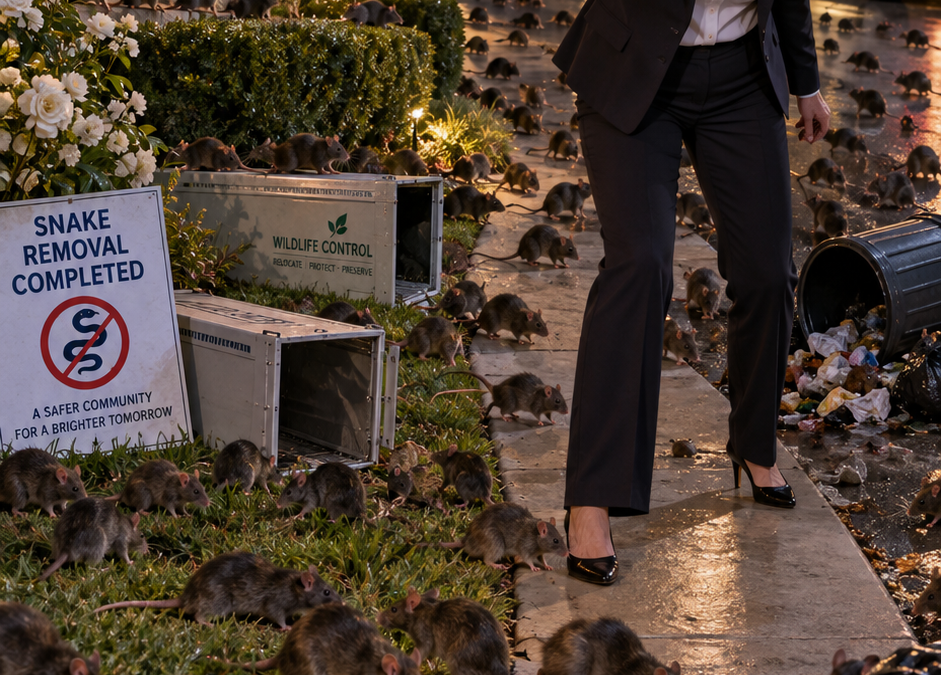
𝗣𝗔𝗥𝗧 𝟮
My family had owned the Gilded Marsh property since 1948.
Thirty acres of brackish wetland, native grass, elderberry, cattails, old drainage channels, and two acres of working nursery.
To Gilded Cove, it looked messy.
To me, it looked alive.
My grandfather Arthur Mercer had understood the place better than anyone.
He taught me that wetlands were not empty land waiting for somebody rich enough to fill them.
They absorbed floodwater.
Filtered runoff.
Held soil.
Stored carbon.
Provided breeding habitat.
And, most importantly for what was about to happen, they contained systems of checks and balances far older than any homeowners association.
My grandfather had spent four decades protecting the property from developers who wanted to drain it.
By the time I inherited it, the land had grandfathered agricultural protection, environmental restrictions, and enough documentation to keep three generations of lawyers employed.
My uncle Robert handled most of the legal side.
I handled the living side.
The nursery produced native herbs and specialty plants for regional apothecaries, restoration projects, and boutique growers.
My grandfather’s old stone cellar was still used to dry lavender, chamomile, and rosemary.
It smelled better than any clubhouse Gilded Cove ever built.
Reggie hated it.
Not because the nursery harmed anyone.
Because she couldn’t control it.
She had spent thirty years in corporate logistics before retiring to Gilded Cove.
Everything about her personality suggested she believed the world became better if you turned it into a spreadsheet.
Grass should have one height.
Bushes should have one shape.
Driveways should have one approved finish.
Garbage cans should appear outdoors for exactly four approved hours.
Bird feeders required committee review.
One resident received a warning because his hydrangeas were “visually inconsistent with neighborhood color expectations.”
That was a real sentence.
I saw the letter.
After Reggie became HOA president, Gilded Cove stopped looking like a neighborhood and started looking like a place where nature had signed a nondisclosure agreement.
Native plants disappeared.
Chemical landscaping increased.
Every lawn became the same shade of artificial emerald.
Then they built the new clubhouse.
It was their crown jewel.
Saltwater pool.
Restaurant.
Fitness center.
Event hall.
Outdoor kitchen.
Heated deck.
The brochure called it “coastal living in harmony with nature.”
The developer had filled a low section of marsh to build it.
Harmony apparently involved burying nature under limestone.
The clubhouse stood on cedar structural supports over a partially hollow subfloor.
The developer saved roughly sixty thousand dollars by minimizing enclosure work beneath the deck.
That left a warm, dark, protected cavity under hundreds of square feet of building.
Perfect for rats.
Norway rats had lived beneath that marsh long before Gilded Cove existed.
They rarely caused major trouble because predator pressure kept them contained.
Then one afternoon, Richard Darby saw a gopher snake sunning itself near a walking path.
Richard was seventy-one, owned three luxury cars, and possessed the emotional resilience of wet tissue paper.
According to witnesses, he screamed.
His Shih Tzu screamed because Richard screamed.
Then Richard reported that a “deadly viper” had attacked them.
It had not.
The snake wasn’t venomous.
It hadn’t moved toward him.
It had been lying on warm gravel until a man in golf shoes nearly stepped on it.
Reggie responded within twenty-four hours.
Emergency board session.
Zero-tolerance reptile policy.
Commercial traps.
Sulfur barriers.
Chemical repellents.
No wildlife consultation.
No ecological review.
No county specialist.
Just panic with letterhead.
I sent a certified warning on September 15.
Robert helped draft it.
It was not emotional.
It wasn’t insulting.
It included population data, maps, historical rodent surveys, predator-prey estimates, and photographs from my monitoring stations.
The conclusion was simple:
Remove the native snake population and the rat population will increase sharply.
I even recommended alternatives.
Habitat buffers.
Education.
Relocation protocols.
Nonlethal exclusion around high-traffic areas.
Reggie had options.
She chose theater.
Two days later, my security camera captured her standing beside the clubhouse fire pit holding my letter.
She had somebody filming.
“Apparently,” she said into the camera, “our neighbor believes we should live with snakes because they’re somehow good for us.”
She rolled her eyes.
Then she held the letter over the flame.
The corner caught.
She let the entire packet burn.
“Progress,” she announced, “sometimes requires ignoring people who are emotionally attached to outdated methods.”
Then she posted the video to the HOA portal.
The caption said:
ENJOY YOUR SNAKE-FREE COMMUNITY.
Residents loved it.
Thumbs-up icons.
Laughing emojis.
One man wrote:
ABOUT TIME SOMEONE STOOD UP TO SWAMP BOY.
I was twenty-eight years old, had a master’s degree in urban ecology and disease-vector management, and apparently had been promoted to Swamp Boy.
I considered putting it on business cards.
Robert did not find that funny.
He came into my office the next afternoon holding printed photographs of the glue traps.
“This is trespass.”
“I know.”
“Chemical drift onto protected acreage.”
“I know.”
“Animal cruelty issues.”
“Probably.”
“I can get an emergency injunction.”
“No.”
Robert stopped.
“What?”
“Don’t.”
He stared at me.
“Leo, I have spent thirty years waiting for someone to hand me a case this easy.”
“I know.”
“They crossed the boundary.”
“I know.”
“They burned the scientific warning you sent.”
“I also know that.”
“Then why am I standing here being denied joy?”
I turned my monitor toward him.
The infrared map showed increasing rodent movement beneath the clubhouse.
Robert leaned closer.
“What am I looking at?”
“Four weeks ago, average movement beneath that foundation was under forty detections per hour.”
“And now?”
“Two hundred and fourteen.”
His expression changed.
“The snakes?”
“Mostly gone.”
“You think the rats are responding already?”
“I know they are.”
He looked at me for several seconds.
Then leaned back.
“What exactly are you planning?”
“Nothing.”
“That word sounded illegal.”
“I’m planning to monitor my property.”
“That’s it?”
“And document.”
“Leo.”
I pointed toward the screen.
“They’ve been warned.”
“Yes.”
“They ignored it.”
“Yes.”
“If we sue now, Reggie gets ordered to remove some traps and stop overspraying.”
“Correct.”
“She pays legal fees.”
“Maybe.”
“And then what?”
“She finds another exterminator.”
I nodded.
“She’ll tell everybody she was victimized by an environmental extremist with a lawyer.”
Robert sighed.
“So you want to let her be wrong.”
“I want her to finish being wrong.”
That made him uncomfortable.
Good lawyers are happiest when destruction comes with docket numbers.
Ecology was messier.
Over the next four months, I installed additional sensors on my side of the boundary.
Infrared cameras.
Motion counters.
Ground vibration monitors.
Small digital piezometers for tracking moisture changes around burrow networks.
Everything legal.
Everything documented.
Then I waited.
Above ground, Reggie looked brilliant.
No snakes.
Residents congratulated her.
The neighborhood newsletter ran photographs of clean paths and perfectly trimmed landscaping.
Gilded Cove submitted itself for a regional gated-community excellence award.
Reggie posted a photograph from the clubhouse deck with the caption:
SCIENCE SAID DISASTER. RESULTS SAY OTHERWISE.
I saved it.
November arrived.
My dashboard changed color.
Rat activity beneath the clubhouse jumped again.
Then doubled.
The math was simple and ugly.
Female Norway rats reach reproductive maturity quickly.
Under good conditions, one female can produce multiple large litters per year.
The clubhouse offered extraordinary conditions.
Warmth.
Protection.
Restaurant waste.
Water.
No snakes.
The HOA had not removed pests.
They had removed competition.
By late November, my infrared feeds looked like static made of bodies.
Hundreds of heat signatures moved through the foundation cavities after sunset.
They were no longer staying below ground.
Some began entering wall spaces.
I saw them crossing plumbing chases.
One camera caught three rats dragging insulation into a nest.
Another recorded gnawing near a conduit.
I saved every file.
One afternoon, Reggie drove past the boundary in her golf cart.
She stopped when she saw me checking a sensor.
“Well, if it isn’t the prophet of doom.”
I looked up.
“Afternoon.”
“Still waiting for the apocalypse?”
“No.”
She smiled.
“Good. Growth.”
“I’m waiting for December.”
That annoyed her.
“It’s been four months.”
“I know.”
“No snakes. No infestation. No disease.”
“Nothing visible.”
“Same thing.”
“No.”
She leaned against the cart.
“You really cannot accept being wrong, can you?”
I looked toward the clubhouse.
The cedar structure gleamed in the late afternoon sun.
“You measure success in newsletters.”
“What?”
“I measure it in population curves.”
“Oh, please.”
“Your rat detections are up over seven hundred percent since September.”
Her expression shifted slightly.
Then she laughed.
“Your imaginary sensors?”
“They aren’t imaginary.”
“Neither are our maintenance reports.”
“Your maintenance staff hasn’t entered the lower crawlspace in six weeks.”
She froze.
I knew that from the access-log camera on my side.
She recovered quickly.
“You’ve become obsessed.”
“No.”
I crouched near the fence.
The soil was damp from autumn rain.
Hundreds of tiny paw prints crossed the mud uphill.
I pointed.
Reggie looked.
For a second, her face emptied.
Then she straightened.
“Mice.”
“Rats.”
“Same thing.”
“That’s the kind of distinction that becomes expensive.”
She got back into the cart.
“You need a hobby.”
“I have one.”
“What?”
I smiled.
“Watching ecological predictions become invoices.”
She drove away.
December arrived.
So did the cold.
The temperature dropped nearly forty degrees in one night.
The marsh froze at the edges.
Surface food disappeared.
The rats moved upward.
Into warmth.
Into walls.
Into the clubhouse.
And Reggie finally got the snake-free resort she had asked for.
The first failure seemed harmless.
The pool heater stopped.
Maintenance blamed a relay.
Then two exterior cameras failed.
Then the restaurant’s ice machine started leaking.
Then half the Wi-Fi system disappeared.
Three technicians came out.
None found one central cause.
Because there wasn’t one.
There were thousands of small causes with teeth.
The rats chewed electrical sheathing.
PEX water lines.
Fiber-optic cable.
Insulation.
Wood.
Everything rodents use to keep continuously growing incisors worn down.
The first maintenance worker to crawl beneath the deck came back white-faced.
His name was Frank.
He had been with Gilded Cove longer than Reggie.
At the emergency board meeting, he apparently told her:
“Something has eaten the building.”
I learned the details later from Evelyn, the administrative secretary, who had begun calling Robert privately once she realized Reggie was no longer making decisions compatible with employment.
Frank found shredded insulation hanging like snow.
Droppings covered beams.
Several cedar supports had been heavily gnawed near the base.
Water leaked into the crawlspace from punctured plumbing.
Nesting material filled electrical cavities.
And everywhere his flashlight moved, eyes reflected back.
Hundreds.
Possibly thousands.
A responsible board would have closed the clubhouse.
Called vector control.
Called public health.
Called insurance.
Reggie called a discount chemical supplier.
Why?
Because Saturday was award day.
Regional planning officials and judges were coming to inspect Gilded Cove for “Gated Community of the Year.”
I still don’t know who invents these awards.
I assume the same people who sell plaques.
Reggie had spent almost a year chasing it.
Losing that inspection, in her mind, meant losing everything.
So she hid the infestation.
She ordered hundreds of pounds of second-generation anticoagulant rodent bait.
Brodifacoum.
Powerful.
Persistent.
Not something any sane person stuffs casually into occupied HVAC infrastructure.
Reggie told Frank to place it inside crawlspaces, wall cavities, hollow columns, and ventilation pathways.
Frank refused the vents.
She found another contractor willing to do it.
Her logic was apparently simple.
Kill the rats before Saturday.
Clean them later.
What she forgot was that poisoned rats do not sign cleanup agreements.
Anticoagulants act slowly.
Animals become weak.
They seek shelter.
Water.
Warmth.
Then they die.
Inside walls.
Inside ceilings.
Inside insulation.
Inside ventilation ducts.
By Friday, the clubhouse had become a mausoleum with a swimming pool.
Then the heat system came on.
That accelerated everything.
Decomposition.
Odor.
Bacterial activity.
The smell pushed through vents and electrical outlets.
Sweet.
Rotten.
Heavy.
Residents complained.
Reggie blamed plumbing.
Then the staff deployed industrial lavender deodorizer.
This created what one maintenance employee later described as:
“A corpse wearing perfume.”
By Friday afternoon, even the parking lot smelled wrong.
That was when Evelyn finally called Robert.
He called me.
I called Dr. Evelyn Park at county public health.
I had worked with her during graduate research.
I sent everything.
Sensor data.
Photographs.
Certified warning.
Reggie’s video burning it.
Rodent activity timeline.
Maintenance reports Evelyn forwarded.
And photographs showing pesticide packaging near mechanical intake areas.
Dr. Park called me back twenty minutes later.
“This isn’t an HOA dispute anymore.”
“No.”
“Are people inside that building?”
“Yes.”
“Event tomorrow?”
“Yes.”
Silence.
Then:
“I’ll handle the warrant.”
Saturday morning was beautiful.
Cold.
Clear.
Blue sky.
The kind of day developers use in brochures.
Gilded Cove had decorated the clubhouse entrance with white roses and gold ribbons.
The smell started halfway down the driveway.
I arrived with Robert and Dr. Park just before ten.
I wore my field uniform.
Not because I was trying to look dramatic.
Because Dr. Park had asked me to bring calibrated air-monitoring equipment from my nursery lab.
The award judges arrived in a silver van.
Three of them.
Plus a regional planning commissioner.
They stepped out.
The first judge stopped.
Her face tightened.
“What is that smell?”
Reggie stood at the entrance in a cream cashmere blazer.
She looked terrible.
Pale.
Sweating.
Smiling too hard.
“Temporary plumbing issue.”
The second judge covered his nose.
“This smells like something died.”
Reggie laughed.
“Winter drainage can create unpleasant organic odors.”
Then she saw me.
Her smile disappeared.
I kept walking.
Robert beside me.
Dr. Park ahead.
Reggie stepped down from the entryway.
“Leo.”
“Morning.”
“This is private property.”
Dr. Park pulled out her identification.
“Not for the next few hours.”
Reggie’s face changed.
“Who are you?”
“Dr. Evelyn Park. County public health.”
Silence.
The judges looked at one another.
Reggie recovered.
“There is no public-health issue.”
Dr. Park looked at the digital monitor in her hand.
“Your air disagrees.”
The display had already registered elevated decomposition-related compounds.
Dr. Park walked closer to the doors.
“The building needs to be evacuated.”
“No.”
That one word ended Reggie’s presidency, even though she didn’t know it yet.
Dr. Park looked up.
“Excuse me?”
“We have a private event underway.”
“You have a potential biological and chemical contamination incident underway.”
“This is being exaggerated by a hostile neighbor.”
She pointed at me.
“He has been trying to undermine this community for years.”
I said nothing.
Robert didn’t either.
Dr. Park asked, “Did your association apply rodenticide inside the building’s ventilation or wall systems?”
Reggie hesitated.
“No.”
Wrong answer.
Dr. Park looked toward Evelyn.
The secretary stood several yards away.
She looked terrified.
Then she raised her hand.
“Yes.”
Reggie turned.
“Evelyn.”
Evelyn swallowed.
“Boxes were delivered Wednesday.”
“You don’t know where they were placed.”
“Frank told us.”
“Frank is maintenance.”
“He refused the vents.”
Reggie’s face went rigid.
The judges began backing toward their van.
Dr. Park turned to one of her inspectors.
“Get mechanical access.”
Then Robert opened his briefcase.
He pulled out my September warning letter.
Certified-mail receipt attached.
“This was delivered to Gilded Cove September fifteenth.”
Reggie stared at it.
Robert continued.
“It warned specifically that reptile eradication would likely trigger rapid rodent expansion beneath the clubhouse.”
The chief judge looked at Reggie.
“You knew?”
“No.”
Robert held up another page.
“Here’s the signature from your office.”
“That doesn’t mean I personally read it.”
I finally spoke.
“You filmed yourself burning it.”
That landed beautifully.
The planning commissioner turned toward her.
“You what?”
I took out my tablet.
I had saved the video.
Reggie watched herself appear on the screen.
There she was.
White polo.
Fire pit.
My letter in one hand.
Progress always triumphs over doomsday thinking.
Nobody said anything when the video ended.
Robert closed the tablet cover.
“Difficult to argue lack of notice.”
Reggie looked like she wanted to evaporate.
Dr. Park’s inspection team opened a mechanical panel near the HVAC intake.
One inspector immediately stepped back.
“Ma’am.”
Dr. Park approached.
The odor intensified.
The inspector held up a gloved hand.
A blue-green rodenticide block.
Then another.
Dr. Park’s expression changed from concern to anger.
“Shut the air handlers down.”
Reggie stepped forward.
“You can’t—”
“I absolutely can.”
“We have guests.”
“No.”
Dr. Park looked directly at her.
“You have occupants.”
That distinction ended the argument.
Within fifteen minutes, staff were ordered out.
Residents near the facility were moved away.
The judges returned to their van.
The chief judge said nothing to Reggie.
Didn’t need to.
Dr. Park removed a bright yellow closure notice from her case.
She pressed it across the clubhouse doors.
PUBLIC HEALTH CLOSURE
DO NOT ENTER
BIOHAZARD INVESTIGATION
Reggie stared at it.
“No.”
Dr. Park stepped back.
“What?”
“You can’t put that there.”
“It’s a door.”
“This will destroy us.”
“No, Mrs. Thorp.”
Dr. Park’s voice was calm.
“Whatever happened inside this building did that.”
The award van drove away.
Reggie watched it disappear down the immaculate entrance road.
Months of speeches.
Landscaping.
Committees.
Chemical treatments.
Awards campaigning.
Gone in thirty seconds behind tinted glass.
I almost felt sorry for her.
Then the smell hit again.
Feeling passed.
Monday morning, the insurance carrier sent investigators.
The clubhouse inspection took three days.
They opened walls.
Ceilings.
Mechanical chases.
Subfloor cavities.
What they found made my infrared footage look conservative.
Dead rats packed into insulation.
Carcasses behind electrical panels.
Nesting debris throughout the walls.
Chewed plumbing.
Damaged wiring.
Contaminated ductwork.
Gnawed cedar supports.
Moisture damage from punctured PEX.
Beginning mold growth in the lower framing.
The repair estimate started around three hundred thousand.
Then rose.
Three-fifty.
Four-ten.
Finally:
Four hundred eighty thousand dollars.
That included structural repairs, demolition, sanitization, HVAC replacement, electrical work, plumbing, contaminated insulation removal, pest remediation, and environmental cleanup.
The HOA filed an insurance claim.
Thomas Miller, the senior adjuster, met with the board.
Robert attended as my counsel because part of the investigation involved boundary actions connected to my property.
Thomas placed several documents on the table.
My warning letter.
Reggie’s burn video.
Exterminator invoices.
Chemical receipts.
County closure notice.
Then he looked at Reggie.
“The carrier is denying the claim.”
Silence.
Reggie blinked.
“For what reason?”
“Multiple.”
She leaned forward.
“This is exactly why we carry property insurance.”
“Property insurance doesn’t reimburse every intentional management decision.”
“We had a pest emergency.”
“You created a pest emergency after receiving documented ecological warning.”
“That is disputed.”
Thomas pushed the certified letter toward her.
“Your own video is not disputed.”
Reggie looked at the page.
Thomas continued.
“Then, instead of notifying public health and licensed vector-control professionals once infestation became obvious, management introduced restricted rodenticide into occupied building systems.”
“I did not personally place—”
“You authorized the operation.”
Her face tightened.
“Who told you that?”
Frank sat three seats away.
He looked down.
That answered the question.
Thomas continued.
“The policy contains exclusions for willful negligence, improper pesticide application, and losses materially worsened by failure to mitigate after notice.”
Reggie stared at him.
“You’re saying we get nothing?”
“I’m saying the current claim is denied.”
Carol, the treasurer, went pale.
“What do we have in reserves?”
Everyone looked at her.
That wasn’t encouraging.
She opened her laptop.
“Less than seventy thousand liquid.”
Reggie snapped her head around.
“We had four hundred thousand.”
“We did.”
“Where is it?”
Carol looked terrified.
“Legal expenses.”
Robert coughed.
I couldn’t tell whether it was accidental.
Carol continued.
“Golf irrigation down payment. Clubhouse furnishing overruns. Boundary pest control. Consulting. Landscaping.”
Reggie stared.
“How much did the extermination cost?”
Carol read the number.
I almost laughed.
They had spent a small fortune creating a half-million-dollar repair.
Efficient.
Thomas closed his file.
“The association will need another funding source.”
Everybody already knew what that meant.
Special assessment.
One hundred forty homes.
Roughly four thousand dollars per household if they wanted repairs started immediately.
Four thousand dollars.
For rat damage.
Caused by a snake purge.
That residents had applauded.
The emergency membership meeting was held outside because the clubhouse remained closed.
It was cold.
Gray.
Windy.
Perfect.
Reggie stood behind a folding table in the parking lot.
No podium.
No climate-controlled event hall.
No luxury backdrop.
Just yellow biohazard tape behind her.
The residents arrived angry.
Retired doctors.
Attorneys.
Tech executives.
Business owners.
People who paid six hundred dollars a month in HOA dues because they believed money should protect them from inconvenience.
Now they were being asked for four thousand more because their president had tried to chemically redesign biology.
Harold Benson spoke first.
“You knew?”
Reggie gripped the edge of the table.
“I received a letter.”
“You burned it.”
“That video was taken out of context.”
I was standing near the back.
Someone laughed.
Harold shouted:
“What context makes burning a warning about rats before a rat infestation look better?”
No answer.
Another resident called out:
“Why wasn’t public health called when maintenance found the infestation?”
Reggie tried.
“We believed internal remediation was appropriate.”
“Internal remediation?”
A woman near the front nearly screamed.
“You put poison in the air vents!”
“We were dealing with an urgent situation.”
“You were hiding it!”
The crowd erupted.
One man shouted about his grandchildren using the clubhouse.
Another wanted criminal charges.
Another demanded the entire board resign.
Richard Darby—the same man whose terror over one gopher snake had helped start everything—stood quietly near the side.
He looked like he was hoping nobody remembered him.
I remembered him.
I considered waving.
Then Grace Holloway, one of the more reasonable board members, stepped forward.
“I move for immediate removal of Regina Thorp as HOA president pending full independent review.”
Reggie stared at her.
“You can’t be serious.”
“Seconded,” someone said.
Then another.
The vote happened quickly.
Board members who had nodded along with Reggie for years suddenly discovered vertebrae.
Unanimous.
Removed.
Less than five minutes.
Reggie stood behind the folding table without speaking.
No clipboard.
No sunglasses.
No designer confidence.
Just a former president standing outside the building she’d nearly destroyed while residents calculated what her decisions would cost them.
Robert leaned toward me.
“You enjoying this?”
“No.”
He looked at me.
I smiled.
“Maybe a little.”
“Thought so.”
The weeks after Reggie’s removal were less dramatic.
Which is how consequences usually work.
Insurance lawyers.
Environmental consultants.
Structural engineers.
Pest-control specialists.
Public-health reports.
Residents filing claims.
Board records being reviewed.
Invoices getting audited.
Lawyers discovering words like fiduciary duty and gross negligence with renewed enthusiasm.
A group of homeowners filed civil claims against Reggie personally.
Whether they’d recover everything was another question.
But she suddenly had to pay lawyers out of her own pocket.
The same residents who had once filled the HOA portal with thumbs-up icons under her snake-removal posts began deleting old comments.
Very educational.
The clubhouse remained closed through most of winter.
Walls were stripped.
Ductwork removed.
Electrical sections rebuilt.
Damaged cedar replaced.
The pool shut down.
Restaurant closed.
Golf events moved.
Gilded Cove lost its award nomination.
They also lost their illusion that landscaping could overwrite ecology.
The new board contacted me in December.
Their interim president, Grace Holloway, stood at my nursery office holding a folder.
“We’d like help.”
I raised an eyebrow.
“That’s new.”
“I know.”
“What kind?”
“Ecological management plan.”
“You mean snakes.”
She sighed.
“Among other things.”
“I thought reptiles were banned.”
“They aren’t anymore.”
“When did that happen?”
“About forty-eight hours after we got the repair estimate.”
Funny how quickly wildlife becomes charming when rats cost half a million dollars.
Grace placed the folder down.
“We want professional recommendations.”
“Paid?”
“Yes.”
“Independent authority?”
“Yes.”
“No board member overruling habitat recommendations because something looks messy?”
She hesitated.
“Within reason.”
“No.”
She smiled.
“Fine. Within ecological reason.”
“Better.”
We developed a real plan.
No forced snake introductions into residential yards.
No nonsense.
Habitat corridors along the marsh boundary.
Rodent-proofing at structures.
Waste controls near the restaurant.
Proper exclusion barriers.
Owl boxes.
Reduced chemical use.
Native plant strips.
And protocols for relocating snakes found near high-traffic pedestrian areas instead of killing them.
Simple.
Boring.
Effective.
Exactly the sort of work Reggie could have approved months earlier for a tiny fraction of what the disaster cost.
One afternoon near the end of December, I was carrying a transport container toward the lower marsh.
Inside was a five-foot black rat snake that had recovered from an injury at my wildlife enclosure.
Healthy.
Strong.
Ready for release.
The clubhouse stood silent uphill.
Yellow closure tape moved in the wind.
Half the lower siding had been removed.
Workers in protective suits carried contaminated insulation into lined dumpsters.
Reggie sat on the rear bumper of her golf cart near the boundary.
I hadn’t spoken to her since the membership meeting.
She looked different.
Dark coat.
No sunglasses.
No clipboard.
Just tired.
I stopped on my side of the fence.
She looked at the transport cage.
“Putting them back?”
“Releasing one.”
She stared toward the marsh.
“Residents are going to hate that.”
“The residents hired me.”
That hurt.
She nodded slowly.
“I heard.”
I set the carrier down.
For several seconds, neither of us spoke.
Then she said:
“You knew this would happen.”
“I knew rat numbers would increase.”
“You knew the clubhouse would be destroyed.”
“No.”
She looked at me.
“I didn’t.”
“But you waited.”
“Yes.”
“Why?”
“Because I warned you.”
Her jaw tightened.
“You could have stopped us.”
“Robert offered.”
“Then why didn’t you?”
I considered the answer.
“Because every time someone stopped you, you learned the wrong lesson.”
She frowned.
“You called it harassment.”
“Because it was.”
“You called environmental protections outdated.”
“They were obstructive.”
“You burned the warning.”
She looked away.
I continued.
“If I’d gotten an injunction in September, you’d have paid legal fees, removed a few traps, and told Gilded Cove that Swamp Boy used lawyers to force everyone to live with snakes.”
She didn’t deny it.
“You would’ve tried again.”
Silence.
“So I documented.”
“You let us fail.”
“No.”
I shook my head.
“I let you make the decision you’d already insisted on making.”
She looked toward the ruined clubhouse.
“Same thing.”
“No, Reggie.”
I picked up the cage.
“Nature did not sabotage your building.”
Her eyes met mine.
“You removed predators.”
“You ignored the population increase.”
“You concealed the infestation.”
“You poisoned animals inside walls.”
“You kept the building open.”
“And when the smell started, you sprayed lavender into it.”
That last one was unnecessary.
But satisfying.
She closed her eyes.
“I was trying to protect property values.”
“There it is.”
“What?”
“The sentence underneath everything.”
She looked confused.
“Every bad decision you made became acceptable the second you put property values after it.”
Her face tightened.
“I had a responsibility.”
“You had authority.”
“Same thing.”
“No.”
I opened the cage.
The snake’s head emerged.
Black scales caught the winter sun.
It paused.
Tongue flicking.
Then moved through the grass.
Smooth.
Quiet.
Effortless.
Reggie watched.
The snake disappeared into elderberry near the marsh edge.
Five months earlier, she would have called someone.
Now she said nothing.
I looked toward Gilded Cove.
The golf course still existed.
The houses still stood.
Property values hadn’t collapsed because one snake crossed a boundary.
The only major financial disaster had come from trying to eliminate every sign that wild land existed nearby.
“The marsh has its own clock,” I said.
She stared at the grass.
“You said that before.”
“I know.”
“I thought it was something dramatic you made up.”
“Most scientific explanations sound dramatic if you ignore them long enough.”
She almost smiled.
Almost.
Then she looked back toward the clubhouse.
“My house is listed.”
I hadn’t known that.
“I’m sorry.”
“No, you’re not.”
I thought about it.
“No.”
That surprised a short laugh out of her.
At least she still understood sarcasm.
“Legal bills,” she said. “And the civil case.”
I nodded.
“I never thought any of this could happen.”
“I believe you.”
“That doesn’t help.”
“It isn’t supposed to.”
She got into the golf cart.
Before she drove away, she looked toward the marsh one last time.
“I still don’t like snakes.”
“You don’t have to.”
“What?”
“You just have to stop pretending that disliking something makes it useless.”
She drove away.
By spring, the clubhouse reconstruction was underway.
The final cost exceeded the first estimate once contractors opened more walls.
Residents hated the assessment.
Some sued.
Some blamed Reggie.
Some blamed the board.
A few even blamed me.
That part was almost impressive.
One resident wrote that I had “knowingly allowed an ecological threat to develop.”
Robert answered that one personally.
His letter was four pages long.
I framed it.
The insurance dispute dragged on.
The civil cases dragged longer.
Reggie never returned to HOA leadership.
She sold her villa before summer.
I saw the moving truck from across the marsh.
No dramatic goodbye.
No final confrontation.
Just boxes.
The new owners planted native salvia near the driveway.
I considered that poetic enough.
Gilded Cove changed slowly.
Not completely.
They still had absurd landscaping rules.
Still had architectural committees.
Still debated mailbox finishes as though civilization depended on them.
But the ecological management plan remained.
Chemical use dropped.
Waste containers were upgraded.
The restaurant installed sealed compactors.
Crawlspaces were hardened.
Foundation penetrations were screened.
Maintenance crews received actual wildlife training.
And snakes?
They came back.
Not thousands.
Not horror-movie swarms.
A healthy population.
Every so often, somebody spotted a gopher snake near the golf course.
Instead of screaming, residents called the wildlife number.
Usually mine.
I’d walk over.
Move it if necessary.
Leave it alone if not.
The first time Richard Darby called me, I recognized his voice.
“Leo?”
“Richard.”
“There’s a snake near the cart path.”
“Venomous?”
“I don’t know.”
“Description.”
“Brownish.”
“Helpful.”
“Long.”
“Excellent.”
“It has spots.”
I drove over.
Three-foot gopher snake.
Probably a descendant of the population his complaint had helped nearly erase.
Richard stood six feet away clutching his dog’s leash.
“Is it dangerous?”
“No.”
“Will it bite?”
“If you grab it.”
“I wasn’t planning to.”
“Then you’re making progress.”
I moved the snake off the cart path and into native grass.
Richard watched.
“What does it eat?”
“Rodents.”
He became very quiet.
Then:
“Let it stay.”
I smiled.
“That’s usually the plan.”
A year after the clubhouse closure, Gilded Cove held its first winter event in the rebuilt facility.
The new board invited me.
I nearly refused.
Then Grace told me there would be free food.
Ecological reconciliation has limits.
Free food does not.
The rebuilt clubhouse looked almost identical from outside.
Inside, everything had changed.
New ductwork.
Sealed access points.
Rodent-resistant insulation.
Remediated framing.
Independent pest monitoring.
A small display near the entrance explained the wetland ecosystem and native predator species.
Black rat snake included.
I stood in front of it for a while.
Grace joined me.
“Too much?”
“No.”
“You’re smiling.”
“I’m looking at a five-hundred-thousand-dollar educational poster.”
She laughed.
“Not quite.”
“Close.”
The new maintenance director approached.
“Our rodent numbers are down.”
“I know.”
He looked surprised.
“I still have sensors.”
Grace groaned.
“Of course you do.”
“Fourteen detections last week.”
The maintenance director blinked.
“That’s it?”
“Normal background activity.”
“So we’re good?”
I looked at him.
“No ecosystem is good forever.”
Grace laughed.
“He means don’t get arrogant.”
“I mean monitor it.”
“Same thing here.”
Across the room, residents ate appetizers where thousands of rats had once died behind the walls.
Nobody mentioned the smell.
Probably best.
I walked onto the deck.
The marsh stretched below.
Tall grass moving under the winter wind.
Not neat.
Not symmetrical.
Not approved by an architectural committee.
Perfect.
I thought about the afternoon this all began.
Reggie standing at the fence.
The rat snake dying on glue.
The yellow sulfur line.
Her confidence.
Her certainty that a clean environment was one in which every unwanted thing disappeared.
That was the mistake.
People like Reggie imagine ecology as decoration.
Trees where you want shade.
Flowers where you want color.
Birds if they’re attractive.
Butterflies because brochures like them.
Everything else becomes a nuisance.
Snakes.
Insects.
Wetlands.
Predators.
Mud.
Decay.
But ecosystems aren’t menus.
You don’t remove one item because it makes residents uncomfortable and assume everything else continues unchanged.
Take away a predator and prey responds.
Change drainage and water moves somewhere else.
Sterilize one habitat and pressure shifts into another.
Nature doesn’t punish you.
That’s too human.
It just continues.
The punishment is usually the invoice we receive after pretending it wouldn’t.
Gilded Cove’s invoice had been nearly half a million dollars.
Plus legal fees.
Plus special assessments.
Plus insurance disputes.
Plus a closed clubhouse.
Plus one destroyed presidency.
All because a harmless snake looked ugly beside the resort landscaping.
My grandfather would’ve found that funny.
Arthur never trusted people who called land useless because they didn’t understand what it was doing.
He used to say:
“If you don’t know what a creature’s job is, don’t fire it.”
As a kid, I thought he was joking.
Now I understood.
Black rat snakes had never submitted reports.
Never attended board meetings.
Never collected an HOA fee.
Never received an award.
They simply worked every night.
Quietly.
Efficiently.
Free.
Then Gilded Cove fired them.
And replaced them with poison, contractors, lawyers, structural engineers, public-health officers, and a four-thousand-dollar special assessment.
Corporate efficiency at its finest.
I left the party before dark.
Walking back toward my nursery, I saw movement near the marsh path.
A black rat snake.
Maybe four feet long.
It crossed the gravel ahead of me.
Paused.
Then disappeared into the grass.
No one screamed.
No golf cart arrived.
No emergency email went out.
No chemical truck appeared.
The snake simply went back to work.
So did I.
And every time I passed Gilded Cove after that, I couldn’t help smiling at one small fact Reggie never managed to understand.
She had spent months trying to prove she could control nature better than nature controlled itself.
In the end, the most expensive pest-control system Gilded Cove ever built had been the one they destroyed for free.
The snakes came back.
The rats went down.
The clubhouse reopened.
The marsh stayed exactly where it had always been.
And Regina Thorp—the woman who once threatened to shut down my nursery because one harmless snake crossed a fence—lost her office, her reputation, her house, and a small fortune in legal bills because she couldn’t tolerate the idea that something she found ugly might actually be useful.
That was the part I enjoyed most.
Not that nature beat her.
Nature never cared who Regina Thorp was.
She beat herself.
All the marsh did was keep the receipts.
Have you finished reading the story and want to read it again?
HOA Removed Every Snake—Then Thousands of Rats Took Over Their Luxury Clubhouse
The HOA celebrated when the last snake disappeared.
Four months later, something started chewing through their clubhouse walls.
By then, Regina Thorp had already ignored the only warning that could have saved her.
The chemical sprayer made a thin, angry hiss as it swept across the edge of my marsh.
A yellow sulfur crust settled over the native grass in a line so straight it looked drawn with a ruler.
On the other side of the fence stood Regina “Reggie” Thorp, president of the Gilded Cove Homeowners Association, wearing a white golf shirt, designer sunglasses, and the satisfied expression of someone who had mistaken destruction for progress.
At her feet, a four-foot black rat snake twisted desperately on a glue trap.
The snake wasn’t venomous.
It wasn’t aggressive.
It had probably spent most of its life doing exactly what black rat snakes do—moving quietly through brush, culverts, old burrows, and drainage channels, eating mice and rats nobody in Gilded Cove ever knew existed.
Now half its body was stuck to a cheap plastic tray because Reggie had decided reptiles were bad for the neighborhood’s image.
She tapped her clipboard against one hip.
“Consider this a regulatory cleanup, Leo.”
I tightened my grip on the snake hook.
She smiled.
“These things are officially banned from Gilded Cove. If I see another one near the boundary, I’ll contact county health and have them review your entire nursery operation.”
“My nursery has passed every inspection it’s ever had.”
“Then you shouldn’t be worried.”
Behind her, two men in disposable coveralls continued spraying the boundary.
I looked down at the trapped snake.
One of the crewmen had tossed the glue board several feet onto my side of the property line.
“That trap is on my land.”
Reggie glanced down.
“Then consider it a gift.”
I didn’t answer.
That seemed to bother her more than anger would have.
She stepped closer to the fence.
“We’re building a premium community here, Leo. Golf. Tennis. Resort amenities. People didn’t spend six hundred thousand dollars on homes so their grandchildren could step over snakes coming out of your swamp.”
“My marsh.”
“Whatever you want to call it.”
She gestured toward the wetland behind me.
“You preserve weeds. We preserve property values.”
I almost laughed.
Instead I looked past her toward the new Gilded Cove clubhouse rising above the golf course.
Half a million dollars of cedar beams, glass walls, stone patios, and climate-controlled luxury built on filled wetland.
What Reggie saw was an award-winning amenity.
What I saw was a warm wooden box sitting directly over one of the oldest Norway rat burrow systems in the valley.
And for decades, those rats had survived at manageable numbers for one reason.
Predators.
Rat snakes.
Gopher snakes.
Owls.
Foxes.
Reggie had spent three weeks eliminating one of the most efficient parts of that system.
I pulled my rugged tablet from my cargo pocket.
A live infrared sensor map glowed on the screen.
Orange dots moved beneath the clubhouse foundation.
Dozens.
Then hundreds.
Most residents would have called it meaningless noise.
I knew better.
I had spent six years studying urban ecology and vector-borne disease before coming home to run the native nursery my grandfather left me.
Population systems don’t collapse dramatically at first.
They become quiet.
Then they become fast.
I looked back at Reggie.
“The marsh has a memory.”
She laughed.
“What does that even mean?”
“It means nature hates empty jobs.”
She removed her sunglasses.
“Excuse me?”
“You’re removing predators without removing prey.”
“I am removing pests.”
“No. You’re choosing which pest you prefer.”
Her smile disappeared.
I nodded toward the clubhouse.
“You may want to enjoy the snake-free version of Gilded Cove while it lasts.”
She stared at me.
“What exactly is that supposed to mean?”
“Nothing mysterious.”
I slipped the tablet back into my pocket.
“It means rats breed faster than HOA committees meet.”
Then I knelt to rescue the snake she had left dying on my side of the fence.
PART2
My family had owned the Gilded Marsh property since 1948.
Thirty acres of brackish wetland, native grass, elderberry, cattails, old drainage channels, and two acres of working nursery.
To Gilded Cove, it looked messy.
To me, it looked alive.
My grandfather Arthur Mercer had understood the place better than anyone.
He taught me that wetlands were not empty land waiting for somebody rich enough to fill them.
They absorbed floodwater.
Filtered runoff.
Held soil.
Stored carbon.
Provided breeding habitat.
And, most importantly for what was about to happen, they contained systems of checks and balances far older than any homeowners association.
My grandfather had spent four decades protecting the property from developers who wanted to drain it.
By the time I inherited it, the land had grandfathered agricultural protection, environmental restrictions, and enough documentation to keep three generations of lawyers employed.
My uncle Robert handled most of the legal side.
I handled the living side.
The nursery produced native herbs and specialty plants for regional apothecaries, restoration projects, and boutique growers.
My grandfather’s old stone cellar was still used to dry lavender, chamomile, and rosemary.
It smelled better than any clubhouse Gilded Cove ever built.
Reggie hated it.
Not because the nursery harmed anyone.
Because she couldn’t control it.
She had spent thirty years in corporate logistics before retiring to Gilded Cove.
Everything about her personality suggested she believed the world became better if you turned it into a spreadsheet.
Grass should have one height.
Bushes should have one shape.
Driveways should have one approved finish.
Garbage cans should appear outdoors for exactly four approved hours.
Bird feeders required committee review.
One resident received a warning because his hydrangeas were “visually inconsistent with neighborhood color expectations.”
That was a real sentence.
I saw the letter.
After Reggie became HOA president, Gilded Cove stopped looking like a neighborhood and started looking like a place where nature had signed a nondisclosure agreement.
Native plants disappeared.
Chemical landscaping increased.
Every lawn became the same shade of artificial emerald.
Then they built the new clubhouse.
It was their crown jewel.
Saltwater pool.
Restaurant.
Fitness center.
Event hall.
Outdoor kitchen.
Heated deck.
The brochure called it “coastal living in harmony with nature.”
The developer had filled a low section of marsh to build it.
Harmony apparently involved burying nature under limestone.
The clubhouse stood on cedar structural supports over a partially hollow subfloor.
The developer saved roughly sixty thousand dollars by minimizing enclosure work beneath the deck.
That left a warm, dark, protected cavity under hundreds of square feet of building.
Perfect for rats.
Norway rats had lived beneath that marsh long before Gilded Cove existed.
They rarely caused major trouble because predator pressure kept them contained.
Then one afternoon, Richard Darby saw a gopher snake sunning itself near a walking path.
Richard was seventy-one, owned three luxury cars, and possessed the emotional resilience of wet tissue paper.
According to witnesses, he screamed.
His Shih Tzu screamed because Richard screamed.
Then Richard reported that a “deadly viper” had attacked them.
It had not.
The snake wasn’t venomous.
It hadn’t moved toward him.
It had been lying on warm gravel until a man in golf shoes nearly stepped on it.
Reggie responded within twenty-four hours.
Emergency board session.
Zero-tolerance reptile policy.
Commercial traps.
Sulfur barriers.
Chemical repellents.
No wildlife consultation.
No ecological review.
No county specialist.
Just panic with letterhead.
I sent a certified warning on September 15.
Robert helped draft it.
It was not emotional.
It wasn’t insulting.
It included population data, maps, historical rodent surveys, predator-prey estimates, and photographs from my monitoring stations.
The conclusion was simple:
Remove the native snake population and the rat population will increase sharply.
I even recommended alternatives.
Habitat buffers.
Education.
Relocation protocols.
Nonlethal exclusion around high-traffic areas.
Reggie had options.
She chose theater.
Two days later, my security camera captured her standing beside the clubhouse fire pit holding my letter.
She had somebody filming.
“Apparently,” she said into the camera, “our neighbor believes we should live with snakes because they’re somehow good for us.”
She rolled her eyes.
Then she held the letter over the flame.
The corner caught.
She let the entire packet burn.
“Progress,” she announced, “sometimes requires ignoring people who are emotionally attached to outdated methods.”
Then she posted the video to the HOA portal.
The caption said:
ENJOY YOUR SNAKE-FREE COMMUNITY.
Residents loved it.
Thumbs-up icons.
Laughing emojis.
One man wrote:
ABOUT TIME SOMEONE STOOD UP TO SWAMP BOY.
I was twenty-eight years old, had a master’s degree in urban ecology and disease-vector management, and apparently had been promoted to Swamp Boy.
I considered putting it on business cards.
Robert did not find that funny.
He came into my office the next afternoon holding printed photographs of the glue traps.
“This is trespass.”
“I know.”
“Chemical drift onto protected acreage.”
“I know.”
“Animal cruelty issues.”
“Probably.”
“I can get an emergency injunction.”
“No.”
Robert stopped.
“What?”
“Don’t.”
He stared at me.
“Leo, I have spent thirty years waiting for someone to hand me a case this easy.”
“I know.”
“They crossed the boundary.”
“I know.”
“They burned the scientific warning you sent.”
“I also know that.”
“Then why am I standing here being denied joy?”
I turned my monitor toward him.
The infrared map showed increasing rodent movement beneath the clubhouse.
Robert leaned closer.
“What am I looking at?”
“Four weeks ago, average movement beneath that foundation was under forty detections per hour.”
“And now?”
“Two hundred and fourteen.”
His expression changed.
“The snakes?”
“Mostly gone.”
“You think the rats are responding already?”
“I know they are.”
He looked at me for several seconds.
Then leaned back.
“What exactly are you planning?”
“Nothing.”
“That word sounded illegal.”
“I’m planning to monitor my property.”
“That’s it?”
“And document.”
“Leo.”
I pointed toward the screen.
“They’ve been warned.”
“Yes.”
“They ignored it.”
“Yes.”
“If we sue now, Reggie gets ordered to remove some traps and stop overspraying.”
“Correct.”
“She pays legal fees.”
“Maybe.”
“And then what?”
“She finds another exterminator.”
I nodded.
“She’ll tell everybody she was victimized by an environmental extremist with a lawyer.”
Robert sighed.
“So you want to let her be wrong.”
“I want her to finish being wrong.”
That made him uncomfortable.
Good lawyers are happiest when destruction comes with docket numbers.
Ecology was messier.
Over the next four months, I installed additional sensors on my side of the boundary.
Infrared cameras.
Motion counters.
Ground vibration monitors.
Small digital piezometers for tracking moisture changes around burrow networks.
Everything legal.
Everything documented.
Then I waited.
Above ground, Reggie looked brilliant.
No snakes.
Residents congratulated her.
The neighborhood newsletter ran photographs of clean paths and perfectly trimmed landscaping.
Gilded Cove submitted itself for a regional gated-community excellence award.
Reggie posted a photograph from the clubhouse deck with the caption:
SCIENCE SAID DISASTER. RESULTS SAY OTHERWISE.
I saved it.
November arrived.
My dashboard changed color.
Rat activity beneath the clubhouse jumped again.
Then doubled.
The math was simple and ugly.
Female Norway rats reach reproductive maturity quickly.
Under good conditions, one female can produce multiple large litters per year.
The clubhouse offered extraordinary conditions.
Warmth.
Protection.
Restaurant waste.
Water.
No snakes.
The HOA had not removed pests.
They had removed competition.
By late November, my infrared feeds looked like static made of bodies.
Hundreds of heat signatures moved through the foundation cavities after sunset.
They were no longer staying below ground.
Some began entering wall spaces.
I saw them crossing plumbing chases.
One camera caught three rats dragging insulation into a nest.
Another recorded gnawing near a conduit.
I saved every file.
One afternoon, Reggie drove past the boundary in her golf cart.
She stopped when she saw me checking a sensor.
“Well, if it isn’t the prophet of doom.”
I looked up.
“Afternoon.”
“Still waiting for the apocalypse?”
“No.”
She smiled.
“Good. Growth.”
“I’m waiting for December.”
That annoyed her.
“It’s been four months.”
“I know.”
“No snakes. No infestation. No disease.”
“Nothing visible.”
“Same thing.”
“No.”
She leaned against the cart.
“You really cannot accept being wrong, can you?”
I looked toward the clubhouse.
The cedar structure gleamed in the late afternoon sun.
“You measure success in newsletters.”
“What?”
“I measure it in population curves.”
“Oh, please.”
“Your rat detections are up over seven hundred percent since September.”
Her expression shifted slightly.
Then she laughed.
“Your imaginary sensors?”
“They aren’t imaginary.”
“Neither are our maintenance reports.”
“Your maintenance staff hasn’t entered the lower crawlspace in six weeks.”
She froze.
I knew that from the access-log camera on my side.
She recovered quickly.
“You’ve become obsessed.”
“No.”
I crouched near the fence.
The soil was damp from autumn rain.
Hundreds of tiny paw prints crossed the mud uphill.
I pointed.
Reggie looked.
For a second, her face emptied.
Then she straightened.
“Mice.”
“Rats.”
“Same thing.”
“That’s the kind of distinction that becomes expensive.”
She got back into the cart.
“You need a hobby.”
“I have one.”
“What?”
I smiled.
“Watching ecological predictions become invoices.”
She drove away.
December arrived.
So did the cold.
The temperature dropped nearly forty degrees in one night.
The marsh froze at the edges.
Surface food disappeared.
The rats moved upward.
Into warmth.
Into walls.
Into the clubhouse.
And Reggie finally got the snake-free resort she had asked for.
The first failure seemed harmless.
The pool heater stopped.
Maintenance blamed a relay.
Then two exterior cameras failed.
Then the restaurant’s ice machine started leaking.
Then half the Wi-Fi system disappeared.
Three technicians came out.
None found one central cause.
Because there wasn’t one.
There were thousands of small causes with teeth.
The rats chewed electrical sheathing.
PEX water lines.
Fiber-optic cable.
Insulation.
Wood.
Everything rodents use to keep continuously growing incisors worn down.
The first maintenance worker to crawl beneath the deck came back white-faced.
His name was Frank.
He had been with Gilded Cove longer than Reggie.
At the emergency board meeting, he apparently told her:
“Something has eaten the building.”
I learned the details later from Evelyn, the administrative secretary, who had begun calling Robert privately once she realized Reggie was no longer making decisions compatible with employment.
Frank found shredded insulation hanging like snow.
Droppings covered beams.
Several cedar supports had been heavily gnawed near the base.
Water leaked into the crawlspace from punctured plumbing.
Nesting material filled electrical cavities.
And everywhere his flashlight moved, eyes reflected back.
Hundreds.
Possibly thousands.
A responsible board would have closed the clubhouse.
Called vector control.
Called public health.
Called insurance.
Reggie called a discount chemical supplier.
Why?
Because Saturday was award day.
Regional planning officials and judges were coming to inspect Gilded Cove for “Gated Community of the Year.”
I still don’t know who invents these awards.
I assume the same people who sell plaques.
Reggie had spent almost a year chasing it.
Losing that inspection, in her mind, meant losing everything.
So she hid the infestation.
She ordered hundreds of pounds of second-generation anticoagulant rodent bait.
Brodifacoum.
Powerful.
Persistent.
Not something any sane person stuffs casually into occupied HVAC infrastructure.
Reggie told Frank to place it inside crawlspaces, wall cavities, hollow columns, and ventilation pathways.
Frank refused the vents.
She found another contractor willing to do it.
Her logic was apparently simple.
Kill the rats before Saturday.
Clean them later.
What she forgot was that poisoned rats do not sign cleanup agreements.
Anticoagulants act slowly.
Animals become weak.
They seek shelter.
Water.
Warmth.
Then they die.
Inside walls.
Inside ceilings.
Inside insulation.
Inside ventilation ducts.
By Friday, the clubhouse had become a mausoleum with a swimming pool.
Then the heat system came on.
That accelerated everything.
Decomposition.
Odor.
Bacterial activity.
The smell pushed through vents and electrical outlets.
Sweet.
Rotten.
Heavy.
Residents complained.
Reggie blamed plumbing.
Then the staff deployed industrial lavender deodorizer.
This created what one maintenance employee later described as:
“A corpse wearing perfume.”
By Friday afternoon, even the parking lot smelled wrong.
That was when Evelyn finally called Robert.
He called me.
I called Dr. Evelyn Park at county public health.
I had worked with her during graduate research.
I sent everything.
Sensor data.
Photographs.
Certified warning.
Reggie’s video burning it.
Rodent activity timeline.
Maintenance reports Evelyn forwarded.
And photographs showing pesticide packaging near mechanical intake areas.
Dr. Park called me back twenty minutes later.
“This isn’t an HOA dispute anymore.”
“No.”
“Are people inside that building?”
“Yes.”
“Event tomorrow?”
“Yes.”
Silence.
Then:
“I’ll handle the warrant.”
Saturday morning was beautiful.
Cold.
Clear.
Blue sky.
The kind of day developers use in brochures.
Gilded Cove had decorated the clubhouse entrance with white roses and gold ribbons.
The smell started halfway down the driveway.
I arrived with Robert and Dr. Park just before ten.
I wore my field uniform.
Not because I was trying to look dramatic.
Because Dr. Park had asked me to bring calibrated air-monitoring equipment from my nursery lab.
The award judges arrived in a silver van.
Three of them.
Plus a regional planning commissioner.
They stepped out.
The first judge stopped.
Her face tightened.
“What is that smell?”
Reggie stood at the entrance in a cream cashmere blazer.
She looked terrible.
Pale.
Sweating.
Smiling too hard.
“Temporary plumbing issue.”
The second judge covered his nose.
“This smells like something died.”
Reggie laughed.
“Winter drainage can create unpleasant organic odors.”
Then she saw me.
Her smile disappeared.
I kept walking.
Robert beside me.
Dr. Park ahead.
Reggie stepped down from the entryway.
“Leo.”
“Morning.”
“This is private property.”
Dr. Park pulled out her identification.
“Not for the next few hours.”
Reggie’s face changed.
“Who are you?”
“Dr. Evelyn Park. County public health.”
Silence.
The judges looked at one another.
Reggie recovered.
“There is no public-health issue.”
Dr. Park looked at the digital monitor in her hand.
“Your air disagrees.”
The display had already registered elevated decomposition-related compounds.
Dr. Park walked closer to the doors.
“The building needs to be evacuated.”
“No.”
That one word ended Reggie’s presidency, even though she didn’t know it yet.
Dr. Park looked up.
“Excuse me?”
“We have a private event underway.”
“You have a potential biological and chemical contamination incident underway.”
“This is being exaggerated by a hostile neighbor.”
She pointed at me.
“He has been trying to undermine this community for years.”
I said nothing.
Robert didn’t either.
Dr. Park asked, “Did your association apply rodenticide inside the building’s ventilation or wall systems?”
Reggie hesitated.
“No.”
Wrong answer.
Dr. Park looked toward Evelyn.
The secretary stood several yards away.
She looked terrified.
Then she raised her hand.
“Yes.”
Reggie turned.
“Evelyn.”
Evelyn swallowed.
“Boxes were delivered Wednesday.”
“You don’t know where they were placed.”
“Frank told us.”
“Frank is maintenance.”
“He refused the vents.”
Reggie’s face went rigid.
The judges began backing toward their van.
Dr. Park turned to one of her inspectors.
“Get mechanical access.”
Then Robert opened his briefcase.
He pulled out my September warning letter.
Certified-mail receipt attached.
“This was delivered to Gilded Cove September fifteenth.”
Reggie stared at it.
Robert continued.
“It warned specifically that reptile eradication would likely trigger rapid rodent expansion beneath the clubhouse.”
The chief judge looked at Reggie.
“You knew?”
“No.”
Robert held up another page.
“Here’s the signature from your office.”
“That doesn’t mean I personally read it.”
I finally spoke.
“You filmed yourself burning it.”
That landed beautifully.
The planning commissioner turned toward her.
“You what?”
I took out my tablet.
I had saved the video.
Reggie watched herself appear on the screen.
There she was.
White polo.
Fire pit.
My letter in one hand.
Progress always triumphs over doomsday thinking.
Nobody said anything when the video ended.
Robert closed the tablet cover.
“Difficult to argue lack of notice.”
Reggie looked like she wanted to evaporate.
Dr. Park’s inspection team opened a mechanical panel near the HVAC intake.
One inspector immediately stepped back.
“Ma’am.”
Dr. Park approached.
The odor intensified.
The inspector held up a gloved hand.
A blue-green rodenticide block.
Then another.
Dr. Park’s expression changed from concern to anger.
“Shut the air handlers down.”
Reggie stepped forward.
“You can’t—”
“I absolutely can.”
“We have guests.”
“No.”
Dr. Park looked directly at her.
“You have occupants.”
That distinction ended the argument.
Within fifteen minutes, staff were ordered out.
Residents near the facility were moved away.
The judges returned to their van.
The chief judge said nothing to Reggie.
Didn’t need to.
Dr. Park removed a bright yellow closure notice from her case.
She pressed it across the clubhouse doors.
PUBLIC HEALTH CLOSURE
DO NOT ENTER
BIOHAZARD INVESTIGATION
Reggie stared at it.
“No.”
Dr. Park stepped back.
“What?”
“You can’t put that there.”
“It’s a door.”
“This will destroy us.”
“No, Mrs. Thorp.”
Dr. Park’s voice was calm.
“Whatever happened inside this building did that.”
The award van drove away.
Reggie watched it disappear down the immaculate entrance road.
Months of speeches.
Landscaping.
Committees.
Chemical treatments.
Awards campaigning.
Gone in thirty seconds behind tinted glass.
I almost felt sorry for her.
Then the smell hit again.
Feeling passed.
Monday morning, the insurance carrier sent investigators.
The clubhouse inspection took three days.
They opened walls.
Ceilings.
Mechanical chases.
Subfloor cavities.
What they found made my infrared footage look conservative.
Dead rats packed into insulation.
Carcasses behind electrical panels.
Nesting debris throughout the walls.
Chewed plumbing.
Damaged wiring.
Contaminated ductwork.
Gnawed cedar supports.
Moisture damage from punctured PEX.
Beginning mold growth in the lower framing.
The repair estimate started around three hundred thousand.
Then rose.
Three-fifty.
Four-ten.
Finally:
Four hundred eighty thousand dollars.
That included structural repairs, demolition, sanitization, HVAC replacement, electrical work, plumbing, contaminated insulation removal, pest remediation, and environmental cleanup.
The HOA filed an insurance claim.
Thomas Miller, the senior adjuster, met with the board.
Robert attended as my counsel because part of the investigation involved boundary actions connected to my property.
Thomas placed several documents on the table.
My warning letter.
Reggie’s burn video.
Exterminator invoices.
Chemical receipts.
County closure notice.
Then he looked at Reggie.
“The carrier is denying the claim.”
Silence.
Reggie blinked.
“For what reason?”
“Multiple.”
She leaned forward.
“This is exactly why we carry property insurance.”
“Property insurance doesn’t reimburse every intentional management decision.”
“We had a pest emergency.”
“You created a pest emergency after receiving documented ecological warning.”
“That is disputed.”
Thomas pushed the certified letter toward her.
“Your own video is not disputed.”
Reggie looked at the page.
Thomas continued.
“Then, instead of notifying public health and licensed vector-control professionals once infestation became obvious, management introduced restricted rodenticide into occupied building systems.”
“I did not personally place—”
“You authorized the operation.”
Her face tightened.
“Who told you that?”
Frank sat three seats away.
He looked down.
That answered the question.
Thomas continued.
“The policy contains exclusions for willful negligence, improper pesticide application, and losses materially worsened by failure to mitigate after notice.”
Reggie stared at him.
“You’re saying we get nothing?”
“I’m saying the current claim is denied.”
Carol, the treasurer, went pale.
“What do we have in reserves?”
Everyone looked at her.
That wasn’t encouraging.
She opened her laptop.
“Less than seventy thousand liquid.”
Reggie snapped her head around.
“We had four hundred thousand.”
“We did.”
“Where is it?”
Carol looked terrified.
“Legal expenses.”
Robert coughed.
I couldn’t tell whether it was accidental.
Carol continued.
“Golf irrigation down payment. Clubhouse furnishing overruns. Boundary pest control. Consulting. Landscaping.”
Reggie stared.
“How much did the extermination cost?”
Carol read the number.
I almost laughed.
They had spent a small fortune creating a half-million-dollar repair.
Efficient.
Thomas closed his file.
“The association will need another funding source.”
Everybody already knew what that meant.
Special assessment.
One hundred forty homes.
Roughly four thousand dollars per household if they wanted repairs started immediately.
Four thousand dollars.
For rat damage.
Caused by a snake purge.
That residents had applauded.
The emergency membership meeting was held outside because the clubhouse remained closed.
It was cold.
Gray.
Windy.
Perfect.
Reggie stood behind a folding table in the parking lot.
No podium.
No climate-controlled event hall.
No luxury backdrop.
Just yellow biohazard tape behind her.
The residents arrived angry.
Retired doctors.
Attorneys.
Tech executives.
Business owners.
People who paid six hundred dollars a month in HOA dues because they believed money should protect them from inconvenience.
Now they were being asked for four thousand more because their president had tried to chemically redesign biology.
Harold Benson spoke first.
“You knew?”
Reggie gripped the edge of the table.
“I received a letter.”
“You burned it.”
“That video was taken out of context.”
I was standing near the back.
Someone laughed.
Harold shouted:
“What context makes burning a warning about rats before a rat infestation look better?”
No answer.
Another resident called out:
“Why wasn’t public health called when maintenance found the infestation?”
Reggie tried.
“We believed internal remediation was appropriate.”
“Internal remediation?”
A woman near the front nearly screamed.
“You put poison in the air vents!”
“We were dealing with an urgent situation.”
“You were hiding it!”
The crowd erupted.
One man shouted about his grandchildren using the clubhouse.
Another wanted criminal charges.
Another demanded the entire board resign.
Richard Darby—the same man whose terror over one gopher snake had helped start everything—stood quietly near the side.
He looked like he was hoping nobody remembered him.
I remembered him.
I considered waving.
Then Grace Holloway, one of the more reasonable board members, stepped forward.
“I move for immediate removal of Regina Thorp as HOA president pending full independent review.”
Reggie stared at her.
“You can’t be serious.”
“Seconded,” someone said.
Then another.
The vote happened quickly.
Board members who had nodded along with Reggie for years suddenly discovered vertebrae.
Unanimous.
Removed.
Less than five minutes.
Reggie stood behind the folding table without speaking.
No clipboard.
No sunglasses.
No designer confidence.
Just a former president standing outside the building she’d nearly destroyed while residents calculated what her decisions would cost them.
Robert leaned toward me.
“You enjoying this?”
“No.”
He looked at me.
I smiled.
“Maybe a little.”
“Thought so.”
The weeks after Reggie’s removal were less dramatic.
Which is how consequences usually work.
Insurance lawyers.
Environmental consultants.
Structural engineers.
Pest-control specialists.
Public-health reports.
Residents filing claims.
Board records being reviewed.
Invoices getting audited.
Lawyers discovering words like fiduciary duty and gross negligence with renewed enthusiasm.
A group of homeowners filed civil claims against Reggie personally.
Whether they’d recover everything was another question.
But she suddenly had to pay lawyers out of her own pocket.
The same residents who had once filled the HOA portal with thumbs-up icons under her snake-removal posts began deleting old comments.
Very educational.
The clubhouse remained closed through most of winter.
Walls were stripped.
Ductwork removed.
Electrical sections rebuilt.
Damaged cedar replaced.
The pool shut down.
Restaurant closed.
Golf events moved.
Gilded Cove lost its award nomination.
They also lost their illusion that landscaping could overwrite ecology.
The new board contacted me in December.
Their interim president, Grace Holloway, stood at my nursery office holding a folder.
“We’d like help.”
I raised an eyebrow.
“That’s new.”
“I know.”
“What kind?”
“Ecological management plan.”
“You mean snakes.”
She sighed.
“Among other things.”
“I thought reptiles were banned.”
“They aren’t anymore.”
“When did that happen?”
“About forty-eight hours after we got the repair estimate.”
Funny how quickly wildlife becomes charming when rats cost half a million dollars.
Grace placed the folder down.
“We want professional recommendations.”
“Paid?”
“Yes.”
“Independent authority?”
“Yes.”
“No board member overruling habitat recommendations because something looks messy?”
She hesitated.
“Within reason.”
“No.”
She smiled.
“Fine. Within ecological reason.”
“Better.”
We developed a real plan.
No forced snake introductions into residential yards.
No nonsense.
Habitat corridors along the marsh boundary.
Rodent-proofing at structures.
Waste controls near the restaurant.
Proper exclusion barriers.
Owl boxes.
Reduced chemical use.
Native plant strips.
And protocols for relocating snakes found near high-traffic pedestrian areas instead of killing them.
Simple.
Boring.
Effective.
Exactly the sort of work Reggie could have approved months earlier for a tiny fraction of what the disaster cost.
One afternoon near the end of December, I was carrying a transport container toward the lower marsh.
Inside was a five-foot black rat snake that had recovered from an injury at my wildlife enclosure.
Healthy.
Strong.
Ready for release.
The clubhouse stood silent uphill.
Yellow closure tape moved in the wind.
Half the lower siding had been removed.
Workers in protective suits carried contaminated insulation into lined dumpsters.
Reggie sat on the rear bumper of her golf cart near the boundary.
I hadn’t spoken to her since the membership meeting.
She looked different.
Dark coat.
No sunglasses.
No clipboard.
Just tired.
I stopped on my side of the fence.
She looked at the transport cage.
“Putting them back?”
“Releasing one.”
She stared toward the marsh.
“Residents are going to hate that.”
“The residents hired me.”
That hurt.
She nodded slowly.
“I heard.”
I set the carrier down.
For several seconds, neither of us spoke.
Then she said:
“You knew this would happen.”
“I knew rat numbers would increase.”
“You knew the clubhouse would be destroyed.”
“No.”
She looked at me.
“I didn’t.”
“But you waited.”
“Yes.”
“Why?”
“Because I warned you.”
Her jaw tightened.
“You could have stopped us.”
“Robert offered.”
“Then why didn’t you?”
I considered the answer.
“Because every time someone stopped you, you learned the wrong lesson.”
She frowned.
“You called it harassment.”
“Because it was.”
“You called environmental protections outdated.”
“They were obstructive.”
“You burned the warning.”
She looked away.
I continued.
“If I’d gotten an injunction in September, you’d have paid legal fees, removed a few traps, and told Gilded Cove that Swamp Boy used lawyers to force everyone to live with snakes.”
She didn’t deny it.
“You would’ve tried again.”
Silence.
“So I documented.”
“You let us fail.”
“No.”
I shook my head.
“I let you make the decision you’d already insisted on making.”
She looked toward the ruined clubhouse.
“Same thing.”
“No, Reggie.”
I picked up the cage.
“Nature did not sabotage your building.”
Her eyes met mine.
“You removed predators.”
“You ignored the population increase.”
“You concealed the infestation.”
“You poisoned animals inside walls.”
“You kept the building open.”
“And when the smell started, you sprayed lavender into it.”
That last one was unnecessary.
But satisfying.
She closed her eyes.
“I was trying to protect property values.”
“There it is.”
“What?”
“The sentence underneath everything.”
She looked confused.
“Every bad decision you made became acceptable the second you put property values after it.”
Her face tightened.
“I had a responsibility.”
“You had authority.”
“Same thing.”
“No.”
I opened the cage.
The snake’s head emerged.
Black scales caught the winter sun.
It paused.
Tongue flicking.
Then moved through the grass.
Smooth.
Quiet.
Effortless.
Reggie watched.
The snake disappeared into elderberry near the marsh edge.
Five months earlier, she would have called someone.
Now she said nothing.
I looked toward Gilded Cove.
The golf course still existed.
The houses still stood.
Property values hadn’t collapsed because one snake crossed a boundary.
The only major financial disaster had come from trying to eliminate every sign that wild land existed nearby.
“The marsh has its own clock,” I said.
She stared at the grass.
“You said that before.”
“I know.”
“I thought it was something dramatic you made up.”
“Most scientific explanations sound dramatic if you ignore them long enough.”
She almost smiled.
Almost.
Then she looked back toward the clubhouse.
“My house is listed.”
I hadn’t known that.
“I’m sorry.”
“No, you’re not.”
I thought about it.
“No.”
That surprised a short laugh out of her.
At least she still understood sarcasm.
“Legal bills,” she said. “And the civil case.”
I nodded.
“I never thought any of this could happen.”
“I believe you.”
“That doesn’t help.”
“It isn’t supposed to.”
She got into the golf cart.
Before she drove away, she looked toward the marsh one last time.
“I still don’t like snakes.”
“You don’t have to.”
“What?”
“You just have to stop pretending that disliking something makes it useless.”
She drove away.
By spring, the clubhouse reconstruction was underway.
The final cost exceeded the first estimate once contractors opened more walls.
Residents hated the assessment.
Some sued.
Some blamed Reggie.
Some blamed the board.
A few even blamed me.
That part was almost impressive.
One resident wrote that I had “knowingly allowed an ecological threat to develop.”
Robert answered that one personally.
His letter was four pages long.
I framed it.
The insurance dispute dragged on.
The civil cases dragged longer.
Reggie never returned to HOA leadership.
She sold her villa before summer.
I saw the moving truck from across the marsh.
No dramatic goodbye.
No final confrontation.
Just boxes.
The new owners planted native salvia near the driveway.
I considered that poetic enough.
Gilded Cove changed slowly.
Not completely.
They still had absurd landscaping rules.
Still had architectural committees.
Still debated mailbox finishes as though civilization depended on them.
But the ecological management plan remained.
Chemical use dropped.
Waste containers were upgraded.
The restaurant installed sealed compactors.
Crawlspaces were hardened.
Foundation penetrations were screened.
Maintenance crews received actual wildlife training.
And snakes?
They came back.
Not thousands.
Not horror-movie swarms.
A healthy population.
Every so often, somebody spotted a gopher snake near the golf course.
Instead of screaming, residents called the wildlife number.
Usually mine.
I’d walk over.
Move it if necessary.
Leave it alone if not.
The first time Richard Darby called me, I recognized his voice.
“Leo?”
“Richard.”
“There’s a snake near the cart path.”
“Venomous?”
“I don’t know.”
“Description.”
“Brownish.”
“Helpful.”
“Long.”
“Excellent.”
“It has spots.”
I drove over.
Three-foot gopher snake.
Probably a descendant of the population his complaint had helped nearly erase.
Richard stood six feet away clutching his dog’s leash.
“Is it dangerous?”
“No.”
“Will it bite?”
“If you grab it.”
“I wasn’t planning to.”
“Then you’re making progress.”
I moved the snake off the cart path and into native grass.
Richard watched.
“What does it eat?”
“Rodents.”
He became very quiet.
Then:
“Let it stay.”
I smiled.
“That’s usually the plan.”
A year after the clubhouse closure, Gilded Cove held its first winter event in the rebuilt facility.
The new board invited me.
I nearly refused.
Then Grace told me there would be free food.
Ecological reconciliation has limits.
Free food does not.
The rebuilt clubhouse looked almost identical from outside.
Inside, everything had changed.
New ductwork.
Sealed access points.
Rodent-resistant insulation.
Remediated framing.
Independent pest monitoring.
A small display near the entrance explained the wetland ecosystem and native predator species.
Black rat snake included.
I stood in front of it for a while.
Grace joined me.
“Too much?”
“No.”
“You’re smiling.”
“I’m looking at a five-hundred-thousand-dollar educational poster.”
She laughed.
“Not quite.”
“Close.”
The new maintenance director approached.
“Our rodent numbers are down.”
“I know.”
He looked surprised.
“I still have sensors.”
Grace groaned.
“Of course you do.”
“Fourteen detections last week.”
The maintenance director blinked.
“That’s it?”
“Normal background activity.”
“So we’re good?”
I looked at him.
“No ecosystem is good forever.”
Grace laughed.
“He means don’t get arrogant.”
“I mean monitor it.”
“Same thing here.”
Across the room, residents ate appetizers where thousands of rats had once died behind the walls.
Nobody mentioned the smell.
Probably best.
I walked onto the deck.
The marsh stretched below.
Tall grass moving under the winter wind.
Not neat.
Not symmetrical.
Not approved by an architectural committee.
Perfect.
I thought about the afternoon this all began.
Reggie standing at the fence.
The rat snake dying on glue.
The yellow sulfur line.
Her confidence.
Her certainty that a clean environment was one in which every unwanted thing disappeared.
That was the mistake.
People like Reggie imagine ecology as decoration.
Trees where you want shade.
Flowers where you want color.
Birds if they’re attractive.
Butterflies because brochures like them.
Everything else becomes a nuisance.
Snakes.
Insects.
Wetlands.
Predators.
Mud.
Decay.
But ecosystems aren’t menus.
You don’t remove one item because it makes residents uncomfortable and assume everything else continues unchanged.
Take away a predator and prey responds.
Change drainage and water moves somewhere else.
Sterilize one habitat and pressure shifts into another.
Nature doesn’t punish you.
That’s too human.
It just continues.
The punishment is usually the invoice we receive after pretending it wouldn’t.
Gilded Cove’s invoice had been nearly half a million dollars.
Plus legal fees.
Plus special assessments.
Plus insurance disputes.
Plus a closed clubhouse.
Plus one destroyed presidency.
All because a harmless snake looked ugly beside the resort landscaping.
My grandfather would’ve found that funny.
Arthur never trusted people who called land useless because they didn’t understand what it was doing.
He used to say:
“If you don’t know what a creature’s job is, don’t fire it.”
As a kid, I thought he was joking.
Now I understood.
Black rat snakes had never submitted reports.
Never attended board meetings.
Never collected an HOA fee.
Never received an award.
They simply worked every night.
Quietly.
Efficiently.
Free.
Then Gilded Cove fired them.
And replaced them with poison, contractors, lawyers, structural engineers, public-health officers, and a four-thousand-dollar special assessment.
Corporate efficiency at its finest.
I left the party before dark.
Walking back toward my nursery, I saw movement near the marsh path.
A black rat snake.
Maybe four feet long.
It crossed the gravel ahead of me.
Paused.
Then disappeared into the grass.
No one screamed.
No golf cart arrived.
No emergency email went out.
No chemical truck appeared.
The snake simply went back to work.
So did I.
And every time I passed Gilded Cove after that, I couldn’t help smiling at one small fact Reggie never managed to understand.
She had spent months trying to prove she could control nature better than nature controlled itself.
In the end, the most expensive pest-control system Gilded Cove ever built had been the one they destroyed for free.
The snakes came back.
The rats went down.
The clubhouse reopened.
The marsh stayed exactly where it had always been.
And Regina Thorp—the woman who once threatened to shut down my nursery because one harmless snake crossed a fence—lost her office, her reputation, her house, and a small fortune in legal bills because she couldn’t tolerate the idea that something she found ugly might actually be useful.
That was the part I enjoyed most.
Not that nature beat her.
Nature never cared who Regina Thorp was.
She beat herself.
All the marsh did was keep the receipts.








