𝗣𝗔𝗥𝗧 𝟮 HOA Karen Thought Her Mayor Husband Could Shut Down My Woodshop — Then Their Favoritism Collapsed in Public
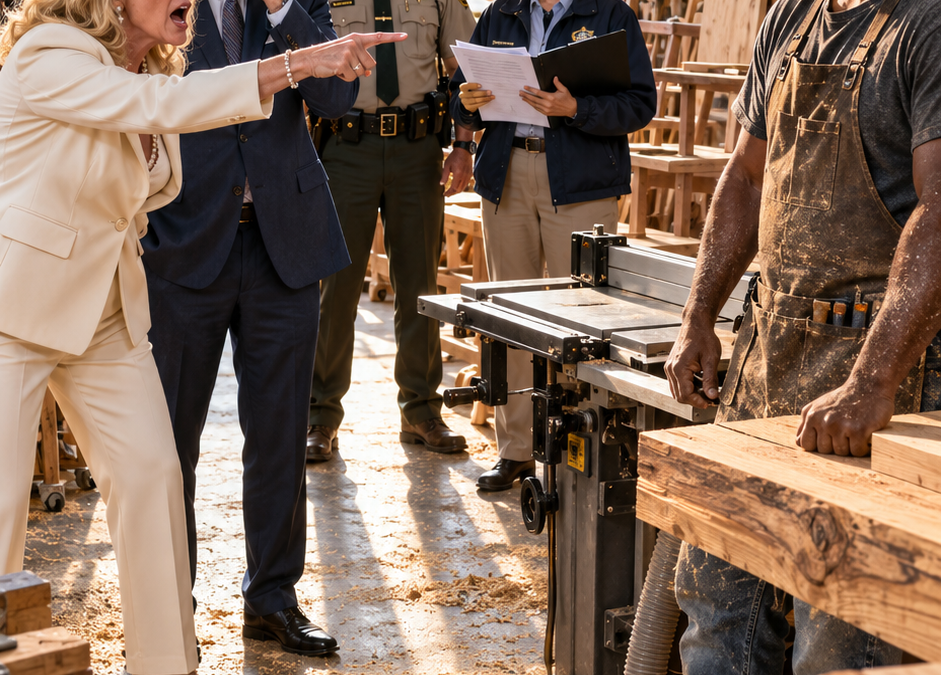
𝗣𝗔𝗥𝗧 𝟮
The first thing she took away was the playground-maintenance contract.
For two years, Ferris & Son had inspected and maintained the wooden structures inside Lakeview Ridge.
Swing sets.
Climbing frame.
A little fort with a roof and two slides.
Nothing glamorous, but steady work.
The contract paid fairly.
We had never received a complaint.
A week after I asked the HOA to pay for the festival lumber, Beth called.
“I’m sorry, Walt.”
“For what?”
“The board canceled the maintenance arrangement.”
“Why?”
“They’re exploring other vendors.”
“Did something happen?”
“No.”
“Did anyone complain?”
“Not that I know of.”
I understood.
“What did Colette say?”
Silence.
“Beth.”
“She said it was time to work with businesses that understood the community relationship.”
I laughed once.
“Meaning businesses that donate materials.”
“I didn’t say that.”
“You didn’t have to.”
Beth sounded miserable.
“I’m sorry.”
“It’s not your fault.”
That should have been the end of it.
Instead, rumors started.
I heard the first at Harmon Hardware.
A contractor named Jesse Miles was buying deck screws beside me.
“You having trouble over there?”
“Where?”
“Shop.”
“No.”
He looked embarrassed.
“Heard you were cutting corners.”
“From who?”
He shrugged.
“Just around.”
Then someone told me Ferris & Son had become greedy.
Then that quality had slipped.
Then that I had started squeezing longtime customers because business was struggling.
Small-town gossip is fascinating.
Nobody can identify the source.
Everybody can quote it.
I still built the festival stage.
Petey Monroe and I spent the weekend cutting joists and decking boards.
We delivered it Friday morning.
The children marched across it Saturday.
Colette stood beside it for photographs.
She wore a dark green dress and smiled like the stage had been created by spontaneous civic enthusiasm.
She never thanked me.
Not once.
That was when I realized something.
There is a difference between giving because you choose to and giving because somebody has trained themselves to expect it.
Colette believed I had folded.
In her mind, I had asked for money, been corrected, and returned obediently to free labor.
She didn’t understand that I hadn’t surrendered.
I had simply decided children didn’t deserve to lose their parade because two adults were having an argument.
I figured the resentment would blow over.
It didn’t.
Three weeks later, someone knocked on my shop door.
I was servicing the planer and had grease on both hands.
Russ Blevins from county code enforcement stood outside holding a clipboard.
Russ looked apologetic before he spoke.
“Got a complaint.”
“About?”
“Dust. Noise. Outdoor storage. Fire hazard.”
I looked behind him toward the shop.
“You mean a woodworking shop makes noise?”
“That’s what I told myself driving over.”
“Anonymous?”
“Yeah.”
Russ had known my family for decades.
His father used to conduct building inspections with mine standing beside him arguing about football.
He walked the whole property.
Checked the dust collector.
Measured setbacks.
Looked at the lumber stacks.
Checked exits.
Then he closed the clipboard.
“Nothing.”
“Shocking.”
“Everything’s fine.”
He started back toward his county truck.
Then stopped.
“For what it’s worth, Walt, we both know where this probably came from.”
I didn’t answer.
Lakeview Ridge’s fence was visible from the loading bay.
Complaint number two arrived nineteen days later.
Outdoor lumber racks supposedly violating residential setbacks.
The inspector measured them.
Grandfathered.
Legal.
Gone in twenty minutes.
Complaint number three concerned my delivery truck creating dangerous sight-line obstruction at my driveway.
That driveway had existed before Lakeview Ridge was farmland.
No violation.
Complaint four accused me of improperly disposing of toxic finishing chemicals.
That one made me angry.
Environmental complaints carry weight.
Fortunately, our finishes were water-based, code-compliant, logged, and disposed of exactly according to regulations.
The county verified it quickly.
By complaint number five, I stopped asking whether another one was coming.
I bought a file folder.
Then another.
Dates.
Names.
Inspection findings.
Photographs.
County closure notices.
Complaint five finally found something.
Our old fire-suppression system was technically behind the newest standard.
It had passed every annual inspection, but the new code required an upgrade.
Cost me eight hundred forty dollars.
I paid.
If something genuinely needed fixing, I fixed it.
The inspector, a younger guy named Cory Jennings, stood beside his truck afterward.
“Between us?”
“Sure.”
“I’ve been out here five times in four months.”
“I noticed.”
“Four were nonsense.”
“I noticed that too.”
He rubbed his forehead.
“I don’t love being somebody’s weapon, Mr. Ferris.”
That sentence stayed with me.
Because that was exactly what was happening.
The county complaint system existed so people could report legitimate hazards without fearing retaliation.
Colette had discovered the same anonymity could be used to manufacture a regulatory history.
Five inspections.
Fourteen pages in my county file.
Four complaints with no merit.
One minor code update.
But if a stranger opened the file without reading carefully, they would see volume.
And volume looks like trouble.
That was the dangerous part.
Not the truth.
The appearance of a pattern.
Then Colette scheduled the HOA meeting.
The agenda item read:
Neighboring Commercial Property: Community Standards and Long-Term Planning Concerns
I stared at the wording for a long time.
There are grudges.
Then there are PowerPoints.
Once somebody creates a PowerPoint about you, the grudge has entered middle management.
I attended.
About thirty residents were there.
Beth sat near the front.
Two board members sat beside Colette.
And near the back, wearing a casual jacket and doing his best impression of a private citizen, sat Mayor Warwick Ashworth.
Colette’s husband.
Colette started the presentation.
Photo one:
My lumber racks.
Caption:
ONGOING VISUAL BLIGHT
Photo two:
My delivery truck.
Caption:
UNRESOLVED TRAFFIC SAFETY CONCERNS
Photo three:
The back of my shop.
Caption:
INDUSTRIAL ACTIVITY ADJACENT TO RESIDENTIAL COMMUNITY
I nearly admired the effort.
“This is not personal,” Colette said.
That is one of the most dependable signs that something is personal.
“This is about property values.”
Slide.
“This is about the long-term character of Lakeview Ridge.”
Slide.
“This is about whether heavy commercial activity remains compatible with the residential environment we have worked so hard to build.”
I raised my hand.
She ignored me.
I kept it raised.
Finally:
“Mr. Ferris?”
“I have a question.”
“Please wait until the end.”
So I waited.
Twenty minutes.
At some point, the nervousness left me.
I started counting.
Five complaints.
Four dismissed.
One corrected.
Zero ongoing violations.
I stood when she opened comments.
“I don’t have a slideshow.”
A few residents laughed.
Colette did not.
I held up my folder.
“But I do have the county inspection reports.”
Her expression changed.
“Five complaints in four months.”
I placed the papers on a table.
“Complaint one: noise and dust. No violation.”
Another paper.
“Complaint two: setback. No violation.”
Another.
“Complaint three: delivery truck. No violation.”
Another.
“Complaint four: toxic finishes. No violation.”
Then the fifth.
“Fire suppression. Legitimate update. Corrected within seven days.”
I looked toward the residents.
“All five complaints were submitted anonymously.”
Colette crossed her arms.
“Anonymous complaints are still valid.”
“Certainly.”
Then I said:
“The county records show all five originated from the same residential internet connection.”
That was technically something I had only recently learned through a public-record request.
The room went quiet.
I didn’t identify the address.
I didn’t have to.
Colette’s face said enough.
“This is ridiculous,” she snapped. “Nobody is targeting you.”
“Maybe.”
“This is about standards.”
“Four false complaints suggest otherwise.”
“Your operation has changed.”
“How?”
“You used to run a respectable business.”
I stared at her.
“I still do.”
“You’re cutting corners.”
“According to whom?”
“People talk.”
“People who file anonymous complaints?”
Her composure cracked.
“You’re letting standards slip. You have random people coming through your shop. You’re creating an industrial nuisance beside our community.”
Then a voice came from the back.
“I might know what this is actually about.”
I turned.
Curtis Bole.
Curtis had worked for me eleven years before retiring.
He was one of the best employees I ever had.
Quiet.
Steady.
The kind of man who could look at a warped cabinet door and tell from six feet away which hinge had moved.
He stood.
Colette went still.
Curtis said:
“Mrs. Ashworth, your boy Tyler worked at Ferris & Son a couple summers back.”
Nobody spoke.
“He apprenticed a few weeks.”
Colette’s face tightened.
“I don’t see the relevance.”
Curtis continued.
“Walt caught him selling scrap lumber out the back for cash.”
The room changed.
Not loudly.
Not yet.
Curtis looked at me.
“Couple hundred dollars, wasn’t it?”
“Something like that.”
“You didn’t call the police.”
“No.”
“You didn’t tell people.”
“No.”
“You just sent him home.”
“Yes.”
Curtis faced Colette.
“I always thought Walt handled that pretty kindly.”
Colette’s jaw was rigid.
“But listening to all this tonight, I’m wondering whether you ever got over it.”
The room erupted.
Whispers.
Questions.
People turning toward one another.
I had almost forgotten Tyler.
He had been seventeen.
Colette had arranged the apprenticeship as a character-building summer job.
Tyler was polite.
Distracted.
Not particularly interested in woodworking.
One afternoon, I discovered he had been selling offcuts and scrap pieces for cash and keeping the money.
Maybe two hundred dollars.
Three hundred at most.
I called him into the office.
He admitted it.
I told him the apprenticeship was over.
I did not involve police.
I did not tell his parents the full details beyond saying the arrangement wasn’t working.
I thought I was protecting a teenager from turning a stupid summer mistake into a permanent small-town reputation.
Apparently Colette experienced mercy as insult.
“That has nothing to do with this,” she said.
But her voice had changed.
Gone was the wounded community advocate.
Now she sounded angry.
Cornered.
Curtis shrugged.
“Maybe.”
A resident asked:
“Is that true about Tyler?”
Colette ignored the question.
The board never voted on the agenda item.
Nobody wanted to touch it after that.
The meeting moved to mailbox colors.
Colette sat through the remainder with her face fixed.
When it ended, Warwick stood.
He walked out beside her.
Never looked at me.
Never spoke.
Dorothy and I drove home together.
I remember saying:
“That’s probably over.”
She looked at me.
“You believe that?”
“I want to.”
She nodded toward the road.
“Then enjoy tonight.”
She knew me well enough to understand optimism was temporary.
For six weeks, nothing happened.
I relaxed.
That was when Warwick made his move.
Ferris & Son had held a municipal woodworking contract for nine years.
We built and repaired wooden fixtures for public schools and the county library system.
Shelves.
Reading nooks.
Benches.
Storage units.
Occasional stage pieces.
Not glamorous.
But dependable.
About sixteen percent of my yearly revenue.
One Thursday morning, a town letter arrived.
It said a “competitive review process” had determined that reallocating the contract better served fiscal responsibility and service diversification.
I read the phrase twice.
Competitive review.
There had been no public request for proposals.
No bid solicitation I could find.
No request sent to me.
Nine years of work.
Not one complaint.
Just terminated.
Within days, I learned who had received the contract.
Dale Pruitt.
Small woodworking outfit two towns away.
Limited municipal experience.
And Warwick Ashworth’s Tuesday golf partner of six years.
I didn’t accuse Warwick publicly.
Not then.
This was Mill Haven.
The same people who believed rumors also distrusted people who complained too loudly about them.
So I said nothing.
Warwick approached me at the elementary school carnival a few weeks later.
Big smile.
Hand extended.
I shook it.
“Walt.”
“Mayor.”
“Hope business is good.”
“I’ve had better municipal months.”
His smile didn’t change.
“Contracts get reviewed.”
“I noticed.”
He stepped closer.
“Small towns work better when private disagreements stay private.”
There it was.
Soft.
Careful.
He continued.
“Be a shame for a three-generation business to run into trouble over something that could’ve stayed between neighbors.”
I looked at him.
“Is that a threat?”
He laughed.
“Of course not.”
“Good.”
“Reputations just have momentum sometimes.”
He clapped my shoulder.
“Take care.”
Then he walked toward the funnel-cake stand.
Warwick understood power.
He never said the illegal part.
He simply stood close enough that you could hear it between sentences.
Colette had less discipline.
I ran into her at the pharmacy.
She smiled.
“Terrible news about your town contract.”
“Is it?”
“Very unfortunate.”
“I’ll survive.”
“I’m sure.”
She leaned closer.
“Perhaps next time you’ll think twice before making a private disagreement into a public spectacle.”
I looked at her.
She smiled wider.
“Actions have consequences, Mr. Ferris.”
Then she left.
That was the moment I stopped wondering.
They had done it deliberately.
The question was whether I could prove anything.
Then Dale Pruitt began proving it for me.
His first library shelves developed a wobble within weeks.
Cheap laminated particleboard.
Insufficient bracing.
Then an elementary school reading bench sagged through the middle after two months.
Nothing catastrophic.
Nothing newsworthy.
Just poor work.
People noticed.
Parents complained quietly.
Teachers whispered.
Dale patched things.
Warwick defended the procurement decision whenever anyone asked.
Then came the library opening.
The county had renovated the children’s reading room.
Saturday afternoon.
Sixty parents and children.
Two regional newspaper reporters.
Mayor Warwick Ashworth with ceremonial scissors.
Dale’s new floor-to-ceiling bookshelf stood against the wall, fully loaded with donated books.
I wasn’t invited.
I happened to stop by.
Dorothy had sent me to pick up paint nearby, and curiosity got the better of me.
Fifteen minutes into the event, the shelf moved.
Just slightly.
My eyes caught it before my brain fully processed it.
A tilt.
Then the whole unit folded forward.
Wood cracked.
Books came down.
Metal brackets snapped loose.
Parents screamed.
I moved before thinking.
“Everybody back!”
People pulled children away.
One woman took a glancing hit to the shoulder.
A little girl cried from the noise.
Thank God no one was seriously hurt.
I knelt beside the broken unit.
Particleboard had torn away around cheap anchors.
The shelf had never been properly tied into studs.
One reporter was filming.
I didn’t care.
“This wasn’t rated for this load.”
Someone asked:
“What happened?”
I pointed.
“You don’t hang a unit this tall off particleboard and light-duty anchors.”
I picked up a broken panel.
“This should have been proper plywood or solid stock with structural anchoring into studs.”
“Could it have fallen anytime?”
“It already did.”
The reporter asked:
“So this wasn’t random?”
“No.”
I looked at the broken hardware.
“This was built wrong.”
I never said Dale’s name.
I never said Warwick’s.
I didn’t need to.
The footage spread by evening.
Mayor standing beside a collapsed bookshelf.
Local carpenter explaining the failure.
The symbolism was almost embarrassingly convenient.
Warwick approached me during cleanup.
People were nearby.
Cameras too.
“Appreciate you checking it out, Walt.”
“Sure.”
“Good instincts.”
I shook his hand.
Then said:
“Shame you stopped paying me to have those instincts on town projects.”
The people standing nearby went silent.
Warwick’s smile froze.
I released his hand.
Walked away.
By Monday, the line was everywhere.
SHAME YOU STOPPED PAYING HIM.
Someone printed it on a homemade sign.
I hated that.
Then laughed.
Then hated that I laughed.
That week, Priya Desai called me.
She had served two terms as county commissioner years earlier.
Competent.
Quiet.
Data-oriented.
Recently she had announced she would run against Warwick for mayor.
I want to be precise here.
I did not suddenly become a political operative.
I wasn’t interested in turning my shop into campaign headquarters.
Priya knew that.
“Mr. Ferris, I want to be upfront.”
“Good start.”
“I’ve heard your story from half the county.”
“I’m sorry.”
She laughed.
“I’m not calling to use you as a prop.”
“Another good start.”
“I think the contract issue raises questions about procurement.”
“It does.”
“I’m asking whether you would publicly tell the timeline.”
“Not attack Warwick?”
“No.”
“Not speculate?”
“No.”
“Just dates?”
“Dates. Documents. Your experience.”
I thought about it.
Then talked to Dorothy.
“I don’t want revenge.”
She looked at me for a long time.
“Are you sure?”
“I want the truth out.”
“That wasn’t my question.”
I leaned back.
“No.”
She smiled faintly.
“At least that answer is honest.”
I spent three days thinking.
Then called Priya.
“I’ll talk.”
“On what conditions?”
“I tell my story in my own words.”
“Agreed.”
“I don’t call Warwick corrupt unless somebody proves corruption.”
“Agreed.”
“I don’t become your campaign mascot.”
“Strongly agreed.”
“I’m doing this because contracts should go to qualified people.”
“That is exactly why I asked.”
The newspaper published the contract-cancellation letter.
Alongside it, a simple timeline.
My contract ended.
Dale received the work.
Defects appeared.
Shelf collapsed.
No adjectives required.
I did one radio interview.
When the host asked if Warwick had retaliated against me, I said:
“I know the sequence. I’ll let listeners decide what they think the sequence means.”
Priya’s campaign shared the article.
I made a modest disclosed donation to her campaign.
I also let canvassing volunteers meet in my parking lot a few Saturdays.
That same gravel parking lot Colette once described as industrial blight.
Life has moments of quiet comedy.
The mayoral election became unusually competitive.
People asked harder questions about municipal contracts.
Warwick defended the decisions as routine procurement.
Priya focused on public bidding and transparency.
The race drew the largest turnout Mill Haven had seen in years.
Priya won by 431 votes out of a little over eight thousand cast.
Roughly fifty-two percent to forty-eight.
Warwick conceded that night.
I watched from home.
No cheering.
No champagne.
I felt relief.
Six weeks later, Colette resigned from the HOA presidency.
Personal reasons.
Thanked the community.
Wished Lakeview Ridge continued success.
Beth brought me a copy of the resignation letter.
We sat at a diner.
“She could have paid you the four hundred dollars.”
I laughed.
“Imagine.”
“Four hundred dollars.”
“It was never really about four hundred dollars.”
“No.”
Beth stirred her coffee.
“It was about being told no.”
That was exactly right.
For the first time in over a year, things became quiet.
The town contract was rebid by the new administration under an open process.
Ferris & Son won part of the work back.
Not automatically.
I bid.
Two other contractors bid.
Priya’s procurement officer scored the proposals.
That mattered to me.
I did not want favoritism simply because it favored me.
For a while, I thought the story was over.
The Ashworths had lost power.
Colette lost the HOA presidency.
Warwick lost the mayor’s office.
Dale lost several municipal contracts after independent reviews documented construction failures.
Nobody shut down my shop.
Nobody took my reputation.
I was right.
I had won.
That turned out to be dangerous.
Winning has momentum.
So does resentment.
The Ashworth family owned a building-supply store near the county line.
Not glamorous.
Lumber.
Hardware.
Fasteners.
Roofing supplies.
Contractors relied on it because the next serious supplier was forty minutes away.
I had bought there for years.
After the election, I stopped.
That was reasonable.
What wasn’t reasonable was what came next.
People asked where I was buying lumber.
I said the supplier in the next county.
Better stock.
Sometimes better prices.
True.
Every word.
Then another contractor asked.
Same answer.
Farmer.
Same answer.
Landscaper.
Same answer.
I never said:
“Boycott the Ashworths.”
I was careful.
Maybe too careful.
I said only that I had changed suppliers and was happier elsewhere.
But my family’s recommendations carried weight.
People listened.
Month after month.
The Ashworth store lost business.
I knew.
Small towns tell you everything eventually.
After eighteen months, business was reportedly down nearly forty percent.
Two employees laid off.
Two others cut to part-time.
When I heard that, I felt satisfaction.
That is difficult to admit.
But it’s true.
I thought:
Now they understand.
I didn’t stop to ask who they included.
Then I met Travis Kesler.
Late twenties.
Married.
Toddler at home.
He had driven deliveries for the Ashworth supply store for years.
We ran into each other in the fastener aisle at Harmon Hardware.
“Mr. Ferris?”
“Trav.”
He shifted awkwardly.
“I voted for Desai.”
I nodded.
“Okay.”
“I thought Warwick needed to go.”
“Appreciate you saying so.”
“And I thought what happened to your contract was wrong.”
I began turning back toward the shelf.
Then he said:
“Can I ask you something?”
I stopped.
“Sure.”
“I don’t mean it ugly.”
“Go ahead.”
He looked down.
“You didn’t stop after the election.”
I knew immediately what he meant.
Still, I said:
“What do you mean?”
“You started buying lumber out of county.”
“Yes.”
“I understand why.”
He took a breath.
“But people listen to you.”
I said nothing.
“The store lost a lot of business.”
“I heard.”
“My hours got cut.”
That landed.
Trav continued.
“Had to take another part-time job.”
“I’m sorry.”
“My wife put our boy in daycare two more days a week so I can work extra shifts.”
He smiled once.
Not happily.
“The daycare costs almost exactly what the extra work brings in.”
I felt something cold settle into my chest.
He wasn’t angry.
That made it worse.
“So we’re running harder,” he said, “and seeing our kid less, just to stay where we were.”
“Trav—”
“I’m not saying the Ashworths didn’t deserve consequences.”
He looked at me.
“Maybe they did.”
Then:
“I’m asking what I did.”
I had no answer.
None.
He continued quietly.
“I never liked Warwick.”
“I know.”
“I wasn’t at the HOA.”
“I know.”
“I didn’t file complaints.”
“I know.”
“I just drove the truck.”
“I know.”
“So what did I do?”
Nothing.
That was the answer.
Trav had done nothing.
His wife had done nothing.
Their little boy had done nothing.
I had spent a year talking about fairness.
Then I used my reputation to hurt a business because hurting that business felt like continuing to win.
And when innocent people lost hours, I filed them mentally under collateral damage.
Exactly the kind of thinking I despised when Warwick used government power against me.
“I’m sorry,” I said.
Trav nodded.
“I don’t need an apology.”
“What do you need?”
“For somebody to see it.”
I looked at him.
He said:
“People get mad at whoever’s standing in front. They don’t always look at who’s behind them.”
Then he walked away.
I sat in my truck for fifteen minutes.
Didn’t start the engine.
When I got home, Dorothy knew something was wrong.
I told her.
Every word.
“I was right about Warwick,” I said.
“Yes.”
“I was right about Colette.”
“Yes.”
“They tried to hurt my business.”
“Yes.”
“But Trav didn’t.”
“No.”
“His wife didn’t.”
“No.”
“The kid didn’t.”
“No.”
I rubbed both hands over my face.
“When did I become the person deciding innocent people were acceptable losses?”
Dorothy reached across the table.
“Probably gradually.”
That hurt because it was true.
Then she asked:
“You remember what your father told you when you were sixteen?”
I did.
A kid at school had spread a rumor about me.
I wanted revenge.
My father sat me down in the shop.
He said:
A man who spends his whole life getting even never builds anything.
At sixteen, I thought that was cowardice disguised as wisdom.
At fifty-one, I finally understood.
Dorothy squeezed my hand.
“You won the fight that mattered.”
“I know.”
“With evidence.”
“I know.”
“With the truth.”
“Yes.”
“You didn’t have to lie about them.”
“No.”
“You didn’t have to use power you hadn’t earned.”
“No.”
She paused.
“But after you won, I think you liked the sound of the blade still spinning.”
That was such a woodworking metaphor that I almost accused her of stealing my material.
Instead, I sat there.
“A saw doesn’t know the cut is finished,” she said. “Somebody has to turn it off.”
The following week, I drove to Ashworth Building Supply.
I parked.
Sat in the truck.
Almost left.
Then went inside.
Colette wasn’t there.
Warwick wasn’t there.
A clerk I barely knew stood at the counter.
“Morning, Walt.”
“Morning.”
I ordered a full load.
Framing lumber.
Cabinet plywood.
Hardware.
Full price.
No discount.
No speech.
No explanation.
I paid.
Then I bought there again the next month.
And the month after that.
When contractors asked why, I stopped steering them away.
Sometimes I said:
“They’ve got decent stock.”
Because they did.
Sometimes:
“Good place if you don’t want to drive forty minutes.”
Also true.
No grand apology campaign.
No public declaration of forgiveness.
I had spent enough time turning private feelings into public economics.
The store recovered somewhat.
Not completely.
But enough that Trav returned to full-time hours.
I learned that months later.
He came by the shop delivering hardware.
“Back full-time?”
“Yeah.”
“Good.”
He looked at me.
“I noticed.”
“Noticed what?”
He smiled slightly.
“You know.”
I nodded.
He unloaded the boxes.
Nothing more needed saying.
Ferris & Son kept going.
Petey became a full partner.
We hired a nineteen-year-old apprentice named Noah Kesler.
Trav’s nephew.
That was not arranged.
Small-town coincidence.
Noah had good hands.
Patient.
Listened before touching tools.
The first day, I showed him my grandfather’s bench.
“Why’s that drawer crooked?” he asked.
“Because he built it.”
“You ever fix it?”
“No.”
“Why not?”
“Because not everything needs improving.”
He thought about that.
“Fair.”
I liked him.
Mill Haven changed too.
Priya’s administration adopted open competitive bidding rules for most municipal contracts above modest thresholds.
Bid documents were posted publicly.
Scoring sheets too.
Nothing revolutionary.
Just systems designed to make favoritism harder.
Warwick remained in town.
Of course he did.
You don’t evaporate after losing an election.
Sometimes I saw him at the diner.
We nodded.
That was enough.
He never apologized.
I never asked him to.
Colette and I crossed paths once at the grocery store.
She looked older.
Less composed.
She saw me.
I expected her to turn away.
She didn’t.
“Walt.”
“Colette.”
She glanced at my cart.
“You’re buying from the store again.”
“Sometimes.”
Her expression tightened.
“Why?”
I almost laughed.
“Because they sell lumber.”
“You spent more than a year telling people not to buy from us.”
“I never told anyone that.”
“You didn’t have to.”
She had me there.
I nodded.
“You’re right.”
That surprised her.
She stared.
“I was angry.”
“You had every right to be.”
“Not at Trav.”
Her face changed slightly.
“No.”
“Not at the other employees.”
“No.”
I continued.
“You and Warwick hurt me.”
She stiffened.
“I’m not reopening that.”
“Neither am I.”
I looked at her.
“But I let being right turn into permission to keep hurting people near you.”
She said nothing.
“That was wrong.”
I didn’t apologize for exposing Warwick.
I didn’t apologize for the election.
I didn’t apologize for defending my shop.
And I didn’t forgive what they had done.
I apologized only for the part that was mine.
Colette looked down at her cart.
Then said:
“Tyler still says you embarrassed him.”
There it was.
The original wound.
I sighed.
“Colette, he stole from me.”
“He was seventeen.”
“That’s why I didn’t call police.”
“You could have given him another chance.”
“I could have.”
She looked up.
“You didn’t.”
“No.”
“And you never understood what that did to him.”
“Maybe not.”
Then I said:
“But you never understood what protecting him from every consequence did either.”
She looked away.
I didn’t press.
Some conversations don’t need winners.
We nodded.
Went separate directions.
That was enough.
Years earlier, I would have imagined satisfaction meant seeing Colette humiliated.
Seeing Warwick lose.
Seeing their influence collapse.
I did see all of that.
It felt good for a while.
But the moment I remember most clearly now is Trav standing in the fastener aisle asking:
What did I do to you?
Because I had spent the entire first half of the story asking the same question.
What had I done to deserve five inspections?
What had I done to lose a town contract?
What had I done to have my reputation attacked?
Nothing.
That was why it was wrong.
Then, after I won, I helped create the same question for somebody else.
That was harder to accept than anything the Ashworths had done.
Being wronged doesn’t make every reaction righteous.
That is an uncomfortable truth.
People prefer cleaner stories.
Good man.
Bad woman.
Corrupt husband.
Public downfall.
Applause.
Maybe that’s why I’m telling this the way it actually happened.
Colette was wrong.
Warwick abused influence.
Their retaliation failed.
The contract favoritism became public.
The town replaced Warwick through an election.
Colette resigned.
My shop survived.
All true.
But another thing is true too.
I won.
And then I kept swinging.
For too long.
My father understood something I didn’t.
Building and revenge use many of the same muscles.
Patience.
Attention.
Persistence.
The ability to work toward a result nobody else sees yet.
Those qualities built Ferris & Son.
They also made me very effective at quietly damaging the Ashworth supply store.
The tool wasn’t different.
Only the purpose.
That frightened me.
Because people like to imagine becoming cruel requires becoming a completely different person.
Sometimes it doesn’t.
Sometimes cruelty is simply one of your best qualities pointed in the wrong direction.
I am still stubborn.
Still patient.
Still difficult to intimidate.
I still keep records.
Every inspection letter from that year is in a metal file cabinet.
So is the municipal contract cancellation.
So is the newspaper clipping from the library collapse.
I kept them because forgetting is dangerous.
But I also keep the first receipt from Ashworth Building Supply after I started buying there again.
Not because the store deserved some symbolic redemption.
Because I needed one.
The receipt is ordinary.
Lumber.
Screws.
Plywood.
A little over three thousand dollars.
No grand meaning printed on it.
That’s why I like it.
It marks the day I stopped trying to win something I had already won.
The shop still sits where it always has.
Same barn siding.
Same hand-painted sign.
Same gravel lot.
Lakeview Ridge is still behind us.
Their HOA has a different president now.
Beth eventually took the role for one term.
The first festival she ran, she called me.
“Stage?”
I laughed.
“Yes.”
“How much?”
“Materials plus labor.”
She paused.
“Full labor?”
“Full labor.”
“Fair.”
I gave her a written quote.
She took it to the board.
They approved it.
We built the stage.
They paid.
On time.
When I delivered it, Beth handed me a check.
Then she said:
“Thank you.”
I looked at her.
“What?”
“You’re staring.”
“Nothing.”
I folded the check.
“Just been a while since I heard that around here.”
She smiled.
That year, I watched the children cross the stage.
Same pumpkin display.
Same costumes.
Same ridiculous string quartet.
Colette wasn’t standing beside the platform.
Warwick wasn’t holding a microphone.
Nobody used the word community as a weapon.
It was just a festival.
I stayed maybe twenty minutes.
Then went home.
The next morning, I opened the shop at six.
No inspector waiting.
No angry email.
No political phone call.
No rumors worth caring about.
Just Noah sweeping the floor.
Petey measuring cabinet rails.
Sawdust in the morning light.
I stood in the doorway for a while.
Noah looked at me.
“You okay?”
“Yeah.”
“You sure?”
“I’m good.”
He shrugged and kept sweeping.
That was the ending I had wanted from the beginning.
Not an election result.
Not Warwick losing office.
Not Colette resigning.
Not even the municipal contract returning under an honest bidding process.
Quiet.
Work.
My name still meaning what my grandfather intended it to mean.
A good job for a fair price.
Nothing more complicated than that.
When I think about the whole thing now, I still come back to the four hundred dollars.
Four hundred dollars in lumber.
That was the match.
Colette could have paid it.
The HOA could have received a fifteen-hundred-dollar stage for four hundred dollars.
Everyone would have been happy.
Instead, she decided a favor was an entitlement.
Then decided my refusal to subsidize her event meant my business did not belong near her neighborhood.
She tried rumors.
Inspections.
Regulatory pressure.
Then her husband used political influence to take away a contract.
They assumed their position could outlast my reputation.
They were wrong.
But there is another side to that same lesson.
I eventually assumed my reputation gave me the right to punish everyone associated with them.
I was wrong too.
The difference is that someone finally said it to my face.
Trav didn’t threaten me.
Didn’t embarrass me publicly.
Didn’t retaliate.
He simply asked what he had done.
Nothing.
The cleanest questions are usually the hardest ones.
So if anyone ever asks what happened when HOA president Colette Ashworth decided her mayor husband could shut down my family woodshop, the simple version is satisfying.
They tried.
They failed.
Their favoritism collapsed in public.
Warwick lost office.
Colette lost her HOA throne.
Ferris & Son survived.
But the version worth remembering goes one step further.
I learned that justice has an end point.
Revenge doesn’t.
Somebody has to know when the cut is finished.
Somebody has to reach over and shut off the saw.
And after everything Colette Ashworth and her husband tried to take from me, the one thing I’m proudest of keeping wasn’t the shop.
It was the ability, eventually, to turn the blade off before I became the kind of man I had spent the whole fight opposing.
Have you finished reading the story and want to read it again?
HOA Karen Thought Her Mayor Husband Could Shut Down My Woodshop — Then Their Favoritism Collapsed in Public
She stopped saying thank you.
Three weeks later, inspectors started showing up at my shop.
By the time her mayor husband joined the fight, I understood this had never been about four hundred dollars.
My name is Walt Ferris. I’m fifty-one years old, and I run Ferris & Son Woodworks on the edge of Mill Haven, a Blue Ridge town of just under twelve thousand people where fog settles into the valley so thick some mornings that the courthouse steeple disappears until nearly ten.
My grandfather built our shop in 1962.
He came home from the service with a modest pension, a secondhand planer, and an ambition that was considerably less romantic than people like to make old family businesses sound.
He wanted to earn enough money that his children never went hungry.
That was it.
No branding strategy.
No lifestyle concept.
No reclaimed-wood mission statement printed on recycled cardstock.
He built cabinets.
Then tables.
Then doors.
My father took over after him.
I took over after my father.
For twenty-three years, I had unlocked the same sliding shop door before sunrise, swept sawdust off the same concrete floor, and put my family name on work I expected to last longer than I did.
In a town like Mill Haven, that mattered.
People didn’t hire me because of online reviews.
They hired me because their father had hired mine.
Because their aunt still owned the walnut dining table my grandfather built in 1974.
Because somebody at church said Walt Ferris fixed a porch rail without charging for the extra hour.
Reputation was our advertising budget.
Then Lakeview Ridge appeared behind my property.
Forty-some houses.
Decorative iron gates.
Stone entrance columns.
A private clubhouse.
And a homeowners association with enough rules to make one wonder whether the founders had recently escaped some traumatic encounter with individuality.
The HOA president was Colette Ashworth.
Her husband, Warwick Ashworth, was the mayor of Mill Haven.
At first, none of that mattered to me.
For two years, I got along with Lakeview Ridge perfectly well.
Every fall, the HOA held a festival.
String quartet.
Pumpkins shipped in from Vermont.
Wine table.
Children’s costume parade.
And a wooden platform for the speeches.
I built that platform.
Free.
Three years in a row.
My labor.
My lumber.
My hardware.
I did it because that was the kind of thing people did where I grew up.
You helped the neighbors.
You didn’t send an invoice every time you lifted something heavy.
The first year, Colette thanked me.
The second year, she sent a handwritten card.
By the third year, she sent the festival date to her events coordinator and simply assumed the stage would appear.
That was the first warning.
Not anger.
Not threats.
Not inspectors.
The missing thank-you.
A favor had become an expectation.
And people become strangely offended when you finally put a price on something they have trained themselves to receive for free.
That fall, lumber prices were up almost thirty percent.
Two longtime employees had retired.
Orders were slower.
I was doing monthly cash flow on paper napkins at the kitchen table because opening accounting software somehow made the numbers feel more judgmental.
So I told Beth Tran, Lakeview Ridge’s events coordinator, that I would still build the stage.
I would still donate all the labor.
I only needed the HOA to cover materials.
About four hundred dollars.
Any contractor would have charged them at least fifteen hundred.
I thought I was being generous.
Colette thought I had declared war.
Her email to Beth said:
This is exactly the kind of nickel-and-diming that erodes what makes a community like ours special.
Then came the sentence I would remember later.
If Mr. Ferris can’t understand that some things are simply done as a courtesy to neighbors, perhaps we need to reconsider whether his operation belongs in proximity to Lakeview Ridge at all.
I should have taken that seriously.
Instead, I built the stage anyway.
That was my mistake.
Because Colette looked at my kindness and saw submission.
She thought she had corrected me.
And once a person like Colette decides you can be corrected, the next step is usually deciding you can be controlled.
PART2
The first thing she took away was the playground-maintenance contract.
For two years, Ferris & Son had inspected and maintained the wooden structures inside Lakeview Ridge.
Swing sets.
Climbing frame.
A little fort with a roof and two slides.
Nothing glamorous, but steady work.
The contract paid fairly.
We had never received a complaint.
A week after I asked the HOA to pay for the festival lumber, Beth called.
“I’m sorry, Walt.”
“For what?”
“The board canceled the maintenance arrangement.”
“Why?”
“They’re exploring other vendors.”
“Did something happen?”
“No.”
“Did anyone complain?”
“Not that I know of.”
I understood.
“What did Colette say?”
Silence.
“Beth.”
“She said it was time to work with businesses that understood the community relationship.”
I laughed once.
“Meaning businesses that donate materials.”
“I didn’t say that.”
“You didn’t have to.”
Beth sounded miserable.
“I’m sorry.”
“It’s not your fault.”
That should have been the end of it.
Instead, rumors started.
I heard the first at Harmon Hardware.
A contractor named Jesse Miles was buying deck screws beside me.
“You having trouble over there?”
“Where?”
“Shop.”
“No.”
He looked embarrassed.
“Heard you were cutting corners.”
“From who?”
He shrugged.
“Just around.”
Then someone told me Ferris & Son had become greedy.
Then that quality had slipped.
Then that I had started squeezing longtime customers because business was struggling.
Small-town gossip is fascinating.
Nobody can identify the source.
Everybody can quote it.
I still built the festival stage.
Petey Monroe and I spent the weekend cutting joists and decking boards.
We delivered it Friday morning.
The children marched across it Saturday.
Colette stood beside it for photographs.
She wore a dark green dress and smiled like the stage had been created by spontaneous civic enthusiasm.
She never thanked me.
Not once.
That was when I realized something.
There is a difference between giving because you choose to and giving because somebody has trained themselves to expect it.
Colette believed I had folded.
In her mind, I had asked for money, been corrected, and returned obediently to free labor.
She didn’t understand that I hadn’t surrendered.
I had simply decided children didn’t deserve to lose their parade because two adults were having an argument.
I figured the resentment would blow over.
It didn’t.
Three weeks later, someone knocked on my shop door.
I was servicing the planer and had grease on both hands.
Russ Blevins from county code enforcement stood outside holding a clipboard.
Russ looked apologetic before he spoke.
“Got a complaint.”
“About?”
“Dust. Noise. Outdoor storage. Fire hazard.”
I looked behind him toward the shop.
“You mean a woodworking shop makes noise?”
“That’s what I told myself driving over.”
“Anonymous?”
“Yeah.”
Russ had known my family for decades.
His father used to conduct building inspections with mine standing beside him arguing about football.
He walked the whole property.
Checked the dust collector.
Measured setbacks.
Looked at the lumber stacks.
Checked exits.
Then he closed the clipboard.
“Nothing.”
“Shocking.”
“Everything’s fine.”
He started back toward his county truck.
Then stopped.
“For what it’s worth, Walt, we both know where this probably came from.”
I didn’t answer.
Lakeview Ridge’s fence was visible from the loading bay.
Complaint number two arrived nineteen days later.
Outdoor lumber racks supposedly violating residential setbacks.
The inspector measured them.
Grandfathered.
Legal.
Gone in twenty minutes.
Complaint number three concerned my delivery truck creating dangerous sight-line obstruction at my driveway.
That driveway had existed before Lakeview Ridge was farmland.
No violation.
Complaint four accused me of improperly disposing of toxic finishing chemicals.
That one made me angry.
Environmental complaints carry weight.
Fortunately, our finishes were water-based, code-compliant, logged, and disposed of exactly according to regulations.
The county verified it quickly.
By complaint number five, I stopped asking whether another one was coming.
I bought a file folder.
Then another.
Dates.
Names.
Inspection findings.
Photographs.
County closure notices.
Complaint five finally found something.
Our old fire-suppression system was technically behind the newest standard.
It had passed every annual inspection, but the new code required an upgrade.
Cost me eight hundred forty dollars.
I paid.
If something genuinely needed fixing, I fixed it.
The inspector, a younger guy named Cory Jennings, stood beside his truck afterward.
“Between us?”
“Sure.”
“I’ve been out here five times in four months.”
“I noticed.”
“Four were nonsense.”
“I noticed that too.”
He rubbed his forehead.
“I don’t love being somebody’s weapon, Mr. Ferris.”
That sentence stayed with me.
Because that was exactly what was happening.
The county complaint system existed so people could report legitimate hazards without fearing retaliation.
Colette had discovered the same anonymity could be used to manufacture a regulatory history.
Five inspections.
Fourteen pages in my county file.
Four complaints with no merit.
One minor code update.
But if a stranger opened the file without reading carefully, they would see volume.
And volume looks like trouble.
That was the dangerous part.
Not the truth.
The appearance of a pattern.
Then Colette scheduled the HOA meeting.
The agenda item read:
Neighboring Commercial Property: Community Standards and Long-Term Planning Concerns
I stared at the wording for a long time.
There are grudges.
Then there are PowerPoints.
Once somebody creates a PowerPoint about you, the grudge has entered middle management.
I attended.
About thirty residents were there.
Beth sat near the front.
Two board members sat beside Colette.
And near the back, wearing a casual jacket and doing his best impression of a private citizen, sat Mayor Warwick Ashworth.
Colette’s husband.
Colette started the presentation.
Photo one:
My lumber racks.
Caption:
ONGOING VISUAL BLIGHT
Photo two:
My delivery truck.
Caption:
UNRESOLVED TRAFFIC SAFETY CONCERNS
Photo three:
The back of my shop.
Caption:
INDUSTRIAL ACTIVITY ADJACENT TO RESIDENTIAL COMMUNITY
I nearly admired the effort.
“This is not personal,” Colette said.
That is one of the most dependable signs that something is personal.
“This is about property values.”
Slide.
“This is about the long-term character of Lakeview Ridge.”
Slide.
“This is about whether heavy commercial activity remains compatible with the residential environment we have worked so hard to build.”
I raised my hand.
She ignored me.
I kept it raised.
Finally:
“Mr. Ferris?”
“I have a question.”
“Please wait until the end.”
So I waited.
Twenty minutes.
At some point, the nervousness left me.
I started counting.
Five complaints.
Four dismissed.
One corrected.
Zero ongoing violations.
I stood when she opened comments.
“I don’t have a slideshow.”
A few residents laughed.
Colette did not.
I held up my folder.
“But I do have the county inspection reports.”
Her expression changed.
“Five complaints in four months.”
I placed the papers on a table.
“Complaint one: noise and dust. No violation.”
Another paper.
“Complaint two: setback. No violation.”
Another.
“Complaint three: delivery truck. No violation.”
Another.
“Complaint four: toxic finishes. No violation.”
Then the fifth.
“Fire suppression. Legitimate update. Corrected within seven days.”
I looked toward the residents.
“All five complaints were submitted anonymously.”
Colette crossed her arms.
“Anonymous complaints are still valid.”
“Certainly.”
Then I said:
“The county records show all five originated from the same residential internet connection.”
That was technically something I had only recently learned through a public-record request.
The room went quiet.
I didn’t identify the address.
I didn’t have to.
Colette’s face said enough.
“This is ridiculous,” she snapped. “Nobody is targeting you.”
“Maybe.”
“This is about standards.”
“Four false complaints suggest otherwise.”
“Your operation has changed.”
“How?”
“You used to run a respectable business.”
I stared at her.
“I still do.”
“You’re cutting corners.”
“According to whom?”
“People talk.”
“People who file anonymous complaints?”
Her composure cracked.
“You’re letting standards slip. You have random people coming through your shop. You’re creating an industrial nuisance beside our community.”
Then a voice came from the back.
“I might know what this is actually about.”
I turned.
Curtis Bole.
Curtis had worked for me eleven years before retiring.
He was one of the best employees I ever had.
Quiet.
Steady.
The kind of man who could look at a warped cabinet door and tell from six feet away which hinge had moved.
He stood.
Colette went still.
Curtis said:
“Mrs. Ashworth, your boy Tyler worked at Ferris & Son a couple summers back.”
Nobody spoke.
“He apprenticed a few weeks.”
Colette’s face tightened.
“I don’t see the relevance.”
Curtis continued.
“Walt caught him selling scrap lumber out the back for cash.”
The room changed.
Not loudly.
Not yet.
Curtis looked at me.
“Couple hundred dollars, wasn’t it?”
“Something like that.”
“You didn’t call the police.”
“No.”
“You didn’t tell people.”
“No.”
“You just sent him home.”
“Yes.”
Curtis faced Colette.
“I always thought Walt handled that pretty kindly.”
Colette’s jaw was rigid.
“But listening to all this tonight, I’m wondering whether you ever got over it.”
The room erupted.
Whispers.
Questions.
People turning toward one another.
I had almost forgotten Tyler.
He had been seventeen.
Colette had arranged the apprenticeship as a character-building summer job.
Tyler was polite.
Distracted.
Not particularly interested in woodworking.
One afternoon, I discovered he had been selling offcuts and scrap pieces for cash and keeping the money.
Maybe two hundred dollars.
Three hundred at most.
I called him into the office.
He admitted it.
I told him the apprenticeship was over.
I did not involve police.
I did not tell his parents the full details beyond saying the arrangement wasn’t working.
I thought I was protecting a teenager from turning a stupid summer mistake into a permanent small-town reputation.
Apparently Colette experienced mercy as insult.
“That has nothing to do with this,” she said.
But her voice had changed.
Gone was the wounded community advocate.
Now she sounded angry.
Cornered.
Curtis shrugged.
“Maybe.”
A resident asked:
“Is that true about Tyler?”
Colette ignored the question.
The board never voted on the agenda item.
Nobody wanted to touch it after that.
The meeting moved to mailbox colors.
Colette sat through the remainder with her face fixed.
When it ended, Warwick stood.
He walked out beside her.
Never looked at me.
Never spoke.
Dorothy and I drove home together.
I remember saying:
“That’s probably over.”
She looked at me.
“You believe that?”
“I want to.”
She nodded toward the road.
“Then enjoy tonight.”
She knew me well enough to understand optimism was temporary.
For six weeks, nothing happened.
I relaxed.
That was when Warwick made his move.
Ferris & Son had held a municipal woodworking contract for nine years.
We built and repaired wooden fixtures for public schools and the county library system.
Shelves.
Reading nooks.
Benches.
Storage units.
Occasional stage pieces.
Not glamorous.
But dependable.
About sixteen percent of my yearly revenue.
One Thursday morning, a town letter arrived.
It said a “competitive review process” had determined that reallocating the contract better served fiscal responsibility and service diversification.
I read the phrase twice.
Competitive review.
There had been no public request for proposals.
No bid solicitation I could find.
No request sent to me.
Nine years of work.
Not one complaint.
Just terminated.
Within days, I learned who had received the contract.
Dale Pruitt.
Small woodworking outfit two towns away.
Limited municipal experience.
And Warwick Ashworth’s Tuesday golf partner of six years.
I didn’t accuse Warwick publicly.
Not then.
This was Mill Haven.
The same people who believed rumors also distrusted people who complained too loudly about them.
So I said nothing.
Warwick approached me at the elementary school carnival a few weeks later.
Big smile.
Hand extended.
I shook it.
“Walt.”
“Mayor.”
“Hope business is good.”
“I’ve had better municipal months.”
His smile didn’t change.
“Contracts get reviewed.”
“I noticed.”
He stepped closer.
“Small towns work better when private disagreements stay private.”
There it was.
Soft.
Careful.
He continued.
“Be a shame for a three-generation business to run into trouble over something that could’ve stayed between neighbors.”
I looked at him.
“Is that a threat?”
He laughed.
“Of course not.”
“Good.”
“Reputations just have momentum sometimes.”
He clapped my shoulder.
“Take care.”
Then he walked toward the funnel-cake stand.
Warwick understood power.
He never said the illegal part.
He simply stood close enough that you could hear it between sentences.
Colette had less discipline.
I ran into her at the pharmacy.
She smiled.
“Terrible news about your town contract.”
“Is it?”
“Very unfortunate.”
“I’ll survive.”
“I’m sure.”
She leaned closer.
“Perhaps next time you’ll think twice before making a private disagreement into a public spectacle.”
I looked at her.
She smiled wider.
“Actions have consequences, Mr. Ferris.”
Then she left.
That was the moment I stopped wondering.
They had done it deliberately.
The question was whether I could prove anything.
Then Dale Pruitt began proving it for me.
His first library shelves developed a wobble within weeks.
Cheap laminated particleboard.
Insufficient bracing.
Then an elementary school reading bench sagged through the middle after two months.
Nothing catastrophic.
Nothing newsworthy.
Just poor work.
People noticed.
Parents complained quietly.
Teachers whispered.
Dale patched things.
Warwick defended the procurement decision whenever anyone asked.
Then came the library opening.
The county had renovated the children’s reading room.
Saturday afternoon.
Sixty parents and children.
Two regional newspaper reporters.
Mayor Warwick Ashworth with ceremonial scissors.
Dale’s new floor-to-ceiling bookshelf stood against the wall, fully loaded with donated books.
I wasn’t invited.
I happened to stop by.
Dorothy had sent me to pick up paint nearby, and curiosity got the better of me.
Fifteen minutes into the event, the shelf moved.
Just slightly.
My eyes caught it before my brain fully processed it.
A tilt.
Then the whole unit folded forward.
Wood cracked.
Books came down.
Metal brackets snapped loose.
Parents screamed.
I moved before thinking.
“Everybody back!”
People pulled children away.
One woman took a glancing hit to the shoulder.
A little girl cried from the noise.
Thank God no one was seriously hurt.
I knelt beside the broken unit.
Particleboard had torn away around cheap anchors.
The shelf had never been properly tied into studs.
One reporter was filming.
I didn’t care.
“This wasn’t rated for this load.”
Someone asked:
“What happened?”
I pointed.
“You don’t hang a unit this tall off particleboard and light-duty anchors.”
I picked up a broken panel.
“This should have been proper plywood or solid stock with structural anchoring into studs.”
“Could it have fallen anytime?”
“It already did.”
The reporter asked:
“So this wasn’t random?”
“No.”
I looked at the broken hardware.
“This was built wrong.”
I never said Dale’s name.
I never said Warwick’s.
I didn’t need to.
The footage spread by evening.
Mayor standing beside a collapsed bookshelf.
Local carpenter explaining the failure.
The symbolism was almost embarrassingly convenient.
Warwick approached me during cleanup.
People were nearby.
Cameras too.
“Appreciate you checking it out, Walt.”
“Sure.”
“Good instincts.”
I shook his hand.
Then said:
“Shame you stopped paying me to have those instincts on town projects.”
The people standing nearby went silent.
Warwick’s smile froze.
I released his hand.
Walked away.
By Monday, the line was everywhere.
SHAME YOU STOPPED PAYING HIM.
Someone printed it on a homemade sign.
I hated that.
Then laughed.
Then hated that I laughed.
That week, Priya Desai called me.
She had served two terms as county commissioner years earlier.
Competent.
Quiet.
Data-oriented.
Recently she had announced she would run against Warwick for mayor.
I want to be precise here.
I did not suddenly become a political operative.
I wasn’t interested in turning my shop into campaign headquarters.
Priya knew that.
“Mr. Ferris, I want to be upfront.”
“Good start.”
“I’ve heard your story from half the county.”
“I’m sorry.”
She laughed.
“I’m not calling to use you as a prop.”
“Another good start.”
“I think the contract issue raises questions about procurement.”
“It does.”
“I’m asking whether you would publicly tell the timeline.”
“Not attack Warwick?”
“No.”
“Not speculate?”
“No.”
“Just dates?”
“Dates. Documents. Your experience.”
I thought about it.
Then talked to Dorothy.
“I don’t want revenge.”
She looked at me for a long time.
“Are you sure?”
“I want the truth out.”
“That wasn’t my question.”
I leaned back.
“No.”
She smiled faintly.
“At least that answer is honest.”
I spent three days thinking.
Then called Priya.
“I’ll talk.”
“On what conditions?”
“I tell my story in my own words.”
“Agreed.”
“I don’t call Warwick corrupt unless somebody proves corruption.”
“Agreed.”
“I don’t become your campaign mascot.”
“Strongly agreed.”
“I’m doing this because contracts should go to qualified people.”
“That is exactly why I asked.”
The newspaper published the contract-cancellation letter.
Alongside it, a simple timeline.
My contract ended.
Dale received the work.
Defects appeared.
Shelf collapsed.
No adjectives required.
I did one radio interview.
When the host asked if Warwick had retaliated against me, I said:
“I know the sequence. I’ll let listeners decide what they think the sequence means.”
Priya’s campaign shared the article.
I made a modest disclosed donation to her campaign.
I also let canvassing volunteers meet in my parking lot a few Saturdays.
That same gravel parking lot Colette once described as industrial blight.
Life has moments of quiet comedy.
The mayoral election became unusually competitive.
People asked harder questions about municipal contracts.
Warwick defended the decisions as routine procurement.
Priya focused on public bidding and transparency.
The race drew the largest turnout Mill Haven had seen in years.
Priya won by 431 votes out of a little over eight thousand cast.
Roughly fifty-two percent to forty-eight.
Warwick conceded that night.
I watched from home.
No cheering.
No champagne.
I felt relief.
Six weeks later, Colette resigned from the HOA presidency.
Personal reasons.
Thanked the community.
Wished Lakeview Ridge continued success.
Beth brought me a copy of the resignation letter.
We sat at a diner.
“She could have paid you the four hundred dollars.”
I laughed.
“Imagine.”
“Four hundred dollars.”
“It was never really about four hundred dollars.”
“No.”
Beth stirred her coffee.
“It was about being told no.”
That was exactly right.
For the first time in over a year, things became quiet.
The town contract was rebid by the new administration under an open process.
Ferris & Son won part of the work back.
Not automatically.
I bid.
Two other contractors bid.
Priya’s procurement officer scored the proposals.
That mattered to me.
I did not want favoritism simply because it favored me.
For a while, I thought the story was over.
The Ashworths had lost power.
Colette lost the HOA presidency.
Warwick lost the mayor’s office.
Dale lost several municipal contracts after independent reviews documented construction failures.
Nobody shut down my shop.
Nobody took my reputation.
I was right.
I had won.
That turned out to be dangerous.
Winning has momentum.
So does resentment.
The Ashworth family owned a building-supply store near the county line.
Not glamorous.
Lumber.
Hardware.
Fasteners.
Roofing supplies.
Contractors relied on it because the next serious supplier was forty minutes away.
I had bought there for years.
After the election, I stopped.
That was reasonable.
What wasn’t reasonable was what came next.
People asked where I was buying lumber.
I said the supplier in the next county.
Better stock.
Sometimes better prices.
True.
Every word.
Then another contractor asked.
Same answer.
Farmer.
Same answer.
Landscaper.
Same answer.
I never said:
“Boycott the Ashworths.”
I was careful.
Maybe too careful.
I said only that I had changed suppliers and was happier elsewhere.
But my family’s recommendations carried weight.
People listened.
Month after month.
The Ashworth store lost business.
I knew.
Small towns tell you everything eventually.
After eighteen months, business was reportedly down nearly forty percent.
Two employees laid off.
Two others cut to part-time.
When I heard that, I felt satisfaction.
That is difficult to admit.
But it’s true.
I thought:
Now they understand.
I didn’t stop to ask who they included.
Then I met Travis Kesler.
Late twenties.
Married.
Toddler at home.
He had driven deliveries for the Ashworth supply store for years.
We ran into each other in the fastener aisle at Harmon Hardware.
“Mr. Ferris?”
“Trav.”
He shifted awkwardly.
“I voted for Desai.”
I nodded.
“Okay.”
“I thought Warwick needed to go.”
“Appreciate you saying so.”
“And I thought what happened to your contract was wrong.”
I began turning back toward the shelf.
Then he said:
“Can I ask you something?”
I stopped.
“Sure.”
“I don’t mean it ugly.”
“Go ahead.”
He looked down.
“You didn’t stop after the election.”
I knew immediately what he meant.
Still, I said:
“What do you mean?”
“You started buying lumber out of county.”
“Yes.”
“I understand why.”
He took a breath.
“But people listen to you.”
I said nothing.
“The store lost a lot of business.”
“I heard.”
“My hours got cut.”
That landed.
Trav continued.
“Had to take another part-time job.”
“I’m sorry.”
“My wife put our boy in daycare two more days a week so I can work extra shifts.”
He smiled once.
Not happily.
“The daycare costs almost exactly what the extra work brings in.”
I felt something cold settle into my chest.
He wasn’t angry.
That made it worse.
“So we’re running harder,” he said, “and seeing our kid less, just to stay where we were.”
“Trav—”
“I’m not saying the Ashworths didn’t deserve consequences.”
He looked at me.
“Maybe they did.”
Then:
“I’m asking what I did.”
I had no answer.
None.
He continued quietly.
“I never liked Warwick.”
“I know.”
“I wasn’t at the HOA.”
“I know.”
“I didn’t file complaints.”
“I know.”
“I just drove the truck.”
“I know.”
“So what did I do?”
Nothing.
That was the answer.
Trav had done nothing.
His wife had done nothing.
Their little boy had done nothing.
I had spent a year talking about fairness.
Then I used my reputation to hurt a business because hurting that business felt like continuing to win.
And when innocent people lost hours, I filed them mentally under collateral damage.
Exactly the kind of thinking I despised when Warwick used government power against me.
“I’m sorry,” I said.
Trav nodded.
“I don’t need an apology.”
“What do you need?”
“For somebody to see it.”
I looked at him.
He said:
“People get mad at whoever’s standing in front. They don’t always look at who’s behind them.”
Then he walked away.
I sat in my truck for fifteen minutes.
Didn’t start the engine.
When I got home, Dorothy knew something was wrong.
I told her.
Every word.
“I was right about Warwick,” I said.
“Yes.”
“I was right about Colette.”
“Yes.”
“They tried to hurt my business.”
“Yes.”
“But Trav didn’t.”
“No.”
“His wife didn’t.”
“No.”
“The kid didn’t.”
“No.”
I rubbed both hands over my face.
“When did I become the person deciding innocent people were acceptable losses?”
Dorothy reached across the table.
“Probably gradually.”
That hurt because it was true.
Then she asked:
“You remember what your father told you when you were sixteen?”
I did.
A kid at school had spread a rumor about me.
I wanted revenge.
My father sat me down in the shop.
He said:
A man who spends his whole life getting even never builds anything.
At sixteen, I thought that was cowardice disguised as wisdom.
At fifty-one, I finally understood.
Dorothy squeezed my hand.
“You won the fight that mattered.”
“I know.”
“With evidence.”
“I know.”
“With the truth.”
“Yes.”
“You didn’t have to lie about them.”
“No.”
“You didn’t have to use power you hadn’t earned.”
“No.”
She paused.
“But after you won, I think you liked the sound of the blade still spinning.”
That was such a woodworking metaphor that I almost accused her of stealing my material.
Instead, I sat there.
“A saw doesn’t know the cut is finished,” she said. “Somebody has to turn it off.”
The following week, I drove to Ashworth Building Supply.
I parked.
Sat in the truck.
Almost left.
Then went inside.
Colette wasn’t there.
Warwick wasn’t there.
A clerk I barely knew stood at the counter.
“Morning, Walt.”
“Morning.”
I ordered a full load.
Framing lumber.
Cabinet plywood.
Hardware.
Full price.
No discount.
No speech.
No explanation.
I paid.
Then I bought there again the next month.
And the month after that.
When contractors asked why, I stopped steering them away.
Sometimes I said:
“They’ve got decent stock.”
Because they did.
Sometimes:
“Good place if you don’t want to drive forty minutes.”
Also true.
No grand apology campaign.
No public declaration of forgiveness.
I had spent enough time turning private feelings into public economics.
The store recovered somewhat.
Not completely.
But enough that Trav returned to full-time hours.
I learned that months later.
He came by the shop delivering hardware.
“Back full-time?”
“Yeah.”
“Good.”
He looked at me.
“I noticed.”
“Noticed what?”
He smiled slightly.
“You know.”
I nodded.
He unloaded the boxes.
Nothing more needed saying.
Ferris & Son kept going.
Petey became a full partner.
We hired a nineteen-year-old apprentice named Noah Kesler.
Trav’s nephew.
That was not arranged.
Small-town coincidence.
Noah had good hands.
Patient.
Listened before touching tools.
The first day, I showed him my grandfather’s bench.
“Why’s that drawer crooked?” he asked.
“Because he built it.”
“You ever fix it?”
“No.”
“Why not?”
“Because not everything needs improving.”
He thought about that.
“Fair.”
I liked him.
Mill Haven changed too.
Priya’s administration adopted open competitive bidding rules for most municipal contracts above modest thresholds.
Bid documents were posted publicly.
Scoring sheets too.
Nothing revolutionary.
Just systems designed to make favoritism harder.
Warwick remained in town.
Of course he did.
You don’t evaporate after losing an election.
Sometimes I saw him at the diner.
We nodded.
That was enough.
He never apologized.
I never asked him to.
Colette and I crossed paths once at the grocery store.
She looked older.
Less composed.
She saw me.
I expected her to turn away.
She didn’t.
“Walt.”
“Colette.”
She glanced at my cart.
“You’re buying from the store again.”
“Sometimes.”
Her expression tightened.
“Why?”
I almost laughed.
“Because they sell lumber.”
“You spent more than a year telling people not to buy from us.”
“I never told anyone that.”
“You didn’t have to.”
She had me there.
I nodded.
“You’re right.”
That surprised her.
She stared.
“I was angry.”
“You had every right to be.”
“Not at Trav.”
Her face changed slightly.
“No.”
“Not at the other employees.”
“No.”
I continued.
“You and Warwick hurt me.”
She stiffened.
“I’m not reopening that.”
“Neither am I.”
I looked at her.
“But I let being right turn into permission to keep hurting people near you.”
She said nothing.
“That was wrong.”
I didn’t apologize for exposing Warwick.
I didn’t apologize for the election.
I didn’t apologize for defending my shop.
And I didn’t forgive what they had done.
I apologized only for the part that was mine.
Colette looked down at her cart.
Then said:
“Tyler still says you embarrassed him.”
There it was.
The original wound.
I sighed.
“Colette, he stole from me.”
“He was seventeen.”
“That’s why I didn’t call police.”
“You could have given him another chance.”
“I could have.”
She looked up.
“You didn’t.”
“No.”
“And you never understood what that did to him.”
“Maybe not.”
Then I said:
“But you never understood what protecting him from every consequence did either.”
She looked away.
I didn’t press.
Some conversations don’t need winners.
We nodded.
Went separate directions.
That was enough.
Years earlier, I would have imagined satisfaction meant seeing Colette humiliated.
Seeing Warwick lose.
Seeing their influence collapse.
I did see all of that.
It felt good for a while.
But the moment I remember most clearly now is Trav standing in the fastener aisle asking:
What did I do to you?
Because I had spent the entire first half of the story asking the same question.
What had I done to deserve five inspections?
What had I done to lose a town contract?
What had I done to have my reputation attacked?
Nothing.
That was why it was wrong.
Then, after I won, I helped create the same question for somebody else.
That was harder to accept than anything the Ashworths had done.
Being wronged doesn’t make every reaction righteous.
That is an uncomfortable truth.
People prefer cleaner stories.
Good man.
Bad woman.
Corrupt husband.
Public downfall.
Applause.
Maybe that’s why I’m telling this the way it actually happened.
Colette was wrong.
Warwick abused influence.
Their retaliation failed.
The contract favoritism became public.
The town replaced Warwick through an election.
Colette resigned.
My shop survived.
All true.
But another thing is true too.
I won.
And then I kept swinging.
For too long.
My father understood something I didn’t.
Building and revenge use many of the same muscles.
Patience.
Attention.
Persistence.
The ability to work toward a result nobody else sees yet.
Those qualities built Ferris & Son.
They also made me very effective at quietly damaging the Ashworth supply store.
The tool wasn’t different.
Only the purpose.
That frightened me.
Because people like to imagine becoming cruel requires becoming a completely different person.
Sometimes it doesn’t.
Sometimes cruelty is simply one of your best qualities pointed in the wrong direction.
I am still stubborn.
Still patient.
Still difficult to intimidate.
I still keep records.
Every inspection letter from that year is in a metal file cabinet.
So is the municipal contract cancellation.
So is the newspaper clipping from the library collapse.
I kept them because forgetting is dangerous.
But I also keep the first receipt from Ashworth Building Supply after I started buying there again.
Not because the store deserved some symbolic redemption.
Because I needed one.
The receipt is ordinary.
Lumber.
Screws.
Plywood.
A little over three thousand dollars.
No grand meaning printed on it.
That’s why I like it.
It marks the day I stopped trying to win something I had already won.
The shop still sits where it always has.
Same barn siding.
Same hand-painted sign.
Same gravel lot.
Lakeview Ridge is still behind us.
Their HOA has a different president now.
Beth eventually took the role for one term.
The first festival she ran, she called me.
“Stage?”
I laughed.
“Yes.”
“How much?”
“Materials plus labor.”
She paused.
“Full labor?”
“Full labor.”
“Fair.”
I gave her a written quote.
She took it to the board.
They approved it.
We built the stage.
They paid.
On time.
When I delivered it, Beth handed me a check.
Then she said:
“Thank you.”
I looked at her.
“What?”
“You’re staring.”
“Nothing.”
I folded the check.
“Just been a while since I heard that around here.”
She smiled.
That year, I watched the children cross the stage.
Same pumpkin display.
Same costumes.
Same ridiculous string quartet.
Colette wasn’t standing beside the platform.
Warwick wasn’t holding a microphone.
Nobody used the word community as a weapon.
It was just a festival.
I stayed maybe twenty minutes.
Then went home.
The next morning, I opened the shop at six.
No inspector waiting.
No angry email.
No political phone call.
No rumors worth caring about.
Just Noah sweeping the floor.
Petey measuring cabinet rails.
Sawdust in the morning light.
I stood in the doorway for a while.
Noah looked at me.
“You okay?”
“Yeah.”
“You sure?”
“I’m good.”
He shrugged and kept sweeping.
That was the ending I had wanted from the beginning.
Not an election result.
Not Warwick losing office.
Not Colette resigning.
Not even the municipal contract returning under an honest bidding process.
Quiet.
Work.
My name still meaning what my grandfather intended it to mean.
A good job for a fair price.
Nothing more complicated than that.
When I think about the whole thing now, I still come back to the four hundred dollars.
Four hundred dollars in lumber.
That was the match.
Colette could have paid it.
The HOA could have received a fifteen-hundred-dollar stage for four hundred dollars.
Everyone would have been happy.
Instead, she decided a favor was an entitlement.
Then decided my refusal to subsidize her event meant my business did not belong near her neighborhood.
She tried rumors.
Inspections.
Regulatory pressure.
Then her husband used political influence to take away a contract.
They assumed their position could outlast my reputation.
They were wrong.
But there is another side to that same lesson.
I eventually assumed my reputation gave me the right to punish everyone associated with them.
I was wrong too.
The difference is that someone finally said it to my face.
Trav didn’t threaten me.
Didn’t embarrass me publicly.
Didn’t retaliate.
He simply asked what he had done.
Nothing.
The cleanest questions are usually the hardest ones.
So if anyone ever asks what happened when HOA president Colette Ashworth decided her mayor husband could shut down my family woodshop, the simple version is satisfying.
They tried.
They failed.
Their favoritism collapsed in public.
Warwick lost office.
Colette lost her HOA throne.
Ferris & Son survived.
But the version worth remembering goes one step further.
I learned that justice has an end point.
Revenge doesn’t.
Somebody has to know when the cut is finished.
Somebody has to reach over and shut off the saw.
And after everything Colette Ashworth and her husband tried to take from me, the one thing I’m proudest of keeping wasn’t the shop.
It was the ability, eventually, to turn the blade off before I became the kind of man I had spent the whole fight opposing.








