𝗣𝗔𝗥𝗧 𝟮 HOA Guards Grabbed My Parents on Their Own Porch—Then the Presidential Motorcade Escort Rolled Up to the Gate
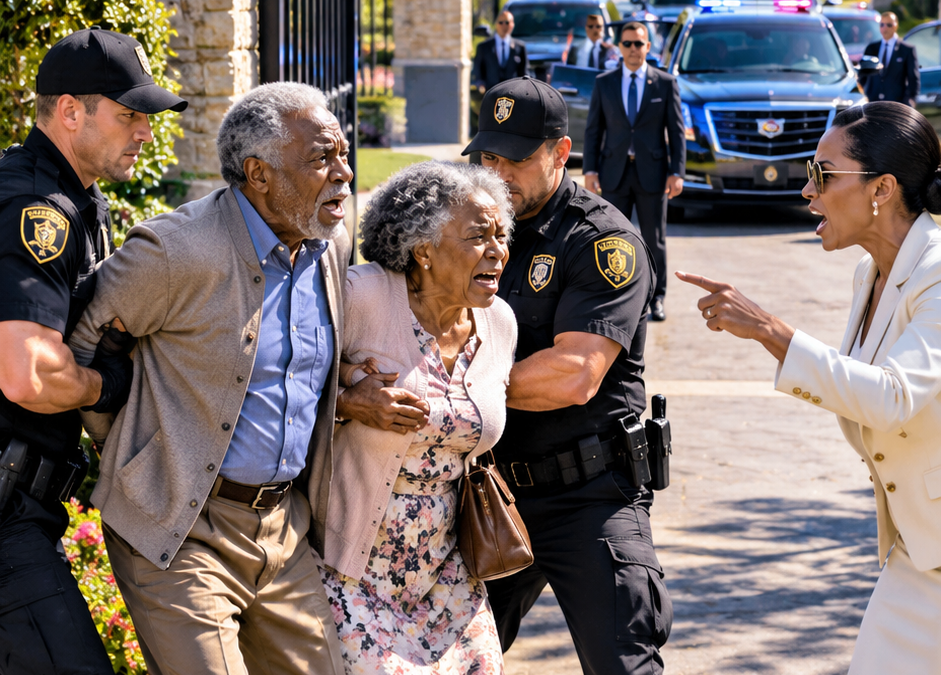
𝗣𝗔𝗥𝗧 𝟮
That morning, I was at a federal facility about forty minutes away.
My job had nothing to do with law enforcement.
That distinction became important later because people who heard the story often assumed I was some sort of federal agent.
I wasn’t.
I was an engineer specializing in emergency communications infrastructure.
My work involved redundant radio networks, backup data systems, temporary command links, and the wonderfully glamorous world of making sure important people could still communicate when something expensive stopped working.
An upcoming presidential visit to the region had required a large temporary communications package.
I had spent the morning reviewing one portion of that system with a federal support team.
Later that afternoon, a protective transport element was scheduled to collect me from my parents’ house and move me to the next staging location.
The president was not going to my parents’ neighborhood.
No president was about to emerge from a limousine and personally settle an HOA dispute.
The vehicles were part of the broader protective movement supporting the official visit.
I was simply one cleared technical specialist who needed to be in the right place at the right time.
That was it.
Still, the arrangement was unusual enough that I hadn’t explained the details to my parents.
Mom knew I was working “something federal.”
Dad knew I would be picked up.
Neither had any reason to expect the type of vehicles involved.
Around nine that morning, my mother called.
I answered on the second ring.
At first, I heard only wind.
Then voices.
My father’s voice.
A man’s voice I didn’t recognize.
And my mother saying, “Do not touch him.”
“Mom?”
“Everett—”
Something scraped against the phone.
A man shouted.
Then I heard Dad clearly.
“Get your hands off my wife.”
The call disconnected.
I stared at the screen.
Called back.
No answer.
Again.
No answer.
I was already moving.
I grabbed my jacket, told one of the coordinators I had a family emergency, and headed for my car.
During the drive, I called Nolan Barrett.
He answered immediately.
“Everett.”
“Something’s happening at my parents’ house.”
“I know. Elaine called me.”
“What?”
“The HOA showed up.”
“With security?”
“Yes.”
“What are they doing?”
“I don’t know yet. I’m on my way.”
“What about the court order?”
“They have it.”
That answer made no sense.
“They have it?”
“It was served yesterday.”
“Then why are they there?”
There was a pause.
“That’s an excellent question.”
I hung up.
Then called Mom again.
Nothing.
I pushed the car harder.
Back at the house, I later learned, Vanessa had arrived shortly after sunrise.
Two dark SUVs stopped along the curb.
Daryl Voss stepped out first.
Daryl ran the private security company Vanessa had hired for Brier Crest.
He was also Vanessa’s brother-in-law.
Because apparently subtle conflicts of interest were another neighborhood amenity.
Four uniformed guards followed him.
Then Vanessa emerged carrying a thick packet of paper stamped in red:
EMERGENCY POSSESSION AUTHORIZATION
She knocked on the front door.
Dad answered.
Vanessa held out the document.
“Martin, as of this morning, Brier Crest has assumed administrative possession of this property.”
Dad stared at her.
“What does that mean?”
“You’ve failed to satisfy your financial obligations.”
“No. We’re disputing fabricated fines.”
“The deadline passed.”
“My lawyer has a restraining order.”
Vanessa smiled.
“That doesn’t change the association process.”
Dad took the papers.
He scanned the first page.
“No judge signed this.”
“The authorization doesn’t require—”
“Who issued it?”
“The association.”
“You issued an order authorizing yourself?”
“It was reviewed by counsel.”
Dad looked at the bottom.
Two signatures.
Vanessa Crowell.
And the association’s in-house lawyer.
No court.
No judge.
No case number.
No county seal.
Nothing.
My mother came to the door holding the actual restraining order.
“This is what an order looks like,” she said.
Vanessa glanced at it.
Mom held it toward her.
“You were served with this.”
Vanessa took the paper.
According to both of my parents, she looked at the heading long enough to know exactly what it was.
Then she tore it in half.
Right there on the porch.
Dad said everybody went silent.
Even Daryl.
My mother’s doorbell camera recorded every second.
Elaine stared at the pieces in Vanessa’s hand.
“Did you just tear up a court order?”
Vanessa dropped them.
“The judge who signed that doesn’t run Brier Crest.”
That sentence would eventually be replayed so many times in legal proceedings that my father joked Vanessa deserved residual payments.
She turned toward Daryl.
“Change the locks.”
Dad stepped into the driveway.
“No.”
Daryl stopped.
“Sir, move away.”
“This is my house.”
“We have authorization.”
“No. You have stationery.”
Daryl glanced toward Vanessa.
Vanessa nodded.
Two guards moved closer.
Mom went inside and called police.
Dad positioned himself in front of the garage.
One guard reached for his shoulder.
Dad pulled away.
“Do not touch me.”
Vanessa told them to continue.
By the time Mom returned to the porch, Daryl had two men standing on either side of my father.
She told Vanessa police were coming.
Vanessa actually laughed.
“Brier Crest has private security. This is an internal procedural matter.”
That was the moment, my mother later told me, when she realized Vanessa had stopped distinguishing between an HOA and a government.
Vanessa wasn’t pretending anymore.
She genuinely behaved as though Brier Crest existed beyond ordinary law.
The problem with building your own kingdom is eventually someone asks where you got the crown.
I arrived before police did.
As I turned onto Hawthorne Ridge, I saw the SUVs first.
Then the people.
Then my father.
Two guards had him by the arms.
Not handcuffed.
But restrained.
His shoulders were pulled back.
My mother stood several feet away, blocked by another guard.
Vanessa was near the driveway holding her fake paperwork.
I pulled over so quickly I barely straightened the car.
I got out with my phone already recording.
“Let him go.”
Everybody turned.
Dad saw me.
“Everett, don’t—”
“I said let him go.”
My voice was controlled.
I wasn’t trying to sound intimidating.
I was trying not to lose my temper.
Vanessa stepped forward.
“And you are?”
“Everett Sloan.”
Something registered.
Not much.
She knew the name.
Probably from my parents.
“You’re their son.”
“Yes.”
“This does not concern you.”
I looked at Dad.
A stranger was holding his arm.
“It concerns me.”
Vanessa lifted her papers.
“The association is executing a lawful possession procedure.”
“Under what law?”
She blinked.
“What?”
“What law gives your security guards authority to detain my father?”
“They’re maintaining order during an authorized property transfer.”
“Authorized by whom?”
“The association.”
“Which court approved it?”
“We don’t need to—”
“Which judge signed that?”
Her face hardened.
“This isn’t a courtroom.”
“Then stop pretending you’re carrying a court order.”
I stepped closer.
She held the pages against her chest.
I could see enough.
Red stamp.
Official-looking formatting.
Bold headings.
It was impressive in the same way a child drawing a sheriff’s badge in crayon might be impressive.
It resembled authority from far away.
Up close, it was arts and crafts.
“Does that document have a case number?”
Vanessa did not answer.
“Does it have a judge’s signature?”
“This matter has been reviewed by association counsel.”
“That wasn’t my question.”
“You have no standing here.”
I turned to Daryl.
“Release my father.”
Vanessa laughed.
Not nervously.
Openly.
“You don’t give orders to my security staff.”
“Fine. Then I’ll make this simple.”
I looked at Daryl.
“My father is asking you to release him. Do it.”
Dad said, “Yes. Let me go.”
Daryl held on.
I pointed the camera toward his hand.
“I’m recording you restraining him after he’s asked to be released.”
Daryl shifted his grip.
Vanessa snapped, “Stop filming.”
“No.”
“This is private association business.”
“You’re standing in my parents’ driveway.”
“Turn that phone off.”
“No.”
Then she made the decision that transformed the day.
“Daryl, take his phone.”
Daryl looked at her.
I saw hesitation.
“Don’t touch me,” I said.
Vanessa pointed.
“Take it.”
He stepped forward.
I backed up.
“I’m telling you clearly: do not touch me.”
Daryl grabbed my arm.
I did not hit him.
I did not shove him.
I kept the camera running.
“I do not consent to being detained.”
“Stop resisting.”
“I’m not resisting.”
I held my free hand out where the camera could see it.
“I am requesting to leave.”
Vanessa said, “You’re not leaving until the transfer is completed.”
I looked at her.
“Did you just order him to detain me?”
“You are interfering with lawful association business.”
“I’m requesting to leave.”
“No.”
I almost couldn’t believe how helpful she was being.
“Okay.”
Vanessa narrowed her eyes.
“Okay?”
“Yes.”
I checked the time.
The transport unit was due in minutes.
I looked toward the neighborhood entrance.
“You need to open your front gate.”
Vanessa gave me a look of pure contempt.
“I decide who comes through that gate.”
I nodded.
“That answer may become interesting very soon.”
She actually smiled.
“You think threatening me is going to help?”
“That wasn’t a threat.”
“What was it?”
“A scheduling observation.”
She scoffed.
Then a sound carried faintly through the neighborhood.
Sirens.
Not patrol-car sirens.
Motorcycles.
Daryl turned his head.
Vanessa ignored it at first.
The sound grew louder.
One of the guards near the entrance radioed Daryl.
He listened.
His expression changed.
“What?” Vanessa demanded.
“Vehicles approaching.”
“Police?”
“I don’t know.”
“How many?”
A pause.
Daryl looked toward me.
“Several.”
Vanessa pulled out her phone.
“Tell the gate not to admit anyone without a warrant.”
I stared at her.
There are statements you hear in life that deserve to be preserved in amber.
That was one.
Daryl radioed the entrance.
“No entry without authorization.”
The motorcycles reached the road outside Brier Crest.
Then the first black SUV appeared.
Then another.
Then another.
Emergency lights flashed.
The vehicles moved in a tight controlled formation.
My father stopped struggling.
Mom stared.
Vanessa’s smile disappeared.
One guard whispered something.
Another guard at the front gate came running back toward us.
He was breathing hard.
“Ms. Crowell.”
“What?”
“Those aren’t county units.”
“What are they?”
“I don’t know.”
He looked toward the entrance.
“But they’re federal.”
I checked my watch.
Right on schedule.
Vanessa turned toward me.
“What is this?”
“My ride.”
Her face was almost worth the entire morning.
Almost.
At the front entrance, two motorcycles stopped.
A lead SUV moved toward the gate arm.
Special Agent Lauren Kesler stepped out.
Lauren wasn’t there to arrest anybody.
She wasn’t there to resolve HOA governance.
She had exactly one immediate concern.
A cleared member of the support team scheduled for protective movement was not where he was supposed to be.
She approached the gate attendant.
“Raise the gate.”
The attendant shook his head nervously.
“I need authorization from the HOA president.”
Lauren looked at him.
“Where is she?”
“Inside.”
“Call her.”
Vanessa hurried toward the entrance.
Daryl finally loosened his grip enough that I stepped away.
I followed at a distance.
Mom stayed with Dad.
By the time Vanessa reached the gate, Lauren was waiting.
“Are you Vanessa Crowell?”
“Yes.”
“I’m looking for Everett Sloan.”
Vanessa stopped.
“He’s currently being detained.”
Lauren’s expression changed very slightly.
“By whom?”
“Our security.”
“For what?”
“Trespassing and assault.”
I called from behind her.
“That’s false, and I’m recording.”
Lauren looked past Vanessa.
Daryl was still standing near me.
Two other guards remained around Dad.
Lauren pointed.
“Release him.”
Vanessa spun around.
“You do not have jurisdiction over our internal HOA enforcement.”
Lauren’s voice remained flat.
“Ma’am, I’m not here to debate your covenants.”
“This is association property.”
“The individual I’m scheduled to transport is being physically delayed while engaged in a cleared movement supporting an official protective operation.”
Vanessa opened her mouth.
Lauren continued.
“You need to stop creating a security problem.”
That was apparently the first sentence all morning Vanessa understood.
Daryl released me completely.
A minute later, local police arrived.
My mother’s original call had finally brought them.
Deputy Chief Wade Mercer stepped from the lead cruiser.
Wade was in his fifties, broad-shouldered, and had the expression of a man who had been told he was walking into a property dispute and instead found federal vehicles, private guards, torn court documents, and an HOA president announcing sovereignty.
He looked around.
“What happened?”
Everybody started talking.
He raised one hand.
“One at a time.”
Vanessa moved first.
“These residents became violent while the association was executing an authorized possession.”
Wade held out his hand.
“Show me the authorization.”
Vanessa handed him the packet.
He read the first page.
Then the second.
He looked at her.
“What judge signed this?”
“It was issued pursuant to association authority.”
“That isn’t what I asked.”
He flipped pages.
“What’s the case number?”
Vanessa said nothing.
“What court?”
Nothing.
My mother stepped forward.
“I have a real court order.”
She pointed toward the driveway.
“What’s left of it.”
Wade looked.
The torn pages were still on the pavement.
“What happened?”
“She tore it up.”
Vanessa snapped, “That’s not relevant.”
Mom pointed toward the doorbell.
“The camera recorded everything.”
Wade’s eyes moved to Vanessa.
“Were you served with a restraining order?”
Vanessa’s confidence finally developed a crack.
“The association disputes its scope.”
“Were you served?”
“Yes.”
“And you came here anyway?”
“We had independent enforcement authority.”
Wade looked at the fake possession papers again.
“No. You didn’t.”
That was when Paige Rutledge stepped out of the small crowd gathering near the street.
Paige had served as association treasurer.
I recognized her vaguely from neighborhood events years earlier.
She was holding a flash drive.
Her hand was shaking.
“Chief?”
Wade turned.
“I need to show you something.”
Vanessa reacted instantly.
“Paige, don’t.”
Paige looked at her.
For once, Vanessa’s voice didn’t move her.
“This isn’t the first house.”
The street went quiet.
Vanessa walked toward her.
“You are violating association confidentiality.”
Wade stepped between them.
“Stay where you are.”
Paige handed him the drive.
“There are eleven.”
“Eleven what?”
“Houses.”
My mother frowned.
Paige swallowed.
“She did this to eleven households.”
Vanessa shouted, “She’s lying.”
Paige kept talking.
“The fines. The possession notices. The security pressure. All of it.”
I looked at her.
“Why?”
Paige closed her eyes for a second.
“I’ll show you.”
The convoy was still waiting at the gate.
Lauren approached me.
“We need to move.”
“I know.”
“Are your parents safe?”
I looked toward Dad.
One of the officers was speaking with him.
The guards had backed away.
“Yes.”
“I can give you a few minutes to transfer your footage.”
I nodded.
“Thank you.”
She wasn’t there to investigate.
She wasn’t there to become the hero of a neighborhood dispute.
Her assignment remained elsewhere.
But the presence of those vehicles had done something crucial.
Vanessa’s little performance had stopped.
Not because a motorcade somehow outranked property law.
Because outside witnesses had arrived whom Vanessa could neither intimidate nor control.
I AirDropped my video to an officer.
Nolan Barrett arrived before I left.
He got out of his car carrying a briefcase.
He saw the federal SUVs.
Saw police.
Saw private security.
Saw torn documents.
Then looked at my father.
“I was gone forty minutes.”
Dad shrugged.
“Busy morning.”
Nolan examined Vanessa’s possession order.
He made it halfway through the first page before laughing once.
Not because it was funny.
Because sometimes legal nonsense reaches a level where professional dignity becomes difficult.
“This is not an order.”
Vanessa glared at him.
“Our counsel approved it.”
“Then your counsel should consider another profession.”
“It authorizes possession.”
“No. It says it authorizes possession.”
He held it up.
“I could type a document saying I own the moon. The font would not complete the transaction.”
Dad smiled despite everything.
Vanessa did not.
Paige spoke again.
“There is more.”
Wade looked at her.
“How much more?”
Paige glanced toward Vanessa.
“A lot.”
Then she told us about Caldwell Meridian Development.
The company had been quietly purchasing land surrounding Brier Crest.
Several parcels bordered the neighborhood.
According to preliminary development plans Paige had seen, the company needed a continuous corridor for a major commercial project.
The eleven houses Vanessa had targeted formed that corridor.
I felt something cold settle in my stomach.
“Those exact houses?”
“Yes.”
“Every one?”
“Yes.”
Dad looked toward Vanessa.
“This was never about the fines.”
Vanessa said nothing.
Paige plugged the flash drive into Nolan’s laptop on the hood of his car.
Folders appeared.
Invoices.
Emails.
Spreadsheets.
Contracts.
One file caught her attention.
She opened it.
An internal email.
The key line read:
Seventy-percent clearance activates $4.6M success compensation.
Nolan leaned closer.
“What does clearance mean?”
Paige answered quietly.
“Targeted properties sold or vacated before the zoning vote.”
“And who receives the payment?”
She opened another attachment.
A consulting agreement.
The firm name appeared at the top.
CROWELL STRATEGIC RESIDENTIAL SOLUTIONS
Owner:
Vanessa Crowell.
I stared at Vanessa.
For the first time that day, she looked small.
Not physically.
Structurally.
The power around her was falling away.
“This is your company?” Wade asked.
Vanessa recovered enough to answer.
“It is a separate consulting business.”
“Does the board know?”
“That isn’t relevant.”
Paige shook her head.
“No.”
Vanessa turned.
“You don’t speak for the board.”
“I kept the books.”
“And poorly.”
Paige ignored the insult.
She opened financial records.
Payments to Daryl’s security company.
Over fourteen months:
$418,000.
The descriptions were remarkable.
RESIDENCY ENFORCEMENT
OWNERSHIP RECOVERY
RESIDENT RELOCATION
PROPERTY CONTROL
Nolan stared at the screen.
“An HOA paid private security four hundred eighteen thousand dollars to conduct ‘ownership recovery’?”
Daryl looked suddenly interested in the pavement.
Paige nodded.
“And there were bonuses.”
“What bonuses?”
“For households that left.”
Daryl looked up sharply.
“Paige.”
She didn’t stop.
“Every targeted household that sold generated an additional payment.”
I looked at Daryl.
“You were being paid to push people out.”
“No.”
Paige opened another invoice.
There it was.
Address.
Completion status.
Bonus.
Daryl’s face changed.
Vanessa snapped, “Those were performance incentives.”
Dad laughed.
Actually laughed.
“My God.”
Vanessa glared at him.
“What?”
Dad shook his head.
“You found a corporate phrase for threatening retirees.”
The crowd had grown.
Residents stood in driveways.
People recorded with phones.
Whispers spread.
An elderly man stepped forward.
“She did something like this to me.”
Another woman spoke.
“She threatened to deactivate my access card.”
Someone farther down the street said, “They pressured us to sell last year.”
Then another.
And another.
Vanessa shouted over them.
“This is misinformation.”
Paige pulled out her phone.
“No, Vanessa.”
Vanessa froze.
Paige tapped the screen.
A recording began.
Vanessa’s voice played through the speaker.
Clear.
Distinct.
Unmistakable.
“If a few of them have to be dragged out of their houses before the others understand the message, then that’s what happens.”
Nobody spoke.
Daryl turned toward Vanessa.
His expression was different now.
Until that moment, he had probably believed he was protected because he was useful.
Now he was hearing proof that if somebody had to be sacrificed, Vanessa already had candidates.
Including him.
I looked at Lauren.
“I have to go.”
She nodded.
Before I climbed into the SUV, I walked back to my parents.
Mom hugged me.
Dad rubbed his shoulder.
“You okay?” I asked.
“I’ve had better mornings.”
“Nolan stays with you.”
Dad nodded.
“Go do your job.”
I looked toward Vanessa.
She was arguing with Wade.
Then back at my parents.
“Don’t sign anything.”
Mom almost looked offended.
“Everett.”
“I know.”
“I save grocery coupons for three years.”
“I know.”
“You think I’m signing something now?”
I kissed her forehead.
Then turned toward Dad.
He looked past me at the convoy.
“You know what’s funny?”
“What?”
“She thought those cars were what changed things.”
I glanced over.
Dad shook his head.
“They didn’t.”
He pointed toward the torn restraining order.
“That did.”
Then toward Mom’s doorbell.
“And that.”
Then toward Paige’s flash drive.
“And probably that.”
He was right.
The SUVs were spectacular.
Evidence was useful.
I got into the vehicle.
The convoy pulled away.
Behind us, Brier Crest disappeared through the rear window.
My workday continued.
My parents’ nightmare did too.
By afternoon, Nolan had already petitioned the court for an emergency preservation order covering association records.
Police contacted the district attorney’s office.
The development company, Caldwell Meridian, learned about the confrontation and immediately suspended its relationship with Vanessa’s consulting firm.
The $4.6 million success payment vanished before she could get anywhere near it.
That alone would have been catastrophic for her.
Unfortunately for Vanessa, it was merely the first invoice reality sent her.
Paige gave investigators everything on her flash drive.
The pattern was consistent.
Each targeted homeowner received unusual violations.
When they disputed those violations, charges escalated.
Legal fees appeared.
Security fees appeared.
Then came notices suggesting the association had some mysterious power to take control of the property.
Some homeowners panicked.
A few sold.
Others negotiated.
The association’s security company applied pressure.
Gate access disappeared.
Cars were followed through the neighborhood.
Contractors were confronted.
One resident received repeated nighttime “compliance checks.”
All eleven homes sat inside the development corridor.
My parents were listed as one of the most resistant.
Then my mother remembered the accidental email.
Six months earlier, somebody from the association office had sent her a spreadsheet attachment.
The email itself had been ordinary.
A landscaping notice.
Mom had saved it.
Naturally.
Elaine Sloan had never met an attachment she felt comfortable deleting.
When Nolan searched her inbox, he found it.
The spreadsheet contained eleven names.
Property values.
Estimated sale thresholds.
Fine amounts.
Pressure classifications.
Status columns.
CLEARED
NEGOTIATING
RESISTANT
Beside my parents’ names:
PRIORITY HOLDOUT
Then one note:
ESCALATE SECURITY PRESSURE BEFORE ZONING VOTE.
Nolan called me that evening.
“Your mother may have just preserved the best piece of evidence in the entire matter.”
“What was it?”
He explained.
I closed my eyes.
“She saved the attachment?”
“Of course she saved the attachment.”
I could hear him smiling.
“She may be the only person in America whose inbox retention policy is stricter than the federal government.”
The court granted the preservation request.
An independent administrator was appointed to secure association records.
Vanessa was prohibited from destroying, modifying, moving, or transferring files relevant to the dispute.
Which turned out to be especially timely.
Because Paige then told investigators that Vanessa had instructed the HOA’s IT contractor that morning to delete a directory.
The folder name:
TRANSITION PROPERTIES
Vanessa called it obsolete data.
The contractor had apparently not completed the deletion before the court order arrived.
Investigators secured the server.
Inside were draft possession forms.
Target lists.
Property maps.
Developer communications.
Security instructions.
And files connecting association operations directly with Vanessa’s private consulting business.
The documents stopped looking like aggressive HOA governance.
They started looking like infrastructure for a business plan.
Three days later, investigators entered the association administrative office under court authority.
What they found made Nolan call my father and say, “Martin, I would like to formally retract every time I’ve called this case strange. We have exceeded strange.”
There were blank possession-order templates.
Counterfeit official-looking seals.
Preformatted notices waiting for property addresses.
Lists of homeowners.
Invoices from Daryl’s company.
Consulting contracts.
Draft transfer documents.
And in a closet safe—
$92,000 in cash.
The envelopes were labeled with addresses.
My parents’ house was one of them.
Paige had never recorded that money in any association account.
Vanessa insisted it was personal cash.
Bank tracing later showed portions had been withdrawn from accounts tied to her consulting company.
The explanation did not improve.
Meanwhile, Daryl’s loyalty began deteriorating.
Quickly.
He learned Vanessa was claiming he had acted independently.
According to her, she had never instructed guards to physically restrain residents.
Daryl heard that and apparently discovered a sudden appreciation for electronic recordkeeping.
His phone contained months of text messages.
One from Vanessa said:
Do whatever it takes to make them sign.
Another said:
Court order or not, nobody stops this now. We are too close.
A third discussed “pressure visits.”
Another contained instructions for access-card restrictions.
There were bonus arrangements.
Target addresses.
Deadlines.
When police requested his phone, Daryl briefly tried to leave.
He was stopped.
Then he cooperated.
People sometimes develop moral clarity at remarkable speed when someone else starts preparing to blame them.
Vanessa’s association presidency collapsed that evening.
An emergency board meeting was called.
She attended.
Of course she did.
I wasn’t there, but Dad later described it.
Vanessa walked into the room carrying a binder.
Apparently a binder was still the closest available substitute for legitimacy.
She sat at the head of the table.
Board members sat opposite her.
Nolan attended as counsel for my parents and several other homeowners.
An interim administrator appointed under the preservation order sat near the end.
Vanessa opened.
“This meeting is unauthorized.”
One board member replied, “It’s our meeting.”
“I remain president.”
“Not for long.”
The vote was six to zero.
Suspended immediately.
Vanessa stood.
“You don’t have authority to do this without a full resident vote.”
The administrator slid the court order across the table.
Nolan said, “You may wish to read this one before tearing it.”
Dad told me that line was worth every dollar in legal fees.
Her account access was disabled.
Office credentials revoked.
Bank permissions removed.
Security authority terminated.
And then came the smallest consequence.
Also my favorite.
Her Brier Crest access card was deactivated.
For nearly two years, Vanessa had enjoyed deciding who could enter and leave the neighborhood.
After the meeting, she walked to a side entrance of the administrative office.
She swiped her card.
Red light.
Again.
Red.
A third time.
Nothing.
One of the residents watched from the parking lot.
Vanessa knocked.
Nobody opened the door.
Apparently, private kingdoms have remarkably efficient coups when IT controls are properly configured.
Within twenty-four hours, ten more affected homeowners joined my parents in a coordinated lawsuit.
Nolan represented the group.
The claims included unlawful detention, trespass, improper liens, abuse of association authority, financial damages, and fraudulent documentation.
Separate criminal investigation continued alongside it.
The residents began comparing records.
That produced another problem.
Several property liens Vanessa’s organization had filed contained notarized signatures.
Three looked almost identical.
Exactly identical, according to preliminary review.
Same stroke placement.
Same letter formations.
Same irregularities.
One listed notary had not held an active commission during the period shown on the documents.
That opened yet another line of inquiry.
Vanessa’s defense evolved rapidly.
First, everything had been lawful.
Then everything had been a misunderstanding.
Then Paige had falsified records.
Then Daryl had exceeded instructions.
Then administrative staff had made mistakes.
Then association counsel had given bad advice.
It was fascinating.
Apparently, Vanessa had personally made every successful decision in Brier Crest while every questionable decision had been made by someone standing nearby.
Months passed.
My parents stayed in their home.
The liens were frozen pending review.
No guards returned.
The old security company lost its contract.
A temporary management firm took over basic association operations.
The neighborhood became quieter almost immediately.
Dad said the biggest difference was that nobody drove around after dark photographing trash cans anymore.
“You’d be amazed,” he told me, “how peaceful civilization becomes once nobody is being paid four hundred thousand dollars to inspect your driveway.”
The major civil hearing eventually arrived.
I sat beside my parents in court.
Vanessa entered through the opposite side.
I almost didn’t recognize her.
Not because she looked physically different.
Because everything that had once surrounded her was gone.
No guards.
No board members following behind.
No assistants carrying folders.
No title worth invoking.
No controlled room.
No neighborhood gate.
Just Vanessa and her lawyer.
For years, she had built authority out of context.
Take away the context and she was simply a defendant sitting at a table.
Her attorney’s central argument was that Vanessa had misunderstood the scope of HOA authority.
She had acted aggressively, perhaps recklessly, but supposedly believed the governing documents gave her power to enforce unpaid obligations.
Nolan stood.
He did not need a long speech.
“We can test whether Ms. Crowell believed she was acting lawfully.”
First exhibit.
My parents’ doorbell video.
The courtroom watched Vanessa accept the restraining order.
Look at it.
Tear it in half.
Her own voice played:
“The judge who signed that doesn’t run Brier Crest.”
Nolan paused the video.
“That’s not misunderstanding.”
Second exhibit.
Paige’s board recording.
Vanessa’s voice:
“If a few of them have to be dragged out of their houses before the others understand the message, then that’s what happens.”
Third exhibit.
Text message to Daryl.
Court order or not, nobody stops this now.
Nolan turned toward the judge.
“The issue isn’t whether she understood the court order.”
Pause.
“She understood it well enough to mention it while deciding to ignore it.”
Then came the footage from my phone.
Dad restrained.
Mom blocked.
Me asking to leave.
Daryl holding my arm.
Vanessa ordering him not to release me.
The video continued.
Sirens.
Motorcycles.
Black SUVs.
The convoy approaching the gate.
There was a strange feeling watching it again.
At the time, that sight had felt enormous.
In court, it looked almost incidental.
The real evidence had already happened.
The fake possession order.
The restraint.
The ignored court directive.
The recorded instructions.
The convoy had merely interrupted the performance.
Nolan made exactly that point.
“Ms. Crowell had many opportunities to stop before anyone federal arrived.”
He counted them.
When my father produced the restraining order.
She continued.
When my mother called police.
She continued.
When my father demanded release.
She continued.
When I asked what judge authorized the seizure.
She continued.
When I requested to leave.
She ordered me detained.
Only after vehicles she could not control arrived did the conduct stop.
The judge looked toward Vanessa.
“A homeowners association is not a court.”
Silence.
“It is not a police department.”
More silence.
“It has no authority to manufacture judicial orders.”
He looked at Daryl.
“And private security personnel do not become law enforcement officers because an association president tells them they may physically restrain homeowners.”
Every fraudulent lien connected to the scheme was voided.
The affected homeowners were allowed to proceed fully with damages claims.
Several deliberate acts fell outside the HOA’s insurance protection.
That mattered enormously.
Insurance exists to cover risks within a policy.
It generally does not exist to finance intentional misconduct simply because the person committing it happens to sit at the head of an association table.
Vanessa and Daryl became personally exposed.
Caldwell Meridian permanently cancelled its arrangement with Vanessa’s consulting firm.
The $4.6 million payment was gone.
Crowell Strategic Residential Solutions collapsed soon afterward.
Its accounts were frozen during portions of the litigation.
Properties Vanessa owned became relevant to collection and judgment security.
The irony was obvious enough that nobody needed to say it.
She had spent months trying to push families out of their homes so she could profit from land transfers.
Now her own investment properties were being examined because she might need them to satisfy judgments owed to those same families.
The final damages hearing was packed.
My parents sat beside me.
Mom had brought one of her folders.
I looked at it.
“What is that?”
“Documents.”
“Mom, Nolan has the documents.”
“These are my documents.”
“Of course.”
Dad leaned toward me.
“Don’t argue.”
The judge returned.
The final combined financial obligations across the responsible parties and applicable coverage exceeded $3.1 million.
My parents received compensation for unlawful restraint.
Trespass.
Improper assessments.
Legal expenses.
And associated damages.
Other homeowners received their own awards.
Fraudulent charges were cancelled.
Improper liens removed.
Vanessa personally bore a substantial portion because the court’s findings tied key conduct directly to deliberate decisions rather than innocent administrative error.
Daryl lost his security business’s HOA contract permanently.
He faced separate consequences for his role in the physical detentions.
The association itself survived.
Barely.
Residents rebuilt it.
Paige cooperated fully.
She stayed involved long enough to help reconstruct the financial records and establish new controls.
Then Brier Crest rewrote its procedures.
Large fines required independent review.
Residents received access to financial records.
Contracts involving businesses connected to board members were prohibited without full disclosure and independent approval.
Presidential term limits were adopted.
Security personnel were explicitly forbidden from using physical force as a method of covenant enforcement.
No single officer could authorize significant legal or financial action alone.
It was remarkable.
For years, Vanessa had claimed transparency and safeguards would make the association impossible to manage.
Once she was gone, Brier Crest somehow managed to survive the terrible burden of having rules that also applied to its president.
My parents stayed.
That mattered more to them than the money.
One afternoon after the liens were officially removed, Dad repainted the fence.
The same white.
Exactly the same white.
I stood nearby holding the paint can.
“You know you could change the color now.”
“I like this color.”
“This is the one they fined you for.”
“Exactly.”
He rolled another section.
I laughed.
“You’re doing this out of spite.”
“No.”
He considered it.
“Mostly spite.”
Mom opened the front door.
“You missed a spot.”
Dad looked at me.
“Twenty-seven years.”
“What?”
“Twenty-seven years married to that.”
Mom heard him.
“Twenty-nine.”
Dad lowered his voice.
“See?”
Months after the case settled, I returned to Hawthorne Ridge on an ordinary Saturday.
No convoy.
No motorcycles.
No federal SUVs.
Just my own car.
I parked in the same driveway where Daryl had grabbed my arm.
Dad was sitting on the porch.
Mom brought coffee.
We talked until the sun began dropping behind the trees.
At one point, Dad asked me something I hadn’t expected.
“Do you ever wish those vehicles hadn’t shown up?”
I looked at him.
“Why?”
“Because afterward, everyone talked about them.”
He leaned back.
“The presidential motorcade escort. Federal agents. Black SUVs.”
He shook his head.
“As though that’s what saved us.”
I thought about it.
“No.”
Mom looked over.
“No, you don’t wish they hadn’t come?”
“No. But you’re right.”
I looked toward the doorbell camera.
“The convoy didn’t save you.”
Dad smiled slightly.
“What did?”
I counted.
“Nolan getting the restraining order.”
Mom nodded.
“Your camera.”
Another nod.
“Paige keeping the files.”
Mom smiled.
“And?”
I looked at her.
“Your pathological inability to delete an email.”
She laughed.
“I knew that would become useful one day.”
Dad raised his coffee.
“To digital hoarding.”
Mom slapped his arm.
The truth was less cinematic than the story people repeated.
The motorcade did not destroy Vanessa.
Evidence did.
The convoy didn’t invalidate her fake possession order.
The courthouse records did.
The federal vehicles didn’t prove the financial scheme.
Paige’s files did.
The motorcycles didn’t preserve the targeted-property spreadsheet.
My mother did.
The agents didn’t make Vanessa tear up the restraining order.
She had done that herself.
On camera.
Her downfall wasn’t caused by powerful outsiders arriving at the perfect moment.
They simply arrived while she was already documenting her own collapse.
That distinction mattered to me.
Vanessa had always believed power was visual.
Uniforms.
Security vehicles.
Gate cameras.
Printed orders.
A president’s title.
People standing behind her.
That was why the convoy frightened her.
It was the first display of institutional authority larger than the one she had constructed around herself.
But that wasn’t what ultimately defeated her.
She lost because real authority has foundations.
Law.
Jurisdiction.
Evidence.
Records.
Consent.
Oversight.
Her version had stationery.
On the other side of Brier Crest, Vanessa’s name eventually disappeared from everything.
The office door.
The board website.
Association notices.
Crowell Strategic Residential Solutions shut down.
One of her larger investment properties was sold during the process of satisfying financial obligations from the litigation.
Caldwell Meridian redesigned its proposed development away from the holdout homes.
The commercial project Vanessa had built her private fortune around never materialized in the form she expected.
Daryl’s security company lost Brier Crest.
Other clients reportedly reconsidered their relationships after the investigation became public.
The same man who once walked into my parents’ driveway wearing a uniform and acting like he could decide who belonged there eventually learned the unpleasant difference between being hired to provide security and being authorized to enforce imaginary law.
Paige resigned after helping stabilize the association.
My parents sent her a thank-you card.
Mom saved a copy.
Naturally.
Years later, when I think about that morning, the image I remember most isn’t the convoy.
It isn’t even Vanessa at the gate.
It’s my father standing beside his own garage with two strangers holding his arms while Vanessa explained that his house somehow belonged to her association now.
Twenty-seven years.
Mortgage payments.
Repairs.
Christmas mornings.
Birthday dinners.
The tree we planted after my grandfather died.
My old bedroom upstairs.
Every ordinary piece of a family’s life.
And Vanessa believed she could erase all of it with a document she had printed herself.
That arrogance was what made the ending satisfying.
Not because she became poor overnight.
Not because federal agents dramatically hauled her away while neighbors cheered.
Life usually isn’t that theatrical.
The satisfying part was watching every layer of invented authority disappear.
First, the guards stepped back.
Then the fake order collapsed.
Then her development arrangement vanished.
Then her own board removed her.
Then her gate access stopped working.
Then her company failed.
Then the court voided the liens.
Then the homeowners she had pressured stood together in the same courtroom and watched the financial consequences land on the people who had created the scheme.
She had spent years telling residents who belonged inside Brier Crest.
In the end, she was the one who lost access.
My parents still live in the same house.
The fence is still white.
The porch is still there.
The doorbell camera has been upgraded twice because my mother now considers home surveillance a form of historical archiving.
When I visit, Dad sometimes points toward the entrance and jokes that he’s disappointed I no longer arrive with motorcycles.
I tell him the federal government charges extra for family visits.
He never laughs as much as he should.
But every time I turn into Hawthorne Ridge now, I remember Vanessa standing in that driveway.
She had four guards.
An association title.
A stack of official-looking paperwork.
A private security company.
Control of the gate.
And absolute confidence that nobody outside Brier Crest could tell her what to do.
My father had a torn court order.
My mother had a camera.
I had a phone.
Paige had a flash drive.
Nolan had the law.
And Vanessa had made the fatal mistake of leaving evidence everywhere she went.
The black SUVs arriving at the gate made her smile disappear.
But the real ending came much later, when there were no flashing lights, no sirens, and no spectacle at all.
Just a courtroom.
A judge.
A stack of authenticated records.
And the same woman who once announced that the board alone decided what happened inside Brier Crest sitting silently while someone with actual authority explained exactly how little power she had ever possessed.
For twenty-seven years, my parents had belonged in that house.
Vanessa tried to turn them into trespassers.
Instead, she turned herself into evidence.
Have you finished reading the story and want to read it again?
HOA Guards Grabbed My Parents on Their Own Porch—Then the Presidential Motorcade Escort Rolled Up to the Gate
By the time I turned onto my parents’ street, two private security guards had my sixty-eight-year-old father by the arms, my mother was shouting from the porch, and the woman responsible was standing in their driveway holding a homemade “possession order” as if a printer, a red stamp, and enough confidence could magically turn her into a judge.
I had dealt with failed communication systems, emergency infrastructure, and government contingency planning for most of my career, but nothing had prepared me for watching an HOA president calmly explain that my parents no longer had the right to remain inside the house they had owned for twenty-seven years.
What she did not know was that within minutes, the decision she made next would leave her standing at the neighborhood gate trying to explain herself to people who had absolutely no interest in the little kingdom she had invented.
My name is Everett Sloan.
My parents, Martin and Elaine Sloan, had lived on Hawthorne Ridge in Brier Crest for twenty-seven years.
They bought the house when I was still young enough to complain that my bedroom window faced the wrong direction. I grew up on that street. I learned to ride a bicycle there, backed my first car into our mailbox there, and spent enough summer afternoons mowing that lawn to know exactly where the ground dipped beside the maple tree.
For most of those years, Brier Crest was exactly what a neighborhood was supposed to be.
Quiet.
Predictable.
Occasionally irritating.
People argued about dogs, trash cans, fence heights, and whether somebody’s basketball hoop was technically too close to the curb.
Then Vanessa Crowell became HOA president.
Vanessa did not simply believe in neighborhood standards.
Vanessa believed civilization itself depended upon her personally enforcing them.
Within two years, cameras appeared at the entrance.
Private security patrols began circling the streets.
New parking rules appeared.
Delivery windows were restricted.
Residents were told when contractors could enter, where visitors could stop, and what kind of landscaping required approval.
Most of those rules had one fascinating feature in common.
Nobody could ever find them in the actual governing documents.
Whenever residents challenged her, Vanessa used the same explanation.
“The board has authority to protect the community.”
She said it with the calm certainty of someone announcing gravity.
My father called it government by clipboard.
My mother was less diplomatic.
“She likes telling grown adults what to do.”
The real trouble started when they received a bill for $18,740.
My mother called me that evening.
“Do you know what a special enforcement cost is?”
“No.”
“Neither do they, apparently. But they’re charging us four thousand dollars for one.”
The invoice included a fence-color violation.
A parking fine.
Inspection fees.
Security charges.
Legal processing costs.
And several violations dated during a week when my parents had been visiting my aunt two states away.
Mom knew that because Mom kept records.
All records.
Every letter.
Every invoice.
Every email.
Every attachment.
If civilization ever collapsed and historians needed to reconstruct Brier Crest from primary documents, they could have done it from the labeled folders in my mother’s hallway closet.
Dad requested supporting records.
Vanessa refused.
A week later, the $18,740 became $31,600.
Then came the sentence that finally got everyone’s attention.
Unless payment was received within seventy-two hours, the association would begin what Vanessa called “taking control of the property.”
My father hired an attorney.
Nolan Barrett took one look at the notice and said something my parents found reassuring.
“An HOA cannot invent a foreclosure procedure because its president enjoys dramatic language.”
He went to court.
He obtained an emergency restraining order preventing Brier Crest from interfering with the property while the disputed fines were reviewed.
The order was served.
That should have ended the immediate threat.
Instead, Vanessa apparently decided that court orders were merely suggestions written by people who did not live behind her gate.
And the next morning, before I knew any of that was happening, she arrived at my parents’ house with four private guards and a stack of papers that would eventually destroy nearly everything she had built.
PART2
That morning, I was at a federal facility about forty minutes away.
My job had nothing to do with law enforcement.
That distinction became important later because people who heard the story often assumed I was some sort of federal agent.
I wasn’t.
I was an engineer specializing in emergency communications infrastructure.
My work involved redundant radio networks, backup data systems, temporary command links, and the wonderfully glamorous world of making sure important people could still communicate when something expensive stopped working.
An upcoming presidential visit to the region had required a large temporary communications package.
I had spent the morning reviewing one portion of that system with a federal support team.
Later that afternoon, a protective transport element was scheduled to collect me from my parents’ house and move me to the next staging location.
The president was not going to my parents’ neighborhood.
No president was about to emerge from a limousine and personally settle an HOA dispute.
The vehicles were part of the broader protective movement supporting the official visit.
I was simply one cleared technical specialist who needed to be in the right place at the right time.
That was it.
Still, the arrangement was unusual enough that I hadn’t explained the details to my parents.
Mom knew I was working “something federal.”
Dad knew I would be picked up.
Neither had any reason to expect the type of vehicles involved.
Around nine that morning, my mother called.
I answered on the second ring.
At first, I heard only wind.
Then voices.
My father’s voice.
A man’s voice I didn’t recognize.
And my mother saying, “Do not touch him.”
“Mom?”
“Everett—”
Something scraped against the phone.
A man shouted.
Then I heard Dad clearly.
“Get your hands off my wife.”
The call disconnected.
I stared at the screen.
Called back.
No answer.
Again.
No answer.
I was already moving.
I grabbed my jacket, told one of the coordinators I had a family emergency, and headed for my car.
During the drive, I called Nolan Barrett.
He answered immediately.
“Everett.”
“Something’s happening at my parents’ house.”
“I know. Elaine called me.”
“What?”
“The HOA showed up.”
“With security?”
“Yes.”
“What are they doing?”
“I don’t know yet. I’m on my way.”
“What about the court order?”
“They have it.”
That answer made no sense.
“They have it?”
“It was served yesterday.”
“Then why are they there?”
There was a pause.
“That’s an excellent question.”
I hung up.
Then called Mom again.
Nothing.
I pushed the car harder.
Back at the house, I later learned, Vanessa had arrived shortly after sunrise.
Two dark SUVs stopped along the curb.
Daryl Voss stepped out first.
Daryl ran the private security company Vanessa had hired for Brier Crest.
He was also Vanessa’s brother-in-law.
Because apparently subtle conflicts of interest were another neighborhood amenity.
Four uniformed guards followed him.
Then Vanessa emerged carrying a thick packet of paper stamped in red:
EMERGENCY POSSESSION AUTHORIZATION
She knocked on the front door.
Dad answered.
Vanessa held out the document.
“Martin, as of this morning, Brier Crest has assumed administrative possession of this property.”
Dad stared at her.
“What does that mean?”
“You’ve failed to satisfy your financial obligations.”
“No. We’re disputing fabricated fines.”
“The deadline passed.”
“My lawyer has a restraining order.”
Vanessa smiled.
“That doesn’t change the association process.”
Dad took the papers.
He scanned the first page.
“No judge signed this.”
“The authorization doesn’t require—”
“Who issued it?”
“The association.”
“You issued an order authorizing yourself?”
“It was reviewed by counsel.”
Dad looked at the bottom.
Two signatures.
Vanessa Crowell.
And the association’s in-house lawyer.
No court.
No judge.
No case number.
No county seal.
Nothing.
My mother came to the door holding the actual restraining order.
“This is what an order looks like,” she said.
Vanessa glanced at it.
Mom held it toward her.
“You were served with this.”
Vanessa took the paper.
According to both of my parents, she looked at the heading long enough to know exactly what it was.
Then she tore it in half.
Right there on the porch.
Dad said everybody went silent.
Even Daryl.
My mother’s doorbell camera recorded every second.
Elaine stared at the pieces in Vanessa’s hand.
“Did you just tear up a court order?”
Vanessa dropped them.
“The judge who signed that doesn’t run Brier Crest.”
That sentence would eventually be replayed so many times in legal proceedings that my father joked Vanessa deserved residual payments.
She turned toward Daryl.
“Change the locks.”
Dad stepped into the driveway.
“No.”
Daryl stopped.
“Sir, move away.”
“This is my house.”
“We have authorization.”
“No. You have stationery.”
Daryl glanced toward Vanessa.
Vanessa nodded.
Two guards moved closer.
Mom went inside and called police.
Dad positioned himself in front of the garage.
One guard reached for his shoulder.
Dad pulled away.
“Do not touch me.”
Vanessa told them to continue.
By the time Mom returned to the porch, Daryl had two men standing on either side of my father.
She told Vanessa police were coming.
Vanessa actually laughed.
“Brier Crest has private security. This is an internal procedural matter.”
That was the moment, my mother later told me, when she realized Vanessa had stopped distinguishing between an HOA and a government.
Vanessa wasn’t pretending anymore.
She genuinely behaved as though Brier Crest existed beyond ordinary law.
The problem with building your own kingdom is eventually someone asks where you got the crown.
I arrived before police did.
As I turned onto Hawthorne Ridge, I saw the SUVs first.
Then the people.
Then my father.
Two guards had him by the arms.
Not handcuffed.
But restrained.
His shoulders were pulled back.
My mother stood several feet away, blocked by another guard.
Vanessa was near the driveway holding her fake paperwork.
I pulled over so quickly I barely straightened the car.
I got out with my phone already recording.
“Let him go.”
Everybody turned.
Dad saw me.
“Everett, don’t—”
“I said let him go.”
My voice was controlled.
I wasn’t trying to sound intimidating.
I was trying not to lose my temper.
Vanessa stepped forward.
“And you are?”
“Everett Sloan.”
Something registered.
Not much.
She knew the name.
Probably from my parents.
“You’re their son.”
“Yes.”
“This does not concern you.”
I looked at Dad.
A stranger was holding his arm.
“It concerns me.”
Vanessa lifted her papers.
“The association is executing a lawful possession procedure.”
“Under what law?”
She blinked.
“What?”
“What law gives your security guards authority to detain my father?”
“They’re maintaining order during an authorized property transfer.”
“Authorized by whom?”
“The association.”
“Which court approved it?”
“We don’t need to—”
“Which judge signed that?”
Her face hardened.
“This isn’t a courtroom.”
“Then stop pretending you’re carrying a court order.”
I stepped closer.
She held the pages against her chest.
I could see enough.
Red stamp.
Official-looking formatting.
Bold headings.
It was impressive in the same way a child drawing a sheriff’s badge in crayon might be impressive.
It resembled authority from far away.
Up close, it was arts and crafts.
“Does that document have a case number?”
Vanessa did not answer.
“Does it have a judge’s signature?”
“This matter has been reviewed by association counsel.”
“That wasn’t my question.”
“You have no standing here.”
I turned to Daryl.
“Release my father.”
Vanessa laughed.
Not nervously.
Openly.
“You don’t give orders to my security staff.”
“Fine. Then I’ll make this simple.”
I looked at Daryl.
“My father is asking you to release him. Do it.”
Dad said, “Yes. Let me go.”
Daryl held on.
I pointed the camera toward his hand.
“I’m recording you restraining him after he’s asked to be released.”
Daryl shifted his grip.
Vanessa snapped, “Stop filming.”
“No.”
“This is private association business.”
“You’re standing in my parents’ driveway.”
“Turn that phone off.”
“No.”
Then she made the decision that transformed the day.
“Daryl, take his phone.”
Daryl looked at her.
I saw hesitation.
“Don’t touch me,” I said.
Vanessa pointed.
“Take it.”
He stepped forward.
I backed up.
“I’m telling you clearly: do not touch me.”
Daryl grabbed my arm.
I did not hit him.
I did not shove him.
I kept the camera running.
“I do not consent to being detained.”
“Stop resisting.”
“I’m not resisting.”
I held my free hand out where the camera could see it.
“I am requesting to leave.”
Vanessa said, “You’re not leaving until the transfer is completed.”
I looked at her.
“Did you just order him to detain me?”
“You are interfering with lawful association business.”
“I’m requesting to leave.”
“No.”
I almost couldn’t believe how helpful she was being.
“Okay.”
Vanessa narrowed her eyes.
“Okay?”
“Yes.”
I checked the time.
The transport unit was due in minutes.
I looked toward the neighborhood entrance.
“You need to open your front gate.”
Vanessa gave me a look of pure contempt.
“I decide who comes through that gate.”
I nodded.
“That answer may become interesting very soon.”
She actually smiled.
“You think threatening me is going to help?”
“That wasn’t a threat.”
“What was it?”
“A scheduling observation.”
She scoffed.
Then a sound carried faintly through the neighborhood.
Sirens.
Not patrol-car sirens.
Motorcycles.
Daryl turned his head.
Vanessa ignored it at first.
The sound grew louder.
One of the guards near the entrance radioed Daryl.
He listened.
His expression changed.
“What?” Vanessa demanded.
“Vehicles approaching.”
“Police?”
“I don’t know.”
“How many?”
A pause.
Daryl looked toward me.
“Several.”
Vanessa pulled out her phone.
“Tell the gate not to admit anyone without a warrant.”
I stared at her.
There are statements you hear in life that deserve to be preserved in amber.
That was one.
Daryl radioed the entrance.
“No entry without authorization.”
The motorcycles reached the road outside Brier Crest.
Then the first black SUV appeared.
Then another.
Then another.
Emergency lights flashed.
The vehicles moved in a tight controlled formation.
My father stopped struggling.
Mom stared.
Vanessa’s smile disappeared.
One guard whispered something.
Another guard at the front gate came running back toward us.
He was breathing hard.
“Ms. Crowell.”
“What?”
“Those aren’t county units.”
“What are they?”
“I don’t know.”
He looked toward the entrance.
“But they’re federal.”
I checked my watch.
Right on schedule.
Vanessa turned toward me.
“What is this?”
“My ride.”
Her face was almost worth the entire morning.
Almost.
At the front entrance, two motorcycles stopped.
A lead SUV moved toward the gate arm.
Special Agent Lauren Kesler stepped out.
Lauren wasn’t there to arrest anybody.
She wasn’t there to resolve HOA governance.
She had exactly one immediate concern.
A cleared member of the support team scheduled for protective movement was not where he was supposed to be.
She approached the gate attendant.
“Raise the gate.”
The attendant shook his head nervously.
“I need authorization from the HOA president.”
Lauren looked at him.
“Where is she?”
“Inside.”
“Call her.”
Vanessa hurried toward the entrance.
Daryl finally loosened his grip enough that I stepped away.
I followed at a distance.
Mom stayed with Dad.
By the time Vanessa reached the gate, Lauren was waiting.
“Are you Vanessa Crowell?”
“Yes.”
“I’m looking for Everett Sloan.”
Vanessa stopped.
“He’s currently being detained.”
Lauren’s expression changed very slightly.
“By whom?”
“Our security.”
“For what?”
“Trespassing and assault.”
I called from behind her.
“That’s false, and I’m recording.”
Lauren looked past Vanessa.
Daryl was still standing near me.
Two other guards remained around Dad.
Lauren pointed.
“Release him.”
Vanessa spun around.
“You do not have jurisdiction over our internal HOA enforcement.”
Lauren’s voice remained flat.
“Ma’am, I’m not here to debate your covenants.”
“This is association property.”
“The individual I’m scheduled to transport is being physically delayed while engaged in a cleared movement supporting an official protective operation.”
Vanessa opened her mouth.
Lauren continued.
“You need to stop creating a security problem.”
That was apparently the first sentence all morning Vanessa understood.
Daryl released me completely.
A minute later, local police arrived.
My mother’s original call had finally brought them.
Deputy Chief Wade Mercer stepped from the lead cruiser.
Wade was in his fifties, broad-shouldered, and had the expression of a man who had been told he was walking into a property dispute and instead found federal vehicles, private guards, torn court documents, and an HOA president announcing sovereignty.
He looked around.
“What happened?”
Everybody started talking.
He raised one hand.
“One at a time.”
Vanessa moved first.
“These residents became violent while the association was executing an authorized possession.”
Wade held out his hand.
“Show me the authorization.”
Vanessa handed him the packet.
He read the first page.
Then the second.
He looked at her.
“What judge signed this?”
“It was issued pursuant to association authority.”
“That isn’t what I asked.”
He flipped pages.
“What’s the case number?”
Vanessa said nothing.
“What court?”
Nothing.
My mother stepped forward.
“I have a real court order.”
She pointed toward the driveway.
“What’s left of it.”
Wade looked.
The torn pages were still on the pavement.
“What happened?”
“She tore it up.”
Vanessa snapped, “That’s not relevant.”
Mom pointed toward the doorbell.
“The camera recorded everything.”
Wade’s eyes moved to Vanessa.
“Were you served with a restraining order?”
Vanessa’s confidence finally developed a crack.
“The association disputes its scope.”
“Were you served?”
“Yes.”
“And you came here anyway?”
“We had independent enforcement authority.”
Wade looked at the fake possession papers again.
“No. You didn’t.”
That was when Paige Rutledge stepped out of the small crowd gathering near the street.
Paige had served as association treasurer.
I recognized her vaguely from neighborhood events years earlier.
She was holding a flash drive.
Her hand was shaking.
“Chief?”
Wade turned.
“I need to show you something.”
Vanessa reacted instantly.
“Paige, don’t.”
Paige looked at her.
For once, Vanessa’s voice didn’t move her.
“This isn’t the first house.”
The street went quiet.
Vanessa walked toward her.
“You are violating association confidentiality.”
Wade stepped between them.
“Stay where you are.”
Paige handed him the drive.
“There are eleven.”
“Eleven what?”
“Houses.”
My mother frowned.
Paige swallowed.
“She did this to eleven households.”
Vanessa shouted, “She’s lying.”
Paige kept talking.
“The fines. The possession notices. The security pressure. All of it.”
I looked at her.
“Why?”
Paige closed her eyes for a second.
“I’ll show you.”
The convoy was still waiting at the gate.
Lauren approached me.
“We need to move.”
“I know.”
“Are your parents safe?”
I looked toward Dad.
One of the officers was speaking with him.
The guards had backed away.
“Yes.”
“I can give you a few minutes to transfer your footage.”
I nodded.
“Thank you.”
She wasn’t there to investigate.
She wasn’t there to become the hero of a neighborhood dispute.
Her assignment remained elsewhere.
But the presence of those vehicles had done something crucial.
Vanessa’s little performance had stopped.
Not because a motorcade somehow outranked property law.
Because outside witnesses had arrived whom Vanessa could neither intimidate nor control.
I AirDropped my video to an officer.
Nolan Barrett arrived before I left.
He got out of his car carrying a briefcase.
He saw the federal SUVs.
Saw police.
Saw private security.
Saw torn documents.
Then looked at my father.
“I was gone forty minutes.”
Dad shrugged.
“Busy morning.”
Nolan examined Vanessa’s possession order.
He made it halfway through the first page before laughing once.
Not because it was funny.
Because sometimes legal nonsense reaches a level where professional dignity becomes difficult.
“This is not an order.”
Vanessa glared at him.
“Our counsel approved it.”
“Then your counsel should consider another profession.”
“It authorizes possession.”
“No. It says it authorizes possession.”
He held it up.
“I could type a document saying I own the moon. The font would not complete the transaction.”
Dad smiled despite everything.
Vanessa did not.
Paige spoke again.
“There is more.”
Wade looked at her.
“How much more?”
Paige glanced toward Vanessa.
“A lot.”
Then she told us about Caldwell Meridian Development.
The company had been quietly purchasing land surrounding Brier Crest.
Several parcels bordered the neighborhood.
According to preliminary development plans Paige had seen, the company needed a continuous corridor for a major commercial project.
The eleven houses Vanessa had targeted formed that corridor.
I felt something cold settle in my stomach.
“Those exact houses?”
“Yes.”
“Every one?”
“Yes.”
Dad looked toward Vanessa.
“This was never about the fines.”
Vanessa said nothing.
Paige plugged the flash drive into Nolan’s laptop on the hood of his car.
Folders appeared.
Invoices.
Emails.
Spreadsheets.
Contracts.
One file caught her attention.
She opened it.
An internal email.
The key line read:
Seventy-percent clearance activates $4.6M success compensation.
Nolan leaned closer.
“What does clearance mean?”
Paige answered quietly.
“Targeted properties sold or vacated before the zoning vote.”
“And who receives the payment?”
She opened another attachment.
A consulting agreement.
The firm name appeared at the top.
CROWELL STRATEGIC RESIDENTIAL SOLUTIONS
Owner:
Vanessa Crowell.
I stared at Vanessa.
For the first time that day, she looked small.
Not physically.
Structurally.
The power around her was falling away.
“This is your company?” Wade asked.
Vanessa recovered enough to answer.
“It is a separate consulting business.”
“Does the board know?”
“That isn’t relevant.”
Paige shook her head.
“No.”
Vanessa turned.
“You don’t speak for the board.”
“I kept the books.”
“And poorly.”
Paige ignored the insult.
She opened financial records.
Payments to Daryl’s security company.
Over fourteen months:
$418,000.
The descriptions were remarkable.
RESIDENCY ENFORCEMENT
OWNERSHIP RECOVERY
RESIDENT RELOCATION
PROPERTY CONTROL
Nolan stared at the screen.
“An HOA paid private security four hundred eighteen thousand dollars to conduct ‘ownership recovery’?”
Daryl looked suddenly interested in the pavement.
Paige nodded.
“And there were bonuses.”
“What bonuses?”
“For households that left.”
Daryl looked up sharply.
“Paige.”
She didn’t stop.
“Every targeted household that sold generated an additional payment.”
I looked at Daryl.
“You were being paid to push people out.”
“No.”
Paige opened another invoice.
There it was.
Address.
Completion status.
Bonus.
Daryl’s face changed.
Vanessa snapped, “Those were performance incentives.”
Dad laughed.
Actually laughed.
“My God.”
Vanessa glared at him.
“What?”
Dad shook his head.
“You found a corporate phrase for threatening retirees.”
The crowd had grown.
Residents stood in driveways.
People recorded with phones.
Whispers spread.
An elderly man stepped forward.
“She did something like this to me.”
Another woman spoke.
“She threatened to deactivate my access card.”
Someone farther down the street said, “They pressured us to sell last year.”
Then another.
And another.
Vanessa shouted over them.
“This is misinformation.”
Paige pulled out her phone.
“No, Vanessa.”
Vanessa froze.
Paige tapped the screen.
A recording began.
Vanessa’s voice played through the speaker.
Clear.
Distinct.
Unmistakable.
“If a few of them have to be dragged out of their houses before the others understand the message, then that’s what happens.”
Nobody spoke.
Daryl turned toward Vanessa.
His expression was different now.
Until that moment, he had probably believed he was protected because he was useful.
Now he was hearing proof that if somebody had to be sacrificed, Vanessa already had candidates.
Including him.
I looked at Lauren.
“I have to go.”
She nodded.
Before I climbed into the SUV, I walked back to my parents.
Mom hugged me.
Dad rubbed his shoulder.
“You okay?” I asked.
“I’ve had better mornings.”
“Nolan stays with you.”
Dad nodded.
“Go do your job.”
I looked toward Vanessa.
She was arguing with Wade.
Then back at my parents.
“Don’t sign anything.”
Mom almost looked offended.
“Everett.”
“I know.”
“I save grocery coupons for three years.”
“I know.”
“You think I’m signing something now?”
I kissed her forehead.
Then turned toward Dad.
He looked past me at the convoy.
“You know what’s funny?”
“What?”
“She thought those cars were what changed things.”
I glanced over.
Dad shook his head.
“They didn’t.”
He pointed toward the torn restraining order.
“That did.”
Then toward Mom’s doorbell.
“And that.”
Then toward Paige’s flash drive.
“And probably that.”
He was right.
The SUVs were spectacular.
Evidence was useful.
I got into the vehicle.
The convoy pulled away.
Behind us, Brier Crest disappeared through the rear window.
My workday continued.
My parents’ nightmare did too.
By afternoon, Nolan had already petitioned the court for an emergency preservation order covering association records.
Police contacted the district attorney’s office.
The development company, Caldwell Meridian, learned about the confrontation and immediately suspended its relationship with Vanessa’s consulting firm.
The $4.6 million success payment vanished before she could get anywhere near it.
That alone would have been catastrophic for her.
Unfortunately for Vanessa, it was merely the first invoice reality sent her.
Paige gave investigators everything on her flash drive.
The pattern was consistent.
Each targeted homeowner received unusual violations.
When they disputed those violations, charges escalated.
Legal fees appeared.
Security fees appeared.
Then came notices suggesting the association had some mysterious power to take control of the property.
Some homeowners panicked.
A few sold.
Others negotiated.
The association’s security company applied pressure.
Gate access disappeared.
Cars were followed through the neighborhood.
Contractors were confronted.
One resident received repeated nighttime “compliance checks.”
All eleven homes sat inside the development corridor.
My parents were listed as one of the most resistant.
Then my mother remembered the accidental email.
Six months earlier, somebody from the association office had sent her a spreadsheet attachment.
The email itself had been ordinary.
A landscaping notice.
Mom had saved it.
Naturally.
Elaine Sloan had never met an attachment she felt comfortable deleting.
When Nolan searched her inbox, he found it.
The spreadsheet contained eleven names.
Property values.
Estimated sale thresholds.
Fine amounts.
Pressure classifications.
Status columns.
CLEARED
NEGOTIATING
RESISTANT
Beside my parents’ names:
PRIORITY HOLDOUT
Then one note:
ESCALATE SECURITY PRESSURE BEFORE ZONING VOTE.
Nolan called me that evening.
“Your mother may have just preserved the best piece of evidence in the entire matter.”
“What was it?”
He explained.
I closed my eyes.
“She saved the attachment?”
“Of course she saved the attachment.”
I could hear him smiling.
“She may be the only person in America whose inbox retention policy is stricter than the federal government.”
The court granted the preservation request.
An independent administrator was appointed to secure association records.
Vanessa was prohibited from destroying, modifying, moving, or transferring files relevant to the dispute.
Which turned out to be especially timely.
Because Paige then told investigators that Vanessa had instructed the HOA’s IT contractor that morning to delete a directory.
The folder name:
TRANSITION PROPERTIES
Vanessa called it obsolete data.
The contractor had apparently not completed the deletion before the court order arrived.
Investigators secured the server.
Inside were draft possession forms.
Target lists.
Property maps.
Developer communications.
Security instructions.
And files connecting association operations directly with Vanessa’s private consulting business.
The documents stopped looking like aggressive HOA governance.
They started looking like infrastructure for a business plan.
Three days later, investigators entered the association administrative office under court authority.
What they found made Nolan call my father and say, “Martin, I would like to formally retract every time I’ve called this case strange. We have exceeded strange.”
There were blank possession-order templates.
Counterfeit official-looking seals.
Preformatted notices waiting for property addresses.
Lists of homeowners.
Invoices from Daryl’s company.
Consulting contracts.
Draft transfer documents.
And in a closet safe—
$92,000 in cash.
The envelopes were labeled with addresses.
My parents’ house was one of them.
Paige had never recorded that money in any association account.
Vanessa insisted it was personal cash.
Bank tracing later showed portions had been withdrawn from accounts tied to her consulting company.
The explanation did not improve.
Meanwhile, Daryl’s loyalty began deteriorating.
Quickly.
He learned Vanessa was claiming he had acted independently.
According to her, she had never instructed guards to physically restrain residents.
Daryl heard that and apparently discovered a sudden appreciation for electronic recordkeeping.
His phone contained months of text messages.
One from Vanessa said:
Do whatever it takes to make them sign.
Another said:
Court order or not, nobody stops this now. We are too close.
A third discussed “pressure visits.”
Another contained instructions for access-card restrictions.
There were bonus arrangements.
Target addresses.
Deadlines.
When police requested his phone, Daryl briefly tried to leave.
He was stopped.
Then he cooperated.
People sometimes develop moral clarity at remarkable speed when someone else starts preparing to blame them.
Vanessa’s association presidency collapsed that evening.
An emergency board meeting was called.
She attended.
Of course she did.
I wasn’t there, but Dad later described it.
Vanessa walked into the room carrying a binder.
Apparently a binder was still the closest available substitute for legitimacy.
She sat at the head of the table.
Board members sat opposite her.
Nolan attended as counsel for my parents and several other homeowners.
An interim administrator appointed under the preservation order sat near the end.
Vanessa opened.
“This meeting is unauthorized.”
One board member replied, “It’s our meeting.”
“I remain president.”
“Not for long.”
The vote was six to zero.
Suspended immediately.
Vanessa stood.
“You don’t have authority to do this without a full resident vote.”
The administrator slid the court order across the table.
Nolan said, “You may wish to read this one before tearing it.”
Dad told me that line was worth every dollar in legal fees.
Her account access was disabled.
Office credentials revoked.
Bank permissions removed.
Security authority terminated.
And then came the smallest consequence.
Also my favorite.
Her Brier Crest access card was deactivated.
For nearly two years, Vanessa had enjoyed deciding who could enter and leave the neighborhood.
After the meeting, she walked to a side entrance of the administrative office.
She swiped her card.
Red light.
Again.
Red.
A third time.
Nothing.
One of the residents watched from the parking lot.
Vanessa knocked.
Nobody opened the door.
Apparently, private kingdoms have remarkably efficient coups when IT controls are properly configured.
Within twenty-four hours, ten more affected homeowners joined my parents in a coordinated lawsuit.
Nolan represented the group.
The claims included unlawful detention, trespass, improper liens, abuse of association authority, financial damages, and fraudulent documentation.
Separate criminal investigation continued alongside it.
The residents began comparing records.
That produced another problem.
Several property liens Vanessa’s organization had filed contained notarized signatures.
Three looked almost identical.
Exactly identical, according to preliminary review.
Same stroke placement.
Same letter formations.
Same irregularities.
One listed notary had not held an active commission during the period shown on the documents.
That opened yet another line of inquiry.
Vanessa’s defense evolved rapidly.
First, everything had been lawful.
Then everything had been a misunderstanding.
Then Paige had falsified records.
Then Daryl had exceeded instructions.
Then administrative staff had made mistakes.
Then association counsel had given bad advice.
It was fascinating.
Apparently, Vanessa had personally made every successful decision in Brier Crest while every questionable decision had been made by someone standing nearby.
Months passed.
My parents stayed in their home.
The liens were frozen pending review.
No guards returned.
The old security company lost its contract.
A temporary management firm took over basic association operations.
The neighborhood became quieter almost immediately.
Dad said the biggest difference was that nobody drove around after dark photographing trash cans anymore.
“You’d be amazed,” he told me, “how peaceful civilization becomes once nobody is being paid four hundred thousand dollars to inspect your driveway.”
The major civil hearing eventually arrived.
I sat beside my parents in court.
Vanessa entered through the opposite side.
I almost didn’t recognize her.
Not because she looked physically different.
Because everything that had once surrounded her was gone.
No guards.
No board members following behind.
No assistants carrying folders.
No title worth invoking.
No controlled room.
No neighborhood gate.
Just Vanessa and her lawyer.
For years, she had built authority out of context.
Take away the context and she was simply a defendant sitting at a table.
Her attorney’s central argument was that Vanessa had misunderstood the scope of HOA authority.
She had acted aggressively, perhaps recklessly, but supposedly believed the governing documents gave her power to enforce unpaid obligations.
Nolan stood.
He did not need a long speech.
“We can test whether Ms. Crowell believed she was acting lawfully.”
First exhibit.
My parents’ doorbell video.
The courtroom watched Vanessa accept the restraining order.
Look at it.
Tear it in half.
Her own voice played:
“The judge who signed that doesn’t run Brier Crest.”
Nolan paused the video.
“That’s not misunderstanding.”
Second exhibit.
Paige’s board recording.
Vanessa’s voice:
“If a few of them have to be dragged out of their houses before the others understand the message, then that’s what happens.”
Third exhibit.
Text message to Daryl.
Court order or not, nobody stops this now.
Nolan turned toward the judge.
“The issue isn’t whether she understood the court order.”
Pause.
“She understood it well enough to mention it while deciding to ignore it.”
Then came the footage from my phone.
Dad restrained.
Mom blocked.
Me asking to leave.
Daryl holding my arm.
Vanessa ordering him not to release me.
The video continued.
Sirens.
Motorcycles.
Black SUVs.
The convoy approaching the gate.
There was a strange feeling watching it again.
At the time, that sight had felt enormous.
In court, it looked almost incidental.
The real evidence had already happened.
The fake possession order.
The restraint.
The ignored court directive.
The recorded instructions.
The convoy had merely interrupted the performance.
Nolan made exactly that point.
“Ms. Crowell had many opportunities to stop before anyone federal arrived.”
He counted them.
When my father produced the restraining order.
She continued.
When my mother called police.
She continued.
When my father demanded release.
She continued.
When I asked what judge authorized the seizure.
She continued.
When I requested to leave.
She ordered me detained.
Only after vehicles she could not control arrived did the conduct stop.
The judge looked toward Vanessa.
“A homeowners association is not a court.”
Silence.
“It is not a police department.”
More silence.
“It has no authority to manufacture judicial orders.”
He looked at Daryl.
“And private security personnel do not become law enforcement officers because an association president tells them they may physically restrain homeowners.”
Every fraudulent lien connected to the scheme was voided.
The affected homeowners were allowed to proceed fully with damages claims.
Several deliberate acts fell outside the HOA’s insurance protection.
That mattered enormously.
Insurance exists to cover risks within a policy.
It generally does not exist to finance intentional misconduct simply because the person committing it happens to sit at the head of an association table.
Vanessa and Daryl became personally exposed.
Caldwell Meridian permanently cancelled its arrangement with Vanessa’s consulting firm.
The $4.6 million payment was gone.
Crowell Strategic Residential Solutions collapsed soon afterward.
Its accounts were frozen during portions of the litigation.
Properties Vanessa owned became relevant to collection and judgment security.
The irony was obvious enough that nobody needed to say it.
She had spent months trying to push families out of their homes so she could profit from land transfers.
Now her own investment properties were being examined because she might need them to satisfy judgments owed to those same families.
The final damages hearing was packed.
My parents sat beside me.
Mom had brought one of her folders.
I looked at it.
“What is that?”
“Documents.”
“Mom, Nolan has the documents.”
“These are my documents.”
“Of course.”
Dad leaned toward me.
“Don’t argue.”
The judge returned.
The final combined financial obligations across the responsible parties and applicable coverage exceeded $3.1 million.
My parents received compensation for unlawful restraint.
Trespass.
Improper assessments.
Legal expenses.
And associated damages.
Other homeowners received their own awards.
Fraudulent charges were cancelled.
Improper liens removed.
Vanessa personally bore a substantial portion because the court’s findings tied key conduct directly to deliberate decisions rather than innocent administrative error.
Daryl lost his security business’s HOA contract permanently.
He faced separate consequences for his role in the physical detentions.
The association itself survived.
Barely.
Residents rebuilt it.
Paige cooperated fully.
She stayed involved long enough to help reconstruct the financial records and establish new controls.
Then Brier Crest rewrote its procedures.
Large fines required independent review.
Residents received access to financial records.
Contracts involving businesses connected to board members were prohibited without full disclosure and independent approval.
Presidential term limits were adopted.
Security personnel were explicitly forbidden from using physical force as a method of covenant enforcement.
No single officer could authorize significant legal or financial action alone.
It was remarkable.
For years, Vanessa had claimed transparency and safeguards would make the association impossible to manage.
Once she was gone, Brier Crest somehow managed to survive the terrible burden of having rules that also applied to its president.
My parents stayed.
That mattered more to them than the money.
One afternoon after the liens were officially removed, Dad repainted the fence.
The same white.
Exactly the same white.
I stood nearby holding the paint can.
“You know you could change the color now.”
“I like this color.”
“This is the one they fined you for.”
“Exactly.”
He rolled another section.
I laughed.
“You’re doing this out of spite.”
“No.”
He considered it.
“Mostly spite.”
Mom opened the front door.
“You missed a spot.”
Dad looked at me.
“Twenty-seven years.”
“What?”
“Twenty-seven years married to that.”
Mom heard him.
“Twenty-nine.”
Dad lowered his voice.
“See?”
Months after the case settled, I returned to Hawthorne Ridge on an ordinary Saturday.
No convoy.
No motorcycles.
No federal SUVs.
Just my own car.
I parked in the same driveway where Daryl had grabbed my arm.
Dad was sitting on the porch.
Mom brought coffee.
We talked until the sun began dropping behind the trees.
At one point, Dad asked me something I hadn’t expected.
“Do you ever wish those vehicles hadn’t shown up?”
I looked at him.
“Why?”
“Because afterward, everyone talked about them.”
He leaned back.
“The presidential motorcade escort. Federal agents. Black SUVs.”
He shook his head.
“As though that’s what saved us.”
I thought about it.
“No.”
Mom looked over.
“No, you don’t wish they hadn’t come?”
“No. But you’re right.”
I looked toward the doorbell camera.
“The convoy didn’t save you.”
Dad smiled slightly.
“What did?”
I counted.
“Nolan getting the restraining order.”
Mom nodded.
“Your camera.”
Another nod.
“Paige keeping the files.”
Mom smiled.
“And?”
I looked at her.
“Your pathological inability to delete an email.”
She laughed.
“I knew that would become useful one day.”
Dad raised his coffee.
“To digital hoarding.”
Mom slapped his arm.
The truth was less cinematic than the story people repeated.
The motorcade did not destroy Vanessa.
Evidence did.
The convoy didn’t invalidate her fake possession order.
The courthouse records did.
The federal vehicles didn’t prove the financial scheme.
Paige’s files did.
The motorcycles didn’t preserve the targeted-property spreadsheet.
My mother did.
The agents didn’t make Vanessa tear up the restraining order.
She had done that herself.
On camera.
Her downfall wasn’t caused by powerful outsiders arriving at the perfect moment.
They simply arrived while she was already documenting her own collapse.
That distinction mattered to me.
Vanessa had always believed power was visual.
Uniforms.
Security vehicles.
Gate cameras.
Printed orders.
A president’s title.
People standing behind her.
That was why the convoy frightened her.
It was the first display of institutional authority larger than the one she had constructed around herself.
But that wasn’t what ultimately defeated her.
She lost because real authority has foundations.
Law.
Jurisdiction.
Evidence.
Records.
Consent.
Oversight.
Her version had stationery.
On the other side of Brier Crest, Vanessa’s name eventually disappeared from everything.
The office door.
The board website.
Association notices.
Crowell Strategic Residential Solutions shut down.
One of her larger investment properties was sold during the process of satisfying financial obligations from the litigation.
Caldwell Meridian redesigned its proposed development away from the holdout homes.
The commercial project Vanessa had built her private fortune around never materialized in the form she expected.
Daryl’s security company lost Brier Crest.
Other clients reportedly reconsidered their relationships after the investigation became public.
The same man who once walked into my parents’ driveway wearing a uniform and acting like he could decide who belonged there eventually learned the unpleasant difference between being hired to provide security and being authorized to enforce imaginary law.
Paige resigned after helping stabilize the association.
My parents sent her a thank-you card.
Mom saved a copy.
Naturally.
Years later, when I think about that morning, the image I remember most isn’t the convoy.
It isn’t even Vanessa at the gate.
It’s my father standing beside his own garage with two strangers holding his arms while Vanessa explained that his house somehow belonged to her association now.
Twenty-seven years.
Mortgage payments.
Repairs.
Christmas mornings.
Birthday dinners.
The tree we planted after my grandfather died.
My old bedroom upstairs.
Every ordinary piece of a family’s life.
And Vanessa believed she could erase all of it with a document she had printed herself.
That arrogance was what made the ending satisfying.
Not because she became poor overnight.
Not because federal agents dramatically hauled her away while neighbors cheered.
Life usually isn’t that theatrical.
The satisfying part was watching every layer of invented authority disappear.
First, the guards stepped back.
Then the fake order collapsed.
Then her development arrangement vanished.
Then her own board removed her.
Then her gate access stopped working.
Then her company failed.
Then the court voided the liens.
Then the homeowners she had pressured stood together in the same courtroom and watched the financial consequences land on the people who had created the scheme.
She had spent years telling residents who belonged inside Brier Crest.
In the end, she was the one who lost access.
My parents still live in the same house.
The fence is still white.
The porch is still there.
The doorbell camera has been upgraded twice because my mother now considers home surveillance a form of historical archiving.
When I visit, Dad sometimes points toward the entrance and jokes that he’s disappointed I no longer arrive with motorcycles.
I tell him the federal government charges extra for family visits.
He never laughs as much as he should.
But every time I turn into Hawthorne Ridge now, I remember Vanessa standing in that driveway.
She had four guards.
An association title.
A stack of official-looking paperwork.
A private security company.
Control of the gate.
And absolute confidence that nobody outside Brier Crest could tell her what to do.
My father had a torn court order.
My mother had a camera.
I had a phone.
Paige had a flash drive.
Nolan had the law.
And Vanessa had made the fatal mistake of leaving evidence everywhere she went.
The black SUVs arriving at the gate made her smile disappear.
But the real ending came much later, when there were no flashing lights, no sirens, and no spectacle at all.
Just a courtroom.
A judge.
A stack of authenticated records.
And the same woman who once announced that the board alone decided what happened inside Brier Crest sitting silently while someone with actual authority explained exactly how little power she had ever possessed.
For twenty-seven years, my parents had belonged in that house.
Vanessa tried to turn them into trespassers.
Instead, she turned herself into evidence.








