𝗣𝗔𝗥𝗧 𝟮 HOA Gave Me 24 Hours to Tear Down My Cabin — Then One County Stamp Made Their Entire HOA Collapse
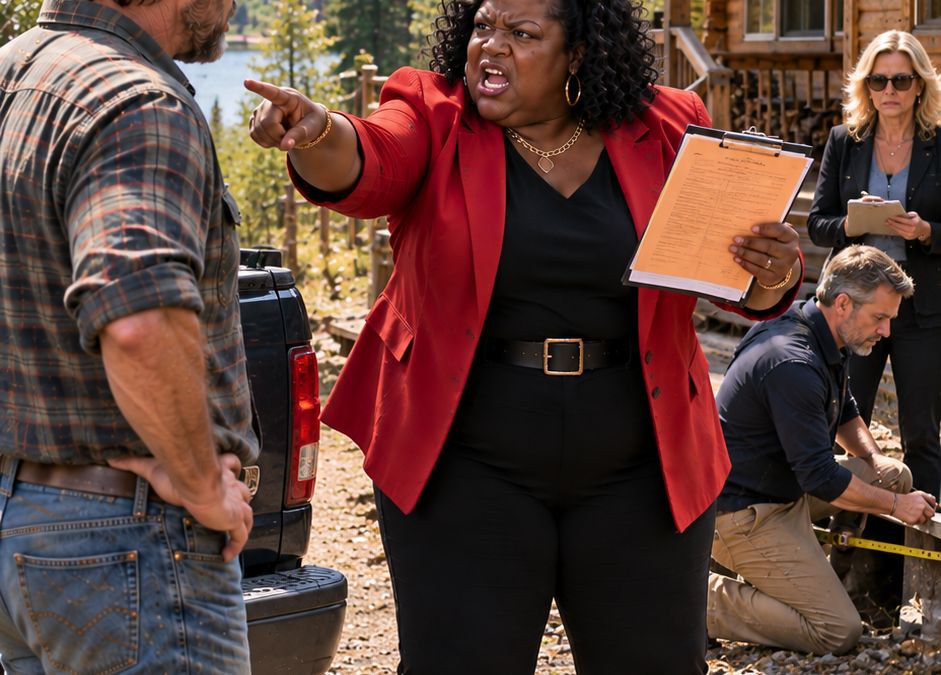
𝗣𝗔𝗥𝗧 𝟮
He shrugged.
“I figured I was searching wrong.”
We had moved on.
Now I stopped moving.
The thought came back differently.
Linda had given me twenty-four hours to tear down my cabin.
I decided that was enough time to start pulling on the thread Raymond had found.
I went inside.
Opened the filing cabinet in the second bedroom.
And pulled out the folder I had not touched in eleven years.
CABIN.
The original permit sat near the front.
County Building Department.
Permit No. 20004-BL-1847.
Issued March 14.
Signed.
Stamped.
Inspection approval.
Dimensions.
Foundation.
Approved accessory use.
Everything clean.
The cabin had been permitted before Maplewood Ridge’s CC&Rs were formally distributed to homeowners.
I remembered that clearly.
The cabin went up in spring.
The covenant packet arrived in August.
Manila envelope.
I read the important sections.
The HOA had language protecting preexisting permitted structures.
At the time, none of that seemed significant.
I paid my annual dues.
Mowed my lawn.
Kept the property clean.
For nearly a decade, the HOA and I maintained a very healthy relationship.
Which meant we mostly ignored each other.
Then Linda became president.
Before her, Maplewood Ridge was boring.
That is what an HOA should usually be.
The board met quarterly.
Sent newsletters.
Organized a September potluck.
Once in a while somebody received a reminder about grass.
Then Linda ran.
Within six months, violations exploded.
She hired a management company for monthly inspections.
Expanded the fine schedule.
Created administrative fees.
Changed enforcement procedures.
The board technically had five members.
Most of her major changes passed three to two.
Nobody looked closely at how she counted quorum.
Nobody wanted to.
Linda did not argue.
She invoiced.
Wrong mailbox shade?
Fine.
Christmas lights up after January 1?
Fine.
Rain gauge mounted without architectural approval?
Warning.
Then fine.
Truck facing the wrong direction in a driveway?
Fine.
The absurdity almost worked in her favor.
People laughed privately.
Then they paid.
Because the fine itself was rarely catastrophic.
Seventy-five dollars.
Two hundred.
Four hundred.
But if you refused, it accumulated.
Then legal costs appeared.
Then collection notices.
Then Linda reminded you that an HOA could record a lien.
The Garcias knew that cycle.
They had installed a cedar fence eight years before Linda’s presidency.
Nobody complained.
Linda later amended the fence standards.
Then applied the new standard to their old fence.
Retroactively.
By the time they surrendered, they had paid more than six thousand dollars in fines and replaced a fence that had been acceptable for years.
The Flemings had worse luck.
Young family.
Corner lot.
Old above-ground pool.
Window trim.
Grass-height notices.
Several things the prior board had informally approved.
Linda’s response was simple:
Prior informal approvals were not binding.
They hired a lawyer.
Six months later, they ran out of money and sold.
Then there was Raymond Chen.
Seventy-one.
Retired civil engineer.
Three years before Linda’s presidency, he built a pergola.
Before construction, he submitted a written architectural request.
The board never approved it.
But they never denied it either.
Under the HOA bylaws, architectural requests had thirty days for response.
Raymond believed the silence meant no objection.
He built.
Linda later reopened old files.
Flagged the pergola.
Issued fines.
Eventually filed a lien.
Raymond fought.
The timestamp on his submission was clear.
The board had missed its own deadline.
Linda did not care.
Two years later, the lien remained.
Three weeks before my demolition notice, Raymond told me about his failed recorder search.
Now that conversation mattered.
I waited until the following morning before confronting Linda again.
Not because I needed time to decide.
I wanted questions.
Clear ones.
And I wanted her to answer them while she still believed I was the one under pressure.
Linda operated the HOA from her converted garage six blocks away.
Folding table.
Metal file cabinet.
Whiteboard covered with addresses and balances.
Wednesday mornings.
Saturday afternoons.
I went Saturday.
Orange demolition notice in one hand.
Notebook in the other.
Nothing else.
Gary was already inside.
He sat beside the window.
Linda stood behind the table.
“Mr. Hail.”
“Linda.”
“Have you arranged demolition?”
“I have three questions.”
I sat.
Placed the notice between us.
Smoothed it flat.
“First, identify the exact bylaw provision this cabin violates.”
She leaned back.
“The board has broad structural compliance authority.”
“I’m asking for the section.”
“Our attorney will provide legal support.”
“When?”
“In due course.”
I wrote:
BYLAW NUMBER NOT PROVIDED.
Linda watched the pen.
I continued.
“Second, I want the meeting minutes showing the board vote authorizing demolition.”
“The president has emergency authority.”
“So there was no board vote?”
“A full vote is not required in emergency situations.”
“Show me the emergency provision.”
Her eyes narrowed.
“Again, our attorney can address legal interpretation.”
I wrote:
EMERGENCY AUTHORITY CLAIMED. NO PROVISION CITED.
Gary shifted.
“Third. What licensed inspector determined this cabin poses an immediate safety danger?”
“The board made the determination.”
“No building inspector?”
“The board can assess visible structural concerns.”
“No engineer?”
“No.”
“No licensed professional?”
“The board is empowered—”
I wrote:
NO INSPECTOR. BOARD UNILATERAL SAFETY FINDING.
Gary was staring at my notebook now.
That seemed to make Linda uncomfortable.
She changed tactics.
“Mr. Hail, let me be clear about the stakes.”
She spoke slowly.
“Your fine began at eight o’clock this morning.”
“Five hundred a day.”
“Yes.”
“For a cabin that has existed eleven years.”
“Yes.”
“If it remains standing fourteen days?”
“We record a lien.”
“And after that?”
“If the balance remains unresolved, foreclosure remedies become available.”
She said foreclosure calmly.
The word had been polished by use.
I looked at the whiteboard behind her.
Eight addresses.
Dollar amounts.
Two marked LIEN in red.
Raymond’s address was one.
Gary had taken out his phone.
He angled it toward the window.
My truck was parked outside.
In the bed were fence posts I had planned to move.
He photographed them.
I made another note.
GARY PHOTOGRAPHING PERSONAL VEHICLE. NO STATED PURPOSE.
Then I looked at Linda.
“Last question.”
She folded her hands.
“This demolition notice was issued without a board vote.”
“I have already explained emergency authority.”
“So yes.”
“My authority supersedes the normal vote requirement.”
I wrote her exact words.
Then capped my pen.
“Thank you.”
I stood.
Linda’s voice followed me.
“The clock is running.”
“I know.”
I drove straight to the county.
Building Permit Office first.
Twenty minutes before closing.
The clerk found my file in less than five minutes.
Permit 20004-BL-1847.
Issued March 14.
County inspector signature.
Inspection approval.
County seal.
No unresolved conditions.
No safety notices.
Eleven years.
Clean.
I paid for a certified copy.
Then walked three blocks to the recorder’s office.
It was quieter.
Fluorescent lights.
One clerk.
Rows of filings.
I gave her the HOA’s full legal name.
“Maplewood Ridge Homeowners Association.”
“What do you need?”
“Whatever recorded governing documents exist. Declaration. Covenants. Restrictions. Original filing.”
She searched.
Four minutes.
Then returned carrying one document.
Nine years old.
Clipped in one corner.
I opened it.
And stopped.
Across the upper-right corner of the first page was a red rectangular stamp.
INCOMPLETE.
MISSING NOTARIZED SIGNATURE.
REFILING REQUIRED FOR LEGAL EFFECT.
I read it again.
Slowly.
Then a third time.
“Is there a corrected filing?”
The clerk searched.
“No.”
“Amended version?”
“No.”
“Resubmission?”
“No.”
“This is all?”
“This is the only original governing filing under that association name.”
I asked for a certified copy.
Paid.
Walked to my truck.
Then sat there with the document on the steering wheel.
I knew what the words appeared to mean.
I also knew enough to be cautious.
Land law punishes confidence.
Especially amateur confidence.
So I did not celebrate.
I went home.
Pulled out the CC&R booklet Maplewood had mailed years earlier.
And started reading.
Page one.
Definitions.
Property restrictions.
Fine authority.
Architectural procedures.
Amendments.
Then Section 7.3.
I stopped.
Read it again.
No enforcement action could be taken against a homeowner without:
A duly noticed board meeting.
A quorum vote.
Thirty days written notice.
Except in cases of imminent physical danger to residents or neighboring property.
There it was.
The exception Linda had been invoking.
Imminent physical danger.
I looked at the cabin.
Eleven years old.
County inspected.
Never cited for a structural defect.
Then at Linda’s notice.
No inspector.
No condition description.
No engineer.
No board vote.
No thirty-day notice.
She had used the emergency exception to bypass every ordinary safeguard.
And even if the HOA documents had been valid, her own notice appeared defective.
Two problems.
One narrow.
One enormous.
The next morning, I called Patricia Wens.
Real-estate attorney.
I knew her from a commercial property dispute years earlier.
I told her I was not formally hiring her yet.
“I need twenty minutes.”
“Go.”
I summarized everything.
Cabin permit.
Orange notice.
Section 7.3.
No vote.
Recorder stamp.
She stopped me.
“The recorder copy is certified?”
“Yes.”
“Send me a photo of the first page.”
I did.
A minute later, she called again.
“The short version?”
“Please.”
“If those CC&Rs were never properly recorded, there may be no enforceable covenant authority.”
“Meaning?”
“Fines, liens, enforcement notices—everything relying solely on that declaration becomes vulnerable.”
“And the cabin notice?”
“Fails independently.”
“How?”
“Even accepting their bylaws as operative, they ignored the required vote and notice procedure unless they can prove imminent danger.”
“They never inspected it.”
“Then they have a problem.”
“Two problems.”
“Exactly.”
“One notice.”
“And potentially the entire legal foundation.”
I thanked her.
Then walked next door.
Raymond was baking.
Flour on his hands.
He invited me inside.
I put the certified recorder copy on the table.
Pointed at the stamp.
He read it.
Then picked it up.
Held it closer.
“This is the filing?”
“The one you couldn’t find.”
“It was there?”
“Never completed.”
Raymond lowered himself into a chair.
“The lien.”
“Same governing document.”
He stared at the paper.
“For two years.”
“I know.”
“I spent two years thinking I had misunderstood something.”
“You didn’t.”
The refrigerator hummed.
That was the only sound for a few seconds.
Then Raymond opened a kitchen drawer.
Pulled out a thick folder.
Fine notices.
Letters.
Legal correspondence.
Payment records.
He placed it between us.
“What do you need?”
Over the next two days, I spoke to four households.
Raymond.
$11,400 in fines.
Active lien.
The Garcias.
$14,200 in fines.
Another $2,100 in warning and administrative charges.
Mrs. Park.
Seventy-three.
Retired schoolteacher.
$8,700 paid.
David Okafor.
$6,800.
Between four households:
$43,200.
All enforced under the same supposedly governing documents that carried that red stamp.
I did not tell anyone we had won.
We had not.
I told them one thing.
“Keep everything.”
Raymond walked me to the door.
“I really thought it was me.”
“It wasn’t.”
“I thought I missed something.”
“The problem wasn’t your reading.”
Twenty-four hours passed.
My cabin stayed standing.
I slept normally.
At 7:45 the following morning, a diesel engine woke me.
White contractor truck.
CLEAR VIEW PROPERTY SERVICES.
Two men in work vests climbed out.
One immediately headed toward the backyard.
I put on shoes.
Started recording.
Walked outside.
“Stop.”
They stopped.
“You are on private property without permission.”
The closer contractor held a clipboard.
“We were hired by the HOA.”
“To do what?”
“Demolition.”
“Do you have a court order?”
He looked down.
“No.”
“Do you have my written consent?”
“No.”
“Then you cannot proceed.”
I showed him the county permit.
“This structure is legally permitted. If either of you touches it, I’m filing a trespass complaint against the company and the individuals involved.”
He stepped back.
Called someone.
Linda.
I could hear her tone through the phone.
Firm.
Insistent.
He ended the call.
“She says proceed.”
“Then we’ll wait for police together.”
I called the non-emergency line.
Officer Tate arrived in twelve minutes.
Young.
Calm.
The kind of officer who had clearly learned not to decide neighborhood disputes before reading the paperwork.
I handed him the county permit.
He read everything.
Then Linda’s orange notice.
He looked toward the contractors.
“Do you have a court order authorizing demolition?”
“No, sir.”
“Owner consent?”
“No.”
“Then you can’t demolish a permitted structure.”
The contractor nodded.
Linda arrived four minutes later.
Manila folder.
Fast walk.
She went directly to Officer Tate.
“Officer, I’m Linda Marsh, president of the HOA.”
“I understand.”
“This is a lawfully authorized enforcement action.”
“Do you have a court order?”
“The HOA has authority—”
“Ma’am.”
His voice remained polite.
“Do you have a court order permitting entry onto this property?”
She opened the folder.
“The homeowner is obstructing a documented safety action.”
“That is not what I asked.”
Silence.
“No.”
“Then your contractor cannot enter over the homeowner’s objection and demolish a structure.”
“We have board authority.”
“An HOA is not a court.”
The sentence was not dramatic.
That was why it landed so hard.
“If you believe demolition is justified, you seek an injunction.”
Linda held up the orange notice.
“I’ve read that.”
Officer Tate handed it back.
“No inspector signature. No court order. No cited authority granting these contractors entry.”
Linda’s jaw tightened.
Then she reached into the folder.
Pulled out another document.
Held it toward me.
FORMAL DEMAND NOTICE.
Total:
$8,500.
Eighteen months of retroactive cabin violations.
Inspection failure charges.
Aesthetic fines.
Administrative fees.
Processing costs.
Most of them I had never seen before.
Payment due in fourteen days.
Failure would result in lien filing.
Continued default could lead to foreclosure.
The letter cited Maplewood Ridge’s CC&Rs three times.
The same CC&Rs carrying the recorder’s incomplete stamp.
I folded the demand.
Put it in my pocket beside the orange notice.
“Fourteen days,” Linda said.
Quietly.
Then she left.
The contractors left.
Officer Tate gave me the incident number.
Raymond came over once everyone was gone.
“She did exactly that to me.”
“What?”
“Same contractor.”
I looked at him.
“Two years ago.”
He looked toward the street.
“I didn’t know I could stop them.”
Then:
“Whatever you’re doing, I want in.”
By evening, my kitchen table looked like an evidence room.
Certified building permit.
Certified incomplete HOA filing.
Section 7.3.
Video.
Police incident number.
$8,500 demand.
Neighbor records.
$43,200 in penalties.
I also submitted a county public-records request for any financial or regulatory filings associated with the HOA.
I was not ready to deploy everything.
I wanted the right room.
Linda gave me one.
Three days later, an emergency meeting notice arrived.
All ninety-six households invited.
Agenda:
STRUCTURAL COMPLIANCE ENFORCEMENT.
COMMUNITY STANDARDS REVIEW.
AUTHORIZATION OF LEGAL ACTION.
I emailed one sentence.
“I will be there.”
Thursday night, the community center was already half full when I arrived.
Thirty-five people eventually came.
Typical attendance was eleven.
Maybe fourteen on a dramatic night.
Raymond sat in the third row.
The Garcias near the rear.
Mrs. Park in front.
David Okafor against the wall.
Linda began at seven.
Printed agenda.
Projector.
Gary beside her.
Two other directors.
The board attorney joined by speakerphone.
First slide:
My cabin.
Professional-looking photograph.
Taken from the street to make it appear larger.
Below it:
NON-COMPLIANT STRUCTURE — 412 RIDGEWAY COURT.
Linda presented an aesthetic impact statement.
Claimed the cabin reduced nearby property values.
Displayed a contractor demolition estimate.
$4,800.
Billed to me.
Then a timeline.
Eight months of what she called patient outreach.
My responses were described as repeated refusal.
No mention of the county permit.
No mention of the attempted demolition.
No mention of Officer Tate.
No mention that her original notice lacked a board vote.
The attorney spoke next.
He said the HOA had clear enforcement authority under its governing documents.
Said proper procedure had been followed.
Said the board could pursue a court-ordered demolition.
He never identified the governing document by recording number.
I wrote that down.
Then Linda called the vote.
Gary:
“Yes.”
Sandra:
“Yes.”
Marcus:
“No.”
Helen:
“No.”
Linda cast the deciding vote.
“Yes.”
Three to two.
“Motion carried.”
She set down her pen.
“The association is authorized to pursue legal action.”
Then looked directly at me.
“Filing will begin within forty-eight hours unless written demolition plans are received.”
The room waited.
Most of these homeowners had learned the safest reaction to Linda was silence.
I stood.
Linda’s voice became almost generous.
“Mr. Hail.”
“Before anything is filed, I’m requesting forty-eight hours to present documentation.”
She stared at me.
“What documentation?”
“I’ll present it at the follow-up.”
“No preview?”
“No.”
She looked toward the attorney’s speaker.
Then at the directors.
“Forty-eight hours.”
“Thank you.”
I sat down.
People shifted.
Mrs. Park stopped beside me after the meeting.
“Do you know what you’re doing?”
“Yes.”
She studied my face.
Then nodded.
“Good.”
Friday, I prepared one page.
Nothing more.
An enlarged photocopy of the recorder stamp.
INCOMPLETE.
MISSING NOTARIZED SIGNATURE.
REFILING REQUIRED FOR LEGAL EFFECT.
Below it, two sentences in plain type explaining the significance.
I printed fifty-five copies.
Saturday afternoon, fifty-three people attended.
More than Thursday.
More than any HOA meeting I remembered.
I placed one sheet face down on every chair.
Linda walked in.
Saw them.
Said nothing.
The meeting started.
“Mr. Hail requested time to present documentation.”
I stood.
“Please turn over the paper.”
Fifty-three pages flipped over.
The room became still.
Not frightened still.
Reading still.
People looked from the paper to Linda.
Then back.
I waited.
“In this state, restrictive covenants must be properly recorded to create enforceable authority against property owners.”
I pointed toward the page.
“This is the only original Maplewood Ridge filing at the county recorder.”
Pause.
“It was stamped incomplete nine years ago.”
Nobody moved.
“It was never corrected.”
Another pause.
“It was never refiled.”
I looked toward the board.
“If that filing never became legally effective, then every fine, lien, demand, and enforcement action based on it is subject to being declared void.”
Raymond stood.
No hand.
No permission.
“The lien on my house.”
He looked toward the board.
“Two years.”
I answered him.
“It was issued under the same document.”
“Then it’s void?”
“If the county confirms what this certified filing indicates, yes.”
Raymond sat slowly.
Somebody whispered:
“Oh my God.”
Linda moved fast.
“This is a clerical oversight.”
She spoke before the room could build momentum.
“Recording deficiencies can be corrected.”
She pointed toward the speaker.
“Mr. Whitfield?”
The attorney’s voice came through.
Less confident now.
“Certain clerical deficiencies can sometimes be corrected nunc pro tunc depending upon—”
I placed another document on the board table.
County letterhead.
Linda looked down.
The attorney kept speaking for another second.
Then stopped when Linda lifted the page.
I read the relevant sentence.
“A retroactive correction does not validate enforcement actions taken during the period in which the governing instrument lacked legal effect.”
Silence.
Whitfield said nothing.
A woman in the fourth row raised her hand.
“I paid six hundred dollars last year for a fence post.”
Her voice shook.
“Two inches.”
She looked at me.
“That was under this?”
“Yes.”
Her hand went over her mouth.
Gary stood.
Picked up his phone.
Folder.
Walked out.
No explanation.
Marcus turned toward Linda.
“Did you know?”
Linda kept reading.
“Linda.”
Nothing.
“Did you know there was a recording defect?”
“This will be handled through proper legal channels.”
“That isn’t what I asked.”
I placed a third document in front of the board.
Formal demand.
Three requests.
Rescind all active fines and notices based on the defective filing.
Remove all liens imposed under those documents.
Cease enforcement until the neighborhood decided whether to create a properly recorded governing structure.
Attached:
Fourteen affected owners.
Dates.
Amounts.
Total:
$43,200.
“This is the request.”
Linda read it.
Then looked at me.
“You cannot dissolve an HOA.”
“I’m not dissolving anything.”
The room watched.
“If the county never legally recognized the governing instrument, I’m telling the homeowners what the county record already shows.”
Helen, one of the directors who voted against litigation, placed her copy face up.
The red stamp stared toward the room.
Then I took out the orange notice.
Linda’s twenty-four-hour demolition order.
Placed it beside the certified county copy.
One piece of paper claiming absolute authority.
Another proving the foundation of that authority had never been completed.
I sat down.
Eleven days later, the county opened formal review.
I did not request it.
I did not need to.
Fifty-three homeowners had photographed the recorder stamp.
Several sent it to attorneys.
Others contacted county offices.
Once enough questions were asked, the filing could no longer sit quietly in an archive.
Three weeks later, the written determination arrived.
Maplewood Ridge’s CC&Rs had never been properly recorded.
The deficiency dated to the organization’s founding.
The governing instrument had never taken legal effect.
All enforcement actions relying upon it were legally unenforceable.
Nine years.
Fines.
Liens.
Notices.
Demands.
Void.
The following morning, I sent copies to Raymond.
The Garcias.
Mrs. Park.
David Okafor.
By afternoon, my phone started filling with messages from residents I barely knew.
“Is this real?”
“Yes.”
“What do I do?”
“Keep every document. Contact your own attorney or the county.”
The unwinding took time.
Of course it did.
Nine years of paper does not vanish in one afternoon.
But the direction changed immediately.
For years, homeowners had believed every path led toward Linda.
Now the path led away from her.
Raymond’s lien was removed within thirty days.
He called me.
“It’s gone.”
I let him speak.
“Two years and four months.”
“I know.”
“The pergola is still standing.”
“Good.”
“I’m keeping it.”
“I would.”
The $43,200 in fines affecting fourteen households was refunded or canceled over the following months.
Some people received checks.
Others had outstanding balances erased.
The Garcias recovered enough money that Elena called me crying.
Not dramatic crying.
Angry crying finally turning into relief.
Mrs. Park got a refund.
She came to my house one Sunday afternoon with cookies wrapped in cellophane.
“I paid eight thousand seven hundred dollars over three years.”
“I know.”
“Because I was scared.”
I did not know what to say.
She continued.
“My daughter told me not to fight. She was afraid they’d take the house.”
Then she gave me the cookies.
“I just wanted you to know I’m not afraid anymore.”
She left before I could answer properly.
The $8,500 demand Linda had handed me after Officer Tate stopped the demolition was withdrawn.
Every cabin fine disappeared.
The lien threat vanished.
Clear View Property Services submitted an invoice for the failed demolition call.
Because the HOA had not possessed lawful authority to order entry on my property and the organization itself was being unwound, responsibility for that invoice became disputed.
Linda was informed that the contractor might pursue her personally.
I never found out whether she paid.
I never cared enough to ask.
Fourteen days after the county determination, Linda resigned.
Two paragraphs.
“Personal reasons.”
“Best interests of the community.”
“Grateful for the opportunity to serve.”
No mention of the cabin.
No mention of the incomplete filing.
No mention of Raymond’s lien.
No mention of $43,200.
No mention of the contractor she sent onto my land.
Gary put his house on the market four months later.
The sign appeared on Tuesday.
Pending sticker by Friday.
I drove past once on my way to the hardware store.
Kept driving.
Marcus and Helen remained temporarily.
The two directors who had voted against pursuing me.
They handled the transition.
And strangely, watching them work showed the neighborhood what the board might have looked like all along.
Clear notices.
Actual explanations.
Time to respond.
No intimidation.
No red-word threats.
No one treating questions as insubordination.
Six weeks later, residents voted on what came next.
They did not recreate Maplewood Ridge as another mandatory enforcement HOA.
They formed a voluntary neighborhood association.
Optional membership.
Optional dues.
No fine authority.
No liens.
No architectural police.
The first project was a cleanup day.
I did not join.
I wished them well.
They did not need me to.
The Garcias planted a garden where the fence dispute had consumed so much of their life.
Tomatoes.
Peppers.
Sunflowers.
One morning, I saw Elena watering it.
She waved.
What struck me was not the garden.
It was that she no longer looked over her shoulder while working in her own yard.
Raymond’s pergola stayed exactly where it had always been.
Mrs. Park’s pickup stayed parked however she wanted it parked.
Nothing collapsed.
Property values did not vanish.
Civilization survived unapproved rain gauges.
By October, the cabin needed paint.
It had needed paint for two summers.
Dark green.
Same color I originally used.
Faded in patches.
So one Saturday, I carried brushes outside and spent the afternoon painting.
No notice.
No clipboard.
No camera.
No tape measure.
Nobody asking whether green was on an approved palette.
Just wood.
Paint.
Quiet.
Sun getting lower as afternoon moved toward evening.
It is difficult to explain how satisfying ordinary things become after somebody spends months convincing you that ordinary things require permission.
I finished near sunset.
Stepped back.
Cabin looked good.
Nothing extraordinary.
That was exactly what I wanted.
I kept Linda’s orange notice.
For several weeks, it sat in the same folder as everything else.
Then I bought a cheap frame.
Hardware store.
Nothing fancy.
I put the notice inside.
Hung it on the cabin wall beside the east window.
Not as a trophy.
That distinction matters.
I did not hang it there because I defeated Linda.
I hung it there because of what the paper represented.
Twenty-four hours.
Demolish this structure.
Five hundred dollars a day.
Lien.
Foreclosure.
Authority claimed.
No bylaw cited.
No vote.
No inspector.
No process.
The notice had been designed to be the last word.
Instead, it became the first page of the investigation that ended the entire structure Linda relied upon.
The paper reminded me that official-looking is not the same thing as official.
A stamp can be meaningless.
Or, sometimes, a stamp can change everything.
Linda’s orange stamp said:
BOARD PRESIDENT.
The county’s red stamp said:
INCOMPLETE.
Only one of them actually mattered.
Late in November, I sat outside the cabin with coffee.
Cold morning.
Most leaves down.
Thin sunlight.
Raymond’s pergola was visible above the fence line.
Garcia sunflowers stood dead and brown at the edge of their new garden, waiting for winter.
No one was on my property.
No inspector.
No contractor.
No Gary crouching beside my foundation.
No Linda measuring walls.
No emergency notice.
The cabin behind me was eleven years old.
County permitted.
Structurally sound.
Legally compliant.
Exactly what it had always been.
I thought about the question Mrs. Park asked after Linda’s first emergency meeting.
“Do you know what you’re doing?”
At the time, I said yes.
That was only partly true.
I knew enough to look.
That is different.
I had no plan to dismantle Maplewood Ridge when Linda walked onto my property.
I wanted one thing.
My cabin left alone.
Everything else came from following the documents.
First the permit.
Then the bylaws.
Then the county recording.
Then the fines.
Then the liens.
At each step, Linda had a chance to stop.
She could have checked the permit.
She could have scheduled a hearing.
She could have requested a licensed inspection.
She could have called the full board.
She could have asked her attorney to review Section 7.3.
She could have pulled the original recorded declaration.
She could have done any one of those things.
Instead, she kept escalating because escalation had always worked before.
That was the weakness in her system.
Her authority depended on nobody checking the foundation.
The Garcias paid.
So she learned:
Pressure works.
The Flemings sold.
So she learned:
Pressure works.
Raymond spent years fighting and still had a lien.
So she learned:
Pressure works.
Mrs. Park paid because she feared losing her house.
Pressure worked.
Then she reached my cabin.
And for the first time, somebody did not ask:
How much will it cost to make this go away?
I asked:
Where does your authority come from?
That one question was enough.
Not immediately.
Nothing works immediately.
But once you ask authority to identify its source, one of two things happens.
Either it can.
Or it cannot.
Linda could not.
Her response was always another layer.
Broad authority.
Emergency authority.
Attorney review.
Board discretion.
Community standards.
None of those phrases contained a section number.
None contained a valid recording reference.
They sounded like answers because she had delivered them confidently.
Confidence had carried her for years.
But a recorder’s office does not care about confidence.
It cares about documents.
The most important piece of this story had been sitting in a county archive for nine years.
Nobody hid it.
Nobody forged anything.
Nobody destroyed records.
The filing was right there.
Stamped.
Incomplete.
The entire neighborhood had lived under an assumption because nobody had asked the clerk for the first page.
That still bothers me.
Not because I expect every homeowner to become a property lawyer.
They should not have to.
Institutions are supposed to verify their own authority.
Boards are supposed to read governing documents.
Lawyers are supposed to check recordings before threatening foreclosure.
People should not need detective skills to prove somebody cannot take their house.
But if there is one thing those eleven days taught me, it is that procedure matters most when the person using it wants you to believe procedure is a technicality.
Linda treated hearings like delays.
Votes like inconveniences.
Notice periods like obstacles.
Recording requirements like clerical details.
But those details are where power gets limited.
Thirty days matters.
A quorum matters.
A signature matters.
A recorded document matters.
A court order matters.
Officer Tate understood that immediately.
“An HOA is not a court.”
I think about that sentence often.
Not because HOAs are inherently bad.
They are not.
Some function perfectly well.
People agree to rules.
Boards maintain shared property.
Dues pay for legitimate services.
The problem begins when a board forgets that its authority is delegated.
Limited.
Conditional.
Linda began acting as though being president created authority rather than merely assigning responsibility inside authority that already existed.
That reversal affected everything.
She stopped asking:
Are we allowed to do this?
She asked:
Who will stop us?
For years, the answer was nobody.
Until a county clerk put one certified page on a counter.
People sometimes ask whether I really shut down the HOA.
The answer depends on what they mean.
I did not walk into court and ask a judge to destroy Maplewood Ridge.
I did not organize a coup.
I did not campaign door to door.
I did not run for president.
I did not want the job.
I found a document.
Then showed it to the people living under it.
What happened after that belonged to all ninety-six homeowners.
They chose not to rebuild the old system.
That was their decision.
I understand why.
Once people learned the liens had no legal foundation, they began looking backward.
Every notice.
Every fine.
Every demand.
Every time somebody paid because they were afraid.
The anger was not really about money.
Not entirely.
It was about discovering that fear had been manufactured from authority that never legally existed.
That kind of discovery changes a neighborhood.
For months afterward, people apologized to one another.
Not just to me.
Neighbors who had watched someone else receive a citation and said nothing.
Board members who had signed things without reading.
People who had repeated Linda’s explanations because they assumed she had checked.
It would have been easy for the neighborhood to become bitter.
Some people did.
But mostly, I watched something healthier happen.
People started speaking directly.
The voluntary association did not need an enforcement portal.
If somebody’s trash blew across the street, a neighbor knocked.
If grass got too high because somebody was sick, another neighbor offered help.
If someone planned a big project near a property line, they talked first.
Amazing technology.
Conversation.
I sometimes wondered how much money Maplewood Ridge spent over nine years enforcing things that could have been resolved with a five-minute conversation.
Probably more than anyone wanted to know.
One afternoon the following spring, Raymond came over.
He carried two coffees.
We sat outside the cabin.
His pergola visible through the trees.
“You ever think about selling?”
“Why?”
“I don’t know. After all this.”
I looked toward the house.
“No.”
He nodded.
“Me neither.”
He smiled.
“They can bury me under that pergola.”
“That may require a permit.”
He laughed.
That was the first time I remember us joking about permits.
It felt good.
I asked him whether the lien still appeared anywhere.
“Gone.”
“Completely?”
“Title company confirmed it.”
He took a drink.
“My daughter told me I should frame the release.”
“You should.”
“You framed the demolition notice.”
“That’s different.”
“How?”
“I’m eccentric.”
“You are.”
We sat quietly.
Then Raymond said something I still remember.
“You know what I hated most?”
“What?”
“I thought they understood the rules better than I did.”
He looked toward his house.
“I’m an engineer. I read specifications for forty years. But every time Linda told me I was wrong, I thought maybe there was some legal thing I didn’t understand.”
“That’s what authority does when you let the title substitute for the explanation.”
Raymond nodded.
“I won’t do that again.”
Neither will I.
The cabin still stands.
The metal roof has faded slightly.
I replaced the east window seal last year.
The workbench inside is scarred.
There is sawdust in places I will probably never clean properly.
A small heater in the corner.
Coffee maker beside it.
Sometimes I work there.
Sometimes I sit there doing absolutely nothing.
That was always the point.
A fourteen-by-twenty room on my own property where I could be alone.
Nothing grand.
Nothing dangerous.
Nothing worthy of a twenty-four-hour demolition order.
The orange notice hangs by the window.
I barely notice it anymore.
Every once in a while, somebody visiting asks:
“What’s that?”
I usually say:
“Old paperwork.”
Because that is what it became.
Paper.
Once, Linda’s notice felt enormous.
It carried the weight of fines.
Lien.
Foreclosure.
A contractor coming up my driveway.
Now it is twelve inches of orange paper inside a ten-dollar frame.
That change in size happened without the paper changing at all.
Only my understanding changed.
That may be the clearest lesson I took from everything.
A threat can feel larger than it is when you do not know the limits behind it.
The first afternoon, Linda stood beside my cabin and said:
“Twenty-four hours.”
She expected the clock to control me.
Instead, the clock made me move.
Within twenty-four hours, I had the permit.
The bylaws.
The recorder’s filing.
The red stamp.
She thought the deadline would prevent questions.
It created them.
And once I started asking, every answer led somewhere Linda did not want anyone to look.
November came.
Cold.
Quiet.
I sat outside the cabin one Saturday morning.
Coffee in my hands.
No agenda.
No folder.
No deadline.
Across the property line, Raymond’s pergola caught the morning sun.
Farther down the road, the Garcia garden had been cleared for winter.
Mrs. Park’s truck was parked in her driveway.
Facing whichever direction she had chosen.
Nobody cared.
The neighborhood was not falling apart.
It was simply living without someone measuring it every month.
I looked back at the cabin.
County permit still in my filing cabinet.
Original inspection still on record.
Paint fresh.
Structure sound.
Eleven years earlier, I had built it because I wanted a workshop.
That was the whole reason.
It did not need to improve neighborhood character.
Did not need to satisfy Linda’s vision.
Did not need to justify itself to an emergency committee.
It was legal.
It was mine.
And it was staying.
Linda Marsh gave me twenty-four hours to tear it down.
Instead, those twenty-four hours were the beginning of the end of the authority she had spent years building.
Not because I was stronger.
Not because I had more money.
Not because I knew some secret legal trick.
Because I checked the paperwork.
And buried on the first page of the document she had relied upon for nine years was one red stamp she had apparently never bothered to read.
INCOMPLETE.
REFILING REQUIRED FOR LEGAL EFFECT.
One stamp.
Nine years of fines undone.
Liens removed.
Money returned.
One president gone.
One mandatory HOA replaced by something people could actually choose.
And my cabin?
It never moved an inch.
Have you finished reading the story and want to read it again?
HOA Gave Me 24 Hours to Tear Down My Cabin — Then One County Stamp Made Their Entire HOA Collapse
They gave me twenty-four hours to demolish a cabin that had been legally permitted for eleven years.
Then they threatened a lien, foreclosure, and thousands of dollars in fines if I refused.
What Linda Marsh did not know was that the most dangerous document in Maplewood Ridge wasn’t her demolition notice—it was the one her own HOA had forgotten to legally finish.
Linda Marsh was already standing beside my cabin when I pulled into the driveway.
She was not at my front door.
She had not knocked.
Nobody had called.
Nobody had asked permission to enter.
She and Gary from the architectural committee were on the south side of my property with a tape measure stretched along the cabin wall.
Gary crouched near the foundation and photographed one of the base blocks.
Linda held a clipboard.
The moment I shut off my truck, she started walking toward me.
“Twenty-four hours.”
No hello.
No explanation.
She held out a sheet of orange paper.
“Demolish the structure within twenty-four hours or fines begin at five hundred dollars per day.”
I took the notice.
She continued.
“If the fines remain unpaid, we’ll file a lien against the property.”
Then she paused.
Not accidentally.
Linda understood timing.
She liked to let certain words sit in the air.
“Do you understand what a lien can do to a mortgage?”
I looked down.
DEMOLITION NOTICE.
NON-COMPLIANT OUTBUILDING.
IMMEDIATE REMOVAL REQUIRED.
There was no bylaw number.
No county inspector.
No engineer.
No statute.
No hearing date.
No board minutes.
Only Linda’s name.
A rubber stamp reading BOARD PRESIDENT.
And a red deadline.
Twenty-four hours.
I looked past her at the cabin.
Fourteen by twenty feet.
Wood siding.
Metal roof.
Single east-facing window.
I had built most of it with my own hands eleven years earlier.
Before the first board had ever complained about it, I had walked into the county building office, submitted plans, paid the fee, received a permit, hired a contractor for the foundation, and had the finished structure inspected.
Nothing about the cabin was hidden.
Nothing about it was improvised.
It had been standing legally for more than a decade.
Gary shifted around the east corner.
I watched him raise his phone.
“Gary.”
He stopped.
“Did you get permission to come onto my property today?”
He looked toward Linda.
She answered for him.
“The HOA has authority over every structure in Maplewood Ridge.”
“That wasn’t my question.”
“That authority includes inspection and documentation of noncompliant structures.”
She spoke smoothly.
Practiced.
The voice of someone who had spent years saying the same kinds of things without being required to prove them.
I read the notice again.
“Which bylaw am I violating?”
“The board does not have to cite a specific provision where an immediate safety concern exists.”
“What safety concern?”
“The structure is noncompliant.”
“That’s not a safety condition.”
Her expression hardened slightly.
“The architectural committee has made its determination.”
“Was there a board vote?”
“The president has emergency authority.”
“Where is that written?”
“Our attorney can provide the relevant provisions.”
I looked at her.
Then at Gary.
Then at the orange paper.
That was the moment I understood.
Linda had not omitted the bylaw citation because she was in a hurry.
She had omitted it because she did not have one she wanted me to read.
She was counting on something else.
Fear.
Maplewood Ridge residents knew Linda’s method.
A violation notice appeared.
Then another.
Then a fine.
Then administrative fees.
Then legal fees.
Then the word lien.
If you still resisted, she used the word foreclosure.
Most people stopped before then.
The Garcias had paid more than six thousand dollars over a fence dispute.
The Flemings had sold their house rather than continue fighting.
Raymond Chen, my next-door neighbor, had spent two years challenging a lien over a backyard pergola.
Linda believed I would follow the same pattern.
Orange notice.
Twenty-four hours.
Contractor.
Fear.
Compliance.
Gary packed away the tape.
Linda smoothed the front of her jacket.
“This time tomorrow.”
“I heard you.”
“I would take that seriously.”
“I take property matters very seriously.”
I folded the notice once.
“That may be the only thing we agree on.”
She stared at me.
I think she was waiting for anger.
Or panic.
Or negotiation.
I gave her none.
Eventually, she turned and walked toward the street.
Gary followed.
I stood in the driveway until their car disappeared around the corner.
Then I unfolded the orange notice again.
No authority.
Just the claim of authority.
And for some reason, while I was staring at it, I remembered something Raymond had said three weeks earlier.
We had been talking across the fence.
Ordinary neighbor conversation.
His pergola lien came up.
“I tried finding the HOA’s original filing once,” he had said.
“With the recorder?”
“Half a day.”
“What did you find?”
“Nothing that looked properly recorded.”
He shrugged.
“I figured I was searching wrong.”
We had moved on.
Now I stopped moving.
The thought came back differently.
Linda had given me twenty-four hours to tear down my cabin.
I decided that was enough time to start pulling on the thread Raymond had found.
I went inside.
Opened the filing cabinet in the second bedroom.
And pulled out the folder I had not touched in eleven years.
CABIN.
The original permit sat near the front.
County Building Department.
Permit No. 20004-BL-1847.
Issued March 14.
Signed.
Stamped.
Inspection approval.
Dimensions.
Foundation.
Approved accessory use.
Everything clean.
The cabin had been permitted before Maplewood Ridge’s CC&Rs were formally distributed to homeowners.
I remembered that clearly.
The cabin went up in spring.
The covenant packet arrived in August.
Manila envelope.
I read the important sections.
The HOA had language protecting preexisting permitted structures.
At the time, none of that seemed significant.
I paid my annual dues.
Mowed my lawn.
Kept the property clean.
For nearly a decade, the HOA and I maintained a very healthy relationship.
Which meant we mostly ignored each other.
Then Linda became president.
Before her, Maplewood Ridge was boring.
That is what an HOA should usually be.
The board met quarterly.
Sent newsletters.
Organized a September potluck.
Once in a while somebody received a reminder about grass.
Then Linda ran.
Within six months, violations exploded.
She hired a management company for monthly inspections.
Expanded the fine schedule.
Created administrative fees.
Changed enforcement procedures.
The board technically had five members.
Most of her major changes passed three to two.
Nobody looked closely at how she counted quorum.
Nobody wanted to.
Linda did not argue.
She invoiced.
Wrong mailbox shade?
Fine.
Christmas lights up after January 1?
Fine.
Rain gauge mounted without architectural approval?
Warning.
Then fine.
Truck facing the wrong direction in a driveway?
Fine.
The absurdity almost worked in her favor.
People laughed privately.
Then they paid.
Because the fine itself was rarely catastrophic.
Seventy-five dollars.
Two hundred.
Four hundred.
But if you refused, it accumulated.
Then legal costs appeared.
Then collection notices.
Then Linda reminded you that an HOA could record a lien.
The Garcias knew that cycle.
They had installed a cedar fence eight years before Linda’s presidency.
Nobody complained.
Linda later amended the fence standards.
Then applied the new standard to their old fence.
Retroactively.
By the time they surrendered, they had paid more than six thousand dollars in fines and replaced a fence that had been acceptable for years.
The Flemings had worse luck.
Young family.
Corner lot.
Old above-ground pool.
Window trim.
Grass-height notices.
Several things the prior board had informally approved.
Linda’s response was simple:
Prior informal approvals were not binding.
They hired a lawyer.
Six months later, they ran out of money and sold.
Then there was Raymond Chen.
Seventy-one.
Retired civil engineer.
Three years before Linda’s presidency, he built a pergola.
Before construction, he submitted a written architectural request.
The board never approved it.
But they never denied it either.
Under the HOA bylaws, architectural requests had thirty days for response.
Raymond believed the silence meant no objection.
He built.
Linda later reopened old files.
Flagged the pergola.
Issued fines.
Eventually filed a lien.
Raymond fought.
The timestamp on his submission was clear.
The board had missed its own deadline.
Linda did not care.
Two years later, the lien remained.
Three weeks before my demolition notice, Raymond told me about his failed recorder search.
Now that conversation mattered.
I waited until the following morning before confronting Linda again.
Not because I needed time to decide.
I wanted questions.
Clear ones.
And I wanted her to answer them while she still believed I was the one under pressure.
Linda operated the HOA from her converted garage six blocks away.
Folding table.
Metal file cabinet.
Whiteboard covered with addresses and balances.
Wednesday mornings.
Saturday afternoons.
I went Saturday.
Orange demolition notice in one hand.
Notebook in the other.
Nothing else.
Gary was already inside.
He sat beside the window.
Linda stood behind the table.
“Mr. Hail.”
“Linda.”
“Have you arranged demolition?”
“I have three questions.”
I sat.
Placed the notice between us.
Smoothed it flat.
“First, identify the exact bylaw provision this cabin violates.”
She leaned back.
“The board has broad structural compliance authority.”
“I’m asking for the section.”
“Our attorney will provide legal support.”
“When?”
“In due course.”
I wrote:
BYLAW NUMBER NOT PROVIDED.
Linda watched the pen.
I continued.
“Second, I want the meeting minutes showing the board vote authorizing demolition.”
“The president has emergency authority.”
“So there was no board vote?”
“A full vote is not required in emergency situations.”
“Show me the emergency provision.”
Her eyes narrowed.
“Again, our attorney can address legal interpretation.”
I wrote:
EMERGENCY AUTHORITY CLAIMED. NO PROVISION CITED.
Gary shifted.
“Third. What licensed inspector determined this cabin poses an immediate safety danger?”
“The board made the determination.”
“No building inspector?”
“The board can assess visible structural concerns.”
“No engineer?”
“No.”
“No licensed professional?”
“The board is empowered—”
I wrote:
NO INSPECTOR. BOARD UNILATERAL SAFETY FINDING.
Gary was staring at my notebook now.
That seemed to make Linda uncomfortable.
She changed tactics.
“Mr. Hail, let me be clear about the stakes.”
She spoke slowly.
“Your fine began at eight o’clock this morning.”
“Five hundred a day.”
“Yes.”
“For a cabin that has existed eleven years.”
“Yes.”
“If it remains standing fourteen days?”
“We record a lien.”
“And after that?”
“If the balance remains unresolved, foreclosure remedies become available.”
She said foreclosure calmly.
The word had been polished by use.
I looked at the whiteboard behind her.
Eight addresses.
Dollar amounts.
Two marked LIEN in red.
Raymond’s address was one.
Gary had taken out his phone.
He angled it toward the window.
My truck was parked outside.
In the bed were fence posts I had planned to move.
He photographed them.
I made another note.
GARY PHOTOGRAPHING PERSONAL VEHICLE. NO STATED PURPOSE.
Then I looked at Linda.
“Last question.”
She folded her hands.
“This demolition notice was issued without a board vote.”
“I have already explained emergency authority.”
“So yes.”
“My authority supersedes the normal vote requirement.”
I wrote her exact words.
Then capped my pen.
“Thank you.”
I stood.
Linda’s voice followed me.
“The clock is running.”
“I know.”
I drove straight to the county.
Building Permit Office first.
Twenty minutes before closing.
The clerk found my file in less than five minutes.
Permit 20004-BL-1847.
Issued March 14.
County inspector signature.
Inspection approval.
County seal.
No unresolved conditions.
No safety notices.
Eleven years.
Clean.
I paid for a certified copy.
Then walked three blocks to the recorder’s office.
It was quieter.
Fluorescent lights.
One clerk.
Rows of filings.
I gave her the HOA’s full legal name.
“Maplewood Ridge Homeowners Association.”
“What do you need?”
“Whatever recorded governing documents exist. Declaration. Covenants. Restrictions. Original filing.”
She searched.
Four minutes.
Then returned carrying one document.
Nine years old.
Clipped in one corner.
I opened it.
And stopped.
Across the upper-right corner of the first page was a red rectangular stamp.
INCOMPLETE.
MISSING NOTARIZED SIGNATURE.
REFILING REQUIRED FOR LEGAL EFFECT.
I read it again.
Slowly.
Then a third time.
“Is there a corrected filing?”
The clerk searched.
“No.”
“Amended version?”
“No.”
“Resubmission?”
“No.”
“This is all?”
“This is the only original governing filing under that association name.”
I asked for a certified copy.
Paid.
Walked to my truck.
Then sat there with the document on the steering wheel.
I knew what the words appeared to mean.
I also knew enough to be cautious.
Land law punishes confidence.
Especially amateur confidence.
So I did not celebrate.
I went home.
Pulled out the CC&R booklet Maplewood had mailed years earlier.
And started reading.
Page one.
Definitions.
Property restrictions.
Fine authority.
Architectural procedures.
Amendments.
Then Section 7.3.
I stopped.
Read it again.
No enforcement action could be taken against a homeowner without:
A duly noticed board meeting.
A quorum vote.
Thirty days written notice.
Except in cases of imminent physical danger to residents or neighboring property.
There it was.
The exception Linda had been invoking.
Imminent physical danger.
I looked at the cabin.
Eleven years old.
County inspected.
Never cited for a structural defect.
Then at Linda’s notice.
No inspector.
No condition description.
No engineer.
No board vote.
No thirty-day notice.
She had used the emergency exception to bypass every ordinary safeguard.
And even if the HOA documents had been valid, her own notice appeared defective.
Two problems.
One narrow.
One enormous.
The next morning, I called Patricia Wens.
Real-estate attorney.
I knew her from a commercial property dispute years earlier.
I told her I was not formally hiring her yet.
“I need twenty minutes.”
“Go.”
I summarized everything.
Cabin permit.
Orange notice.
Section 7.3.
No vote.
Recorder stamp.
She stopped me.
“The recorder copy is certified?”
“Yes.”
“Send me a photo of the first page.”
I did.
A minute later, she called again.
“The short version?”
“Please.”
“If those CC&Rs were never properly recorded, there may be no enforceable covenant authority.”
“Meaning?”
“Fines, liens, enforcement notices—everything relying solely on that declaration becomes vulnerable.”
“And the cabin notice?”
“Fails independently.”
“How?”
“Even accepting their bylaws as operative, they ignored the required vote and notice procedure unless they can prove imminent danger.”
“They never inspected it.”
“Then they have a problem.”
“Two problems.”
“Exactly.”
“One notice.”
“And potentially the entire legal foundation.”
I thanked her.
Then walked next door.
Raymond was baking.
Flour on his hands.
He invited me inside.
I put the certified recorder copy on the table.
Pointed at the stamp.
He read it.
Then picked it up.
Held it closer.
“This is the filing?”
“The one you couldn’t find.”
“It was there?”
“Never completed.”
Raymond lowered himself into a chair.
“The lien.”
“Same governing document.”
He stared at the paper.
“For two years.”
“I know.”
“I spent two years thinking I had misunderstood something.”
“You didn’t.”
The refrigerator hummed.
That was the only sound for a few seconds.
Then Raymond opened a kitchen drawer.
Pulled out a thick folder.
Fine notices.
Letters.
Legal correspondence.
Payment records.
He placed it between us.
“What do you need?”
Over the next two days, I spoke to four households.
Raymond.
$11,400 in fines.
Active lien.
The Garcias.
$14,200 in fines.
Another $2,100 in warning and administrative charges.
Mrs. Park.
Seventy-three.
Retired schoolteacher.
$8,700 paid.
David Okafor.
$6,800.
Between four households:
$43,200.
All enforced under the same supposedly governing documents that carried that red stamp.
I did not tell anyone we had won.
We had not.
I told them one thing.
“Keep everything.”
Raymond walked me to the door.
“I really thought it was me.”
“It wasn’t.”
“I thought I missed something.”
“The problem wasn’t your reading.”
Twenty-four hours passed.
My cabin stayed standing.
I slept normally.
At 7:45 the following morning, a diesel engine woke me.
White contractor truck.
CLEAR VIEW PROPERTY SERVICES.
Two men in work vests climbed out.
One immediately headed toward the backyard.
I put on shoes.
Started recording.
Walked outside.
“Stop.”
They stopped.
“You are on private property without permission.”
The closer contractor held a clipboard.
“We were hired by the HOA.”
“To do what?”
“Demolition.”
“Do you have a court order?”
He looked down.
“No.”
“Do you have my written consent?”
“No.”
“Then you cannot proceed.”
I showed him the county permit.
“This structure is legally permitted. If either of you touches it, I’m filing a trespass complaint against the company and the individuals involved.”
He stepped back.
Called someone.
Linda.
I could hear her tone through the phone.
Firm.
Insistent.
He ended the call.
“She says proceed.”
“Then we’ll wait for police together.”
I called the non-emergency line.
Officer Tate arrived in twelve minutes.
Young.
Calm.
The kind of officer who had clearly learned not to decide neighborhood disputes before reading the paperwork.
I handed him the county permit.
He read everything.
Then Linda’s orange notice.
He looked toward the contractors.
“Do you have a court order authorizing demolition?”
“No, sir.”
“Owner consent?”
“No.”
“Then you can’t demolish a permitted structure.”
The contractor nodded.
Linda arrived four minutes later.
Manila folder.
Fast walk.
She went directly to Officer Tate.
“Officer, I’m Linda Marsh, president of the HOA.”
“I understand.”
“This is a lawfully authorized enforcement action.”
“Do you have a court order?”
“The HOA has authority—”
“Ma’am.”
His voice remained polite.
“Do you have a court order permitting entry onto this property?”
She opened the folder.
“The homeowner is obstructing a documented safety action.”
“That is not what I asked.”
Silence.
“No.”
“Then your contractor cannot enter over the homeowner’s objection and demolish a structure.”
“We have board authority.”
“An HOA is not a court.”
The sentence was not dramatic.
That was why it landed so hard.
“If you believe demolition is justified, you seek an injunction.”
Linda held up the orange notice.
“I’ve read that.”
Officer Tate handed it back.
“No inspector signature. No court order. No cited authority granting these contractors entry.”
Linda’s jaw tightened.
Then she reached into the folder.
Pulled out another document.
Held it toward me.
FORMAL DEMAND NOTICE.
Total:
$8,500.
Eighteen months of retroactive cabin violations.
Inspection failure charges.
Aesthetic fines.
Administrative fees.
Processing costs.
Most of them I had never seen before.
Payment due in fourteen days.
Failure would result in lien filing.
Continued default could lead to foreclosure.
The letter cited Maplewood Ridge’s CC&Rs three times.
The same CC&Rs carrying the recorder’s incomplete stamp.
I folded the demand.
Put it in my pocket beside the orange notice.
“Fourteen days,” Linda said.
Quietly.
Then she left.
The contractors left.
Officer Tate gave me the incident number.
Raymond came over once everyone was gone.
“She did exactly that to me.”
“What?”
“Same contractor.”
I looked at him.
“Two years ago.”
He looked toward the street.
“I didn’t know I could stop them.”
Then:
“Whatever you’re doing, I want in.”
By evening, my kitchen table looked like an evidence room.
Certified building permit.
Certified incomplete HOA filing.
Section 7.3.
Video.
Police incident number.
$8,500 demand.
Neighbor records.
$43,200 in penalties.
I also submitted a county public-records request for any financial or regulatory filings associated with the HOA.
I was not ready to deploy everything.
I wanted the right room.
Linda gave me one.
Three days later, an emergency meeting notice arrived.
All ninety-six households invited.
Agenda:
STRUCTURAL COMPLIANCE ENFORCEMENT.
COMMUNITY STANDARDS REVIEW.
AUTHORIZATION OF LEGAL ACTION.
I emailed one sentence.
“I will be there.”
Thursday night, the community center was already half full when I arrived.
Thirty-five people eventually came.
Typical attendance was eleven.
Maybe fourteen on a dramatic night.
Raymond sat in the third row.
The Garcias near the rear.
Mrs. Park in front.
David Okafor against the wall.
Linda began at seven.
Printed agenda.
Projector.
Gary beside her.
Two other directors.
The board attorney joined by speakerphone.
First slide:
My cabin.
Professional-looking photograph.
Taken from the street to make it appear larger.
Below it:
NON-COMPLIANT STRUCTURE — 412 RIDGEWAY COURT.
Linda presented an aesthetic impact statement.
Claimed the cabin reduced nearby property values.
Displayed a contractor demolition estimate.
$4,800.
Billed to me.
Then a timeline.
Eight months of what she called patient outreach.
My responses were described as repeated refusal.
No mention of the county permit.
No mention of the attempted demolition.
No mention of Officer Tate.
No mention that her original notice lacked a board vote.
The attorney spoke next.
He said the HOA had clear enforcement authority under its governing documents.
Said proper procedure had been followed.
Said the board could pursue a court-ordered demolition.
He never identified the governing document by recording number.
I wrote that down.
Then Linda called the vote.
Gary:
“Yes.”
Sandra:
“Yes.”
Marcus:
“No.”
Helen:
“No.”
Linda cast the deciding vote.
“Yes.”
Three to two.
“Motion carried.”
She set down her pen.
“The association is authorized to pursue legal action.”
Then looked directly at me.
“Filing will begin within forty-eight hours unless written demolition plans are received.”
The room waited.
Most of these homeowners had learned the safest reaction to Linda was silence.
I stood.
Linda’s voice became almost generous.
“Mr. Hail.”
“Before anything is filed, I’m requesting forty-eight hours to present documentation.”
She stared at me.
“What documentation?”
“I’ll present it at the follow-up.”
“No preview?”
“No.”
She looked toward the attorney’s speaker.
Then at the directors.
“Forty-eight hours.”
“Thank you.”
I sat down.
People shifted.
Mrs. Park stopped beside me after the meeting.
“Do you know what you’re doing?”
“Yes.”
She studied my face.
Then nodded.
“Good.”
Friday, I prepared one page.
Nothing more.
An enlarged photocopy of the recorder stamp.
INCOMPLETE.
MISSING NOTARIZED SIGNATURE.
REFILING REQUIRED FOR LEGAL EFFECT.
Below it, two sentences in plain type explaining the significance.
I printed fifty-five copies.
Saturday afternoon, fifty-three people attended.
More than Thursday.
More than any HOA meeting I remembered.
I placed one sheet face down on every chair.
Linda walked in.
Saw them.
Said nothing.
The meeting started.
“Mr. Hail requested time to present documentation.”
I stood.
“Please turn over the paper.”
Fifty-three pages flipped over.
The room became still.
Not frightened still.
Reading still.
People looked from the paper to Linda.
Then back.
I waited.
“In this state, restrictive covenants must be properly recorded to create enforceable authority against property owners.”
I pointed toward the page.
“This is the only original Maplewood Ridge filing at the county recorder.”
Pause.
“It was stamped incomplete nine years ago.”
Nobody moved.
“It was never corrected.”
Another pause.
“It was never refiled.”
I looked toward the board.
“If that filing never became legally effective, then every fine, lien, demand, and enforcement action based on it is subject to being declared void.”
Raymond stood.
No hand.
No permission.
“The lien on my house.”
He looked toward the board.
“Two years.”
I answered him.
“It was issued under the same document.”
“Then it’s void?”
“If the county confirms what this certified filing indicates, yes.”
Raymond sat slowly.
Somebody whispered:
“Oh my God.”
Linda moved fast.
“This is a clerical oversight.”
She spoke before the room could build momentum.
“Recording deficiencies can be corrected.”
She pointed toward the speaker.
“Mr. Whitfield?”
The attorney’s voice came through.
Less confident now.
“Certain clerical deficiencies can sometimes be corrected nunc pro tunc depending upon—”
I placed another document on the board table.
County letterhead.
Linda looked down.
The attorney kept speaking for another second.
Then stopped when Linda lifted the page.
I read the relevant sentence.
“A retroactive correction does not validate enforcement actions taken during the period in which the governing instrument lacked legal effect.”
Silence.
Whitfield said nothing.
A woman in the fourth row raised her hand.
“I paid six hundred dollars last year for a fence post.”
Her voice shook.
“Two inches.”
She looked at me.
“That was under this?”
“Yes.”
Her hand went over her mouth.
Gary stood.
Picked up his phone.
Folder.
Walked out.
No explanation.
Marcus turned toward Linda.
“Did you know?”
Linda kept reading.
“Linda.”
Nothing.
“Did you know there was a recording defect?”
“This will be handled through proper legal channels.”
“That isn’t what I asked.”
I placed a third document in front of the board.
Formal demand.
Three requests.
Rescind all active fines and notices based on the defective filing.
Remove all liens imposed under those documents.
Cease enforcement until the neighborhood decided whether to create a properly recorded governing structure.
Attached:
Fourteen affected owners.
Dates.
Amounts.
Total:
$43,200.
“This is the request.”
Linda read it.
Then looked at me.
“You cannot dissolve an HOA.”
“I’m not dissolving anything.”
The room watched.
“If the county never legally recognized the governing instrument, I’m telling the homeowners what the county record already shows.”
Helen, one of the directors who voted against litigation, placed her copy face up.
The red stamp stared toward the room.
Then I took out the orange notice.
Linda’s twenty-four-hour demolition order.
Placed it beside the certified county copy.
One piece of paper claiming absolute authority.
Another proving the foundation of that authority had never been completed.
I sat down.
Eleven days later, the county opened formal review.
I did not request it.
I did not need to.
Fifty-three homeowners had photographed the recorder stamp.
Several sent it to attorneys.
Others contacted county offices.
Once enough questions were asked, the filing could no longer sit quietly in an archive.
Three weeks later, the written determination arrived.
Maplewood Ridge’s CC&Rs had never been properly recorded.
The deficiency dated to the organization’s founding.
The governing instrument had never taken legal effect.
All enforcement actions relying upon it were legally unenforceable.
Nine years.
Fines.
Liens.
Notices.
Demands.
Void.
The following morning, I sent copies to Raymond.
The Garcias.
Mrs. Park.
David Okafor.
By afternoon, my phone started filling with messages from residents I barely knew.
“Is this real?”
“Yes.”
“What do I do?”
“Keep every document. Contact your own attorney or the county.”
The unwinding took time.
Of course it did.
Nine years of paper does not vanish in one afternoon.
But the direction changed immediately.
For years, homeowners had believed every path led toward Linda.
Now the path led away from her.
Raymond’s lien was removed within thirty days.
He called me.
“It’s gone.”
I let him speak.
“Two years and four months.”
“I know.”
“The pergola is still standing.”
“Good.”
“I’m keeping it.”
“I would.”
The $43,200 in fines affecting fourteen households was refunded or canceled over the following months.
Some people received checks.
Others had outstanding balances erased.
The Garcias recovered enough money that Elena called me crying.
Not dramatic crying.
Angry crying finally turning into relief.
Mrs. Park got a refund.
She came to my house one Sunday afternoon with cookies wrapped in cellophane.
“I paid eight thousand seven hundred dollars over three years.”
“I know.”
“Because I was scared.”
I did not know what to say.
She continued.
“My daughter told me not to fight. She was afraid they’d take the house.”
Then she gave me the cookies.
“I just wanted you to know I’m not afraid anymore.”
She left before I could answer properly.
The $8,500 demand Linda had handed me after Officer Tate stopped the demolition was withdrawn.
Every cabin fine disappeared.
The lien threat vanished.
Clear View Property Services submitted an invoice for the failed demolition call.
Because the HOA had not possessed lawful authority to order entry on my property and the organization itself was being unwound, responsibility for that invoice became disputed.
Linda was informed that the contractor might pursue her personally.
I never found out whether she paid.
I never cared enough to ask.
Fourteen days after the county determination, Linda resigned.
Two paragraphs.
“Personal reasons.”
“Best interests of the community.”
“Grateful for the opportunity to serve.”
No mention of the cabin.
No mention of the incomplete filing.
No mention of Raymond’s lien.
No mention of $43,200.
No mention of the contractor she sent onto my land.
Gary put his house on the market four months later.
The sign appeared on Tuesday.
Pending sticker by Friday.
I drove past once on my way to the hardware store.
Kept driving.
Marcus and Helen remained temporarily.
The two directors who had voted against pursuing me.
They handled the transition.
And strangely, watching them work showed the neighborhood what the board might have looked like all along.
Clear notices.
Actual explanations.
Time to respond.
No intimidation.
No red-word threats.
No one treating questions as insubordination.
Six weeks later, residents voted on what came next.
They did not recreate Maplewood Ridge as another mandatory enforcement HOA.
They formed a voluntary neighborhood association.
Optional membership.
Optional dues.
No fine authority.
No liens.
No architectural police.
The first project was a cleanup day.
I did not join.
I wished them well.
They did not need me to.
The Garcias planted a garden where the fence dispute had consumed so much of their life.
Tomatoes.
Peppers.
Sunflowers.
One morning, I saw Elena watering it.
She waved.
What struck me was not the garden.
It was that she no longer looked over her shoulder while working in her own yard.
Raymond’s pergola stayed exactly where it had always been.
Mrs. Park’s pickup stayed parked however she wanted it parked.
Nothing collapsed.
Property values did not vanish.
Civilization survived unapproved rain gauges.
By October, the cabin needed paint.
It had needed paint for two summers.
Dark green.
Same color I originally used.
Faded in patches.
So one Saturday, I carried brushes outside and spent the afternoon painting.
No notice.
No clipboard.
No camera.
No tape measure.
Nobody asking whether green was on an approved palette.
Just wood.
Paint.
Quiet.
Sun getting lower as afternoon moved toward evening.
It is difficult to explain how satisfying ordinary things become after somebody spends months convincing you that ordinary things require permission.
I finished near sunset.
Stepped back.
Cabin looked good.
Nothing extraordinary.
That was exactly what I wanted.
I kept Linda’s orange notice.
For several weeks, it sat in the same folder as everything else.
Then I bought a cheap frame.
Hardware store.
Nothing fancy.
I put the notice inside.
Hung it on the cabin wall beside the east window.
Not as a trophy.
That distinction matters.
I did not hang it there because I defeated Linda.
I hung it there because of what the paper represented.
Twenty-four hours.
Demolish this structure.
Five hundred dollars a day.
Lien.
Foreclosure.
Authority claimed.
No bylaw cited.
No vote.
No inspector.
No process.
The notice had been designed to be the last word.
Instead, it became the first page of the investigation that ended the entire structure Linda relied upon.
The paper reminded me that official-looking is not the same thing as official.
A stamp can be meaningless.
Or, sometimes, a stamp can change everything.
Linda’s orange stamp said:
BOARD PRESIDENT.
The county’s red stamp said:
INCOMPLETE.
Only one of them actually mattered.
Late in November, I sat outside the cabin with coffee.
Cold morning.
Most leaves down.
Thin sunlight.
Raymond’s pergola was visible above the fence line.
Garcia sunflowers stood dead and brown at the edge of their new garden, waiting for winter.
No one was on my property.
No inspector.
No contractor.
No Gary crouching beside my foundation.
No Linda measuring walls.
No emergency notice.
The cabin behind me was eleven years old.
County permitted.
Structurally sound.
Legally compliant.
Exactly what it had always been.
I thought about the question Mrs. Park asked after Linda’s first emergency meeting.
“Do you know what you’re doing?”
At the time, I said yes.
That was only partly true.
I knew enough to look.
That is different.
I had no plan to dismantle Maplewood Ridge when Linda walked onto my property.
I wanted one thing.
My cabin left alone.
Everything else came from following the documents.
First the permit.
Then the bylaws.
Then the county recording.
Then the fines.
Then the liens.
At each step, Linda had a chance to stop.
She could have checked the permit.
She could have scheduled a hearing.
She could have requested a licensed inspection.
She could have called the full board.
She could have asked her attorney to review Section 7.3.
She could have pulled the original recorded declaration.
She could have done any one of those things.
Instead, she kept escalating because escalation had always worked before.
That was the weakness in her system.
Her authority depended on nobody checking the foundation.
The Garcias paid.
So she learned:
Pressure works.
The Flemings sold.
So she learned:
Pressure works.
Raymond spent years fighting and still had a lien.
So she learned:
Pressure works.
Mrs. Park paid because she feared losing her house.
Pressure worked.
Then she reached my cabin.
And for the first time, somebody did not ask:
How much will it cost to make this go away?
I asked:
Where does your authority come from?
That one question was enough.
Not immediately.
Nothing works immediately.
But once you ask authority to identify its source, one of two things happens.
Either it can.
Or it cannot.
Linda could not.
Her response was always another layer.
Broad authority.
Emergency authority.
Attorney review.
Board discretion.
Community standards.
None of those phrases contained a section number.
None contained a valid recording reference.
They sounded like answers because she had delivered them confidently.
Confidence had carried her for years.
But a recorder’s office does not care about confidence.
It cares about documents.
The most important piece of this story had been sitting in a county archive for nine years.
Nobody hid it.
Nobody forged anything.
Nobody destroyed records.
The filing was right there.
Stamped.
Incomplete.
The entire neighborhood had lived under an assumption because nobody had asked the clerk for the first page.
That still bothers me.
Not because I expect every homeowner to become a property lawyer.
They should not have to.
Institutions are supposed to verify their own authority.
Boards are supposed to read governing documents.
Lawyers are supposed to check recordings before threatening foreclosure.
People should not need detective skills to prove somebody cannot take their house.
But if there is one thing those eleven days taught me, it is that procedure matters most when the person using it wants you to believe procedure is a technicality.
Linda treated hearings like delays.
Votes like inconveniences.
Notice periods like obstacles.
Recording requirements like clerical details.
But those details are where power gets limited.
Thirty days matters.
A quorum matters.
A signature matters.
A recorded document matters.
A court order matters.
Officer Tate understood that immediately.
“An HOA is not a court.”
I think about that sentence often.
Not because HOAs are inherently bad.
They are not.
Some function perfectly well.
People agree to rules.
Boards maintain shared property.
Dues pay for legitimate services.
The problem begins when a board forgets that its authority is delegated.
Limited.
Conditional.
Linda began acting as though being president created authority rather than merely assigning responsibility inside authority that already existed.
That reversal affected everything.
She stopped asking:
Are we allowed to do this?
She asked:
Who will stop us?
For years, the answer was nobody.
Until a county clerk put one certified page on a counter.
People sometimes ask whether I really shut down the HOA.
The answer depends on what they mean.
I did not walk into court and ask a judge to destroy Maplewood Ridge.
I did not organize a coup.
I did not campaign door to door.
I did not run for president.
I did not want the job.
I found a document.
Then showed it to the people living under it.
What happened after that belonged to all ninety-six homeowners.
They chose not to rebuild the old system.
That was their decision.
I understand why.
Once people learned the liens had no legal foundation, they began looking backward.
Every notice.
Every fine.
Every demand.
Every time somebody paid because they were afraid.
The anger was not really about money.
Not entirely.
It was about discovering that fear had been manufactured from authority that never legally existed.
That kind of discovery changes a neighborhood.
For months afterward, people apologized to one another.
Not just to me.
Neighbors who had watched someone else receive a citation and said nothing.
Board members who had signed things without reading.
People who had repeated Linda’s explanations because they assumed she had checked.
It would have been easy for the neighborhood to become bitter.
Some people did.
But mostly, I watched something healthier happen.
People started speaking directly.
The voluntary association did not need an enforcement portal.
If somebody’s trash blew across the street, a neighbor knocked.
If grass got too high because somebody was sick, another neighbor offered help.
If someone planned a big project near a property line, they talked first.
Amazing technology.
Conversation.
I sometimes wondered how much money Maplewood Ridge spent over nine years enforcing things that could have been resolved with a five-minute conversation.
Probably more than anyone wanted to know.
One afternoon the following spring, Raymond came over.
He carried two coffees.
We sat outside the cabin.
His pergola visible through the trees.
“You ever think about selling?”
“Why?”
“I don’t know. After all this.”
I looked toward the house.
“No.”
He nodded.
“Me neither.”
He smiled.
“They can bury me under that pergola.”
“That may require a permit.”
He laughed.
That was the first time I remember us joking about permits.
It felt good.
I asked him whether the lien still appeared anywhere.
“Gone.”
“Completely?”
“Title company confirmed it.”
He took a drink.
“My daughter told me I should frame the release.”
“You should.”
“You framed the demolition notice.”
“That’s different.”
“How?”
“I’m eccentric.”
“You are.”
We sat quietly.
Then Raymond said something I still remember.
“You know what I hated most?”
“What?”
“I thought they understood the rules better than I did.”
He looked toward his house.
“I’m an engineer. I read specifications for forty years. But every time Linda told me I was wrong, I thought maybe there was some legal thing I didn’t understand.”
“That’s what authority does when you let the title substitute for the explanation.”
Raymond nodded.
“I won’t do that again.”
Neither will I.
The cabin still stands.
The metal roof has faded slightly.
I replaced the east window seal last year.
The workbench inside is scarred.
There is sawdust in places I will probably never clean properly.
A small heater in the corner.
Coffee maker beside it.
Sometimes I work there.
Sometimes I sit there doing absolutely nothing.
That was always the point.
A fourteen-by-twenty room on my own property where I could be alone.
Nothing grand.
Nothing dangerous.
Nothing worthy of a twenty-four-hour demolition order.
The orange notice hangs by the window.
I barely notice it anymore.
Every once in a while, somebody visiting asks:
“What’s that?”
I usually say:
“Old paperwork.”
Because that is what it became.
Paper.
Once, Linda’s notice felt enormous.
It carried the weight of fines.
Lien.
Foreclosure.
A contractor coming up my driveway.
Now it is twelve inches of orange paper inside a ten-dollar frame.
That change in size happened without the paper changing at all.
Only my understanding changed.
That may be the clearest lesson I took from everything.
A threat can feel larger than it is when you do not know the limits behind it.
The first afternoon, Linda stood beside my cabin and said:
“Twenty-four hours.”
She expected the clock to control me.
Instead, the clock made me move.
Within twenty-four hours, I had the permit.
The bylaws.
The recorder’s filing.
The red stamp.
She thought the deadline would prevent questions.
It created them.
And once I started asking, every answer led somewhere Linda did not want anyone to look.
November came.
Cold.
Quiet.
I sat outside the cabin one Saturday morning.
Coffee in my hands.
No agenda.
No folder.
No deadline.
Across the property line, Raymond’s pergola caught the morning sun.
Farther down the road, the Garcia garden had been cleared for winter.
Mrs. Park’s truck was parked in her driveway.
Facing whichever direction she had chosen.
Nobody cared.
The neighborhood was not falling apart.
It was simply living without someone measuring it every month.
I looked back at the cabin.
County permit still in my filing cabinet.
Original inspection still on record.
Paint fresh.
Structure sound.
Eleven years earlier, I had built it because I wanted a workshop.
That was the whole reason.
It did not need to improve neighborhood character.
Did not need to satisfy Linda’s vision.
Did not need to justify itself to an emergency committee.
It was legal.
It was mine.
And it was staying.
Linda Marsh gave me twenty-four hours to tear it down.
Instead, those twenty-four hours were the beginning of the end of the authority she had spent years building.
Not because I was stronger.
Not because I had more money.
Not because I knew some secret legal trick.
Because I checked the paperwork.
And buried on the first page of the document she had relied upon for nine years was one red stamp she had apparently never bothered to read.
INCOMPLETE.
REFILING REQUIRED FOR LEGAL EFFECT.
One stamp.
Nine years of fines undone.
Liens removed.
Money returned.
One president gone.
One mandatory HOA replaced by something people could actually choose.
And my cabin?
It never moved an inch.








