𝗣𝗔𝗥𝗧 𝟮 HOA Flooded 14 Homes to Feed a Private Golf Course—They Forgot I Was a Retired County Engineer
𝗣𝗔𝗥𝗧 𝟮
A young woman named Steph answered.
“Fairview Ridge Homeowners Association. How may I help you?”
“I’d like to report a drainage issue.”
She typed something.
I could hear the keyboard clicking.
“Your address?”
I gave it to her.
“And what’s the issue?”
“My backyard has flooded three times in the last month.”
“Standing water?”
“Enough to kill landscaping.”
“Okay.”
More typing.
“I’ll flag it for the maintenance committee.”
“When will someone inspect it?”
“Response times vary.”
“Days?”
“They vary.”
“A week?”
“They vary, Mr. Kesler.”
Apparently that was the official unit of time at Fairview Ridge.
Varies.
“Could I speak with whoever handles drainage infrastructure?”
“I’ll note your request.”
That was the end of the conversation.
Nobody called.
Nobody emailed.
Nobody inspected anything.
For three days, I waited.
On the fourth, I put on my old rubber field boots.
Retirement had removed the county logo from my truck, but it had not removed thirty years of habit.
Tape measure.
Notebook.
Phone.
Flashlight.
I walked behind my fence toward the drainage swale.
Fairview Ridge had been developed in the early 1990s. I remembered reviewing subdivisions just like it when I was younger—four hundred houses arranged around curving roads with names suggesting nature had voluntarily designed them.
Birchwood.
Larkspur.
Meadow Glen.
Nothing says untouched wilderness quite like bulldozing eighty acres and naming the streets after the trees you removed.
Behind our row of homes ran a shallow grassy swale.
It wasn’t pretty.
It wasn’t supposed to be.
During storms, runoff moved through that channel toward a concrete culvert and from there into a retention pond beyond the tree line.
The retention pond absorbed peak flows and released water gradually.
Simple.
Reliable.
Boring.
Exactly the way infrastructure should be.
I followed the swale until I reached the old culvert.
Then I stopped.
The opening had been capped.
Not clogged.
Not damaged.
Capped.
Fresh mortar covered the concrete entrance.
I crouched.
The mortar was still pale compared with the thirty-year-old concrete around it.
Weeks old.
Maybe a couple of months.
I touched it.
Then I noticed the new pipe.
Black corrugated plastic.
Large diameter.
It ran at an angle behind several properties, partially buried and partially concealed by vegetation.
The direction made no sense.
At least, not if the purpose was drainage.
The original system directed runoff away from homes.
This one appeared to redirect it laterally.
I measured the diameter.
Photographed the connection.
Photographed the capped culvert.
Photographed the grade.
Then I stood there looking at the route.
“Where are you taking it?” I muttered.
Water doesn’t disappear because somebody changes a pipe.
It simply becomes somebody else’s problem.
I went home and drew a rough sketch.
The next evening was Fairview Ridge’s annual fall mixer.
If you have never attended an HOA social event, imagine a political summit organized around lemonade, folding chairs, and passive-aggressive opinions about mulch.
A banner read:
FAIRVIEW RIDGE — TOGETHER WE GROW
A bounce house sat unused in the drizzle.
That was where I met Diane Holloway.
I already knew who she was, of course.
Everybody did.
HOA president.
Former real estate agent.
Two terms in office.
Professional smile.
Professional hair.
Professional ability to make everything sound as though she’d invented it moments before.
“Walter Kesler?”
She approached before I introduced myself.
“That’s me.”
“You’re the gentleman with the water issue.”
Gentleman with the water issue.
That was one way to describe a man whose vegetable garden had become a koi pond without fish.
“I am.”
She smiled.
“We’ve received your report.”
“I was hoping to see the updated drainage plans.”
The smile paused.
Only slightly.
“What updated plans?”
“The modifications behind my property.”
“I don’t know what you’re referring to.”
“The old culvert has been sealed. A new pipe has been installed.”
Now I saw it.
Not surprise.
Calculation.
A little movement behind her eyes.
Very quick.
Then the smile returned.
“We’re currently working on an exciting community improvement initiative.”
There are phrases in life that should make you immediately reach for your wallet.
Exciting community improvement initiative is one of them.
“Does that initiative involve altering the stormwater system?”
“I assure you everything is being handled by qualified professionals.”
“Who?”
“We have vendors.”
“Engineering firm?”
“Appropriate professionals.”
“Permit number?”
Her smile became thinner.
“Walter, I’m sure someone will be happy to walk you through the details.”
“Who?”
“I’ll have them contact you.”
“When?”
“Soon.”
Apparently Fairview Ridge used two measurement systems.
Varies.
And soon.
Nobody contacted me.
What did happen was more interesting.
About a week later, I noticed a white pickup sitting near the entrance to our cul-de-sac early every morning.
No company markings.
Just a crooked magnetic sign on the door:
FAIRVIEW RIDGE GROUNDS PATROL
Grounds patrol.
That was new.
Fairview Ridge had somehow survived three decades without needing tactical lawn enforcement, but apparently the situation had become critical.
My neighbor Ruth was outside checking her mail one afternoon.
Ruth was a widow in her seventies who had lived across from me since the neighborhood was built.
She leaned on a cane but possessed eyesight that missed absolutely nothing.
“That truck new?” I asked.
She looked toward it.
“Couple months.”
“What does it patrol?”
“Grass, I suppose.”
I laughed.
“Diane says vandalism near the tree line.”
“Have we had vandalism?”
“Not unless somebody’s been insulting the squirrels.”
Then she lowered her voice.
“They spend an awful lot of time down here.”
“You noticed?”
“Walter, I’m old. My hobbies are coffee and noticing things.”
Fair enough.
Two days later, I found a laminated warning under my windshield wiper.
UNAUTHORIZED FOOT TRAFFIC NEAR ASSOCIATION DRAINAGE INFRASTRUCTURE MAY RESULT IN FINES AND LEGAL ACTION.
No name.
No signature.
Just the warning.
I stood beside my truck reading it twice.
Then I looked toward the white pickup.
It was gone.
The amusing part was that I hadn’t been near the culvert in almost a week.
Somebody wasn’t just maintaining infrastructure.
Somebody was watching who looked at it.
That changed the problem.
Two more storms arrived.
The first left standing water against the fence.
The second pushed water toward the north wall of my house.
I went into the basement with a flashlight and found a thin crack running along the foundation.
I touched it.
Fresh.
My house had been built thirty years earlier.
It had endured hurricanes, thunderstorms, snowmelt, one tropical depression, and a memorable spring when the retention pond overflowed halfway up the walking path.
Never a foundation problem.
Now suddenly, after somebody changed the drainage route, I had one.
I filed a formal records request with the HOA.
Not a phone call.
Written.
Timestamped.
Specific.
I requested all drawings, engineering reports, board authorizations, permits, contractor information, and change orders connected to drainage modifications performed during the previous twelve months.
Then I saved screenshots.
Engineers like paper trails.
People who commit fraud tend not to.
Five business days later, I received an answer.
Not the records.
A violation.
CEASE AND DESIST — UNAUTHORIZED EXCAVATION OF ASSOCIATION PROPERTY.
Fine:
$3,000.
I stared at the number.
Three thousand dollars.
Apparently brushing wet leaves away from a pipe fitting now required the same budget as a minor vacation.
The notice claimed security footage showed me “disturbing infrastructure.”
I requested the footage.
They sent a grainy doorbell-camera clip from a house three properties away.
There I was.
Sixty-four years old.
Rubber boots.
Tape measure.
No shovel.
No tools.
I crouched, moved a handful of leaves with my bare hand, photographed the connection, stood up, and walked away.
Excavation.
If that qualified as excavation, every toddler with a sandbox needed a contractor’s license.
Then came the lawyer’s letter.
Whitfield & Cross.
Thick cream paper.
Expensive letterhead.
The sort of envelope designed to make ordinary homeowners feel broke before opening it.
They accused me of spreading misinformation.
They threatened defamation claims if I continued making “false statements regarding lawful community improvements.”
I sat at my kitchen table reading that sentence.
False statements.
I hadn’t made any public statements.
I had spoken to Diane.
Ruth.
The HOA office.
That was about it.
Which told me something.
You don’t threaten somebody for what they’ve already said when they haven’t said anything.
You threaten them because you’re afraid of what they’re about to discover.
I remembered an old mentor from my county days.
His name was Carl Benton.
He once told me after a particularly ugly planning hearing, “Walter, truthful people usually want to explain. Liars want you to stop asking.”
Diane wanted me to stop asking.
So naturally, I started asking much better questions.
Priya Nair knocked on my door two evenings later.
She lived two houses down.
Mid-thirties.
Software engineer.
Recently moved into Fairview Ridge with her husband.
We’d waved occasionally.
That was about the extent of our relationship.
She stood on my porch holding her phone.
“I heard they fined you.”
“News travels fast.”
“They fined us too.”
“For what?”
“Complaining about drainage.”
That got my attention.
“You’ve been flooding?”
“Twice.”
“How bad?”
“Water stayed almost three days after the last storm.”
“Why didn’t you say anything?”
She gave a small embarrassed shrug.
“We just moved in. I didn’t want to be the new neighbor who immediately starts fighting with the HOA.”
That was another thing boards like Diane’s relied on.
Isolation.
Everybody thinks their problem is personal.
Nobody compares notes.
“What changed your mind?”
“My husband took this.”
She handed me the phone.
Drone photograph.
The image showed Fairview Ridge from above.
Behind the tree line sat a wide strip of newly cleared land.
Fresh grading.
Construction equipment.
And near one boundary, a sign.
I zoomed in.
RIDGELINE GOLF
COMING SOON
PRIVATE MEMBERSHIP COMMUNITY
I looked at Priya.
“How long has that been there?”
“I don’t know.”
I enlarged the image further.
Graded fairway areas.
Excavated ponds.
Service roads.
Landscape features.
Something clicked.
Golf courses require water.
A lot of it.
I wasn’t claiming one storm drain could irrigate eighteen holes.
But stormwater could feed decorative ponds, detention features, and water-storage systems.
More importantly, rerouting public drainage could free up or reshape the land around the original retention area.
“Do you know anybody who recently left the HOA board?”
Priya thought.
“Harold Finch.”
“Why’d he leave?”
“No idea. It was sudden.”
“Where?”
“Birchwood corner. Blue shutters.”
I found Harold two days later raking wet leaves.
The moment I mentioned drainage, he stopped.
“Come inside.”
Not “tell me more.”
Not “what drainage?”
Come inside.
He closed the door before speaking.
That told me plenty.
Harold held a coffee mug with both hands.
“I knew this was going to come back.”
“What?”
“The board vote.”
“What vote?”
“Eight months ago.”
Diane had called an emergency meeting.
Almost no notice.
She told the board there was an erosion emergency around the retention pond.
Temporary reroute.
Immediate action needed.
She produced plans.
“They had an engineer’s stamp,” Harold said.
“Whose?”
He looked uncomfortable.
“I don’t know.”
“You approved an engineering modification without verifying the engineer?”
“When you say it like that, it sounds bad.”
“There’s no flattering way to say it.”
He rubbed his forehead.
“We trusted Diane.”
“Why?”
“Six years on the board together.”
“And what happened later?”
Harold looked toward his window.
“I heard she had an interest in the golf project.”
My heartbeat slowed.
That happens when I become very focused.
“What kind of interest?”
“Financial.”
“From whom?”
“People talk.”
“Did you ask her?”
“Yes.”
“What did she say?”
“Laughed.”
He looked embarrassed.
“She told me I was repeating gossip.”
“And then?”
“I resigned.”
“Because you believed her?”
“No.”
He stared into the untouched coffee.
“Because I didn’t.”
That answer stayed between us.
“I was afraid,” he admitted.
“Of what?”
“I don’t know. Lawsuit. Reputation. Being accused of something. Diane’s good at making people feel like they’re the unreasonable one.”
Yes.
I’d noticed.
“If the county investigates, will you make a statement?”
Harold hesitated.
Then nodded.
“I should’ve done it eight months ago.”
That night, I called Ray Odum.
Ray and I had worked together for nearly twenty years.
He now worked in county planning and infrastructure.
When he answered, he laughed.
“Walter Kesler. The man who retired because he never wanted to look at another drainage map.”
“I may have exaggerated.”
“What happened?”
“I need the original Fairview Ridge easements.”
There was a pause.
“You in trouble?”
“Potentially fourteen houses are.”
“You sure?”
“No.”
That was the truth.
“Then let’s find out.”
Two days later, I was sitting inside the county records office.
Windowless room.
Fluorescent lights.
File cabinets.
Old paper.
It felt oddly comforting.
Ray pulled the original Fairview Ridge plat documents.
The drainage easement had been recorded when the subdivision was first approved.
He ran his finger along the legal description.
“Here.”
The swale.
The culvert.
The retention pond outfall.
I read it myself.
Then again.
“County easement.”
“Yep.”
“Public stormwater conveyance.”
“Yep.”
“HOA can maintain surface landscaping.”
“Correct.”
“Can they alter the conveyance route?”
Ray removed his glasses.
“Walter.”
“I want you to say it.”
“No.”
“Permit?”
“Required.”
“Engineering review?”
“Required.”
“County approval?”
“Required.”
“Any permit filed?”
He turned to his computer.
Typed.
Waited.
Typed again.
His expression changed.
“No.”
“Check last year.”
“Nothing.”
“Previous year.”
“Nothing.”
I sat back.
There it was.
Not an HOA disagreement.
Not a neighborhood policy dispute.
An unauthorized modification of public drainage infrastructure.
Ray whistled softly.
“You know what this can trigger?”
“Insurance issues.”
“At minimum.”
“Personal liability?”
“Potentially.”
“Stop-work order?”
“Absolutely.”
He pulled another file.
“There’s more.”
Ridgeline Land Holdings LLC.
Conditional-use permit.
Private recreational development.
Golf.
The parcel directly behind Fairview Ridge.
“Who owns it?”
“Let’s see.”
The registered agent led to a downtown post office box.
Then Ray found the LLC formation records.
Three managing members.
Two names meant nothing to me.
The third:
Diane Puit.
I frowned.
“Who is Diane Puit?”
Ray searched.
Then he turned the screen.
Marriage record.
Current name.
Diane Holloway.
I felt my jaw tighten.
“She used her maiden name.”
“Perfectly legal by itself,” Ray said.
“Convenient.”
“Very.”
“Financial stake?”
“She’s listed as a managing member.”
I looked at the screen.
For weeks Diane had acted like I was an old man imagining conspiracies in rain puddles.
Meanwhile her name—just not the name everybody in Fairview Ridge knew—was sitting in a county database available to anyone with enough patience to click twice.
Ray leaned back.
“That isn’t gossip anymore.”
“No.”
“What’s your next move?”
“Math.”
He smiled.
“God help them.”
I spent four nights at the kitchen table.
Carol’s old drafting lamp cast a yellow circle across the paper.
Original flow path.
Modified route.
Elevation changes.
Estimated runoff.
Pipe diameter.
Drainage basin.
I reconstructed everything I could without entering restricted property.
Then I plotted the downstream effect.
Fourteen properties.
Fourteen.
I checked again.
Same answer.
The new configuration placed all fourteen in the receiving path for water that had previously gone toward the retention pond.
My house was just one.
Priya and I started knocking on doors.
No accusations.
No speeches.
One question.
“Has your property experienced unusual flooding this year?”
House one.
Yes.
House two.
Yes.
House three.
No.
House four.
Standing water.
House five.
Basement seepage.
House six.
Dead landscaping.
By the end of the evening, eleven households had documented new water problems.
The Ostranders nearly broke my heart.
Young couple.
New baby.
They had renovated a basement room as extra nursery space.
Two inches of water had entered during the previous storm.
They’d obtained repair estimates.
One contractor recommended an $11,000 French drain.
Mrs. Ostrander stared at my drainage sketch.
“So our foundation isn’t failing?”
“I can’t promise there isn’t damage.”
“But this water—”
“Shouldn’t be going toward your house.”
Her eyes filled.
“We almost took money out of our savings.”
I nodded.
“I’m sorry.”
“For what?”
“For not finding it sooner.”
She shook her head.
“You’re not the one who did it.”
No.
But somebody had.
Another homeowner, Mr. Voss—not related to Diane—had simply abandoned half his garden.
“I figured the property settled,” he said.
“Thirty years after construction?”
He shrugged.
“I’m a retired teacher, Walter. Water comes, I move the tomatoes.”
That was the problem.
Everyone adapted privately.
Nobody knew their inconvenience was part of a pattern.
Diane had not flooded one angry engineer’s backyard.
She had flooded a neighborhood one quiet property at a time.
The annual HOA meeting was scheduled for Thursday.
Diane’s newsletter arrived Monday.
Glossy paper.
Full color.
A MAJOR ANNOUNCEMENT FOR FAIRVIEW RIDGE
At the bottom was an image of a golf green glowing beneath an orange sunset.
If manipulation were a graphic-design category, whoever made that newsletter deserved an award.
“Property-value enhancement.”
“Luxury adjacency.”
“Community partnership.”
Not one sentence about fourteen yards filling with stormwater.
The night before the meeting, Diane sent her attorney to my house.
He showed up personally.
Expensive wool coat.
Leather briefcase.
Shoes that looked deeply offended by my driveway.
“Mr. Kesler?”
“That’s me.”
“I’m Daniel Whitfield.”
“Congratulations.”
He didn’t laugh.
“I’m counsel for Ms. Holloway and the Fairview Ridge Homeowners Association.”
“I guessed from the stationery.”
His mouth tightened.
“I’ll be direct.”
“That would be refreshing.”
“If you make defamatory statements tomorrow concerning Ms. Holloway, Ridgeline Golf, or the association, we will pursue damages.”
“Are truthful statements defamatory now?”
“I’m advising you to be extremely careful.”
Behind him, water gurgled faintly near the low corner of my yard.
I could hear it.
He could probably hear it too.
“Mr. Whitfield.”
“Yes?”
“I don’t intend to say anything tomorrow that isn’t documented.”
“Good.”
“In fact, you should be less concerned about what I say and more concerned about what your client’s name is doing in the county business registry.”
He stopped.
Just for half a second.
Good lawyers recover quickly.
He did.
“I don’t know what you’re referring to.”
“Then I strongly recommend reading before tomorrow night.”
He adjusted his coat.
“Consider this your final warning.”
I smiled.
“I’ve received so many final warnings from your client that they’re beginning to lose their exclusivity.”
He left without answering.
Thursday evening, the community center was full.
Not busy.
Full.
Three hundred people.
Folding chairs stretched to the back wall.
Homeowners stood along both sides.
Diane stood at the podium wearing a cream blazer.
Behind her, a giant projector screen displayed Ridgeline Golf.
Perfect fairways.
Glass clubhouse.
Decorative lake.
Fake sunset.
Everything green.
Nothing flooded.
RIDGELINE GOLF — A NEW ERA FOR FAIRVIEW RIDGE
Diane smiled at the crowd.
“Tonight, I’m thrilled to share what I believe will become one of the most important opportunities in our community’s history.”
Scattered applause.
She continued.
“Through a unique private partnership, Fairview Ridge will soon border one of the region’s most exclusive golf communities.”
Another slide.
Aerial rendering.
“Independent estimates indicate this could raise nearby property values by as much as twenty-five percent.”
People murmured.
Twenty-five percent.
Nice round number.
Very exciting.
Very difficult to verify.
Diane talked for fifteen minutes.
Amenities.
Prestige.
Green space.
Premium access.
She used the word opportunity nine times.
She never used the words stormwater, culvert, flooding, easement, permit, or conflict of interest.
Funny how vocabulary works.
Finally she smiled.
“Questions?”
I raised my hand.
She saw me.
Her face changed slightly.
Then the public smile returned.
“Walter.”
I walked down the aisle carrying a rolled drawing.
Three hundred people watched.
Thirty years of planning hearings had taught me that nervous speakers rush.
I didn’t.
I placed the drawing on the table.
Unrolled it.
Weighted the corners with two water bottles.
“Ms. Holloway, I’d like to ask about the drainage modifications behind Birchwood and Larkspur.”
Her smile disappeared.
“Tonight’s presentation concerns Ridgeline Golf.”
“Exactly.”
A few heads turned.
Diane gripped the podium.
“Please ask a question.”
“Gladly.”
I pointed to the drawing.
“This is the original recorded stormwater plan for Fairview Ridge.”
Then the second route.
“This is the current configuration based on field measurements.”
Silence began spreading.
“The original culvert has been capped. New corrugated pipe redirects runoff away from the retention pond and toward residential lots.”
“That’s an oversimplification.”
“Then correct me.”
She blinked.
“Excuse me?”
“Tell us the permit number.”
The room changed.
That was all it took.
One question.
A specific question.
“When did Fairview Ridge obtain county approval to modify the public drainage easement?”
Diane laughed.
Not convincingly.
“Walter, I’m not going to turn a community meeting into an engineering seminar.”
“Good. This only requires one number.”
Somebody behind me laughed.
Diane’s cheeks reddened.
“This was routine maintenance.”
“No.”
I pointed at the plan.
“Mowing is maintenance. Clearing debris is maintenance. Replacing like-for-like components can be maintenance under certain conditions.”
I tapped the changed route.
“Changing where the water goes is engineering.”
A murmur moved through the room.
“And fourteen houses are now receiving water they did not receive before.”
That landed.
“Fourteen?” somebody said.
Diane straightened.
“There is absolutely no evidence supporting that claim.”
I turned toward the room.
“I have elevation calculations, photographs, pipe measurements, stormwater maps, and statements from eleven affected households.”
Priya stood.
“Our yard flooded twice.”
A man several rows behind her stood.
“So did mine.”
Mrs. Ostrander stood holding her baby against her shoulder.
“Our basement flooded.”
Another homeowner.
“My sump pump has run nonstop.”
Another.
“I lost half my landscaping.”
Diane raised her hand.
“Please. This is becoming chaotic.”
It wasn’t.
That was the beautiful part.
Nobody shouted.
Nobody insulted her.
They simply stood.
One by one.
Facts are terrifying to people whose power depends on everyone believing they are alone.
Diane looked at me.
“This is a coordinated campaign.”
“No.”
“You’ve been spreading misinformation for weeks.”
“I haven’t.”
“You trespassed on HOA property.”
“No.”
“You excavated drainage infrastructure.”
That one made me smile.
“I brought the excavation video.”
A few people laughed.
Diane froze.
I held up my phone.
“This is the footage your office used to fine me three thousand dollars.”
I played it on the projector.
There I was.
Rubber boots.
Crouching.
Moving leaves with my hand.
Tape measure.
Standing.
Leaving.
Thirty seconds.
The room watched.
No shovel.
No excavation.
No damage.
When it ended, I looked at Diane.
“Would you like to identify the digging?”
Someone in the back laughed loudly.
Others followed.
Diane’s face hardened.
“This is not amusing.”
“No.”
I put the phone down.
“Flooding homes isn’t particularly funny.”
That stopped the laughter.
Then Harold Finch stood.
I’d told him he didn’t have to.
He did anyway.
“I was on the board.”
Diane turned.
“Harold.”
He ignored her.
“We approved the reroute eight months ago.”
Now the room was completely quiet.
“Diane called an emergency meeting. Almost no notice. She said there was an erosion problem and immediate action was needed.”
“Harold,” Diane warned.
He looked at her.
“No.”
One word.
Quiet.
Powerful.
“You’ve had eight months to speak.”
Diane stepped away from the podium.
“This is inappropriate.”
Harold’s voice grew firmer.
“She gave us engineering drawings with a seal. I didn’t verify the engineer.”
“Because you didn’t need to,” Diane snapped.
“I did.”
Harold looked at the homeowners.
“I trusted her.”
He swallowed.
“Then I heard she had a financial interest in Ridgeline Golf.”
The room erupted.
Not screaming.
Shock.
Questions.
People turning.
Diane lifted both hands.
“That is false.”
Harold looked directly at her.
“I asked you.”
“And I told you it was ridiculous gossip.”
“I resigned because I didn’t believe you.”
Diane stared at him.
Then at me.
I reached into my folder.
“This?”
I held up the LLC formation document.
“This isn’t gossip.”
Diane’s entire face went still.
“Ridgeline Land Holdings LLC.”
I read the filing date.
Then the managing members.
First name.
Second name.
Then:
“Diane Puit.”
I looked up.
“For anyone confused, Diane Puit is Diane Holloway’s maiden name.”
Noise exploded across the room.
Diane struck the podium with her palm.
“Enough!”
The microphone amplified it.
A hard crack filled the building.
Everyone stopped.
Her carefully maintained smile was gone.
“This has nothing to do with HOA governance.”
I almost admired the attempt.
“Your financial interest in the golf development has nothing to do with HOA governance?”
“My private investments are my private business.”
“Normally, yes.”
I pointed at the drainage drawing.
“Not when HOA-controlled contractors modify public drainage infrastructure in a way that benefits land you partly own.”
“You cannot prove benefit.”
“I don’t have to tonight.”
Her eyes narrowed.
“Then what exactly is this?”
“A question.”
I held up the public easement record.
“Why was a county-owned drainage route changed without a county permit?”
No answer.
“Why did fourteen homes begin flooding afterward?”
Nothing.
“Why did your board receive plans for an alleged emergency repair with no public notice?”
Silence.
“Why does the altered infrastructure support property connected to a development in which you have a financial interest?”
Her hands tightened around the podium.
“And why did you fine me three thousand dollars for looking at the pipe instead of simply giving me the engineering records I requested?”
There are moments when a room becomes so quiet that you can hear air conditioning.
That was one.
Then a man near the front stood.
He had been sitting with a folder on his lap.
Diane looked at him.
She didn’t recognize him.
I did.
His name was Michael Talbot.
County infrastructure office.
Ray had arranged for him to attend.
He spoke in the dull, measured voice of a government official, which at that moment was more frightening than any angry speech could have been.
“My name is Michael Talbot. I’m here representing the county infrastructure division.”
Diane’s face drained.
He opened the folder.
“Our office has reviewed the recorded Fairview Ridge drainage easement.”
Nobody moved.
“We have found no permit application authorizing structural modification of the stormwater conveyance system.”
Diane started to speak.
He continued.
“Effective immediately, the county is opening a formal investigation into potential unauthorized alteration of a recorded public drainage easement.”
The golf-course developer was sitting near the back.
I had noticed him earlier.
Gray sport coat.
Marcus Vance.
Ridgeline Golf.
He stood.
Quietly.
Started toward the side exit.
A dozen people watched him.
“Diane,” somebody called, “your partner’s leaving.”
Marcus did not turn around.
The door shut behind him.
Talbot continued.
“No further construction associated with the drainage modification is to continue pending inspection and review.”
Someone applauded.
Then another.
Talbot raised a hand.
“I’m not here to participate in HOA politics. I’m simply informing residents of county action.”
Professional to the end.
Diane looked at me.
Her eyes were wet with rage.
“You’ve ruined this.”
Her microphone was off now.
Only those near the front heard.
“Ruined what?”
“An incredible opportunity for this neighborhood.”
I looked at the flooded homeowners.
At Mrs. Ostrander and her baby.
At Harold.
At Priya.
Then back at Diane.
“No.”
I folded my arms.
“I just put the water back where it belongs.”
Ruth stood.
Of all people.
Seventy-something years old.
Cane in one hand.
A sheet of paper in the other.
Her voice carried astonishingly well.
“Diane?”
Diane slowly turned.
Ruth lifted the paper.
“Is it true you used your maiden name on those LLC filings?”
No answer.
“Because my friend at the courthouse printed me a copy.”
Diane stared.
Ruth adjusted her glasses.
“Would you like me to read it?”
Somebody laughed.
Not cruelly.
Just exhausted.
Diane looked around the room.
Three hundred homeowners.
The same people who had applauded her golf-course rendering twenty minutes earlier.
Nobody applauded now.
Nobody smiled.
Nobody looked impressed by the fake sunset on the screen.
Diane’s hands gripped the podium.
She opened her mouth.
Closed it.
Then somebody near the rear asked:
“So are we still voting on the golf course?”
That produced the loudest laugh of the night.
Even I laughed.
Diane did not.
The meeting effectively ended right there.
But her problems were only beginning.
The county investigation moved faster than I expected.
Inspectors visited the drainage corridor within days.
They photographed the capped culvert.
Measured the new pipe.
Surveyed grades.
Compared current conditions with the recorded easement.
Their conclusion matched mine.
Unauthorized reroute.
No approved engineering review.
No county permit.
No lawful modification authority.
The black pipe had diverted stormwater away from the original retention system and increased runoff exposure across fourteen residential properties.
The HOA’s attorneys stopped sending me threatening letters.
Funny how quickly defamation concerns disappear when inspectors arrive carrying survey equipment.
My $3,000 fine was suspended.
Then canceled.
So were related notices against several other residents.
The association’s insurance carrier opened its own inquiry.
That mattered.
Board members discovered something Diane apparently hadn’t emphasized during her “exciting community improvement initiative.”
Insurance does not enjoy secret infrastructure modifications.
Especially when an officer may have a financial interest in the project benefiting from them.
Then the money started surfacing.
That was the part even I hadn’t known.
County attorneys obtained financial documentation connected to the HOA and Ridgeline entities.
HOA reserve funds had been used for consulting payments.
Those payments went to a company connected with Ridgeline.
And Diane had a direct interest in the ownership structure.
What started as bad drainage became something much uglier.
Not some grand criminal empire.
Nothing glamorous.
Just small-town greed dressed up in committee language.
Consulting fee.
Emergency repair.
Community partnership.
Improvement initiative.
People imagine fraud looking like briefcases full of cash.
Often it looks like an invoice nobody asks enough questions about.
Diane was removed from the board within a month.
Emergency session.
Properly noticed this time.
That detail amused me more than it should have.
The vote was unanimous.
Harold attended.
Priya attended.
Ruth sat in the front row.
Diane did not deliver a speech.
No slideshow.
No blazer presentation.
No promises of twenty-five-percent property appreciation.
She submitted a short written statement claiming she had always acted in the community’s best interests and disputed several allegations.
The interim board accepted the resignation of the remaining officers involved in the unauthorized approval.
The association hired outside counsel.
A forensic audit began.
Ridgeline Golf stalled almost immediately.
Without the unauthorized water configuration and with county regulators reviewing every related permit, the development no longer looked nearly as elegant.
Turns out fairways photograph less impressively when surrounded by stop-work notices.
Marcus Vance pulled back.
Investment dried up.
Construction equipment disappeared.
For months, the graded land behind the tree line sat empty.
Weeds grew through the dirt.
The beautiful glass clubhouse in Diane’s rendering never existed anywhere except a PowerPoint slide.
I occasionally thought about printing the rendering and hanging it beside the drainage map.
I resisted.
Mostly.
The county ordered restoration of the original stormwater system.
The new black pipe came out.
Workers removed the mortar sealing the original culvert.
Ray asked whether I would consult during restoration.
“Paid?” I asked.
“Absolutely not.”
“Good. I was worried retirement might become profitable.”
He laughed.
Standing beside construction equipment again felt strange.
Good strange.
I hadn’t realized how much I missed work until I had a set of plans in my hands.
For two years after Carol got sick, my world had become doctors, medications, appointments, home care, grief, paperwork, and silence.
Then retirement.
Then more silence.
Suddenly I was back outside in boots, telling a twenty-five-year-old equipment operator that he was about six inches too far east.
“You engineers never retire, do you?” he asked.
“We retire from payroll.”
A crew uncovered the old culvert about two feet below grade.
Still sound.
Thirty years old.
Covered in fresh mortar, but intact.
One of the younger workers stared at it.
“How does something like this stay hidden?”
“Because nobody looks.”
He frowned.
“It’s a giant pipe.”
“People don’t look at pipes.”
I pointed toward the abandoned golf property.
“They look at renderings.”
He laughed.
“I’m serious.”
I leaned on my shovel.
“They look at fake sunsets. Clubhouses. Promises that their house will be worth twenty-five percent more. Nobody asks where the water goes.”
He glanced toward the homes.
“Until it goes into the basement.”
“Exactly.”
We restored the original path.
First heavy rain after completion, I barely slept.
Old habit.
Around five in the morning, rain hammered the roof.
I got up.
Made coffee.
Stood by the back door.
I almost expected brown water.
At sunrise, I put on my boots and walked outside.
The garden was wet.
Not flooded.
The low corner had a little standing moisture.
Normal.
The swale carried water exactly where it should.
Toward the culvert.
Into the retention pond.
Away from houses.
I stood there longer than necessary.
Then I heard Ruth.
“Still dry over there, Walter?”
She was across the street in a raincoat holding a coffee mug.
“Still dry.”
She lifted the cup.
“Miracle.”
“Engineering.”
“Same thing when it works.”
I couldn’t argue with that.
The Ostranders repaired their basement.
Insurance negotiations took time, but they eventually received assistance toward documented damage.
Other homeowners pursued their own claims.
My foundation crack was repaired.
I hired an attorney primarily to deal with damages and the original fine.
He told me I had a strong personal case against Diane.
“You could pursue more.”
“How much more?”
He gave me a range.
It was substantial.
For several days, I considered it.
I’m not going to pretend I had become spiritually enlightened.
Part of me wanted Diane to pay.
Not metaphorically.
Financially.
I wanted her opening a bill and feeling her stomach drop the way mine had when I found that foundation crack.
I wanted her to stand in a damaged yard and hear somebody call it an exciting community improvement.
I wanted her to receive a $3,000 fine because she touched a leaf.
Petty?
Probably.
Human?
Definitely.
But the county investigation was proceeding.
The insurance company had its own claims.
The development had collapsed.
She had lost the presidency.
Her financial interest was under scrutiny.
So at the first general meeting under the interim board, I asked for something else.
The room was quieter than the infamous golf meeting.
No three hundred people.
No television-worthy confrontation.
Just homeowners.
I stood.
“I want an independent infrastructure oversight committee.”
Walter Grimby—one of the interim board members—raised an eyebrow.
“Another committee?”
“Yes.”
A few people groaned jokingly.
“I know. Nothing says justice like creating more meetings.”
They laughed.
“But this one matters.”
I explained it.
Residents.
Not just board members.
Independent review of structural changes.
Public records.
Engineering documentation.
Permit verification.
No emergency infrastructure approvals without documented necessity except true immediate safety events.
Every material project posted online before construction.
Conflicts of interest disclosed.
Contractor relationships visible.
Boring.
Painfully boring.
Exactly what we needed.
“Diane succeeded because nobody had to explain anything until after the work was done,” I said. “Don’t build a system that depends on trusting the next president more.”
Harold raised his hand.
“I’ll volunteer.”
I looked at him.
He smiled faintly.
“I’m getting tired of resigning from things.”
Priya joined.
So did three other homeowners.
The committee passed.
That meant more to me than humiliating Diane at the annual meeting.
Because removing one bad president solves one bad president.
Changing the process solves the opening she used.
Harold struggled with guilt for months.
One afternoon, we sat on my deck drinking coffee.
“I voted for it,” he said.
“You were misled.”
“I should’ve checked.”
“Yes.”
He looked surprised.
“You could lie to me a little.”
“I could.”
I smiled.
“But you’d know.”
He nodded.
“I keep thinking if I’d asked one question—”
“Harold.”
He looked up.
“You eventually stood in front of three hundred people and admitted it.”
“Eight months late.”
“Still counts.”
He stared into his coffee.
“I was ashamed.”
“That’s how people like Diane keep control.”
“What?”
“They make everybody believe admitting a mistake is worse than continuing one.”
He considered that.
“Carol would have liked you.”
I smiled.
“Carol did like me.”
“I mean this version.”
“She preferred the version that didn’t spend evenings measuring drainage pipes.”
He laughed.
Carol used to tease me constantly.
We would be walking through a parking lot and I’d comment on bad grading.
Driving through a development, I’d notice curb inlets.
At restaurants, I’d glance at sprinkler systems.
“You know normal people look at flowers,” she’d say.
“I look at flowers.”
“No. You look at whether the flower bed drains.”
She was right.
Now I tended her tomato patch again.
New plants.
New cages.
Every morning, coffee.
Every heavy rain, I still checked the yard.
Some habits don’t disappear simply because the problem is fixed.
One morning after a storm, I found myself staring at the dry soil around the tomatoes.
I suddenly wished Carol were beside me so badly that I had to sit down.
Grief is strange.
You can survive hospitals.
Funerals.
Birthdays.
Anniversaries.
Then a tomato plant on an ordinary Tuesday knocks the breath out of you.
I imagined what she’d say.
Probably:
“All this because you couldn’t leave a pipe alone.”
And I’d say:
“Fourteen houses, Carol.”
And she’d say:
“Yes, dear. I’m sure the entire county is grateful you were nosy.”
She would have been right about that too.
Diane sold her house eventually.
Ruth came across the real-estate listing.
Naturally.
Ruth knew things before the internet did.
She walked across the street holding her phone.
“Look.”
Diane’s house.
For sale.
“What am I looking at?”
“Price reduction.”
I tried not to smile.
Failed.
Ruth smiled too.
“Twenty-five percent property increase, huh?”
“Market conditions vary.”
Ruth laughed so hard she had to grab my fence.
I considered that justice enough.
The golf project never recovered.
Without the drainage arrangement and with the financial relationships exposed, Ridgeline became radioactive to investors.
Marcus Vance quietly moved on.
Developers are remarkably philosophical about abandoned dreams when lawyers begin requesting records.
The graded land behind Fairview Ridge was eventually stabilized.
No private clubhouse.
No decorative lagoon.
No exclusive memberships.
Just open ground slowly turning green again.
One afternoon, Ray came by.
We walked the restored drainage path.
He looked toward the retention pond.
“You miss the county?”
“No.”
“Liar.”
“I miss parts.”
“Which?”
“Knowing what I’m supposed to do when something’s broken.”
Ray nodded.
Retirement had taken that from me.
Carol’s illness had taken everything else for a while.
This whole ridiculous fight had given part of it back.
Not because I enjoyed fighting an HOA.
I didn’t.
Not because I enjoyed watching Diane fall.
Fine.
I enjoyed that a little.
But because for the first time in two years, I had been useful again.
There had been a problem.
A real one.
Something measurable.
Something fixable.
I knew how to help.
That matters when you’ve spent months waking up wondering why you’re still setting two places at the kitchen table before remembering you only need one.
A year after the first flood, the neighborhood looked ordinary again.
That’s probably the best ending infrastructure ever gets.
No dramatic monuments.
No plaque.
No ceremony.
Just no flooded basements.
No standing water.
No dead gardens.
No trucks watching the tree line.
No threatening letters.
Normal.
One morning, I sat on the back steps with my coffee.
The tomatoes were taller than the year before.
The sun was coming through the fence.
Ruth was sweeping her porch across the street.
Priya walked past with her dog and called out that the oversight committee had posted the new contractor disclosures online.
Harold was apparently arguing with the board about whether a drainage report should include raw survey files.
I was proud of him.
A man who once resigned because he was afraid to question Diane had become the most irritating transparency advocate in Fairview Ridge.
Progress comes in strange forms.
I thought about the first time Diane spoke to me at the fall mixer.
Her perfect smile.
Her little phrase.
Exciting community improvement initiative.
She thought I was an inconvenience.
An old widower with muddy boots.
The sort of homeowner who could be fined into silence.
Then intimidated.
Then dismissed.
Her biggest mistake wasn’t rerouting the water.
That was illegal and reckless, but it wasn’t the mistake that ended her.
Her biggest mistake was believing nobody would trace it.
She assumed the neighborhood would see flooded yards as isolated bad luck.
She assumed Priya would stay quiet because she was new.
She assumed Harold would stay silent because he was ashamed.
She assumed Ruth was just an old woman across the street.
She assumed county records were too boring for anybody to check.
And she assumed I had retired from being an engineer simply because the county stopped sending me a paycheck.
That’s not how thirty years of thinking works.
An engineer sees water where water wasn’t before and asks why.
Then where.
Then how.
Then who authorized it.
Then where the permit is.
Then whose name is on the company.
And once you start answering those questions, a glossy brochure becomes considerably less impressive.
People sometimes tell this story now as though I walked into that HOA meeting with everything planned from the beginning.
I didn’t.
I walked outside one morning because Carol’s tomatoes were drowning.
That’s all.
I didn’t uncover Diane because I was brilliant.
I uncovered her because she made the oldest mistake in the world.
She got greedy enough to change something physical.
Money can be hidden.
Ownership can be hidden behind names.
Meetings can be rushed.
Minutes can be vague.
But if you move water, the water tells everyone.
Eventually.
Fourteen homes flooded because somebody looked at a drainage system designed to protect families and saw an opportunity to serve a private development instead.
Fourteen families paid for that decision in dead grass, damaged walls, ruined basements, sleepless nights, repair estimates, and fear.
And the entire scheme started coming apart because a sixty-four-year-old widower in rubber boots measured a pipe.
That’s the part that still makes me laugh.
Diane had lawyers.
A board.
Consultants.
A developer.
An LLC.
A patrol truck.
A $3,000 fine.
I had a tape measure.
County records.
Thirty years of experience.
And neighbors who eventually stopped being afraid to compare stories.
Turns out that was enough.
It rained again last night.
Hard.
Around midnight, thunder shook the windows.
There was a time when that sound would have gotten me out of bed checking the basement.
Instead, I stayed there listening.
This morning, I made coffee.
Walked outside.
The grass was wet.
Tomatoes upright.
Foundation dry.
Water running quietly through the swale and into the culvert.
Exactly where it belonged.
Ruth spotted me.
“Still dry, Walter?”
I raised my mug.
“Still dry.”
She nodded.
Then she looked toward the tree line where Ridgeline Golf was supposed to stand.
“You ever miss all the excitement?”
“No.”
She smiled.
“Liar.”
Maybe a little.
But I prefer boring now.
Boring water.
Boring permits.
Boring meetings with proper notice.
Boring financial disclosures.
Boring drainage systems doing precisely what somebody designed them to do thirty years ago.
Because I learned something during those months.
A boring system that works is worth far more than an exciting opportunity sold by someone who refuses to show you the paperwork.
Diane promised Fairview Ridge a private golf course and a twenty-five-percent increase in property values.
What she actually gave us was fourteen flooded properties, county investigators, insurance claims, an abandoned construction site, and one of the shortest HOA presidencies anyone on Birchwood Lane ever intends to forget.
She wanted everyone looking at the beautiful future glowing on the screen behind her.
She just forgot there was an old engineer in the back row looking underneath it.
And that is where fraud usually lives.
Not in the sunset.
Not in the brochure.
Not at the podium.
Underneath.
In the pipe somebody rerouted.
In the permit somebody never filed.
In the meeting nobody properly noticed.
In the ownership document somebody hoped nobody would read.
Diane Holloway lost her presidency because she thought paperwork was boring.
I had spent thirty years knowing better.
And every time rainwater now disappears quietly through that old concrete culvert instead of pooling around fourteen homes, I get the same small satisfaction.
The golf course never got its stolen water.
Diane never got the future she had secretly invested in.
The families got their yards back.
And Carol’s tomatoes finally grow in dry soil again.
For me, that’s more than enough.
Have you finished reading the story and want to read it again?
HOA Flooded 14 Homes to Feed a Private Golf Course—They Forgot I Was a Retired County Engineer
They told me it was just rainwater.
They told my neighbors I was a paranoid old man.
Then I found the pipe they desperately hoped I would never measure.
My name is Walter Kesler, and at sixty-four years old, I had already spent thirty years learning one uncomfortable truth about water: it never lies.
People do.
Boards do.
Developers certainly do.
But water?
Water simply follows whatever path somebody gives it.
That was why I knew something was wrong the third time my backyard flooded.
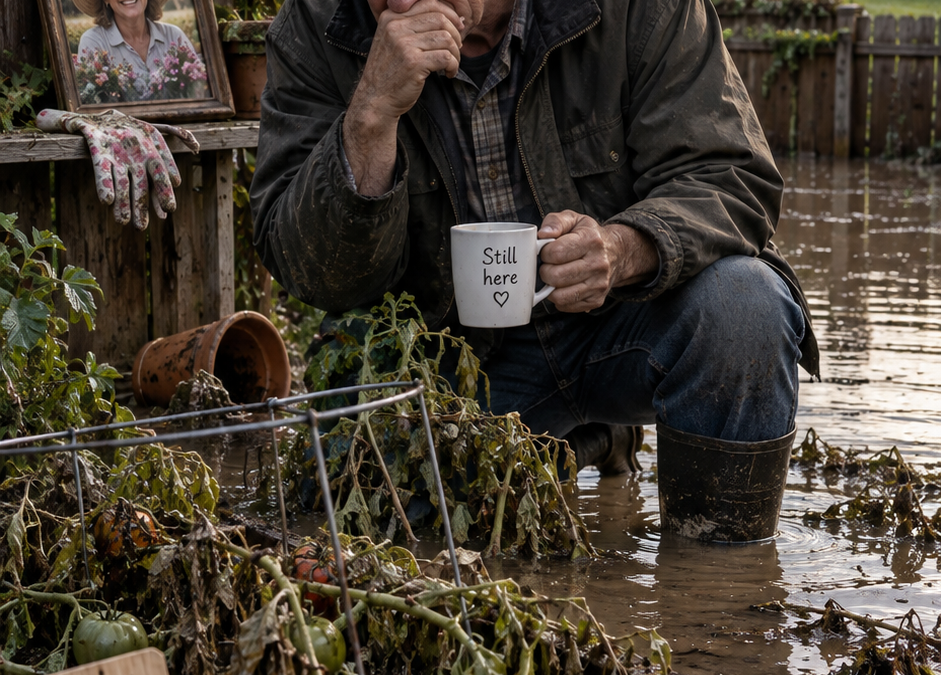
It was a Tuesday morning in late September, gray enough that the entire neighborhood looked washed in pencil. I walked outside carrying a mug of coffee and expecting to check the tomatoes growing along the back fence.
They had belonged to my wife before they belonged to me.
Carol died two years earlier after a long fight with cancer, and after thirty-eight years of marriage, grief had turned our house into a museum of things that no longer made sense.
Two toothbrush holders.
Two bedside lamps.
Her gardening gloves hanging from a nail in the garage.
A coffee cup I couldn’t bring myself to move because she’d left it there.
For months after the funeral, people brought casseroles, called every few days, and said all the things decent people say when they don’t know how to repair a hole that can’t be repaired.
Then life continued for them.
Which was normal.
It just took me longer.
Eventually, I started fixing things.
I restained the deck because Carol had complained about the color for six years.
I repaired the fence.
I replaced a porch light that had flickered since the Clinton administration.
And I planted tomatoes in her old garden bed because staring at bare soil every morning had started to feel like another kind of funeral.
That Tuesday, there was no soil.
There was water.
Brown water covered almost the entire backyard, deep enough around my boots that every step made a sucking sound.
Two tomato cages had tipped sideways.
Leaves floated against the fence.
The plants had turned dark at the base where their roots had been drowning.
I stood there with my coffee cooling in my hand.
First flood, I’d blamed the storm.
Second flood, I’d blamed myself.
Third flood?
Third flood made the engineer in me wake up.
I spent most of my career as a county civil engineer specializing in stormwater drainage, flood mitigation, subdivision grading, culverts, retention ponds, and all the wonderfully boring things people ignore until their basements are full of muddy water.
Nobody at dinner parties ever says, “Walter, tell us more about hydraulic conveyance capacity.”
I learned to live with the disappointment.
But thirty years of studying water teaches you to recognize when it is somewhere it has no business being.
My yard had never flooded like this.
Not once in three decades.
Now it had flooded three times in a month.
Something had changed.
I just didn’t know yet that the answer was sitting less than three hundred yards behind my fence, hidden beneath fresh mortar, black plastic pipe, and one of the stupidest acts of greed I had encountered in thirty years of public engineering.
And I certainly didn’t know that fourteen homes had quietly been sacrificed so one HOA president and her business partners could make a private golf course look prettier on a brochure.
Not yet.
That morning, I only knew my tomatoes were dead.
So I called the HOA.
That turned out to be the polite part.
PART2
A young woman named Steph answered.
“Fairview Ridge Homeowners Association. How may I help you?”
“I’d like to report a drainage issue.”
She typed something.
I could hear the keyboard clicking.
“Your address?”
I gave it to her.
“And what’s the issue?”
“My backyard has flooded three times in the last month.”
“Standing water?”
“Enough to kill landscaping.”
“Okay.”
More typing.
“I’ll flag it for the maintenance committee.”
“When will someone inspect it?”
“Response times vary.”
“Days?”
“They vary.”
“A week?”
“They vary, Mr. Kesler.”
Apparently that was the official unit of time at Fairview Ridge.
Varies.
“Could I speak with whoever handles drainage infrastructure?”
“I’ll note your request.”
That was the end of the conversation.
Nobody called.
Nobody emailed.
Nobody inspected anything.
For three days, I waited.
On the fourth, I put on my old rubber field boots.
Retirement had removed the county logo from my truck, but it had not removed thirty years of habit.
Tape measure.
Notebook.
Phone.
Flashlight.
I walked behind my fence toward the drainage swale.
Fairview Ridge had been developed in the early 1990s. I remembered reviewing subdivisions just like it when I was younger—four hundred houses arranged around curving roads with names suggesting nature had voluntarily designed them.
Birchwood.
Larkspur.
Meadow Glen.
Nothing says untouched wilderness quite like bulldozing eighty acres and naming the streets after the trees you removed.
Behind our row of homes ran a shallow grassy swale.
It wasn’t pretty.
It wasn’t supposed to be.
During storms, runoff moved through that channel toward a concrete culvert and from there into a retention pond beyond the tree line.
The retention pond absorbed peak flows and released water gradually.
Simple.
Reliable.
Boring.
Exactly the way infrastructure should be.
I followed the swale until I reached the old culvert.
Then I stopped.
The opening had been capped.
Not clogged.
Not damaged.
Capped.
Fresh mortar covered the concrete entrance.
I crouched.
The mortar was still pale compared with the thirty-year-old concrete around it.
Weeks old.
Maybe a couple of months.
I touched it.
Then I noticed the new pipe.
Black corrugated plastic.
Large diameter.
It ran at an angle behind several properties, partially buried and partially concealed by vegetation.
The direction made no sense.
At least, not if the purpose was drainage.
The original system directed runoff away from homes.
This one appeared to redirect it laterally.
I measured the diameter.
Photographed the connection.
Photographed the capped culvert.
Photographed the grade.
Then I stood there looking at the route.
“Where are you taking it?” I muttered.
Water doesn’t disappear because somebody changes a pipe.
It simply becomes somebody else’s problem.
I went home and drew a rough sketch.
The next evening was Fairview Ridge’s annual fall mixer.
If you have never attended an HOA social event, imagine a political summit organized around lemonade, folding chairs, and passive-aggressive opinions about mulch.
A banner read:
FAIRVIEW RIDGE — TOGETHER WE GROW
A bounce house sat unused in the drizzle.
That was where I met Diane Holloway.
I already knew who she was, of course.
Everybody did.
HOA president.
Former real estate agent.
Two terms in office.
Professional smile.
Professional hair.
Professional ability to make everything sound as though she’d invented it moments before.
“Walter Kesler?”
She approached before I introduced myself.
“That’s me.”
“You’re the gentleman with the water issue.”
Gentleman with the water issue.
That was one way to describe a man whose vegetable garden had become a koi pond without fish.
“I am.”
She smiled.
“We’ve received your report.”
“I was hoping to see the updated drainage plans.”
The smile paused.
Only slightly.
“What updated plans?”
“The modifications behind my property.”
“I don’t know what you’re referring to.”
“The old culvert has been sealed. A new pipe has been installed.”
Now I saw it.
Not surprise.
Calculation.
A little movement behind her eyes.
Very quick.
Then the smile returned.
“We’re currently working on an exciting community improvement initiative.”
There are phrases in life that should make you immediately reach for your wallet.
Exciting community improvement initiative is one of them.
“Does that initiative involve altering the stormwater system?”
“I assure you everything is being handled by qualified professionals.”
“Who?”
“We have vendors.”
“Engineering firm?”
“Appropriate professionals.”
“Permit number?”
Her smile became thinner.
“Walter, I’m sure someone will be happy to walk you through the details.”
“Who?”
“I’ll have them contact you.”
“When?”
“Soon.”
Apparently Fairview Ridge used two measurement systems.
Varies.
And soon.
Nobody contacted me.
What did happen was more interesting.
About a week later, I noticed a white pickup sitting near the entrance to our cul-de-sac early every morning.
No company markings.
Just a crooked magnetic sign on the door:
FAIRVIEW RIDGE GROUNDS PATROL
Grounds patrol.
That was new.
Fairview Ridge had somehow survived three decades without needing tactical lawn enforcement, but apparently the situation had become critical.
My neighbor Ruth was outside checking her mail one afternoon.
Ruth was a widow in her seventies who had lived across from me since the neighborhood was built.
She leaned on a cane but possessed eyesight that missed absolutely nothing.
“That truck new?” I asked.
She looked toward it.
“Couple months.”
“What does it patrol?”
“Grass, I suppose.”
I laughed.
“Diane says vandalism near the tree line.”
“Have we had vandalism?”
“Not unless somebody’s been insulting the squirrels.”
Then she lowered her voice.
“They spend an awful lot of time down here.”
“You noticed?”
“Walter, I’m old. My hobbies are coffee and noticing things.”
Fair enough.
Two days later, I found a laminated warning under my windshield wiper.
UNAUTHORIZED FOOT TRAFFIC NEAR ASSOCIATION DRAINAGE INFRASTRUCTURE MAY RESULT IN FINES AND LEGAL ACTION.
No name.
No signature.
Just the warning.
I stood beside my truck reading it twice.
Then I looked toward the white pickup.
It was gone.
The amusing part was that I hadn’t been near the culvert in almost a week.
Somebody wasn’t just maintaining infrastructure.
Somebody was watching who looked at it.
That changed the problem.
Two more storms arrived.
The first left standing water against the fence.
The second pushed water toward the north wall of my house.
I went into the basement with a flashlight and found a thin crack running along the foundation.
I touched it.
Fresh.
My house had been built thirty years earlier.
It had endured hurricanes, thunderstorms, snowmelt, one tropical depression, and a memorable spring when the retention pond overflowed halfway up the walking path.
Never a foundation problem.
Now suddenly, after somebody changed the drainage route, I had one.
I filed a formal records request with the HOA.
Not a phone call.
Written.
Timestamped.
Specific.
I requested all drawings, engineering reports, board authorizations, permits, contractor information, and change orders connected to drainage modifications performed during the previous twelve months.
Then I saved screenshots.
Engineers like paper trails.
People who commit fraud tend not to.
Five business days later, I received an answer.
Not the records.
A violation.
CEASE AND DESIST — UNAUTHORIZED EXCAVATION OF ASSOCIATION PROPERTY.
Fine:
$3,000.
I stared at the number.
Three thousand dollars.
Apparently brushing wet leaves away from a pipe fitting now required the same budget as a minor vacation.
The notice claimed security footage showed me “disturbing infrastructure.”
I requested the footage.
They sent a grainy doorbell-camera clip from a house three properties away.
There I was.
Sixty-four years old.
Rubber boots.
Tape measure.
No shovel.
No tools.
I crouched, moved a handful of leaves with my bare hand, photographed the connection, stood up, and walked away.
Excavation.
If that qualified as excavation, every toddler with a sandbox needed a contractor’s license.
Then came the lawyer’s letter.
Whitfield & Cross.
Thick cream paper.
Expensive letterhead.
The sort of envelope designed to make ordinary homeowners feel broke before opening it.
They accused me of spreading misinformation.
They threatened defamation claims if I continued making “false statements regarding lawful community improvements.”
I sat at my kitchen table reading that sentence.
False statements.
I hadn’t made any public statements.
I had spoken to Diane.
Ruth.
The HOA office.
That was about it.
Which told me something.
You don’t threaten somebody for what they’ve already said when they haven’t said anything.
You threaten them because you’re afraid of what they’re about to discover.
I remembered an old mentor from my county days.
His name was Carl Benton.
He once told me after a particularly ugly planning hearing, “Walter, truthful people usually want to explain. Liars want you to stop asking.”
Diane wanted me to stop asking.
So naturally, I started asking much better questions.
Priya Nair knocked on my door two evenings later.
She lived two houses down.
Mid-thirties.
Software engineer.
Recently moved into Fairview Ridge with her husband.
We’d waved occasionally.
That was about the extent of our relationship.
She stood on my porch holding her phone.
“I heard they fined you.”
“News travels fast.”
“They fined us too.”
“For what?”
“Complaining about drainage.”
That got my attention.
“You’ve been flooding?”
“Twice.”
“How bad?”
“Water stayed almost three days after the last storm.”
“Why didn’t you say anything?”
She gave a small embarrassed shrug.
“We just moved in. I didn’t want to be the new neighbor who immediately starts fighting with the HOA.”
That was another thing boards like Diane’s relied on.
Isolation.
Everybody thinks their problem is personal.
Nobody compares notes.
“What changed your mind?”
“My husband took this.”
She handed me the phone.
Drone photograph.
The image showed Fairview Ridge from above.
Behind the tree line sat a wide strip of newly cleared land.
Fresh grading.
Construction equipment.
And near one boundary, a sign.
I zoomed in.
RIDGELINE GOLF
COMING SOON
PRIVATE MEMBERSHIP COMMUNITY
I looked at Priya.
“How long has that been there?”
“I don’t know.”
I enlarged the image further.
Graded fairway areas.
Excavated ponds.
Service roads.
Landscape features.
Something clicked.
Golf courses require water.
A lot of it.
I wasn’t claiming one storm drain could irrigate eighteen holes.
But stormwater could feed decorative ponds, detention features, and water-storage systems.
More importantly, rerouting public drainage could free up or reshape the land around the original retention area.
“Do you know anybody who recently left the HOA board?”
Priya thought.
“Harold Finch.”
“Why’d he leave?”
“No idea. It was sudden.”
“Where?”
“Birchwood corner. Blue shutters.”
I found Harold two days later raking wet leaves.
The moment I mentioned drainage, he stopped.
“Come inside.”
Not “tell me more.”
Not “what drainage?”
Come inside.
He closed the door before speaking.
That told me plenty.
Harold held a coffee mug with both hands.
“I knew this was going to come back.”
“What?”
“The board vote.”
“What vote?”
“Eight months ago.”
Diane had called an emergency meeting.
Almost no notice.
She told the board there was an erosion emergency around the retention pond.
Temporary reroute.
Immediate action needed.
She produced plans.
“They had an engineer’s stamp,” Harold said.
“Whose?”
He looked uncomfortable.
“I don’t know.”
“You approved an engineering modification without verifying the engineer?”
“When you say it like that, it sounds bad.”
“There’s no flattering way to say it.”
He rubbed his forehead.
“We trusted Diane.”
“Why?”
“Six years on the board together.”
“And what happened later?”
Harold looked toward his window.
“I heard she had an interest in the golf project.”
My heartbeat slowed.
That happens when I become very focused.
“What kind of interest?”
“Financial.”
“From whom?”
“People talk.”
“Did you ask her?”
“Yes.”
“What did she say?”
“Laughed.”
He looked embarrassed.
“She told me I was repeating gossip.”
“And then?”
“I resigned.”
“Because you believed her?”
“No.”
He stared into the untouched coffee.
“Because I didn’t.”
That answer stayed between us.
“I was afraid,” he admitted.
“Of what?”
“I don’t know. Lawsuit. Reputation. Being accused of something. Diane’s good at making people feel like they’re the unreasonable one.”
Yes.
I’d noticed.
“If the county investigates, will you make a statement?”
Harold hesitated.
Then nodded.
“I should’ve done it eight months ago.”
That night, I called Ray Odum.
Ray and I had worked together for nearly twenty years.
He now worked in county planning and infrastructure.
When he answered, he laughed.
“Walter Kesler. The man who retired because he never wanted to look at another drainage map.”
“I may have exaggerated.”
“What happened?”
“I need the original Fairview Ridge easements.”
There was a pause.
“You in trouble?”
“Potentially fourteen houses are.”
“You sure?”
“No.”
That was the truth.
“Then let’s find out.”
Two days later, I was sitting inside the county records office.
Windowless room.
Fluorescent lights.
File cabinets.
Old paper.
It felt oddly comforting.
Ray pulled the original Fairview Ridge plat documents.
The drainage easement had been recorded when the subdivision was first approved.
He ran his finger along the legal description.
“Here.”
The swale.
The culvert.
The retention pond outfall.
I read it myself.
Then again.
“County easement.”
“Yep.”
“Public stormwater conveyance.”
“Yep.”
“HOA can maintain surface landscaping.”
“Correct.”
“Can they alter the conveyance route?”
Ray removed his glasses.
“Walter.”
“I want you to say it.”
“No.”
“Permit?”
“Required.”
“Engineering review?”
“Required.”
“County approval?”
“Required.”
“Any permit filed?”
He turned to his computer.
Typed.
Waited.
Typed again.
His expression changed.
“No.”
“Check last year.”
“Nothing.”
“Previous year.”
“Nothing.”
I sat back.
There it was.
Not an HOA disagreement.
Not a neighborhood policy dispute.
An unauthorized modification of public drainage infrastructure.
Ray whistled softly.
“You know what this can trigger?”
“Insurance issues.”
“At minimum.”
“Personal liability?”
“Potentially.”
“Stop-work order?”
“Absolutely.”
He pulled another file.
“There’s more.”
Ridgeline Land Holdings LLC.
Conditional-use permit.
Private recreational development.
Golf.
The parcel directly behind Fairview Ridge.
“Who owns it?”
“Let’s see.”
The registered agent led to a downtown post office box.
Then Ray found the LLC formation records.
Three managing members.
Two names meant nothing to me.
The third:
Diane Puit.
I frowned.
“Who is Diane Puit?”
Ray searched.
Then he turned the screen.
Marriage record.
Current name.
Diane Holloway.
I felt my jaw tighten.
“She used her maiden name.”
“Perfectly legal by itself,” Ray said.
“Convenient.”
“Very.”
“Financial stake?”
“She’s listed as a managing member.”
I looked at the screen.
For weeks Diane had acted like I was an old man imagining conspiracies in rain puddles.
Meanwhile her name—just not the name everybody in Fairview Ridge knew—was sitting in a county database available to anyone with enough patience to click twice.
Ray leaned back.
“That isn’t gossip anymore.”
“No.”
“What’s your next move?”
“Math.”
He smiled.
“God help them.”
I spent four nights at the kitchen table.
Carol’s old drafting lamp cast a yellow circle across the paper.
Original flow path.
Modified route.
Elevation changes.
Estimated runoff.
Pipe diameter.
Drainage basin.
I reconstructed everything I could without entering restricted property.
Then I plotted the downstream effect.
Fourteen properties.
Fourteen.
I checked again.
Same answer.
The new configuration placed all fourteen in the receiving path for water that had previously gone toward the retention pond.
My house was just one.
Priya and I started knocking on doors.
No accusations.
No speeches.
One question.
“Has your property experienced unusual flooding this year?”
House one.
Yes.
House two.
Yes.
House three.
No.
House four.
Standing water.
House five.
Basement seepage.
House six.
Dead landscaping.
By the end of the evening, eleven households had documented new water problems.
The Ostranders nearly broke my heart.
Young couple.
New baby.
They had renovated a basement room as extra nursery space.
Two inches of water had entered during the previous storm.
They’d obtained repair estimates.
One contractor recommended an $11,000 French drain.
Mrs. Ostrander stared at my drainage sketch.
“So our foundation isn’t failing?”
“I can’t promise there isn’t damage.”
“But this water—”
“Shouldn’t be going toward your house.”
Her eyes filled.
“We almost took money out of our savings.”
I nodded.
“I’m sorry.”
“For what?”
“For not finding it sooner.”
She shook her head.
“You’re not the one who did it.”
No.
But somebody had.
Another homeowner, Mr. Voss—not related to Diane—had simply abandoned half his garden.
“I figured the property settled,” he said.
“Thirty years after construction?”
He shrugged.
“I’m a retired teacher, Walter. Water comes, I move the tomatoes.”
That was the problem.
Everyone adapted privately.
Nobody knew their inconvenience was part of a pattern.
Diane had not flooded one angry engineer’s backyard.
She had flooded a neighborhood one quiet property at a time.
The annual HOA meeting was scheduled for Thursday.
Diane’s newsletter arrived Monday.
Glossy paper.
Full color.
A MAJOR ANNOUNCEMENT FOR FAIRVIEW RIDGE
At the bottom was an image of a golf green glowing beneath an orange sunset.
If manipulation were a graphic-design category, whoever made that newsletter deserved an award.
“Property-value enhancement.”
“Luxury adjacency.”
“Community partnership.”
Not one sentence about fourteen yards filling with stormwater.
The night before the meeting, Diane sent her attorney to my house.
He showed up personally.
Expensive wool coat.
Leather briefcase.
Shoes that looked deeply offended by my driveway.
“Mr. Kesler?”
“That’s me.”
“I’m Daniel Whitfield.”
“Congratulations.”
He didn’t laugh.
“I’m counsel for Ms. Holloway and the Fairview Ridge Homeowners Association.”
“I guessed from the stationery.”
His mouth tightened.
“I’ll be direct.”
“That would be refreshing.”
“If you make defamatory statements tomorrow concerning Ms. Holloway, Ridgeline Golf, or the association, we will pursue damages.”
“Are truthful statements defamatory now?”
“I’m advising you to be extremely careful.”
Behind him, water gurgled faintly near the low corner of my yard.
I could hear it.
He could probably hear it too.
“Mr. Whitfield.”
“Yes?”
“I don’t intend to say anything tomorrow that isn’t documented.”
“Good.”
“In fact, you should be less concerned about what I say and more concerned about what your client’s name is doing in the county business registry.”
He stopped.
Just for half a second.
Good lawyers recover quickly.
He did.
“I don’t know what you’re referring to.”
“Then I strongly recommend reading before tomorrow night.”
He adjusted his coat.
“Consider this your final warning.”
I smiled.
“I’ve received so many final warnings from your client that they’re beginning to lose their exclusivity.”
He left without answering.
Thursday evening, the community center was full.
Not busy.
Full.
Three hundred people.
Folding chairs stretched to the back wall.
Homeowners stood along both sides.
Diane stood at the podium wearing a cream blazer.
Behind her, a giant projector screen displayed Ridgeline Golf.
Perfect fairways.
Glass clubhouse.
Decorative lake.
Fake sunset.
Everything green.
Nothing flooded.
RIDGELINE GOLF — A NEW ERA FOR FAIRVIEW RIDGE
Diane smiled at the crowd.
“Tonight, I’m thrilled to share what I believe will become one of the most important opportunities in our community’s history.”
Scattered applause.
She continued.
“Through a unique private partnership, Fairview Ridge will soon border one of the region’s most exclusive golf communities.”
Another slide.
Aerial rendering.
“Independent estimates indicate this could raise nearby property values by as much as twenty-five percent.”
People murmured.
Twenty-five percent.
Nice round number.
Very exciting.
Very difficult to verify.
Diane talked for fifteen minutes.
Amenities.
Prestige.
Green space.
Premium access.
She used the word opportunity nine times.
She never used the words stormwater, culvert, flooding, easement, permit, or conflict of interest.
Funny how vocabulary works.
Finally she smiled.
“Questions?”
I raised my hand.
She saw me.
Her face changed slightly.
Then the public smile returned.
“Walter.”
I walked down the aisle carrying a rolled drawing.
Three hundred people watched.
Thirty years of planning hearings had taught me that nervous speakers rush.
I didn’t.
I placed the drawing on the table.
Unrolled it.
Weighted the corners with two water bottles.
“Ms. Holloway, I’d like to ask about the drainage modifications behind Birchwood and Larkspur.”
Her smile disappeared.
“Tonight’s presentation concerns Ridgeline Golf.”
“Exactly.”
A few heads turned.
Diane gripped the podium.
“Please ask a question.”
“Gladly.”
I pointed to the drawing.
“This is the original recorded stormwater plan for Fairview Ridge.”
Then the second route.
“This is the current configuration based on field measurements.”
Silence began spreading.
“The original culvert has been capped. New corrugated pipe redirects runoff away from the retention pond and toward residential lots.”
“That’s an oversimplification.”
“Then correct me.”
She blinked.
“Excuse me?”
“Tell us the permit number.”
The room changed.
That was all it took.
One question.
A specific question.
“When did Fairview Ridge obtain county approval to modify the public drainage easement?”
Diane laughed.
Not convincingly.
“Walter, I’m not going to turn a community meeting into an engineering seminar.”
“Good. This only requires one number.”
Somebody behind me laughed.
Diane’s cheeks reddened.
“This was routine maintenance.”
“No.”
I pointed at the plan.
“Mowing is maintenance. Clearing debris is maintenance. Replacing like-for-like components can be maintenance under certain conditions.”
I tapped the changed route.
“Changing where the water goes is engineering.”
A murmur moved through the room.
“And fourteen houses are now receiving water they did not receive before.”
That landed.
“Fourteen?” somebody said.
Diane straightened.
“There is absolutely no evidence supporting that claim.”
I turned toward the room.
“I have elevation calculations, photographs, pipe measurements, stormwater maps, and statements from eleven affected households.”
Priya stood.
“Our yard flooded twice.”
A man several rows behind her stood.
“So did mine.”
Mrs. Ostrander stood holding her baby against her shoulder.
“Our basement flooded.”
Another homeowner.
“My sump pump has run nonstop.”
Another.
“I lost half my landscaping.”
Diane raised her hand.
“Please. This is becoming chaotic.”
It wasn’t.
That was the beautiful part.
Nobody shouted.
Nobody insulted her.
They simply stood.
One by one.
Facts are terrifying to people whose power depends on everyone believing they are alone.
Diane looked at me.
“This is a coordinated campaign.”
“No.”
“You’ve been spreading misinformation for weeks.”
“I haven’t.”
“You trespassed on HOA property.”
“No.”
“You excavated drainage infrastructure.”
That one made me smile.
“I brought the excavation video.”
A few people laughed.
Diane froze.
I held up my phone.
“This is the footage your office used to fine me three thousand dollars.”
I played it on the projector.
There I was.
Rubber boots.
Crouching.
Moving leaves with my hand.
Tape measure.
Standing.
Leaving.
Thirty seconds.
The room watched.
No shovel.
No excavation.
No damage.
When it ended, I looked at Diane.
“Would you like to identify the digging?”
Someone in the back laughed loudly.
Others followed.
Diane’s face hardened.
“This is not amusing.”
“No.”
I put the phone down.
“Flooding homes isn’t particularly funny.”
That stopped the laughter.
Then Harold Finch stood.
I’d told him he didn’t have to.
He did anyway.
“I was on the board.”
Diane turned.
“Harold.”
He ignored her.
“We approved the reroute eight months ago.”
Now the room was completely quiet.
“Diane called an emergency meeting. Almost no notice. She said there was an erosion problem and immediate action was needed.”
“Harold,” Diane warned.
He looked at her.
“No.”
One word.
Quiet.
Powerful.
“You’ve had eight months to speak.”
Diane stepped away from the podium.
“This is inappropriate.”
Harold’s voice grew firmer.
“She gave us engineering drawings with a seal. I didn’t verify the engineer.”
“Because you didn’t need to,” Diane snapped.
“I did.”
Harold looked at the homeowners.
“I trusted her.”
He swallowed.
“Then I heard she had a financial interest in Ridgeline Golf.”
The room erupted.
Not screaming.
Shock.
Questions.
People turning.
Diane lifted both hands.
“That is false.”
Harold looked directly at her.
“I asked you.”
“And I told you it was ridiculous gossip.”
“I resigned because I didn’t believe you.”
Diane stared at him.
Then at me.
I reached into my folder.
“This?”
I held up the LLC formation document.
“This isn’t gossip.”
Diane’s entire face went still.
“Ridgeline Land Holdings LLC.”
I read the filing date.
Then the managing members.
First name.
Second name.
Then:
“Diane Puit.”
I looked up.
“For anyone confused, Diane Puit is Diane Holloway’s maiden name.”
Noise exploded across the room.
Diane struck the podium with her palm.
“Enough!”
The microphone amplified it.
A hard crack filled the building.
Everyone stopped.
Her carefully maintained smile was gone.
“This has nothing to do with HOA governance.”
I almost admired the attempt.
“Your financial interest in the golf development has nothing to do with HOA governance?”
“My private investments are my private business.”
“Normally, yes.”
I pointed at the drainage drawing.
“Not when HOA-controlled contractors modify public drainage infrastructure in a way that benefits land you partly own.”
“You cannot prove benefit.”
“I don’t have to tonight.”
Her eyes narrowed.
“Then what exactly is this?”
“A question.”
I held up the public easement record.
“Why was a county-owned drainage route changed without a county permit?”
No answer.
“Why did fourteen homes begin flooding afterward?”
Nothing.
“Why did your board receive plans for an alleged emergency repair with no public notice?”
Silence.
“Why does the altered infrastructure support property connected to a development in which you have a financial interest?”
Her hands tightened around the podium.
“And why did you fine me three thousand dollars for looking at the pipe instead of simply giving me the engineering records I requested?”
There are moments when a room becomes so quiet that you can hear air conditioning.
That was one.
Then a man near the front stood.
He had been sitting with a folder on his lap.
Diane looked at him.
She didn’t recognize him.
I did.
His name was Michael Talbot.
County infrastructure office.
Ray had arranged for him to attend.
He spoke in the dull, measured voice of a government official, which at that moment was more frightening than any angry speech could have been.
“My name is Michael Talbot. I’m here representing the county infrastructure division.”
Diane’s face drained.
He opened the folder.
“Our office has reviewed the recorded Fairview Ridge drainage easement.”
Nobody moved.
“We have found no permit application authorizing structural modification of the stormwater conveyance system.”
Diane started to speak.
He continued.
“Effective immediately, the county is opening a formal investigation into potential unauthorized alteration of a recorded public drainage easement.”
The golf-course developer was sitting near the back.
I had noticed him earlier.
Gray sport coat.
Marcus Vance.
Ridgeline Golf.
He stood.
Quietly.
Started toward the side exit.
A dozen people watched him.
“Diane,” somebody called, “your partner’s leaving.”
Marcus did not turn around.
The door shut behind him.
Talbot continued.
“No further construction associated with the drainage modification is to continue pending inspection and review.”
Someone applauded.
Then another.
Talbot raised a hand.
“I’m not here to participate in HOA politics. I’m simply informing residents of county action.”
Professional to the end.
Diane looked at me.
Her eyes were wet with rage.
“You’ve ruined this.”
Her microphone was off now.
Only those near the front heard.
“Ruined what?”
“An incredible opportunity for this neighborhood.”
I looked at the flooded homeowners.
At Mrs. Ostrander and her baby.
At Harold.
At Priya.
Then back at Diane.
“No.”
I folded my arms.
“I just put the water back where it belongs.”
Ruth stood.
Of all people.
Seventy-something years old.
Cane in one hand.
A sheet of paper in the other.
Her voice carried astonishingly well.
“Diane?”
Diane slowly turned.
Ruth lifted the paper.
“Is it true you used your maiden name on those LLC filings?”
No answer.
“Because my friend at the courthouse printed me a copy.”
Diane stared.
Ruth adjusted her glasses.
“Would you like me to read it?”
Somebody laughed.
Not cruelly.
Just exhausted.
Diane looked around the room.
Three hundred homeowners.
The same people who had applauded her golf-course rendering twenty minutes earlier.
Nobody applauded now.
Nobody smiled.
Nobody looked impressed by the fake sunset on the screen.
Diane’s hands gripped the podium.
She opened her mouth.
Closed it.
Then somebody near the rear asked:
“So are we still voting on the golf course?”
That produced the loudest laugh of the night.
Even I laughed.
Diane did not.
The meeting effectively ended right there.
But her problems were only beginning.
The county investigation moved faster than I expected.
Inspectors visited the drainage corridor within days.
They photographed the capped culvert.
Measured the new pipe.
Surveyed grades.
Compared current conditions with the recorded easement.
Their conclusion matched mine.
Unauthorized reroute.
No approved engineering review.
No county permit.
No lawful modification authority.
The black pipe had diverted stormwater away from the original retention system and increased runoff exposure across fourteen residential properties.
The HOA’s attorneys stopped sending me threatening letters.
Funny how quickly defamation concerns disappear when inspectors arrive carrying survey equipment.
My $3,000 fine was suspended.
Then canceled.
So were related notices against several other residents.
The association’s insurance carrier opened its own inquiry.
That mattered.
Board members discovered something Diane apparently hadn’t emphasized during her “exciting community improvement initiative.”
Insurance does not enjoy secret infrastructure modifications.
Especially when an officer may have a financial interest in the project benefiting from them.
Then the money started surfacing.
That was the part even I hadn’t known.
County attorneys obtained financial documentation connected to the HOA and Ridgeline entities.
HOA reserve funds had been used for consulting payments.
Those payments went to a company connected with Ridgeline.
And Diane had a direct interest in the ownership structure.
What started as bad drainage became something much uglier.
Not some grand criminal empire.
Nothing glamorous.
Just small-town greed dressed up in committee language.
Consulting fee.
Emergency repair.
Community partnership.
Improvement initiative.
People imagine fraud looking like briefcases full of cash.
Often it looks like an invoice nobody asks enough questions about.
Diane was removed from the board within a month.
Emergency session.
Properly noticed this time.
That detail amused me more than it should have.
The vote was unanimous.
Harold attended.
Priya attended.
Ruth sat in the front row.
Diane did not deliver a speech.
No slideshow.
No blazer presentation.
No promises of twenty-five-percent property appreciation.
She submitted a short written statement claiming she had always acted in the community’s best interests and disputed several allegations.
The interim board accepted the resignation of the remaining officers involved in the unauthorized approval.
The association hired outside counsel.
A forensic audit began.
Ridgeline Golf stalled almost immediately.
Without the unauthorized water configuration and with county regulators reviewing every related permit, the development no longer looked nearly as elegant.
Turns out fairways photograph less impressively when surrounded by stop-work notices.
Marcus Vance pulled back.
Investment dried up.
Construction equipment disappeared.
For months, the graded land behind the tree line sat empty.
Weeds grew through the dirt.
The beautiful glass clubhouse in Diane’s rendering never existed anywhere except a PowerPoint slide.
I occasionally thought about printing the rendering and hanging it beside the drainage map.
I resisted.
Mostly.
The county ordered restoration of the original stormwater system.
The new black pipe came out.
Workers removed the mortar sealing the original culvert.
Ray asked whether I would consult during restoration.
“Paid?” I asked.
“Absolutely not.”
“Good. I was worried retirement might become profitable.”
He laughed.
Standing beside construction equipment again felt strange.
Good strange.
I hadn’t realized how much I missed work until I had a set of plans in my hands.
For two years after Carol got sick, my world had become doctors, medications, appointments, home care, grief, paperwork, and silence.
Then retirement.
Then more silence.
Suddenly I was back outside in boots, telling a twenty-five-year-old equipment operator that he was about six inches too far east.
“You engineers never retire, do you?” he asked.
“We retire from payroll.”
A crew uncovered the old culvert about two feet below grade.
Still sound.
Thirty years old.
Covered in fresh mortar, but intact.
One of the younger workers stared at it.
“How does something like this stay hidden?”
“Because nobody looks.”
He frowned.
“It’s a giant pipe.”
“People don’t look at pipes.”
I pointed toward the abandoned golf property.
“They look at renderings.”
He laughed.
“I’m serious.”
I leaned on my shovel.
“They look at fake sunsets. Clubhouses. Promises that their house will be worth twenty-five percent more. Nobody asks where the water goes.”
He glanced toward the homes.
“Until it goes into the basement.”
“Exactly.”
We restored the original path.
First heavy rain after completion, I barely slept.
Old habit.
Around five in the morning, rain hammered the roof.
I got up.
Made coffee.
Stood by the back door.
I almost expected brown water.
At sunrise, I put on my boots and walked outside.
The garden was wet.
Not flooded.
The low corner had a little standing moisture.
Normal.
The swale carried water exactly where it should.
Toward the culvert.
Into the retention pond.
Away from houses.
I stood there longer than necessary.
Then I heard Ruth.
“Still dry over there, Walter?”
She was across the street in a raincoat holding a coffee mug.
“Still dry.”
She lifted the cup.
“Miracle.”
“Engineering.”
“Same thing when it works.”
I couldn’t argue with that.
The Ostranders repaired their basement.
Insurance negotiations took time, but they eventually received assistance toward documented damage.
Other homeowners pursued their own claims.
My foundation crack was repaired.
I hired an attorney primarily to deal with damages and the original fine.
He told me I had a strong personal case against Diane.
“You could pursue more.”
“How much more?”
He gave me a range.
It was substantial.
For several days, I considered it.
I’m not going to pretend I had become spiritually enlightened.
Part of me wanted Diane to pay.
Not metaphorically.
Financially.
I wanted her opening a bill and feeling her stomach drop the way mine had when I found that foundation crack.
I wanted her to stand in a damaged yard and hear somebody call it an exciting community improvement.
I wanted her to receive a $3,000 fine because she touched a leaf.
Petty?
Probably.
Human?
Definitely.
But the county investigation was proceeding.
The insurance company had its own claims.
The development had collapsed.
She had lost the presidency.
Her financial interest was under scrutiny.
So at the first general meeting under the interim board, I asked for something else.
The room was quieter than the infamous golf meeting.
No three hundred people.
No television-worthy confrontation.
Just homeowners.
I stood.
“I want an independent infrastructure oversight committee.”
Walter Grimby—one of the interim board members—raised an eyebrow.
“Another committee?”
“Yes.”
A few people groaned jokingly.
“I know. Nothing says justice like creating more meetings.”
They laughed.
“But this one matters.”
I explained it.
Residents.
Not just board members.
Independent review of structural changes.
Public records.
Engineering documentation.
Permit verification.
No emergency infrastructure approvals without documented necessity except true immediate safety events.
Every material project posted online before construction.
Conflicts of interest disclosed.
Contractor relationships visible.
Boring.
Painfully boring.
Exactly what we needed.
“Diane succeeded because nobody had to explain anything until after the work was done,” I said. “Don’t build a system that depends on trusting the next president more.”
Harold raised his hand.
“I’ll volunteer.”
I looked at him.
He smiled faintly.
“I’m getting tired of resigning from things.”
Priya joined.
So did three other homeowners.
The committee passed.
That meant more to me than humiliating Diane at the annual meeting.
Because removing one bad president solves one bad president.
Changing the process solves the opening she used.
Harold struggled with guilt for months.
One afternoon, we sat on my deck drinking coffee.
“I voted for it,” he said.
“You were misled.”
“I should’ve checked.”
“Yes.”
He looked surprised.
“You could lie to me a little.”
“I could.”
I smiled.
“But you’d know.”
He nodded.
“I keep thinking if I’d asked one question—”
“Harold.”
He looked up.
“You eventually stood in front of three hundred people and admitted it.”
“Eight months late.”
“Still counts.”
He stared into his coffee.
“I was ashamed.”
“That’s how people like Diane keep control.”
“What?”
“They make everybody believe admitting a mistake is worse than continuing one.”
He considered that.
“Carol would have liked you.”
I smiled.
“Carol did like me.”
“I mean this version.”
“She preferred the version that didn’t spend evenings measuring drainage pipes.”
He laughed.
Carol used to tease me constantly.
We would be walking through a parking lot and I’d comment on bad grading.
Driving through a development, I’d notice curb inlets.
At restaurants, I’d glance at sprinkler systems.
“You know normal people look at flowers,” she’d say.
“I look at flowers.”
“No. You look at whether the flower bed drains.”
She was right.
Now I tended her tomato patch again.
New plants.
New cages.
Every morning, coffee.
Every heavy rain, I still checked the yard.
Some habits don’t disappear simply because the problem is fixed.
One morning after a storm, I found myself staring at the dry soil around the tomatoes.
I suddenly wished Carol were beside me so badly that I had to sit down.
Grief is strange.
You can survive hospitals.
Funerals.
Birthdays.
Anniversaries.
Then a tomato plant on an ordinary Tuesday knocks the breath out of you.
I imagined what she’d say.
Probably:
“All this because you couldn’t leave a pipe alone.”
And I’d say:
“Fourteen houses, Carol.”
And she’d say:
“Yes, dear. I’m sure the entire county is grateful you were nosy.”
She would have been right about that too.
Diane sold her house eventually.
Ruth came across the real-estate listing.
Naturally.
Ruth knew things before the internet did.
She walked across the street holding her phone.
“Look.”
Diane’s house.
For sale.
“What am I looking at?”
“Price reduction.”
I tried not to smile.
Failed.
Ruth smiled too.
“Twenty-five percent property increase, huh?”
“Market conditions vary.”
Ruth laughed so hard she had to grab my fence.
I considered that justice enough.
The golf project never recovered.
Without the drainage arrangement and with the financial relationships exposed, Ridgeline became radioactive to investors.
Marcus Vance quietly moved on.
Developers are remarkably philosophical about abandoned dreams when lawyers begin requesting records.
The graded land behind Fairview Ridge was eventually stabilized.
No private clubhouse.
No decorative lagoon.
No exclusive memberships.
Just open ground slowly turning green again.
One afternoon, Ray came by.
We walked the restored drainage path.
He looked toward the retention pond.
“You miss the county?”
“No.”
“Liar.”
“I miss parts.”
“Which?”
“Knowing what I’m supposed to do when something’s broken.”
Ray nodded.
Retirement had taken that from me.
Carol’s illness had taken everything else for a while.
This whole ridiculous fight had given part of it back.
Not because I enjoyed fighting an HOA.
I didn’t.
Not because I enjoyed watching Diane fall.
Fine.
I enjoyed that a little.
But because for the first time in two years, I had been useful again.
There had been a problem.
A real one.
Something measurable.
Something fixable.
I knew how to help.
That matters when you’ve spent months waking up wondering why you’re still setting two places at the kitchen table before remembering you only need one.
A year after the first flood, the neighborhood looked ordinary again.
That’s probably the best ending infrastructure ever gets.
No dramatic monuments.
No plaque.
No ceremony.
Just no flooded basements.
No standing water.
No dead gardens.
No trucks watching the tree line.
No threatening letters.
Normal.
One morning, I sat on the back steps with my coffee.
The tomatoes were taller than the year before.
The sun was coming through the fence.
Ruth was sweeping her porch across the street.
Priya walked past with her dog and called out that the oversight committee had posted the new contractor disclosures online.
Harold was apparently arguing with the board about whether a drainage report should include raw survey files.
I was proud of him.
A man who once resigned because he was afraid to question Diane had become the most irritating transparency advocate in Fairview Ridge.
Progress comes in strange forms.
I thought about the first time Diane spoke to me at the fall mixer.
Her perfect smile.
Her little phrase.
Exciting community improvement initiative.
She thought I was an inconvenience.
An old widower with muddy boots.
The sort of homeowner who could be fined into silence.
Then intimidated.
Then dismissed.
Her biggest mistake wasn’t rerouting the water.
That was illegal and reckless, but it wasn’t the mistake that ended her.
Her biggest mistake was believing nobody would trace it.
She assumed the neighborhood would see flooded yards as isolated bad luck.
She assumed Priya would stay quiet because she was new.
She assumed Harold would stay silent because he was ashamed.
She assumed Ruth was just an old woman across the street.
She assumed county records were too boring for anybody to check.
And she assumed I had retired from being an engineer simply because the county stopped sending me a paycheck.
That’s not how thirty years of thinking works.
An engineer sees water where water wasn’t before and asks why.
Then where.
Then how.
Then who authorized it.
Then where the permit is.
Then whose name is on the company.
And once you start answering those questions, a glossy brochure becomes considerably less impressive.
People sometimes tell this story now as though I walked into that HOA meeting with everything planned from the beginning.
I didn’t.
I walked outside one morning because Carol’s tomatoes were drowning.
That’s all.
I didn’t uncover Diane because I was brilliant.
I uncovered her because she made the oldest mistake in the world.
She got greedy enough to change something physical.
Money can be hidden.
Ownership can be hidden behind names.
Meetings can be rushed.
Minutes can be vague.
But if you move water, the water tells everyone.
Eventually.
Fourteen homes flooded because somebody looked at a drainage system designed to protect families and saw an opportunity to serve a private development instead.
Fourteen families paid for that decision in dead grass, damaged walls, ruined basements, sleepless nights, repair estimates, and fear.
And the entire scheme started coming apart because a sixty-four-year-old widower in rubber boots measured a pipe.
That’s the part that still makes me laugh.
Diane had lawyers.
A board.
Consultants.
A developer.
An LLC.
A patrol truck.
A $3,000 fine.
I had a tape measure.
County records.
Thirty years of experience.
And neighbors who eventually stopped being afraid to compare stories.
Turns out that was enough.
It rained again last night.
Hard.
Around midnight, thunder shook the windows.
There was a time when that sound would have gotten me out of bed checking the basement.
Instead, I stayed there listening.
This morning, I made coffee.
Walked outside.
The grass was wet.
Tomatoes upright.
Foundation dry.
Water running quietly through the swale and into the culvert.
Exactly where it belonged.
Ruth spotted me.
“Still dry, Walter?”
I raised my mug.
“Still dry.”
She nodded.
Then she looked toward the tree line where Ridgeline Golf was supposed to stand.
“You ever miss all the excitement?”
“No.”
She smiled.
“Liar.”
Maybe a little.
But I prefer boring now.
Boring water.
Boring permits.
Boring meetings with proper notice.
Boring financial disclosures.
Boring drainage systems doing precisely what somebody designed them to do thirty years ago.
Because I learned something during those months.
A boring system that works is worth far more than an exciting opportunity sold by someone who refuses to show you the paperwork.
Diane promised Fairview Ridge a private golf course and a twenty-five-percent increase in property values.
What she actually gave us was fourteen flooded properties, county investigators, insurance claims, an abandoned construction site, and one of the shortest HOA presidencies anyone on Birchwood Lane ever intends to forget.
She wanted everyone looking at the beautiful future glowing on the screen behind her.
She just forgot there was an old engineer in the back row looking underneath it.
And that is where fraud usually lives.
Not in the sunset.
Not in the brochure.
Not at the podium.
Underneath.
In the pipe somebody rerouted.
In the permit somebody never filed.
In the meeting nobody properly noticed.
In the ownership document somebody hoped nobody would read.
Diane Holloway lost her presidency because she thought paperwork was boring.
I had spent thirty years knowing better.
And every time rainwater now disappears quietly through that old concrete culvert instead of pooling around fourteen homes, I get the same small satisfaction.
The golf course never got its stolen water.
Diane never got the future she had secretly invested in.
The families got their yards back.
And Carol’s tomatoes finally grow in dry soil again.
For me, that’s more than enough.








