𝗣𝗔𝗥𝗧 𝟮 HOA Dug a Pond on My Property—Then the Water Started Bubbling and Their Secret Came Up With It
𝗣𝗔𝗥𝗧 𝟮
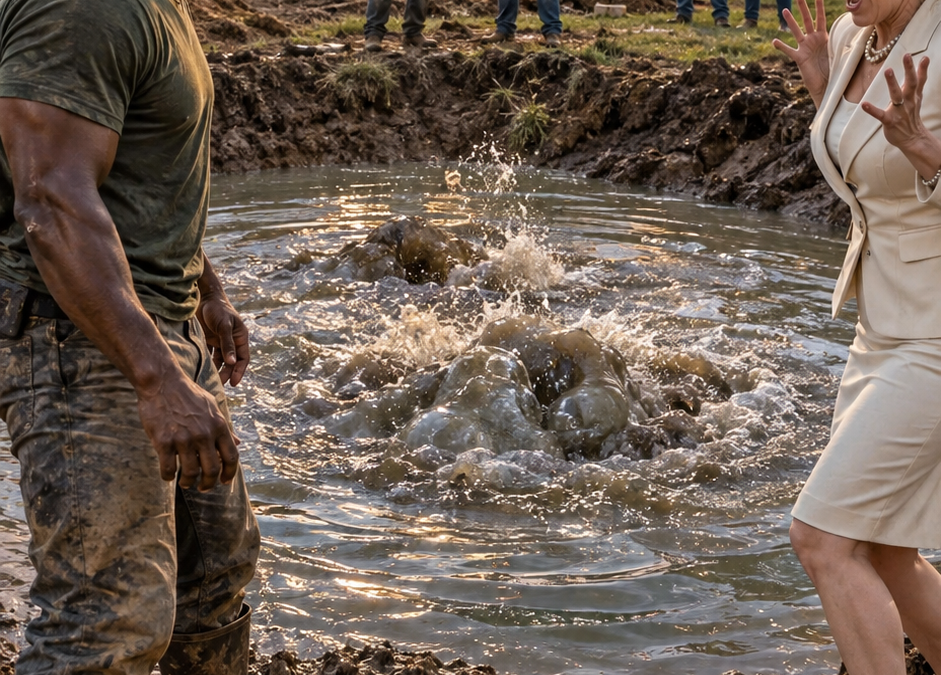
I walked outside in socks.
Small bubbles were rising near the center.
Not across the whole pond.
One area.
Slow.
Persistent.
The surveyor in me woke up immediately.
Localized gas release.
Possible organic decomposition.
Possible buried material.
Possible disturbed fill.
I forced the thought away.
Not my problem.
I wasn’t a geotechnical consultant anymore.
By Saturday, the pond smelled faintly chemical.
By Sunday, two fish floated near the edge.
By Monday morning, Cedar Hollow’s neighborhood app had transformed into an amateur environmental tribunal.
Wasn’t that warehouse land industrial before Ryan bought it?
My cousin works in remediation. This looks exactly like contamination.
Maybe something was buried there years ago.
That last one was technically correct.
They just had the wrong villain.
Nobody called me.
Nobody knocked on my door.
Within four days, I had somehow become both the man whose land had been excavated and the man responsible for whatever the excavation uncovered.
An impressive piece of community logic.
The mail carrier mentioned it casually.
“People are saying there might be runoff from your warehouse.”
I stood in my driveway holding three catalogs I didn’t want.
“I don’t store chemicals.”
She gave me a sympathetic nod.
The kind people give when they have already chosen what they believe but don’t want to be rude about it.
“I’m sure.”
That was worse.
Two days later, a certified letter arrived.
A petition.
Forty-one residents had signed a demand that county officials investigate my warehouse and consider suspending operations until contamination risks were resolved.
Diane had organized the signature sheets.
Her own signature was missing.
Naturally.
Why put your fingerprints on the knife when forty-one neighbors are willing to hold it for you?
I recognized names.
People I waved to.
A woman whose boat I had stored for two winters.
A retired teacher who borrowed my battery charger once.
Three people who had never asked me a single question about the pond.
I called the county.
That was when I first spoke with Harlan Voss.
Environmental inspection.
Tired voice.
No wasted words.
“Preliminary readings show elevated gas levels consistent with possible organic decomposition.”
“Coming from my warehouse property?”
“We’re still mapping the source.”
“Is the warehouse itself contaminated?”
“We don’t know.”
“Is the pond?”
“Sampling includes both areas.”
Then he said something casually.
“Funny. I surveyed around there years ago.”
I paused.
“You did?”
“Must’ve been twelve or thirteen years back.”
“Anything unusual?”
Another pause.
“Nothing I can discuss from memory.”
Then he changed the subject.
I let it go.
Two days later, county tape went up.
Not only around the pond.
Around part of my back lot.
Three customers canceled contracts that week.
The first was Deb.
She stored her late husband’s woodworking tools with me.
“I’m sorry, Ryan.”
“You don’t have to apologize.”
“I just don’t want the kids’ things near anything toxic.”
“There’s no evidence the warehouse is contaminated.”
“I know.”
She paused.
“But you understand.”
Of course I understood.
Understanding people while they damaged me was one of my specialties.
I spent that week walking warehouse aisles.
Checking inventory that had already been checked.
Straightening boxes that were already straight.
Anything to feel useful.
That was where Marisol Reyes found me.
She was a reporter for the local paper.
Young.
New press badge.
Notebook already open.
“Mr. Coyle?”
“Yes.”
“Marisol Reyes. Cedar Hollow Gazette.”
I almost said I had no comment.
Instead, she said:
“Something about this timeline doesn’t make sense.”
That got my attention.
“What part?”
“The HOA digs a pond on disputed land, something starts bubbling, and within four days the conversation becomes about shutting down your warehouse.”
She tilted her head.
“That’s fast.”
I invited her inside.
We drank terrible instant coffee from mismatched mugs while I told her everything.
The flyer.
The eleven feet.
The meeting.
Diane cutting me off.
The excavation.
The bubbles.
The petition.
Harlan’s strange comment about having surveyed the area years earlier.
Marisol wrote constantly.
When I finished, she closed the notebook.
“For what it’s worth, Mr. Coyle, I don’t think you’re the villain here.”
It was the first time in weeks anyone had said something that felt like belief.
I wanted to believe her because I needed somebody to.
That was my next mistake.
The county expanded its investigation.
My loading road was restricted “out of an abundance of caution.”
Every time a bureaucrat says “out of an abundance of caution,” somebody else is about to pay for their caution.
Trucks could no longer access my normal dock.
Customers had to use a narrow service road that added forty minutes and wasn’t designed for regular commercial traffic.
Four more customers left.
Then a property-management company terminated its overflow-storage contract.
I read the email standing between shelves of boxed furniture.
Effective immediately pending clarification of environmental concerns.
That account had paid a meaningful percentage of my monthly operating costs.
I ran numbers that night.
Mortgage.
Insurance.
Utilities.
Payroll.
The environmental flag had already triggered an increase in my insurance premium.
Every projection ended the same way.
I could be right and still go broke before anyone proved it.
That is a particular kind of terror people don’t discuss enough.
Truth does not automatically arrive before bankruptcy.
Diane knew that.
I realized exactly how well she knew it when she arrived at my house on a Thursday afternoon.
No appointment.
No warning.
She carried a thick folder.
I let her in.
Of course I did.
She sat at my kitchen table.
“Ryan, the board has discussed the situation extensively.”
“I’m sure.”
“We think there may be a clean solution.”
She slid the folder toward me.
Purchase offer.
The HOA would buy my warehouse parcel.
Sixty cents on the dollar relative to its pre-closure value.
I stared at the number.
“You call this fair?”
“Adjusted for current conditions.”
“Current conditions caused by your pond.”
Her expression didn’t change.
“The source of the environmental issue hasn’t been determined.”
“You dug the hole.”
“Under an easement interpretation the board believed was valid.”
“On land I told you was mine.”
“We disagree about the boundary.”
“We disagreed. Then you excavated before resolving it.”
She folded her hands.
“Ryan, how much longer can your warehouse survive?”
There it was.
Not a threat.
Something more elegant.
Math.
“Every week that access remains restricted costs you clients,” she continued. “I’m not saying that to pressure you.”
I almost laughed.
People usually announce they aren’t pressuring you immediately before explaining the exact pressure they intend to use.
“I’m saying somebody needs to be realistic.”
The offer expired Friday.
Twenty-four hours.
I sat with the paperwork.
She handed me a pen.
And because I was still me, I picked it up.
I wrote the first letter of my name.
R.
Then my phone buzzed.
Marisol.
Heads up before tomorrow’s story. My editor wants the angle on the 2019 county remediation grant your warehouse received. Wanted you to hear it from me first. Nothing personal—just how the story is shaping up.
I read it twice.
Remediation grant.
I had forgotten.
Years earlier, after I bought the warehouse, the county offered a small incentive program for older commercial properties.
The previous owner’s records had raised a minor historic-use flag.
Nothing serious.
I allowed soil testing, followed cleanup recommendations, completed everything required, and received a grant.
The site was cleared.
But that wasn’t how a headline would sound.
WAREHOUSE OWNER PREVIOUSLY RECEIVED REMEDIATION FUNDS AS NEW POND SHOWS CONTAMINATION
Nobody would read paragraph fourteen where the grant was explained.
Cedar Hollow would make it through the headline and proceed directly to execution.
I looked at Diane.
She was watching the pen.
Marisol had not come to save me.
She had come to interview a useful source.
If the story turned against me, she would follow it.
That didn’t make her evil.
It made her a reporter.
I was just stupid enough to confuse professional curiosity with loyalty.
Something inside me went quiet.
Not defeated quiet.
Different.
I set the pen down.
Diane noticed immediately.
“Problem?”
“I need time.”
“The offer expires tomorrow.”
“I heard you.”
“Ryan, delaying won’t improve your financial position.”
“Maybe not.”
I closed the folder.
“But I’m still not signing today.”
There was a small change in her face.
I almost missed it.
Not anger.
Annoyance.
She had expected surrender.
She stood.
“Friday.”
“I know.”
After she left, I remained at the kitchen table for twenty minutes.
Then I went upstairs.
Pulled down the old file box.
Found the manila folder I had nearly thrown away.
Halloway Grading and Fill.
I spread the old survey across the same kitchen table where Diane’s offer had been sitting.
And for the first time in years, I stopped thinking like a warehouse owner.
I thought like a surveyor.
Coordinates.
Elevation marks.
Parcel references.
Subdivision boundaries.
Drainage mapping.
It took nearly three hours before I saw it.
The old subdivision line ran farther east than the current county map.
Not by much.
A few dozen yards.
But enough.
Enough to include the exact ground beneath the new pond.
I pulled my current survey.
Compared them.
Checked coordinates again.
And again.
The footprint had changed sometime during the last fifteen years.
Land records don’t casually move.
Boundaries can be corrected.
Parcels can be consolidated.
Easements can be recorded.
But there should be a paper trail.
This looked like a piece of land had simply been edited out of the story.
I stayed awake until three in the morning.
Halloway.
Old subdivision.
Changed boundary.
Bubbling pond.
Harlan’s comment about having surveyed there thirteen years earlier.
For the first time, those things stopped feeling separate.
Friday morning came.
I did not sign Diane’s offer.
Instead, I went to the county records office.
The clerk pulled Halloway’s old corporate filings.
Permits.
Project documents.
Environmental disclosures.
The company had existed for nine years before dissolving.
Its final registered-agent paperwork listed one name that made me sit very still.
C. Banister.
Cliff Banister.
Cedar Hollow HOA vice president.
The man who had approached me after that first meeting.
For what it’s worth, I think the boundary thing is worth looking into properly.
The reasonable one.
The helpful one.
I sat in my truck with the folder on the passenger seat.
It hurt more than learning Diane had been working against me.
Diane had never pretended to be my friend.
Cliff had offered just enough sympathy to make himself feel decent without risking anything.
The records showed Halloway had worked on one major subdivision project before dissolving.
Development stopped suddenly after an unresolved environmental concern.
No detailed public remediation record.
No completed subdivision.
The company disappeared within a year.
And the land sat undisturbed.
Until Cedar Hollow dug a pond into it.
I did not call Cliff.
That was another change in me.
Old Ryan would have wanted an explanation.
New Ryan wanted evidence.
I searched for former Halloway employees.
Dead end.
Dead end.
Another dead end.
Then a former payroll processor gave me a name.
Norah Pelletier.
Halloway’s in-house bookkeeper during its final two years.
She lived two counties away.
When I called, she went silent after I said Halloway.
Then she said:
“I wondered if somebody would ever ask.”
We met at a diner.
She arrived carrying a folder.
Gray hair.
Sharp eyes.
A woman who looked like she had been waiting fifteen years for someone to ask the right question.
“What happened at that development?” I asked.
Norah wrapped both hands around her coffee.
“Halloway needed money.”
“That simple?”
“At first.”
She explained.
A manufacturing client needed industrial waste disposed of.
Proper disposal was expensive.
Halloway had undeveloped land.
Money changed hands.
Loads began arriving.
“What kind of waste?”
“Solvents. Process sludge. Drums sometimes.”
My stomach tightened.
“And they buried it?”
“Yes.”
“On the subdivision site?”
“Yes.”
“How many people knew?”
“Enough.”
“Cliff?”
She looked down.
“Cliff signed documents.”
“So he organized it?”
“No.”
That surprised me.
“He wasn’t the smart one,” Norah said.
“Excuse me?”
“He was useful. He signed what somebody put in front of him. He asked fewer questions if the check cleared.”
“Who was actually arranging it?”
Norah hesitated.
“For a long time, nobody used her real name.”
“Her?”
“She negotiated with the manufacturing client.”
“Who?”
She gave me a maiden name.
It meant nothing for about two seconds.
Then she explained who later carried that name after marriage.
Diane Marsh.
I stopped breathing for a moment.
“Diane?”
“She came to the site.”
“How often?”
“Enough.”
“To see the dumping?”
“To know where it was.”
I sat back.
Everything rearranged.
The pond wasn’t an innocent beautification project that accidentally uncovered contamination.
Diane knew contaminated material had been buried there.
Maybe she didn’t know exactly what condition it would be in fifteen years later.
But she knew the history.
She knew the location.
She knew Cliff’s connection.
And she pushed an excavation into that exact area.
“Why?” I asked.
Norah shrugged.
“I can’t tell you what she’s thinking now.”
Fair.
That mattered.
Evidence tells you what happened.
It doesn’t automatically tell you why.
But I could see possibilities.
Maybe Diane wanted the site disturbed under HOA control before some future development exposed it unexpectedly.
Maybe she hoped the pond project could make the contamination look newly discovered and environmentally ambiguous.
Maybe once it surfaced, buying my property would give the HOA control over the most inconvenient neighboring parcel.
What I could prove was simpler.
Diane knew Halloway.
She knew the dumping.
And she had never disclosed that connection while promoting excavation.
That was enough.
Before we left, I asked Norah why she never reported it.
She stared at me.
“I had two children and a mortgage.”
I said nothing.
“I was paid through a company that wasn’t exactly clean either,” she continued. “If I walked into county offices, I was reporting myself too.”
“I understand.”
And I did.
Three months earlier, maybe I would have judged her quietly.
Now I understood silence too well.
Silence rarely begins with cowardice.
Usually it starts with one practical reason.
Then another.
Then enough time passes that speaking becomes more frightening than staying quiet.
I asked if she would sign a statement.
She agreed.
I called Harlan next.
This time, I did not dance around the question.
“Were you involved in a Halloway contamination report around 2011 or 2012?”
Silence.
Then:
“Yes.”
“What did you find?”
“Enough that I recommended full remediation.”
“Was it done?”
“No.”
“Why?”
“I filed the report.”
He exhaled.
“Then I was told the matter had been resolved administratively.”
“By who?”
“People above me.”
“Did you believe it was resolved?”
“No.”
“What happened to your report?”
“I kept a copy.”
Thirteen years.
He had kept it thirteen years.
“I’ve been waiting for that site to come back up somewhere I could actually do something,” he said.
Suddenly I understood his earlier hesitation.
He hadn’t been covering for the county.
He had been testing whether an old ghost had returned.
“Harlan, if Cedar Hollow holds a public meeting, will you bring that report?”
“I’ll carry it myself.”
For the first time since the pond bubbles began, I smiled.
Then I called Diane.
She answered on the second ring.
“Ryan.”
“I won’t be accepting the offer.”
Pause.
“I think that’s unfortunate.”
“I’d also like time at the next general meeting.”
“For what?”
“To present documentation regarding the pond site.”
Another pause.
Longer.
“What documentation?”
“I’ll bring copies.”
“Ryan, if this is another boundary complaint—”
“It isn’t.”
Her voice cooled.
“What is it?”
“I’ll explain at the meeting.”
I could practically feel her trying to decide how much I knew.
Then she did what people in control often do when they still think they can control the room.
She agreed.
Forty-one people had signed the petition against me.
Almost every one attended that meeting.
Same room.
Same folding chairs.
Same fluorescent lights.
Same podium.
Three months earlier, I had made it one sentence before Diane cut me off.
This time I arrived forty minutes early.
I put documents on a folding table.
Old survey.
Current survey.
Halloway incorporation records.
Cliff’s corporate filing.
Norah’s notarized statement.
Harlan’s original environmental report.
No PowerPoint.
No projector.
Nothing Diane could turn off.
Paper.
A remarkably durable technology.
Harlan arrived carrying an old file.
“You ready?” he asked.
“No.”
He nodded.
“Good.”
I looked at him.
“That’s encouraging.”
“People who think they’re ready usually talk too much.”
Fair.
Diane opened the meeting.
Calm voice.
Warm smile.
She thanked everyone for patience.
Described the contamination investigation as ongoing.
Said the HOA remained committed to protecting residents.
Then she referred to my warehouse as “the commercial parcel adjacent to the affected area.”
Very careful wording.
Not my pond.
Not my land.
Adjacent.
When she asked for resident comments, I stood.
Her eyes found mine.
“Ryan.”
“I’d like to present the documentation I mentioned.”
“Keep it concise.”
Three months earlier, that sentence would have shrunk me.
This time I smiled.
“I’ll take the time necessary to explain it accurately.”
A few heads turned.
Diane noticed.
I walked forward.
First document.
“This is the survey prepared when I purchased my property.”
I showed the boundary.
“The pond excavation extends approximately eleven feet beyond the line recognized by this survey.”
Diane interrupted.
“We’ve discussed the easement issue.”
“I’m not finished.”
The room went quiet.
It sounds ridiculous.
Three words.
But they were probably the most important words I said all year.
Diane stared at me.
I continued.
“This is a topographic survey from approximately fifteen years ago showing the development footprint before the current Cedar Hollow mapping.”
I placed them side by side.
“The recorded boundaries differ.”
Residents leaned forward.
“Why?” someone asked.
“That’s what I wanted to know.”
Next document.
“Halloway Grading and Fill.”
I explained the abandoned subdivision project.
The environmental flag.
The corporate dissolution.
Then:
“One of Halloway’s registered corporate agents was Cliff Banister.”
Everyone looked toward Cliff.
His face drained.
Diane moved immediately.
“Ryan, Mr. Banister’s prior employment history has no established connection to the current pond issue.”
“I agree.”
That surprised her.
“I’m not asking anyone to guess.”
I picked up Norah’s statement.
“So I found someone who worked there.”
Cliff stared at me.
I read only the relevant portions.
Industrial waste.
Unpermitted burial.
Abandoned development.
Then the name.
Diane’s maiden name.
The room changed.
Diane recovered instantly.
That was her talent.
“I had peripheral contact with Halloway years before Cedar Hollow existed in its present form.”
I held up another document.
“According to this statement, you visited the dumping site personally.”
“That is one person’s recollection from fifteen years ago.”
“Correct.”
“Someone who isn’t here.”
“Also correct.”
She almost smiled.
Then Harlan stood.
“My report is here.”
Diane’s face finally moved.
Not much.
But enough.
Harlan walked forward.
“My name is Harlan Voss. I conducted an environmental inspection of the Halloway site thirteen years ago.”
He placed the file on the table.
“I identified evidence consistent with unauthorized industrial waste disposal and recommended soil sampling, groundwater monitoring, and a formal remediation order.”
Someone asked:
“What happened?”
Harlan looked toward the room.
“The file was closed above my level.”
“Why?”
“I was never given an explanation I considered adequate.”
A woman in the second row whispered:
“Oh my God.”
Harlan continued.
“The location identified in my original report overlaps the current pond excavation.”
That sentence ended Diane’s control of the meeting.
Voices exploded.
People stood.
Someone demanded to know why the HOA had dug there.
Someone asked whether Diane knew.
Cliff stared at the exit.
Diane raised both hands.
“Everyone, please—”
I almost smiled.
Three months earlier, she had silenced me in one sentence.
Now forty people were talking over her.
Justice does occasionally have a sense of humor.
Eventually the room quieted.
Diane stood.
“I want to be very clear. I had no knowledge of any unresolved contamination issue when this pond project was approved.”
I picked up Norah’s statement.
“Norah Pelletier says you knew waste was buried there.”
“That is an allegation.”
“Yes.”
“And she is not present for questioning.”
“Correct.”
I kept my voice steady.
“I’m not asking this room to convict anyone. I’m asking why someone with a documented historic connection to a company associated with buried industrial waste promoted an excavation project on the same site without disclosing that connection.”
Silence.
That was the difference.
Old Ryan would have tried to prove too much.
New Ryan understood that a good question, properly supported, can be more dangerous than an accusation.
Cliff suddenly spoke.
“Diane knew about Halloway.”
She turned.
“Cliff.”
He looked miserable.
“I’m not saying she knew what would happen with the pond.”
“Cliff.”
“But she knew.”
“You need to stop talking.”
That was a mistake.
Everyone heard it.
Not:
That isn’t true.
Not:
You’re mistaken.
Stop talking.
Cliff looked at her.
Then at us.
And something broke.
“I told her we shouldn’t dig there.”
The room erupted again.
Diane’s face went white.
“You approved the project.”
“I voted for it.”
“That is approval.”
“You told us the county easement gave us access and that the site history had been cleared years ago.”
“Because that was the information I had.”
“You had more information than everyone else.”
Diane’s voice sharpened.
“So did you.”
There it was.
Two people who had spent months protecting each other had just started deciding who would drown first.
Then Marisol stood from the back.
I hadn’t invited her.
Hadn’t told her what I found.
She held up her phone.
“I have county grant and dissolution records on Halloway that nobody would explain to me three years ago.”
Diane looked at her.
Marisol continued.
“Does either current HOA officer want to explain why a defunct grading company tied to an unresolved contamination report has connections to both of you?”
She wasn’t helping me.
Not really.
She was doing her job.
For once, her job and my interests pointed in the same direction.
I could live with that.
Diane tried one final move.
“This meeting is becoming irresponsible. These are historical allegations unrelated to the immediate public-health response.”
Harlan answered.
“The historical disposal site is the immediate public-health response.”
Hard to argue with that.
Someone in the audience shouted:
“What about Ryan’s warehouse?”
Another person:
“Did we sign a petition against the wrong guy?”
Then Deb stood.
She had signed it.
“I did.”
She looked toward me.
“I’m sorry.”
Another resident said:
“We all did.”
Not everyone.
But enough.
The petition that had nearly shut down my business suddenly became Exhibit A in how effectively fear had been redirected.
The board called an emergency executive session.
Diane objected.
For the first time, nobody cared.
Within days, she was removed as HOA president pending investigation.
Cliff resigned before they could formally remove him.
The county reopened the Halloway file.
This time there were too many witnesses, too many documents, and too much public attention for it to quietly disappear.
Investigators sampled the pond.
Then the surrounding soil.
Then deeper fill beneath the excavation.
They found buried industrial contamination consistent with Harlan’s old report.
The warehouse itself was not the source.
That sentence arrived in writing.
I printed three copies.
One for my insurer.
One for my lawyer.
One for my desk.
The access restrictions were eventually lifted.
My warehouse reopened fully six weeks later.
Not everything came back.
Three former customers returned.
Two didn’t.
Gerald moved his mother’s furniture elsewhere and stayed there.
At first, that bothered me.
Then I realized recovery didn’t require reversing every loss.
Sometimes surviving with scars is still winning.
Deb returned one afternoon carrying a folded note.
She had already put another copy in my mailbox.
“I should’ve asked you.”
“You were scared.”
“That’s not an excuse.”
“No.”
She blinked, surprised.
Old Ryan would have rescued her from the discomfort.
It’s okay.
Don’t worry about it.
Anybody would’ve done the same.
I didn’t.
She deserved the dignity of making a real apology.
And I deserved the dignity of receiving one without immediately erasing it.
Finally, I said:
“I appreciate you saying that.”
She brought her husband’s woodworking equipment back the following week.
Harlan’s old report became part of the official remediation file.
Thirteen years after he wrote it.
I met him once while county crews were removing contaminated soil.
He stood beside me watching excavators load material into sealed trucks.
“Should’ve happened years ago,” he said.
“You tried.”
“Not hard enough.”
I looked at him.
“That sentence can eat a person alive.”
He smiled slightly.
“Speaking from experience?”
“Apparently.”
The county investigation moved slowly.
Cliff cooperated.
Of course he did.
People who spend years standing beside somebody stronger tend to become remarkably talkative when they realize they may be left holding the consequences.
He admitted signing Halloway documents and participating in records that investigators believed concealed the nature of the disposal operation.
Diane faced separate scrutiny regarding her historical involvement and the later pond project, including questions about what she knew when promoting excavation and whether she attempted to obscure or redirect attention after contamination appeared.
I never pretended every accusation was already proven.
That wasn’t necessary.
She had lost the position that gave her power over everyone else.
She had lost the narrative.
And she had lost the one thing she seemed to value most:
The ability to decide which questions were allowed to be asked.
Marisol’s article ran two days after the meeting.
Front page.
Not the story she had first expected.
The warehouse remediation grant appeared in one paragraph.
Properly explained.
Clean.
Resolved years earlier.
Halloway dominated the story.
So did the old county report.
So did the undisclosed connections.
She called me the morning it published.
“I checked the grant thoroughly.”
“I noticed.”
“It was clean.”
“I knew that.”
Pause.
“I was probably going to use it harder before all this came out.”
“I know.”
“You’re not angry?”
“I didn’t say that.”
She laughed once.
“Fair.”
Then she asked whether I would sit for a longer follow-up interview.
“I’ll think about it.”
“Is that a polite no?”
“No.”
That surprised both of us.
“It means I’ll think about it.”
Look at me.
Using words according to their actual meaning.
Growth.
The pond remained closed during remediation.
County contractors removed contaminated fill.
Groundwater wells went in.
The decorative rocks disappeared.
So did the benches.
Eventually, the pond was reshaped into a monitored wetland basin under county oversight.
No HOA rendering.
No ribbon-cutting.
No Diane Marsh smiling beside a shovel.
Just engineers, environmental technicians, and paperwork.
Boring.
Expensive.
Honest.
I preferred it.
Then, months after the meeting, Diane came to my house.
No folder.
No offer.
No board authority.
I almost didn’t let her in.
Then curiosity won.
She sat at the same kitchen table.
For a while, neither of us spoke.
Finally, she said:
“When did you change?”
I frowned.
“What?”
“You.”
She looked around my kitchen.
“The first meeting, you had documents and still sat down when I told you to.”
“I remember.”
“At your house, you nearly signed the offer.”
“I remember that too.”
“Then suddenly you became…”
She stopped.
“Difficult?”
Her mouth tightened.
“I was going to say relentless.”
“Difficult is probably more honest.”
She looked at me.
“When?”
I thought about it.
Marisol’s text.
The old survey.
The county office.
Norah.
Harlan.
Standing in that meeting and saying:
I’m not finished.
“I don’t know.”
“That’s not an answer.”
“It’s the only true one.”
I leaned back.
“I don’t think people change in one moment as often as we pretend they do.”
Diane said nothing.
“I think eventually you get tired of paying the price for being the person everybody expects to surrender.”
She looked down at her hands.
“For what it’s worth, I never thought you were weak.”
“No?”
“No.”
She looked up.
“I thought you were reasonable.”
I laughed.
“That sounds nicer.”
“It was.”
“For you.”
She absorbed that.
“Yes.”
There it was.
Probably the most honest thing she ever said to me.
She had not selected me because she thought I was stupid.
She selected me because she thought I would behave reasonably even while everyone around me behaved unreasonably.
She counted on restraint.
On politeness.
On my habit of doubting myself before doubting somebody with authority.
That was more dangerous than seeing me as weak.
It meant she knew exactly which virtues could be weaponized against me.
“You knew about the waste,” I said.
She didn’t answer.
“Why dig there?”
Still nothing.
“I’m not asking for investigators.”
“I know.”
“Then why?”
She looked toward the window.
For a second, she looked genuinely old.
“Twelve years of knowing something is there changes how you think.”
“Fifteen.”
Her eyes returned to mine.
“Apparently.”
“You thought you could control it.”
“I thought it could be dealt with.”
“By digging a pond?”
“By changing the site.”
“That doesn’t make contaminated soil disappear.”
“No.”
“So what did you think would happen?”
Her jaw tightened.
“That’s enough.”
I nodded.
“Okay.”
She stood.
Old me would have followed.
Opened the door.
Said something soft.
Maybe:
I hope things work out.
I remained seated.
Diane walked toward the door alone.
She stopped.
Looked back.
“You’re not going to walk me out?”
“No.”
It was petty.
Tiny.
Almost meaningless.
It felt magnificent.
She left.
I found the unsent email a few weeks later.
The one I had drafted before the bubbles.
If there is a form I need to sign acknowledging the boundary adjustment, I’m willing to sign it.
I stared at it for a long time.
If I had sent that email, Diane could have argued I acknowledged the boundary change voluntarily.
Maybe it wouldn’t have been decisive.
Maybe my survey still would have protected me.
Maybe a lawyer could have undone it.
But I would have handed her something she never had.
My consent.
I deleted the draft.
Then changed my mind.
I restored it and printed it.
I keep the page inside the old Halloway folder.
A reminder.
Not of Diane.
Of me.
The version who almost gave away eleven feet of land because being agreeable felt easier than being correct.
There’s another artifact in that folder.
The wrong-number note I scribbled while talking to the man looking for pizza.
Pepperoni.
Large.
Extra cheese.
I kept that too.
Because if the phone hadn’t rung, I might have thrown the Halloway survey away.
People like clean lessons.
They want the moral to be:
Always trust your instincts.
Or:
Stand up for yourself.
Or:
Never trust an HOA president with a landscaping budget.
That last one is admittedly useful.
But my actual lesson is messier.
Sometimes your life turns because of preparation.
Sometimes courage.
Sometimes evidence.
And sometimes because a stranger called the wrong number at exactly the right moment and delayed you long enough not to throw away the document that eventually explained everything.
I still walk behind the warehouse some evenings.
The area looks different now.
The county planted native grasses.
Cattails returned.
Two ducks made themselves permanent residents.
The water no longer bubbles.
Environmental monitors still test it.
Harlan says the readings continue improving.
I trust him.
Not blindly.
That is another change.
I trust documents.
I trust evidence.
I trust people provisionally.
That sounds colder than I mean it.
It is actually more respectful.
Blind trust asks people to be perfect.
Evidence lets them be human.
The warehouse recovered.
Slowly.
Business improved.
My insurance eventually returned close to normal.
I expanded the west storage wing the following year.
Before construction, I hired a surveyor.
Then another surveyor to verify the first one.
The contractor laughed.
“You really like boundary markers.”
“You have no idea.”
I also changed how I dealt with problems.
When a customer violated storage terms, I called.
When a contractor missed deadlines, I said so.
When the county sent an incorrect assessment, I challenged it in writing.
Nothing dramatic.
No screaming.
No threats.
Just sentences I used to avoid.
No.
That isn’t acceptable.
Show me where that is written.
I disagree.
I’m not finished.
Four phrases.
Apparently civilization survives them.
The forty-one-signature petition ended up in my desk too.
I kept that one for a different reason.
Every signature reminds me how fast a group of decent people can become unfair when fear gives them a simple story.
Most of those neighbors weren’t cruel.
They were scared.
The pond smelled wrong.
Fish died.
The county taped off land.
Someone told them the warehouse might be responsible.
Then Diane gave them a petition.
Signing required less effort than investigating.
That is how narratives win.
Not because everyone is malicious.
Because certainty is comfortable.
Questions are work.
Diane understood that better than anyone.
For months, she controlled Cedar Hollow by controlling which story required the least effort to believe.
Strange warehouse owner.
Industrial property.
Old remediation grant.
Contaminated pond.
Simple.
The truth was annoying.
Old grading company.
Hidden disposal.
Changed land records.
County report.
Corporate agent.
Maiden name.
Fifteen-year timeline.
Nobody wants that story until somebody lays every piece on a table.
So I did.
And that became the difference.
Not courage in the dramatic sense.
No heroic speech.
No moment where the whole room magically applauded me.
Just documents.
Questions.
And the decision not to sit down when Diane expected me to.
Months after the county opened its investigation, Cedar Hollow held another general meeting.
I attended.
Not because I needed anything.
Because I wanted to see whether the room felt different.
A new president ran it.
First agenda item:
Transparency standards for capital projects.
Second:
Independent review of property boundaries before any future HOA construction.
Third:
Written disclosure of conflicts involving board officers.
I almost laughed.
Apparently my eleven feet had become educational.
Cliff’s old chair remained empty.
Diane’s name never appeared on the agenda.
When resident comments opened, nobody cut anyone off.
One man spoke for nine straight minutes about mailbox paint.
Progress has limits.
Afterward, a woman approached me.
I recognized her as one of the people who had laughed when someone said:
“It’s just a pond, man.”
She looked embarrassed.
“I owe you an apology.”
“You don’t owe me anything.”
Then I stopped.
Old reflex.
Rescuing her.
I corrected myself.
“Actually, yes. I think you probably do.”
Her eyes widened.
Then she laughed.
“You really have changed.”
“So I’m told.”
“I’m sorry.”
“Thank you.”
That was enough.
I went home.
Walked behind the warehouse.
Stood at the fence.
There was no yellow county tape anymore.
No excavators.
No crowd.
Just water.
Cattails.
Ducks.
Wind.
I thought about the first morning I stood there in socks watching bubbles rise.
Back then, I thought the worst thing beneath that pond might be industrial contamination.
I was wrong.
The contamination was bad.
It cost money.
It hurt people.
It damaged land.
But chemicals weren’t what almost took my warehouse.
Silence was.
Mine.
Cliff’s.
Norah’s.
The county officials who shelved Harlan’s report.
The board members who never asked why Diane was so determined to dig there.
Forty-one residents who signed before questioning.
Fifteen years of people deciding saying nothing was easier than starting trouble.
That was what had really been buried.
The pond just brought it back to the surface.
Diane had tried to buy my property at sixty cents on the dollar while I was losing customers, while the county tape was still up, while half the neighborhood believed I had poisoned their water.
For a few seconds, it worked.
The pen touched paper.
My name had already begun.
She almost got exactly what she wanted.
But she made one mistake.
She assumed the version of me sitting across that kitchen table was permanent.
He wasn’t.
He was tired.
He was scared.
He was financially cornered.
But he was not permanent.
That night, I unfolded an old survey.
Then another.
Then another.
And every document made the next sentence easier.
No.
Show me.
Explain this.
I’m not finished.
By the time Diane understood that, forty-one people were sitting in folding chairs watching her past rise to the surface just as slowly and inevitably as those bubbles had risen through the pond.
She lost the presidency.
Cliff lost his position.
The old contamination case reopened.
The county finally began the cleanup it should have ordered thirteen years earlier.
My warehouse survived.
And the eleven feet Diane treated like something too small to fight over?
They are still mine.
I had the boundary monument reset after remediation.
Stainless steel cap.
Survey number stamped cleanly into the top.
Probably excessive.
I like it.
Sometimes I walk past it and remember Diane saying:
“It’s just a pond.”
No.
It never was.
It was eleven feet of land.
A fifteen-year-old secret.
Forty-one signatures.
One unsigned purchase offer.
And the first time in my adult life I learned that being reasonable does not require allowing unreasonable people to decide where you stop.
The water stopped bubbling eventually.
The truth didn’t.
And once it finally reached the surface, there wasn’t enough dirt in Cedar Hollow to bury it again.
Have you finished reading the story and want to read it again?
HOA Dug a Pond on My Property—Then the Water Started Bubbling and Their Secret Came Up With It
The HOA dug a pond on my land without permission.
Then the water started bubbling.
What surfaced next had been buried for fifteen years.
The county sealed off two acres behind my warehouse on a Tuesday morning.
By Tuesday afternoon, nobody in Cedar Hollow seemed willing to tell me why.
Not the county inspector stretching yellow tape between the trees.
Not Diane Marsh, the HOA president who had pushed the pond project through.
Not even the water itself.
The pond sat thirty yards behind my loading dock, dark and unnaturally still except for slow bubbles rising near the center.
Not random bubbles.
Clusters.
Regular.
Localized.
The kind of pattern that made an old, unused part of my brain whisper one phrase before I could stop it.
Gas venting.
My name is Ryan Coyle.
I was forty-one years old, owned a small warehouse on the edge of Cedar Hollow, and had spent most of my adult life perfecting a skill nobody should be proud of.
Avoiding conflict.
Before I bought the warehouse, I worked for a geotechnical consulting firm.
Soil composition.
Groundwater movement.
Slope stability.
Contamination risk.
I could read land better than I could read people.
Unfortunately, reading land was only half the job.
Sometimes you had to look a developer in the eye and say:
If you build here, you may contaminate groundwater.
Or:
That slope is unstable.
Or:
The soil test came back wrong, and your million-dollar project needs to stop.
I was good at finding problems.
I was terrible at forcing people to hear them.
My supervisor eventually noticed.
He never fired me.
That would have required a direct conversation.
Instead, he gradually reassigned every project requiring an unpopular opinion to someone else until my job became paperwork and routine inspections.
Eventually, I understood the message.
I quit.
Then I bought an old warehouse on six acres at the edge of town and started storing furniture, boats, vehicles, and commercial inventory for people who lacked space.
Simple business.
Quiet business.
Nobody asked me whether a subdivision would poison a watershed.
Nobody yelled because I told them a foundation plan was wrong.
For six years, I thought I had finally built a life where having an opinion was optional.
Then Cedar Hollow HOA decided a drainage ditch behind my warehouse needed to become a decorative pond.
I discovered their plan from a flyer stapled to a telephone pole.
Not a certified notice.
Not an easement request.
Not a phone call.
A flyer.
It showed an artist’s rendering of a landscaped pond surrounded by ornamental rocks, benches, and flowering shrubs.
The rendering was lovely.
There was only one minor defect.
Most of the pond was sitting on my land.
I knew because I still had the survey from when I bought the property.
The line ran approximately eleven feet farther toward Cedar Hollow than the HOA appeared to think it did.
I called the office.
Politely.
Of course.
The receptionist told me Diane Marsh would “address any concerns” at the next general meeting.
So I attended.
Forty residents sat in folding chairs while Diane stood at the front beneath fluorescent lights wearing the calm expression of a woman who had never once considered the possibility that someone might finish a sentence after she decided they were done speaking.
I stood with my survey folder.
“I have documentation showing the boundary extends approximately eleven feet beyond where the proposed excavation—”
Diane smiled.
“Ryan, we’ve been over this.”
I stopped.
Someone behind me muttered:
“It’s just a pond.”
A couple people laughed.
And I did what I had been doing my entire life.
I sat down.
Three weeks later, the excavator arrived.
PART2
I watched from my warehouse office as the machine tore into the ground behind my fence.
Dark soil rolled out of the bucket.
My old boundary markers disappeared.
Then part of my fence came down.
I should have called a lawyer that morning.
I should have filed an injunction.
I should have walked outside with the survey and stopped the operator before the first bucket hit dirt.
Instead, I watched.
That sentence is embarrassing to write even now.
I watched people dig a hole on land I believed belonged to me because challenging them felt harder than enduring them.
That evening, I opened an email to Diane.
I wrote:
The excavation appears to extend onto my parcel according to the survey prepared when I purchased the property.
Deleted it.
Too confrontational.
I tried again.
I may be misunderstanding the easement boundaries and would appreciate clarification.
Better.
Then a third version.
If there is a form I need to sign acknowledging a boundary adjustment, I’m willing to review it.
That was the version I almost sent.
Not a complaint.
A surrender disguised as cooperation.
I left it in drafts and went upstairs to clear out old boxes.
Work files.
Clothes.
Documents from the geotechnical firm.
Evidence of a life I had deliberately stopped thinking about.
Near the bottom of one box was an unlabeled manila folder containing an old topographic survey from a subdivision project fifteen years earlier.
Halloway Grading and Fill.
I barely remembered the company.
I put the folder on the recycling pile.
Then my landline rang.
Someone looking for a pizza place.
Wrong number.
By the time I finished explaining that no, I could not deliver a pepperoni pizza because this was a private residence and had been for several years, I forgot what I had been doing.
The folder went back onto the box.
That ridiculous accident would eventually save my property.
At the time, it meant nothing.
The pond was completed.
For about two weeks, Cedar Hollow loved it.
People posted pictures.
Kids threw bread to ducks that hadn’t even officially moved in yet.
Diane published a community message praising “resident-driven beautification.”
I considered replying that at least eleven feet of the resident-driven beautification was sitting on a resident who had not driven any of it.
I didn’t.
Then the bubbles started.
A neighbor texted me at seven in the morning.
Did you see the pond? Something’s weird with the water.
I walked outside in socks.
Small bubbles were rising near the center.
Not across the whole pond.
One area.
Slow.
Persistent.
The surveyor in me woke up immediately.
Localized gas release.
Possible organic decomposition.
Possible buried material.
Possible disturbed fill.
I forced the thought away.
Not my problem.
I wasn’t a geotechnical consultant anymore.
By Saturday, the pond smelled faintly chemical.
By Sunday, two fish floated near the edge.
By Monday morning, Cedar Hollow’s neighborhood app had transformed into an amateur environmental tribunal.
Wasn’t that warehouse land industrial before Ryan bought it?
My cousin works in remediation. This looks exactly like contamination.
Maybe something was buried there years ago.
That last one was technically correct.
They just had the wrong villain.
Nobody called me.
Nobody knocked on my door.
Within four days, I had somehow become both the man whose land had been excavated and the man responsible for whatever the excavation uncovered.
An impressive piece of community logic.
The mail carrier mentioned it casually.
“People are saying there might be runoff from your warehouse.”
I stood in my driveway holding three catalogs I didn’t want.
“I don’t store chemicals.”
She gave me a sympathetic nod.
The kind people give when they have already chosen what they believe but don’t want to be rude about it.
“I’m sure.”
That was worse.
Two days later, a certified letter arrived.
A petition.
Forty-one residents had signed a demand that county officials investigate my warehouse and consider suspending operations until contamination risks were resolved.
Diane had organized the signature sheets.
Her own signature was missing.
Naturally.
Why put your fingerprints on the knife when forty-one neighbors are willing to hold it for you?
I recognized names.
People I waved to.
A woman whose boat I had stored for two winters.
A retired teacher who borrowed my battery charger once.
Three people who had never asked me a single question about the pond.
I called the county.
That was when I first spoke with Harlan Voss.
Environmental inspection.
Tired voice.
No wasted words.
“Preliminary readings show elevated gas levels consistent with possible organic decomposition.”
“Coming from my warehouse property?”
“We’re still mapping the source.”
“Is the warehouse itself contaminated?”
“We don’t know.”
“Is the pond?”
“Sampling includes both areas.”
Then he said something casually.
“Funny. I surveyed around there years ago.”
I paused.
“You did?”
“Must’ve been twelve or thirteen years back.”
“Anything unusual?”
Another pause.
“Nothing I can discuss from memory.”
Then he changed the subject.
I let it go.
Two days later, county tape went up.
Not only around the pond.
Around part of my back lot.
Three customers canceled contracts that week.
The first was Deb.
She stored her late husband’s woodworking tools with me.
“I’m sorry, Ryan.”
“You don’t have to apologize.”
“I just don’t want the kids’ things near anything toxic.”
“There’s no evidence the warehouse is contaminated.”
“I know.”
She paused.
“But you understand.”
Of course I understood.
Understanding people while they damaged me was one of my specialties.
I spent that week walking warehouse aisles.
Checking inventory that had already been checked.
Straightening boxes that were already straight.
Anything to feel useful.
That was where Marisol Reyes found me.
She was a reporter for the local paper.
Young.
New press badge.
Notebook already open.
“Mr. Coyle?”
“Yes.”
“Marisol Reyes. Cedar Hollow Gazette.”
I almost said I had no comment.
Instead, she said:
“Something about this timeline doesn’t make sense.”
That got my attention.
“What part?”
“The HOA digs a pond on disputed land, something starts bubbling, and within four days the conversation becomes about shutting down your warehouse.”
She tilted her head.
“That’s fast.”
I invited her inside.
We drank terrible instant coffee from mismatched mugs while I told her everything.
The flyer.
The eleven feet.
The meeting.
Diane cutting me off.
The excavation.
The bubbles.
The petition.
Harlan’s strange comment about having surveyed the area years earlier.
Marisol wrote constantly.
When I finished, she closed the notebook.
“For what it’s worth, Mr. Coyle, I don’t think you’re the villain here.”
It was the first time in weeks anyone had said something that felt like belief.
I wanted to believe her because I needed somebody to.
That was my next mistake.
The county expanded its investigation.
My loading road was restricted “out of an abundance of caution.”
Every time a bureaucrat says “out of an abundance of caution,” somebody else is about to pay for their caution.
Trucks could no longer access my normal dock.
Customers had to use a narrow service road that added forty minutes and wasn’t designed for regular commercial traffic.
Four more customers left.
Then a property-management company terminated its overflow-storage contract.
I read the email standing between shelves of boxed furniture.
Effective immediately pending clarification of environmental concerns.
That account had paid a meaningful percentage of my monthly operating costs.
I ran numbers that night.
Mortgage.
Insurance.
Utilities.
Payroll.
The environmental flag had already triggered an increase in my insurance premium.
Every projection ended the same way.
I could be right and still go broke before anyone proved it.
That is a particular kind of terror people don’t discuss enough.
Truth does not automatically arrive before bankruptcy.
Diane knew that.
I realized exactly how well she knew it when she arrived at my house on a Thursday afternoon.
No appointment.
No warning.
She carried a thick folder.
I let her in.
Of course I did.
She sat at my kitchen table.
“Ryan, the board has discussed the situation extensively.”
“I’m sure.”
“We think there may be a clean solution.”
She slid the folder toward me.
Purchase offer.
The HOA would buy my warehouse parcel.
Sixty cents on the dollar relative to its pre-closure value.
I stared at the number.
“You call this fair?”
“Adjusted for current conditions.”
“Current conditions caused by your pond.”
Her expression didn’t change.
“The source of the environmental issue hasn’t been determined.”
“You dug the hole.”
“Under an easement interpretation the board believed was valid.”
“On land I told you was mine.”
“We disagree about the boundary.”
“We disagreed. Then you excavated before resolving it.”
She folded her hands.
“Ryan, how much longer can your warehouse survive?”
There it was.
Not a threat.
Something more elegant.
Math.
“Every week that access remains restricted costs you clients,” she continued. “I’m not saying that to pressure you.”
I almost laughed.
People usually announce they aren’t pressuring you immediately before explaining the exact pressure they intend to use.
“I’m saying somebody needs to be realistic.”
The offer expired Friday.
Twenty-four hours.
I sat with the paperwork.
She handed me a pen.
And because I was still me, I picked it up.
I wrote the first letter of my name.
R.
Then my phone buzzed.
Marisol.
Heads up before tomorrow’s story. My editor wants the angle on the 2019 county remediation grant your warehouse received. Wanted you to hear it from me first. Nothing personal—just how the story is shaping up.
I read it twice.
Remediation grant.
I had forgotten.
Years earlier, after I bought the warehouse, the county offered a small incentive program for older commercial properties.
The previous owner’s records had raised a minor historic-use flag.
Nothing serious.
I allowed soil testing, followed cleanup recommendations, completed everything required, and received a grant.
The site was cleared.
But that wasn’t how a headline would sound.
WAREHOUSE OWNER PREVIOUSLY RECEIVED REMEDIATION FUNDS AS NEW POND SHOWS CONTAMINATION
Nobody would read paragraph fourteen where the grant was explained.
Cedar Hollow would make it through the headline and proceed directly to execution.
I looked at Diane.
She was watching the pen.
Marisol had not come to save me.
She had come to interview a useful source.
If the story turned against me, she would follow it.
That didn’t make her evil.
It made her a reporter.
I was just stupid enough to confuse professional curiosity with loyalty.
Something inside me went quiet.
Not defeated quiet.
Different.
I set the pen down.
Diane noticed immediately.
“Problem?”
“I need time.”
“The offer expires tomorrow.”
“I heard you.”
“Ryan, delaying won’t improve your financial position.”
“Maybe not.”
I closed the folder.
“But I’m still not signing today.”
There was a small change in her face.
I almost missed it.
Not anger.
Annoyance.
She had expected surrender.
She stood.
“Friday.”
“I know.”
After she left, I remained at the kitchen table for twenty minutes.
Then I went upstairs.
Pulled down the old file box.
Found the manila folder I had nearly thrown away.
Halloway Grading and Fill.
I spread the old survey across the same kitchen table where Diane’s offer had been sitting.
And for the first time in years, I stopped thinking like a warehouse owner.
I thought like a surveyor.
Coordinates.
Elevation marks.
Parcel references.
Subdivision boundaries.
Drainage mapping.
It took nearly three hours before I saw it.
The old subdivision line ran farther east than the current county map.
Not by much.
A few dozen yards.
But enough.
Enough to include the exact ground beneath the new pond.
I pulled my current survey.
Compared them.
Checked coordinates again.
And again.
The footprint had changed sometime during the last fifteen years.
Land records don’t casually move.
Boundaries can be corrected.
Parcels can be consolidated.
Easements can be recorded.
But there should be a paper trail.
This looked like a piece of land had simply been edited out of the story.
I stayed awake until three in the morning.
Halloway.
Old subdivision.
Changed boundary.
Bubbling pond.
Harlan’s comment about having surveyed there thirteen years earlier.
For the first time, those things stopped feeling separate.
Friday morning came.
I did not sign Diane’s offer.
Instead, I went to the county records office.
The clerk pulled Halloway’s old corporate filings.
Permits.
Project documents.
Environmental disclosures.
The company had existed for nine years before dissolving.
Its final registered-agent paperwork listed one name that made me sit very still.
C. Banister.
Cliff Banister.
Cedar Hollow HOA vice president.
The man who had approached me after that first meeting.
For what it’s worth, I think the boundary thing is worth looking into properly.
The reasonable one.
The helpful one.
I sat in my truck with the folder on the passenger seat.
It hurt more than learning Diane had been working against me.
Diane had never pretended to be my friend.
Cliff had offered just enough sympathy to make himself feel decent without risking anything.
The records showed Halloway had worked on one major subdivision project before dissolving.
Development stopped suddenly after an unresolved environmental concern.
No detailed public remediation record.
No completed subdivision.
The company disappeared within a year.
And the land sat undisturbed.
Until Cedar Hollow dug a pond into it.
I did not call Cliff.
That was another change in me.
Old Ryan would have wanted an explanation.
New Ryan wanted evidence.
I searched for former Halloway employees.
Dead end.
Dead end.
Another dead end.
Then a former payroll processor gave me a name.
Norah Pelletier.
Halloway’s in-house bookkeeper during its final two years.
She lived two counties away.
When I called, she went silent after I said Halloway.
Then she said:
“I wondered if somebody would ever ask.”
We met at a diner.
She arrived carrying a folder.
Gray hair.
Sharp eyes.
A woman who looked like she had been waiting fifteen years for someone to ask the right question.
“What happened at that development?” I asked.
Norah wrapped both hands around her coffee.
“Halloway needed money.”
“That simple?”
“At first.”
She explained.
A manufacturing client needed industrial waste disposed of.
Proper disposal was expensive.
Halloway had undeveloped land.
Money changed hands.
Loads began arriving.
“What kind of waste?”
“Solvents. Process sludge. Drums sometimes.”
My stomach tightened.
“And they buried it?”
“Yes.”
“On the subdivision site?”
“Yes.”
“How many people knew?”
“Enough.”
“Cliff?”
She looked down.
“Cliff signed documents.”
“So he organized it?”
“No.”
That surprised me.
“He wasn’t the smart one,” Norah said.
“Excuse me?”
“He was useful. He signed what somebody put in front of him. He asked fewer questions if the check cleared.”
“Who was actually arranging it?”
Norah hesitated.
“For a long time, nobody used her real name.”
“Her?”
“She negotiated with the manufacturing client.”
“Who?”
She gave me a maiden name.
It meant nothing for about two seconds.
Then she explained who later carried that name after marriage.
Diane Marsh.
I stopped breathing for a moment.
“Diane?”
“She came to the site.”
“How often?”
“Enough.”
“To see the dumping?”
“To know where it was.”
I sat back.
Everything rearranged.
The pond wasn’t an innocent beautification project that accidentally uncovered contamination.
Diane knew contaminated material had been buried there.
Maybe she didn’t know exactly what condition it would be in fifteen years later.
But she knew the history.
She knew the location.
She knew Cliff’s connection.
And she pushed an excavation into that exact area.
“Why?” I asked.
Norah shrugged.
“I can’t tell you what she’s thinking now.”
Fair.
That mattered.
Evidence tells you what happened.
It doesn’t automatically tell you why.
But I could see possibilities.
Maybe Diane wanted the site disturbed under HOA control before some future development exposed it unexpectedly.
Maybe she hoped the pond project could make the contamination look newly discovered and environmentally ambiguous.
Maybe once it surfaced, buying my property would give the HOA control over the most inconvenient neighboring parcel.
What I could prove was simpler.
Diane knew Halloway.
She knew the dumping.
And she had never disclosed that connection while promoting excavation.
That was enough.
Before we left, I asked Norah why she never reported it.
She stared at me.
“I had two children and a mortgage.”
I said nothing.
“I was paid through a company that wasn’t exactly clean either,” she continued. “If I walked into county offices, I was reporting myself too.”
“I understand.”
And I did.
Three months earlier, maybe I would have judged her quietly.
Now I understood silence too well.
Silence rarely begins with cowardice.
Usually it starts with one practical reason.
Then another.
Then enough time passes that speaking becomes more frightening than staying quiet.
I asked if she would sign a statement.
She agreed.
I called Harlan next.
This time, I did not dance around the question.
“Were you involved in a Halloway contamination report around 2011 or 2012?”
Silence.
Then:
“Yes.”
“What did you find?”
“Enough that I recommended full remediation.”
“Was it done?”
“No.”
“Why?”
“I filed the report.”
He exhaled.
“Then I was told the matter had been resolved administratively.”
“By who?”
“People above me.”
“Did you believe it was resolved?”
“No.”
“What happened to your report?”
“I kept a copy.”
Thirteen years.
He had kept it thirteen years.
“I’ve been waiting for that site to come back up somewhere I could actually do something,” he said.
Suddenly I understood his earlier hesitation.
He hadn’t been covering for the county.
He had been testing whether an old ghost had returned.
“Harlan, if Cedar Hollow holds a public meeting, will you bring that report?”
“I’ll carry it myself.”
For the first time since the pond bubbles began, I smiled.
Then I called Diane.
She answered on the second ring.
“Ryan.”
“I won’t be accepting the offer.”
Pause.
“I think that’s unfortunate.”
“I’d also like time at the next general meeting.”
“For what?”
“To present documentation regarding the pond site.”
Another pause.
Longer.
“What documentation?”
“I’ll bring copies.”
“Ryan, if this is another boundary complaint—”
“It isn’t.”
Her voice cooled.
“What is it?”
“I’ll explain at the meeting.”
I could practically feel her trying to decide how much I knew.
Then she did what people in control often do when they still think they can control the room.
She agreed.
Forty-one people had signed the petition against me.
Almost every one attended that meeting.
Same room.
Same folding chairs.
Same fluorescent lights.
Same podium.
Three months earlier, I had made it one sentence before Diane cut me off.
This time I arrived forty minutes early.
I put documents on a folding table.
Old survey.
Current survey.
Halloway incorporation records.
Cliff’s corporate filing.
Norah’s notarized statement.
Harlan’s original environmental report.
No PowerPoint.
No projector.
Nothing Diane could turn off.
Paper.
A remarkably durable technology.
Harlan arrived carrying an old file.
“You ready?” he asked.
“No.”
He nodded.
“Good.”
I looked at him.
“That’s encouraging.”
“People who think they’re ready usually talk too much.”
Fair.
Diane opened the meeting.
Calm voice.
Warm smile.
She thanked everyone for patience.
Described the contamination investigation as ongoing.
Said the HOA remained committed to protecting residents.
Then she referred to my warehouse as “the commercial parcel adjacent to the affected area.”
Very careful wording.
Not my pond.
Not my land.
Adjacent.
When she asked for resident comments, I stood.
Her eyes found mine.
“Ryan.”
“I’d like to present the documentation I mentioned.”
“Keep it concise.”
Three months earlier, that sentence would have shrunk me.
This time I smiled.
“I’ll take the time necessary to explain it accurately.”
A few heads turned.
Diane noticed.
I walked forward.
First document.
“This is the survey prepared when I purchased my property.”
I showed the boundary.
“The pond excavation extends approximately eleven feet beyond the line recognized by this survey.”
Diane interrupted.
“We’ve discussed the easement issue.”
“I’m not finished.”
The room went quiet.
It sounds ridiculous.
Three words.
But they were probably the most important words I said all year.
Diane stared at me.
I continued.
“This is a topographic survey from approximately fifteen years ago showing the development footprint before the current Cedar Hollow mapping.”
I placed them side by side.
“The recorded boundaries differ.”
Residents leaned forward.
“Why?” someone asked.
“That’s what I wanted to know.”
Next document.
“Halloway Grading and Fill.”
I explained the abandoned subdivision project.
The environmental flag.
The corporate dissolution.
Then:
“One of Halloway’s registered corporate agents was Cliff Banister.”
Everyone looked toward Cliff.
His face drained.
Diane moved immediately.
“Ryan, Mr. Banister’s prior employment history has no established connection to the current pond issue.”
“I agree.”
That surprised her.
“I’m not asking anyone to guess.”
I picked up Norah’s statement.
“So I found someone who worked there.”
Cliff stared at me.
I read only the relevant portions.
Industrial waste.
Unpermitted burial.
Abandoned development.
Then the name.
Diane’s maiden name.
The room changed.
Diane recovered instantly.
That was her talent.
“I had peripheral contact with Halloway years before Cedar Hollow existed in its present form.”
I held up another document.
“According to this statement, you visited the dumping site personally.”
“That is one person’s recollection from fifteen years ago.”
“Correct.”
“Someone who isn’t here.”
“Also correct.”
She almost smiled.
Then Harlan stood.
“My report is here.”
Diane’s face finally moved.
Not much.
But enough.
Harlan walked forward.
“My name is Harlan Voss. I conducted an environmental inspection of the Halloway site thirteen years ago.”
He placed the file on the table.
“I identified evidence consistent with unauthorized industrial waste disposal and recommended soil sampling, groundwater monitoring, and a formal remediation order.”
Someone asked:
“What happened?”
Harlan looked toward the room.
“The file was closed above my level.”
“Why?”
“I was never given an explanation I considered adequate.”
A woman in the second row whispered:
“Oh my God.”
Harlan continued.
“The location identified in my original report overlaps the current pond excavation.”
That sentence ended Diane’s control of the meeting.
Voices exploded.
People stood.
Someone demanded to know why the HOA had dug there.
Someone asked whether Diane knew.
Cliff stared at the exit.
Diane raised both hands.
“Everyone, please—”
I almost smiled.
Three months earlier, she had silenced me in one sentence.
Now forty people were talking over her.
Justice does occasionally have a sense of humor.
Eventually the room quieted.
Diane stood.
“I want to be very clear. I had no knowledge of any unresolved contamination issue when this pond project was approved.”
I picked up Norah’s statement.
“Norah Pelletier says you knew waste was buried there.”
“That is an allegation.”
“Yes.”
“And she is not present for questioning.”
“Correct.”
I kept my voice steady.
“I’m not asking this room to convict anyone. I’m asking why someone with a documented historic connection to a company associated with buried industrial waste promoted an excavation project on the same site without disclosing that connection.”
Silence.
That was the difference.
Old Ryan would have tried to prove too much.
New Ryan understood that a good question, properly supported, can be more dangerous than an accusation.
Cliff suddenly spoke.
“Diane knew about Halloway.”
She turned.
“Cliff.”
He looked miserable.
“I’m not saying she knew what would happen with the pond.”
“Cliff.”
“But she knew.”
“You need to stop talking.”
That was a mistake.
Everyone heard it.
Not:
That isn’t true.
Not:
You’re mistaken.
Stop talking.
Cliff looked at her.
Then at us.
And something broke.
“I told her we shouldn’t dig there.”
The room erupted again.
Diane’s face went white.
“You approved the project.”
“I voted for it.”
“That is approval.”
“You told us the county easement gave us access and that the site history had been cleared years ago.”
“Because that was the information I had.”
“You had more information than everyone else.”
Diane’s voice sharpened.
“So did you.”
There it was.
Two people who had spent months protecting each other had just started deciding who would drown first.
Then Marisol stood from the back.
I hadn’t invited her.
Hadn’t told her what I found.
She held up her phone.
“I have county grant and dissolution records on Halloway that nobody would explain to me three years ago.”
Diane looked at her.
Marisol continued.
“Does either current HOA officer want to explain why a defunct grading company tied to an unresolved contamination report has connections to both of you?”
She wasn’t helping me.
Not really.
She was doing her job.
For once, her job and my interests pointed in the same direction.
I could live with that.
Diane tried one final move.
“This meeting is becoming irresponsible. These are historical allegations unrelated to the immediate public-health response.”
Harlan answered.
“The historical disposal site is the immediate public-health response.”
Hard to argue with that.
Someone in the audience shouted:
“What about Ryan’s warehouse?”
Another person:
“Did we sign a petition against the wrong guy?”
Then Deb stood.
She had signed it.
“I did.”
She looked toward me.
“I’m sorry.”
Another resident said:
“We all did.”
Not everyone.
But enough.
The petition that had nearly shut down my business suddenly became Exhibit A in how effectively fear had been redirected.
The board called an emergency executive session.
Diane objected.
For the first time, nobody cared.
Within days, she was removed as HOA president pending investigation.
Cliff resigned before they could formally remove him.
The county reopened the Halloway file.
This time there were too many witnesses, too many documents, and too much public attention for it to quietly disappear.
Investigators sampled the pond.
Then the surrounding soil.
Then deeper fill beneath the excavation.
They found buried industrial contamination consistent with Harlan’s old report.
The warehouse itself was not the source.
That sentence arrived in writing.
I printed three copies.
One for my insurer.
One for my lawyer.
One for my desk.
The access restrictions were eventually lifted.
My warehouse reopened fully six weeks later.
Not everything came back.
Three former customers returned.
Two didn’t.
Gerald moved his mother’s furniture elsewhere and stayed there.
At first, that bothered me.
Then I realized recovery didn’t require reversing every loss.
Sometimes surviving with scars is still winning.
Deb returned one afternoon carrying a folded note.
She had already put another copy in my mailbox.
“I should’ve asked you.”
“You were scared.”
“That’s not an excuse.”
“No.”
She blinked, surprised.
Old Ryan would have rescued her from the discomfort.
It’s okay.
Don’t worry about it.
Anybody would’ve done the same.
I didn’t.
She deserved the dignity of making a real apology.
And I deserved the dignity of receiving one without immediately erasing it.
Finally, I said:
“I appreciate you saying that.”
She brought her husband’s woodworking equipment back the following week.
Harlan’s old report became part of the official remediation file.
Thirteen years after he wrote it.
I met him once while county crews were removing contaminated soil.
He stood beside me watching excavators load material into sealed trucks.
“Should’ve happened years ago,” he said.
“You tried.”
“Not hard enough.”
I looked at him.
“That sentence can eat a person alive.”
He smiled slightly.
“Speaking from experience?”
“Apparently.”
The county investigation moved slowly.
Cliff cooperated.
Of course he did.
People who spend years standing beside somebody stronger tend to become remarkably talkative when they realize they may be left holding the consequences.
He admitted signing Halloway documents and participating in records that investigators believed concealed the nature of the disposal operation.
Diane faced separate scrutiny regarding her historical involvement and the later pond project, including questions about what she knew when promoting excavation and whether she attempted to obscure or redirect attention after contamination appeared.
I never pretended every accusation was already proven.
That wasn’t necessary.
She had lost the position that gave her power over everyone else.
She had lost the narrative.
And she had lost the one thing she seemed to value most:
The ability to decide which questions were allowed to be asked.
Marisol’s article ran two days after the meeting.
Front page.
Not the story she had first expected.
The warehouse remediation grant appeared in one paragraph.
Properly explained.
Clean.
Resolved years earlier.
Halloway dominated the story.
So did the old county report.
So did the undisclosed connections.
She called me the morning it published.
“I checked the grant thoroughly.”
“I noticed.”
“It was clean.”
“I knew that.”
Pause.
“I was probably going to use it harder before all this came out.”
“I know.”
“You’re not angry?”
“I didn’t say that.”
She laughed once.
“Fair.”
Then she asked whether I would sit for a longer follow-up interview.
“I’ll think about it.”
“Is that a polite no?”
“No.”
That surprised both of us.
“It means I’ll think about it.”
Look at me.
Using words according to their actual meaning.
Growth.
The pond remained closed during remediation.
County contractors removed contaminated fill.
Groundwater wells went in.
The decorative rocks disappeared.
So did the benches.
Eventually, the pond was reshaped into a monitored wetland basin under county oversight.
No HOA rendering.
No ribbon-cutting.
No Diane Marsh smiling beside a shovel.
Just engineers, environmental technicians, and paperwork.
Boring.
Expensive.
Honest.
I preferred it.
Then, months after the meeting, Diane came to my house.
No folder.
No offer.
No board authority.
I almost didn’t let her in.
Then curiosity won.
She sat at the same kitchen table.
For a while, neither of us spoke.
Finally, she said:
“When did you change?”
I frowned.
“What?”
“You.”
She looked around my kitchen.
“The first meeting, you had documents and still sat down when I told you to.”
“I remember.”
“At your house, you nearly signed the offer.”
“I remember that too.”
“Then suddenly you became…”
She stopped.
“Difficult?”
Her mouth tightened.
“I was going to say relentless.”
“Difficult is probably more honest.”
She looked at me.
“When?”
I thought about it.
Marisol’s text.
The old survey.
The county office.
Norah.
Harlan.
Standing in that meeting and saying:
I’m not finished.
“I don’t know.”
“That’s not an answer.”
“It’s the only true one.”
I leaned back.
“I don’t think people change in one moment as often as we pretend they do.”
Diane said nothing.
“I think eventually you get tired of paying the price for being the person everybody expects to surrender.”
She looked down at her hands.
“For what it’s worth, I never thought you were weak.”
“No?”
“No.”
She looked up.
“I thought you were reasonable.”
I laughed.
“That sounds nicer.”
“It was.”
“For you.”
She absorbed that.
“Yes.”
There it was.
Probably the most honest thing she ever said to me.
She had not selected me because she thought I was stupid.
She selected me because she thought I would behave reasonably even while everyone around me behaved unreasonably.
She counted on restraint.
On politeness.
On my habit of doubting myself before doubting somebody with authority.
That was more dangerous than seeing me as weak.
It meant she knew exactly which virtues could be weaponized against me.
“You knew about the waste,” I said.
She didn’t answer.
“Why dig there?”
Still nothing.
“I’m not asking for investigators.”
“I know.”
“Then why?”
She looked toward the window.
For a second, she looked genuinely old.
“Twelve years of knowing something is there changes how you think.”
“Fifteen.”
Her eyes returned to mine.
“Apparently.”
“You thought you could control it.”
“I thought it could be dealt with.”
“By digging a pond?”
“By changing the site.”
“That doesn’t make contaminated soil disappear.”
“No.”
“So what did you think would happen?”
Her jaw tightened.
“That’s enough.”
I nodded.
“Okay.”
She stood.
Old me would have followed.
Opened the door.
Said something soft.
Maybe:
I hope things work out.
I remained seated.
Diane walked toward the door alone.
She stopped.
Looked back.
“You’re not going to walk me out?”
“No.”
It was petty.
Tiny.
Almost meaningless.
It felt magnificent.
She left.
I found the unsent email a few weeks later.
The one I had drafted before the bubbles.
If there is a form I need to sign acknowledging the boundary adjustment, I’m willing to sign it.
I stared at it for a long time.
If I had sent that email, Diane could have argued I acknowledged the boundary change voluntarily.
Maybe it wouldn’t have been decisive.
Maybe my survey still would have protected me.
Maybe a lawyer could have undone it.
But I would have handed her something she never had.
My consent.
I deleted the draft.
Then changed my mind.
I restored it and printed it.
I keep the page inside the old Halloway folder.
A reminder.
Not of Diane.
Of me.
The version who almost gave away eleven feet of land because being agreeable felt easier than being correct.
There’s another artifact in that folder.
The wrong-number note I scribbled while talking to the man looking for pizza.
Pepperoni.
Large.
Extra cheese.
I kept that too.
Because if the phone hadn’t rung, I might have thrown the Halloway survey away.
People like clean lessons.
They want the moral to be:
Always trust your instincts.
Or:
Stand up for yourself.
Or:
Never trust an HOA president with a landscaping budget.
That last one is admittedly useful.
But my actual lesson is messier.
Sometimes your life turns because of preparation.
Sometimes courage.
Sometimes evidence.
And sometimes because a stranger called the wrong number at exactly the right moment and delayed you long enough not to throw away the document that eventually explained everything.
I still walk behind the warehouse some evenings.
The area looks different now.
The county planted native grasses.
Cattails returned.
Two ducks made themselves permanent residents.
The water no longer bubbles.
Environmental monitors still test it.
Harlan says the readings continue improving.
I trust him.
Not blindly.
That is another change.
I trust documents.
I trust evidence.
I trust people provisionally.
That sounds colder than I mean it.
It is actually more respectful.
Blind trust asks people to be perfect.
Evidence lets them be human.
The warehouse recovered.
Slowly.
Business improved.
My insurance eventually returned close to normal.
I expanded the west storage wing the following year.
Before construction, I hired a surveyor.
Then another surveyor to verify the first one.
The contractor laughed.
“You really like boundary markers.”
“You have no idea.”
I also changed how I dealt with problems.
When a customer violated storage terms, I called.
When a contractor missed deadlines, I said so.
When the county sent an incorrect assessment, I challenged it in writing.
Nothing dramatic.
No screaming.
No threats.
Just sentences I used to avoid.
No.
That isn’t acceptable.
Show me where that is written.
I disagree.
I’m not finished.
Four phrases.
Apparently civilization survives them.
The forty-one-signature petition ended up in my desk too.
I kept that one for a different reason.
Every signature reminds me how fast a group of decent people can become unfair when fear gives them a simple story.
Most of those neighbors weren’t cruel.
They were scared.
The pond smelled wrong.
Fish died.
The county taped off land.
Someone told them the warehouse might be responsible.
Then Diane gave them a petition.
Signing required less effort than investigating.
That is how narratives win.
Not because everyone is malicious.
Because certainty is comfortable.
Questions are work.
Diane understood that better than anyone.
For months, she controlled Cedar Hollow by controlling which story required the least effort to believe.
Strange warehouse owner.
Industrial property.
Old remediation grant.
Contaminated pond.
Simple.
The truth was annoying.
Old grading company.
Hidden disposal.
Changed land records.
County report.
Corporate agent.
Maiden name.
Fifteen-year timeline.
Nobody wants that story until somebody lays every piece on a table.
So I did.
And that became the difference.
Not courage in the dramatic sense.
No heroic speech.
No moment where the whole room magically applauded me.
Just documents.
Questions.
And the decision not to sit down when Diane expected me to.
Months after the county opened its investigation, Cedar Hollow held another general meeting.
I attended.
Not because I needed anything.
Because I wanted to see whether the room felt different.
A new president ran it.
First agenda item:
Transparency standards for capital projects.
Second:
Independent review of property boundaries before any future HOA construction.
Third:
Written disclosure of conflicts involving board officers.
I almost laughed.
Apparently my eleven feet had become educational.
Cliff’s old chair remained empty.
Diane’s name never appeared on the agenda.
When resident comments opened, nobody cut anyone off.
One man spoke for nine straight minutes about mailbox paint.
Progress has limits.
Afterward, a woman approached me.
I recognized her as one of the people who had laughed when someone said:
“It’s just a pond, man.”
She looked embarrassed.
“I owe you an apology.”
“You don’t owe me anything.”
Then I stopped.
Old reflex.
Rescuing her.
I corrected myself.
“Actually, yes. I think you probably do.”
Her eyes widened.
Then she laughed.
“You really have changed.”
“So I’m told.”
“I’m sorry.”
“Thank you.”
That was enough.
I went home.
Walked behind the warehouse.
Stood at the fence.
There was no yellow county tape anymore.
No excavators.
No crowd.
Just water.
Cattails.
Ducks.
Wind.
I thought about the first morning I stood there in socks watching bubbles rise.
Back then, I thought the worst thing beneath that pond might be industrial contamination.
I was wrong.
The contamination was bad.
It cost money.
It hurt people.
It damaged land.
But chemicals weren’t what almost took my warehouse.
Silence was.
Mine.
Cliff’s.
Norah’s.
The county officials who shelved Harlan’s report.
The board members who never asked why Diane was so determined to dig there.
Forty-one residents who signed before questioning.
Fifteen years of people deciding saying nothing was easier than starting trouble.
That was what had really been buried.
The pond just brought it back to the surface.
Diane had tried to buy my property at sixty cents on the dollar while I was losing customers, while the county tape was still up, while half the neighborhood believed I had poisoned their water.
For a few seconds, it worked.
The pen touched paper.
My name had already begun.
She almost got exactly what she wanted.
But she made one mistake.
She assumed the version of me sitting across that kitchen table was permanent.
He wasn’t.
He was tired.
He was scared.
He was financially cornered.
But he was not permanent.
That night, I unfolded an old survey.
Then another.
Then another.
And every document made the next sentence easier.
No.
Show me.
Explain this.
I’m not finished.
By the time Diane understood that, forty-one people were sitting in folding chairs watching her past rise to the surface just as slowly and inevitably as those bubbles had risen through the pond.
She lost the presidency.
Cliff lost his position.
The old contamination case reopened.
The county finally began the cleanup it should have ordered thirteen years earlier.
My warehouse survived.
And the eleven feet Diane treated like something too small to fight over?
They are still mine.
I had the boundary monument reset after remediation.
Stainless steel cap.
Survey number stamped cleanly into the top.
Probably excessive.
I like it.
Sometimes I walk past it and remember Diane saying:
“It’s just a pond.”
No.
It never was.
It was eleven feet of land.
A fifteen-year-old secret.
Forty-one signatures.
One unsigned purchase offer.
And the first time in my adult life I learned that being reasonable does not require allowing unreasonable people to decide where you stop.
The water stopped bubbling eventually.
The truth didn’t.
And once it finally reached the surface, there wasn’t enough dirt in Cedar Hollow to bury it again.








