𝗣𝗔𝗥𝗧 𝟮 HOA Cut Down My 200-Year-Old Oak—Then Their Water Easement Across My Land Became My Legal Leverage
𝗣𝗔𝗥𝗧 𝟮
She turned.
Walked toward her car.
I did not follow.
Did not raise my voice.
Did not tell her what I had found at the county assessor’s office two weeks earlier.
That Cedarbrook Pines’s main water supply crossed my land.
That the recorded easement contained a clause protecting the grantor parcel.
That my grandmother had signed it.
That the easement was temporary, not perpetual.
That it ran only through 2038.
Diane had just destroyed something she could never replace.
I was not going to answer that with a driveway argument.
I was going to answer it with the record.
My property consists of 112 acres in the hill country east of Millbrook, Tennessee.
Mixed hardwood.
Cedar.
Open meadow.
A stock pond.
A creek along the lower ground.
The property entered my family in 1934.
My great-grandfather, Elias Holt, purchased the original tract at a county land auction for $148.
One hundred forty-eight dollars.
It sounds impossible now.
But money meant something different then, and the land was not what it became.
Rough.
Underimproved.
Part timber.
Part exhausted farm ground.
Elias used it as a truck farm and small timber operation.
He sold vegetables.
Cut firewood.
Raised a few animals.
Maintained ditches.
Set fences.
Paid taxes.
That was how land became valuable in his generation.
Not by waiting for a market to rise.
By making it usable.
My father used to describe Elias as unsentimental.
He cared deeply about the land, but not theatrically.
If a culvert failed, he repaired it.
If a fence post rotted, he replaced it.
If taxes were due, he paid them.
The tax receipt went into a tin box on the kitchen shelf.
Every year.
Depression.
War.
Drought.
Good seasons.
Bad ones.
Same routine.
The property eventually passed through my father’s side to my grandmother, Ellaner Whitfield.
Then through her estate to me.
The deed never left the family.
The house sits on the northern third of the property.
The land slopes gradually toward the pond.
South of that, tall meadow grass and wildflowers.
Hardwood edges.
Cedar thickening near the creek.
The oak stood on a low knoll where meadow met timber.
Nine feet three inches around when I measured it once.
The county forester who examined the property in 2018 estimated its age between 190 and 215 years.
That meant the tree might have begun growing somewhere around the first quarter of the nineteenth century.
It was not merely landscaping.
It was one of the permanent facts of the property.
At least I thought it was permanent.
Cedarbrook Pines came later.
Much later.
The development went in around 2007 on acreage west of mine.
That land had belonged to the Drummond family.
When the heirs could not agree on what to do with it, they sold to Stanton Capital.
Stanton built fifty-four homes.
Clubhouse.
Pool.
Internal roads.
Decorative entrance.
Sixty-one pages of covenants, conditions, and restrictions.
I read them.
Not because I expected trouble.
Because when somebody develops land beside yours, you should understand what they are creating.
The jurisdiction language was clear.
Cedarbrook Pines governed the properties described in Exhibit A of its declaration.
My parcel was not in Exhibit A.
Never had been.
I did not join.
Did not sign.
Did not annex.
Did not accept deed restrictions.
The development existed beside me.
That was all.
Then Diane Hartwell joined the board.
She became vice president and compliance chair after the 2019 election.
I had met her once at a county planning meeting.
She spoke well.
Prepared notes.
Organized facts.
At least the facts she selected.
Diane seemed to believe order itself created legitimacy.
If the letterhead looked official, the rule must be lawful.
If the board voted, the vote must apply.
That assumption worked inside her HOA.
Outside it, the assumption became dangerous.
The first letter arrived eighteen months before the oak came down.
Standard HOA letterhead.
Section 4.2.
Vegetation management.
The letter said native canopy from “the adjacent property” was encroaching into Cedarbrook Pines and altering community aesthetics.
That phrase told me they knew I was adjacent.
Not included.
I read the letter twice.
Then ignored it.
The second arrived six weeks later.
Section 7.1.
Nuisance.
Proposed fine:
$250.
Attached was a board resolution extending HOA enforcement authority to adjacent properties whose condition affected the aesthetic character of Cedarbrook Pines.
I read the resolution three times.
No deed.
No annexation.
No easement giving regulatory control.
No county ordinance.
No statute.
Just a board vote.
Four people had sat in a room and decided their rules extended beyond the land covered by their own declaration.
I opened a folder.
CEDARBROOK PINES.
Date on the tab.
Letters inside.
I still did not call an attorney.
Some people hear that and say I waited too long.
Maybe.
But I wanted to understand the pattern before turning it into litigation.
Then came the third letter.
Certified.
Signed by Diane.
This one named the oak.
LARGE HERITAGE OAK SITUATED AT PROPERTY BOUNDARY.
Hazard tree.
Thirty days to remove.
Failure would allow the HOA to contract removal and charge me.
Fine:
$800.
There was also a photograph.
A beautiful photograph, unintentionally.
Full canopy.
Late-afternoon sun coming through the branches.
The kind of tree a real estate brochure would use to advertise “mature natural surroundings.”
I walked out to the oak.
Put one hand on the bark.
There was no crown dieback.
No major cavity.
No obvious root upheaval.
No bark separation.
No large dead leaders.
I am not an arborist.
So I did not rely on my own opinion.
I called Ray Gideon.
Ray had surveyed my property in 2003 when my grandmother’s estate was settled and again in 2018.
Thirty years as a licensed surveyor.
Lean man.
Slow voice.
No interest in drama.
I asked him to establish the boundary at the oak.
He came Thursday.
Four hours.
Monuments.
Measurements.
Field notes.
When he finished, he called me over.
“Here.”
He pointed at his sketch.
“The property line runs there.”
He indicated the nearest survey marker.
“And the oak?”
“Eleven feet inside.”
“Entire trunk?”
“Yes.”
“Root flare?”
“Yes.”
“So not on the line.”
“No.”
“Not close?”
“No.”
I looked at him.
Ray shrugged.
“Eleven feet is eleven feet.”
I copied his field notes.
Added them to the folder.
Then I went to the county assessor.
That visit changed everything.
I asked for Cedarbrook Pines plats.
Then the recorded easement index for the surrounding section.
Mrs. Coats helped me.
She had worked there more than twenty years.
After almost two hours, I found the document.
Water-supply easement.
Millbrook County Water Authority.
Cedarbrook Pines Development.
Six-inch main.
The line crossed a forty-two-foot corridor through my parcel.
My parcel number was typed directly into the legal description.
The easement had a thirty-year term.
2008 to 2038.
Not permanent.
Then I found the condition.
Continued use depended upon the easement holder taking no action materially adverse to the interests of the grantor parcel.
I read that language twice.
Then three times.
Grantor:
Ellaner Whitfield.
My grandmother.
She signed in March 2008.
That made sense.
She was generous with neighbors.
If Cedarbrook Pines needed to cross forty-two feet of our land to connect water infrastructure, she would have considered it a reasonable accommodation.
But she had not given them ownership.
She had given a conditional right-of-way.
For thirty years.
I obtained a certified copy.
Drove home.
Added it to the folder.
At that point, I still hoped the oak would remain standing.
I was wrong.
The removal notice arrived late in October.
Not certified.
Hand-delivered.
By the time I discovered it, a contractor had already entered.
Chainsaws started before noon.
I heard them from the house.
I walked outside.
Three-man crew.
Bucket truck.
Chipper.
Stump grinder waiting near the road.
The foreman met me halfway.
“Mr. Whitfield?”
“Yes.”
“We’ve got a removal order.”
“From whom?”
He showed me the work authorization.
Cedarbrook Pines HOA.
I stared at it.
“This tree is on my land.”
He looked uncomfortable.
“We were told authorization was handled.”
“It wasn’t.”
He glanced toward the tree.
Then toward his truck.
I could have tried to stop the crew physically.
Could have stood under the oak.
Could have created a confrontation.
I did not.
The problem was not those workers.
They had been hired.
Insured.
Given paperwork.
They were not the people who invented jurisdiction.
I said:
“Give me your company information.”
He did.
I photographed the truck.
Work order.
Tree.
Boundary markers.
Then I stepped back.
That was one of the hardest decisions I made.
Not because I wanted the tree cut.
Because once professional removal had begun, escalating physically could have gotten someone hurt.
So I documented.
The limbs came first.
Then the upper trunk.
Then the rest.
Two centuries came down in an afternoon.
When the final section hit the ground, I felt the impact through my boots.
That is something I will never forget.
The ground shook.
Then the meadow became too open.
Diane arrived as the crew was finishing.
That was when she gave me her prepared statement.
“Your tree has been removed.”
The HOA had acted within its authority.
No, it had not.
But I let her leave believing otherwise.
Then I went inside.
Spread everything across the table.
CC&Rs.
Jurisdiction section.
Diane’s letters.
Board resolution.
Ray’s survey notes.
Water easement.
Tree-removal authorization.
Photographs.
The next call went to Howard Breck.
Howard had handled my grandmother’s estate.
Property lawyer in Millbrook.
Twenty-six years of experience.
He remembered the parcel.
I told him what happened.
He asked only a few questions.
“The oak was entirely on your property?”
“Eleven feet inside.”
“Surveyed?”
“Ray Gideon.”
“Current?”
“2018 survey, reconfirmed this year.”
“The HOA entered without permission?”
“Yes.”
“And you have the water easement?”
“Certified copy.”
A pause.
“Bring me everything.”
I drove to his office the next morning.
Howard took three days.
Then called.
“The HOA had no covenant authority over your parcel.”
“I know.”
“The tree-removal entry is a serious issue.”
“I assumed.”
“And the easement language is real.”
“So can I shut off their water?”
“No.”
That answer was immediate.
I appreciated it.
He continued.
“You cannot walk out there and interfere with a live municipal supply line. That would create a different problem, and potentially a dangerous one.”
“Then what does the clause mean?”
“It means we ask a court what it means.”
That was the difference between revenge and leverage.
I was not going to turn a valve.
Dig up a pipe.
Threaten residents.
Families in Cedarbrook Pines had nothing to do with Diane’s decision.
But the HOA’s right to benefit from an easement across my property could be challenged if the condition had been violated.
Howard believed we had grounds for declaratory relief.
Tree removal.
Repeated assertions of jurisdiction.
Entry onto my land.
Potentially material adverse action against the grantor parcel.
Seventeen days after the oak came down, Howard filed.
The six-inch main kept flowing.
Nobody lost water.
That mattered.
I wanted legal pressure, not chaos.
Then Howard found something I had not.
While preparing the easement claim, he ordered the complete Cedarbrook Pines development plat.
Underlying surveys.
Boundary certifications.
Original records.
His clerk, Patrice, found the discrepancy.
Howard called one cold November morning.
“I need you to understand what this is turning into.”
I put down my coffee.
“What?”
“The Cedarbrook eastern boundary is wrong.”
“How wrong?”
“Nine feet.”
I waited.
“Where?”
“Along the full shared boundary.”
He explained.
The Cedarbrook plat relied on a private Stanton Capital survey.
That survey had used iron pins from an older Drummond boundary survey.
The pins were offset from the original General Land Office control monuments.
Nine feet.
That error had propagated into the Cedarbrook development documents.
The GLO monuments were older.
Controlling.
Still identifiable.
Ray had located them in 2018.
The developer’s survey had not controlled from them.
I asked:
“So their fence?”
“On you.”
“Landscaping?”
“Some of it.”
“Utility cabinet?”
“Yes.”
I sat quietly.
The error extended roughly 340 feet along the boundary.
Nine feet wide.
Just over three thousand square feet.
The decorative Cedarbrook fence.
Landscaping.
Concrete utility pad.
Water-access cabinet.
All occupying ground titled to me.
It did not mean the developers had intentionally stolen land.
There was no evidence of that.
It looked like a survey-control mistake.
But a mistake recorded for seventeen years is still a mistake.
I walked the line that afternoon.
Found the brass-capped GLO monument.
Blackberry canes around it.
Exactly where Ray’s field notes said.
Then I looked toward Cedarbrook’s decorative fence.
Nine feet.
It was obvious once you knew.
I put my hand on one of their cedar posts.
Solid construction.
Well installed.
Someone had built carefully on the wrong line.
That may be the best description of the entire dispute.
Careful work.
Wrong premise.
Howard amended the case.
Boundary establishment.
Quiet title to the roughly three-thousand-square-foot strip.
Water-easement declaration.
Tree-removal claims.
Now the case was no longer merely about whether Diane had exceeded HOA authority.
The HOA itself was occupying my land.
January brought the first major hearing.
Cold.
Hard ground.
Clear sky.
Howard met me outside the courthouse.
Red accordion folder.
Charcoal overcoat.
Inside were surveys.
Plat comparisons.
Tax records.
Easement.
Photographs.
Patrice had prepared an overlay.
Cedarbrook plat.
Stanton survey.
GLO monuments.
Ray Gideon’s survey.
The nine-foot discrepancy showed immediately.
Cedarbrook’s attorney was Gareth Poole from Nashville.
Capable.
Prepared.
He had done something important before the hearing.
He hired his own surveyor.
Their survey found the same monuments.
Same offset.
Same result.
Nine feet.
That changed the tone.
They could dispute legal consequences.
They could not plausibly dispute geometry.
Judge Patricia Styles presided.
Eleven years on the circuit bench.
Reputation for reading every exhibit.
Howard presented the monument evidence.
Judge Styles asked:
“Which control governs when a private survey conflicts with identifiable original federal monuments?”
Howard cited the relevant Tennessee authority and the established hierarchy of boundary evidence.
Gareth argued that the line had been accepted for seventeen years.
Adverse possession.
Reliance.
Existing improvements.
Howard responded with tax records.
My family had continuously paid property taxes covering the disputed land.
No deed to Cedarbrook.
No conveyance.
No agreement adopting the wrong line.
Judge Styles did not issue final judgment that day.
Instead, she ordered a court-appointed survey.
No more competing hired experts.
One neutral surveyor.
She also entered a temporary restraining order.
Cedarbrook Pines was prohibited from altering, building on, removing from, or asserting new ownership control over the disputed strip until the boundary was determined.
Then she addressed the water easement.
That issue would wait.
The legal character of the water access, she said, depended partly on the correct location of the property line and utility facilities.
That was fine with me.
Nobody’s water stopped.
The law moved instead.
Dan Pruitt was appointed surveyor.
Nearly thirty years of experience.
He came six weeks later.
Located both GLO monuments within the first hour.
Verified the caps.
Ran the line.
Nine feet.
Exactly what Ray said.
Exactly what Cedarbrook’s own surveyor said.
Dan drove fresh stakes.
Orange flagging.
True boundary.
One stake stood nine feet east of the decorative cedar fence.
The land had not moved.
We had simply stopped measuring from the wrong reference.
Dan filed his report.
Second hearing was scheduled for March.
By then, spring had begun.
The old oak stump was turning gray.
Sap gone.
Edges drying.
I planted a white oak sapling six feet away.
Two-year-old nursery tree.
Trunk no thicker than my thumb.
I knew exactly what it represented.
Not replacement.
You cannot replace two hundred years with a shovel and a nursery tag.
It was continuation.
Something living where something had been taken.
One week before the second hearing, Howard called.
“Settlement inquiry.”
“From Poole?”
“Yes.”
“What do they want?”
“Board will stipulate to the court-appointed boundary.”
“Good.”
“Vacate every assertion of authority over your parcel.”
“Good.”
“Pay costs.”
“Good.”
“They want to renegotiate the water easement rather than have the court determine whether the adverse-action clause permits termination.”
I was quiet.
That was the moment the title of this story often gets simplified.
People later said I cut off Cedarbrook Pines’s water.
I did not.
I never turned anything off.
I did something more effective.
I made the continuation of that water right depend on a new agreement that acknowledged the truth.
The easement existed because my family had granted it.
They had forgotten the first half of that sentence and remembered only the benefit.
Now the balance had returned.
I walked the boundary before answering Howard.
Past the orange stakes.
Past the brass cap.
Past the wrong cedar fence.
Then to the meadow.
Old stump.
Young oak.
I thought about Elias.
He would not have wanted fifty-four families without water because of one HOA board’s mistake.
But he would have wanted the line corrected.
Everything documented.
No ambiguity left for the next generation.
I called Howard.
“I’ll negotiate.”
“Conditions?”
“Boundary entered as a court judgment.”
“Agreed.”
“Not merely private settlement.”
“Yes.”
“New easement.”
“Yes.”
“Correct parcel description.”
“Yes.”
“Adverse-action clause stays.”
Howard paused.
“Stronger?”
“Stronger.”
I continued.
“Twenty-five-year term from recording.”
“Not perpetual?”
“No.”
“Maintenance and utility access clearly defined?”
“Yes.”
“No HOA regulatory authority created by the easement.”
“Absolutely.”
“And they pay costs.”
“Yes.”
“Then negotiate.”
Second hearing was brief.
Judge Styles reviewed the agreement.
The boundary stipulation became a judgment.
That mattered.
Future owners would not have to interpret a private side agreement.
The court established the line according to the GLO monuments and Dan Pruitt’s survey.
Prior inconsistent boundary certifications were vacated.
Quiet title confirmed my ownership of the disputed strip.
The HOA withdrew every compliance claim against my parcel.
Vegetation.
Nuisance.
Oak.
All of it.
Then came the easement.
New legal description.
Grantor parcel correctly identified.
Utility corridor defined.
Twenty-five years.
Maintenance rights limited to what was necessary to operate and repair the water main.
Advance notice except emergencies.
Restoration obligations after excavation.
No expansion without written consent.
No HOA regulatory authority created.
And the provision I cared about most:
No action by the easement holder or beneficiary materially adverse to the ownership, lawful use, or property rights of the grantor parcel.
Explicit.
Not vague.
The water continued flowing.
But now Cedarbrook Pines knew exactly why.
Permission recorded.
Terms recorded.
Boundary recorded.
The HOA paid the costs.
Howard’s fees.
Court filings.
Survey work.
Dan Pruitt.
Associated expenses.
A little over $14,000.
I deposited the reimbursement check without ceremony.
The money did not restore the oak.
Nothing could.
The decorative Cedarbrook fence had to be moved to the true line.
I replaced that boundary section with a simple wire fence on wooden posts.
Straight.
Functional.
Correct.
The utility cabinet and concrete pad moved west inside Cedarbrook property.
The water main itself remained under the easement corridor.
No reason to tear up a functioning utility if a lawful agreement could solve the issue.
That is something people misunderstand about property disputes.
Winning does not require choosing the most destructive remedy.
Sometimes the strongest position is the one that allows you to choose restraint.
Diane resigned in February.
Before the final settlement.
I did not ask why.
Did not call her.
Did not celebrate.
The remaining board hired independent counsel to review boundary documents.
That was sensible.
Probably the most sensible thing Cedarbrook Pines had done since the first vegetation letter.
The morning after the new fence was completed, I walked to the meadow.
Early spring.
Cold but softening.
Pond full from February rain.
Three Canada geese near the bank.
The old oak stump sat to my left.
Young white oak to my right.
I touched the support stake beside the sapling.
Its first new leaves were opening.
Small.
Almost translucent.
Wind moved them.
For a moment, I felt angry all over again.
Not about the money.
Not the letters.
The tree.
That part never became administrative to me.
A two-hundred-year-old living thing had been turned into legal evidence because someone believed a board resolution could replace a deed.
There is no satisfactory remedy for that.
Courts can award money.
Correct records.
Issue injunctions.
They cannot restore time.
That is why I refused to let the case become merely a revenge story about water.
If I had actually cut the main and deprived innocent families of service, what would that have restored?
Nothing.
It would have made me another person using power carelessly.
Instead, the easement gave me leverage to force clarity.
That was enough.
Months later, a Cedarbrook resident named Michael stopped near my property.
I recognized him vaguely.
He lived two streets inside the development.
“Mr. Whitfield?”
“Thomas.”
“Michael Grant.”
We shook hands.
“I wanted to say something about the tree.”
I waited.
“My kids used to see it from the walking path.”
I looked toward the stump.
“They called it the giant.”
“That sounds right.”
“We didn’t know the HOA was cutting it.”
“I figured.”
“Most of us didn’t.”
I believed him.
Michael looked embarrassed.
“Diane told people it was dangerous.”
“It wasn’t.”
“I know that now.”
He looked toward the new sapling.
“That the replacement?”
“Successor.”
He glanced at me.
“Difference?”
“Yes.”
“How?”
“You replace something when you can restore what was lost.”
I looked at the stump.
“You can’t replace that.”
He nodded.
“Fair.”
We stood quietly.
Then Michael asked:
“Did you really shut our water off?”
“No.”
His eyebrows rose.
“That’s what people said.”
“I challenged the easement.”
“So we were never without water?”
“Not for one minute.”
He laughed.
“I should’ve known.”
“Stories improve themselves as they travel.”
“What happened then?”
“The HOA needed my land for the main. The old agreement had conditions. Their conduct gave me grounds to challenge continued use.”
“And?”
“We wrote a better agreement.”
Michael looked toward Cedarbrook.
“That sounds less dramatic.”
“It usually is.”
He smiled.
“I like your version better.”
So did I.
The false version makes me sound powerful.
The true version makes the law sound powerful.
That distinction matters.
The most important discovery in the case was not that I could hurt Cedarbrook Pines.
It was that authority over property comes from instruments.
Covenants.
Deeds.
Easements.
Statutes.
Recorded rights.
Not attitude.
Diane believed the HOA’s community standards mattered because they had section numbers.
4.2.
7.1.
4.7.
Those sections might have been fully enforceable against Cedarbrook members.
But a rule’s existence does not answer where the rule applies.
That requires jurisdiction.
Cedarbrook’s declaration answered that question.
Exhibit A.
Fifty-four lots.
My parcel absent.
Everything should have stopped there.
Instead, the board passed a resolution trying to expand its own power.
That should frighten any property owner more than an ugly tree rule.
Not because every HOA is malicious.
Because institutions can begin confusing internal authority with universal authority if nobody makes them identify the boundary.
You cannot vote yourself jurisdiction over the neighbor.
The same principle applied to the water easement.
I owned the land.
But I could not pretend the recorded easement did not exist.
My deed was subject to that right.
The easement limited me just as the HOA declaration limited Cedarbrook.
Property ownership is not absolute power.
It is a system of overlapping recorded rights.
My fee ownership.
Their utility easement.
County controls.
Survey monuments.
Each has boundaries.
Respect all of them or the system stops making sense.
That was why Howard stopped me immediately when I asked whether I could shut the water off.
No self-help against the line.
Court first.
Interpretation first.
Rights first.
That discipline kept me from making the same mistake Diane had.
She assumed.
I checked.
That became the difference.
Ray Gideon came by later that summer.
He wanted to see the final boundary stakes.
We walked to the brass cap.
Blackberry growth had returned.
The relocated fence stood on the proper line.
Ray looked west.
“Looks right.”
“About time.”
He smiled.
“Line was right before.”
“I know.”
He tapped the monument with the toe of his boot.
“This didn’t care where they put the fence.”
“No.”
“That’s why monuments are useful.”
We walked toward the oak.
He stopped at the stump.
“Shame.”
“Yes.”
“Good tree.”
“One of the best.”
He looked at the sapling.
“Give it time.”
“I don’t have two hundred years.”
“No.”
Ray smiled faintly.
“But somebody might have eighty.”
That was enough.
Elias had planted things he never lived to see mature.
My father did too.
Land teaches you to invest in futures that do not include you.
That is what the new oak became.
Not a substitute.
A promise to whoever comes after.
I also changed how I kept records.
Everything was already organized.
Now I made it better.
Digitized surveys.
Scanned deeds.
Photographed monuments.
Mapped easements.
Wrote a summary for the next owner explaining the Cedarbrook dispute.
Not emotional.
Dates.
Book and page numbers.
Case number.
Survey coordinates.
Easement expiration.
Attorney information.
The sort of document I wish my grandmother had left explaining what she understood when she granted the original water right.
Future disputes grow in gaps.
Good records shrink the gaps.
One evening, I found Elias’s old tax tin.
Rust along the bottom.
Receipts folded inside.
Some paper nearly translucent with age.
He had no reason to believe anyone would ever care about those receipts after he died.
Yet decades later, continuous tax payment helped Howard answer the HOA’s adverse-possession theory.
Elias had unknowingly become a witness in a case that happened long after his death.
That is what documentation does.
It lets the past testify.
The oak had done something similar physically.
Its age showed continuity.
Its position showed history.
Then it was gone.
The paper remained.
I have often wondered whether Diane ever understood the difference.
Maybe.
She never contacted me after resigning.
I do not know where she moved or whether she stayed in Cedarbrook.
I do know the board adopted new procedures.
Any enforcement concerning land outside the subdivision requires counsel review and title verification.
Someone sent me a copy.
I filed it.
Not because it affects my property.
Because it showed the institution learned something.
That matters.
Punishment without correction is wasted.
If Cedarbrook never makes the same mistake again, then at least something useful came from the oak’s loss.
The new easement has also worked exactly as intended.
Water authority crews needed access once after a pressure problem.
They called.
Provided notice.
Entered the defined corridor.
Excavated.
Repaired.
Restored the surface.
Left.
No dispute.
No confusion.
That is how an easement should function.
Nobody pretended the corridor belonged to Cedarbrook.
Nobody asked me for HOA compliance.
Nobody treated utility access as governance.
The right existed.
It was used according to its terms.
Simple.
The development still gets water.
My land remains mine.
I consider that a better victory than turning off fifty-four homes.
People occasionally disagree.
They hear the title and want the dramatic version.
“They cut your oak, so you cut their water.”
No.
They cut my oak.
I discovered the legal structure supporting their water line.
Then I made them respect both.
The law did the cutting.
It cut away their false jurisdiction.
It cut away the incorrect boundary.
It cut away the old defective assumptions.
The water stayed.
Maybe that is less satisfying as revenge.
It is much more satisfying as property law.
The dispute also changed the way I look at the stump.
For the first year, I avoided it.
Every time I saw it, I saw the crew.
The trunk coming down.
The open sky where canopy used to be.
Then grass started growing around it.
Insects worked the wood.
Rain softened the edges.
The new oak grew.
Slowly.
The stump became less like a wound and more like a marker.
Not of Diane.
Of time.
Two hundred years is difficult for humans to comprehend.
The tree had survived storms that knocked down barns.
Lightning nearby.
Drought.
Ice.
Generations.
It did not survive a clipboard.
That is both absurd and instructive.
Natural things endure many kinds of force.
Human certainty can still destroy them quickly.
That is why authority should have checks.
Documentation.
Review.
Jurisdiction.
Permission.
Those words seem dry until somebody ignores them with a chainsaw.
Then they become very real.
I walk the true boundary every spring now.
Not because I expect Cedarbrook to challenge it.
Because I want to know the line with my feet.
The replacement fence is simple.
Wood posts.
Wire.
Nothing decorative.
The brass GLO monuments remain.
Dan Pruitt’s court-appointed survey is recorded.
Ray’s work matches it.
Cedarbrook’s surveyor matched it.
There is no disagreement anymore.
Nine feet.
Three thousand square feet.
Mine.
Always was.
The utility cabinet stands west of the line.
Where it belongs.
From certain angles, I can see both the cabinet and the oak sapling.
That image means something to me.
One represents a negotiated right.
The other represents ownership.
The line between them is invisible unless you know where to look.
But invisible does not mean unimportant.
Property law is full of invisible structures.
Easements.
Covenants.
Mineral rights.
Access rights.
Restrictions.
They do not appear on the ground the way a fence does.
Yet they can determine what everyone is allowed to do.
That is why reading matters.
The first HOA letter had seemed silly.
Aesthetic tree canopy.
Why dignify it?
Because behind silly claims can be dangerous assumptions.
Diane believed Cedarbrook had authority beyond its legal boundary.
That assumption first produced a letter.
Then a fine.
Then a board resolution.
Then a hazard designation.
Then a contractor on my land.
Institutions escalate in increments.
Each step feels normal because the previous step already happened.
If I learned anything, it is to identify the unsupported assumption early.
Not necessarily fight immediately.
Investigate immediately.
That is different.
I should probably have answered the first letter sooner.
Not emotionally.
Documentarily.
A certified response with deed and jurisdiction language might have prevented the rest.
Maybe.
Or maybe Diane would have continued anyway.
There is no way to know.
What I do know is that silence leaves room for confident people to interpret it as consent.
That is one habit I changed.
Now if someone asserts authority over the property, I respond.
Briefly.
In writing.
With the controlling document.
No speeches.
No accusations.
Just:
Here is the deed.
Here is the survey.
Here is the relevant clause.
Show me yours.
Most disputes become much smaller after that.
Cedarbrook eventually became an ordinary neighbor again.
That may be the most satisfying outcome.
I drive past the entrance.
People wave.
Children bicycle.
The pool opens every summer.
Their water works.
My meadow remains mine.
No one spends every morning reliving the lawsuit.
That is how legal disputes should end.
Not with permanent hatred.
With a clear record that removes the reason to continue fighting.
One Cedarbrook board member, Ellen Morris, visited me about two years afterward.
She had joined after Diane left.
We sat on my porch.
She looked toward the oak sapling.
“That the one?”
“Yes.”
“It’s getting taller.”
“A little.”
Ellen was quiet.
Then:
“I’ve read the old board minutes.”
“That sounds unpleasant.”
“You have no idea.”
I laughed.
She said:
“What I don’t understand is why nobody checked whether your property was in the HOA.”
“They thought the resolution was enough.”
“Yes.”
“That was the problem.”
She shook her head.
“We have counsel review now.”
“I heard.”
“Also boundary maps in every board binder.”
“Good.”
“And a rule that no contractor can enter adjoining property without proof of authority.”
“Even better.”
She looked at the sapling again.
“I wish those rules existed before.”
“So do I.”
There was nothing more to say.
An apology cannot regrow a tree.
But institutional memory can prevent another one from being cut.
I accepted that.
Today the young oak is taller than I am.
Still thin.
Its crown barely broad enough to shade a chair.
I sometimes sit near it anyway.
The old stump remains a few feet away.
Slowly decaying.
Eventually it will disappear into the soil.
The new oak might still be standing when that happens.
Maybe my grandchildren will see it mature.
Maybe people I will never meet.
That is the only answer time offers.
Continue.
The folder remains on the shelf in my study.
CC&Rs.
Letters.
Board resolution.
Ray’s notes.
Water easement.
Tree photographs.
Contractor information.
Patrice’s research.
GLO coordinates.
Howard’s filings.
Court-appointed survey.
Boundary judgment.
Cost reimbursement.
New easement.
Everything in sequence.
Behind all of it sits the deed.
Older.
Simpler.
More important.
That is the document Diane should have asked about before sending the first letter.
It would have saved everyone a great deal of money.
And one irreplaceable tree.
There is a temptation after something like this to believe the moral is that HOAs are always wrong.
That is too simple.
Cedarbrook Pines had legitimate responsibilities.
Roads.
Pool.
Common property.
Shared infrastructure.
Its board could lawfully enforce rules against members who purchased subject to those rules.
What it could not do was mistake proximity for membership.
The line mattered.
That is the real lesson.
Authority is strongest when it understands its own limits.
The same applies to ownership.
I owned the ground around the water line.
But the recorded easement limited me.
I could not simply pretend the main did not have rights because I became angry.
I had to honor the document too.
Both sides were bound by paper.
That symmetry is important.
Property rights are not a license for whoever owns the deed to do anything.
They are a framework.
My rights.
Their rights.
County rights.
Water authority rights.
Each defined.
Each limited.
The trouble started when Cedarbrook acted as though only its documents mattered.
The solution came when the court made everyone read all of them together.
I think Elias would have understood that.
He kept every receipt because ownership was not just what he believed.
It was what he could prove.
My grandmother understood it when she signed the easement.
She gave a neighbor something useful without giving away more than she intended.
My job was to preserve that distinction.
I did.
The water still runs beneath forty-two feet of Whitfield land.
It will for the term of the new agreement.
After that, whoever owns the property can renegotiate.
Or extend.
Or choose another lawful arrangement.
What they will not have to do is guess.
The line is recorded.
The right is recorded.
The history is recorded.
That is the inheritance.
Not the lawsuit.
Clarity.
Sometimes, late in the afternoon, the light hits the meadow from the west.
The new oak throws a narrow shadow.
Nothing like the old one.
Not yet.
The pond catches the sky.
Geese settle along the edge.
From where I sit, Cedarbrook Pines is mostly hidden by trees.
You would never know we once spent months arguing over nine feet of boundary and forty-two feet of buried water line.
Good.
The land should not look like litigation.
It should look like land.
The papers can carry the argument.
That was Elias’s lesson.
That became mine.
And when I look at the oak growing beside the stump, I no longer think first about Diane Hartwell.
I think about what remains after people stop arguing.
The boundary.
The water.
The meadow.
The deed.
And one young tree beginning a life that, if everyone leaves it alone, may someday become old enough that nobody remembers why it was planted.
Have you finished reading the story and want to read it again?
HOA Cut Down My 200-Year-Old Oak—Then Their Water Easement Across My Land Became My Legal Leverage
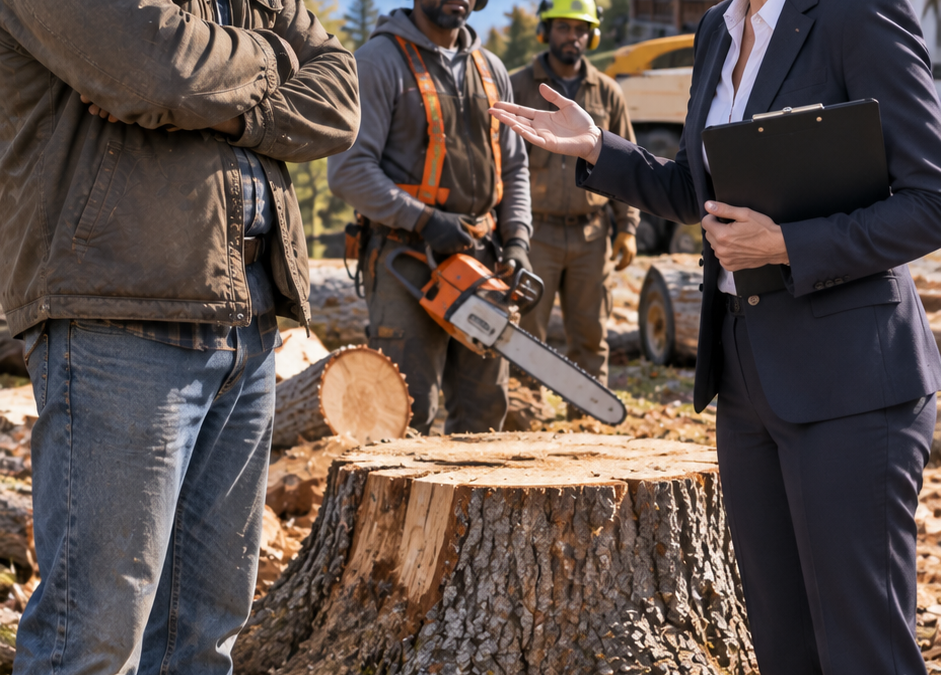
The HOA vice president stood beside the fresh stump of a two-hundred-year-old oak on my property and calmly informed me that the tree had been removed under her community’s vegetation rules, as though a paragraph in an HOA handbook could somehow extend eleven feet across a boundary their covenants had never crossed.
I did not shout, threaten her, or demand that the crew put down their saws, because by then I had already discovered something Diane Hartwell had never bothered to check: the six-inch water main supplying Cedarbrook Pines crossed forty-two feet of my land under an easement whose continued operation depended on the easement holder not acting materially against the interests of my property.
What began with a dead oak eventually exposed a seventeen-year-old boundary error, a utility cabinet built on my land, and a legal problem serious enough that the same HOA that thought it could regulate my trees ended up paying more than fourteen thousand dollars and returning to me to negotiate the right to keep its water line where it was.
My name is Thomas Whitfield.
The morning they cut the oak down, the first thing I noticed was the smell.
Fresh sawdust.
Anyone who has worked around timber knows the smell I mean.
Sweet.
Clean.
Almost pleasant under ordinary circumstances.
That morning it made me sick.
The tree had stood at the northern edge of the meadow about sixty yards from my house.
The stump was enormous.
Even after the crew had ground part of the base away, it still rose several inches above the soil, pale at the center and darker toward the bark.
Sap gathered along one edge.
Slow.
Clear.
Alive-looking.
That bothered me more than I expected.
Diane Hartwell stood between me and the crew.
Dark blazer.
Clipboard.
Hair pinned back.
Composed.
She had the manner of someone giving a routine administrative update.
“Your tree has been removed,” she said.
I looked past her at the stump.
She continued.
“It was cited under Section 4.7 of the Cedarbrook Pines Community Standards. Unauthorized vegetation exceeding permitted canopy height. The HOA acted within its authority. Any concerns may be directed to the board in writing.”
I turned back toward her.
“Within its authority?”
“Yes.”
“On my land?”
“The tree affected community property.”
“That wasn’t my question.”
Her expression hardened slightly.
“Mr. Whitfield, you received notice.”
“I received letters.”
“And failed to comply.”
“I’m not a member of Cedarbrook Pines.”
“The board has adopted authority over adjacent conditions affecting the community.”
“Adopted?”
“Yes.”
I almost laughed.
Not because anything was funny.
Because the word contained the entire problem.
A board cannot simply adopt jurisdiction over someone else’s property because four people vote for it in a clubhouse.
But Diane seemed to believe the resolution itself created the authority.
Behind her, one of the tree workers dragged a section of limb toward the chipper.
The oak had shaded that meadow longer than anyone alive could remember.
A county forester had estimated its age between 190 and 215 years.
My grandfather had once nailed a small tin marker into its bark.
Before that, his father had tied a rope swing from one of the lower limbs over the pond-side slope.
That tree existed before Cedarbrook Pines.
Before Diane.
Before the road serving the development.
Before most of the houses within ten miles.
And now it was lying in sections behind a contractor’s truck because an HOA decided it disliked the canopy.
I looked at Diane.
“Who authorized the contractor to enter my property?”
“The board did.”
“Who gave the board permission?”
She paused.
“We acted pursuant to the hazard-abatement provisions.”
“The tree was eleven feet inside my boundary.”
“That is disputed.”
“No. It isn’t.”
She shifted the clipboard against her chest.
“If you have documentation, submit it.”
“I already have documentation.”
“Then send it through the proper process.”
She turned.
Walked toward her car.
I did not follow.
Did not raise my voice.
Did not tell her what I had found at the county assessor’s office two weeks earlier.
That Cedarbrook Pines’s main water supply crossed my land.
That the recorded easement contained a clause protecting the grantor parcel.
That my grandmother had signed it.
That the easement was temporary, not perpetual.
That it ran only through 2038.
Diane had just destroyed something she could never replace.
I was not going to answer that with a driveway argument.
I was going to answer it with the record.
My property consists of 112 acres in the hill country east of Millbrook, Tennessee.
Mixed hardwood.
Cedar.
Open meadow.
A stock pond.
A creek along the lower ground.
The property entered my family in 1934.
My great-grandfather, Elias Holt, purchased the original tract at a county land auction for $148.
One hundred forty-eight dollars.
It sounds impossible now.
But money meant something different then, and the land was not what it became.
Rough.
Underimproved.
Part timber.
Part exhausted farm ground.
Elias used it as a truck farm and small timber operation.
He sold vegetables.
Cut firewood.
Raised a few animals.
Maintained ditches.
Set fences.
Paid taxes.
That was how land became valuable in his generation.
Not by waiting for a market to rise.
By making it usable.
My father used to describe Elias as unsentimental.
He cared deeply about the land, but not theatrically.
If a culvert failed, he repaired it.
If a fence post rotted, he replaced it.
If taxes were due, he paid them.
The tax receipt went into a tin box on the kitchen shelf.
Every year.
Depression.
War.
Drought.
Good seasons.
Bad ones.
Same routine.
The property eventually passed through my father’s side to my grandmother, Ellaner Whitfield.
Then through her estate to me.
The deed never left the family.
The house sits on the northern third of the property.
The land slopes gradually toward the pond.
South of that, tall meadow grass and wildflowers.
Hardwood edges.
Cedar thickening near the creek.
The oak stood on a low knoll where meadow met timber.
Nine feet three inches around when I measured it once.
The county forester who examined the property in 2018 estimated its age between 190 and 215 years.
That meant the tree might have begun growing somewhere around the first quarter of the nineteenth century.
It was not merely landscaping.
It was one of the permanent facts of the property.
At least I thought it was permanent.
Cedarbrook Pines came later.
Much later.
The development went in around 2007 on acreage west of mine.
That land had belonged to the Drummond family.
When the heirs could not agree on what to do with it, they sold to Stanton Capital.
Stanton built fifty-four homes.
Clubhouse.
Pool.
Internal roads.
Decorative entrance.
Sixty-one pages of covenants, conditions, and restrictions.
I read them.
Not because I expected trouble.
Because when somebody develops land beside yours, you should understand what they are creating.
The jurisdiction language was clear.
Cedarbrook Pines governed the properties described in Exhibit A of its declaration.
My parcel was not in Exhibit A.
Never had been.
I did not join.
Did not sign.
Did not annex.
Did not accept deed restrictions.
The development existed beside me.
That was all.
Then Diane Hartwell joined the board.
She became vice president and compliance chair after the 2019 election.
I had met her once at a county planning meeting.
She spoke well.
Prepared notes.
Organized facts.
At least the facts she selected.
Diane seemed to believe order itself created legitimacy.
If the letterhead looked official, the rule must be lawful.
If the board voted, the vote must apply.
That assumption worked inside her HOA.
Outside it, the assumption became dangerous.
The first letter arrived eighteen months before the oak came down.
Standard HOA letterhead.
Section 4.2.
Vegetation management.
The letter said native canopy from “the adjacent property” was encroaching into Cedarbrook Pines and altering community aesthetics.
That phrase told me they knew I was adjacent.
Not included.
I read the letter twice.
Then ignored it.
The second arrived six weeks later.
Section 7.1.
Nuisance.
Proposed fine:
$250.
Attached was a board resolution extending HOA enforcement authority to adjacent properties whose condition affected the aesthetic character of Cedarbrook Pines.
I read the resolution three times.
No deed.
No annexation.
No easement giving regulatory control.
No county ordinance.
No statute.
Just a board vote.
Four people had sat in a room and decided their rules extended beyond the land covered by their own declaration.
I opened a folder.
CEDARBROOK PINES.
Date on the tab.
Letters inside.
I still did not call an attorney.
Some people hear that and say I waited too long.
Maybe.
But I wanted to understand the pattern before turning it into litigation.
Then came the third letter.
Certified.
Signed by Diane.
This one named the oak.
LARGE HERITAGE OAK SITUATED AT PROPERTY BOUNDARY.
Hazard tree.
Thirty days to remove.
Failure would allow the HOA to contract removal and charge me.
Fine:
$800.
There was also a photograph.
A beautiful photograph, unintentionally.
Full canopy.
Late-afternoon sun coming through the branches.
The kind of tree a real estate brochure would use to advertise “mature natural surroundings.”
I walked out to the oak.
Put one hand on the bark.
There was no crown dieback.
No major cavity.
No obvious root upheaval.
No bark separation.
No large dead leaders.
I am not an arborist.
So I did not rely on my own opinion.
I called Ray Gideon.
Ray had surveyed my property in 2003 when my grandmother’s estate was settled and again in 2018.
Thirty years as a licensed surveyor.
Lean man.
Slow voice.
No interest in drama.
I asked him to establish the boundary at the oak.
He came Thursday.
Four hours.
Monuments.
Measurements.
Field notes.
When he finished, he called me over.
“Here.”
He pointed at his sketch.
“The property line runs there.”
He indicated the nearest survey marker.
“And the oak?”
“Eleven feet inside.”
“Entire trunk?”
“Yes.”
“Root flare?”
“Yes.”
“So not on the line.”
“No.”
“Not close?”
“No.”
I looked at him.
Ray shrugged.
“Eleven feet is eleven feet.”
I copied his field notes.
Added them to the folder.
Then I went to the county assessor.
That visit changed everything.
I asked for Cedarbrook Pines plats.
Then the recorded easement index for the surrounding section.
Mrs. Coats helped me.
She had worked there more than twenty years.
After almost two hours, I found the document.
Water-supply easement.
Millbrook County Water Authority.
Cedarbrook Pines Development.
Six-inch main.
The line crossed a forty-two-foot corridor through my parcel.
My parcel number was typed directly into the legal description.
The easement had a thirty-year term.
2008 to 2038.
Not permanent.
Then I found the condition.
Continued use depended upon the easement holder taking no action materially adverse to the interests of the grantor parcel.
I read that language twice.
Then three times.
Grantor:
Ellaner Whitfield.
My grandmother.
She signed in March 2008.
That made sense.
She was generous with neighbors.
If Cedarbrook Pines needed to cross forty-two feet of our land to connect water infrastructure, she would have considered it a reasonable accommodation.
But she had not given them ownership.
She had given a conditional right-of-way.
For thirty years.
I obtained a certified copy.
Drove home.
Added it to the folder.
At that point, I still hoped the oak would remain standing.
I was wrong.
The removal notice arrived late in October.
Not certified.
Hand-delivered.
By the time I discovered it, a contractor had already entered.
Chainsaws started before noon.
I heard them from the house.
I walked outside.
Three-man crew.
Bucket truck.
Chipper.
Stump grinder waiting near the road.
The foreman met me halfway.
“Mr. Whitfield?”
“Yes.”
“We’ve got a removal order.”
“From whom?”
He showed me the work authorization.
Cedarbrook Pines HOA.
I stared at it.
“This tree is on my land.”
He looked uncomfortable.
“We were told authorization was handled.”
“It wasn’t.”
He glanced toward the tree.
Then toward his truck.
I could have tried to stop the crew physically.
Could have stood under the oak.
Could have created a confrontation.
I did not.
The problem was not those workers.
They had been hired.
Insured.
Given paperwork.
They were not the people who invented jurisdiction.
I said:
“Give me your company information.”
He did.
I photographed the truck.
Work order.
Tree.
Boundary markers.
Then I stepped back.
That was one of the hardest decisions I made.
Not because I wanted the tree cut.
Because once professional removal had begun, escalating physically could have gotten someone hurt.
So I documented.
The limbs came first.
Then the upper trunk.
Then the rest.
Two centuries came down in an afternoon.
When the final section hit the ground, I felt the impact through my boots.
That is something I will never forget.
The ground shook.
Then the meadow became too open.
Diane arrived as the crew was finishing.
That was when she gave me her prepared statement.
“Your tree has been removed.”
The HOA had acted within its authority.
No, it had not.
But I let her leave believing otherwise.
Then I went inside.
Spread everything across the table.
CC&Rs.
Jurisdiction section.
Diane’s letters.
Board resolution.
Ray’s survey notes.
Water easement.
Tree-removal authorization.
Photographs.
The next call went to Howard Breck.
Howard had handled my grandmother’s estate.
Property lawyer in Millbrook.
Twenty-six years of experience.
He remembered the parcel.
I told him what happened.
He asked only a few questions.
“The oak was entirely on your property?”
“Eleven feet inside.”
“Surveyed?”
“Ray Gideon.”
“Current?”
“2018 survey, reconfirmed this year.”
“The HOA entered without permission?”
“Yes.”
“And you have the water easement?”
“Certified copy.”
A pause.
“Bring me everything.”
I drove to his office the next morning.
Howard took three days.
Then called.
“The HOA had no covenant authority over your parcel.”
“I know.”
“The tree-removal entry is a serious issue.”
“I assumed.”
“And the easement language is real.”
“So can I shut off their water?”
“No.”
That answer was immediate.
I appreciated it.
He continued.
“You cannot walk out there and interfere with a live municipal supply line. That would create a different problem, and potentially a dangerous one.”
“Then what does the clause mean?”
“It means we ask a court what it means.”
That was the difference between revenge and leverage.
I was not going to turn a valve.
Dig up a pipe.
Threaten residents.
Families in Cedarbrook Pines had nothing to do with Diane’s decision.
But the HOA’s right to benefit from an easement across my property could be challenged if the condition had been violated.
Howard believed we had grounds for declaratory relief.
Tree removal.
Repeated assertions of jurisdiction.
Entry onto my land.
Potentially material adverse action against the grantor parcel.
Seventeen days after the oak came down, Howard filed.
The six-inch main kept flowing.
Nobody lost water.
That mattered.
I wanted legal pressure, not chaos.
Then Howard found something I had not.
While preparing the easement claim, he ordered the complete Cedarbrook Pines development plat.
Underlying surveys.
Boundary certifications.
Original records.
His clerk, Patrice, found the discrepancy.
Howard called one cold November morning.
“I need you to understand what this is turning into.”
I put down my coffee.
“What?”
“The Cedarbrook eastern boundary is wrong.”
“How wrong?”
“Nine feet.”
I waited.
“Where?”
“Along the full shared boundary.”
He explained.
The Cedarbrook plat relied on a private Stanton Capital survey.
That survey had used iron pins from an older Drummond boundary survey.
The pins were offset from the original General Land Office control monuments.
Nine feet.
That error had propagated into the Cedarbrook development documents.
The GLO monuments were older.
Controlling.
Still identifiable.
Ray had located them in 2018.
The developer’s survey had not controlled from them.
I asked:
“So their fence?”
“On you.”
“Landscaping?”
“Some of it.”
“Utility cabinet?”
“Yes.”
I sat quietly.
The error extended roughly 340 feet along the boundary.
Nine feet wide.
Just over three thousand square feet.
The decorative Cedarbrook fence.
Landscaping.
Concrete utility pad.
Water-access cabinet.
All occupying ground titled to me.
It did not mean the developers had intentionally stolen land.
There was no evidence of that.
It looked like a survey-control mistake.
But a mistake recorded for seventeen years is still a mistake.
I walked the line that afternoon.
Found the brass-capped GLO monument.
Blackberry canes around it.
Exactly where Ray’s field notes said.
Then I looked toward Cedarbrook’s decorative fence.
Nine feet.
It was obvious once you knew.
I put my hand on one of their cedar posts.
Solid construction.
Well installed.
Someone had built carefully on the wrong line.
That may be the best description of the entire dispute.
Careful work.
Wrong premise.
Howard amended the case.
Boundary establishment.
Quiet title to the roughly three-thousand-square-foot strip.
Water-easement declaration.
Tree-removal claims.
Now the case was no longer merely about whether Diane had exceeded HOA authority.
The HOA itself was occupying my land.
January brought the first major hearing.
Cold.
Hard ground.
Clear sky.
Howard met me outside the courthouse.
Red accordion folder.
Charcoal overcoat.
Inside were surveys.
Plat comparisons.
Tax records.
Easement.
Photographs.
Patrice had prepared an overlay.
Cedarbrook plat.
Stanton survey.
GLO monuments.
Ray Gideon’s survey.
The nine-foot discrepancy showed immediately.
Cedarbrook’s attorney was Gareth Poole from Nashville.
Capable.
Prepared.
He had done something important before the hearing.
He hired his own surveyor.
Their survey found the same monuments.
Same offset.
Same result.
Nine feet.
That changed the tone.
They could dispute legal consequences.
They could not plausibly dispute geometry.
Judge Patricia Styles presided.
Eleven years on the circuit bench.
Reputation for reading every exhibit.
Howard presented the monument evidence.
Judge Styles asked:
“Which control governs when a private survey conflicts with identifiable original federal monuments?”
Howard cited the relevant Tennessee authority and the established hierarchy of boundary evidence.
Gareth argued that the line had been accepted for seventeen years.
Adverse possession.
Reliance.
Existing improvements.
Howard responded with tax records.
My family had continuously paid property taxes covering the disputed land.
No deed to Cedarbrook.
No conveyance.
No agreement adopting the wrong line.
Judge Styles did not issue final judgment that day.
Instead, she ordered a court-appointed survey.
No more competing hired experts.
One neutral surveyor.
She also entered a temporary restraining order.
Cedarbrook Pines was prohibited from altering, building on, removing from, or asserting new ownership control over the disputed strip until the boundary was determined.
Then she addressed the water easement.
That issue would wait.
The legal character of the water access, she said, depended partly on the correct location of the property line and utility facilities.
That was fine with me.
Nobody’s water stopped.
The law moved instead.
Dan Pruitt was appointed surveyor.
Nearly thirty years of experience.
He came six weeks later.
Located both GLO monuments within the first hour.
Verified the caps.
Ran the line.
Nine feet.
Exactly what Ray said.
Exactly what Cedarbrook’s own surveyor said.
Dan drove fresh stakes.
Orange flagging.
True boundary.
One stake stood nine feet east of the decorative cedar fence.
The land had not moved.
We had simply stopped measuring from the wrong reference.
Dan filed his report.
Second hearing was scheduled for March.
By then, spring had begun.
The old oak stump was turning gray.
Sap gone.
Edges drying.
I planted a white oak sapling six feet away.
Two-year-old nursery tree.
Trunk no thicker than my thumb.
I knew exactly what it represented.
Not replacement.
You cannot replace two hundred years with a shovel and a nursery tag.
It was continuation.
Something living where something had been taken.
One week before the second hearing, Howard called.
“Settlement inquiry.”
“From Poole?”
“Yes.”
“What do they want?”
“Board will stipulate to the court-appointed boundary.”
“Good.”
“Vacate every assertion of authority over your parcel.”
“Good.”
“Pay costs.”
“Good.”
“They want to renegotiate the water easement rather than have the court determine whether the adverse-action clause permits termination.”
I was quiet.
That was the moment the title of this story often gets simplified.
People later said I cut off Cedarbrook Pines’s water.
I did not.
I never turned anything off.
I did something more effective.
I made the continuation of that water right depend on a new agreement that acknowledged the truth.
The easement existed because my family had granted it.
They had forgotten the first half of that sentence and remembered only the benefit.
Now the balance had returned.
I walked the boundary before answering Howard.
Past the orange stakes.
Past the brass cap.
Past the wrong cedar fence.
Then to the meadow.
Old stump.
Young oak.
I thought about Elias.
He would not have wanted fifty-four families without water because of one HOA board’s mistake.
But he would have wanted the line corrected.
Everything documented.
No ambiguity left for the next generation.
I called Howard.
“I’ll negotiate.”
“Conditions?”
“Boundary entered as a court judgment.”
“Agreed.”
“Not merely private settlement.”
“Yes.”
“New easement.”
“Yes.”
“Correct parcel description.”
“Yes.”
“Adverse-action clause stays.”
Howard paused.
“Stronger?”
“Stronger.”
I continued.
“Twenty-five-year term from recording.”
“Not perpetual?”
“No.”
“Maintenance and utility access clearly defined?”
“Yes.”
“No HOA regulatory authority created by the easement.”
“Absolutely.”
“And they pay costs.”
“Yes.”
“Then negotiate.”
Second hearing was brief.
Judge Styles reviewed the agreement.
The boundary stipulation became a judgment.
That mattered.
Future owners would not have to interpret a private side agreement.
The court established the line according to the GLO monuments and Dan Pruitt’s survey.
Prior inconsistent boundary certifications were vacated.
Quiet title confirmed my ownership of the disputed strip.
The HOA withdrew every compliance claim against my parcel.
Vegetation.
Nuisance.
Oak.
All of it.
Then came the easement.
New legal description.
Grantor parcel correctly identified.
Utility corridor defined.
Twenty-five years.
Maintenance rights limited to what was necessary to operate and repair the water main.
Advance notice except emergencies.
Restoration obligations after excavation.
No expansion without written consent.
No HOA regulatory authority created.
And the provision I cared about most:
No action by the easement holder or beneficiary materially adverse to the ownership, lawful use, or property rights of the grantor parcel.
Explicit.
Not vague.
The water continued flowing.
But now Cedarbrook Pines knew exactly why.
Permission recorded.
Terms recorded.
Boundary recorded.
The HOA paid the costs.
Howard’s fees.
Court filings.
Survey work.
Dan Pruitt.
Associated expenses.
A little over $14,000.
I deposited the reimbursement check without ceremony.
The money did not restore the oak.
Nothing could.
The decorative Cedarbrook fence had to be moved to the true line.
I replaced that boundary section with a simple wire fence on wooden posts.
Straight.
Functional.
Correct.
The utility cabinet and concrete pad moved west inside Cedarbrook property.
The water main itself remained under the easement corridor.
No reason to tear up a functioning utility if a lawful agreement could solve the issue.
That is something people misunderstand about property disputes.
Winning does not require choosing the most destructive remedy.
Sometimes the strongest position is the one that allows you to choose restraint.
Diane resigned in February.
Before the final settlement.
I did not ask why.
Did not call her.
Did not celebrate.
The remaining board hired independent counsel to review boundary documents.
That was sensible.
Probably the most sensible thing Cedarbrook Pines had done since the first vegetation letter.
The morning after the new fence was completed, I walked to the meadow.
Early spring.
Cold but softening.
Pond full from February rain.
Three Canada geese near the bank.
The old oak stump sat to my left.
Young white oak to my right.
I touched the support stake beside the sapling.
Its first new leaves were opening.
Small.
Almost translucent.
Wind moved them.
For a moment, I felt angry all over again.
Not about the money.
Not the letters.
The tree.
That part never became administrative to me.
A two-hundred-year-old living thing had been turned into legal evidence because someone believed a board resolution could replace a deed.
There is no satisfactory remedy for that.
Courts can award money.
Correct records.
Issue injunctions.
They cannot restore time.
That is why I refused to let the case become merely a revenge story about water.
If I had actually cut the main and deprived innocent families of service, what would that have restored?
Nothing.
It would have made me another person using power carelessly.
Instead, the easement gave me leverage to force clarity.
That was enough.
Months later, a Cedarbrook resident named Michael stopped near my property.
I recognized him vaguely.
He lived two streets inside the development.
“Mr. Whitfield?”
“Thomas.”
“Michael Grant.”
We shook hands.
“I wanted to say something about the tree.”
I waited.
“My kids used to see it from the walking path.”
I looked toward the stump.
“They called it the giant.”
“That sounds right.”
“We didn’t know the HOA was cutting it.”
“I figured.”
“Most of us didn’t.”
I believed him.
Michael looked embarrassed.
“Diane told people it was dangerous.”
“It wasn’t.”
“I know that now.”
He looked toward the new sapling.
“That the replacement?”
“Successor.”
He glanced at me.
“Difference?”
“Yes.”
“How?”
“You replace something when you can restore what was lost.”
I looked at the stump.
“You can’t replace that.”
He nodded.
“Fair.”
We stood quietly.
Then Michael asked:
“Did you really shut our water off?”
“No.”
His eyebrows rose.
“That’s what people said.”
“I challenged the easement.”
“So we were never without water?”
“Not for one minute.”
He laughed.
“I should’ve known.”
“Stories improve themselves as they travel.”
“What happened then?”
“The HOA needed my land for the main. The old agreement had conditions. Their conduct gave me grounds to challenge continued use.”
“And?”
“We wrote a better agreement.”
Michael looked toward Cedarbrook.
“That sounds less dramatic.”
“It usually is.”
He smiled.
“I like your version better.”
So did I.
The false version makes me sound powerful.
The true version makes the law sound powerful.
That distinction matters.
The most important discovery in the case was not that I could hurt Cedarbrook Pines.
It was that authority over property comes from instruments.
Covenants.
Deeds.
Easements.
Statutes.
Recorded rights.
Not attitude.
Diane believed the HOA’s community standards mattered because they had section numbers.
4.2.
7.1.
4.7.
Those sections might have been fully enforceable against Cedarbrook members.
But a rule’s existence does not answer where the rule applies.
That requires jurisdiction.
Cedarbrook’s declaration answered that question.
Exhibit A.
Fifty-four lots.
My parcel absent.
Everything should have stopped there.
Instead, the board passed a resolution trying to expand its own power.
That should frighten any property owner more than an ugly tree rule.
Not because every HOA is malicious.
Because institutions can begin confusing internal authority with universal authority if nobody makes them identify the boundary.
You cannot vote yourself jurisdiction over the neighbor.
The same principle applied to the water easement.
I owned the land.
But I could not pretend the recorded easement did not exist.
My deed was subject to that right.
The easement limited me just as the HOA declaration limited Cedarbrook.
Property ownership is not absolute power.
It is a system of overlapping recorded rights.
My fee ownership.
Their utility easement.
County controls.
Survey monuments.
Each has boundaries.
Respect all of them or the system stops making sense.
That was why Howard stopped me immediately when I asked whether I could shut the water off.
No self-help against the line.
Court first.
Interpretation first.
Rights first.
That discipline kept me from making the same mistake Diane had.
She assumed.
I checked.
That became the difference.
Ray Gideon came by later that summer.
He wanted to see the final boundary stakes.
We walked to the brass cap.
Blackberry growth had returned.
The relocated fence stood on the proper line.
Ray looked west.
“Looks right.”
“About time.”
He smiled.
“Line was right before.”
“I know.”
He tapped the monument with the toe of his boot.
“This didn’t care where they put the fence.”
“No.”
“That’s why monuments are useful.”
We walked toward the oak.
He stopped at the stump.
“Shame.”
“Yes.”
“Good tree.”
“One of the best.”
He looked at the sapling.
“Give it time.”
“I don’t have two hundred years.”
“No.”
Ray smiled faintly.
“But somebody might have eighty.”
That was enough.
Elias had planted things he never lived to see mature.
My father did too.
Land teaches you to invest in futures that do not include you.
That is what the new oak became.
Not a substitute.
A promise to whoever comes after.
I also changed how I kept records.
Everything was already organized.
Now I made it better.
Digitized surveys.
Scanned deeds.
Photographed monuments.
Mapped easements.
Wrote a summary for the next owner explaining the Cedarbrook dispute.
Not emotional.
Dates.
Book and page numbers.
Case number.
Survey coordinates.
Easement expiration.
Attorney information.
The sort of document I wish my grandmother had left explaining what she understood when she granted the original water right.
Future disputes grow in gaps.
Good records shrink the gaps.
One evening, I found Elias’s old tax tin.
Rust along the bottom.
Receipts folded inside.
Some paper nearly translucent with age.
He had no reason to believe anyone would ever care about those receipts after he died.
Yet decades later, continuous tax payment helped Howard answer the HOA’s adverse-possession theory.
Elias had unknowingly become a witness in a case that happened long after his death.
That is what documentation does.
It lets the past testify.
The oak had done something similar physically.
Its age showed continuity.
Its position showed history.
Then it was gone.
The paper remained.
I have often wondered whether Diane ever understood the difference.
Maybe.
She never contacted me after resigning.
I do not know where she moved or whether she stayed in Cedarbrook.
I do know the board adopted new procedures.
Any enforcement concerning land outside the subdivision requires counsel review and title verification.
Someone sent me a copy.
I filed it.
Not because it affects my property.
Because it showed the institution learned something.
That matters.
Punishment without correction is wasted.
If Cedarbrook never makes the same mistake again, then at least something useful came from the oak’s loss.
The new easement has also worked exactly as intended.
Water authority crews needed access once after a pressure problem.
They called.
Provided notice.
Entered the defined corridor.
Excavated.
Repaired.
Restored the surface.
Left.
No dispute.
No confusion.
That is how an easement should function.
Nobody pretended the corridor belonged to Cedarbrook.
Nobody asked me for HOA compliance.
Nobody treated utility access as governance.
The right existed.
It was used according to its terms.
Simple.
The development still gets water.
My land remains mine.
I consider that a better victory than turning off fifty-four homes.
People occasionally disagree.
They hear the title and want the dramatic version.
“They cut your oak, so you cut their water.”
No.
They cut my oak.
I discovered the legal structure supporting their water line.
Then I made them respect both.
The law did the cutting.
It cut away their false jurisdiction.
It cut away the incorrect boundary.
It cut away the old defective assumptions.
The water stayed.
Maybe that is less satisfying as revenge.
It is much more satisfying as property law.
The dispute also changed the way I look at the stump.
For the first year, I avoided it.
Every time I saw it, I saw the crew.
The trunk coming down.
The open sky where canopy used to be.
Then grass started growing around it.
Insects worked the wood.
Rain softened the edges.
The new oak grew.
Slowly.
The stump became less like a wound and more like a marker.
Not of Diane.
Of time.
Two hundred years is difficult for humans to comprehend.
The tree had survived storms that knocked down barns.
Lightning nearby.
Drought.
Ice.
Generations.
It did not survive a clipboard.
That is both absurd and instructive.
Natural things endure many kinds of force.
Human certainty can still destroy them quickly.
That is why authority should have checks.
Documentation.
Review.
Jurisdiction.
Permission.
Those words seem dry until somebody ignores them with a chainsaw.
Then they become very real.
I walk the true boundary every spring now.
Not because I expect Cedarbrook to challenge it.
Because I want to know the line with my feet.
The replacement fence is simple.
Wood posts.
Wire.
Nothing decorative.
The brass GLO monuments remain.
Dan Pruitt’s court-appointed survey is recorded.
Ray’s work matches it.
Cedarbrook’s surveyor matched it.
There is no disagreement anymore.
Nine feet.
Three thousand square feet.
Mine.
Always was.
The utility cabinet stands west of the line.
Where it belongs.
From certain angles, I can see both the cabinet and the oak sapling.
That image means something to me.
One represents a negotiated right.
The other represents ownership.
The line between them is invisible unless you know where to look.
But invisible does not mean unimportant.
Property law is full of invisible structures.
Easements.
Covenants.
Mineral rights.
Access rights.
Restrictions.
They do not appear on the ground the way a fence does.
Yet they can determine what everyone is allowed to do.
That is why reading matters.
The first HOA letter had seemed silly.
Aesthetic tree canopy.
Why dignify it?
Because behind silly claims can be dangerous assumptions.
Diane believed Cedarbrook had authority beyond its legal boundary.
That assumption first produced a letter.
Then a fine.
Then a board resolution.
Then a hazard designation.
Then a contractor on my land.
Institutions escalate in increments.
Each step feels normal because the previous step already happened.
If I learned anything, it is to identify the unsupported assumption early.
Not necessarily fight immediately.
Investigate immediately.
That is different.
I should probably have answered the first letter sooner.
Not emotionally.
Documentarily.
A certified response with deed and jurisdiction language might have prevented the rest.
Maybe.
Or maybe Diane would have continued anyway.
There is no way to know.
What I do know is that silence leaves room for confident people to interpret it as consent.
That is one habit I changed.
Now if someone asserts authority over the property, I respond.
Briefly.
In writing.
With the controlling document.
No speeches.
No accusations.
Just:
Here is the deed.
Here is the survey.
Here is the relevant clause.
Show me yours.
Most disputes become much smaller after that.
Cedarbrook eventually became an ordinary neighbor again.
That may be the most satisfying outcome.
I drive past the entrance.
People wave.
Children bicycle.
The pool opens every summer.
Their water works.
My meadow remains mine.
No one spends every morning reliving the lawsuit.
That is how legal disputes should end.
Not with permanent hatred.
With a clear record that removes the reason to continue fighting.
One Cedarbrook board member, Ellen Morris, visited me about two years afterward.
She had joined after Diane left.
We sat on my porch.
She looked toward the oak sapling.
“That the one?”
“Yes.”
“It’s getting taller.”
“A little.”
Ellen was quiet.
Then:
“I’ve read the old board minutes.”
“That sounds unpleasant.”
“You have no idea.”
I laughed.
She said:
“What I don’t understand is why nobody checked whether your property was in the HOA.”
“They thought the resolution was enough.”
“Yes.”
“That was the problem.”
She shook her head.
“We have counsel review now.”
“I heard.”
“Also boundary maps in every board binder.”
“Good.”
“And a rule that no contractor can enter adjoining property without proof of authority.”
“Even better.”
She looked at the sapling again.
“I wish those rules existed before.”
“So do I.”
There was nothing more to say.
An apology cannot regrow a tree.
But institutional memory can prevent another one from being cut.
I accepted that.
Today the young oak is taller than I am.
Still thin.
Its crown barely broad enough to shade a chair.
I sometimes sit near it anyway.
The old stump remains a few feet away.
Slowly decaying.
Eventually it will disappear into the soil.
The new oak might still be standing when that happens.
Maybe my grandchildren will see it mature.
Maybe people I will never meet.
That is the only answer time offers.
Continue.
The folder remains on the shelf in my study.
CC&Rs.
Letters.
Board resolution.
Ray’s notes.
Water easement.
Tree photographs.
Contractor information.
Patrice’s research.
GLO coordinates.
Howard’s filings.
Court-appointed survey.
Boundary judgment.
Cost reimbursement.
New easement.
Everything in sequence.
Behind all of it sits the deed.
Older.
Simpler.
More important.
That is the document Diane should have asked about before sending the first letter.
It would have saved everyone a great deal of money.
And one irreplaceable tree.
There is a temptation after something like this to believe the moral is that HOAs are always wrong.
That is too simple.
Cedarbrook Pines had legitimate responsibilities.
Roads.
Pool.
Common property.
Shared infrastructure.
Its board could lawfully enforce rules against members who purchased subject to those rules.
What it could not do was mistake proximity for membership.
The line mattered.
That is the real lesson.
Authority is strongest when it understands its own limits.
The same applies to ownership.
I owned the ground around the water line.
But the recorded easement limited me.
I could not simply pretend the main did not have rights because I became angry.
I had to honor the document too.
Both sides were bound by paper.
That symmetry is important.
Property rights are not a license for whoever owns the deed to do anything.
They are a framework.
My rights.
Their rights.
County rights.
Water authority rights.
Each defined.
Each limited.
The trouble started when Cedarbrook acted as though only its documents mattered.
The solution came when the court made everyone read all of them together.
I think Elias would have understood that.
He kept every receipt because ownership was not just what he believed.
It was what he could prove.
My grandmother understood it when she signed the easement.
She gave a neighbor something useful without giving away more than she intended.
My job was to preserve that distinction.
I did.
The water still runs beneath forty-two feet of Whitfield land.
It will for the term of the new agreement.
After that, whoever owns the property can renegotiate.
Or extend.
Or choose another lawful arrangement.
What they will not have to do is guess.
The line is recorded.
The right is recorded.
The history is recorded.
That is the inheritance.
Not the lawsuit.
Clarity.
Sometimes, late in the afternoon, the light hits the meadow from the west.
The new oak throws a narrow shadow.
Nothing like the old one.
Not yet.
The pond catches the sky.
Geese settle along the edge.
From where I sit, Cedarbrook Pines is mostly hidden by trees.
You would never know we once spent months arguing over nine feet of boundary and forty-two feet of buried water line.
Good.
The land should not look like litigation.
It should look like land.
The papers can carry the argument.
That was Elias’s lesson.
That became mine.
And when I look at the oak growing beside the stump, I no longer think first about Diane Hartwell.
I think about what remains after people stop arguing.
The boundary.
The water.
The meadow.
The deed.
And one young tree beginning a life that, if everyone leaves it alone, may someday become old enough that nobody remembers why it was planted.








